Review: Flight DUS410QA – DUC380CEQ – NUT310

****

Tämän testin alkuperäinen suomenkielinen versio löytyy Rockway-blogissa.

****
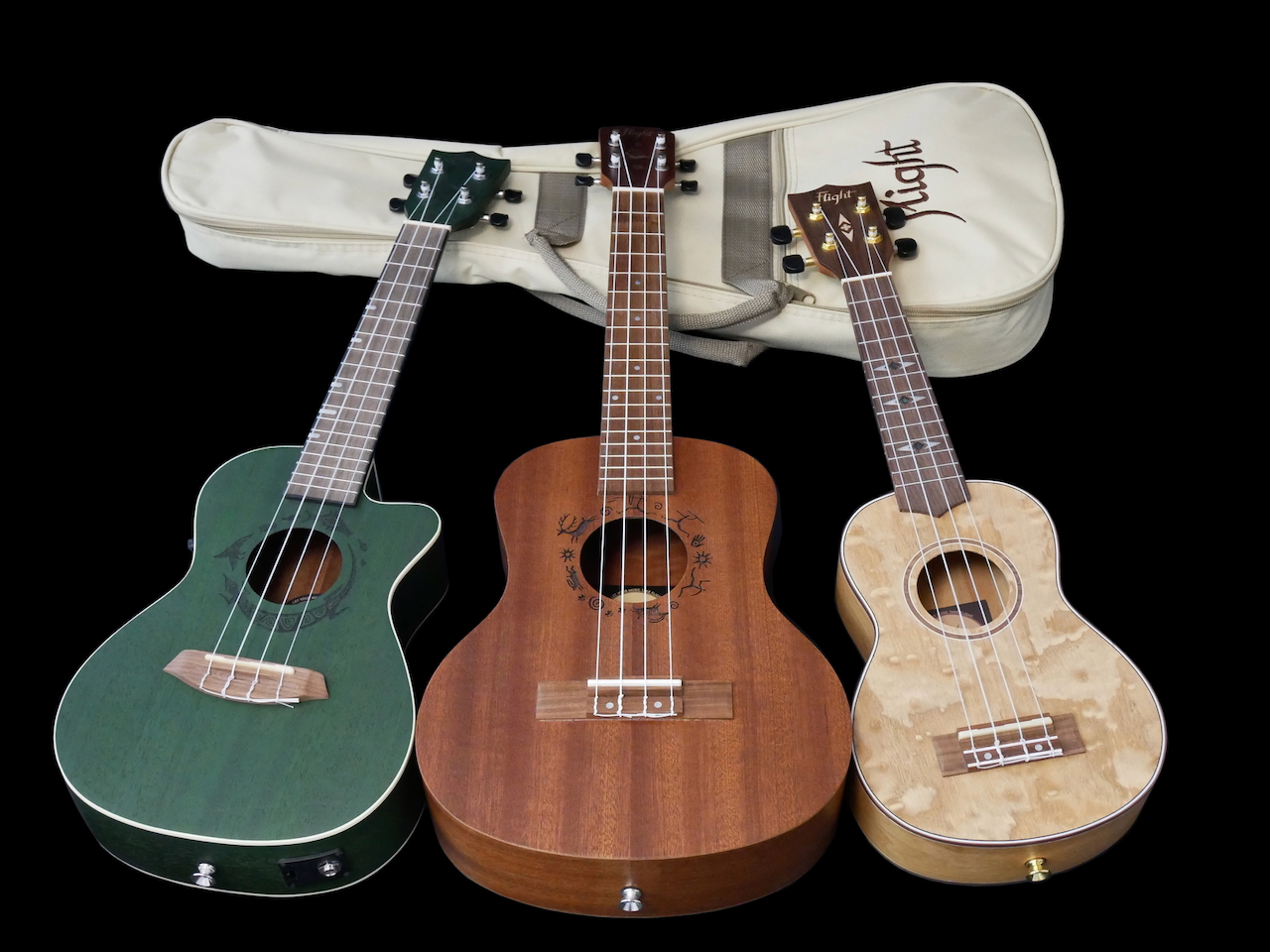
Slovenian company Flight focuses entirely on ukuleles and has been able to expand its range considerably in recent years. The design of the instruments is European, but the ukuleles are made in the company’s own factory in China.

Tampereen Musiiki has recently become the brand’s new importer in Finland, which I thought was a good opportunity to try out three different ukuleles from Flight’s range.

****
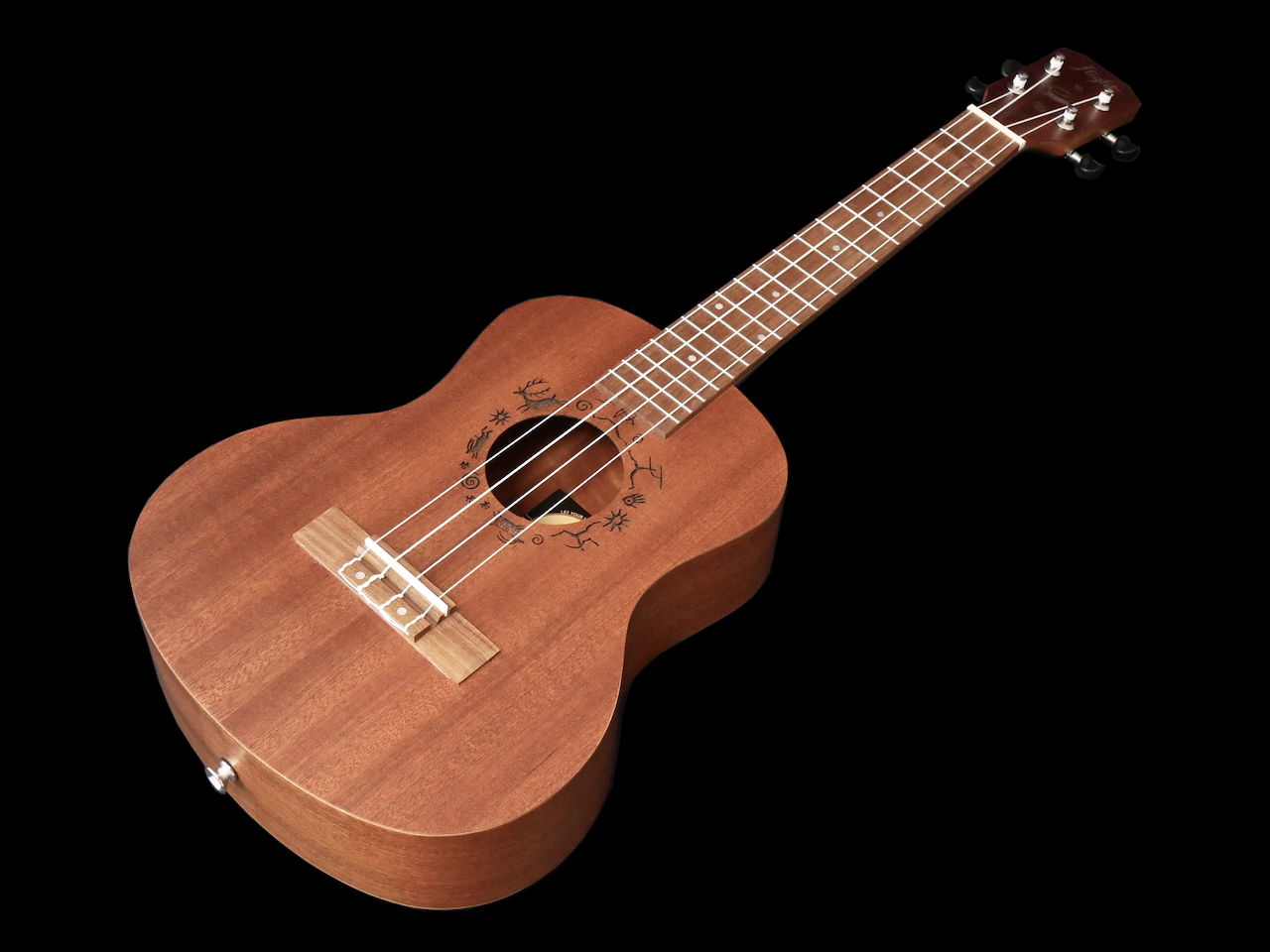
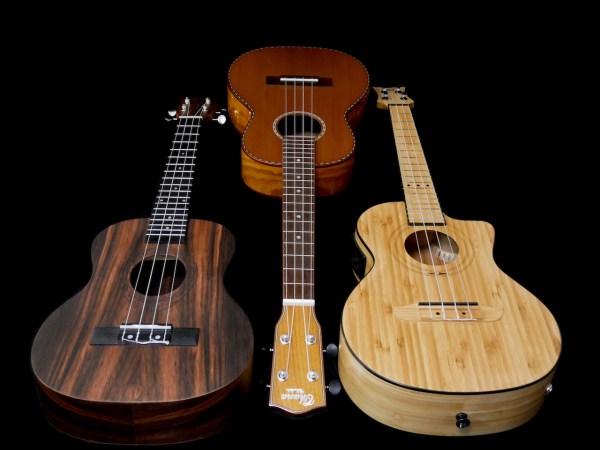
Flight’s NUT310 (119 €; includes bag) is a basic tenor-sized ukulele with a rosette decorated with beautiful shamanic symbols, laser-etched into the wood.

The NUT310’s soundboard is made of sapele mahogany plywood, while the neck is carved from African okoume. The neck is made from one long piece, with one piece added for the neck heel and another for the peg head. The neck is glued to the body at the 14th fret.

The fingerboard and bridge of this tenor ukulele are made of walnut. The neck hold 18 well-installed frets. The position markers are round. Both the bridge saddle and nut are made of genuine bovine bone. The nut is 35 mm wide.

The Flight NUT310 has open, guitar-style tuners with black plastic knobs.

All Flight instruments have at least a strap pin at the soundbox’ butt end, allowing a standard guitar strap to fit without any problems.

The Flight NUT310 is comfortable to play and has a beautiful, round, and resonant sound.
****
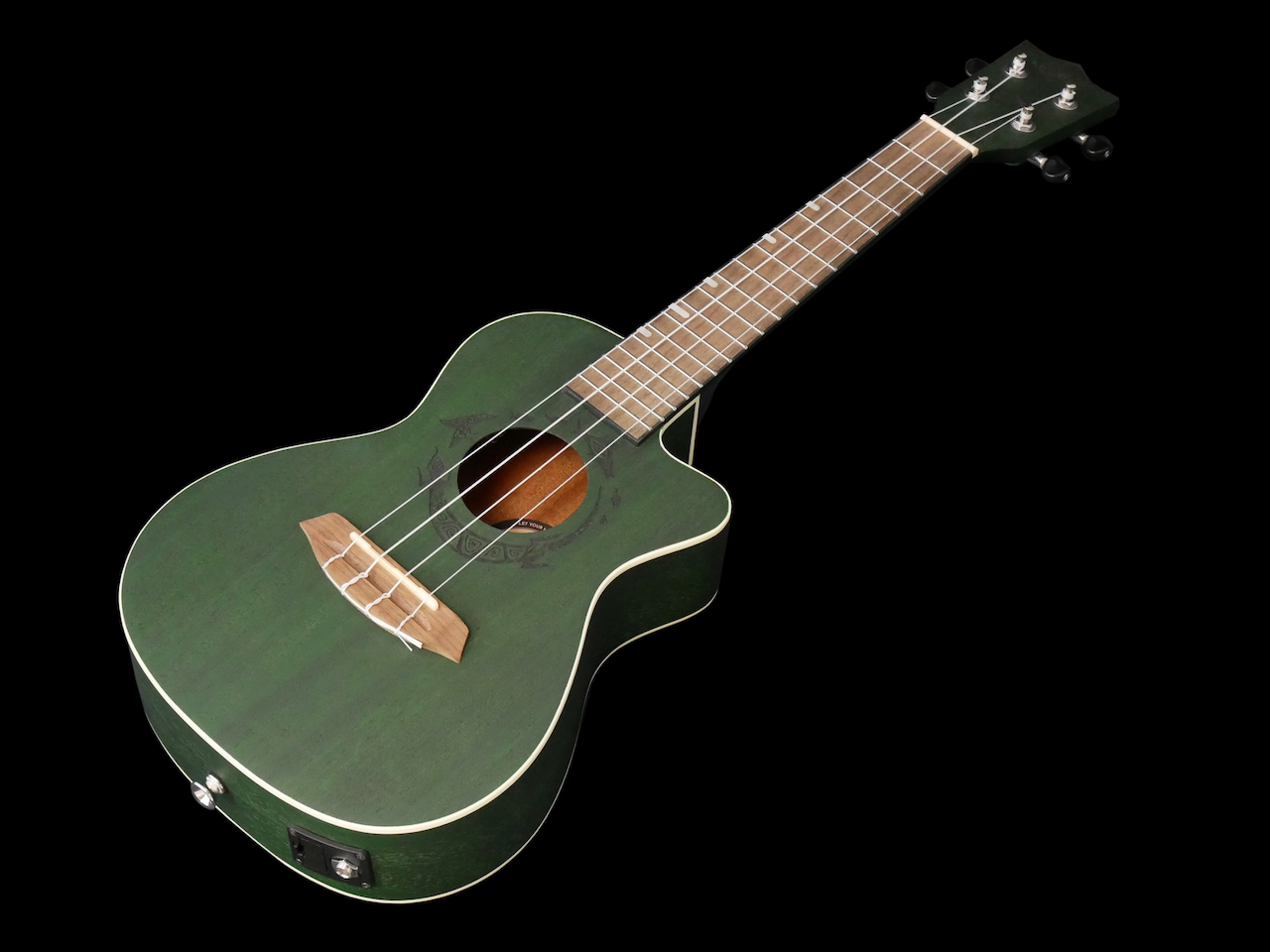
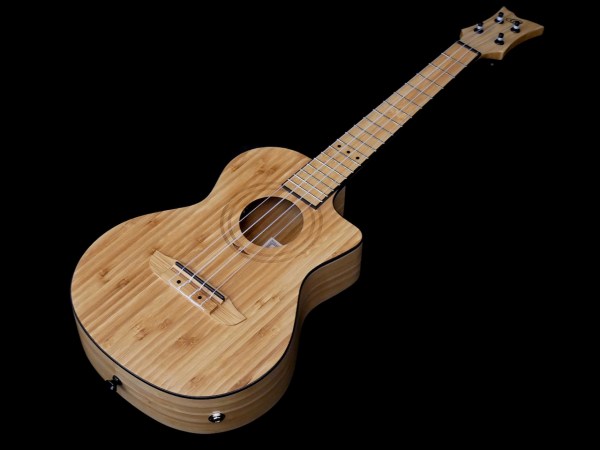
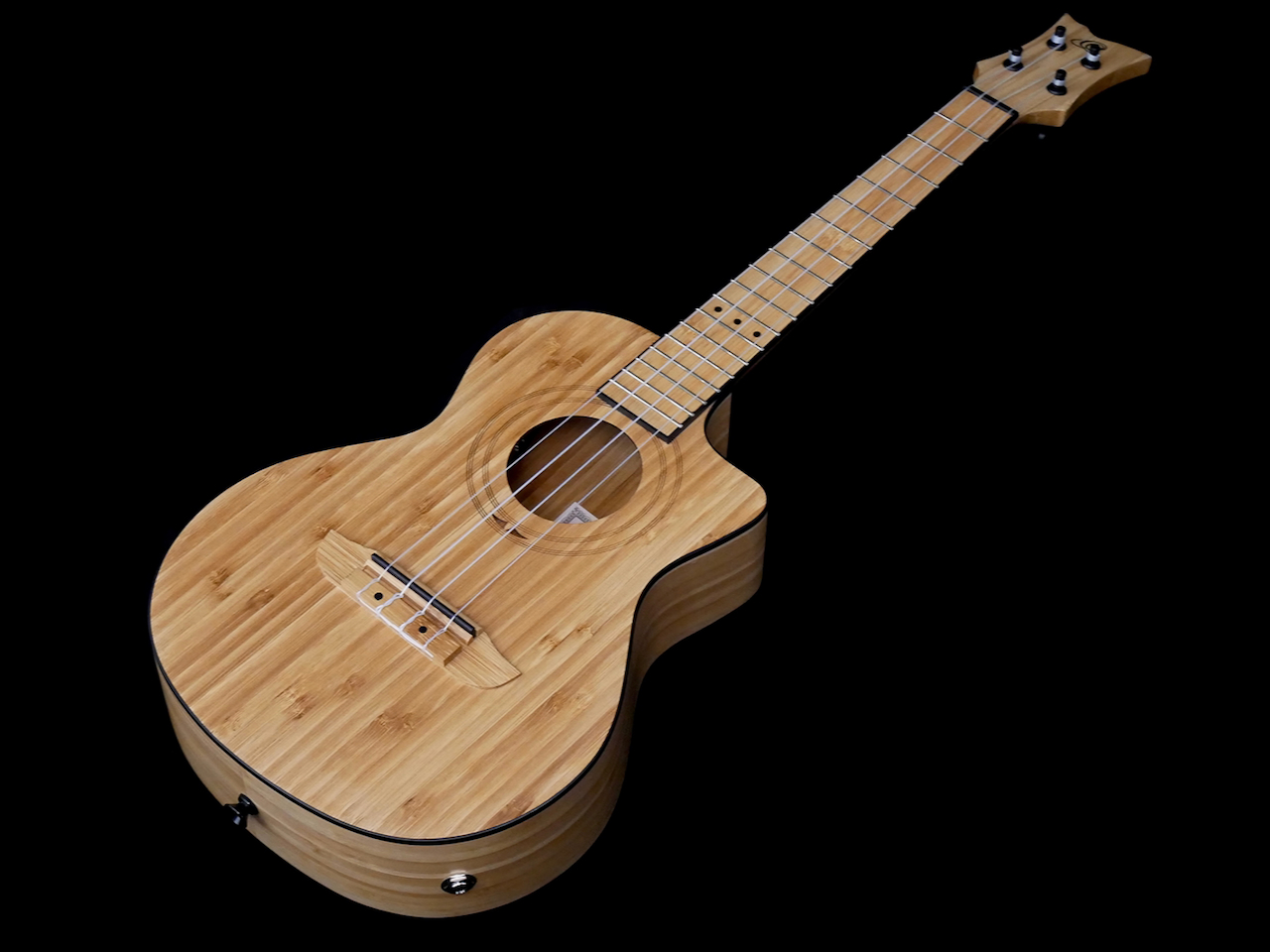
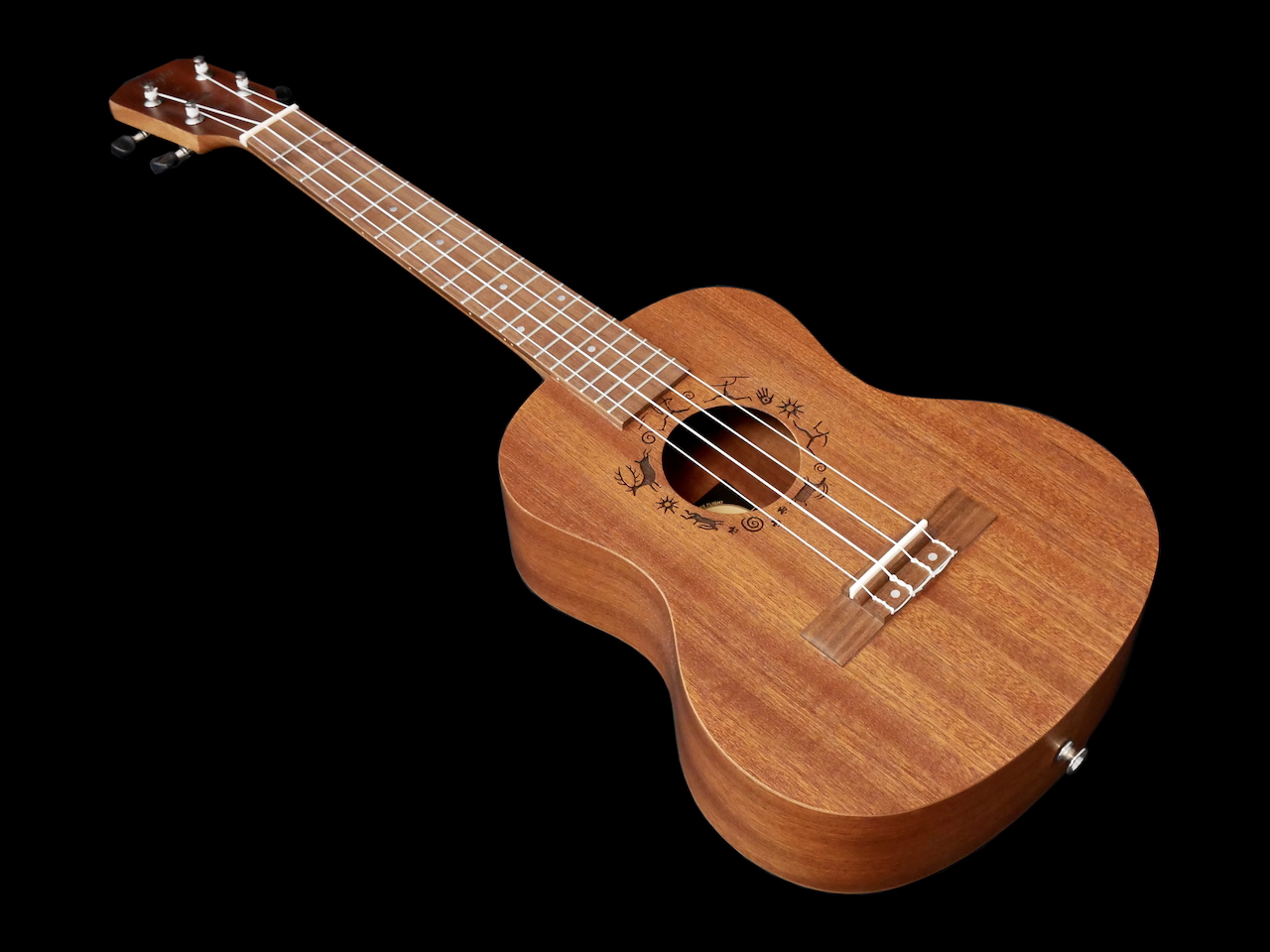
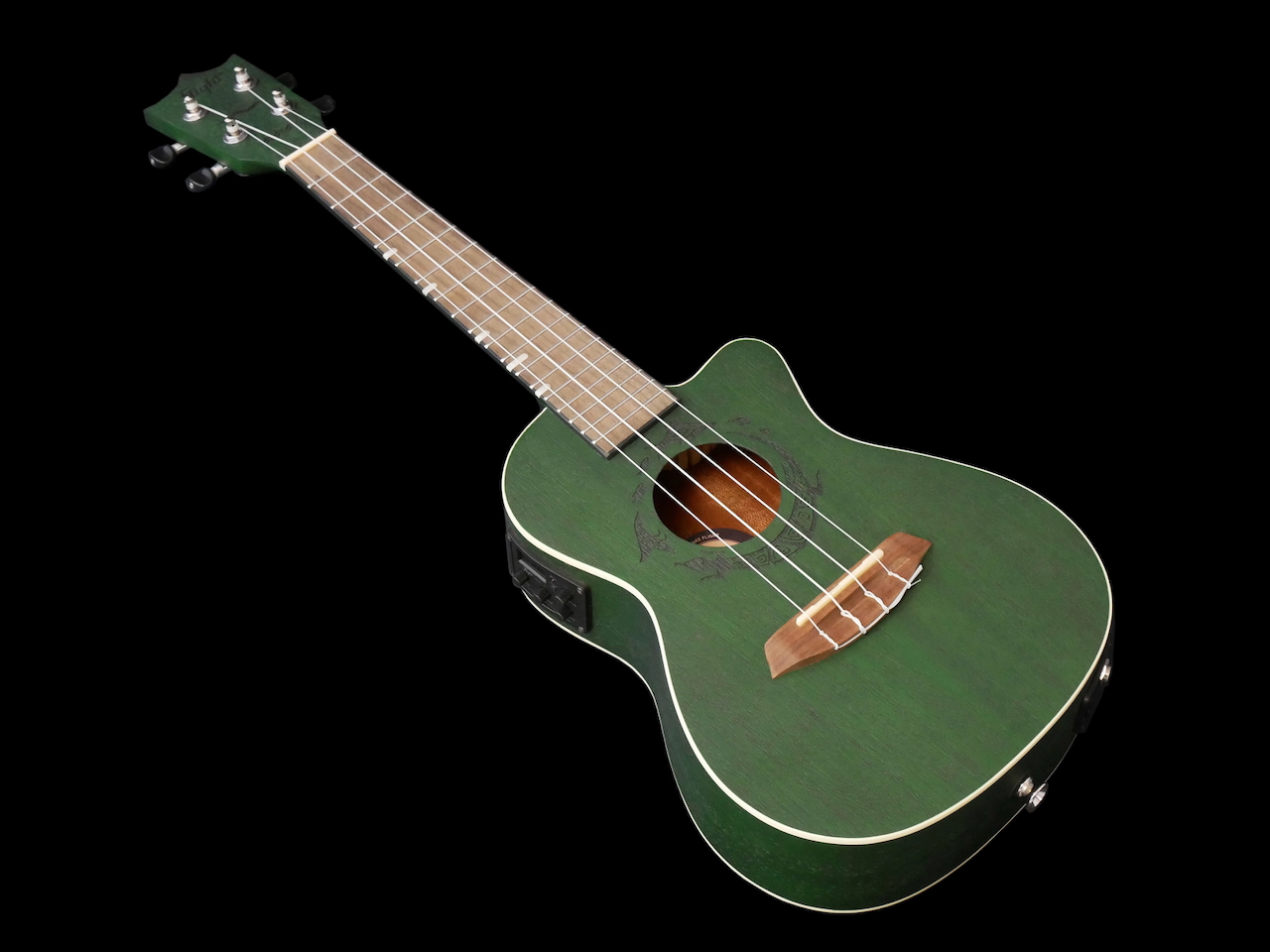
The Flight DUC380CEQ (149 €; incl. gig bag) is a concert-sized ukulele with a cutaway and an active preamp. The DUC380CEQ is available in four different colors – amber, coral, topaz and jade (like the test instrument). The laser-cut rosette consists of Inca-style animals.

The soundboard of the DUC380CEQ is made of mahogany plywood, too, while the neck is made of okoume. The uke’s body has a beautiful cream-colored binding on both the top and bottom.

The neck structure is similar to the other two instruments in the test. The neck is glued to the body at the 14th fret.

The concert ukulele’s fingerboard and bridge are made of walnut. The fingerboard is decorated with black binding. The fingerboard holds 17 neatly installed frets. The position markers are finger-shaped inlays placed on the bass side of the fretboard, like on some Gretsch guitars. Both the compensated bridge saddle and the top nut are made of genuine cow bone. The saddle width is 35 mm.

This model uses modern closed tuning machines with black plastic knobs.

Mounted on the side of the bass side rim is Flight’s own FU-T3 preamp, which is used to shape the signal of the piezo mic located under the bridge. The preamp is powered by two button batteries, their compartment can be found at the bottom of the soundbox next to the output jack. In addition to a volume control, the FU-T3 preamp offers a three-band EQ, as well as an internal chromatic tuner.

Successfully installing a piezo microphone on ukuleles is relatively difficult, because the piezo works best when the strings are pressed tightly against it. Due to the short scale, ukulele strings are quite loose, which often results in the C and E strings sounding louder than the G and A strings. The DUC380CEQ that we tested also suffers from the same problem – so using a compressor is recommended.

Acoustically, the Flight DUC380CEQ sounds very beautiful, with the slight midrange emphasis typical of a concert ukulele. The ukulele is very comfortable to play.
****
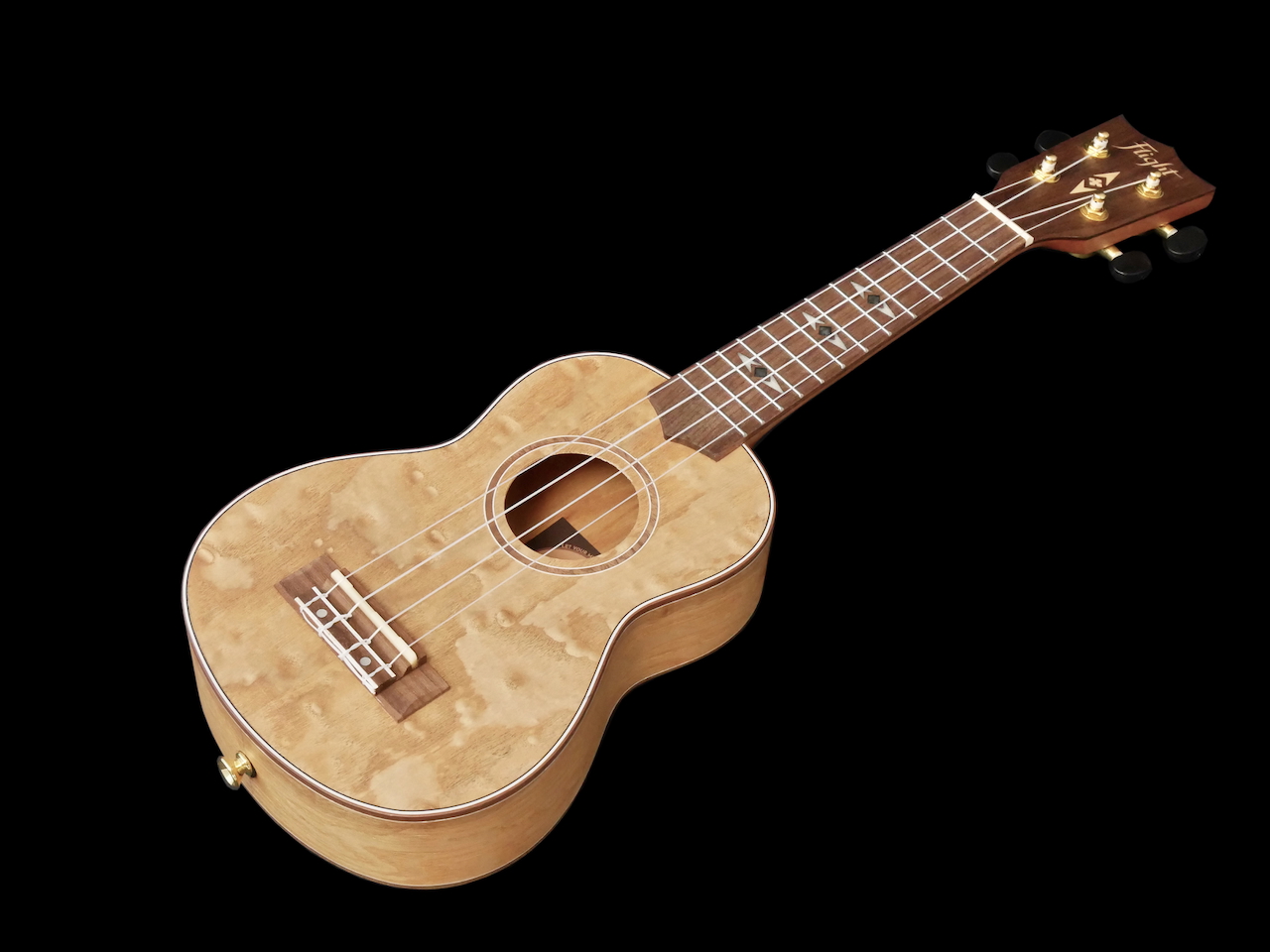
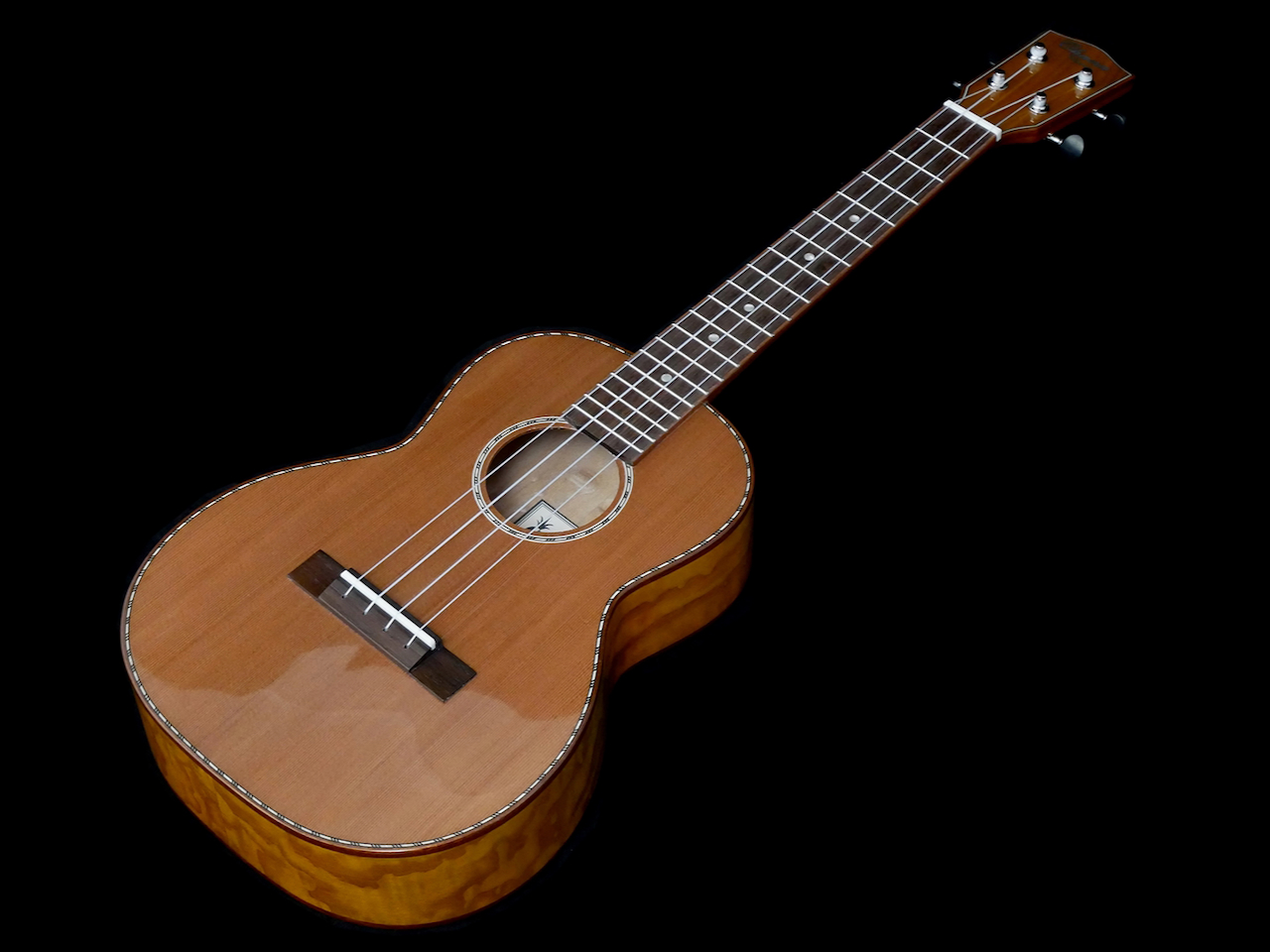
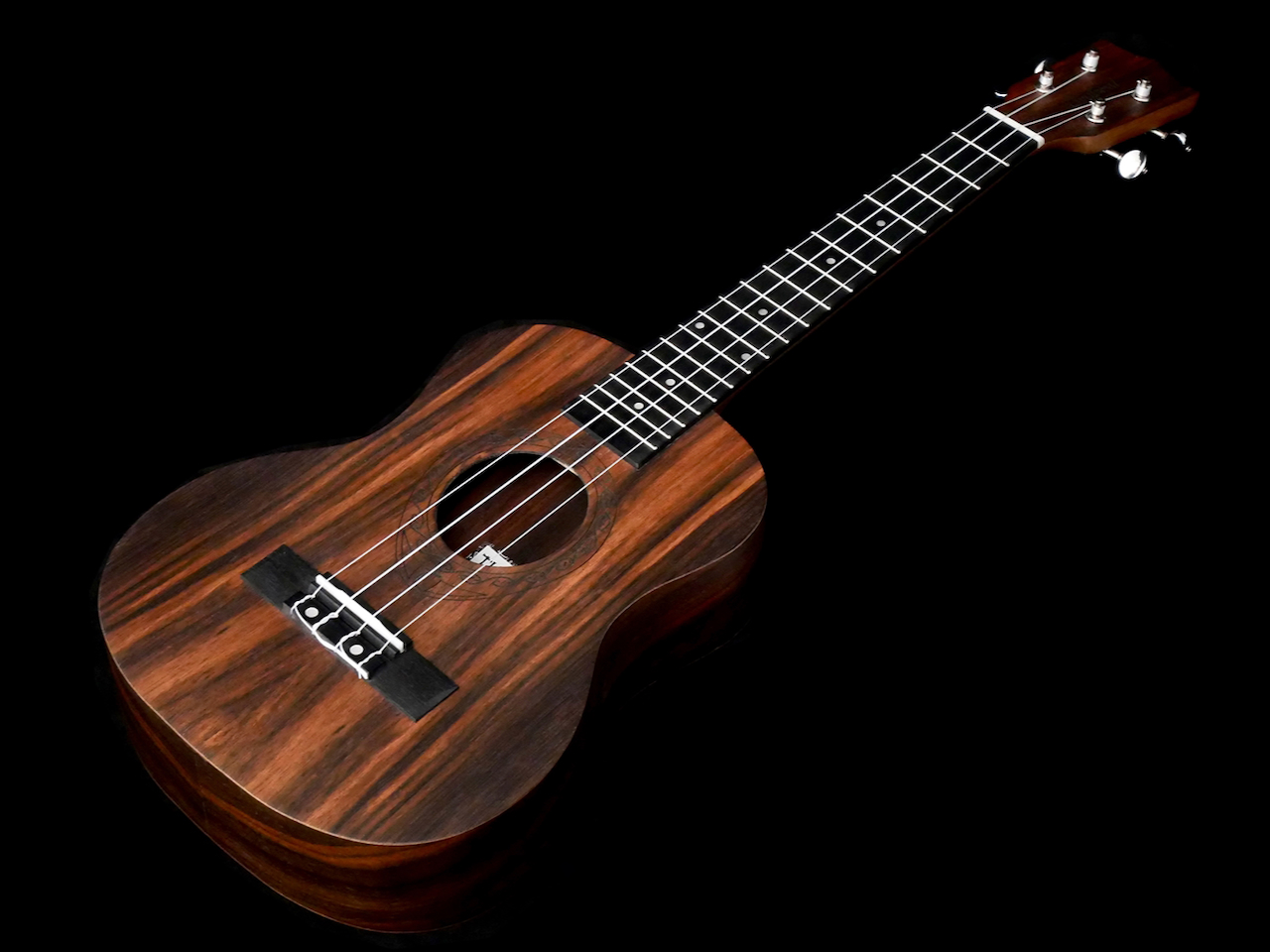
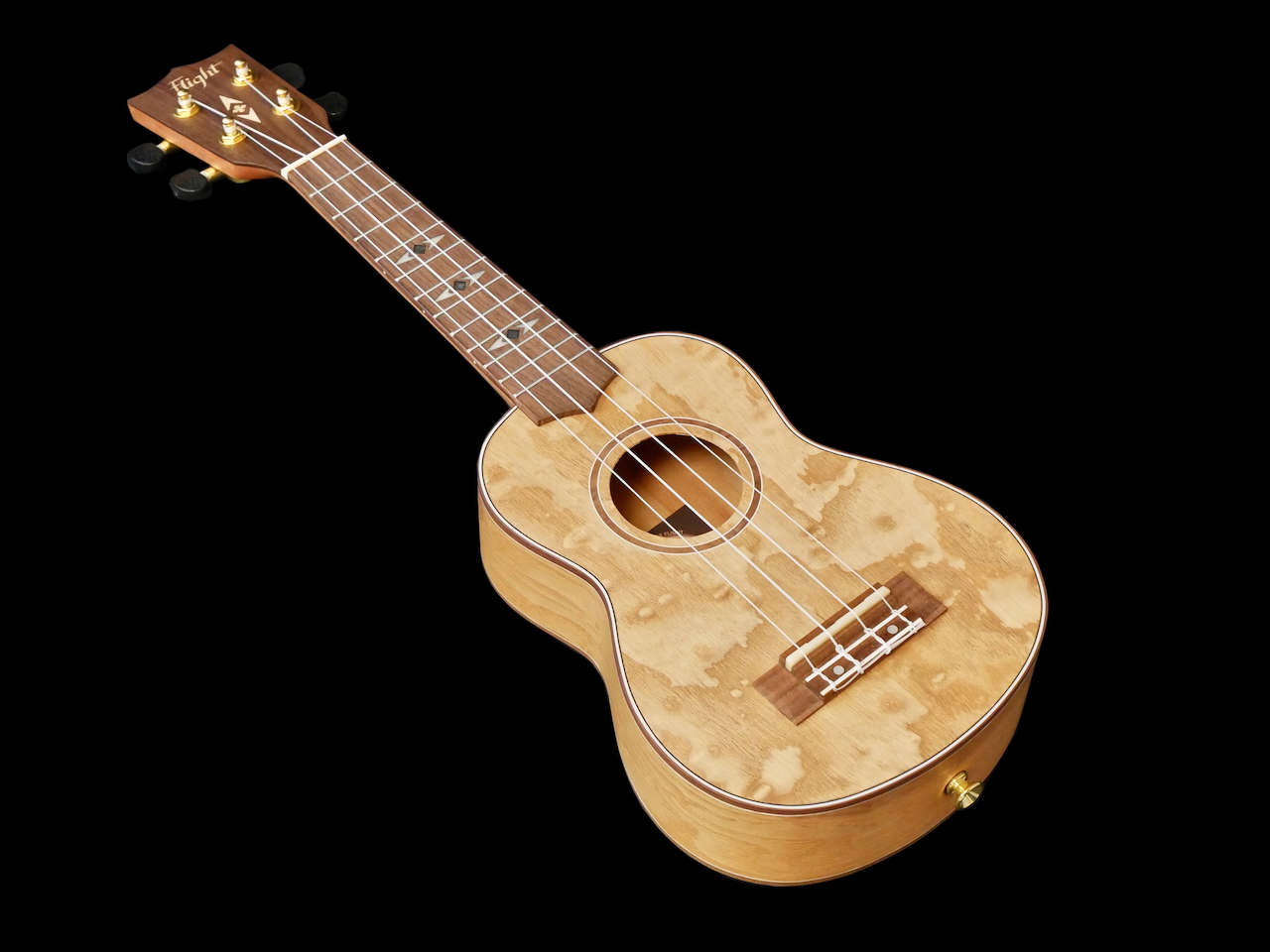
There probably aren’t many ukuleles with a quilted ash body, but Flight’s DUS410QA (159 €; incl. gig bag) is just that. The strong cloud-like pattern on the plywood of this Flight model is very impressive. The top of the soprano model has a multi-layered edge binding, while the bottom of the body has a single-layer decorative strip.

A very beautiful walnut fingerboard is glued to the front of the okoume neck, where 12 frets are very neatly seated. The DUS410QA model’s impressive multi-piece fingerboard inlays are reminiscent of inlays on a 1930s Gibson Advanced Jumbo model. Both the walnut bridge saddle (compensated) and the instrument’s nut are made of genuine bovine bone. The saddle width is 35 mm.

Such an impressive instrument is just the ticket for gold hardware – a strap pin, as well as modern tuners with black (wood patterned) plastic knobs.

The Flight DUS410QA soprano has a suitably bright, yet strong sound, and it projects its sound surprisingly well.
Nyt Rockway-blogissa: Kolme epätavallista Ohana-ukulelea

• Sopraano-kokoinen SKB-35 on Ohanan versio vanhasta Washburn Bell -ukulelesta.
• Concert-kokoisen VKC-70:n inspiraationa on toiminut Harmonyn Roy Smeck Vita -nimikkomalli.
• Ohana BKT-70G yhdistää tenori-pituisen kaulan ja baritoni-uken kaikukopan.
****
Komppiosuudet on soitettu oikean käden peukalolla ja etusormella. Stereokuvassa SKB-35 tulee vasemmalta, BKT-70G on keskellä ja VKC-70 kuuluu oikealta. Soitin melodiaosuudet 3 mm paksulla huopaplektralla.
****
Kaikki ukuleleraidat on äänitetty Shure 545SD -mikrofonilla ja Cranborne Audio Camden EC2 -etuvahvistimen kautta.
****

Testi on nyt luettavissa TÄÄLTÄ.

Tulossa Rockway-blogiin: Kolme epätavallista Ohana-ukulelea

• Sopraano-kokoinen SKB-35 on Ohanan versio vanhasta Washburn Bell -ukulelesta.
• Concert-kokoisen VKC-70:n inspiraationa on toiminut Harmonyn Roy Smeck Vita -nimikkomalli.
• Ohana BKT-70G yhdistää tenori-pituisen kaulan ja baritoni-uken kaikukopan.
****
Komppiosuudet on soitettu oikean käden peukalolla ja etusormella. Stereokuvassa SKB-35 tulee vasemmalta, BKT-70G on keskellä ja VKC-70 kuuluu oikealta. Soitin melodiaosuudet 3 mm paksulla huopaplektralla.
****
Kaikki ukuleleraidat on äänitetty Shure 545SD -mikrofonilla ja Cranborne Audio Camden EC2 -etuvahvistimen kautta.

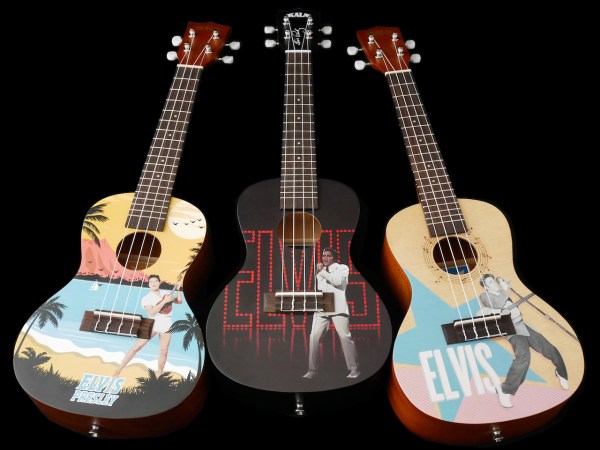
Tulossa Rockway-blogiin: Kala ELVIS Ukulele Starter Kits
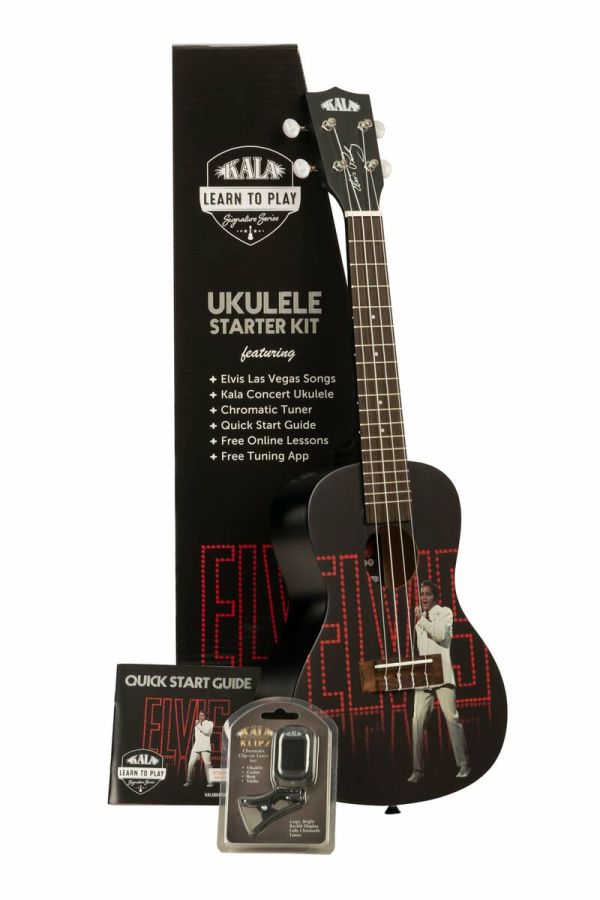
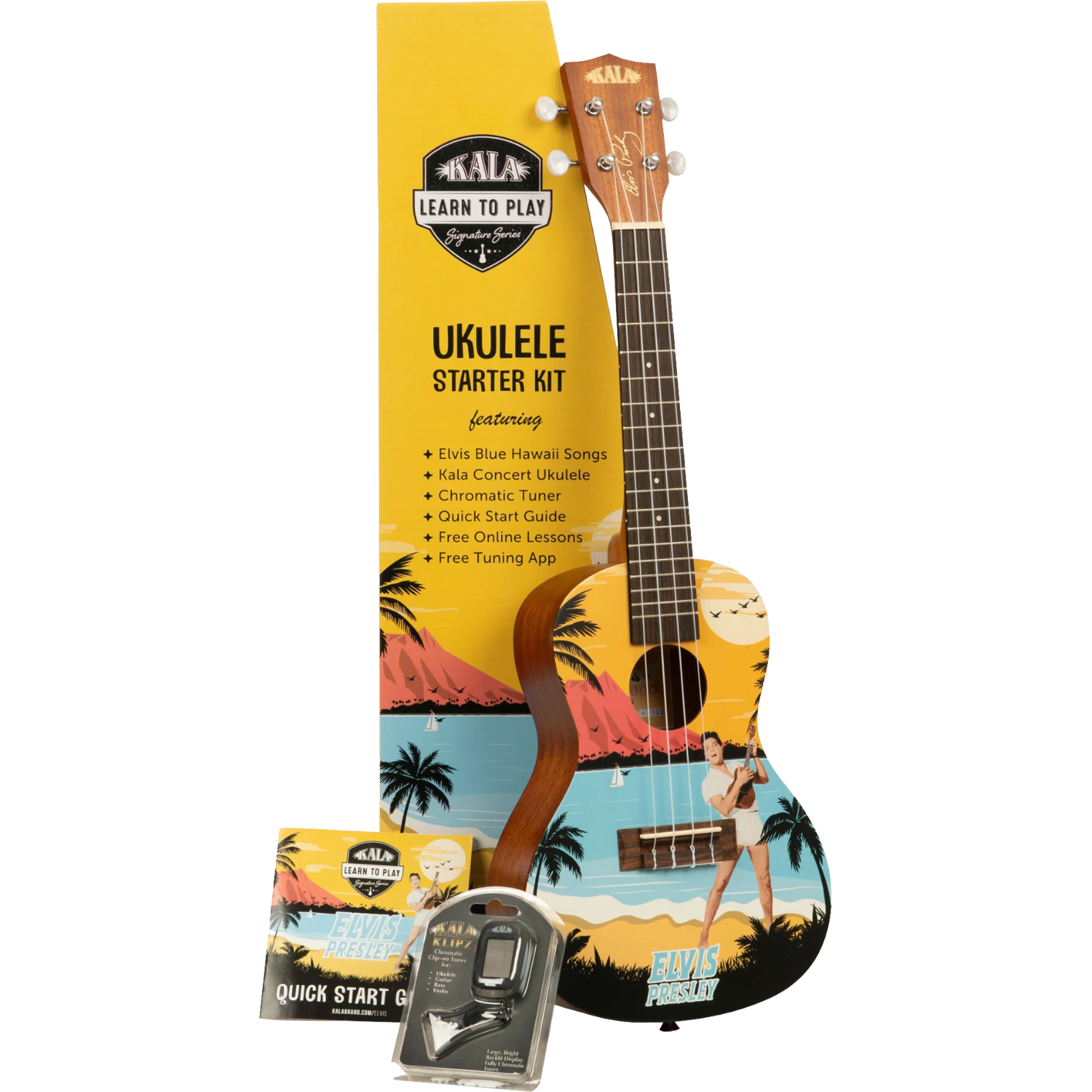
KALA now offers three ELVIS-themed concert ukulele starter kits.
• Kala Elvis Rockabilly Edition
• Kala Elvis Blue Hawaii Edition
• Kala Elvis Viva Las Vegas Edition
Each starter kit comprises the concert sized uke with the appropriate graphic finish, a clip-on tuner, a starter’s guide including songs from the corresponding era of Elvis’ career, as well as links to ukulele lessons and a free tuning app download.
****
This demo is based on the Elvis classic ”In The Ghetto” (written by Mac Davis).
• All ukulele tracks were recorded with a Røde M5 condenser microphone plugged into a Cranborne Audio Camden EC2 preamp.
• The three rhythm parts were played on all three kits.
• The lead part was played on the Elvis Viva Las Vegas uke.
• The high register ”answer” parts were played on the Elvis Blue Hawaii and the Elvis Rockabilly.
Review: Three Solid Mahogany Soprano Ukuleles – Flight MUS-2 + Ohana SK-38 + Sigma SUM-2S

The ukes have been recorded with a Citronic RM-06 ribbon microphone plugged into a Cranborne Audion Camden EC2 preamp. All EQ-settings were kept identical between the three models.

Alkuperäinen suomenkielinen juttu on ilmestynyt Rockway-blogissa.

Vintage C. F. Martin Style 2 soprano uke

Most of us will have started learning to play the uke with an affordable instrument, whose soundbox is probably made – at least in part – from laminated wood. Over time our playing will have improved, making us feel that it was maybe time to step up to a higher quality uke, which in most cases will mean an all-solid instrument.

If you’re interested in the history of this diminutive instrument you will have noticed that C. F. Martin & Co is a legendary maker of ukuleles. Even though Martin is a company based in Pennsylvania, they have started crafting ukes during the ukulele boom of the 1910s already. Not content making mere copies of Hawaiian instruments Martin almost singlehandedly developed the ukulele further, raising the benchmark for how a great uke should look and sound in the process. Martin also sold bucketloads of the little instruments – their ”economy model” alone, the Martin Style 0, sold almost 90,000 units between 1922 and 1994, when the original production run ended (temporarily).

The Martin Company originally introduced three soprano models in 1915, named Style 1, Style 2 and Style 3. The higher the Style’s number the more intricate the cosmetic features, like bindings and rosettes, would be.

My personal favourite is the dark brown all-mahogany Style 2, which is why I’ve chosen three all-solid Style 2-copies for this review.

A word about friction tuners

Most ukuleles these days are made with geared guitar tuners, which make tuning relatively easy for beginners. This is due to the so-called gear ratio, meaning the number of turns on a machine head’s knob relating to a full turn of the actual tuner post. This is normally somewhere between 14:1 and 18:1, meaning 14 or 18 turns of the knob shaft will give you one full turn of the tuner’s post.

Friction pegs aka patent tuners

Originally, all ukuleles came with simple wooden friction pegs that kept the strings in tune by simple friction between the hole in the headstock (aka peg head) and the wooden peg. This is exactly the same type of system that’s still in use on violins or cellos.

In 1920 Martin started introducing new-fangled friction pegs – first on more expensive models, but then across their whole uke range – which offered a much smoother tuning action. Friction tuners contain no gears, meaning their ”gear” ratio is 1:1 (like on a wooden peg), but here the friction is caused by metal washers, or plastic washers, or metal springs, that are forced against the front and back surfaces of the headstock. Their ”action” or stiffness can be adjusted with the screw at the top of the tuning button.

I would never recommend giving a beginner an instrument with patent pegs, because learning to tune your uke properly is hard enough in the beginning. But there is no reason to be afraid of friction pegs, either, once you know the basics of tuning your instrument. Just keep in mind that very little goes a long way with patent pegs, when it comes to hitting the correct pitch. You should also keep the right screwdriver handy for quick adjustments of the pegs’ stiffness, which can shift between summer and winter, due to the headstock wood expanding and contracting according to the relative humidity.

Nowadays friction tuners are mostly found on vintage-style ukuleles, like on the three instruments reviewed here.

****

Flight MUS-2

Flight is a Chinese brand concentrating mostly on ukuleles.

The Flight MUS-2 (current price in Finland: 199 €; incl. gig bag) is their version of a Martin Style 2 soprano ukulele. This is a beautiful instrument that invokes its vintage mojo with the help of a matte open-pore finish over a rich brown wood stain.

Flight’s own additions to the recipe include wooden body binding – instead of the celluloid plastic used on the original – as well as a cream rosette around the soundhole.

The Flight MUS-2’s neck is solid mahogany, too, but made of three parts, with the neck heel and the upper half of the peg head glued to the neck’s long main part. This way of doing things is both more economic and better for the environment than carving the neck out of a much larger wooden blank.

The Flight’s fretboard and bridge have been made from walnut, while the top nut and the bridge saddle are genuine bone.

The MUS-2 uses a set of Gotoh friction pegs, which employ plastic knobs, silicone washers and metal sleeves to build up the necessary friction for keeping the strings under tension.

Neck width at the saddle is 34 mm, which is the de facto standard for most modern soprano ukuleles, even though this is two to three millimetres narrower than on most vintage ukes. The MUS-2 has a scale length of 34.9 cm, which is three millimetres longer than on a Martin soprano.

The MUS-2 has a nicely rounded D neck profile.

The workmanship on the Flight is on a really high level. My only, tiny bit of criticism points to the matte finish which is something of a fingerprint magnet on the test sample.

The MUS-2’s string action is modern and low. I measured 2.4 mm at the 12th fret for the g-string and 2.1 mm for the a-string. The action and the nicely rounded neck make for a very comfortable playing feel. Despite the low action, the Flight offers a very good dynamic range without any string rattles.

The Flight MUS-2 has a surprisingly big and full-bodied voice that projects very well, both to the player and to his (or her) audience.

****

Ohana SK-38

Ohana is brand situated in the US, but with most of its production in China. Ohana is the Hawaiian word for ”family”.

Ohana’s 38 Series comprises of all-solid Style 2-copies in different body sizes, with the Ohana SK-38 (current price in Finland: 348 €) being the soprano model.

Cosmetically the SK-38 probably comes closest to the spirit of a vintage Martin Style 2, except for the slightly larger-than-vintage soundhole (about 2 mm more in diameter) and the position markers copied off a Style 1 instrument. Our test sample was a tiny bit heavier than the Flight ukulele, but still super-light compared to most string instruments.

In terms of colour and finishing the Ohana SK-38 is almost identical to the Flight, with the finish seeming even thinner here. Visually the SK-38 evokes the pre-1926 Martins that sported a brushed on cellulose-based finish. In 1926 Martin phased in spray finishes to speed up production.

The soundbox’ top sports three-ply plastic binding (b/w/b), while the back is single-ply. The vintage-type rosette is made up of alternating thin black and white rings.

The Ohana SK-38 sports a modern solid-mahogany neck with separate parts for the neck heel and the headstock’s top half. The Gotoh patent pegs are the same model found on the Flight, too.

The fretboard and bridge have been carved from ovangkol. The top nut and bridge saddle are both bovine bone.

Neck with at the nut is 34 mm on the SK-38, while the scale length is 34.9 cm.

I would call the Ohana SK-38’s neck profile a slightly flatted C-profile, which comes close in feel to modern Martin soprano uke necks. In terms of playing comfort there’s not much to divide the three reviewed sopranos.

The SK-38 displays a very high level of workmanship; I own an older version of this uke – one that sports a nut and bridge saddle carved from ebony – and I must say the build quality on the new version has clearly improved.

The very low string action on the test sample is a good indicator of the quality of the fretting. I measured 1.3 mm for the g-string and 1.4 mm for the a-string at the 12th fret. Despite this low action I experienced no problems whatsoever with fret rattle.

The Ohana SK-38 has a very balanced voice with a tiny bit less bottom end and a tad more sparkle, when compared to the Flight. The Ohana projects very well.

****

Sigma SUM-2S

Originally, Sigma Guitars was C. F. Martin’s far-eastern brand, founded to combat the ever-increasing flow of Japanese Martin-copies in 1970. In 2007 Martin sold the brand to German company AMI GmbH, who has done quite a lot to raise the brand’s profile. Apart from copies of Martin guitars Sigma’s model range now also includes several Gibson-style acoustic guitars. Sadly, Sigma’s ukulele range has been discontinued at the start of 2022, meaning that the current stock of Sigma ukes in shops now will be the last, at least for the foreseeable future.

The Sigma SUM-2S (current price in Finland: 315 €; incl. gig bag) looks a bit more refined than the other two instruments in this review, due to its flat matte finish. The finish is very thin, but has been buffed to a flat matte sheen.

The SUM-2S is in the same weight class as the Ohana SK-38.

Anoraks would say that the Sigma SUM-2S is more of a ”Style 2.5” soprano, because it comes with the longer fretboard – offering 17 instead of 12 frets – of a Style 3 (and Style 5) uke.

In some respects, though, the SUM-2S comes closer to vintage Martin specifications than the other two contenders in this review:

Arguably the most important point here is the one-piece mahogany neck, which is a genuine rarity in this price range. Other features include a 36 mm wide neck at the nut, a smaller soundhole, the vintage-correct size and spacing of the position markers, as well as the original (shorter) Martin-scale of 34.6 cm.

The fretboard and the bridge have been made out of Indian rosewood, while the top nut and bridge saddle are genuine bone.

The Sigma SUM-2S uses Chinese Ping friction pegs, which produces the require friction by pressing the plastic tuner knobs into fat plastic washers. These pegs have been in for some criticism in a number of reviews, but to be fair, I haven’t had any tuning problems with the Ping pegs over the whole duration of testing the Sigma uke.

The neck profile on the Sigma SUM-2S is fatter than on the Ohana, but flatter than on the Flight, combining the best aspects of the two necks.

Even though the difference in neck width at the nut is only two millimetres, the Sigma’s neck feels roomier. This can make a huge difference in feel for people with large (or thick) fingers!

The Sigma’s set-up is very comfortable. I’ve measured an action of 2.1 mm for the g-string and 1.8 mm for the a-string at the 12th fret. The fretwork is excellent, meaning I’ve experienced no string rattles.

Like the other two instruments in this review the Sigma, too, came with Aquila Nylgut strings. Due to the slightly shorter scale length the strings feel maybe a little bit too slinky. I’d recommend trying fluorocarbon strings on the SUM-2S, which generally tend to feel a bit stiffer.

At first I thought the Sigma was quieter than the other two ukes, when in fact it even offers more of a vintage-style ”bark” for the audience (or a microphone). The smaller soundhole simply makes this ukulele project slightly less in the direction of the player himself (or herself). In terms of its sound the Sigma SUM-2S is the brightest sounding of the three reviewed models.

Pidä blogia WordPress.comissa.

Ylös ↑