Contact: Musamaailma
Happy Birthday, Musamaailma!
Soitinliikkeenä ja maahantuojana tunnettu Musamaailma juhlii tänä vuonna 30-vuotissynttäriään.
Juhlan kunniaksi ESP Guitars on valmistanut 30 kappaletta LTD MM-30 -juhlamallista. Synttärimallin Kitarablogi-testi on juuri työn alla.
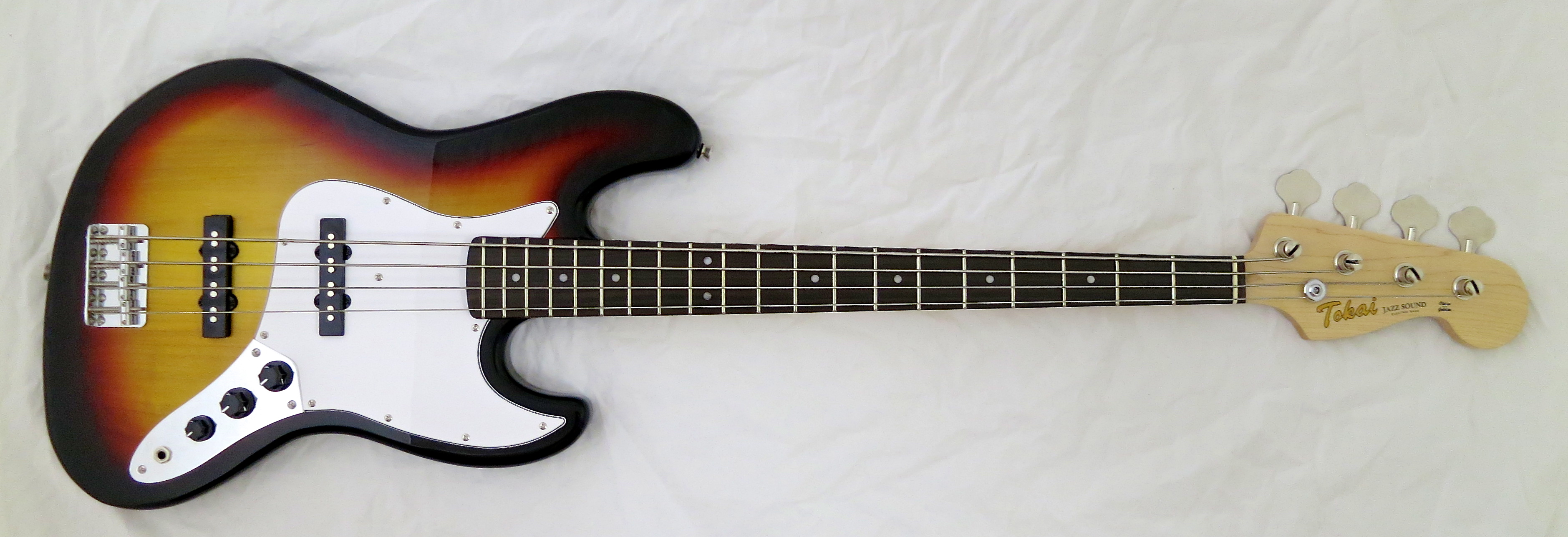
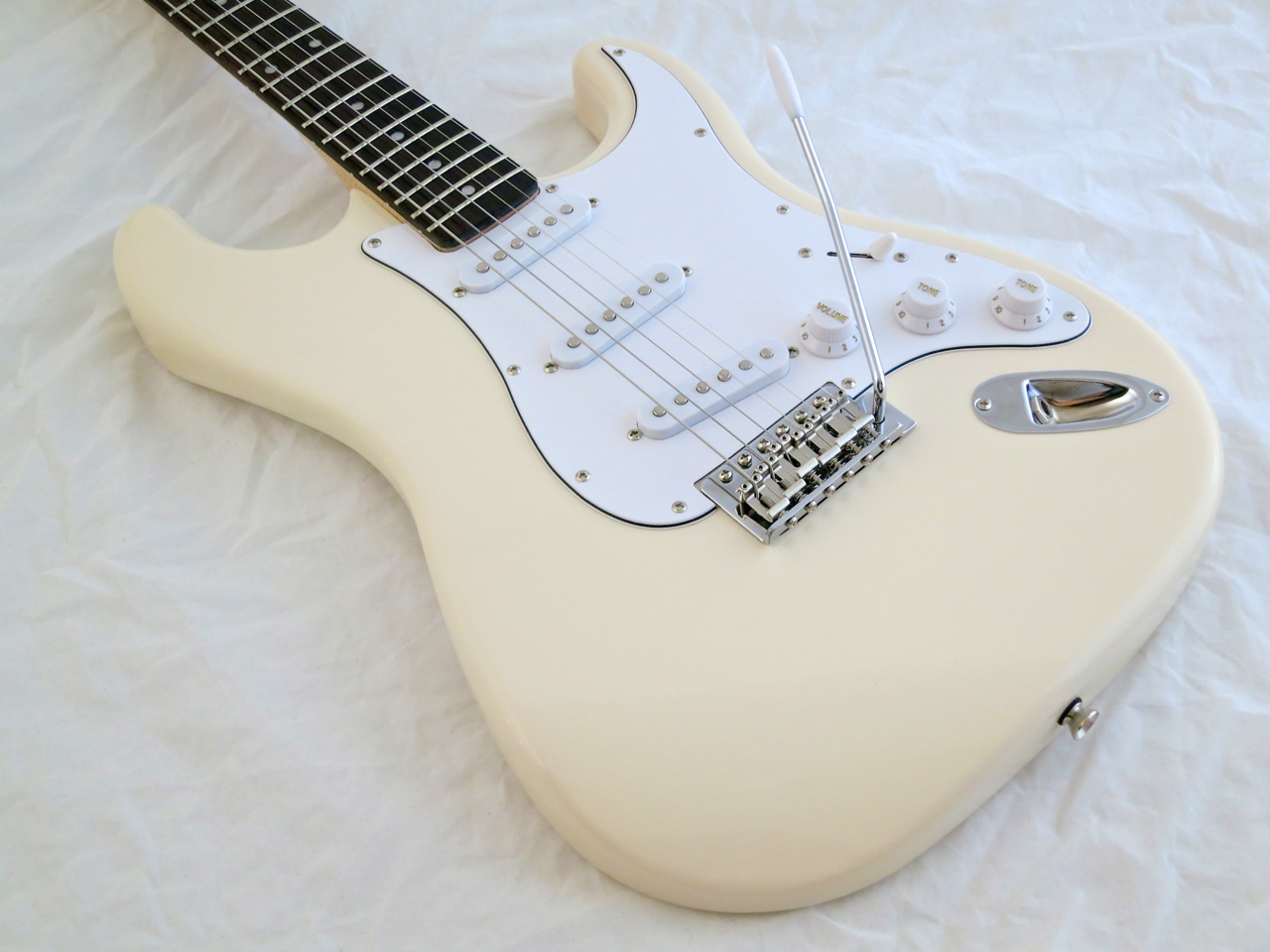
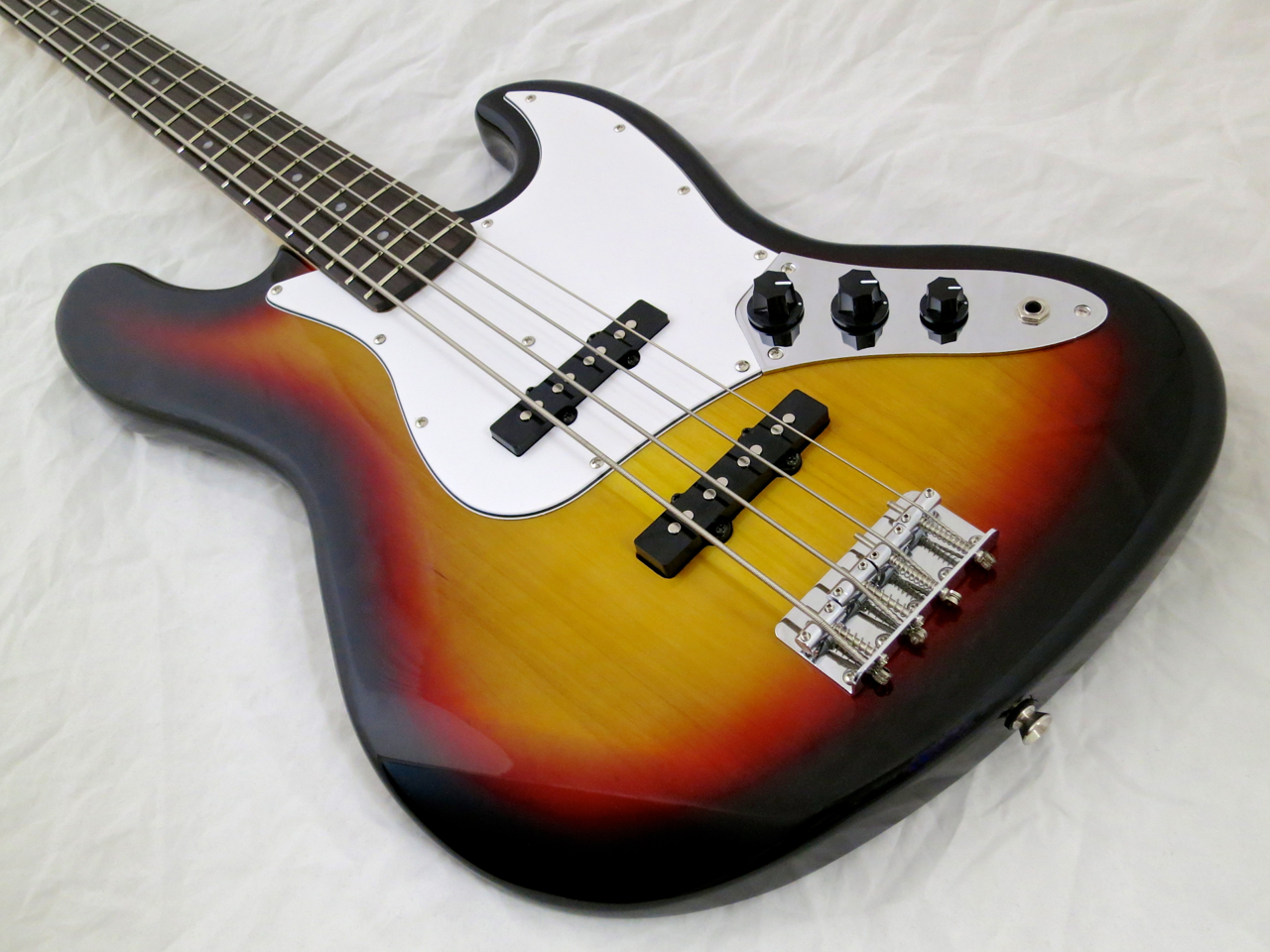
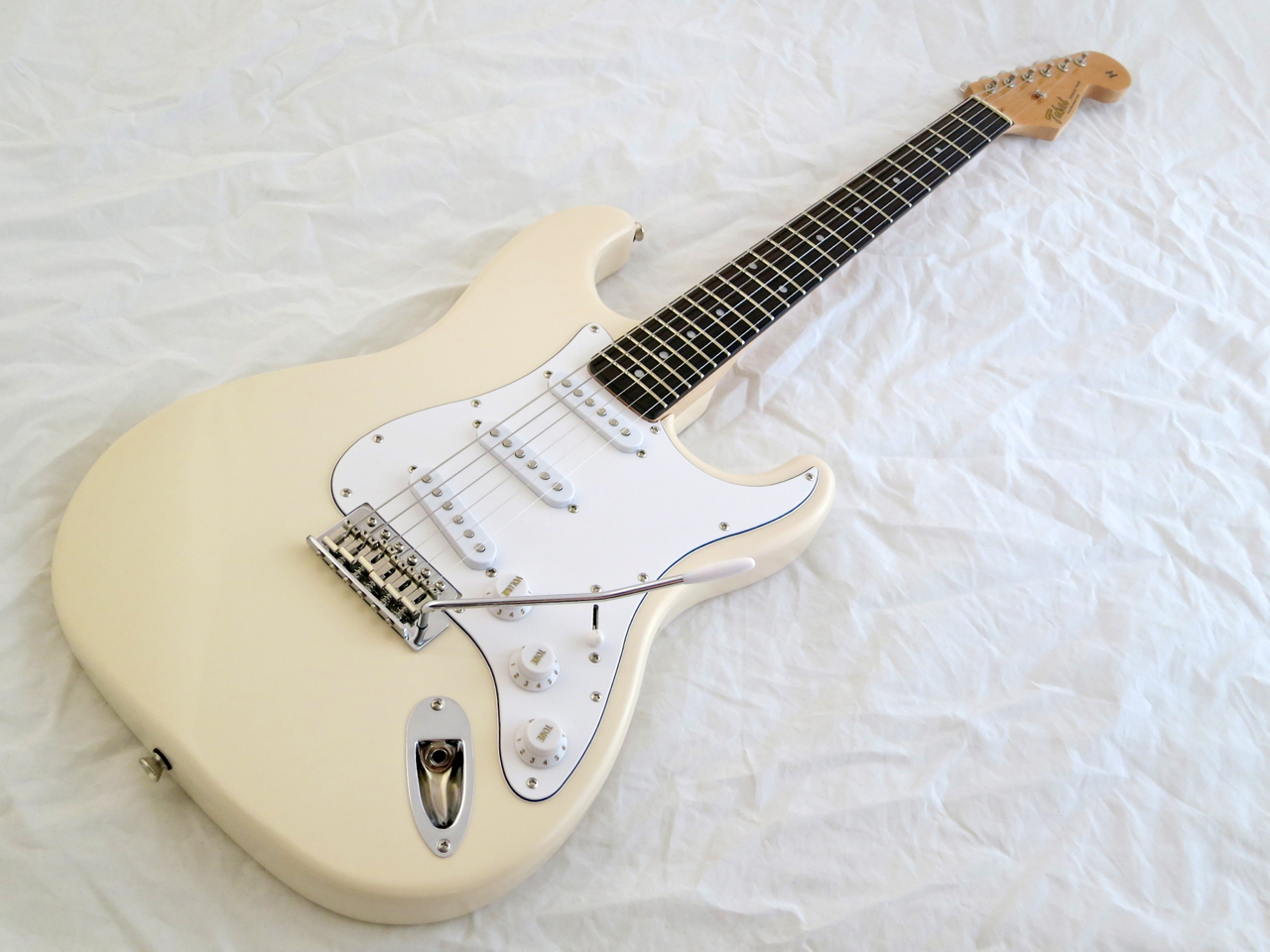
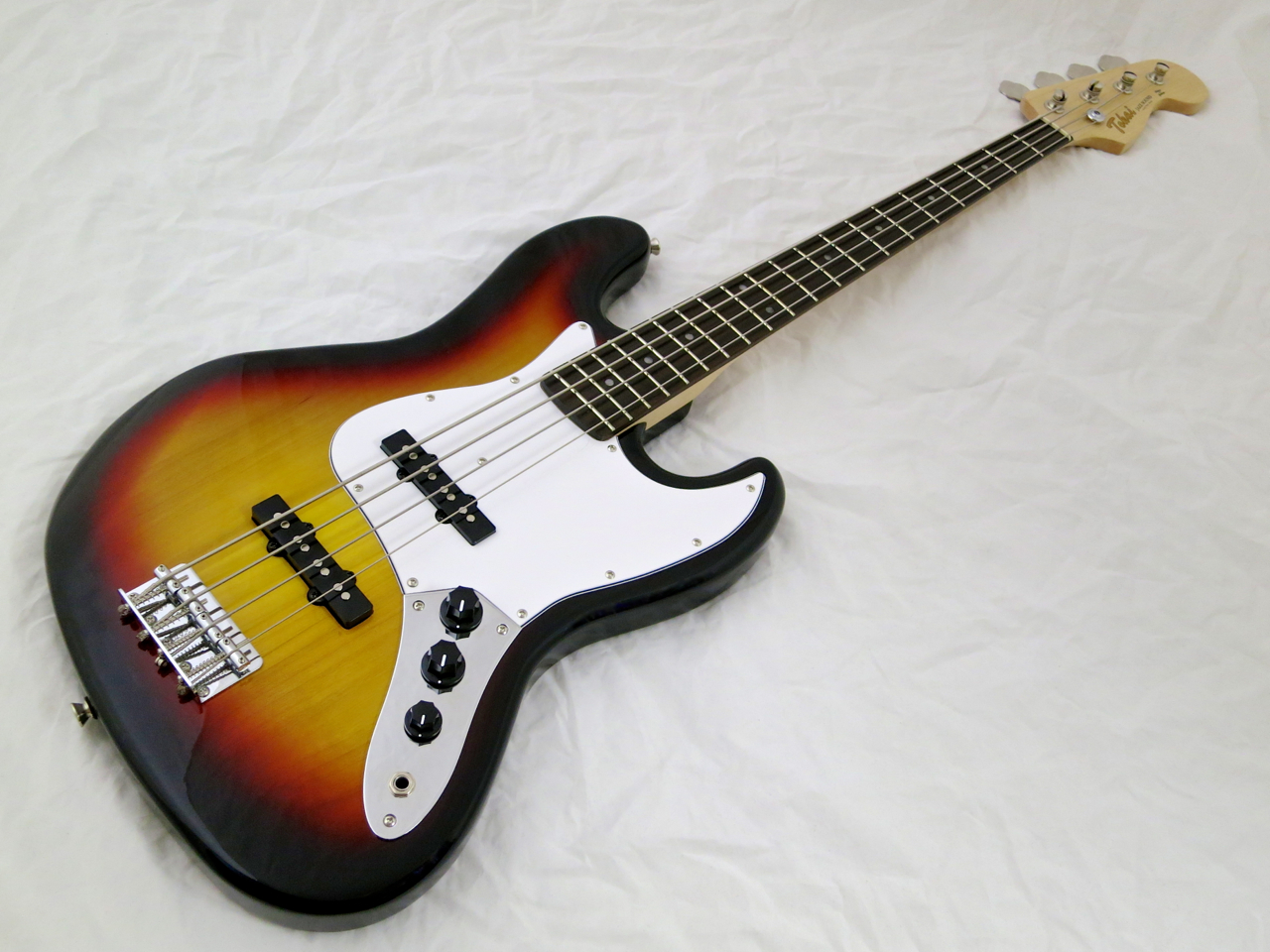
ESP- ja LTD-soittimien lisäksi Musamaailma tuo kitara- ja bassopuolella maahan mm. myös seuraavat merkit: Admira, Blackstar, Bogner, DV Mark, EMG, GJ2 Guitars, Markbass, Mooer, Seymour Duncan, Spector, Tanglewood, Tech 21 NYC, Tokai, Rockbag ja Warwick.
Fender Custom Shop Road Show on n-y-t – nyt!
DLX Helsingissä on tänään ja huomenna nähtävissä ja testattavissa parikymmentä erilaista Fender Custom Shop -soittimia.
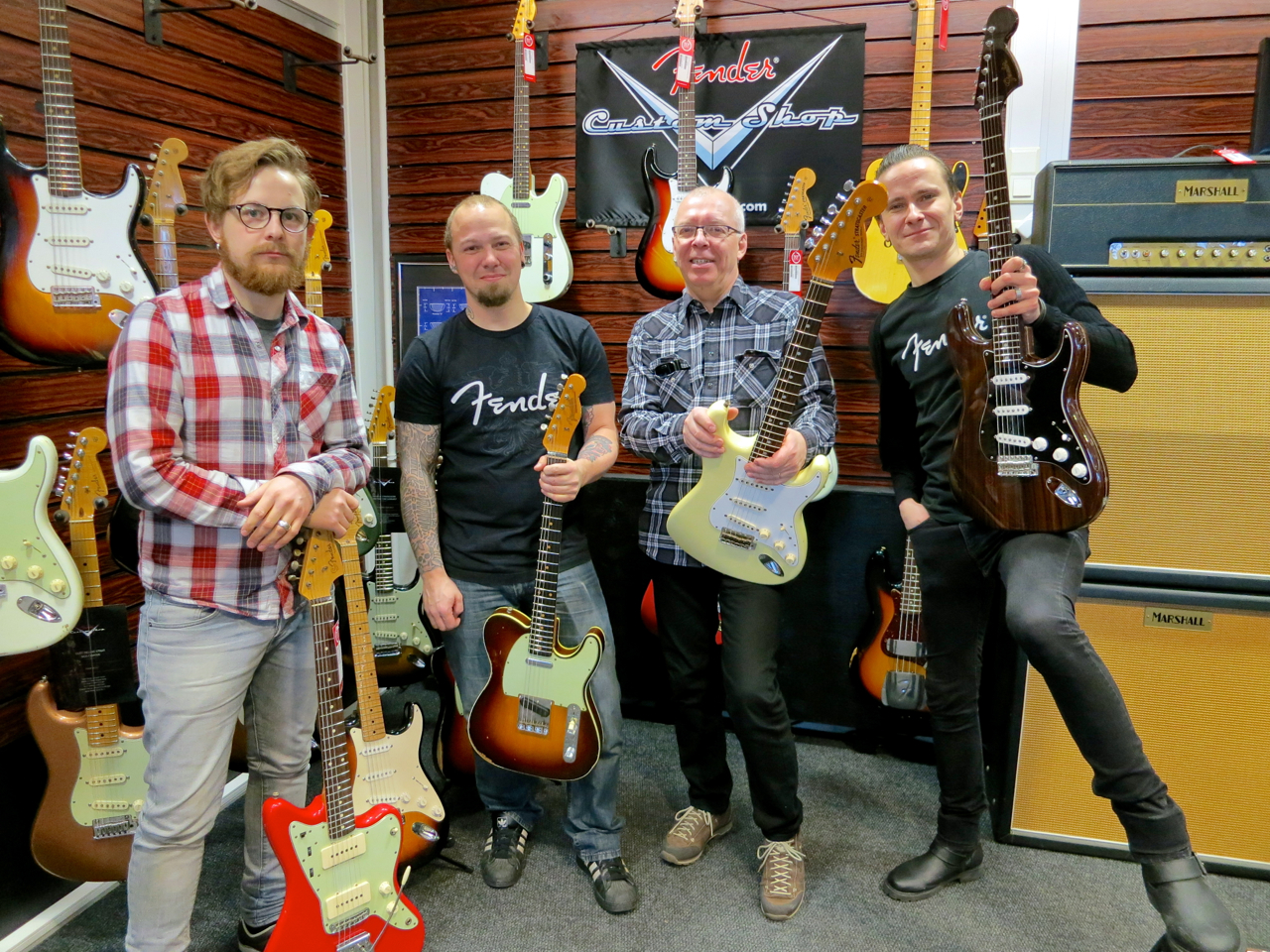
Paikan päällä on Fender Scandinavian Custom Shop -vastaava Benty Ökvist (toinen oikealta). Kokeiltavissa ovat mm. sellaisia harvinaisuuksia kuin – alun perin Jimi Hendrixille suunniteltu – Rosewood Stratocaster (näkyy kuvassa DLX Musiikin myymälänhoitajan Olli-Matti Wahlströmin kädessä).
Kuvassa myös DLX:n oma kitaratiimi Matti Härkönen (1. vasemmalta) ja Mikko Kejonen (2. vasemmalta).
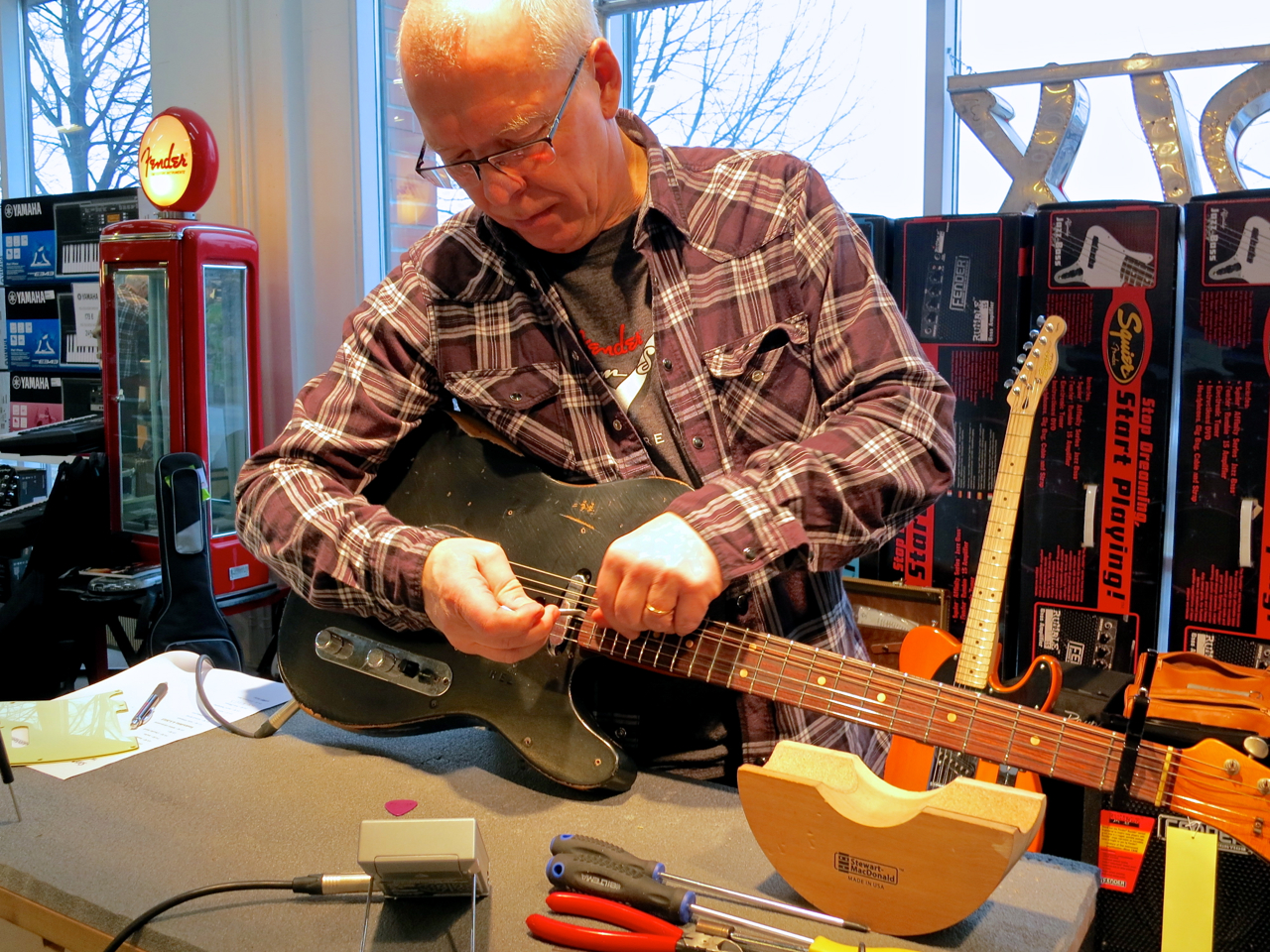
Ennen Custom Shop Road Show -tapahtumaa on voitu myös tilata omalle Fender-soittimelle ilmaisen säätöajan.
Huomenna ja ylihuomenna: Fender Custom Shop Road Show DLX Musiikissa
Tervetuloa osallistumaan Fender Custom Shop Road Show – tapahtumaan. DLX Helsingissä nähtävillä ja testattavissa parikymmentä erilaista Fender Custom Shop -instrumenttia.
Tule säädättämään ja vaihdattamaan kielet samalla sinun Fender soittimeesi, tietysti ilmaiseksi. Aikoja varattavissa molemmille päiville klo. 11.00 – 16.00. Sitovat ilmoittautumiset ainoastaan puhelimitse 0207282250.
Suunnittele nyt oma unelmasoittimesi! Osallistu kyselyymme osoitteessa: http://goo.gl/forms/iYvWkwBZq5
Arvomme kaikkien osallistujien kesken yllätyspalkintoja ja valitsemme suunnitelmien joukosta yhden, jonka myös tilaamme myymäläämme. Suunnitelman tekijällä on mahdollisuus ostaa tämä soitin itselleen tuntuvalla alennuksella!
NAMM 2015 – Blackstar ID:Core Beam
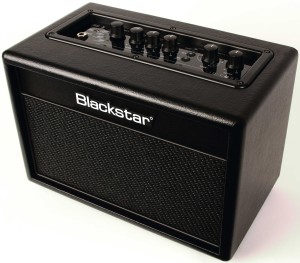
Blackstarin mielenkiintoisin uutuustuote on nimeltään Blackstar ID:Core Beam – se on Bluetooth-vahvistin efekteillä.
ID:Core Beamilla (arvioitu hinta noin 299 €) voi soittaa akustista kitaraa, sähkökitaraa tai bassoa, sekä kuunnella musiikkia langattomasti suoraan mobiililaitteesta tai tietokoneelta! Uudessa Blackstarissa on 12 eri vahvistinmallinnusta, 20-wattinen stereovahvistin, tyylikäs retro-ulkoasu, 12 efektiä, ISF-toiminto, 12 muistipaikkaa omille soundeille, viritysmittari, usb-lähtö, linjatulo, sekä lähtö kaiutinmallinnuksella. Blackstar Insider -softalla voi jakaa omia soundeja muiden käyttäjien kanssa.
Maahantuoja: Musamaailma
NAMM 2015 – Marshall Silver Jubilee 2555
Maahantuoja: EM Nordic
Review: Boss Waza Craft BD-2W + SD-1W
Boss’ Waza Craft pedals are the company’s brand-new all-analogue, top-of-the line compact effects. The Waza Craft range has been designed to give the quality-conscious guitarist the full boutique-pedal experience in the well-loved Boss format.
The Japanese word ”waza” can be translated as art, artistry or technology, and hints at the fact that the three new pedals (the overdrives reviewed here, plus the DM-2W delay) are a return to old-school, all-analogue circuitry, and that the effects are factory-modded for your convenience.
****
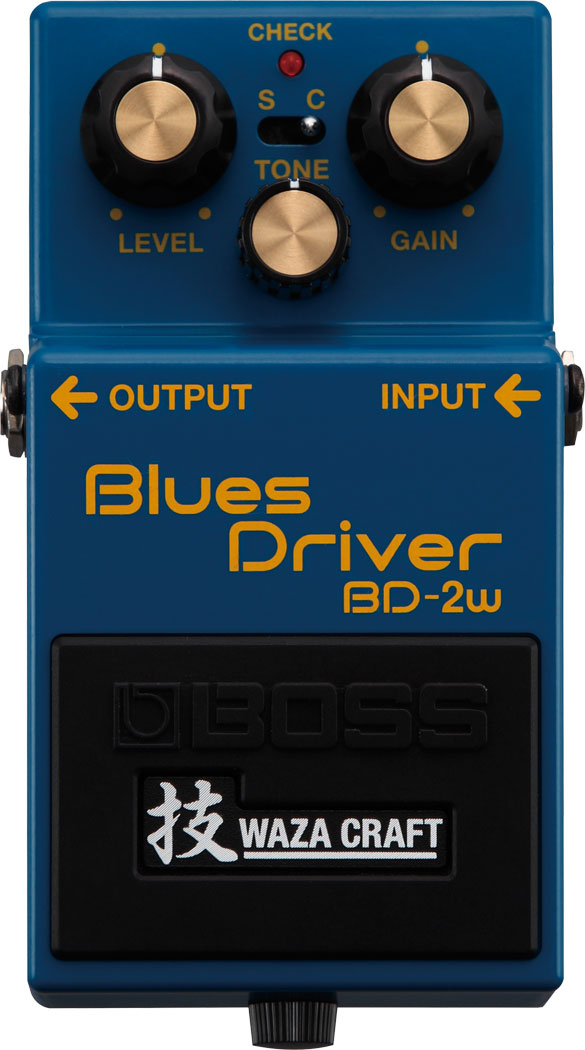
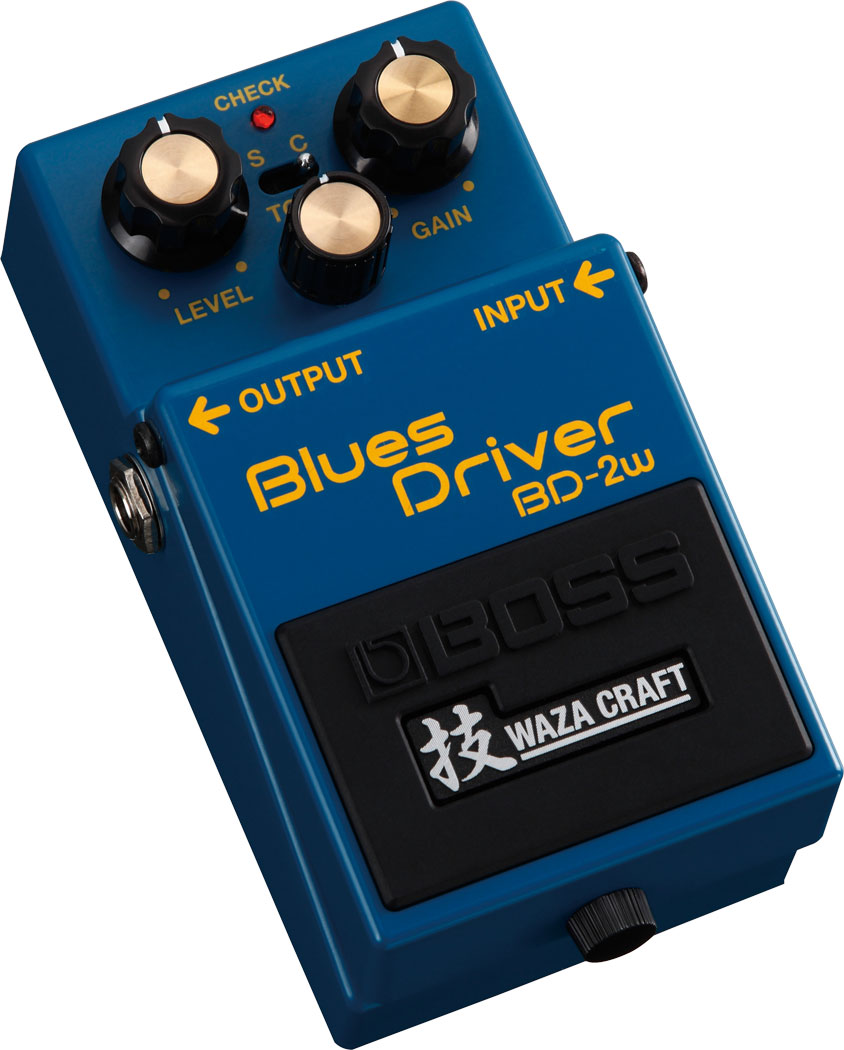
The Boss Blues Driver BD-2W Waza Craft (current price in Finland around 155 €) is a ”waza-treated” update of the popular Blues Driver overdrive.
In the late 1970s Boss came up with the now-legendary, compact guitar pedal format, which has since become an industry standard. The typical Boss pedal is made from a cast metal casing with the quick-access battery compartment tucked away beneath the pedal’s switch flap.
The BD-2W comes with the standard three controls for Gain, Tone and Level.
The Waza Craft range’s special feature lies in their twin mode set-up. You can use the mini-switch to toggle between Standard- and Custom-mode. Standard will give you a boutique version of the regular Boss Blues Driver experience, while Custom ups the ante by offering you a wider dynamic range, as well as a warmer tonality with added top-end sparkle.
The first clip gives you an idea of the BD-2W’s sound with the Gain control at 12 o’clock. The first half is played in Standard-mode, switching over to Custom-mode for the second half:
For the second clip I turned Gain up to full:
****
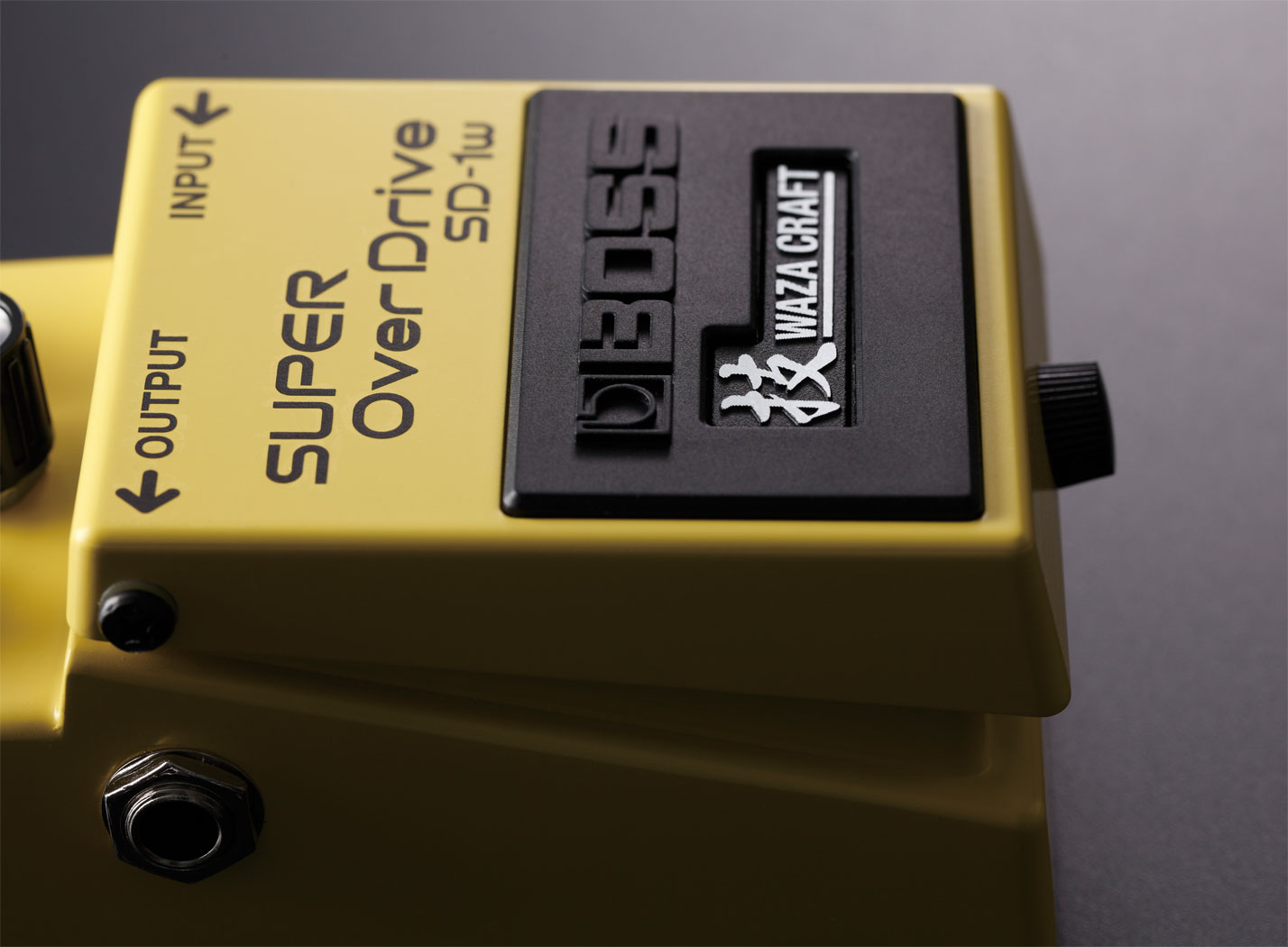
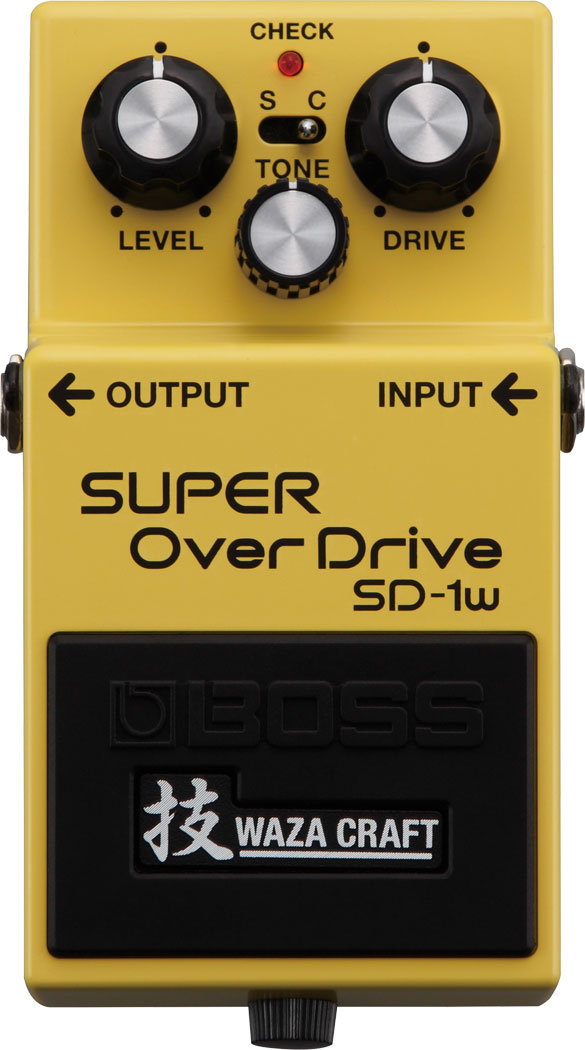
The Boss Super OverDrive SD-1W Waza Craft (current price in Finland around 155 €) is the top-of-the-line version of the company’s yellow-clad classic.
The name gives it away – we’re looking at an overdrive stompbox, so we should expect a dynamic performance with a dense mid-range. As a rule of thumb, distortion-type effects tend to have more bite and a creamier compression than an overdrive.
The Boss SD-1W, too, sports three controls – Drive, Tone and Level – and a mode switch. Standard-mode is meant to give you an upmarket counterpart of the regular SD-1 pedal, while Custom-mode promises a wider frequency range (especially handy for ultra-low tunings).
Here’s a clip of the SD-1W with Drive set to 12 o’clock. Standard-mode comes first, followed by Custom-mode:
And this will give you an idea of this pedal’s sound with Drive turned all the way up:
****
What do terms like ”boutique-pedal” and ”premium range” really mean?
In the case of the Waza Craft pedals the answer lies in both the sound and the ”feel” of these effects:
Both overdrive boxes sound even creamier than the standard versions, while also adding a small degree of clarity to proceedings. These premium versions also manage to keep hiss levels even lower than their ”ordinary” counterparts. Both the BD-2W and the SD-1W feel somewhat more organic and responsive, when compared to their (well-made) standard range brethren. The overdrive tones are very natural, and both effects react very nicely to changes in playing dynamics or guitar volume settings. You never get the feeling of the effect being pasted on, instead there’s a real interaction going on between the player, his guitar and the effect pedal.
In isolation Boss’ Waza Craft overdrives might even seem a little underwhelming, but when you A/B them with their standard series counterparts the differences become quite clear rather quickly. Don’t get me wrong, the standard versions are reliable industry standards with a more than decent sound, but for the ultimate Boss-experience you should take the path to Waza Craft.
****
Boss BD-2W + SD-1W Waza Craft
approx. 155 €
Finnish distribution: Roland Suomi
****
Pros:
+ classic format
+ all-analogue
+ two modes
+ sound
Review: DOD Bifet Boost 410
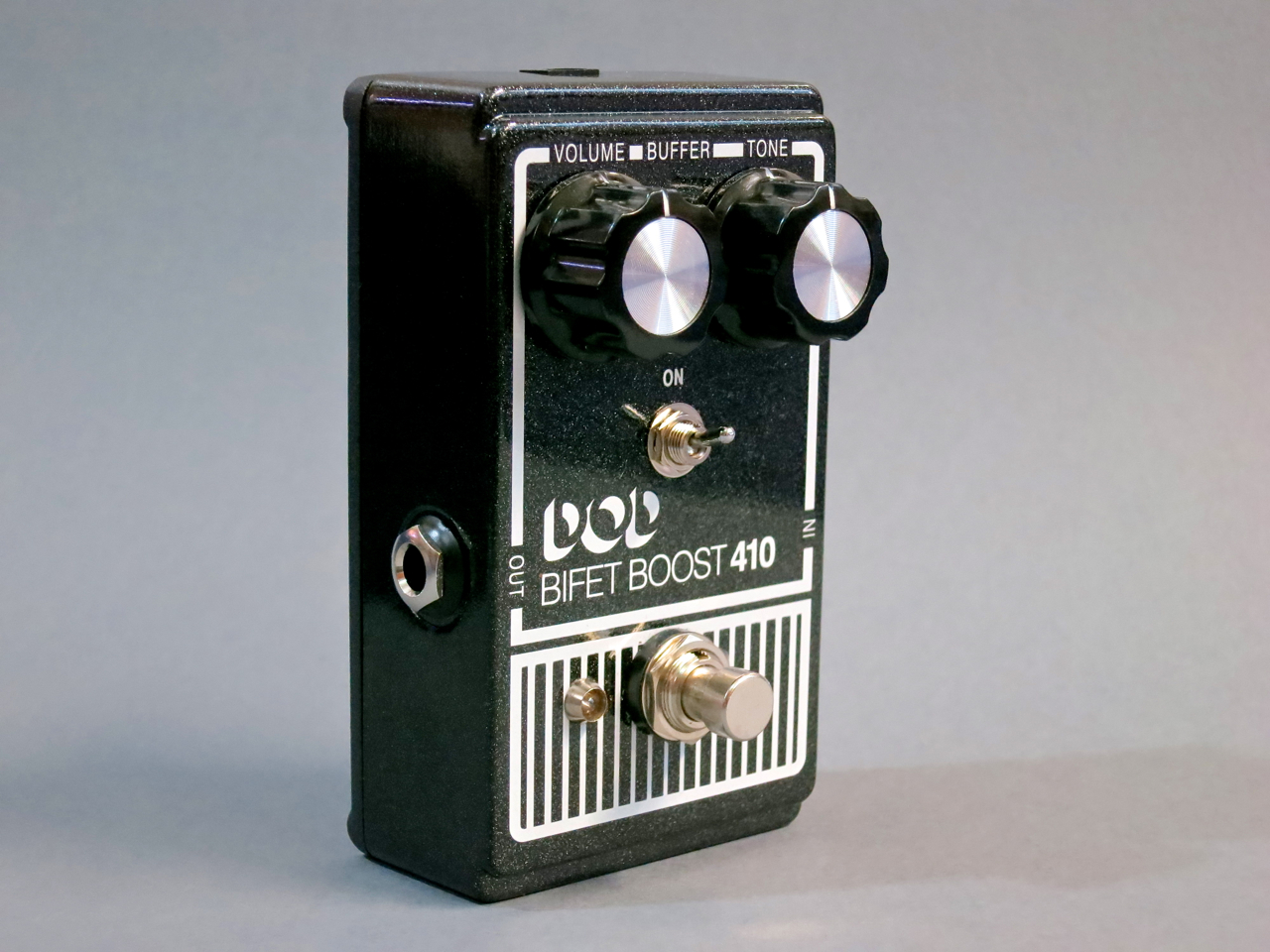
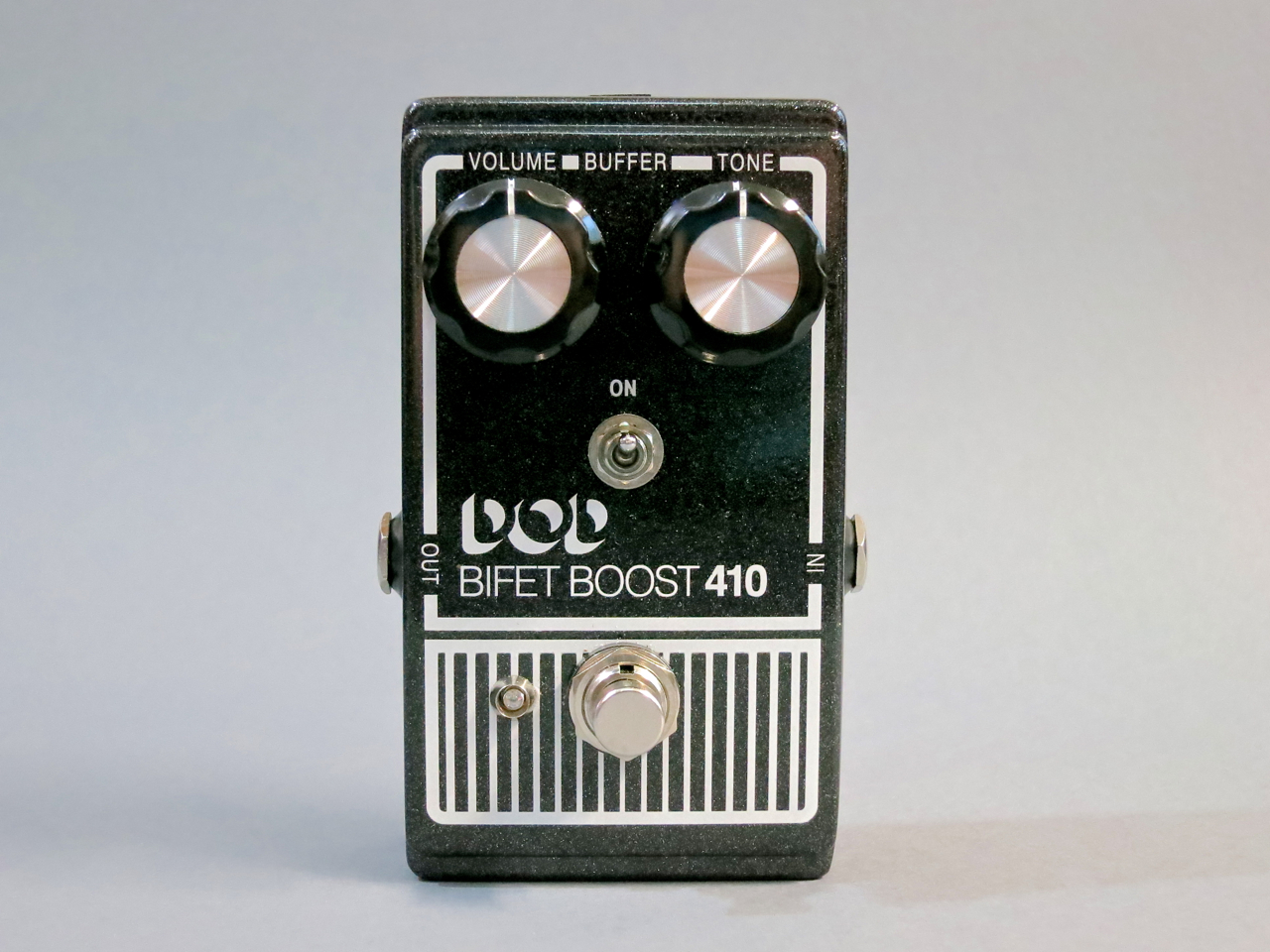
DOD has introduced an updated version of its Bifet Boost 410 pedal this year – the 2014-version adds a switchable buffer to the circuit.
****
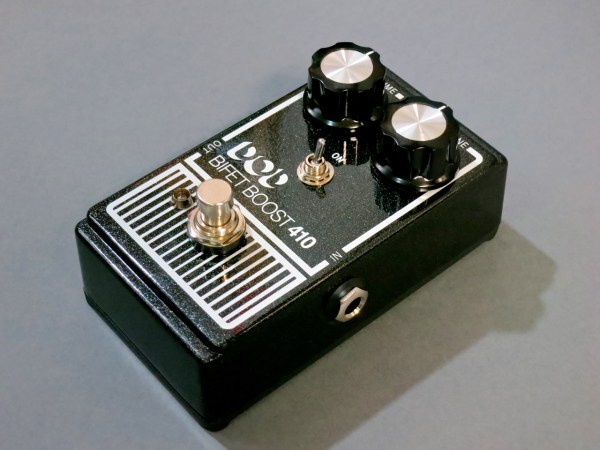
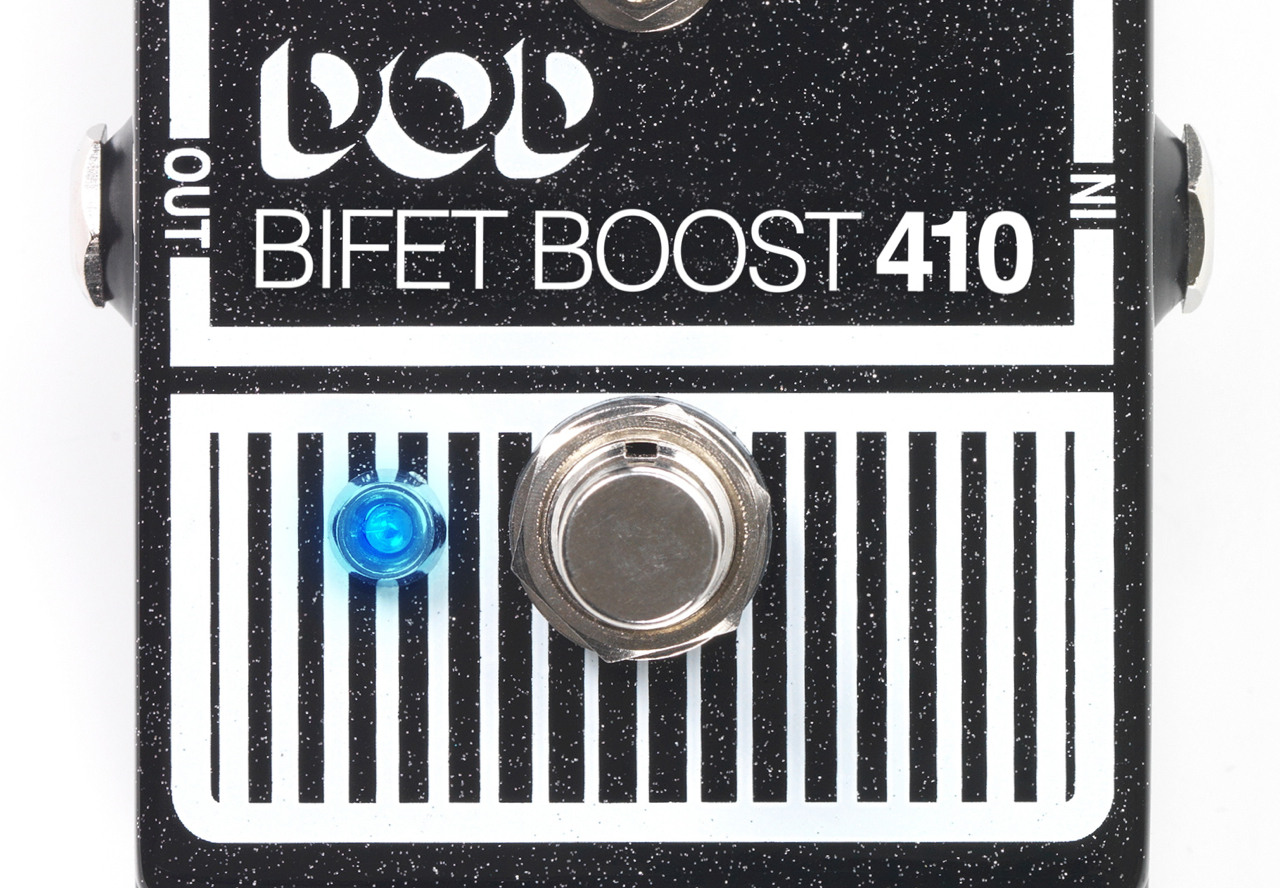
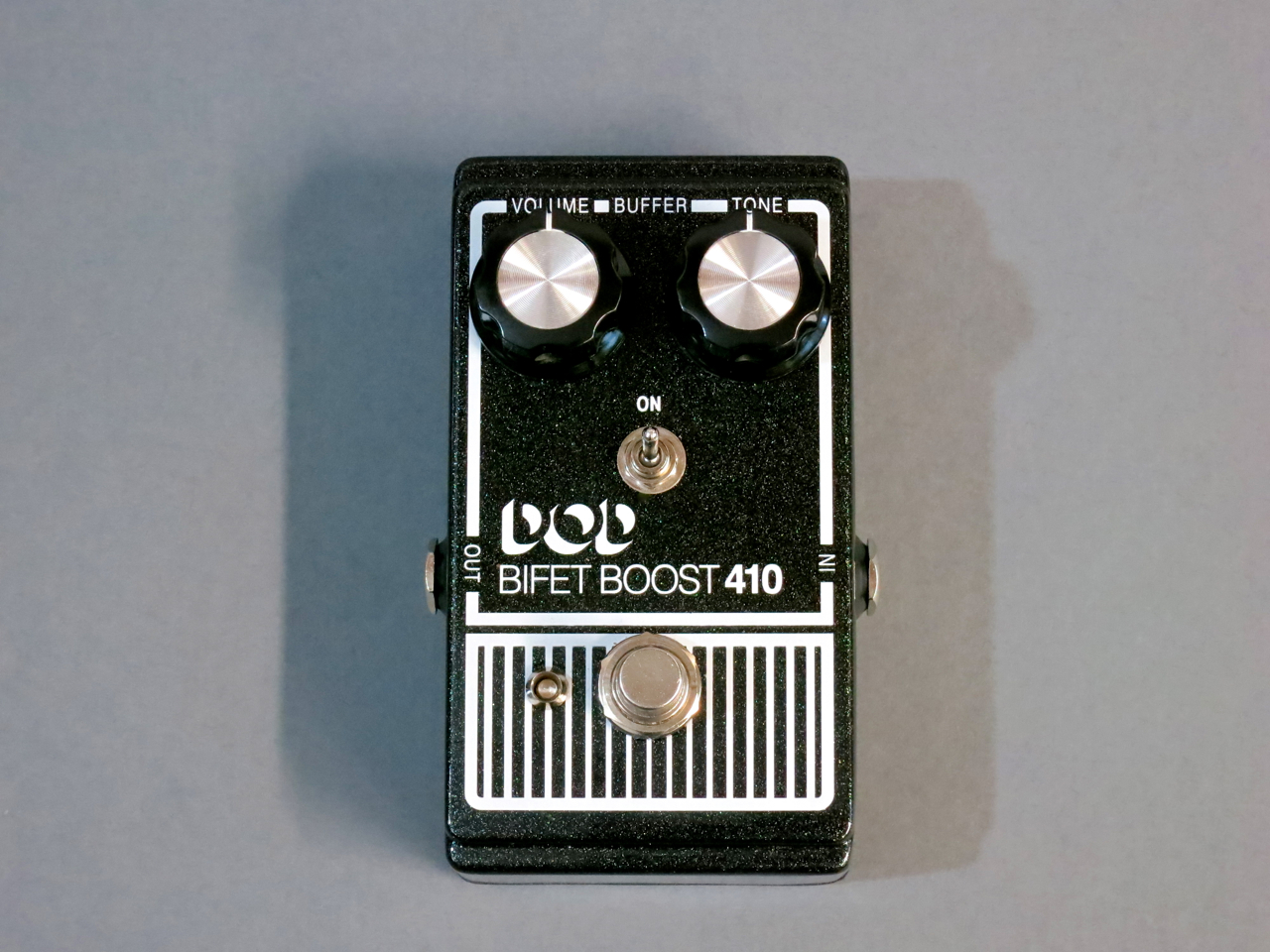
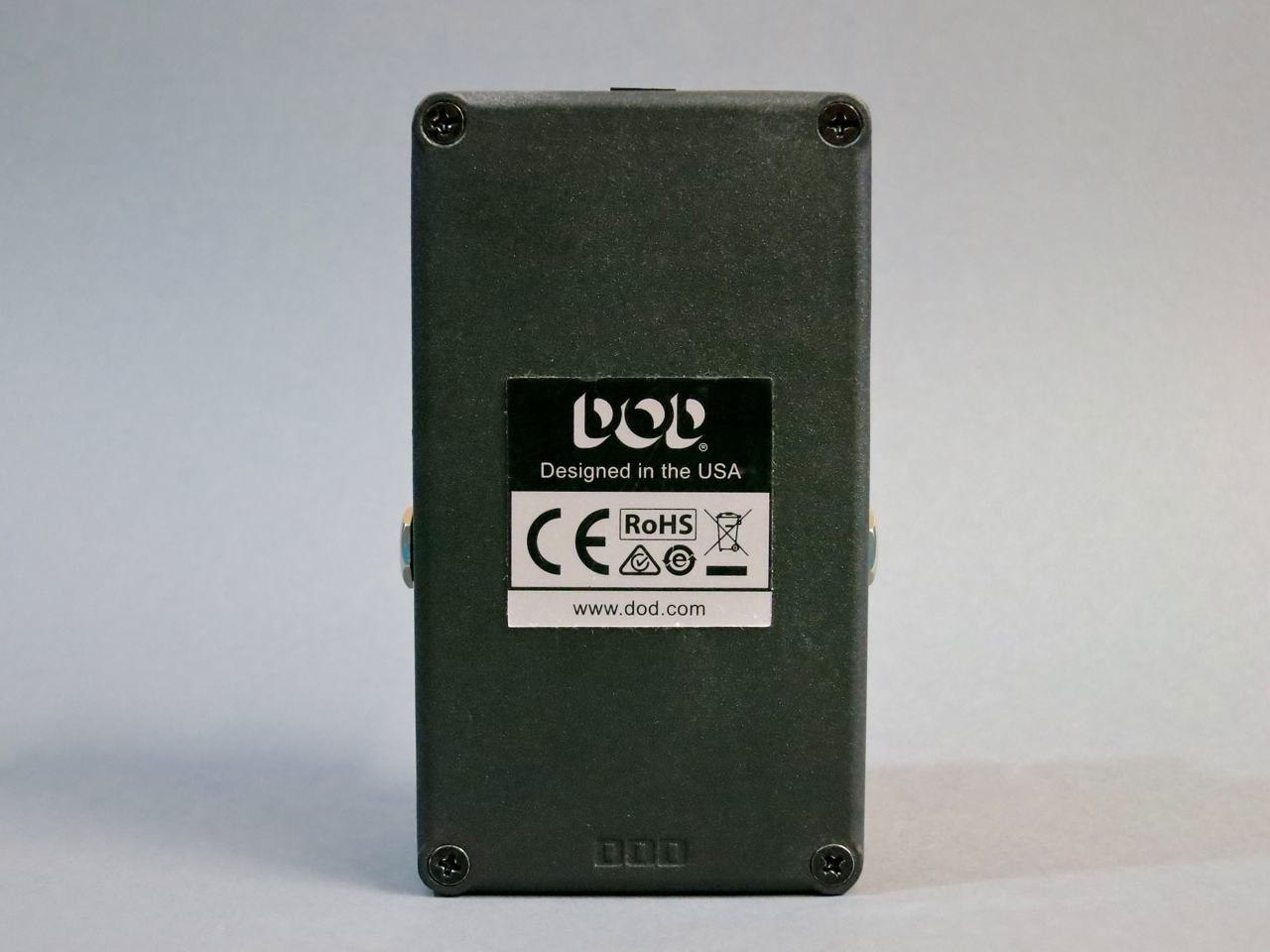
The DOD Bifet Boost 410 (current price in Finland: 99 €) is a signal level booster, giving you up to a whopping 20 dB of amplification.
The booster sports two controls – one for volume and one for tone.
Over the last few years, the term ”true bypass” has become the new marketing buzzword, bandied about frequently to ”prove” one pedal’s superiority over another. In reality there’s no mystique attached to true bypass – it simply means that when the pedal is switched off the input is hardwired straight to the output, without passing through any of the effect’s circuitry. If a pedal’s manufacturer doesn’t state true bypass in the spec list, chances are the pedal in question has an internal buffer, which stays in the signal chain even when the effect is off. A buffer is a small amplifier, whose main purpose lies in changing the signal’s impedance from high to low. Most buffer amps don’t amplify the signal level at all (= a gain ratio of 1:1), while some add a tiny bit of treble boost. A high impedance signal suffers from far greater degradation, when fed through a long signal chain (or very long guitar leads), than a low impedance signal. This means that a buffered bypass can come in handy, if you’re using a lot of effect pedals in series. True bypass is usually preferable in smaller set-ups, or if the effect in question sits in front of a fuzz pedal (fuzz pedals generally need a high impedance signal to function properly).
The updated DOD Bifet Boost 410 pedal offers a switchable buffer, so you can decide whether you want to use a buffer or not. You get the buffer in the mini-switch’s On-position, or true bypass with the switch turned off.
The Bifet Boost 410 can be run using a 9 volt battery or a (Boss-type) power supply (not included).
You need to take off the pedal’s metal base plate to change batteries.
The package includes four small stick-on rubber feet, which you can use when the pedal’s not used on a pedalboard.
****
Usually, boost pedals can be divided into two categories: Those who provide a completely clean and neutral boost, and those who add a little colour and/or grit to the signal. The DOD Bifet Boost 410 belongs in the latter category, adding a little extra character to the mid-range frequencies, along with the raise in signal level.
Using the booster on a clean amp channel may push the guitar signal into overdrive, depending on the amount of headroom offered by the amp used. In this example you can clearly hear the Blackstar HT-1R’s sound break up and distort:
Used into a crunchy channel, the DOD-booster will add more chunky gain to to your tone:
You can use the tone control to add quite a lot of top end to your sound. You have to remember, though, that the sheer amount of gain on tap in this pedal will also boost any noise (hiss, hum) in your signal chain:
****
DOD’s Bifet Boost 410 is a pro-quality boost pedal and very easy to use. The added buffer switch lets you decide for yourself, whether you need a bypass buffer or not.
****
DOD Bifet Boost 410 (2014)
Current price in Finland: 99 €
Finnish distributor: EM Nordic
Thanks to DLX Music Helsinki for the loan of the review sample!
****
Pros:
+ up to 20 dB boost
+ tone control
+ switchable buffer
Review: Änäkäinen Rumble 1 x 12
Puuverstas Änäkäinen’s Rumble 1 x 12 -cabinet (prices in Finland start around 580 €) offers a few fresh ideas on how to come up with a cracking guitar tone.
The fathers of the Rumble-concept are cabinet maker Kari Änäkäinen (try saying: Curry ANNA-kay-nun), who is also gigging as a guitarist and bassist, and Kuusankoski’s very own tube amp guru, Triodipaja’s proprietor Lassi Ukkonen (LUSS-cee OO-cow-nun). The guys hit upon the basic idea for the Rumble cabinet, when Kari asked Lassi to calculate the correct cubic content for a lightweight bass cabinet he was building for himself. The bass cabinet turned out very well and set the duo on the path to coming up with the Rumble.
****
When it comes to the cosmetics of his Rumble cabinets, Kari Änäkäinen is a dyed-in-the-wool vintage fan.
We received two different Rumble 1 x 12 cabinets for this review – one comes in a fetching ”Fender Blonde” look…
…while the other clearly points in the direction of moody Marshall-ness.
The Rumbles sport metal corner protectors.
Here you can see the impedance sticker affixed to the sturdy jack plate.
Currently, Kari Änäkäinen gives you a choice of five different speaker models for your personal cabinet.
The cream-coloured Rumble came equipped with an Eminence Private Jack -speaker (50 W/8 Ω).
A WGS:n Reaper (30 W/8 Ω) was chosen for the black counterpart.
As you can see in these pictures, one of the special features of all Rumbles is the large rectangular port on one side of the cabinet. The basic idea has been borrowed from bass-reflex speaker, which are often used in Hifi- and bass (amp) cabinet designs. In the Rumble the opening is mainly used for sound dispersion, as the speaker doesn’t feature any internal reflectors, tunnels or a ”tuned” bass port.
The details of the cabinet build is also a little bit different to your run-of-the-mill guitar cab. The cabinet itself is crafted from Finnish conifer plywood with a thickness of 15 millimetres.
The advantages of conifer plywood are its quality, abundance and light weight. Most other cabinet makers will claim that this type of plywood is too soft and pliable for cabinet-making, but Kari has found his own solution to this problem: He uses internal struts and supports made from the same material.
The speaker baffle, on the other hand, is made from very sturdy, 18 millimetre thick Finnish birch plywood.
The whole speaker cabinet is constructed using only glue joints and wood dowels. The only screws in an Änäkäinen Rumble are those keeping the speaker, the jack plate and the corner protectors in place.
The Rumble’s low weight of approximately 12 kilos is easy to lift by the cab’s top handle.
****
The first – completely subjective – impression I got from using the Rumble 1 x 12 was of a ”loud”, ”big” and ”musical” sounding cab. The Änäkäinen even made my tiny Blackstar HT-1R sound like a full-size tube amp.
The Rumble gets across a healthy shot of warmth and transparency – just like many other quality cabinets – but its special, front-ported construction adds an amazing amount of spread and directivity to the sound that is all its own. The sound dispersion is neither too narrowly focussed, nor is there any sound getting ”lost” behind the cab. Thanks to its front port, the Rumble delivers a larger-than-life, Cinemascope-style sound.
The Eminence-loaded blonde Rumble sings beautifully with a warm and creamy voice:
Thanks to the WGS Reaper -speaker inside the black-clad Rumble 1 x 12, this cab has a somewhat more aggressive British accent. This added bite isn’t quite as pronounced when you stick to clean amp settings, but it will help your Rock riffs to cut through more easily:
****
I must say I really like these Änäkäinen Rumbles a lot! They deliver excellent, boutique-class tones at a very fair price. If you need a relatively compact guitar cab with a big sound, you should really consider going for a Rumble!
****
Änäkäinen Rumble 1 x 12
Finnish prices starting around 580 €
Made by Puuverstas Änäkäinen
****
Pros:
+ workmanship
+ a functional, non-mainstream concept
+ wide, yet focussed sound
+ rich bottom end
+ different speaker options
Testipenkissä: Boss Waza Craft BD-2W + SD-1W
Uusien Boss Waza Craft -pedaalien on tarkoitus antaa laatutietoiselle kitaristille sen ultimatiivisen, boutique-tyylisen Boss-elämyksen.
Japanilainen sana ”waza” tarkoittaa taidetta, taidokkuutta ja tekniikka, mikä uudessa Boss-sarjassa viittaa siihen, että ensinnäkin sarjan pedaaleissa käytetään vanhan liiton analogitekniikka, ja toiseksi sarjan efektit (tällä hetkellä: tässä jutussa testatut kaksi säröpedaalia, plus DM-2W-viive) ovat valmiiksi modattuja firman tehtaassa.
****
Boss Blues Driver BD-2W Waza Craft (noin 155 €) on täysanaloginen, päivitetty versio Bossin suositusta Blues-säröstä.
Boss on keksinyt 1970-luvun lopussa efektipedaaleilleen tämän kompaktin muodon ja rakenteen, josta on tullut sittemmin alan standardi. Tyypilliseen Boss-pedaaliin kuuluu valumetallinen runko, sekä pedaaliläpän alta löytyvä paristokotelo.
BD-2W tarjoaa kolme säädintä: Gain-säätimellä määrätään särön määrää, Tone-potikalla soundin kirkkautta, ja Level-säätimellä taas asetetaan efektille haluttu lähtötaso.
Waza Craft -pedaalien pikkukytkimellä valitaan Standard- ja Custom-tilan välillä. Standard-tilassa BD-2W käyttäytyy dynamiikan ja soundin kannalta kuin perinteinen Boss Blues Driver, kun taas Custom-tilassa on tarjoilla entistäkin laajempi dynamiikka, sekä lämpimämpi ja avoimempi soundi.
Tässä soundiesimerkissä Gain-nuppi on avattu kello 12. Soitan kaksi samankaltaista pätkää – ensin Standard-tilassa, ja sen jälkeen Custom-tilassa:
Toisessa äänitteessä pedaalin Gain-potikka on avattu täysille:
****
Boss Super OverDrive SD-1W Waza Craft (noin 155 €) on keltaisen klassikkosärön boutique-versio.
Nimensä mukaisesti tässä on kyse overdrive-säröstä, eli odottavissa on dynaaminen ja keskialueella rikas särösoundi. Distortion-säröt taas ovat yleensä purevampia ja vahvemmin kompressoivia kuin overdrive-pedaalit.
Myös SD-1W tarjoaa kolme säädintä – Drive, Tone ja Level – sekä kaksiasentoisen minikytkimen. Standard-tilassa odotettavissa on premium-luokan versio legendaarisesta SD-1-soundista, kun taas Custom-tilassa soundiin on lisätty enemmän bassorekisteriä.
Tässä ensin yksi esimerkkipätkä, jossa SD-1W:n Drive-säädin on avattu puoleen. Ensin käytän efektiä Standard-tilassa, minkä jälkeen soitan samankaltaisen riffin Custom-tilassa:
Seuraavassa klipissä Super OverDriven Drive-säädin on avattu täysille:
****
Mitä tarkoittavat käsitteet ”boutique-pedaali” ja ”premium-luokan efekti”?
Waza Craft -pedaalien tapauksessa vastaus on sekä kuultavissa että tuntuvissa:
Molemmissa testatuissa säröpedaaleissa soundi on vielä entistäkin kermaisempi ja selkeämpi. Efektien oma kohina on näissä premium-versioissa saatu vielä aavistuksen verran alemmas. Sekä BD-2W että SD-1W tuntuvat myös vielä orgaanisemmilta kuin niiden (perushyvät) tavalliset rinnakkaisversiot. Särösoundi on erittäin luonnollinen ja hyvin herkkä muutoksiin soittodynamiikassa tai kitaran volyymipotikan asetuksessa. Säröefekti ei tunnu millään lailla päälle liimatulta, vaan kitaran ja pedaalin välille syntyy luonnollinen ja hyvin musikaalinen vuoropuhelu.
Waza Craft -säröjen ensivaikutelma ei ehkä ole niin korostetun erilainen kuin mikä ehkä odottaisi, mutta suorassa A/B-vertailussa rivipedaalien ja Waza Craft -sarjalaisten väliset erot ovat helposti havaittavissa. Tavallisetkin Boss-efektit toimivat mielestäni moitteettomasti, mutta Waza Craft -säröissä on kiistämattä vielä luokkaa makeampi soundi.
****
Boss BD-2W + SD-1W Waza Craft
hinnat noin 155 €
Maahantuoja: Roland Suomi
****
Plussat:
+ tuttu formaatti
+ täysin analogiset
+ kaksi toimitilaa
+ soundi