Review: Bogner Goldfinger 45 1×12 combo

Over the last decade Bogner Amplification have achieved a legendary status among fans of boutique amps.

Bogner’s best-known design is probably the Uberschall-model, which is aimed squarely at the connoisseur of high-gain amps. But the company also build several vintage-inspired amps, one of which is the Bogner Goldfinger combo.

****

Bogner’s Goldfinger 45 1×12 (current price in Finland: 2.946 €) is quite large for a 1×12”-combo. Its dimensions are in a similar league as the 2 x 12 Vox AC30. The reason behind the large and deep cabinet lies in the fatter tone it produces.

The Goldfinger’s preamp section has been designed around four 12X7- and one 12AT7-valve, with the main amplifier running a quartet of 6V6-types. The combo is rated at 45 Watts, but its power can be reigned in using the front panel’s  Standby/Hi/Low-toggle, as well as the Full/Half-switch around the back.

The top-drawer valve amplification circuit and the combo’s high-class plywood cabinet naturally make themselves felt on the scales. Handling 30 kilos worth of weight using the Goldfinger’s sole top handle isn’t quite a walk in the park.

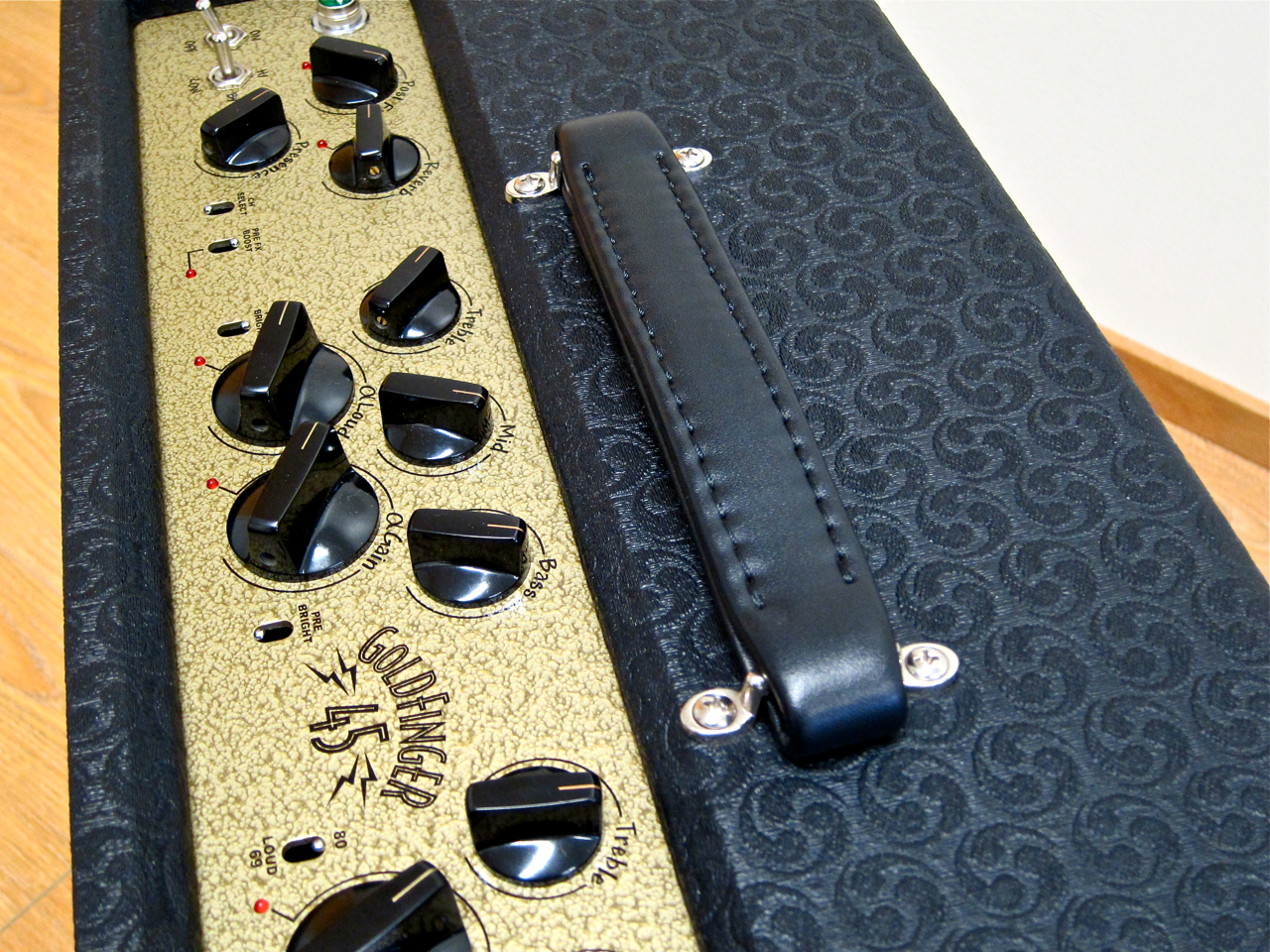
The Bogner Goldfinger 45 is a two-channel amplifier, with the clean channel called α – or Alpha.

On the right side of the picture you can spot the Alpha-channel’s controls – gain, master volume (”Loudness”), as well as a three-band EQ-section – with the added attraction of not one, but two bright-switches. Pre Bright spices up the signal in front of the gain control, with Post Bright being inserted into the Loudness-circuit. Pre Bright has a sharper and more dynamic character, in contrast to Post Bright’s somewhat more open tone. Both the gain- as well as the Loudness-settings affect the amount of brightness added via the switches – the louder you go, the less top end bite is added.

On the picture’s right hand side you’ll find the Goldfinger’s master section, with controls for reverb, master presence and the Post FX -loop. One of the Bogner-combo’s coolest features is hinted at by the miniswitch labelled Pre FX/Boost – the input has its own effects loop.

You could use the Pre FX -loop for adding a booster, compressor or outboard EQ-pedal to your signal chain, which then can be switched on or off using the combo’s own footswitch board. If you don’t have anything plugged into the Pre FX -loop, you can use the loop’s own buffer amp as a signal booster, with the amplification level adjustable on the back panel.

The name of the Goldfinger’s overdrive channel is Ω, or Omega, and it’s got a slightly different architecture compared to the Alpha-channel.

The Omega-channel offers you two basic charatcers to choose from, called 80 ja Loud 69. Loud 69 is the more vintage-type setting of the pair, giving you a moderate amount of gain with plenty of dynamics, reminding me of early Marshall-amps or the rudeness of a hollering Hiwatt. ”Loud” is a very good term here, as with identical settings Loud 69 is much louder and punchier than the far creamier 80-selection.

Setting the Omega to 80 morphs the Goldfinger into a Classic Rock -aficionado’s dream machine. There’s lot of gain on tap with a good helping of fat and creamy compression, which calls to mind Mesa/Boogie-style Westcoast-sounds or Gary Moore’s singing Marshall-tones.

In addition to its three-band EQ, Omega also offers a control named Gain EQ, which allows you to change the channel’s tonal focus from warm and fat all the way to biting and bright. Because the Gain EQ -control sits at the channel’s front end, its setting also influences the amount of overdrive.

A full-length spring reverb tank is situated in its own bag at the bottom of the cabinet.
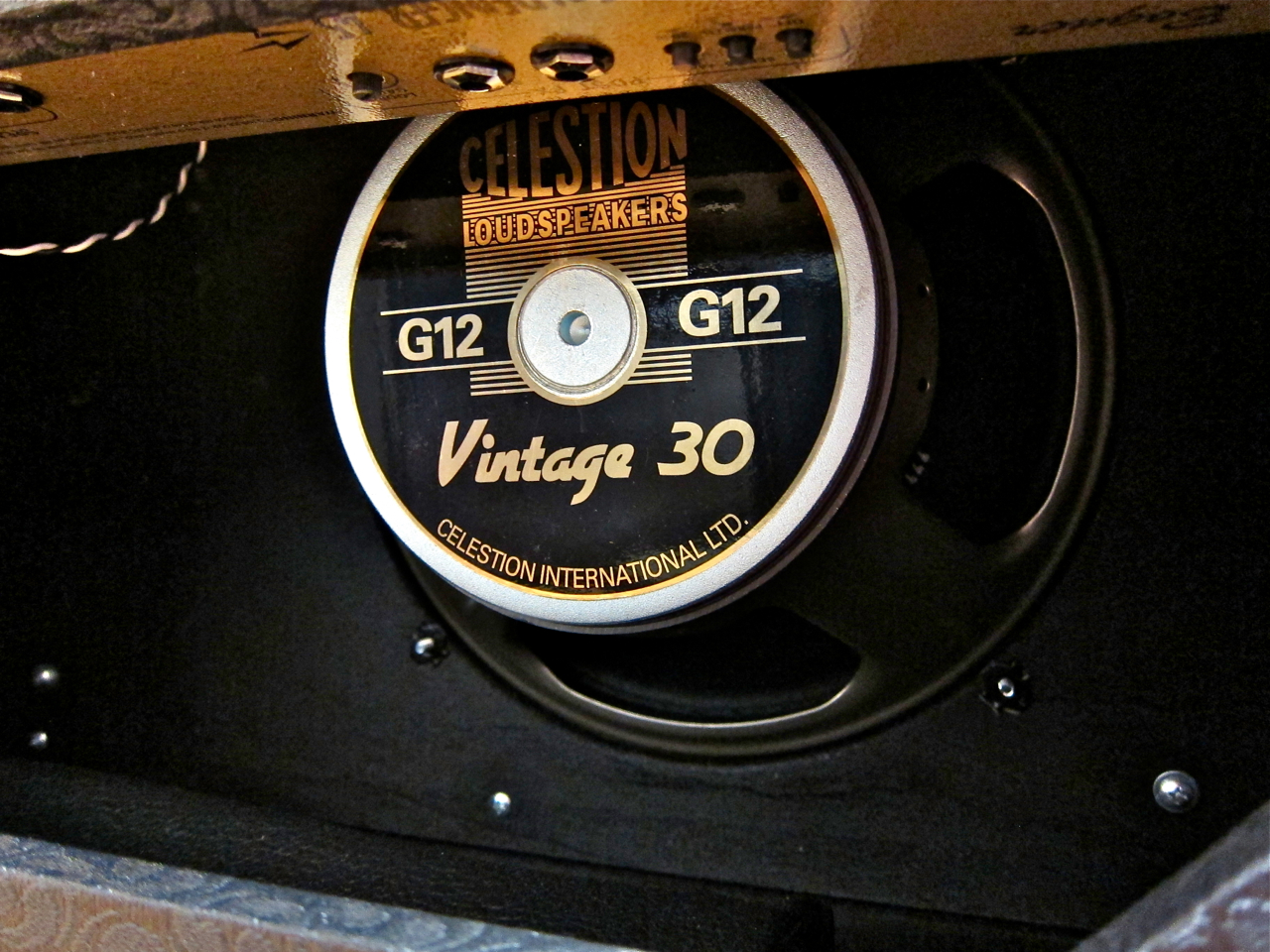
Bogner’s Goldfinger 45 speaks via one of the world’s most-loved speakers – a Celestion G12 Vintage 30.

Because the Goldfinger-combo basically utilises the head of the same name, only flipped on its side, a more fitting name for the back panel might be ”bottom panel” in this case. All connectors, switches and controls face downward, which isn’t so great for accessibility and visibility.

On the right hand side you can find the connectors and the level control for the Pre FX -loop, as well as the socket for the footboard’s screw-in connector.

Bogner’s Post FX -loop offers a plethora of options.
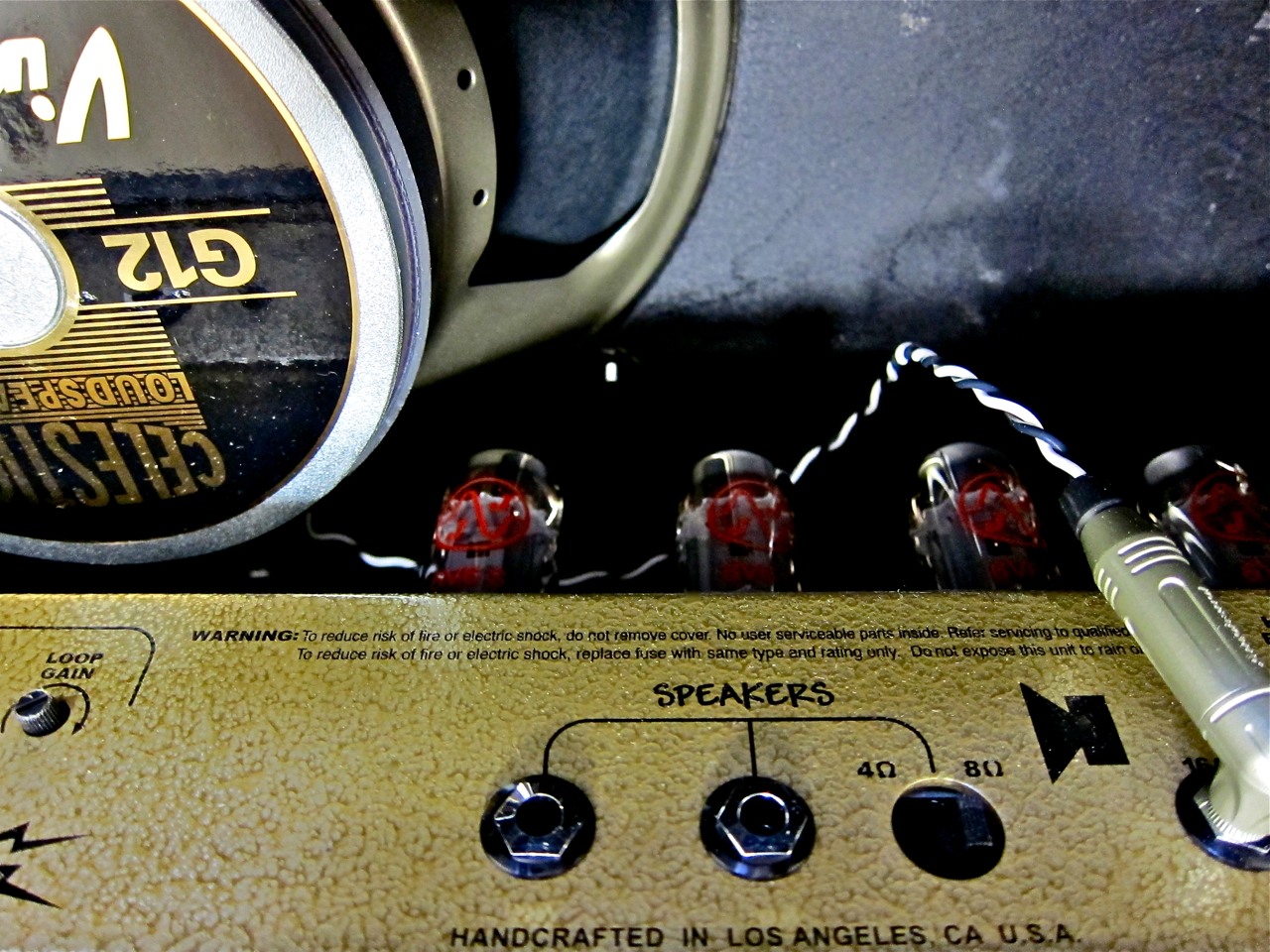
There are two additional speaker outputs on offer, with the impedance switch sitting right next to them.
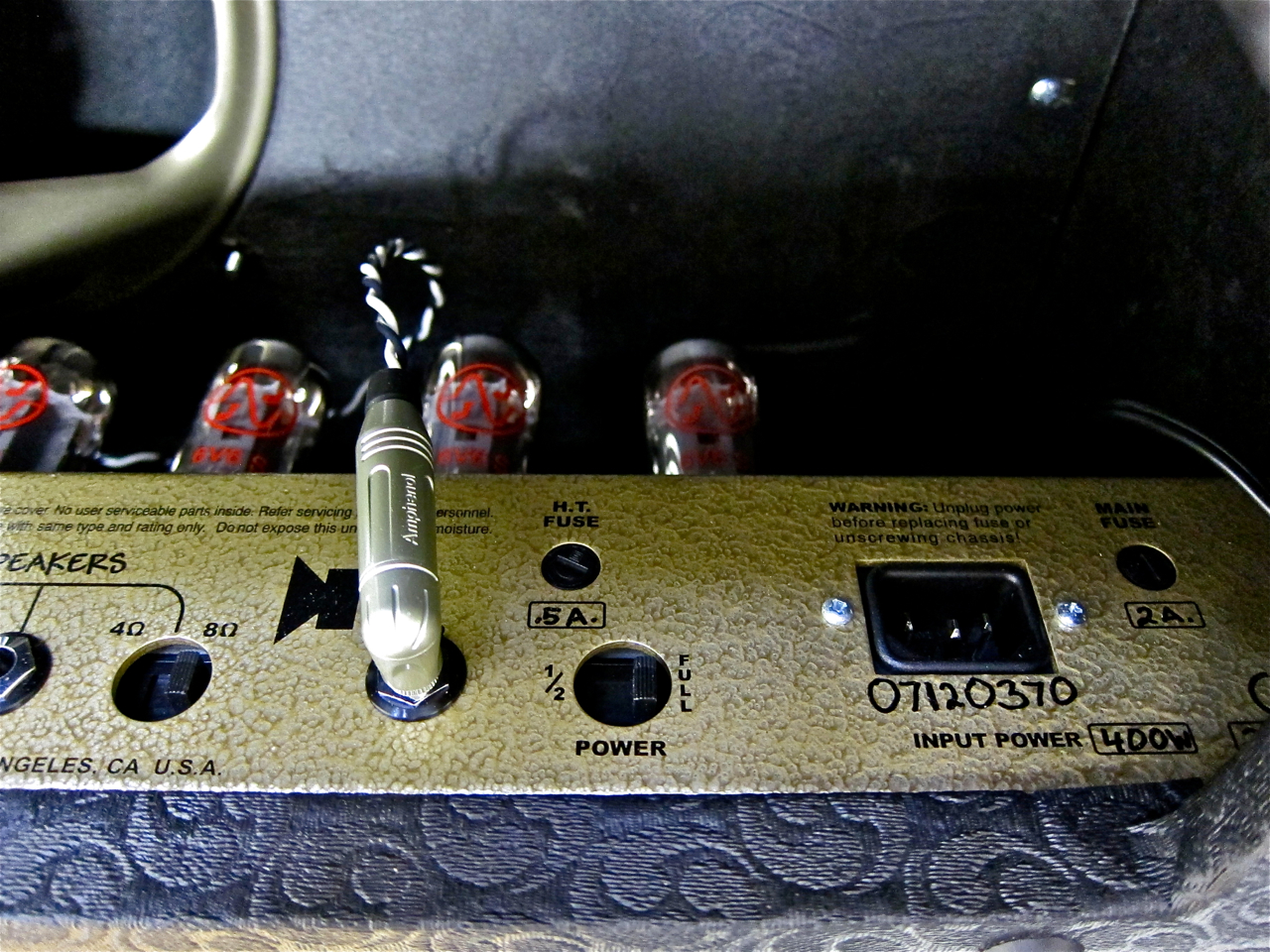
…and last, but not least, the amp’s fuses, as well as the half-power switch for the main amp section.

Just as the combo itself, the accompanying footswitch board is built to last, and sports the same structured, golden finish as the combo’s control panel.

****
The Bogner Goldfinger 45 is an extremely versatile valve-amplifier. Per se this doesn’t really tell you anything, because in many designs versatility comes at the price of a mediocre basic tone.

The Bogner Goldfinger’s outstanding quality really shows in this respect, as each and every link in the signal chain only serves to enhance this combo’s fantastic basic tone.

True, if you don’t know what you’re doing, you can get bad sounds out of the Bogner, regardless – for example by heaping both Alpha-channel brights on top of a Fender Strat or Tele – but in those cases it’s the user who’s to blame, not the amp.

Used with good taste, though, the Bogner Goldfinger will enhance the basic character of your guitar’s tone to bring out the best in your playing.

The combo’s spring reverb sounds fantastically lush, with the reverb-knob giving you anything from a nice little sprinkle to full-out Surf Mania.

The only two things I am not totally in love with are the downward-facing back panel, as well as the loud thud emanating from the Omega’s Mode-switch, when used with the amp running. According to the owner’s manual this loud noise is perfectly normal, but it still bothers me a bit, not being able to switch between Loud 69 and 80 on-the-fly.

All in all, I feel that the Bogner Goldfinger 45 is a very strong contender for the title of ”Best Combo ever”. The price tag is steepish, but well in line with the amp’s quality and this particular market segment as a whole.

Here are some sounds I recorded with the Bogner Goldfinger combo:

Alpha – Fender Stratocaster

Alpha (Post Bright on) – Hamer Studio Custom

Omega (Loud 69) – Fender Stratocaster

Omega (Loud 69) – Hamer Studio Custom

Omega (80) – Fender Stratocaster

Omega (80) – Hamer Studio Custom

****

Bogner Goldfinger 45 1×12 -kombo

Current price in Finland: 2.946 €

Finnish distribution: Musamaailma

Pros:

+ workmanship

+ sound

+ versatility

+ pedalboard included in price

+ half-power switch

+ reverb sound

Cons:

– back panel placement not very practical

– Loud 69/80-switch’s thud

Testipenkissä: Bogner Goldfinger 45 1×12 -kombo

Bogner Amplification -vahvistimet ovat saavuttaneet viime vuosikymmenen aikana legendaarisen statuksen erinomaisina luksusvahvistimina.

Bognerin ehkä tunnetuin malli on Uberschall-vahvistin, joka on suunnattu raskaan musiikin ystäville. Firman valikoimasta löytyy kuitenkin myös vahvasti vintage-tyylisiä putkikoneita, kuten tämä testaamani Bogner Goldfinger –kombo.

****

Bogner Goldfinger 45 1×12 (2.946 €) on varsin kookas 1×12”-komboksi. Ulkomitoiltaan se on melko lähellä esimerkiksi kahdella kaiuttimella varustettua Vox AC30:tä. Ison ja syvän kotelon idea on tuoda soundiin leveyttä ja muhkeat bassotaajuudet.

Goldfingerin etuaste toimii neljän 12X7-putken sekä yhden 12AT7-putken varassa, kun taas päätevahvistin on rakennettu neljän 6V6-putken ympärille. Kombon maksimitehoksi ilmoitetaan 45 wattia, mutta tehoa saa pudotettua etupaneelin Standby/Hi/Low- ja takapaneelin Full/Half-kytkimillä.

Laadukas putkielektroniikka ja kestävä vanerikotelo näkyvät luonnollisesti myös vaa’alla – 30-kiloisen Goldfinger-kombon roudaaminen yhdellä kantokahvalla ei ole lastenleikkiä.

Bogner Goldfinger 45 on kaksikanavainen vahvistin. Puhtaan kanavan nimi on α – siis Alpha.

Kuvan oikeassa laidassa näkyy Alpha-kanavan säätimet – gain, master volume (”Loudness”), sekä kolmikaistainen EQ – lisäksi erikoisuutena löytyy kaksi Bright-kytkintä. Pre Bright lisää signaaliin terävyyttä ennen gain-säädintä, kun taas Post Bright vaikuttaa Alpha-kanavan Loudness-säätimeen. Pre Brightin soundi on hieman purevampi ja dynaamisempi kuin Post Brightin ilmavampi yleisilme. Gain- ja Loudness-säätimien asetukset vaikuttavat myös molempien Bright-toimintojen vaikutukseen: mitä pidemmälle Gain tai Loudness on väännetty auki, sitä pienempi kyseisen Bright-boostin vaikutus on.

Kuvan vasemmassa laidassa on Goldfingerin master-osasto, jolla säädetään kai’un ja perinteisen efektilenkin signaalitasoa, sekä master-preesenssiä. Pienen Pre FX/Boost-kytkimen taakse on piilotettu yksi tämän kombon monista herkuista – tulopuolen oma efektilenkki.

Pre FX -lenkiin voisi kytkeä esimerkiksi boosterin, kompressorin tai lisä-EQ:n, jonka voi sitten kytkeä päälle tai pois kombon omalla jalkakytkimellä. Silloin kun Pre FX:iin ei ole kytketty mitään, lenkin omaa vahvistinta voi käyttää lisäboosterina, jonka vahvistustasoa pystyy säätämään Bognerin takapaneelista.

Goldfingerin särökanavan nimi on Ω tai Omega, ja sen rakenne on hieman erilainen kuin puhtaassa Alpha-kanavassa.

Omega-kanava tarjoaa ensinnäkin kaksi erilaista perusluonetta, joista valita – 80 ja Loud 69. Loud 69 on vaihtoehdoista se vintagemaisempi, joka tarjoaa maltillisesti säröä, mutta erittäin paljon dynamiikkaa, ja muistuttaa näin varhaisia Marshalleita tai Hiwatt-vahvistimien päällehyökkäävää käytäyttymistä. Loud-nimitys ei ole tässä yhteydessä lainkaan liioiteltu – samoilla säädöillä Loud 69 -vaihtoehto kuulostaa selvästi kovaäänisemmältä kuin kermaisempi 80.

Omegan 80-asetus muuntaa Goldfingerin klassiseksi Rock-vahvistimeksi. Tarjolla on rutkasti enemmän gainia kermaisella kompressoinnilla, joka tuo mieleen Mesa/Boogie-tyyliset Westcoast-soundit tai esimerkiksi Gary Mooren tutuksi tekemät Marshall-soundit.

Kolmiasentoisen EQ:n lisäksi Omegan tulopuolella toimii Gain EQ -niminen säädin, jolla voi muuttaa kanavan soundillista yleisluonetta portaattomasti lämpimän paksusta purevan kirkkaaksi. Koska säädin istuu signaaliketjun alussa, sillä on myös vaikutusta gain-määrään.

Täyspitkä jousikai’un tankki on sijoitettu omaan topattuun pussiin kotelon pohjalle.

Bogner Goldfinger 45 -kombon ääni pusketaan ulos maailman suosituimmasta kaiuttimesta – Celestionin 12-tuumaisesta G12 Vintage 30:stä.

Koska Goldfinger-kombossa käytetään samannimisen nupin elektroniikkaa – sitä on vain käännetty 90 astetta – vahvistimen takapaneelia voisi kutsua tässä tapauksessa ehkä sopivammin ”alapaneeliksi”. Kaikki säätimet, liittimet ja napit katsovat lattiaa kohti, mikä hankaloittaa jonkin verran esimerkiksi oikean tulon tai napin löytämistä.

Takapaneelin yhdestä ääripäästä löytyy Pre FX -lenkin liittimet ja boostin säädin, sekä ruuviliitin kombon kytkinlautaa varten.

Bognerin Post FX -efektilenkki tarjoaa monipuoliset säätömahdollisuudet ja oman gäin-säätimensä.

Takapaneelissa on myös lähtöjä lisäkaappeja varten, sekä asianmukainen impedanssi-kytkin.

…ja viimeisenä tulevat vahvistimen sulakkeet sekä päätevahvistimen tehonpuolitus.

Kuten Goldfinger-kombo itse, myös sen jalkakytkinlauta on rakennettu erittäin kestäväksi. Viimeistely on sama kullanvärinen strukturoitu lakkaus kuin vahvistimen etu- ja takapaneeleissa.

****

Bogner Goldfinger 45 on erittäin monipuolinen putkikombo. Tämä ei sinänsä kerro vielä paljon mitään, koska valitettavan usein löyttyy sellaisiakin laitteita, joissa monipuolisuus on saavutettu yhden tai useamman perustekijän kustannuksella – ja usein tämä tekijä on juuri vahvistimen perussoundi.

Bogner Goldfingerin äärimmäinen laadukkuus näkyy (ja kuulee) siitä, että jokainen yksittäinen ominaisuus todellakin toimii soinnin muokauksessa sellaisella tavalla, että kitaran luonne säilyy terveenä ja ehjänä sen matkalla koko vahvistimen läpi.

Jos ei tiedä mitä tekee, vahvistimesta saa toki myös huonoja soundeja – esimerkiksi lisäämällä Stratolle tai Telecasterille Alpha-kanavassa sekä Pre- että Post Brightiä – mutta vika on silloin käyttäjässä, ei vahvistimessa.

Hyvällä maulla käytettyinä Bogner Goldfingerin runsaat ominaisuudet tukevat loistavasti kitaraa kuin kitaraa, ja saavat mutkattomasti valitun soittimen parhaat puolet esiin.

Goldfingerin jousikaiku on mielestäni yksi kauneimmista variaatioista teemasta, jonka olen ikinä kuulut. Reverb-säädin toimii sulavasti ja tarkasti, ja kai’un määrää voi säätää lähes olematommasta täyteen Surf-maniaan.

Bogner-komboa voi moittia ainoastaan sen hankalasta takapaneelin sijoittelusta, sekä siitä, että Omega-kanavan moodia ei voi vaihtaa soiton aikana, ilman että vahvistimesta kuuluu kova poksahdus. Tämä poksahdus kuuluu käyttöohjeen mukaan asiaan, mutta se on kuitenkin hieman häiritsevä.

Kaiken kaikkiaan Bogner Goldfinger 45 on mielestäni selkeästi ehdokas ”maailman paras putkikombo” -tittelin saajaksi. Goldfingerin korkea hinta on tällaiselle huippulaadun vahvistimelle kuitenkin aika reilu, ja samassa linjassa muiden boutique-valmistajien samantyypisten kombojen kanssa.

Tällaisia soundeja sain itse Bogner Goldfinger -kombosta irti:

Alpha – Fender Stratocaster

Alpha (Post Bright on) – Hamer Studio Custom

Omega (Loud 69) – Fender Stratocaster

Omega (Loud 69) – Hamer Studio Custom

Omega (80) – Fender Stratocaster

Omega (80) – Hamer Studio Custom

****

Bogner Goldfinger 45 1×12 -kombo

2.946 €

Maahantuoja: Musamaailma

Plussat:

+ työnjälki

+ soundi

+ monipuolisuus

+ jalkakytkinlauta kuuluu hintaan

+ tehonpuolitus

+ kai’un soundi

Miinukset:

– takapaneelin sijainti

– Loud 69/80-kytkimen pohksahdus

Review: Vox AC4 Blue

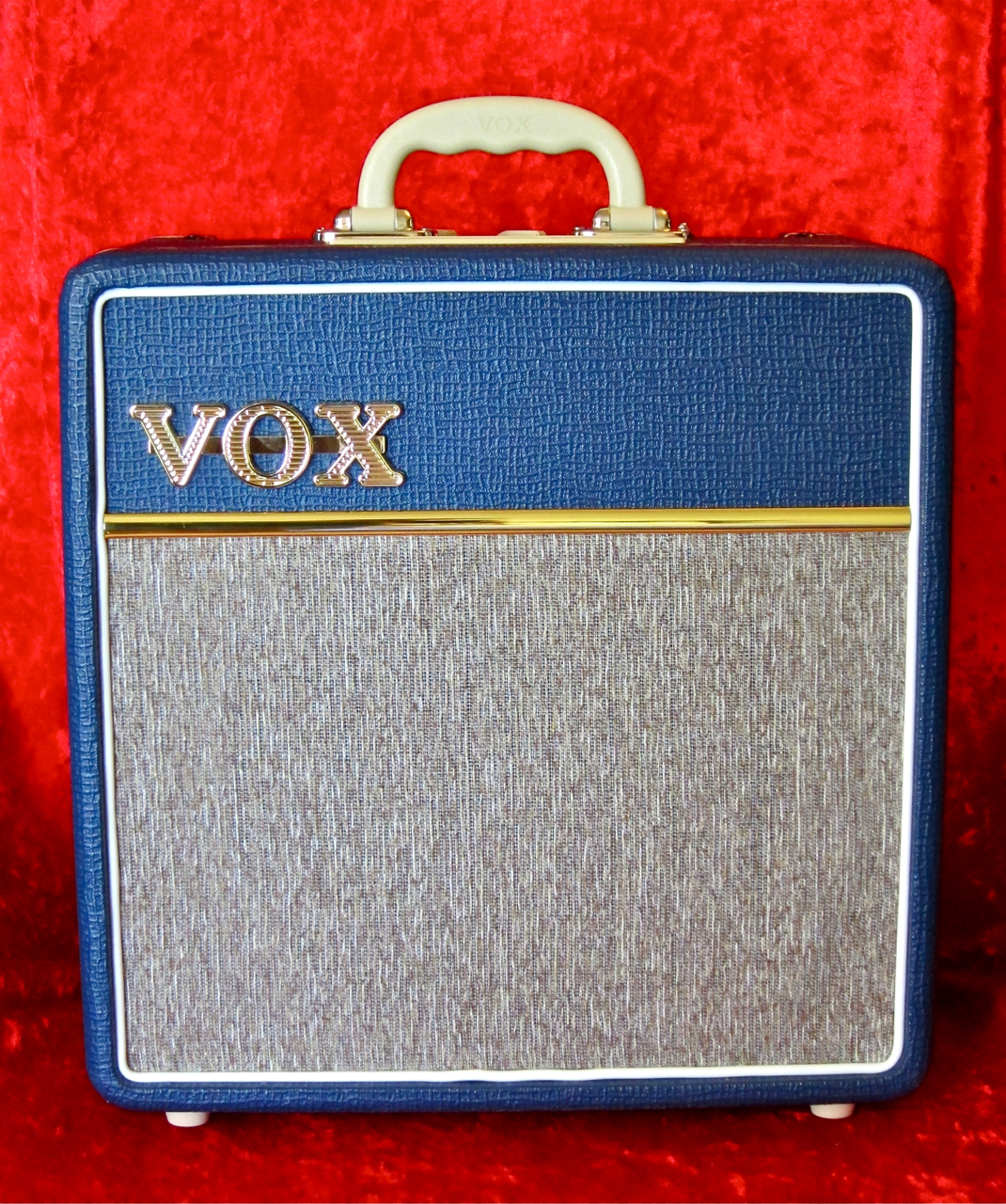
This is what it looks like – the brand-new Vox AC4 C1 Blue. I can already hear many of you thinking “What? Another AC4? Is it any different to the white AC4 TV?”

Granted, it is somewhat bewildering that Vox have several similarly named products in their range, so let me run you through the differences quickly:

At the moment of writing there are five different Vox AC4 valve amplifiers available. The Vox AC4 TV – which is available in three different guises – is the most affordable alternative, and aimed at the same market segment as ultra-compact modelling combos, such as the Roland Micro Cube.

At the other end of the price spectrum you can find the Vox AC4 HW, which is a very stylish hand-wired (HW) combo for the vintage fanatic. Just like the Sixties original, the AC4 HW is also equipped with a 12” Celestion speaker.

The new AC4 C1 Blue conveniently slots into the range between the two other AC4s. Vox’ C–series comprises new versions of the company’s most famous models, updated with nifty modern features.

****

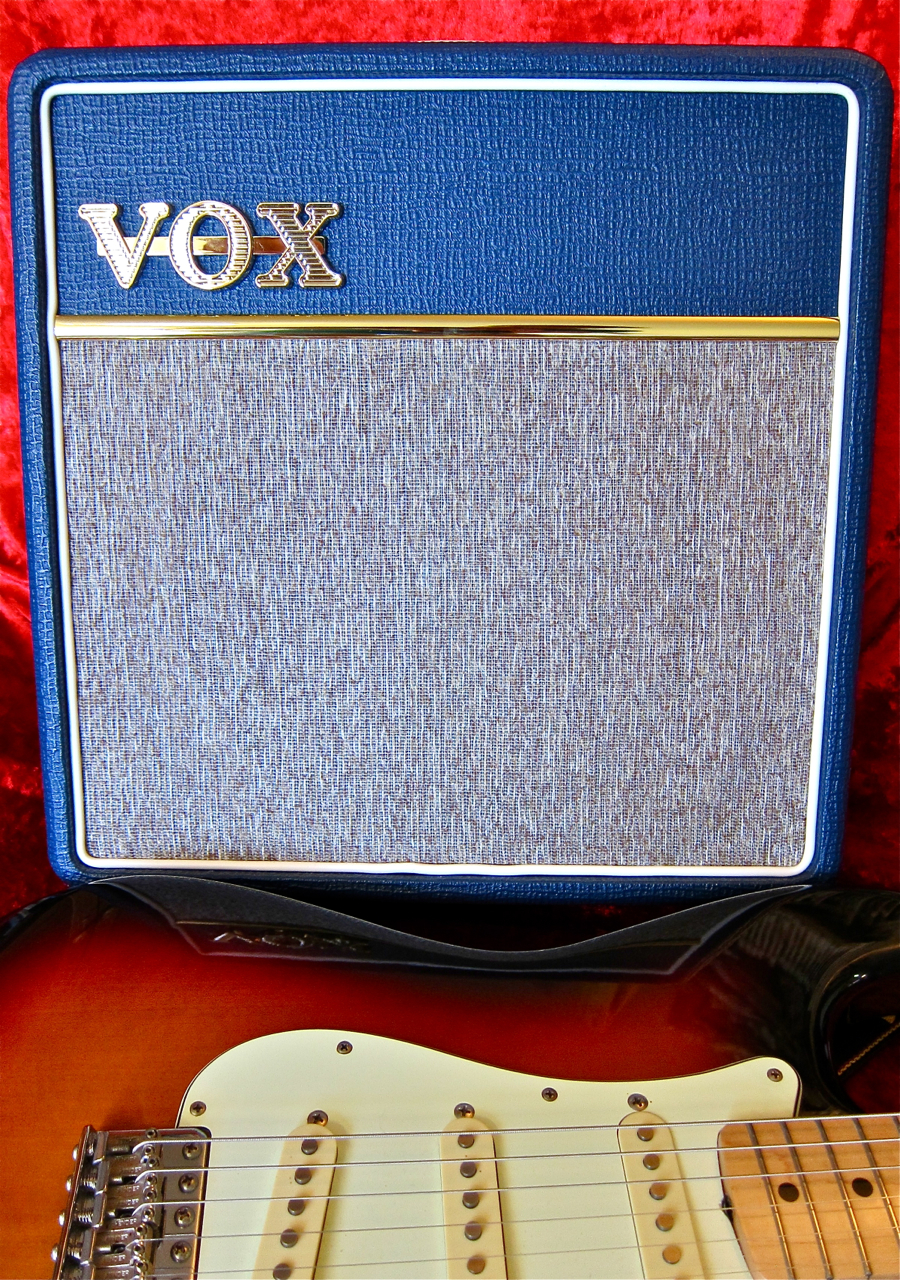
The Vox AC4 Blue (current street price in Finland 349 €) is a very beautiful combo amp, sporting the blue vinyl finish found on one special run from the Sixties, complete with the salt-and-pepper grille cloth.

Two 12AX7 valves are making up the preamplifier section, while the power amp is utilizing a single EL84. Output power is rated at four Watts (RMS) using a 16 Ohms speaker impedance.

The combo’s almost completely closed from the back. The back panel sports only two connectors – one for the power lead and another for connection of an external speaker. Ventilation is provided by a small opening right at the bottom of the combo’s back, as well as the customary small grille next to the carrying handle.

As is the case in quite a number of modern small valve combos, access to the valves is rather restricted in the AC4 C1 Blue. To change preamp valves you have to completely take off the whole back wall to get to the valves, which sit directly on the PCB-board. The owner’s manual recommend leaving valve exchanges to qualified service personnel to avoid the risk of an electric shock.

The Vox AC4 Blue comes equipped with the same special design already used successfully in the AC4 TV – a 10-inch Celestion VX10.

The front panel comprises controls for gain, bass, treble and master volume.

****

Vox has aimed to deliver genuine Top Boost –tone in a small package, and the AC4 C1 Blue really dishes out the goods. This little combo gives you all the legendary AC30 sounds, but at volume levels that fit your living room or home studio to a tee.

The AC4 C1 BL’s clean tones have plenty of jangle, coupled with Vox’ typical dose of grit and attitude. If your’re using powerful humbuckers, you’d better turn down your guitar’s volume a bit, unless you want to drive the combo into light Blues-overdrive.

For my taste the little Vox could do with a little bit less bite in the top end, but I got the trebles reigned in easily with the Treble-knob.

Upping the gain gets you into overdriven territory fairly quickly – from creamy Blues all the way to early Heavy Metal via Seventies Classic Rock. For out-and-out Nu-Metal the Vox AC4 Blue isn’t really the right amp, it just wasn’t designed to dish out that much grunt. For Brian May –type fat lead tones I’d recommend using a distortion pedal in front of the combo.

With its four Watts the AC4 C1 Blue has just enough power to annoy your neighbours – and for small gigs you could stick a microphone in front of it.

Here are a few soundbites (all clips start from the neck pickup):

Stratocaster – clean

SG – clean

SG – light crunch

Stratocaster – full gain

SG – full gain

****

Vox AC4 C1 Blue

current street price in Finland 349 €

Finnish distributor: EM Nordic

A big thank you goes to DLX Music Helsinki  for the loan of the review amp!

Pros:

+ genuine Vox Top Boost -sounds

+ small size

+ Master Volume knob

+ cool looks

+ value-for-money

Cons:

– exchanging valves difficult

****

****

Testipenkissä: Vox AC4 Blue

Tässä se siis on – upouusi Vox AC4 C1 Blue. Kuulen jo melkein lukijoiden kysymykset: ”Hä? Taas yksi AC4? Onko eroja valkoiseen AC4:een uuden värimaailman lisäksi?”

On kenties hieman hämmentävää, että firman mallistossa on useita samannimisiä tuotteita, mutta kuten usein elämässä, myös Vox-malleissa tärkeitä tietoja saa mallitunnuksen lisäyksistä.

Tällä hetkellä Voxilla on viisi Vox AC4 -nimistä putkivahvistinta tuotannossaan: Vox AC4 TV – josta on olemassa kolme versiota (pikkustäkki, AC4 TV Mini ja AC4 TV) – on edullisin vaihtoehto, joka on tarkoitettu mallintavien pikkustyrkkäreiden täysputkiseksi kilpailijaksi.

Skaalan toisessa päässä on Vox AC4 HW, joka on tyylikäs käsinjuotettu (HW = hand-wired) peli vintage-faneille. Alkuperäisen AC4:n lailla myös AC4 HW on varustettu 12-tuumaisella Celestion-kaiuttimilla.

Uusi AC4 C1 Blue on sijoitettu näiden kahden mallin väliin. Voxin C-sarja koostuu legendaarisien vahvistinmallien uusintapainoksista, joissa mallien ominaisuudet on kehitetty eteenpäin nykyaikaista kitaristia varten.

****

Vox AC4 Blue (katuhinta 349 €) on kuvankaunis kombo, jonka ulkonäkö on lainattu yhdestä 1960-luvun erikoispainoksesta, jolla oli sininen vinyylipäällystys ja vaaleanharmaa etukangas.

Etuasteputkina toimivat kaksi 12AX7-mallia, kun taas päätevahvistin on rakennettu yhden EL84-putken ympärille. Päätetehoksi ilmoitetaan neljä wattia (rms) 16 ohmiseen kaiuttimeen tai kaappiin.

Kombon kotelo on lähes täysin suljettu, ja takakannesta löytyy ainoastaan liittimet sähköjohdolle sekä ulkoiselle kaiutinkaapille. Putkien jäähdytykseen tarvittu ilma kulkee takakannen pienestä aukosta ja kantokahvan edessä sijaitsevan muoviritilän kautta.

Kuten monissa nykyaikaisissa pikkustyrkäreissä myös AC4 C1 Blue -kombon putkiin on vaikea päästä. Putkien vaihtamista varten täytyy nimittäin irrottaa koko takakansi, minkä jälkeen pääsee suoraan piirilevyillä istuviin putkiin käsiksi. Käyttöohje neuvookin sähköiskun välttämiseksi kääntymään putkivaihdon tarpeessa valtuutetun tekniikon puoleen.

Kaiuttimena toimii AC4 Bluessa jo TV-mallista tuttu kymmentuumainen Celestion VX10 -kaiutin.

Etupaneeli tarjoaa yhden kitaratulon, sekä säätimet gaineille, bassolle, diskantille sekä master volumelle.

****

Vox lupaa AC4 Blue -kombolle aidon Top Boost -soundin pikkupakkauksessa, ja pikkuvahvistin lunastaa tämän lupauksen avokätisesti. Tästä styrkkarista löytyy kaikki ne soundit, jotka tekivät AC30:sta legendaarisen, mutta nyt ne ovat saatavilla myös pienellä volyymillä, juuri koti- tai projektistudioon sopivaksi.

AC4 C1 BL:n puhtaat soundit helisevät kauniisti, mutta niissä on aina mukana myös se Voxeille tyyppillinen pikkuannos rouhevuutta. Tehokkailla humbuckereilla on syytä pitää kitaran omat volyymit maltillisenä, muuten AC4:sta alkaa kuulla kevyen Blues-särön sävyjä.

Minun makuuni pikku-Voxin perussoundissa voisi olla hivenen verran vähemmän yläpään terävyyttä, mutta sain diskantin kuitenkin hyvin toimivalla Treble-säätimellä riittävästi aisoihin.

Avaamalla Gain-säätimen astutaan sitten reippaasti säröpuolelle, jossa AC4 Bluen gain-varat  vievät meitä kermaisesta Bluesista 1970-luvun Rockille ja varhaiseen Heavy-osastoon. Moderneja Metal-soundeja on turha etsiä tästä kombosta, eikä AC4 ole semmoiseen tarkoitettukaan. Brian May -tyylisiin solosoundeihin suosittelisin säröpedaalin lisäämistä kitaran ja kombon väliin.

Neljällä putkiwatilla pystyy muuten jo hyvinkin ärsyttämään kerrostalon naapureita – siis tarvittaessa AC4 Bluen kanssa voi lähteä soittamaan myös pienempiä keikkoja mikittämällä pikkukomboa.

Tässä muutama soundiesimerkki (pätkissä aloitetaan aina kaulamikrofonilla):

Stratocaster – puhdas

SG – puhdas

SG – kevytsärö

Stratocaster – gain täysillä

SG – gain täysillä

****

Vox AC4 C1 Blue

katuhinta 349 €

Maahantuoja: EM Nordic

Kiitos DLX Music Helsingille testivahvistimen lainasta!

Plussat:

+ aito Vox Top Boost -soundi

+ pieni koko

+ Master Volume

+ ulkonäkö

+ hinta-laatu-suhde

Miinukset:

– putkien vaihtamisen hankaluus

****

****

Review: Orange AD200 Bass Mk3 + OBC410

****

British amplifier makers Orange have a long history going back all the way to 1968.

Even if many of their current products are manufactured in China these days – to keep the prices down – the company still make their top-of-the-line products in England. Apart from their guitar amplifier range Orange also caters for bass players – this time we will review their AD200 Bass MK3  all-valve head (current price in Finland: 1.510 €) together with the OBC410-cabinet (current price in Finland: 799 €).

****

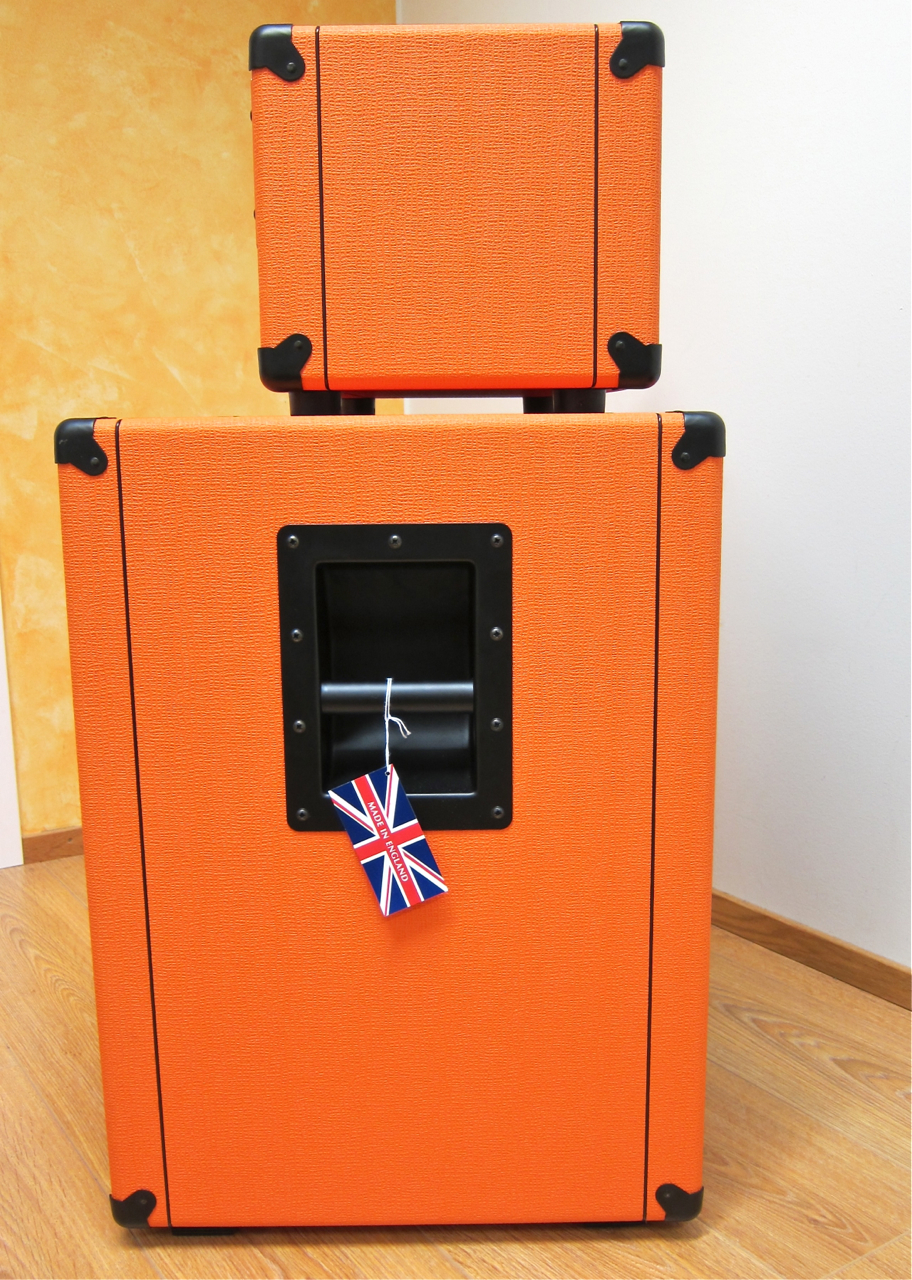
The combination of the Orange AD200 Bass -head and OBC410-cabinet  carries all the famous hallmarks of the company. There’s the pictogrammes explaining the functions of the control knobs on the huge, white front panel, as well as the huge black knobs for gain and master volume. Both the head and cabinet are covered in the famous orange vinyl and have black metal corner protectors.

This stack has been built to take the beatings of a life on tour, with both head and cabinet crafted from 13-ply birch plywood. The OBC410 also features stiffening internal partitions, which also greatly reduce unwanted resonances.

The speaker cabinet is a rear-ported design with tough metal skids underneath.

This uncompromising build and sturdiness are sure to satisfy the professional bassist (as well as his techie), but they naturally add a hefty bit of weight to this stack – the AD200 Bass -head weighs in at 25 kilos with the OBC410 weighing a whopping 43 kilos. Greetings to the road crew…

The OBC-cabinet is rated at 600 Watts (RMS), meaning it can stoically take whatever the AD200 dishes out. Its four ten-inch speakers are complemented by a treble horn, which has its own three-way switch on the back panel.

The Orange AD 200 Bass’ design is as classic as it is straightforward: The controls comprise gain, master and a three-band EQ section – that’s all.

The back panel sports three speaker outputs, as well as separate fuses for each of the two power amp tube pairs. The slave output makes it possible to chain several AD200s together, which comes in handy for stadium-type large scale gigs, or if you want to rattle the drummer with some choice notes on your low-B string.

Behind the metal grille on the back you have direct access to the head’s valves: Orange’s large bass head can be run on either four KT88s or the same number of 6550-valves, which is what out test sample came supplied with. The AD200’s front end is catered for by two ECC83/12AX7s and one ECC81/12AT7, which have been placed behind the power amp tubes.

****

Let’s make one thing clear for starters – this stack isn’t the right choice for your living room.

The pairing of Orange’s AD200 and OBC410 results in an extermely muscular stack that moves some serious amounts of air. Yes, you can turn down the head’s smoothly functioning controls and bring this rig down to small rehearsal levels, but this amp stack truly thrives best in large settings, where its bags of volume can really shine.

This stack’s sound is surprisingly versatile, with the gain control taking you from earthy cleans all the way to warm valve distortion. The EQ section is very powerful and musical. The Orange AD200 isn’t really the best amp fors delicate Hi-Fi meanderings, but it really offers more versatility than what its Rock-image may suggest.

The following examples have been recordid using a Jazz Bass, as well as a sel-assembled P-type bass with a passive MM-pickup:

Jazz Bass – fingerstyle

P-Man – fingerstyle

Jazz Bass – slap

P-Man – slap

Jazz Bass – plectrum

P-Man – plectrum

Jazz Bass – distortion

P-Man – distortion

****

Orange AD200 Bass Mk3 + OBC410

Finnish distributor: Musamaailma

****

Orange AD200 Bass Mk3

Current price in Finland: 1.510 €

Pros:

+ sound

+ versatility

+ power

+ very sturdy build

+ workmanship

Cons:

– weight

****

Orange OBC410

Current price in Finland: 799 €

Pros:

+ sound

+ power handling

+ switchable treble horn

+ very sturdy build

+ workmanship

Cons:

– weight

****

Testipenkissä: Orange AD200 Bass Mk3 + OBC410

****

Brittiläisellä Orange Amplificationilla on pitkä historia, joka ulottuu vuoteen 1968 asti.

Vaikka nykyään monet Orangen tuotteista tulevat Kiinasta, jotta hinnat pysyisivät malttillisina, rakennetaan edelleenkin firman putkiparhaimmisto Englannissa. Orangen hedelmistä voivat nauttia myös basistit – tällä kertaa on testissä firman täysputkinuppi AD200 Bass MK3 (1.510 €) ja siihen sopiva kaappi OBC410 (799 €).

****

Orange AD200 Bass -nupista ja OBC410-kaapista syntyvä stäkki näyttää tyypilliseltä Orange-vahvistimelta. Nupissa on se kuuluisa, valtava valkoinen naamataulu suurikokoisilla Gain- ja Master-nuppeilla. Koteloiden oranssi päällysmateriaali, sekä kaiutinkaapin musta etukangas ovat nekin tuttuja klassikoita.

Tämä bassostäkki on tehty rankkaa kiertue-elämää varten: sekä nupin, että kaapin kotelot valmistetaan kestävästä 13-kerroksisesta koivuvanerista. OBC410 on tämän lisäksi sisäisesti jäykistetty vahvilla väliseinillä, mikä lisää kestävyyttä, sekä minimoi kaapin omia, ei-toivottua resonansseja.

Orange käyttää tässäkin metallisia kulmasuojaimia, ja lisäksi kaapin alle on asennettu vahvoja metallikiskoja lisäsuojaksi.

Koko tämä jämäkkyys ja kestävyys ovat iloksi ammattibasistille (ja hänen tekniikolle), mutta ne lisäävät luonnollisesti roimasti painoa – AD200 Bass -nuppi painaa 25 kiloa ja OBC410 kaappi jopa 43 kiloa. Terveisiä roudareille siis…

OBC-kaappi kestää jopa 600 Watin rms-tehoa, minkä ansiosta se tulee mukisematta toimeen AD200:n 200 Watin kanssa. Neljän kymmentuumaisten lisäksi kaapissa toimii myös diskanttitorvi, jolla on oma kolmiasentoinen kytkin kaapin takapaneelissa.

Orange AD 200 Bass -nupin ulkonäkö on klassinen ja sen käyttö erittäin suoraviivainen: Gainin ja Masterin lisäksi on tarjolla kolmikaistainen EQ — siinä kaikki.

Takapaneelista löytyy kolme kaappilähtöä, sekä pääsulakkeen lisäksi vielä erillisiä sulakkeita pääteputkia varten. Slave-lähdöllä voi turvallisesti ketjuttaa kaksi AD200 Bass -nuppia erittäin suuria keikkoja varten (tai silloin kun haluaa liikuttaa rumpusettiä keikan aikana matalalla H-kielellä).

Takaritilän takana löytyy nupin putkia: iso Orange toimii sekä KT88-pääteputkilla tai 6550-tyypeillä. Testinuppiin oli asennettuna neljä 6550-pääteputkea. AD200:n etuaste toimii kahdella ECC83/12AX7- sekä yhdellä ECC81/12AT7-putkella, jotka on sijoitettu pääteputkien taakse.

****

Tehdään heti yksi asia selväksi – tämä stäkki ei ole olohuonekäyttöä varten suunniteltu.

Orange AD200:n ja OBC410:n muodostama stäkki on erittäin tehokas muskelipaketti uskomattoman suurilla voimavaroilla. Hyvin jouhevasti toimivan master volumen ansiosta AD200:n ulosantia saa kyllä väänettyä alas tavallisille bändiharjoituksille sopivaksi, mutta Orange-vahvistimen luonnollisin käyttöympäristö löytyy isoissa keikoissa, jolloin styrkkarin isoista voimavaroista on todellakin iloa.

Orange-stäkin soundi on hyvin monipuolinen. Sävynsäätimet toimivat hyvin tehokkaasti ja gain-säätimen vaikutusalue menee juurevasta puhtaasta lämpimään putkisäröön. AD200 ei ole oikea valinta silloin, kun haetaan hienotunteista hifistelyä, mutta nuppi on eittämättä monipuolisempi kuin mitä Orangen Rock-imago antaa ymmärtää.

Soundiesimerkit on soitettu Jazz-bassolla sekä kotitekoisella, Precision-tyylisellä bassolla, jossa on passiivinen MM-humbucker:

Jazz Bass – sormisoitto

P-Man – sormisoitto

Jazz Bass – slap

P-Man – slap

Jazz Bass – plektralla

P-Man – plektralla

Jazz Bass – säröllä

P-Man – säröllä

****

Orange AD200 Bass Mk3 + OBC410

Maahantuoja: Musamaailma

****

Orange AD200 Bass Mk3

1.510 €

Plussat:

+ soundi

+ monipuolisuus

+ teho

+ erittäin kestävä rakenne

+ työnjälki

Miinukset:

– paino

****

Orange OBC410

799 €

Plussat:

+ soundi

+ tehonkesto

+ säädettävä diskanttitorvi

+ erittäin kestävä rakenne

+ työnjälki

Miinukset:

– paino

****

Pidä blogia WordPress.comissa.

Ylös ↑