

****
Kitarablogi.com – Finland's premier Guitar and Bass blog
Juttuja kitaroista ja bassoista

****

EBS Sweden vietää tänä vuonna yhtiön 25-vuotispäivää. Juhlavuoden kenties kuumin uutuus on yhteistyössä Billy Sheehanin kanssa syntynyt säröpedaali.
Billy Sheehan on legendaarinen Rock-basisti, jonka tunnetaan parhaiten Mr. Big -yhtiöstä, omasta Niacin-bändistä, sekä David Lee Rothin basistina.
****

EBS Billy Sheehan Signature Drive -pedaali (219,90 €) on nimestään huolimatta enemmän kuin pelkkä säröefekti, sillä se sisältää säröefektin lisäksi myös puhtaan etuvahvistimen ja laadukkaan kompressorin.

Sheehan Driven oikeaan kylkeen on asennettu pedaalin jakkitulo, sekä inserttipiste puhtaan kanavan efektilenkille.
Efektilenkki toimii tässä samalla tavalla kuin monissa miksereissä – sitä käytetään Y-johdolla, jossa on pedaalin puolella yksi stereojakki ja johtojen toisessa päässä tavalliset monoplugit ulkoisen efektin lähdöksi ja tuloksi.

Jakkilähdön alle taas on sijoitettu säröpuolelle oma inserttipiste.
EBS:n Billy Sheehan -pedaali mahdollistaa sen kahdella efektilenkillä jokaisen basistin oman soundin tarkkaa muokkailua, koska puhtaalle ja säröpuolelle voi kohdistaa omat efektinsä. Näin esimerkiksi särölle lisätty flanger ei puurouta lopputulosta tai syö puhtaan signaalin botnea.
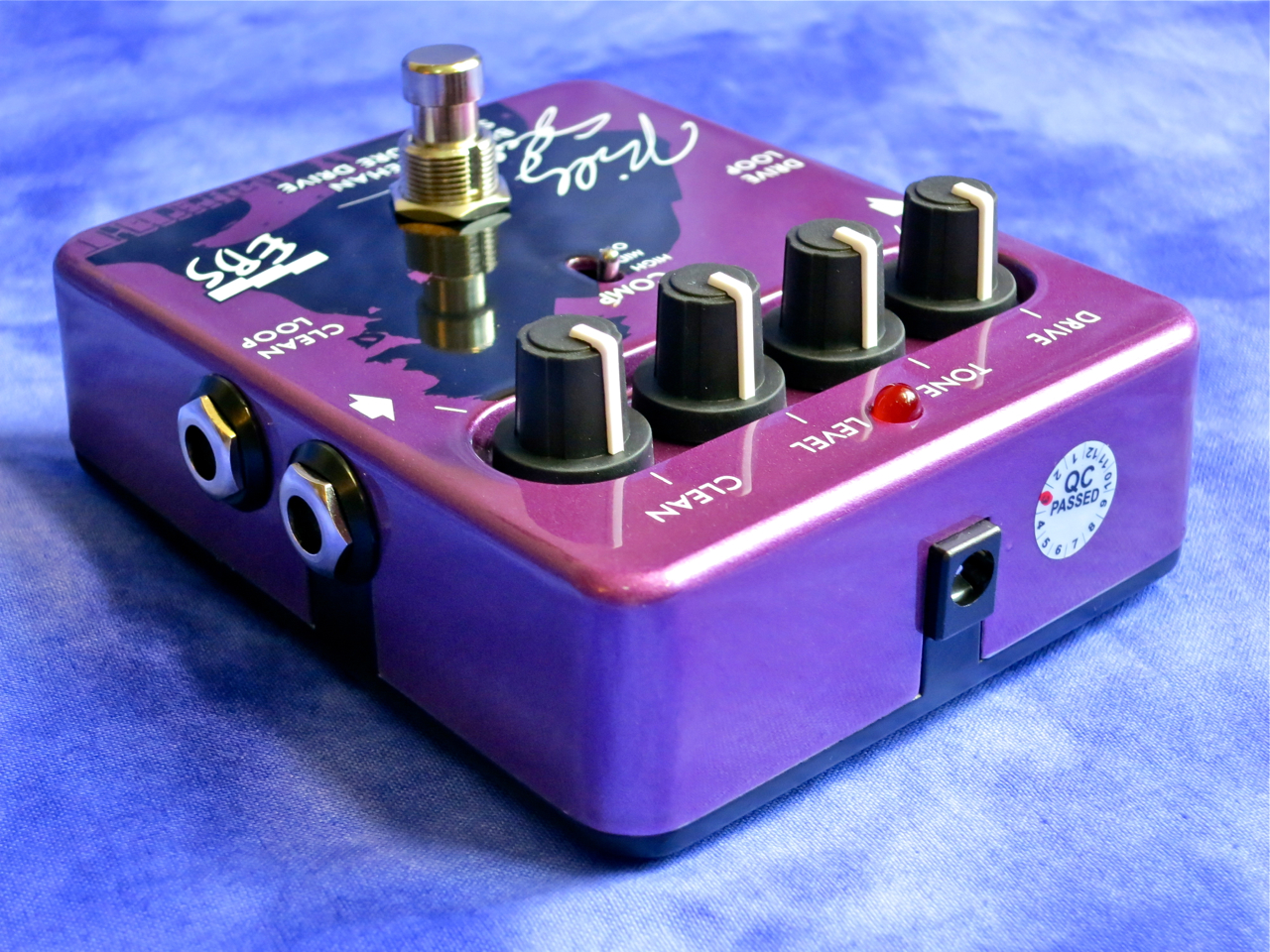
Melko kompakti pedaali saa virtansa joko yhdeksän voltin paristosta tai tavallisesta, Boss-standardin mukaisesta virtalähteestä (ei kuulu hintaan).
****
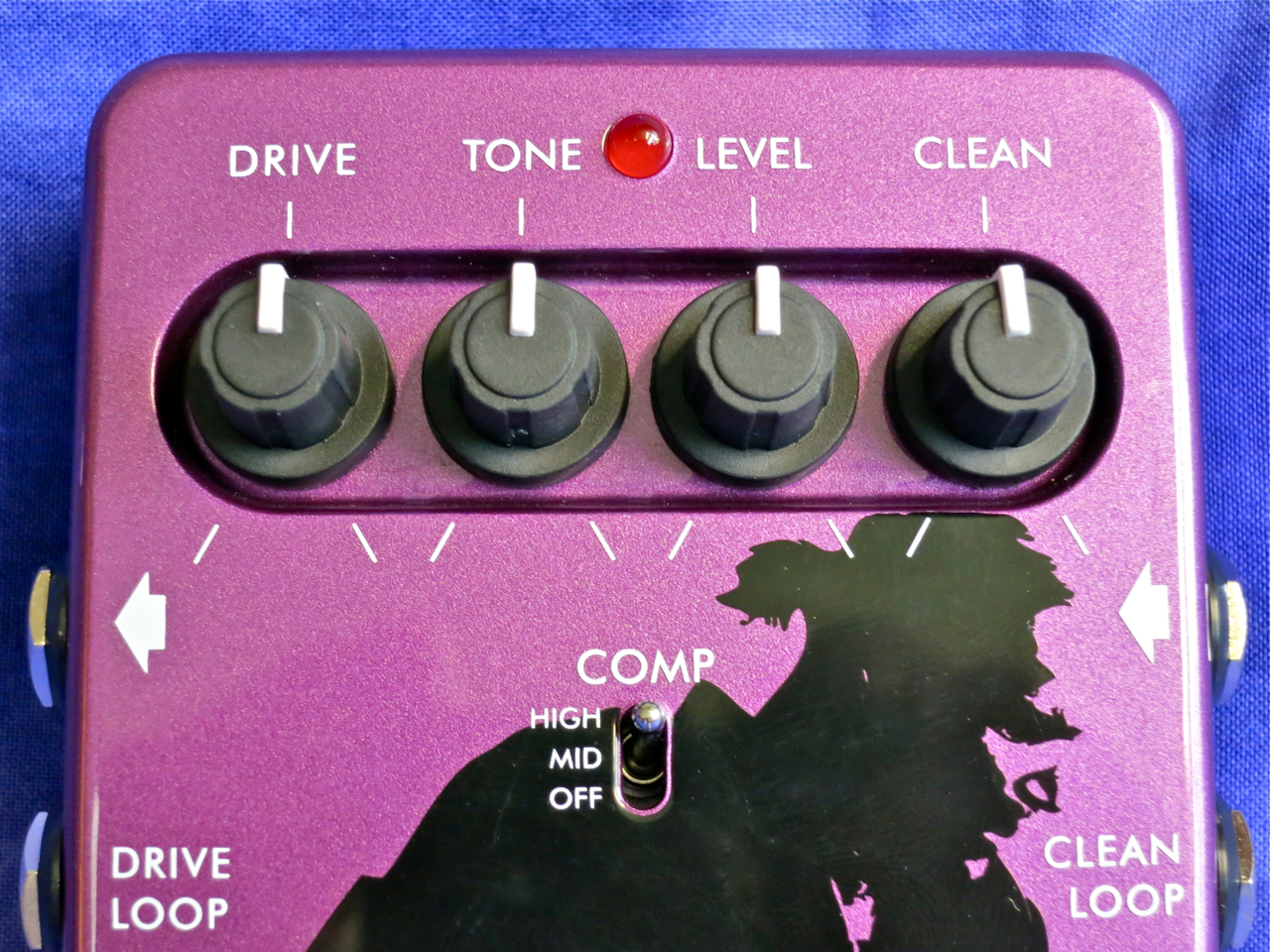
EBS Billy Sheehan -särössä on neljä säädintä:
Drive säätää särön vahvuutta, Tone-potikkalla muokataan särön soundia, kun taas Level-säädin hallitsee säröpuolen lähtötasoa. Viimeinen nuppi – Clean – on puhtaan puolen master volume.
Sheehan-pedaalin kompressori on signaaliketjun viimeinen lenkki, särön ja puhtaan signaalin summauksen jälkeen.
Minikytkimen High-asento on tehdasasenteinen ja se tarjoaa todella pyöreän kompressiosoundin isolla (6 dB) vahvistuksella.

Tehtaalta asetettuna kompuran Mid-asento kulkee kultaista keskitietä Off- ja High-asetuksien välillä. Poistamalla pedaalin pohjan pääsee kuitenkin käsiksi Mid-vaihtoehdon kynnystason (threshold) ja kompressiosuhteen (compression) asetuksiin vaikuttaviin pikkusäätimiin.

Billy Sheehan -nimikkopedaalin kompressori toimii hyvin musikaalisella tavalla, ja se tarjoaa rutkasti gainea.
Tässä on puhtaalla soundilla äänitetty näyte EBS-efektin kolmesta kompressoriasetuksista:
Billy Sheehan näyttää olevan putkivahvistimen särösoundia rakastava mies. EBS-pedaalin särön määrä on vielä suhteellisen malttillinen, ja sen särösoundi miellyttävän orgaaninen, täysin vaille ärsyttävää fuzz-maista karheutta. Tone-potikka tarjoaa laajan valikoiman soundeja muhkeasta ohueen.
Seuraavassa ääninäytteessä esitän Tone-säätimen toimintaa, samalla kun Drive on avattu täysille:
Puhtaan signaalin lisäämisestä särösoundiin on todellakin paljon hyötyä.
Pelkällä säröllä varustettuna bassosignaalilla on suhteellisen kevyt basso ja alkuperäissignaalia kapeampi dynamiikka:
Lisäämällä särösignaaliin myös puhdasta signaalia on lopputulos huomattavasti dynaamisempi ja basson alkuperäinen potku säilyy paremmin:
****
EBS:n Billy Sheehan Signature Drive on mielestäni erinomainen lajinsa edustaja. Tämän pro-luokan nimikkopedaalin fiksut ja monipuoliset ominaisuudet takaavat, että Sheehan-pedaali sopii paljon laajemmalle käyttökunnalle kuin pelkästään Sheehan-soundia etsiville basisteille.
****
EBS Billy Sheehan Signature Drive
219,90 €
Maahantuoja: F-Musiikki
****
Plussat:
+ särösoundi
+ puhdas soundi
+ säädettävä kompressori
+ kaksi efektilenkkiä
+ kestävä rakenne
Miinukset:
– ei erillistä paristolokeroa


****

Zoom’s A3 is the company’s brand-new, next-generation modelling effects unit for acoustic guitar.
The Zoom A3’s user interface is very similar to the one used in their MS-50G-pedal for electric guitar, but in terms of its features the A3 offers a whole plethora of stuff developed specially for use with acoustic guitars.
****

Zoom have managed to pack an unbelievable amount of processing prowess into its new compact contender (current street price in Finland approx. 170 €), yet the A3 is still easy to use. The most vital functions have been given their own knobs and pushbuttons, which makes the A3 easy to use and cuts back on unnecessary menu-jumping at the same time.
The Zoom’s main sections are the quality dual preamp with its three-band EQ, the pedal’s versatile guitar-modelling department, as well as the A3’s large assortment of effects.
Additionally, the pedal offers a switchable solo boost (up to 12 dB) with its own tone control, an automatic feedback remover (that can defeat up to three different frequencies simultaneously) and a digital tuner.

The Zoom A3 is a programmable unit, which can store up to 20 patches. The patches can also be lined up in an A/B-list, which enables you to select patches for on-the-fly switching.

The effect pedal comes with its own power supply unit, but it can also be run on four AA-size batteries.

The A3’s microphone input – which can run phantom power (+24V or +48V) for condenser mics – and the unit’s balanced XLR-output (with a dedicated ground lift switch) have been placed on the front panel.

Your guitar’s output goes into the Zoom’s pickup input on the unit’s right hand side. A three-way slider lets you select two pre-EQ curves – magnetic or piezo – as well as a linear option (flat).

The stereo outputs have been placed on the opposite side, next to the USB-port for (firmware updates).
****

Each of the A3’s patches can run up to three different effects simultaneously, so you could use the first slot for one of the Zoom’s 28 virtual guitars, the second slot for one of three virtual microphones (SM57, C414, U87) and the third for something like a reverb.
On the other hand, you can also use the A3 as a ”pure” multieffect, by not using any digital guitar-modelling and creating patches with three effects in them. You can choose from 40 different effect types – from compression and chorus all the way to pitch-shifting and reverb. The sound quality is very good, and each effect offers plenty of leeway for precise adjustment.

Still, I think the A3’s biggest selling point is its excellent modelling section, which makes it possible to achieve astonishingly realistic results with only a few clicks of a button.
To work properly the modelling section needs a clean guitar signal, so the first thing is to make sure you’ve got the input gain settings for your straight guitar output and/or the mic put in front of your guitar just right.
Once the levels are OK, miraculously changing the character of your guitar is quick and easy: First, use the rotary switch above the Zoom’s display to select the body type corresponding best to the guitar you’re using – for example, choose ”Mold Body” if you’re playing an Ovation or ”YMH” if your guitar is a Yamaha LL-series instrument.

Next, you select a virtual guitar of your liking for the first effect slot in the chosen patch. You can access all of the A3’s 28 virtual guitars by using the Type-buttons. The guitars are displayed using their model names – like J-45, LG-2 or F-55 – as well as by an icon in the display.
If you’re using only a direct piezo signal as a starting point, you can add a good dose of authenticity by selecting a virtual microphone for the second effect slot of the patch. Each of the three virtual mics lets you choose between close- and ambient-miking, and whether the mic has been placed in front of the virtual sound-hole or near the virtual guitar’s bridge.
I have recorded three audio examples to give you an idea of the modelling technology’s sound:
The first clip features a Godin Acousticaster with an LR Baggs piezo system. First you’ll hear the straight piezo signal, followed by the these virtual guitars: A D-28, an OM-28, a 00-18 and an SJ-200. I’ve used Zoom’s virtual version of an AKG C414, and a touch of reverb:
The second clip has been recorded with me playing my Takamine N-20 -jumbo into a real condenser mic (an AKG C3000). The sequence of virtual guitar models is the same as above:
In the third clip I play my Tanglewood TW28-CSN -dreadnought, with the physical microphone and the sequence of virtual guitars staying the same:
****
In my opinion the Zoom A3 is a very serious contender for the title of ”Best compact multieffect for acoustic guitar”. It is a fantastic little tool for both live use and in the studio, where it can act as your own production centre for acoustic guitars. The Zoom is very easy to use and it sounds great. The on-board anti-feedback circuitry works very nicely and the solo boost is a handy tool to have in a unit such as this.
The best bit is, nonetheless, the A3’s surprisingly organic-sounding modelling section. The Zoom’s biggest advantage, when compared to other similar effect units, lies in its versatility and the wide range of different virtual guitars on offer. It is very easy to find a good body-style match for your physical guitar’s input signal, and the amount of different virtual guitar models makes it almost hard to choose. The option to creatively misuse the Zoom A3 – by selecting the ”wrong” body-type for your input signal – is also fun, and yields some nice new flavours.
But, don’t listen to me, go out and give it a try yourselves.
****
Zoom A3
Current street price in Finland approx. 170 €
Finnish distributor: Studiotec
****
Pros:
+ value-for-money
+ quality preamp
+ mic input with phantom power
+ great-sounding virtual guitar models
+ effect quality
+ EQ-section has physical control knobs
+ Boost & Anti-Feedback functions
****

****
If you feel your guitar-playing is stuck in a rut, it might be a good idea to broaden your horizon – either by immersing yourself in a new genre, or by taking up a different string-instrument.
For some time I have been interested in lap steels, and for some reason – probably due to their their special sound – especially in Weissenborn-type, acoustic lap steels.
About 100 years ago a Californian luthier (of German origin), named Hermann Weissenborn, came up with an idea to make the then-popular acoustic lap steel guitar louder: Weissenborn simply extended the body into the neck, all the way up to the top nut. As the neck was sort of redundant on a lap steel anyway, the luthier figured, he might as well use it to further amplify the instrument’s voice.
Although the new instrument worked very well, Weissenborns were supplanted relatively quickly by even louder designs, such as resonators and electric steel guitars. Over recent years interest in Hermann Weissenborn’s invention has been growing slowly but steadily, thanks to this guitar’s idiosyncratic looks and sounds being featured by such musicians as Ben Harper and Xavier Rudd.
Thanks to this renaissence, new and affordable Weissenborn-copies are readily available for the beginner. Most of these guitars are built in China to the distributors’ specifications and then branded with the respective company’s logo.
There are also a few luthiers out there who build high-quality replicas of Weissenborn-type lap steels for the connoisseur – check Google (”Weissenborn guitar”).
At the moment of writing no Finnish distributor is importing Weissenborn-style guitars, so I got some support for preparing this article from Germany: Bediaz Music are a small, specialised company, dealing mostly in acoustic lap steels – starting with vintage Weissenborns and modern boutique-versions – but the guys are also importing their own range of affordable Bediaz-branded instruments.
****
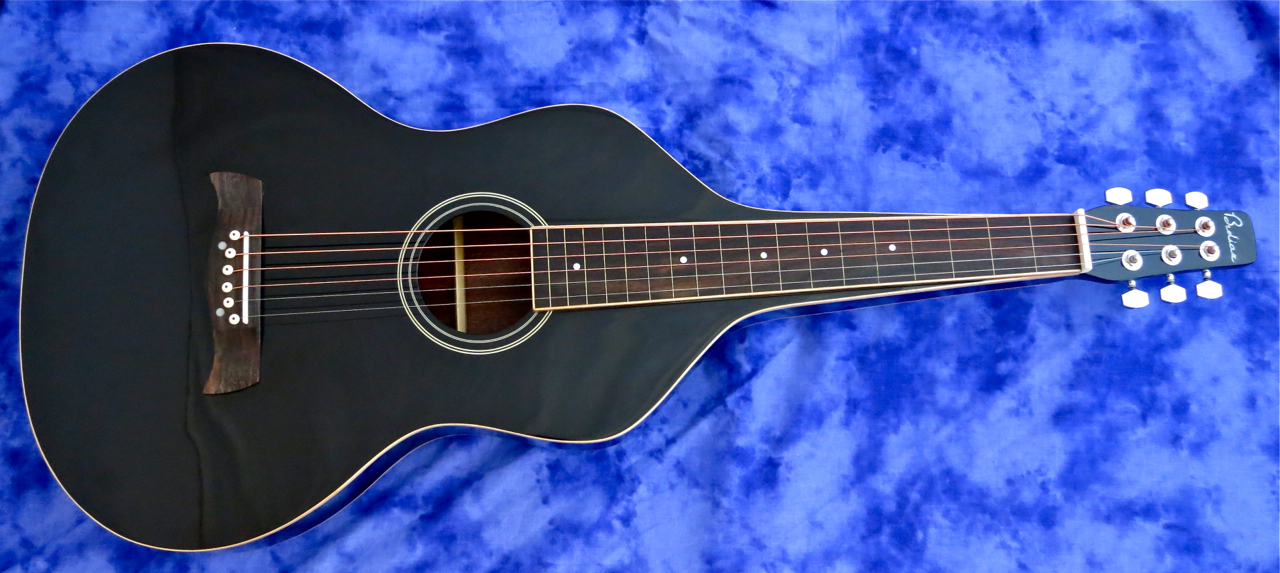
I decided to get acquainted with a Bediaz Black Gloss, the company’s most affordable model (289 €).
This is a copy of the guitar-shaped Weissenborn, but Bediaz also offer Teardrop-models, as well as deep-bodied and/or wider alternatives.

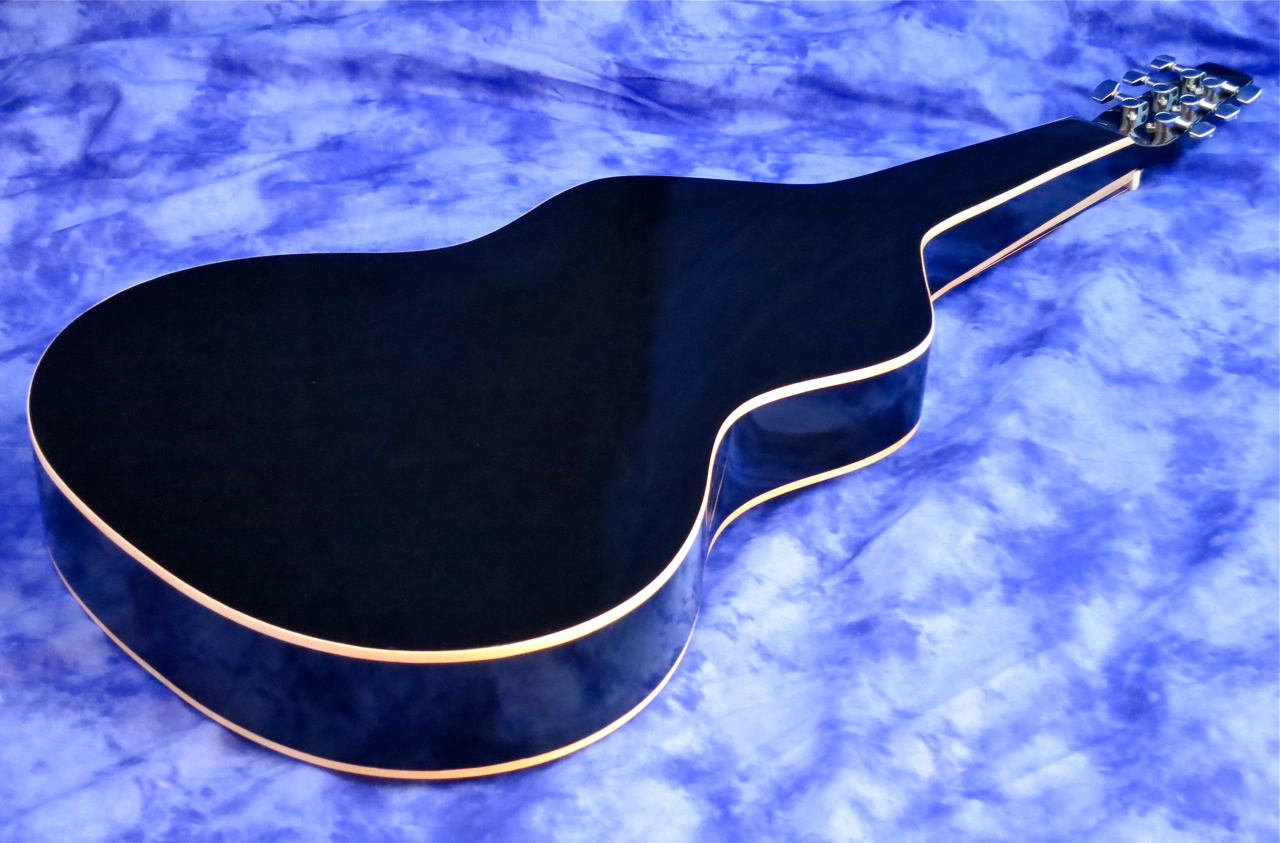
At this price point you cannot expect solid-wood bodies. The Bediaz has a body build from laminated mahogany, and sports a gloss black finish.
Only the guitar’s headstock – which is glued into the hollow neck near the first fret – is a solid piece of wood.

Affordable doesn’t mean cheap, though:
The Bediaz displays a very clean build (for the most part), and looks rather fetching with its luscious finish and the stylish, contrasting maple binding.
The fret lines seem to be maple, too. There were a couple of slightly wobbly-looking fret lines, but this is a mere cosmetic glitch on a lap steel, and nothing to worry about in this price range.

The silkscreened silver logo also isn’t the crispest either, due to some bleed, but this also is a very minor cosmetic niggle, which surely won’t spoil our fun.
A chunky bit of bovine bone has been used for the Bediaz’ tall top nut.

Tuning is simple and steady, thanks to the modern sealed tuning machines.

Stylishly understated white rings make up this instrument’s rosette.

The Bediaz also displays rather clean workmanship on the inside – something which isn’t always a given in this low price bracket.

A Weissenborn-bridge is a steel-string bridge’s taller sister. On the Bediaz it has been crafted from a sandwich of two pieces of rosewood.
****
This is what a Weissenborn can sound like in the right hands:
****
Playing a lap steel guitar opens up the gates to a new kind of playing-experience, and forces you to readjust your approach.
In a certain way, a lap steel is much more restricted than a standard (Spanish) guitar, as you’re always tied closely to your chosen tuning, with the bar giving you only a little room for breaking out of the key you’re in. If you’re in an open major-tuning, for example, achieving minor chords requires you to apply string muting, if you want to go somewhere else than the parallel minor tonic chord (like: Em –> G).
On the other hand, the tone bar frees you from the constraints of the traditional western 12-semitone scale, making it possible to find notes outside our usual major/minor-tonalities. This is one of the reasons why acoustic lap steels are gaining a growing following among Blues-guitarists and World-musicians.
Playing in tune and hitting the correct pitch takes a lot of practice on a lap steel, though. I, for my part, am still on the way there…
😉

Due to their hollow neck Weissenborn-type guitars are a little more delicate when it comes to the rigours of string-pull. High-pitched open tunings should only be attempted with lighter gauge strings. It’s best to start your Weissenborn-journey with lower tunings, such as open D (D-A-D-f#-a-d), open C (C-G-C-e-g-c), open G (D-G-D-g-h-d) or DADGAD. Many lap steel buffs also use their own – often ”secret” – tunings to fit their own signature sound and style.
Click HERE for more information, or try Google.
The Bediaz Black Gloss has a nice fresh and open tone with a charmingly raunchy mid-range. For a standard-depth acoustic Weissenborn-copy the sheer volume on offer is a positive surprise.

A lap steel’s sound is also defined by which tone bar is used, and the bar also has an influence on the guitar’s playability. I have taken my first steps using a classic bullet-shaped tone bar – the sound was good, but I found the bar hard to hold. I have since switched to a Shubb SP-1 bar, which I find much easier to hold and manoeuvre. Other players swear by much lighter ceramic tone bars, so check them out as well.
While I don’t kid myself into thinking I might become a great lap steel guitarist, I still find playing the Bediaz-Weissenborn very refreshing and fun.
The affordable Bediaz-guitar makes it easy to start your own path down a new road – it’s a pretty and well-sounding instrument. And once you progress you can always step up to an even better model.
****
Here are two tracks I recorded on the Bediaz:
The Bediaz Weissenborn-copy even made it onto a song demo already:
****
I’d like to thank Bediaz Music for their vital support in making this article happen!

****

Are you looking for something off the beaten path of Strat- and Les Paul-clones? One interesting guitar might be the Tokai AJG-88 – an homage to the Fender Jazzmaster, factory-modded for the modern player.
****

The Tokai AJG-88 (current price in Finland: 1,099 €) is a bolt-on-neck instrument with a long scale.

We find a one-piece maple neck fastened to a streamlined alder body, crafted from three side-by-side pieces.
The Tokai comes in an all-gloss finish: The neck has been sprayed with clear lacquer, with the body showing off a sumptuous three-tone sunburst.

One welcome nod to the 21st century is the AJG-88’s truss rod access, which has been moved from the traditional body-facing end of the neck up to the headstock for easy accessibility.

The AJG-88 comes equipped with a nice set of sealed Gotoh tuners.

The chocolate-coloured rosewood fingerboard sports 22 medium-jumbo frets, which have been expertly seated and well polished. That’s full full marks for Tokai’s fretwork!

The classic screw-on neck joint coupled with Japanese workmanship…

Up to this point Tokai’s AJG-88 may have looked like a full-on Jazzmaster-copy, but the pickups, wiring and the choice of bridge make quite clear that this Tokai has its own, more contemporary, thing going.

Original Jazzmasters feature a front-mounted vibrato paired with a rocking bridge, designed to work correctly with the fat string gauges of yore (.012 or bigger). Putting a .009-set on a vintage-type Jazzmaster will lead to all sorts of problems, from rattling bridge saddles to strings not staying in their respective grooves – not good for sustain or tone.
On the Tokai AJG-88 these problems won’t occur, because this model is equipped with a tune-o-matic and stopbar combination (made by Gotoh). As a result the tuning is rock solid regardless of string gauges or tuning preferences. Tuning down for Metal isn’t a problem for the Tokai.

Both the original Jazzmaster, as well as its younger sister the Jaguar, were equipped with singlecoil pickups and rather complicated electronics with a separate rhythm-circuit for their neck pickup.
Instead of a dizzying array of knobs and switches, Tokai offer you two genuine Seymour Duncan humbuckers. The neck pickup is their famous Jazz-model (SH-2N), with the slightly chunkier-than-vintage Jeff Beck-model (SH-4) placed next to the bridge.

A three-way toggle switch and master volume and tone controls – nice and easy does it…
****

I can only recommed giving the Tokai AJG-88 a spin. If you haven’t tried a Jazzmaster-style guitar before, you’ll be surprised at the well-balanced ergonomics that this large-bodied classic holds in store. The feel is different – in a very good way – and the AJG-88 is easy to hold, both standing up and sitting down.
The neck profile is a nice, medium-thickness vintage-style ”D”. Thanks to the excellent fretwork our test sample came with a really low action (low E: 1.6 mm, high e: 1.0 mm), yet was free from fret buzz.
Acoustically Tokai’s AJG-88 sounds open with a tight bottom end, as well as a charming, slightly hollow mid-range.
Played with a clean amp the Tokai’s neck pickup gives you warm and full tones with a nicely rounded top end. As is the case with most two-humbucker guitars, putting the AJG-88’s toggle in the centre position will result in the most useable clean rhythm tones. The sound is open and airy, with a nice helping of plectrum attack. The bridge pickup on its own displays a chunky mid-range colour – quite useable for clean tones, but, naturally, not as biting and wiry as a Fender-type singlecoil.
This Tokai really loves overdriven sounds, with the excellent-sounding humbuckers dishing out the goods aplenty for all your Blues-, Rock- and Metal-needs. This isn’t your granddad’s Jazzmaster – this Tokai really knows how to rock:
Tokai’s AJG-88 is a classy quality-guitar from Japan. I found it to be a very intriguing and well-executed mix of Fenderish looks and playability, coupled with Gibson-style tones, and offered at a fair price.
****
Tokai AJG-88
1,099 €
Finnish distributor: Musamaailma
****
Pros:
+ Made in Japan
+ value for money
+ workmanship
+ playability
+ Seymour Duncan pickups
+ sound
****

****
Uusi Zoom A3 on firman uusimman sukupolven mallintava etuvahvistin ja efektipedaali akustisille kitaroille.
Zoom A3:n käyttölogiikka on pitkälti samanlainen kuin firman sähkökitaralle tarkoitetussa MS-50G-pedaalissa, mutta ominaisuuksiltaan uutuus tarjoaa monia uusia ominaisuuksia, joita on kehitetty varta vasten akustiselle kitaralle.
****
Uutuuspedaali (katuhinta noin 170 €) tarjoaa uskomattoman paljon pienessä koossa, mutta samalla käyttäjälle ystävällisellä tavalla. Kaikilla tärkeimmillä toiminnoilla on omat säätimensä ja/tai napinsa, minkä ansiosta valikkojen välinen hyppäily on pidetty A3:ssa minimissä.
Zoomin kolme pääpilaria on sen erittäin laadukas, kaksikanavainen etuvahvistin kolmialueisella EQ:lla, laitteen monipuolinen digitaalinen kitaramallinnus, sekä sen runsas efektiosasto.
Tämän lisäksi on tarjolla vielä tehokas (12 dB) boosteri omalla EQ:lla, sekä kierronpoistaja, jolla voi vaimentaa jopa kolme eri feedbacktaajuutta samanaikaisesti. Myös digitaalinen viritysmittari on mahdutettu mukaan.
Zoom A3 on ohjelmoitava laite, ja se tarjoaa 20 muistipaikkaa omille patcheille. Patcheja voi myös ketjuttaa A/B-List-tilassa niin, että omassa setissä käytettäviä patcheja voi vaihtaa lennossa kytkinpolkaisulla.
Efektipedaali toimii joko pakettiin kuuluvalla yhdeksän voltin virtalähteellä, tai sitten vaihtoehtoisesti neljällä AA-paristolla.
A3:n etupuolelta löytyy laitteen mikrofonitulo – johon voi kytkeä phantomvirran (+24V tai +48V) kondensaattorimikrofoneja varten – balansoitu XLR-lähtö (maadoituskytkimellä), sekä liitin virtalähteelle.
Soittimen sisäiselle mikrofonille on omistettu oma tulo Zoomin oikeassa kyljessä. Kolmiasentoisella kytkimellä voi kytkeä päälle etuvahvistimen esisuodatusta piezo- tai magneettiselle mikrofonille, tai päästää muokkaamaton signaali eteenpäin (Flat).
Zoomin toisesta laidasta löytyy stereofoniset jakkilähdöt (vasempaan jakkiin voi kytkeä suoraan myös kuulokkeet), sekä USB-portti firmwarepäivityksiä varten.
****
Jokaiseen Zoom A3:n efektipatchiin kuuluu maksimissaan kolme yksittäistä efektiä, joista ensimmäinen voisi olla esimerkiksi yksi laitteen 28:sta digitaalisista kitaramalleista, toinen yksi kolmesta mikrofonimallinnuksista (SM57, C414, U87) ja kolmas vaikkapa kaiku.
Zoomia voi toki käyttää myös ”pelkkänä” efektilaitteena, ilman kitara- ja mikkimallinnuksia, jolloin patchin kaikki kolme palikkaa vapautuvat puhtaaseen efektikäyttöön. Tarjolla on 40 eri efektityyppiä laidasta laitaan – kompressorista chorukseen ja pitch shifteristä kaikuun. Jokaista efektityyppiä voi räätälöidä omien tarpeiden mukaan, ja efektien laatu on kauttaaltaan hyvin korkea.
Veikkaisin kuitenkin, että monien käyttäjien näkökulmasta mielenkiintoisin ominaisuus Zoom A3:ssa on juuri sen digitaalinen kitaramallinnus. Ja syystäkin, sillä mallinnusosastoa on helppo käyttää, ja sen tuottama soundi useimmissa tapauksissa jopa ällistyttävän autenttinen.
Mallinnusosaston toimivuuden kannalta on tietysti hyvin tärkeää, että soitetun kitaran tulosignaali on mahdollisen laadukas, ja kitaran piezomikrofonin ja/tai kitaran eteen laitetun mikrofonin tasot on säädetty sopiviksi.
Tämän jälkeen fyysisen kitaran soinnin muuttaminen toisen kitaratyypin soundiksi on hyvin helppoa: Ensin valitaan 16-pykäläisestä kiertokytkimestä sen koppatyypin, joka vastaa eniten käytettyä fyysistä kitaraa – esimerkiksi ”Mold Body”, jos käytössä on Ovation-malli, tai vaikkapa ”YMH”, kun soitetaan yhden Yamahan LL-malleista.
Tämän jälkeen valitaan patchin ensimmäiselle efektilohkolle Type-napeilla sen Zoomin tarjoamista 28 kitaramallista – esimerkiksi J-45, LG-2 tai F-55 – joksi halutaan tulosignaalia muuttaa.
Jos fyysiseltä kitaralta tulee pelkästään piezosignaali A3:een, voi lisätä lopputulokseen vielä aimo annoksen autenttisuutta käytämällä patchia toisessa lohkossa yhden Zoomin kolmesta virtuaalimikrofoneista. Virtuaalimikrofonin kohdalla pystyy säätämään, onko kitara läheltä mikitetty vai ei, ja onko virtuaalimikki laitettu virtuaalisen kaikuaukon eteen vai suunnattu virtuaalikitaran tallaa kohti.
Tässä ovat kolme esimerkkipätkää Zoom A3:n mallinnuksista:
Ensimmäiseksi äänitin sähkökitaraa muistuttavaa Godin Acousticasteria, jossa on LR Baggs -mikrofonijärjestelmä. Virtuaalikitaramallien järjestys – efektoimattoman osion jälkeen – on D-28, OM-28, 00-18 ja SJ-200. Virtuaalimikrofoniksi valitsin Zoomin versiota C414-studiomikrofonista:
Toinen esimerkki on äänitetty Takamine N-20 -jumbolla ja fyysisellä AKG C3000 -mikillä. Myös tämä pätkä alkaa muokkaamattomalla osiolla, minkä jälkeen seuraa samat virtuaalikitarat samassa järjestyksessä kuin yllä:
Kolmas – ja viimeinen – esimerkki on äänitetty C3000:n kautta Tanglewood TW28-CSN -kitaralla. Virtuaalikitarat ovat jälleen samat (ja samassa järjestyksessä) kuin muissa pätkissä:
****
Mielestäni uusi Zoom A3 kuuluu selvästi pienten, akustisille kitaroille tarkoitettujen, multiefektien aatelistoon. A3 on erinomainen työkalu sekä livekäytössä lavalla että akustisten raitojen tuotantokeskukseksi studiossa. Zoomia on helppo käyttää, ja sen efektit kuulostavat erittäin terveeltä. Kierronpoistaja toimii tehokkaasti, ja sooloboosteri omalla tone-asetuksella on todella tervetullut lisäys tällaiselle multiefektille.
Parasta A3:ssa on omasta mielestäni kuitenkin sen kitaramallinnusosasto. Mallinnuksen luonnollisuus ja autenttisuus on erittäin hyvällä mallilla. Moniin muihin systeemiin verrattuna Zoomin suurin etu on sen monipuolisuudessa ja mallien runsaudessa. On hyvin vaivatonta löytää omalle kitaralle sopiva koppa-asetus, ja virtuaalikitaroiden määrä luo jo lähes liikkaakin valinnanvaraa. Myös tahallisesta väärinkäyttämisestä – valitsemalla tulopuolella väärää koppatyyppiä – voi saada monta käyttökelpoista soundia aikaiseksi.
Kokeileminen kannattaa siis.
****
Zoom A3
Katuhinta noin 170 €
Maahantuoja: Studiotec
****
Plussat:
+ hinta-laatu-suhde
+ etuvahvistimen laatu
+ phantomsyöttö
+ virtuaalikitaroiden soundi
+ efektien laatu
+ EQ:n säätimet suoraan etupaneelissa
+ Boost- ja Anti-Feedback-toiminnot
****

****
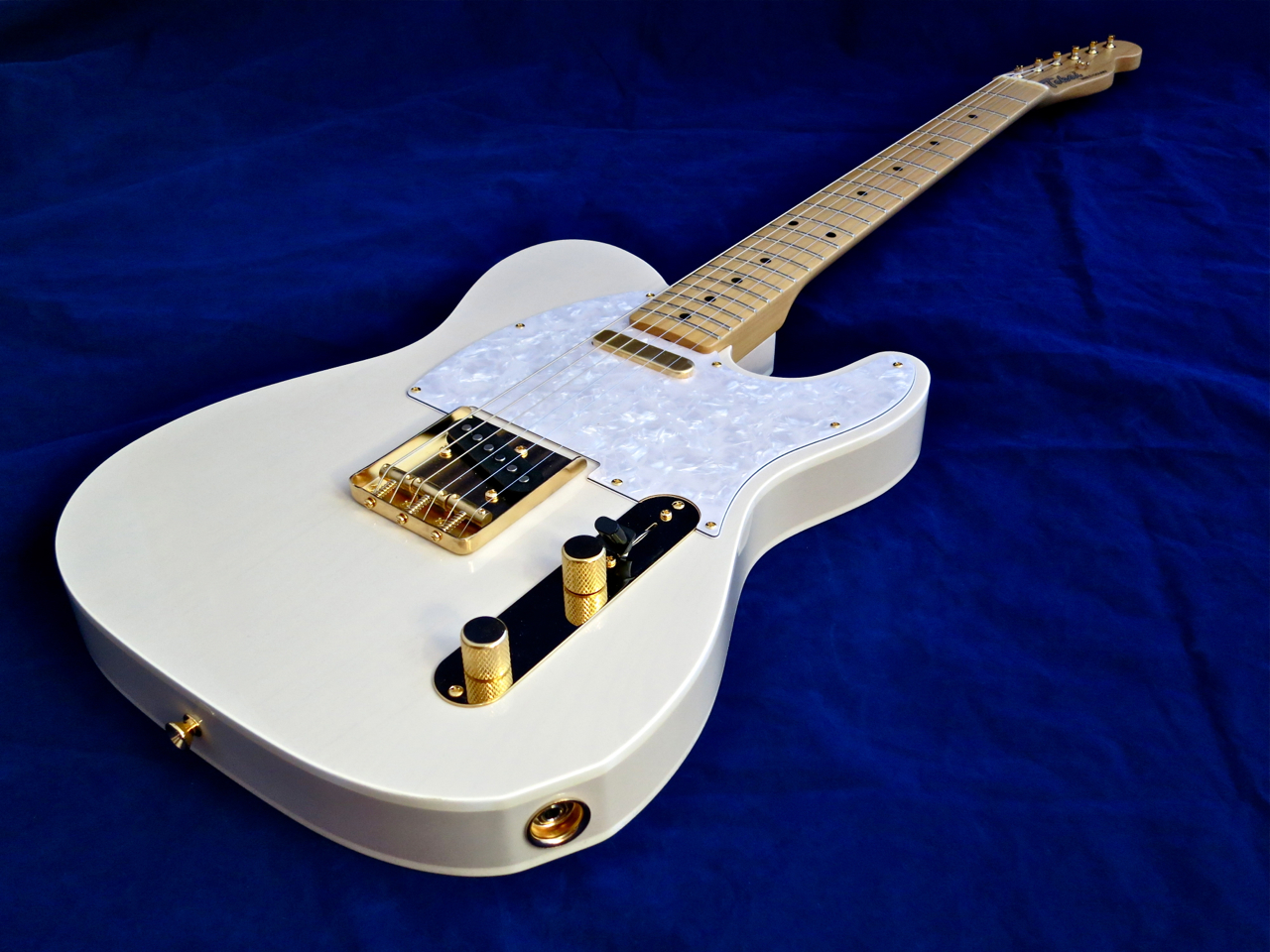
Tokai’s TTE-55 is the company’s newest made-in-Japan Tele-type guitar. The TTE-55 isn’t meant to be a dead-on copy of a Tele from a certain period, but rather something like a Tokai ”best-of-vintage-T” model.
****
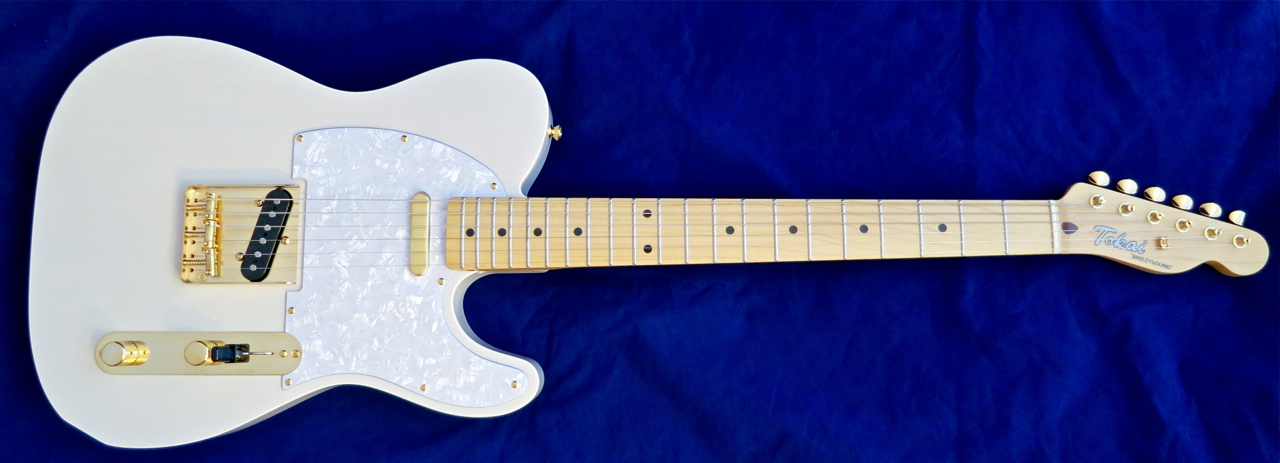
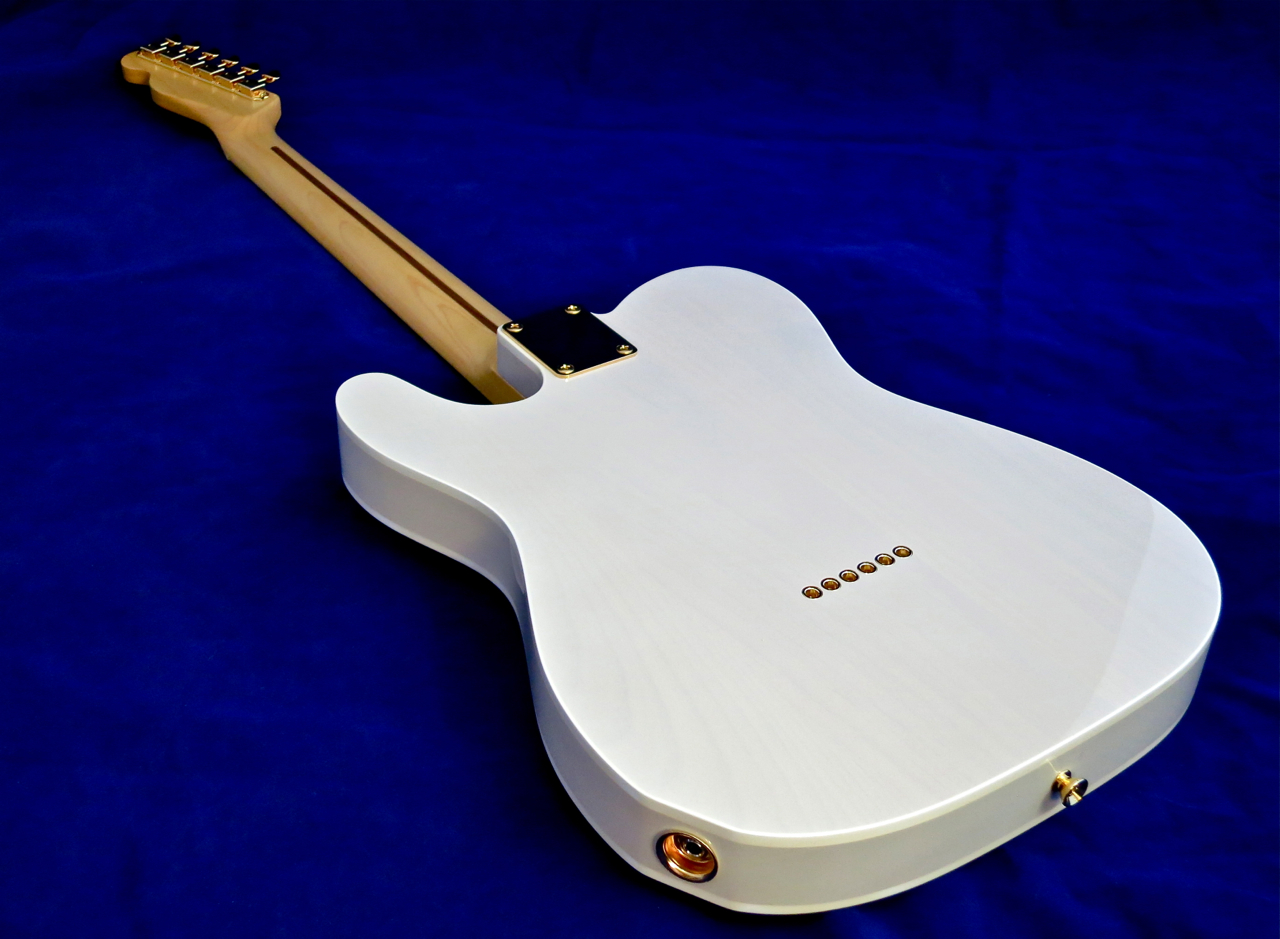
You can get the Tokai TTE-55 (current price in Finland: 848 €) with either a one-piece maple neck – as on our White Blonde review sample – or equipped with a rosewood ’board.
The finish of the hardware is dependent on the body’s colour – in our case here the Tokai sports gold coloured hardware, which embues this Tele with a good dose of Mary Kaye -style panache.
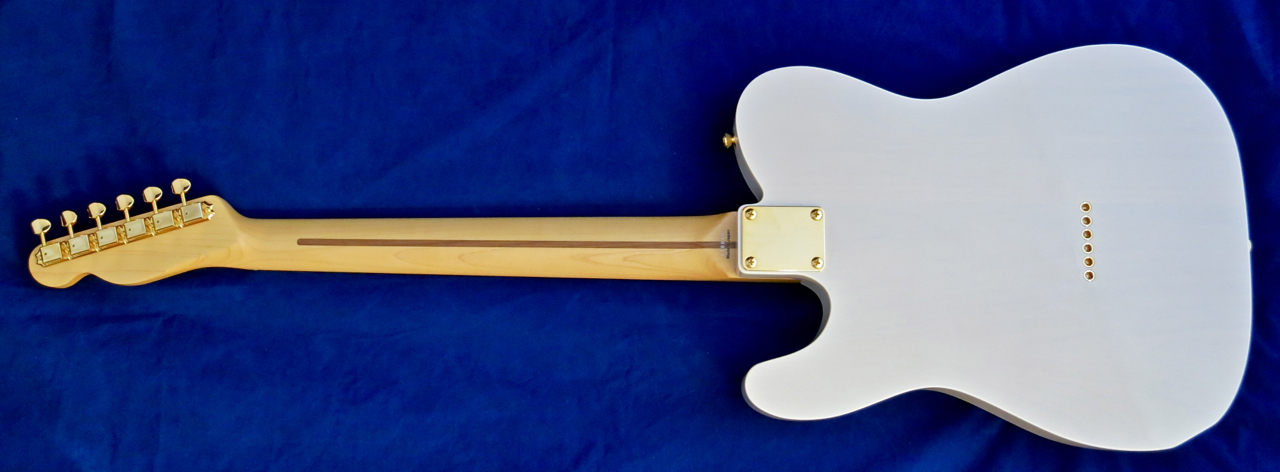
The 1950s-type neck is screwed to a Sixties-type, bound alder body.
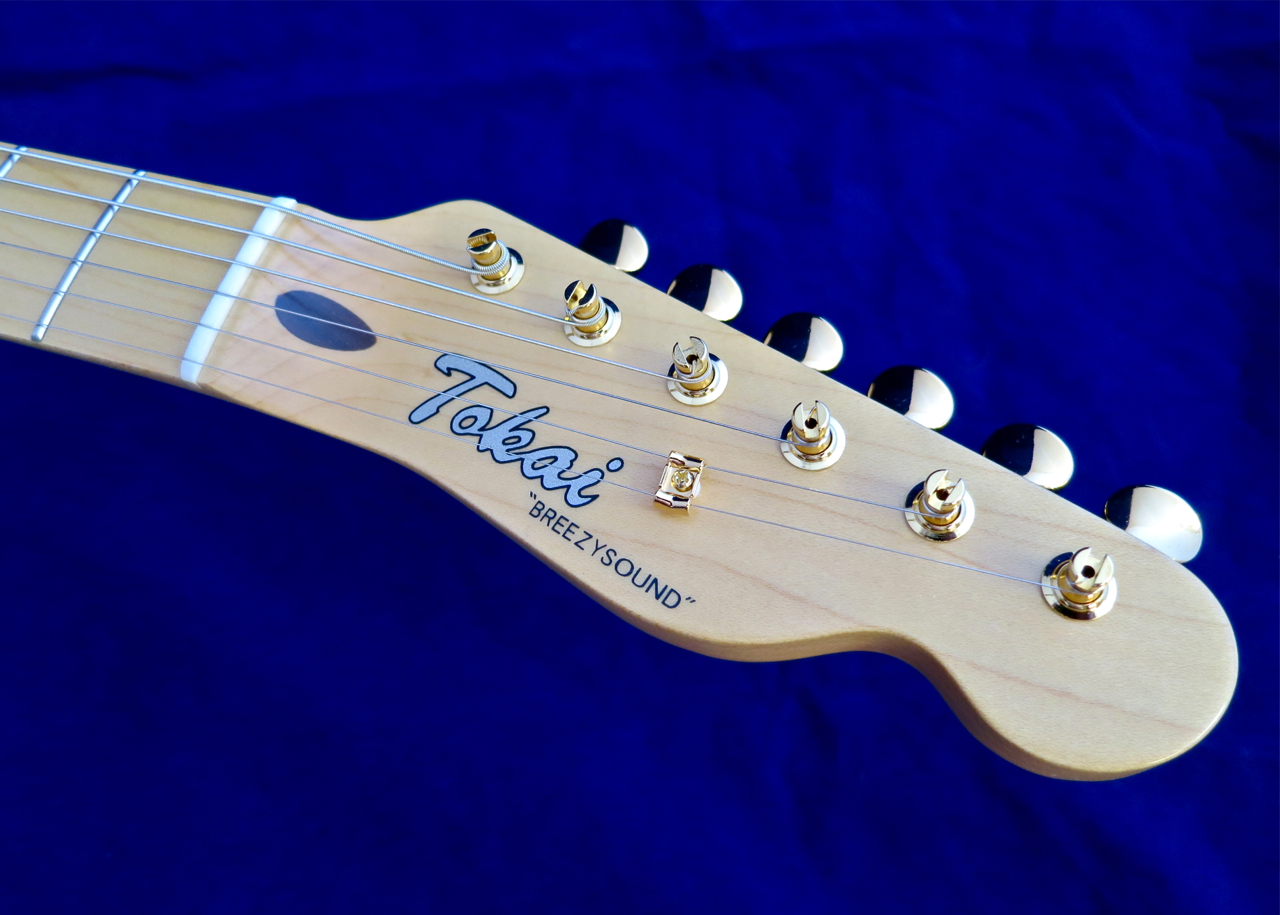
The fine Kluson-copies have one major advantage over more recent designs: The nifty safety posts prevent any sharp string ends from sticking out.
The neck’s silky-smooth satin finish is a much more modern feature, as are the 21 jumbo-sized frets. Top marks to Tokai for the quality of their fretwork!
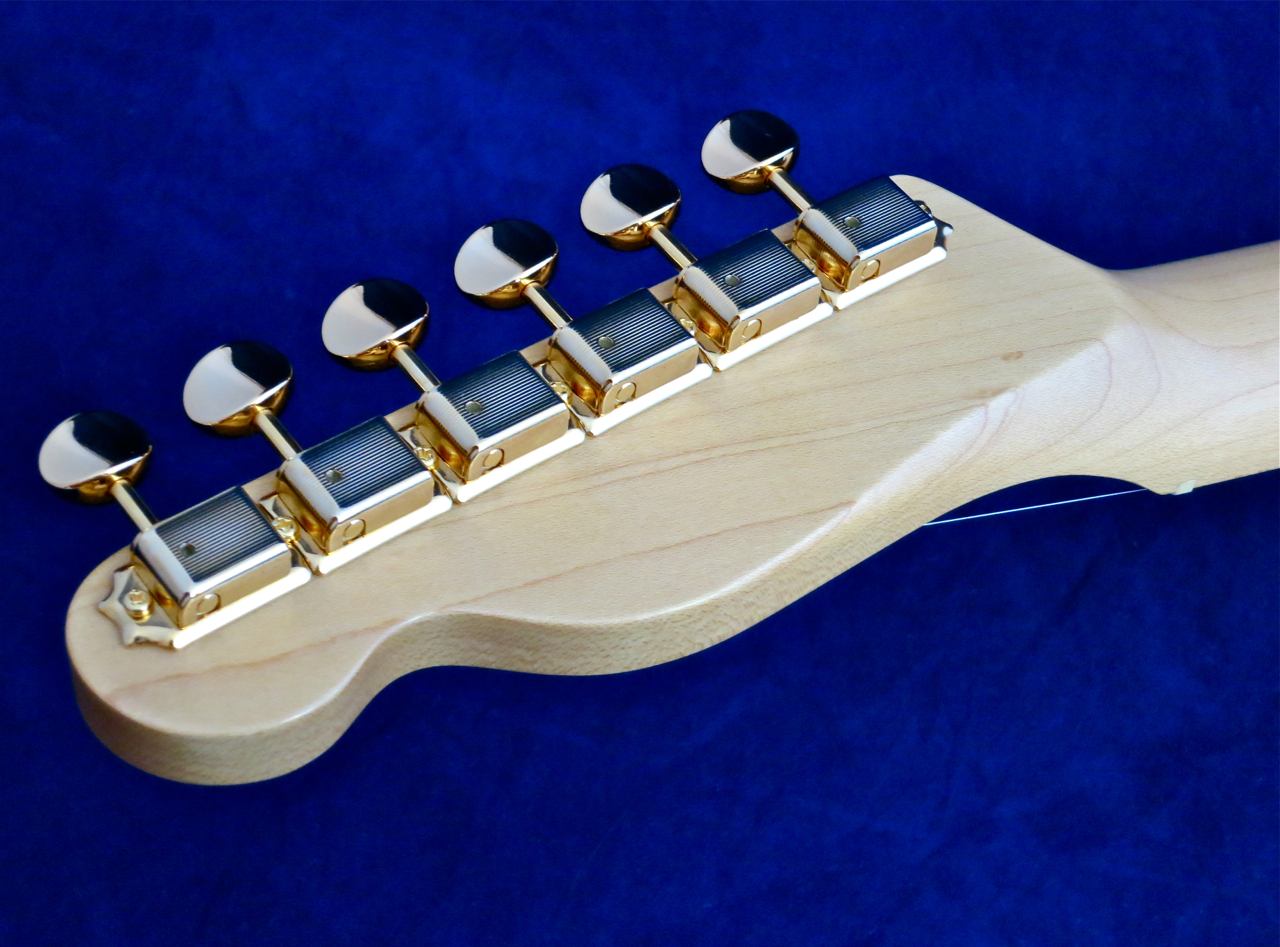
Timeless beauty – this is a sight I never tire of…
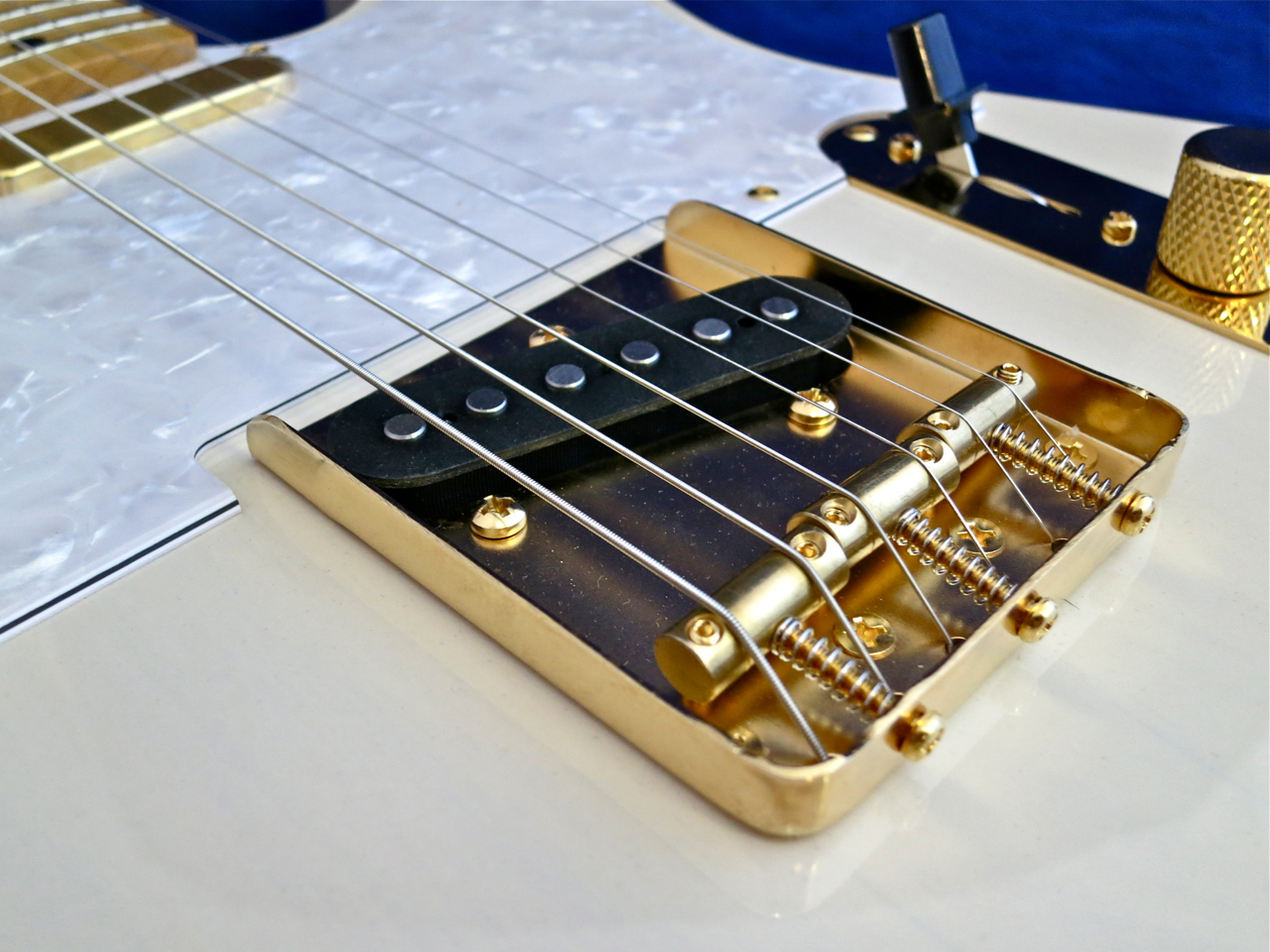
Not all vintage Tele-bridges are the same – the originals went through several different incarnations between the Fifties and now, especially when it comes to the material chosen for the bridge saddles. Tokai’s TTE-55 sports brass saddles, which is the favourite choice for juicy tone among vintage-anoraks.
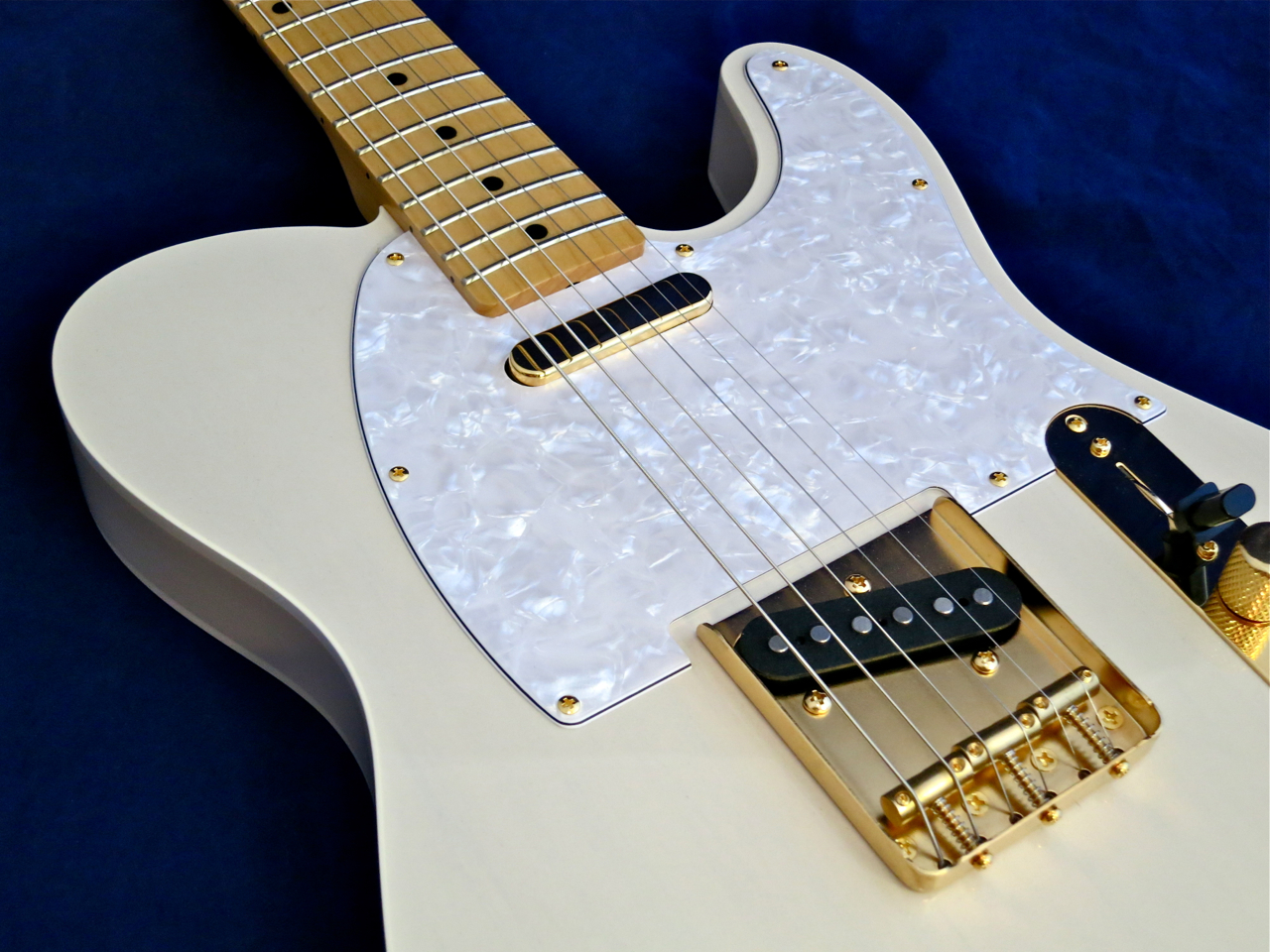
You can’t get more classic than a Tele-type guitar’s pickup combination: The neck pickup is a narrow unit with its own shielding metal cover, while the chunkier bridge pickup hangs suspended from the bridge plate.
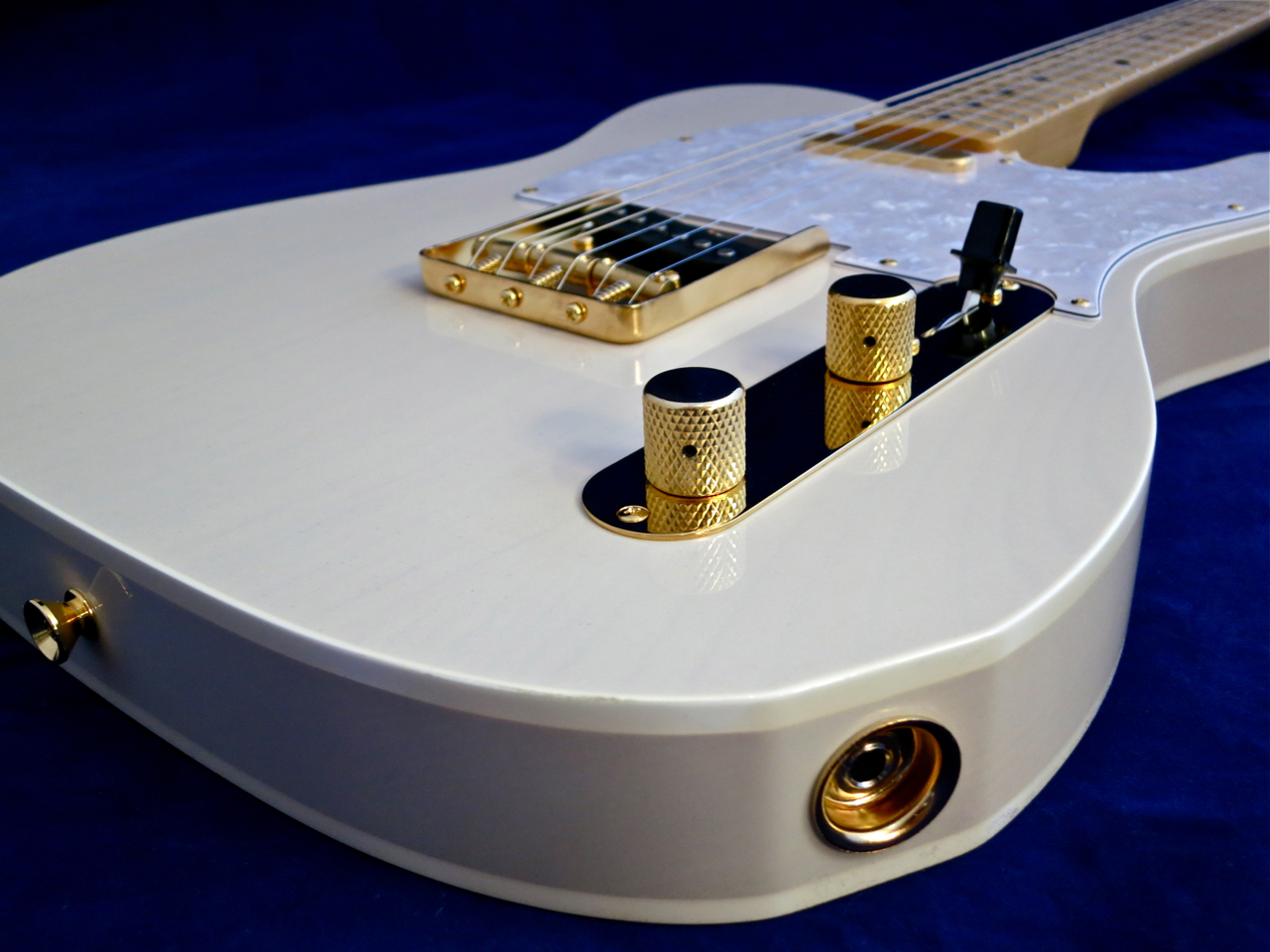
In 1967 the Tele’s switching was changed to the now-classic format of a three-way blade switch for neck/both/bridge-selection, coupled with a master volume and a master tone control.
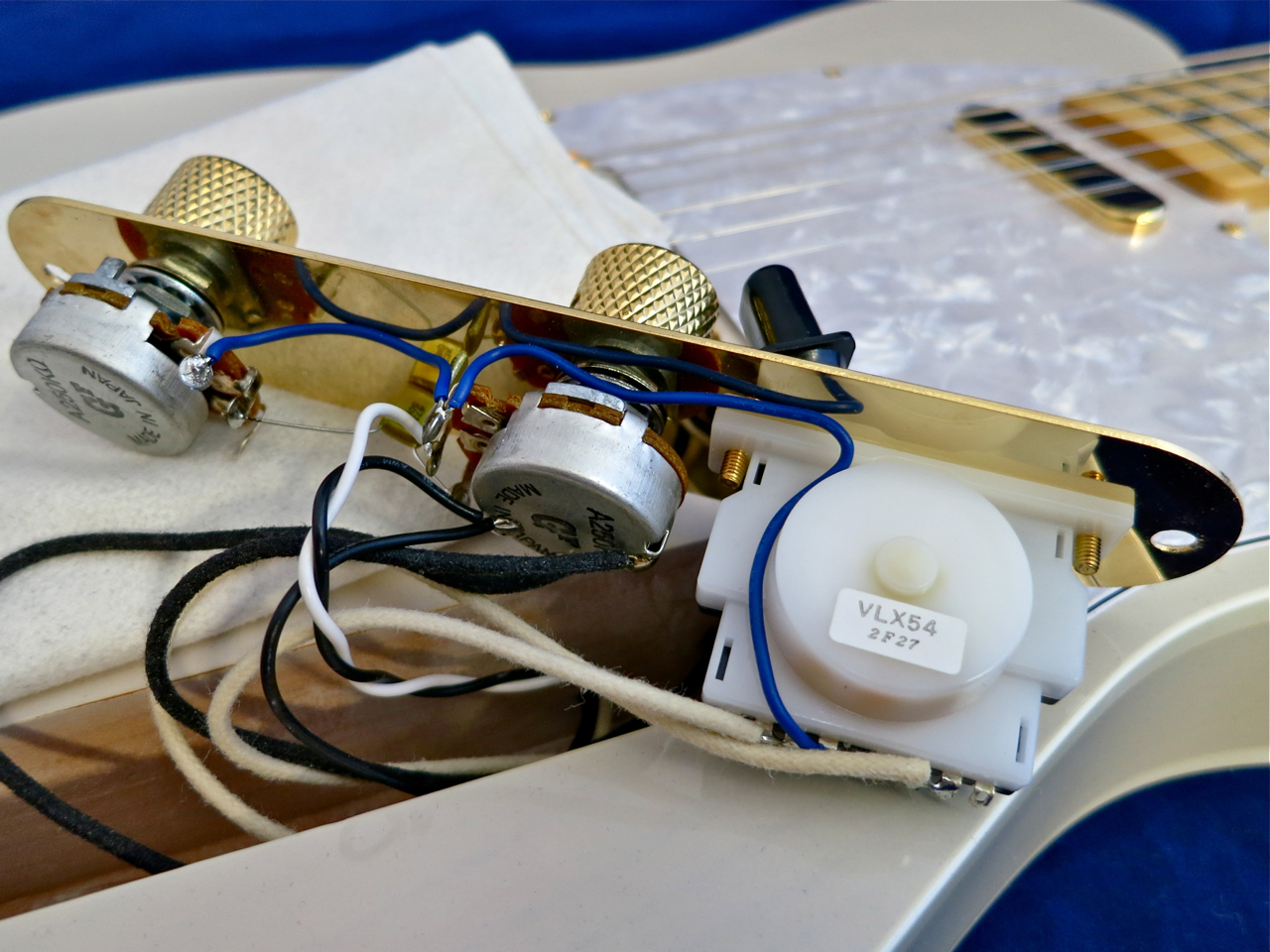
There’s plenty of quality on offer on the inside, too, with a VLX-switch and two GF-potentiometers keeping everything ship-shaped.
Vintage-freaks will dig the cloth-covered pickup leads.
****
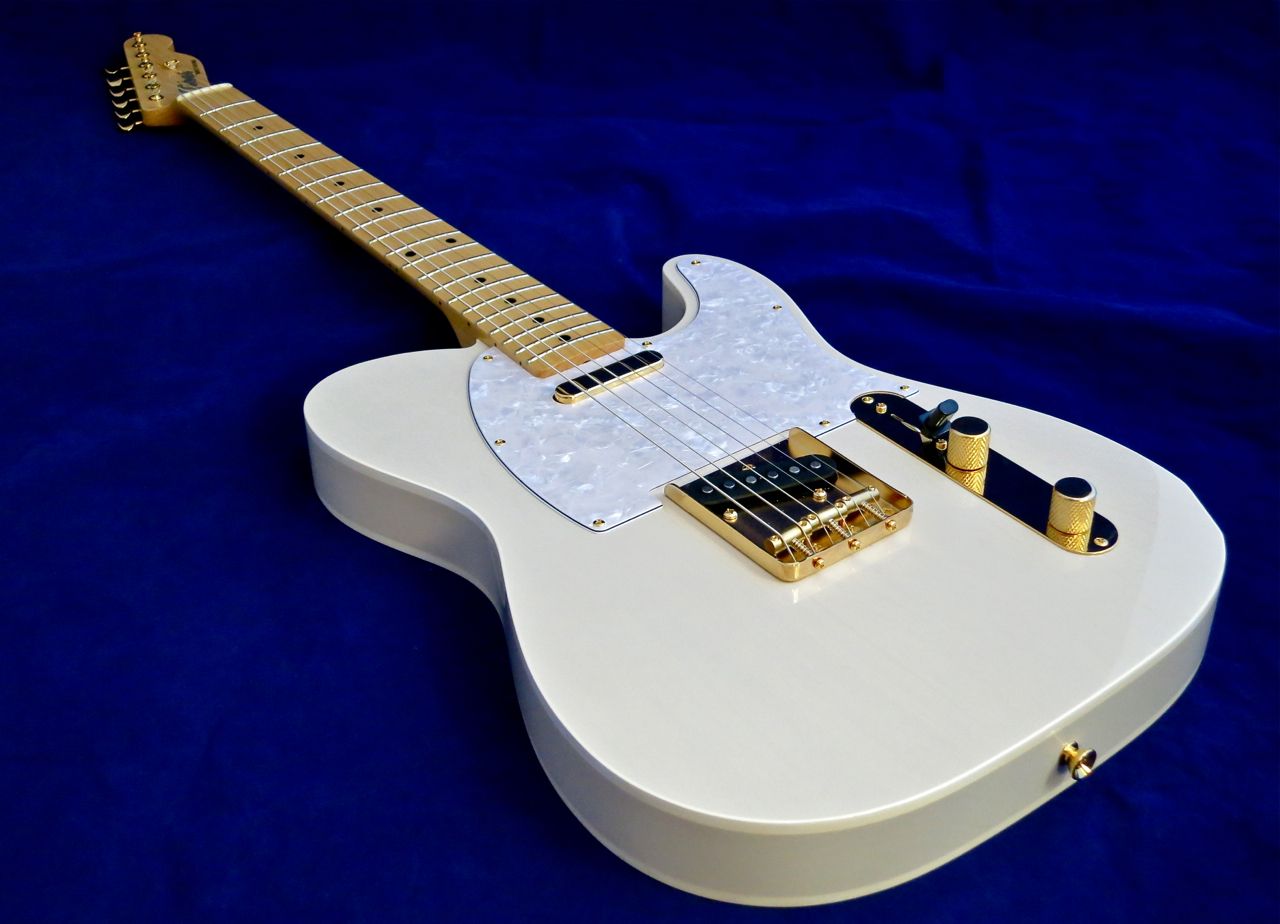
Our test sample is of medium weight – not the lightest Tele ever, but still really comfortable.
The Tokai TTE-55’s neck profile is right down my alley, being a well rounded and full ”D”. There’s enough girth to support your left hand nicely, but not so much as to make the neck feel too fat or hard to play .
The neck’s contemporary finish and the modern fret size result in a very bend-friendly guitar with a great action (E: 1,9 mm/e: 1,7 mm).
There’s always a bit of compromise to deal with, when it comes to a Tele-type guitar’s intonation, due to the shared bridge saddles. But this hasn’t prevented this guitar type to become a true classic – the compromises one can deal with easily.
It’s build like a Tele, it looks like a Tele, and, yes, the Tokai TTE-55 also sounds like a Tele. The neck pickup’s tone is well rounded, with a charming amount of wood to its voice. Put the switch in the middle position, and you’ll be funking with Prince. And the bridge pickup on its own is bang on the money for all your Country-, Rockabilly- and Blues-needs.
Tokai’s TTE-55 is a great choice for virtually any musical genre, with the exception of Hard Rock and Metal.
In light of this review, I can only conclude that the Tokai TTE-55 is a top quality instrument, which offers a whole lot of Tele-goodness at a very moderate price.
****
Tokai TTE-55
848 €
Finnish distributor: Musamaailma
****
Pros:
+ value-for-money
+ workmanship
+ component quality
+ neck profile
+ sound
Cons:
– the traditional Tele-compromise when it comes to exact intonation
****
Jos oma kitaransoitto tuntuu polkevan paikallaan, on usein hyvä idea laajentaa omaa horisonttia – joko kokeilemalla itselleen uutta genreä tai perehtymällä uuden kielisoittimen saloihin. Astumalla ulos tutuista kuvioista voi helposti löytää uusia lähestymistapoja ja tuoreita ideoita omaan soittoon.
Minua alkoi jonkin aikaa sitten kiinnostaa lap steel -kitaroiden soittaminen, ja jostain syystä niiden soundin kannalta etenkin Weissenborn-tyylisiä, akustisia lajin edustajia.
Noin sata vuotta sitten saksalaissyntyinen, kalifornialainen soitinrakentaja Herman Weissenborn keksi keinon, kuinka saadaan akustisesta Havaji-kitarasta enemmän volyymiä irti: Weissenborn jatkoi yksinkertaisesti soittimen kaikukoppaa otelaudan alla satulaan asti. Kun kerran lap steeleissä kaula makaa soittajan sylissä, voi käyttää sitä tällä tavalla hyväksi.
Weissenbornin soittimet jäivät silloin valitettavasti melko nopeasti resonaattori- (Dobro, jne.) ja sähkökitaroiden jalkoihin, mutta viime aikoina niiden omaperäinen soundi on saanut kokea jonkinsorttisen renessanssin, etenkin Ben Harperin ja Xavier Ruddin ansiosta.
Uuden suosion ansiosta saa nykyään myös edullisia Weissenborn-kopioita monelta pieneltä yritykseltä. Nykykäytännön mukaisesti nämä soittimet rakennetaan Kiinassa maahantuojien toiveiden mukaan, jotka sitten brändäävät kitarat omilla logoillaan.
On toki olemassa myös juuri Weissenborn-tyylisiin kitaroihin erikoistuneita kitararakentajia, joilta saa hyvin laadukkaita versioita aiheesta. Googlaamalla selviää (”Weissenborn guitar”).
Koska Weissenborn-tyylisille soittimille ei tietääkseni tällä hetkellä ole suomalaista maahantuojaa, löysin itselleni tätä juttua varten yhteistyökumppanin Saksasta: Bediaz Music on pieni, lap steel -kitaroihin erikoistunut liike, jolta saa vintage- ja boutique-kitaroiden lisäksi myös omia, Kiinassa valmistettuja Bediaz-soittimia.
****
Testissä käynyt Bediaz Black Gloss on firman edullisin malli (289 €).
Tämä kitara on kitaranmuotoinen Weissenborn-kopio, mutta on olemassa myös ns. Teardrop-malleja, jotka muistuttavat muodoltaan hyvin paljon irlantilaisia mandoliineja. Lisäksi on saatavilla myös erikoissyviä tai –leveitä vaihtoehtoja.
Niin kuin kaikissa tämän hintaluokan Weissenborn-soittimissa, myös tässä Bediaz-mallissa kitaran isokokoinen kaikukoppa on rakennettu täysin vanerista. Tässä tapauksessa käytetään kauttaaltaan mahonkia.
Ainoa puuosa, joka näissä soittimissa ei ole ontto, on kitaran viritinlapa, joka on liimattu ”kaulaan” kiinni suurin piirtein ensimmäisen ”nauhan” kohdalla.
Edullinen ei kuitenkaan tarkoita halpaa tai rumaa: Bediaz-kitara on suurilta osin erittäin siististi rakennettu ja viimeistelty soitin, jolla on kauniisti kiiltävää musta lakkaus, sekä tyylikkäät reunalistat vaahterasta.
Nauhamerkit näyttävät nekin olevan vaahterasta. Niiden joukosta löytyy pari hieman epäsiistiä tapausta, mutta siitä on lap steel kitaroissa ainoastaan lievää kosmeettista haittaa, eikä sellainen ole tässä hintaluokassa kovinkaan epätavallista.
Myös testisoittimen logo on jäänyt hieman epäsiistiksi, mutta se ei varmastikaan haittaa soittamista.
Bediazin korkea satula on aitoa naudanluuta.
Nykyaikaisten virittimien ansiosta kitaran virittäminen on helppoa.
Kaikuaukon rosettina toimivat yksinkertaisen tyylikkäät valkoiset renkaat.
Bediaz-kitaran sisäinenkin siisteys ja työnjälki ovat nekin hintaluokkaan nähden hyvällä tasolla.
Weissenborn-talla on tavallisen teräskielisen selvästi korkeampi sisar. Tässä Bediaz-soittimessa se on kahdesta päällekkäisestä palisanteripalasta veistetty malli.
****
Tällaiselta Weissenborn voi kuulosta parhaissa tapauksissa:
****
Lap steel -kitaran soittaminen avaa ovet ihan uuteen soittokokemukseen ja lähestymistapaan.
Tietyllä tavalla lap steel -maailma on tavallista kitaraa rajoitetumpi, koska ollaan koko ajan sidottuna soittimelle valittuun viritykseen, eikä steel-rauta anna kovinkaan helppoja keinoja rikkoa virityksen rajoja. Jos ollaan esimerkiksi avoimessa duurivirityksessaä, mollisoinnun aikaan saaminen toimii joko mykistämällä tai käyttämällä rinnakkaista duurisointua käyttämällä (esim. Em –> G).
Toisaalta tonebar-raudalla saa myös ihan uutta vapautta käyttää mikrotonaalisia askelmia tavallisten duuri- ja molliasteikoiden ulkopuolella. Juuri tämän ansiosta akustiset lap steel -kitarat ovat saavuttaneet uuden suosionsa Bluesissa ja maailmanmusiikin genressä.
Vaativinta lap steelin soittamisessa onkin juuri sen tasan oikean sävelkorkeuden löytäminen – puhtaan soiton saavuttamiseen menee rutkasti aikaa. Minäkin olen vasta matkalla sinne…
😉
Koska Weissenborn-tyylisillä soittimilla ei ole kiinteää kaulaa, ne eivät kestä korkeiden avoimien virityksien kieltenvetoa (ainakaan tavallisella kielisatsilla). Parhaiten sopivat aluksi varmasti sellaiset viritykset kuin avoin-D (D-A-D-f#-a-d), avoin-C (C-G-C-e-g-c), avoin-G (D-G-D-g-h-d) tai Dadgad. Oikeat lap steel -ketut käyttävät toki eri biiseihin erilaisia virityksiä, ja kirjoittavat usein biisejä myös ihan omien viritysten varassa.
Löydät lisätietoa soitintyypistä, sen historiasta ja eri virityksistä esimerkiksi TÄSTÄ tai googlaamalla.
Bediaz Black Gloss -kitaralla on hyvin raikas ääni pienellä keskialueen korostuksella. Matalakoppaiseksi akustiseksi tällä Weissenborn-kopiolla on yllättävän iso soundi.
Lap steel -kitaran lopulliseen sointiin vaikuttaa melko paljon myös millainen tonebar on käytössä. Ensikokeiluissa yritin soittaa perinteisellä putkilomaisella raudalla, mutta minulla oli vaikeuksia pitää sitä kädessä. Hankin sitten Shubbin SP-1 raudan, jolla soittamiseni onnistuu paljon paremmin, koska saan pidettyä sen tukevasti kädessä. Jotkut soittajat pitävät kuitenkin myös kevyemmistä keraamisista tonebareista.
Vaikka itsestäni ei ehkä koskaan tule loistavaa lap steel -kitaristia, on minun mielestä Weissenborn-kopion soittaminen kuitenkin erittäin hauska ja mieltä avartava kokemus. Edullisella Bediaz-kitaralla pääsee vaivattomasti kokeilemaan uutta soitintyyppiä – kitara on nätti ja se soi hyvin. Ja jos uusi soittoharrastus vie mennessään, voi aina myöhemmin investoida vielä parempaan malliin.
****
Äänitin kaksi soundiesimerkkiä pelkästään Bediaz-kitaralla:
Bediazin Weissenborn-kopio ehti myös jo mukaan yhteen biisidemoon:
****
Suuri kiitos Bediaz Musicille avustuksesta tämän jutun toteuttamisessa!


 Kitarablogi.com – Finland's premier Guitar and Bass blog