Review: LTD MH-330FR + ESP Horizon FR-II SD

****
ESP Guitars offer plenty of different guitar models for the modern Wunder-widdler. The most classic of these is probably the Horizon – a typical Superstr*t featuring two humbuckers and a Floyd Rose -bridge.
Kitarablogi.com selected two Horizons for this review:

The LTD MH-330FR, which comes with two active ESP-pickups…

…as well as the pukka ESP Horizon FR-II SD equipped with a pair of Seymour Duncans.
****

The LTD MH-330FR (current price in Finland: 489 €) is a sleek and stylish piece of work, with the Electric Blue finish adding its own bit of panache.

The same cool finish is also applied to the maple neck and the back of the mahogany body.

All of the MH-330FR’s hardware comes in black nickel, which shines in a smoky, dark-greyish way.

The capsuled Gotoh-style tuners are of decent quality. A volute strengthens the area underneath the top nut to prevent breakages.

A beautiful piece of rosewood has been chosen for the LTD’s bound fretboard, which sports stylish inlays, as well as 24 nicely finished jumbo-sized frets.

The chamfered neck joint makes reaching the dusty end more comfortable, compared to a standard old-school bolt-on joint.

The MH-330FR’s active ESP-pickups look rather similar to EMG-units.

The controls comprise a master volume and a master tone, with a three-way blade switch for pickup selection.

A nice touch: The battery compartment lid is fastened with machine screws, which grip into metal inlets. This is a much better way of doing this than using plain wood screws.

The clean workmanship is carried over into the electronics cavity also, with graphite paint and aluminium foil taking care of shielding against interference.

The LTD’n Floyd Rose Special –vibrato is a decent-quality, less expensive licensed Floyd Rose, manufactured in South Korea. The most important difference between the Special and the full-blown versions lie in the cast bridge saddles and vibrato block. The Floyd Rose Original is equipped with steel saddles and a brass vibrato block.
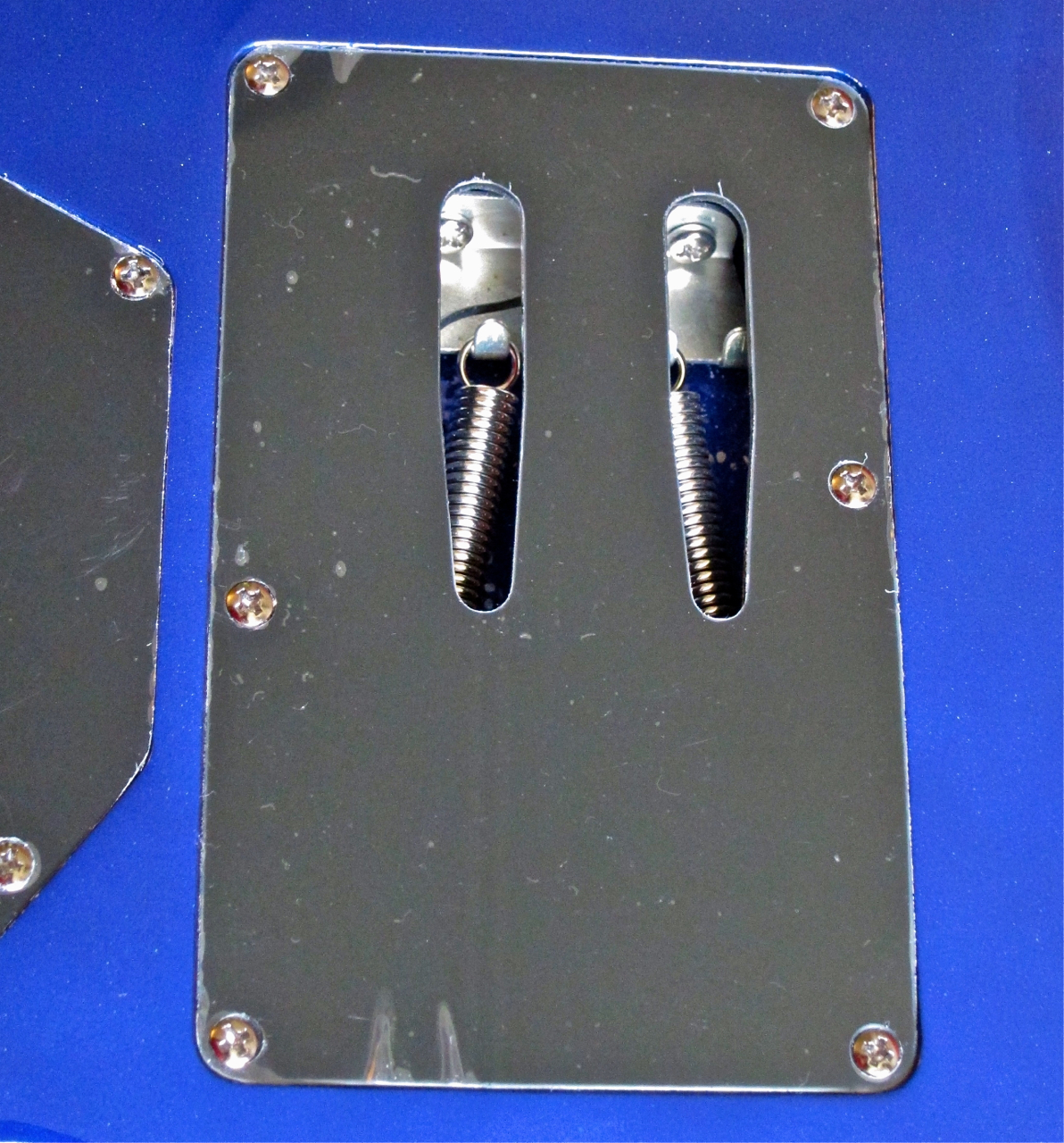
Another nifty feature: Two openings in the MH-330FR’s spring cover allow you to adjust spring tension without having to remove the cover!
****

ESP’s Horizon FR-II (current price in Finland: 1.929 €) is a fine example of top-quality, Japanese workmanship. This model is part of the company’s high-quality Standard-range, and it is built with a through-neck.
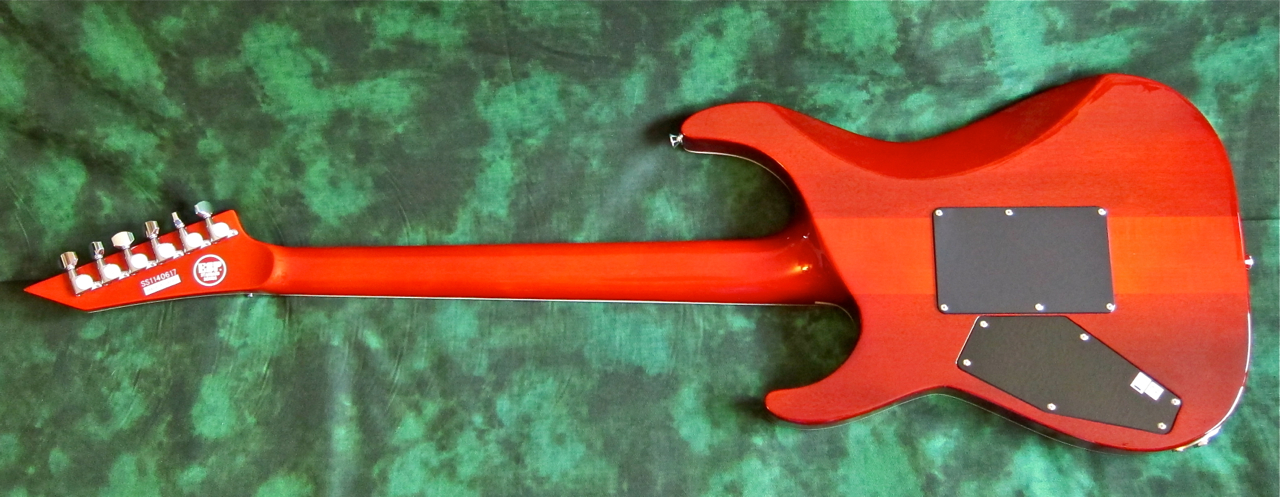
The body is made up from two mahogany wings on the back, and topped off with a gorgeous flame maple top on its front side.

Depending on the finish, the Horizon FR-II either comes with black nickel hardware, or, as is the case with our Dark Brown Sunburst –finished test sample, with chrome hardware.

The tuners are genuine Gotohs.

The workmanship displayed on the LTD-Horizon was already on a high level, but the ESP-Horizon leaves you in no doubt that it is a pro-quality instrument: The smooth ebony board sports 24 jumbo frets, which have been finished carefully to give you the smoothest ride possible.

A very smooth neck-joint, indeed…
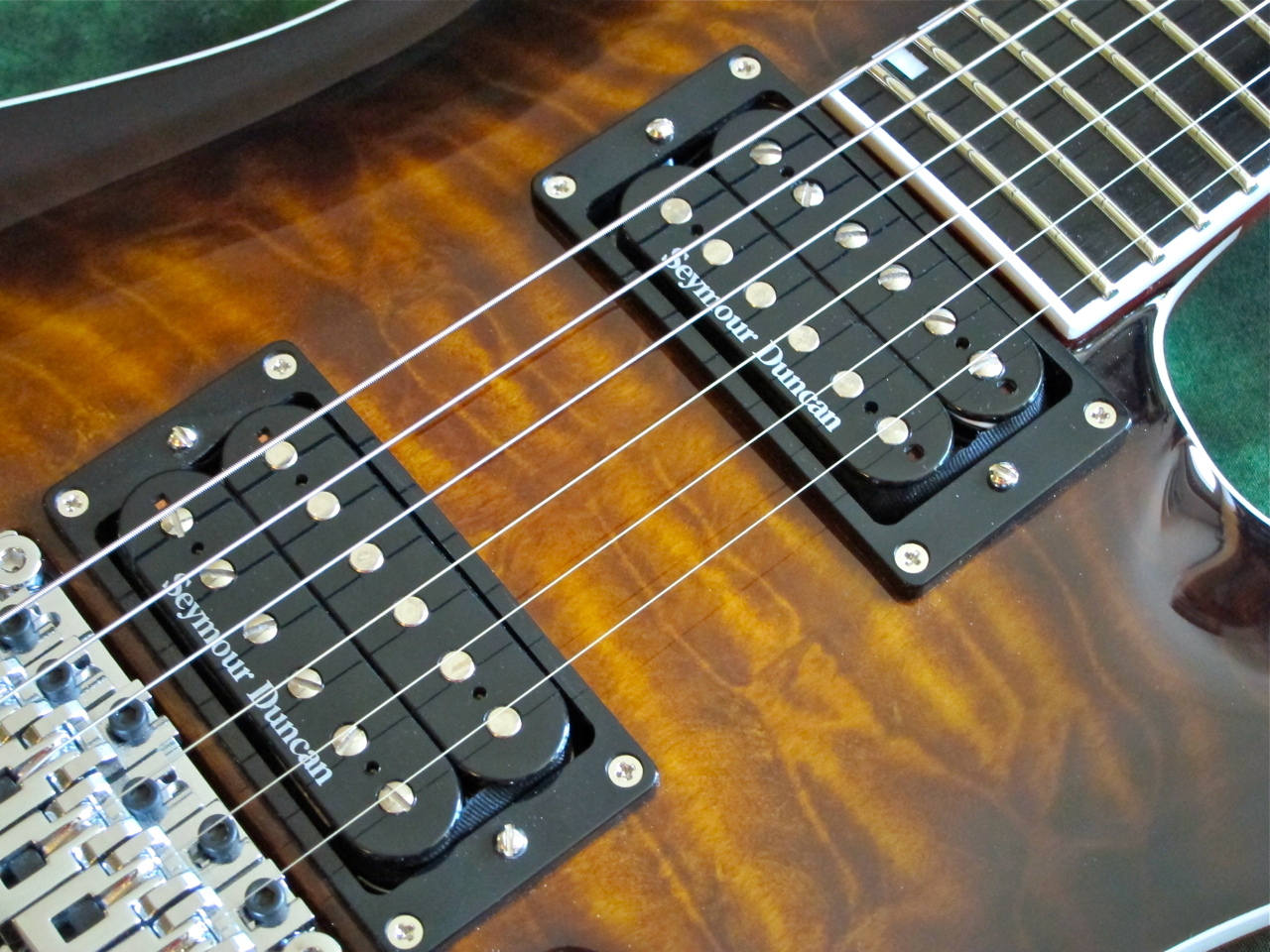
The ESP Horizon FR-II is also available with active EMG-units, but our review guitar is the SD-version, which has a Seymour Duncan ’59-model mounted in the neck position, with a JB-model near the bridge (JB = Jeff Beck).

The master volume is equipped with a nifty, spring-loaded push/push-switch. The up-position splits the Horizon’s humbuckers for singlecoil-type tones.

Outstanding workmanship coupled with quality parts – the mark of a top-class instrument.

Here we’ve got the real deal: A Schaller-made Floyd Rose Original –vibrato with steel saddles and a brass block.

The ESP Horizon comes with its own case.
****

The specifications read ”Thin U Neck Contour”, and I was a bit worried the neck might feel a little unsubstantial and 1980s-style flat. But I needn’t have worried: The LTD’s neck profile is a slim D, which still gives you plenty of flesh for easy playing and good sustain.
The MH-300FR’s Floyd itself works nicely, although I experienced some annoying trouble with the vibrato bar. I couldn’t get the damn thing to stay attached firmly to the vibrato. In use the threaded collar would work loose, causing the bar to start flapping around instead of staying put. Let’s hope this isn’t an endemic problem, but rather a one-off glitch on the review guitar’s Floyd.
Soundwise the LTD MH-300FR is a typical active electric guitar, with a very open and linear tone. Especially the mid-range stays much cleaner and more transparent than on most passive, humbucker-equipped guitars.
Here are two examples (both starting with the neck humbucker):
****
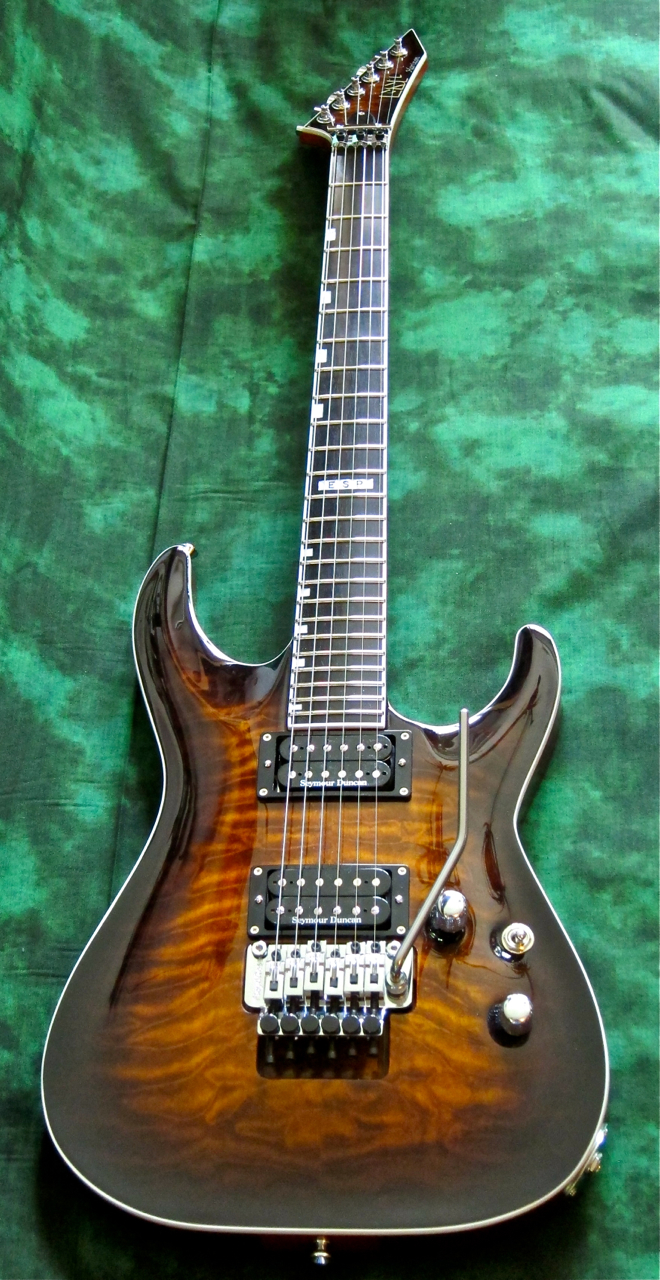
The ESP Horizon FR-II is very light and plays like a dream. The neck profile is a tad flatter than that used on the LTD, but still steers well clear of uninspiring flatness.
The fantastic fretwork and flat fingerboard camber result in a fast and extremely smooth playing feel – perfect for large bends.
The Floyd Rose Original is still the number one locking vibrato in my opinion, and it works just as it should on the ESP.
The Horizon FR-II sounds warmer and more organic, when compared to its less expensive LTD-brethren. The sound might be too warm for some Thrash Metal guitarists, but overall its earthy quality seems much more versatile to me.
Splitting the humbuckers gives you three more colours to work with, further broadening the ESP’s palette.
The example tracks both start with split humbucker (neck – both – bridge) before continuing with the full settings in the same order (neck – both – bridge):
****
This review left me in no doubt as to ESP’s guitar-making kudos – these are fine instruments.
The mid-price LTD MH-330FR is a serious guitar, with just the right active tones to satisfy the Hard Rock and Metal posse.
ESP’s Horizon FR-II is a top-drawer guitar for the virtuoso guitarist.
ESP Horizon FR-II & LTD MH-330FR – the audio track from the video
****
ESP ja LTD –electric guitars
Finnish distributor: Musamaailma
****
LTD MH-330FR
489 €
Pros:
+ bang-for-the-buck
+ workmanship
+ playability
+ active pickups/sound
+ Floyd Rose -vibrato
Cons:
– loose wang bar on our review sample
****
ESP Horizon FR-II Seymour Duncan
1.929 €
Pros:
+ top-quality Japanese instrument
+ workmanship
+ playability
+ coil-split
+ sound
+ Floyd Rose Original -vibrato
****
Review: Vox AC4 Blue

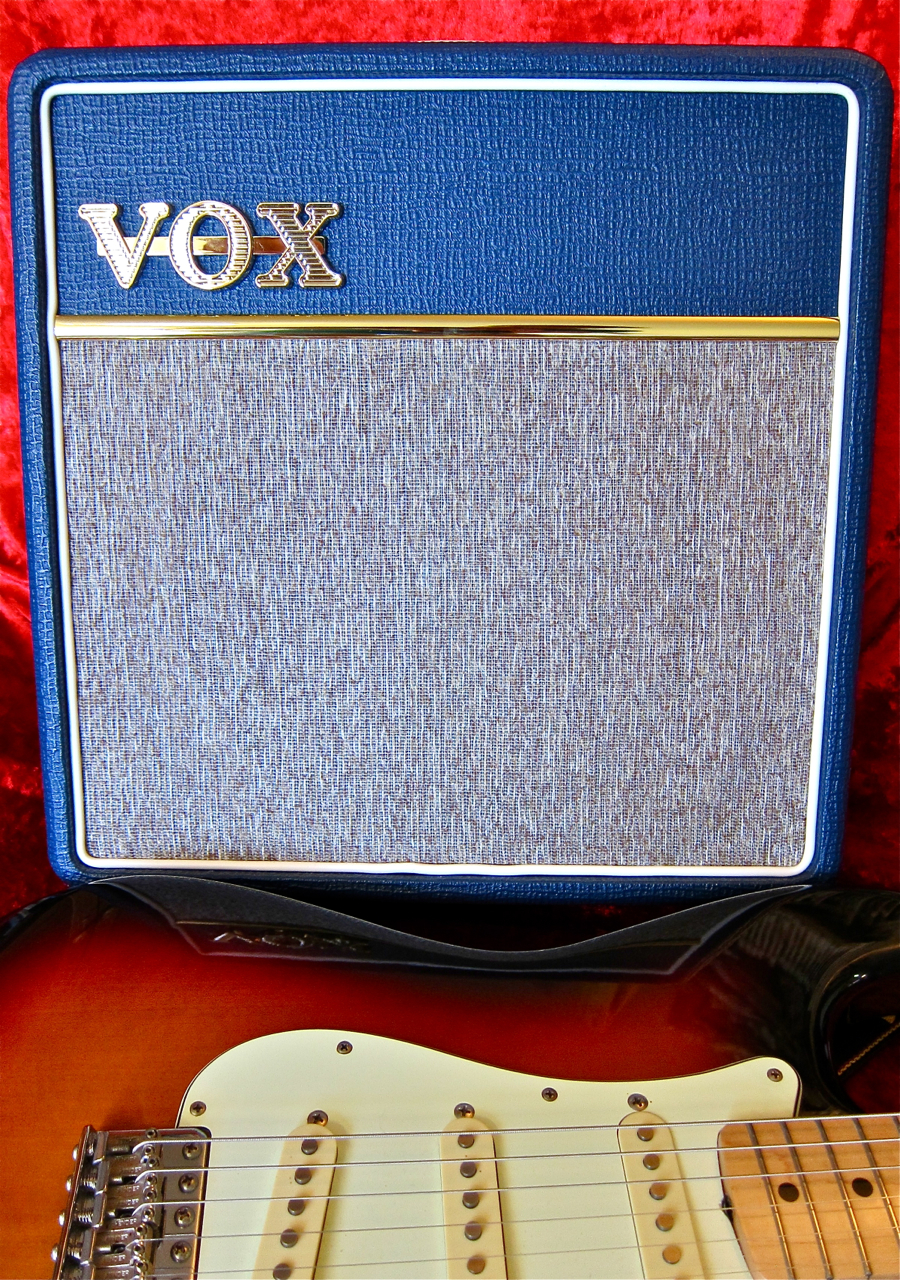
This is what it looks like – the brand-new Vox AC4 C1 Blue. I can already hear many of you thinking “What? Another AC4? Is it any different to the white AC4 TV?”
Granted, it is somewhat bewildering that Vox have several similarly named products in their range, so let me run you through the differences quickly:
At the moment of writing there are five different Vox AC4 valve amplifiers available. The Vox AC4 TV – which is available in three different guises – is the most affordable alternative, and aimed at the same market segment as ultra-compact modelling combos, such as the Roland Micro Cube.
At the other end of the price spectrum you can find the Vox AC4 HW, which is a very stylish hand-wired (HW) combo for the vintage fanatic. Just like the Sixties original, the AC4 HW is also equipped with a 12” Celestion speaker.
The new AC4 C1 Blue conveniently slots into the range between the two other AC4s. Vox’ C–series comprises new versions of the company’s most famous models, updated with nifty modern features.
****
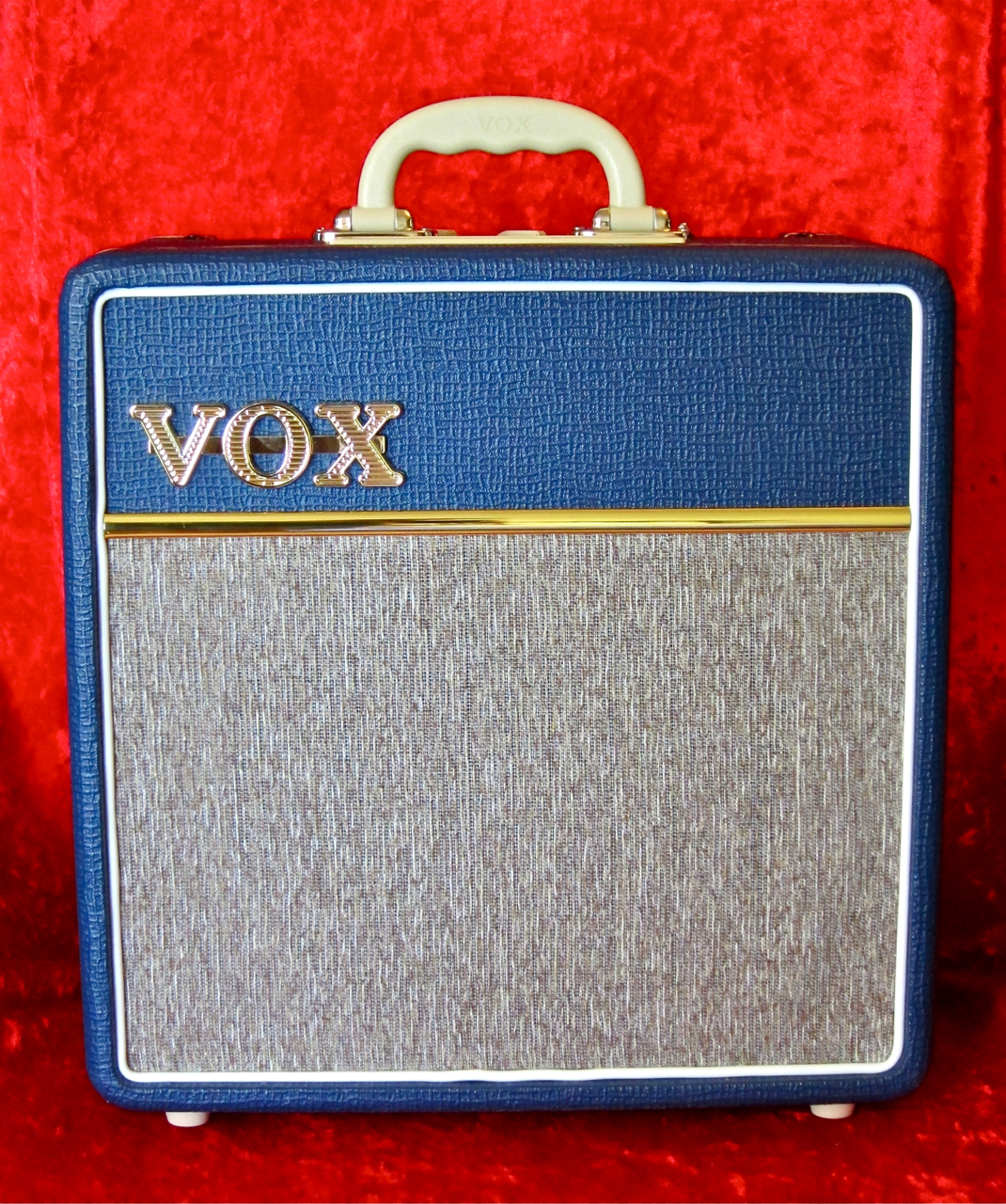
The Vox AC4 Blue (current street price in Finland 349 €) is a very beautiful combo amp, sporting the blue vinyl finish found on one special run from the Sixties, complete with the salt-and-pepper grille cloth.
Two 12AX7 valves are making up the preamplifier section, while the power amp is utilizing a single EL84. Output power is rated at four Watts (RMS) using a 16 Ohms speaker impedance.

The combo’s almost completely closed from the back. The back panel sports only two connectors – one for the power lead and another for connection of an external speaker. Ventilation is provided by a small opening right at the bottom of the combo’s back, as well as the customary small grille next to the carrying handle.
As is the case in quite a number of modern small valve combos, access to the valves is rather restricted in the AC4 C1 Blue. To change preamp valves you have to completely take off the whole back wall to get to the valves, which sit directly on the PCB-board. The owner’s manual recommend leaving valve exchanges to qualified service personnel to avoid the risk of an electric shock.
The Vox AC4 Blue comes equipped with the same special design already used successfully in the AC4 TV – a 10-inch Celestion VX10.

The front panel comprises controls for gain, bass, treble and master volume.
****
Vox has aimed to deliver genuine Top Boost –tone in a small package, and the AC4 C1 Blue really dishes out the goods. This little combo gives you all the legendary AC30 sounds, but at volume levels that fit your living room or home studio to a tee.
The AC4 C1 BL’s clean tones have plenty of jangle, coupled with Vox’ typical dose of grit and attitude. If your’re using powerful humbuckers, you’d better turn down your guitar’s volume a bit, unless you want to drive the combo into light Blues-overdrive.
For my taste the little Vox could do with a little bit less bite in the top end, but I got the trebles reigned in easily with the Treble-knob.
Upping the gain gets you into overdriven territory fairly quickly – from creamy Blues all the way to early Heavy Metal via Seventies Classic Rock. For out-and-out Nu-Metal the Vox AC4 Blue isn’t really the right amp, it just wasn’t designed to dish out that much grunt. For Brian May –type fat lead tones I’d recommend using a distortion pedal in front of the combo.
With its four Watts the AC4 C1 Blue has just enough power to annoy your neighbours – and for small gigs you could stick a microphone in front of it.
Here are a few soundbites (all clips start from the neck pickup):
****
Vox AC4 C1 Blue
current street price in Finland 349 €
Finnish distributor: EM Nordic
A big thank you goes to DLX Music Helsinki for the loan of the review amp!
Pros:
+ genuine Vox Top Boost -sounds
+ small size
+ Master Volume knob
+ cool looks
+ value-for-money
Cons:
– exchanging valves difficult
****
****
Testipenkissä: Zoom G5


Zoom G5 (265 €) on japanilaisvalmistajan upouusi efektilautojen lippulaiva.
G5:n erittäin käyttäjäystävällinen toimintaperiaate on sama kuin pienemissä G3– ja B3-multiefekteissä, joita on jo testattu Kitarablogi.comissa aiemmin. Home-näkymässä – siis silloin kun yksi efektiketjun kaikkia efektejä tuodaan näkyville – Zoom toimii kuin erillisistä efektipedaaleista koottu pedaalilauta: jokaisen efektin näytössä näkee suoraan ikonista mistä efektistä on kyse, ja tärkeisiin parametreihin pääsee heti käsiksi näytön alla olevien säätimien avulla.
Zoom G5:ssa ideaa on lajennettu niin, että yhden patchin efektiketju voi koostua jopa yhdeksästä efektistä, vaikka suora pääsy on vain neljällä efektillä. Ratkaisun tähän pulmaan tuovat Scroll-näppäimet, joilla pystyy selaamaan efektiketjua eteen- ja taaksepäin. Scroll-näppäimillä tuodaan niitä efektejä näkyviin, joiden halutaan valitussa patchissa olevan sormien tai jalkakytkimien ulottuvilla. Kun vaihdetaan toiseen efektipatchiin laite muistaa automaattisesti viimeiset Scroll-asetukset, ja tuo patchin seuraavalla kerralla taas samalla tavalla näkyviin.

Zoom G5:n efektitarjonta on päätä huimaava – käyttäjä voi valita 145:stä efektityypistä, jotka ulottuvat perusefekteistä loistaviin vahvistinmallinuksiin, ja sieltä eteenpäin kaikenlaisiin syna- ja scifi-kaltaisiin efekteihin.
Efektipatcheja tallennetaan 99 pankkiin, kolme patchia per pankki. G5:een on valmiiksi asennettu vallan mainiosti toimivia tehdasefektejä, mutta koko muistin sisältö on vapaasti muokattavissa.

Pedaalilauta tarjoaa vielä kaksi lisäherkkua touhuun: ensimmäinen on Z-Pedal-niminen pedaali, joka toimii sekä perinteisellä ylös-alas-akselilla että vasemalle-oikealle-suunnalla. Z-pedaalilla pystyy tämän ansiosta ohjata useamman efektin parametreja samanaikaisesti, mikä helpottaa moniulotteisten ja monimutkaisten äänimaailmojen luomista entisestään.
Digitaaliefektien ja analogisten lähtöjen väliin on sijoitettu G5:ssa erittäin maukas Tube Booster, eli putkiboosteri, jonka voi käyttää signaalin orgaaniseen lämmittelyyn tai kätevänä sooloboosterina. Vahvistusta on tarjolla jopa 16 desibeliä!
G3:sesta tuttu kevyt rytmikone ja mainio loopperi ovat luonnollisesti käytettävissä myös tässä isommassa Zoom-laudassa.

Takapaneelin liitintarjonta on kattava, ja sieltä pitäisi löytyä kaikki mitä kitaristi tarvitsee keikalla tai studiossa.
USB-portin kautta voi päivittää G5:n firmwarea ja ohjelmoida/vaihtaa soundpatcheja Zoomin ilmaisella Edit & Share -softalla (PC & MAC). Lisäksi Zoom G5 toimii myös ulkoisena äänikorttina (44,1 kHz/16-bit) audiosekvensserille (PC & MAC). Jos omassa tietokoneessa ei vielä pyörii äänityssofta, on Zoom lisännyt pakettiin Steinbergin Cubase LE 6 -sekvensserin.
****
Zoomin G5 on mainio peli, jota on todella helppo käyttää. Soundien määrä on niin suuri, että efektien yksittäinen kuvaileminen olisi täysin turhaa touhua. Voin kuitenkin todeta, että mielestäni Zoom G5 on firman paras iso efektilauta tähän mennessä, ja pidän sen hinnan laadukkaiden soundien ja kestävän fyysisen olemuksen valossa hyvin edullisena.
Tässä muutama soundiesimerkki Zoom G5:n tehdaspatcheilla soitettuna:
DZ Drive + Booster – Stratocaster
Match30 + Booster – Stratocaster
US Blues + Booster – Stratocaster
****
Zoom G5
265 €
Maahantuoja: Studiotec
Plussat:
+ soundi
+ kestävä rakenne
+ erittäin laaja vahvistin- ja efektivalikoima
+ intuitiivinen käyttöliittymä
+ Z-Pedal
+ Tube Booster
+ USB-äänikortti
+ hinta-laatu-suhde
****


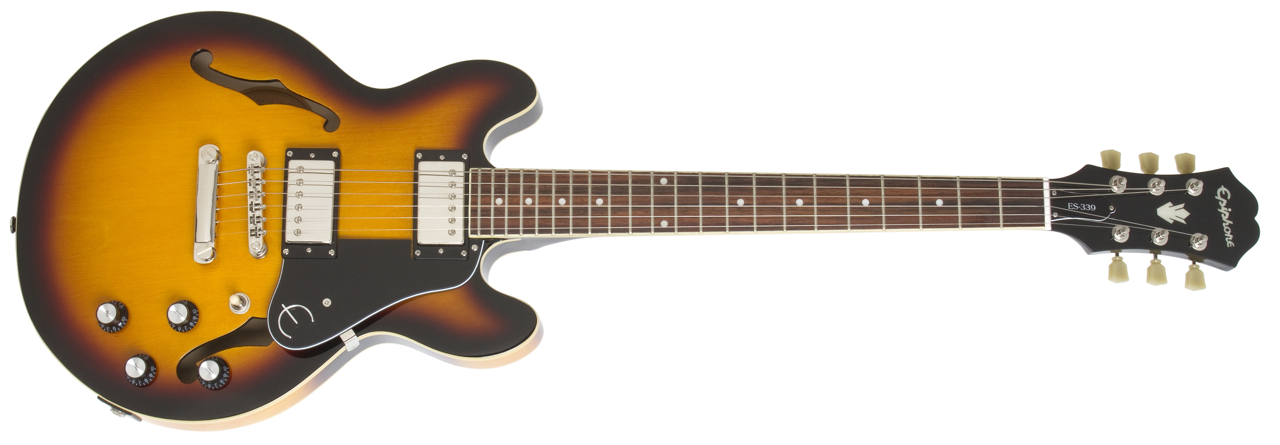

Testipenkissä: LTD MH-330FR + ESP Horizon FR-II SD
****
ESP:llä on valikoimassaan monta kitaravirtuoosille suunnattua mallia. Ehkä klassisin niistä on Horizon – tyylipuhdas Superstrato, jolla on kaksi humbuckeria sekä Floyd Rose -lukkovibra.
Poimimme testiin kaksi Horizon-mallia:
aktiivisilla ESP-mikeillä varustettu LTD MH-330FR…
…sekä pramea ESP Horizon FR-II SD Seymour Duncan -humbuckereilla.
****
LTD MH-330FR (489 €) varsin näyttävä ja virtaviivainen kitara, ja testisoittimen Electric Blue -metalliväritys korostaa tätä sopivasti.
Sama kiiltävä lakkaus ulottuu myös soittimen vaahterakaulaan ja mahonkirungon selkäpuoleen.
MH-330FR:n metalliosat on pinnoitettu ”mustalla” nikkelillä.
Suljetut, Gotoh-tyyliset ESP-virittimet ovat hyvin asiallista laatua. Volute-paksunnos lujittaa lavan ja kaulan liitoskohtaa.
Kaunis palisanteriotelauta, valkoinen reunalistoitus, tyylikkäät otemerkit, sekä 24 jumbo-kokoista nauhaa tarjoavat runsaasti iloa sekä silmille että sormille.
Viistotun reunan ansiosta pääsy ylimpiin nauhoihin tuntuu LTD:ssä perinteistä ruuviliitosta mukavammalta.
MH-330FR:een on valittu mikrofoneiksi kaksi aktiivista ESP-humbuckeria.
Säädinosasto tarjoaa master volumen ja master tonen, sekä kolmiasentoisen, Fender-tyylisen kytkimen.
Paristolokeron kansi on kiinnitetty koneruuveilla ja runkoon upotetuilla kierreholkeilla, mikä on paljon parempi ratkaisu kuin tavalliset puuruuvit.
Siisti työnjälki jatkuu myös elektroniikkalokerossa, joka on häiriösuojattu grafiittimaalilla ja alumiinifoliolla vuortuilla kannella.
LTD:n Floyd Rose Special -vibra on perushyvä, edullisempi lisenssi-Floikka, joka on valmistettu Etelä-Koreassa. Tärkein ero kalliimpaan Floyd Rose Original -tallaan nähden ovat sinkkiseoksesta valetut tallapalat ja vibrablokki. Original-mallissa käytetään teräksestä valmistettuja tallapaloja, sekä messinkiblokkia.
MH-330FR:ssä voi säätää jousien vetoa kätevästi jousilokeroa avaamatta!
****
ESP:n Horizon FR-II (1.929 €) edustaa firman tinkimätöntä japanilaista soitinrakennustaitoa. Malli kuuluu ESP:n laadukkaaseen Standard-sarjaan, ja se on rakennettu rungon läpi menevällä vaahterakaulalla.
Rungon takaosa on veistetty mahongista, ja sen kansi on huippulaadukasta loimuvaahteraa.
Väristä riippuen Horizon FR-II -kitara on tarjolla joko ”mustalla” nikkelillä päällysttyillä metalliosilla tai – niin kuin Dark Brown Sunburst -värisen testisoittimen tapauksessa – kromatuilla osilla.
Suljetut virittimet tulevat Gotohin mallistosta.
LTD:n työnjälki oli jo todella hyvällä mallilla, mutta ESP:n Horizon tekee hyvin selväksi, että tässä on selvästi kyse pro-luokan soittimesta: erittäin sileään eebenpuuotelautaan on istutettu 24 jumbo-kokoista nauhaa, jotka on viimeistelty huolellisesti tarkaksi ja liukkaaksi soittoalustaksi.
Kaulan ja rungon liitoskohta on varsin sulava.
ESP Horizon FR-II -mallin saa myös aktiivisella EMG-mikityksellä, mutta testisoitin on kitaran SD-versio, johon on asennettu kaulamikrofoniksi Seymour Duncanin ’59-malli ja tallahumbuckeriksi saman valmistajan JB-malli (JB = Jeff Beck).
Master volume -potikaan on lisätty jousella varustettu push/push-painokytkin. Yläasennossa kytkin puolittaa Horizonin mikrofoneja.
Erittäin siistiä työtä ja laadukkaat komponentit – tästä tunnistaa laatusoittimen.
Tämä Floikka on Schallerin valmistama Floyd Rose Original -vibratalla terästallapaloilla ja messinkiblokilla.
ESP Horizonin hintaan kuuluu luonnollisesti myös laadukas kova laukku.
****
LTD MH-300FR on painonsa suhteen mukavasti keskiluokkaa, ja se tasapainoituu nätisti soitettaessa.
Spekseissä lukee ”Thin U Neck Contour”, ja olin hieman huolissani, että kyseessä olisi 1980-luvun litteä ja matala kaula. Onneksi LTD:n kaulaprofiili osoittautui oikein mukavaksi. Luonnehtisin sitä hoikaksi, muttei luisen laihaksi D-profiiliksi.
MH-300FR:n Floikka toimii sinänsä vallan mainiosti, paitsi että minulla oli pieniä vaikeuksia kammen kiinnityksen kanssa. Ajatus on tunnetusti, että kampi ruuvataan tallaan kierrekauluksen avulla. Kammen on sitten tarkoitus kääntyä soiton aikana jouhevasti pois tieltä ja sitten takaisin käyttöön, ilman että edestakaisin-liike aiheuttaa kiinnityskauluksen löystymistä. Valitettavasti tämä ei toteutunut testiyksilöllä niin kuin oli ajateltu, vaan kammen liikkuminen löysäsi kaulusta vähitellen soiton aikana. Tämän seurauksena kampi alkoi roikkua löysästi vibrasta ja Floikka sai hieman epätarkan tuntuman. Toivottavasti kyse on todellakin vain harmillisesta yksilöviasta, koska vibran toiminnassa sinänsä ei ollut mitään moitittavaa.
Soundiltaan LTD MH-300FR on – tyypillisenä aktiivisena sähkökitarana – erittäin tasaisesti ja avoimesti soiva soitin. Etenkin alhaisempi keskialue on huomattavasti ”siistimpi” tai lineaarisempi kuin monilla passivisilla humbuckereilla varustetuilla kitaroilla.
Esimerkkipätkät alkavat aina kaulahumbuckerista:
****
ESP Horizon FR-II on mukavan kevyt kitara erittäin hienolla soittotuntumalla. Kaulaprofiili on aavistuksen verran matalampi kuin edullisessa LTD-mallissa, mutta ei missään nimessä liian ohut mukavaan soittoon.
Esimerkkillisen nauhatyön ansiosta hyvin loivalla kaarevuudella toteutettu otelauta mahdollistaa hyvin vaivattommat venytykset.
Floyd Rose Original on yhä kiistämättä lukkovibrojen ykkönen, joka toimii testikitarassa erittäin jouhevalla ja varmalla otteella.
ESP Horizon FR-II:n soinnissa on enemmän lämpöä kuin LTD-sisarmallissa, selkeästi tiheämmän keskialueen ansiosta. Joillekin Thrash Metal -kitaristeille tällainen karakteeri voi olla jo liiankin täyteläinen, mutta yleisesti ottaen ESP:n juureva soundi on mielestäni hyvin herkullinen ja monipuolinen.
Mikrofonien puolitus antaa Horizonille vielä lisää värejä, joilla kitarasankari voi maalata haluamaansa soundimaailmaa.
Esimerkkipätkissä aloitan aina puolitetuilla humbuckereilla (kaula – molemmat – talla), minkä jälkeen soitan samat kuviot täysillä mikrofoneilla samassa järjestyksessä:
****
Tämän testin perusteella voi vain todeta, että ESP:llä on kitaranteko mallikkaasti hallussaan.
LTD-alamerkin MH-330FR on vakavasti otettava, mainio aktiivinen soitin, joka tarjoaa rutkasti vastinetta rahalle. Erittäin kätevä työkalu siis…
ESP Horizon FR-II taas on loistokitara laatutietoiselle – virtuoosikitara vailla kompromissejä.
ESP Horizon FR-II & LTD MH-330FR – videon audioraita
****
ESP ja LTD -sähkökitarat
Maahantuoja: Musamaailma
****
LTD MH-330FR
489 €
Plussat:
+ hinta-laatu-suhde
+ työnjälki
+ soitettavuus
+ aktiiviset mikrofonit
+ Floyd Rose -vibra
Miinukset:
– testisoittimen vibrakammen kiinnitys
****
ESP Horizon FR-II Seymour Duncan
1.929 €
Plussat:
+ japanilainen laatusoitin
+ työnjälki
+ soitettavuus
+ mikrofonien puolitus
+ soundi
+ Floyd Rose Original -vibra
****
Review: Yamaha Pacifica 611H

****
When Yamaha introduced the first Pacifica-model, way back in the 1990s, no-one would have thought that this guitar would become such a runaway success, spawning a whole range of Pacificas over the years. Originally the Pacifica was developed as a sort of test instrument by Yamaha’s West Coast Custom Shop, with its fathers being Rich Lasner and Leo Knapp.
Over the years different guitars have carried the Pacifica monicker, but most Pacificas were (and still are) loosely related to the Strat – just like the current top production-line model, the Pacifica 611H.
****

Unbelievable as it may sound: This beauty of a guitar comes out of Yamaha’s Indonesian factory, which explains the Yamaha Pacifica 611H’s very moderate price (current price at F-Musiikki 595 €).
The Pacifica sticks with traditional tonewoods: The bolt-on neck has been carved from hard rock maple and carries a rosewood fingerboard. The body is almost entirely made of alder – three pieces in our review sample’s case – with just a beautiful bookmatched flame maple veneer glued onto its front for embellishment.

The deep chamfers on the body make for a very comfortable feel.
Vintage-type specs seem to be on the rise again – the Pacifica 611H’s neck comes with a tinted gloss finish.
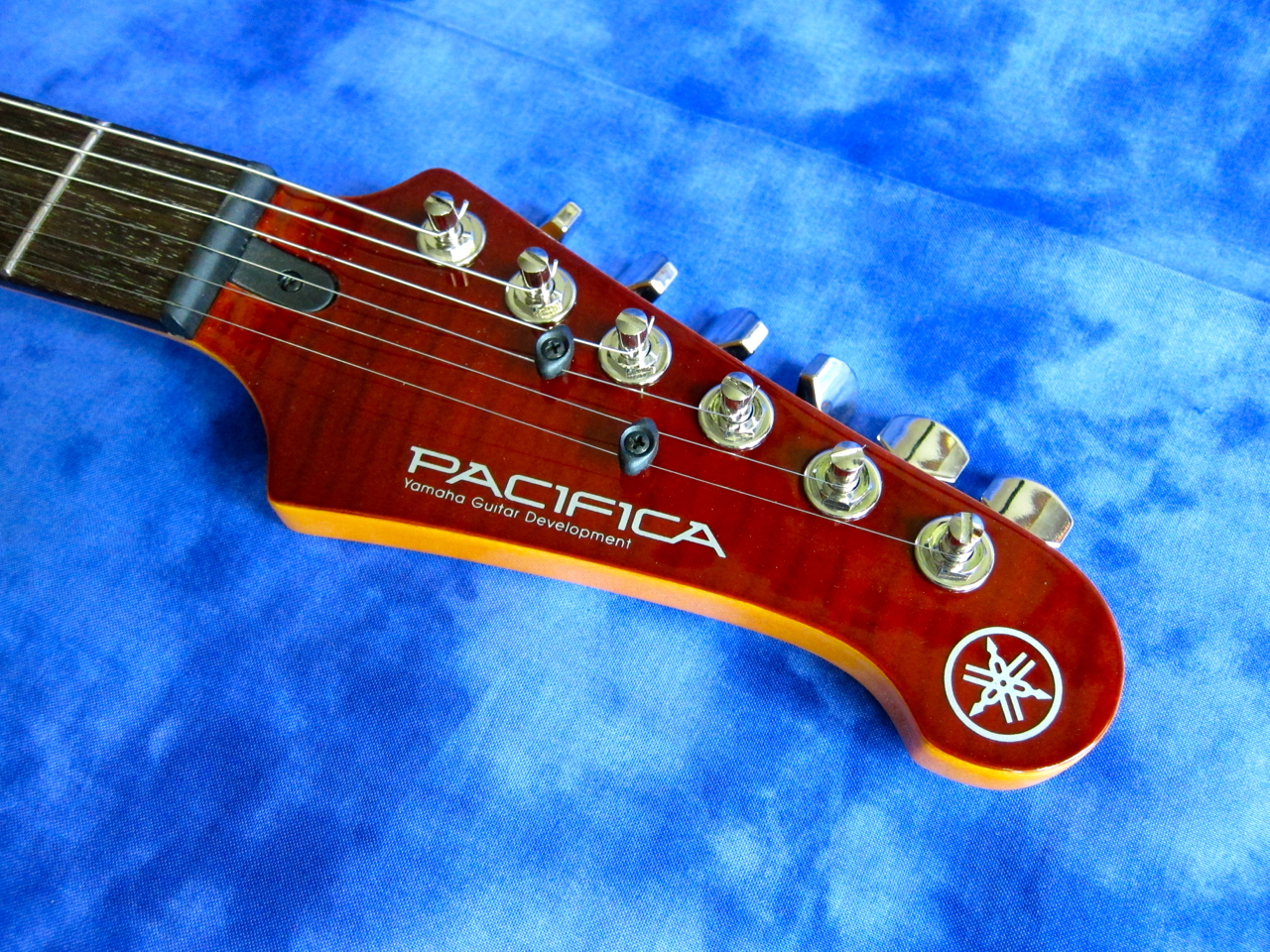
The headstock matches the body with its flame maple veneer and Root Beer finish.
The top nut, as well as the string trees, are made from Graph Tech’s Black Tusq. This Teflon-impregnated ceramic material is hard and slippery, resulting in better tone and improved tuning stability.
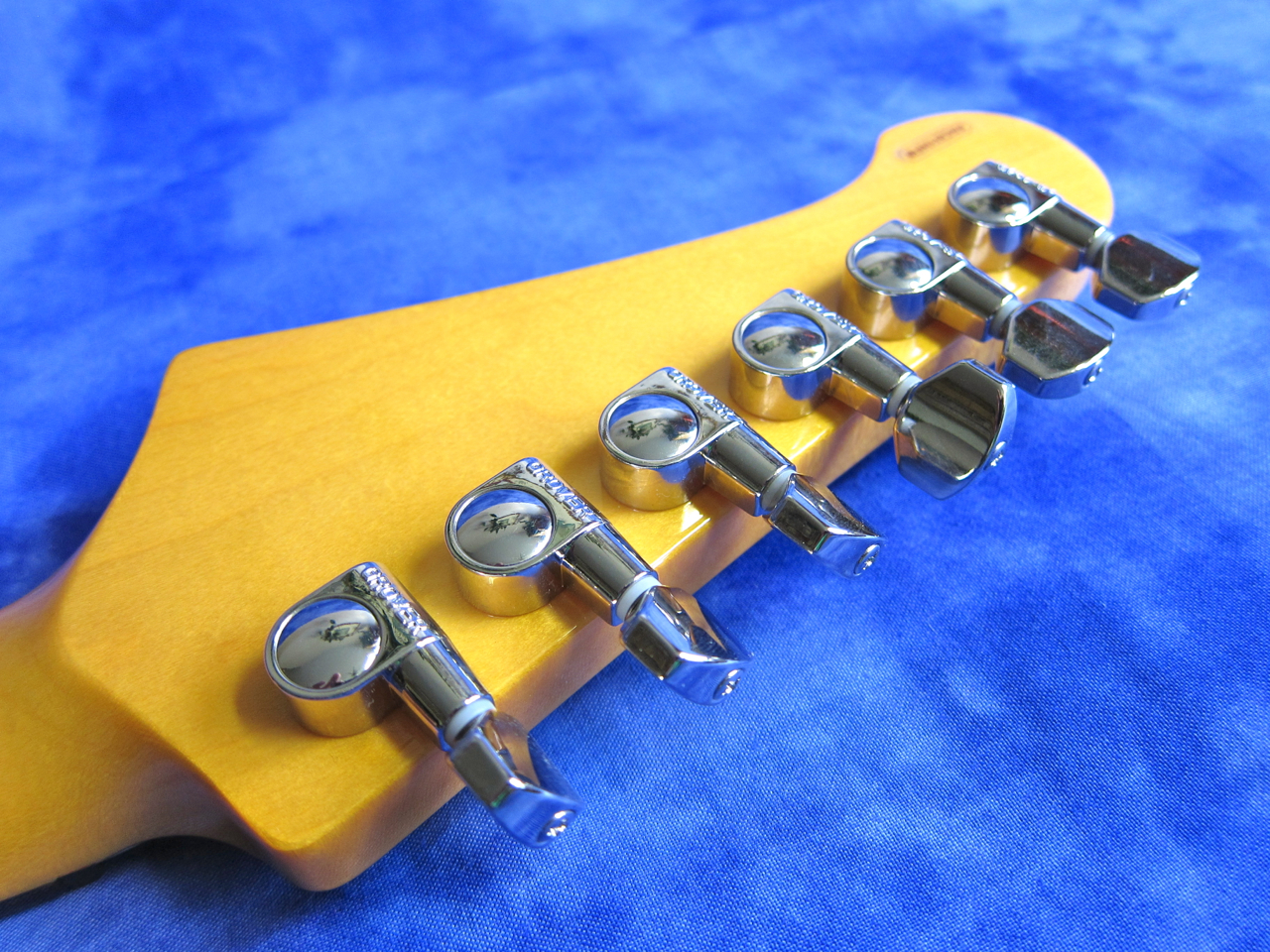
Even though this model isn’t equipped with a vibrato bridge, Yamaha have nonetheless chosen to use a set of Grover locking tuners. The biggest advantage of the Grover units is that you don’t need any tools to change strings. You simply thread the string through the tuning post, and then turn the tuner head. This first engages the locking mechanism, and once the string is locked, the tuning post starts to turn.

Whatever Yamaha do regarding their quality control, they must be doing it dead right! The fret job on our test sample is remarkably clean, which makes the guitar feel far pricier than it really is.

A traditional neck joint – why change something, when it works so well?
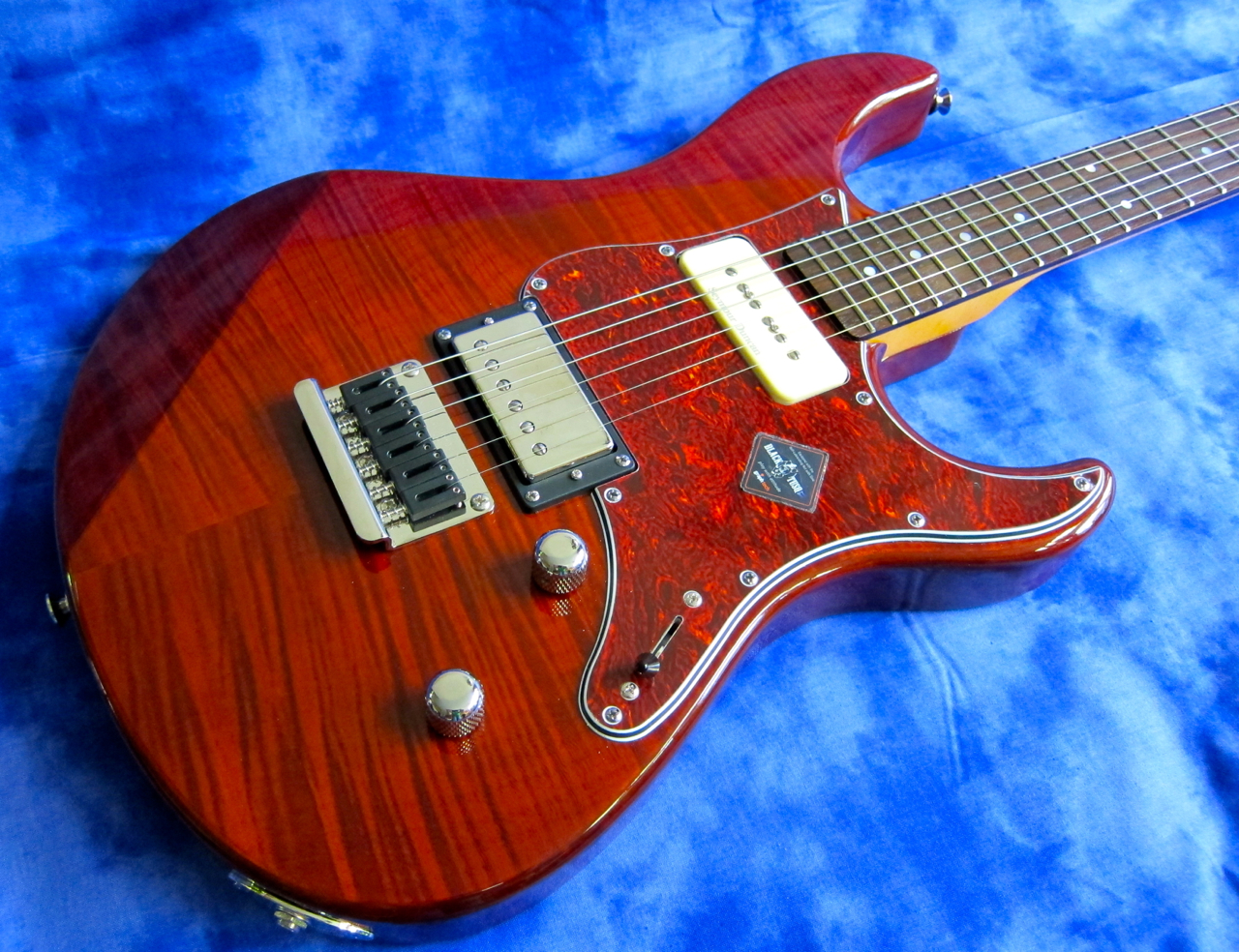
The faux-tortie scratchplate is the perfect companion to the 611H’s Root Beer finish – yummy.

Yamaha uses Graph Tech’s String Saver bridge saddles on this Pacifica-model. This self-lubricating material prolongs string-life and takes away some of the nasty twang of many metal saddles.
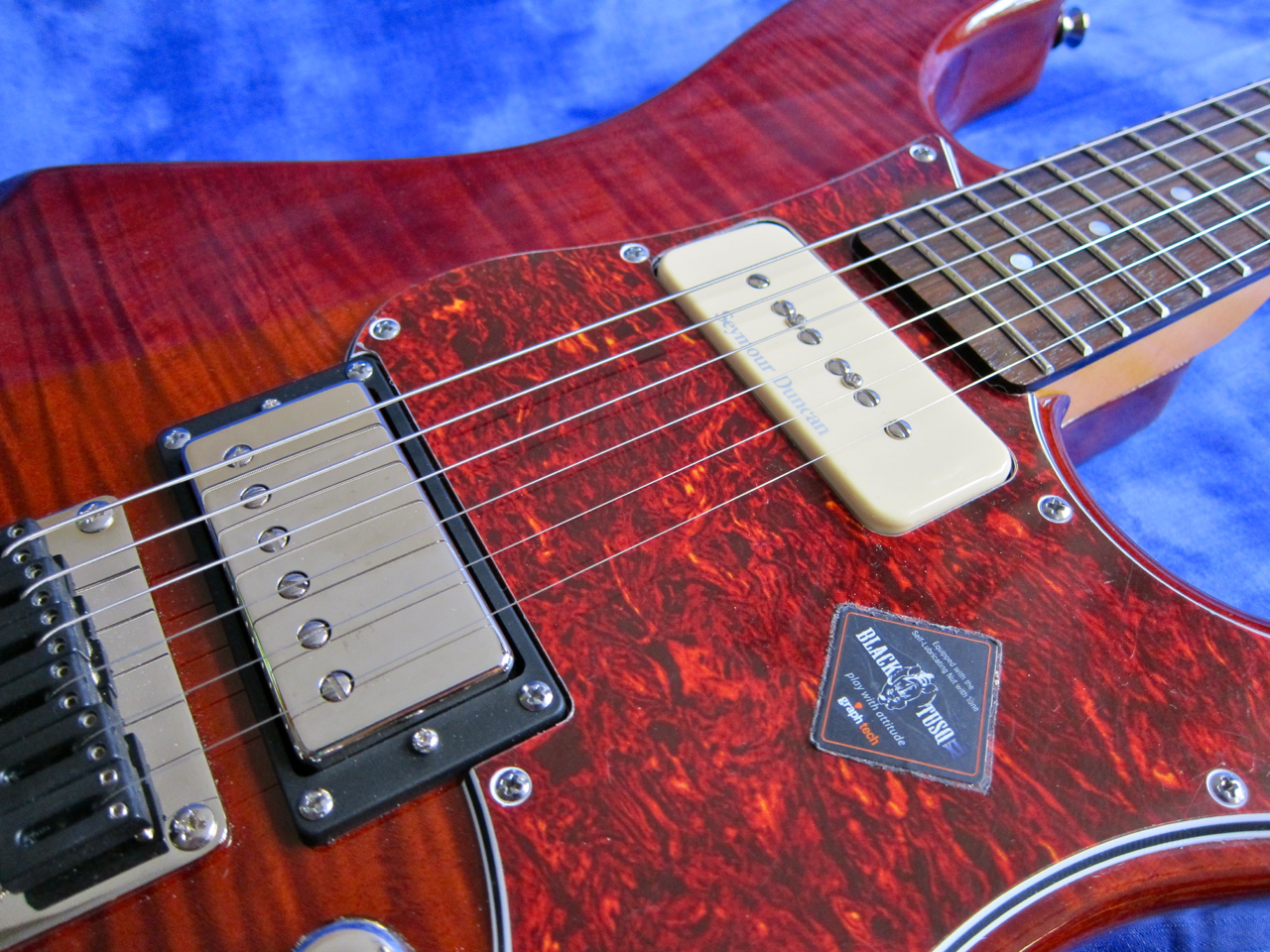
This quality guitar comes loaded with quality pickups: The P-90/humbucker-combination seems to be en vogue these days – in the case of the Pacifica 611H we find a Seymour Duncan SP-90 in the neck position, with the same manufacturer’s Custom 5 -humbucker mounted next to the bridge. Seymour Duncan say the SP-90 is their most authentic reproduction of a Gibson P-90 from the late Forties, while the Custom 5 is an Alnico V -powered humbucker with a moderate output level.
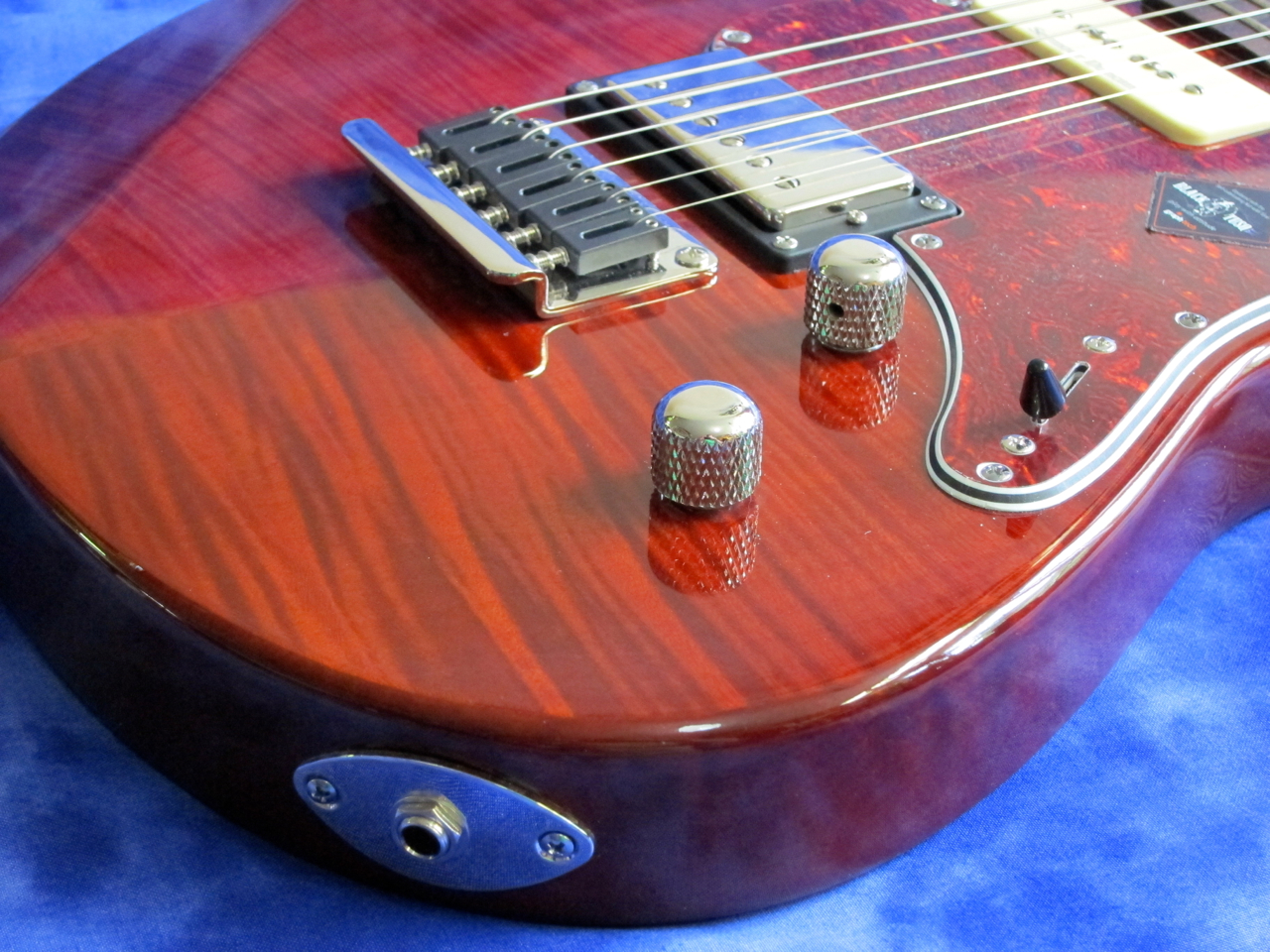
The controls comprise a master volume and a master tone control, plus a three-way blade switch. The tone control sports a push/pull-switch, splitting the humbucker in the ”up” position.
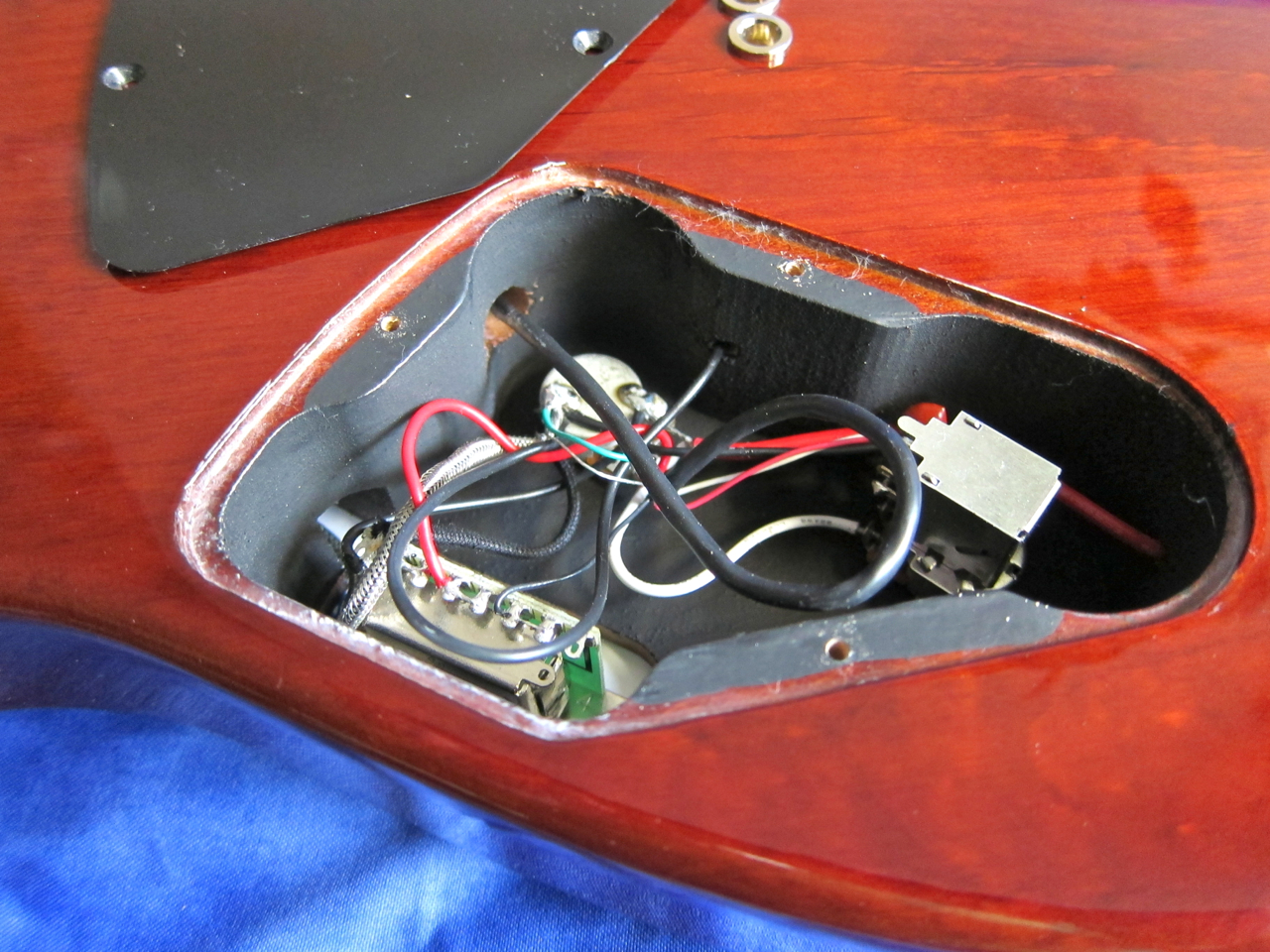
Clean and competent workmanship can also be found in the control cavity, which has been thoroughly shielded with conductive paint.
****
The Pacifica 611H feels great, thanks to the fine fret job and the very comfortable, oval C-shaped neck profile. Our review sample was also nicely lightweight.
The Yamaha’s clean and transparent acoustic character translates into a healthy amplified tone. In the Pacifica’s case combining a P-90 with a humbucker works exceedingly well. The fat singlecoil easily holds its own against the bridge humbucker, and keeps the signal devoid of any trace of muddiness.
Both soundbites start with the neck singlecoil, then switch to both pickups with the humbucker split, and lastly to the split humbucker on its own. The last two motifs are the combined setting, followed by the bridge pickup on its own, both with the full humbucker switched on:
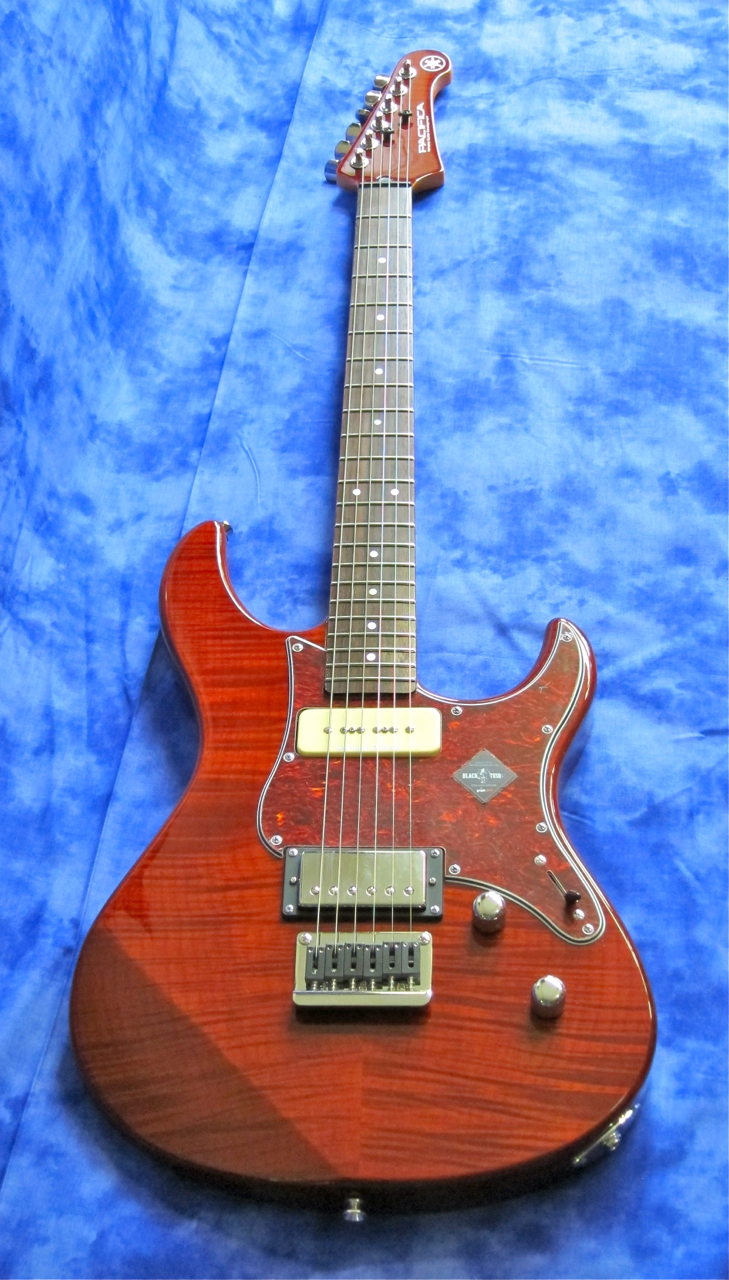
In my opinion the Yamaha Pacifica 611H represents fantastic value-for-money. I wouldn’t hesitate dragging one onto stage (or into a studio) straight out of its shipping box!
****
Yamaha Pacifica 611H
Current price at F-Musiikki: 595 €
Finnish distributor: F-Musiikki
Pros:
• great value-for-money
• locking tuners
• Graph Tech -nut and -bridge
• workmanship
• playability
• sound
• versatility
****
Yamaha Pacifica 611H – the track from the video
****

