
Here’s a nice Epiphone Flying V video

Kitarablogi.com – Finland's premier Guitar and Bass blog
Juttuja kitaroista ja bassoista
****
Here’s an old clip from the Sixties of Paul Simon and his younger brother Eddie performing the instrumental Anji (by Davey Graham).

****
Marshall Amplification celebrate their 50th anniversary this year. To honour the occasion the company is releasing five small anniversary models, produced in limited numbers. Each model of these one-Watt all-valve heads and combos has been designed to represent one era in Marshall-history, both in looks and in sound.

Kitarablogi.com had the pleasure to review the Sixties and Seventies combos – the JTM1C and JMP1C.
****

The JTM1C-combo (current street price in Finland approximately 700 €) nails the look of early JTM-models perfectly. Just like the famous Bluesbreaker-combo, the JTM1C sports a golden nameplate with the old-style block lettering and the famous salt-and-pepper grille cloth of yore.

Valve purists will be delighted at the sight of just one volume- and one tone-control – nothing stands in the way of pure tone.

Even though the anniversary models aren’t wired point-to-point in the vintage style, the electronic lay-out and PCB-build look very sturdy and clean. Two ECC83/12AX7-valves run in the preamp section, while the power amp employs one ECC82/12AU7.
The Marshall JTM1C is equipped with the same, fine Celestion speaker, which had been developed for the Class 5 combo – the ten-inch G10F-15.

The combo’s half-open back looks as clean as the front.

The Power-button next to the two external speaker jacks drops the maximum output of the amp from one Watt to 0.1 Watts.
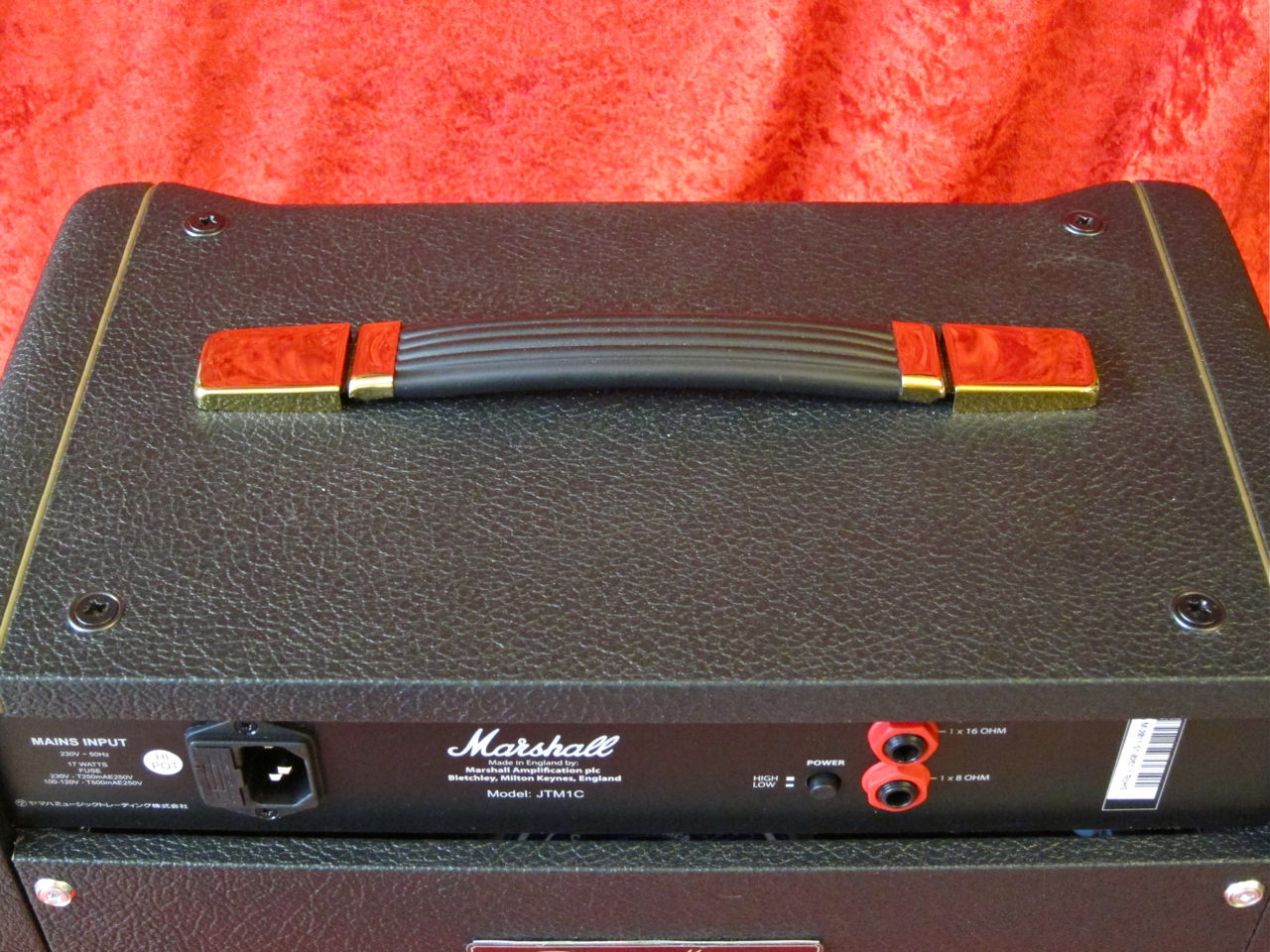
The same Marshall-handle is used on all of the anniversary amps.
****
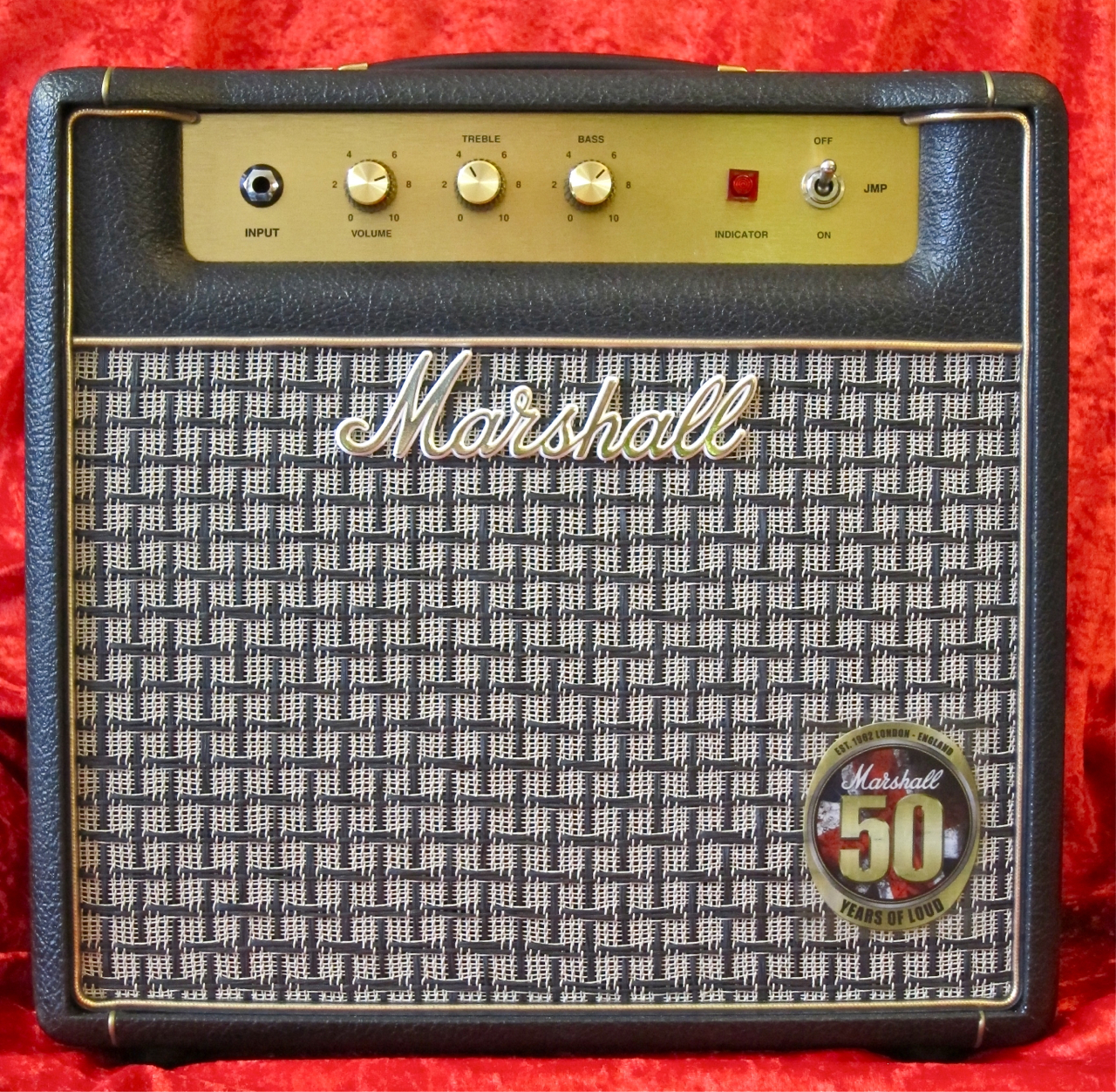
The Seventies are represented by the JMP1C (current street price in Finland approximately 700 €), which displays the famous Marshall script logo, as well as the light grey grille cloth with the dark weave that’s typical of many amps from that era.
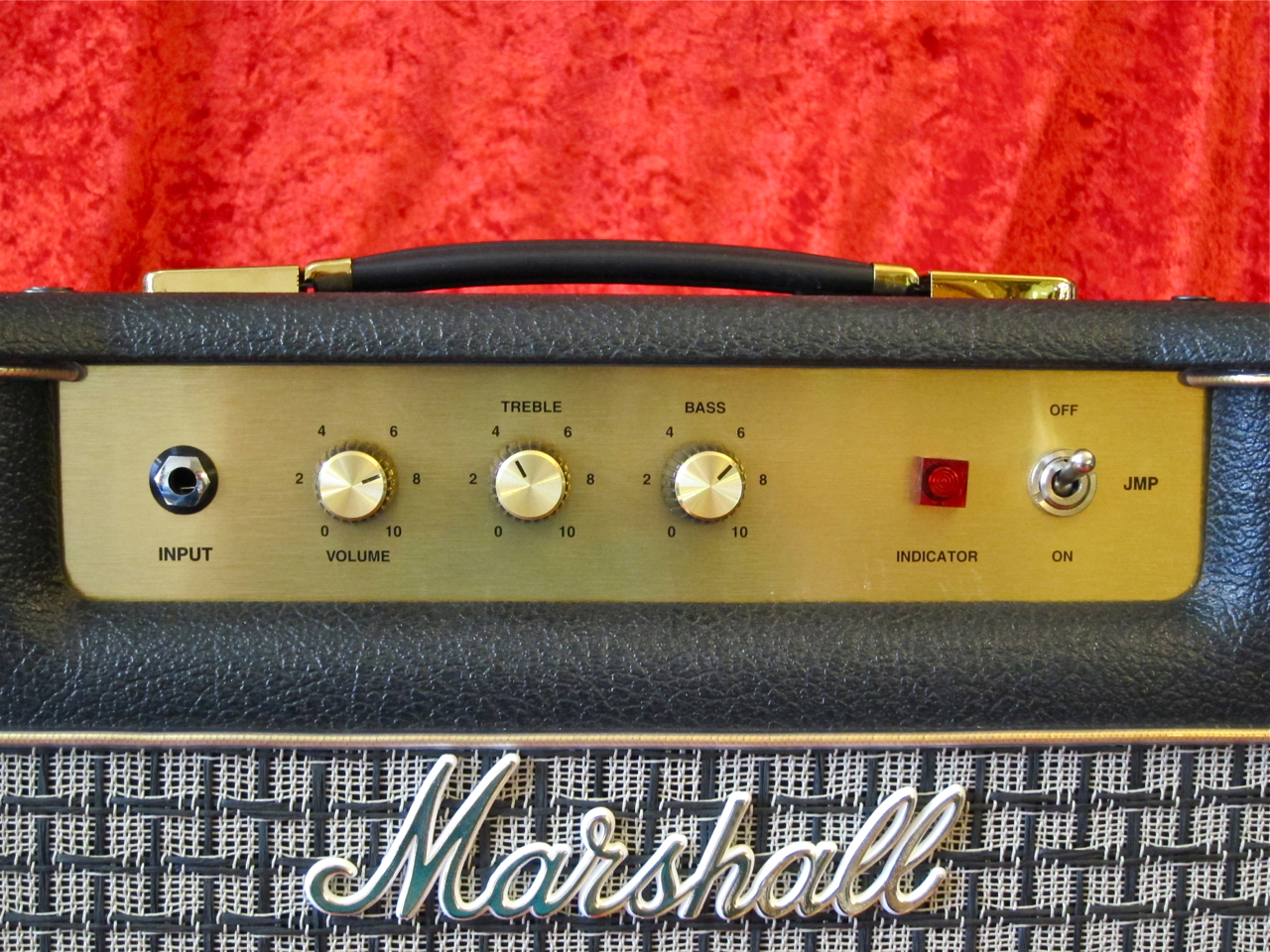
This anniversary model features three controls – volume, treble and bass.
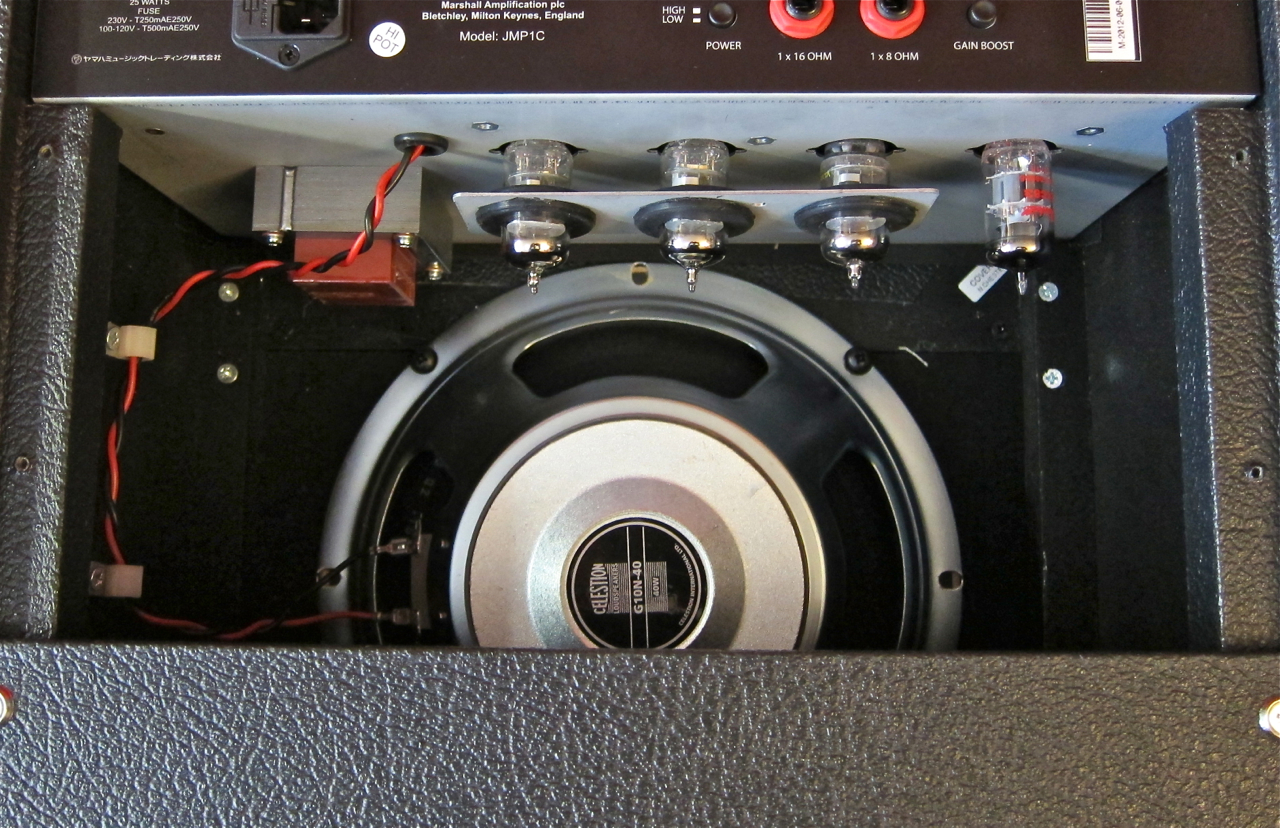
The JMP1C’s design uses four valves: two ECC83/12AX7’s in the preamp section, and two ECC81/12AT7-models for the power stage. The speaker, too, is different here – it’s a ten-inch Celestion G10N-40.
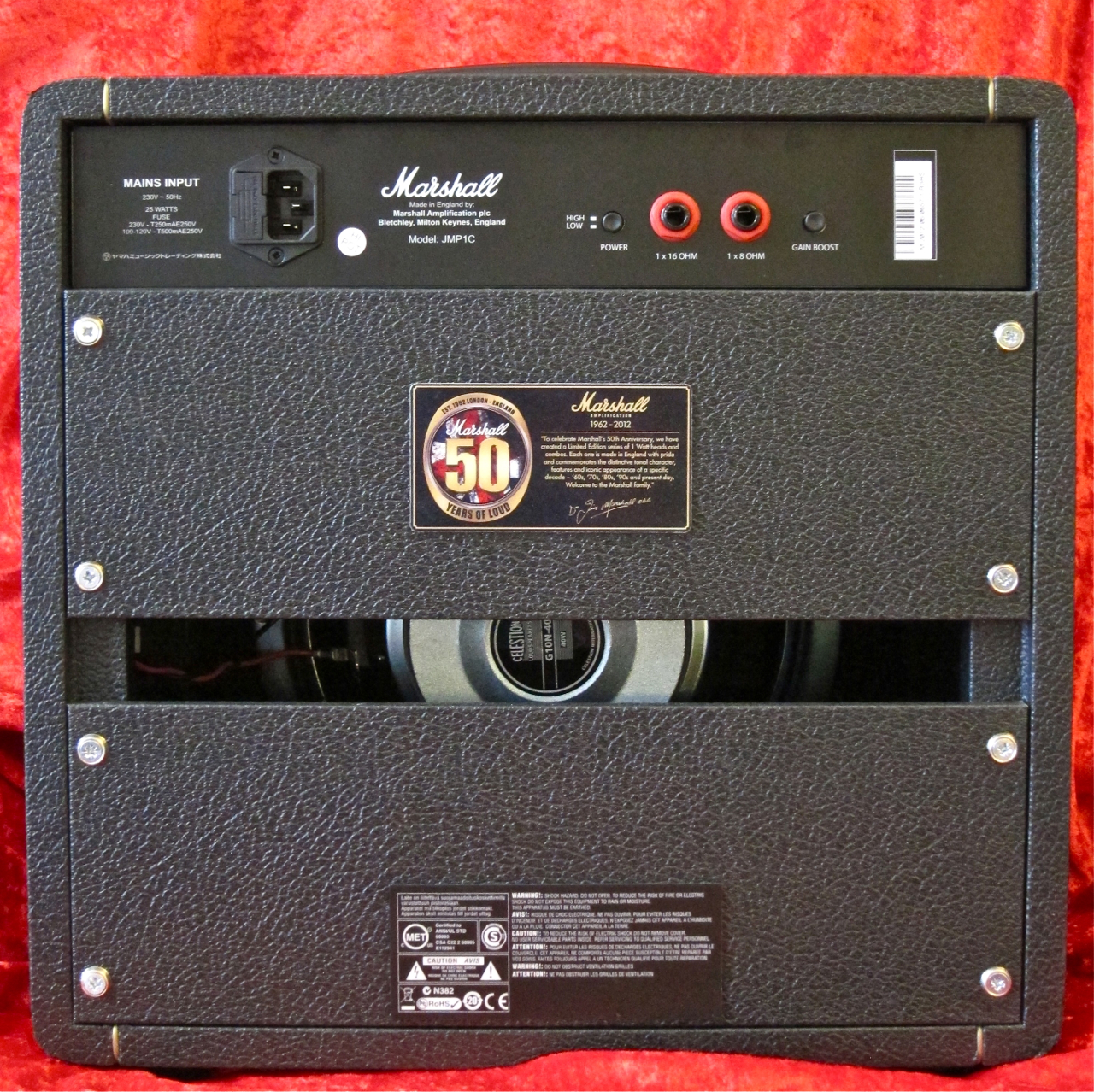
Looking from the back the JMP1C seems to look almost exactly like the JTM1C; but wait…
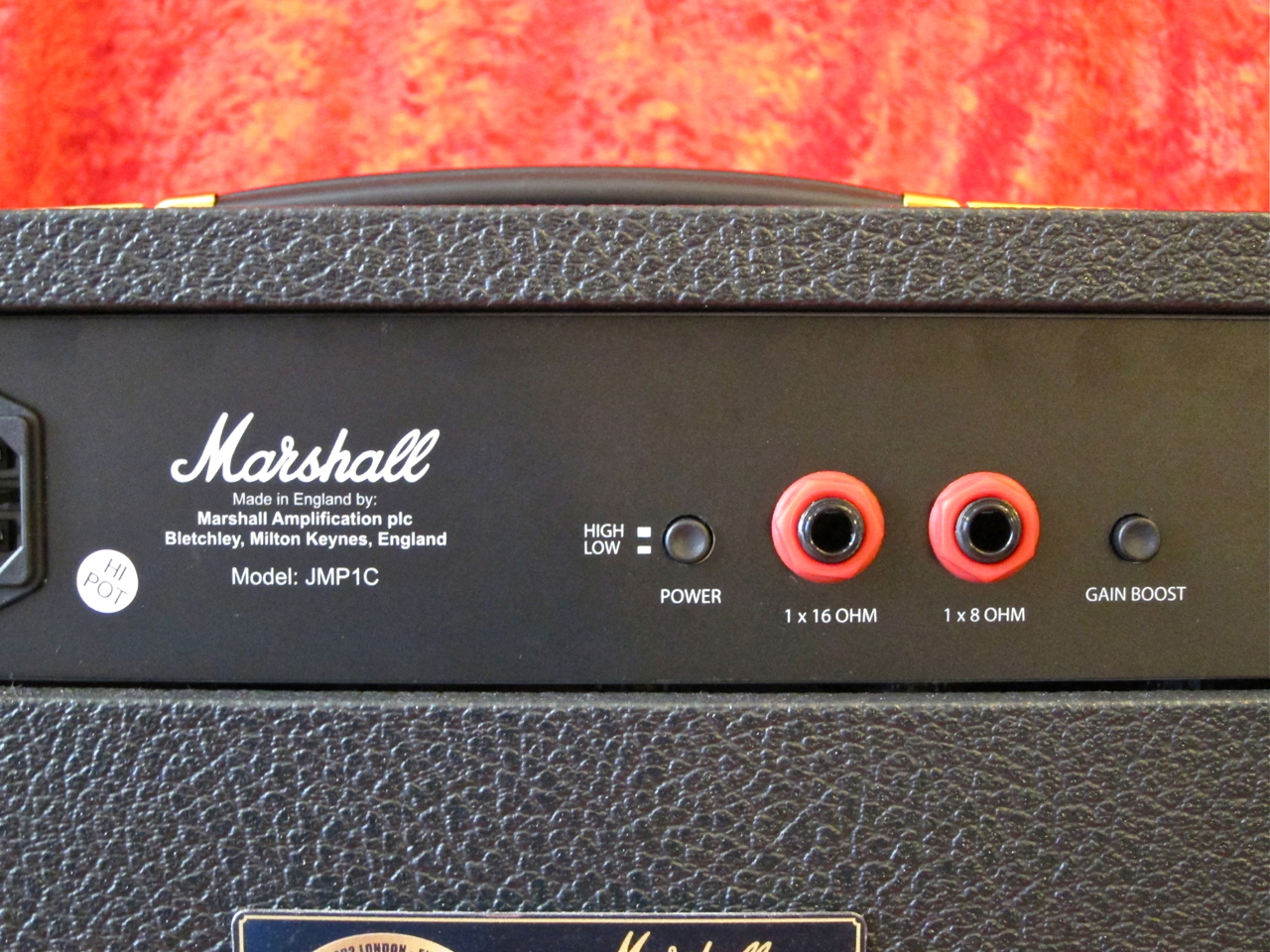
…there’s a second pushbutton next to the speaker outputs, labelled Gain Boost.
****
It’s interesting to note the sonic differences between these two combos.
Set clean the Marshall JTM1C has a fine, open and bright ring to its voice, while the JMP1C is noticeably fatter and more mid-centric. Neither of the combos is endowed with a lot of clean headroom, but I found the Sixties version to be somewhat better suited for clean playing:
Marshall JTM1C – Telecaster/clean
Marshall JMP1C – Telecaster/clean
****
Regardless of what guitar is used, once the volume control reaches about 12 o’clock both amps are definitely in overdriven territory. The JTM’s drive tones are warmer and smoother than those of the JMP. The JMP1C’s overdriven sounds are fresher and crunchier, with a distinct stack-like tonality, in contrast to the JTM1C’s Bluesbreaker-inspired delivery:
Marshall JTM1C – Les Paul Junior/overdrive
Marshall JMP1C – Les Paul Junior/overdrive
****
At full throttle – and with the JMP’s Gain Boost activated – the differences are clearer still: The JTM1C is really creamy and warm, while the JMP1C has a far more aggressive and snarling take on things. You could say the JTM1C is the bluesier alternative, while the JMP1C caters for the classic rock fans:
Marshall JTM1C – Hamer Studio Custom/full gain
Marshall JMP1C – Hamer Studio Custom/full gain
Both combos are rather loud for one-watters. Turned up full the volume is not quite loud enough to annoy your neighbours during the day, but almost, which is where the handy Power-button on the back panel comes in and saves the day.
****
700 Euros for such small combos may sound like a lot of money to some, but you shouldn’t forget two things: Firstly, all anniversary models are built in the UK, and not in China, and secondly, these are limited edition runs, making them interesting for collectors. If Marshall had chosen to release 50- or 100-Watt stacks to commemorate their five decades in business, the price of such models would have been above most of our budgets. With these cool one-Watt amps most Marshall fans are getting the opportunity to acquire their own piece of Marshall-history, without going bankrupt.
I feel the reviewed combos are great little amps that are a fitting tribute to both Marshall the company, as well as to their founder, the late Jim Marshall!
****
Marshall 50th Anniversary -combos
Finnish Distributor: EM Nordic
A big thanks to DLX Music for the loan of the review samples!
****
Marshall JTM1C
Pros:
+ workmanship
+ sound
+ output power can be curtailed
+ small size
+ collectability
****
Marshall JMP1C
Pros:
+ workmanship
+ sound
+ gain booster
+ output power can be curtailed
+ small size
+ collectability
****

****
Marshall Amplification juhlii tänä vuonna 50-vuotis syntymäpäiviään. Juhlan kunniaksi firma julkaisi viisi pientä juhlavahvistinta, joita rakennetaan rajoitetuissa erissä. Yksiwattiset täysputkinupit ja -kombot on suunniteltu niin, että ne edustavat soundiltaan ja ulkonäöltään aina tiettyä aikakautta Marshallin historiassa.
Kitarablogi.com sai testiin 1960- ja 1970-lukua edustavat kombot – JTM1C ja JMP1C.
****
JTM1C-kombon (katuhinta noin 700 €) ulkonäkö on varhaisten JTM-mallien, kuten esimerkiksi Bluesbreaker-kombon, mukainen: kultainen, vanhalla logolla varustettu laatta ja kuuluisa, harmahtava etukangas.
Soundipuristi ilahtuu spartaanisesta säädintarjonnasta – volyymi/vahvistus-säädin sekä yksi tone-potikka, siinä kaikki.
Vaikka juhlamallit eivät ole vintage-tyylisesti point-to-point käsinjuotettuja, elektroniikan toteutus piirilevyineen on hyvin laadukas. Etuasteputkina toimii kaksi ECC83/12AX7-putkea ja pääteputki on ECC82/12AU7.
Marshall JTM1C:hen on asennettu jo Class 5 -kombosta tuttu erikois-Celestion: kymppituumainen G10F-15.
Kuten kombon etupuoli, myös takapuoli komeilee erittäin siistillä työnjäljellään.
Kahden kaapilähdön lisäksi takapaneeliin on sijoitettu ”Power”-nappi, jolla kombon tehot saa laskettua yhdestä watista 0,1:een wattiin.
Kaikissa juhlamalleissa on sama Marshall-kantokahva.
****
1970-lukua edustavassa JMP1C:ssä (katuhinta noin 700 €) on käytössä meille kaikille niin tuttu ”käsin kirjoitettu” Marshall-logo, sekä harmaa, ruudullinen etukangas.
Tässä juhlamallissa on aikakauden mukaisesti ”kunnon” taajuuskorjaimet – erilliset säätimet diskantille ja bassolle.
JMP1C:ssä käytetään peräti neljää putkea: kaksi ECC83/12AX7-etuasteputkea, sekä päätevahvistimessa kaksi ECC81/12AT7-mallia. Myös kaiutin on tässä toinen, nimittäin kymmenentuumainen Celestion G10N-40.
Takaa katsottuna JMP1C näyttää lähes samanlaiselta kuin JTM1C; mutta – hetkinen…
…kaiutinlähtöjen toisella puolella on toinen nappi. Gain Boost -nimityksen perusteella voi varmaan odottaa, että tästä kombosta varmasti löytyy tarpeeksi säröä.
****
On todella mielenkiintoista huomata minkälaisia soinnillisia eroja kahdesta hyvin samankaltaisista komboista löytyy.
Puhtaissa soundeissa Marshall JTM1C soi avoimella ja kirkkaamalla äänellä, kun taas JMP1C:n ääni on keskialuevoittoisempi ja lämpimämpi. Molemmissa vahvistimissa ei ole erityisen paljon puhdasta headroomia, mutta 1960-luvun uusintapainos vetää mielestäni puhtaissa soundeissa pidemmän korren:
Marshall JTM1C – Telecaster/puhdas
Marshall JMP1C – Telecaster/puhdas
****
Viimeistään volume-säätimen puolessavälissä kummankin kombon soundi on selvästi säröllä. JTM:n särösoundit ovat miedompia ja lämpimämpiä kuin JMP:n. JMP1C on säröllä runsaasti tuoreempi ja rapeampi ja se kuulostaa enemmän vahvistinstäkiltä kuin JTM, jonka sointi on hyvin Bluesbreaker-tyylinen:
Marshall JTM1C – Les Paul Junior/särö
Marshall JMP1C – Les Paul Junior/särö
****
Kun gain on täysillä ja JMP:n boosti on aktivoituna, särösoundien selvä ero vielä korostuu. JTM1C on hyvin kermainen ja lämmin, kun taas JMP:llä on tarjolla selkeästi enemmän säröä ja soundi on rouheampi. Sanoisin, että JTM1C on bluesimpi, kun taas JMP1C rokkimpi:
Marshall JTM1C – Hamer Studio Custom/gain täysillä
Marshall JMP1C – Hamer Studio Custom/gain täysillä
Kummatkin vahvistimet ovat melko kovaäänisiä yksiwattisiksi komboiksi. Täysillä niillä voi juuri ja juuri soittaa päiväsaikaan kerrostaloasunnossa, joten on erittäin hyvä, että molemmista löytyy myös tehonpudotuskytkin.
****
Noin 700 euroa yksiwattisesta kombosta voi kuulostaa melko kalliilta, mutta ei sovi unohtaa, että juhlamallit valmistetaan kokonaan Englannissa (eikä Kiinassa), ja että kyse on myös keräilykohteesta. Jos Marshall olisi päättänyt valmistaa 50- tai 100-wattisia vahvistimia juhlan kunniaksi, niiden hinta olisi ollut liian korkea tavalliselle kitaristille. JTM1C:n ja JMP1C:n (ja muiden juhlasarjan pikkuvahvistimien) ansiosta lähes jokainen halukas voi ostaa itselleen palan Marshall-historiaa, omaa taloudellista tilannetta vaarantamatta.
Molemmat kombot ovat mielestäni erittäin onnistuneita kunnianosoituksia sekä Marshall-vahvistinfirmalle että juuri edesmenneelle perustajalle Jim Marshallille!
****
Marshall 50th Anniversary -kombot
Maahantuoja: EM Nordic
Kiitos DLX Musicille testiyksilöiden lainasta!
****
Marshall JTM1C
Plussat:
+ työnjälki
+ soundi
+ kaksi päätetehoa
+ pieni koko
+ keräilyarvo
****
Marshall JMP1C
Plussat:
+ työnjälki
+ soundi
+ kaksi päätetehoa
+ gain-boosteri
+ pieni koko
+ keräilyarvo
****

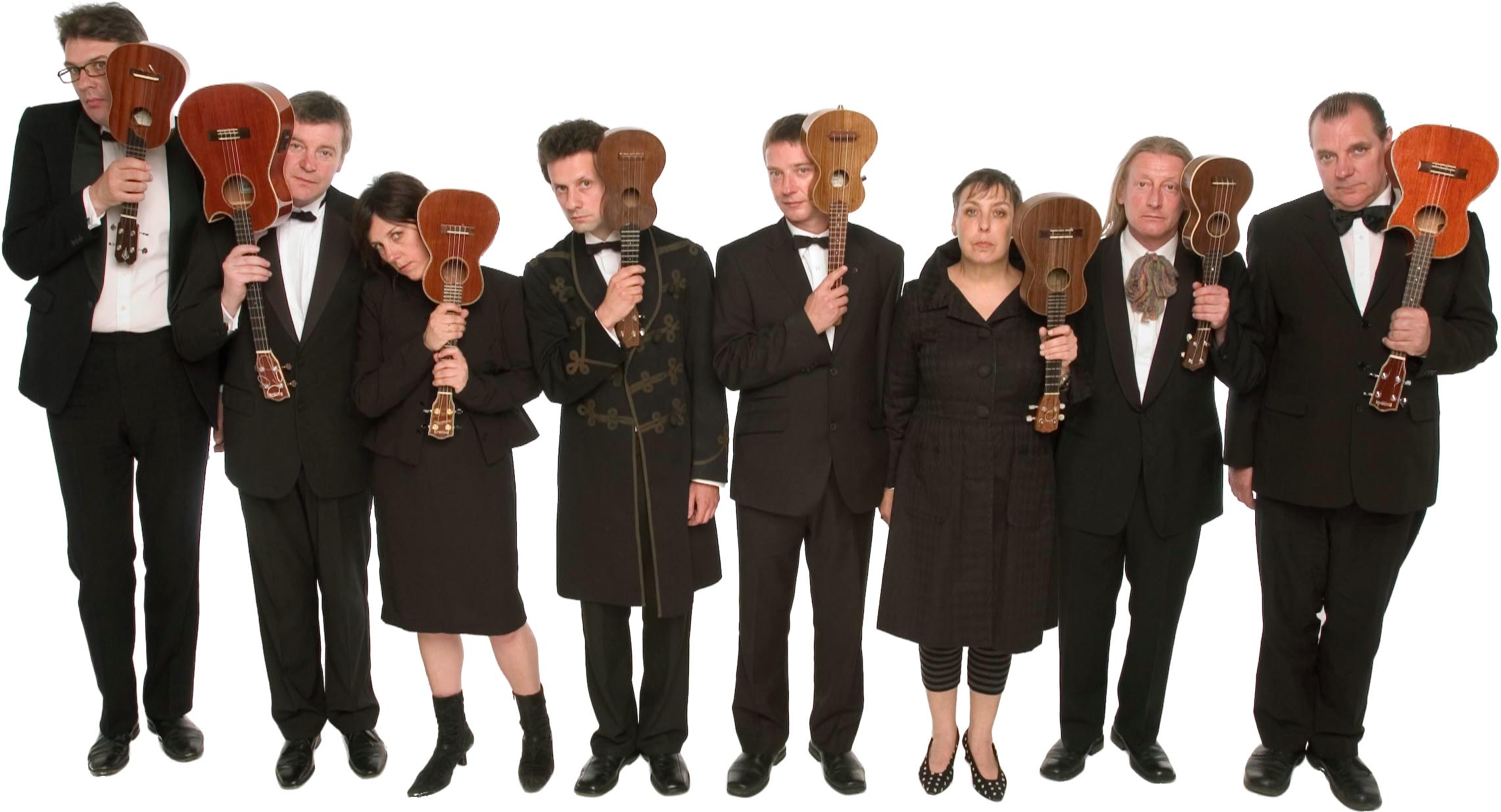
The Ukulele Orchestra of Great Britain esiintyy tänään Savoy-teatterissa Helsingissä klo 19:00.
Lippuja Lippupalvelusta tai suoraan iltakassalta.

Jarmo Hynninen is one of Finland’s top guitarists and guitar instructors.
Watch his excellent version of the old Jazz standard Caravan, which he recorded using his trusty Gretsch 6120 Reverend Horton Heat -guitar going through Fractal Audio’s Axe-FX II rack effect:


****
In this beautiful book guitarist Brian Whitehouse describes many of the Ramirez Guitar Museum’s historic Spanish guitars, which he then plays on the accompanying CD.


****
Wes Montgomery – Guitar
Rick Laird – Bass
Stan Tracey – Piano
Jackie Dougan – Drums
****
****
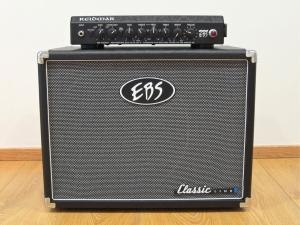
One of the new products at the EBS-stand in Frankfurt this year was a compact-yet-powerful bass amp called Reidmar. Kitarablogi.com managed to get hold of a Reidmar RD250, as well as a Classic Line -series CL112-cabinet for this review.
****
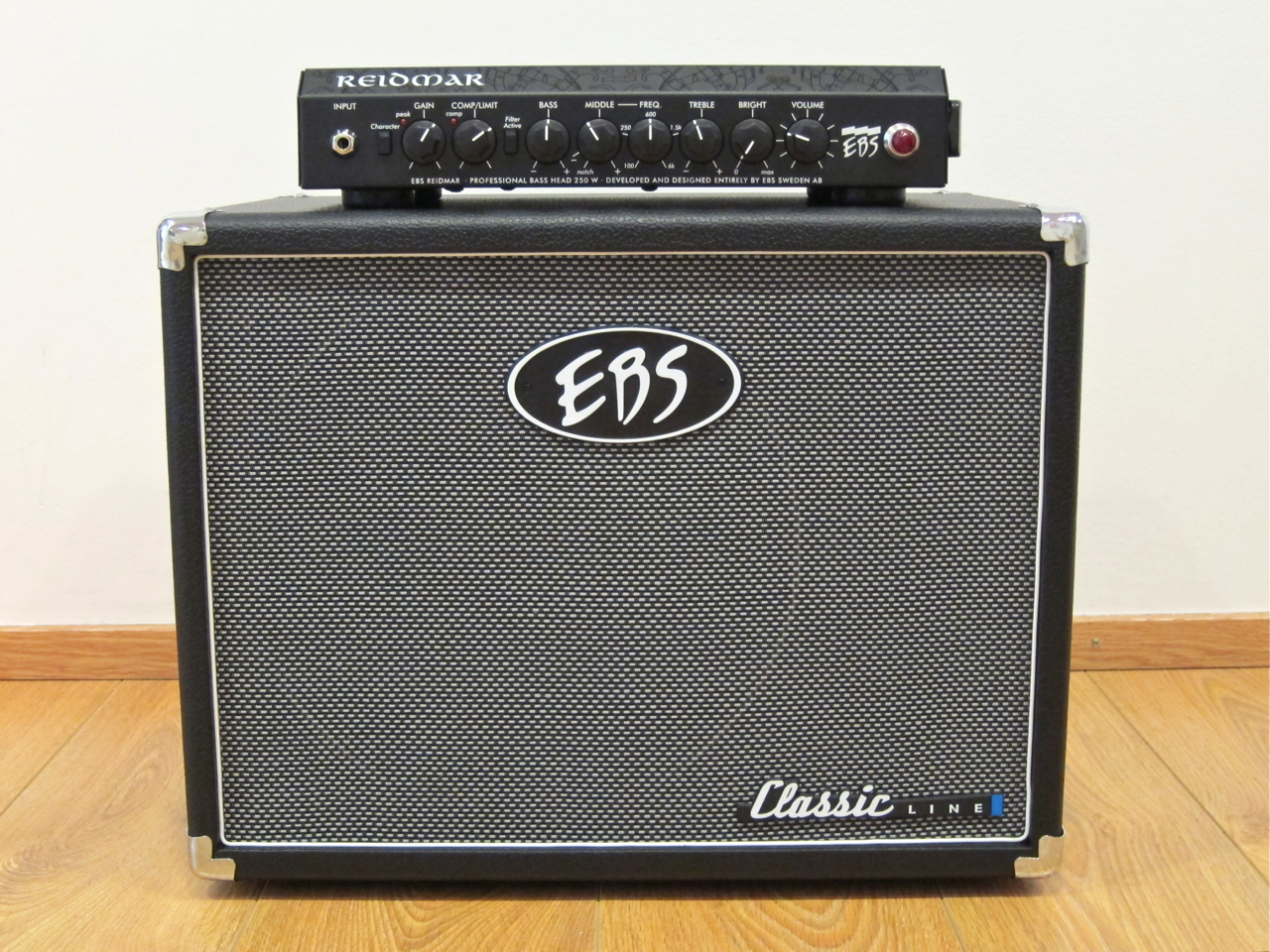
Both the Reidmar-head, as well as the Classic Line -series of cabinets have been designed and engineered in Sweden, but are being produced cost-effectively in China.
The EBS Reidmar (current street price in Finland: 469 €) runs a Class D power amp with 250 Watts of output at 4 Ohms. Because Class D amps run extremely energy-efficiently, there’s no need for large and heavy cooling ribs, which is why such amps can be much more compact than a traditional amplifier of the same power rating. EBS’s Reidmar weighs in at a mere 3.2 kilos, and fits easily into a compact backpack.
The good guys at EBS were quick to stress that the 250 W (RMS) rating is rather conservative, with the head reaching more than 400 Watts peak power with minimal distortion.
The new Classic Line CL112 -cabinet (current street price in Finland: 299 €) fits the Reidmar like a glove, as it, too, has been designed to pack a massive punch into a handy-sized piece of gear. The cab’s impedance is eight Ohms, and beneath the vintage-style exterior you can find one 12-inch speaker paired with a two-inch tweeter.
****
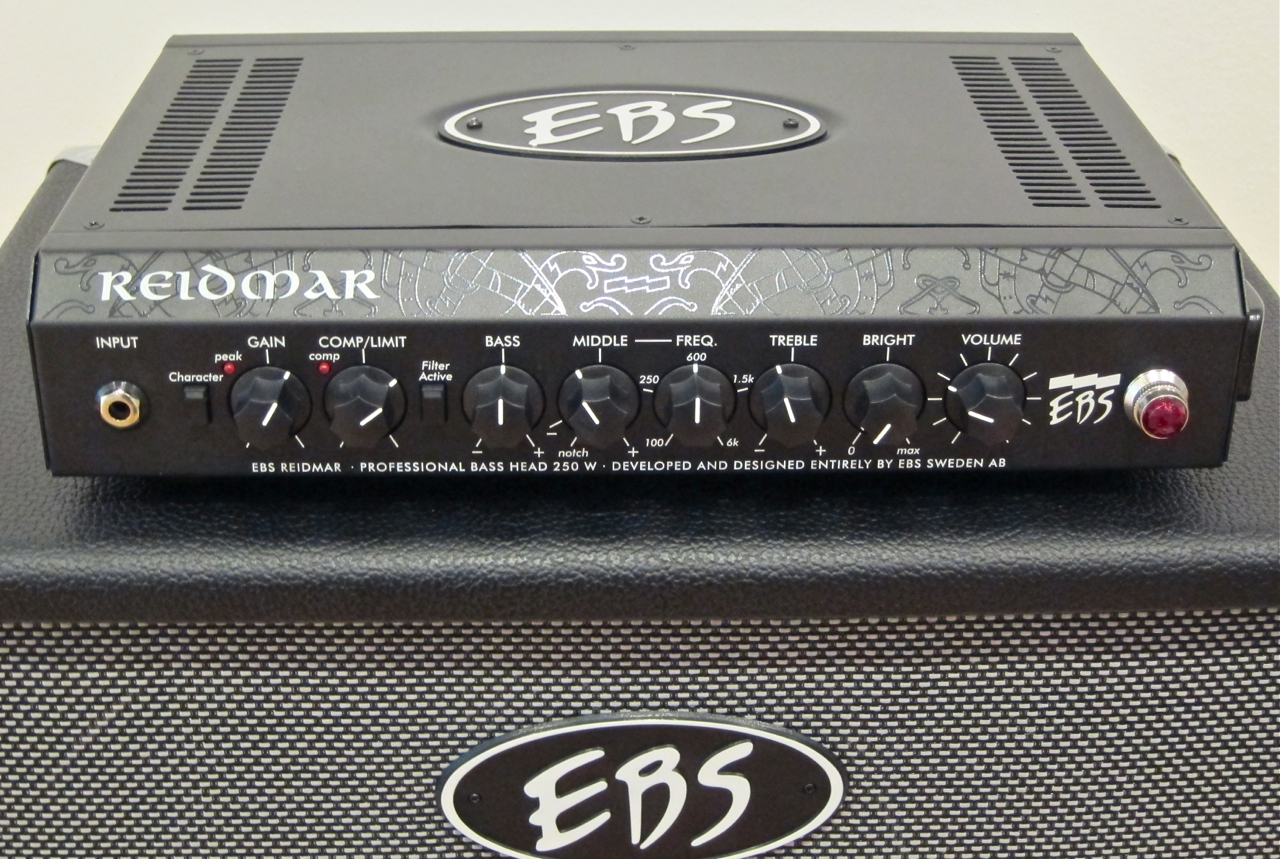
Regardless of its diminutive size, the Reidmar’s front panel dishes up all the goodies we’ve come to expect from an EBS-amp:
Next to the Gain-control you find the Character-button which lets you choose between a linear frequency curve and a loudness-type counterpart, with more bottom end and treble. EBS’ on-board compressor is known for its organic and musical behaviour, as well as its easy one-knob functionality. The EQ-section uses a four-band set-up with semiparametric mids – meaning the user can adjust the mid-range-filter’s centre frequency (in this case between 100 and 6,000 Hz). One EBS-speciality is the notch filter built into the mid-band. A notch filter is a very steep (=exact) filter that can be used to defeat an acoustic bass’ feedback howl or to reign in strong room/stage resonances, without interfering with the rest of your tone.
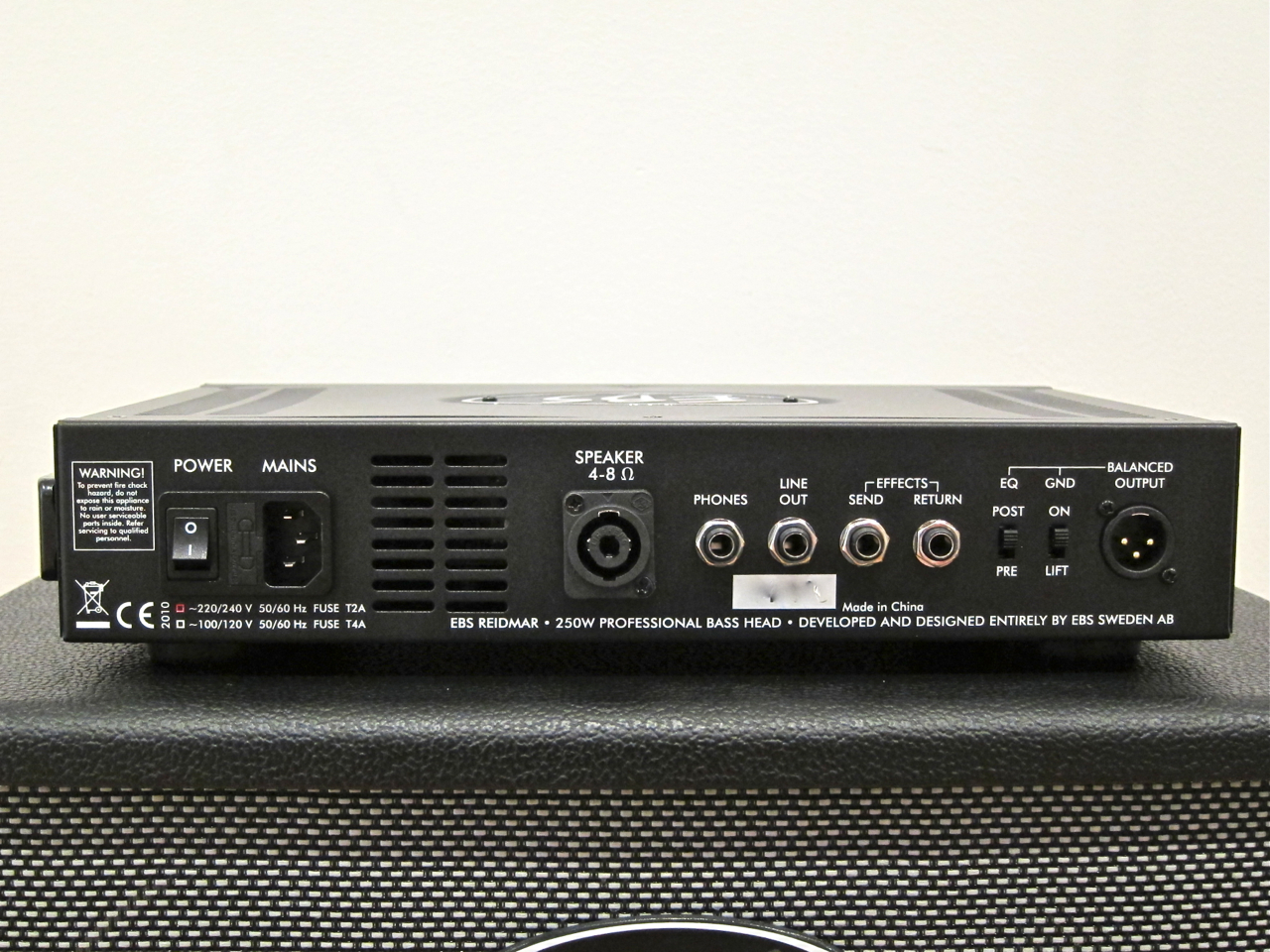
The back panel holds all your connections to the outside world – from the excellent DI-output to the effects loop.
****
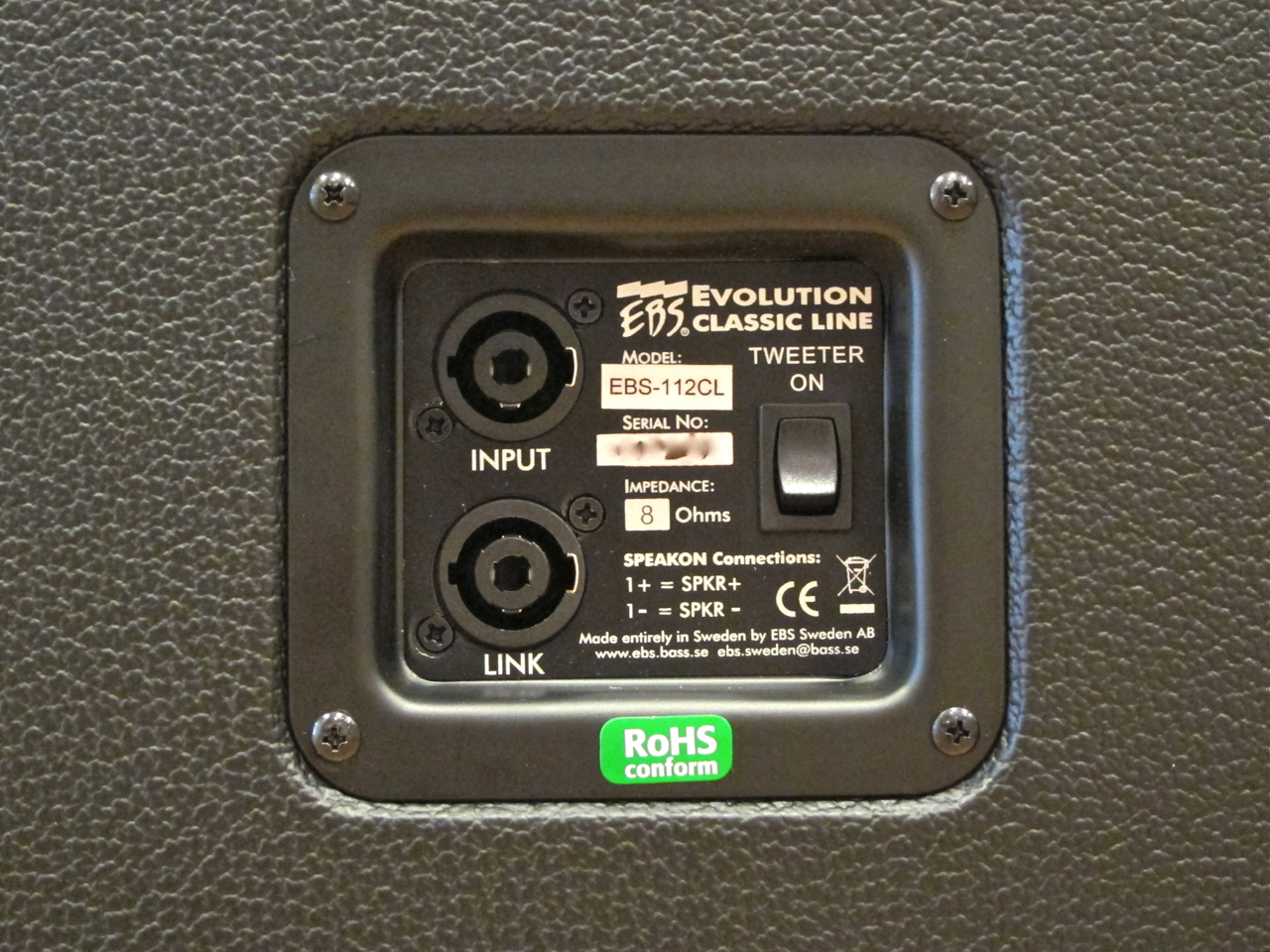
The EBS CL112 -cab sports two Speakon-connectors on its back panel – one for the input signal, and one to link another cabinet to the head. The small Tweeter-switch lets you switch off the cab’s tweeter for authentic vintage-style tones.

Even though the CL112 weighs in at only 17.5 kilos, EBS have sunk a sturdy metal grip into the cabinet’s left side.
****
A good bass amp should sound well balanced and full before you even touch the EQ-controls. The EBS Reidmar/CL112 -stack passes this test with full points. My old Jazz Bass sounds nice and chewy, with all of its ”wood” and tone intact:
Engaging Character noticeably pumps up the bass and adds muscle to the proceedings:
The EQ-section makes it possible to achieve virtually any tone you want. Let’s start with a nice and clean Pop tone:
Boosting the bottom end, as well as adding bite, results in a classic slap tone:
Adding bass while cutting treble takes you straight to Reggae’s swampy realms:
A punkish bit of plectrum-driven anger can be dialled in just as quickly on the EBS-stack:
…and if you fire up a chorus pedal the Reidmar and the CL112 can take you straight to Jaco-land:
Pictures of Blogi – Homage to Jaco P.
****
With its Reidmar-head and CL112-cabinet EBS have managed to shrink a bassist’s core equipment without depriving him (or her) of his (or her) tone. True, if a five-string is your weapon of choice, you should probably consider a different cabinet – like the EBS NeoLine 115, for example – to keep the punch in the lowermost notes intact, but in most situations this little gem of a stack will hold its own more than adequately. If you splash out on two CL112-cabs you’d get a very powerful and flexible modular system, which would enable you to take along the second cab to larger gigs, leaving it at home when it’s not needed.
The Reidmar gives you genuine EBS-tone in a compact and very affordable package. The EBS CL112 dissipated all my reservations concerning single 12-inch cabs: Its tone is open and strong, without being the least bit boxy or nasal. The silky-sounding tweeter adds just the right amount of brilliance to the tone. Jättebra!
****
EBS Reidmar RD250 & Classic Line CL112
Finnish distributor: F-Musiikki
****
EBS Reidmar RD250
Street price: 469 €
Pros:
+ price
+ sound
+ flexibility
+ power
+ size
+ weight
****
EBS CL112
Street price: 299 €
Pros:
+ price
+ sound
+ power handling
+ size
+ weight
****

