Zoom’s A3 is the company’s brand-new, next-generation modelling effects unit for acoustic guitar.
The Zoom A3’s user interface is very similar to the one used in their MS-50G-pedal for electric guitar, but in terms of its features the A3 offers a whole plethora of stuff developed specially for use with acoustic guitars.
****
Zoom have managed to pack an unbelievable amount of processing prowess into its new compact contender (current street price in Finland approx. 170 €), yet the A3 is still easy to use. The most vital functions have been given their own knobs and pushbuttons, which makes the A3 easy to use and cuts back on unnecessary menu-jumping at the same time.
The Zoom’s main sections are the quality dual preamp with its three-band EQ, the pedal’s versatile guitar-modelling department, as well as the A3’s large assortment of effects.
Additionally, the pedal offers a switchable solo boost (up to 12 dB) with its own tone control, an automatic feedback remover (that can defeat up to three different frequencies simultaneously) and a digital tuner.
The Zoom A3 is a programmable unit, which can store up to 20 patches. The patches can also be lined up in an A/B-list, which enables you to select patches for on-the-fly switching.
The effect pedal comes with its own power supply unit, but it can also be run on four AA-size batteries.
The A3’s microphone input – which can run phantom power (+24V or +48V) for condenser mics – and the unit’s balanced XLR-output (with a dedicated ground lift switch) have been placed on the front panel.
Your guitar’s output goes into the Zoom’s pickup input on the unit’s right hand side. A three-way slider lets you select two pre-EQ curves – magnetic or piezo – as well as a linear option (flat).
The stereo outputs have been placed on the opposite side, next to the USB-port for (firmware updates).
****
Each of the A3’s patches can run up to three different effects simultaneously, so you could use the first slot for one of the Zoom’s 28 virtual guitars, the second slot for one of three virtual microphones (SM57, C414, U87) and the third for something like a reverb.
On the other hand, you can also use the A3 as a ”pure” multieffect, by not using any digital guitar-modelling and creating patches with three effects in them. You can choose from 40 different effect types – from compression and chorus all the way to pitch-shifting and reverb. The sound quality is very good, and each effect offers plenty of leeway for precise adjustment.
Still, I think the A3’s biggest selling point is its excellent modelling section, which makes it possible to achieve astonishingly realistic results with only a few clicks of a button.
To work properly the modelling section needs a clean guitar signal, so the first thing is to make sure you’ve got the input gain settings for your straight guitar output and/or the mic put in front of your guitar just right.
Once the levels are OK, miraculously changing the character of your guitar is quick and easy: First, use the rotary switch above the Zoom’s display to select the body type corresponding best to the guitar you’re using – for example, choose ”Mold Body” if you’re playing an Ovation or ”YMH” if your guitar is a Yamaha LL-series instrument.
Next, you select a virtual guitar of your liking for the first effect slot in the chosen patch. You can access all of the A3’s 28 virtual guitars by using the Type-buttons. The guitars are displayed using their model names – like J-45, LG-2 or F-55 – as well as by an icon in the display.
If you’re using only a direct piezo signal as a starting point, you can add a good dose of authenticity by selecting a virtual microphone for the second effect slot of the patch. Each of the three virtual mics lets you choose between close- and ambient-miking, and whether the mic has been placed in front of the virtual sound-hole or near the virtual guitar’s bridge.
I have recorded three audio examples to give you an idea of the modelling technology’s sound:
The first clip features a Godin Acousticaster with an LR Baggs piezo system. First you’ll hear the straight piezo signal, followed by the these virtual guitars: A D-28, an OM-28, a 00-18 and an SJ-200. I’ve used Zoom’s virtual version of an AKG C414, and a touch of reverb:
The second clip has been recorded with me playing my Takamine N-20 -jumbo into a real condenser mic (an AKG C3000). The sequence of virtual guitar models is the same as above:
In the third clip I play my Tanglewood TW28-CSN -dreadnought, with the physical microphone and the sequence of virtual guitars staying the same:
****
In my opinion the Zoom A3 is a very serious contender for the title of ”Best compact multieffect for acoustic guitar”. It is a fantastic little tool for both live use and in the studio, where it can act as your own production centre for acoustic guitars. The Zoom is very easy to use and it sounds great. The on-board anti-feedback circuitry works very nicely and the solo boost is a handy tool to have in a unit such as this.
The best bit is, nonetheless, the A3’s surprisingly organic-sounding modelling section. The Zoom’s biggest advantage, when compared to other similar effect units, lies in its versatility and the wide range of different virtual guitars on offer. It is very easy to find a good body-style match for your physical guitar’s input signal, and the amount of different virtual guitar models makes it almost hard to choose. The option to creatively misuse the Zoom A3 – by selecting the ”wrong” body-type for your input signal – is also fun, and yields some nice new flavours.
But, don’t listen to me, go out and give it a try yourselves.
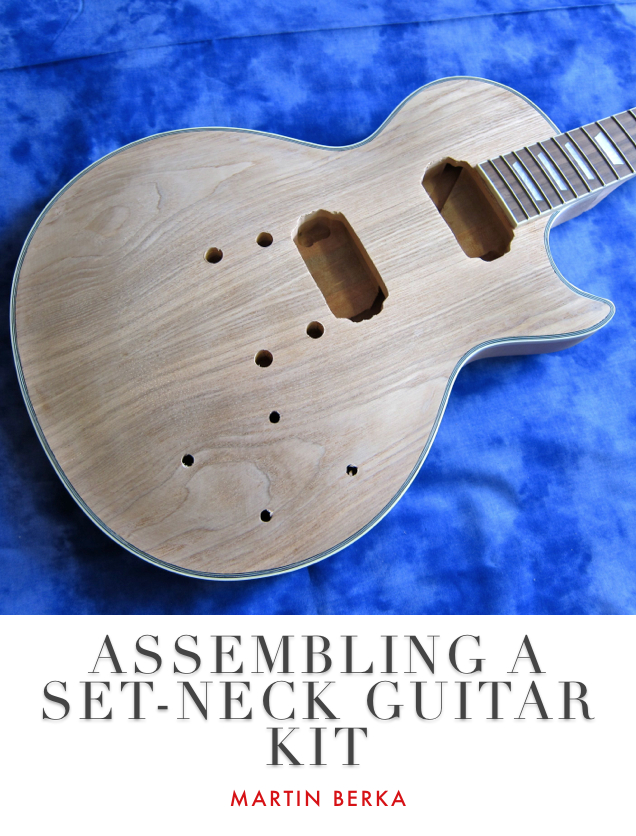
The brand-new eBook from ”Mr Kitarablogi” – Martin Berka – takes you through the process of assembling a guitar kit from the viewpoint of a novice.
”Assembling a Set-Neck Guitar Kit” is not meant as an all-encompassing encyclopedia of guitar-building knowledge, but rather as a description of how this affordable kit was transformed from a heap of components into a working electric guitar.
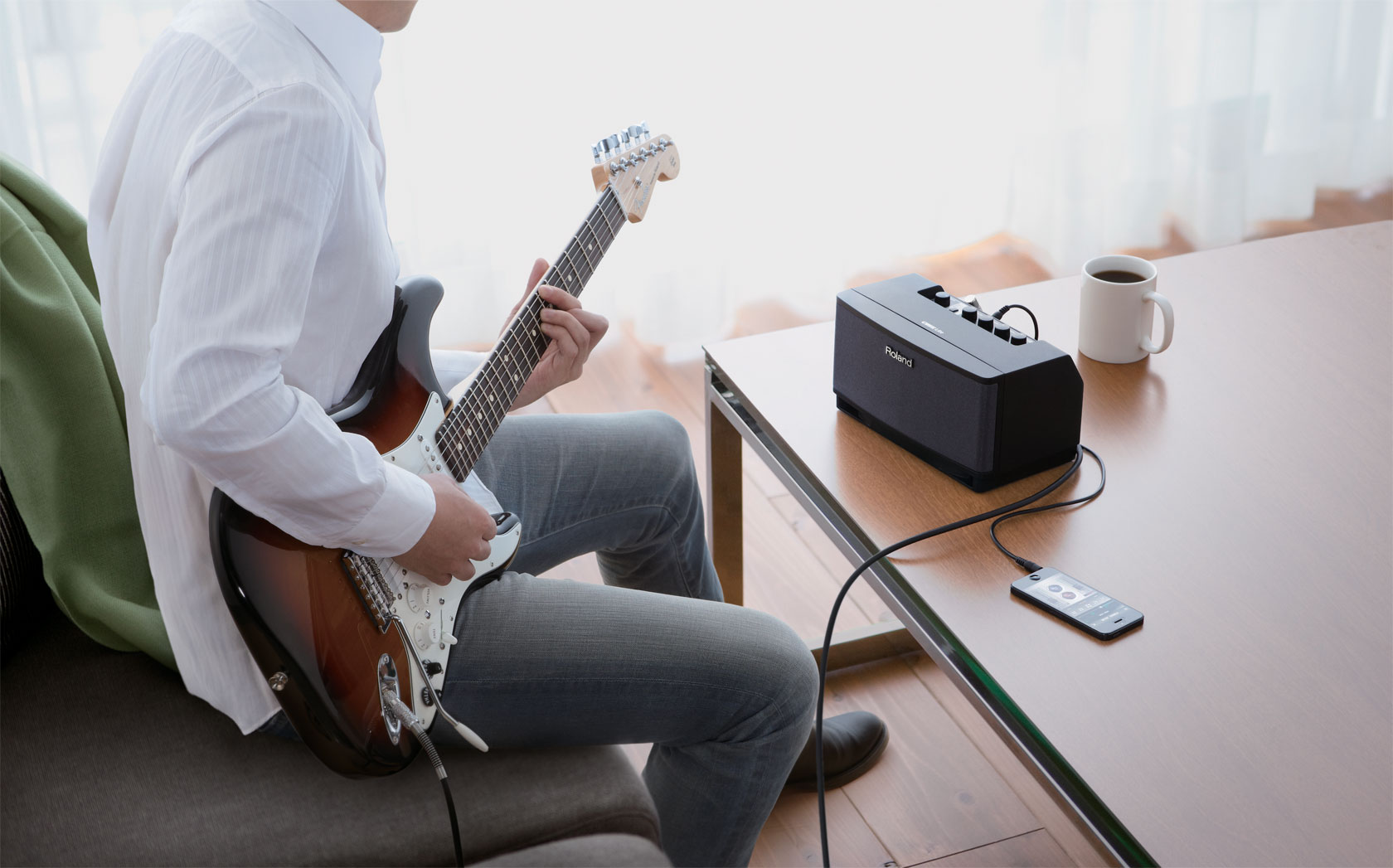
The brand-new Roland Cube Lite (current price in Finland: 155 €) is the latest model in Roland’s successful Cube-range, and the mega-selling Micro Cube’s little sibling.
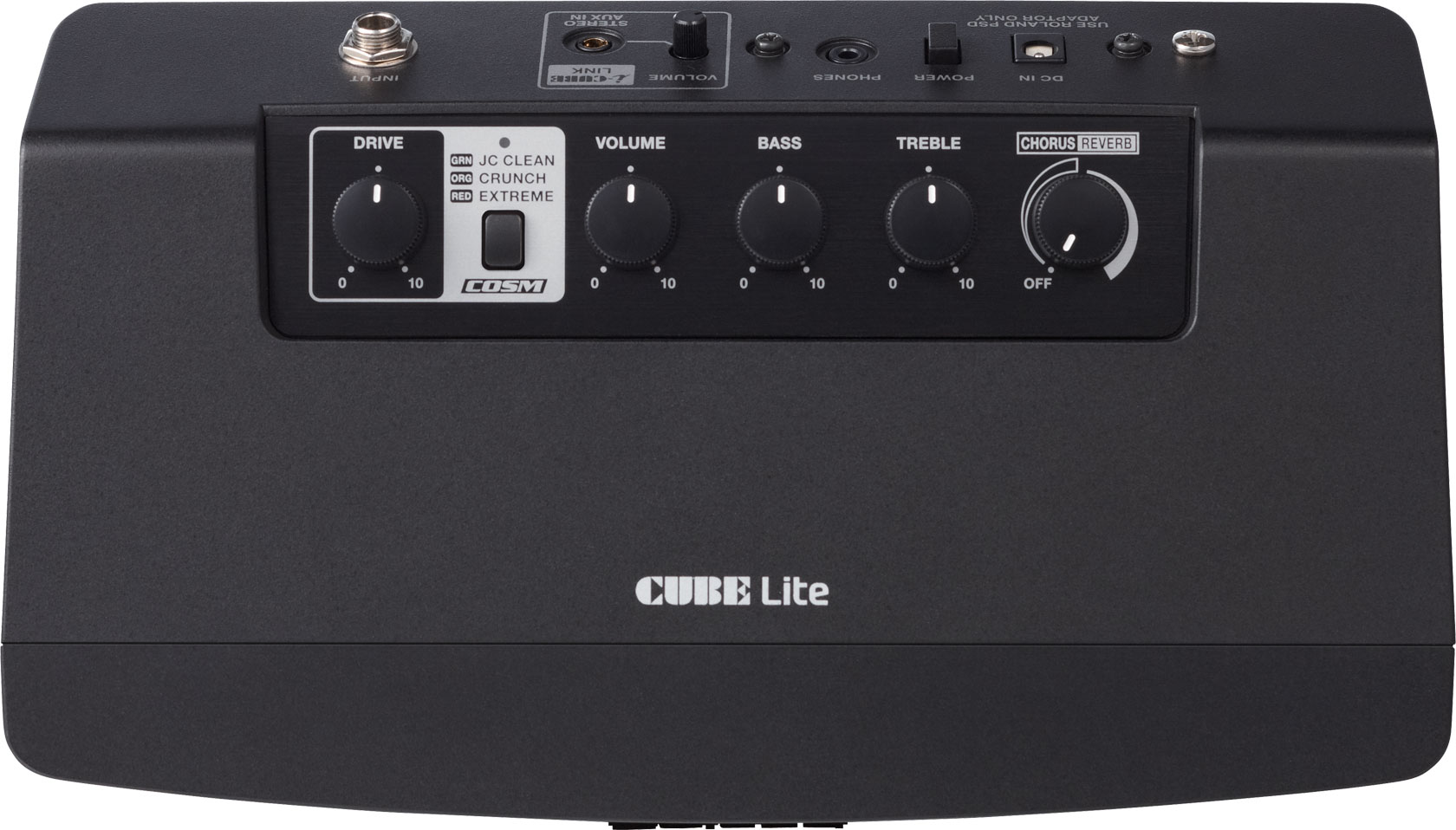
Contrary to its name the Cube Lite isn’t square-shaped, but rather a stylish stereophonic (2.1) practice amp that looks more like the company’s acoustic combos. Due to its very compact size there wasn’t enough space left for batteries – the Cube Lite runs exclusively on its PSU, which is included in the package.
The Cube Lite offers you three different COSM-modelled amplifier choices, called JC Clean, Crunch and Extreme. Apart from the Drive- and Volume-controls you’ll also find a two-band EQ-section.
The combo’s effect selection has been simmered down to a chorus and a reverb.
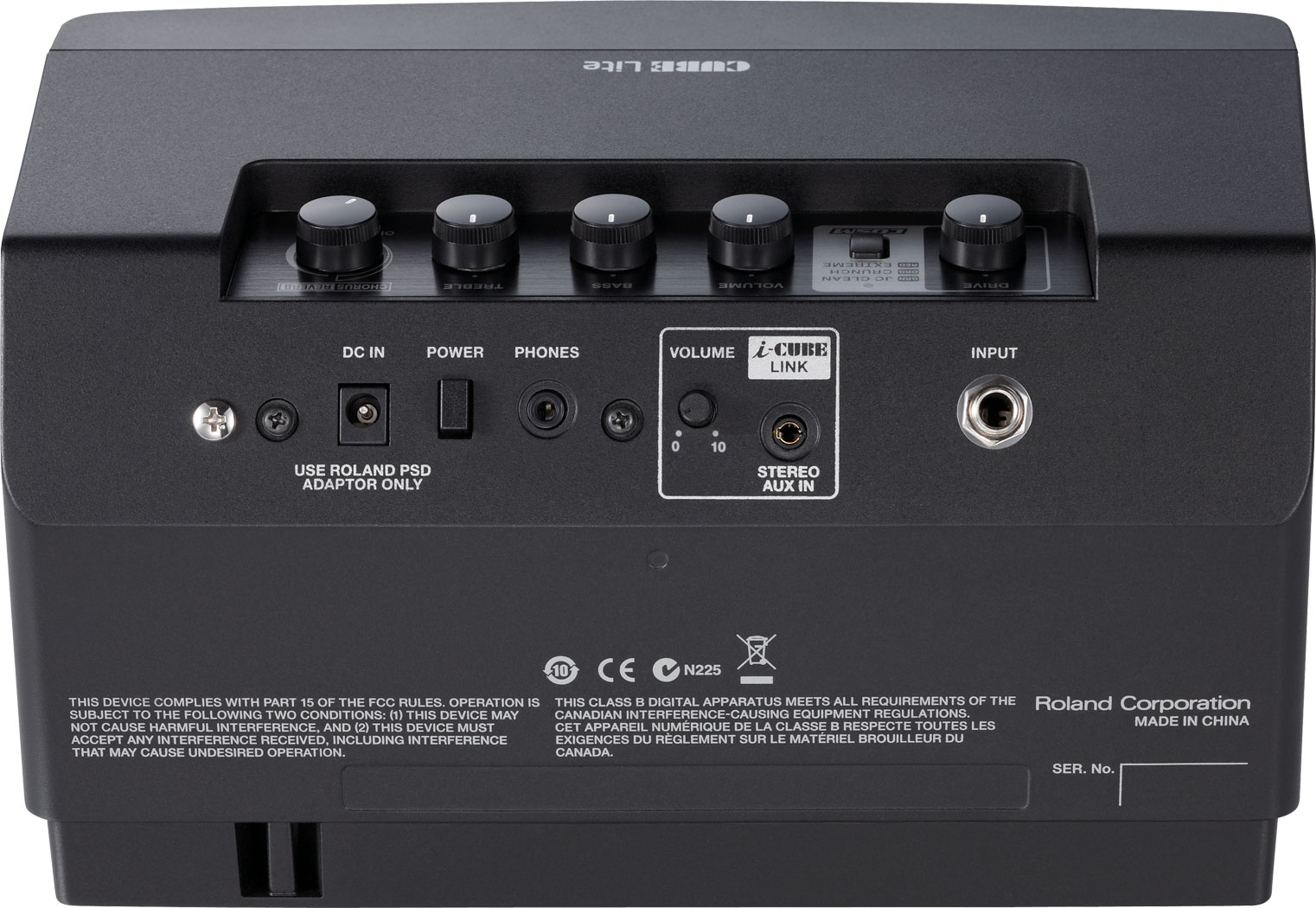
All of the Roland’s inputs and outputs are found on the combo’s back panel: In addition to the regular guitar input and the mini-jack for the headphones, you’ll find an input labelled ”i-Cube Link” with its own small volume control next to it.
Thanks to the i-Cube Link Roland’s Cube Lite is able to communicate directly with your Apple iPhone, iPad or iPod Touch. When hooked up with the special lead found in the box, the combo becomes your iWhatsit’s sound card.
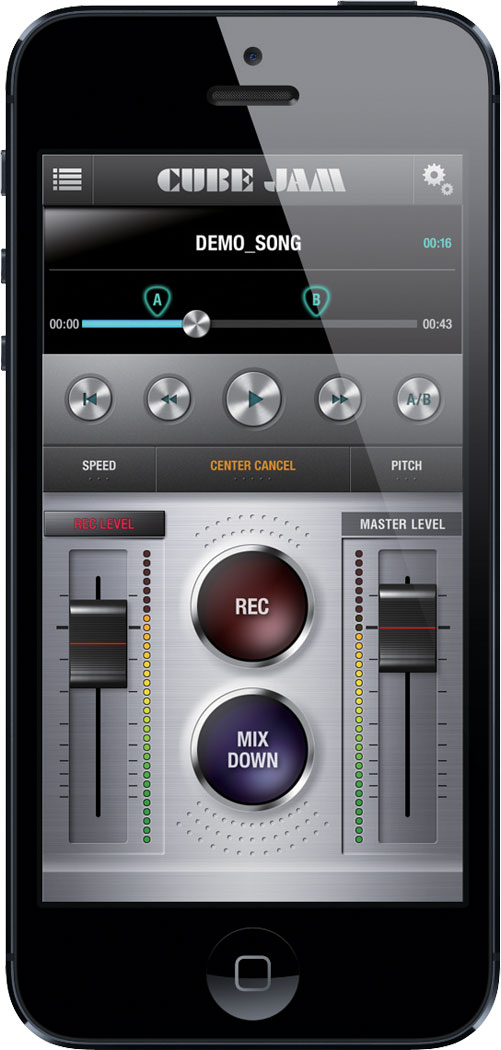
Roland offers you their Cube Jam-app – which turns your iPhone/iPad into your own guitar practicing and recording machine – for free download.
The Cube Lite will also work as your personal stereo, when using a standard stereo cable with mini-plugs connected to the i-Cube Link input.
****
Roland’s Cube Lite is a refreshingly compact and lightweight piece of gear. Granted, its plastic chassis may not be as trustworthy as the Micro Cube’s sturdier exterior, but on the other hand the Cube Lite will look much nicer in your living room.
I was blown away by the surprisingly full-bodied sound coming off the combo’s speakers – thanks in no small part, I’d reckon, to the 2.1-system’s subwoofer. The sound quality is definitely on a par with most personal hi-fi systems, except maybe in terms of the Cube Lite’s slightly narrower stereo spread.
The combo’s three COSM-models cover virtually all bases of electric guitardom. I don’t think anyone will leave their gig rig at home in favour of the Cube Lite, but this dwarf is well up for inspiring training sessions and on-the-spot song demoing. I kind of missed a delay as an additional effect option, but you can’t have everything, now, can you?
While this little Roland already works fine as a stand-alone practice amp, the cool Cube Jam-app adds a lot of fun and value to the whole package.
Cube Jam can use your iPhone’s/iPad’s whole music library as backing track material (except for copy-protected files). The app allows you to change playback speed and transpose your backing track, as well as to run a loop using the A/B-function. Center Cancel does what it says on the tin – you can dial out parts like the main vocal or lead guitar on-the-fly.
My favourite Cube Jam-features are Record and Mixdown, which allow you to play along to the backing track and record the whole thing. The app automatically stores each pass as a separate take, which makes it possible to select the best take for eventual mixdown, using the two virtual faders. Pressing the Mixdown-button creates a new WAV-file (44.1 kHz/16-bit) and stores it in your iThingy’s memory.
You can even overdub by selecting the latest mix as your new backing track and adding a new guitar track on top. The only drawback here is that the newly recorded track is always panned to centre, but that’s a compromise I could live with, as this app is meant mainly for practice and not for multitrack recording purposes.
I had prepared a backing track for this review using my iMac’s Garageband-software. I exported the backing track onto my iPad, and then recorded a guitar solo, playing my Epiphone Casino through the Roland Cube Lite (on Crunch), while recording it all onto Cube Jam.
Here’s what the Cube Jam-mix sounds like:
And here’s the guitar track on its own:
****
Here are two examples of the JC Clean- and Extreme-models played with a Stratocaster, and recorded with a Zoom H1:
****
In my opinion the Roland Cube Lite is a fine little practicing amp. You’ll get the most fun out of it if you’re already an Apple iPhone or iPad user, but the Cube Lite also works nicely as a stand-alone combo.
If you feel your guitar-playing is stuck in a rut, it might be a good idea to broaden your horizon – either by immersing yourself in a new genre, or by taking up a different string-instrument.
For some time I have been interested in lap steels, and for some reason – probably due to their their special sound – especially in Weissenborn-type, acoustic lap steels.
About 100 years ago a Californian luthier (of German origin), named Hermann Weissenborn, came up with an idea to make the then-popular acoustic lap steel guitar louder: Weissenborn simply extended the body into the neck, all the way up to the top nut. As the neck was sort of redundant on a lap steel anyway, the luthier figured, he might as well use it to further amplify the instrument’s voice.
Although the new instrument worked very well, Weissenborns were supplanted relatively quickly by even louder designs, such as resonators and electric steel guitars. Over recent years interest in Hermann Weissenborn’s invention has been growing slowly but steadily, thanks to this guitar’s idiosyncratic looks and sounds being featured by such musicians as Ben Harper and Xavier Rudd.
Thanks to this renaissence, new and affordable Weissenborn-copies are readily available for the beginner. Most of these guitars are built in China to the distributors’ specifications and then branded with the respective company’s logo.
There are also a few luthiers out there who build high-quality replicas of Weissenborn-type lap steels for the connoisseur – check Google (”Weissenborn guitar”).
At the moment of writing no Finnish distributor is importing Weissenborn-style guitars, so I got some support for preparing this article from Germany: Bediaz Music are a small, specialised company, dealing mostly in acoustic lap steels – starting with vintage Weissenborns and modern boutique-versions – but the guys are also importing their own range of affordable Bediaz-branded instruments.
****
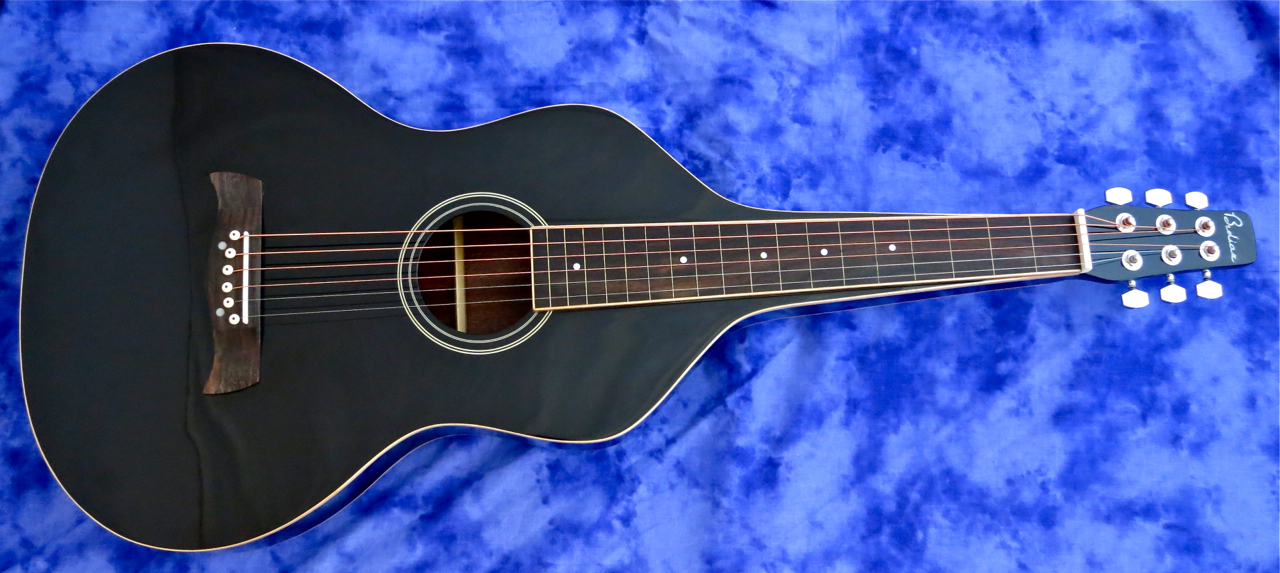
I decided to get acquainted with a Bediaz Black Gloss, the company’s most affordable model (289 €).
This is a copy of the guitar-shaped Weissenborn, but Bediaz also offer Teardrop-models, as well as deep-bodied and/or wider alternatives.
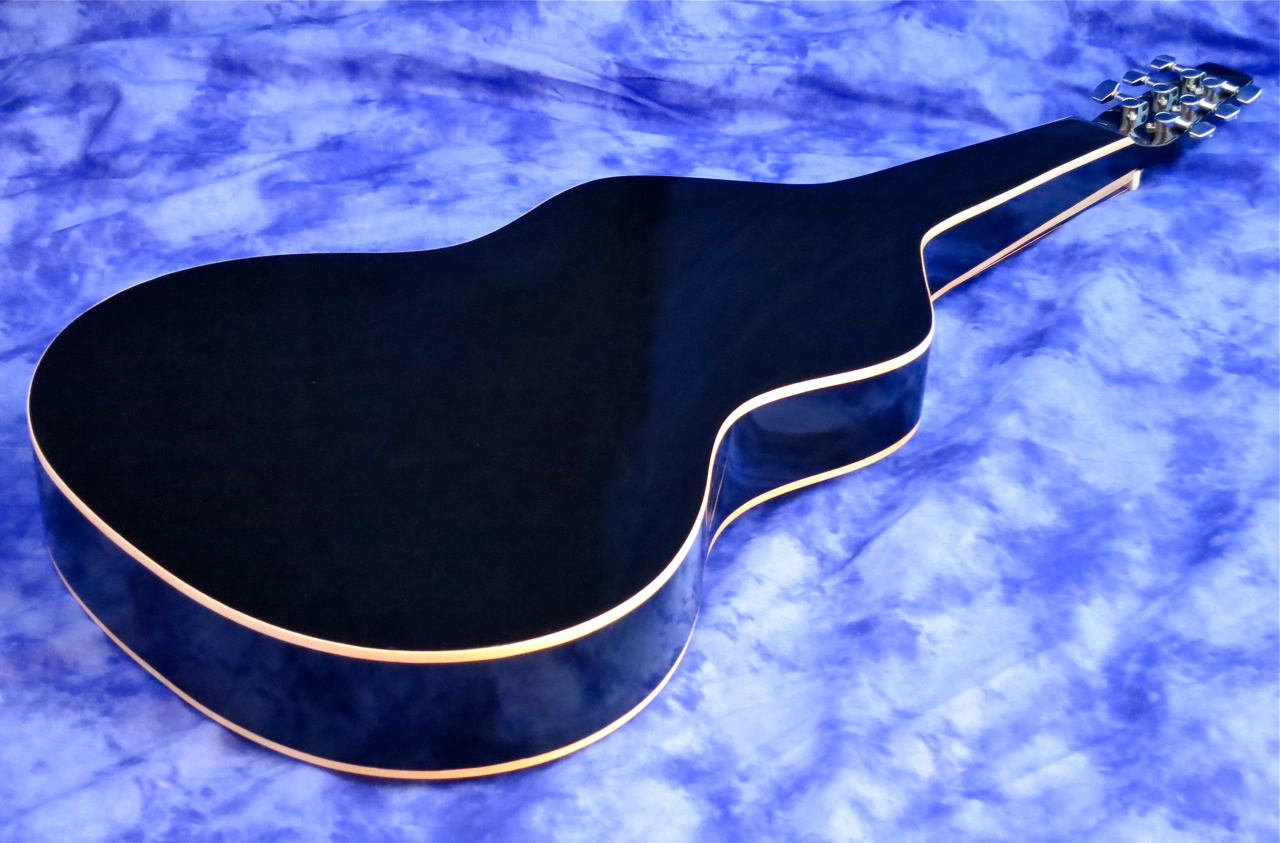
At this price point you cannot expect solid-wood bodies. The Bediaz has a body build from laminated mahogany, and sports a gloss black finish.
Only the guitar’s headstock – which is glued into the hollow neck near the first fret – is a solid piece of wood.
Affordable doesn’t mean cheap, though:
The Bediaz displays a very clean build (for the most part), and looks rather fetching with its luscious finish and the stylish, contrasting maple binding.
The fret lines seem to be maple, too. There were a couple of slightly wobbly-looking fret lines, but this is a mere cosmetic glitch on a lap steel, and nothing to worry about in this price range.
The silkscreened silver logo also isn’t the crispest either, due to some bleed, but this also is a very minor cosmetic niggle, which surely won’t spoil our fun.
A chunky bit of bovine bone has been used for the Bediaz’ tall top nut.
Tuning is simple and steady, thanks to the modern sealed tuning machines.
Stylishly understated white rings make up this instrument’s rosette.
The Bediaz also displays rather clean workmanship on the inside – something which isn’t always a given in this low price bracket.
A Weissenborn-bridge is a steel-string bridge’s taller sister. On the Bediaz it has been crafted from a sandwich of two pieces of rosewood.
****
This is what a Weissenborn can sound like in the right hands:
****
Playing a lap steel guitar opens up the gates to a new kind of playing-experience, and forces you to readjust your approach.
In a certain way, a lap steel is much more restricted than a standard (Spanish) guitar, as you’re always tied closely to your chosen tuning, with the bar giving you only a little room for breaking out of the key you’re in. If you’re in an open major-tuning, for example, achieving minor chords requires you to apply string muting, if you want to go somewhere else than the parallel minor tonic chord (like: Em –> G).
On the other hand, the tone bar frees you from the constraints of the traditional western 12-semitone scale, making it possible to find notes outside our usual major/minor-tonalities. This is one of the reasons why acoustic lap steels are gaining a growing following among Blues-guitarists and World-musicians.
Playing in tune and hitting the correct pitch takes a lot of practice on a lap steel, though. I, for my part, am still on the way there…
😉
Due to their hollow neck Weissenborn-type guitars are a little more delicate when it comes to the rigours of string-pull. High-pitched open tunings should only be attempted with lighter gauge strings. It’s best to start your Weissenborn-journey with lower tunings, such as open D (D-A-D-f#-a-d), open C (C-G-C-e-g-c), open G (D-G-D-g-h-d) or DADGAD. Many lap steel buffs also use their own – often ”secret” – tunings to fit their own signature sound and style.
The Bediaz Black Gloss has a nice fresh and open tone with a charmingly raunchy mid-range. For a standard-depth acoustic Weissenborn-copy the sheer volume on offer is a positive surprise.
A lap steel’s sound is also defined by which tone bar is used, and the bar also has an influence on the guitar’s playability. I have taken my first steps using a classic bullet-shaped tone bar – the sound was good, but I found the bar hard to hold. I have since switched to a Shubb SP-1 bar, which I find much easier to hold and manoeuvre. Other players swear by much lighter ceramic tone bars, so check them out as well.
While I don’t kid myself into thinking I might become a great lap steel guitarist, I still find playing the Bediaz-Weissenborn very refreshing and fun.
The affordable Bediaz-guitar makes it easy to start your own path down a new road – it’s a pretty and well-sounding instrument. And once you progress you can always step up to an even better model.
****
Here are two tracks I recorded on the Bediaz:
The Bediaz Weissenborn-copy even made it onto a song demo already:
****
I’d like to thank Bediaz Music for their vital support in making this article happen!
Are you looking for something off the beaten path of Strat- and Les Paul-clones? One interesting guitar might be the Tokai AJG-88 – an homage to the Fender Jazzmaster, factory-modded for the modern player.
****
The Tokai AJG-88 (current price in Finland: 1,099 €) is a bolt-on-neck instrument with a long scale.
We find a one-piece maple neck fastened to a streamlined alder body, crafted from three side-by-side pieces.
The Tokai comes in an all-gloss finish: The neck has been sprayed with clear lacquer, with the body showing off a sumptuous three-tone sunburst.
One welcome nod to the 21st century is the AJG-88’s truss rod access, which has been moved from the traditional body-facing end of the neck up to the headstock for easy accessibility.
The AJG-88 comes equipped with a nice set of sealed Gotoh tuners.
The chocolate-coloured rosewood fingerboard sports 22 medium-jumbo frets, which have been expertly seated and well polished. That’s full full marks for Tokai’s fretwork!
The classic screw-on neck joint coupled with Japanese workmanship…
Up to this point Tokai’s AJG-88 may have looked like a full-on Jazzmaster-copy, but the pickups, wiring and the choice of bridge make quite clear that this Tokai has its own, more contemporary, thing going.
Original Jazzmasters feature a front-mounted vibrato paired with a rocking bridge, designed to work correctly with the fat string gauges of yore (.012 or bigger). Putting a .009-set on a vintage-type Jazzmaster will lead to all sorts of problems, from rattling bridge saddles to strings not staying in their respective grooves – not good for sustain or tone.
On the Tokai AJG-88 these problems won’t occur, because this model is equipped with a tune-o-matic and stopbar combination (made by Gotoh). As a result the tuning is rock solid regardless of string gauges or tuning preferences. Tuning down for Metal isn’t a problem for the Tokai.
Both the original Jazzmaster, as well as its younger sister the Jaguar, were equipped with singlecoil pickups and rather complicated electronics with a separate rhythm-circuit for their neck pickup.
Instead of a dizzying array of knobs and switches, Tokai offer you two genuine Seymour Duncan humbuckers. The neck pickup is their famous Jazz-model (SH-2N), with the slightly chunkier-than-vintage Jeff Beck-model (SH-4) placed next to the bridge.
A three-way toggle switch and master volume and tone controls – nice and easy does it…
****
I can only recommed giving the Tokai AJG-88 a spin. If you haven’t tried a Jazzmaster-style guitar before, you’ll be surprised at the well-balanced ergonomics that this large-bodied classic holds in store. The feel is different – in a very good way – and the AJG-88 is easy to hold, both standing up and sitting down.
The neck profile is a nice, medium-thickness vintage-style ”D”. Thanks to the excellent fretwork our test sample came with a really low action (low E: 1.6 mm, high e: 1.0 mm), yet was free from fret buzz.
Acoustically Tokai’s AJG-88 sounds open with a tight bottom end, as well as a charming, slightly hollow mid-range.
Played with a clean amp the Tokai’s neck pickup gives you warm and full tones with a nicely rounded top end. As is the case with most two-humbucker guitars, putting the AJG-88’s toggle in the centre position will result in the most useable clean rhythm tones. The sound is open and airy, with a nice helping of plectrum attack. The bridge pickup on its own displays a chunky mid-range colour – quite useable for clean tones, but, naturally, not as biting and wiry as a Fender-type singlecoil.
This Tokai really loves overdriven sounds, with the excellent-sounding humbuckers dishing out the goods aplenty for all your Blues-, Rock- and Metal-needs. This isn’t your granddad’s Jazzmaster – this Tokai really knows how to rock:
Tokai’s AJG-88 is a classy quality-guitar from Japan. I found it to be a very intriguing and well-executed mix of Fenderish looks and playability, coupled with Gibson-style tones, and offered at a fair price.





















 Kitarablogi.com – Finland's premier Guitar and Bass blog