****

Albion Amplification is a new name on the Finnish market, even though the brand has been in existence since 2010.
Albion’s main man is genuine amp guru and bonafide living legend Steve Grindrod. Mr Grindrod left an indelible mark in the field of amplifier design as Marshall’s chief designer for over 20 years. In the beginning of the Noughties, after leaving Marshall, he also worked for Vox for a few years.
Albion was founded in 2009 as a joint venture between Grindrod and Chinese audio specialists IAG Group. Albion’s guitar and bass amplifiers are produced in their own plant in China under the direct supervision of Steve Grindrod, who has moved there from the UK.
****

The Albion TCT35C (recommended retail price in Finland: 865 €) is part of the company’s TCT-series, which is aimed directly at the guitarist who needs a versatile amp.
The TCT-series offers two-channel, all-valve amplifiers built with a very open architecture that allows for maximum flexibility. At the moment of writing, the TCT-series comprises two combos and three amp heads.

The TCT35C has a cabinet made of high-quality birch plywood. The panel carrying the golden script logo is a solid piece of walnut, which has received a piano black finish on our review sample (there’s also a see-through wine red version available).
The overall finishing quality is on a very high level, and the TCT35C looks rather stylish in a businesslike, slightly understated way.
The combo weighs in at about 24 kilos, which is rather moderate for an all-valve amp of this size.
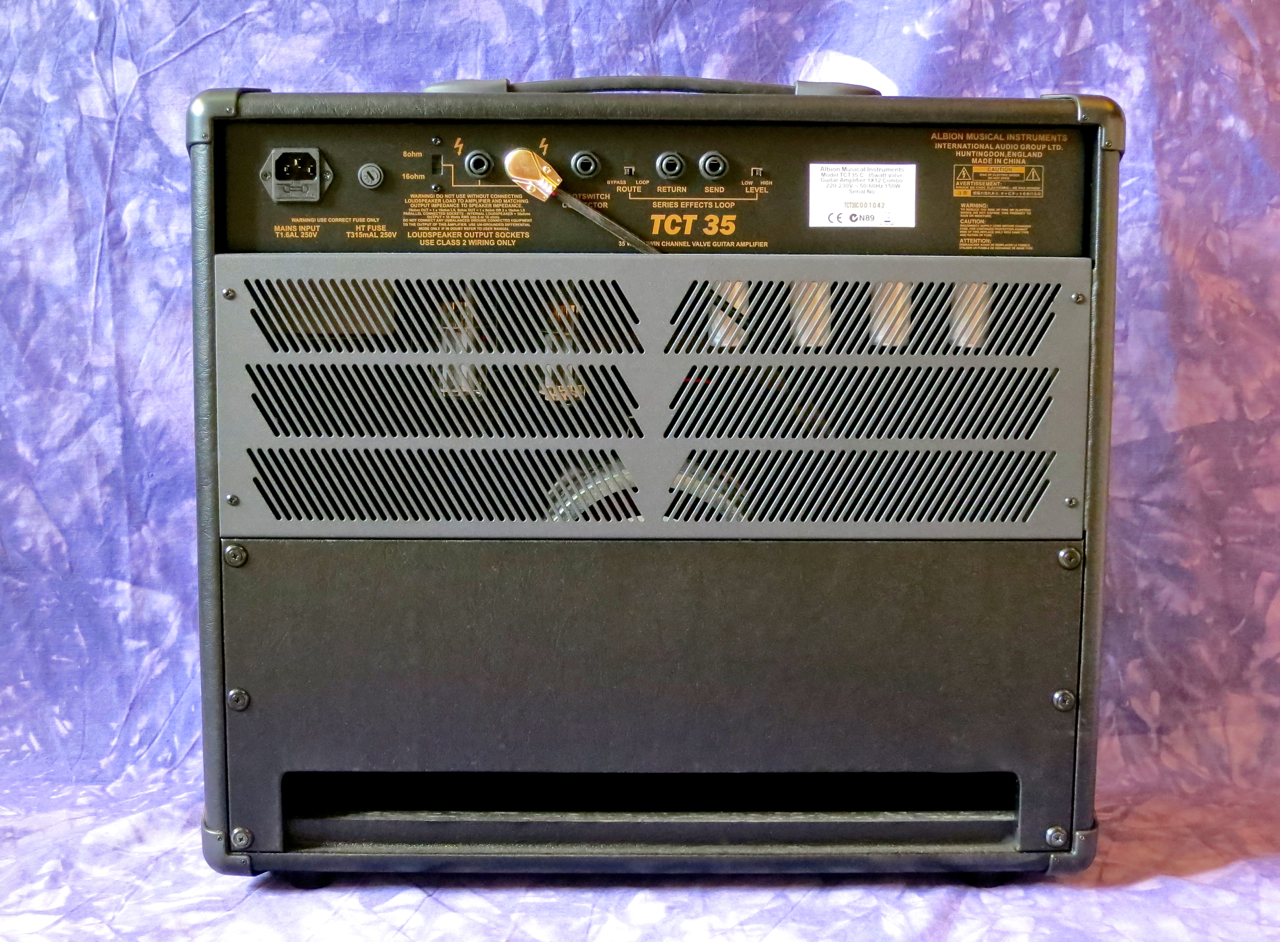
The cabinet features a half-closed back with a sturdy metall grille protecting the valves (or ”tubes”, for our North American friends).

Albion’s TCT35C employs three 12AX7 valves (aka ECC83) in its preamplifier section. A fourth 12AX7 is used as the combo’s phase inverter.

The power amp section churns out approximately 35 Watts of power (RMS), using a pair of 6L6 valves.
All Albion amps use IAG Group’s pro-quality audio transformers, which are well regarded by Hifi-enthusiasts and used in IAG’s Leak and Luxman valve amplifiers.

Albion produces all of their PCBs, metal parts and speakers in their own factory to Steve Grindrod’s exacting specifications.
The TCT35C comes equipped with a 12-inch Albion G1280-VSR-16 speaker, which has power rating of 80 Watts and an impedance of 16 Ohms.

A two-switch footswitch unit comes supplied with the combo. It allows for channel switching, as well as the muting of the on-board digital reverb unit.
The unit is shipped with the output jack on the right hand side, but if you prefer to have the connector on the left, you can switch things around easily. Simply unscrew the six screws holding the footswitch assembly in the chassis, pull the assemby out, turn it around, put the switches back into the chassis and tighten the screws. Brilliantly easy!
****

Even though both of the Albion TCT35C’s channels sport the same controls, the channels have been designed differently:
In Channel A the guitar signal is first routed through the EQ-section, before it reaches the main gain stages. In Channel B the signal first goes from the input jack to the gain section and is only then fed into the EQ-department. Even though both channels will give you sounds from clean all the way to high gain, each channel has its own distinct character and ”feel”.
One special feature of TCT-series amps are their twin gain controls – called Gain and Drive. The first amplification stage is called Gain, while the second one is called Drive, and each adds their own type of gain structure and character to a channel’s tone. By experimenting with different combinations of a channel’s Gain and Drive settings you will get a plethora of different sounds and responses to playing dynamics.

The combo’s Master-section offers some additional features for even more tonal flexibility:
The Edge-control is a presence/brightness control for the power amp, which allows you to tailor the TCT35C’s bite to your own requirements. The F’BK-switch (short for ”feedback”) offers you two different power amp responses – you can either go for more bite and a very tight attack or choose a creamier delivery with much more fat compression.
Steve Grindrod has chosen to use digital reverb on his TCT-amps, because they tend to stand up better to the demands of a high gain amp.
Thanks to its output power switch you can also run the combo at only 33 % of its output power. As were dealing with a genuine valve amp here, this power drop also lowers the clean headroom and adds some tasty power amp compression to the signal.

The TCT35C’s effects loop is deliberately using solid state technology, as Steve Grindrod aims for a clean and transparent signal transfer in this section.
****
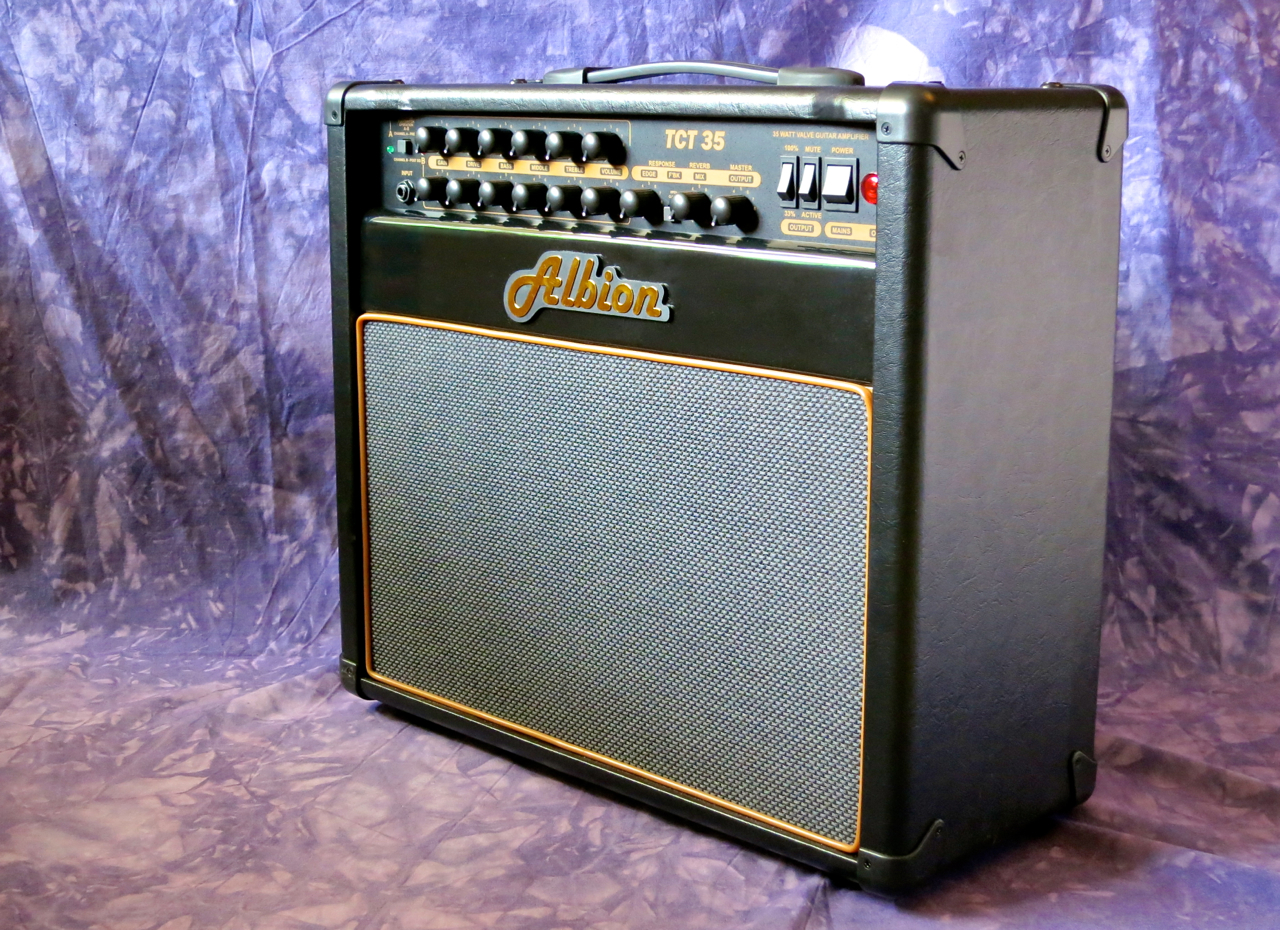
The Albion TCT35C combo is an extremely flexible guitar amp, thanks to its well-designed channel architecture and its extremely efficient channel equalisers.
This isn’t a one-trick pony at all, but rather a guitar sound enthusiast’s dream machine, offering a large palette of different tones.
Despite the fact that both channels will ”do” clean as well as dirty tones, Channel B will offer you more gain than Channel A. ”Fender-style” and ”Marshall-style” are far too narrow to adequately describe the different characters provided by Channels A and B, but there are clear differences apparent in their mid-range sounds and bass responses.
The effective Channel EQs, as well as the Master-section’s Edge- and Feedback-controls add their bits to the Albion’s versatility. While the TCT35C is quite an intuitive amp to use, I’d still recommend you take your time to find out all the features and sounds this combo has to offer.
These eight audio clips only scratch the surface of what the Albion TCT35C’s tonal versatility.
Let’s start with two clean examples using Channel A; first the Stratocaster:
…followed by a Les Paul-style Hamer Studio Custom:
Here are two crunchy clips played through Channel A. First the Strat:
…and then the Hamer:
These are two crunchy clips using Channel B – the Stratocaster first:
…followed by the double-humbucker Hamer:
And as a finale two high gain examples (Channel B) – starting with the Strat:
…and finishing with the Hamer (in Drop-D):
****

Wow, what a fantastic amp! I can’t think of any musical genre the Albion TCT35C couldn’t master.
The TCT35C is an extremely versatile valve amplifier offering loads of great sounds. Despite being quite a compact combo there’s plenty of volume on tap.
Steve Grindrod’s vast knowledge and experience in the field of amp design really shows in the way the Albion is put together, as well as in the quality of the sounds on offer in the TCT35C and in the low amounts of hiss (even in high gain settings).
****
Albion TCT35C
Current RRP in Finland – 865 € (street price approximately 800 €)
Finnish distributor: Profitron
****
Pros:
+ excellent value for money
+ versatile gain section
+ separate powerful three-band EQ-sections
+ sound
+ switchable output power
+ footswitch included