Review: Hagström Viking P + Pat Smear Signature

Hagström Guitars’ new models, which had been announced at Frankfurt Musikmesse 2013, have finally arrived in Finland a few weeks ago!

Kitarablogi had the pleasure of receiving two of these guitars for testing:

Hagström Viking P – body beauty 2

The Viking P is a new version of Hagström’s very popular semi-acoustic, and it comes equipped with two Custom P-50 singlecoil pickups.

Hagström Pat Smear – body beauty 2

The Pat Smear Signature is a solid-body electric tailored to the Foo Fighters-guitarist’s needs.

****
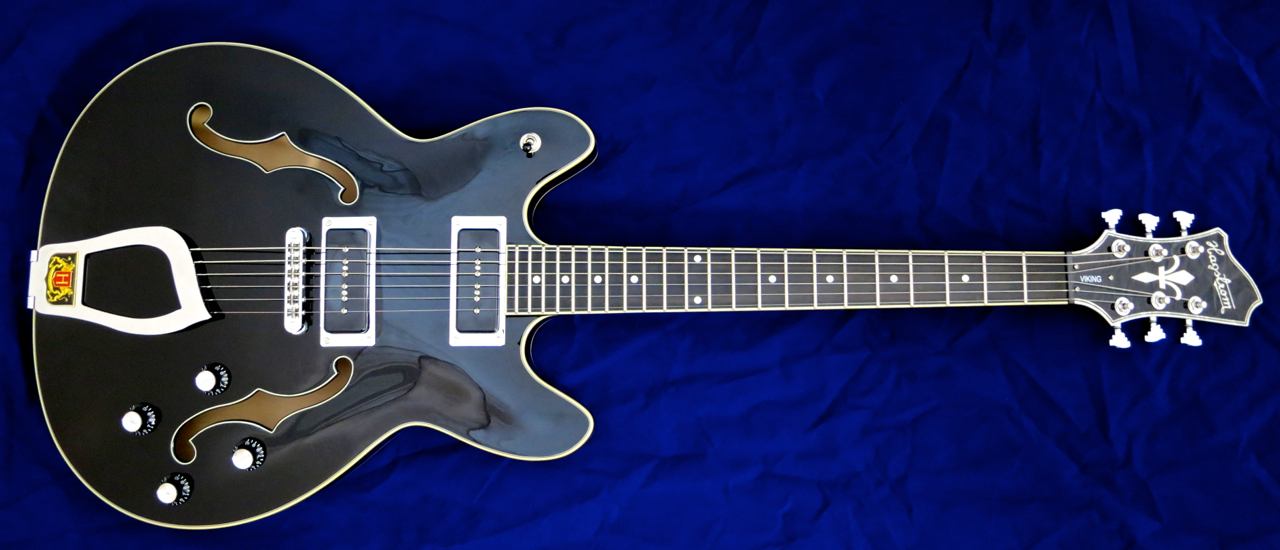
Hagström Vking P – full front

The Hagström Viking is probably the company’s best-known guitar model, not least because of Elvis Presley’s use of a Viking during his legendary ’68 Comeback Special TV show.

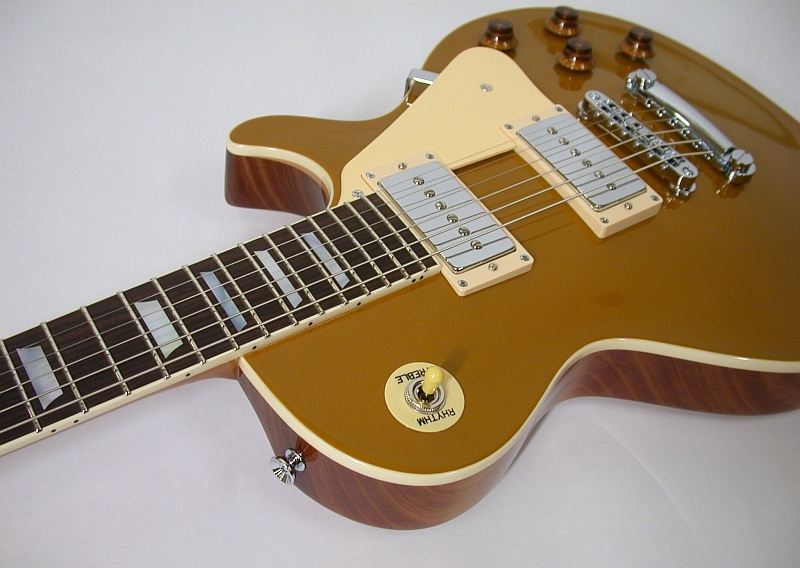
The brand-new Hagström Viking P (street price in Finland around 650 €) adds a pair of P-90-style singlecoils to the mix.

Hagström Vking P – full back

The Viking P’s maple neck is glued into the body, which is made in traditional style from form-pressed plywood maple.

A solid wood centre block – made of what looks like nato or meranti – runs the full length of this instrument.

Hagström Viking P – headstock

”Beautiful”, ”classic” and ”timeless” are fitting adjectives to describe Hagström’s bound headstock.

Graph Tech’s self-lubricating Black Tusq-material has been chosen for the Viking P’s nut.

Hagström Viking P – tuners

The Hagström-branded tuning machines are modern enclosed units that work very well.
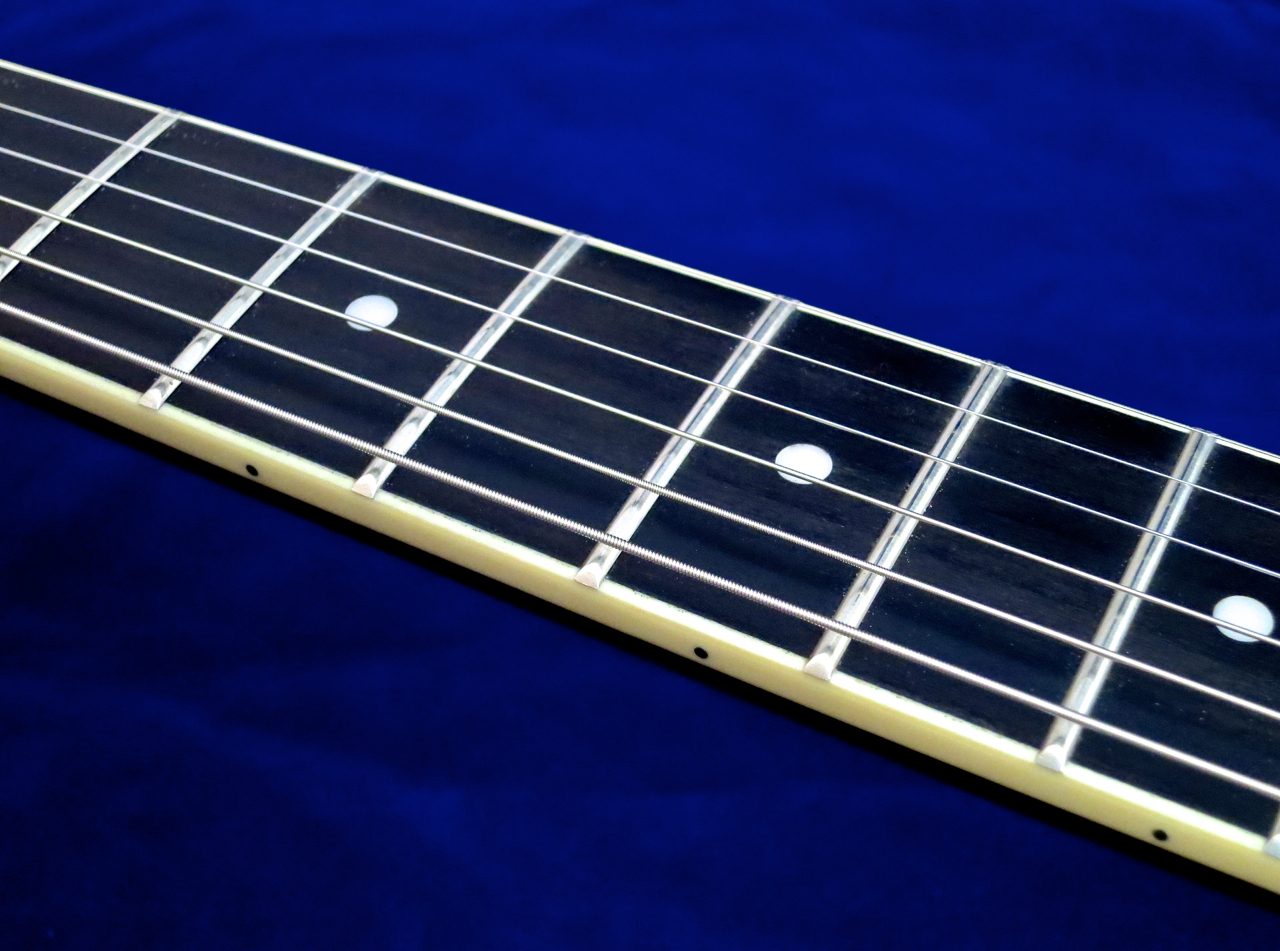
Hagström Viking P – fretboard

The deep black fingerboard of the Viking P has been crafted from Hagström’s proprietary Resinator-material, which is a composite of birch fibres and resin. Resinator aims to be a man-made alternative to ebony, offering similar properties in terms of stability, looks and sound.

The ’board sports 22 medium-sized frets, which have been installed cleanly and finished well.

Hagström Viking P – pickups

Hagström have chosen a stylish and practical way of installing their own Custom P-50 pickups on this semi:

Instead of opting for traditional, so-called dog ear covers, which are screwed to the guitar’s top, the Viking P comes with two black soap bar units. Originally developed for solid-body guitars, soap bar pickups offer the advantage of height adjustment via two Phillips-head screws placed between the adjustable pole pieces. With traditional dog ears the only means of adjusting pickup balance is by using the pole pieces – and often this leaves the bridge unit sounding a tad weaker than the neck pickup.

The three-way toggle switch has been placed on the Viking’s top horn.
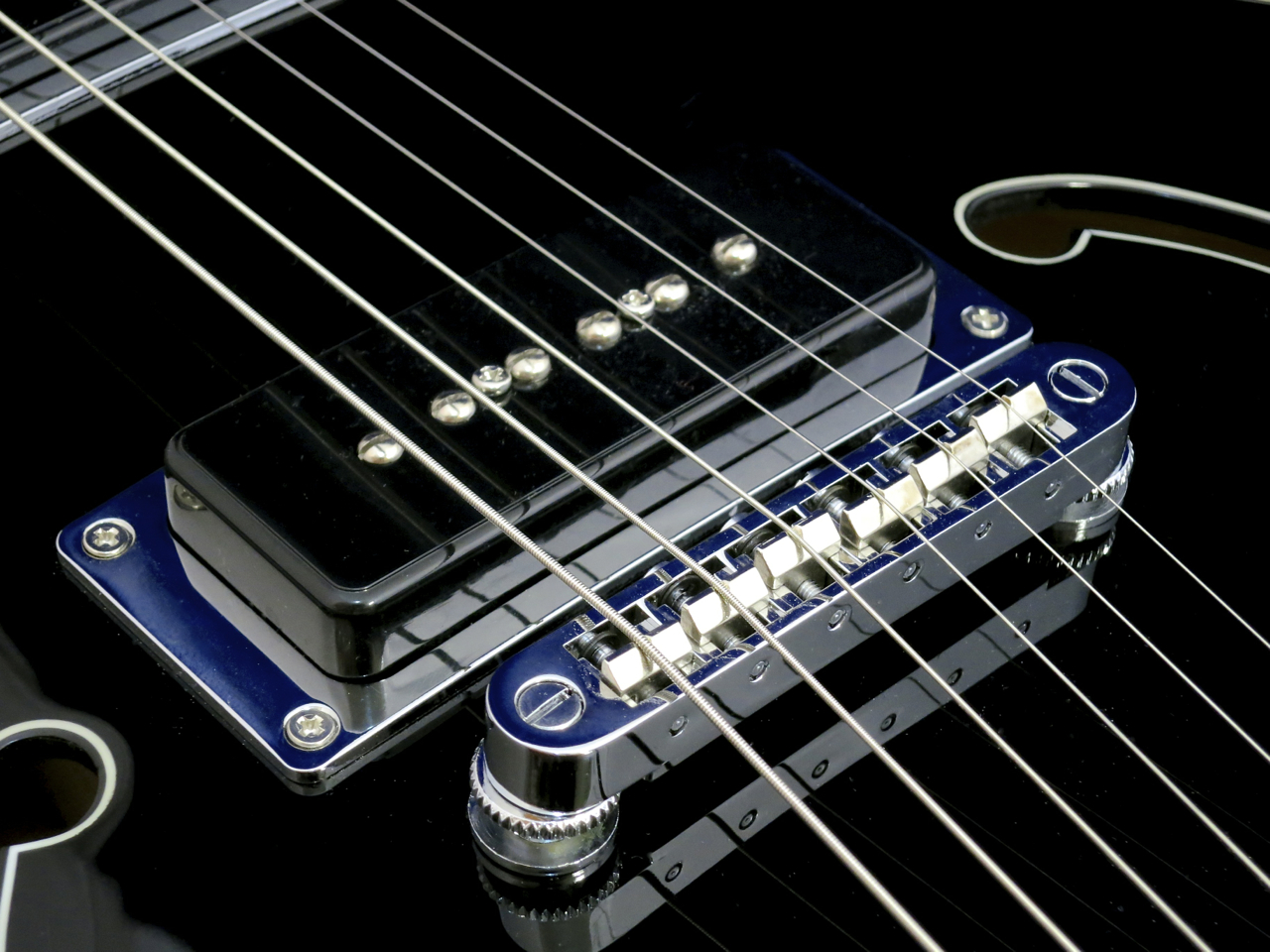
Hagström Viking P – bridge

The solid centre block cuts down feedback howl very effectively, and it also allows for the use of sturdy hardware.

Hagström Viking P – controls

The control setup is traditional, offering separate volume and tone pots for each pickup.

****

Hagström Pat Smear – full front

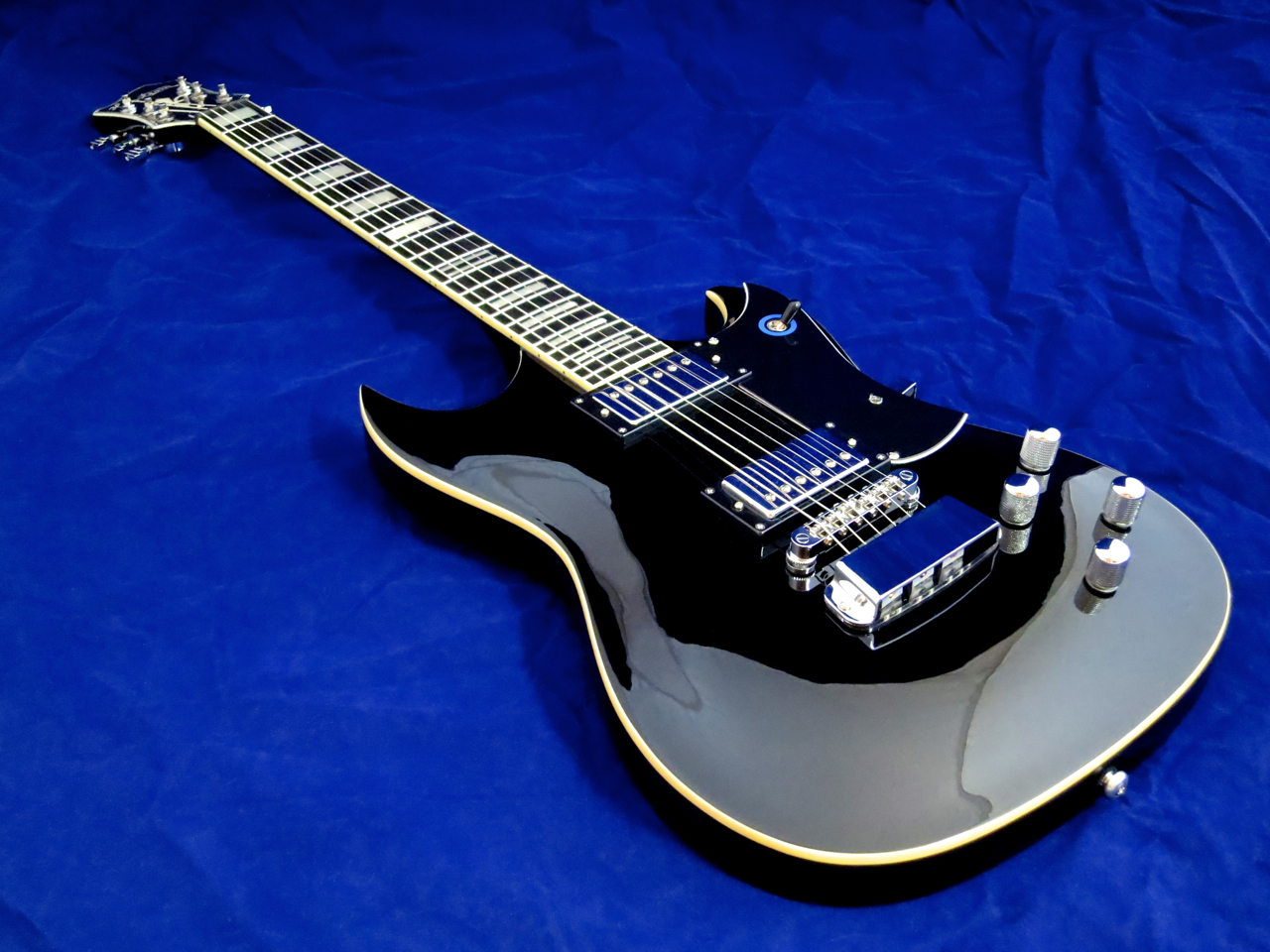
The Hagström Pat Smear Signature (street price in Finland around 670 €) takes the company’s F-200-model as its starting point.

Pat liked the general shape of the F-200, but requested a thicker mahogany body with a bound maple top. In terms of thickness, we’re talking similar dimensions as on a PRS Guitars Custom 22, for example.

Hagström Pat Smear – full back

The Smear Signature features a set mahogany neck.

Hagström Pat Smear – headstock

Any way you look at it – the Hagström headstock sure looks classy.

Hagström Pat Smear – tuners

Pat Smear’s signature can be found on the back of the headstock.

Hagström Pat Smear – fretboard

It’s a Resinator fingerboard with 22 medium-sized frets on the Smear Signature also, but the position markers are large pearloid blocks here.

Hagström Pat Smear – pickups

Mr Smear selected a pair of vintage-voiced Hagström Custom 58 -humbuckers for his signature model.

Hagström Pat Smear – toggle switch

A special feature of this guitar is the toggle switch installation through a hole in the pickguard.
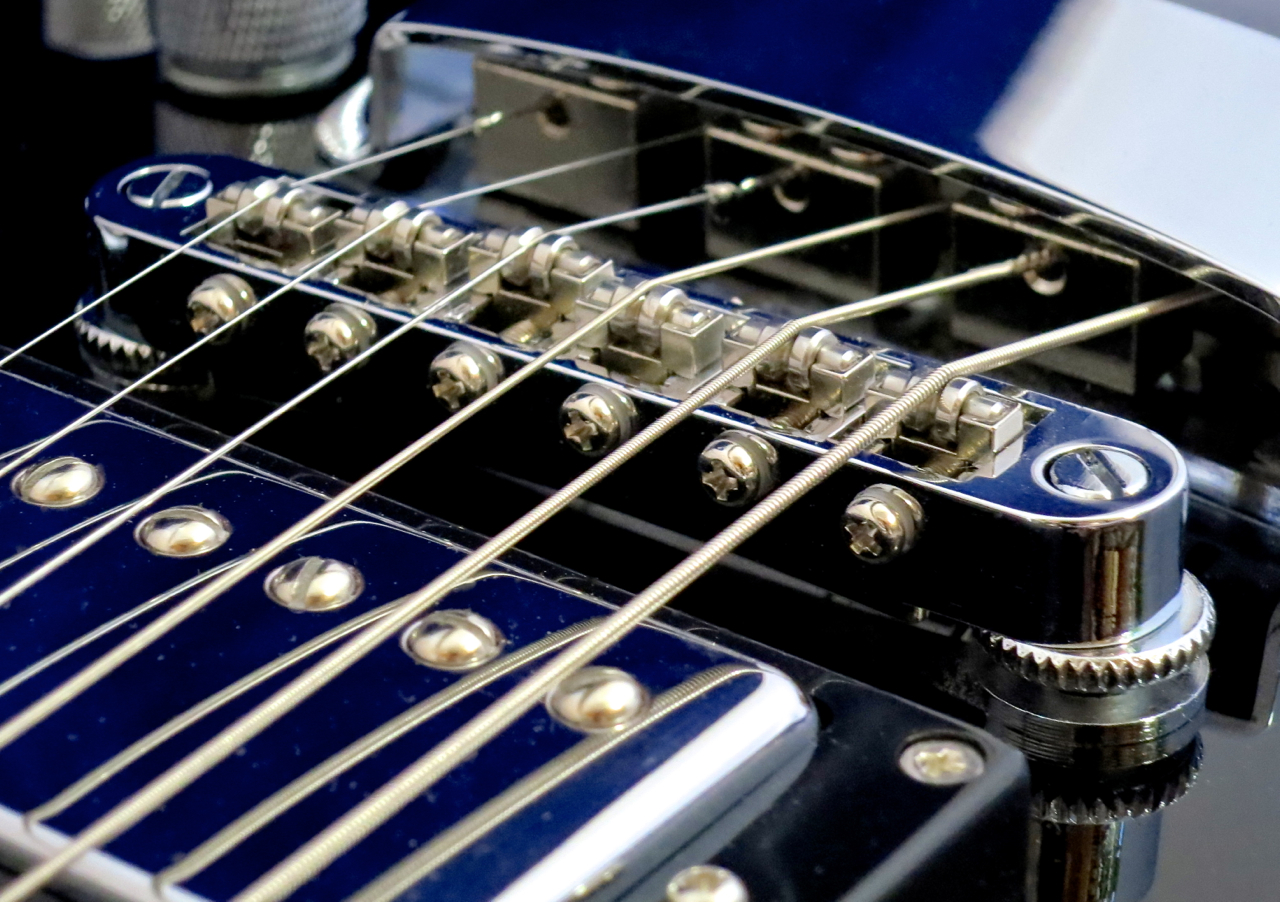
Hagström Pat Smear – roller bridge

Even though the Pat Smear Signature isn’t equipped with a vibrato, the guitar comes with a roller bridge to ensure maximum tuning stability and string life.

Hagström Pat Smear – tailpiece

Hagström’s idiosyncratic tailpiece is made up of six brass string retainers mounted onto a plexiglass plate.

Hagström Pat Smear – body beauty 1

There are four controls on the Smear-model, instead of the F-200’s single pair of master volume and master tone.

Hagström Pat Smear – control cavity

Both review guitars come with high-quality switches and pots.

****
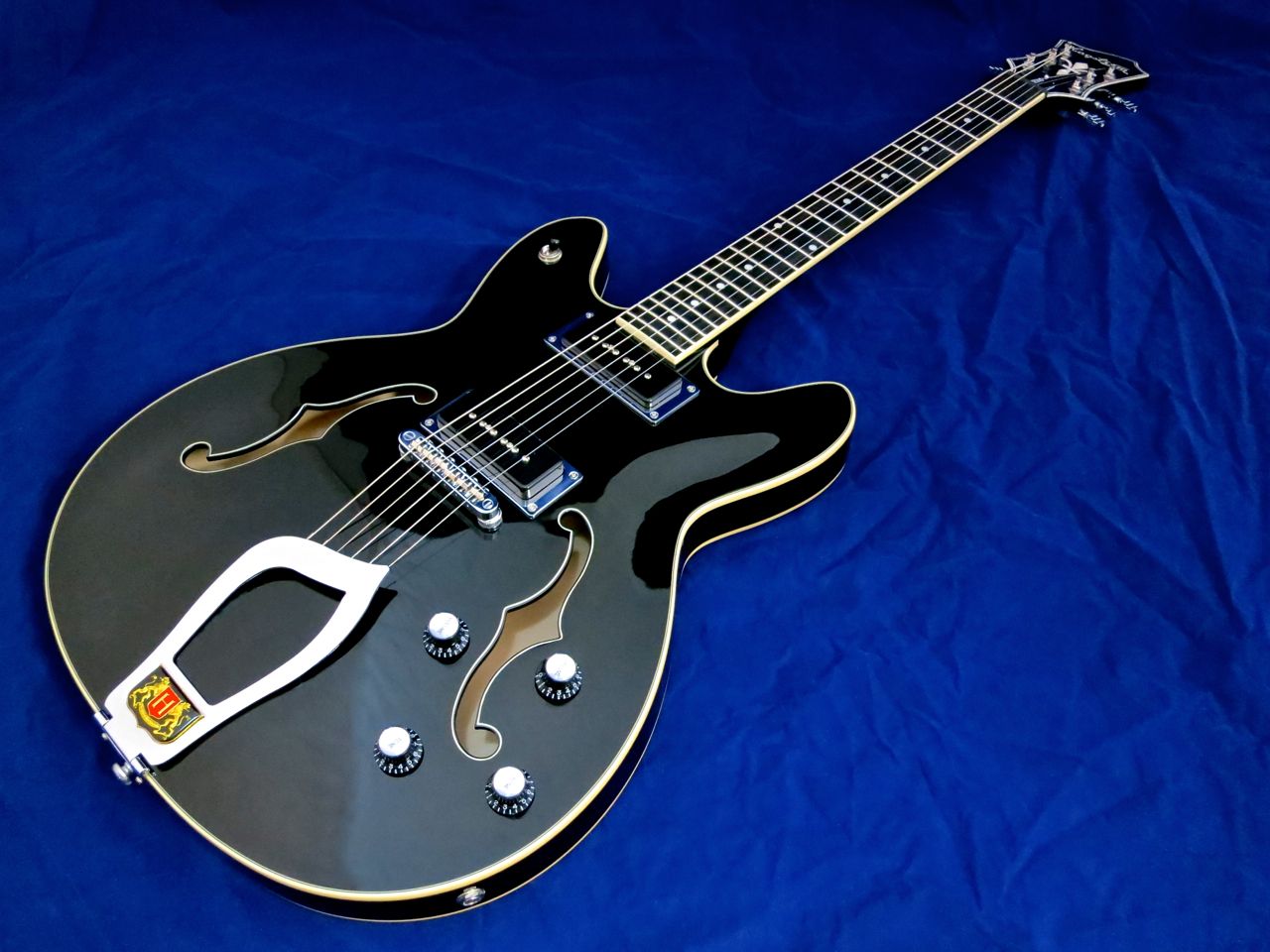
Hagström Viking P – beauty shot 1

Both review guitars suffered from a very slight bout of fretboard shrinkage due to dry weather conditions. It seems that Hagström’s Resinator composite doesn’t only look and feel like ebony, but also reacts to changes in air humidity in a similar fashion. Fretboard shrinkage isn’t a real ”fault” per se, but rather something that happens to a large proportion of new guitars. Luckily, your friendly guitar repair shop can take care of the sharpish fret ends easily and inexpensively.

The Hagström Viking P is of medium weight, and balances well in the lap or on a strap.

The neck profile is a flattish D, which feels great.

Straight out of the shipping-box the setup was spot-on. The Hagström Viking P comes factory-equipped with a 010-gauge string set. Thanks to the flat (15″) fingerboard radius and the low action (low E: 1.9 mm/high e: 1.6 mm) this Viking is a really comfortable player.

Due to its semi-acoustic build, the Viking P’s unamplified voice is quieter and closer to a solid-body than the acoustic performance of all-hollow thinlines, such as the Gibson ES-330 or the Epiphone Casino. Acoustically, the Viking P sounds clear and fresh.

Hagström’s fantastic Custom P-50 pickups add a nice shot of warmth and roundness to the mix, without clouding the Viking’s inherent clarity and dynamics.

There are great clean sounds on tap:

But the fun doesn’t end there, as the Viking P also delivers when it comes to the crunchy side of things, with its fat midrange and dynamic punch:

Due to the physical limitations inherent in single-coil pickups, high-gain sounds are always a somewhat tricky endeavour in P-90-equipped guitars. The sound is really great, but you have to decide for yourselves how much how much hum and buzz you can stomach:
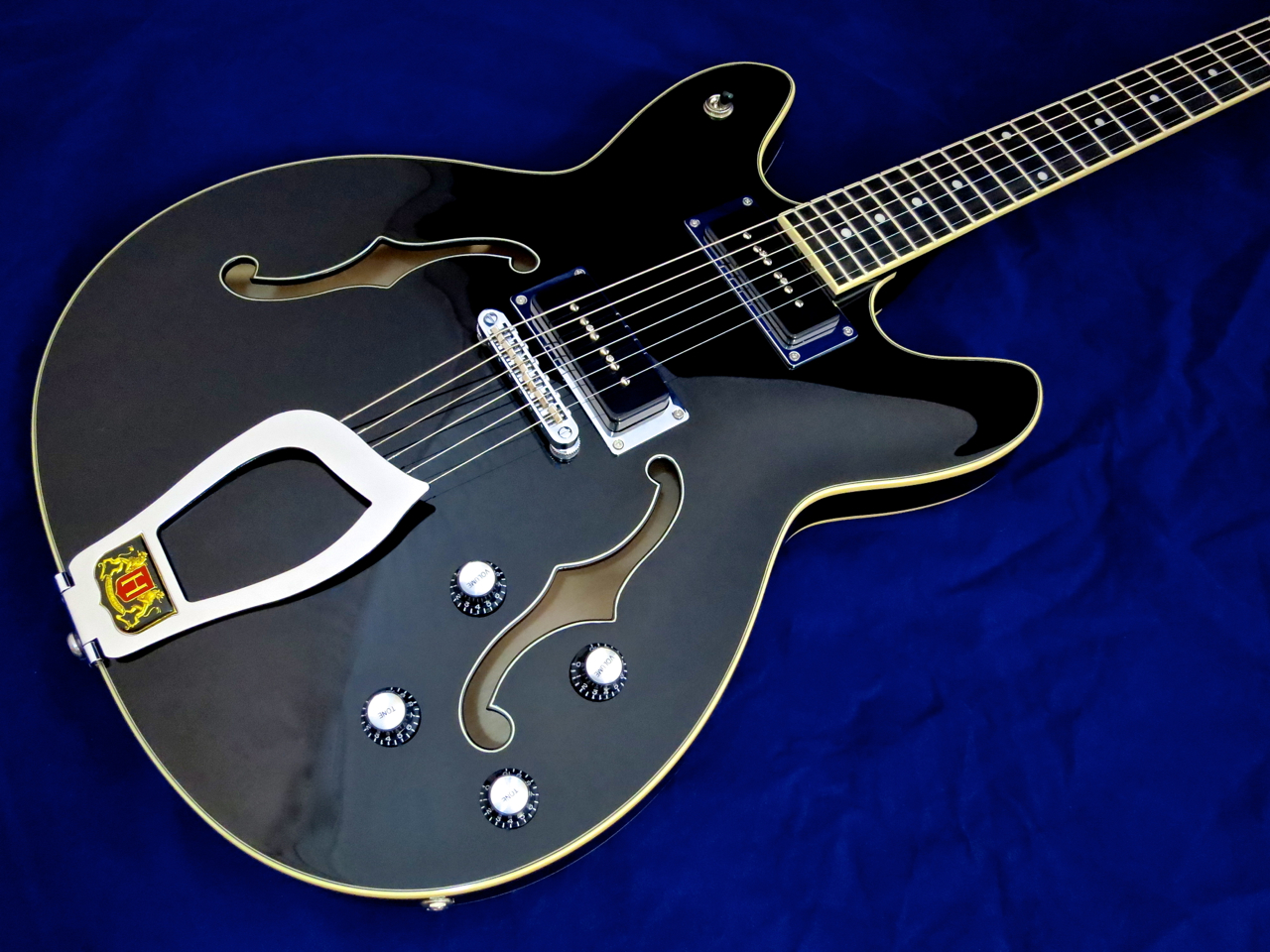
Hagström Viking P – body beauty 1

****

Hagström Pat Smear – beauty shot 1

Hagström’s Pat Smear Signature feels very comfortable, thanks to its rounded body shape and moderate weight.

This guitar’s neck is a slightly more rounded affair, when compared to the neck profile on Viking P, making it feel even better, in my opinion.

Again, the setup was great straight out of the box – a low action, such as the one on the Smear Signature (low E: 1.6 mm/high e: 1.4 mm), only works as well as it does here when the frets are level. This guitar plays like a dream.

Acoustically, this Hagström speaks with a strong and clear voice. The Smear-model features a healthy attack coupled with long and even sustain.

I really like Hagström’s vintage-voiced Custom 58-humbuckers, because their moderate output level leaves enough room for the guitar’s acoustic clarity and dynamics to shine through:

The crunchy tones of the Pat Smear Signature manage to combine clarity and Rock-muscle in a very appealing fashion:

Hagström Pat Smear – body beauty 1

****

Hagström Viking P – beauty shot 2

These new Hagström-models are very welcome additions to the company’s range of models.

Of these two, the Viking P leans somewhat more in the vintage direction tonally, dishing out a delicious and rootsy P-90-fuelled alternative to Hagström’s regular Viking. The Pat Smear Signature is a signature model that can work for many friends of double-humbucker solid-bodies, even if you’re not familiar with the man’s oeuvre.

In any case, both Hagström-models are quality instruments at prices even the amateur can afford.
Hagström Pat Smear – beauty shot 2

****

Hagström Viking P + Pat Smear Signature

Viking P – street price in Finland approx. 650 €

Pat Smear Signature – street price in Finland approx. 670 €

Finnish distributor: EM Nordic

A big thank you to DLX Music Helsinki for supplying the review instruments!

****

Pros (both models):

+ workmanship

+ playability

+ Hagström-pickups

+ sound

+ value-for-money

Cons (only Viking P):

– single-coil hum in high-gain

Hagström Viking P – crest

Meet the makers: Amfisound Guitars

Amfisound Guitars is run by two master luthiers in the outskirts of the northern Finnish city of Oulu.

Sampo Leppävuori (say ’SUM-poe’) and Tomi Korkalainen (’Tommy’) met while studying at the Ikaalinen College of Crafts and Design. They became friends and decided to set up shop together near Sampo’s hometown.

Amfisound is able to offer a very wide selection of different guitar and bass models, because the company combines both Sampo’s and Tomi’s strengths.

AMfisound – Sampo Leppävuori

Sampo Leppävuori loves classic bass and guitar designs, as you can see in Amfisound Guitars’ tasty Classic Line -models, such as the Halti-, Kaira-, Halla- and Kobalt-guitars.

These instruments are far from being straight copies of vintage guitars, though, as all Amfisound models feature a long list of updates and improvements (mostly in the hardware, electronics and pickup departments), as well as special Amfisound-features, such as the company’s special, heel-less set-neck joint.

Amfisound – Tomi Korkalainen

Tomi Korkalainen’s creative activities are mostly zoned in on the Metal and Hard Rock genres, where he strives to come up with the ultimate Metal-guitars in terms of playablity, tone and visual impact.

Amfisound’s Extreme Line of Metal axes – comprising such guitars, as the Routa, Atrain, Railo and Roster models – bears clear testament to Tomi’s creative genius.

****

Kitarablogi: What’s the philosophy behind Amfisound Guitars?

Tomi: We wanted to set in motion a fresh and youthful custom guitar culture in Finland. Being based up here in the north strengthens our North-European image and appeal, which we try to underline further by making our guitars very visual. We came up with our Finnish model names around 2003/2004. The model names are quite easy to get to grips with even for foreigners, and it’s cool to hear them spoken in different accents at trade shows.

KB: Your visual approach sets you apart from many other makers.

Sampo: We had to come up ourselves with practically all of our special finishes, treatments and woodworking techniques. And you still keep on learning something new while working on new designs. When it comes to making guitars for the Hard ’n’ Heavy -crowd, there was basically no precedent over here in Finland. We simply had to dig in and come up with all the solutions by ourselves. All this hard graft has reaped rewards and Amfisound instruments are held in high regard at home as well as abroad. It is also great to be involved in the evolution of the art and culture of guitar-making in Finland. Since we started our company, people’s attitudes towards Finnish Metal guitars have changed dramatically for the better, which is a good indicator for the kind of mind-boggling progress guitar-making in this country has seen. 

KB: How do you approach the building process?

Tomi: At the moment most of our instruments are ordered from abroad. Each order is treated individually, and each guitar is built by hand from start to finish. We don’t build in production runs, and we never use prefabricated bodies or necks, which is actually a great advantage for our customers. Our instruments are played by a lot of great artists from all sorts of different musical genres, in Finland and abroad. Our branding has taken a large leap in my opinion, when we introduced our current, round company logo. For us it means that we can make Amfisound Guitars a real Finnish guitar brand, instead of us being merely some small custom maker from northern Finland.

****

Amfisound Guitars’ range of models offers a very broad scope for customisation, because Sampo and Tomi want to make sure that each and every customer gets exactly the guitar or bass he or she wants.

Amfisound’s unbelievable custom finishes are fast becoming the stuff of guitar legend. These guys are real wizards when it comes to using the spray gun and the airbrush! Regardless of whether you want an instrument that looks like and ancient piece of wood, complete with runic writings, or rather a real shocker in neon green with leopard spots, the dynamic duo of Amfisound will do it with style.

****

Besides making their own models Amfisound Guitars also take on repair and customising work.

****

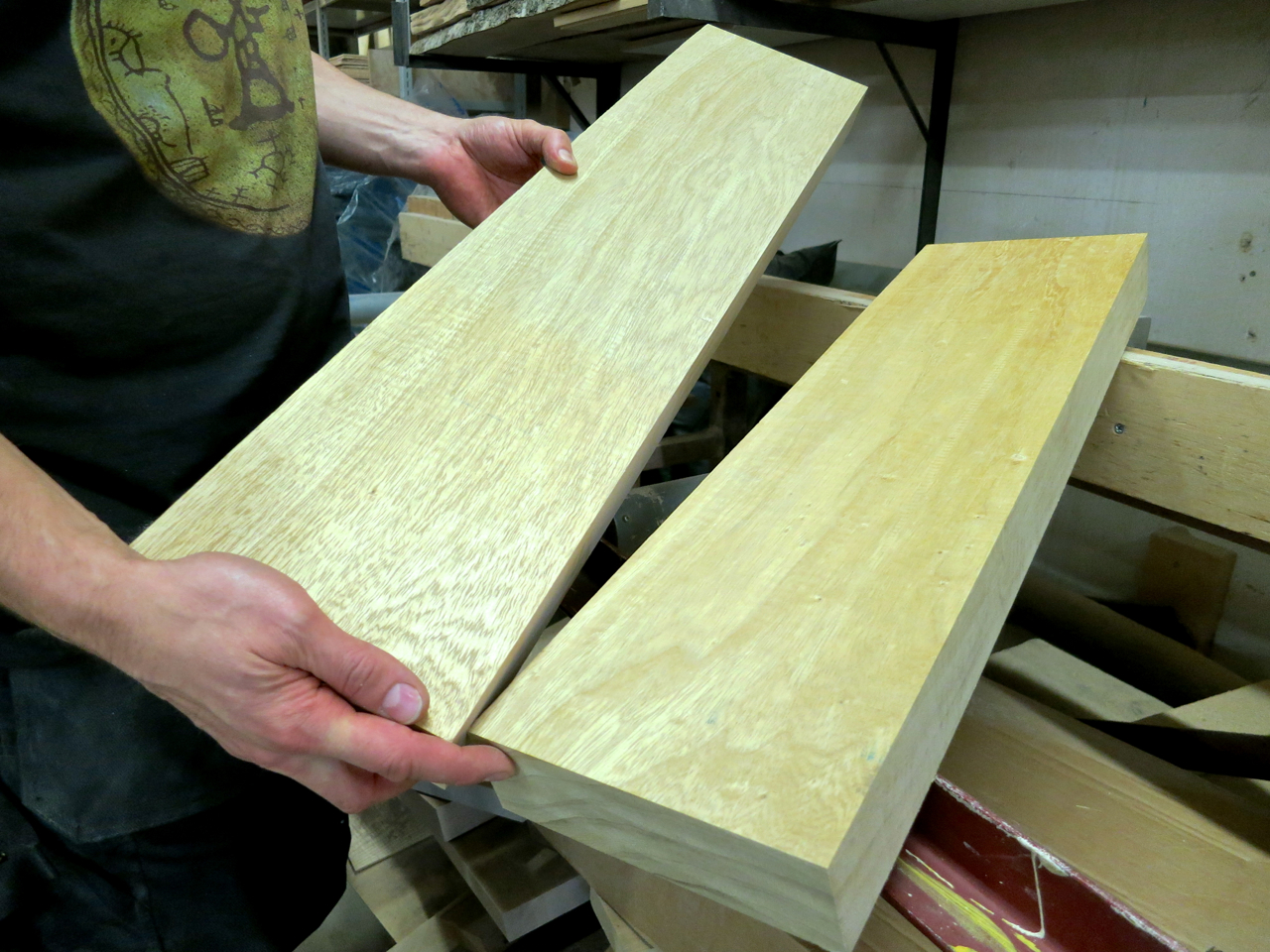
Amfisound Guitars – raw wood

Every Amfisound instrument once started out as a heap of wooden planks.

Amfisound Guitars – arctic birch

Amfisound very often use native Finnish wood species, like figured arctic birch and black alder, in their body designs, alongside more exotic timber, such as African mahogany (khaya ivorensis).

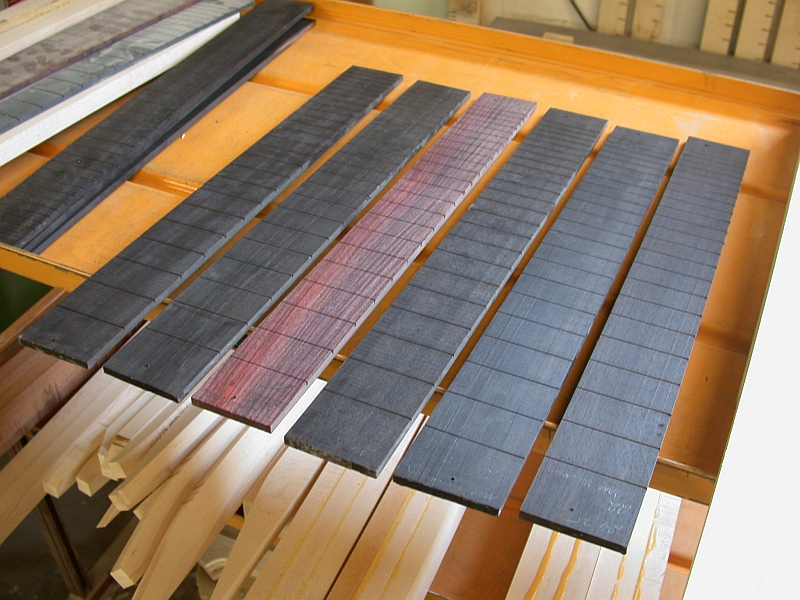
Amfisound Guitars – ebony blanks

Here’s a close-up of a stack of ebony fingerboard blanks. Naturally, Amfisound has all the necessary paperwork to prove it comes from legal sources.

Amfisound Guitars – korina blanks

If you’d rather have something more exotic for your guitar’s body, there are such alternatives as korina, which is also known as (black) limba.

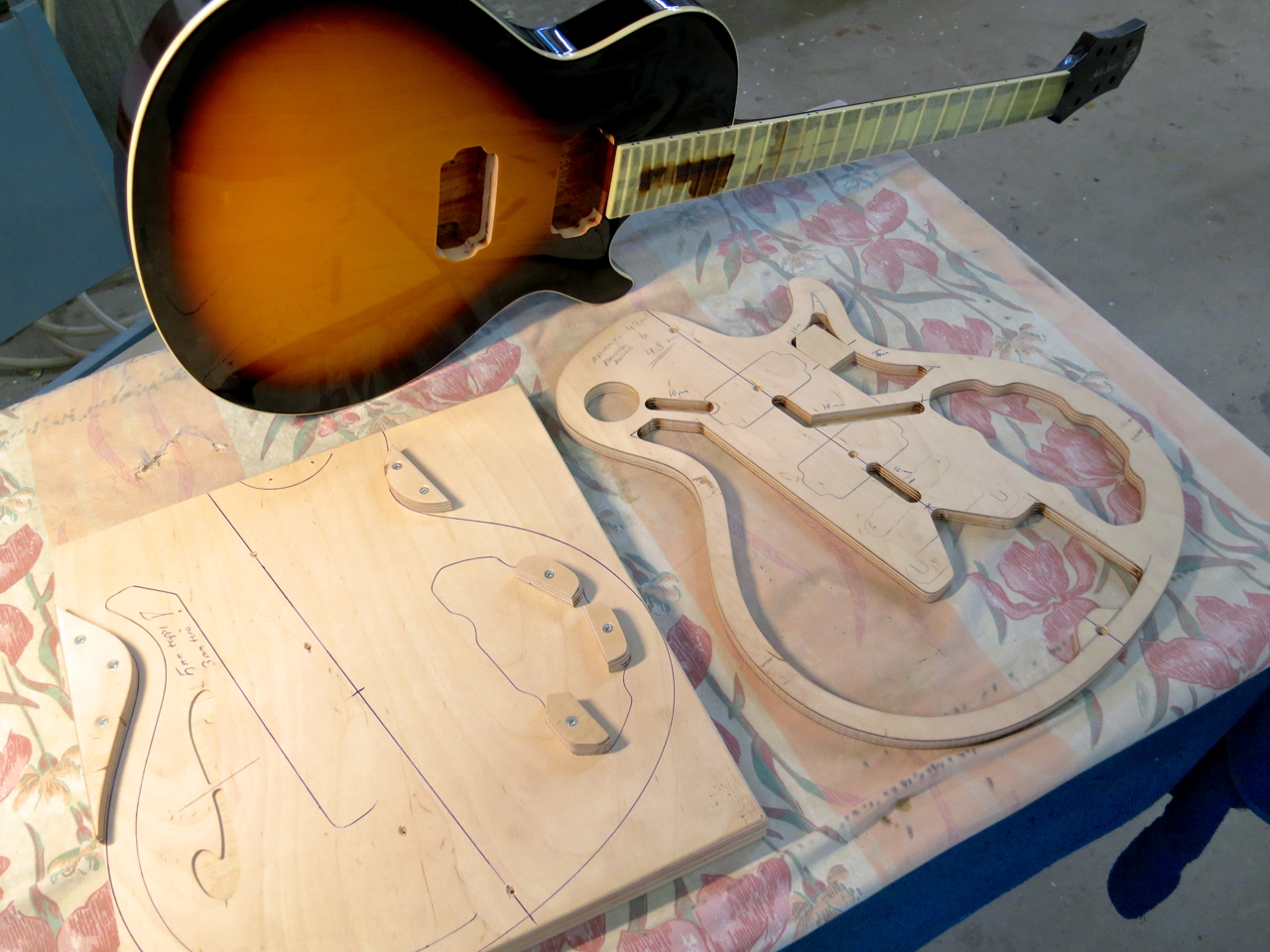
Amfisound Guitars – jigs + templates

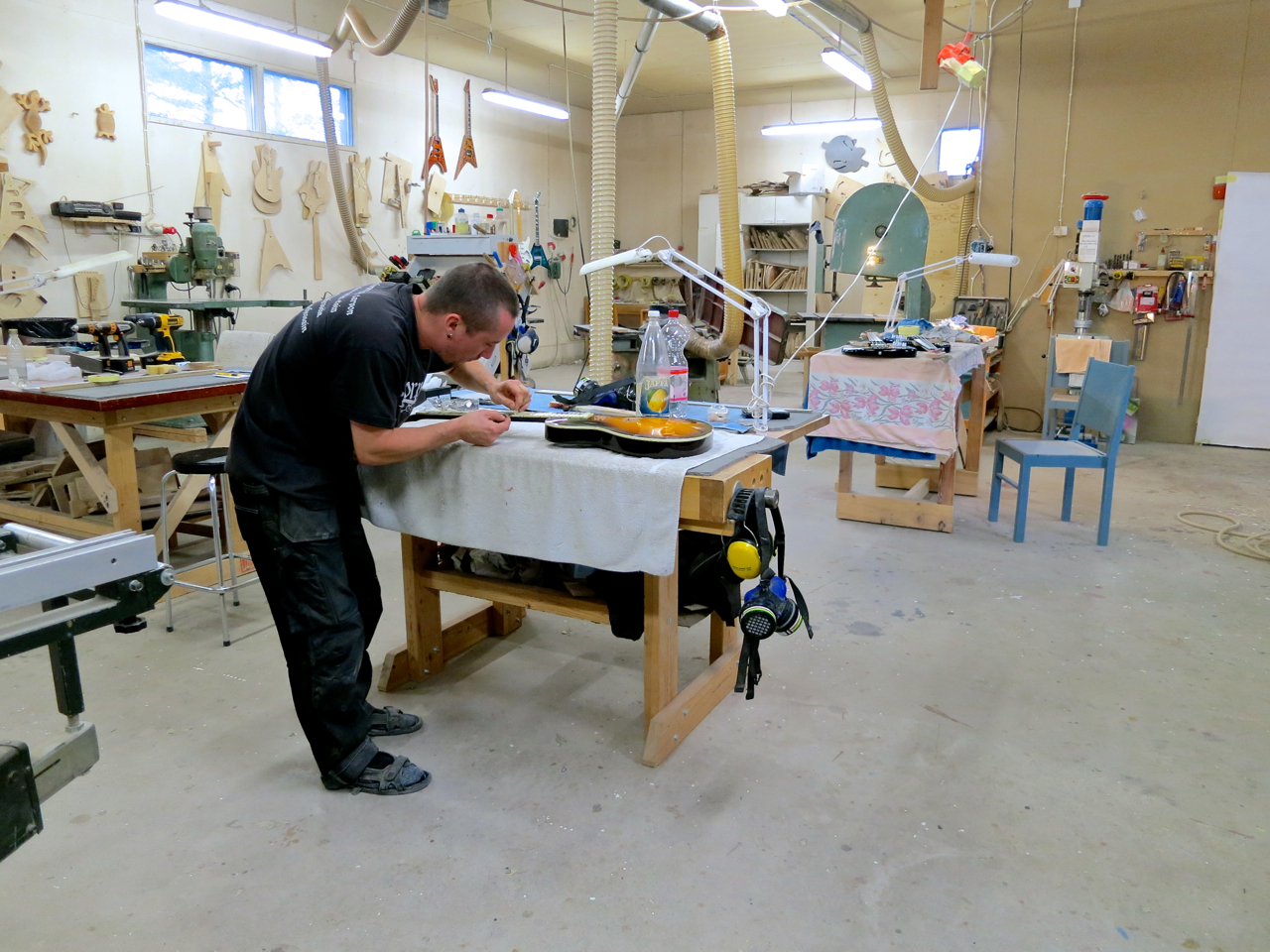
A lot of work has gone into Sampo’s and Tomi’s own routing templates, jigs and fixtures. Most of the building process at Amfisound Guitars is old-school instrument-making.

Amfisound Guitars – jigs + fixture semi-solid Halti

A semi-solid version of the Amfisound Halti is in the works. The routing template gives you a good view on all the cavities that will be covered by the carved top.

gluing neck blank

On through-neck designs the neck blank is glued together from three strips of maple.

fretboard blanks

Here we have some rosewood and ebony fingerboards with the fret slots already sawn.

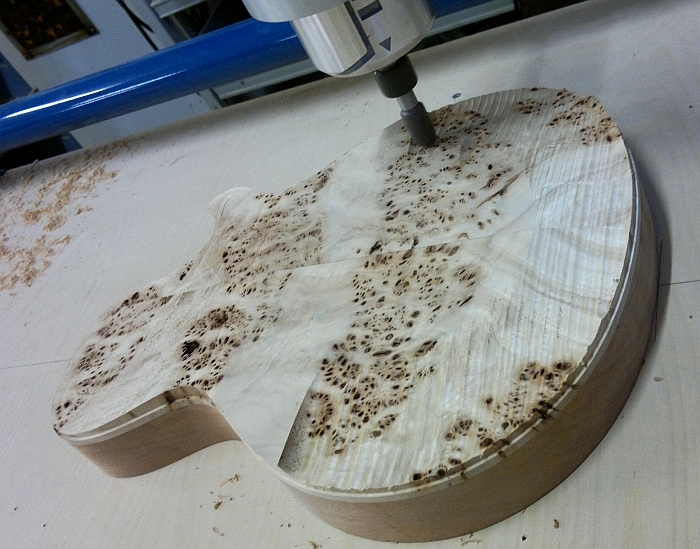
copy router

For some more demanding operations a copy carver is used to ensure consistency.

In this picture a Halti-model receives its deep neck joint cutaway…

rough shaping of carved top

…while here the copy carver is used to rough out the dished shape of the top.

marking pu cavity

But often only handwork will do for an Amfisound guitar:

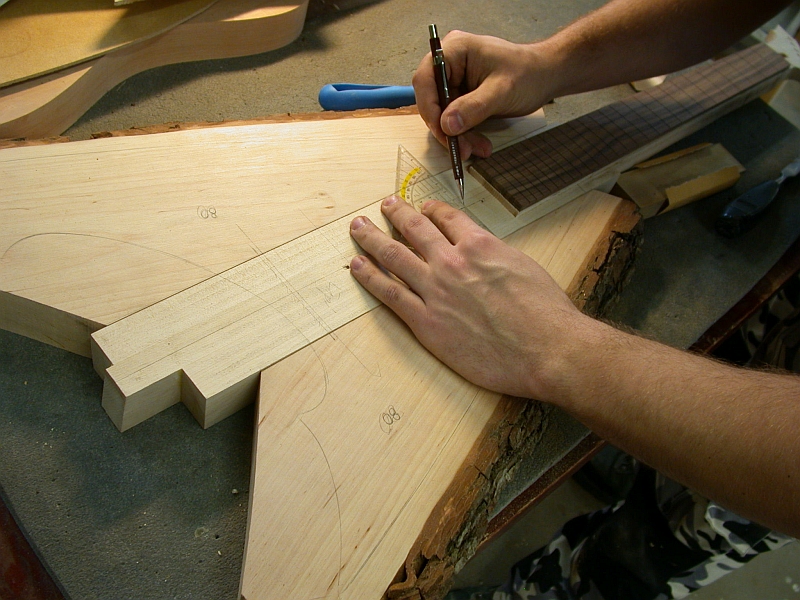
The outlines of an Atrain-guitar, as well as the positions of the bridge and the pickups, are drawn onto the wood with a pencil.

thru-neck neck joint

A wood rasp is a good tool to start shaping a smooth neck heel, if you know what you do.

pickup routing bass

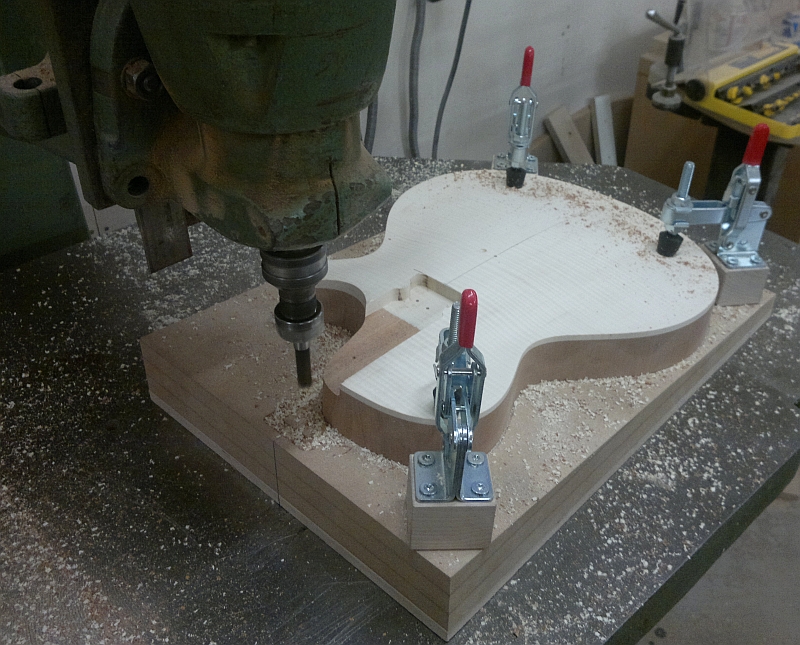
A router table is used for a lot of things in guitar-building:

Here a pickup cavity is routed into a bass body…

neck cavity routing

…while this picture shows a neck slot being cut…

pickup routing

…and this picture shows a pickup cavity and the necessary recesses for a vibrato being routed out.

Amfisound Guitars – Tomi drum sanding

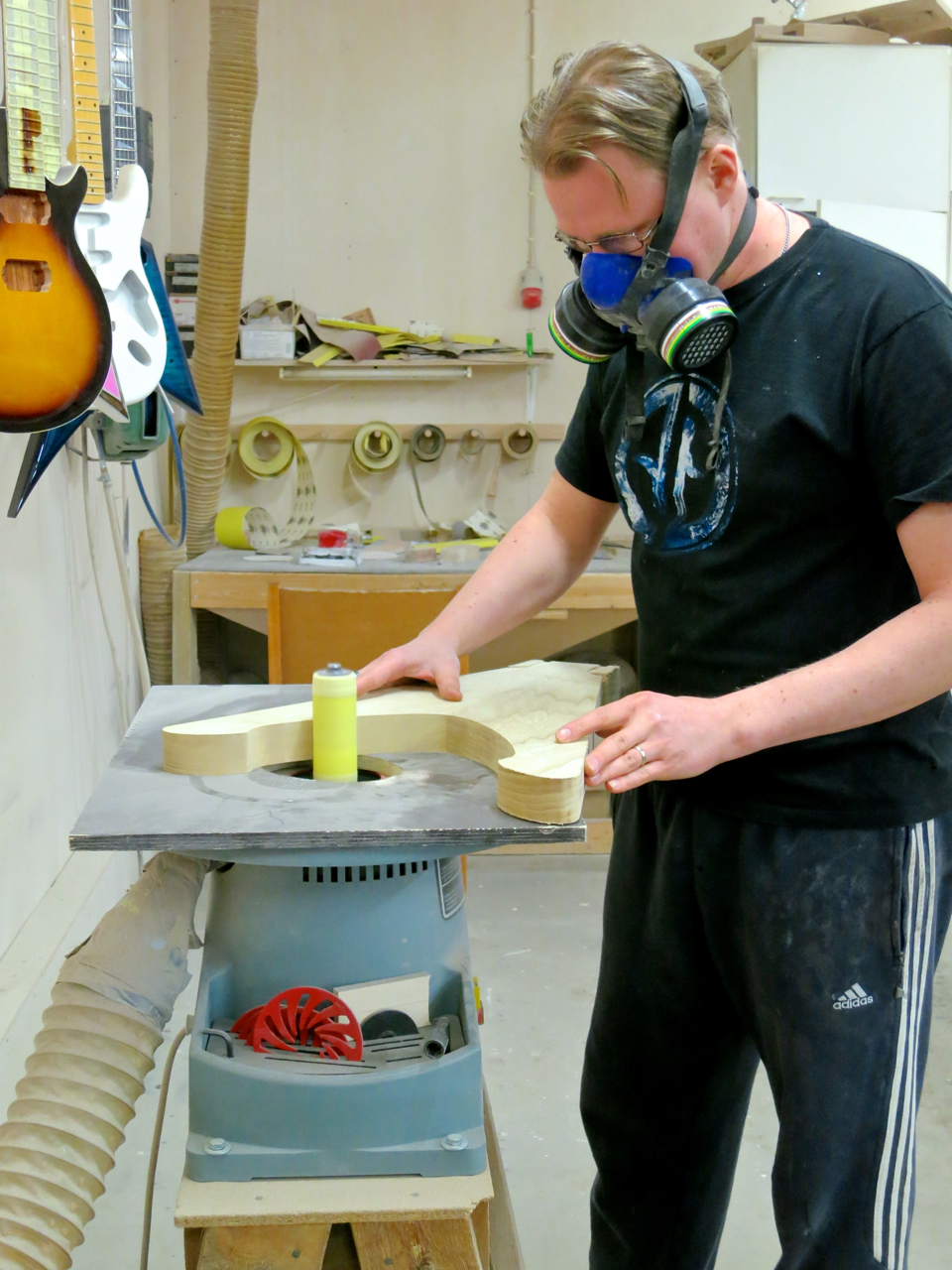
Tomi makes sure the outlines of this Railo-body are crisp and clean.

sanding

body contouring

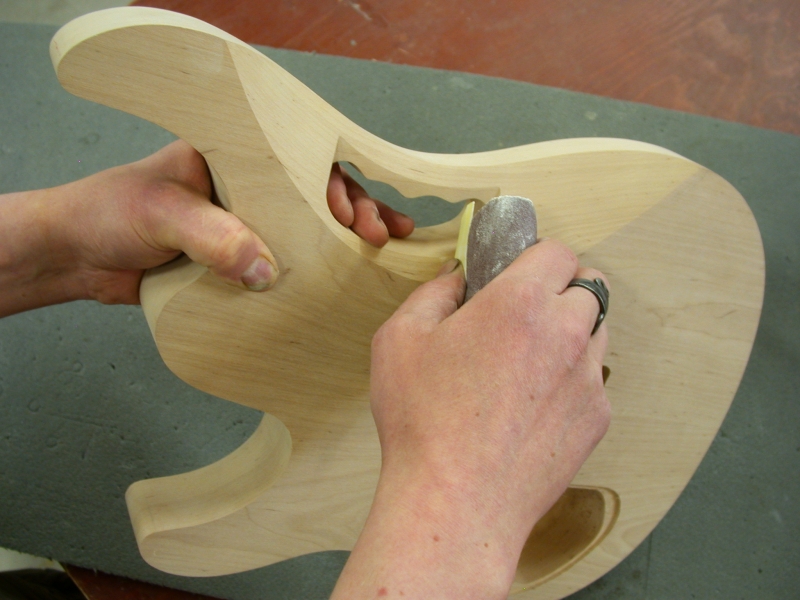
Many spots need hand-sanding, though.

fret crowning

After levelling a special file is used to put the rounded playing surface back into the frets.

airbrush

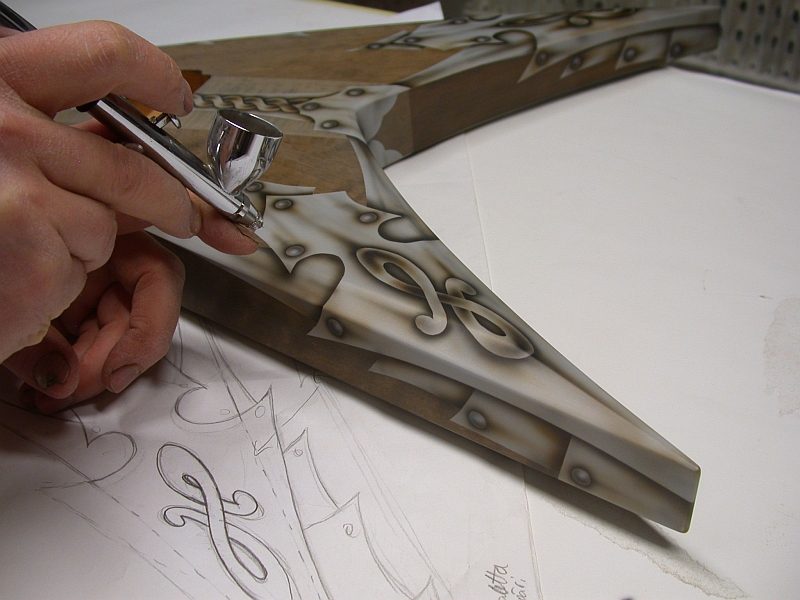
Stunning visuals need a good amount of planning and a very steady hand.

airbrush 2

Amfisound – Finnish Flag finish

Amfisound – custom finish 2

When it comes to graphic finishes, at Amfisound only the sky’s the limit.

Amfisound Guitars – Sampo scrapes binding

Sampo scrapes the fingerboard binding after the finish has dried.

binding scraping

Same procedure, different guitar.

bridge and string retainer drilling

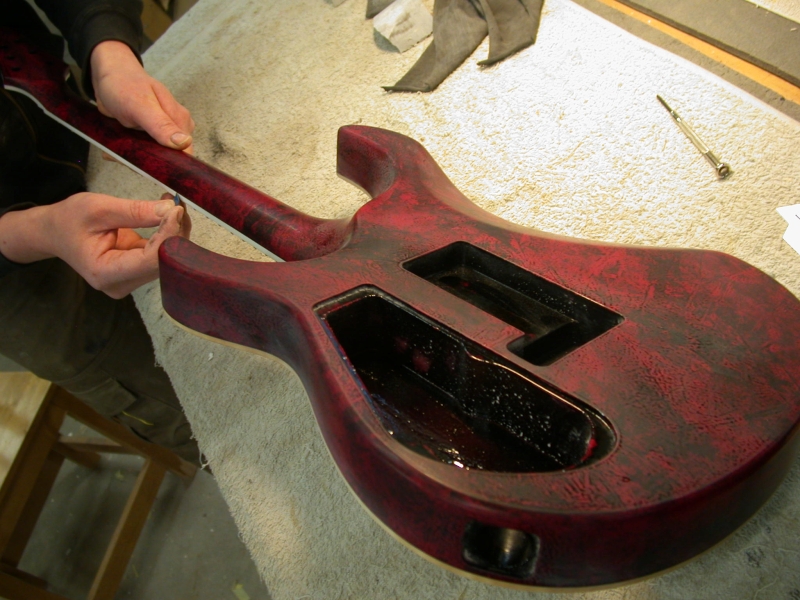
The holes for the switches, pots and the hardware are drilled quite late in the process.

assembly 2

assembly

A Sustainer-equipped guitar in final assembly.

making of booklet

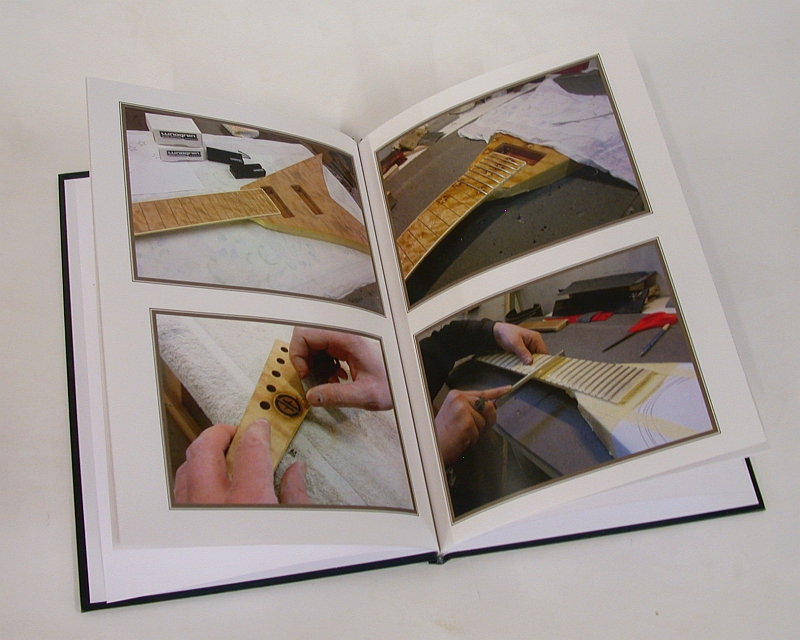
Amfisound offer their customers the option to order a Building Process -book along with their guitar or bass, detailing its genesis from raw wood into a fine instrument.

****

Amfisound’s Sampo Leppävuori and Tomi Korkalainen are both members of The Finnish Guild Of Luthiers.

****

Here are a few examples of finished instruments (photos: Amfisound).

Amfisound Halla:

Halla Filtertron

Halla

****

Amfisound Halti:

Halti Burltop

Halti neck joint

Halti Goldtop

Halti graphic finish

Halti Arcticia

Halti Arcticia

****

Amfisound Kobalt:

Kobalt P90

****

Amfisound Kaira:

Kaira 8-string

Kaira HSH graphic finish

****

Kelo-finish:

Kaira Kelo

Railo aged

****

Amfisound Routa Karelia:

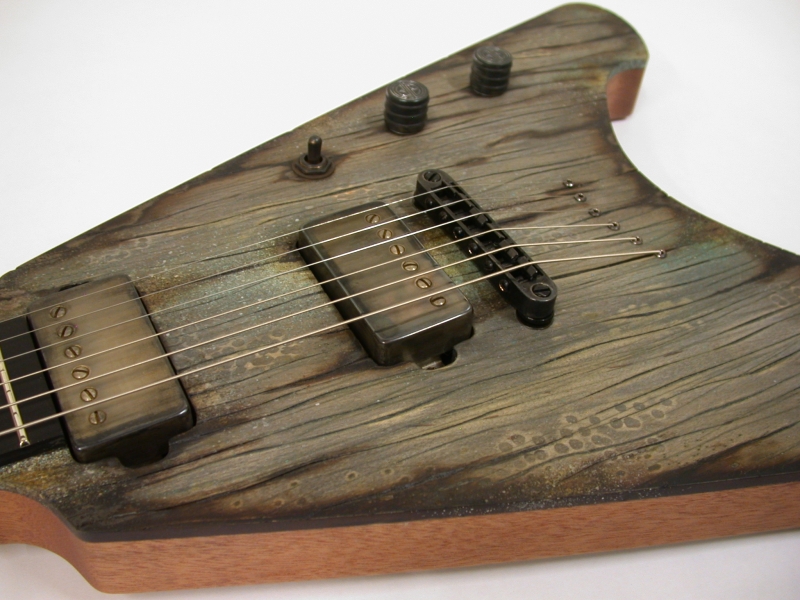
Routa Karelia old wood spray finish

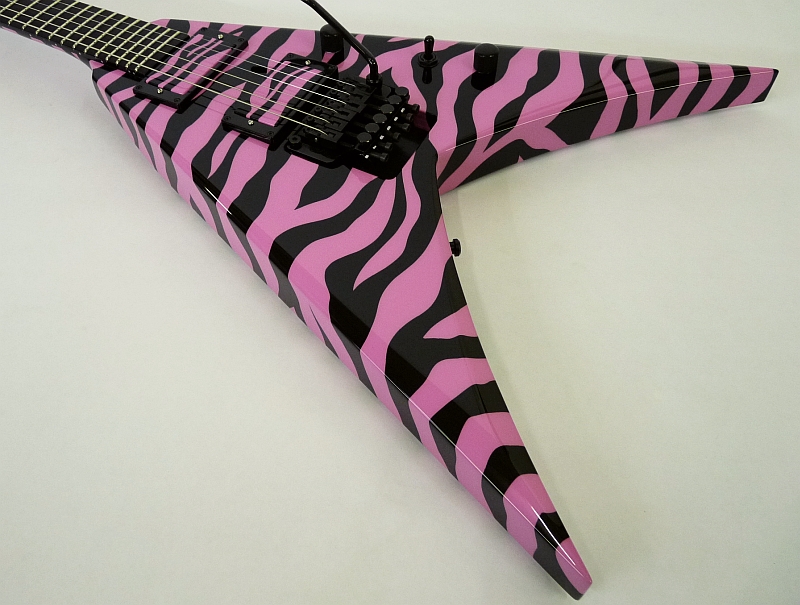
Routa Karelia pink zebra

Routa Karelia Deluxe

****

Amfisound Routa Original:

Routa Original 8-string

Eight-string!

****

Amfisound Roster:

Roster Camo

****

Amfisound Kuru:

Kuru 5-string

Kuru

Kuru Arcticia

Kuru Arcticia

****

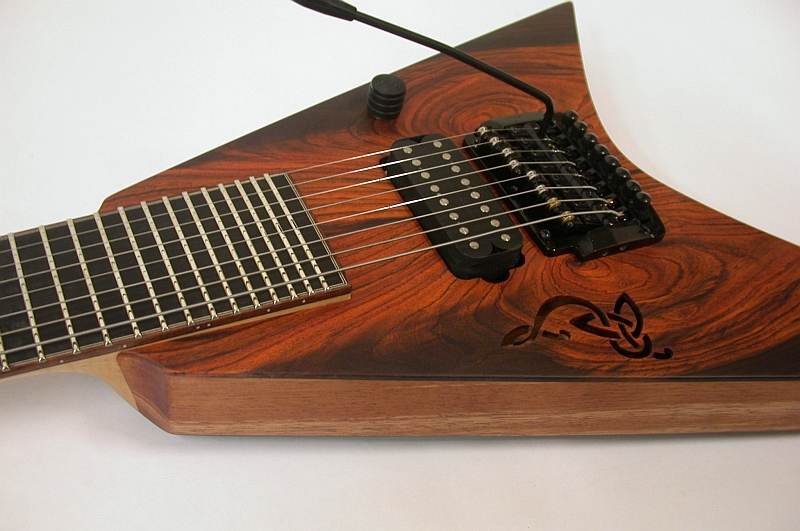
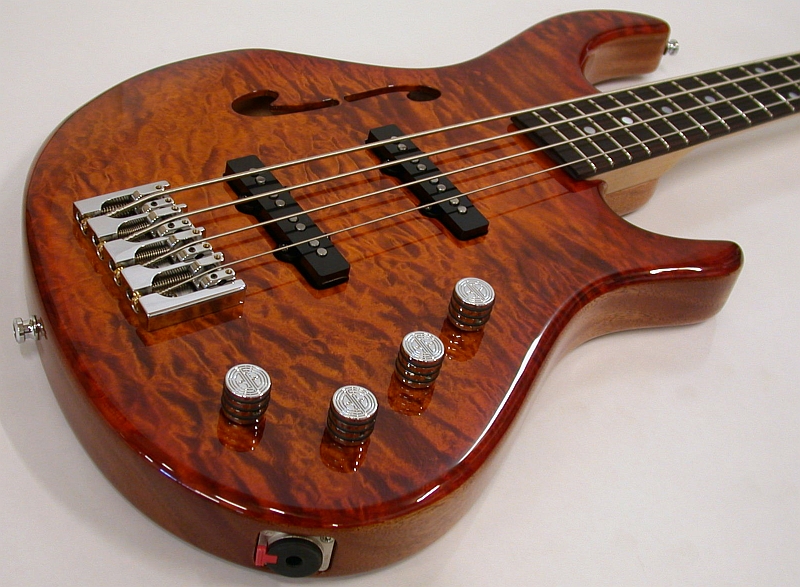
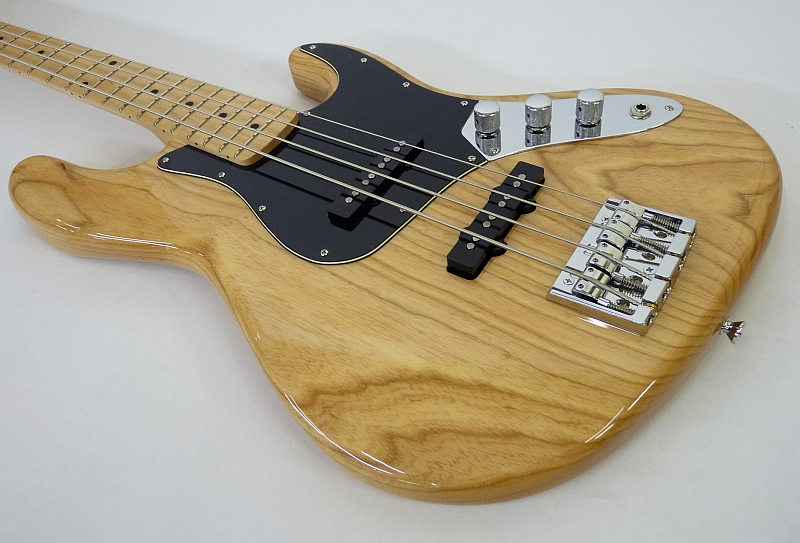
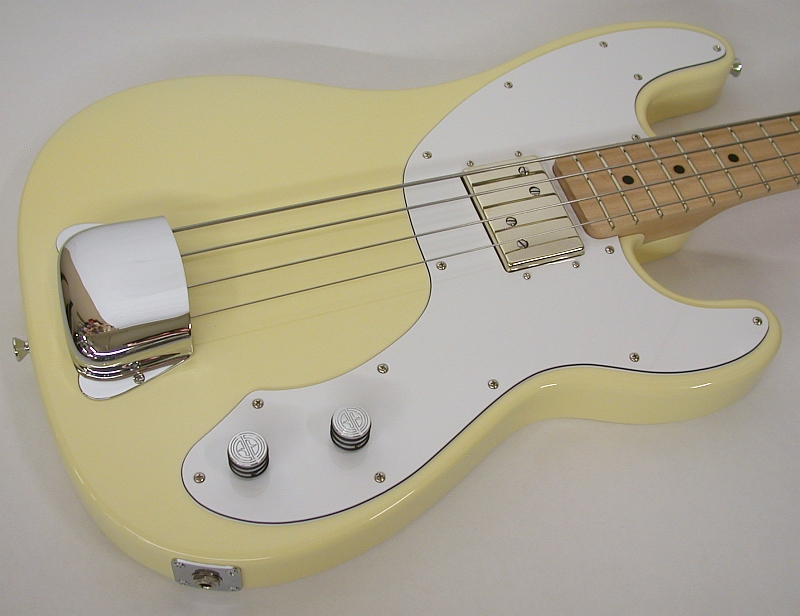
More basses:

Jazz bass

Tele bass

Lähikuvassa: Amfisound Guitars

Amfisound Guitars on kahden soitinrakentajamestarin yhdessä vetämä kitarapaja Oulun Haukiputaassa.

Sampo Leppävuori ja Tomi Korkalainen tapasivat IKATA:n kitararakennuslinjalla, ystävystyivät, ja päätyivät perustamaan oman yrityksensä Pohjois-Suomeen, Sampon kotiseudulle.

Amfisoundin mallisto on erittäin laaja, koska Sampon ja Tomin eri mieltymykset ja vahvat alueet täydentävät toisiaan.

AMfisound – Sampo Leppävuori

Sampo Leppävuori saa inspiraatiota klassikkokitara- ja -bassomalleista, joihin esimerkiksi Amfisoundin Classic Line -malliston Halti-, Kaira-, Halla- ja Kobalt-kitarat perustuvat.

Näissä kitaroissa ei kuitenkaan ole kysymys väsyneistä kopioista tai vintage-voodoon metsästämisestä, koska Amfisound-kitaroissa on pitkä lista detaljipäivityksiä (esim. mikrofoneissa ja metalliosissa) ja omia ominaisuuksia (esim. puuvalinnoissa ja kaulaliitoksissa).

Amfisound – Tomi Korkalainen

Tomi Korkalainen taas on parivaljakon vannoutunut heavymies, joka visioi ja toteuttaa metallikitaristeille äärimmäisen hienoja erikoissoittimia – ei ainoastaan soitettavuuden ja soundin kannalta, vaan myös mikä tulee kitaroiden ulkonäköön.

Tomin käsiala näkyy parhaiten Amfisoundin Extreme Line -mallistossa, johon kuuluvat mm. sellaiset soittimet kuin Routa, Atrain, Railo ja Roster.

****

Kitarablogi: Mikä on Amfisound Guitarsin filosofia?

Tomi: Haluttiin luoda Suomeen varsinainen täysin uusi ja nuorekas customkitara-kulttuuri. Pohjoinen sijainti edesauttaa myös pohjois-eurooppalaista imagoa, koska varsinkin visuaalisuus näyttelee suurta osaa työssämme. Mallien suomalaiset nimet keksittiin vuonna 2003-2004. Nimet ovat helposti lausuttavia myös ulkomaalaisille, ja onkin hienoa messuilla aina kuulla jos jonkinlaista versiota näistä.

KB: Visuaalisuudella näyttää olevan iso rooli teidän soittimissa.

Sampo: Kaikki erikoispintakäsittelyt ja puuntyöstötaidot on pitänyt opiskella itse käytännön kautta. Tämä opiskelu on jatkuvaa ja jatkuu edelleen. Varsinkin heavykitara-alalla Suomessa ei ole ollut minkäänlaista historiaa, joten kaikki tämä on pitänyt opiskella ja luoda itse. Kova työ on tuottanut tulosta ja olemme saaneet suurta arvostusta niin Suomessa kuin ulkomaillakin. On myös itse ollut ilo seurata kuinka paljon tämä on vaikuttanut tämähetkisen suomalaisen soitinrakennuskulttuurin kehittymiseen. Asenteet varsinkin heavykitaroiden suhteen ovat parantuneet firman perustamisen ajoista 100%. Se kertoo kyllä alan huimasta kehityksestä Suomessa.

KB: Millainen on Amfisoundin toimintaperiaate? Perustuuko toimintanne sarjatuotantoon?

Tomi: Tällä hetkellä suurin osa tilauksista menee ulkomaille ja jokainen tilaus on aina yksilö, joka valmistetaan käsin alusta loppuun saakka. Sarjatyötä tai valmiita aihioita emme tee, emmekä käytä ollenkaan. Tämä tuo todella paljon lisäarvoa asiakkaalle. Meillä on myös aika laaja ja nimekäs artistiperhe. Löytyypi artisteja kevyen ja raskaan musiikin nimiä niin Suomesta kuin ulkomailtakin. Vuonna 2007 muutettiin myös se meidän vanha logo uudeksi ympyränmuotoiseksi logoksi. Pidän tuota itse merkittävänä tapahtumana, koska silloin viimeistään päästiin kehittämään omaa brändiä suomalaisena kitaramerkkinä. Haluttiin tehdä Amfisound-merkkistä kitaraa eikä pysyä ainoastaan paikallisena soitinrakentajana.

****

Amfisound Guitarsin omille kitaramalleille tarjoamat kustomointimahdollisuudet ovat lähes loputtomat, koska Sampo ja Tomi haluavat, että jokainen asiakas saa juuri sellaisen kitaran tai basson, jonka hän itse haluaa.

Uskomattoman hienot graafiset viimeistellyt ovat muuten Amfisoundin erikoisalaa. Riippumatta siitä onko hakusessa kitara, joka näyttää monta sataa vuotta vanhalta mökin ovelta, jossa on riimukirjoitukset, tai haluaako asiakas limettivihreän soittimen leopardikuviolla, Amfisoundilta sellaisen saa.

****

Oman kitaratuotannon ohella Amfisoundissa hoidetaan laadukkaasti myös sähkökitaroiden ja -bassojen korjaukset ja kustomoinnit.

****

Amfisound Guitars – raw wood

Jokainen Amfisound-kitara on joskus ollut pelkkä puulankkujen kasa.

Amfisound Guitars – arctic birch

Amfisound käyttää ulkomaisten jalopuulajien (kuten khaya-mahongin) ohella usein myös kotimaisia puulajeja, kuten tervaleppää ja loimukoivua, runkopuuksi.

Amfisound Guitars – ebony blanks

Tässä kuvassa näkyy otelauta-aihiot eebenpuusta.

Amfisound Guitars – korina blanks

Oman kitaran voi myös tilata hieman harvinaisemmasta puusta veistettynä. Tässä näkyy kaksi korina-lankkua.

Amfisound Guitars – jigs + templates

Sampo ja Tomi luottavat perinteisiin rakennusmenetelmiin, mikä tarkoittaa, että jokaiseen Amfisound-soittimeen valmistukseen menee paljon käsityötä.

Pajassa käytetään itse tehtyjä jigejä ja sapluunoita jyrsimelle.

Amfisound Guitars – jigs + fixture semi-solid Halti

Tällaiset ovat Halti-kitaran puoliakustisen version kanavat ja kolot, jotka jäävät valmiissa kitarassa kaarevan kannen alle.

gluing neck blank

Kaula-läpi-rungon-rakenteisten soittimien kaulat liimataan kolmesta vierekkäisestä vaahterapalaista.

fretboard blanks

Eeben- ja ruusupuisia otelautoja nauhaurilla.

copy router

Joitakin vaativia työvaiheita varten käytetään kopiojyrsintä tasaisen laadun varmistamiseksi.

Tässä kuvassa Halti-kitaran syvä kaulaliitos saa muotonsa…

rough shaping of carved top

…kun taas tässä kitaran kanteen jyrsitään raakaversio sen lopullisesta kaarevuudesta.

marking pu cavity

Käsityöllä on kuitenkin erittäin tärkeä asema Amfisound-soitinten valmistuksessa:

Tässä kuvassa Atrain-mallin ulkomuodot, sekä mikrofonien ja tallan paikat merkitään suoraan puuhun lyijykynällä.

thru-neck neck joint

Osaavissa käsissä raspi on sulavan kaulaliitoksen alku.

pickup routing bass

Jyrsimellä työstetään runkoon kaikki tarvittavat kolot, niin kuin esimerkiksi mikrofonikolot…

neck cavity routing

…kaulataskut…

pickup routing

…sekä elektroniikkalokerot ja kolot vibratalloille.

Amfisound Guitars – Tomi drum sanding

Tomi hioo Railo-kitaran ulkoreunat hiomakoneella.

sanding

body contouring

Monet kohtat vaativat kuitenkin loppusilauksen hiomapaperilla käsin.

fret crowning

Tasoittamisen jälkeen palautetaan nauhaviilulla nauhojen puolipyöreätä profiilia.

airbrush

Onnistunut grafiikka vaati tarkkaa suunnittelua ja erittäin rauhallista kättä.

airbrush 2

Amfisound – Finnish Flag finish

Amfisound – custom finish 2

Amfisoundin graafisissa viimeistelyissä vain taivas on rajana.

Amfisound Guitars – Sampo scrapes binding

Sampo siistimässä otelaudan reunalistoja lakkauksen jälkeen.

binding scraping

Sama työvaihe, mutta toinen soitin.

bridge and string retainer drilling

Säätimille ja tallalle tarvitsemat reiät porataan vasta melko myöhäisessä vaiheessa.

assembly 2

assembly

Sustainer-elektroniikalla varustetun, keinotekoisesti esikulutetun kitaran loppuasennus.

making of booklet

Amfisound-soittimen omistaja voi halutessaan tilata myös oman kitaran (tai basson) rakentamisesta kertovan kuvakirjan.

****

Amfisoundin Sampo Leppävuori ja Tomi Korkalainen ovat Suomen Soitinrakentajien Killan jäseniä.
****

Tässä vielä muutama kuva valmiista Amfisound-soittimista (kuvat: Amfisound).

Amfisound Halla:

Halla Filtertron

Halla

****

Amfisound Halti:

Halti Burltop

Halti neck joint

Halti Goldtop

Halti graphic finish

Halti Arcticia

Halti Arcticia

****

Amfisound Kobalt:

Kobalt P90

****

Amfisound Kaira:

Kaira 8-string

Kaira HSH graphic finish

****

Kelo-viimeistely:

Kaira Kelo

Railo aged

****

Amfisound Routa Karelia:

Routa Karelia old wood spray finish

Routa Karelia pink zebra

Routa Karelia Deluxe

****

Amfisound Routa Original:

Routa Original 8-string

8-kielinen

****

Amfisound Roster:

Roster Camo

****

Amfisound Kuru:

Kuru 5-string

Kuru

Kuru Arcticia

Kuru Arcticia

****

Muita bassoja:

Jazz bass

Tele bass

Testipenkissä: Bluetone Amps Princeton Reverb

****

Bluetone Princeton Reverb – opener

Suomalainen Bluetone on vielä melko uusi nimi vahvistinmaailmassa. Harry Knecktin ja Matti Vauhkosen käsintehdyillä putkivahvistimilla on kuitenkin jo monta ystävää, ja sana on leviämässä yhä laajemmin.

Helsinkiläinen Custom Sounds on nyt ottanut Bluetone-vahvistimia tuotevalikoimaansa, ja sieltä Kitarablogi sai testattavaksi Bluetone Princeton Reverb -kombon.

****

Bluetone Princeton Reverb – full front

Bluetone Princeton Reverb (1.600 €) on firman laadukas käsinjuotettu – ja lempeällä kädellä päivitetty – näkemys 1960-luvun Fender Princeton Reverb -styrkkarista (AA1164-versio). Bluetonen tärkeimmät parannukset ovat vaihekääntäjän jälkeinen master volume -säädin (PPIMV), isompi kaiutin, sekä helpompi biasointi erillisillä biasointipisteellä. Kombon lähtötaso on 15 wattia.

Bluetonen Princetonia saa erilaisilla viimeistelyillä ja kaiuttimilla. Kitarablogin testiyksilö on varhaistuotannosta peräisin oleva kermanvaalealla tolexilla päällystetty perusversio, jolla on kuitenkin Tayden Smooth Alnico -kaiuttimen sijaan 12-tuumainen WGS Black Hawk Alnico -ämyri.

Bluetone Princeton Reverb – side view

Bluetone rakentaa kotelonsa tavallisesti 15 milliä paksusta, suomalaisesta koivuvanerista, joka on kestävä, mutta kuitenkin suhteellisen kevyt materiaali.

Princeton Reverbin viimeistely ei todellakaan jätä pienintäkään moittimisen varaa – kombo edustaa ehtaa boutique-luokkaa!

Bluetone Princeton Reverb – full back

Kotelo on Fender-tyylisesti takana avoin.

Bluetone Princeton Reverb – valves + transformers

Bluetone Princetonissa käytetään esikuvan mukaan etuvahvistimessa kolme 12AX7-putkea ja yksi malli 12AT7.

Tasasuuntajaksi on valittu yksi 5AR4-putki, kun taas päätevahvistin toimii kahdella 6V6-mallilla.

Bluetone Princeton Reverb – spring reverb

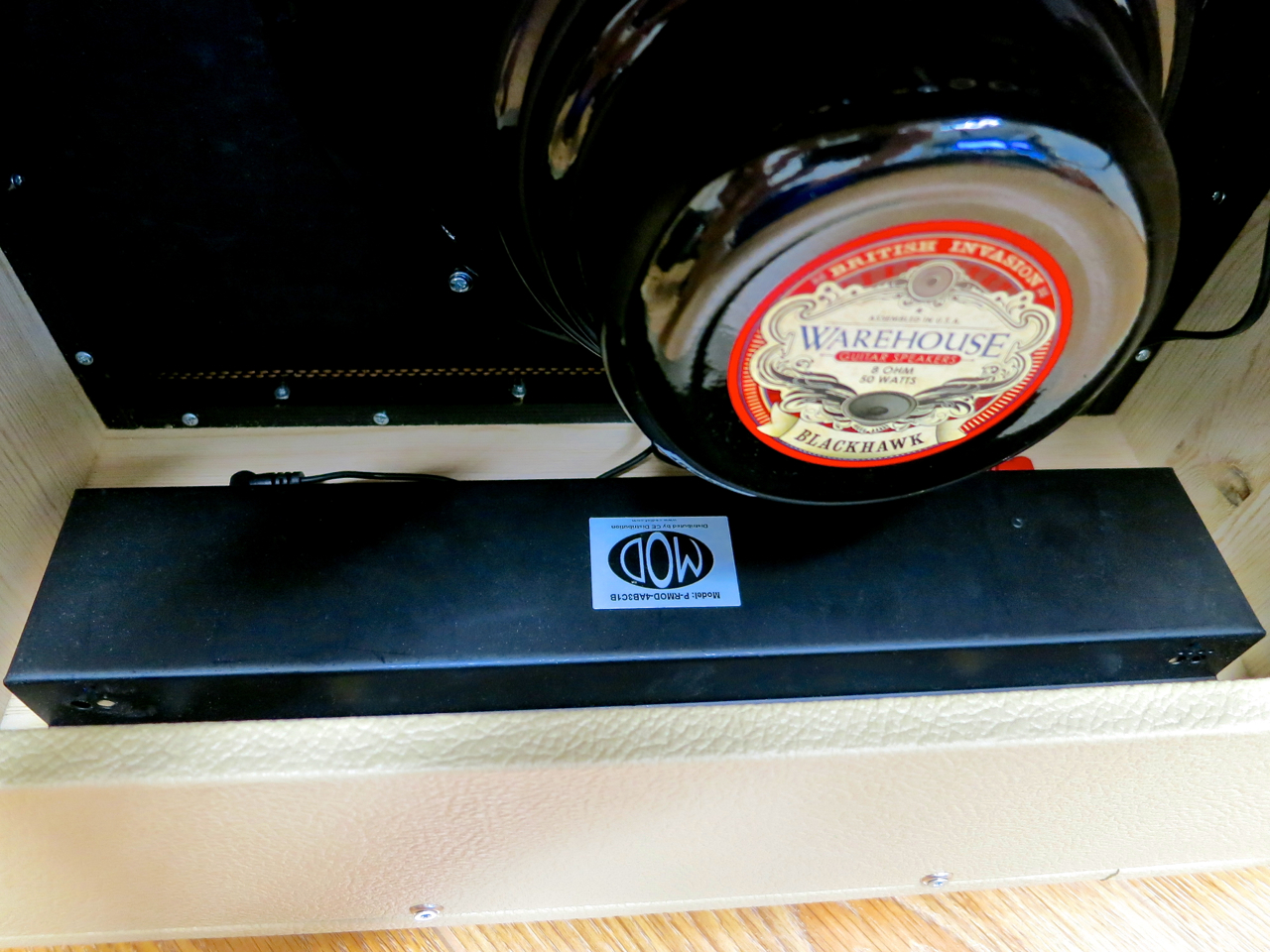
Täyspitkä jousikaiku tulee MOD Kitsiltä.

Bluetone Princeton Reverb – Warehouse Blackhawk speaker

WGS:n 50-wattinen Black Hawk on periaatteessa suunniteltu Vox AC30:n kaiuttimeksi, ja siten mielenkiintoinen valinta pieneen Fender-tyyliseen komboon.

****

Bluetone Princeton Reverb – control panel

Bluetone on yksikanavainen kombo kolmikaistaisella taajuskorjainosastolla, kaiulla ja tremololla. Master volumen ansiosta etuasteen säröä voi käyttää myös maltillisella volyymitasolla.

Lopullisessa sarjatuotannossa etupaneelin teksti löytyy muuten nyt säätimien alta, mikä helpottaa tuntuvasti oikean nupin löytämistä.

Bluetone Princeton Reverb – back panel

Takapaneeli tarjoaa kaksi kaiutinlähtöä, sekä liittimen jalkakytkimellä.

Bluetone Princeton Reverb – footswitch

Tämä jämäkkä tuplakytkin kuuluu hintaan, ja sillä voi kytkeä sekä tremoloefektin että jousikaiun päälle tai pois.

****

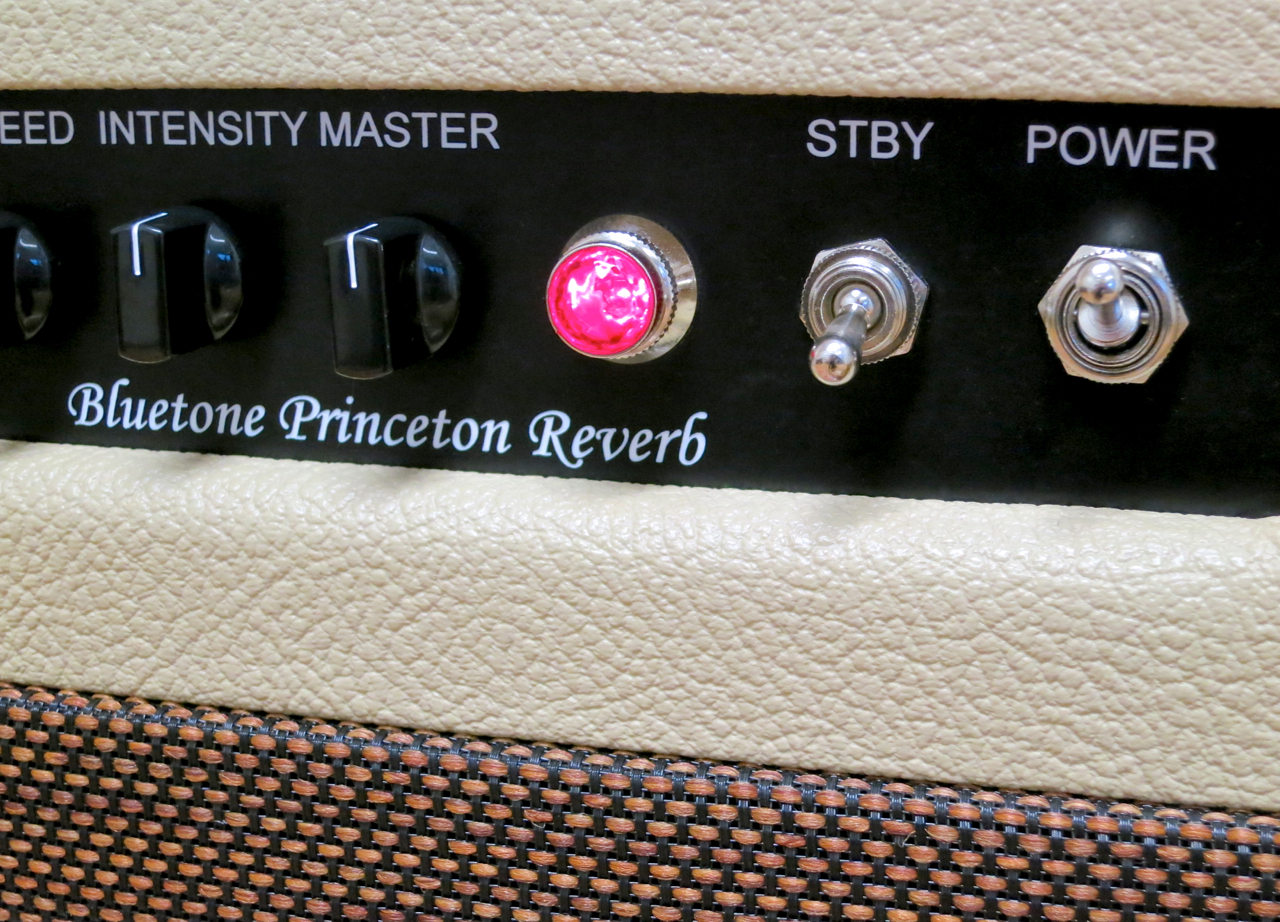
Bluetone Princeton Reverb – pilot light

Putkivahvistimeksi keskikokoinen Bluetone Princeton Reverb -kombo on hyvin kevyt, mutta samalla kestävänoloinen.

Käytössä huomaa ensimmäiseksi Bluetone-vahvistimen hiljaisuutta ei-toivottujen sivuäänien kannalta. Tämä kombo ei humise eikä hurise, ja myös sen omakohina on hyvin maltillisella tasolla – loistohomma!

Monia vanhoja musta- ja hopeanaamaisia Fender Princeton -vahvistimia on modattu isommalla kaiuttimella – vanha Jensen kuulostaa sinänsä hyvältä, mutta on monille kuitenkin hieman liian ohut soundiltaan.

Bluetone Princetonilla kuulostaa – 12-tuumaisen kaiuttimen ansiosta – heti kättelyssä hieman isommalta.

Tältä kuulostaa Fender Telecaster, kun Bluetonessa on puhtaat asetukset:

Bluetonen tremolo on hyvin maukas tapaus:

Low-tuloa käyttäessä Princeton Reverbin headroomia riittää mainiosti myös puhtaille humbucker-soundeille (käytössä Hamer Studio Custom -kitara):

Pikkustyrkkarilla on kuitenkin myös kunnon hampaat, kun vaan lisätään gainea. Särön luonne on juuri sellainen kuin voi odottaa pieneltä, vintage-tyyliseltä ja Fender-pohjaiselta kombolta. Purevuutta ja kompressiota löytyy sopivasti ja keskialueen sointi pysyy suhteellisen avoimena. Erittäin kermaisia, keskialuevoittoisia särösoundeja on tällaisesta kombosta turha hakea, mutta 1960-luvun ja varhaisen 70-luvun Blues- ja Rock-meininkiin Bluetonen Princeton Reverbin ääni sopii kuin nakutettu.

Telecaster (High-tuloon kytkettynä) täysillä gainilla kuulostaa tällaiselta:

Tuplahumbucker-Hamerilla (Low-tuloon kytkettynä) sain tällaiset soundit aikaiseksi:
Bluetone-kombo reagoi erittäin hyvin kitaran volume-säätimeen, mikä mahdollistaa särösoundin siistimistä ilman muita apuvälineitä:
Bluetone Princeton Reverb – front panel angle

****

Bluetone Princeton Reverb – Telecaster

Bluetone Princeton Reverb tarjoaa mielestäni parasta kotimaista boutique-laatua kilpailukykyiseen hintaan. Bluetonen työnjälki on ensiluokkainen ja kombon soundi erinomainen. Bluetone Princeton Reverb on kuin taivaan lahja laadukkaan Blackface-soundin ystäville.

****

Bluetone Amps Princeton Reverb

1.600 € (Bluetone-suojahuppu: 50 €)

Lisätiedot: Custom Sounds Finland

****

Plussat:

+ aitoa custom shop -laatua

+ point-to-point-rakenne

+ Master Volume -säädin

+ laadukas 12-tuumainen kaiutin

+ kaiun ja tremolon soundi

+ jalkakytkin kuuluu hintaan

Bluetone Princeton Reverb – logo

Testipenkissä: Custom Boards Fillmore 1970

****

Custom Sounds Fillmore '70 – board and Nash Guitar


Custom Soundsilta löytyy valtavasti tietotaitoa erilaisista kitaraefekteistä ja pedaalilaudoista. Ei ihme, sillä toinen firman omistajista, Kimmo Aroluoma, on toiminut pitkään maan yhtenä parhaana kitarateknikkona. Hänen asiakaslistalta löytyy mm. sellaiset nimet kuin HIM, The Rasmus tai Ismo Alanko.

Custom Soundsin valikoimasta on jo pitkään löytynyt kaikki, mitä oman pedaalilaudan tekemiseen tarvitaan, ja myös pedaalilautojen tekeminen asiakkaan toiveiden mukaan kuului jo liikkeen palveluun.

Nyt Custom Sounds on kuitenkin tekemässä uuden aluevaltauksen:

Custom Boards -lipun alla tarjotaan valmiita pedaalilautoja erilaisien suosittujen klassikkosoundien mukaan. Ensimmäinen sellainen lauta on tällä viikolla julkaistu Custom Boards Fillmore 1970, joka on hatunnosto Jimi Hendrixiä kohtaan.

****

Custom Sounds Fillmore '70 – case

Custom Boardsin Fillmore 1970 -pedaalilauta (2.490 €) tarjoaa laatua isolla L:llä. Tässä ei tehdä asioita ”sinne päin”, vaan tarkoitus on tarjota asiakkaalle huippuviritetty ammattitason työkalupakki.

Tämä filosofia alkaa jo laudan alustalta:

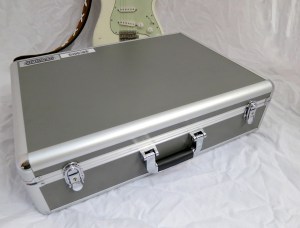
Pedaltrainin malli 1HC toimitetaan omassa kovassa salkussa.

Custom Sounds Fillmore '70 – case contents

Tältä näyttää koko komeus, kun avataan salkku ensimmäistä kertaa.

Custom Sounds Fillmore '70 – full front

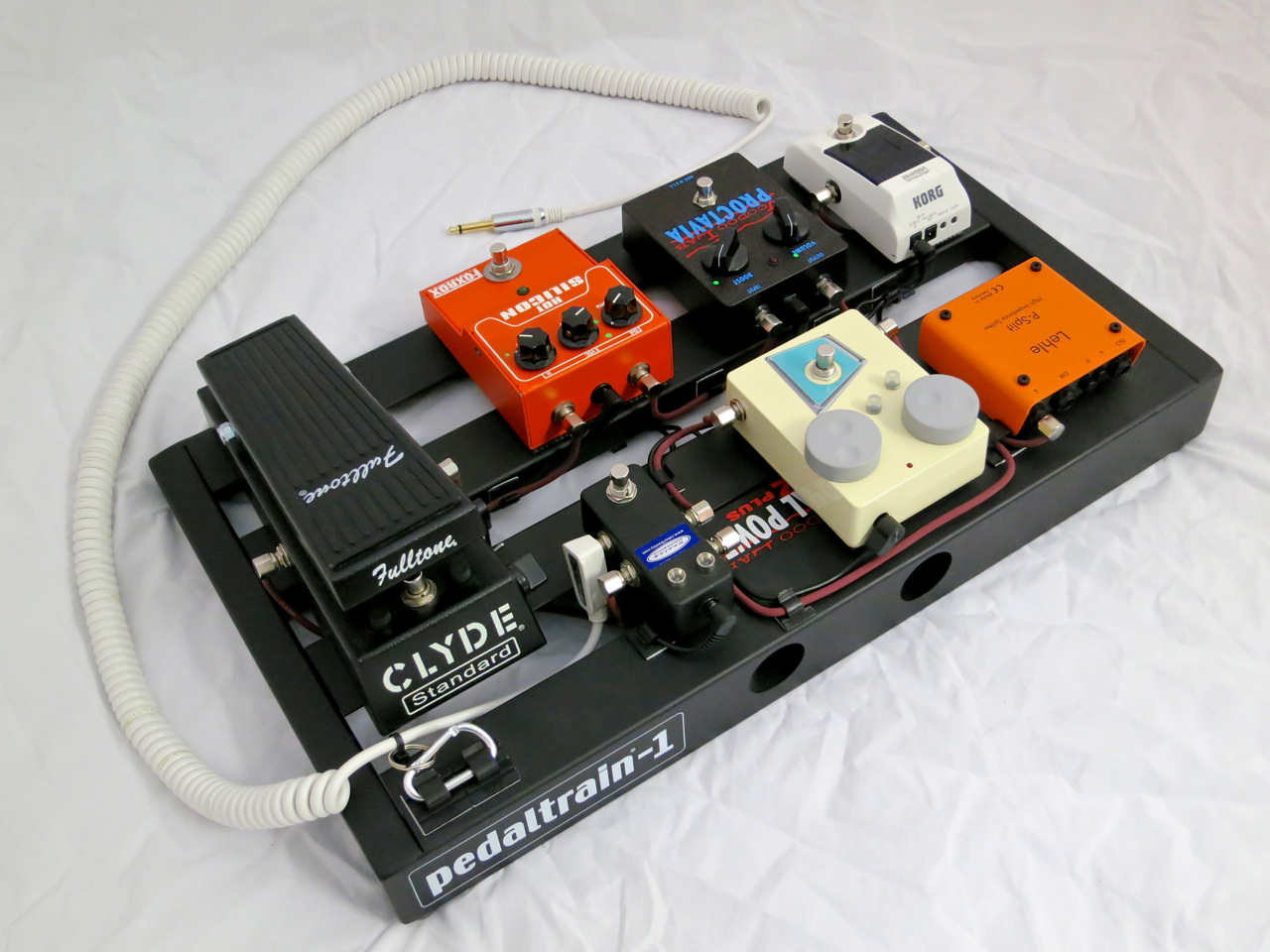
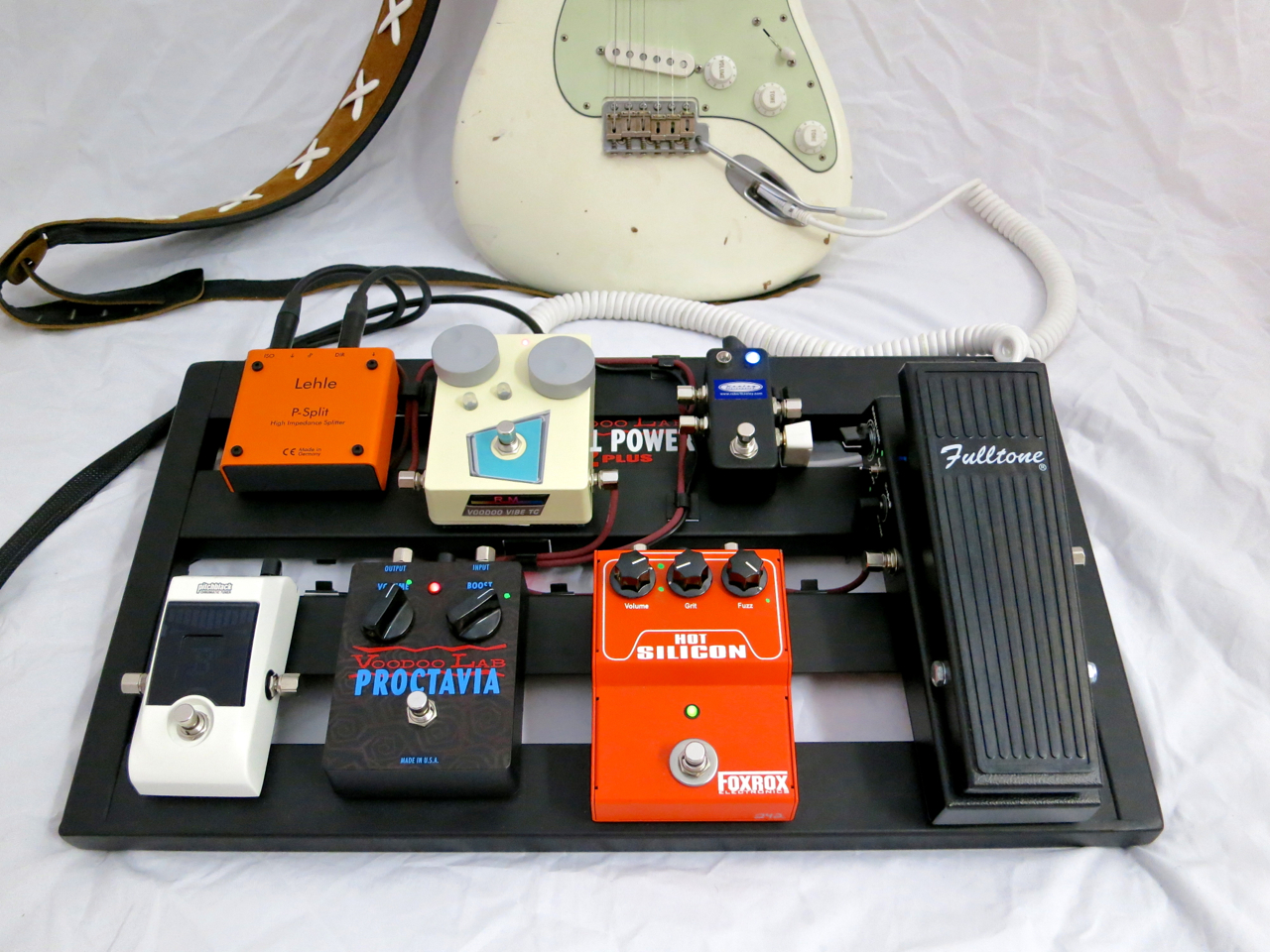
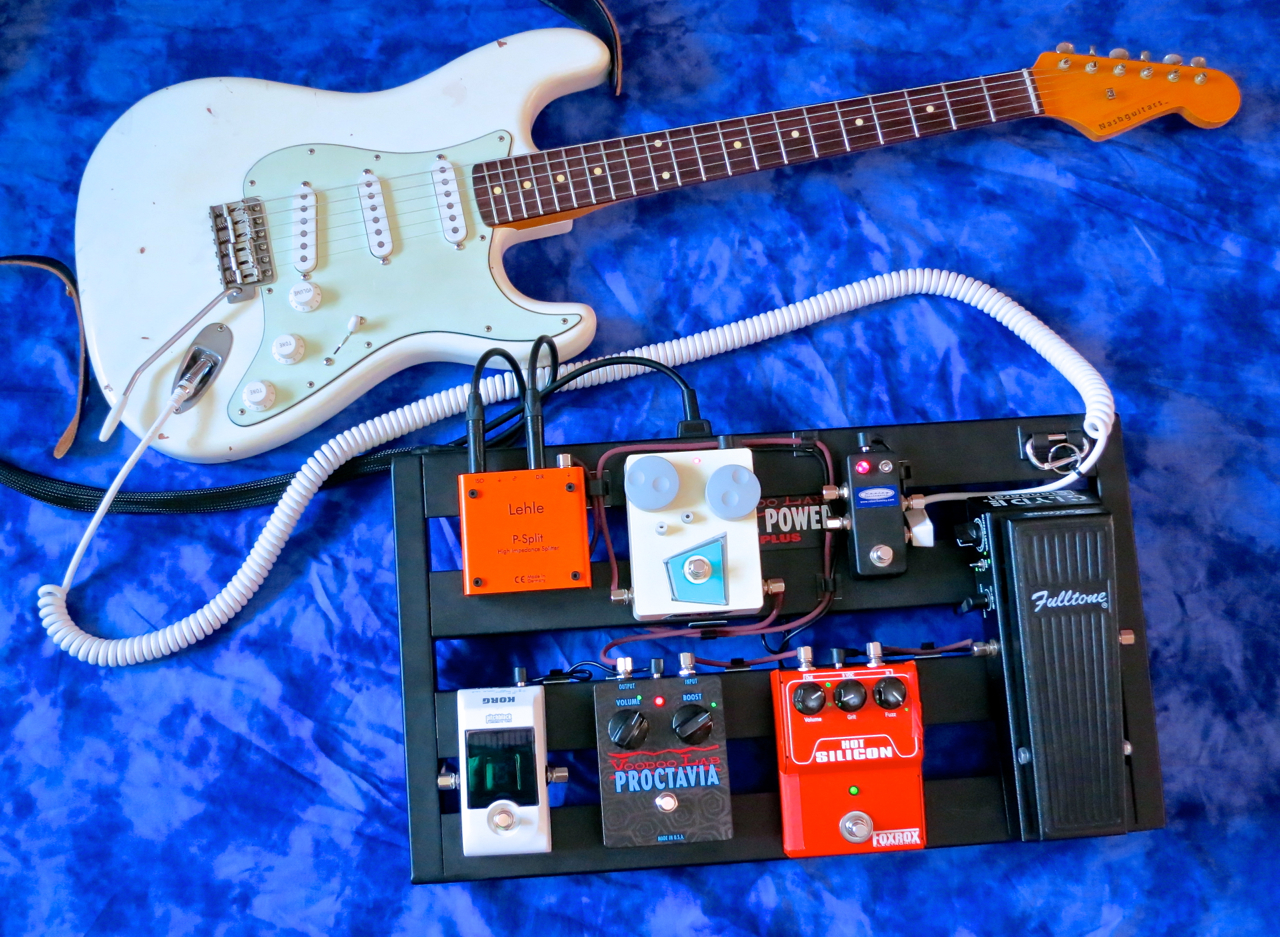
Fillmore 1970:n efektikattaus tarjoaa wah-pedaalin, fuzzin, oktaaverin ja univibe-tyylisen efektin.

Custom Sounds Fillmore '70 – full back 2

Lisäksi mukaan on valittu efektireititin, viritysmittari, sekä splitteri, joka mahdollistaa kahden vahvistimen käyttöä samanaikaisesti.

Custom Sounds Fillmore '70 – bottom view

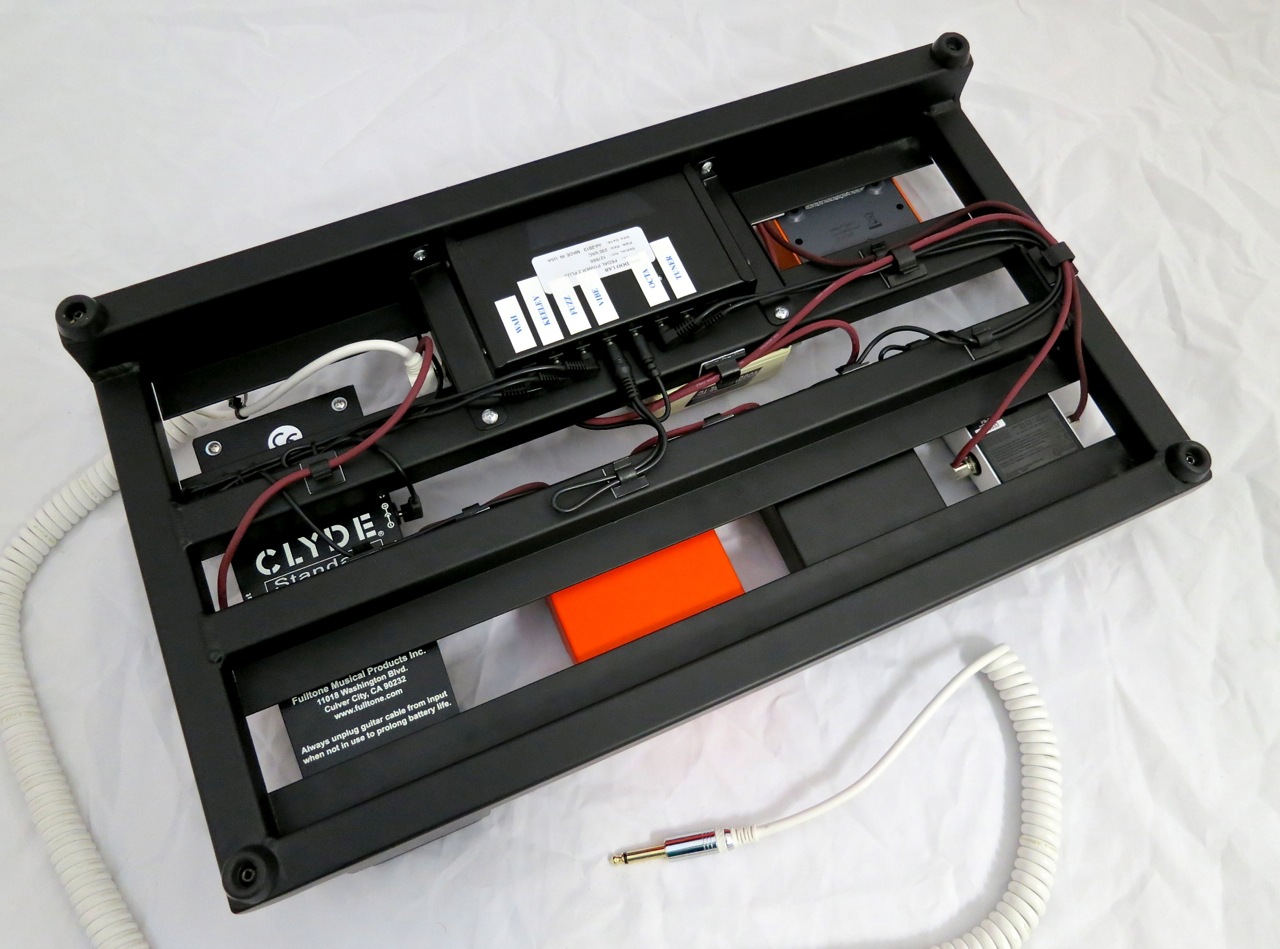
Pedaalilaudan laadukas virtalähde on asennettu laudan alle.

Custom Sounds Fillmore '70 – cabling

Custom Soundsin ammattitaidon näkee erityisen hyvin Fillmore-laudan kaikista pienistä yksityiskohdista:

Pedaalien välijohdot on tehty juuri tätä pedaalilautaa varten käyttämällä Evidencen Monorail-johtoa sekä SiS-kulmaplugeja. Kaikki johdot on kiinnitetty turvallisesti ja siististi 3M-pidikkeillä.

Custom Sounds Fillmore '70 – carabiner

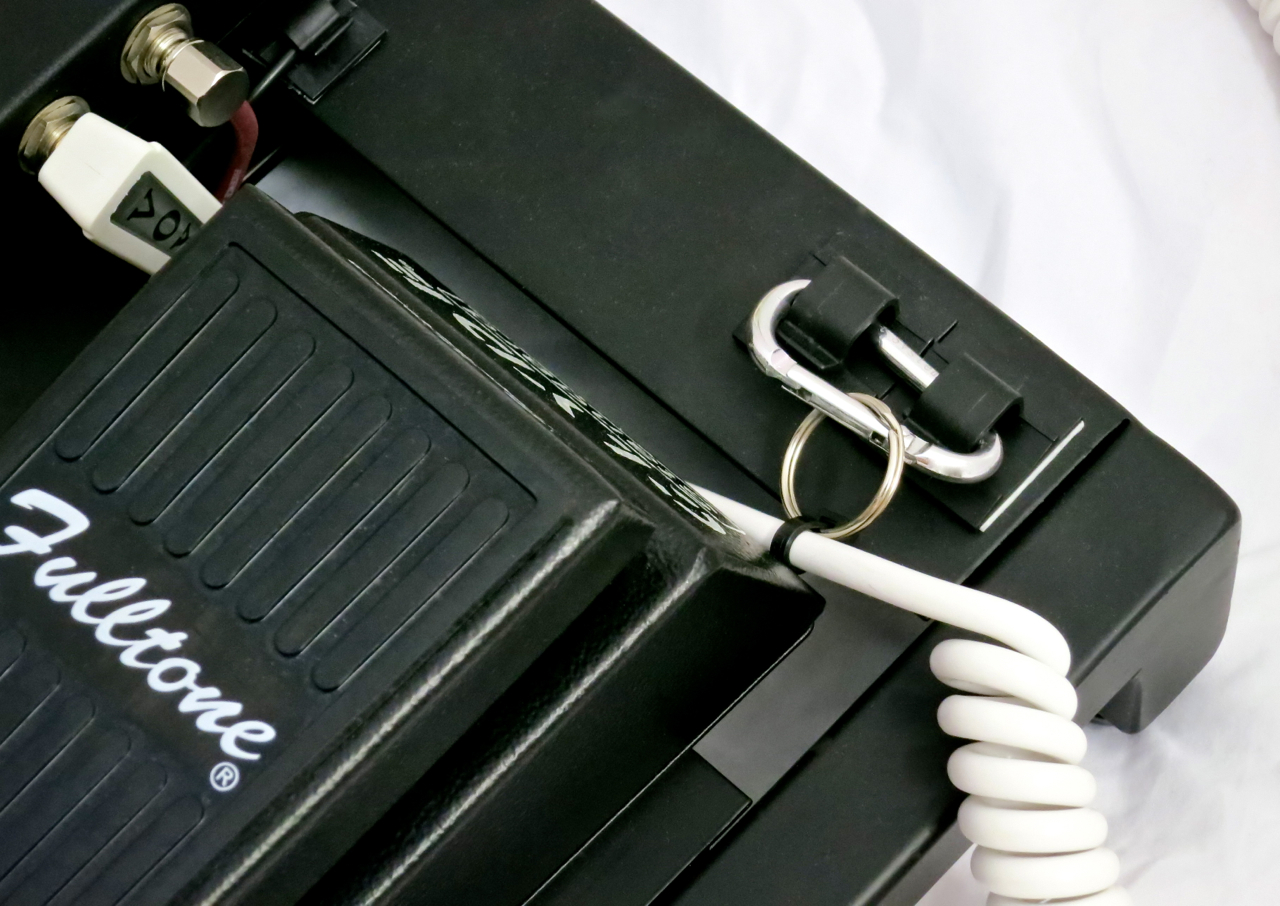
Vielä yksi herkullinen yksityiskohta, joka säästää kitarateknikon hermoja, ja joka voi jopa pelastaa koko keikan – pedaalilautaan kiinnitetty kitarajohto.

Custom Sounds Fillmore '70 – umbilical

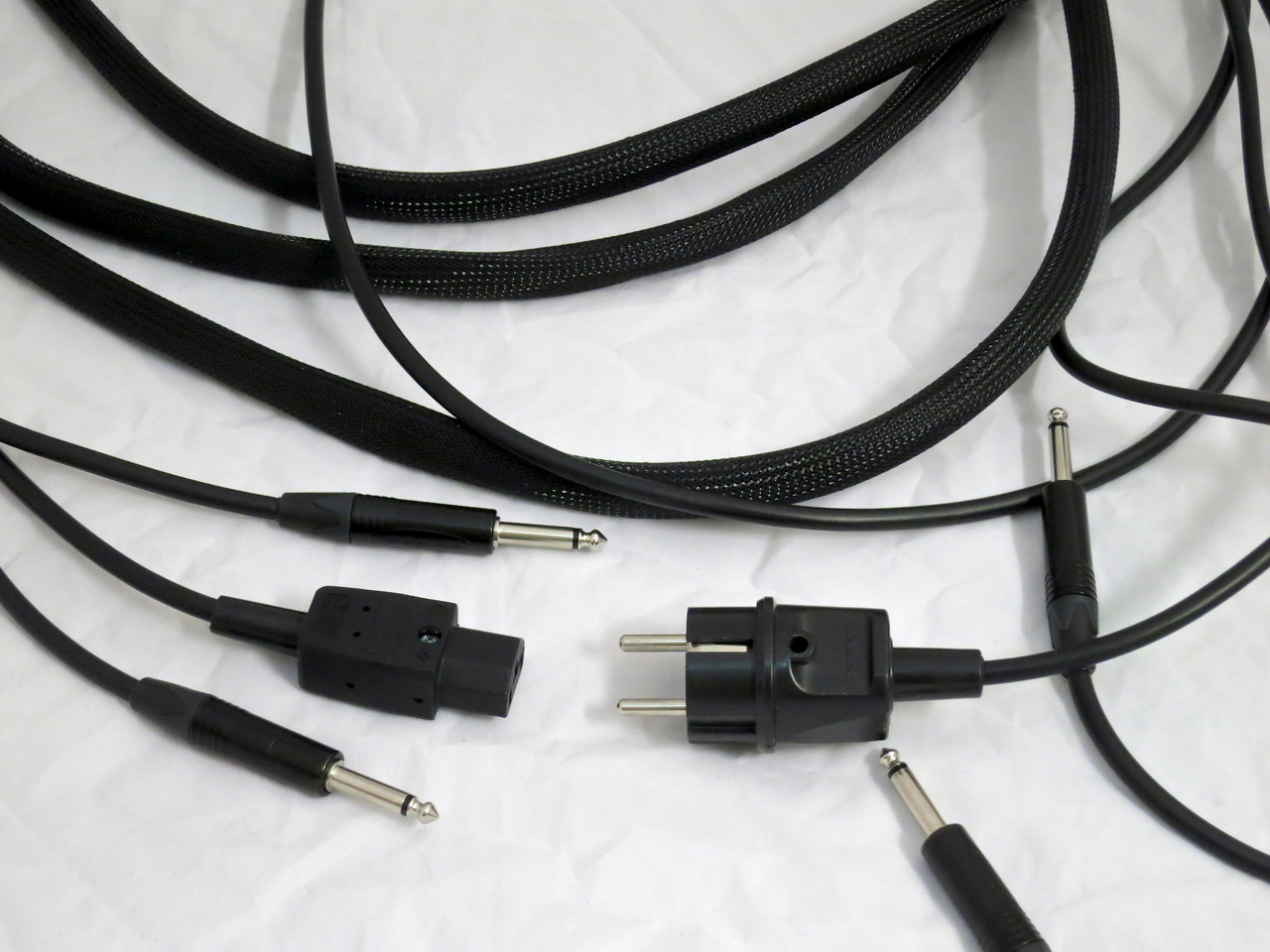
Piste iin päällä on Custom Soundsissa valmistettu, kuusimetrinen johtoviuhka, jolla kytketään laudan virtalähde seinään, sekä laudan lähtö vahvistimiin (Klotz-johdoilla).

****

Custom Sounds Fillmore '70 – full front with lights

Kuten alussa jo mainittiin, Custom Boardsin Fillmore 1970 -pedaalilauta ei ole kasattu noin vaan tää-on-kivaa-periaatteella, vaan jokainen yksittäinen efekti on valittu tarkoin koko signaaliketjua silmällä pitäen.

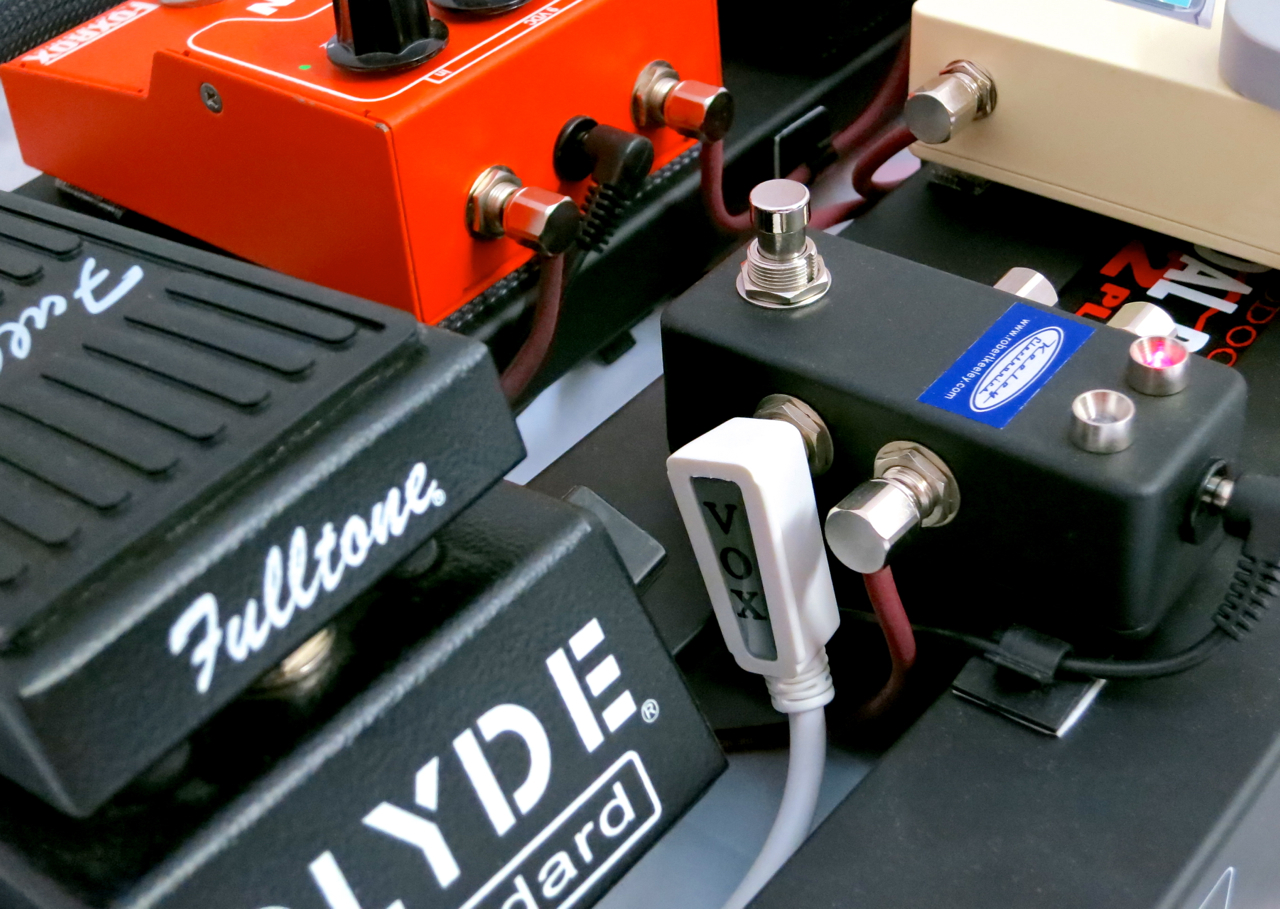
Custom Sounds Fillmore '70 – Fulltone Clyde buffer

Fulltonen Clyde Wah on yksi maailman parhaista wah-pedaaleista. Fulltone tarjoaa Vox-maisen soundin, mutta samalla wahin elektroniikka on toteutettu ilman kompromisseja, niin että lopputulos on myös erittäin kestävä lajinsa edustaja.

Yksi Clyde Wah:n erikoisuuksista on sen aktiivinen bufferi, jolla on ratkaisevasti tärkeä tehtävä Fillmore-laudassa.

Custom Sounds Fillmore '70 – Foxrox Hot Silicon

Jimi Hendrixin soundin kulmakivi oli fuzz-pedaali ja valtavasti gainia. Valitettavasti 1960-luvun epäluotettavat efektit ja komponenttien isot toleranssit johtivat siihen, että laiteiden kanssa oli usein ongelmia. Fuzzien kohdalla kyse oli usein pedaalin mikrofoniasta tai herkkyydestä radiohäiriöille.

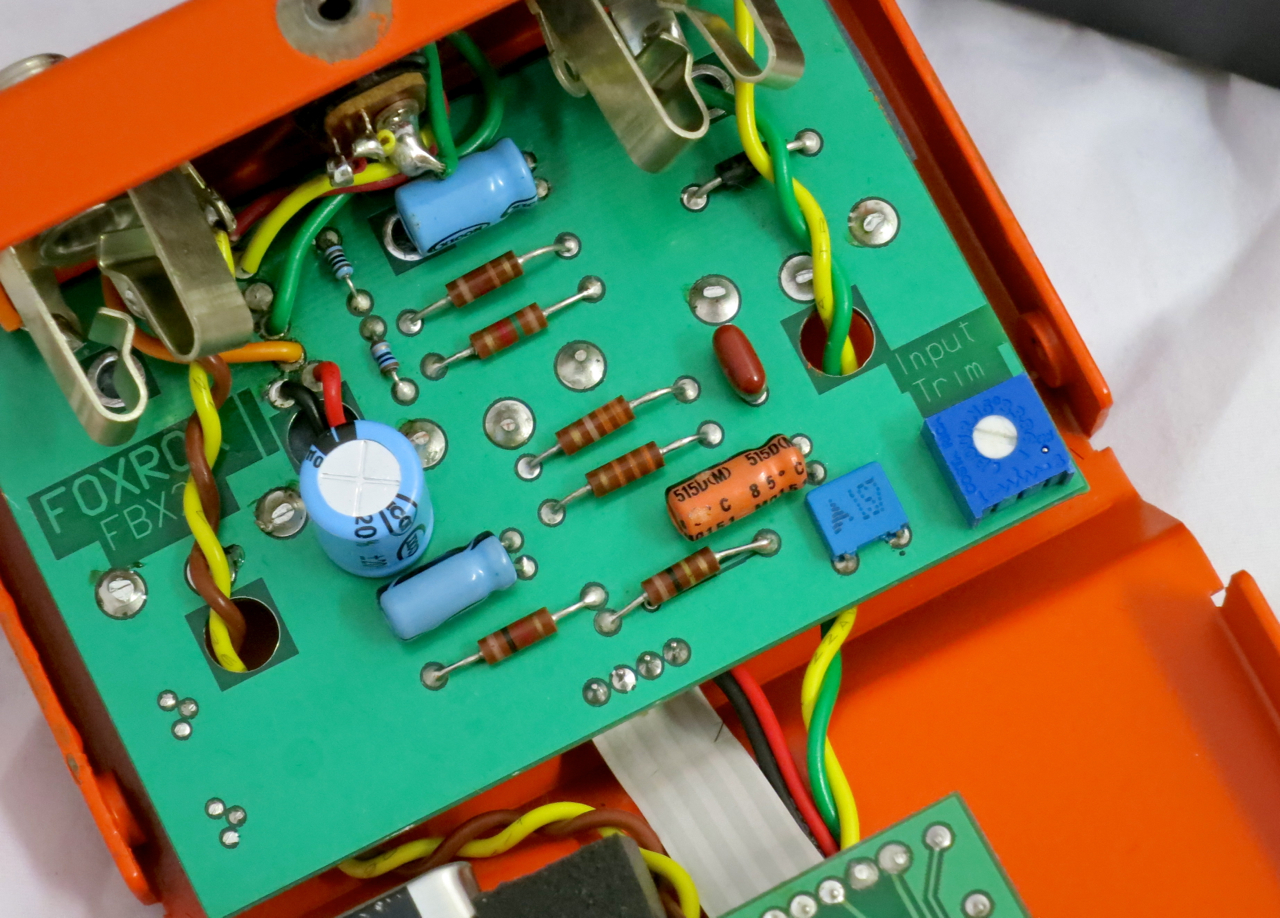
Foxrox Hot Silicon on laadukas silikonitransistorilla toimiva fuzz-pedaali, jossa transistori on erityisen huolellisesti suojattu ulkoisia häiriöitä vastaan.

Custom Sounds Fillmore '70 – Hot Silicon trim pot

Fillmore 1970 -laudalla haetaan Hendrixin myöhempiä soundeja, joissa hän usein käytti hyödykseen wah-pedaalin ja fuzzin välillä syntyvää oskillaatiota.

Fulltonen bufferin ja Foxroxin Input Trim -säätimen ansiosta koko pedaalilaudan voi ikään kuin virittää, jotta tätä oskillaatiota syntyisi valitulla kitaralla mahdollisimman helposti, mutta hallitusti.

Custom Sounds Fillmore '70 – Voodoo Lab Proctavia

Voodoo Labin Proctavia ei ole perinteinen oktaaveri, jossa tulosignaaliin lisätään siististi kesy kopio alkuperäisestä signaalista oktaavia alempana.

Sen sijaan Proctavia perustuu Roger Mayerin (Hendrixin teknikko) kehittelemään erikoisefektiin, joka on outo sekoitus boosterista, säröstä ja oktaaverista.

Custom Sounds Fillmore '70 – Roger Mayer Voodoo Vibe TC

Alkuperäinen Shin-Ei Univibe oli ensimmäinen yritys saada aikaiseksi sähköurkujen kanssa niin suositusta Leslie-kaapin vatkausta efektipedaalilla, mutta koska se oli suunniteltu koskettimille, Univibe soi melko huonosti kitarakäytössä fuzzin kanssa.

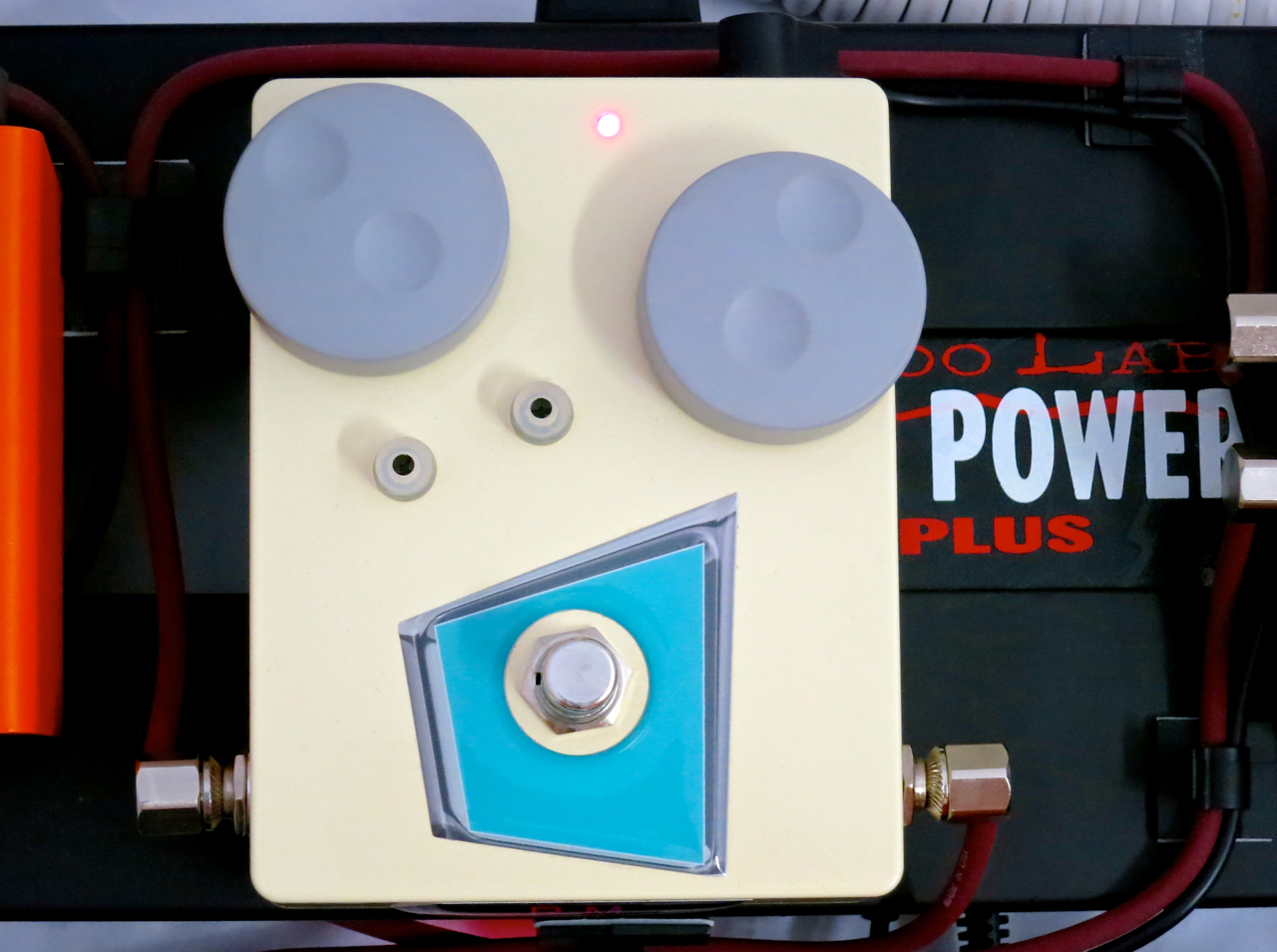
Custom Boards -lautaan on valittu Roger Mayerin (juuri se Roger Mayer) Voodoo Vibe TC -pedaalia. Voodoo Vibe TC:n isokokoisia Speed- (nopeus) ja Intensity-nuppeja (syvyys) voi säätää kätevästi jalalla kesken menoa. Pedaalin volyymitasoa ja efektin äänensävyä taas ei voi muuttaa vahingossa, mikä sekin on erittäin hyvä ominaisuus.

Custom Sounds Fillmore '70 – Korg Pitchblack

Hendrixillä ei ollut mahdollisuutta käyttää pienikokoista viritysmittaria lavalla, mutta nykypäivänä niitä onneksi löytyy!

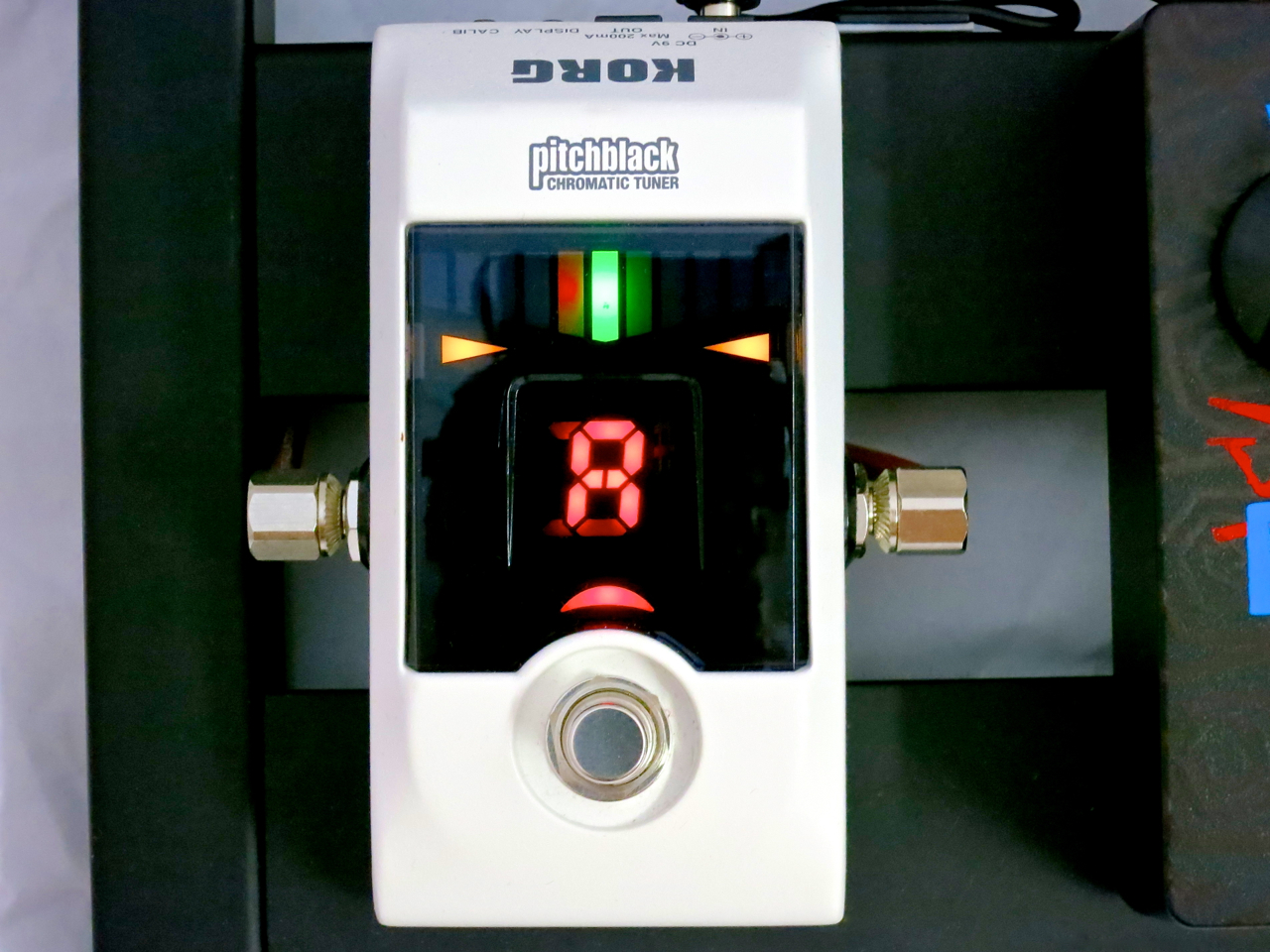
Korgin Pitchblack White Edition on luotettava ja tyylikäs valinta.

Custom Sounds Fillmore '70 – Lehle P-Split

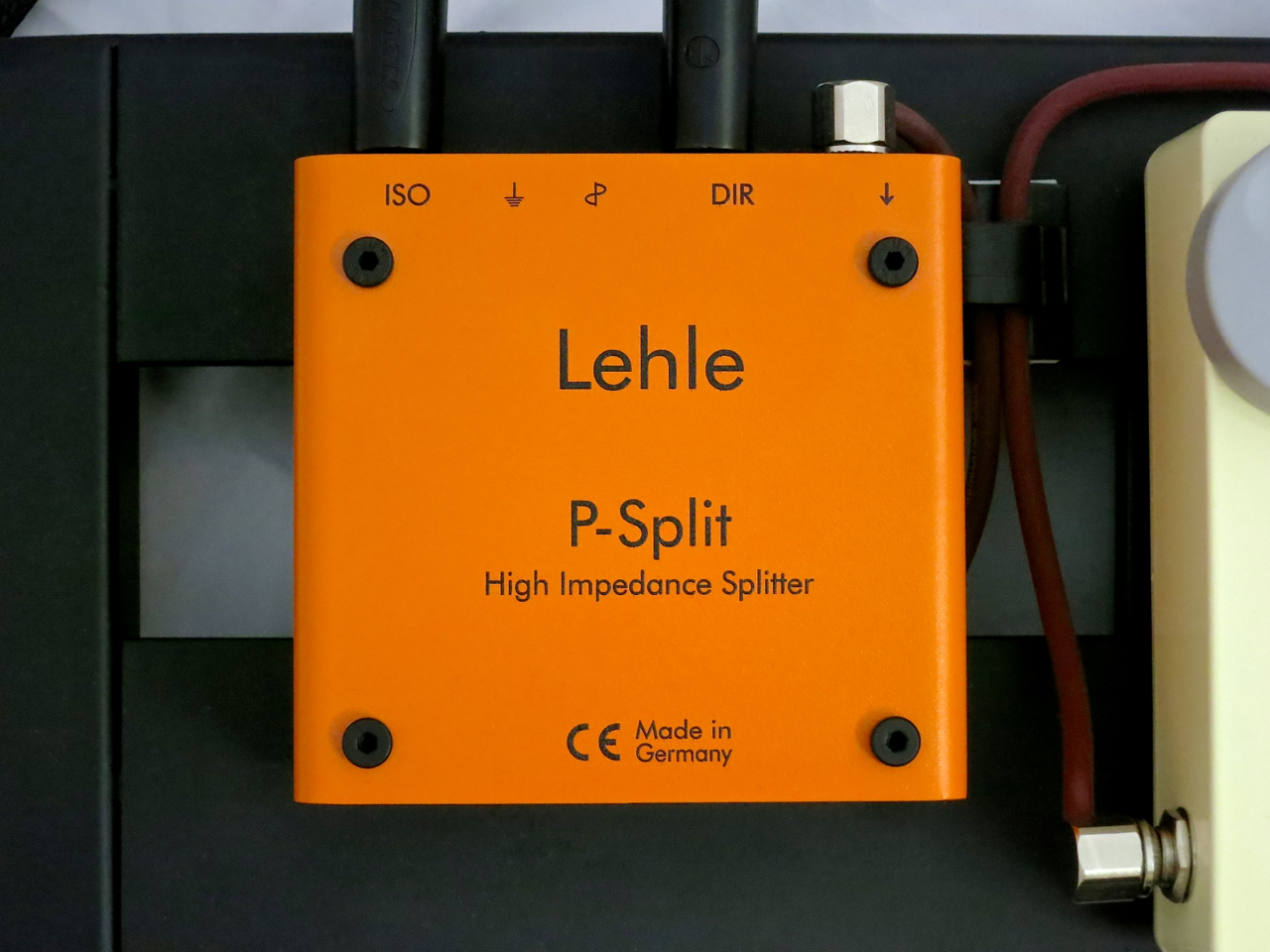
Efektien lisäksi Fillmore-lautaan on asennettu myös Lehlen erinomainen vahvistinsplitteri. P-Split mahdollistaa kahden vahvistimen ongelmatonta käyttöä samanaikaisesti. Laite tarjoaa turvallisen tavan poistaa mahdollista maadoitusbrummia. Toisen lähdön vaihetta voi tarvittaessa kääntää.

Custom Sounds Fillmore '70 – Keeley True Bypass

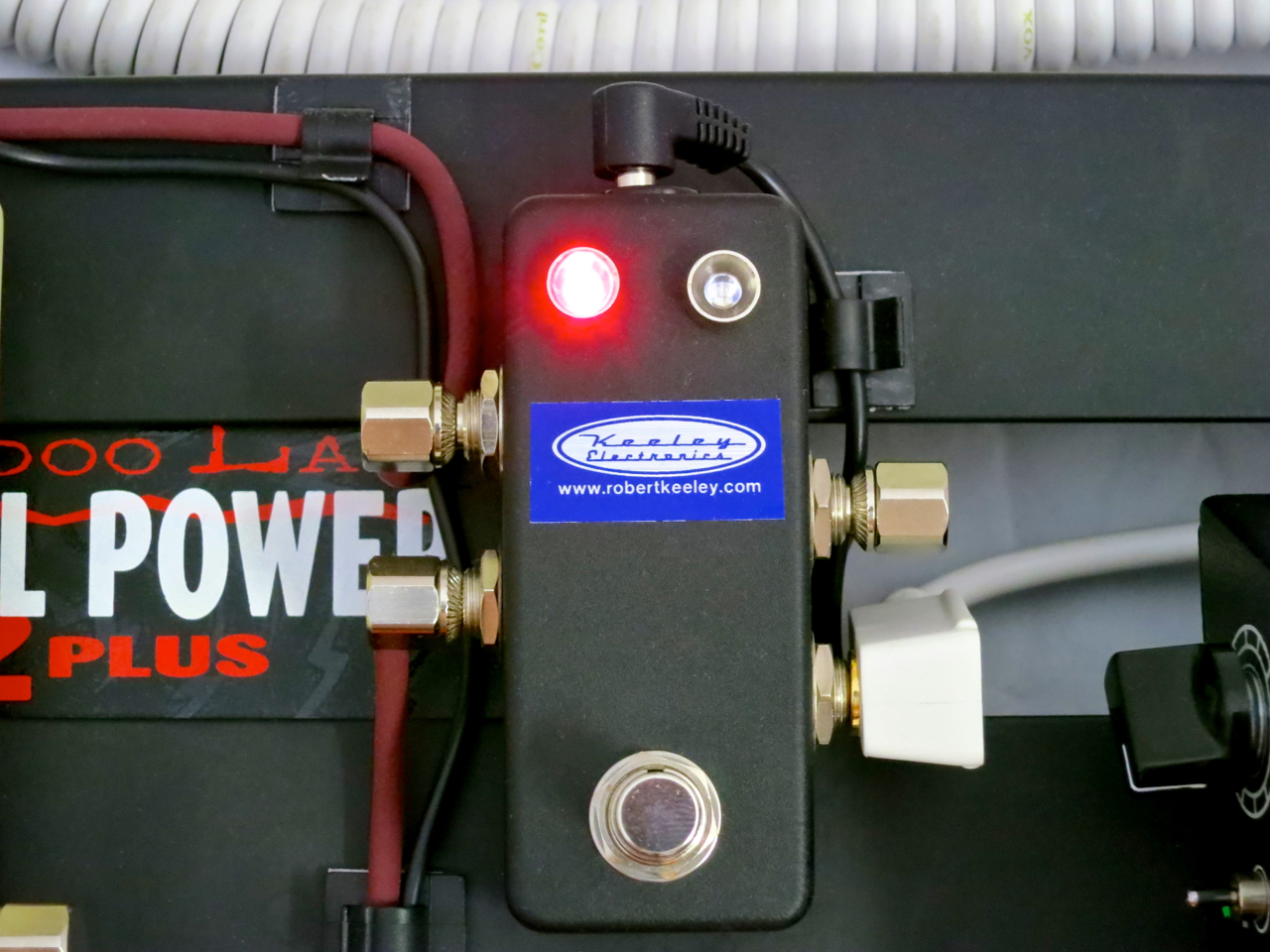
Keeleyn efektireititintä käytetään tässä pedaalilaudassa bypass-kytkimenä, joka mahdollistaa kaikien efektien ohittamista yhdellä polkaisulla.

Custom Sounds Fillmore '70 – Voodoo Lab Pedal Power 2+

Kitarateknikko osaa arvostaa virtalähteeseen liimattuja tarroja.

Custom Sounds Fillmore '70 – Vox plug

Valkoinen Vox-kierrejohto on tyylipuhdas valinta Hendrix-aiheiseen pedaalilautaan.

****

Custom Sounds Fillmore '70 – board angle + Nash Guitar

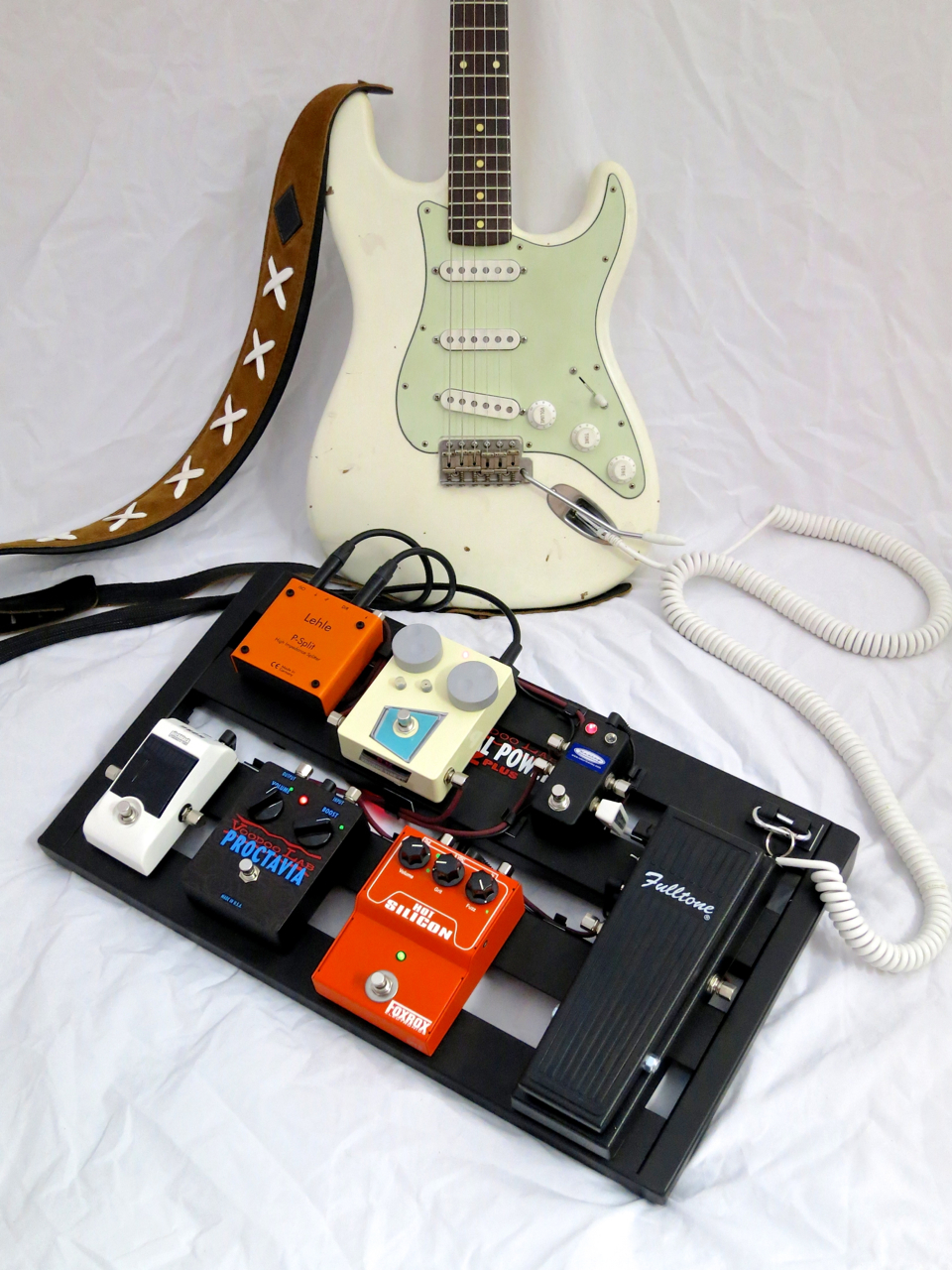
Sain tätä testiä varten Custom Boards Fillmore 1970 -laudan valmiiksi säädettynä Nash Guitarsin S-63-mallille.

Täytyy myöntää, että Fillmore-laudalla pääsee kyllä uskomattoman lähelle Henkan lavasoundia Woodstock-ajalta. Nyt puuttuu enää mestarin soittotaito ja tatsi…

Fulltone Clyde wah-pedaali kuulostaa todella maukkaalta. Buffer-esivahvistin on säädetty tahallaan niin, että pedaalin päälle laittaminen antaa signaalille myös tuntuvasti lisää potkua:

Custom Sounds Fillmore ’70 – Fulltone Clyde with Buffer

Lisäämällä soppaan Foxrox Hot Silicon -fuzzia sointi muuttuu paksummaksi ja likaisemmaksi. Wah-pedaalilla voi löytää mukavasti erilaisia sweet spotteja, sekä oskillaatiota aiheuttavia asetuksia, jolloin kitara alkaa hallitusti kiertää:

Custom Sounds Fillmore ’70 – Foxrox Fuzz + Fulltone Wah

Voodoo Labin Proctavian soundia on vaikea pukea sanoihin. Pedaalia voi kuitenkin käyttää sekä lisämausteena että yksittellen. Tässä klipissä efektien järjestys on ensin wah, sitten lisäksi Proctavia, ja sitten vielä Hot Silicon päälle. Sitten takaisin Proctavian kautta wahiin:

Custom Sounds Fillmore ’70 – Wah + Voodoo Lab Octavia + Fuzz

Hendrixin Woodstock-keikan USA:n kansallislaulun alussa kuulee hyvin Univiben vatkutuksen. Roger Mayerin Voodoo Vibe TC ajaa saman asian. Tässä tulee ensin Voodoo Vibe, sen jälkeen lisätään wah-pedaalia, ja lopuksi fuzzia:

Custom Sounds Fillmore ’70 – Roger Mayer Voodoo Vibe TC + Wah + Fuzz

Videon ääniraidalla käytin erilaisia yhdistelmiä Fillmore 1970 -pedaalilaudan efekteistä. Kaikki raidat on soitettu Nash S-63 -kitaralla:

Third Stone In My Shoe

****

Custom Sounds Fillmore '70 – full back

Kaksi ja puoli tonnia on aika paljon rahaa, ja kyllä Hendrix-tyylisiä soundeja saa aikaiseksi myös huomattavasti halvemmalla.

Custom Boardsin Fillmore 1970 -laudassa ei kuitenkaan ole kyse edullisuudesta, vaan idea on lähteä metsästämään kitaralegendan soundeja mahdollisimman laadukkaalla tavalla, täysin vailla kompromisseja. Käyttämällä tähän lautaan ainoastaan tarkkaan valittuja laatuefektejä Custom Soundsin tiimi on samalla onnistunut poistamaan monia Hendrixin alkuperäisessä signaaliketjussa esiintyneitä ongelmia.

Fulltone Clyde Wah:n ja Foxrox Hot Siliconen virittämisen ansiosta, saa Hendrixin villit soundit syntymään myös kotioloissa pienellä vahvistimella. Todelliseen fiilikseen soittaja pääsee kuitenkin vasta stäkin kautta soittaessa lavavolyymillä, jolloin Fillmore 1970 -lauta tekee sähkökitarasta turboahdetun ja tulta sylkevän muskeliauton. Lähempää Hendrixiä ei varmaan pääse tässä elämässä…

****

Custom Boards Fillmore 1970 – boutique-luokan pedaalilauta

2.490 €

Lisätiedot: Custom Sounds Finland

****

Plussat:

+ yksittäisten laitteiden laatu

+ työnjälki

+ oskillaatio-efektin viritettävyys

+ pro-laatua vailla kompromisseja

Miinukset:

– tällaista laatua ei voi saada edullisemmin

****

KATSO 12-OSAINEN VIDEOSARJA FILLMORE-PEDAALILAUDAN VALMISTUSPROSESSISTA:

Custom Sounds Pedaalilaudat Osa 1/12 – Suunnittelu
Custom Sounds Pedaalilaudat Osa 2/12 – Efektit
Custom Sounds Pedaalilaudat Osa 3/12 – ABCY-vaihtajat
Custom Sounds Pedaalilaudat Osa 4/12 – Virtalähteet
Custom Sounds Pedaalilaudat Osa 5/12 – Pedaalilaudat
Custom Sounds Pedaalilaudat Osa 6/12 – Tarvikkeet
Custom Sounds Pedaalilaudat Osa 7/12 – Huolto
Custom Sounds Pedaalilaudat Osa 8/12 – Kiinnitys
Custom Sounds Pedaalilaudat Osa 9/12 – DIY-liittimet ja -johdot
Custom Sounds Pedaalilaudat Osa 10/12 – Johdot ja liittimet
Custom Sounds Pedaalilaudat Osa 11/12 – Custom Boards Johtoviuhka
Custom Sounds Pedaalilaudat Osa 12/12 – Viimeistely ja koeajo
Custom Sounds Pedaalilaudat Extra: Signaalitien testaus

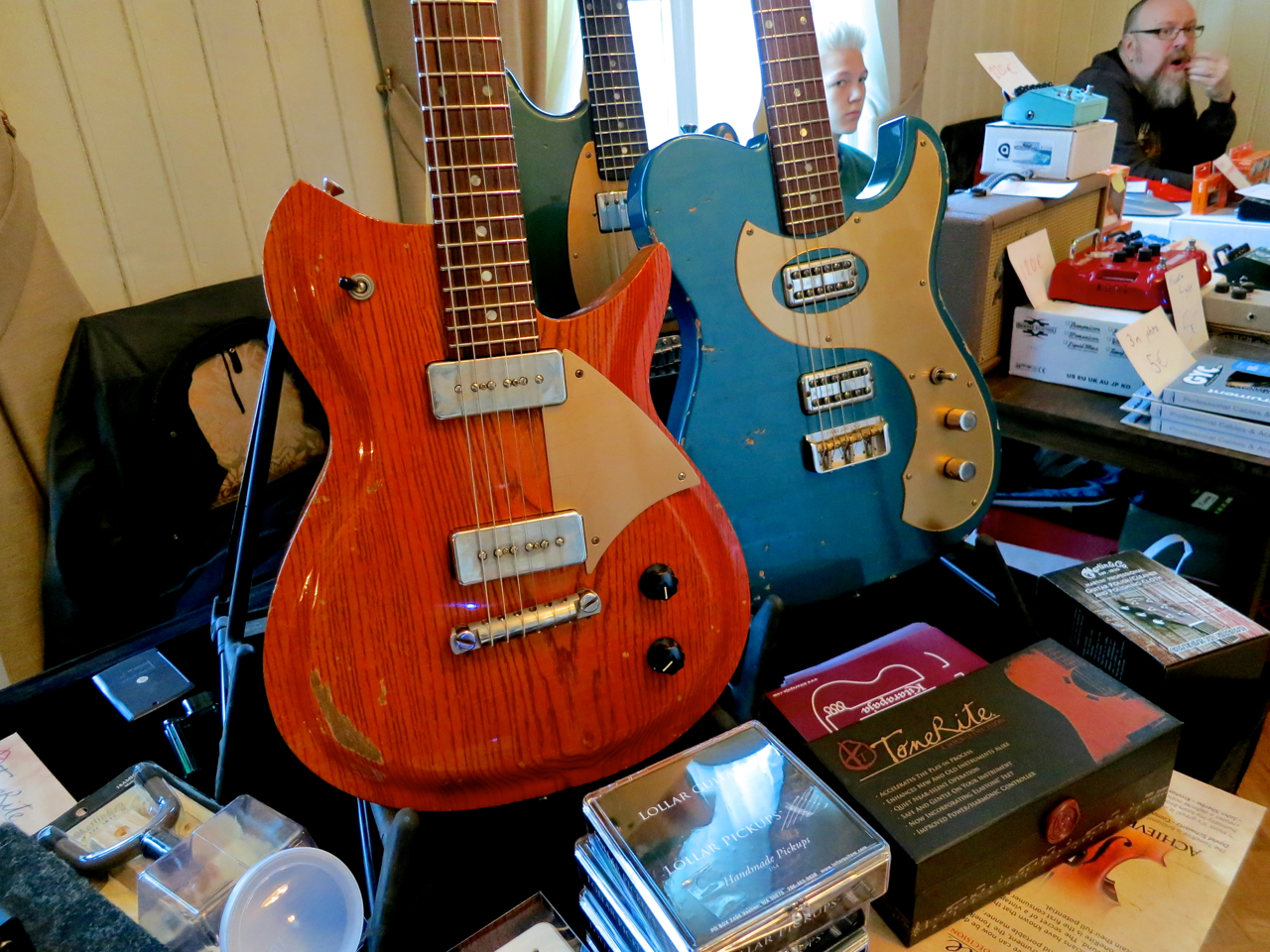
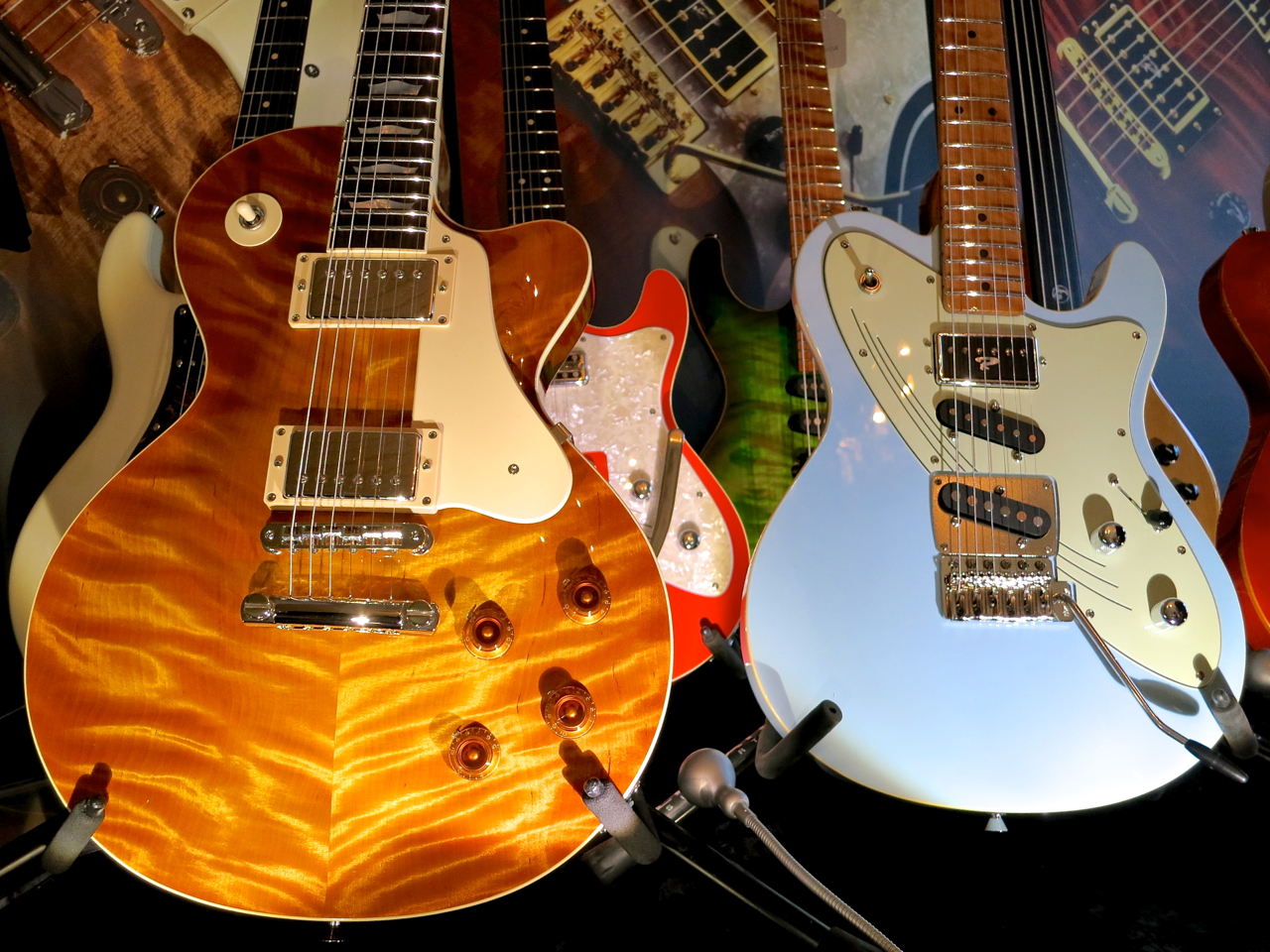
Guitar Porn – Turenki Tonefest 2013

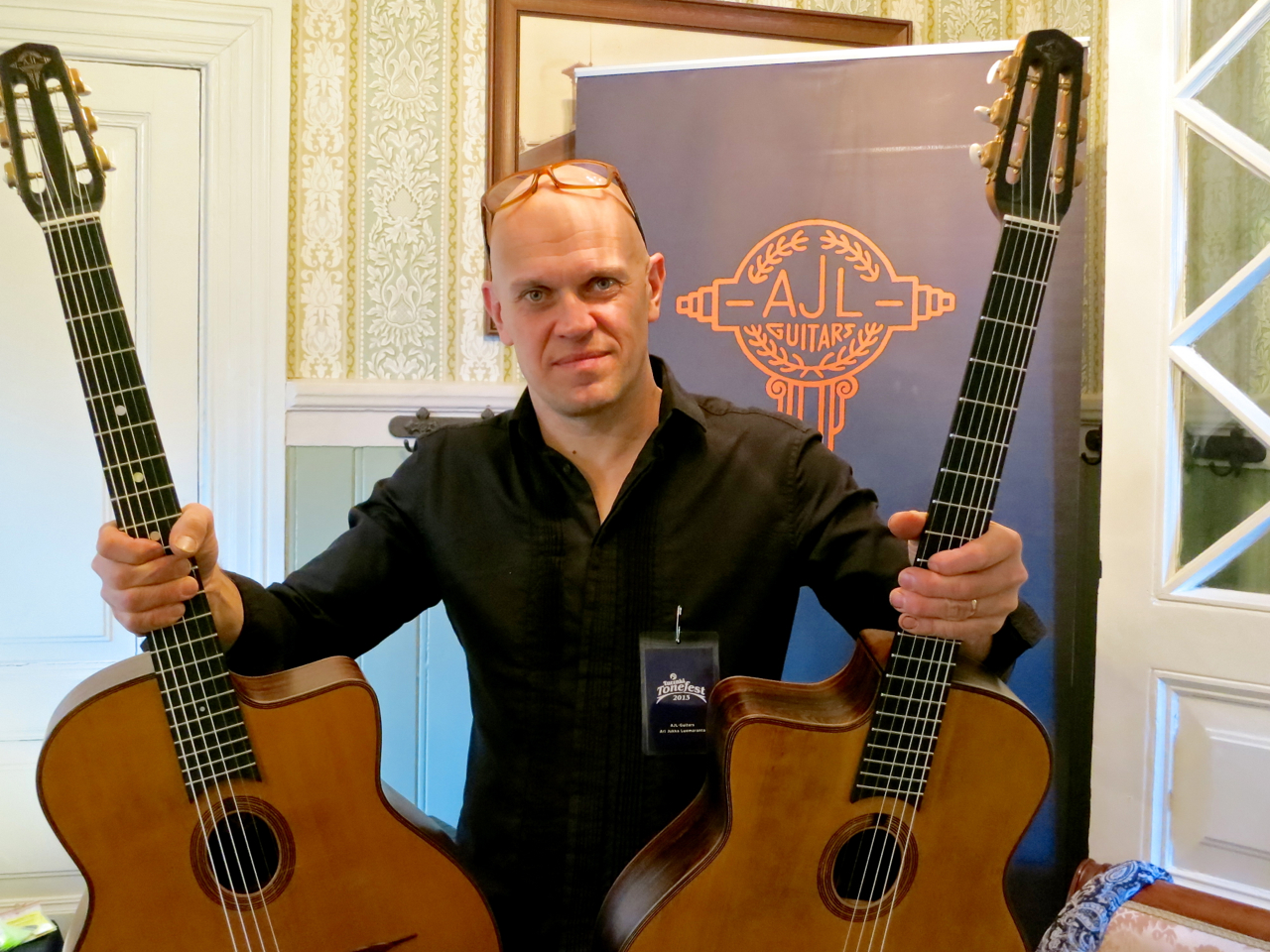
Tonefest 13 – AJL

Ari-Jukka Luomaranta and a pair of AJL-Guitars’ XO-models.

****

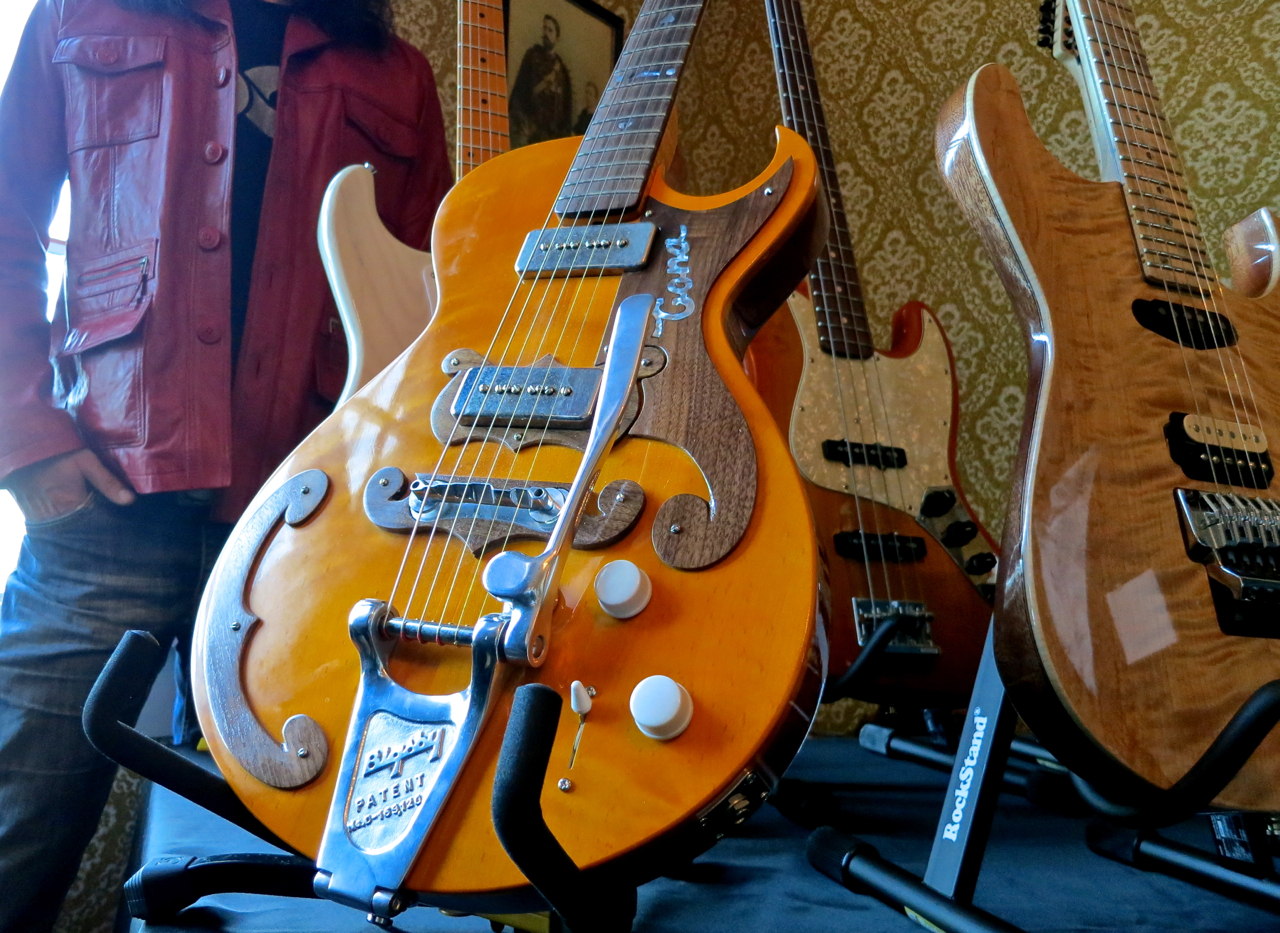
Tonefest 13 – Aurora

Aurora Guitars, and their slant on the famous Bigsby solidbody.

****

Tonefest 13 – Bluetone

A tasty Bluetone Amps tweed combo.

****

Tonefest 13 – Custom Sounds 2

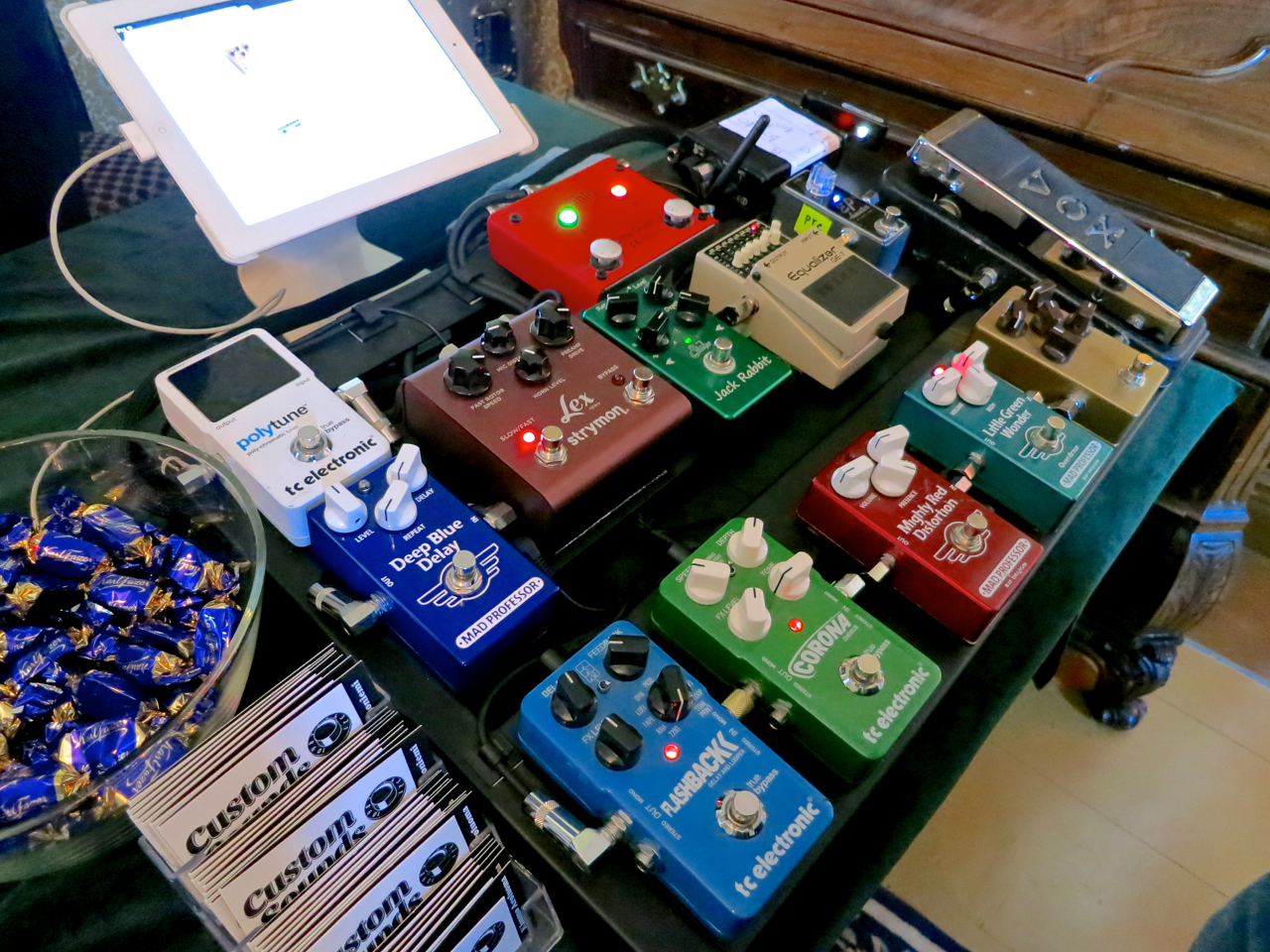
Tonefest 13 – Custom Sounds

Custom Sounds display some of their custom-made pedalboards.

****

Tonefest 13 – Finlandia

Finlandia Instruments’ Costellobird (on the right) is based on an old JAK model.

****

Tonefest 13 – Halla

Tonefest 13 – Halla 2

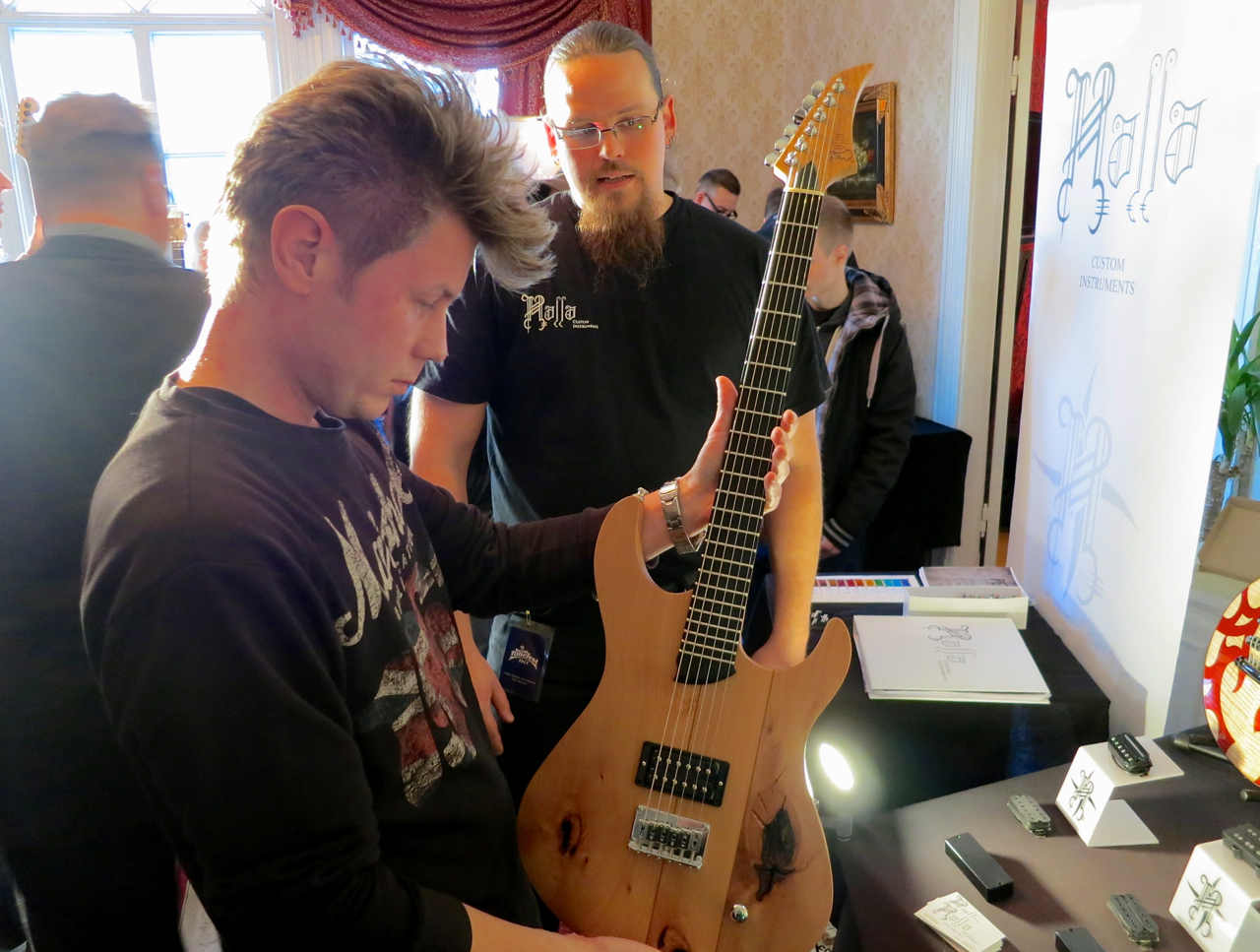
A real eye-catcher from Halla Custom Instruments – a guitar with a body made from very rustic alder.

****

Tonefest 13 – HOS

A futuristic-looking HOS Guitars model.

****

Tonefest 13 – Ikaalinen 2

Tonefest 13 – Ikaalinen

These instruments were made by luthiery students at IKATA.

****

Tonefest 13 – Jasesoi

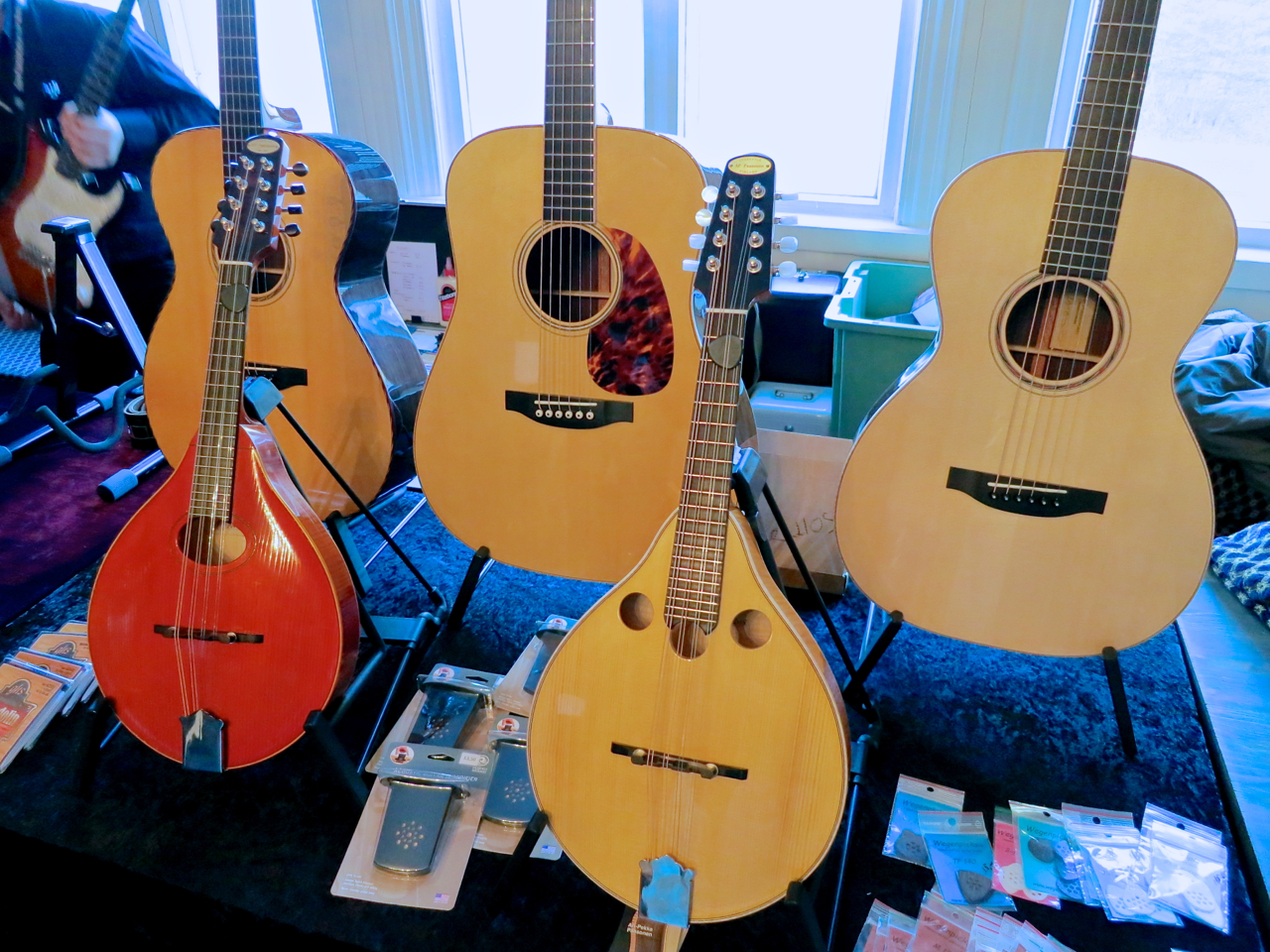
Some of Soitinpaja JaSeSoi’s acoustic models.

****

Tonefest 13 – Kalluste

Kalluste Guitars from Estonia.

****

Tonefest 13 – Kitarapaja 2

Tonefest 13 – Kitarapaja

Swart amps and Fano guitars are among the brands displayed by Kitarapaja.

****

Tonefest 13 – Koivisto

Koivisto Guitars with two electric models and an interesting lute-type design.

****

Tonefest 13 – Monster 2

Tonefest 13 – Monster

Monster Custom Amps and Visual Clone Guitars – the cool factor is built-in.

****

Tonefest 13 – Oakbridge

Tonefest 13 – Oakbridge 2

Oakbridge Instruments specialise in acoustic instruments.

****

Tonefest 13 – Veijo Rautia

Tonefest 13 – Rautia 3

Tonefest 13 – Rautia 2

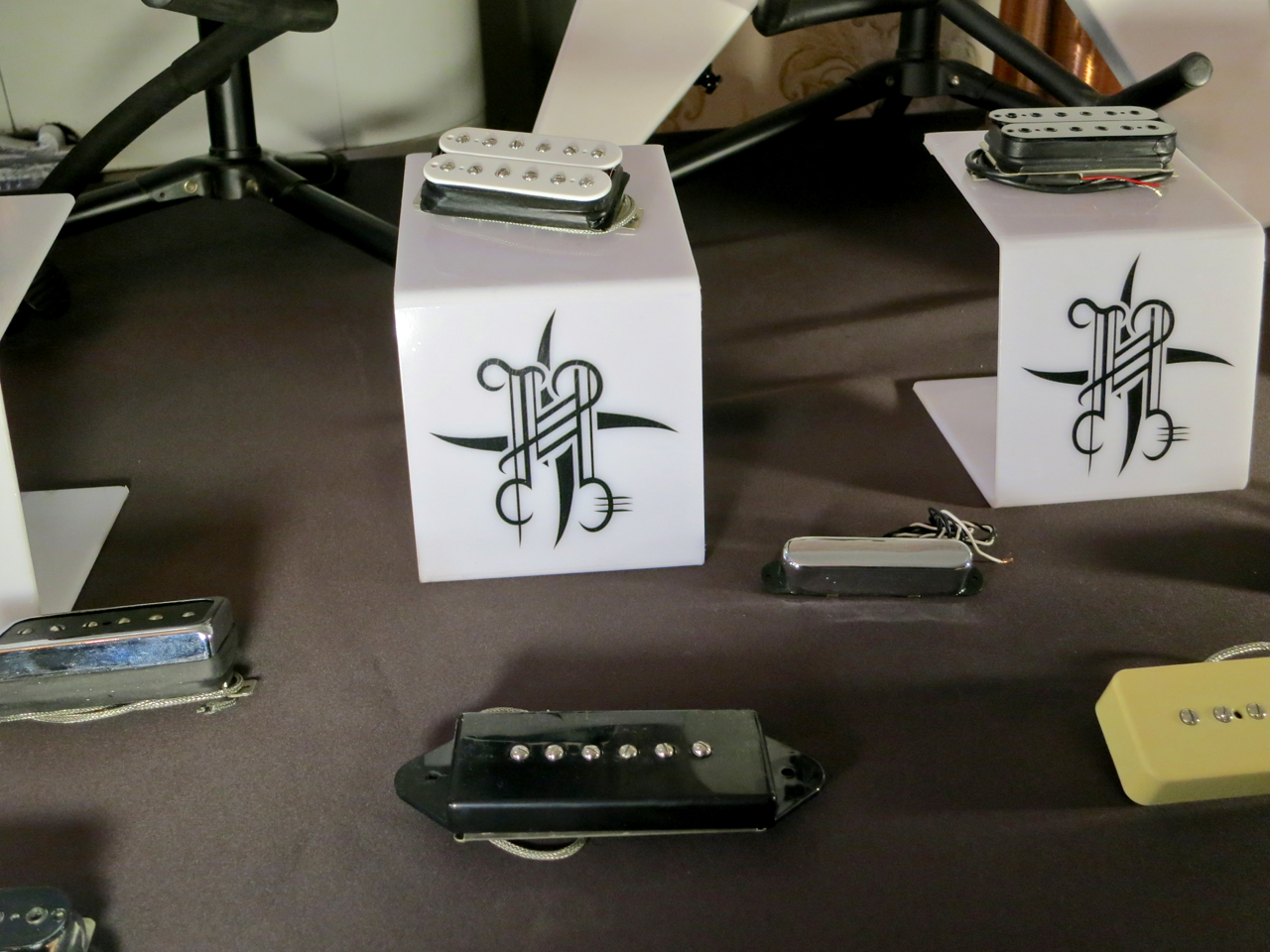
Veijo Rautia gives you lots of electric mojo with his custom guitars and pickups.

****

Tonefest 13 – Romu

Romu Amps from Estonia

****

Tonefest 13 – Markus Setzer

German master bassist Markus Setzer digs the new fretless version of the Ruokangas Steambass.

Tonefest 13 – Ruokangas

Tonefest 2013 – Ruokangas 2

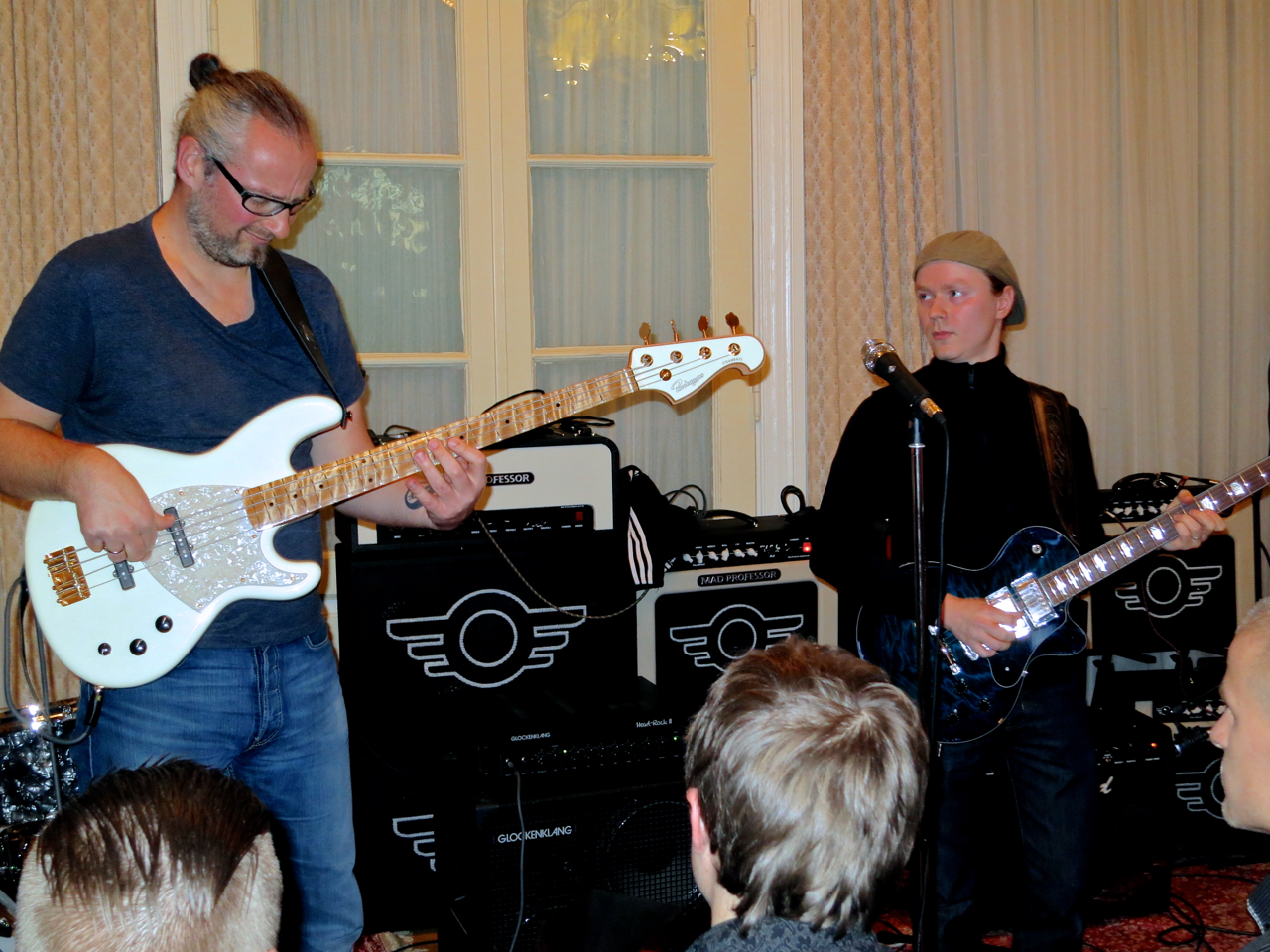
Tonefest 13 – Setzer & Paranko

Antti Paranko and Markus Setzer in action with their Ruokangas instruments.

****

Tonefest 13 – Tyyster

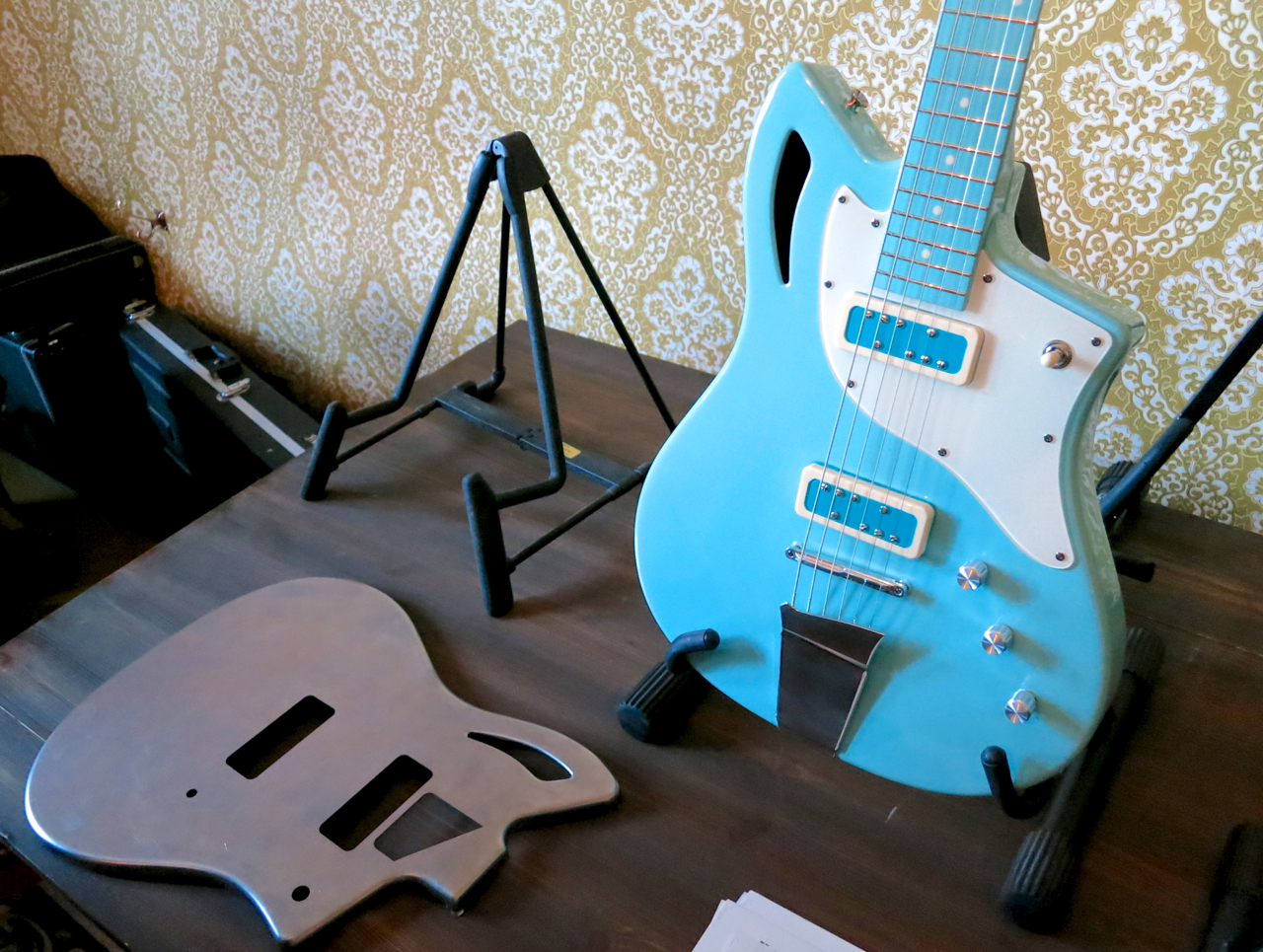
Tyyster gives you plenty of rootsy tone and cool retro looks from metal topped guitars.

****

Tonefest 13 – Halme

Saturday saw lots of live action from Pauli Halme’s record release gig…

Tonefest 13 – Kela

…to Anssi Kela and Tuomas Wäinölä.

****

Turenki Tonefest 2013 (16. + 17.11.2013)

Pidä blogia WordPress.comissa.

Ylös ↑