Everybody has heard of Tokai, and there’s plenty of knowledge about Greco’s and Ibanez’ copycat instruments around.
The Kasuga-brand is a much rarer beast, even though the company produced many decent instruments (many of those were copies) between the mid-Sixties and the Eighties.
I own a Kasuga-version of Gibson’s classic ES-335, which was most likely produced in the late 1970s, judging by its main specs.


I found my Kasuga by chance in a flea-market in the early Nineties. The price asked was so low and the guitar so red, it was a no-brainer. 😉
The classic curves of a Gibson ES-335/345/355 are one of the prettiest guitar shapes, in my opinion.
In some respects this copy is a funny hodgepodge of different attributes lifted from different periods of the original’s lifespan. Additionally there are also some of Kasuga’s own details added.

Take the headstock, for example, which is the larger version, generally used for the bound headstock of the Gibson ES-355 model.

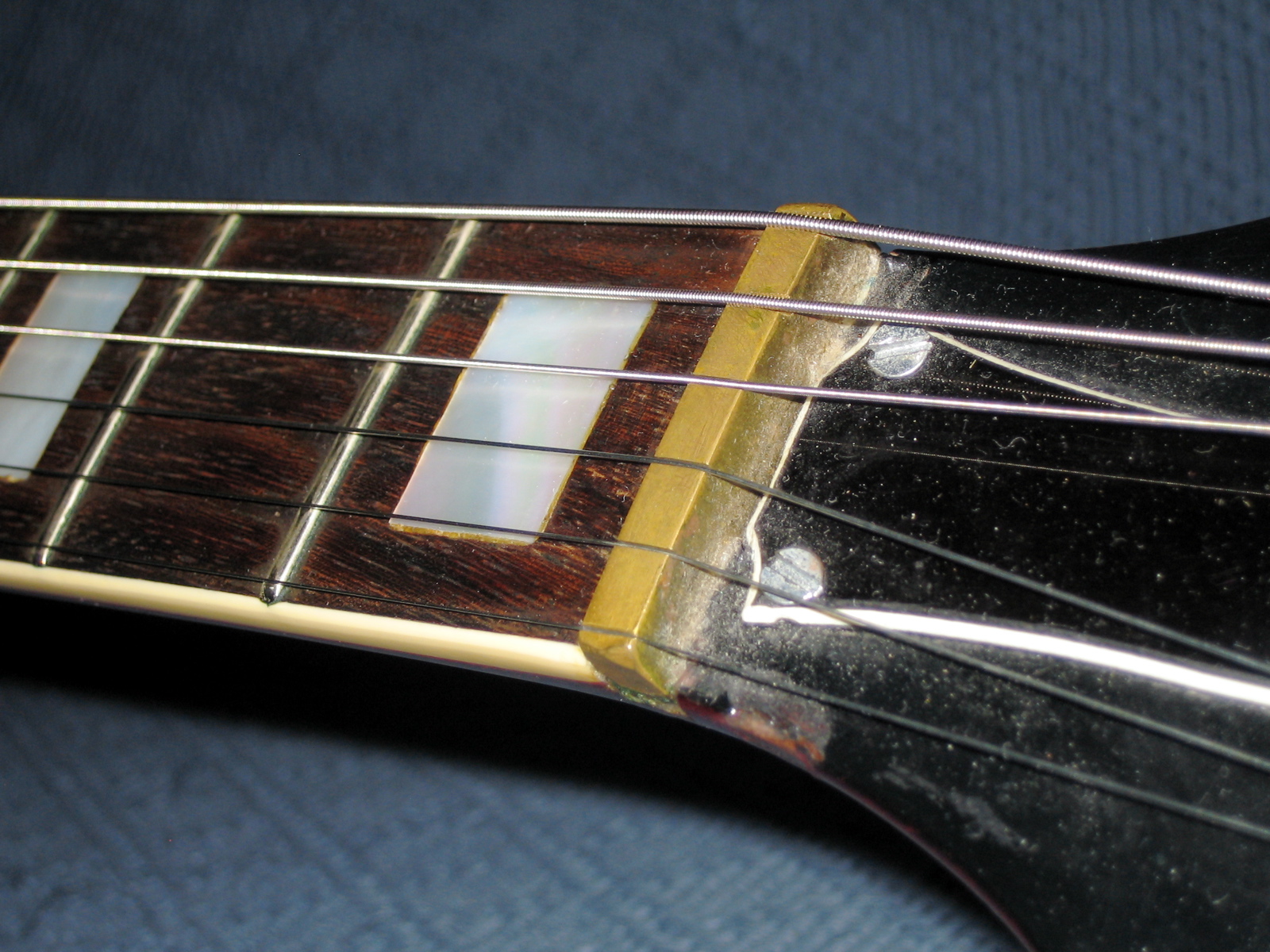
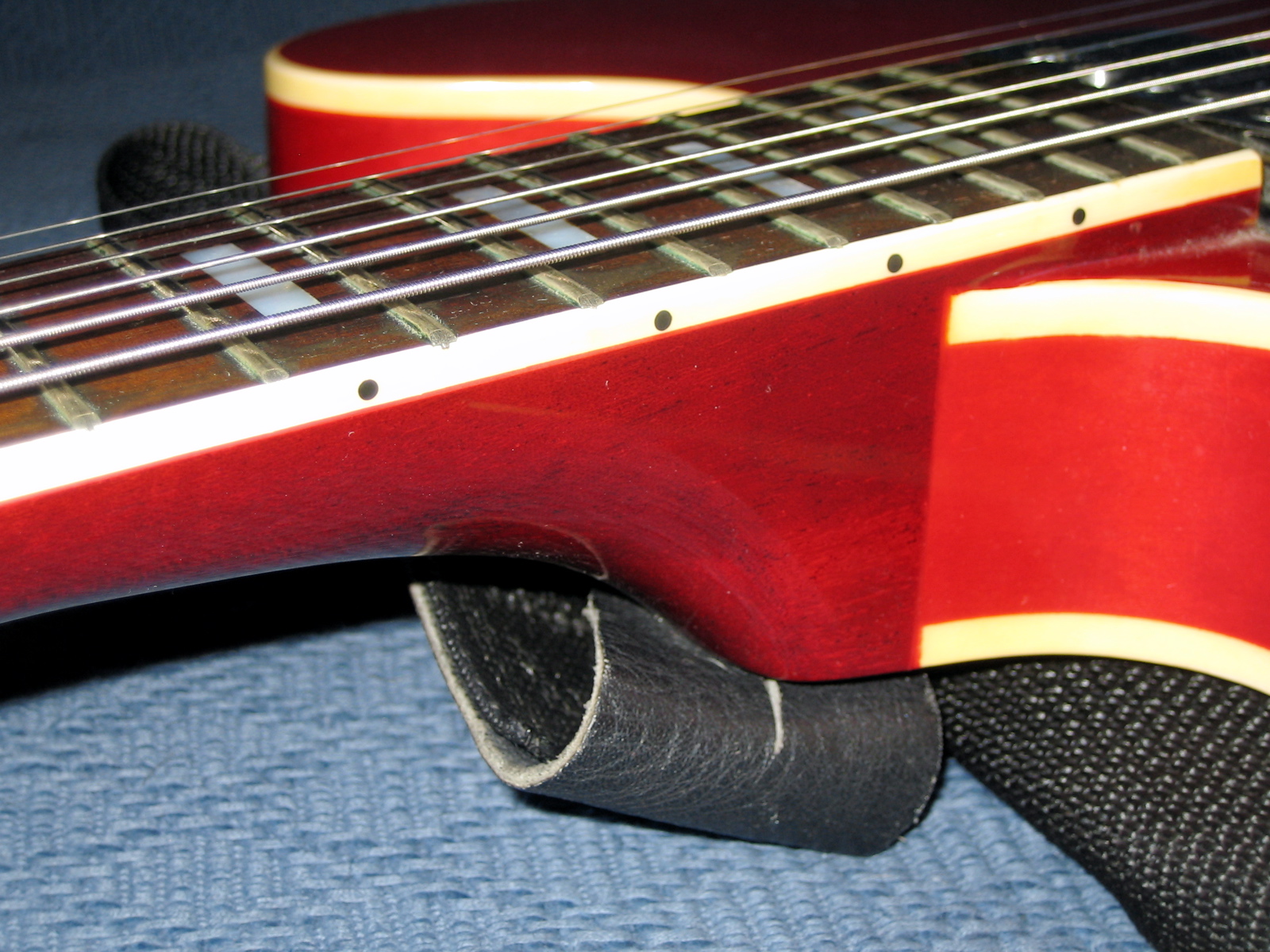
A previous owner had installed a brass nut – very much in fashion in the early Eighties. The extremely low frets are original, as are the large pearl inlays. The neck profile is a copy of Gibson’s 1970’s slim type.

The sealed tuners are of a make that I’ve never seen before or since. There’s the typical 1970s volute, meant to strengthen the neck’s wrist and the headstock.
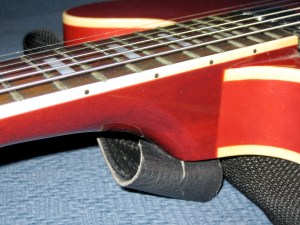
Genuine mahogany has been used for the set neck.

One of the f-holes reveals the body’s five-ply laminate, which seems to be maple/mahogany/maple/mahogany/maple.
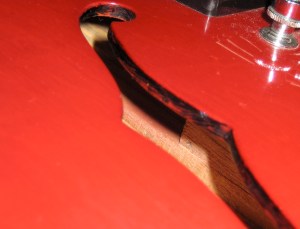
The Kasuga even mimics Gibson’s Seventies short centre block, that only starts at the bridge. The neck has its own little block. In this case the centre block has been fashioned from mahogany.

The electronics are high quality – the original pots all still work fine, as does the switch. I only had to replace the output jack some ten years ago.

Strangely enough the arch of the body is not as pronounced and graceful, as on the originals. The humbuckers are standard sized, but the bezels are wider than normal.

The body ears have been left completely flat on the Kasuga, while the original sports very attractive arching both on the top as well as the back. The ears are slightly pointed, as was usual in post-1964 Gibsons as well.
Here are some Kasuga soundbites:
Kasuga – neck PU
Kasuga – both PUs
Kasuga – bridge PU
Kasuga – plus lead







 Kitarablogi.com – Finland's premier Guitar and Bass blog