
****
Kitarablogi.com – Finland's premier Guitar and Bass blog
Juttuja kitaroista ja bassoista

****

Upouusi Roland Mobile AC on paristokäyttöinen, stereofoninen vahvistin akustiselle kitaralle sekä laulumikrofonille.
Mobile AC:n tärkeimmät ominaisuudet ovat:
Lisätiedot: Roland

There’s surprisingly little information available on the net when it comes to classical/nylon-string guitars.
Now Kitarablogi.com comes to the rescue:
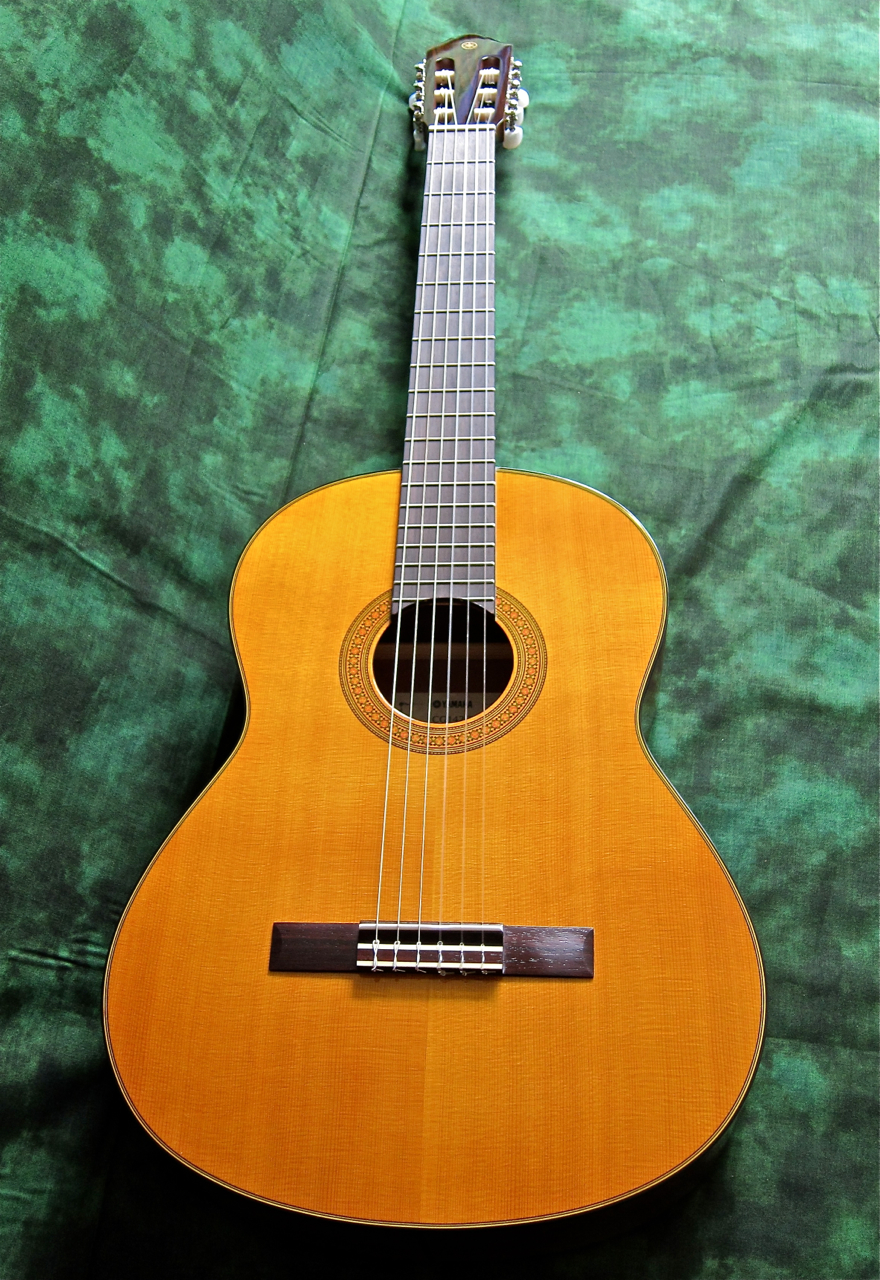
Yamaha’s C- and CG-series instruments are the best-selling classical guitars in Finland. We selected a solid cedar -topped Yamaha CG142C for this review.
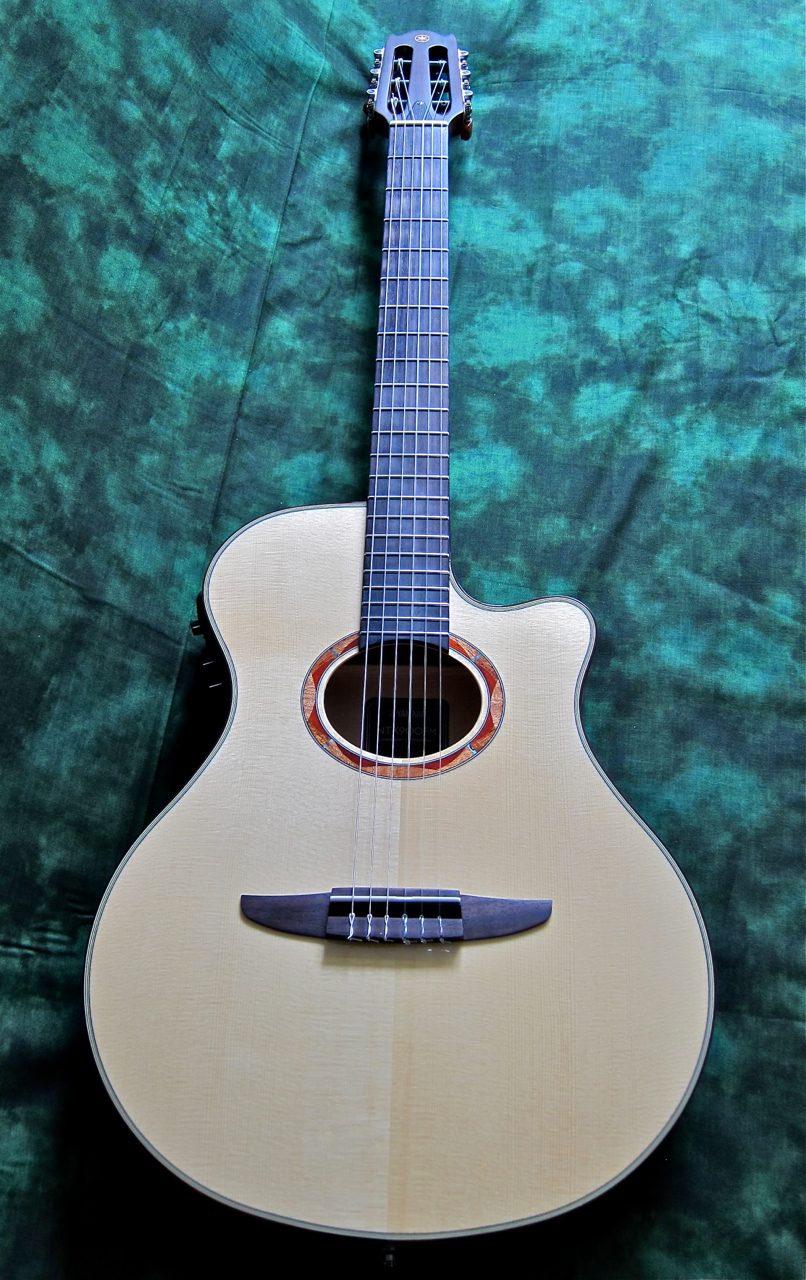
The Yamaha NTX900FM is a very interesting hybrid model – a nylon-string with a pickup and preamp system, as well as a narrower-than-classical nut width.
****

Typical of the company’s output, Yamaha’s CG142C (current street price in Finland approx. 300 €) is an extremely clean piece of work with the understated charm of a classical guitar. All CG-series guitars are build with solid tops – spruce-topped models have an ”S” suffix to their name, while cedar models are denoted with a ”C” at the end of their model name.

The neck, as well as the body’s back and rims, has been crafted from nato-wood. Nato is a South-East Asian tree species (lat. Palaquium) which looks and sounds similar to mahogany. The neck is solid wood, while the body (apart from the top) uses nato-plywood.
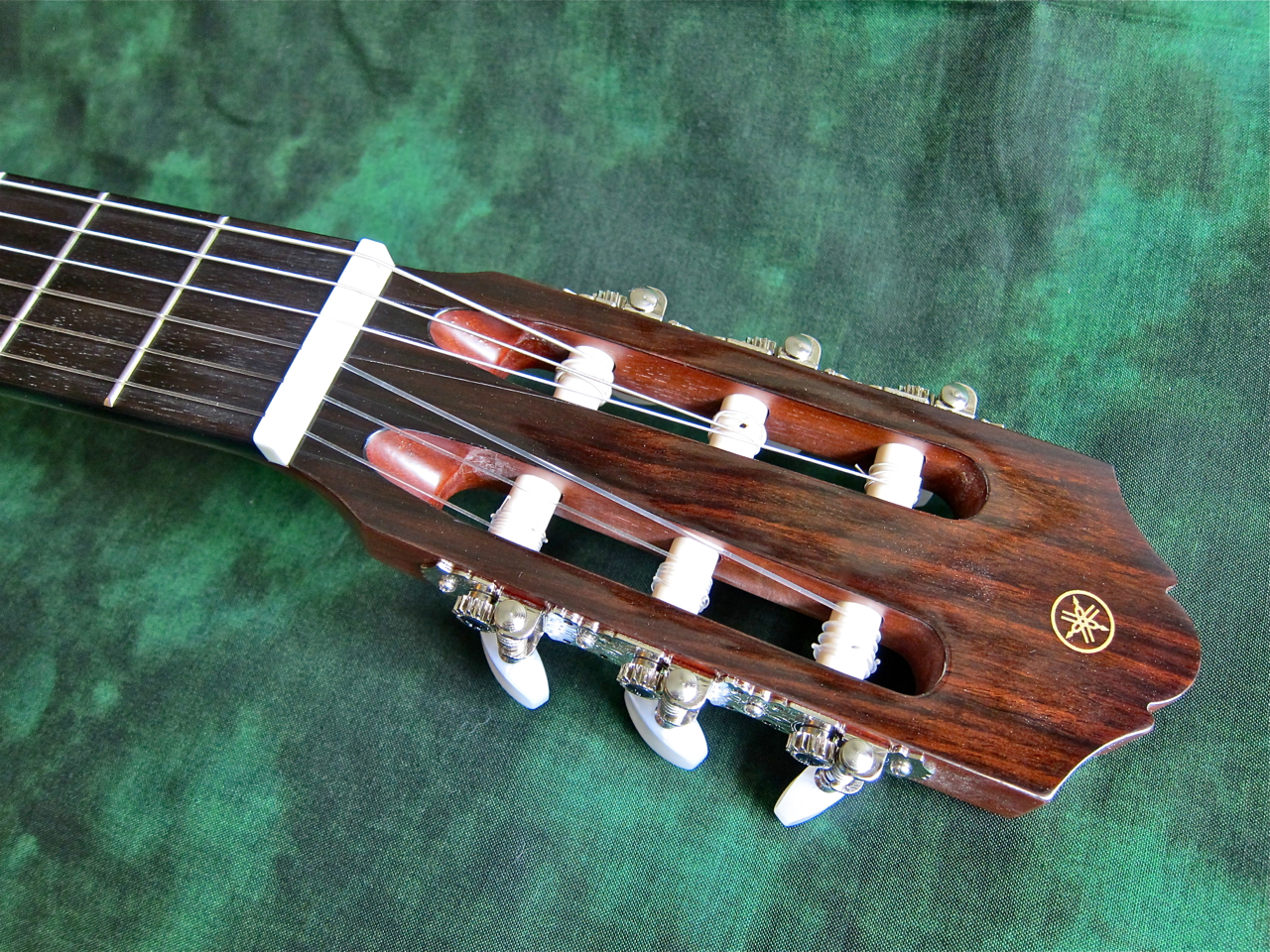
The headstock sports a beautiful rosewood veneer.
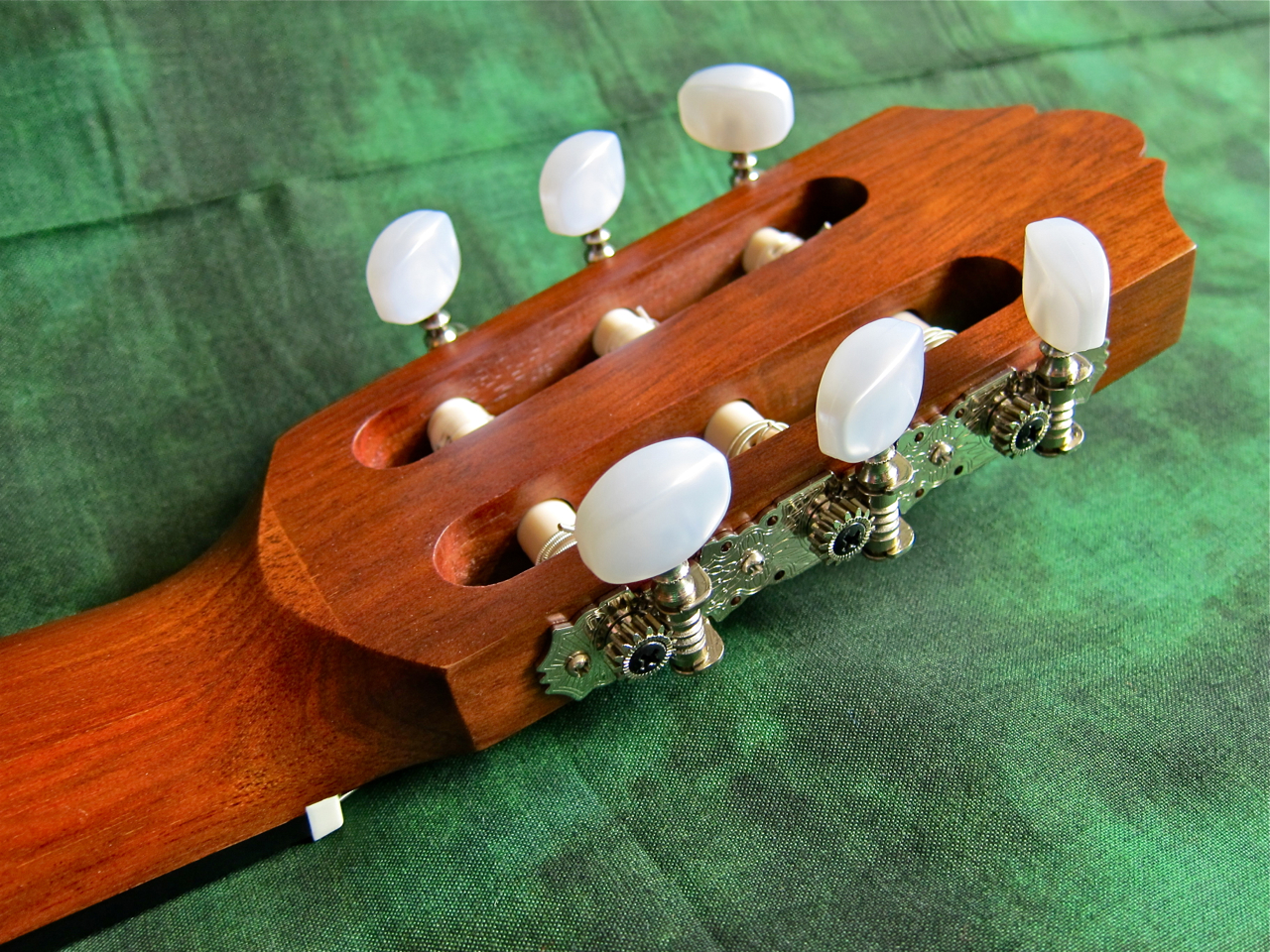
The CG142C comes equipped with traditional, open tuners. The headstock has been glued to the main part of the neck right above the neck wrist.

The satin-finished neck has been made by gluing together three strips of nato side-by-side. Added onto this main part is the neck heel, built up from several pieces of nato. Using small cut-offs in this way not only keeps costs sufficiently low, but also helps to save natural resources.

The bound rosewood fretboard sports traditional small and narrow frets.
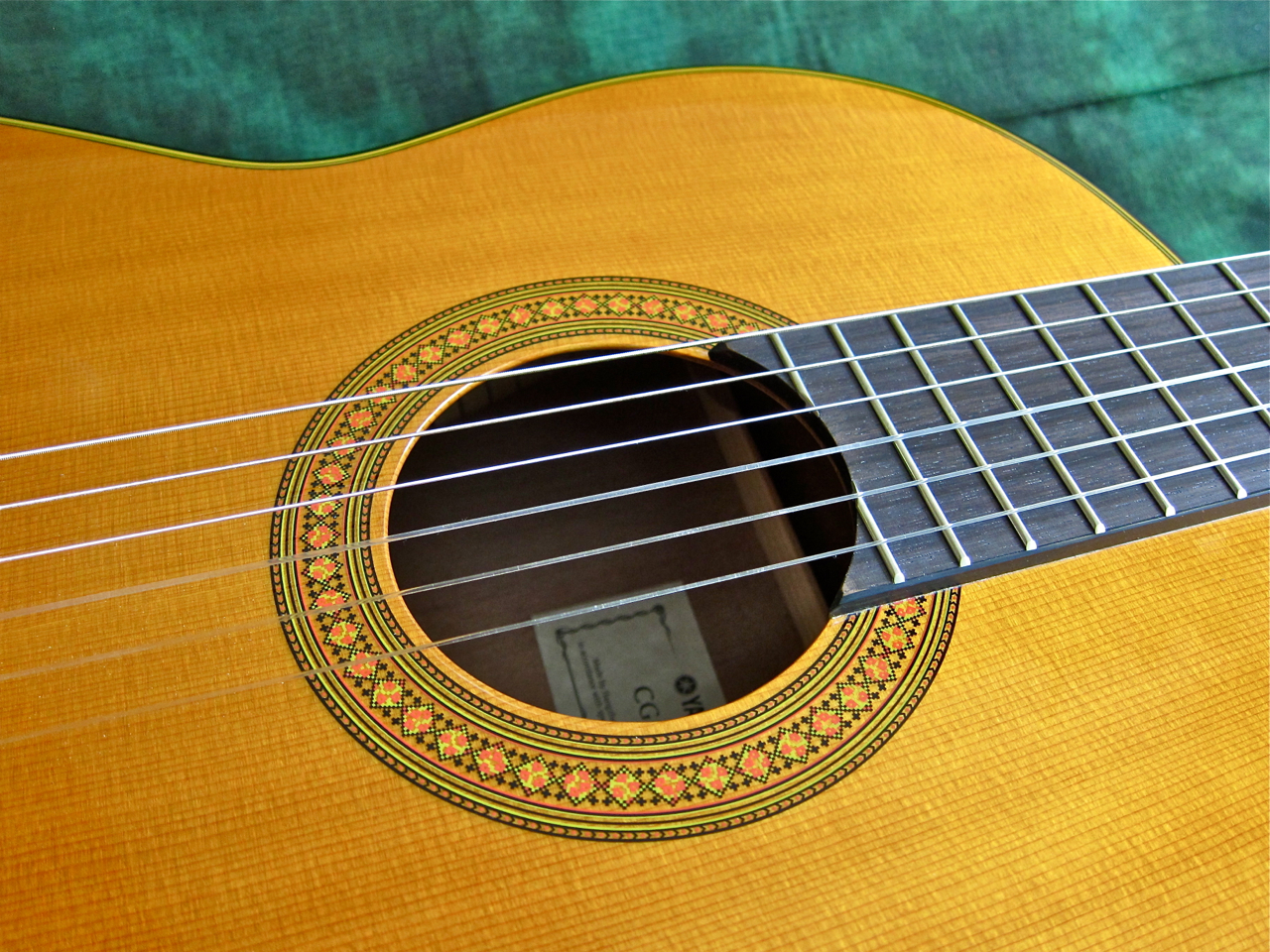
The CG142C’s beautiful rosette is actually a decal, stuck onto the top prior to lacquering, which is common practice on many budget classicals. Higher-priced models feature rosettes crafted from many small pieces of wood and other materials.

Here’s a close-up look at the top’s five-ply binding.
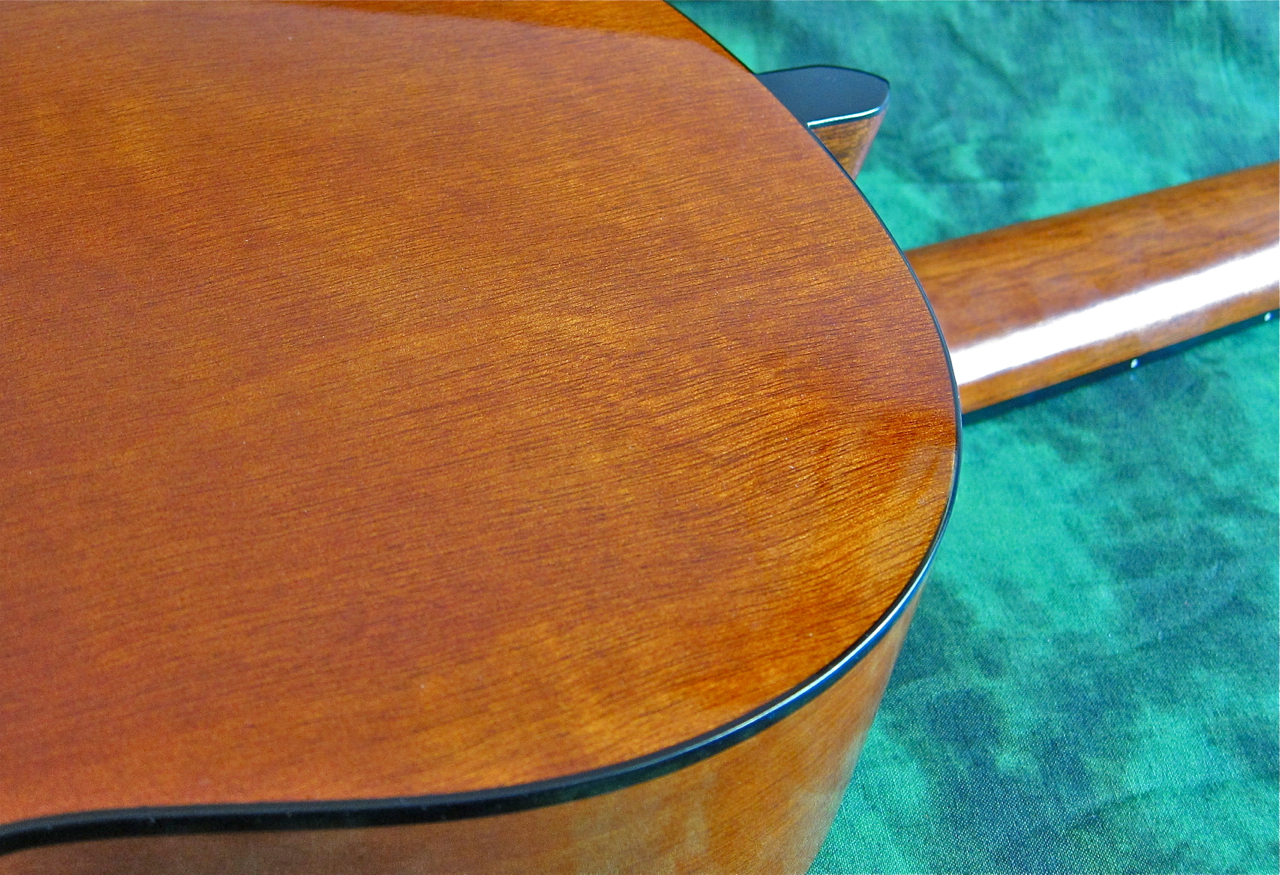
The back’s black binding is carried across to the heel cap.
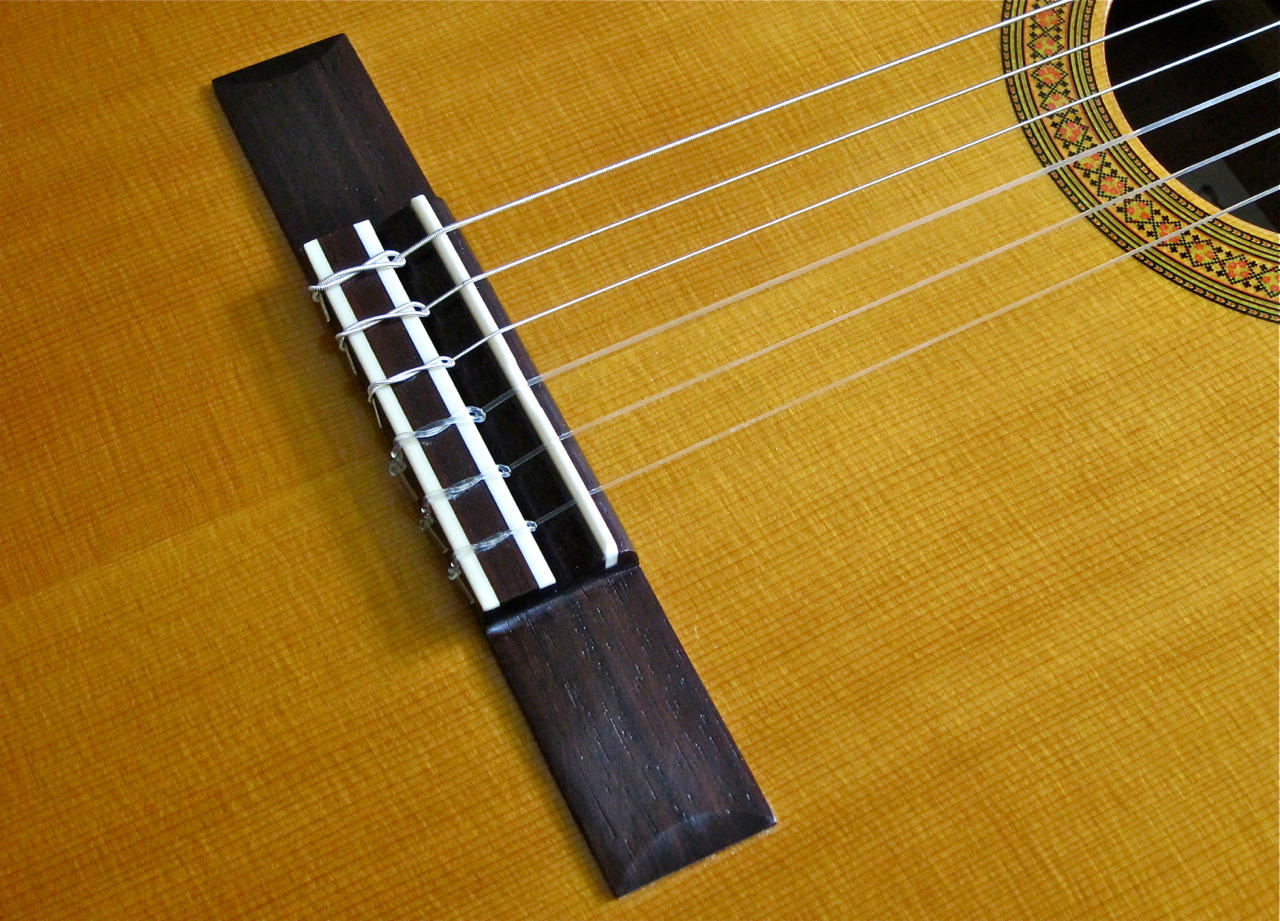
The Yamaha CG142C’s rosewood bridge is quite fetching in its poised simplicity.

Yamaha’s classical guitars tend to display clean workmanship on the inside also.
****

The Yamaha NTX900FM (current street price in Finland approx. 800 €) is the nylon-string cousin of the company’s APX-guitars. It has been designed for the guitarist who needs a quality pickup system, but doesn’t necessarily like the traditional wide and flat classical neck profile.
The NTX900FM’s top has been crafted from solid Engelmann-spruce.
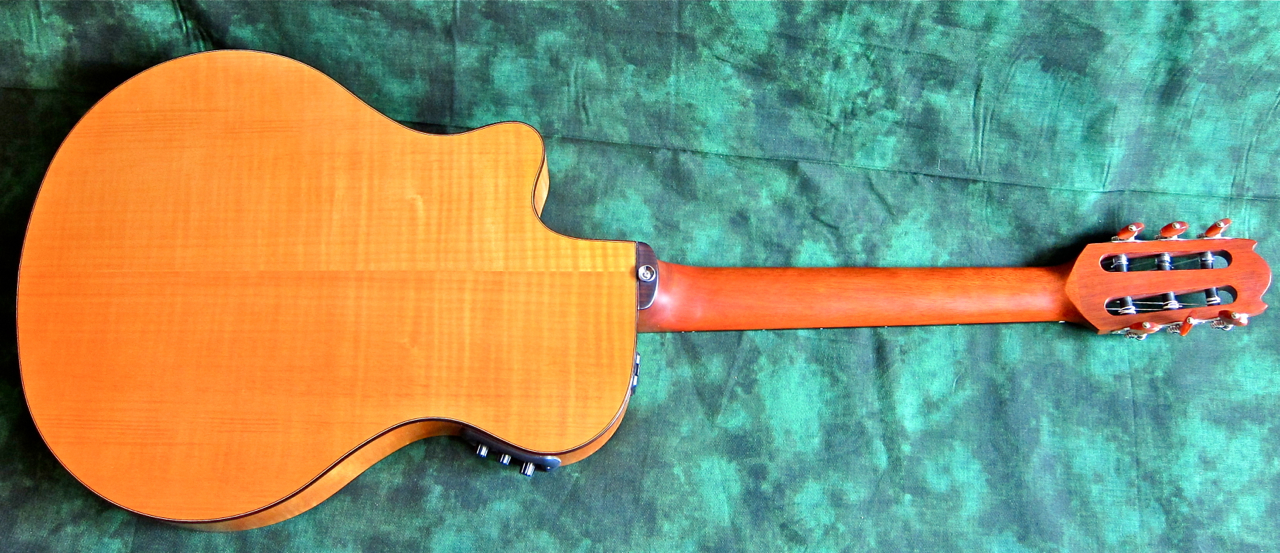
The nato neck has been glued to the maple body.
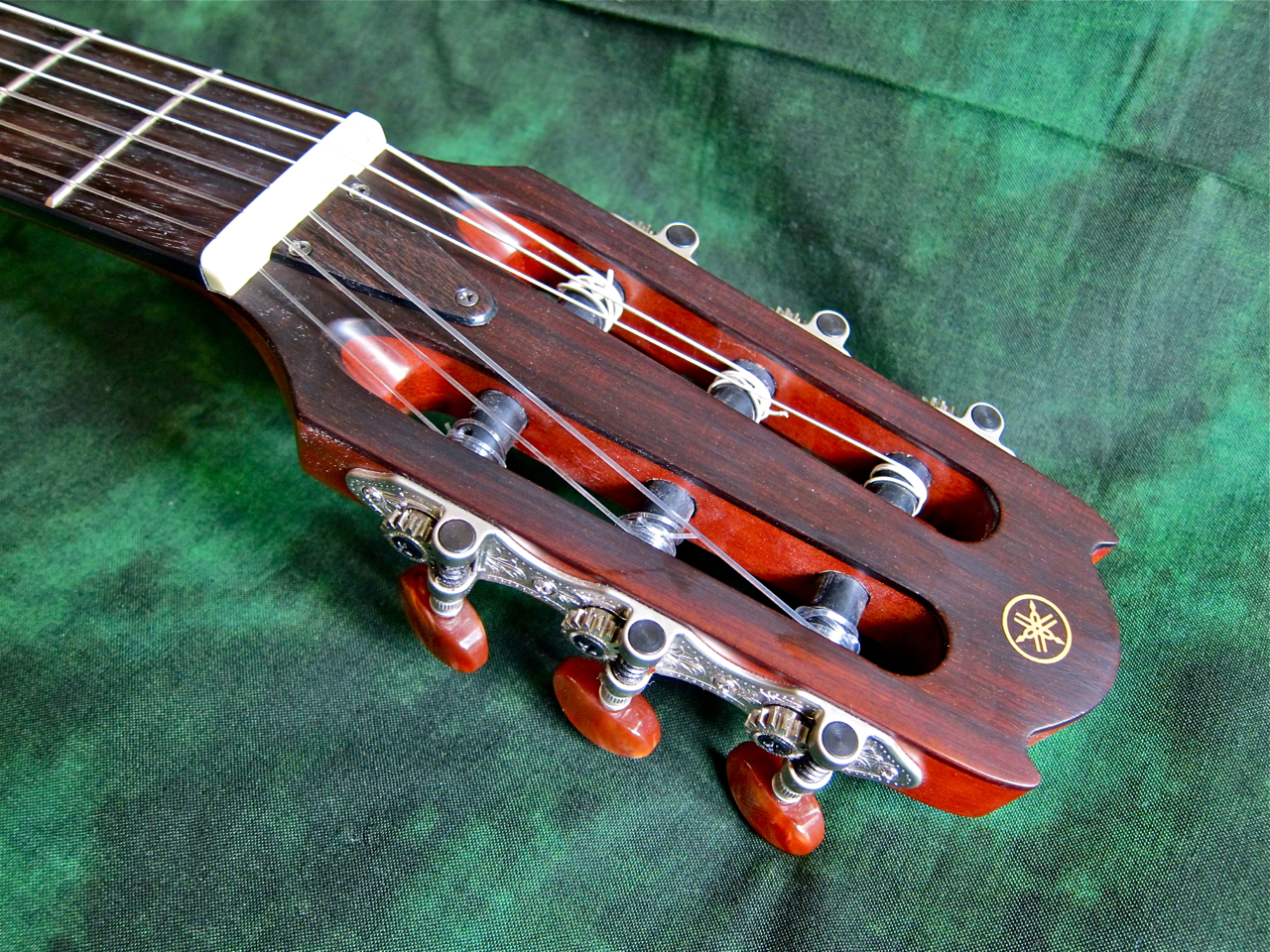
The headstock displays a cool and contemporary look…
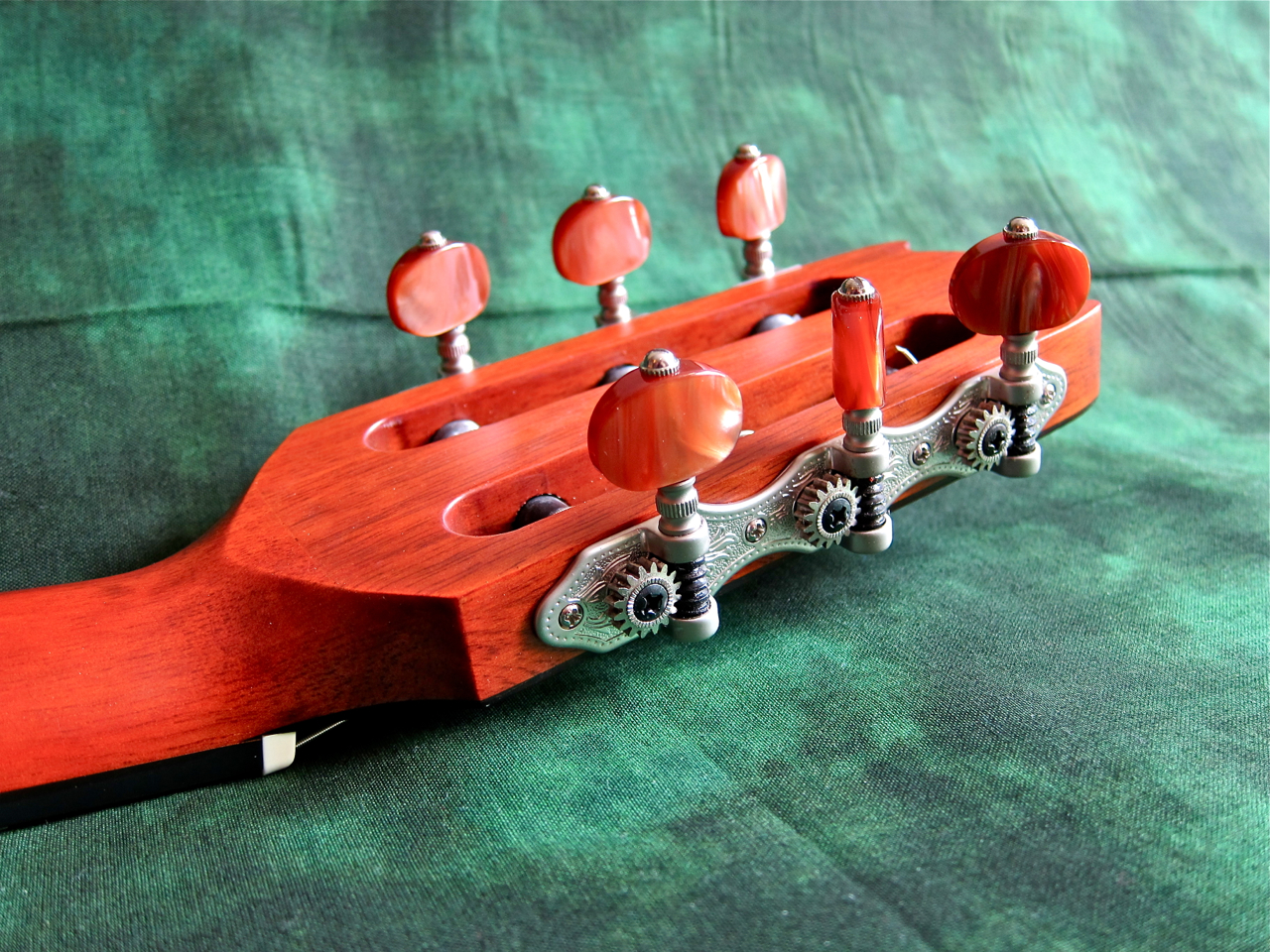
…which is complemented by the nice tuners.
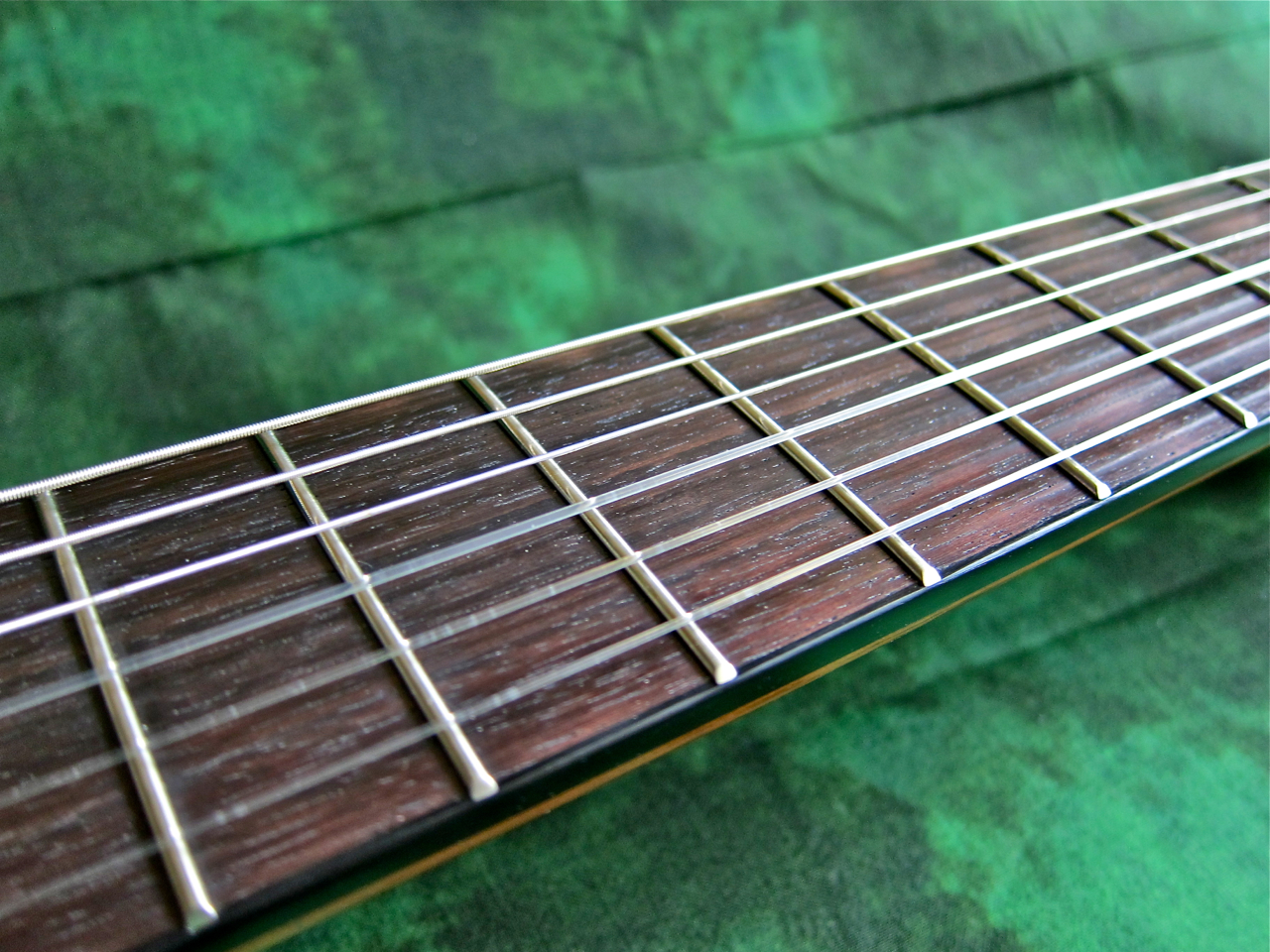
The NTX’ bound fingerboard is rosewood and comes with traditional frets.

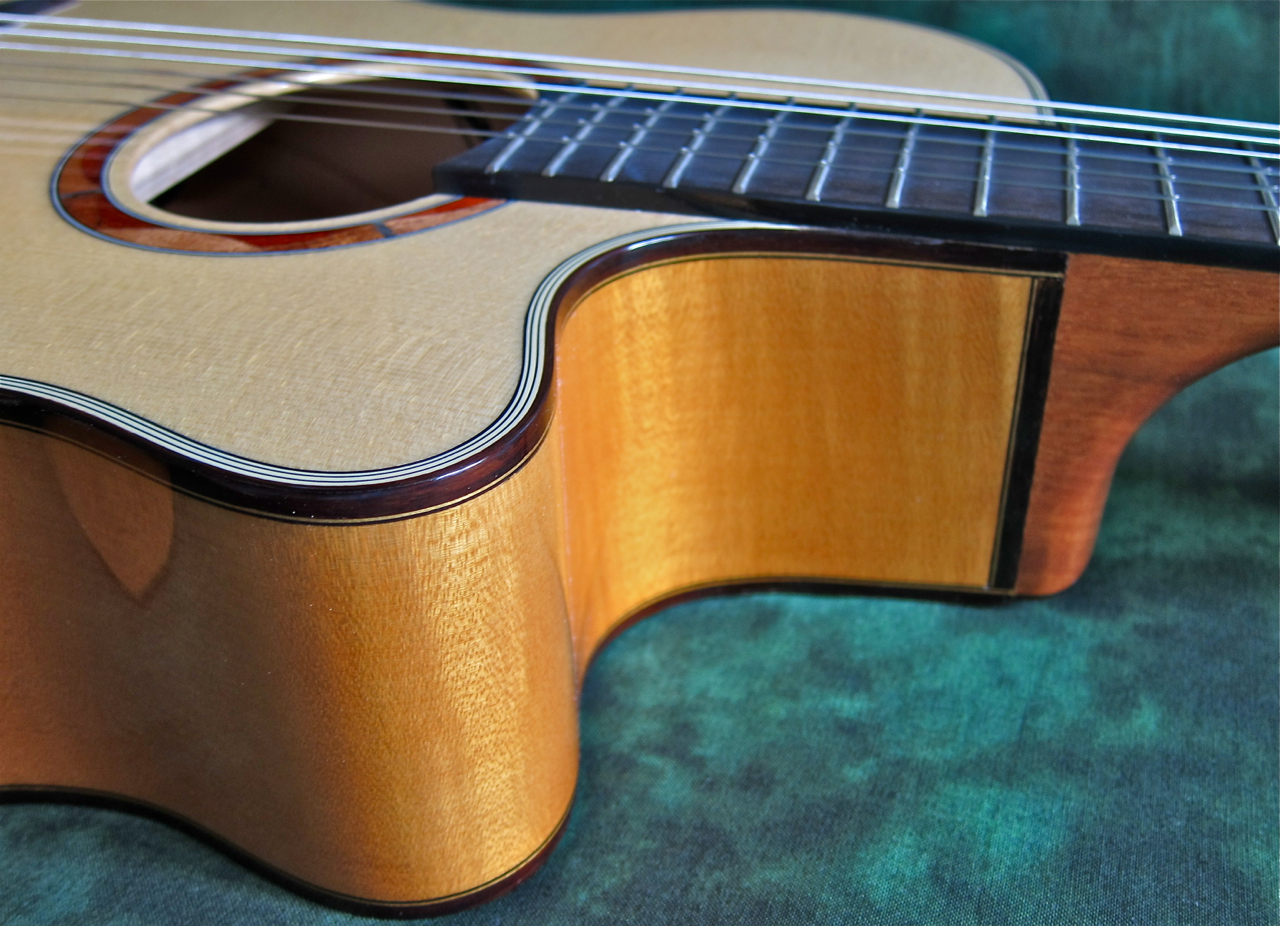
NTX-guitars have the same type of body shape as their APX-brethren, and, just like the APX-guitars, the NTX-body is also shallower than what you’d expect from a classical guitar (with a depth of about 75 %).
The NTX900FM’s rosette has been beautifully crafted from various pieces of wood, as well as small bits of abalone.
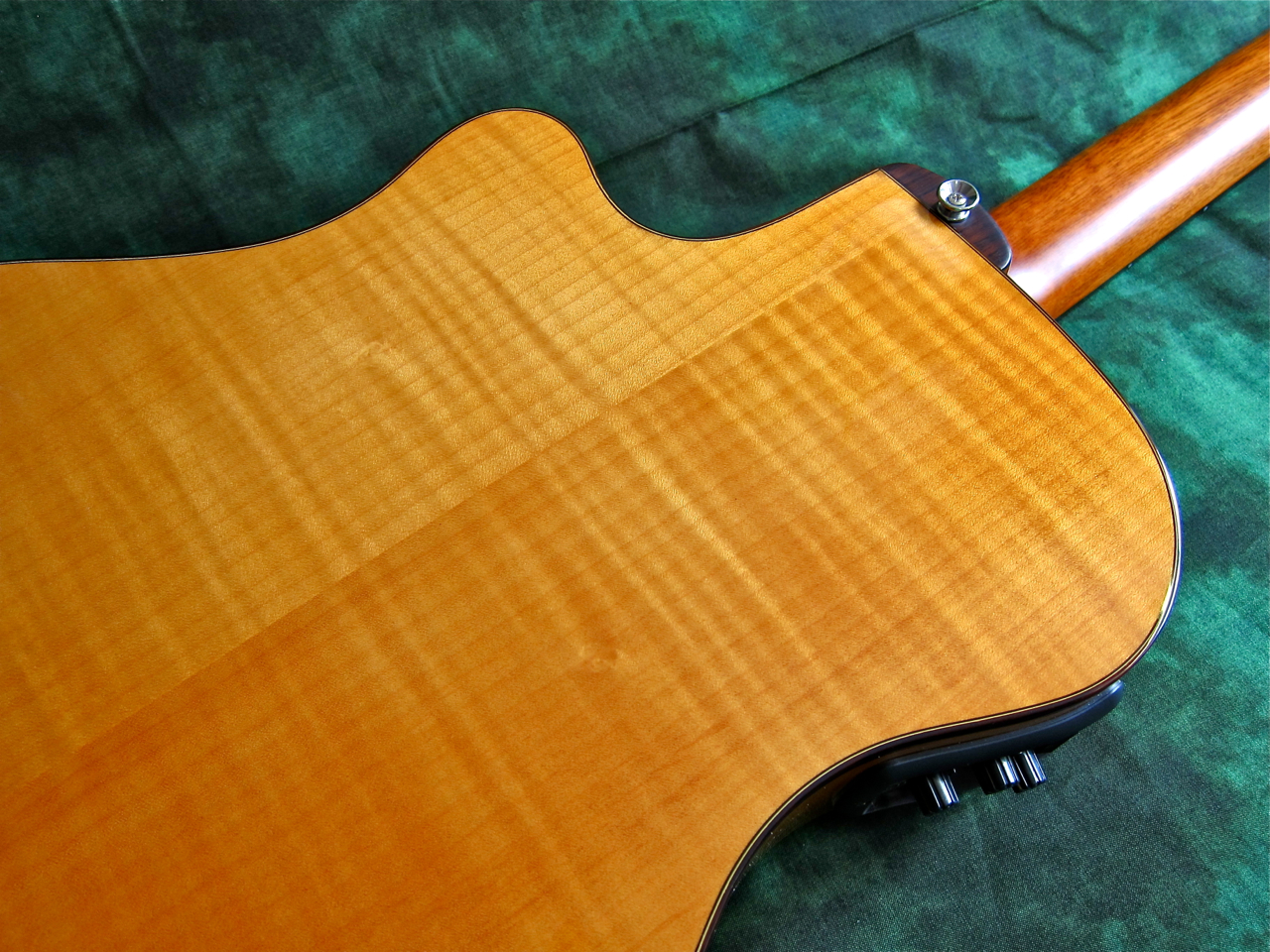
The honey-coloured finish of the flame maple soundbox looks good enough to eat.

Thes NTX900’s rosewood bridge also breaks with classical tradition in a stylish way.

This guitar’s preamp is Yamaha’s ART System 61, which is a two-band preamp with separate piezo transducers for the bass and treble string triplets. This enables you to adjust signal levels independently for the bottom and top halves. The ART System 61 preamp is equipped with a three-band EQ and a digital tuner.
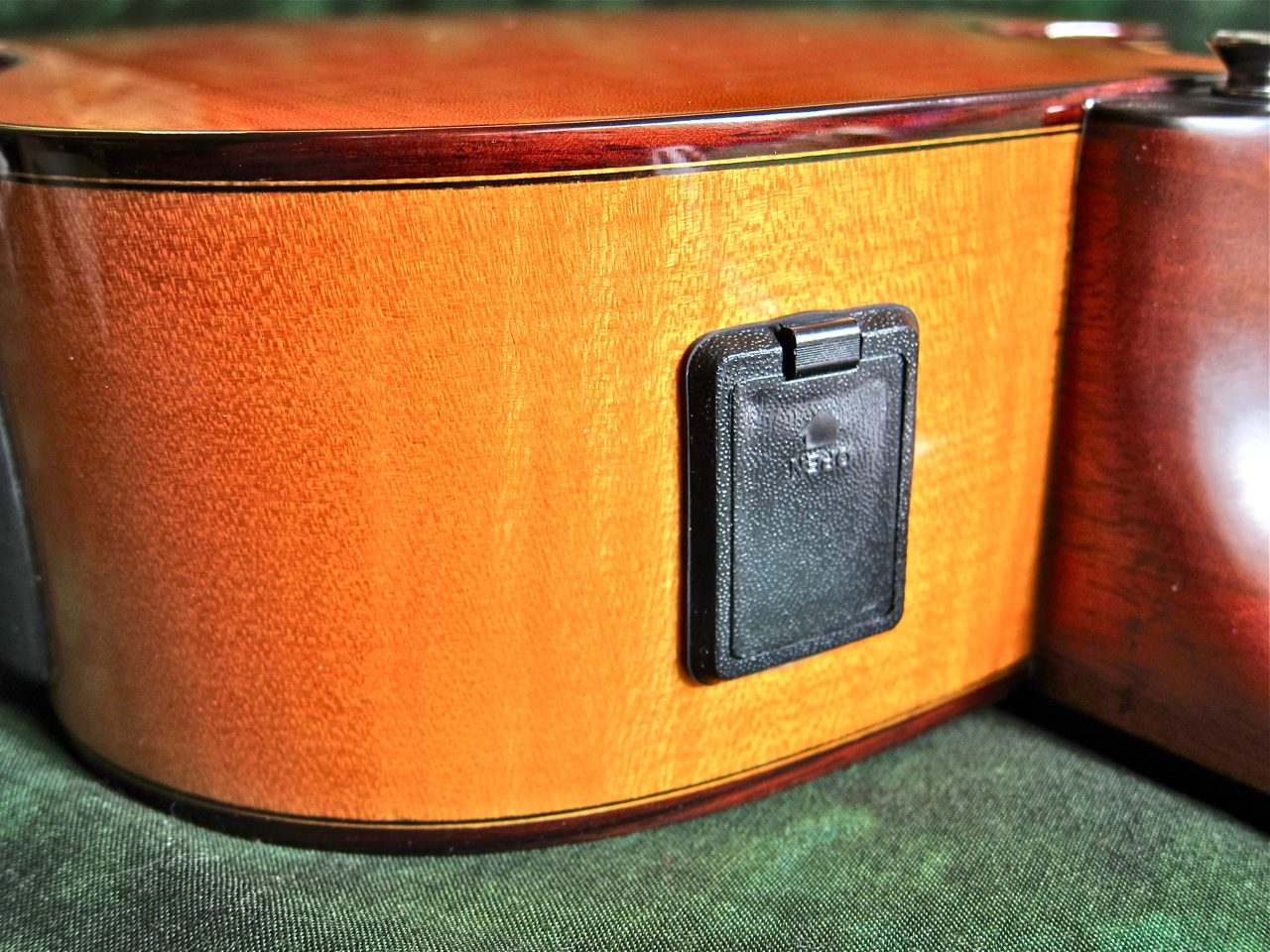
The battery compartment has been placed next to the neck heel.
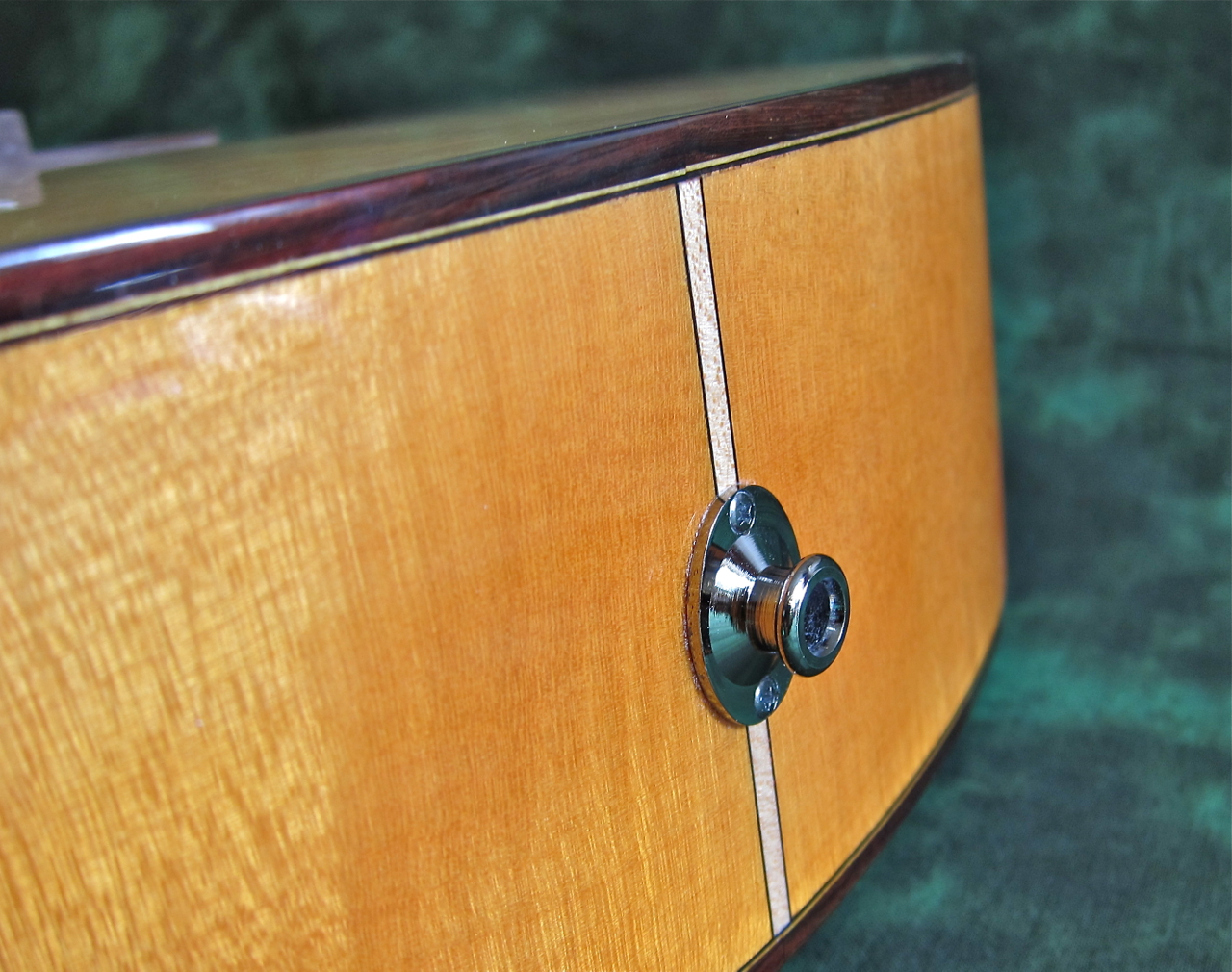
NTX900FM carries two strap buttons, with the bottom one doubling as the piezo system’s output jack.
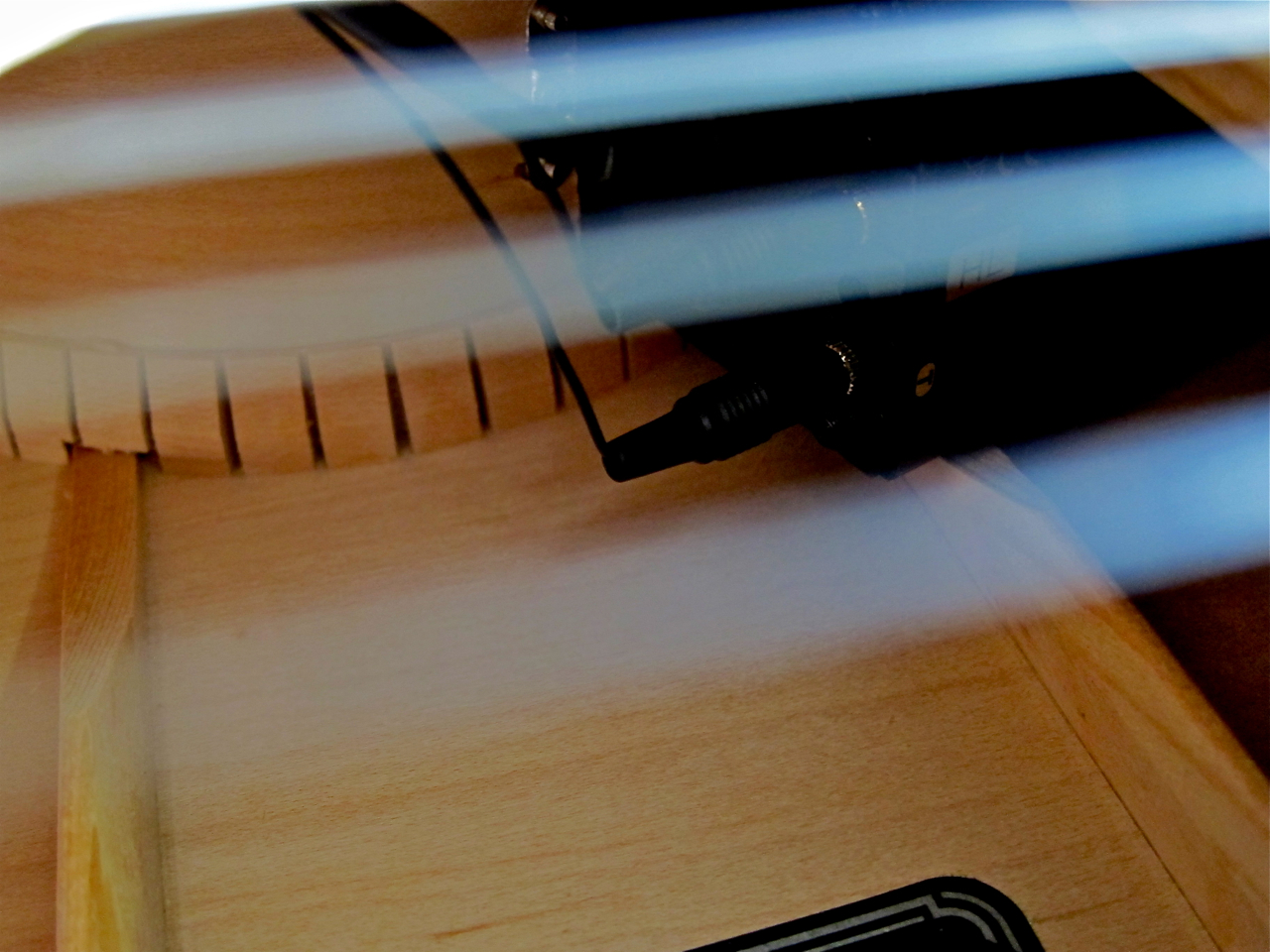
The workmanship is clean and neat all around – inside and out.
****
****

Yamaha’s CG412C feels like a typical classical guitar: The nut width is a whopping two inches (52 mm) and the neck profile is true to style, namely flat and broad-shouldered. Such a traditional neck gives your left hand plenty of breathing room for complex fingerings, but barre chords require more attention and strength compared to a steel-string.
From an electric player’s standpoint a traditional classical set-up looks impossible, with the action at the 12th fret typically somewhere around 3.5 mm, but this is standard, comfortable fare on a nylon-string. Nylon strings are much softer than steel strings, and they also require a higher action to allow for their larger excursion.
Yamaha’s CG412C sings with a nice, full-bodied voice and an open tonal character. The guitar doesn’t project as well as an expensive classical does, but in its own price bracket the Yamaha CG142C clearly is a winner.
****

The nut width of the Yamaha NTX900FM’s neck lies halfway between a standard steel-string and a classical guitar, measuring 48 mm. The neck’s more tapered, slimmer and rounder D-profile makes for a much friendlier feel for the non-classical guitarist.
The NTX also comes with a lower string action (bottom-E: 3,1 mm/high-e: 2,6 mm at the 12th fret). This clearly narrows the guitar’s dynamic range, but also makes it easier to play for most of us.
Due to its shallower body and the use of maple for the soundbox, the NTX900FM isn’t particularly loud or full-bodied acoustically. The available volume is enough for practicing or song-writing, but this guitar doesn’t project in the way a traditional nylon-string does.
Yamaha NTX900FM – acoustically
Using the on-board pickup system changes things dramatically, turning the Yamaha NTX900FM into an interesting addition to your guitar arsenal. Yamaha’s ART-system works extremely well, and the separate volume controls for the bass and treble sides come in handy for fine-tuning your tone. The under-saddle transducers are also quite immune against handling noises, and the whole system is refreshingly low on hiss.
In my opinion the Yamaha NTX900FM is a good choice if you’re looking for nylon-string tones with a steel-string feel – or if you’re into juicing up your nylon with effects.
Yamaha NTX900FM – ART System 61
****
Yamaha CG142C + NTX900FM – nylon-string guitars
Finnish distributor: F-Musiikki
****
Yamaha CG142C
current street price in Finland around 300 €
Pros:
+ value-for-money
+ workmanship
+ traditional neck and action
+ sound
Cons:
– traditional neck requires different technique
****
Yamaha NTX900FM
current street price in Finland around 800 €
Pros:
+ value-for-money
+ workmanship
+ rounder and narrower neck profile
+ tone/pickup system
Cons:
– acoustically rather quiet
****


Visit Tommy Emmanuel TV on You Tube!
Klassisista (nylonkielisista) kitaroista löytyy yllättävän vähän tietoa netissä, ja myös musiikkilehdissä niistä puhutaan vain todella harvoin.
Oli siis korkea aika tehdä asialle jotain:
Yamahan C- ja CG-sarjojen klassiset kitarat ovat erittäin suosittuja Suomessa. Testattavaksi saimme kokopuisella setrikannella varustetun CG142C-mallin.
Yamaha NTX900FM taas on mielenkiintoinen hybridimalli – mikitetty nylonkielinen kapeammalla kaulaprofiililla.
****
Yamaha CG142C (F-Musiikin hinta: 299 €) on firman tapaan erittäin siististi rakennettu klassinen kitara hillityllä charmilla. Kaikilla CG-sarjan soittimilla on kokopuiset kannet. Jokaisesta mallista on kaksi eri versiota – kuusi- (mallitunnus loppuu S-kirjaimella) tai setrikannella (mallitunnuksen viimeinen kirjain on C) varustettuna.
Kaula sekä rungon sivut ja pohja on veistetty nato-puusta, joka on Kaakkois-Aasiasta peräisin oleva, ominaisuuksiltaan mahonkia muistuttava lehtipuulaji (lat. Palaquium). Kaula on kokopuuta, kun taas koppaan on käytetty natovaneria.
Lavan etupuolta koristaa palisanteriviilu.
CG142C:ssä on perinteiset, avoimet viritinkoneistot. Lapa on liitetty taidokkaasti kaulaan.
Mattaviimeistelty kaula koostuu yhdestä pitkästä osasta, johon on käytetty kolme vieräkkäistä natopalaa. Tähän pitkään osaan on liimattu lapa sekä useasta palasta koostuva kaulakorko. Tapa säästää sekä kustannuksia että luonnonvaroja.
Reunalistoitettuun palisanteriotelautaan on istutettu huolellisesti lajille tyyppilliset pienet nauhat.
Kaunis rosetti on CG142C:ssä – kuten lähes kaikissa tämän hintaluokan kitaroissa – ennen lakkaamista kannen päälle liimattu folio. Kalliissa klassisissa taas rosetti on aikaa vievää upotustyötä, joka koostuu pienistä puu-, muovi- ja helmiäispaloista.
Kannessa on viisikerroksinen reunalistoitus.
Pohjan musta reunalistoitus saa ikäänkuin jatkoa kaulakoron päällystyksessä.
Kaunis, tyylikäs, ja konstailematon – tällainen on Yamaha CG142C:n palisanteritalla.
Yamahan klassinen on myös erittäin siisti kopan sisällä.
****
Yamaha NTX900FM (F-Musiikin hinta: 719 €) on APX-kitaroiden nylonkielinen serkku. Se on tarkoitettu sellaisille kitaristeille, joille laadukas etuvahvistin hyvällä sähköisellä soundilla, sekä rivikitaristeille mukava kaulaprofiili ovat tärkeämpiä seikkoja kuin sataprosenttisesti perinteitä kunnioittava klassinen kitara.
NTX900FM:n kansi on kokopuista Engelmann-kuusta.
Natokaula on liitetty loimuvaahtervanerista tehtyyn koppaan perintesesti liimaamalla.
Lavan muoto on tuore ja nykyaikainen…
…ja kauniit, laadukkaat virittimet sopivat kitaran ilmeeseen erittäin hyvin. Myös NTX:n lapa on liimattu kaulaan.
Reunalistoitettu otelauta on tässäkin kitarassa palisanteria.
NTX-kitaroissa on sama runkomuoto kuin teräskielisissä APX-soittimissa, ja myös nylonkielisten NTX:n rungot ovat perinteistä klassista kitaraa litteämpiä (noin 75 %).
NTX900FM:n rosetti on kasattu huolella useista eri puulajeista sekä pienistä helmiäispaloista.
Näyttävä loimuvaahterakoppa on saanut ylleen hunajavärisen lakkakerroksen.
Myös NTX900:n palisanteritallan muotoilu tekee selväksi, ettei kyse ole perinnemallista.
Etuvahvistin on Yamahan oma ART System 61 -malli, joka on kaksitie-järjestelmä. Tämä tarkoittaa, että basso- ja diskanttikielille on erilliset pietsomikrofonit, joiden äänenvoimakkuutta voi säätää toisistaan riippumatta. ART System 61:ssä on tämän lisäksi kolmialueinen EQ, sekä viritysmittari.
Yhdeksän voltin pariston lokero on sijoitettu kaulan viereen.
NTX900FM:ssä on valmiiksi asennettuna kaksi hihnatappia. Rungon hihnatappi on samalla jakkilähtö kitaran signaalille.
Työnjälki kitaran sisäpuolella on jälleen varsin siistiä.
****
****
Yamaha CG412C on soittotuntumalta tyyppillinen klassinen kitara: kaula on oikeanoppisesti todella leveä (satulan kohdalla 52 mm) ja kaulaprofiili on suhteellisen matala, mutta hyvin harteikas. Perinteisen klassisen kitaran leveä kaula antaa riittävästi tilaa kaikenlaisille sormituksille, mutta barreé-soinnut vaativat enemmän tarkkuutta ja voimaa kuin useimmilla teräskielisillä soittimilla.
Kielten korkeus kuulostaa sähkökitaran näkökulmasta kamalan korkealta – matala E: 3,7 mm, korkea e: 3,2 mm – mutta se on klassisella kitaralla vielä hyvin maltillinen. Nylonkielet ovat teräskieliä huomattavasti pehmeämpiä, ja niiden liikerata on soiton aikana myös paljon suurempi, minkä takia kielten etäisyys nauhoihin täyttyy olla suurempi kuin teräskielisissä kitaroissa.
CG412C soi kauniilla täyteläisellä, mutta samalla avoimella äänellä. Kitara ei projisoi niin hyvin kuin kallis pro-luokan soitin, mutta omassa luokassaan – hyvänä harrastelijakitarana – Yamaha CG142C kuuluu selvästi parhaimmistoon.
****
Yamaha NTX900FM:n kaula on leveydeltään perinteisen klassisen ja teräskielisen akustisen välillä. Satulan kohdalla leveys on 48 mm. Kapeammat mitat ja täyteläinen D-profiili tekevät kaulasta huomattavasti yleiskitaristille ystävällisemman.
NTX:ssä kielet ovat myös lähempänä otelautaa (ala-E: 3,1 mm/ylä-e: 2,6 mm). Tämä kaventaa akustista soittodynamiikkaa, mutta tekee kitarasta helpommin soitettavan.
Tavallista ohuemman rungon ja runsaan vaahtera-annoksen takia, soi NTX900FM vähän hiljaisemmalla ja ontolla äänellä. Volyymi riittää hyvin omaan harjoittelluun kotona tai biisintekovälineeksi, mutta kitara ei kanna akustisesti niin hyvin kuin ”oikea” nylonkielinen.
Linjasoitossa asiat muuttuvat dramaatisesti, ja Yamaha NTX900FM:stä kuoriutuu erittäin makeasoundinen lisäys soitinarsenaaliin. Yamahan ART-järjestelmä toimii todella hyvin, ja mahdollisuus säätää basso- ja diskanttikielten tasoja itsenäisesti helpottaa huomattavasti soundin hienovirittämistä. Tallan alla sijaitsevat mikrofonit eivät ole liian herkkiä oikean käden aiheuttamille häiriöäänille, ja etuvahvistimesta lähtevässä signaalissa on kiitettävän alhainen kohinataso.
Yamaha NTX900FM on mielestäni hieno peli, jos tarvitaan nylonkielistä soundia teräskielisellä tatsilla – tai, jos haluaa kokeilla nylonsoundia efekteillä.
****
Yamaha CG142C + NTX900FM – nylonkieliset kitarat
Maahantuoja: F-Musiikki
****
Yamaha CG142C
F-Musiikin hinta: 299 €
Plussat:
+ hinta-laatu-suhde
+ työnjälki
+ perinteinen klassinen kaulaprofiili ja tatsi
+ soundi
Miinukset:
– perinteinen kaulaprofiili vaatii harjoittelua
****
Yamaha NTX900FM
F-Musiikin hinta: 719 €
Plussat:
+ hinta-laatu-suhde
+ työnjälki
+ rivikitaristeille ystävällinen kaulaprofiili ja tatsi
+ mikrofonijärjestelmän soundi
Miinukset:
– ohut akustinen soundi
****


Something for the Estonian-speaking fans of all things guitar.
Check out Ajakiri Kitarr’s website HERE!

Yamaha’s CPX- ja APX-lines have received new additions recently in the form of Chinese-made top models carrying the model numbers of 1000 and 1200, respectively.

Kitarablogi picked up a Mini-Jumbo-bodied CPX1000…

…as well as a shallow-bodied APX1200.
****
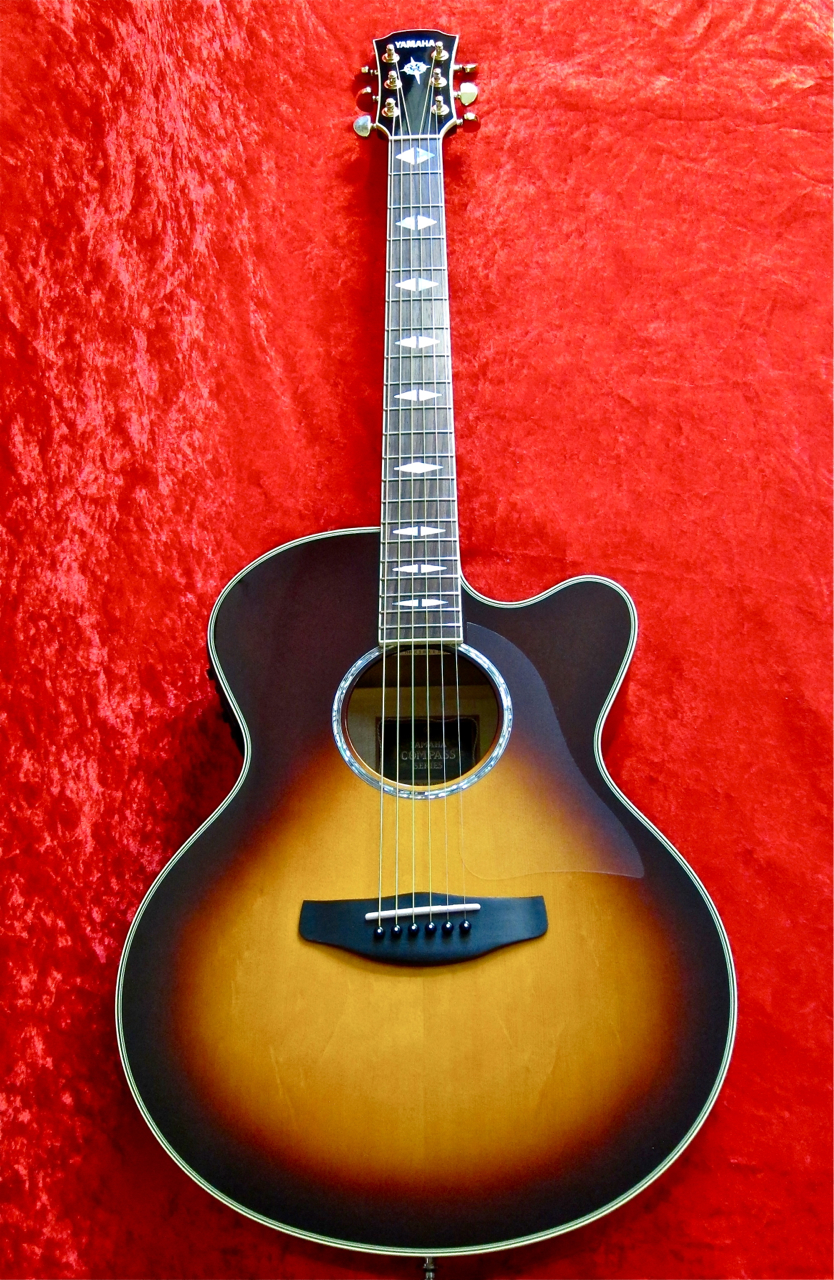
Yamaha’s CPX-series – which is also known as the Compass-series – originally was designed to appeal to the Country fraternity in the States. As a result of the APX-range’s success in the 1990s many Country pickers got in touch with the company, and asked for a larger, showier sister model, equipped with the same pickup and preamp, but featuring a fatter neck profile. And Yamaha duly obliged…

The brand-new CPX1000 (current rrp in Finland: 869 €, available in limited numbers) sure is a pretty thing: The solid spruce top is finished in a fetching Brown Sunburst, with the same deep shading applied to the back which is made from laminated flame maple. The nato neck sports a bound rosewood fretboard.

The headstock is inlaid with a compass, as a reference to the name of the series.
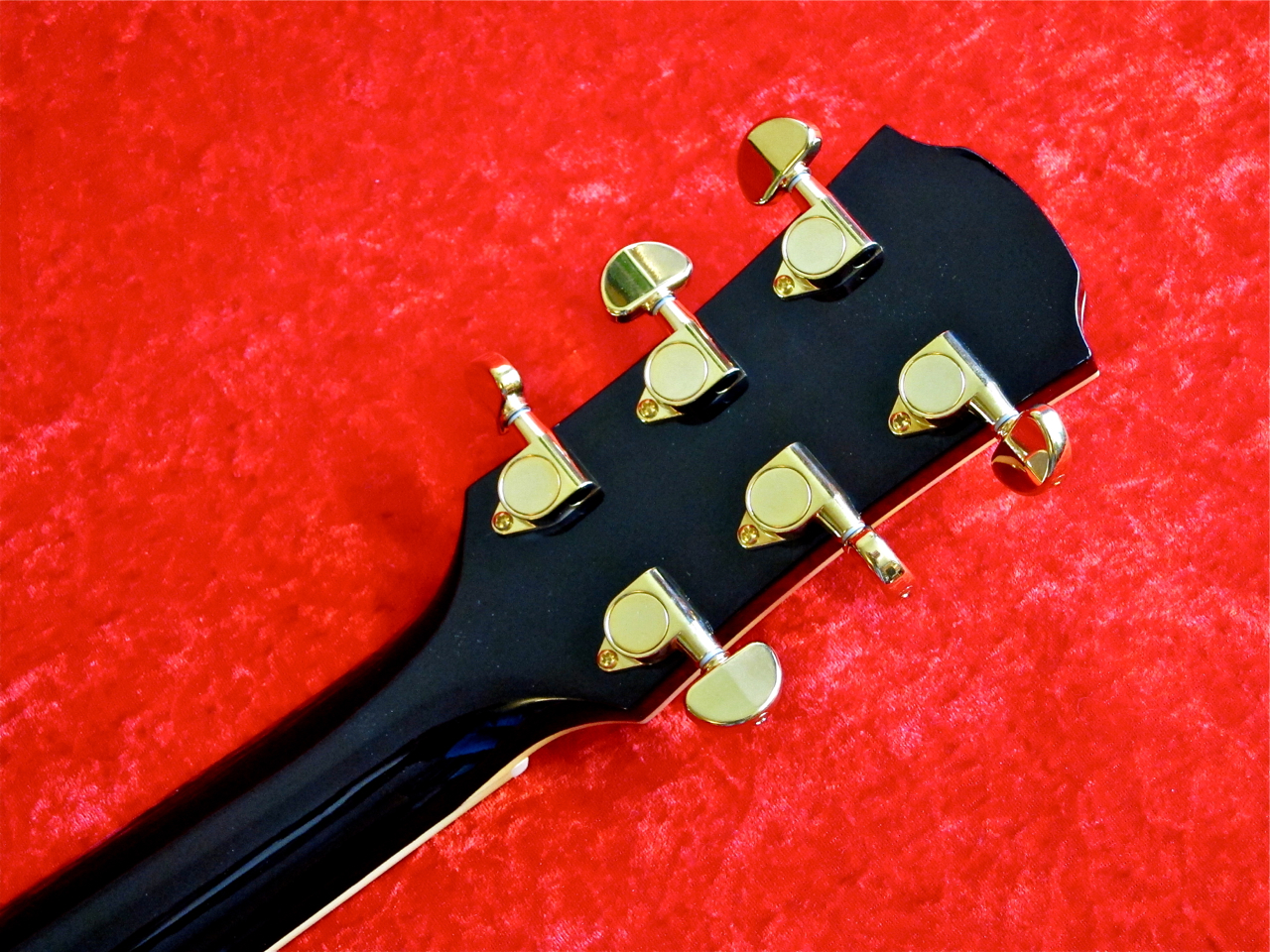
The gold-coloured, sealed tuners are of very decent quality and complement the guitar’s great looks nicely.

The inlay work and fretting have been executed to Yamaha’s customary high standards.

This clean and crisp workmanship is carried on throughout the whole guitar – look and the top binding or the intricate soundhole rosette for further proof.

The bridge on the CPX1000 is rosewood dyied black. Note the fine bear claw -grain on the spruce top.
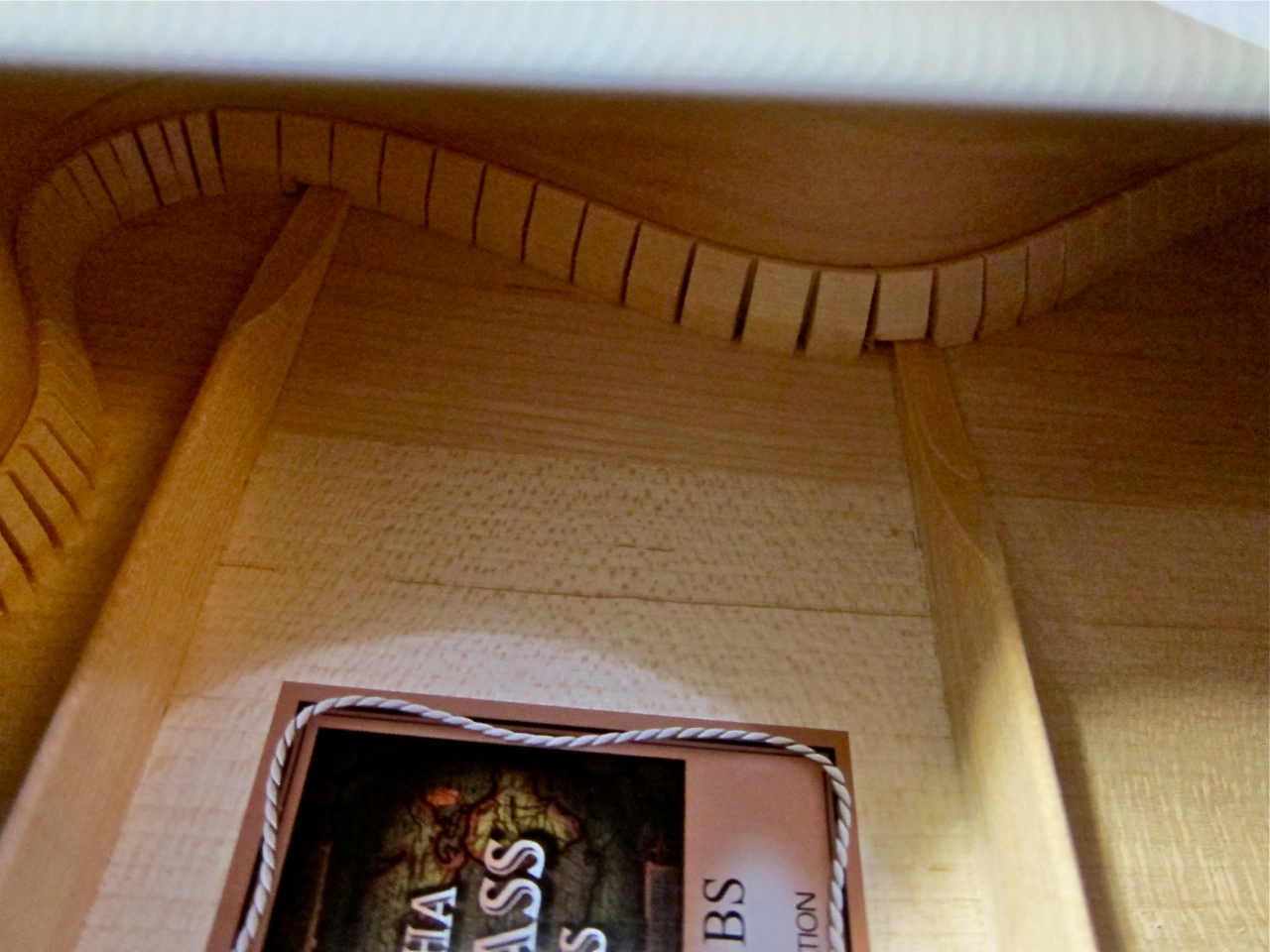
Clean workmanship is evident inside the Yamaha’s soundbox as well.

I don’t care if this is laminated flame maple, or not. It’s gorgeous in my book in any case…

This guitar comes with Yamaha’s SRT-System 63 preamp, which allows you to blend between the dry piezo tone and three virtual studio microphones. The Focus/Wide-switch lets you choose between a close-miked sound and a counterpart with a bit more virtual room in the mix. The preamp is also equipped with a digital tuner and an automatic feedback defeater (A.F.R.).

The SRT-system runs on two AA-sized batteries.
****

The Yamaha APX1200 (currently available at a special price of 999 € from F-Musiikki, limited quantities) is the new top dog, the ultimate APX-guitar. The APX-range had been developed as an unabashed electro-acoustic guitar for the electric guitarist. The models all sport shallow bodies – for comfort and feedback protection – as well as more electric-style neck profiles.
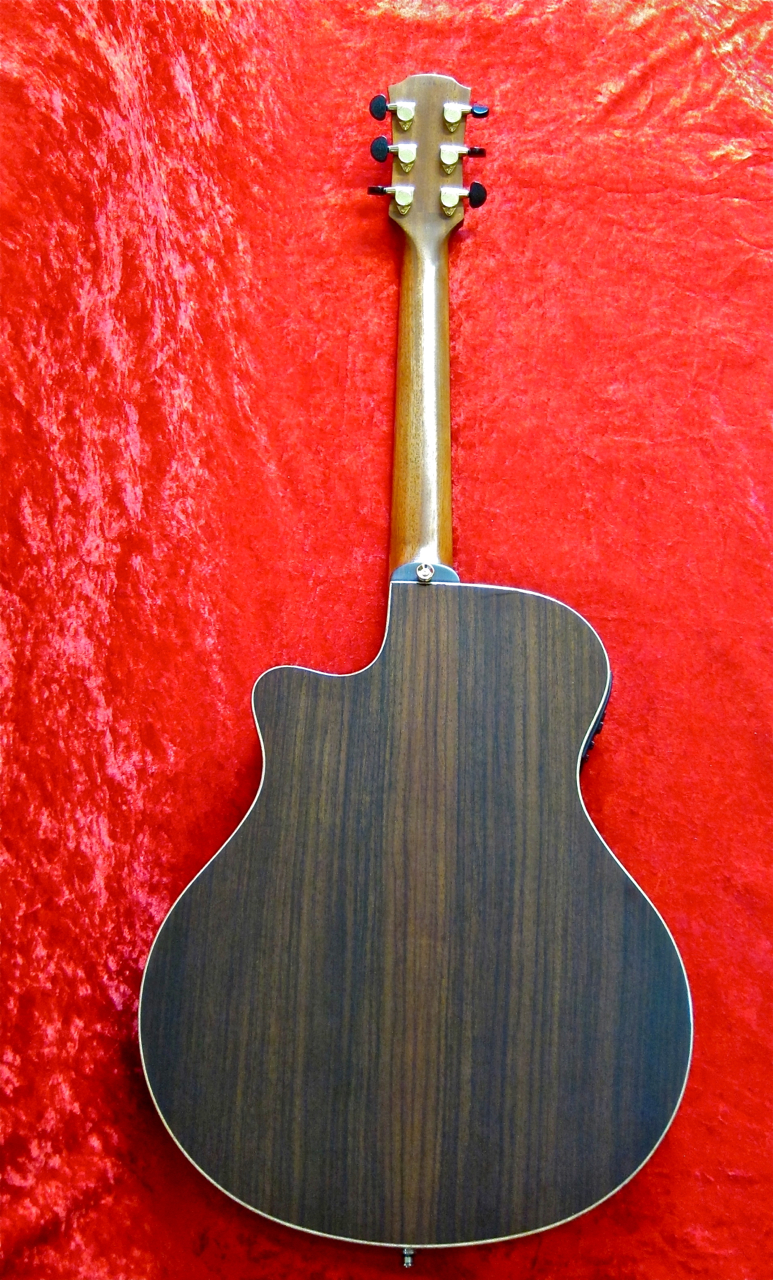
In the APX1200’s case the whole guitar is made from solid woods – spruce for the top and Indian rosewood for the back and sides.

The headstock is bound and features a front-facing made of rosewood.

The tuners on the APX1200 are the same, nice models as on the CPX, but this time the tuner buttons have been fashioned from an ebony-style plastic material.

The luscious ebony fingerboard with its gorgeous pearl and abalone inlays leaves you in no doubt about this guitar’s top-of-the-line pedigree.

The stuck-on, self-healing plastic rosette is the only feature of the APX-line that has long since divided the guitar playing masses. Some say it’s a practical and modern addition to a contemporary guitar, others think it’s butt-ugly – you make up your mind.

The APX-bridge looks quite similar to the CPX’s model.

An extremely clean interior speaks volumes of Yamaha’s stringent quality control.

The APX1200 is equipped with the same Yamaha SRT-system.

As befits the top model, the APX1200 is sold in its own soft case.
****
The differences between the CPX1000 and APX1200 in feel and sound – both acoustic and amplified – are quite clear.
The neck profile on the CPX is a rounded, C-shaped affair, with a tiny whiff of a V-style spine. The neck is also finished in high-gloss lacquer, which gives the guitar a traditional steel-string feel.
APX’s neck profile is a noticeably flatter, more angular D. This type of profile – as well as the satin finish – make an electric guitarist feel right at home. The shallow body also makes it easier to adjust to the APX1200 when switching from a solid-body electric.
In the acoustic stakes the CPX1000 clearly gets the upper hand over the APX1200, thanks to its more voluminous body. Despite the laminated back and sides the Compass-model sounds warmer and deeper than the APX, with plenty more volume on offer.
Fingerpickers will also like the CPX better, due to its more airy string-spacing at the bridge – 57 mm (E–e) on the CPX as opposed to the APX’s narrower 53 mm.
The APX1200, on the other hand, takes to powerful strumming in a loud Rock-context like a duck to water. This guitar has a very punchy attack, and thanks to its slightly thinner bottom end the overall sound stays transparent and fresh. The mid-range, on the other hand, is juicier on the APX, no doubt thanks to its solid rosewood back and sides. The CPX’s laminated flame maple dishes out a slightly drier tone.
Yamaha’s SRT-system works great. The virtual microphones manage to do away completely with annoying piezo-quackiness and one-dimensional, lifeless tone, in favour of of a signal very much like the genuine, miked-up tone of the guitar chosen. Check out the YouTube-video at the end of this review for the direct injected sound of both guitars’ SRT-systems.
This is what the models sound like recorded acoustically:
In my opinion both Yamahas represent excellent value-for-money. The choice between models depends on what you plan to use the guitar for.
If you’re into Folk, Jazz, Country, acoustic Blues or other unplugged-styles of music, which call for dynamic and traditional acoustic guitar tones, the warmer and fuller tone of the CPX1000 might be your safer bet.
If, on the other hand, you’re after the perfect guitar for acoustic outings in a Rock- or Alternative-context, where the guitar has to survive in a crossfire of stage monitors and guitar stacks, the APX1200 will come up trumps with its smaller body and punchy sound.
****
Yamaha CPX ja APX electro-acoustic guitars
Maahantuoja: F-Musiikki
****
CPX1000
Current price in Finland 869 €
Pros:
+ value-for-money
+ workmanship
+ playability
+ acoustic sound
+ SRT-preamp
Cons:
– laminated back and sides
****
APX1200
Current special price 999 € at F-Musiikki
Pros:
+ value-for-money
+ workmanship
+ playability
+ acoustic sound
+ SRT-preamp
Cons:
– limited acoustic volume
****