My Chemical Romance -bändin bassisti Mikey Way on saanut oman nimikkomallinsa Squierilta.
Squier Mikey Way Mustang -basso perustuu lyhytmensuuriseen 1960-luvun Fender-klassikkoon. Tavallisesta poikkeava Silver Sparkle -viimeistely mustilla Competition-raidoillaan, sekä passiivinen humbucker-mikrofoni ovat tämän nimikkomallin tunnusmerkkejä.
Virolainen aikakauslehti Kitarr on tyylikäs julkaisu kitaristeille. Lehti sisältää haastatteluja, testejä, juttuja vintage-soittimista sekä vinkkejä miten tulla paremmaksi soittajaksi.
Ajakiri Kitarr -lehdellä on myös hyvin näyttävä nettisivusto, joka täydentää ja laajentaa lehden sisältöä mm. videoilla.
Paul Kossoff was the guitar powerhouse behind Free’s earthy Blues Rock sound.
Now Gibson Custom are honouring the late guitarist with a limited replica of his famous guitar with the release of the Paul Kossoff 1959 Les Paul Standard.
The Paul Kossoff -model is available as an aged replica or in Gibson’s VOS-format.
Paul Kossoff oli kitaristina Free-yhtiön Blues Rock -soundin kulmakivi.
Gibson Custom on hiljattain esittänyt uuden Paul Kossoff 1959 Les Paul Standard -mallinsa, joka on firman kunniaosoitus nuorena kuolleelle brittikitaristille.
Paul Kossoff -mallin saa joko täydellisenä jäljitelmänä (relic) tai Gibsonin VOS-viimeistelyllä.
Guests on this track are the inimitable Vitali Imereli on violin and the Netherland’s own Paulus Schäfer on lead-guitar.
****
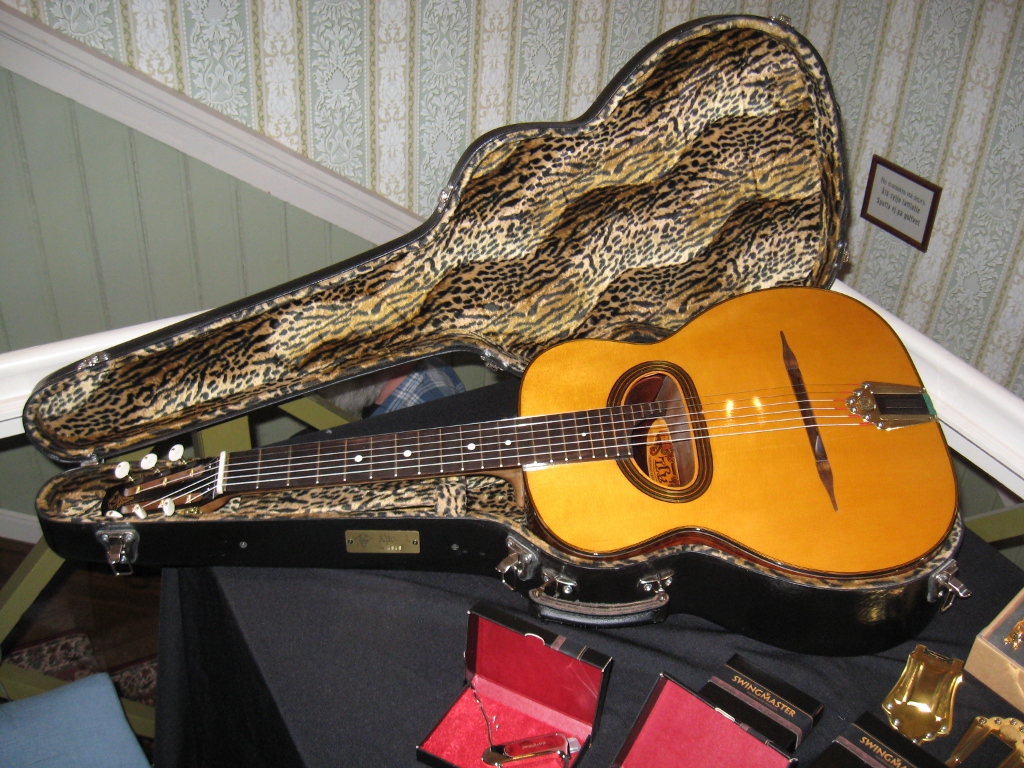
Rhythm guitarist Luomaranta is the creative genius behind AJL-Guitars, one of the top builders of Selmer-Maccaferri-style guitars in the world today. Check him out!
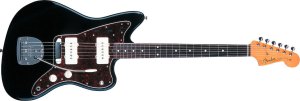
The Fender Jazzmaster was introduced in 1958 as a conscious effort to broaden Fender’s user base and appeal.
The company’s first efforts – the now legendary Telecaster and Stratocaster models – had already proven to be successful, but were then still widely perceived as bright-sounding guitars for Country & Western, as well as early Rock ’n’ Roll. Now Leo Fender and his team were aiming for the more ”serious” guitarists of the Jazz and Easy Listening genres.
Fender kept the standard long Fender-scale (25.5″), but – for the first time – added a rosewood fingerboard. The reasons for the rosewood board were both cosmetic – it looked classier than the lacquered maple of previous models – as well for tonal reasons, with rosewood imbuing the sound with a warmer timbre. The Jazzmaster was also the company’s first guitar with an enlarged version of the Strat-headstock, which was meant to combat dead spots and wolf-tones.
The body was a brand-new design premiering the company’s patented offset waist feature, meant to improve balance, especially when playing seated.
A new, front-mounted vibrato with a softer, spongier action (meant as a direct competitor to Bigsby’s models) was also devised. The vibrato – which worked with a separate, rocking bridge – was easy to adjust from the front, and also featured a locking mechanism for disabling the system (and keeping the guitar in tune even after a string breakage).
The most important changes took place in the electronics of the Jazzmaster: The pickups were clearly Fender’s attempt at getting a Gibson P-90 -type tonality, with the wide and flat coils. The controls featured two different circuits, with the normal circuit offering a 3-way toggle switch, as well as a master volume and tone control. A slide switch on the scratchplate’s upper shoulder engaged the so-called Rhythm Circuit, which switched on only the neck pickup going through its own set of volume and tone controls (above the neck pickup).
After a first wave of enthusiasm over Fender’s new top-of-the-line guitar, the Jazzmaster’s success sadly waned. Most conservative Jazz guitarists wouldn’t touch Fender’s ”plank” with a barge pole, and still considered the sound as too bright, while the company’s usual customers were perfectly happy with their more straightforward Strats and Teles.
The biggest genuine problem with Jazzmasters lies in their singlecoil pickups, which take in a lot of extraneous hum and interference (just like P-90’s do).
Modern players also tend to complain about the vibrato system’s flimsy bridge saddles, although, in fairness, one should note that this is mostly due to our modern light string gauges. The Jazzmaster-vibrato had been designed at a time when ”light gauge” meant an 012-set with a wound g-string.
Today the Jazzmaster’s appeal lies mostly in the alternative field, and not too many name players spring to mind:
In 1962 Fender took the Jazzmaster as the basis for a brand-new model, geared towards Surf and Pop guitarists – called the Fender Jaguar.
The Jaguar was Fender’s first guitar with 22 frets, and it featured a relatively short scale of 24″ (even shorter than Gibson’s usual 24.75″). The general look stayed in place, but the Jaguar was adorned with glitzy chrome control plates.
Fender took the criticisms over the Jazzmaster-pickups to heart and designed new pickups for the Jaguar. The new units are reminiscent of Strat-pickups, but feature slightly higher coils, as well as metal shielding plates that enclose most of the pickups’ bottom and sides.
The normal/Rhythm-circuit set-up stayed in place, but the normal circuit now featured three slide switches – an on/off-switch for each pickup, plus a ”strangle” switch that cuts all bottom end from the output signal.
The Jaguar originally also came equipped with a detachable mechanical string mute, which wasn’t well-received by guitar players.
Sadly, the Jaguar’s fate followed along the Jazzmaster’s lines – after a first wave of success sales dwindled in the wake of the British Invasion.
The most famous names associated with the Fender Jaguar are Carl Wilson (The Beach Boys), Kurt Cobain (Nirvana) and Johnny Marr (The Smiths, Modest Mouse).
As with the Jazzmaster, the Jaguar has seen a resurgence of sorts over the past few years, with many new and modified versions springing up, such as the Fender Blacktop Jaguar HH.
Kramer Pacer on hyvä esimerkki 1980-luvun syntyneestä Superstr*to kitaralajista, ja sillä on kaikki tyypilliset perusominaisuudet:
Stratocaster-tyylinen runko, Gibson Explorerista lainattu lätkämailan muotoinen lapa, tallahumbuckeri, sekä Floyd Rose -vibra.
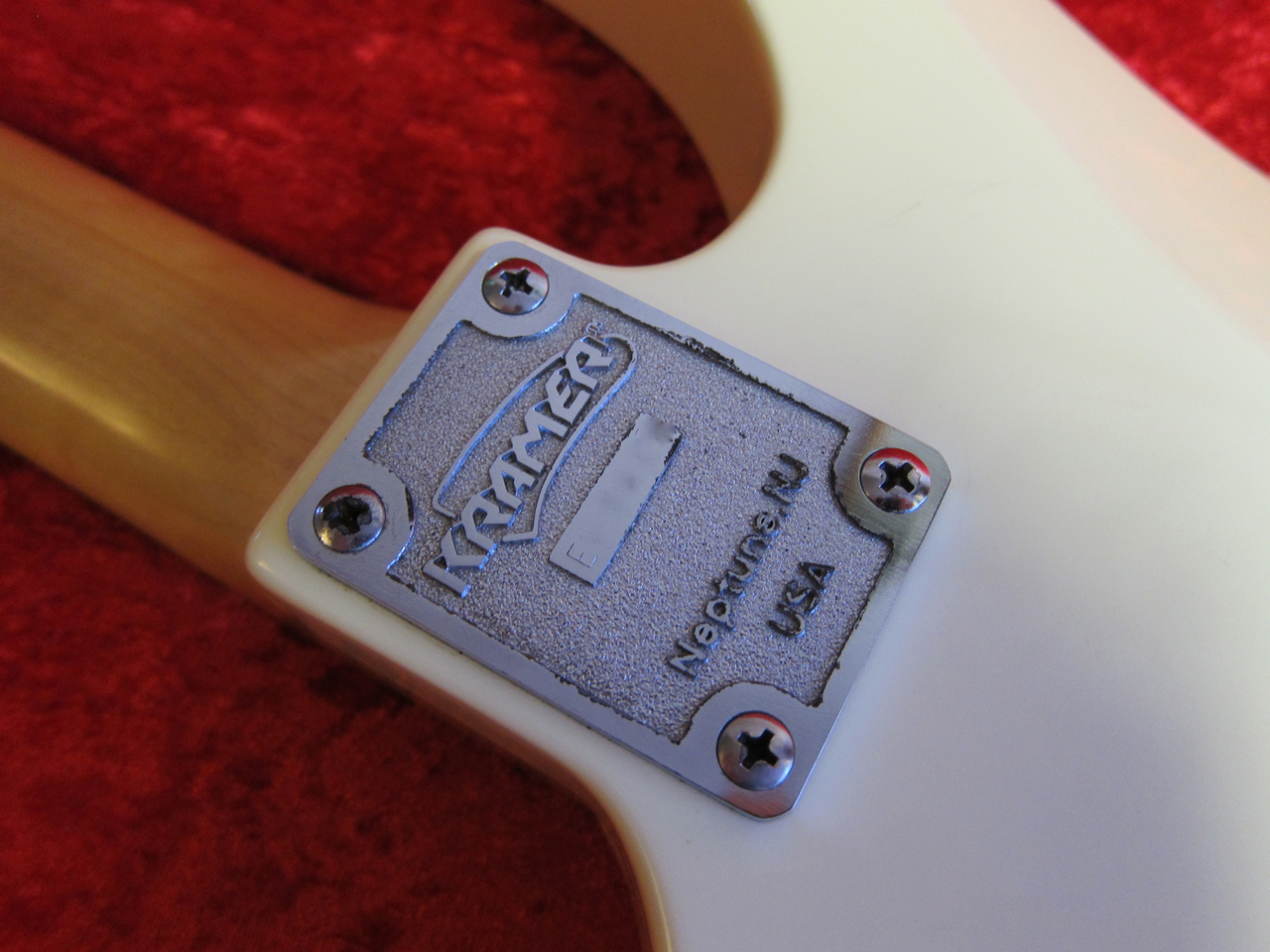
VintageKramer-sivuston mukaan tämä Pacer Custom II on American-sarjan kitara vuosilta ’87 –’89.
Alun perin (1970-luvun loppupuolella) Kramer-kitaroiden erikoisuus oli alumiinista tehty kaula. 1980-luvun loppupuolella firma oli siirtynyt kuitenkin takaisin perinteisiin puukauloihin. Kaulat ja rungot ostettiin yhteistyökumppaneilta – Pacer Custom II:n tapauksessa Japanista ESP:n tehtaalta – mutta soittimet koottiin USAssa käyttäen firman omaa elektroniikkaa sekä aitoja Floyd Roseja.
Sulava runko on tässä kitarassa poppelista, kaula vaahterasta ja otelauta palisanterista.
Tässä versiossa lapa on Kramerin teräväkärkinen malli. Palkkimainen alasvedin pitää kielet tiukasti lukkosatulaa vasten.
Paksut nauhat ja loiva otelauta kuuluvat nekin Superstr*toon – silloisen sankarikitaristin työkaluun.
Kaula on rakennettu kolmesta pitkästä vaahterapalasta…
…ja se liitetty runkoon perinteisellä tavalla ruuvaamalla.
Vaikka Floikalla varustetussa kitarassa lavan virittimet käytetään ani harvoin, ovat nekin Pacer Custom II:ssa aitoa laatutavaraa saksalaisvalmistajalta Schaller. USA-Floydin kuusiokoloavaimet on hyvä pitää aina mukanaan, sillä ilman niitä kielten vaihtaminen ei onnistuu.
Custom II:ssa on kaksi yksikelaista mikrofonia sekä yksi humbucker tallan lähellä.
Säätimet toimivat kuten normi-Stratossa – master volume, kaulan tone ja keskimikrofonin tone-säädin. Minikytkimellä saadaan kolme erilaista kytkentävaihtoehtoa tallamikrofonista: perinteinen humbucker (sarjakytkentä), yksikelainen (vain tallan puoleinen kela) sekä kirkkaampi humbucker (rinnakkaiskytkentä).
Tämä kitara on mukavan kevyt soitin. Kaulan profiili on silloiselle vauhtikitaralle tyypillinen hyvin laakea ”D” – mikä on minulle hieman liian ohut ja leveä – mutta tämä Pacer on loistavassa trimmissä. Kramer Pacer Custom II on vanha laatukitara – ulkonäkö voi olla hieman vanhentunut, mutta sen soitettavuus ja soundi ovat vielä täysin ajankohtaiset.
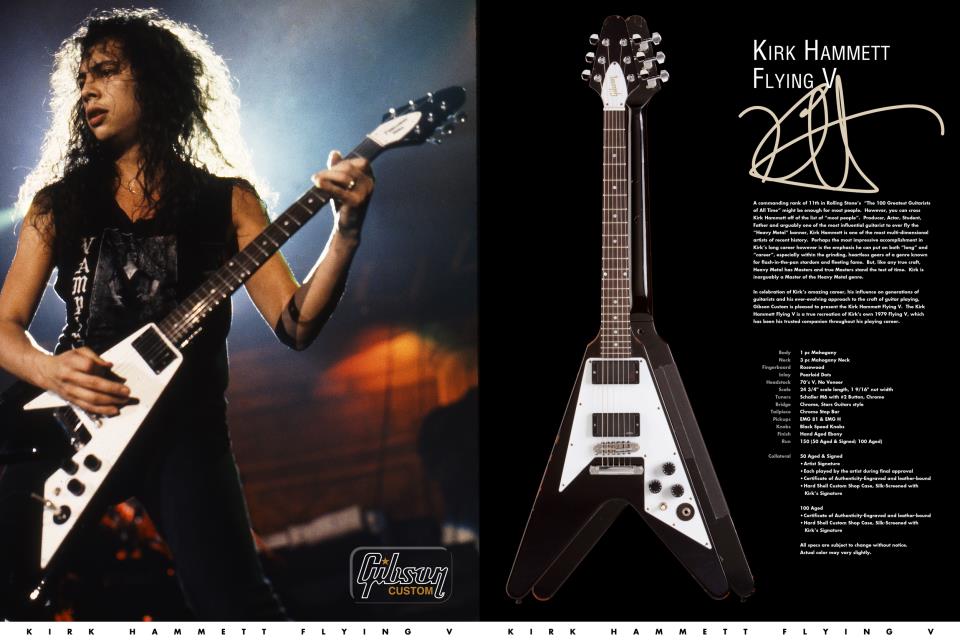
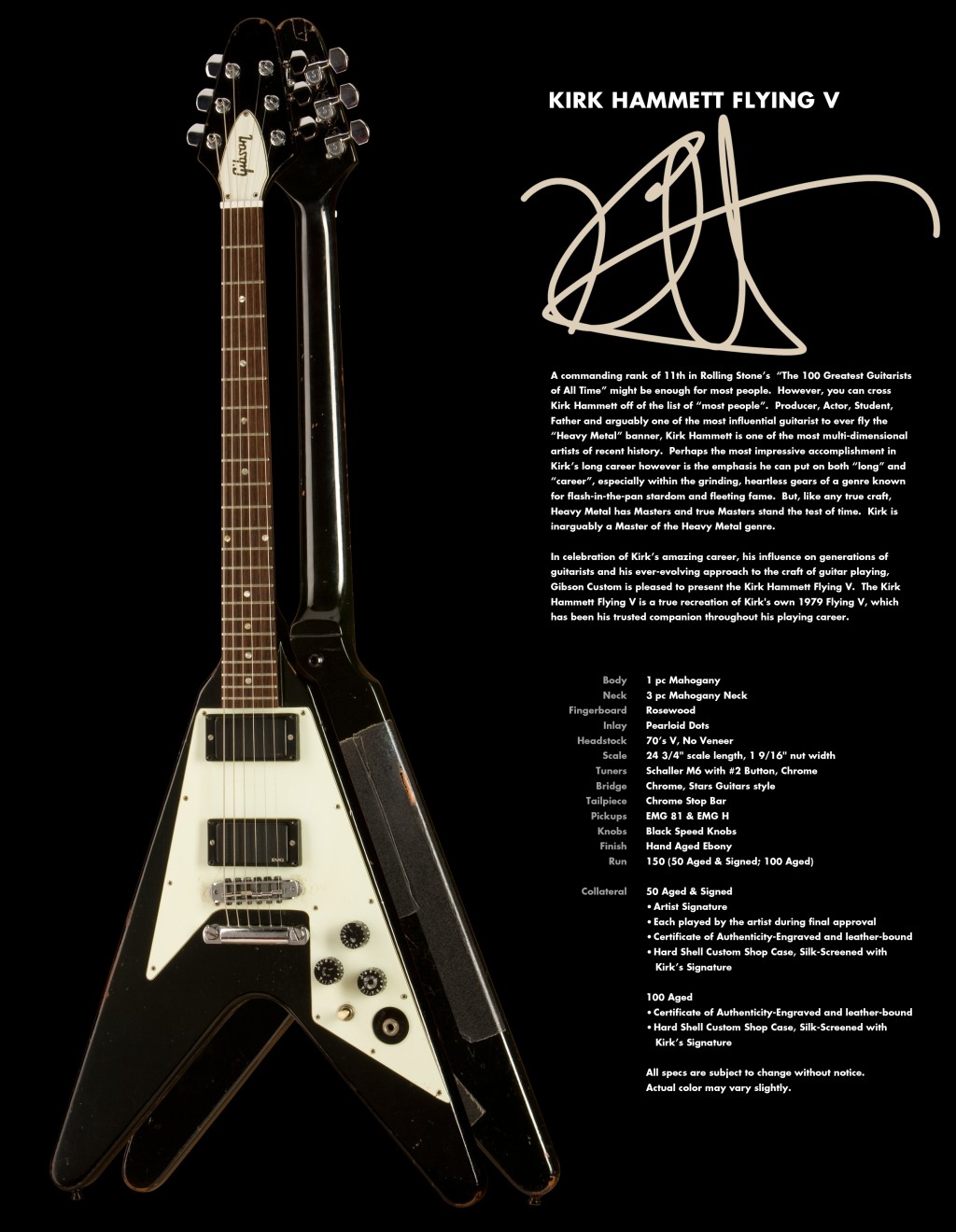
Metallican kitaristi Kirk Hammett on saanut oman Gibson Customshop -mallinsa – Kirk Hammett Flying V.
Kitara on tarkka jäljitelmä Hammettin omasta vuoden 1979 Veestä, jolla on yksiosainen mahonkirunko, kolmestä pitkästä mahonkipalasta veistetty kaula, kustomoitu talla sekä EMG-humbuckerit.
Kitarasta rakennetaan ainoastaan 150 kappaletta, joista 50 on relikoituja ja Hammettin signeeramia, ja loput 100 ilman kitarasankarin allekirjoitusta.
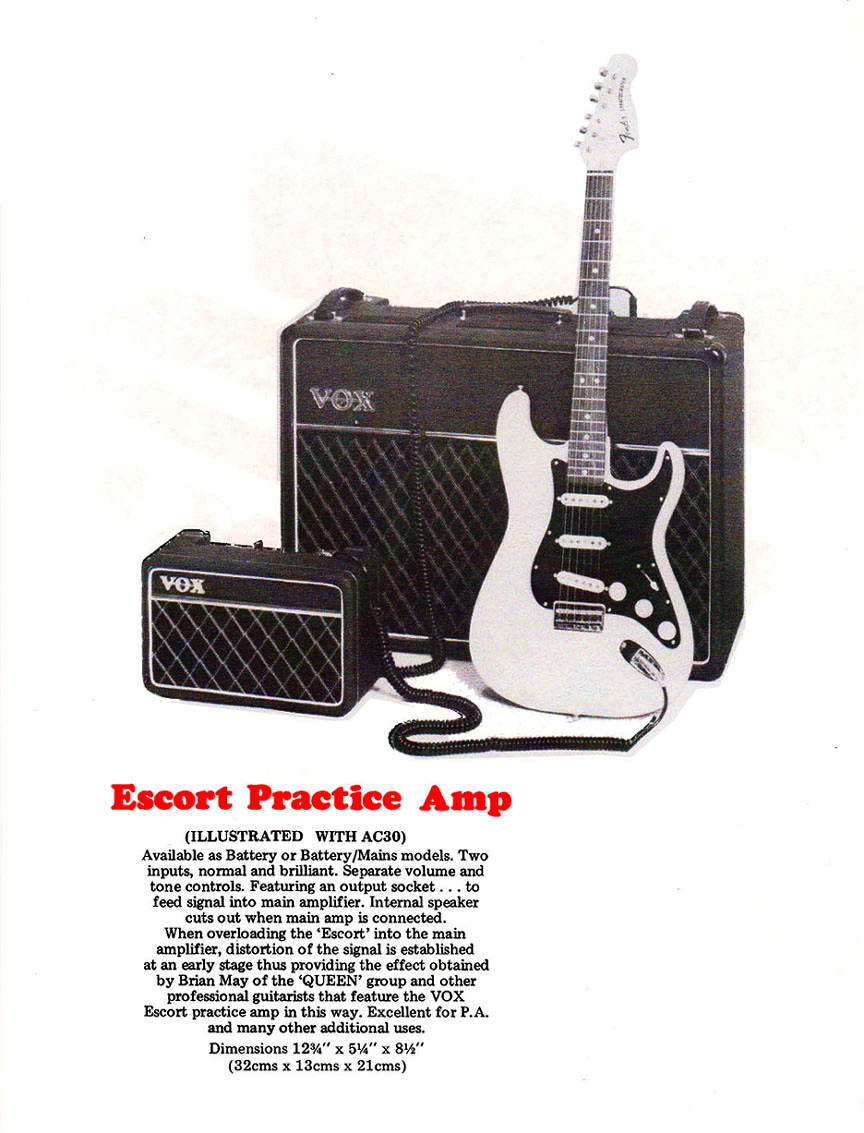
The Vox Escort came out in 1975 and was Vox’ first battery-powered practice amp. This baby-AC30 has about 3 Watts of power, which it puts out through a 5-inch Elac-speaker. The diminutive Escort stayed in the company’s line-up until 1983.
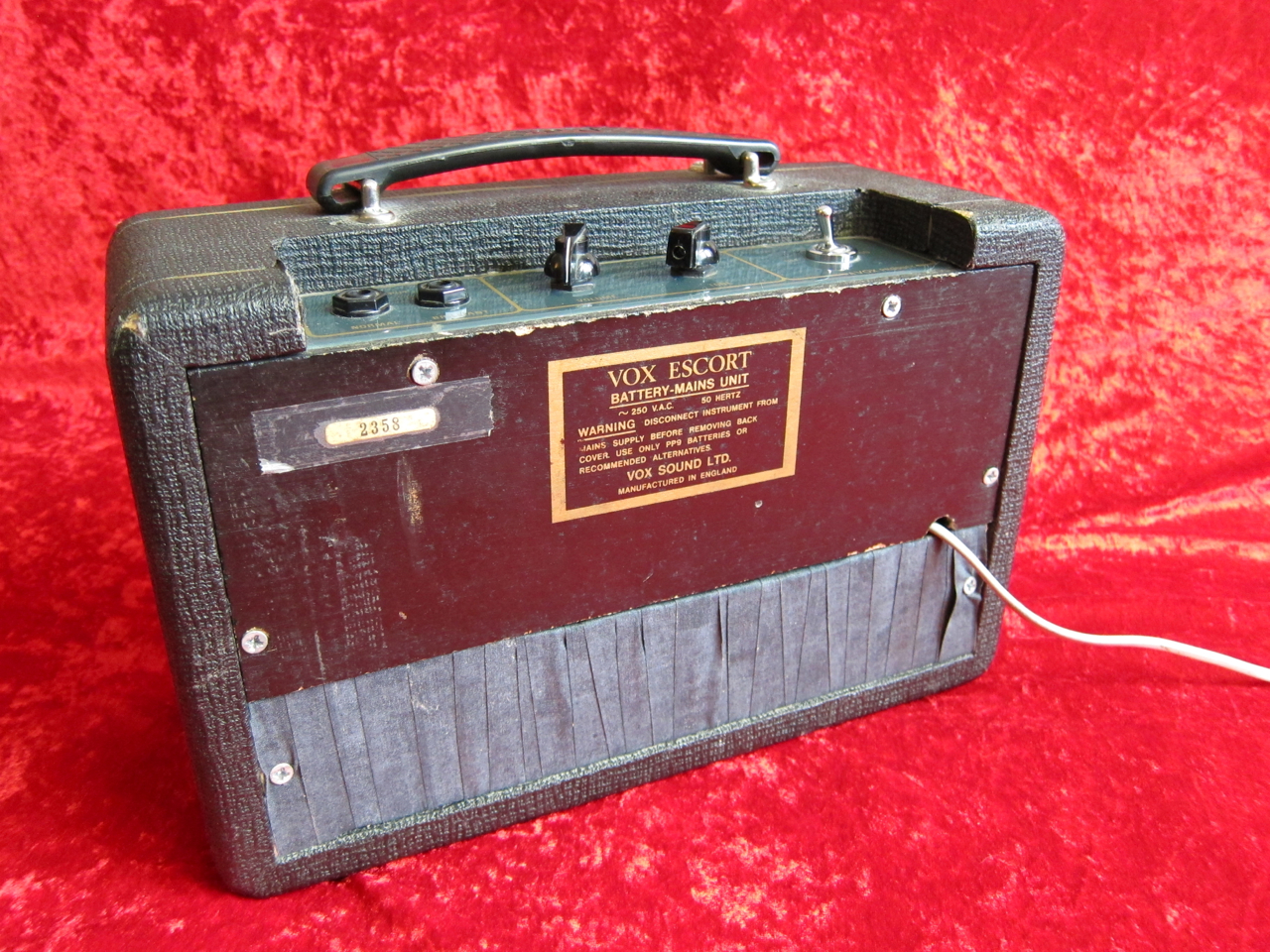
The first run of combos was battery-power only, using huge 9V -batteries, called PP9, but already in 1976 the dual-power Escort Battery-Mains -model was put into production.
****
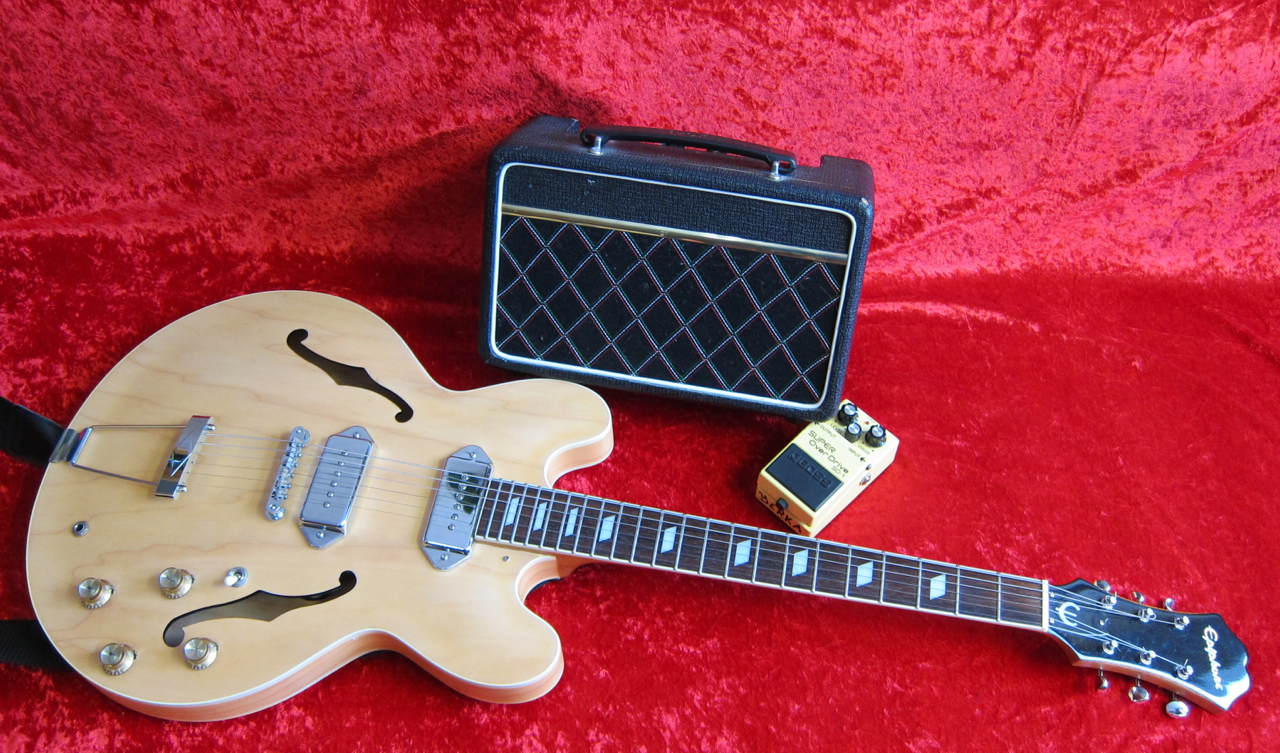
My own Vox Escort is an ex-battery-only combo, which a previous owner had already converted to AC-powered, when I bought it some ten years ago.
The Escort features two inputs – Normal and Brilliant – as well as two controls – Volume and Tone.
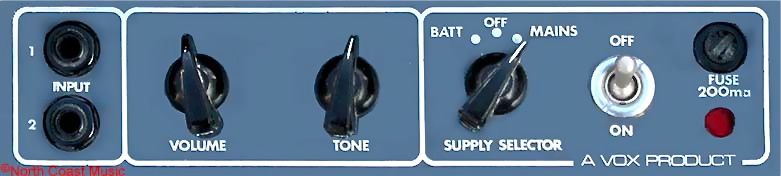
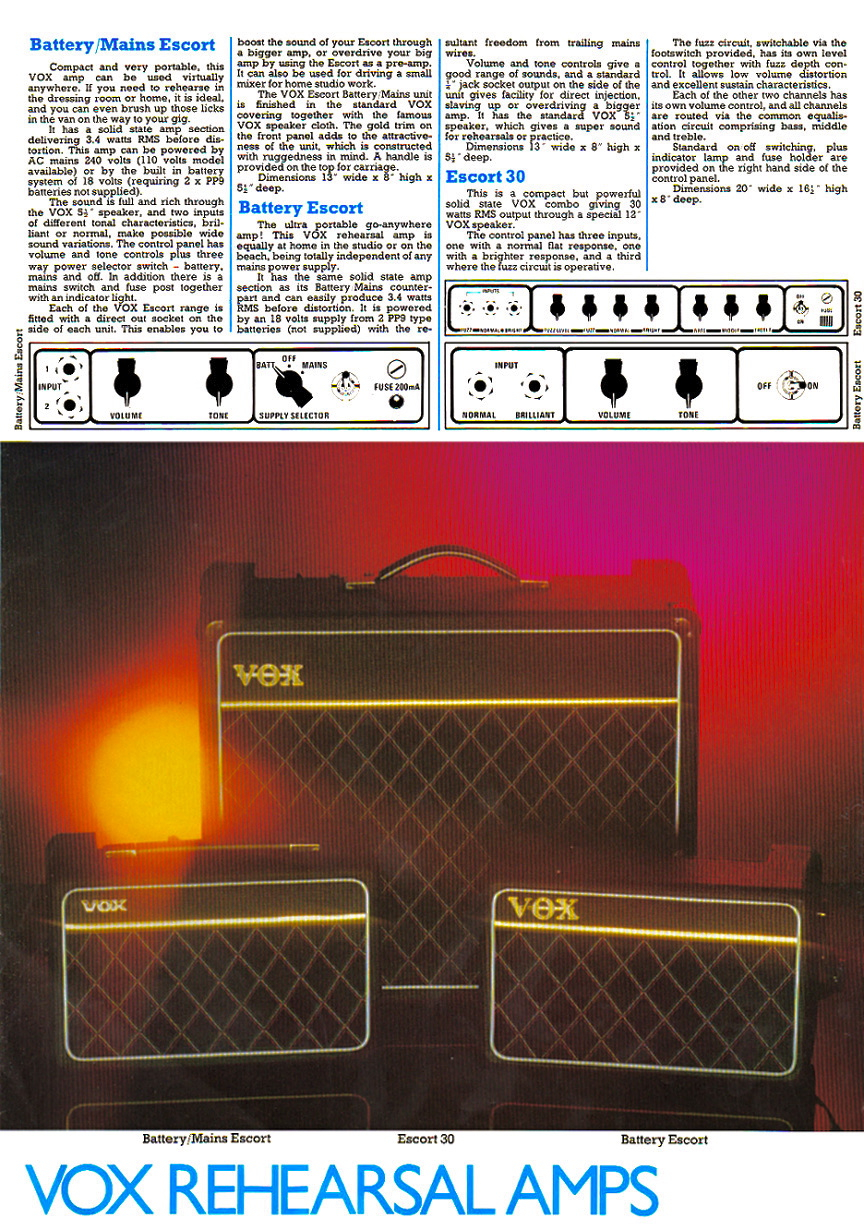
The genuine Battery-Mains-version has a slightly different layout, as well as a power-selector and a fuse compartment on the control panel:
On the cabinet’s right-hand side you’ll find a line out jack for easy connection to a mixing console or – as Vox suggested – for using the Escort as a booster in front of your big amp:
****
The small, lower back plate – normally providing access to the battery – is obviously not original. It would have been made of the same chipboard material, as used for the larger upper plate.
****
The modification to AC-only isn’t quite as neat as it could be, but the amp is in perfect working order, nonetheless. The sticky tape on the sides has been added to stop the back plates from rattling.
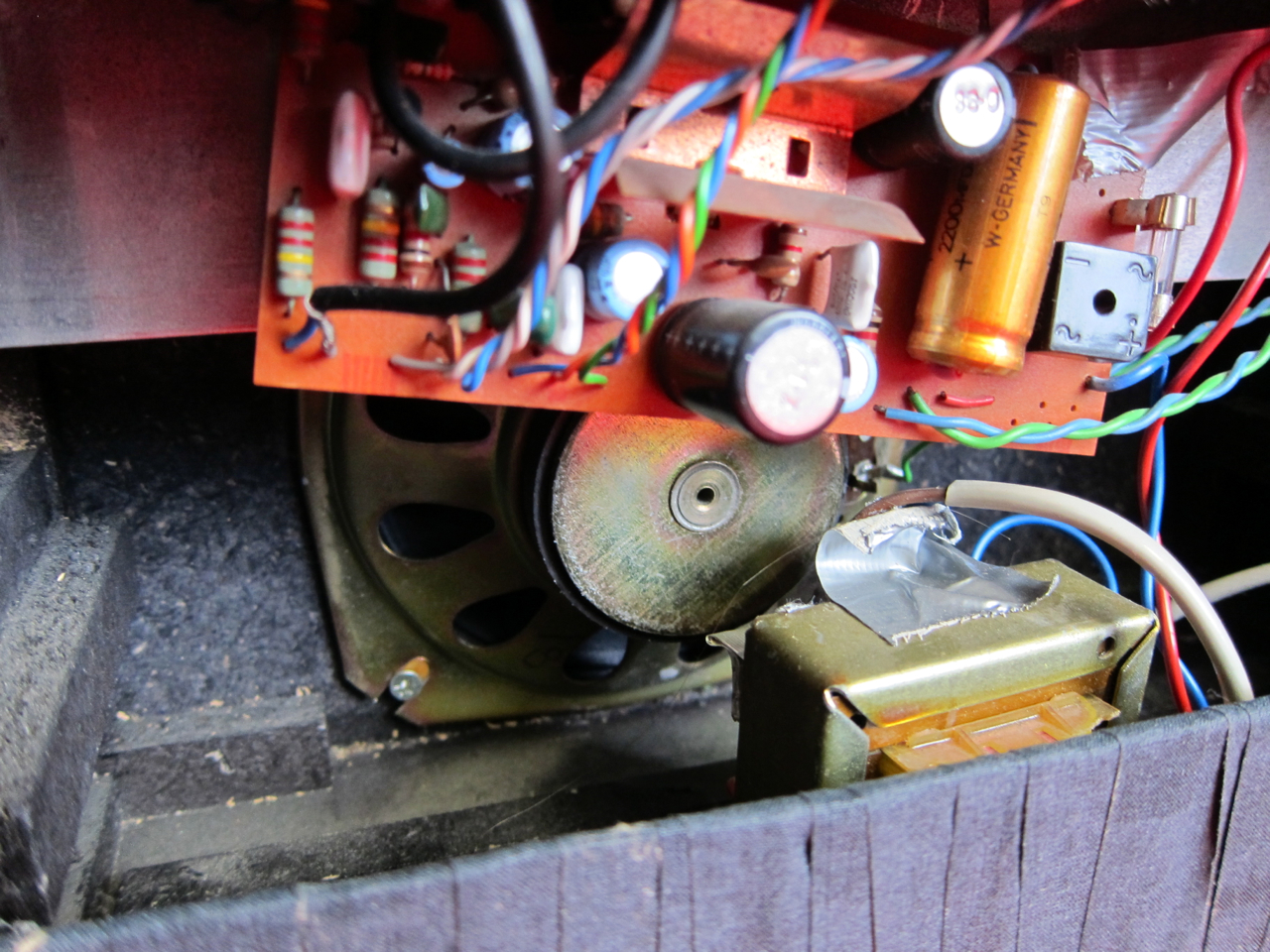
The transformer is screwed tightly to the cabinet’s floor, the circuit board (containing the rectifier amongst other components) is fastened to the amp chassis (slightly askew), while the 5-inch speaker is fixed to the baffle, as it should be.
****
During the latter half of the Seventies the Escort Battery-Mains got company by two larger brothers. The Escort 30 was a noticeably larger 30 Watt combo with a 12-inch speaker, as well as a built-in fuzz-channel. The Vox Super Twin featured two 5-inch speakers and a spring reverb, and was rated at 20 Watts.




















 Kitarablogi.com – Finland's premier Guitar and Bass blog