Musikmesse Frankfurt 2012 – the countdown is running


This year’s Frankfurt Musikmesse trade fair will open its door this Wednesday.
Kitarablogi.com will attend to check out all the new gear, as well as to snap a lot pics and maybe shoot the odd video or two.
Have a look at last year’s report HERE.
Musikmesse 2012 – lähtölaskenta on käynnissä
Frankfurtin Musikmesse 2012 avaa ovensa tänä keskiviikona.
Kitarablogi.com on paikan päällä tutustumassa vuoden uutuuksiin, ottamassa valokuvia ja kuvaamassa ehkä muutama video.
Viime vuoden messuraportti on TÄÄLLÄ.
Kitarr.ee – etelänaapurimmekin osaavat!


Virolainen aikakauslehti Kitarr on tyylikäs julkaisu kitaristeille. Lehti sisältää haastatteluja, testejä, juttuja vintage-soittimista sekä vinkkejä miten tulla paremmaksi soittajaksi.
Ajakiri Kitarr -lehdellä on myös hyvin näyttävä nettisivusto, joka täydentää ja laajentaa lehden sisältöä mm. videoilla.

Kannattaa siis tutustua!
Review: Zoom R24 -multitracker

****

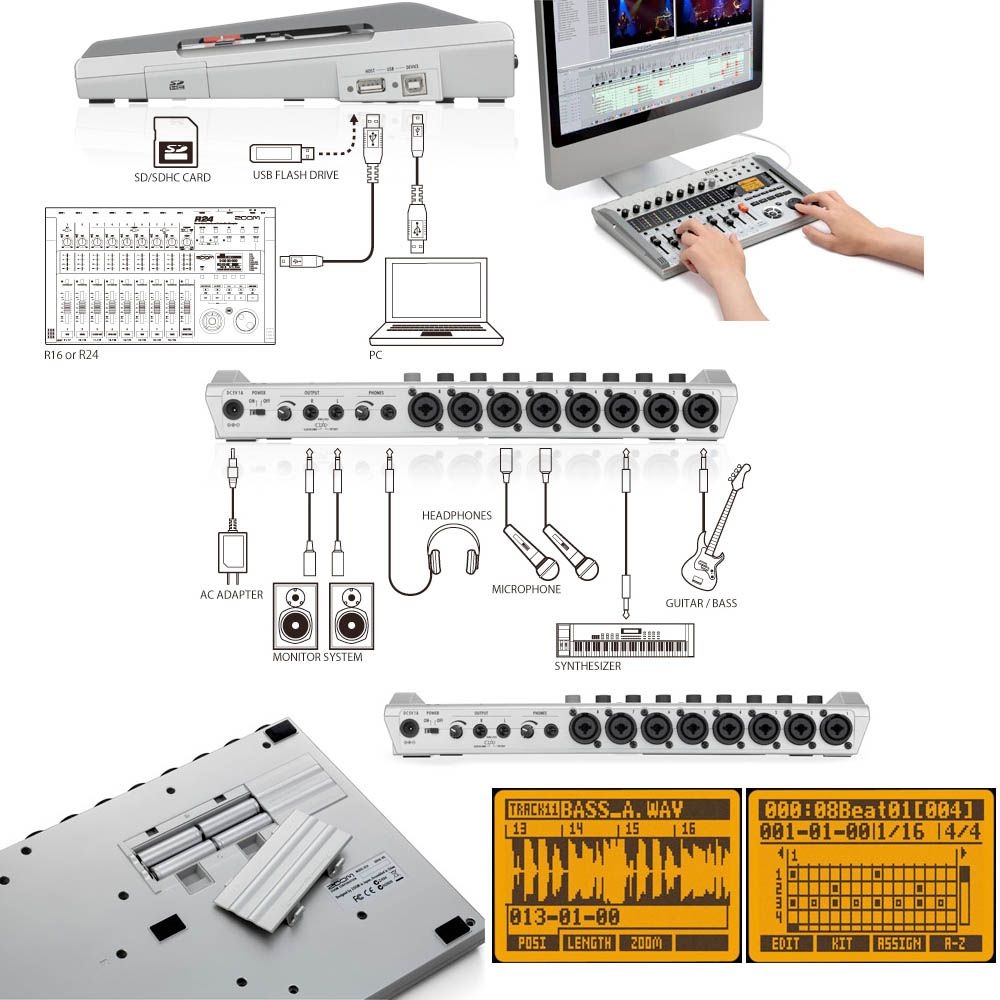
The Zoom R24 (current street price in Finland: 479 €) is a compact and very lightweight, but still quite nifty and versatile unit: The Zoom’s main purpose is to serve as a stand-alone digital multitracker (24 tracks, recording to SD-cards), but it can also be used with a computer as an external soundcard and/or a control surface for an audio sequencer (Cubase LE 5 comes included in the box).
The R24 is ready to go wherever you want to use it, thanks to its ability to run on six AA-batteries, as well as with the included, compact power supply.
This Zoom offers eight XLR/phone-combo inputs, which equals the maximum number of simultaneous recording tracks.
****
Zoom have kept the R24’s signal routing deliberately spartan and easy-to-use. Each of the inputs is hardwired to its corresponding channel fader and from there on to the corresponding recording track. It’s what-you-see-is-what-you get, basically, but with one important twist. As the R24’s mixer deals with 24 tracks, but offers only eight faders, the unit uses the same type of channel bank system, which larger digital consoles also tend to employ.
There are three fader banks (or fader planes) available for use: 1–8, 9–16 and 17–24. In the context of recording this means that each input signal can be assigned to one of the three tracks corresponding to its fader: Input 1, for example can thus be recorded either on Track 1, Track 9 or Track 17.
The R24’s inputs have been equipped ith slightly different features: Input 1 is ready to take direct signals coming froma high impedance instruments, such as an electric guitar, in addition to line level signals. Inputs 3–8 offers switchable phantom power (48 or 24 Volts), while the signal off the built-in stereo condenser mics can only be routed to Inputs 7 and 8.
But what happens if you want to record more than, say, three tracks of direct-injected guitar? No problem! The very handy Swap-button lets you swap the just-recorded track’s content with any other track you want. This means that while you have to record certain signals to certain tracks, you can then easily free up these tracks for new recordings.
****

The Zoom R24 is filled to the brim with useful features: Each mixer channel has its own 3-Band EQ section, as well as two sends to the internal send/return-effect units (Chorus and Reverb). An extremely versatile insert-effect section holds a plethora of fine guitar and bass amp models (lifted from Zoom’s own G2Nu– and B2 effects pedals), as well as algorithms tailored to vocals, drums and keyboards, plus the very useful mastering section.
The sound quality on offer is remarkable for a unit in this price bracket. It would be unrealistic to expect high-end pro-quality effects from what is basically a lower mid-price home recording device. But still, it is quite remarkable what quality you get in return for a modest outlay these days!
As the heart of your own studio, the Zoom also makes it possible to build up loop- and sample-based backings. It is also equipped with a decent built-in programmeable drum machine.
Editing, sampling and looping naturally feels a bit clumsy, when you’re used to grafic interfaces and a large computer display. But with a little persistence and some elbow grease you can achieve astonishing results on a unit such as the R24.
And as if the features so far hadn’t been enough already to make the R24 seem like a real bargain, Zoom is supplying Steinberg’s Cubase LE 5 -sequencer in the box, along with a usb-stick filled with great drum loops by Peter Erskine and Big Fish Audio.
The Zoom R24 is a handily-sized and advantageously-priced little 24-tracker, that will be perfect as you personal demo-machine, or for cutting decent recordings of your band’s rehearsals or gigs in a jiffy. The recording can the be mixed and mastered either internally in the R24 or using and audio sequencer (like Cubase).
And if one of your bandmates happens to own his/her own Zoom R24, you can even slave one machine to the other, and record a whopping 16 tracks simultaneously!
****
Zoom R24 – internal stereo mics – Taylor 110CE
****
Zoom R24
Finnish distributor: Studiotec
Street price: 479 €
Pros:
• price
• weight and size
• ease of use
• can be run on batteries
• internal stereo microphones
• versatile effects
• basic sound
Cons:
• all-plastic build
• small display
Review: Akai Chorus and Analog Delay – English summary

****
A chorus effect is produced by splitting a signal in two, and then slightly delaying one half (by less than 50 ms) and adding a tad cyclical pitch modulation to it. At the output both the dry and the effected half are summed, resulting in a lush, shimmering effect, which at times may even sound like two instruments playing at once.
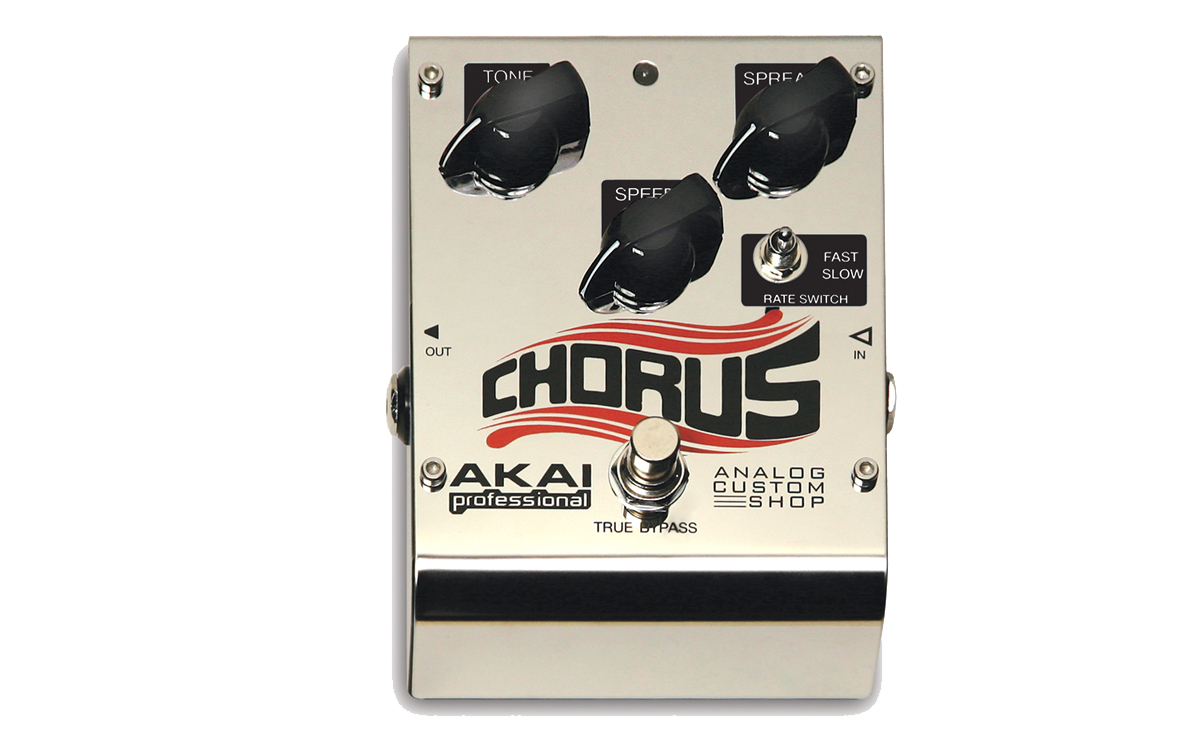
The Akai Chorus (current street price in Finland: 69 €) is an old-school analogue effect. This pedal doesn’t use A/D-converters and digital processing, deriving its tones instead from a good old condenser circuit, as well as an analogue LFO. Most anoraks feel that this is the only way to fly when it comes to chorus-pedals, even if an analogue chorus always tends to contain a tiny amount of hiss, not found in modern digital equivalents.

As with all Akai Analog Custom Shop -pedals, the Chorus also features a sturdy steel chassis and true bypass switching.
The Akai-pedals are powered by one 9 V battery or an optional, Boss-compliant power supply.

Akai’s Chorus is quite a versatile little bugger. The Rate-switch offers two different speed ranges for the LFO, and the Speed-knob takes care of fine-tuning the speed. Spread lets you determine the depth of the chorus effect, while the Tone-knob is self-explicable.
Here’s an example of the Spread-knob’s range: Akai Chorus – Spread-knob
I even tried the Akai Chorus on keyboard sounds:
Akai Delay & Chorus – Clavinet
I liked the Akai Chorus’ sound very much, and was positively surprised by its low hiss levels.
A stereo output option might have been great, for those of us who use stereo set-ups on stage, but this is the only drawback of the Akai-pedal, in my opinion.
Most of us do it in mono, though, and in such applications the Akai Chorus performs very nicely, indeed.
****
The first tapeless delay pedals in the Seventies were based on a chain of capacitors and timed electronic switches. The condensers record the incoming signal, while the switches feed the playback of the delayed signal, as well as passing the signal on to the next capacitor in the chain.
Because the principle behind this type of delay is reminiscent of a bucket brigade of people, working together to put out a blaze, these pedals are called bucket brigade delays.

Akai’s Analog Delay (current street price in Finland: 69 €) is such a vintage-type delay.
The coolest bit about a bucket brigade delay is the sound of the delays, which are always rather lo-fi and slightly dirty, with the fidelity deteriorating further with each repeat. Clean and crisp digital delays didn’t arrive on the scene before the early Eighties.
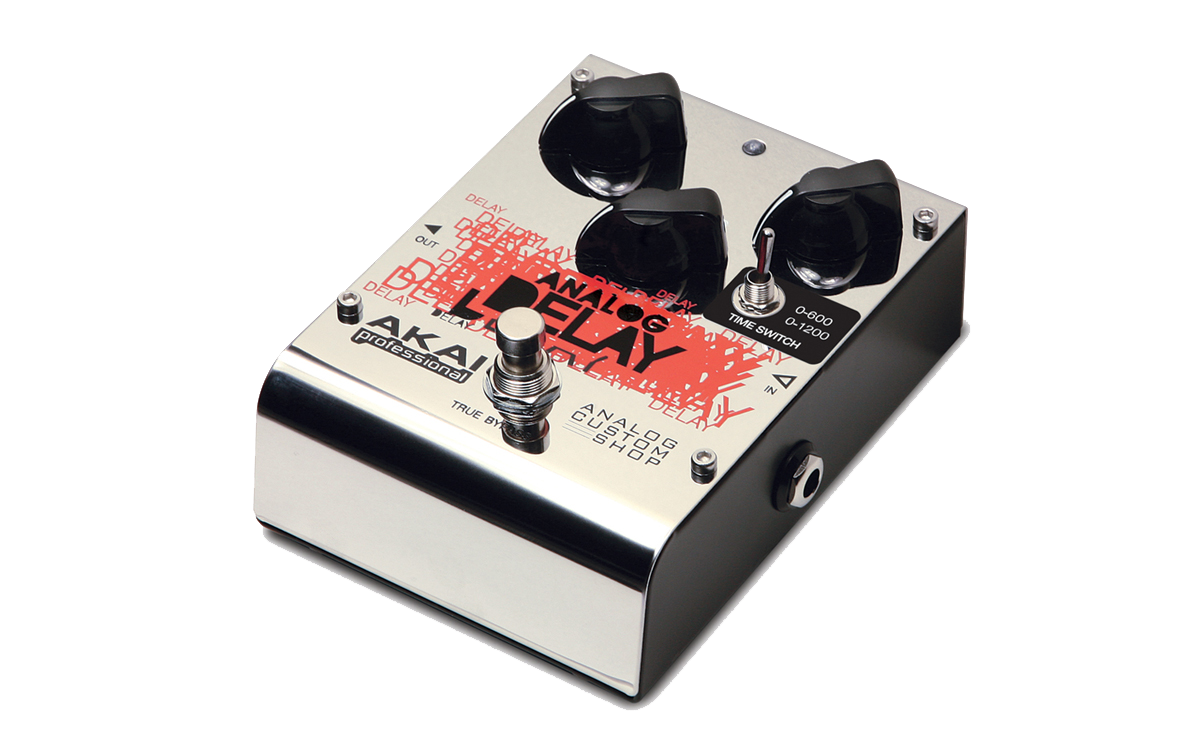
The mini-switch on the Akai lets you choose between two different delay ranges, with the shorter one (0 – 600 ms) offering slightly crisper tones, and the longer one (0 – 1,200 ms) being a bit greasier.
The shorter delay option is perfect for slapback echoes: Akai Analog Delay – Whispering
The longer option lets you build Brian May -style walls of sound: Akai Analog Delay – guitar wall
On high Repeat-settings – two o’clock or above – the delay starts to feed back on itself, with the delay volume increasing and the sound rushing in on you like an avalanche: Akai Analog Delay – feedback avalanche
What a groovy little pedal! Akai’s Analog Delay gives you the authentic tones of a bucket brigade unit, warts and all. The increasing amounts of hiss on the longest settings are a design feature of a vintage-type delay as this, and not a fault. Something for the true lovers of earthy grime!
****
Akai Analog Delay ja Chorus – à la Mr Summers
****
Akai Analog Custom Shop -pedals
Finnish Distributor: Studiotec
****
Akai Chorus
Street price: 69 €
Pros:
+ price
+ sound
+ sturdy build
+ versatile
Cons:
– mono only
****
Akai Analog Delay
Street price: 69 €
Pros:
+ price
+ sound
+ sturdy build
+ long delay times
****
Testipenkissä: Zoom R24 -moniraituri
****
Zoom R24 (katuhinta: 479 €) on pienikokoinen ja erittäin kevyt, mutta silti hyvin näppärä ja monipuolinen laite: Zoomin päätarkoitus on toimia itsenäisenä, SD-kortti-pohjaisena 24-raiturina, mutta tämän lisäksi sitä voi käyttää myös tietokoneen aisaparina, jolloin se on ulkoinen äänikortti sekä audiosekvensserin ohjausalusta (paketissa on mukana Cubase LE 5).
R24:lla voi äänittää milloin ja missä vain, koska se toimii virtalähteen (kuluu hintaan) lisäksi myös kuudella AA-paristolla. Moniraiturin etulaitaan on upotettu myös kaksi mikrofonia – akustista soittoa pystyy siis tallentamaan stereona jopa täysin ilman lisälaiteita.
XLR/jakki-kombotuloja on tarjolla kahdeksan kappaletta, ja moniraiturilla voi äänittää samanaikaisesti enintään sen verran raitoja.
****
Zoomin reititysarkkitehtuuri on pidetty mahdollisimman yksinkertaisena. R24 toimii sen suhteen saat-mitä-näet-periaatteella, mikä tarkoittaa että jokaisen tulon signaali menee vain ja ainoastaan sen alla olevan feiderin kautta siihen kuuluvalle raidalle. Koska liukuja on vain kahdeksan, mutta raitoja tarjolla 24, käyttää Zoom digimiksereistä tuttua pankkimenetelmää, jossa säädettävät kanavat/raidat valitaan kolmesta pankista (1–8, 9–16 ja 17–24).
Tulosignaaleille tämä tarkoittaa, että äänitysvaiheessa jokaista tuloa varten on käytettävissä yksi kolmesta raidasta: esimerkiksi ykköstulon signaalin voi äänittää joko raidalle yksi, yhdeksän tai 17.
R24:n eri tuloissa on eriävät lisäominaisuudet – ykköstuloon voi kytkeä (mikrofonin tai linjasignaalin lisäksi) suoraan myös sähkökitaran tai -basson, ja tuloissa 3–8 on phantomsyötön mahdollisuus (48 tai 24 V). Sisäistä mikrofoniparia taas voi äänittää ainoastaan tulojen seitsemän ja kahdeksan raidoille.
Mutta mitä tapahtuu, jos haluaa tallentaa esimerkiksi kahdeksan sähkökitararaitaa linjasoitolla? Ei hätää – vaikka ykköstulo menee aina suoraan raidalle yksi, yhdeksän tai 17, voi Swap-toiminnolla kätevästi vaihtaa kahden raidan sisällön keskenään. Näin saadaan tässä esimerkkitapauksessa nopeasti ykköstulon raidat vapaaksi uusia kitaraäänityksiä varten.
****
Zoom R24 on varusteltu avokätisesti: jokaisessa mikserikanavassa on oma komialueinen EQ, sekä kaksi lähtöä laitteen sisäisille send-return-effekteille (chorus ja kaiku). Hyvin monipuolinen insert-efektiosasto sisälttää mm. rutkasti vahvistinmallennuksia kitaralle ja bassolle (Zoomin G2Nu– ja B2 -sarjoista), efektiketjuja laululle, rummuille ja koskettimille, sekä omia kiitettäviä masterointiefektejä.
Efektien laatu on laitteen hintaan nähden todella vaikuttava. Se ei luonnollisesti vedä vertoja pro-luokan studion kallisiin räkkilaitteisiin ja softaratkaisuihin, mutta sellaiseen R24 ei olekaan tarkoitettu. Minusta on kuitenkin uskomatonta millaista äänenlaatua saa nykypäivän pikkulaitteista!
Kotistudion keskustana Zoom tarjoaa myös mahdollisuuden rakentaa biisejä sample-/loop-pohjaisesti, ja sillä on myös oma sisäinen, ohjelmoittava rumpukone. Käyttökokemus editoinnissa, samplaamisessa sekä rumpukoneen ohjelmoimissa on pitkän sekvensserisoftien käytön jälkeen luonnollisesti hieman kankeaa, myös pienen näytön vuoksi. Mutta R24:n kohderyhmää silmällä pitäen täytyy kuitenkin myöntää, että näilläkin eväillä homma saadaan toimimaan, kun vaan käyttää ensin hieman aikaa laitteen tutustumiseen.
Houkkutelevaan pakettiin tuovat lisäarvoa Steinbergin Cubase LE 5 -audiosekvensseri (CD-ROM), sekä usb-tikullinen rumpulooppeja, joista osa on rumpali Peter Erskinen äänittämiä ja muut Big Fish Audion tuottamia.
Zoom R24 on kätevän kokoinen ja varsin edullinen 24-raituri, joka soveltuu hyvin ensistudion demokoneeksi tai vaikkapa mobiilistudioksi, jolla saadaan jopa kokonaisen rockbändin harjoitukset tai keikat mutkattomasti talteen. Zoomilla äänitettyä materiaalia voi sitten jatkotyöstää, joko R24:lla tai Cubasella.
Ja jos bändikaverilla on oma Zoom R24, laitteet voi yhdistää toisiinsa usb:llä ja tällä tavoin äänittää jopa 16 raitaa samanaikaisesti!
****
Zoom R24 – sisäiset mikit – Taylor 110CE
****
Zoom R24
Maahantuoja: Studiotec
Katuhinta: 479 €
Plussat:
• hinta
• kevyt
• helppokäyttöinen
• toimii myös paristoilla
• sisäiset mikrofonit
• monipuoliset efektit
• perussoundi
Miinukset:
• kotelo muovia
• pieni näyttö
Finnish Metal Expo 2012 – kuvat 17.02.2012


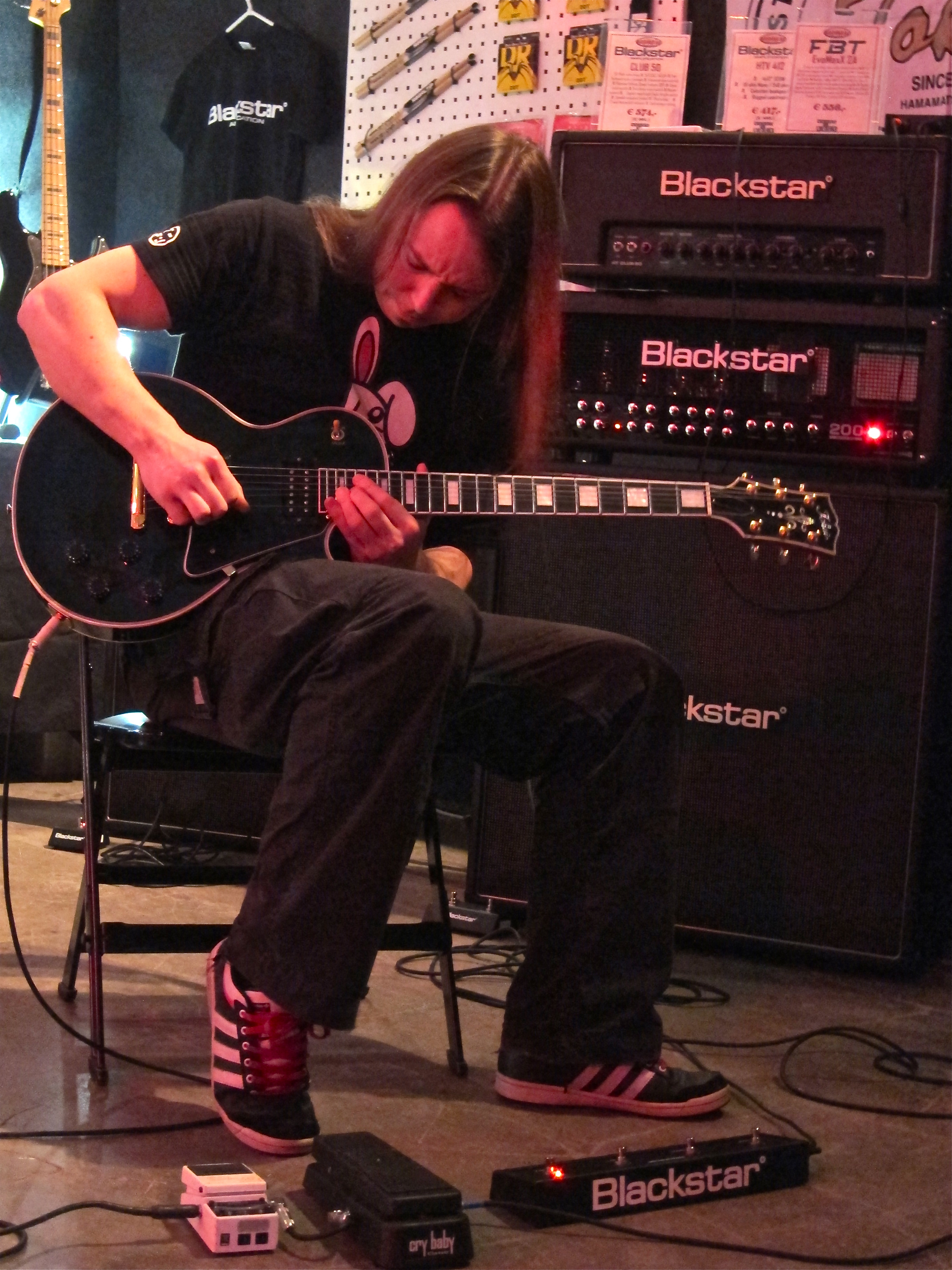
Musamaailman osasto oli täynnä herkullista kamaa ESP:ltä, Blackstarilta ja Tokailta.
Tuomas Wäinölän taitava soitto keräsi runsaasti väkeä osastolle.
****
Sound-Shopin osastolla on voinut tavata sekä tunnetumpia että tuntemattomia ihmisiä:

Tässä Paradise Lost -bändin kitaristit Greg Mackintosh ja Aaron Aedy.
****

Joonas Asikainen selittää Mayones-mallien erot.
****
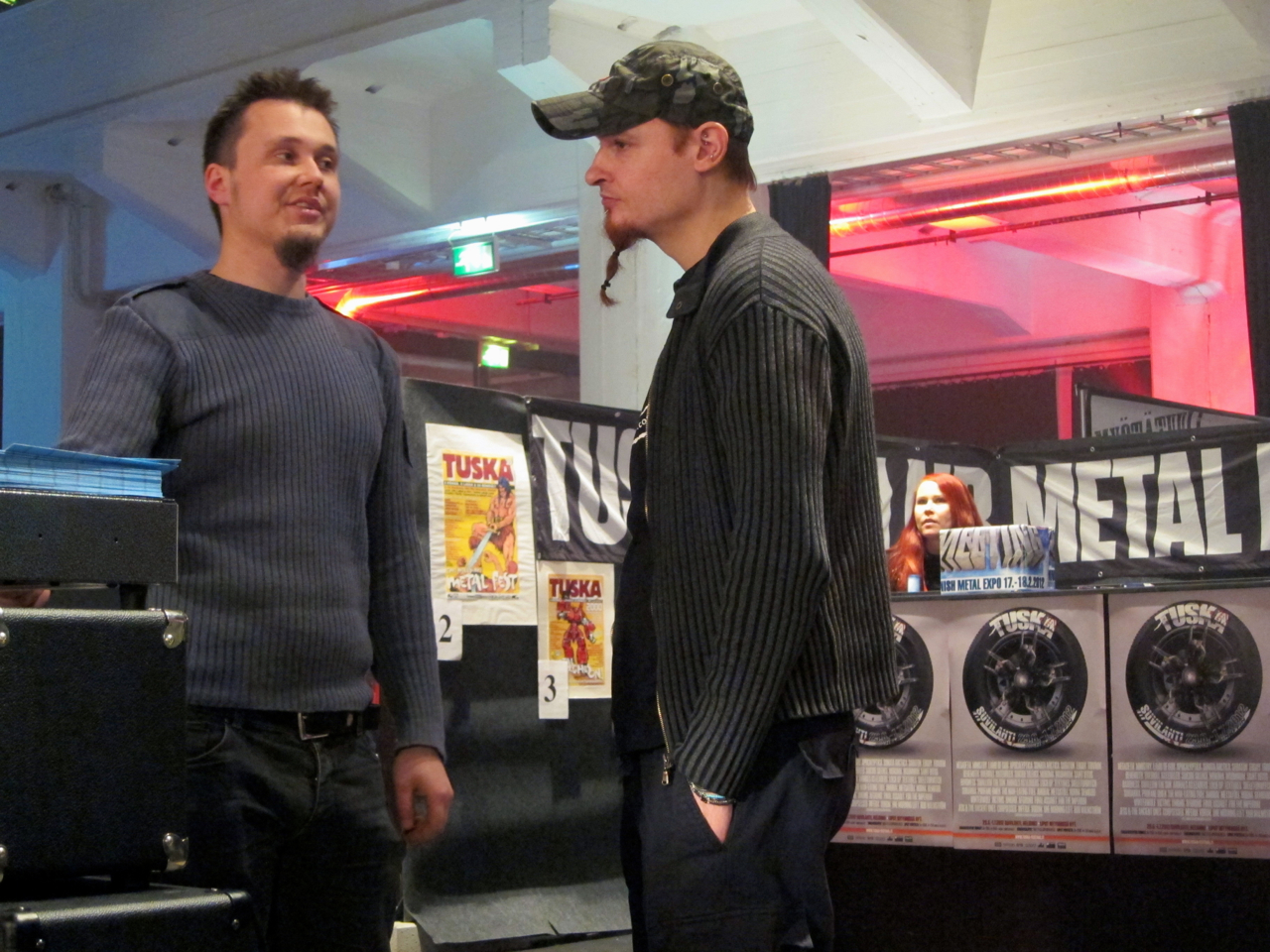
Jysky Strandberg ja Mayones-soittaja Roo Chapus.
****
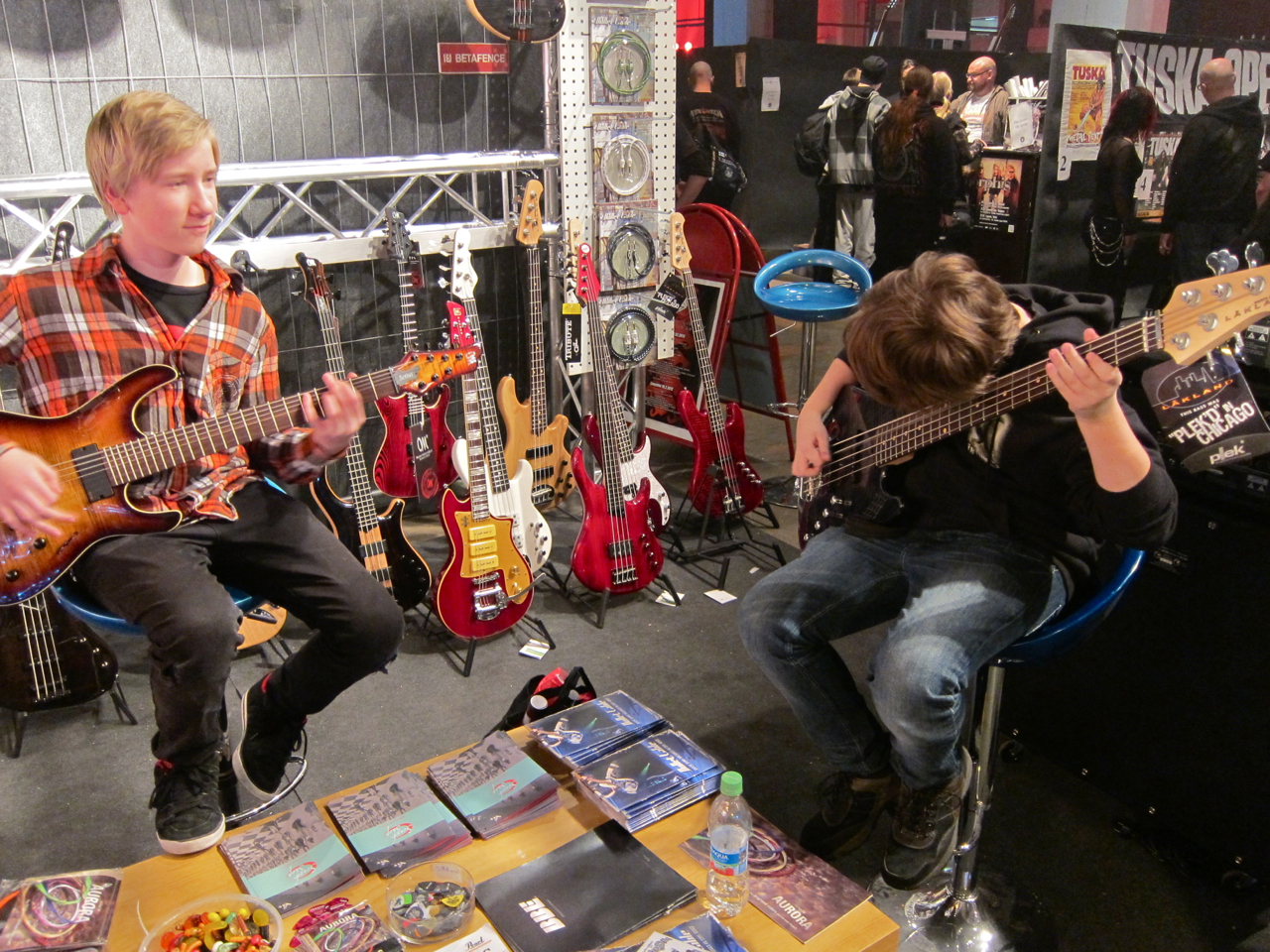
”Vanhoja kettuja” ja nuoria lupauksia:

****
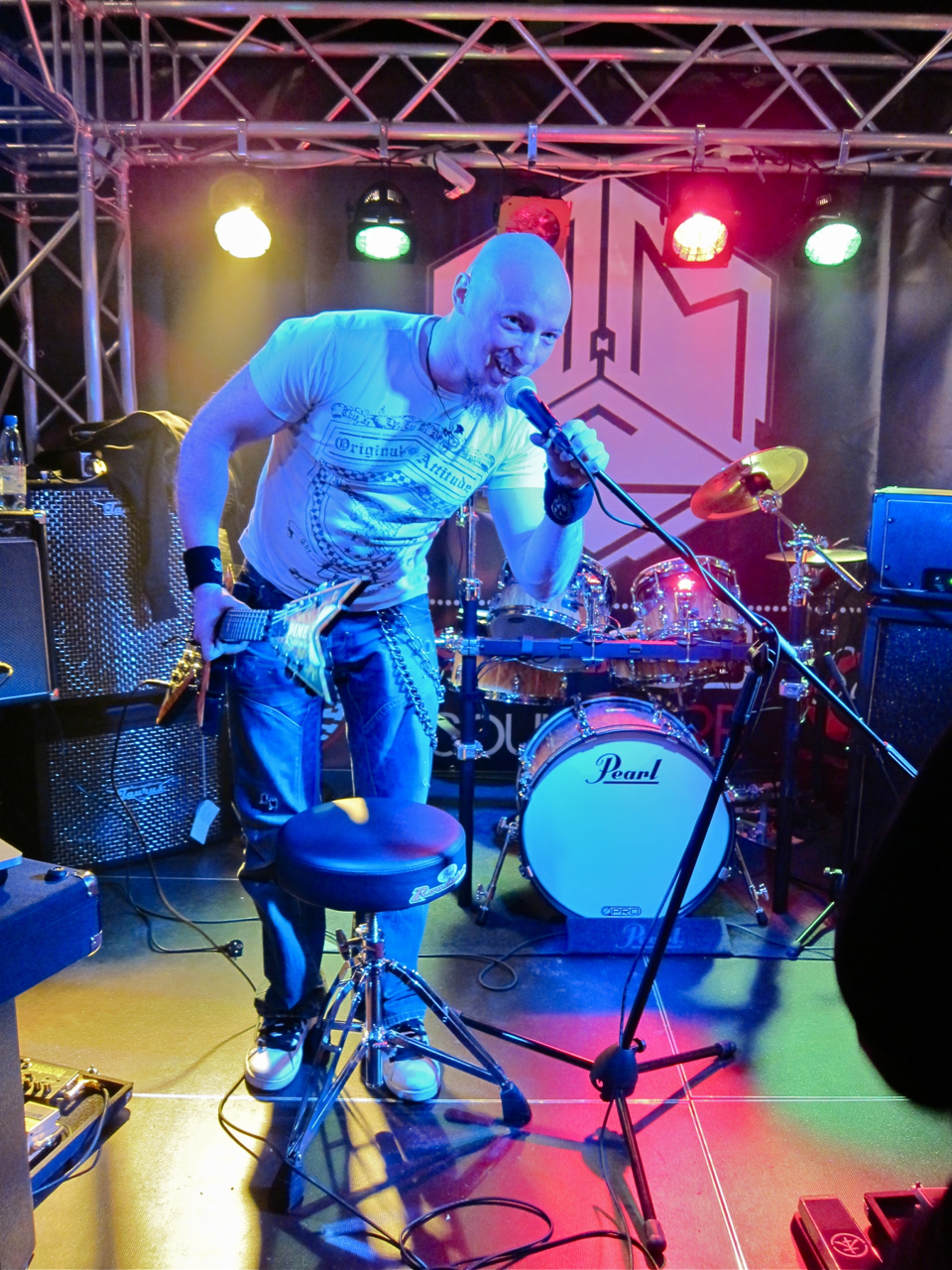
Sound-Shop oli rakentanut osastoonsa myös esiintymislavan. Tässä Dean-käyttäjä Mikko Salovaara.
****
 Kitarablogi.com – Finland's premier Guitar and Bass blog