

Kitarablogi.com – Finland's premier Guitar and Bass blog
Juttuja kitaroista ja bassoista

****
The Zoom Corporation’s super-compact 9000-series digital multieffects caused quite a stir in the early 1990s. The company’s recent Zoom MultiStomp MS-50G (current rrp in Finland: 99 €) carries on this heritage by managing to squeeze most of the large Zoom G5’s processing power (reviewed in August 2012) into one regular-size single pedal.
****
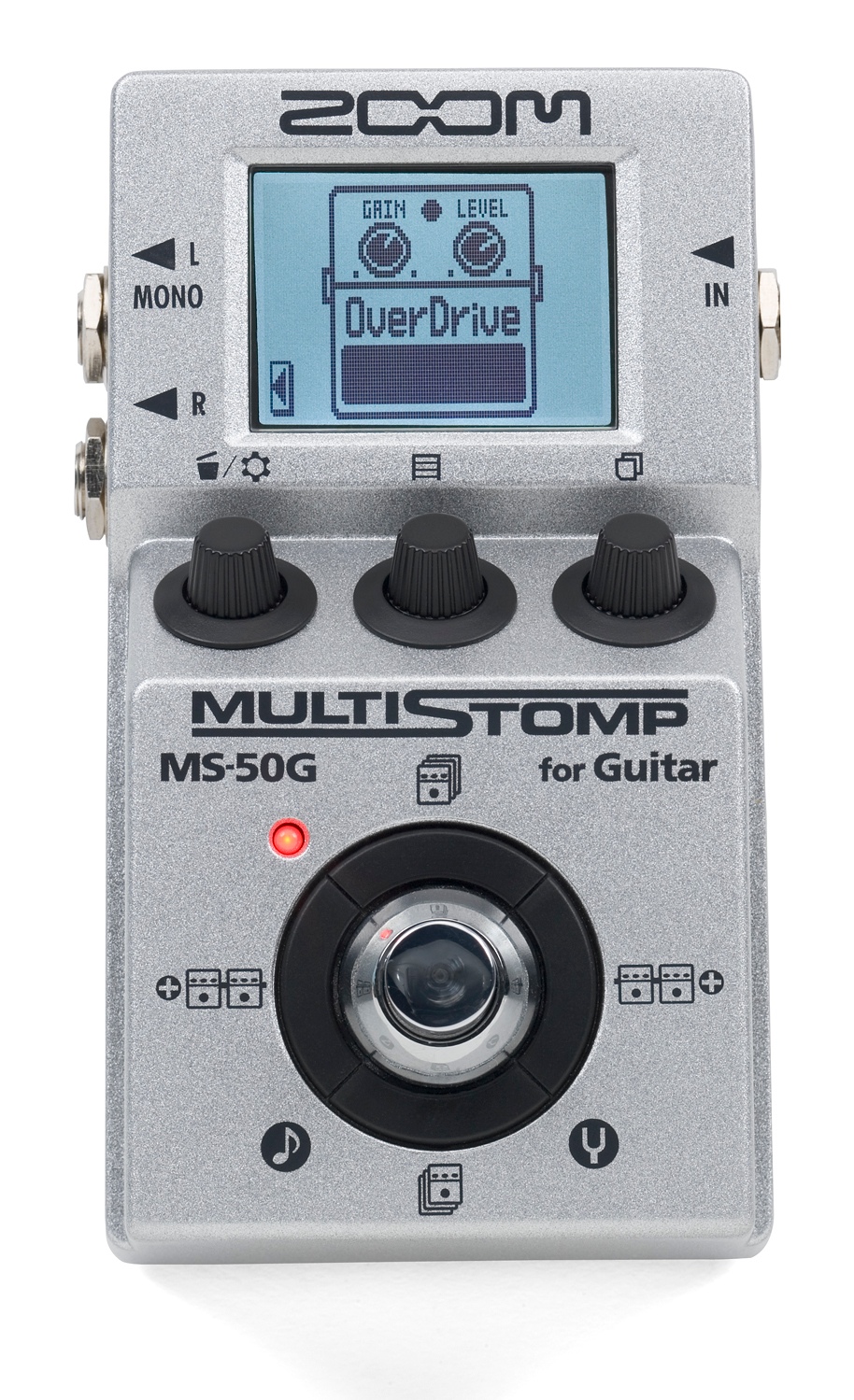
It may sound unbelievable, but it really is true – this small box holds in store a whopping 50 memory slots for your own effect patches. Each effect patch can consist of a signal chain of up to six different effects. The MS-50G offers you 55 different effect types to choose from – featuring everything from compressors and modulation effects all the way to distortions, amp modelling and whacky special effects. Naturally, the MultiStomp also comes equipped with a digital tuner.
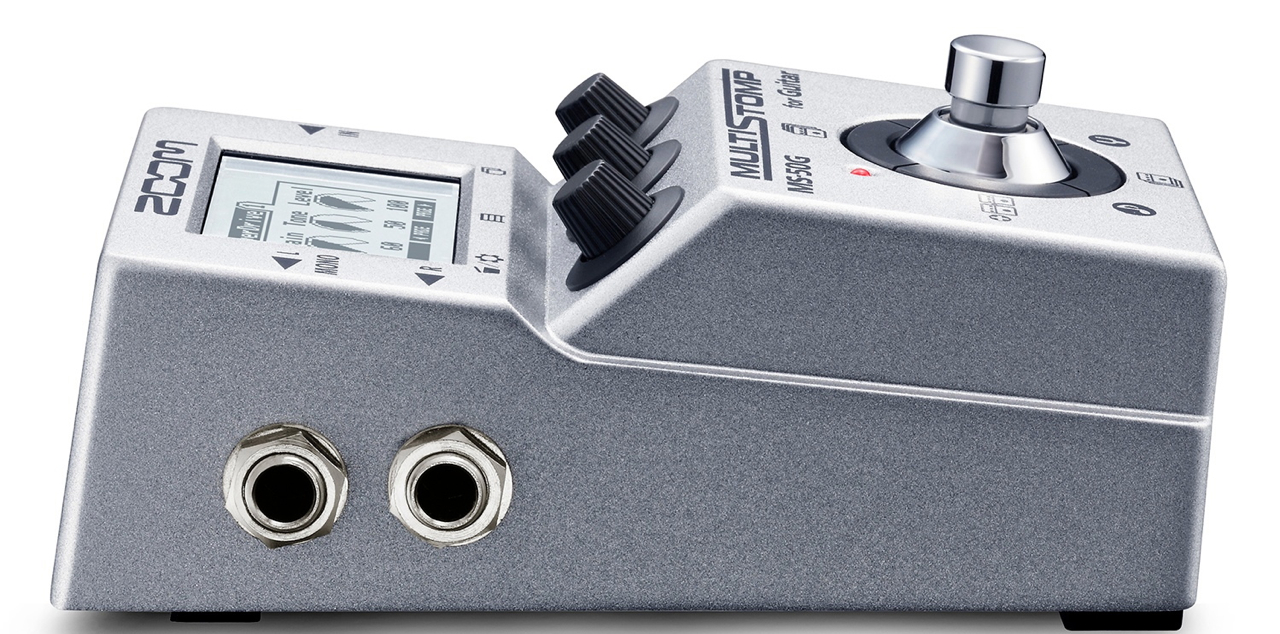
The Zoom MS-50G’s metal casing and its single foot switch feel reasonably chunky. The three parameter control knobs have been mounted at an angle underneath the LCD-display, out of the way of your foot’s path.
The pedal can be used in mono or in stereo. There is no headphones output on the MultiStomp, because it is meant to be used either as a standard guitar effect in front of your amp (or plugged into the effects loop) or for recording, connected straight to the front end of your soundcard or mixing console.

This compact Zoom is powered by two AA-sized batteries, giving you about seven hours of continuous use. Powering the pedal using a PSU (optional) is the more environmentally friendly way of doing things, and Zoom have made it easy for us by sticking to the Boss-standard (9 V, centre plus), making it easy to integrate the MS-50G into your existing pedal board.
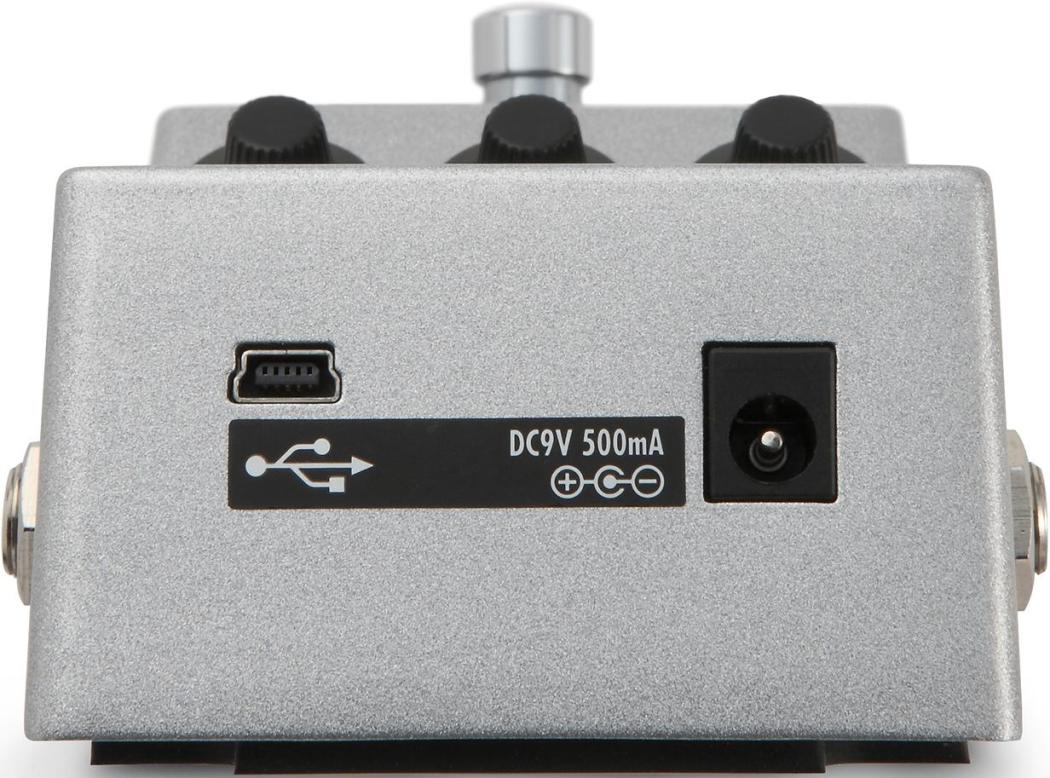
The USB-port on the front of the MultiStomp makes it possible to update the unit’s firmware.
****
There are two main ways of using the Zoom MS-50G’s effect patches:
The first way would be to manually select one patch, and the use the left/right cursor keys to choose the one effect in this patch (like chorus, distortion or delay) that you want to be able to turn on and off using the foot switch while performing. The unit automatically stores which effect you have selected in each given effect patch, so the next time you call up this patch you will already have your chosen effect connected to the foot switch.
The second way of using the Zoom is by utilising the MS-50G’s A/B-mode. A/B-mode allows you to select all the effect patches you will want to use, and put them in a running order by assigning a letter to each of the chosen effects (e. g.: ”SynthStar: A”, ”AsiaPalace: B”, ”PitchDist: C” etc). Once you’ve got your list in order, you can use the foot switch to hop through your list (starting from letter ”A” going up the alphabet). At the end of your list pressing the foot switch will get you back to the first patch in your list.
****
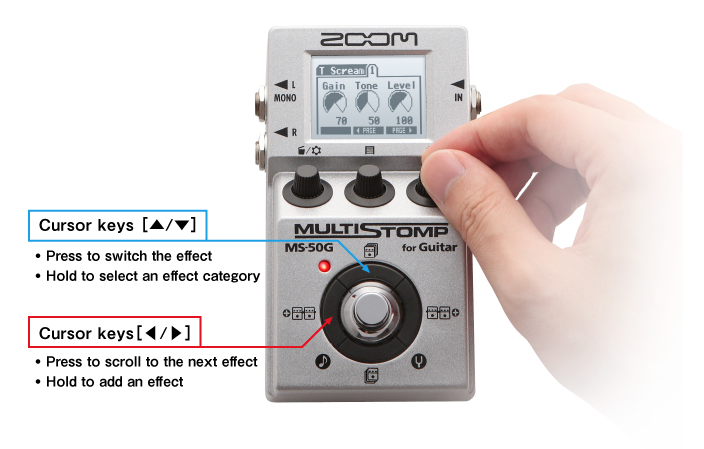
Very compact multieffects usually require a slightly steeper initial learning curve than larger boards, because the limited number of controls and push buttons always means you first have to get to grips with the unit’s user interface. Luckily, thanks to its logical structure and well-designed graphics the MultiStomp is an easy piece of gear to master.

I especially like the Effect Chain view, which makes changes to the order of effects inside a patch very easy. You simply lift the chosen module using the virtual magnet, and drop it where you want it to go.
****

Regardless of its compact size, the Zoom MS-50G MultiStomp is a fully-fledged member of the company’s G-series of guitar multieffects. While the MultiStomp won’t offer you all of the great features and effect types of its larger brethren – the G3 and G5 – the sheer amount of processing power and tasty effects on offer here is truly amazing. For the price of a decent single effect the MS-50G offers you a huge palette of different effects, while only taking up very little space on your pedal board.
****
I used a Tokai SG-75 plugged into the Zoom MS-50G to record all the guitar tracks on the YouTube video:
All of the other soundbites have been lifted from Kitarablogi’s reviews of the Zoom G3 and the larger G5:
Fender Stratocaster – detune – delay
Fender Stratocaster – dirty Tweed – tremolo
Tokai LC-85 – fixed wah – Marshall-type
Tokai LC-85 – phaser – Blackface-style
****
Zoom MS-50G MultiStomp
Current RRP in Finland 99 €
Finnish distributor: Studiotec
****
Pros:
+ value-for-money
+ sound
+ compact size
+ easy to use
+ versatile

Näyttää siitä, että Duesenberg-kitarat ovat saavuttaneet ”klassikkokynnyksen”.
Peerless Guitars on tuomassa kohtapuolin markkinnoille uuden Retromatic-mallinsa, joka näyttää hyvin samanlaiselta kuin Duesenbergin Starplayer TV.
Päättäkää itse – tältä Peerless Retromatic tulee näyttämään:
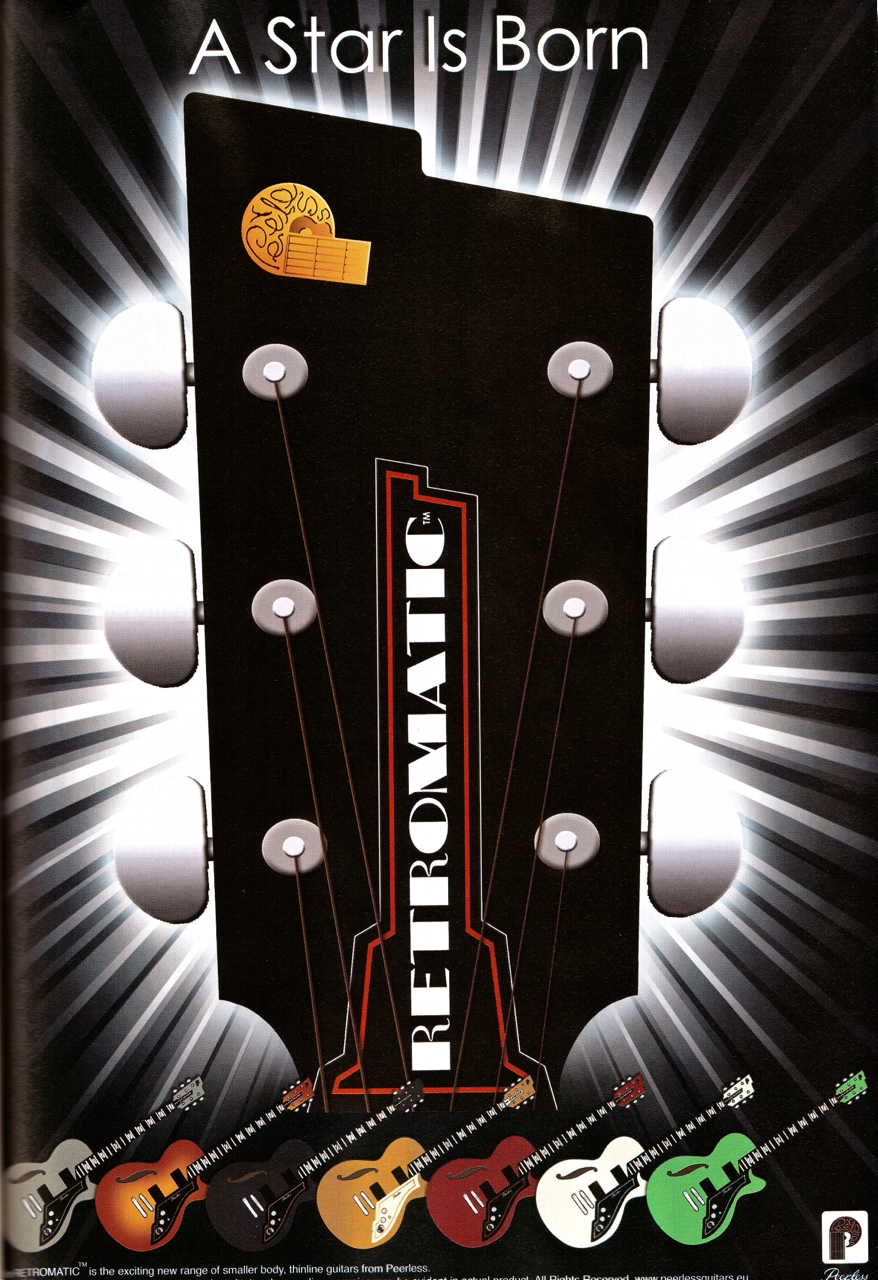

…ja tällainen on aito Duesenberg Starplayer TV -kitara:


Mielenkiintoista nähdä reagoiko Duesenberg uuteen Peerless-malliin millään lailla.
****
Duesenberg-soittimia tuo maahan F-Musiikki.
It seems Duesenberg guitars are about to achieve classic status.
Peerless Guitars have just announced their new Retromatic model, which looks like a dead ringer for a Duesenberg Starplayer TV.
Have a look for yourselves – here’s the new Peerless Retromatic:
…and this is what a Duesenberg Starplayer TV looks like:
We wait with bated breath for Duesenberg’s reaction to the Peerless Retromatic.


Tokai Guitars’ SG-75 is the company’s top model in their line of Gibson SG copies – a carefully crafted, Japanese version of the American original from the 1960s.
****

The Tokai SG-75 (current price in Finland: 928 €) is based on the first version of the Gibson SG, which was introduced in 1961 as the new Les Paul Standard guitar. At that time the original Les Paul -range started showing seriously flagging sales figures, so Ted McCarty instigated a complete rethink of Gibson’s main solidbody model. The idea was to create a sleeker and lighter guitar.
Mr Paul wasn’t pleased with the result and didn’t renew his endorsement deal, which is why the new model was renamed the Gibson SG (= Solid Guitar) in 1963.

Tokai’s SG-75 is a great recreation of the classic model, and stays very faithful to the original design, displaying exemplary attention to detail in the process.
Take the body, for example: Its two pieces of fine mahogany have been matched so well it took a magnifying glass to make out the glue line at all! The well-applied red dye and the expertly executed thin finish really show off the guitar’s curves, as well as the nice grain of the wood.


Vintage-style tuners are a tasteful choice for the SG-75 model.

The rosewood fretboard is bound in single-ply cream plastic, and sports the traditional ”crown” inlays associated with guitars of this type. The workmanship on the frets can only be called exemplary.

The neck joint on the Tokai SG-75 sits – as tradition dictates – at the last fret (22nd). This arrangement gives you unhampered access to the uppermost frets, but the trade-off is a slightly weaker neck joint in comparison to, say, LP-style guitars. Buying a secure guitar stand and a quality hard case for this type of guitar is a very good idea.

In terms of its pickups, controls and hardware the Tokai SG-75 is a typical Gibson-type guitar.

The bridge is a modern update of the venerable Tune-o-Matic-bridge: The intonation adjustment screws are properly secured to the bridge’s base. On 1960s originals only a flimsy retaining wire keeps the saddles from falling off mid-song, should you break a string.

The pickups on most SG-type guitars are placed differently, compared to LP-style double-humbucker guitars:
The neck pickup has been moved a good two centimetres away from the end of the fretboard to add a little strength to the neck joint. In order to keep the tonal difference between the neck ’bucker and the bridge unit as wide as possible, the bridge humbucker has also been moved a few millimetres closer to the bridge.

The control set-up is also pure SG, with the three-way toggle, the four controls (two volumes, two tones) and the output jack all crammed together in the lower bout.
Using an angled plug is a very good idea on SG-type guitars, as it reduces weight-induced stress – and thus breakages – on the rather thin area of mahogany routed out around the jack.

One word says it all – quality!
****


Vintage 1960s examples of Gibson SGs all feature rather thin necks, many (from about 1966/67 onwards) of which also have a narrower nut width. Some guitarists – like Angus Young – actually prefer these necks, but for many others this type of neck profile is simply too insubstantial.
Luckily, Tokai have decided not to paint themselves into a corner here: The neck profile of the SG-75 is a nice, not-too-chunky D, which is a tad more muscular than Gibson’s current 60s-profile.
In addition to the improvement in playability there’s also an improvement in tone and sustain to be had from slightly bigger necks on SG-style guitars. More wood means added stiffness and less damping due to vibrational absorption in the long, unsupported neck.
The extremely lightweight Tokai SG-75 is a fine example of how an SG-style guitar differs from a LP-type in its acoustic and electric tones. The acoustic tone is a good deal more open, and it displays a lovely vocal mid-range timbre, as well as a slightly lighter bass response. The SG-75 feels very alive and is brimful of dynamic nuances.
Tokai’s fine PAF-Vintage Mk3 -humbuckers work exceedingly well in this context, because these vintage-type, moderately-powered pickups have an open and dynamic sound, and don’t clog up the guitar’s mid-range frequencies.
The more ”trebly” pickup placement does its bit to underscore the SG-75’s clear and crisp acoustic tone. The bane of LP-type guitars – the muddy neck humbucker sound – is, thankfully, completely absent here, and the bright and airy top end of the bridge pickup will make you think twice about an SG’s suitability for traditional Country music.
Here’s a clean clip:
Here’s the Tokai through an overdriven channel:
And here’s the music from the video:
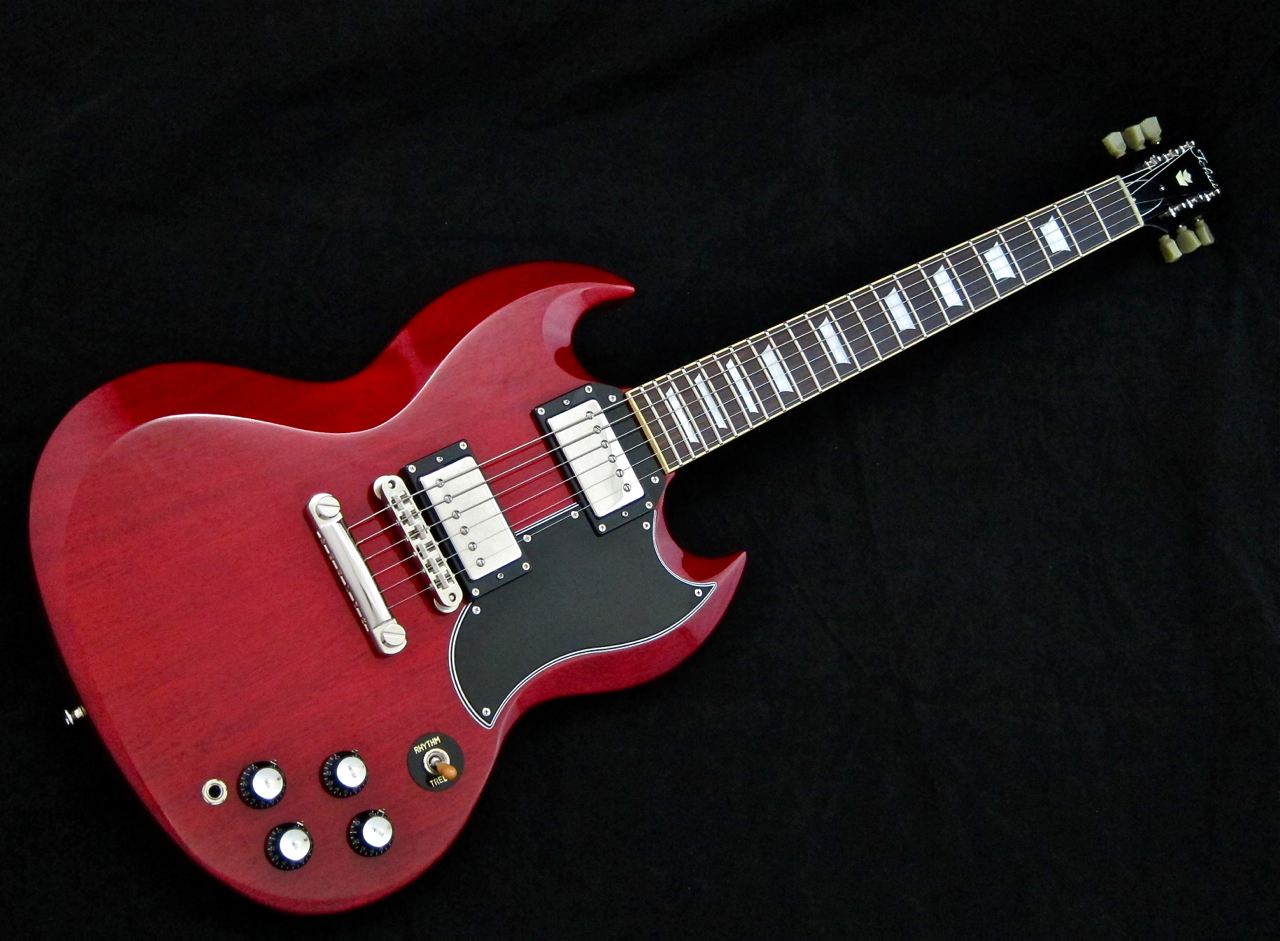
The Tokai SG-75 is the best SG-type guitar I’ve played so far. The Tokai offers fine workmanship, great playability and tasty tones in a surprisingly affordable package.
****
Tokai SG-75
Current price in Finland: 928 €
Finnish distribution: Musamailma
****
Pros:
+ value-for-money
+ workmanship
+ neck profile
+ pickups
+ playability
+ sound
****
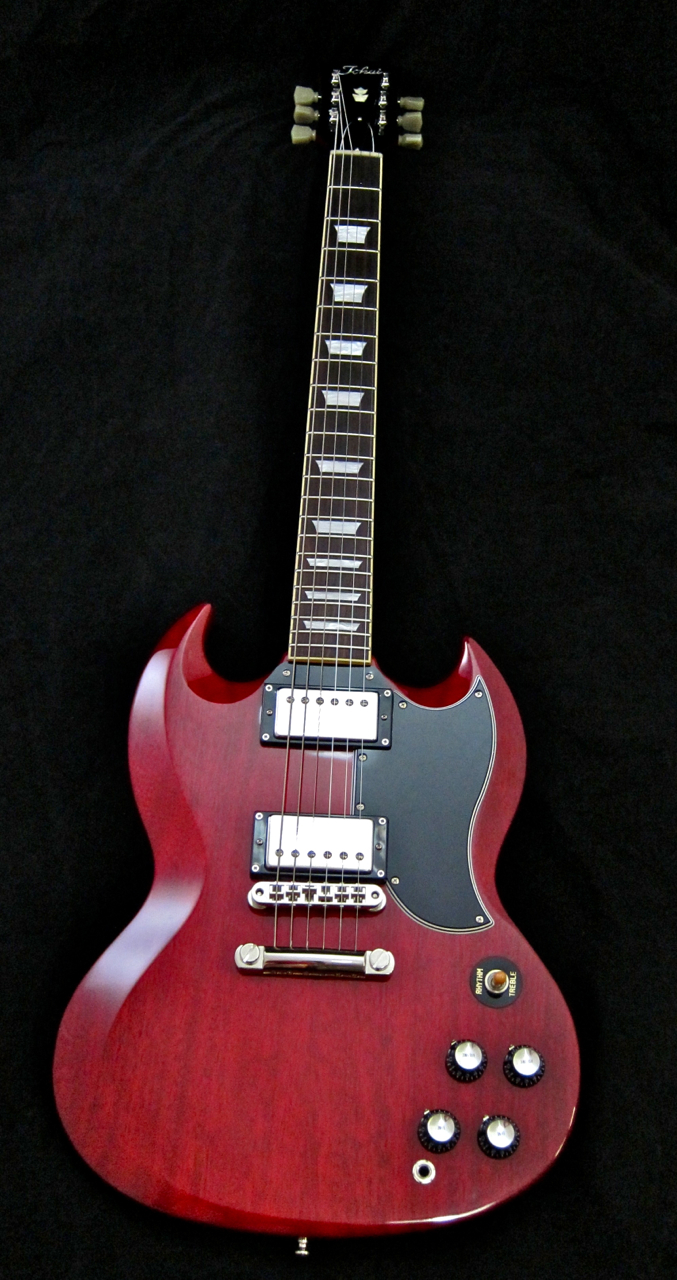

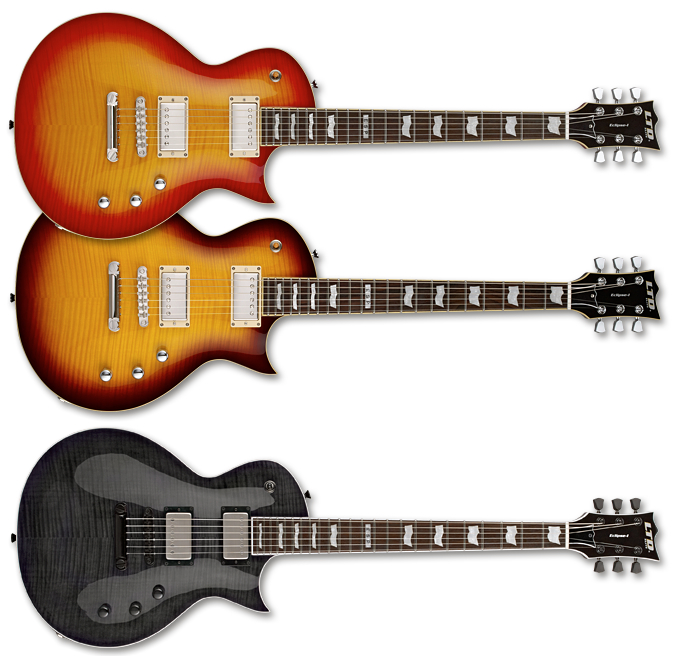
Uudet LTD-Elite-sarjan sähkökitarat ja bassot valmistetaan käsityönä Japanissa. Toisin kuten muut LTD-mallit, joita valmistetaan eri puolilla Aasiaa, LTD-Elite-sarjalaiset valmistetaan samalla tehtaalla, mistä tulevat myös kaikki ”high-end” ESP-mallit.
Ensimmäiset julkistetut LTD-Elite-mallit perustuvat suoraan kaikkein suosituimpiin ESP:n malleihin. Aluksi tuotantoon tulee seitsemän erilaista sähkökitaraa, malleina ST-1, Eclipse-I, Horizon-III NT, Horizon-III FR ja M-II sekä kaksi bassoa, nelikielinen J-4 sekä viisikielinen J-5.
Lisätietoa saa TÄSTÄ.



 Kitarablogi.com – Finland's premier Guitar and Bass blog