
****
****
Lisätiedot: Musamaailma
Kitarablogi.com – Finland's premier Guitar and Bass blog
Juttuja kitaroista ja bassoista

****

Etsitkö mielenkiintoista vaihtoehtoa ainaisille Stratocaster- ja Les Paul -johdannaisille? Ratkaisu pulmaasi voisi hyvinkin olla Tokai AJG-88 – firman valmiiksi modattu kunnianosoitus Fender Jazzmasterille.
****

Tokai AJG-88 (1.099 €) on pitkällä mensuurilla varustettu ruuvikaulainen sähkökitara.

Soitin on rakennettu vaahterakaulasta, sekä sulavanlinjaisesta, kolmesta vierekkäisestä palasta kootusta rungosta.
Sekä kaulaa että runkoa on viimeistelty vintage-tyylisesti kiiltävällä lakalla: kaulaan käytetään kirkaslakkaa, kun taas runko on saanut ylleen erittäin kauniin kolmivärisen liukuvärityksen.

Yksi selvä parannus esikuvaansa nähden on Tokain nykyaikainen kaularauta, jota voi mukavasti säätää suoraan lavan puolelta.

AJG-88 on varustettu Gotohin laatuosilla – virittimet ovat nykyaikaisia suljettuja malleja.

Palisanteriotelautaan on asennettu 22 medium jumbo -nauhaa. Tokain nauhatyö on ensiluokkaista.

AJG-88:ssa on käytössä perinteinen ruuviliitos, joka on toteutettu japanilaisella tarkkuudella.

Tähän asti Tokai AJG-88 olisi voinut kuvailla suoraksi Jazzmaster-kopioksi, mutta soittimen elektroniikka, mikrofonivarustus, sekä tallaratkaisu tekevät selväksi, että testikitara menee paljon nykyaikaisempaan suuntaan.

Alkuperäisessä Jazzmasterissa on edestä asennettu vibrato sekä keinuva talla, joka toimii oikeastaan vain vintage-tyylisellä kielisatsilla (012 tai isompi) tyydyttävästi. Nykysetillä Jazzmaster-tallan tallapalat usein liikkuvat ja sirisevät, kielet tahtovat hypätä ulos uristaan, ja seurauksena sustain kärsii.
Tokai AJG-88 -kitaralla sellaiset ongelmat eivät pääse edes syntymään, koska soitin on varustettu vankalla Gotoh-tallalla ja -kieltenpitimellä. Viritys pitää ja sustainea riittää tämän ansiosta, riippumatta musiikkigenrestä tai soittotyylistä. Gotohin laadukas parivaljakko kestää mukisematta myös matalat Metal-viritykset.

Jazzmasterilla oli P90-tyylisiä, häiriöherkkiä mikrofoneja, ja sen Jaguar-sisarmallilla parannettuja kapeita yksikelaisia. Molemmissa malleissa oli monimutkainen kytkentä erillisine säädinosastoineen vain kaulamikrofonille.
Epäsuosittujen alkuperäisten ratkaisujen sijaan, Tokai tarjoaa kaksi aitoa Seymour Duncan -humbuckeria – kaulassa Jazz-malli (SH-2N) ja tallan vieressä vintagea tuhdimpaa Jeff Beck -mikrofoni (SH-4).

Elektroniikka on virtaviivaistettu niin, että AJG-88:ssä on tarjolla kolmiasentoinen vipukytkin, sekä master volume ja tone -säätimet.
****

Jos et ole koskaan kokeillut Jazzmaster-tyylistä kitaraa, voin vain suositella Tokai AJG-88:n kokeilemista. Isokokoisen rungon ja erilaisen geometriansa ansiosta soittokokemus on positiivisella tavalla hieman erilainen. Virtaviivaista, 1950-luvun autoista vaikutteita saanutta soitinta on joka tapauksessa erittäin mukava soittaa sekä istuen että seisten.
Kaulaprofiiliksi on valittu mukava, vintage-tyylinen ja keskipaksu ”D”. Erinomaisen nauhatyön ansiosta kielet on voitu säätää erittäin matalaksi (matala E: 1,6 mm, korkea e: 1,0 mm), ilman että kielet rämisisivät häiritsevästi akustisessa soitossa.
Tokai AJG-88:n akustinen ääni on avoin, ja sillä on tiukka bassorekisteri, sekä hyvin viehättävä, hieman ontto keskirekisteri.
Puhtaaseen vahvstinkanavaan soitettuna saa Tokain kaulamikrofonilta kauniita täyteläisiä soundeja, joissa on kuitenkin myös riittävästi diskantin tuomaa hohtoa. Kuten monissa kahdella kaksikelaisilla varustetuissa kitaroissa, myös AJG-88:ssa vipukytkimen keskiasennosta saa soittimen parhaita puhtaita. Keskiasennossa sointi on avoin, ja sillä on kauniisti selkeyttä lisäävää atakkia. Vintagea hieman vahvempi tallahumbuckeri tarjoaa tehonsa lisäksi myös selvästi tiheämpää keskirekisteriä – enemmän kuin käyttökelpoinen clean-soundi, siis, vaikka se ei tarjoakaan F-tyylistä twängiä tai purevuutta.
Tämä Tokai todella tykkää säröstä, ja soittimen humbuckerit tarjoavat erittäin maukkaita Blues-, Rock- ja Metal-soundeja. Tällaista voimaa ja sustainea on tavallisesti turha hakea perinne-Jazzmasterista, mutta AJG-88 on heti valmis kovaan menoon.
Tokai AJG-88 on todella hieno laatukitara Japanista. Se on mielestäni erittäin toimiva sekoitus Fender-tyylisestä ulkonäöstä (ja soitettavuudesta) ja Gibson-tyylisestä soundista, ja se tarjoaa roimasti vastinetta rahelle.
****
Tokai AJG-88
1.099 €
Maahantuoja: Musamaailma
****
Plussat:
+ japanilainen laatusoitin
+ hinta
+ työnjälki
+ soitettavuus
+ Seymour Duncan -mikrofonit
+ soundi
****


****
The Zoom Corporation’s super-compact 9000-series digital multieffects caused quite a stir in the early 1990s. The company’s recent Zoom MultiStomp MS-50G (current rrp in Finland: 99 €) carries on this heritage by managing to squeeze most of the large Zoom G5’s processing power (reviewed in August 2012) into one regular-size single pedal.
****
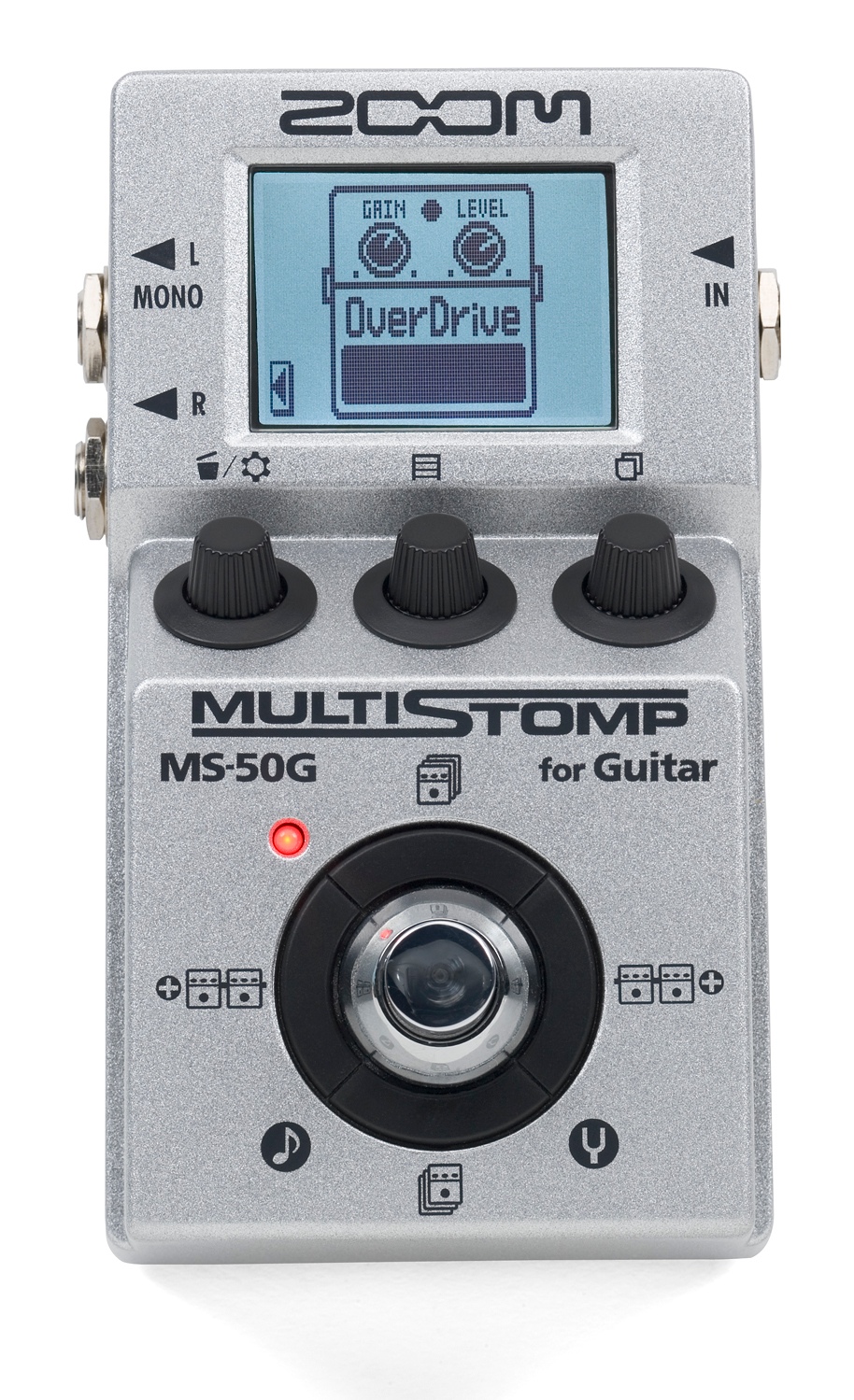
It may sound unbelievable, but it really is true – this small box holds in store a whopping 50 memory slots for your own effect patches. Each effect patch can consist of a signal chain of up to six different effects. The MS-50G offers you 55 different effect types to choose from – featuring everything from compressors and modulation effects all the way to distortions, amp modelling and whacky special effects. Naturally, the MultiStomp also comes equipped with a digital tuner.
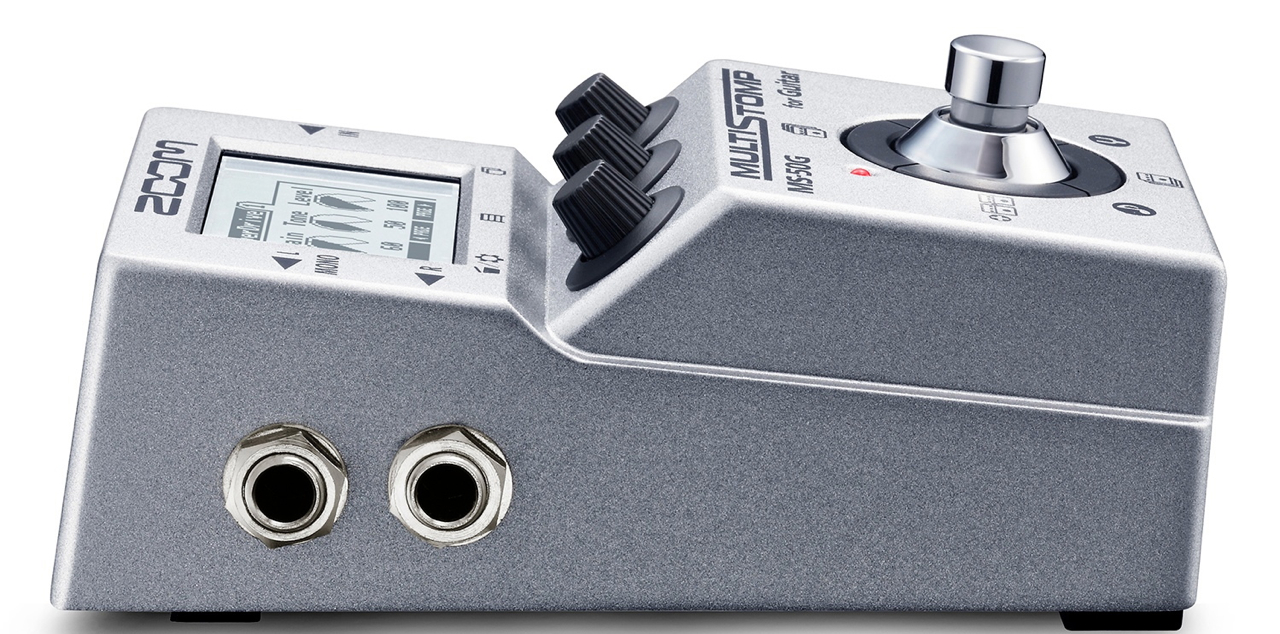
The Zoom MS-50G’s metal casing and its single foot switch feel reasonably chunky. The three parameter control knobs have been mounted at an angle underneath the LCD-display, out of the way of your foot’s path.
The pedal can be used in mono or in stereo. There is no headphones output on the MultiStomp, because it is meant to be used either as a standard guitar effect in front of your amp (or plugged into the effects loop) or for recording, connected straight to the front end of your soundcard or mixing console.

This compact Zoom is powered by two AA-sized batteries, giving you about seven hours of continuous use. Powering the pedal using a PSU (optional) is the more environmentally friendly way of doing things, and Zoom have made it easy for us by sticking to the Boss-standard (9 V, centre plus), making it easy to integrate the MS-50G into your existing pedal board.
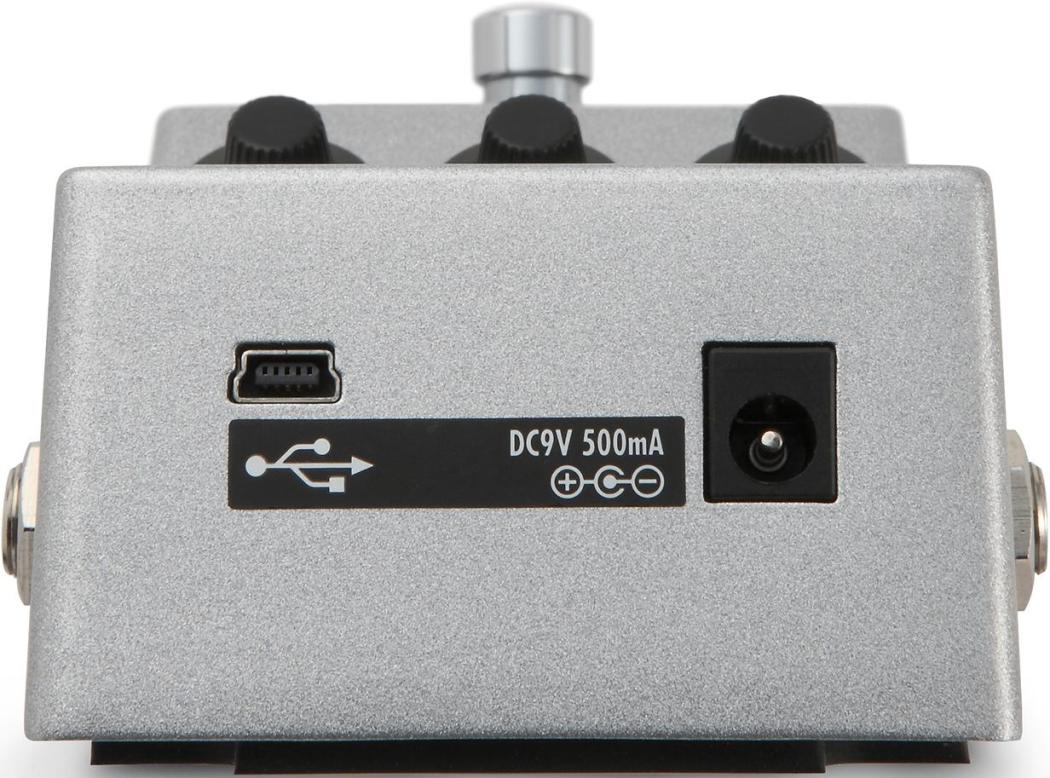
The USB-port on the front of the MultiStomp makes it possible to update the unit’s firmware.
****
There are two main ways of using the Zoom MS-50G’s effect patches:
The first way would be to manually select one patch, and the use the left/right cursor keys to choose the one effect in this patch (like chorus, distortion or delay) that you want to be able to turn on and off using the foot switch while performing. The unit automatically stores which effect you have selected in each given effect patch, so the next time you call up this patch you will already have your chosen effect connected to the foot switch.
The second way of using the Zoom is by utilising the MS-50G’s A/B-mode. A/B-mode allows you to select all the effect patches you will want to use, and put them in a running order by assigning a letter to each of the chosen effects (e. g.: ”SynthStar: A”, ”AsiaPalace: B”, ”PitchDist: C” etc). Once you’ve got your list in order, you can use the foot switch to hop through your list (starting from letter ”A” going up the alphabet). At the end of your list pressing the foot switch will get you back to the first patch in your list.
****
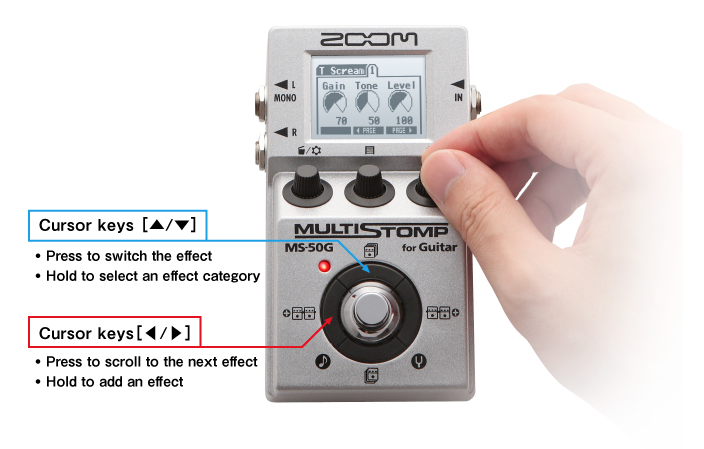
Very compact multieffects usually require a slightly steeper initial learning curve than larger boards, because the limited number of controls and push buttons always means you first have to get to grips with the unit’s user interface. Luckily, thanks to its logical structure and well-designed graphics the MultiStomp is an easy piece of gear to master.

I especially like the Effect Chain view, which makes changes to the order of effects inside a patch very easy. You simply lift the chosen module using the virtual magnet, and drop it where you want it to go.
****

Regardless of its compact size, the Zoom MS-50G MultiStomp is a fully-fledged member of the company’s G-series of guitar multieffects. While the MultiStomp won’t offer you all of the great features and effect types of its larger brethren – the G3 and G5 – the sheer amount of processing power and tasty effects on offer here is truly amazing. For the price of a decent single effect the MS-50G offers you a huge palette of different effects, while only taking up very little space on your pedal board.
****
I used a Tokai SG-75 plugged into the Zoom MS-50G to record all the guitar tracks on the YouTube video:
All of the other soundbites have been lifted from Kitarablogi’s reviews of the Zoom G3 and the larger G5:
Fender Stratocaster – detune – delay
Fender Stratocaster – dirty Tweed – tremolo
Tokai LC-85 – fixed wah – Marshall-type
Tokai LC-85 – phaser – Blackface-style
****
Zoom MS-50G MultiStomp
Current RRP in Finland 99 €
Finnish distributor: Studiotec
****
Pros:
+ value-for-money
+ sound
+ compact size
+ easy to use
+ versatile

Näyttää siitä, että Duesenberg-kitarat ovat saavuttaneet ”klassikkokynnyksen”.
Peerless Guitars on tuomassa kohtapuolin markkinnoille uuden Retromatic-mallinsa, joka näyttää hyvin samanlaiselta kuin Duesenbergin Starplayer TV.
Päättäkää itse – tältä Peerless Retromatic tulee näyttämään:


…ja tällainen on aito Duesenberg Starplayer TV -kitara:


Mielenkiintoista nähdä reagoiko Duesenberg uuteen Peerless-malliin millään lailla.
****
Duesenberg-soittimia tuo maahan F-Musiikki.
It seems Duesenberg guitars are about to achieve classic status.
Peerless Guitars have just announced their new Retromatic model, which looks like a dead ringer for a Duesenberg Starplayer TV.
Have a look for yourselves – here’s the new Peerless Retromatic:
…and this is what a Duesenberg Starplayer TV looks like:
We wait with bated breath for Duesenberg’s reaction to the Peerless Retromatic.


