Classic Guitars, part 9: Fender Jazzmaster and Jaguar

The Fender Jazzmaster was introduced in 1958 as a conscious effort to broaden Fender’s user base and appeal.

The company’s first efforts – the now legendary Telecaster and Stratocaster models – had already proven to be successful, but were then still widely perceived as bright-sounding guitars for Country & Western, as well as early Rock ’n’ Roll. Now Leo Fender and his team were aiming for the more ”serious” guitarists of the Jazz and Easy Listening genres.

Fender kept the standard long Fender-scale (25.5″), but – for the first time – added a rosewood fingerboard. The reasons for the rosewood board were both cosmetic – it looked classier than the lacquered maple of previous models – as well for tonal reasons, with rosewood imbuing the sound with a warmer timbre. The Jazzmaster was also the company’s first guitar with an enlarged version of the Strat-headstock, which was meant to combat dead spots and wolf-tones.

The body was a brand-new design premiering the company’s patented offset waist feature, meant to improve balance, especially when playing seated.

A new, front-mounted vibrato with a softer, spongier action (meant as a direct competitor to Bigsby’s models) was also devised. The vibrato – which worked with a separate, rocking bridge – was easy to adjust from the front, and also featured a locking mechanism for disabling the system (and keeping the guitar in tune even after a string breakage).

The most important changes took place in the electronics of the Jazzmaster: The pickups were clearly Fender’s attempt at getting a Gibson P-90 -type tonality, with the wide and flat coils. The controls featured two different circuits, with the normal circuit offering a 3-way toggle switch, as well as a master volume and tone control. A slide switch on the scratchplate’s upper shoulder engaged the so-called Rhythm Circuit, which switched on only the neck pickup going through its own set of volume and tone controls (above the neck pickup).

After a first wave of enthusiasm over Fender’s new top-of-the-line guitar, the Jazzmaster’s success sadly waned. Most conservative Jazz guitarists wouldn’t touch Fender’s ”plank” with a barge pole, and still considered the sound as too bright, while the company’s usual customers were perfectly happy with their more straightforward Strats and Teles.

The biggest genuine problem with Jazzmasters lies in their singlecoil pickups, which take in a lot of extraneous hum and interference (just like P-90’s do).

Modern players also tend to complain about the vibrato system’s flimsy bridge saddles, although, in fairness, one should note that this is mostly due to our modern light string gauges. The Jazzmaster-vibrato had been designed at a time when ”light gauge” meant an 012-set with a wound g-string.

Today the Jazzmaster’s appeal lies mostly in the alternative field, and not too many name players spring to mind:

Thurston Moore and Lee Ranaldo (Sonic Youth), J Mascis (Dinosaur Jr.), as well as British songwriter Elvis Costello are the most well-known Jazzmaster players.

****

In 1962 Fender took the Jazzmaster as the basis for a brand-new model, geared towards Surf and Pop guitarists – called the Fender Jaguar.

The Jaguar was Fender’s first guitar with 22 frets, and it featured a relatively short scale of 24″ (even shorter than Gibson’s usual 24.75″). The general look stayed in place, but the Jaguar was adorned with glitzy chrome control plates.

Fender took the criticisms over the Jazzmaster-pickups to heart and designed new pickups for the Jaguar. The new units are reminiscent of Strat-pickups, but feature slightly higher coils, as well as metal shielding plates that enclose most of the pickups’ bottom and sides.

The normal/Rhythm-circuit set-up stayed in place, but the normal circuit now featured three slide switches – an on/off-switch for each pickup, plus a ”strangle” switch that cuts all bottom end from the output signal.

The Jaguar originally also came equipped with a detachable mechanical string mute, which wasn’t well-received by guitar players.

Sadly, the Jaguar’s fate followed along the Jazzmaster’s lines – after a first wave of success sales dwindled in the wake of the British Invasion.

The most famous names associated with the Fender Jaguar are Carl Wilson (The Beach Boys), Kurt Cobain (Nirvana) and Johnny Marr (The Smiths, Modest Mouse).

As with the Jazzmaster, the Jaguar has seen a resurgence of sorts over the past few years, with many new and modified versions springing up, such as the Fender Blacktop Jaguar HH.

Kitaraporno: Kramer Pacer Custom II – 1980-luvun Superstr*to

Kramer Pacer on hyvä esimerkki 1980-luvun syntyneestä Superstr*to kitaralajista, ja sillä on kaikki tyypilliset perusominaisuudet:

Stratocaster-tyylinen runko, Gibson Explorerista lainattu lätkämailan muotoinen lapa, tallahumbuckeri, sekä Floyd Rose -vibra.

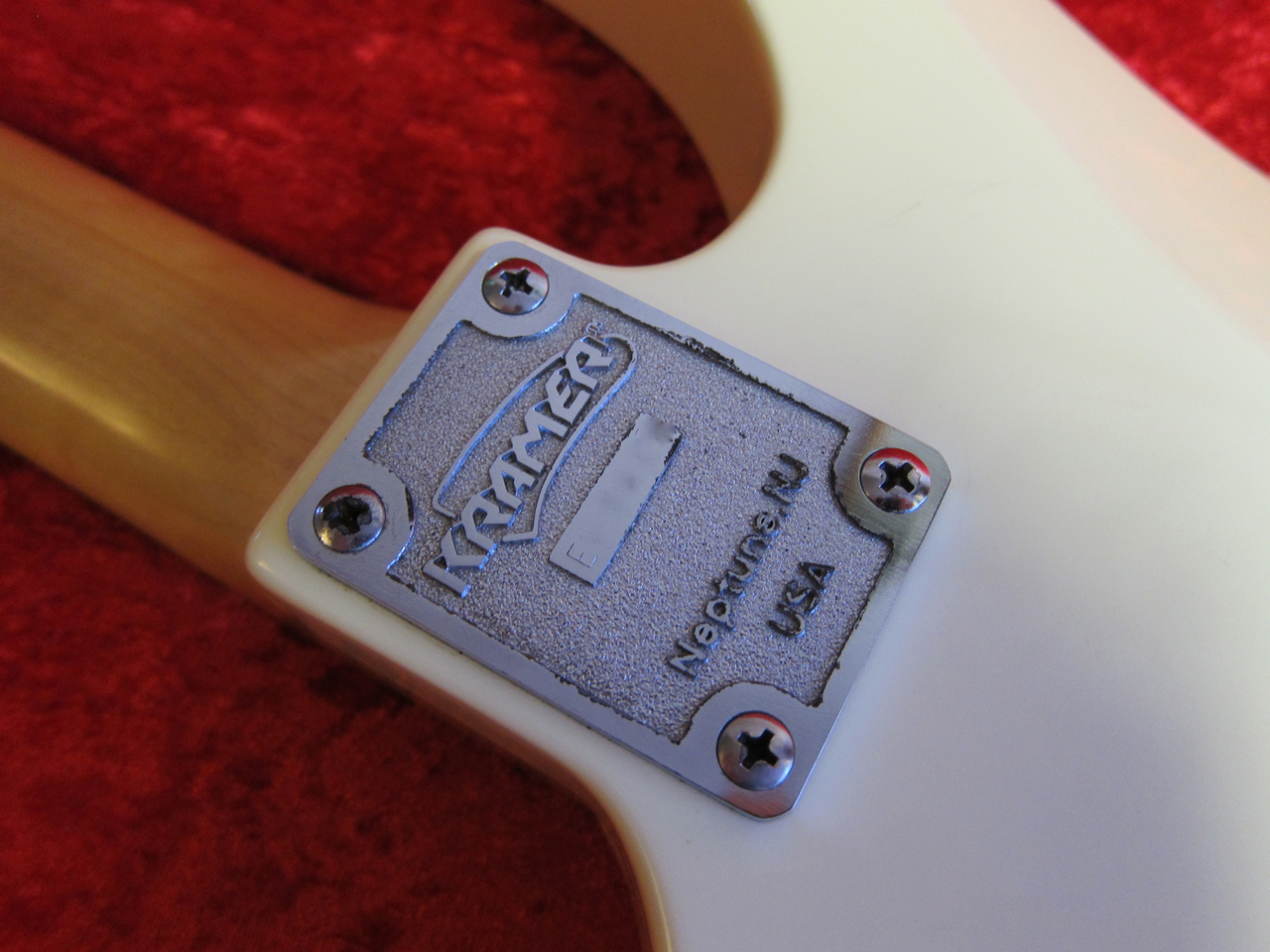
VintageKramer-sivuston mukaan tämä Pacer Custom II on American-sarjan kitara vuosilta ’87 –’89.

Alun perin (1970-luvun loppupuolella) Kramer-kitaroiden erikoisuus oli alumiinista tehty kaula. 1980-luvun loppupuolella firma oli siirtynyt kuitenkin takaisin perinteisiin puukauloihin. Kaulat ja rungot ostettiin yhteistyökumppaneilta – Pacer Custom II:n tapauksessa Japanista ESP:n tehtaalta – mutta soittimet koottiin USAssa käyttäen firman omaa elektroniikkaa sekä aitoja Floyd Roseja.

Sulava runko on tässä kitarassa poppelista, kaula vaahterasta ja otelauta palisanterista.

Tässä versiossa lapa on Kramerin teräväkärkinen malli. Palkkimainen alasvedin pitää kielet tiukasti lukkosatulaa vasten.

Paksut nauhat ja loiva otelauta kuuluvat nekin Superstr*toon – silloisen sankarikitaristin työkaluun.

Kaula on rakennettu kolmesta pitkästä vaahterapalasta…

…ja se liitetty runkoon perinteisellä tavalla ruuvaamalla.

Vaikka Floikalla varustetussa kitarassa lavan virittimet käytetään ani harvoin, ovat nekin Pacer Custom II:ssa aitoa laatutavaraa saksalaisvalmistajalta Schaller. USA-Floydin kuusiokoloavaimet on hyvä pitää aina mukanaan, sillä ilman niitä kielten vaihtaminen ei onnistuu.

Custom II:ssa on kaksi yksikelaista mikrofonia sekä yksi humbucker tallan lähellä.

Säätimet toimivat kuten normi-Stratossa – master volume, kaulan tone ja keskimikrofonin tone-säädin. Minikytkimellä saadaan kolme erilaista kytkentävaihtoehtoa tallamikrofonista: perinteinen humbucker (sarjakytkentä), yksikelainen (vain tallan puoleinen kela) sekä kirkkaampi humbucker (rinnakkaiskytkentä).

Tällaisia soundeja saa vintage-Kramerista:

Kramer Pacer Custom II – puhdas

Kramer Pacer Custom II – särö

****

Tämä kitara on mukavan kevyt soitin. Kaulan profiili on silloiselle vauhtikitaralle tyypillinen hyvin laakea ”D” – mikä on minulle hieman liian ohut ja leveä – mutta tämä Pacer on loistavassa trimmissä. Kramer Pacer Custom II on vanha laatukitara – ulkonäkö voi olla hieman vanhentunut, mutta sen soitettavuus ja soundi ovat vielä täysin ajankohtaiset.

****

Kiitos Tommi Posalle, jolle tämä Kramer kuuluu!

Uutuus: Gibson Custom Kirk Hammett Flying V

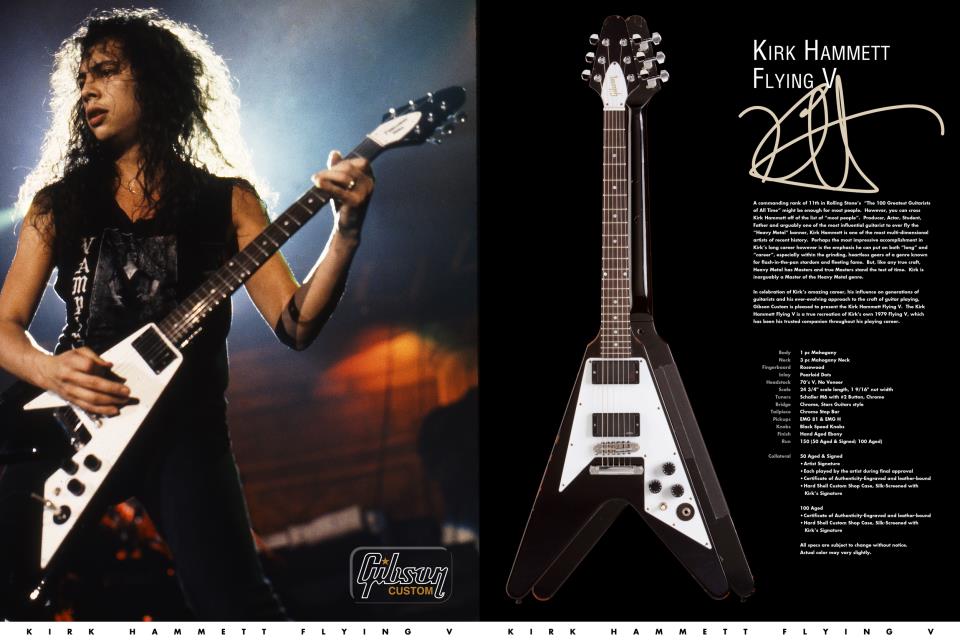
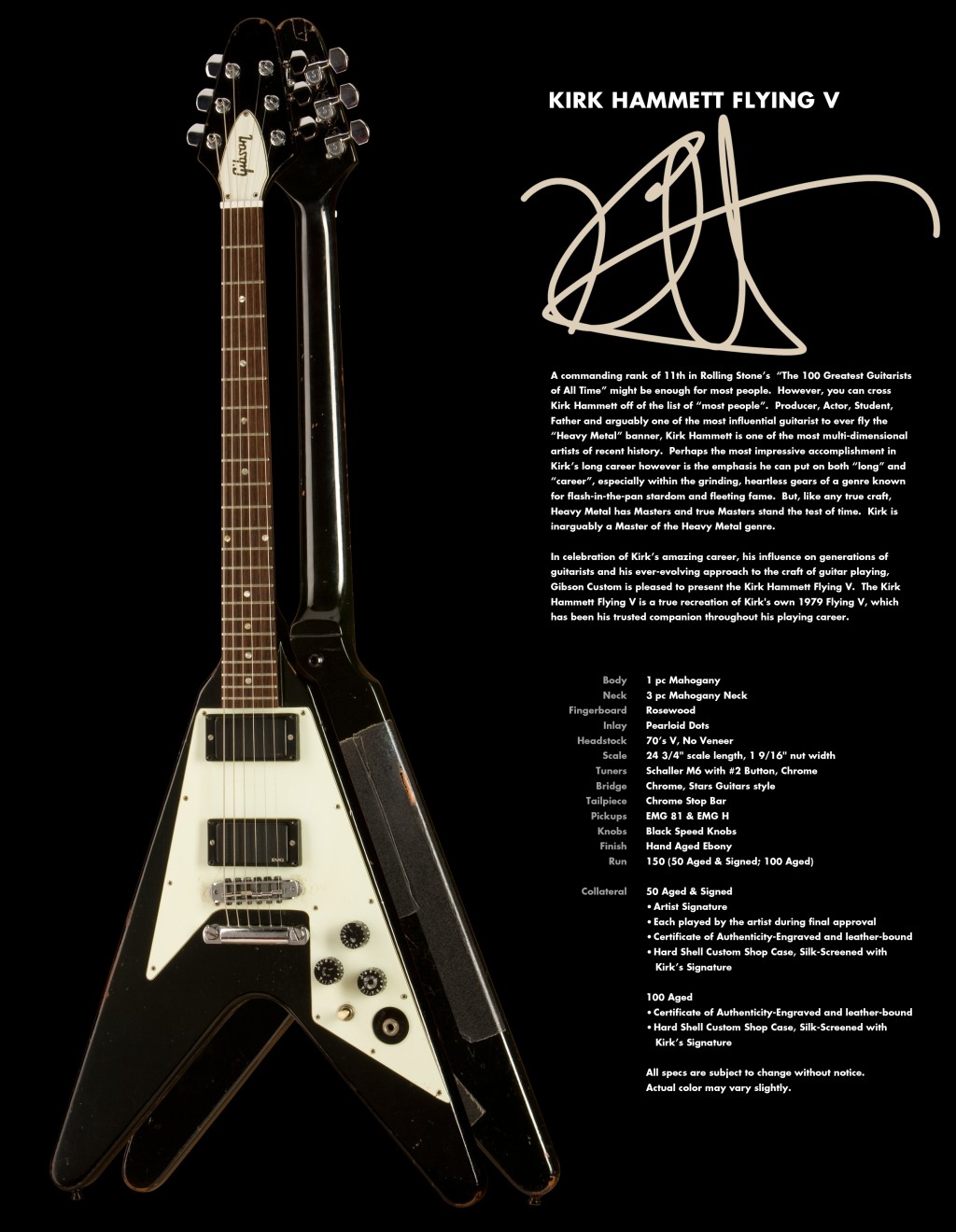
Metallican kitaristi Kirk Hammett on saanut oman Gibson Customshop -mallinsa – Kirk Hammett Flying V.

Kitara on tarkka jäljitelmä Hammettin omasta vuoden 1979 Veestä, jolla on yksiosainen mahonkirunko, kolmestä pitkästä mahonkipalasta veistetty kaula, kustomoitu talla sekä EMG-humbuckerit.

Kitarasta rakennetaan ainoastaan 150 kappaletta, joista 50 on relikoituja ja Hammettin signeeramia, ja loput 100 ilman kitarasankarin allekirjoitusta.

Kova laukku ja aitoustodistus kuuluvat hintaan.

Maahantuoja: Into-Luthman

****

Kielten vaihtaminen – Floyd Rose -vibralla varustettu kitara

Kuvat: Miloš Berka

****

Kielten vaihtamiseen tarvitaan kielisatsin lisäksi terävän leikkurin, viritysmittarin ja kitarajohdon. Halpa muovikamppi nopeuttaa virityskoneiston kääntämistä.

Tärkeintä ovat kuitenkin oikeankokoiset kuusiokoloavaimet. Muista, että amerikkalaisissa Floyd Rose -vibroissa käytetään lähes aina tuumakokoja, kun taas monissa lisenssiversioissa (Schaller tai Gotoh) tarvitaan metrisiä avaimia. Älä koskaan käytä metrisiä avaimia tuumakokoisissa pulteissa (tai toisinpäin), rikot muuten pulttin ja/tai avaimen!

Metalliviivoittimella taas mitataan ennen kuin aloittaa kielten korkeus 12:n nauhan kohdalla. Mittaamisen ansiosta kitaran säätäminen soittokuntoon helpoittuu huomattavasti, silloin kun on vaihdettu kielten paksuutta.

****

Koska tuplalukittu vibrasysteemi on tarkassa balanssissa kelluva viritelmä, suosittelisin kielten vaihtaminen peräkkäin, yksi kerrallaan. Aloitan ala-E:llä ja jatkan sieltä ylöspäin.

Koko kielisatsin poistaminen aiheuttaa sen, että vibrajouset vetävät systeemin voimakkaasti runkoa vasten, ja tästä syntyvät nopeasti rumia painautumia. Tämän lisäksi tallan veitsenterät voivat silloin hypätä ulos säätöholkkien urista, ja tallan saaminen takaisin paikoilleen on vaikeampi kuin uskoisi.

Jos kuitenkin pitää poistaa kaikki kielet – esimerkiksi otelaudan puhdistamista varten – laita rungon ja vibraton väliin sopivan paksuista palaa korkkia, solukumia tai puuta ennen kuin poistat kielet. Suojaus pitää tallan oikeassa asennossa. Ei kannata tunkea suojausta kuitenkin liian syvälle, muuten hienovirittimien lehtijouset lukitusruuvien alla (katso hienovirittimien lähikuva) voivat taipua.

****

Tältä aloitetaan – lukittu satula.

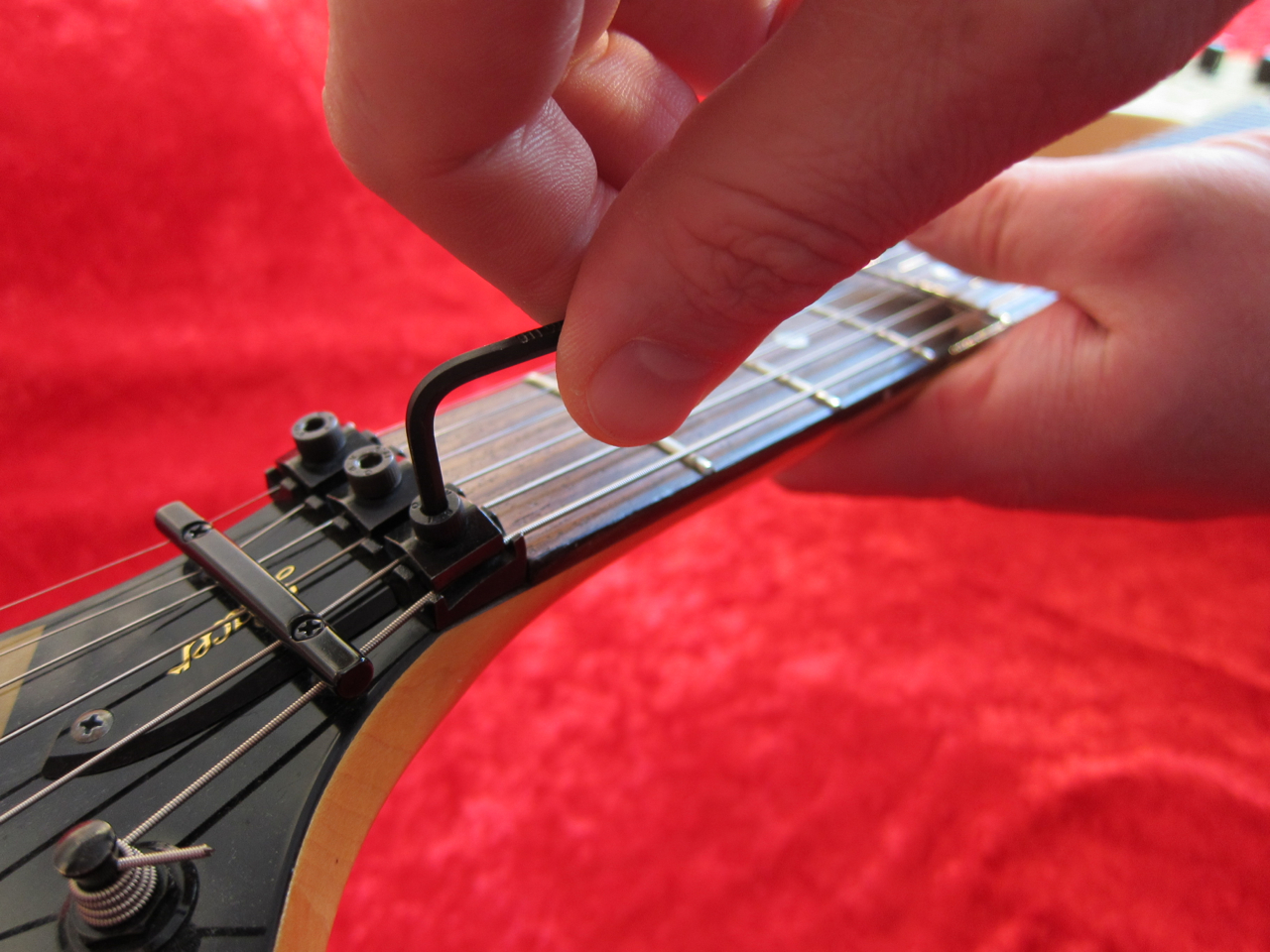
Kieliparin lukkoa avataan oikeankokoisella avaimella.

Poista (ja säilytä) huolellisesti lukon ja ruuvin.

Hyvin asennetussa Floikka-satulassa kielet makaavat koko pituudellaan satulan pinnan päällä.

Joissakin edullisissa kitaroissa kielet jäävät hieman satula yläpuolella. Se ei ole iso ongelma, mutta satulan lukitseminen aiheuttaa silloin vireen nousemista.

****

Kielen pitää olla täysin löysänä.

****

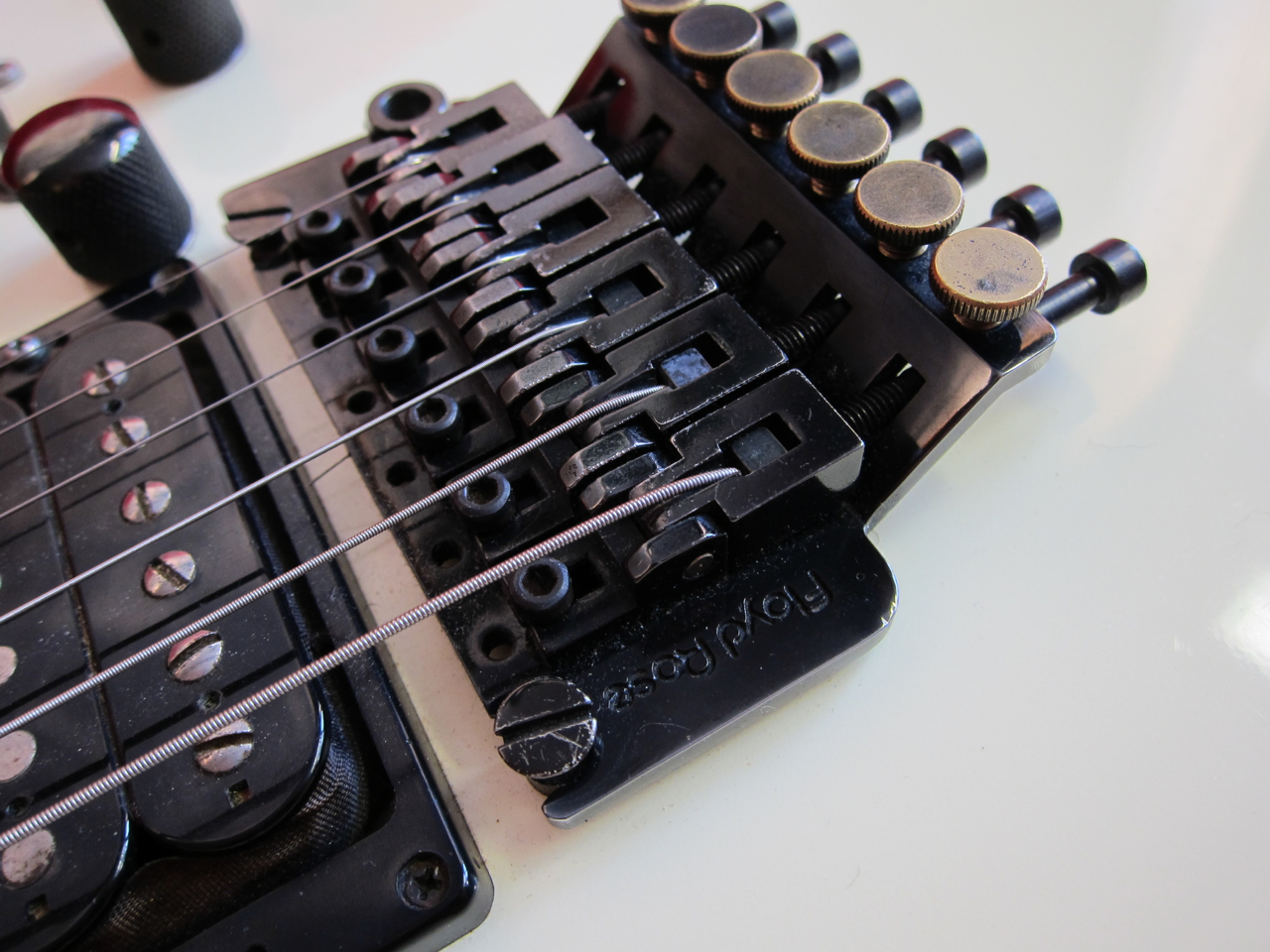
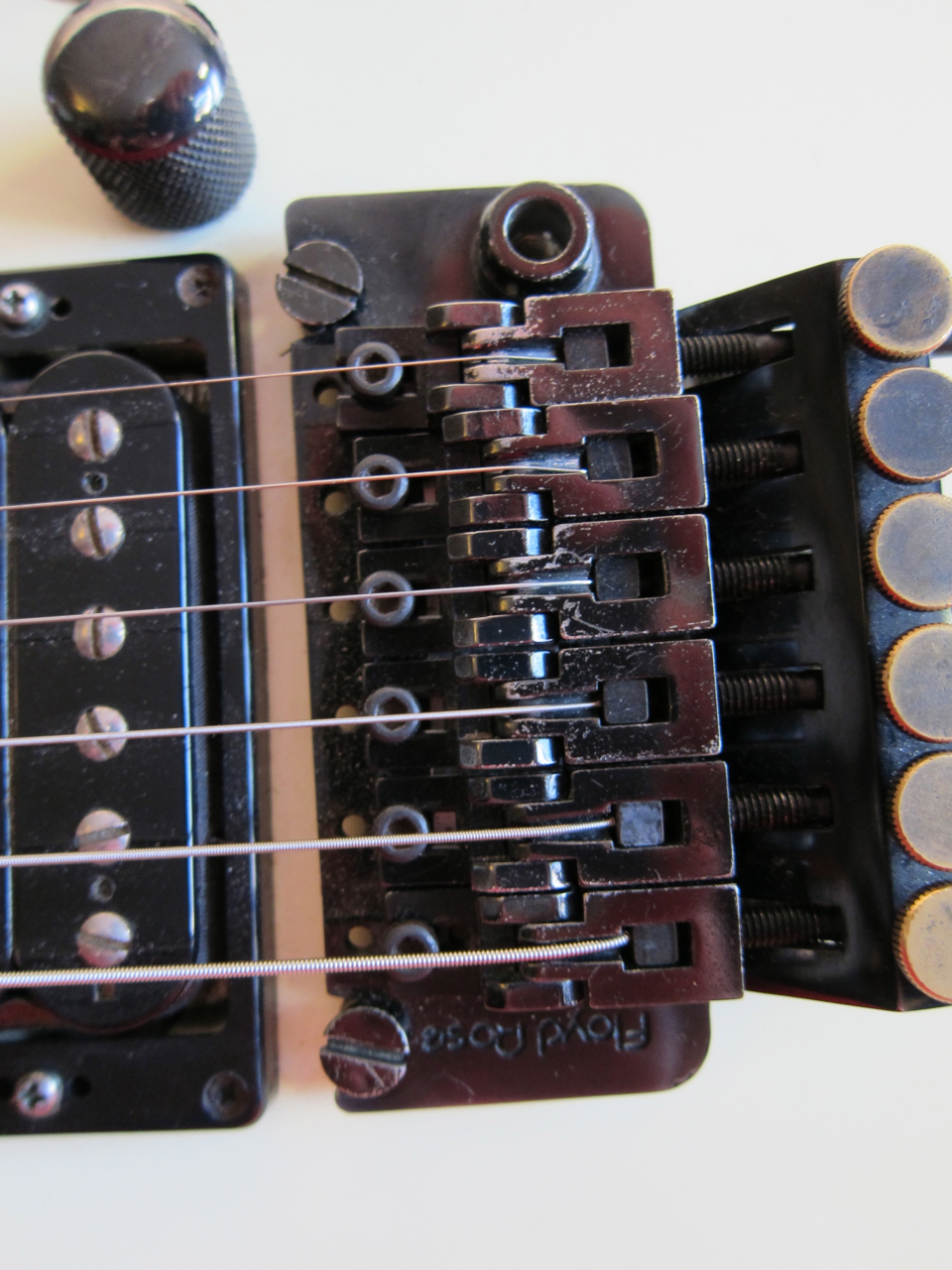
Tältä Floikan talla näyttää. Kielet on lukittu omaan satulaansa pitkillä mustilla lukituspulteilla, jotka pilkistävät ulos hienoviritysruuvien alta tallan takaosasta.

Eri Floyd Rose -versioissa viritysruuvien sijainti voi olla hieman erilainen, mutta toimintaperiaate on kaikissa sama.

Avaa lukitusta käyttämällä oikeankokoista kuusiokoloavainta. Lukitusta täytyy avata vain sen verran, että vanhan kielen saa pois ja tuoreen sen tilalle.

Vanha kieli nostetaan pois satulasta.

****

Tuoreen kielen laittaminen alkaa vibratallan päästä.

Ensin täytyy leikata pois kielen ball-end-rengas (varo silmiäsi), minkä jälkeen kieli työnnetään niin syvälle tallapalaan kuin mahdollista, ja lopuksi lukitaan sitä paikoilleen lukituspultilla.

Varmista, että hienoviritysruuvit on säädetty puoleenväliin. Näin sinulla jää riittävästi pelivaraa virittämiseen.

****

Kieli työnnetään virittimen läpi…

…vedetään viritintapin ympäri…

…ja lukitaan paikoilleen vetämällä sitä rungosta poispäin.

****

Yksi käsi painaa kielen alas, kun toinen kiertää sen kireäksi. Kielen pitää kiertää tapin ympäri ylhäältä yhä alemmas.

****

Suosittelen ylijäävän palan poistamista katkaisemalla sitä lähellä viritintappia. Sen jälkeen taivutan varovaisesti kielitynkän hieman kohti lapaa. Ole varovainen, katkaistu kieli on hyvin terävä!

****

Ennen kuin lukitset satulaa, kielet täytyy venyttää. Ensin viritetään, sitten venytetään…kuuden-kahdeksannen kerran jälkeen viritys pitäisi alkaa asettua.

Pidä venymisen ajaksi kielet alaspainettua ensimmäisen tai toisen nauhan kohdalla, ettei ne hyppii ulos satulasta.

Kun viritys pitää ja talla on oikeassa asennossa – tallan pohjalevy on paralleeli rungon pinnan kanssa – voi satulaa lukita.

Jos tallan tasapaino on häiritty, esimerkiksi eripaksuisen kielensatsin takia, täytyy ennen satulan lukitsemiseta säätää vibran jousia uudelleen. Vibrakolon jousipidikkeen asentoa säädetään uusiksi haluttuun suuntaan ristipääruuvarilla.

Eteneminen pienissä erissä on suositeltava, äläkä unohda jokaisen etapin jälkeen virittää kitaraa uudelleen.

****

Viimeinen vaihe on intonaation tarkistus ja (jos on tarve) säätäminen. Intonaatiota tarkistetaan kitara sylissä soittamalla ensin avoimen kielen (tai kielen huiluääntä 12:n nauhan kohdalla) ja sen jälkeen kieli painettua alas 12:n nauhalla.

Valitettavasti intonaation säätäminen Floyd Rose -talloissa on hieman työläs homma. Kieli täyttyy löysätä taas kokonaan – siis satulalukko auki. Suoraan kielen alla, tallapalan edessä on pikkuinen kuusiokoloruuvi, joka pitää satulan paikoilleen. Avaa ruuvia ja työnnä satulan haluttuun paikkaan. Laita ruuvi kiinni, viritä uudestaan ja tarkista intonaatio uudelleen.

Jos alaspainetun kielen sävel on matalampi kuin tavoitettu sävel, tallapalaa täyttyy säättää lähemmäksi tallamikrofonia.

Jos alaspainetun kielen sävel on korkeampi kuin tavoitettu sävel, tallapalaa täyttyy säättää tallamikrofonista poispäin.

Floikassa on muuten kolme kierteellä varustettua reikkää jokaista intonaatioruuvia kohden. Jos yhdeltä paikalta säätövaraa loppuu, voi siirtää ruuvin parempaan paikkaan.

***

Kuvattu 1980-luvun Kramer Pacer Custom II oli lainassa Tommi Posalta – kiitos!

Changing strings – Floyd Rose -equipped guitars

Photos: Miloš Berka

****

Here’s what you need:

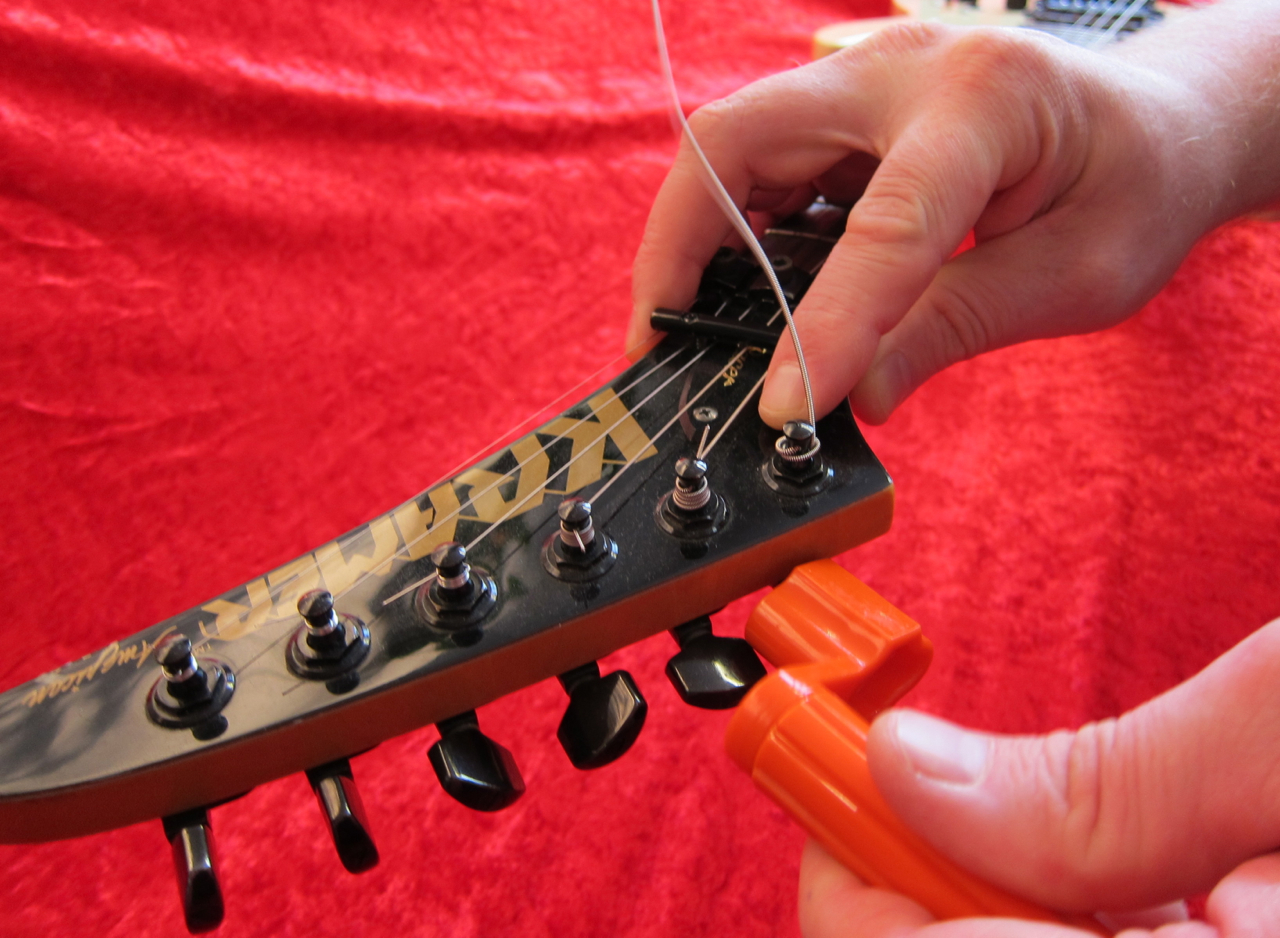
A pack of strings, a wire cutter, a tuner and a guitar lead. A cheap plastic crank speeds up the whole process of string winding.

Most important of all are allen/hex keys in the correct sizes. Note that US-made Floyds tend to use imperial (inch-sized) keys, while most licensed vibratos (for example Schaller and Gotoh) use metric (millimetre) keys. Never, I repeat, never use the wrong type of hex key, as it will ruin the bolts in no time!

A metal ruler comes in handy for measuring the action at the 12th fret before you start. If you take down these measurements it will be easy to readjust your guitar’s action, should the need arise, due to the new string set differing in gauge compared to the old set.

****

Because a double-locking vibrato is such a finely balanced affair, I’d recommend changing strings one at a time – starting with the low E-string and working my way up to the high e.

Taking all strings off at once will push bridge’s locking screws into the face of the guitar, leaving nasty marks. Furthermore removing the string-pull completely may cause the bridge plate’s knife-edges to jump out of their grooves in the height-adjusting posts, and getting the bridge back in place without damage is a nightmare.

If you need to remove all strings – for example to clean and oil the fingerboard – keep the vibrato in place by placing a suitably sized cushion/protector (cork, wood, stiff foam) between the locking screws and the body face before you slacken the strings. Don’t push the cushion in too deep or you might bend the steel leaf springs, which counterbalance the fine-tuners (look at the fine-tuner picture further down).

****

We start here, at the locked top nut.

Open the string lock using the correct hex key.

Remove the lock and bolt and put both away safely.

A well-installed Floyd Rose nut should look like this: The strings rest firmly against the whole surface of the metal top nut.

On some cheaper guitars the part of the string that’s facing the tuners may be lifting off slightly. Per se this is not a real problem, you only have to factor in that the string’s pitch will rise noticeably when you tighten the lock.

****

Slacken the string completely.

****

This is what the bridge looks like. The strings are locked in their respective bridge saddles with the long bolts protruding at the back of the bridge.

Different versions can have the fine-tuners – the knurled, upward-facing screws – in a slightly different position, but the principle is the same cross the board.

Open the string lock using the correct hex key. All you need is a gap wide enough for the old string to come out and the fresh string to go in.

Remove the old string.

****

Putting a new string on starts at the bridge on Floyd Rose -equipped guitars.

Snip the ball-end off (mind your eyes), then insert the string as deep as it will go into the bridge saddle and lock it in place (in the reverse process of the removal).

Make sure to set the fine-tuner to about halfway. This will give you enough leeway for tuning.

****

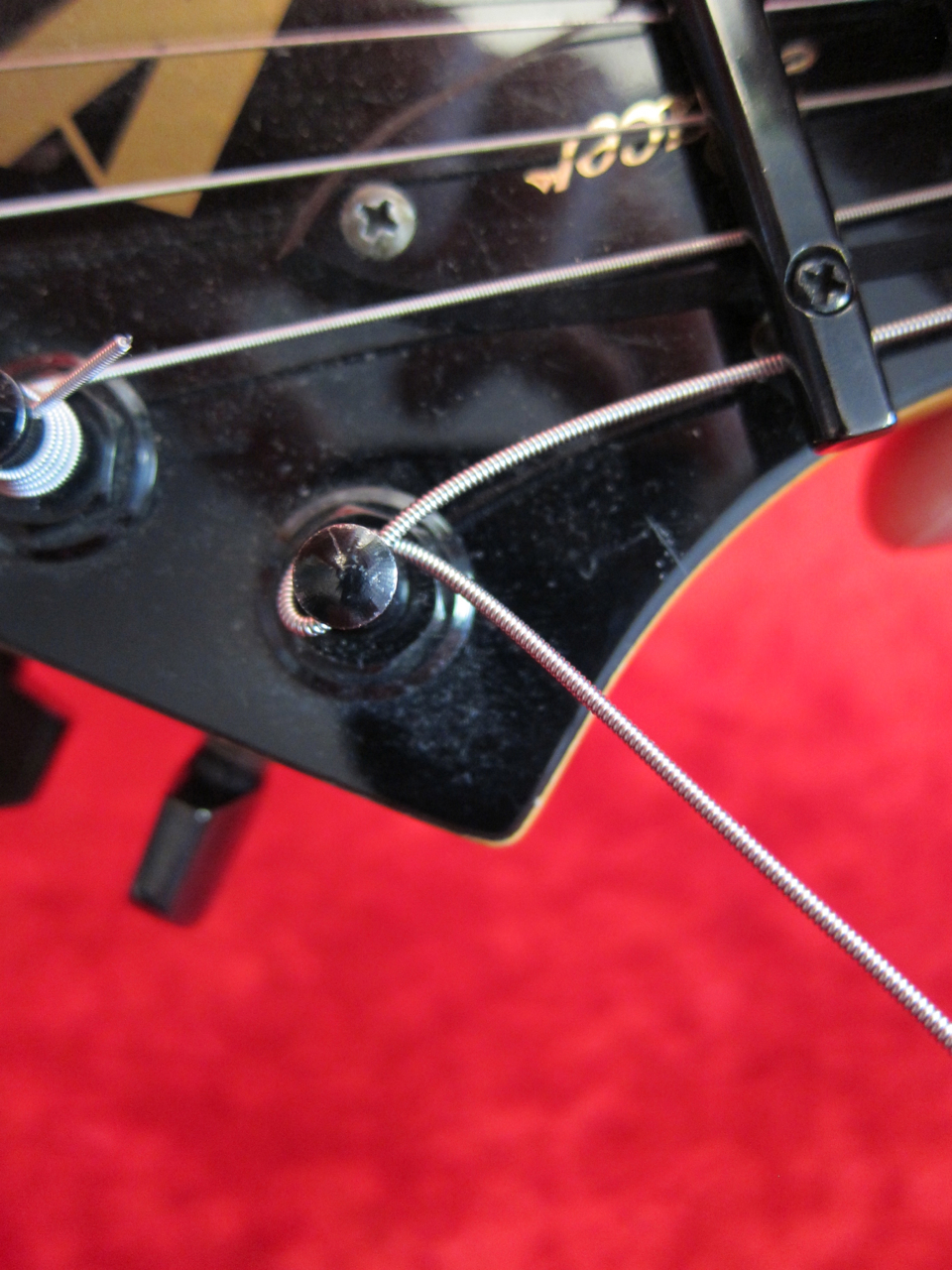
Insert the string…

…pull it around the post…

…and lock the string in by pulling it up away from the body.

****

Keep the string pressed downwards, while you’re turning the crank. Each new winding should pass under the one before it.

****

I’d recommend cutting off the surplus string in close proximity to the tuning post. Then I bend the stub down towards the headstock face. Be careful, a cut off string is very sharp!

****

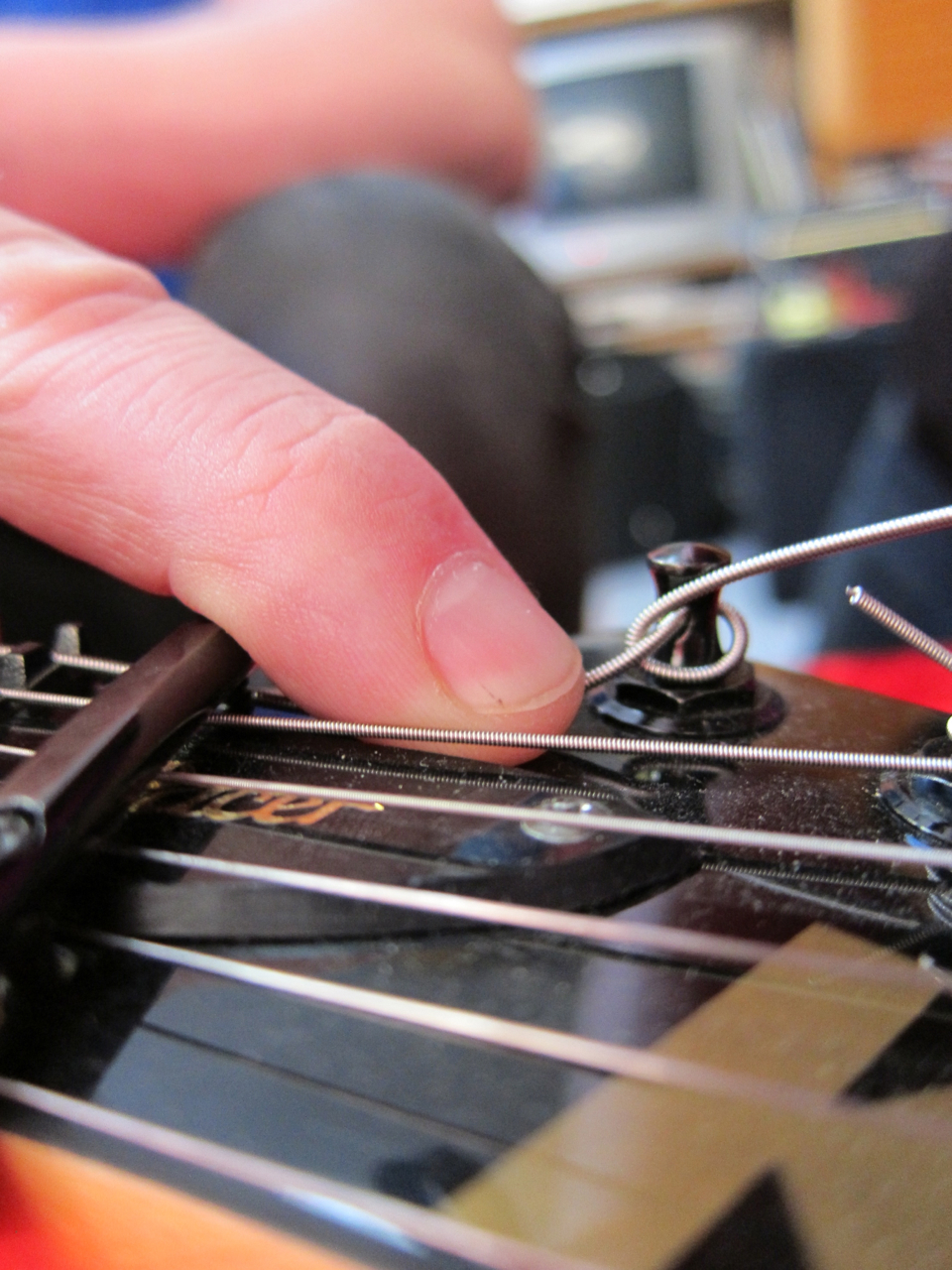
Before you lock the top nut it is vital to thoroughly stretch the string. It works like this: First you tune to pitch using the tuner on the headstock, then you stretch each string, and retune again. Once you’ve repeated this process six to eight times, you should be ready to go.

Your fretting hand should hold down the string you’re stretching at the first or second fret to keep the string from jumping out of the top nut.

When the tuning is settled and the vibrato is in the right position – meaning its baseplate is parallel to the body – you can lock the top nut.

If the vibrato’s equilibrium has been upset by changing the string gauges you will have to readjust the vibrato springs (in the back compartment) by moving the spring claw with a Phillips-head screwdriver.

Move the spring claw in small increments, then retune the guitar and check if the vibrato is now parallel with the body’s top. Repeat this if necessary.

****

The last stage should be checking and resetting the guitar’s intonation. Always check your intonation with the guitar in playing position, by comparing the correctly tuned open string (or its 12th fret harmonic) to the fretted pitch at the 12th fret.

Sadly, intonation adjustment on Floyds is a pain in the proverbial: You have to completely loosen the string, open the small hex bolt that locks the saddle’s intonation (directly underneath the string), and then push the saddle manually to the desired new position. Then you lock the saddle in its new position using the correct hex key, retune and check again for correct intonation.

If the fretted note is flat (its pitch too low), you need to adjust the bridge saddle closer to the bridge pickup.

If the fretted note is sharp (its pitch too high), you need to adjust the bridge saddle further away from the bridge pickup.

Note that the bridge plate has three tapped holes for each intonation bolt. If you run out of space you have to completely remove the bolt and move it to a hole that will work with the saddle’s new position.

***

Thanks to Tommi Posa for the loan of his vintage 80s Kramer Pacer Custom II!

Shrinking the AC30 – Vox Escort Battery-Mains

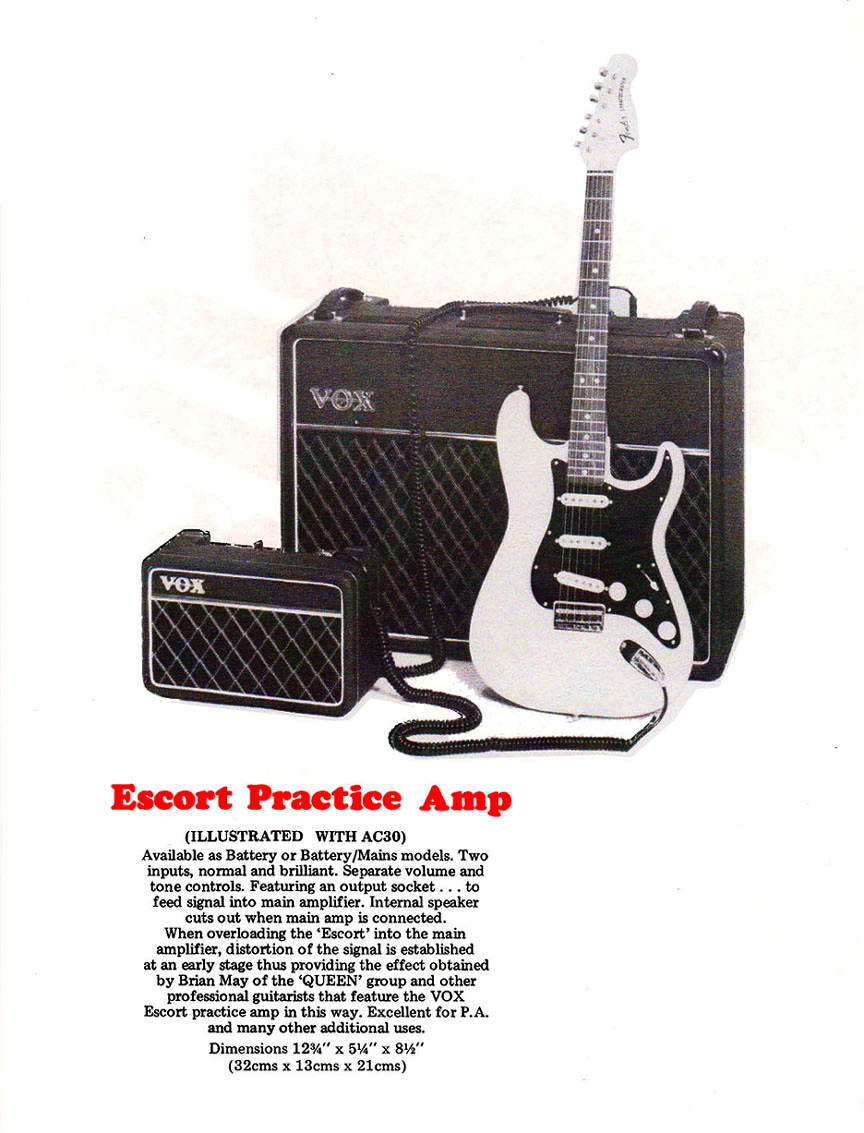
The Vox Escort came out in 1975 and was Vox’ first battery-powered practice amp. This baby-AC30 has about 3 Watts of power, which it puts out through a 5-inch Elac-speaker. The diminutive Escort stayed in the company’s line-up until 1983.

The first run of combos was battery-power only, using huge 9V -batteries, called PP9, but already in 1976 the dual-power Escort Battery-Mains -model was put into production.

****

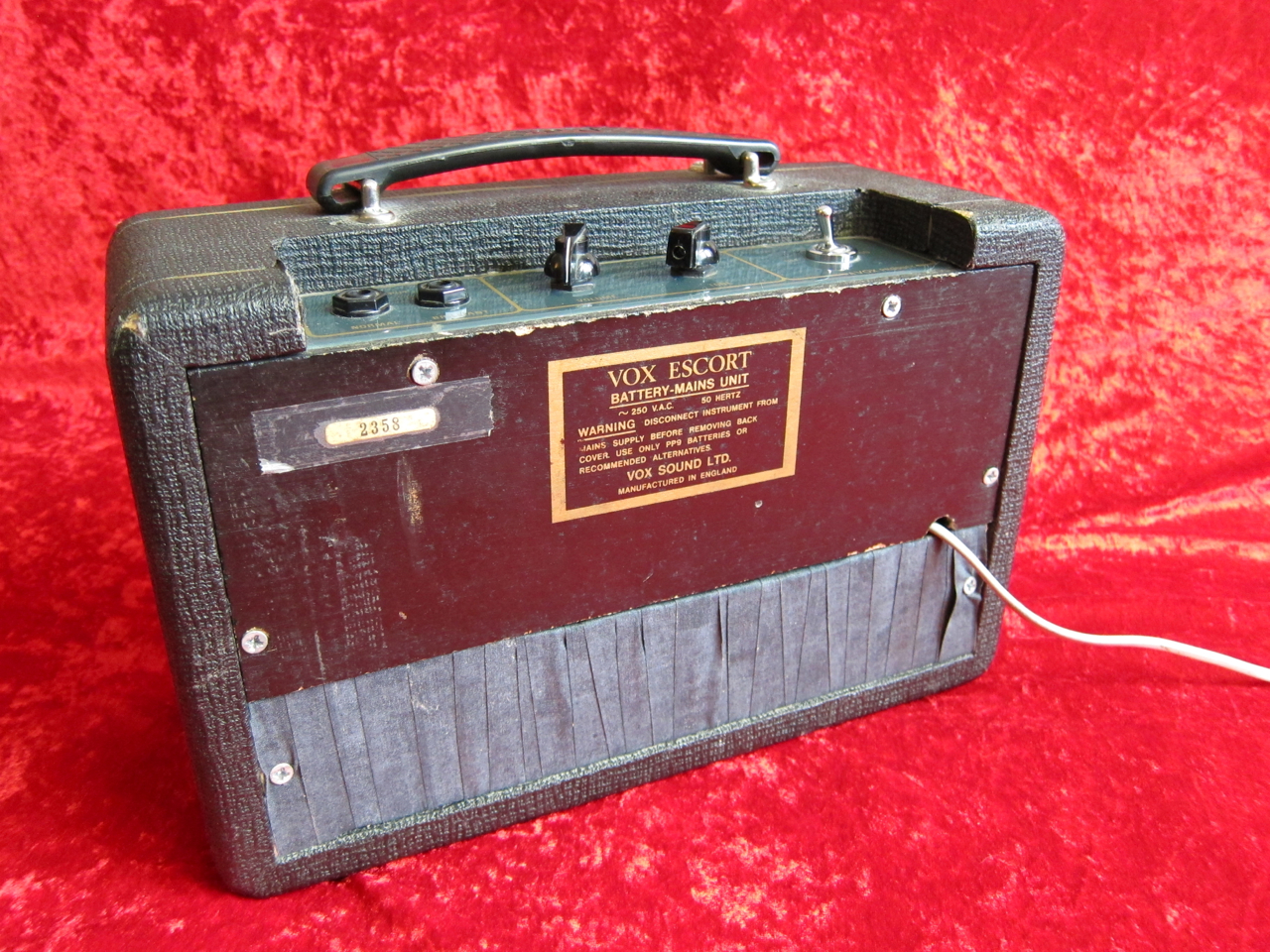
My own Vox Escort is an ex-battery-only combo, which a previous owner had already converted to AC-powered, when I bought it some ten years ago.

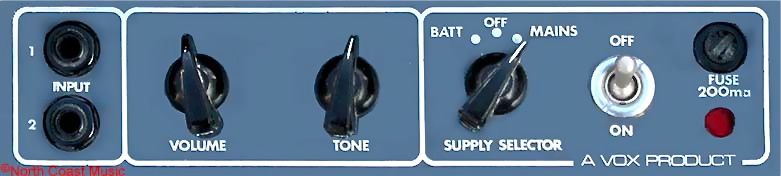
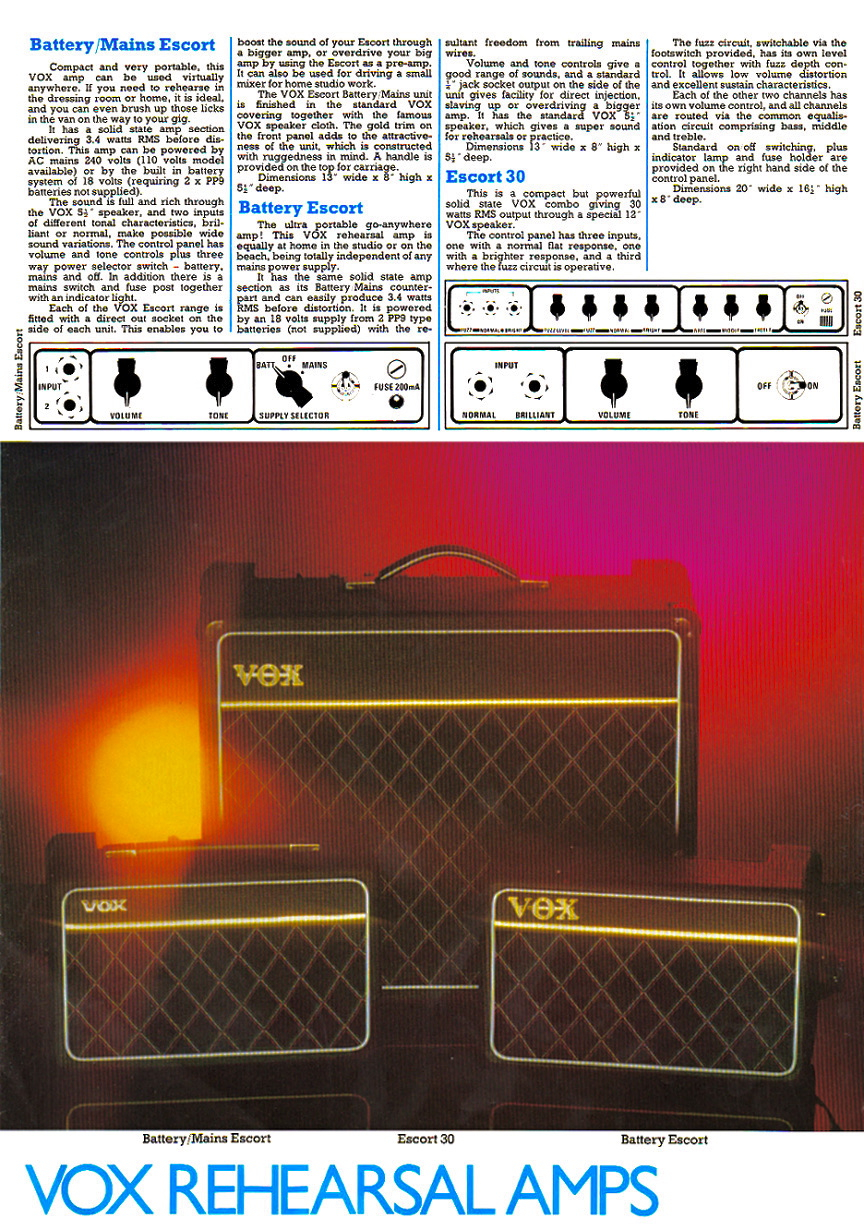
The Escort features two inputs – Normal and Brilliant – as well as two controls – Volume and Tone.

The genuine Battery-Mains-version has a slightly different layout, as well as a power-selector and a fuse compartment on the control panel:

photo: © The Vox Showroom

****

On the cabinet’s right-hand side you’ll find a line out jack for easy connection to a mixing console or – as Vox suggested – for using the Escort as a booster in front of your big amp:

****

The small, lower back plate – normally providing access to the battery – is obviously not original. It would have been made of the same chipboard material, as used for the larger upper plate.

****

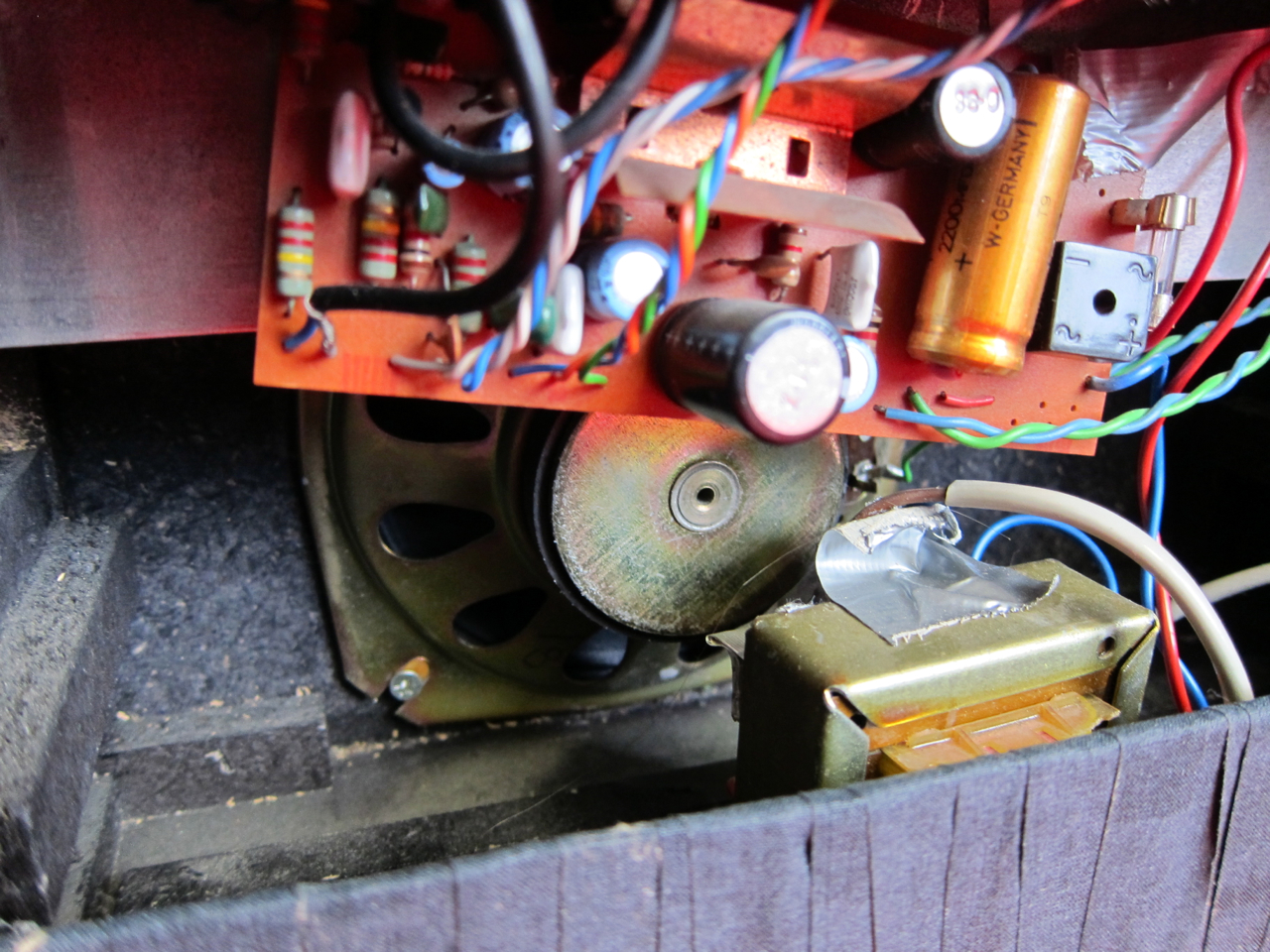
The modification to AC-only isn’t quite as neat as it could be, but the amp is in perfect working order, nonetheless. The sticky tape on the sides has been added to stop the back plates from rattling.

The transformer is screwed tightly to the cabinet’s floor, the circuit board (containing the rectifier amongst other components) is fastened to the amp chassis (slightly askew), while the 5-inch speaker is fixed to the baffle, as it should be.

****

During the latter half of the Seventies the Escort Battery-Mains got company by two larger brothers. The Escort 30 was a noticeably larger 30 Watt combo with a 12-inch speaker, as well as a built-in fuzz-channel. The Vox Super Twin featured two 5-inch speakers and a spring reverb, and was rated at 20 Watts.

****

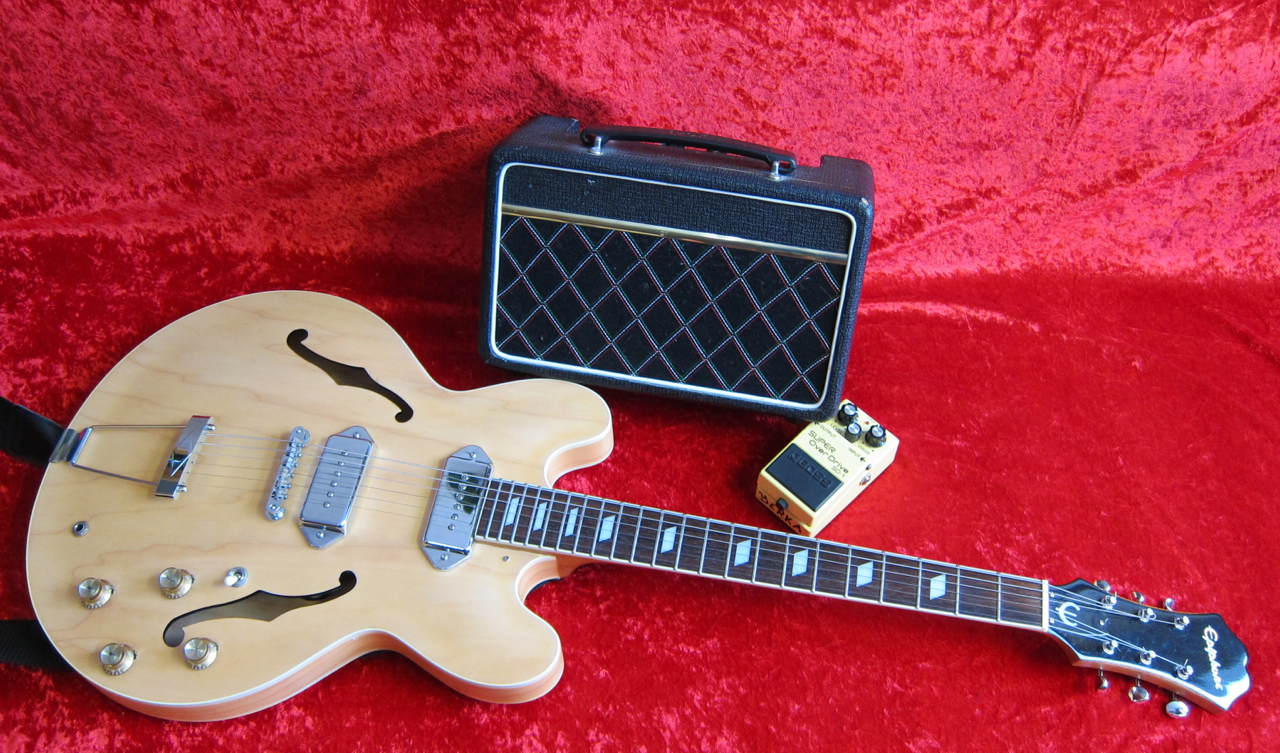
This is what my Vox Escort sounds like:

Vox Escort & Epi Casino – clean

Vox Escort & Epi Casino & Boss SD-1 – overdrive

Signal path:

Epiphone Casino –> Boss SD-1 –> Vox Escort (Normal) –> 2 x Samson C02 –> Focusrite Saffire 6 USB –> iMac/Garageband ’11

Reverb was added at mixdown.

****

In Vox’ current line-up the closest equivalent to the Escort would be the Pathfinder 10.

Vox Escort Battery-Mains – AC30:n pikkuveli

Vox Escort ilmestyy vuonna 1975 ja oli firman ensimmäinen paristokäyttöinen harjoitusvahvistin. Mini-Voxissa on noin kolmen watin verran tehoa, ja kotelossaan viisituumainen Elac-kaiutin. Pikkuinen Escort pysyi mallistossa vuoteen 1983 saakka.

Ensimmäiset kombot käyttivät vain isokokoisia yhdeksän voltin PP9-paristoja, mutta jo vuonna 1976 lisättiin Escort Battery-Mains -malli tuotantoon, jota on voitu käyttää myös verkkovirralla.

****

Oma Vox Escort on verkkovirtaa varten modattu paristoversio, ja ostin sitä vuosituhannen alussa Soitin Huttuselta.

Escortilla on kaksi tuloa – Normal ja Brilliant – sekä kaksi säädintä – Volume ja Tone.

Battery-Mains-versiossa on vielä virransyötölle valintakytkin sekä sulakepesä paneelissa:

kuva: © The Vox Showroom

****

Kotelon sivussa on linjalähtö, joko mikseriä varten tai (niin kuin Vox ehdotti) jos halusi käyttää Escortia boosterina vahvistimen edessä:

****

Pienempi takalevy, jonka takana paristo sijaitsi, ei ole enää alkuperäinen minun kombossani. Alkuperäinen oli samasta mustasta lastulevystä kuin isompi takalevy.

****

Modaus paristo-Escortista verkkovirta-versioon ei ole ehkä niin siisti kuin voisi olla, mutta kuitenkin täysin toimiva. Teipit vaimentavat takalevyen resonoinnin.

Muuntaja on kiinnitetty pohjaan, ylhäällä roikkuu tasasuuntajan ja virransyönnin piirilevy, ja viisituumainen kaiutin on etulevyssä kiinni.

****

1970-luvun loppupuolella Escort Battery-Mains sai vielä kaksi isoa veljeä rinnallaan. Escort 30 oli isompi, 30-wattinen kombo 12-tuumaisella kaiuttimella ja sisäänrakennetulla fuzzilla. Vox Super Twin taas oli kahdella 5-tuumaisella kaiuttimella varustettu 20-wattinen kombo, jolla oli jopa jousikaiku.

****

Ja täältä oma Vox Escort kuulostaa:

Vox Escort & Epi Casino – puhdas

Vox Escort & Epi Casino & Boss SD-1 – särö

Signaalitie:

Epiphone Casino –> Boss SD-1 –> Vox Escort (Normal) –> 2 x Samson C02 –> Focusrite Saffire 6 USB –> iMac/Garageband ’11

Kaiku on lisätty miksausvaiheessa.

****

Hyvin samankaltainen kombo Voxin nykyisessä mallistossa on Pathfinder 10.

Makea uusinta Gibsonilta // Sweet reissue from Gibson – ES-330

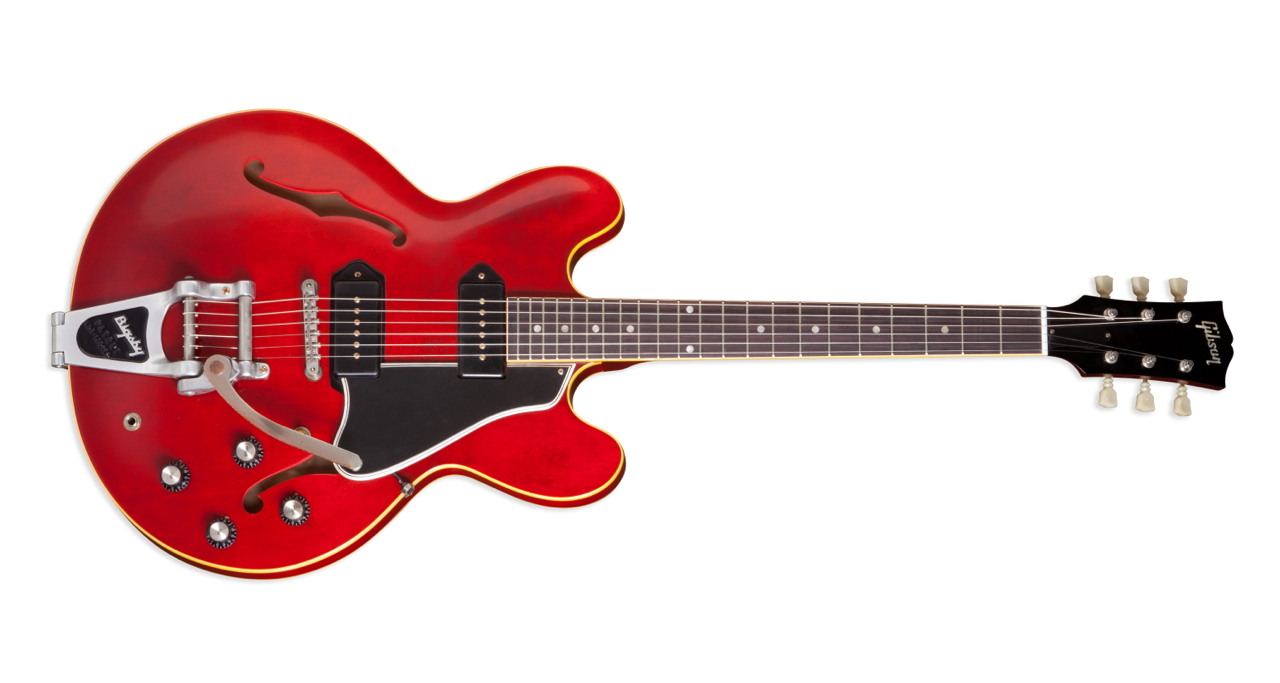
Gibson on laittanut vanhan klassikkonsa ES-330 uudelleen tuotantoon.

ES-330:lla on sama ohut vanerirunko kuin esimerkiksi ES-335, mutta ilman keskipalkkia, minkä takia kaulaliitos on tässä jo 16. nauhan kohdalla.

Mikrofonivarustus on sekin klassinen: kaksi Alnico II -magneetteilla varustettua P-90-mikkiä.

Malli on saatavilla sekä Bigsbyllä että tavallisella trapetsilla varustettuna.

****

Maahantuoja: Into-Luthman

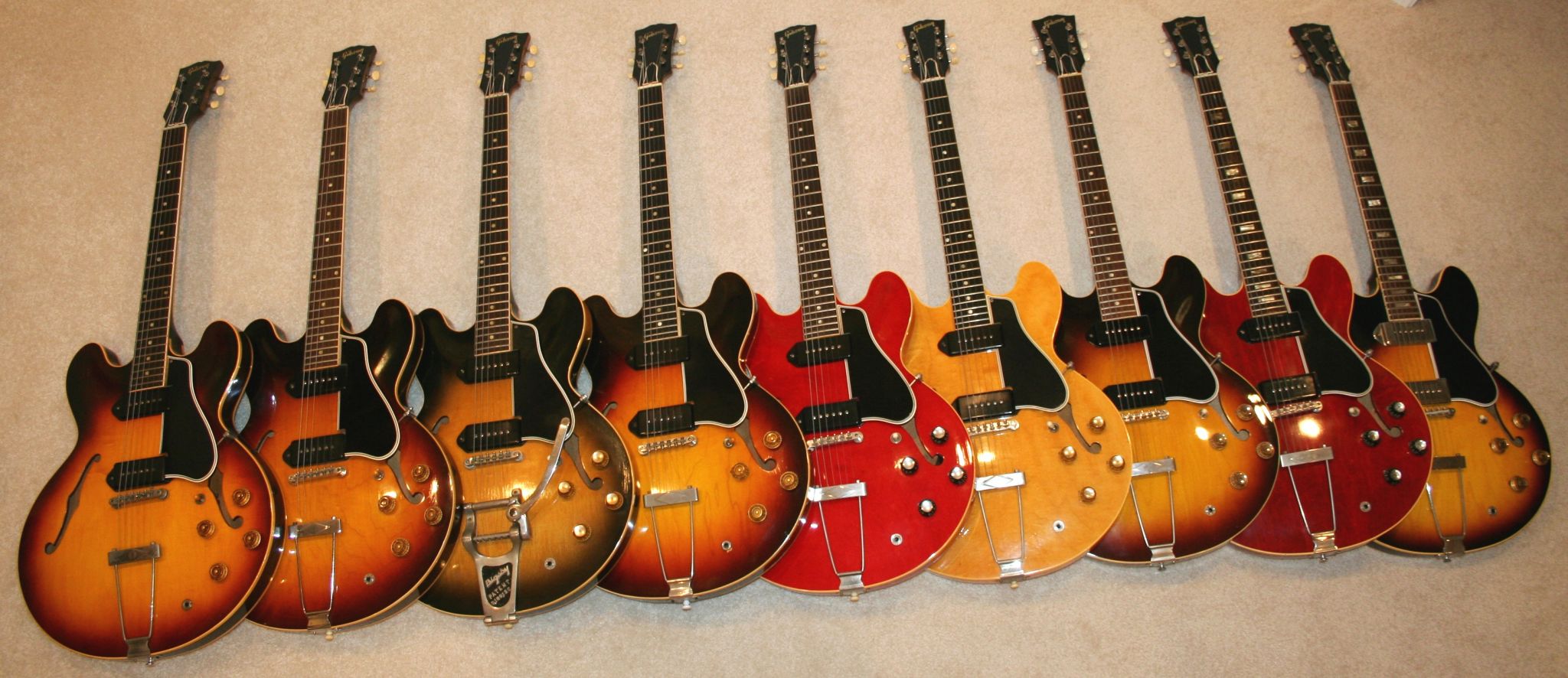
Gibson has chosen to re-release its classic ES-330-model.

The ES-330 shares the ES-335’s thinline plywood body, but is fully hollow (no centre block), which is why the neck joint is already at the 16th fret.

The pickups in this reissue are a pair of Alnico II -equipped P-90s.

The models is available with a Bigsby or with a trapeze tailpiece.

****

Pidä blogia WordPress.comissa.

Ylös ↑