Contact: Musamaailma
The Making of a Bluetone Amp – Part 2
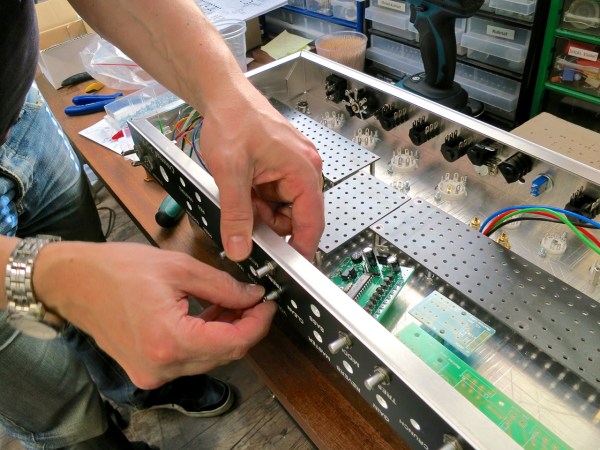
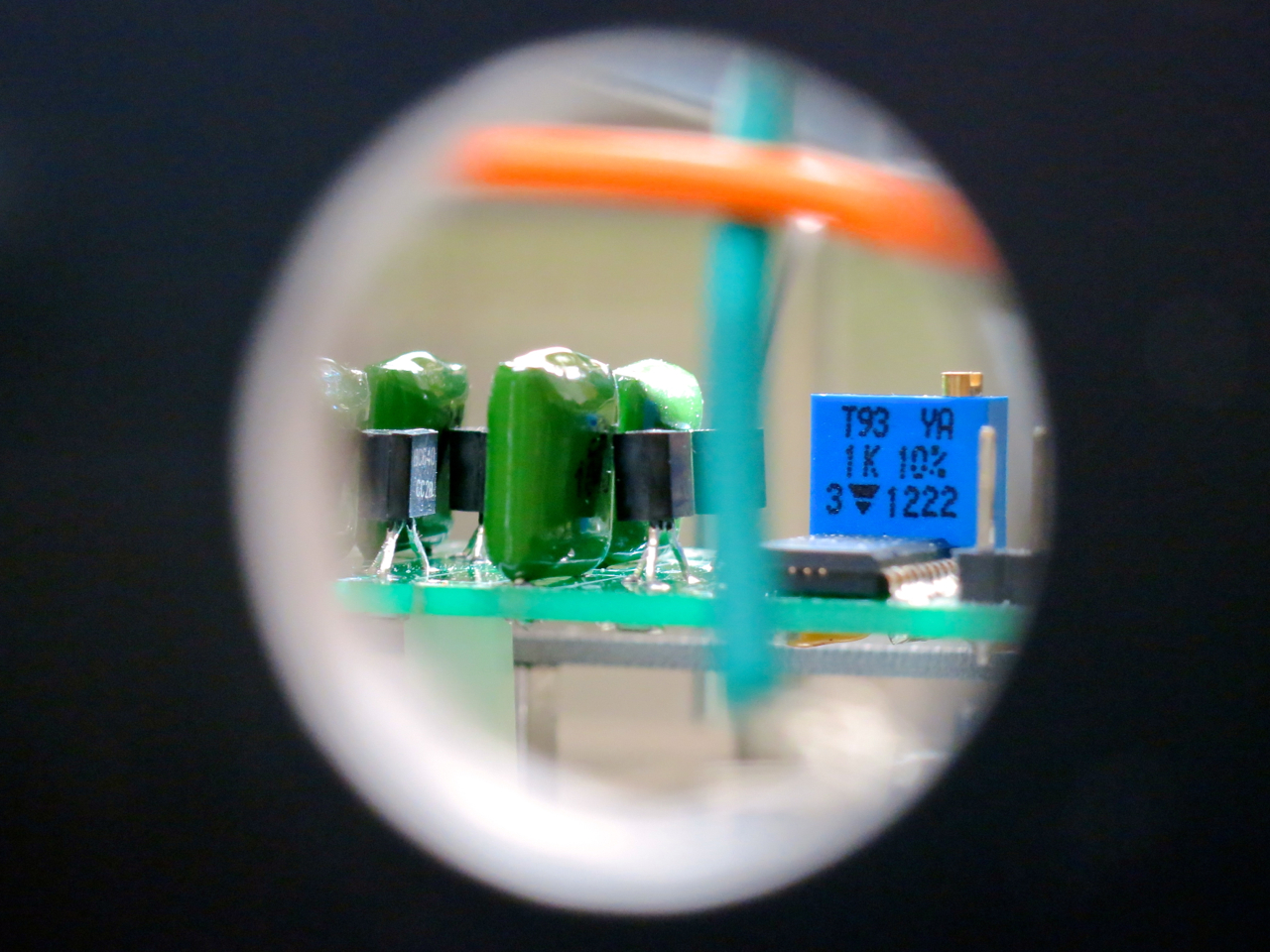
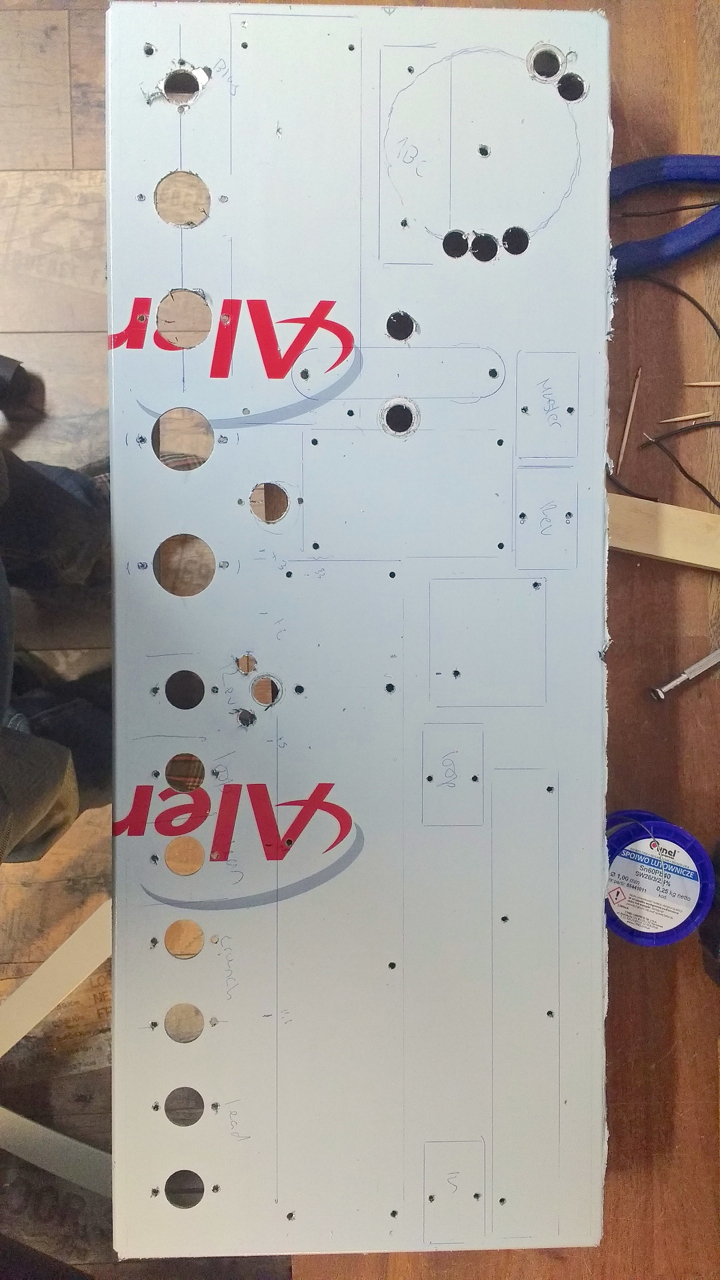
A versatile tube amp, such as Bluetone’s Crossroad, is quite an involved design containing many different components. The exact component layout requires a good deal of planning.
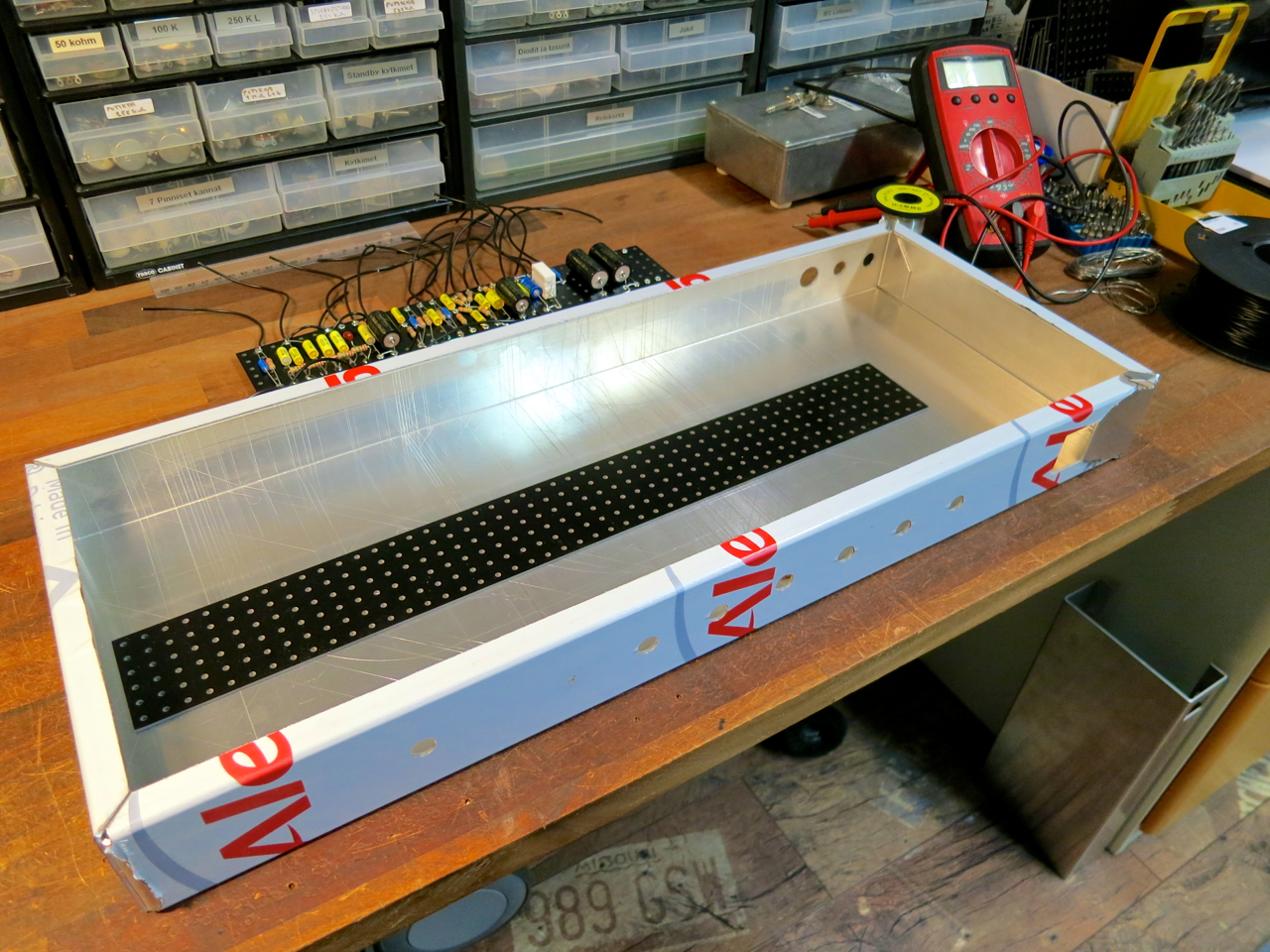
As you can see in the picture above, Matti Vauhkonen has sketched the outlines of all the necessary parts going into the Crossroad onto the chassis’ protective foil. Next he has drilled the holes needed to mount the valve sockets, the circuit boards, the transformers, and the leads going through the chassis.
Designing a tube amp is all about balancing the different requirements of the different parts working inside the amp – you can’t simply throw the components together haphazardly.
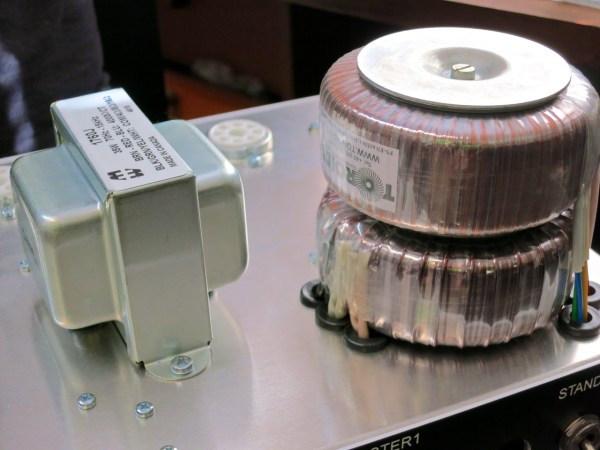
The large power transformer mustn’t radiate electromagnetic hum into the audio signal, which is why it is always placed as far as possible from the preamp valves. The power amp tubes, for their part, are best kept some distance from the audio transformer, to avoid hum and buzz induction. The audio transformer also has to be angled correctly in relation to the power transformer to keep things as quiet as possible.
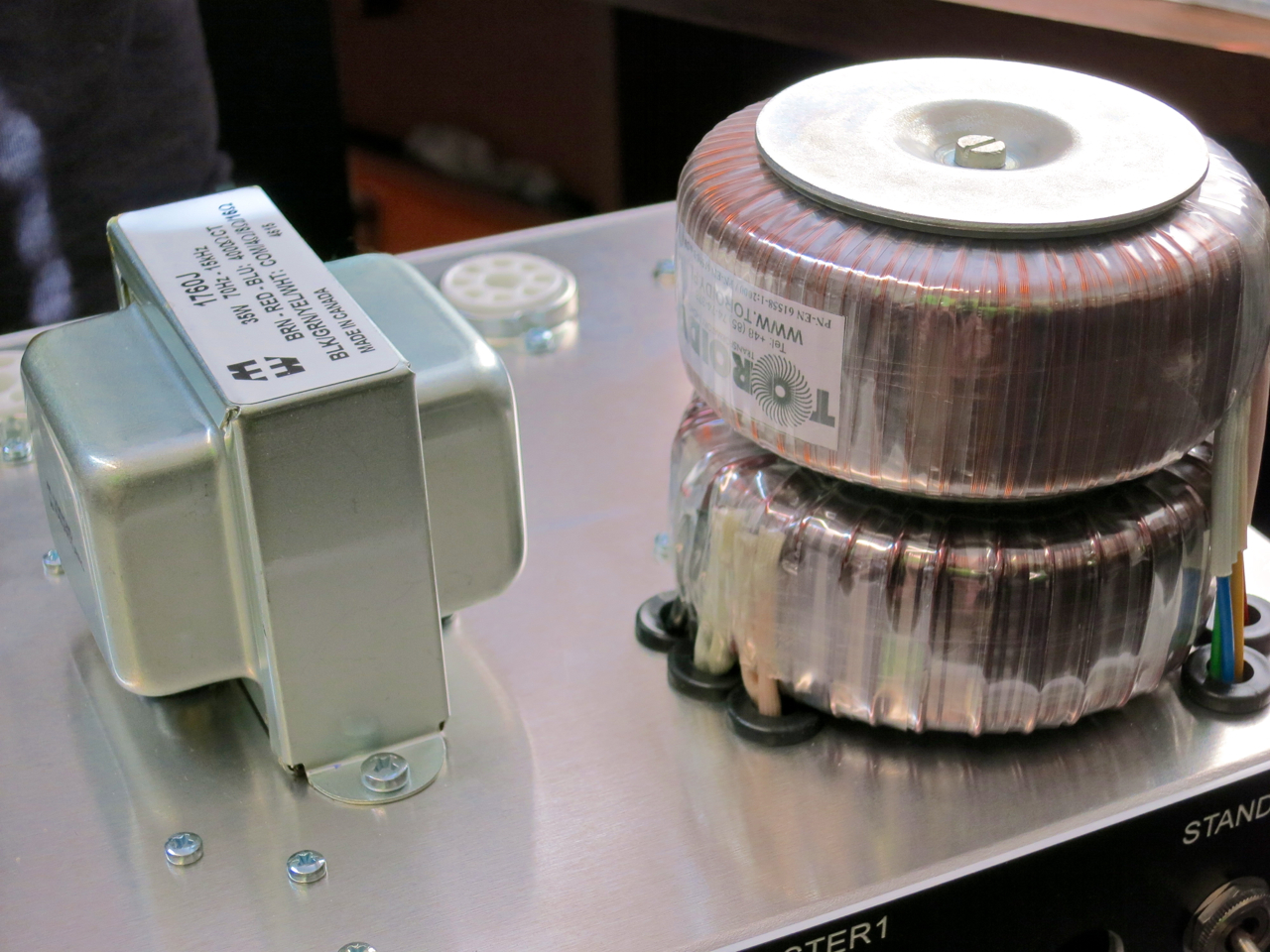
One special feature of Bluetone-amps is their use of (doughnut-shaped) toroidal transformers as power transformers, which is still quite rare in guitar amplifiers.
This is despite the advantages a toroidal transformer offers in comparison to a traditional laminated core transformer. A toroidal transformer weighs less than a similarly spec’ed traditional design, and it also radiates less electromagnetic hum, which makes it easier to find a good spot for the power transformer in the amp.
Bluetone’s Harry Kneckt puts it like this: ”If the toroidal transformer had been available to Leo Fender back in the 1950s, he would have used it in all his amps. I’m pretty sure of this!”
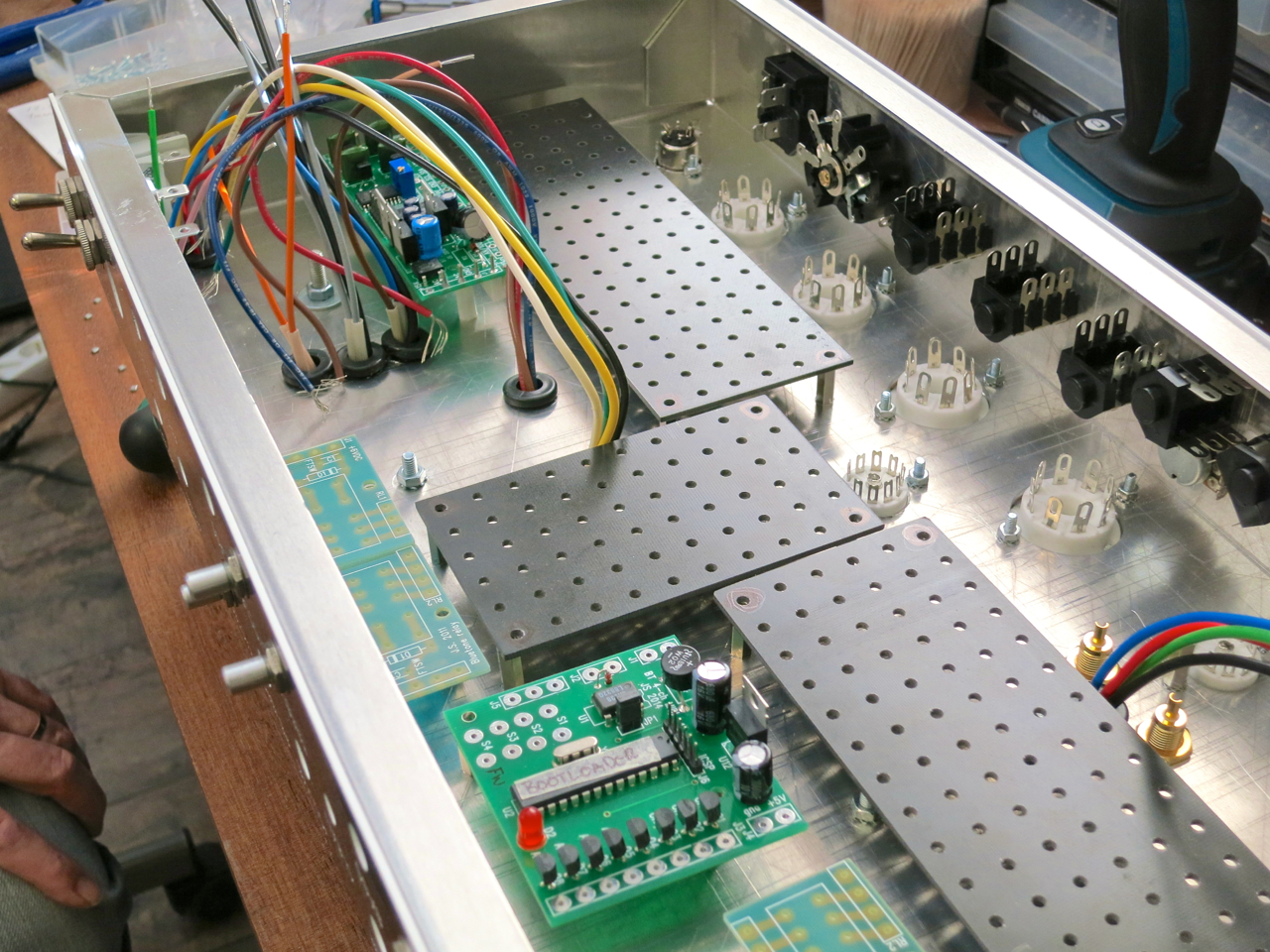
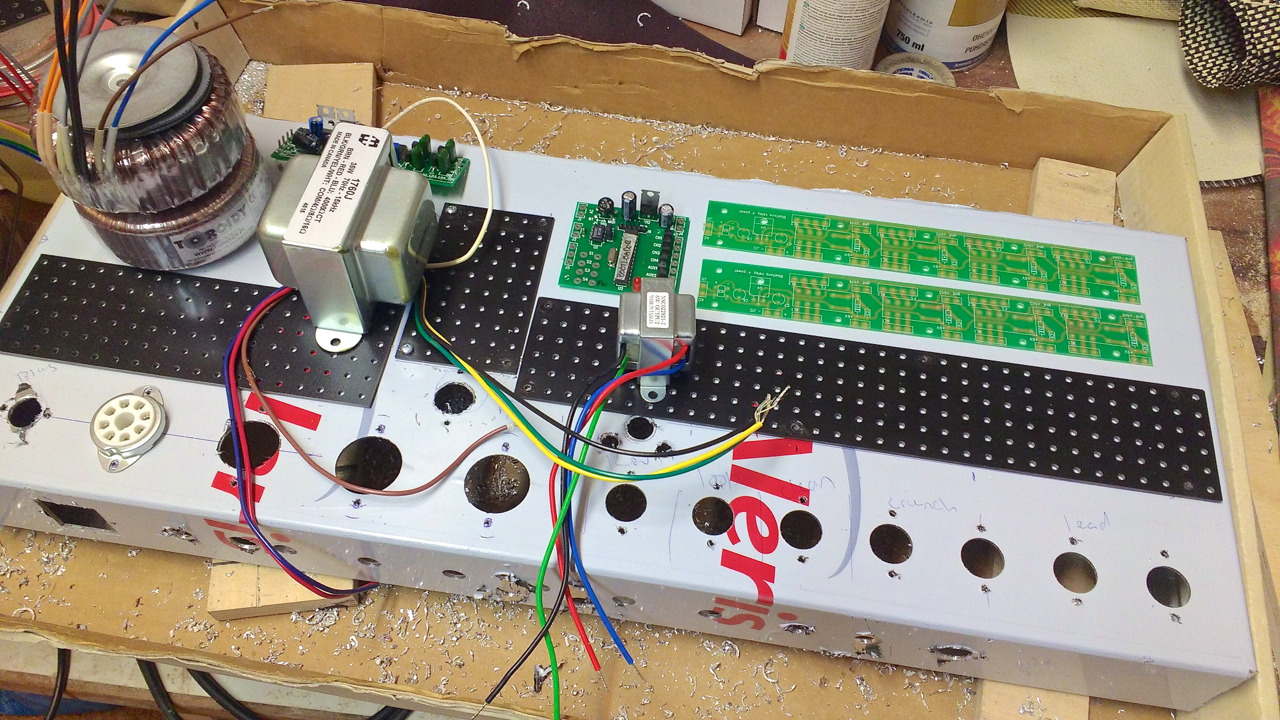
Matti Vauhkonen has first installed the transformers, tube sockets (the white components), and the output jacks (the black parts on the right) into the amp chassis.
The eyelet-boards and PCBs were added for these pictures only to give an idea of their placement inside the Crossroad head. The audio signal in all Bluetone amps runs through a pure, point-to-point soldered analogue-and-valve path, but for modern control features, such as channel switching via MIDI or tube biasing via WiFi, the company naturally uses modern technology.
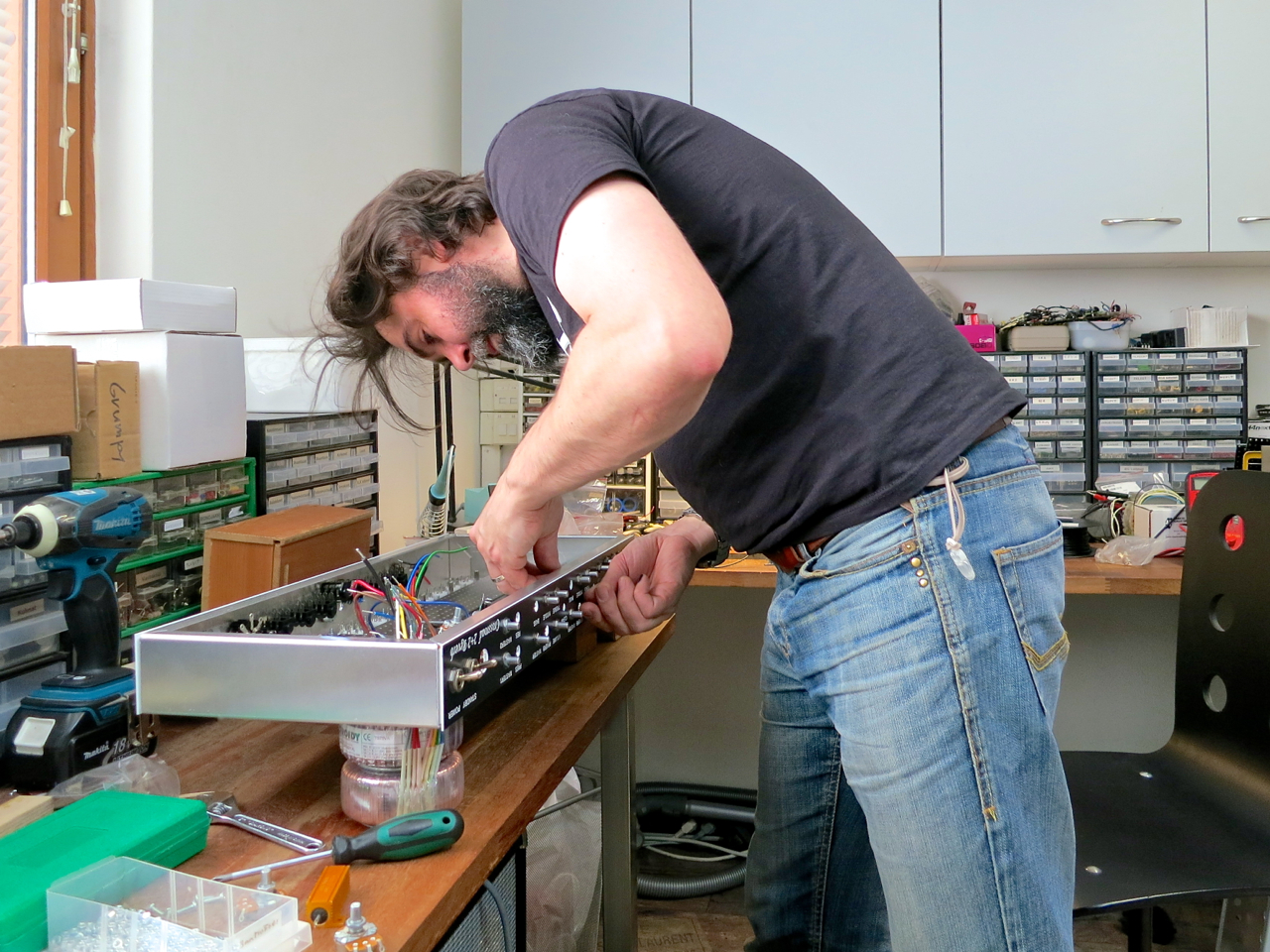
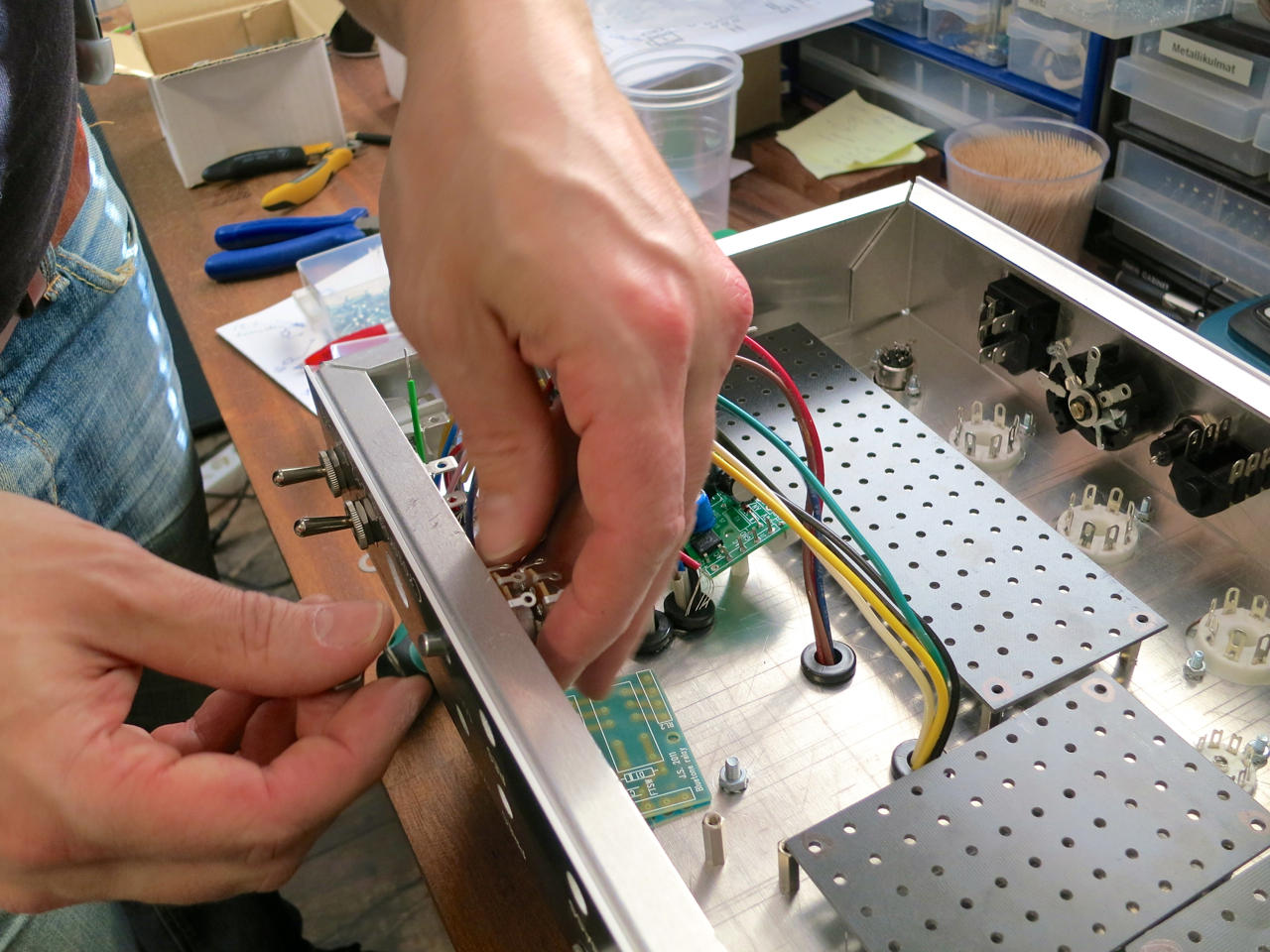
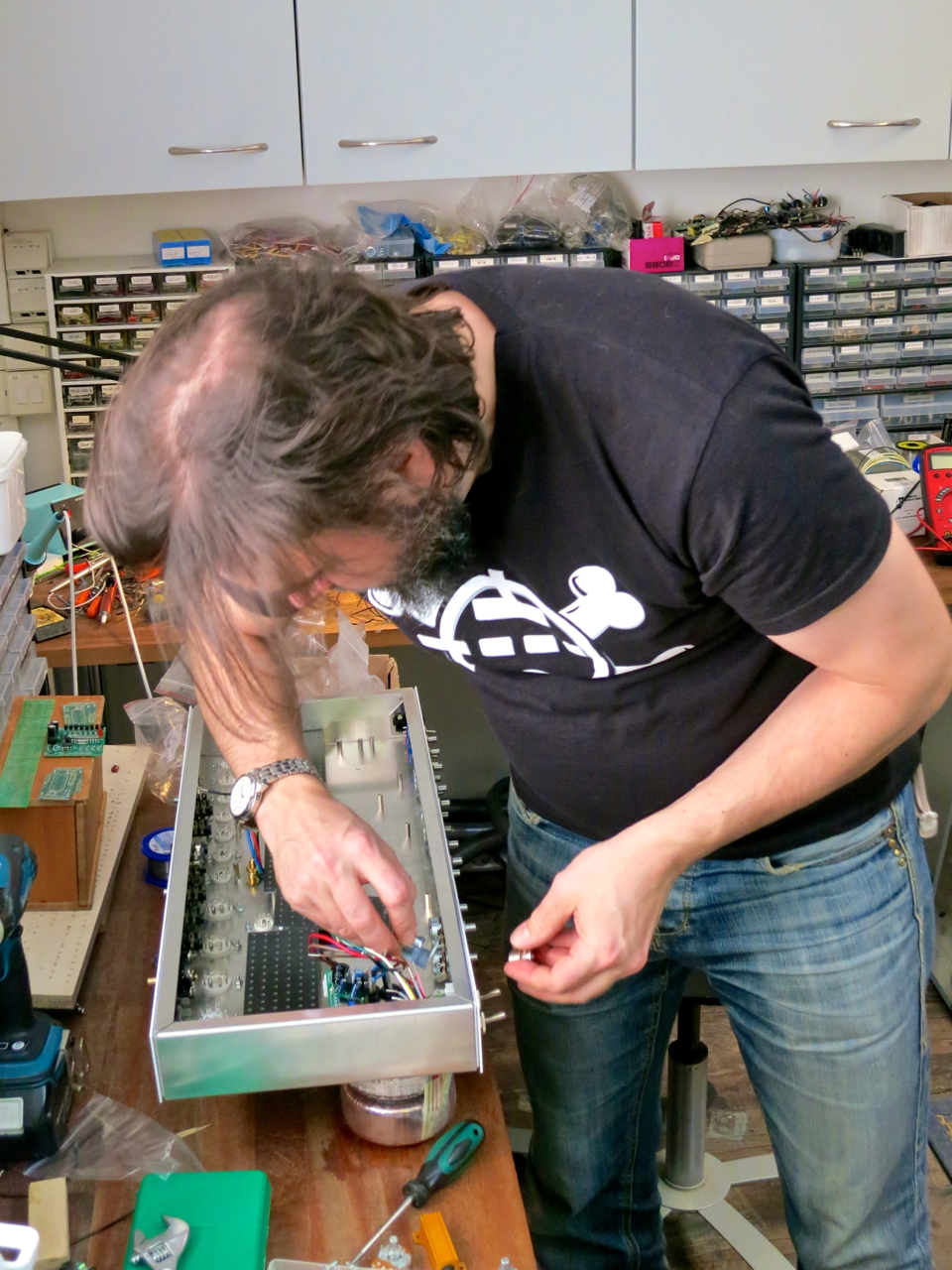
The next step is the installation of all the front panel parts, such as the control pots, switches, and the pilot light.
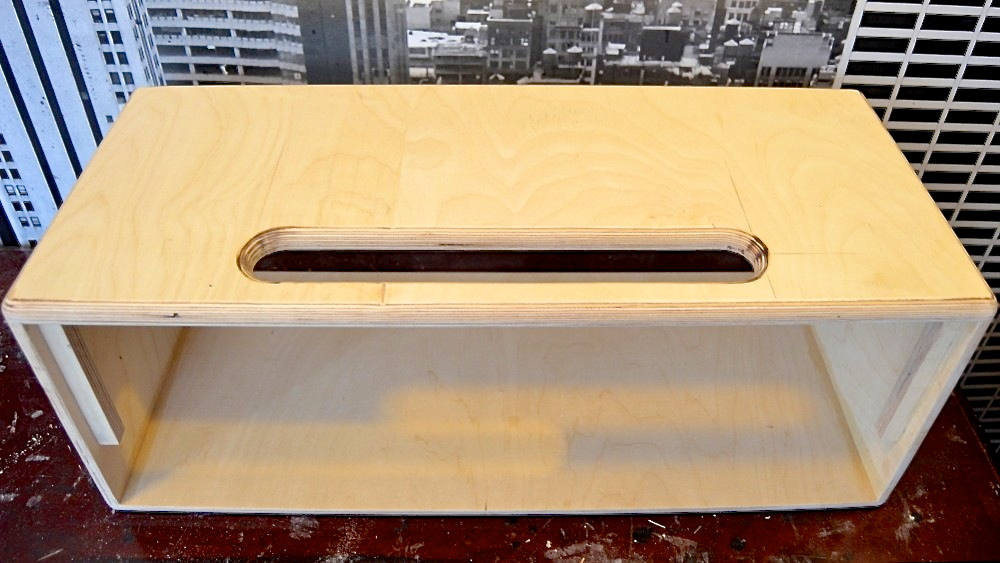
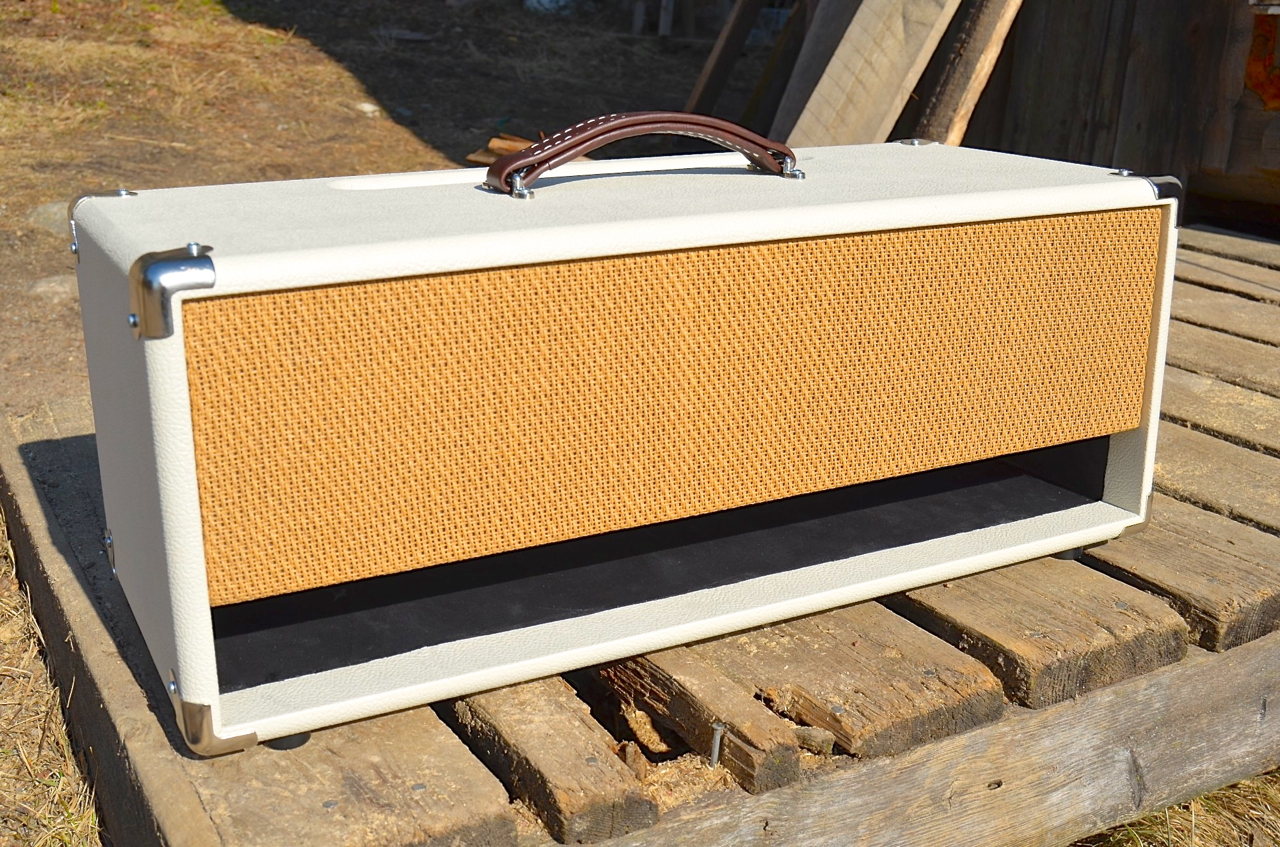
Bluetone makes some of their cabinets in-house, depending on their current workload. For the head featured here, Bluetone ordered the arctic birch ply amp cabinet from their subcontractor.
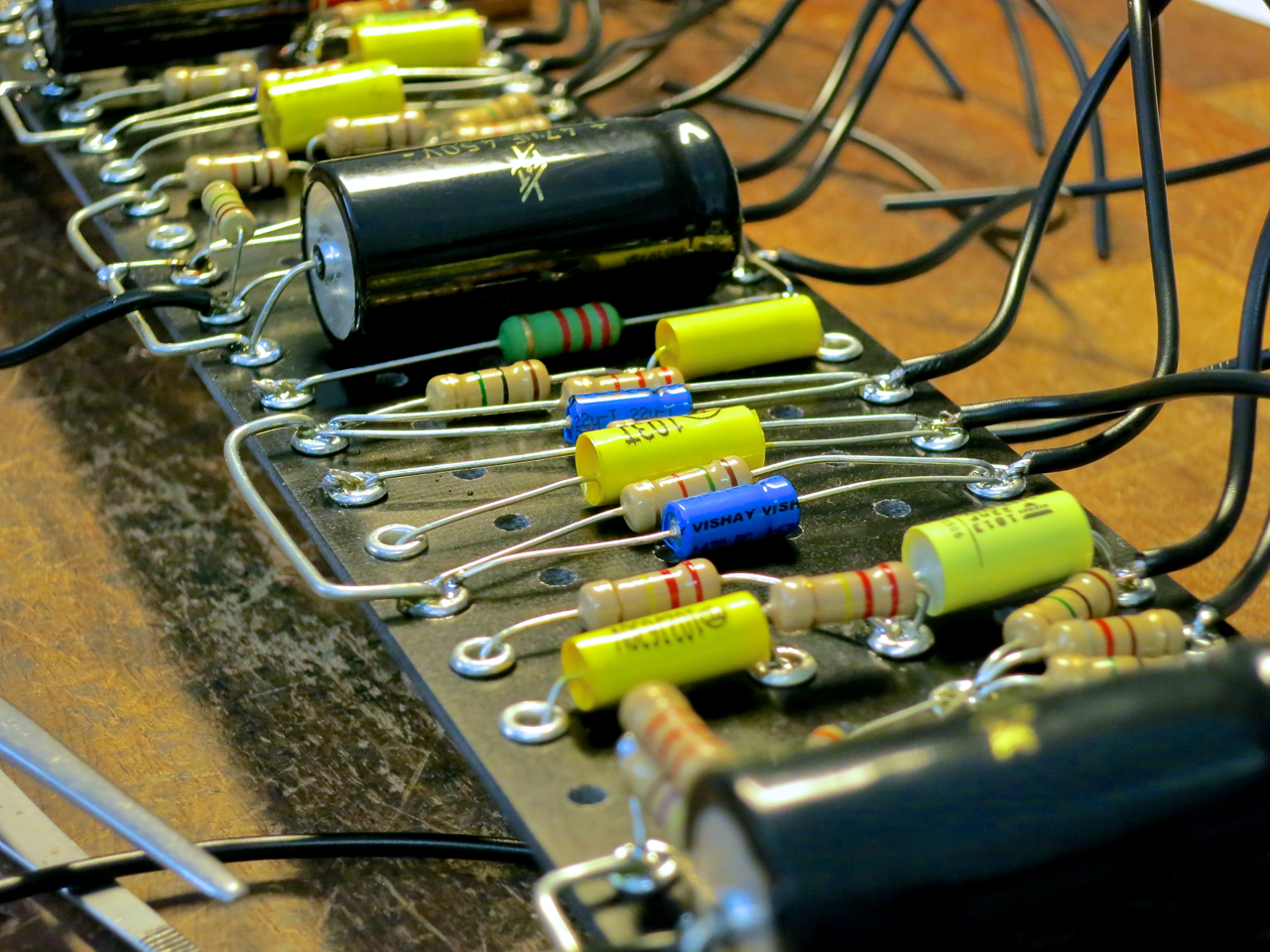
At this moment Matti Vauhkonen is dealing with the time-consuming business of soldering and assembling the heart of the amp (here’s a picture of another Bluetone-model). Hand-soldering a point-to-point valve amp is something you shouldn’t do in a rush, if you want to avoid very time-consuming troubleshooting.
Now on SoundCloud: Vox AV15


Contact: EM Nordic


Näin syntyy Bluetone-vahvistin – osa 2
Bluetone Crossroadin kaltaisessa, hyvin monipuolisessa putkinupissa on monta eri komponenttia. Osien toimiva sijoittelu vaatii hyvää suunnittelua.
Kuvassa näkyy Matti Vauhkosen merkinnät piiri- ja eyeletlevyjä, sekä muuntajia varten. Koteloon on porattu kaikki tarvittavat reiät putkikannoille, säätimille, tuloille ja lähdöille, levyjen kiinnikkeille, sekä johtojen läpivientiin.
Putkivahvistimen tekijän täytyy miettiä nupin suunnittelussa osien sijoittelua useasta eri näkökulmasta – ei riitä, että kaikki osat vain mahtuvat koteloon.
Esimerkiksi isokokoinen verkkomuuntaja ei saa säteillä elektromagneetista huminaa kitarasignaaliin, minkä vuoksi muuntaja ja etuvahvistimen putket sijoitetaan aina niin kauas toisistaan kuin mahdollista. Audiomuuntaja ja päätevahvistimen putket taas ei kannata sijoittaa liian lähellä etuasteputkia, koska näidenkin osien välillä syntyy elektronista häirintää. Myös audiomuuntajan kelojen oikea fyysinen suuntaaminen verkkomuuntajaa nähden pitää häiriöääniä loitolla.
Yksi Bluetone-vahvistinten erikoisuuksista on rengassydänmuuntajan (engl. toroidal transformer) käyttäminen verkkomuuntajana, mikä nähdään – ainakin vielä – melko harvoin kitaravahvistimissa.
Rengassydänmuuntajalla on useampi etu perinteiseen malliin nähden. Rengassydänmuuntaja on mm. kevyempi kuin perinteinen muuntaja samoilla spekseillä, ja laadukkaan rengassydänmuuntajan elektromagneettinen säteily on myös perinteistä huomattavasti pienempi, mikä helpottaa muuntajan sijoittelua vahvistimessa.
Tai miten Bluetonen Harry Kneckt sanoo: ”Jos Leo Fenderillä olisi ollut 1950-luvulla mahdollisuus käyttää rengassydänmuuntajia, hän olisi käyttänyt niitä. Tästä olen varma!”
Matti Vauhkonen on ensin kiinnittänyt koteloon Crossroad-nupin muuntajat, putkikannat (näkyvät valkoisina) ja takapaneelin jakit (mustat osat).
Eyelet- ja piirilevyt on lisätty koteloon vain näitä kuvia varten havainnollistamaan niiden lopulliset sijainnit. Vaikka Bluetone-vahvistimissa kitarasignaali kulkee aina ja vain käsinjuotetun point-to-point putki- ja analogielektroniikan kautta, käytetään luonnollisesti nykyelektroniikka, kun toteutetaan sellaiset ominaisuudet kuin esimerkiksi kanavanvaihdot MIDI:llä tai pääteputkien seurantaa ja biasointia Wifin kautta.
Seuraavaksi lisätään etupaneelin osia, kuten säätimet, kytkimet ja statusvalo.
Samanaikaisesti Bluetonen alihankkija on jo saanut nupin vanerikotelon valmiiksi. Aikataulusta riippuen Bluetone valmistaa myös osan koteloista omassa verstaassa.
Seuraava vaihe – joka on tällä hetkellä meneillään – on vahvistimen varsinaisen ”sydämen” valmistus (tässä kuva toisesta Bluetone-mallista). Näitä point-to-point juotostöitä ei kannata tehdä kiireellä, jos halutaan välttää turhauttava ja aikaa vievä vianetsintä. Maltti on valttia myös putkivahvistimen rakentamisessa!
Press Release: Fender The Edge Signature Stratocaster & Deluxe Amp

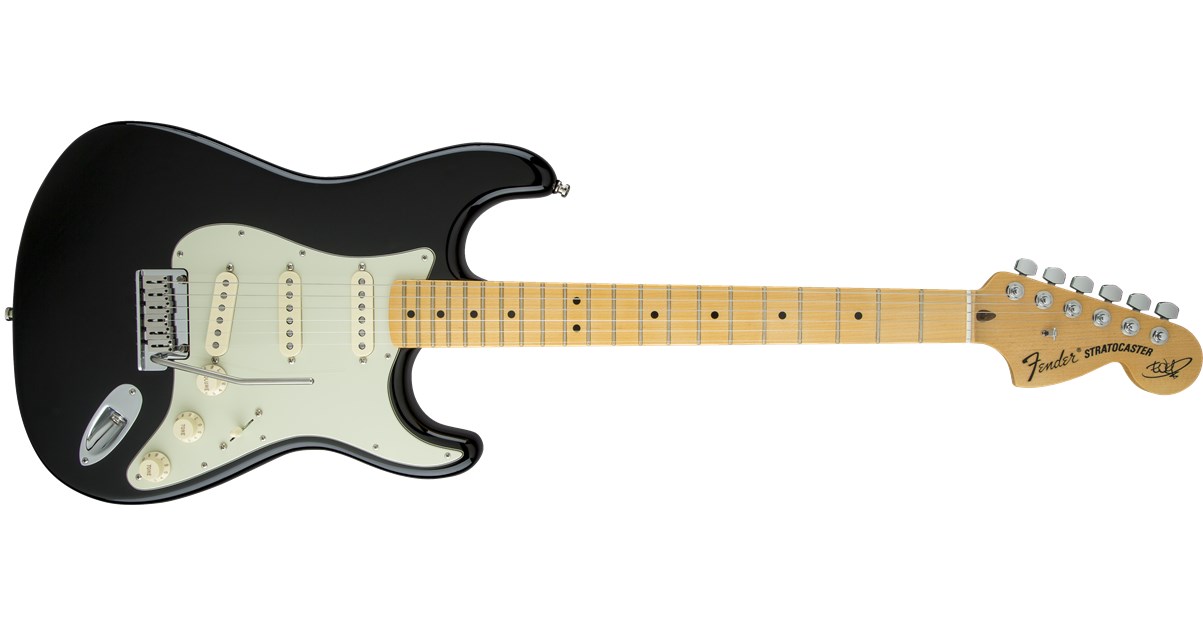
The Edge Strat is engineered for top-notch performance with versatile tone and effortless playing. Unique features include a pair of special Custom Shop Fat 50s single-coil pickups with flat pole pieces, a DiMarzio® FS-1™ bridge pickup, upgraded quartersawn maple neck with “C”-shaped profile and 9.5” maple fingerboard, modern two-point synchronized tremolo bridge with pop-in arm and fully adjustable saddles. The Edge’s signature is also included on the front of the large ‘70s-style headstock.
The elegant guitar combines the classic curves, appointments and effortless playability of the Stratocaster with modern enhancements and materials to create a dream instrument for players and U2 fans alike.
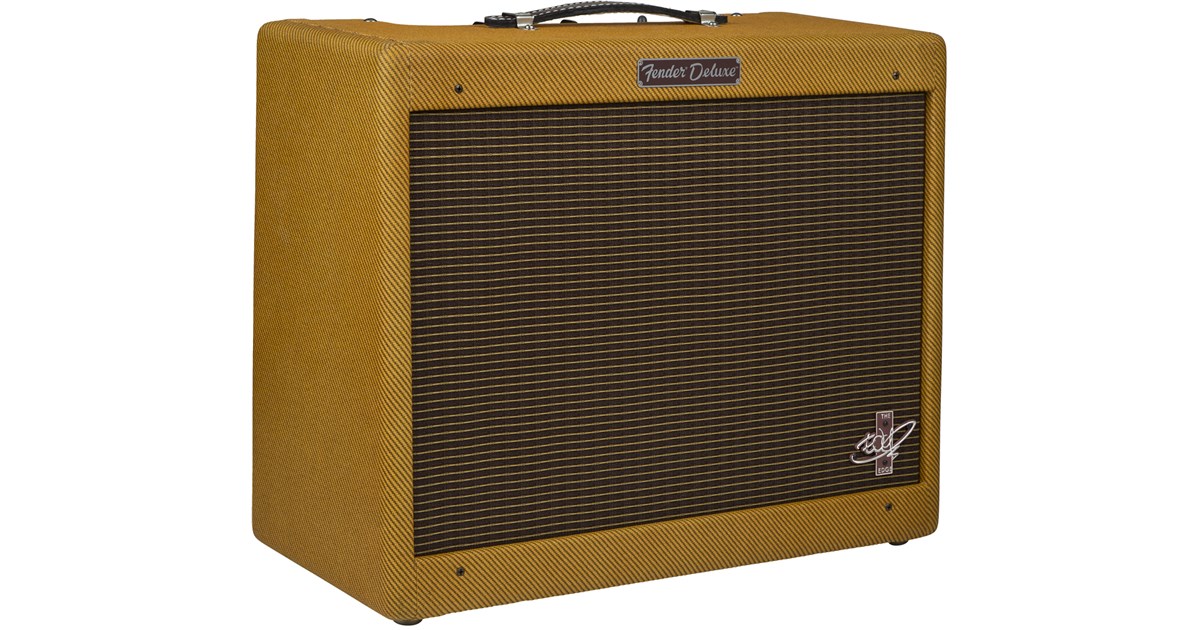
The Edge Deluxe signature model is an updated take on the classic ’57 tweed Deluxe used to craft the Edge’s sonic identity. This amp also produces the tone and articulation of the vintage Fender Deluxe amps that are an important part of the artist’s complex multi-amp effects setup.
This 12-watt hand-wired amp features modified circuitry for tighter low-end response and high-impact tone, a 12” Celestion® Blue speaker, custom-tapered volume control and altered component values that tighten up low-end frequency response. The Edge himself also hand-designed the special grille logo badge, which distinguishes the traditional tweed amp as a distinctive tool for guitarists everywhere.
The Making of a Bluetone Amp – Part 1

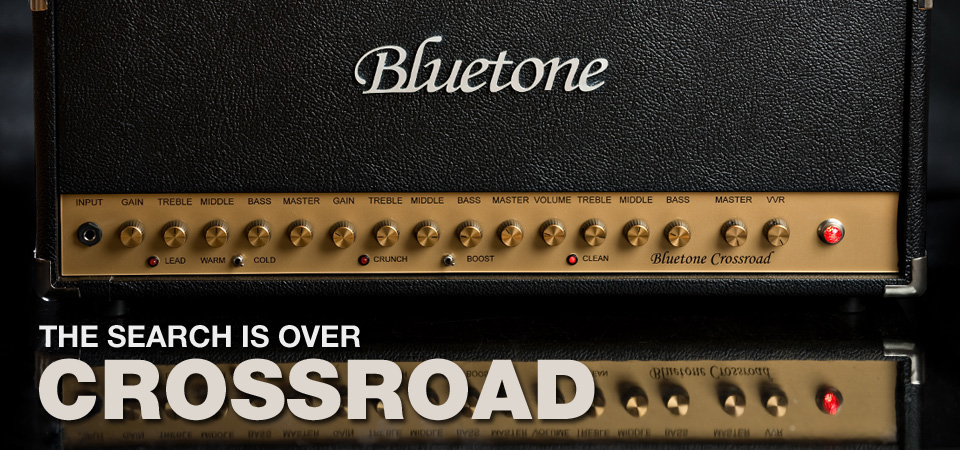
Finland’s Bluetone Amps, which is run by Harry Kneckt and Matti Vauhkonen, has already garnered quite a reputation as a maker of high-quality valve amplifiers.
The company offers quite a large range of different models – starting with small combos, such as the Barfly, with large-wattage tube heads, such as the AcDcII– or the Bugaboo, at the other end of the spectrum. Bluetone also make bass amps, as well as guitar and bass cabinets.
Each and every Bluetone amp is made by hand, using point-to-point construction and top drawer components. This type of dedication to a pure tube signal path doesn’t mean, however, that we’re dealing with a backward-facing company. Quite the opposite is true – Bluetone amps include some of the most cutting edge features, when it comes to making their products user-friendly. One great example is a special metering tool the company sells, which makes it possible for a regular Jane or Joe to bias their amplifier’s output valves by themselves with the least possible amount of fuss.
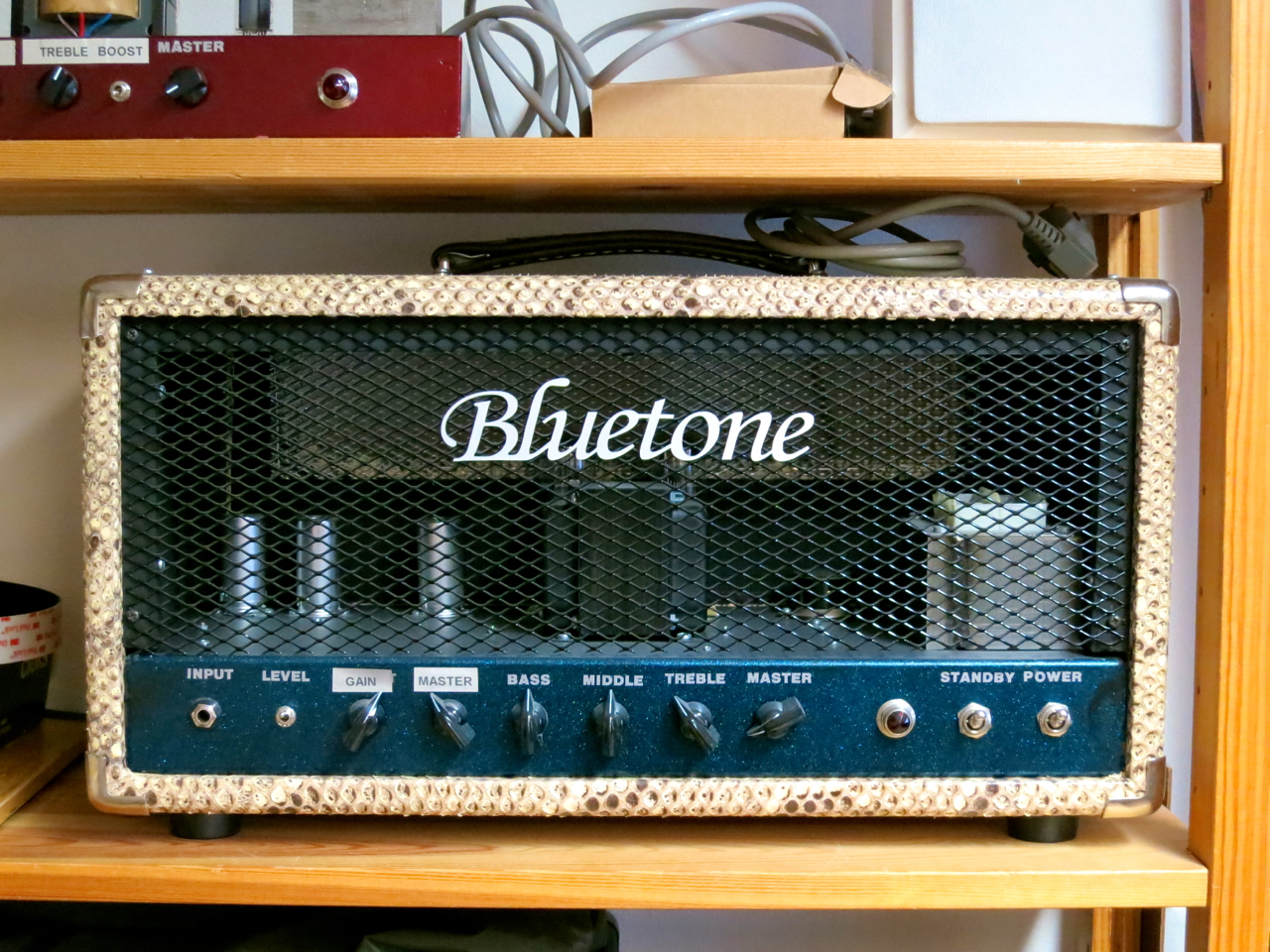
Bluetone is a genuine custom maker, because virtually all of their amps leave their workshop with customer-specified modifications. Bluetone have their basic model range, but there’s a lot of scope for customisation, both when it comes to the technical specifications as well as on the cosmetic side of things (you can even specify the font used for lettering the front panel).
Kitarablogi.com has been offered a chance to follow the making of a Bluetone head, all the way from the customer’s order to the finished product:
This specific head is basically a Bluetone Crossroad amplifier with a 2+2 power amp. Bluetone’s own 2+2 power amp uses the four output valves in two pairs, with one pair being dedicated solely to the clean channel (usually running a pair of 6V6 or 6L6 tubes), with the second pair being reserved to handle all crunchy and lead tones (normally a pair of EL34s). The advantage of Bluetone’s 2+2-system lies in the fact that you’re dealing with the ”correct” classic tones of the power valves used, so there’s no need for any modelling or tube amp ”voodoo” to achieve Marshall-type drive tones from Fender-type tubes, or vice versa.
The list of specifications on this Crossroad 2+2 is more than impressive:
• Lead-channel: modified Friedman Brown Eye-type
• Crunch-channel: modified Marshall JCM800-type
• Clean-channel: modified Fender Deluxe Reverb-type
• Bluetone’s special valve spring reverb with dedicated controls for each channel
• Bluetone’s own buffered tube-based effects loop (with level controls)
• Channel- and effects-switching controllable via MIDI
• Main valve status control and biasing using the Bluetone ABC-system (Auto Bias Control)
• Power tubes can be biased either with a Bluetone ABC-metering tool or using a mobile device app via WLAN
• Power amp has built-in Variac (think: ”EVH Brown Sound”)
• Adjustable line output
• Adjustable headphone output
• Presence- and Resonance-control in master section
This is how the journey begins:
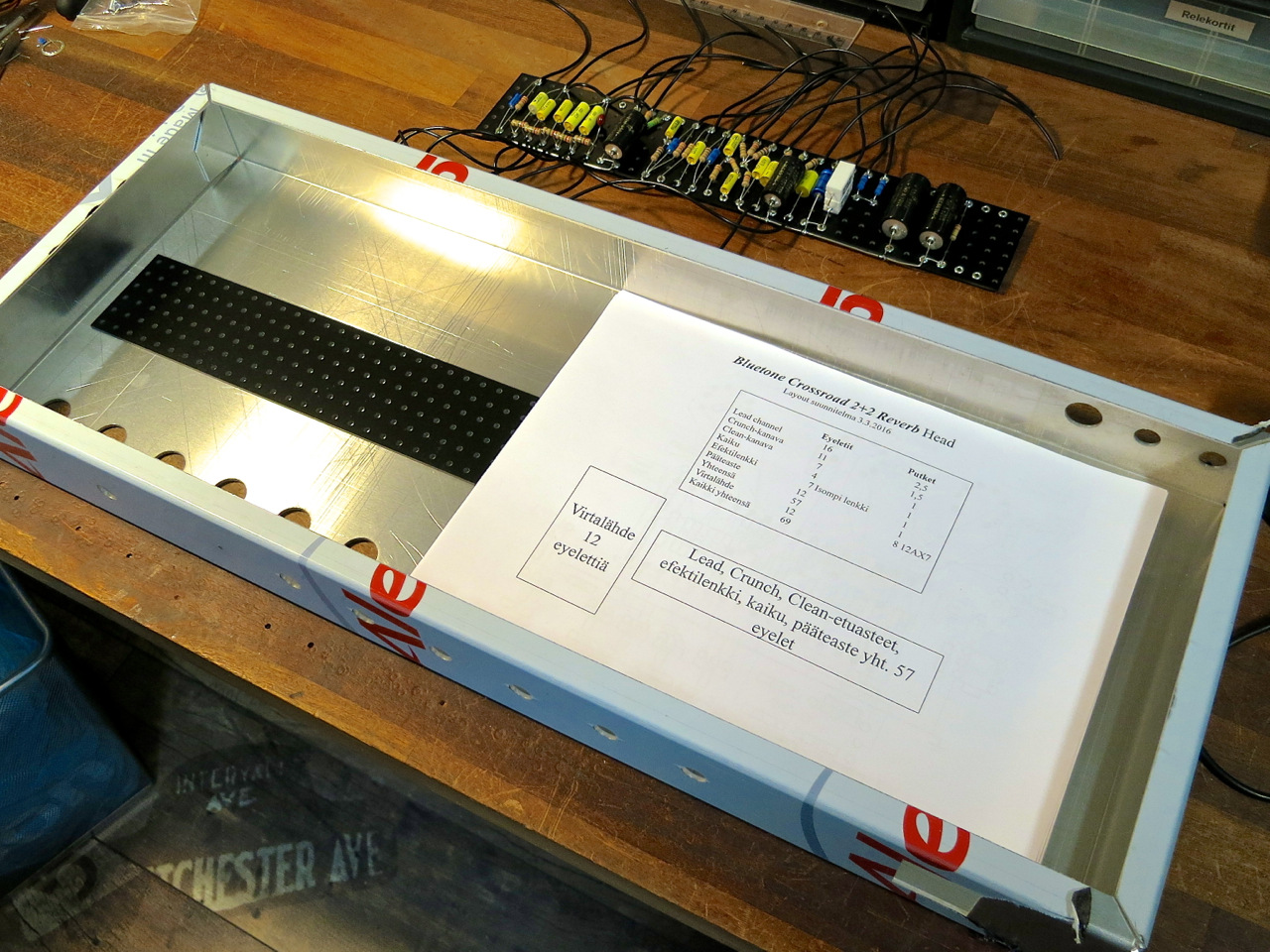
An empty steel chassis, a fibreglass eyelet-board of the correct size, and the customer’s order, which Harry Kneckt has already used to draw the necessary schematics and put together a list of the necessary components.
Näin syntyy Bluetone-vahvistin – osa 1

Harry Knecktin ja Matti Vauhkosen luotsaama Bluetone Amps on tunnettu laadukkaista putkivahvistimistaan.
Firman mallisto on yllättävän laaja – se ulottuu pienestä Barfly-combosta isowattisiin AcDcII– tai Bugaboo-nuppeihin. Bluetone valmistaa myös bassovahvistimia, sekä kitara- ja bassokaappeja.
Bluetone-vahvistimissa signaalitie rakennetaan täysin vailla kompromisseja käsin point-to-point-periaatteella. Mutta tästä huolimatta tämä firma ei toimi katse taakse käännettynä, vaan uusia teknisiä ratkaisuja ja ominaisuuksia lisätään vahvistimiin tekemään käyttäjien elämästä helpomman. Bluetone valmistaa esimerkiksi vahvistimiin kätevän lisälaitteen, jolla maalikkokin voi biasoida firman vahvistimia vaivattomasti itse.
Bluetone on todellinen custom-paja, sillä käytännössä jokainen heidän rakentama vahvistin on asiakkaan toiveiden mukaan tehty, vaikka se perustuukin johonkin firman perusmalliin. Asiakas voi vaikuttaa niin styrkkarin teknisiin ominaisuuksiin kuin myös kosmeettisiin ratkaisuihin (jopa naamataulun fonttiin).
Kitarablogi.com sai nyt tilaisuuden seurata uuden Bluetone-nupin syntymää tyhjästä metallikotelosta valmiiseen vahvistimeen:
Asiakas on tilannut kolmikanavaisen Crossroad-nupin Bluetonen omalla 2+2-pääteasteella. 2+2-pääte tarkoittaa, että vahvistimen neljää pääteputkea käytetään niin, että yksi pari hoitaa puhtaan kanavan (tavallisesti joko 6V6- tai 6L6-putket), kun toinen pari on käytössä särösoundien kanssa (tavallisesti EL34). Bluetonen 2+2-systeemin suuri etu on, että soittaja saa käyttöön näiden eri pääteputkityyppien ominaiset, aidot soundit ilman mitään tarvetta mallinnukseen tai muuhun elektroniseen voodoohon.
Tämän Crossroad 2+2 -nupin speksilista on todella vaikuttava:
• Lead-kanava: modattu Friedman Brown Eye
• Crunch-kanava: modattu Marshall JCM800
• Clean-kanava: modattu Fender Deluxe Reverb
• Bluetonen omaan suunnitteluun perustuva putkijousikaiku omilla kanavakohtaisilla tason säädöillä
• Bluetonen omaan suunnitteluun perustuva bufferoitu putkiefektilenkki lähtötason säädöllä
• Kanavanvaihto ja efektien hallinta MIDI-ohjauksella
• Pääteputkien hallinta ja biasointi ohjelmistopohjaisella Bluetone ABC (Auto Bias Control) -järjestelmällä
• Putkien biakset voidaan säätää joko ABC-mittarilla tai langattomasti älypuhelimella/läppärillä WLAN-sovelluksella
• Virtalähteessä vahvarin sisäisen päätetehon ja putkien jännitteiden säätö (Variac, eli ”EVH Brown Sound”)
• Säädettävä line out -lähtö
• Säädettävä kuulokelähtö
• Presence ja Resonance-säätimet pääteasteessa
Ja tästä matkamme valmiiseen custom-nuppiin siis alkaa:
Tyhjä metallikotelo, sopivan kokoinen eyelet-levy lasikuidusta, sekä asiakkaan tilaus, jonka perusteella Harry Kneckt on jo kasannut osien listan ja piirtänyt kytkentäkaavion.
Coming soon: How a Bluetone Amp is made

Stay tuned…

 Kitarablogi.com – Finland's premier Guitar and Bass blog