Review: Tokai SG-75

Tokai SG-75 – body angle

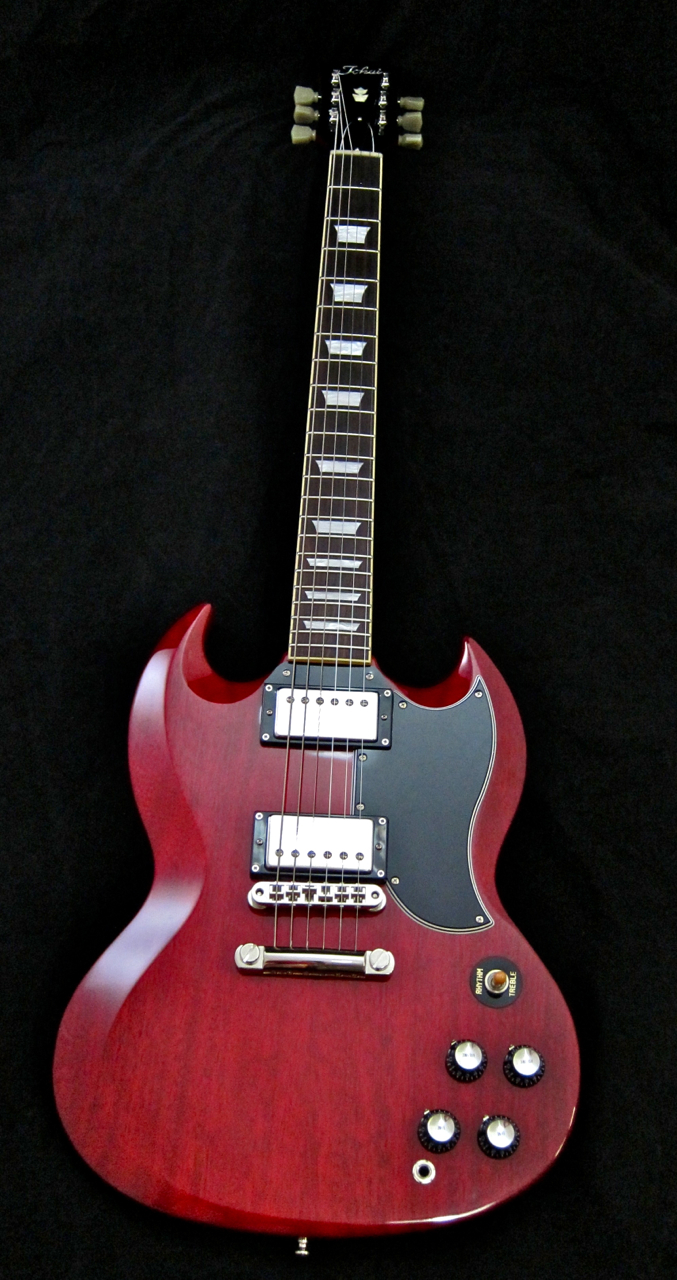
Tokai Guitars’ SG-75 is the company’s top model in their line of Gibson SG copies – a carefully crafted, Japanese version of the American original from the 1960s.

****

Tokai SG-75 – full front horizontal

The Tokai SG-75 (current price in Finland: 928 €) is based on the first version of the Gibson SG, which was introduced in 1961 as the new Les Paul Standard guitar. At that time the original Les Paul -range started showing seriously flagging sales figures, so Ted McCarty instigated a complete rethink of Gibson’s main solidbody model. The idea was to create a sleeker and lighter guitar.

Mr Paul wasn’t pleased with the result and didn’t renew his endorsement deal, which is why the new model was renamed the Gibson SG (= Solid Guitar) in 1963.

Tokai SG-75 – full back angle

Tokai’s SG-75 is a great recreation of the classic model, and stays very faithful to the original design, displaying exemplary attention to detail in the process.

Take the body, for example: Its two pieces of fine mahogany have been matched so well it took a magnifying glass to make out the glue line at all! The well-applied red dye and the expertly executed thin finish really show off the guitar’s curves, as well as the nice grain of the wood.

Tokai SG-75 – headstock

Tokai SG-75 – tuners

Vintage-style tuners are a tasteful choice for the SG-75 model.

Tokai SG-75 – fretboard

The rosewood fretboard is bound in single-ply cream plastic, and sports the traditional ”crown” inlays associated with guitars of this type. The workmanship on the frets can only be called exemplary.

Tokai SG-75 – neck joint

The neck joint on the Tokai SG-75 sits – as tradition dictates – at the last fret (22nd). This arrangement gives you unhampered access to the uppermost frets, but the trade-off is a slightly weaker neck joint in comparison to, say, LP-style guitars. Buying a secure guitar stand and a quality hard case for this type of guitar is a very good idea.

Tokai SG-75 – body angle 2

In terms of its pickups, controls and hardware the Tokai SG-75 is a typical Gibson-type guitar.

Tokai SG-75 – tuneomatic

The bridge is a modern update of the venerable Tune-o-Matic-bridge: The intonation adjustment screws are properly secured to the bridge’s base. On 1960s originals only a flimsy retaining wire keeps the saddles from falling off mid-song, should you break a string.

Tokai SG-75 – pickups

The pickups on most SG-type guitars are placed differently, compared to LP-style double-humbucker guitars:

The neck pickup has been moved a good two centimetres away from the end of the fretboard to add a little strength to the neck joint. In order to keep the tonal difference between the neck ’bucker and the bridge unit as wide as possible, the bridge humbucker has also been moved a few millimetres closer to the bridge.

Tokai SG-75 – controls

The control set-up is also pure SG, with the three-way toggle, the four controls (two volumes, two tones) and the output jack all crammed together in the lower bout.

Using an angled plug is a very good idea on SG-type guitars, as it reduces weight-induced stress – and thus breakages – on the rather thin area of mahogany routed out around the jack.

Tokai SG-75 – control cavity

One word says it all – quality!

****

Tokai SG-75 – full vertical Tokai SG-75 – full back vertical

Vintage 1960s examples of Gibson SGs all feature rather thin necks, many (from about 1966/67 onwards) of which also have a narrower nut width. Some guitarists – like Angus Young – actually prefer these necks, but for many others this type of neck profile is simply too insubstantial.

Luckily, Tokai have decided not to paint themselves into a corner here: The neck profile of the SG-75 is a nice, not-too-chunky D, which is a tad more muscular than Gibson’s current 60s-profile.

In addition to the improvement in playability there’s also an improvement in tone and sustain to be had from slightly bigger necks on SG-style guitars. More wood means added stiffness and less damping due to vibrational absorption in the long, unsupported neck.

The extremely lightweight Tokai SG-75 is a fine example of how an SG-style guitar differs from a LP-type in its acoustic and electric tones. The acoustic tone is a good deal more open, and it displays a lovely vocal mid-range timbre, as well as a slightly lighter bass response. The SG-75 feels very alive and is brimful of dynamic nuances.

Tokai’s fine PAF-Vintage Mk3 -humbuckers work exceedingly well in this context, because these vintage-type, moderately-powered pickups have an open and dynamic sound, and don’t clog up the guitar’s mid-range frequencies.

The more ”trebly” pickup placement does its bit to underscore the SG-75’s clear and crisp acoustic tone. The bane of LP-type guitars – the muddy neck humbucker sound – is, thankfully, completely absent here, and the bright and airy top end of the bridge pickup will make you think twice about an SG’s suitability for traditional Country music.

Here’s a clean clip:

Here’s the Tokai through an overdriven channel:

And here’s the music from the video:
Tokai SG-75 – full beauty 2

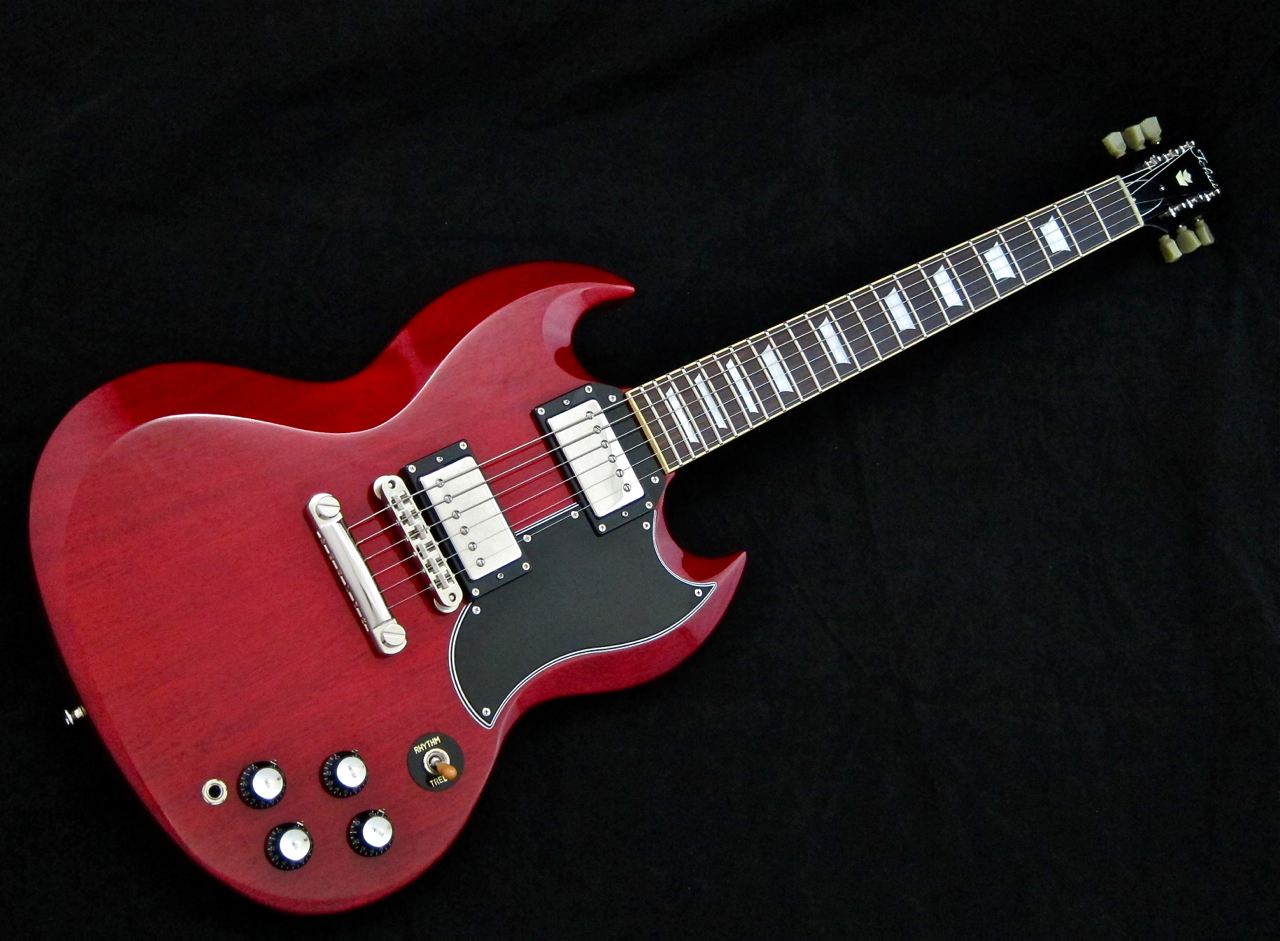
The Tokai SG-75 is the best SG-type guitar I’ve played so far. The Tokai offers fine workmanship, great playability and tasty tones in a surprisingly affordable package.

****

Tokai SG-75

Current price in Finland: 928 €

Finnish distribution: Musamailma

****

Pros:

+ value-for-money

+ workmanship

+ neck profile

+ pickups

+ playability

+ sound

****
Tokai SG-75 – full beauty


Testipenkissä: Tokai SG-75

Tokai SG-75 – body angle

Tokai Guitarsin SG-75 on firman Gibson SG -kopioiden aatelia – laadukas, Japanissa huolellisesti valmistettu uusintapainos 1960-luvun soittimesta.

****

Tokai SG-75 – full front horizontal

Tokai SG-75 (928 €) perustuu Gibson SG -mallin alkuperäisversioon, joka esiteltiin vuonna 1961 uutena Les Paul -nimikkomallina. Alkuperäisen Les Paul -mallin myyntiluvut olivat silloin kuihtumassa kasaan, minkä vuoksi Ted McCarty antoi tuotekehittelyosastolle määräyksen kehittää uusi, kevyempi sähkökitaramalli.

Herra Paul ei pitänyt uudesta, virtaviivaisesta kitarasta, ja jätti endorser-sopimuksensa uusimatta, minkä takia malli sai 1963 uuden nimen – Gibson SG.

Tokai SG-75 – full back angle

Tokai SG-75:n muotoilu on pienimpiä yksityiskohtia myöten erittäin onnistunut ja työnjälki on esimerkkillisen huolellinen.

Esimerkiksi rungon kaksi mahonkipalaa oli sovitettu testiyksilössä niin hyvin yhteen, että tarvitsin liimasauman löytämiseen hyvän valaistuksen lisäksi vielä suurennuslasia! Puun punainen värjäys ja soittimen ohut, täydelliseen peilipintaan kiilotettu lakkaus korostavat kitaran onnistunutta muotoilua, sekä mahongin syykuvioita.

Tokai SG-75 – headstock

Tokai SG-75 – tuners

Viritinlapaan on asennettu vintage-tyyliset virittimet.

Tokai SG-75 – fretboard

Palisanteriotelauta on koristeltu kermanvaalealla muovilistalla. Nauhatyön huolellisuus on testiyksilössä suorastaan esimerkkillistä.

Tokai SG-75 – neck joint

Tokai SG-75:n kaulaliitos on – perinteen mukaisesti – viimeisen nauhan (22.) kohdalla. Siten mahdollistuu vapaa pääsy ylimmille nauhoille, mutta tällainen kaulaliitos on suhteellisen haavoittuva – laadukkaan kitaratelineen ja kovan laukun hankkiminen on suositeltavaa.

Tokai SG-75 – body angle 2

Metalliosien ja elektroniikankin osalta Tokai SG-75 on tyyppillinen Gibson-tyylinen sähkökitara.

Tokai SG-75 – tuneomatic

Tässä Tokaissa käytetään parannettua versiota alkuperäisestä Tune-o-Matic-tallasta: tallan ulkomitat pysyvät samoina, mutta tallapalojen säätöruuvit istuvat turvallisesti sen rungossa. 1960-luvun alkuperäisissä talloissa ainoastaan heppoinen metallivaijeri estää tallapalojen putoamisen, kun kieli katkeaa.

Tokai SG-75 – pickups

SG-tyylisissä kitaroissa humbucker-mikrofonit on asennettu eri paikkoihin kuin esimerkiksi Les Paul -malleissa:

Kaulaliitosta on hieman vahvistettu siirtämällä kaulamikrofonia kaksi senttimetriä kauemmas otelaudasta, ja jotta mikrofonien väliset soundilliset erot säilysivät mahdollisimman isoina, on myös tallamikrofonia siirretty muutaman millimetrin lähemmäs tallaa.

Tokai SG-75 – controls

Tokai-mallistakin löytyy SG-kitaroille tyyppillinen asetelma – kolmiasentoinen vipukytkin, neljä säädintä (kaksi volumea, kaksi tonea) sekä lähtöjakki, kaikki tiiviissä rykelmässä.

Koska lähtöjakki on asennettu suoraan runkopuuhun, joka on siitä kohtaa vain muutaman millimetrin paksuinen, kannattaa SG-kitaroiden kanssa käyttää kulmaplugilla varustettua johtoa.

Tokai SG-75 – control cavity

Tätä näkymää voi kuvailla osuvasti yhdellä sanalla – laatutyötä!

****
Tokai SG-75 – full vertical Tokai SG-75 – full back vertical

Aidoissa 60-luvun Gibson SG:ssä on melko ohut, suhteellisen kapea kaulaprofiili, joka sopii vain harvoille kitaristeille hyvin (esim. Angus Young).

Onneksi Tokai on päätynyt tässä kohtaa selvästi järkevämpään ratkaisuun: SG-75:n kaulaprofiili on hyvin yleispätevä ja mukavan täyteläinen D, joka on hieman paksumpi kuin Gibsonin 1960-kaula.

Paremman soitettavuuden lisäksi tuhdimpi kaulaprofiili myös parantaa SG-tyylisissä sähkökitaroissa soittimen soundia ja sustainia. Paksumpi, ja tämän ansiosta jäykempi kaula absorboi nimittäin vähemmän kielten värähtelystä syntyvää energiaa kuin ohuempi vastine.

Erittäin kevyt Tokai SG-75 ei ole ainoastaan soittotuntumaltaan selvästi erilainen soitin kuin tyyppillinen LP-tyylinen kitara, vaan myös sen akustinen sointi eroaa selkeästi isoveljestään. SG soi hyvin avoimella äänellä, jossa on hieman kevyempi bassorekisteri kuin monissa LP-tyylisissä kitaroissa. SG-75 on hyvin eloisa kitara, jolla on laaja dynaaminen spektri, sekä laulava keskialue.

Tokain erinomaiset PAF-Vintage Mk3 -mikrofonit tukevat kitaran akustista ääntä esimerkkillisesti, koska vintagemaisesti matalatehoiset humbuckerit eivät värjää (tehokkaiden mikkien tavoin) kitaran signaalia honottavalla keskialueella.

Mikkien sijainti korostaa sopivasti SG-75:n tuoretta akustista ääntä – LP-kitaroista tuttu kaulahumbuckerin mutaisuus pysyy kokonaan poissa kuvasta, ja yllättävän kirkkaan tallamikrofonin ansiosta tällä kitaralla pystyy vetämään uskottavasti myös vanhan liiton Country-musiikkia.

Tokai SG-75 – puhdas

Tokai SG-75 – säröllä

Tokai SG-75 – videon musiikki

Tokai SG-75 – full beauty 2

Tämän jutun loppupäätelmä on yksinkertaisesti se, että Tokai SG-75 on paras kokeilemani SG-tyylinen kitara. Tokai tarjoaa loistavan soitettavuuden, erittäin huolellisen työnjäljen ja erinomaisen soundin yllättävän edullisessa paketissa.

****

Tokai SG-75

928 €

Maahantuoja: Musamailma

****

Plussat:

+ hinta-laatu-suhde

+ työnjälki

+ kaulaprofiili

+ mikrofonit

+ soittotuntuma

+ soundi

****

Tokai SG-75 – full beauty

Bass Porn: My 1987 Rickenbacker 4003

Rickenbacker 4003 – beauty

My Rickenbacker 4003 is finished in silver, and sports the black hardware so common on 1980s Rickenbackers.

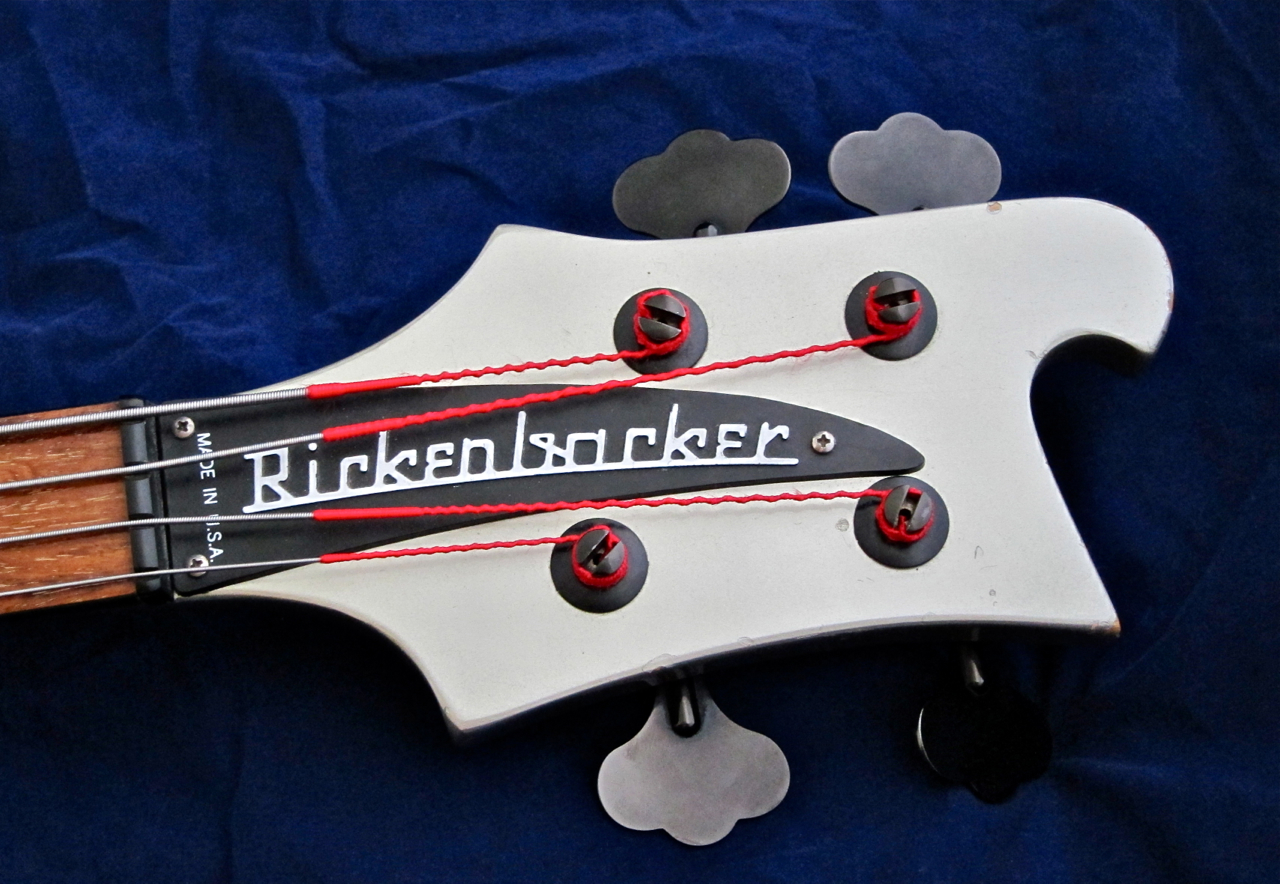
Rickenbacker 4003 – headstock

Rickenbacker 4003 – tuners

Old Rickies from the 1960s use Kluson tuners. Seventies models were most often equipped with Grover tuners. By the Eighties Rickenbacker had switched to Rickenbacker-branded Schaller tuners from Germany.

Rickenbacker 4003 – inlays

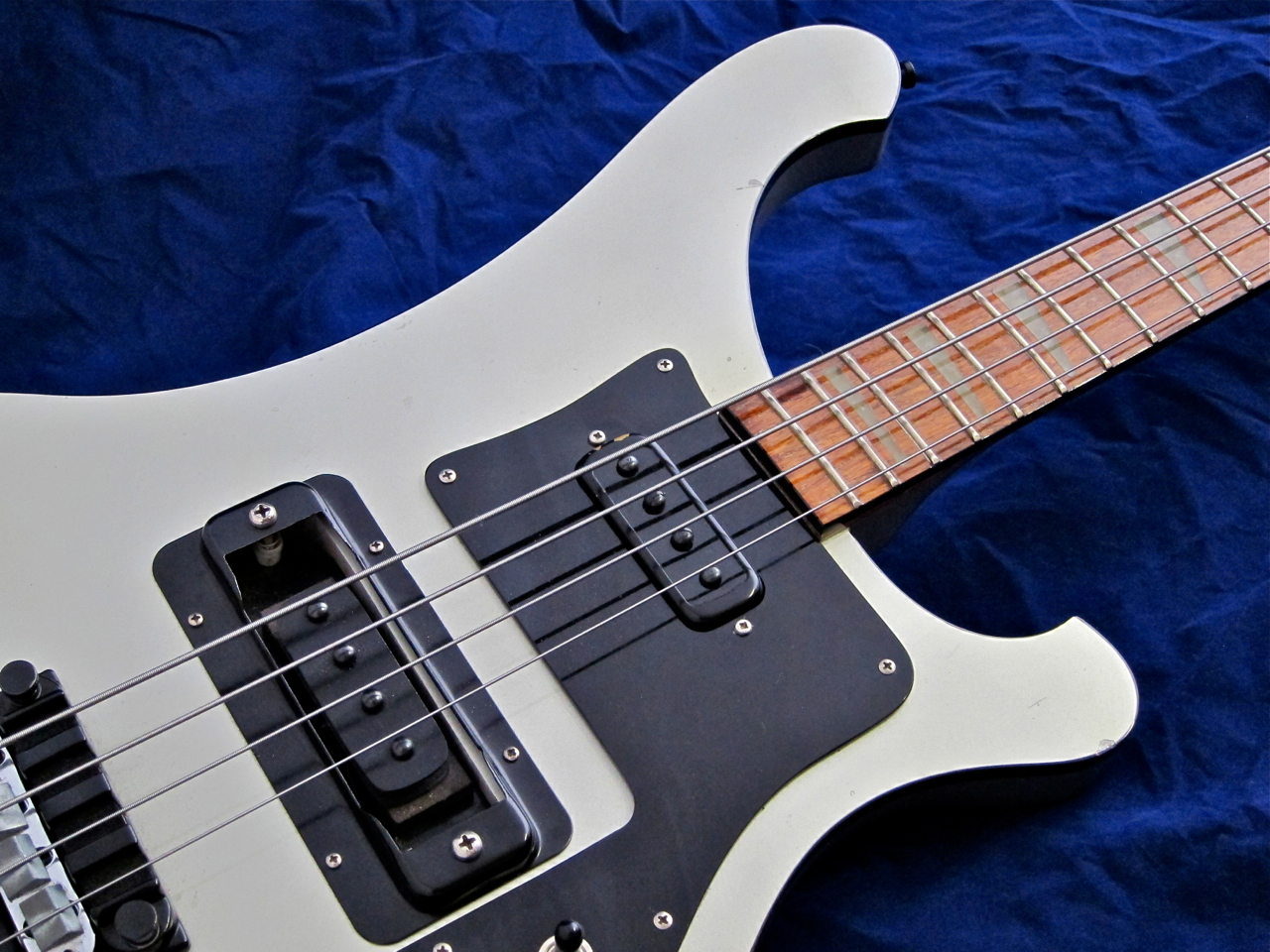
The original 4001 basses featured triangular ”shark-fin” inlays that went all the way from one edge of the fretboard to the other, effectively cutting the ’board into many pieces. The Rickenbacker 4003 has redesigned and slightly smaller inlays.

Rickenbacker 4003 – horns + pickups

Viewed from the top both singlecoil pickups seem identical.

Rickenbacker 4003 – neck pickup

While the units feature virtually identical polepieces and coils, they do differ in the details. The neck pickup is powered by a single, flat bar magnet stuck underneath the bobbin.

Rickenbacker 4003 – bridge pickup

The 4003’s distinctive bridge pickup tone of the Eighties model is produced by using a unique, thick rubber/ceramic-compound magnet that has a large gap (for the wiring) on the fingerboard-facing side. The hand rest has been removed by the previous owner.

Rickenbacker 4003 – bridge

The Rickenbacker bass bridge stands in its own recess inside the combined tailpiece and mute assembly.
In the Eighties Rickenbacker experimented with different tailpiece thicknesses, leading to quite a few bridge assemblies featuring two additional screws close to the ball ends. These factory-installed screws keep the – slightly too flexible – tailpiece from being bent out of shape by the string pull.

Rickenbacker 4003 – body binding + bridge screws

The body binding on Rickenbacker basses is usually glued to the body wings before the wings are attached to the through-neck.

Rickenbacker 4003 – full front

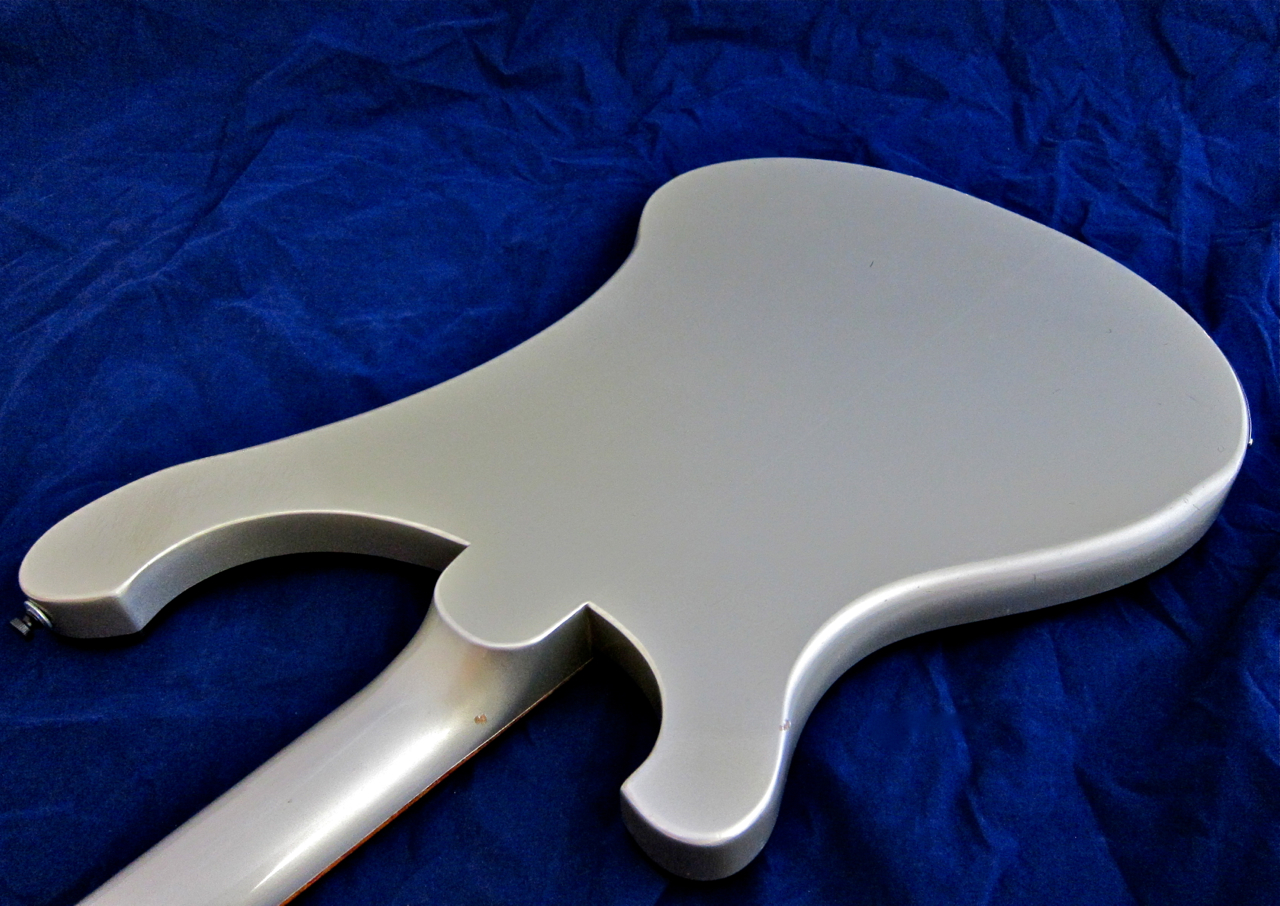
Rickenbacker 4003 – full back

Rickenbacker 4003 – glue line

Look closely, and you’ll be able to spot the glue-lines demarcating the through-neck.

Rickenbacker 4003 – jack plate

Rickenbacker used several different numbering schemes throughout the decades. In 1987 they introduced a new numbering system with a letter indicating the month of production (A = January) and a number standing for the year (0 = 1987). Additionally there are four numbers on the lower edge of the jack plate (digitally wiped from this photograph).
The Rick-O-Sound-output is for use with a Y-cable (stereo plug to two mono plugs), splitting the pickup signals for use with two amplifiers or for adding different effects to each of the pickups.

Rickenbacker 4003 – body beauty

This is what my own Rickenbacker-bass sounds like, when recorded using a SansAmp Bass Driver DI-box:

fingerstyle/neck PU

fingerstyle/both PUs

fingerstyle/bridge PU

plectrum/neck PU

plectrum/both PUs

plectrum/bridge PU

****

Some Rick-tastic clips:

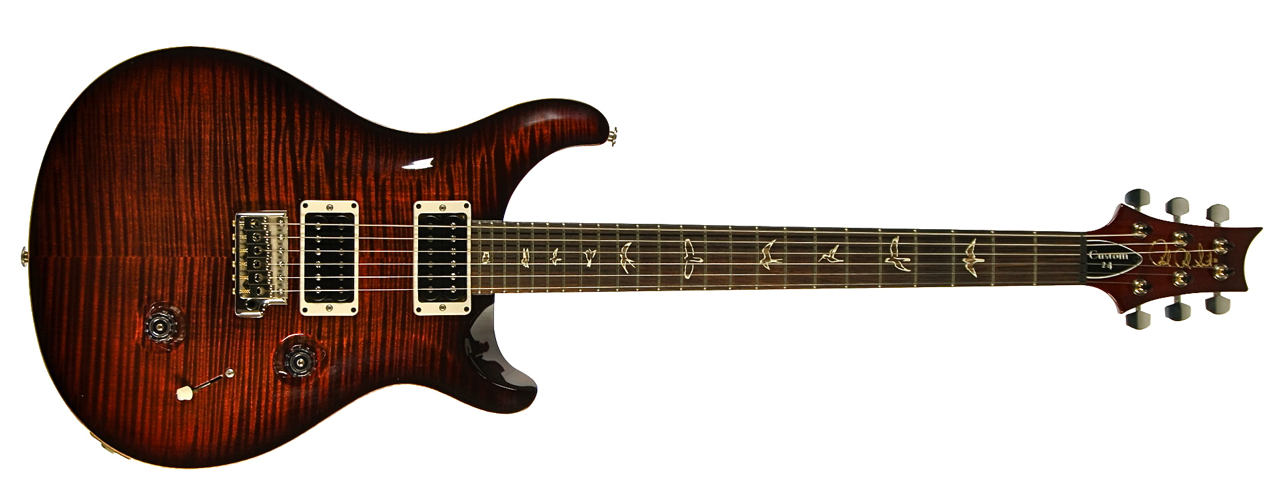
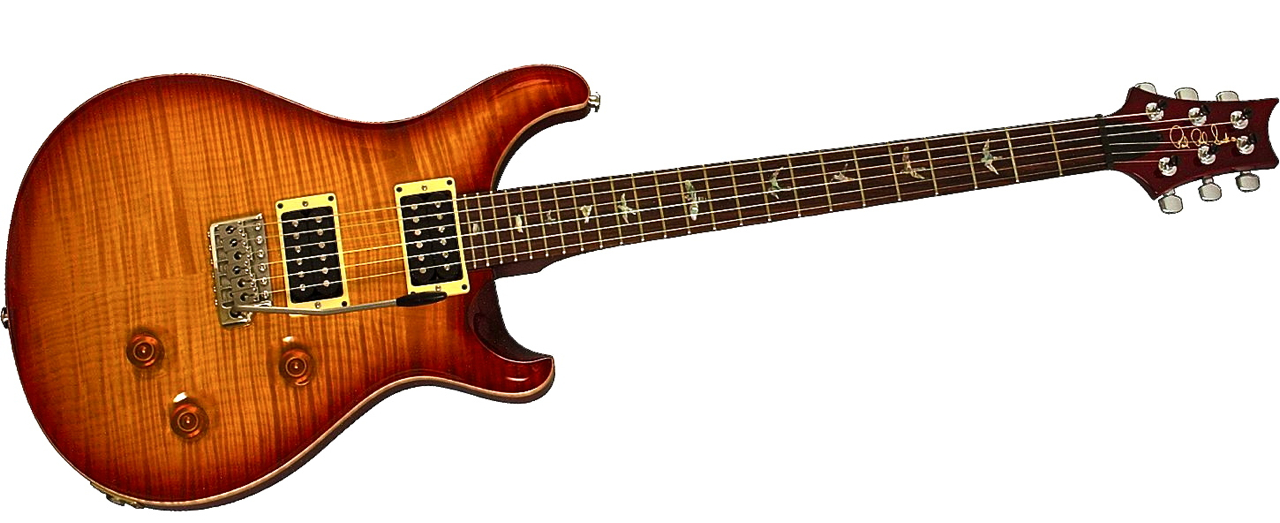
Classic Guitars, part 10: PRS Custom 24

In the mid-Seventies both of the guitar industry’s giants – Fender and Gibson – had lost their innovative edge and much of their corporate prestige. Both companies had been taken over by large corporations, and profit margins started to push quality control into the background.

Many discerning guitarists were starting to subscribe to the notion of ”They’re not making ’em like they used to”, which left the doors wide open to Far Eastern copy guitars, as well as to small boutique makers.

PRS Guitars, just like Hamer Guitars, took Gibson’s classic solidbody designs as a basis for their ”modern vintage” models.

With PRS Guitars it all started with a young Paul Reed Smith converting one spare bedroom at his childhood home into a workshop in 1975. By the next year he had already moved into a small workshop in Annapolis, and started attracting customers such as Ted Nugent and Peter Frampton. His first guitars were based closely on the double cutaway Gibson Les Paul Special, but featured humbucking pickups.

A few years down the road Paul Smith added fancy flame maple tops into the mix, and he managed to sell four of these guitars to Carlos Santana. Santana’s signature PRS models are still based on these original guitars.

But Smith wasn’t satisfied with simply producing refined versions of past Gibson-classics, so he set out to develop the ultimate solidbody guitar.

By 1985 Paul Smith had finalised his vision and started his own production facility. At the NAMM shows of 1985 Smith unveiled the PRS Custom 24 – the model that has defined the whole brand to this day. The new guitar ingeniously combined the best features of a Gibson Les Paul Standard and a Fender Stratocaster, as well as including many of Smith’s own improvements – not least the smooth and reliable PRS-vibrato and his own (Schaller-made) locking tuners.

The PRS Custom 24 combines Gibson-style materials and construction with a Fender-like outline, balance and (in most cases) a vibrato bridge. Added into the mix are a middle-of-the-road 25-inch (63.5 cm) scale length – about halfway between the softer Gibson (24.75″/62.9 cm) and the harder Fender (25.5″/64.8 cm) scale lengths – as well as two PRS-humbuckers with coil-splits.

Originally the Custom 24 came equipped with two knobs and one mini-switch. The knob closest to the bridge pickup was (and still is) the master volume control, with the second knob actually being a five-way rotary pickup selector, and not a control pot. The mini-switch was called the Sweet Switch, and served in lieu of a regular tone control, by giving you a set tone with rolled-off highs.

The Sweet Switch was replaced by a regular tone control around 1989, and these days many Customs also feature a regular five-way pickup selector.

Over the years PRS have changed many details in the construction, harware and electronics of their guitars, but the Custom 24 still carries the essence of what PRS Guitars are all about – it is a beautiful, yet practical quality instrument. Or as Carlos Santana put it in an interview with Paul Reed Smith a few years ago: ”It’s a guitar that gives you no excuses not to play to the best of your abilities.”

Review: Roland G-5 VG-Stratocaster

****

Roland’s brand-new G-5 VG-Stratocaster (current RRP in Finland: 1.583 €) is the result of Roland’s and Fender’s cooperation. The guitar offers the player the genuine ”Stratocaster Experience”, as well as a wide variety of built-in, digitally modelled  guitar tones and virtual tunings.

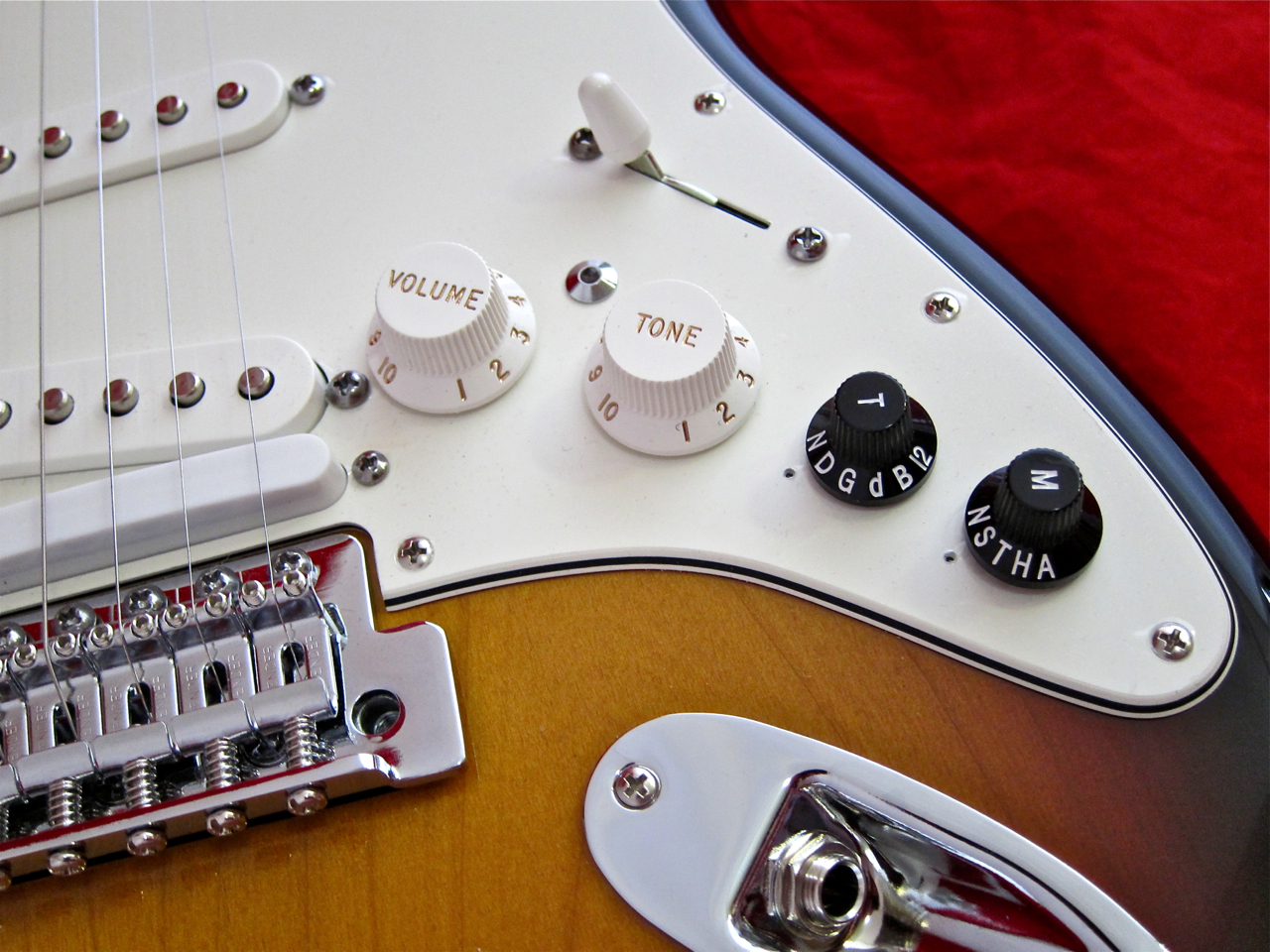
From the front the Hecho-en-Mexico G-5 VG-Stratocaster differs only slightly from your basic Strat. Only the bright blue status LED, as well as the two small black rotary switches, hint at the digitally souped-up nature of this electric guitar.

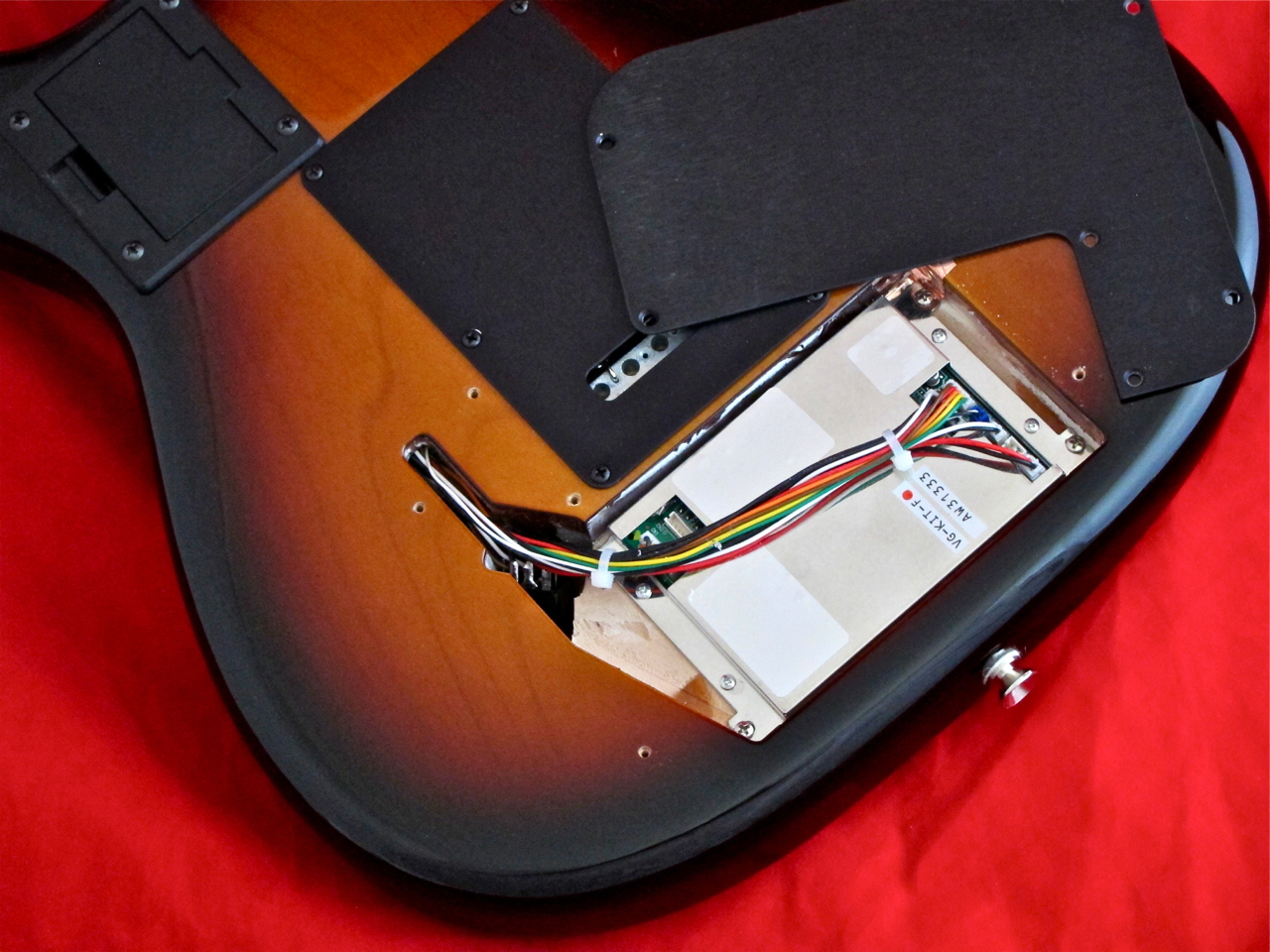
The VG-Strat’s back sports two additional cavities on the back of its alder body. The larger one holds all the digital shenanigans (courtesy of Roland), while the smaller one is the battery compartment.

The G-5 uses an up-to-date Stratocaster-neck, which allows for truss rod adjustment from the headstock end.

The sealed Fender-tuners are a quality touch.

The neck joint, on the other hand, is executed in the most traditional of Fender methods.

The fingerboard curves in a 9,5-inch radius, which gives it a very comfortable, middle-of-the-road feel, right between a vintage-Fender’s curved chunkiness and a typical Gibson’s sleek flatness.

Well-set and finished jumbo frets guarantee an almost effortless playing experience. Thanks to a small fretboard ledge, the VG-Stratocaster even comes with a 22nd fret.

The traditional magnetic pickups on the Roland G-5 come straight from Fender’s Standard series – nothing esoteric, but good meat-and-potato workhorses.

Roland’s own GK-pickup sits between the traditional bridge pickup and the vintage-type vibrato bridge. The GK-pickup’s signal feeds the much-needed raw material to the modelling circuit.

To keep electromagnetic interference into the digital COSM-circuit to a minimum, both of the guitar’s two black lids are crafted from aluminium. Additionally, the modelling department is encased in its own, shiny metal box.

The Roland G-5’s only real drawback is its large power consumption: four alkaline AA-batteries will give you about six hours of continual playing time. Using Ni-MH-rechargeables will give you approximately nine hours of fun on a full charge. Connecting a guitar lead to the VG-Strat automatically turns the digital side on, using up the battery power even if you’re only using the guitar’s traditional magnetic pickups. A simple on/off-switch might have been a welcome addition to the G-5.

In comparison to other virtual guitars Roland’s G-5 does have one advantage, though: You can use the VG-Stratocaster even without any batteries, just like a traditional Fender Stratocaster.

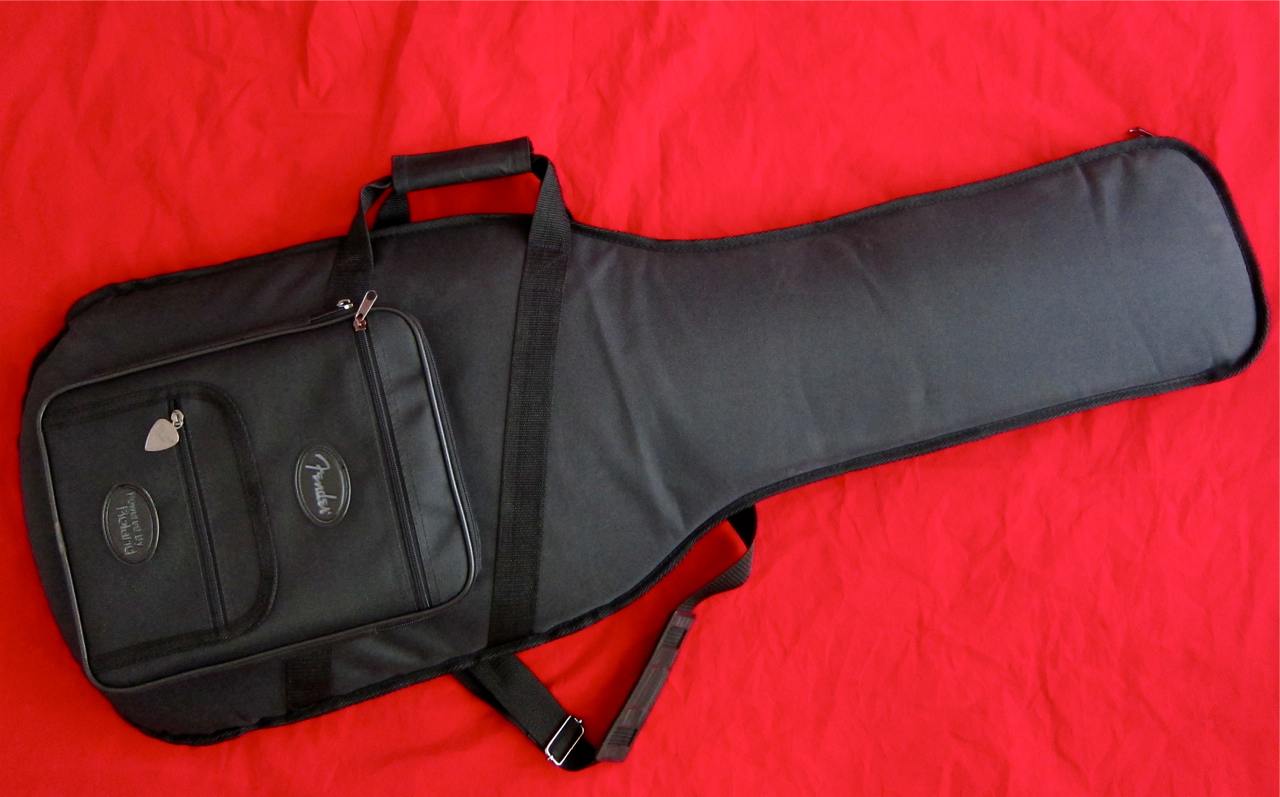
The Roland G-5 comes with its own padded gig bag.

****

The VG-Stratocaster’s oval C-profile feels very nice in the hand. The overall ergonomics are what you’d expect from a Strat – very comfortable.

Bypassing the modelling department the Roland G-5 sounds just like a good Strat should, which really shouldn’t come as a surprise to anybody.

The pickups are traditional singlecoil units with a crisp and dynamic basic tonality. Thanks to the reverse wound/reverse polarity middle pickup the in-between settings are hum free.

The instrument’s digital side opens up a whole wealth of possibilities.

The M-rotary offers you four basic pickup modes:

”S” is a virtual Strat. It might seem a bit daft, at first thought, to include a modelled Strat in a real Strat, but don’t forget that the modelled virtual pickups are all completely free of hum and other interference.

”T” stands for Telecaster. In addition to the three standard Tele-selections (neck, both, bridge), switch positions one and five add overwound versions of the bridge and neck  pickup, respectively, to the mix. The overwound options dish out more power, as well as more bite.

The H-model gives you five virtual humbucker tones. Just like on the Telecaster-model ”H” also offers a brighter neck and bridge pickup in the selector switch’s outermost positions.

Turning the M-rotary to ”A” puts five different acoustic settings at you fingertips. You will find an archtop acoustic, a sitar, a nylon-string and two different steel-string guitars on offer. In the acoustic guitar models the G-5’s Tone-pot adjusts the digital reverb level, with the exception of the sitar model, where the control adjusts the volume of the virtual sympathetic drone strings.

In my opinion most of the models on offer hit the proverbial nail right on the head; especially the authenticity of the electric models is breathtaking. On the acoustic side of things, my favourite setting are the acoustic guitar (at the first switch position), as well as the fantastic virtual sitar. The nylon-string is perhaps the weakest model in the VG-Stratocaster — it’s useable, but not very authentic sounding.

****

The G-5’s T-rotary accesses the guitar’s virtual tunings: ”D” gives you Drop-D, ”G” stands for open G (a la Keith Richard), ”d” calls up the modal DADgad-tuning, ”B” turns the guitar into a virtual baritone guitar (Metal fans will like this), and ”12” adds six more strings to proceedings.

The virtual tunings sound great and the whole thing works without any perceivable latency or wobbling.

****

The Roland G-5 VG-Stratocaster is a fantastic package, because it gives you a great real guitar to begin with, and then adds the whole new dimension of digital modelling on top of this. A Fender Stratocaster feels safe and familiar to us – it’s a well-playing guitar with great ergonomics and a classic, versatile sound.

The digitally modelled virtual pickups, guitars and tunings take your guitar experience much, much further. The tones sound really organic, and most of the settings offer a high degree of authenticity. The amount of versatility on tap, coupled with the option to change guitar types and/or tunings in mid-song, make the Roland G-5 a very intriguing instrument for studio guitarists or players in a covers band.

The audio clips have all been recorded using the VG-Stratocaster’s digital models and tunings:

Stratocaster-model

Telecaster-model

12-string Telecaster-model

Humbucker-model in virtual Drop-D

Humbucker-model in virtual baritone-tuning

Virtual steel-string acoustic

Sitar-model

The guitar parts from the video

****

Roland G-5 VG-Stratocaster

current RRP in Finland: 1.583 €

Finnish distributor: Roland Scandinavia

****

Pros:

+ genuine Fender Stratocaster

+ playability

+ analogue side works without batteries

+ analogue tone

+ quality and versatility of COSM-models

+ speed and reliability of virtual tunings

+ workmanship

Cons:

– power consumption

****

Pidä blogia WordPress.comissa.

Ylös ↑