Maahantuoja: Musamaailma
Review: Yamaha LL6 ARE


Yamaha has recently upgraded its very successful L-Series of steel-string guitars.
The most important update, at least in terms of sound quality, is the use of A.R.E.-treated spruce tops across the whole range of models. Yamaha’s proprietary Acoustic Resonance Enhancement is a wood treatment that uses heat, changes in humidity and pressure, to artificially age tonewoods. The aim is to produce brand-new acoustic instruments, which sound played-in from the get-go.
L-Series guitars come in three body sizes – LJ (Medium Jumbo), LS (Small Body = Folk-sized) and LL (Original Jumbo = Dreadnought-sized).
Kitarablogi had the pleasure to take a Yamaha LL6 ARE (current price in Finland: 534,90 €) for a spin.
****

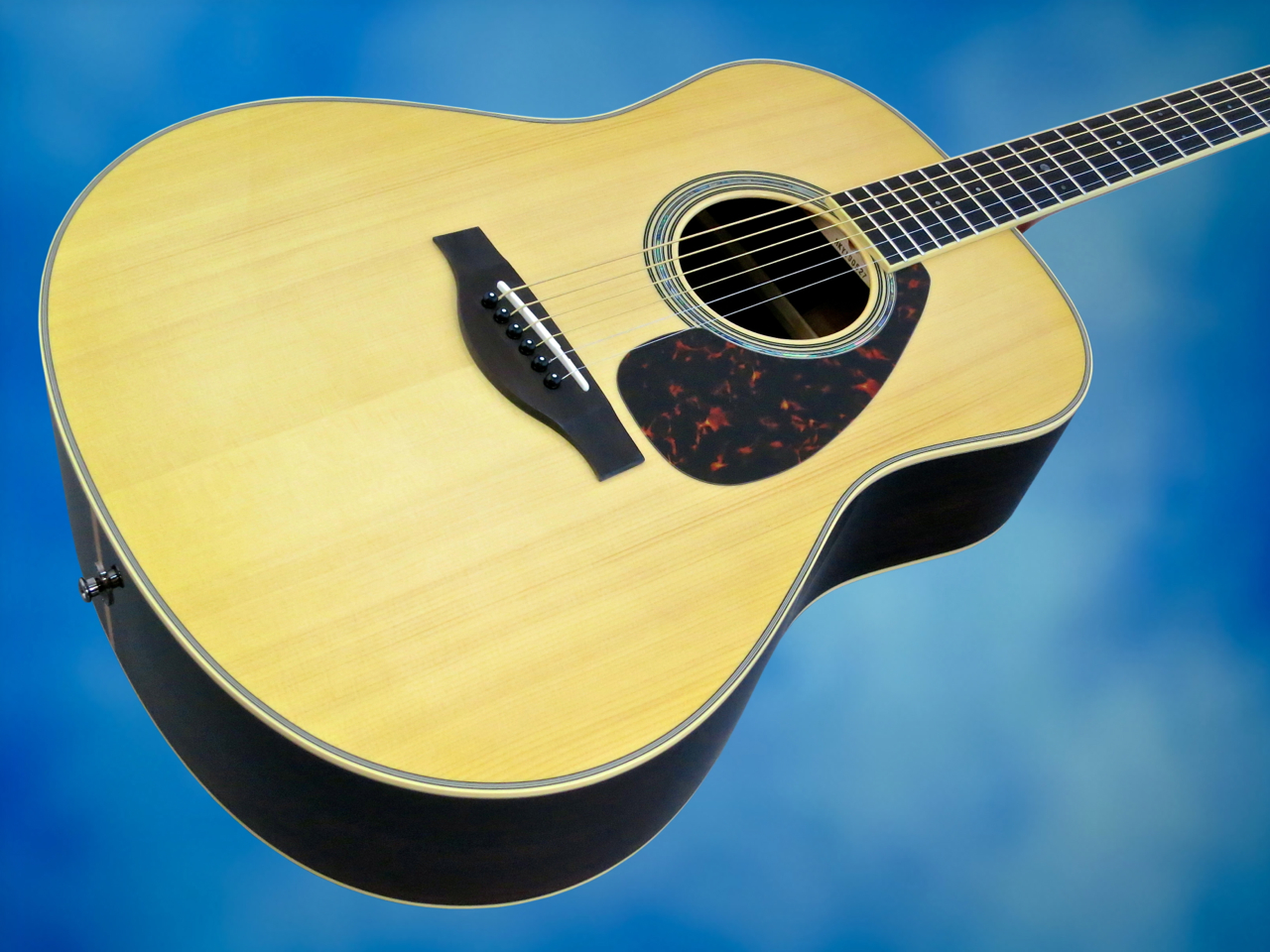
Yamaha’s Original Jumbo body style is the company’s own design, set apart from a traditional Dreadnought by its slimmer shoulders and its more rounded lower bout. The result looks nicely balanced.
Yamaha uses solid Engelmann spruce for all of their L-Series tops. Engelmann spruce has a reputation for sounding warmer and less constricted, when compared to Sitka spruce.
The LL6 is available in four different finishes – natural, brown sunburst, black and Dark Tinted (a deep reddish-brown hue).
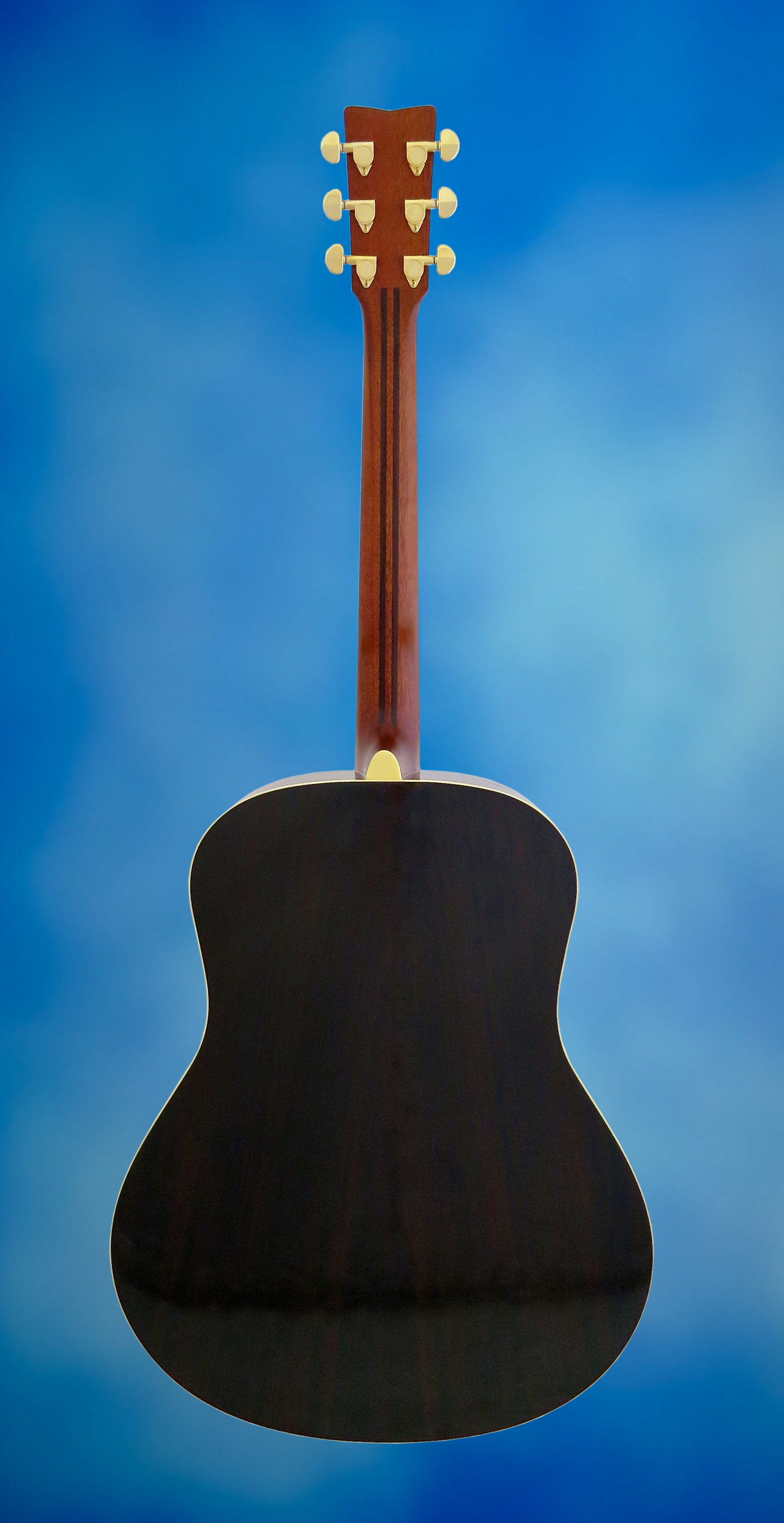
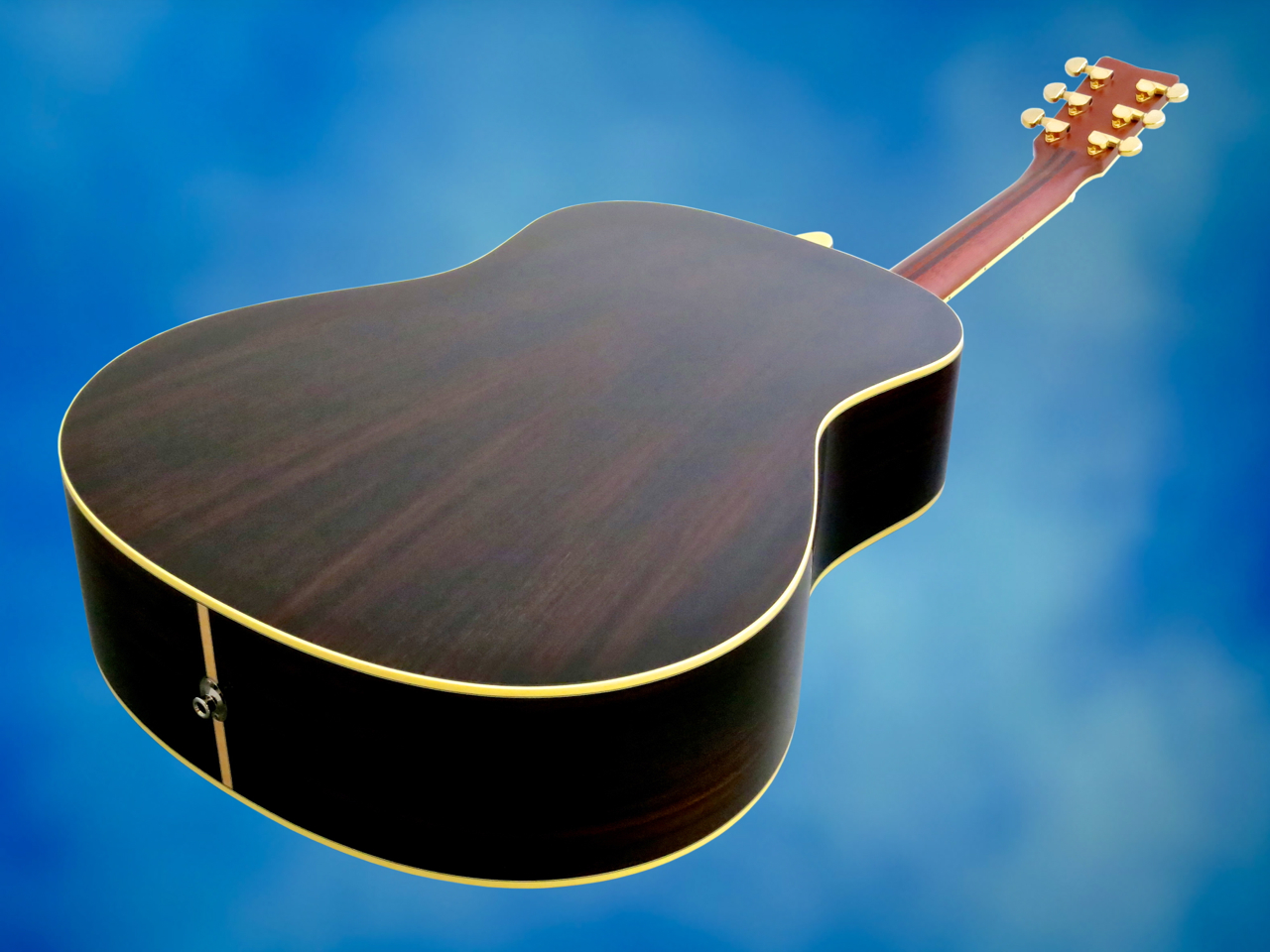
The Yamaha LL6’s sides and back are made from beautifully grained laminated rosewood. There’s a mahogany backed version available, too, the Yamaha LL6M ARE.
The guitar’s body has received a gloss finish, while the back of the neck sports a thin satin finish.

The bound headstock is home to a set of TM-29G tuning machines.

All new L-Series instruments come with five-piece necks. In the LL6’s case this means three pieces of mahogany with two strips of rosewood sandwiched between them. The idea behind this type of construction is to add stiffness to the neck, and thus sustain.
The LL6’s headstock and neck heel are crafted from separate pieces of mahogany, which are then glued to the main part.

The quality of the fretwork on this Yamaha is very good.
Another new feature across all L-Series models are rolled-in fingerboard edges for an even more comfortable playing experience.

Yamaha uses a modified type of non-scalloped X-bracing on all L-Series tops, which is meant to add a healthy dose of punch and warmth into the mix.

The centre ring of this beautiful soundhole rosette has been crafted from genuine abalone shell.
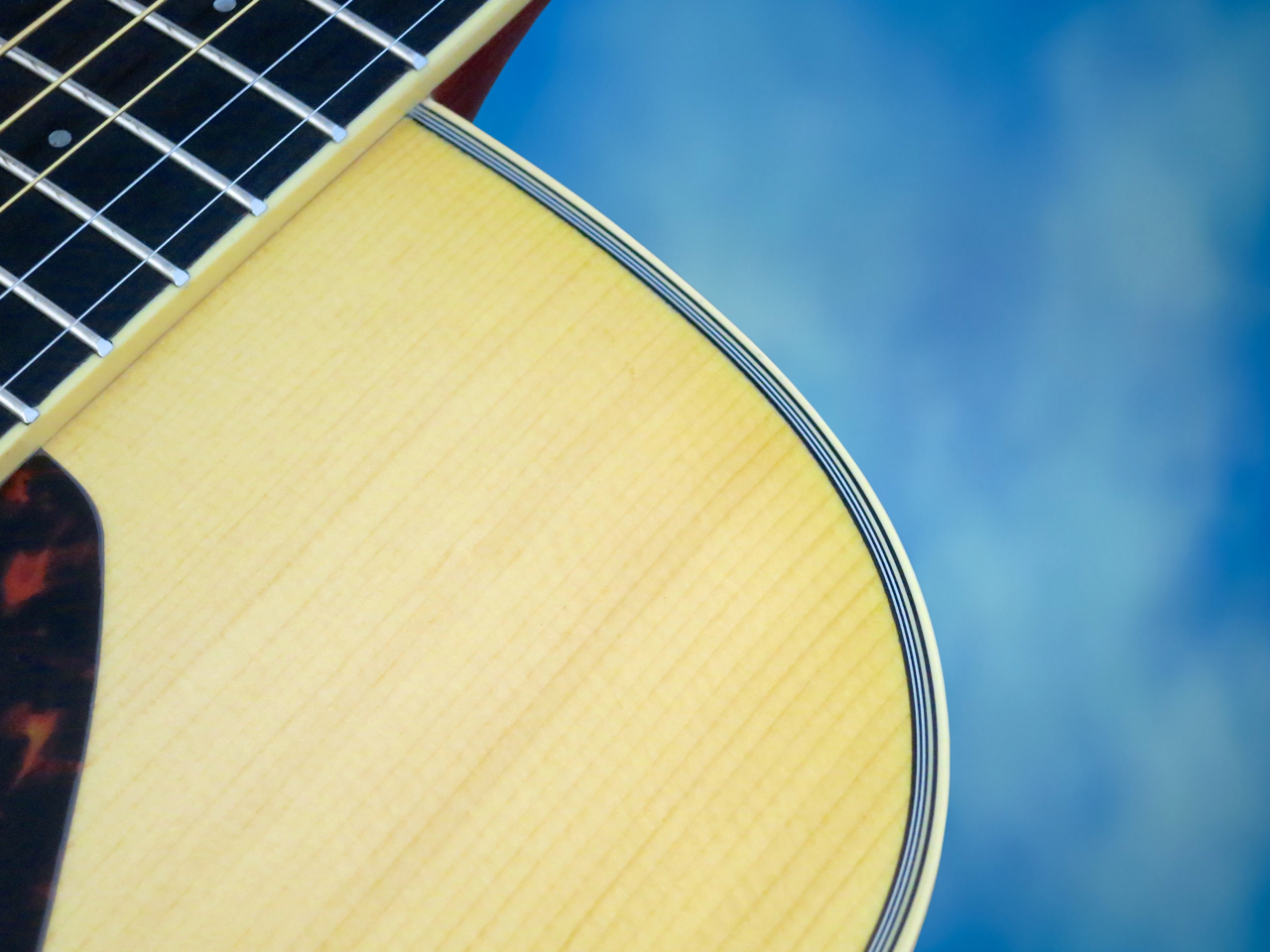
There’s multiple binding on the Yamaha’s top, as well as single ply cream binding around the back.

The LL6 comes with a Yamaha SRT Zero Impact piezo pickup hidden beneath its compensated bridge saddle.

As the main focus of the LL6 lies on its acoustic performance, Yamaha wanted an unobtrusive pickup system without the need for an on-board preamp or a battery compartment. This is why the LL6 comes equipped with a passive pickup that is wired directly to the output jack.

Yamaha’s LL6 ARE is sold in its own soft case, which is a nice hybrid of a gig bag and a hard case.
****

It speaks volumes about Yamaha’s high standards of craftsmanship, as well as the company’s stringent quality control, when the importer’s product specialist takes you to the warehouse, and simply hands you an untouched shipping carton, without even opening it. His only question was: ”Which colour would you prefer?”
And, judging from the review guitar, this trust in Yamaha’s quality control seems totally justified. When I opened the soft case I found a great instrument in fine fettle.
The neck’s new-and-improved oval C-profile feels fantastic, and the nut width of 44 mm offers enough room for complex fingerings. Yamaha have gone for a good working compromise at the bridge, too, with an E-to-e-string spacing of 55 mm, that most strummers and fingerpickers will get to grips with nicely.
The playability was first rate (remember this is a sub-600 € guitar):
The action with the factory-installed 012-gauge set was really comfortable (string height at the 12th fret: low E – 2.1 mm/high e – 1.6 mm), and the guitar played beautifully, without any rattles or buzzes whatsoever.
It’s virtually impossible to verify any claims that Yamaha’s A.R.E.-treatment makes the LL6 ARE sound like well played-in ”old ’un”, because no two vintage guitars are the same, and also because I didn’t have a ”non-A.R.E.” Yamaha to hand.
What I can say, though, is that the Yamaha LL6 ARE sounds very open, dynamic and mature, right out of the shipping carton. Many brand-new steel-string acoustics require a playing-in period to lose a certain restricted sense of dynamics and a spiky top end. The LL6 ARE sounds warm, well-balanced and open right from the start.
Fingerstyle playing comes across well-articulated. The LL6 has a clear top end and a rich bass register; it’s a warm tone, but the bottom end never gets overbearing.
The first example has been close-miked with an AKG C3000 microphone:
For a no-frills, passive piezo system the LL6’s SRT-pickup sounds rather nice:
Combining both signals works well, too:
Strumming the LL6 gives you great punch, a sparkling top end, and plenty of mid-range character (AKG C3000):
The piezo-powered version is a bit drier, but still work well in my view:
Using both signals together sounds like this:
The rhythm guitar tracks in this short Beatles-cover have been recorded with a Shure SM57, while the lead guitar parts have been recorded direct off the built-in pickup:
****
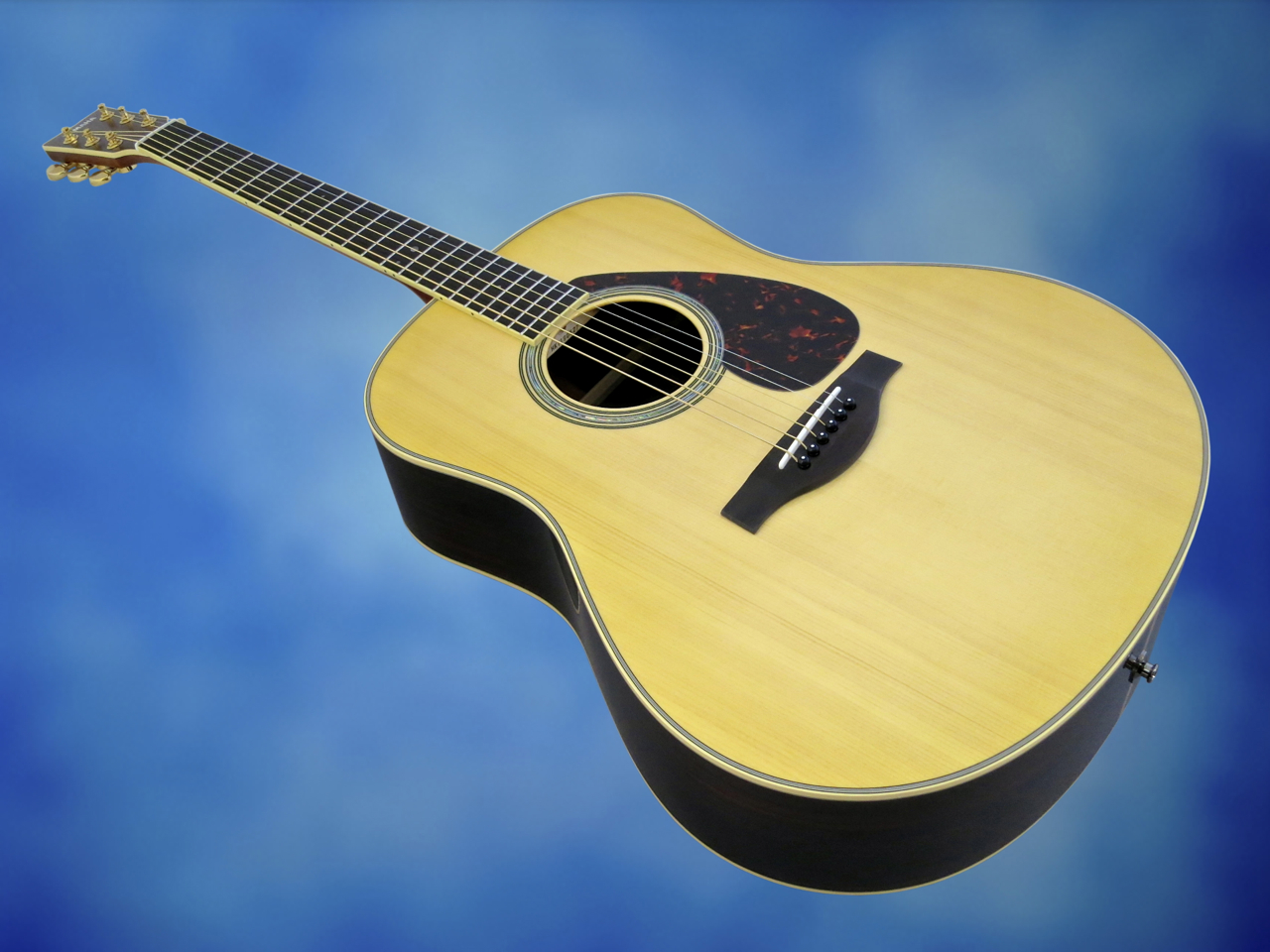
The Yamaha LL6 ARE might be the most-affordable member of the L-Series, but it most certainly is a thoroughbred example of its species. The improved neck profile is a real treat, and the A.R.E.-treatment seems to make a clear difference. This is a beautiful instrument with a voice to match. I also like the straightforward pickup system, which offers a decent sound with no fuss. I’d really recommend you try out one of these guitars, as the LL6 ARE punches well above its weight.
****
Yamaha LL6 ARE
534,90 €
Finnish distributor: F-Musiikki
****
Pros:
+ workmanship
+ A.R.E.-treated solid top
+ neck profile
+ acoustic sound
+ unobtrusive pickup system
+ soft case included


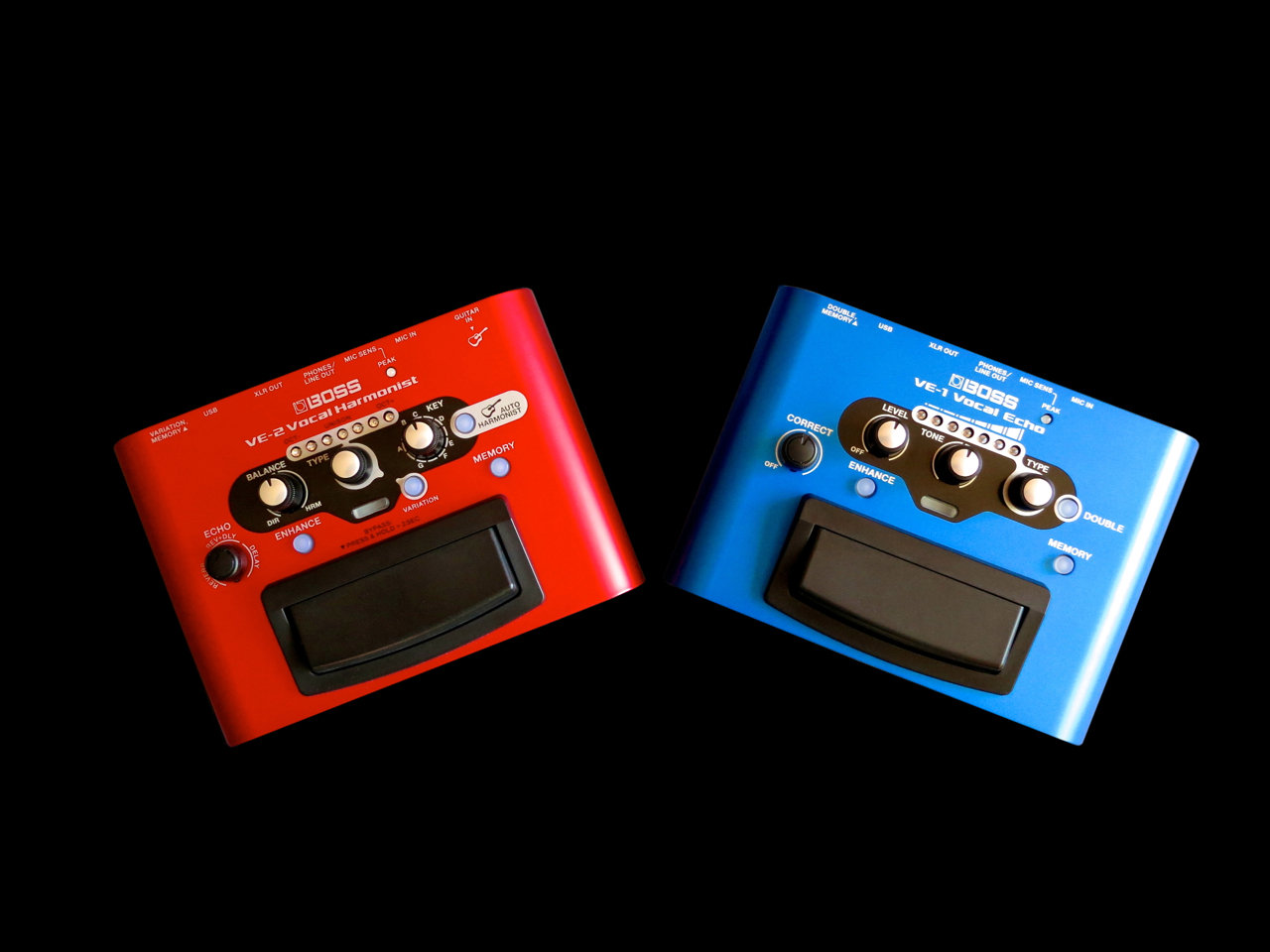
Työn alla ++ Work in progress ++ Boss VE-1 & VE-2

Maahantuoja: Roland
Testipenkissä: Yamaha LL6 ARE
Yamaha on hiljattain päivittänyt erittäin suositun L-sarjan teräskielisiä kitaroita.
Soundin kannalta tärkein uudistus on, että koko sarjassa käytetään nyt Yamaha A.R.E. -prosessin läpi käyneitä kansia. Acoustic Resonance Enhancement on firman kehittämä puunkäsittelytapa, jossa esivanhennetaan soitinpuita lämpökäsittelyllä, sekä ilmankosteutta ja ilmanpainetta tarkoin säätämällä. Koko prosessin idea on saada uusia kitaroita soimaan heti kättelyssä sisäänsoitetun soittimen lailla.
L-sarjan kitaroita tarjotaan kolmessa eri koppakoossa – LJ (Medium Jumbo), LS (Small Body = Folk-kokoinen) ja LL (Original Jumbo = Dreadnought-kokoinen).
Kitarablogi sai tällä kertaa testattavaksi Yamaha LL6 ARE -mallin (534,90 €).
****
Yamahan Original Jumbo -koppa on firman omaa designia, jolla on selvästi kapeammat hartiat ja pyöreämpi alaosa kuin perinteisissä Martin D -malleissa. Lopputulos on sulava ja sopusuhtainen.
Yamaha käyttää LL6 ARE -mallissa (niin kuin nykyisin koko L-sarjassa) kokopuista Engelmann-kuusta kansimateriaalina. Engelmann-kuusen soundista sanotaan, että se on usein lämpimämpi ja avoimempi kuin sitkankuusikannella varustetuissa kitaroissa.
LL6-mallia saa natural-vaihtoehdon lisäksi myös sunburst-värityksellä, sekä mustana ja ruskeana.
Yamaha LL6:n sivut ja pohja on tehty kauniista ruusupuuvanerista. Mallista on saatavilla kuitenkin myös LL6M ARE -versio, jos tykkää enemmän mahongista.
Kitaran runko on lakattu kiiltäväksi, kun taas sen kaulaa on mattaviimeistelty.
Reunalistoitettuun lapaan on asennettu kuusi nykyaikaista TM-29G-viritinä.
Uudistetun LL6:n kaula tehdään kolmesta pitkästä mahonkipalasta ja kahdesta ruusupuupalasta. Rakenteen tarkoitus on lisätä kaulan lujuutta.
LL6:n viritinlapa sekä kaulakorko on veistetty kahdesta erillisestä mahonkipalasta, jotka on liimattu kaulan pitkänomaiseen osaan.
Yamahan nauhatyö on hyvin kiitettävällä tasolla.
Reunalistoitetun palisanteriotelaudan reunoja on hieman pyöristetty, mikä lisää tuntuvasti LL6:n soittomukavuutta.
L-sarjan kansissa käytetään Yamahan omaa versiota perinteisestä X-rimoituksesta (non-scalloped), jolla halutaan lisätä sopivasti potkua ja lämpöä raikkaaseen kuusikansi-perussoundiin.
Kitaran kauniissa rosetissa keskimmäinen rengas on koottu abalone-helmiäisestä.
Kannessa on monikerroksinen reunalistoitus.
LL6:n kompensoidun tallaluun alle on piilotettu Yamahan oma SRT Zero Impact -piezomikrofoni.
LL6:ssa pääpaino on kitaran akustisessa soundissa, eikä soitinta haluttu pilata monimutkaisella etuvahvistimella tai paristolokerolla. Tämän vuoksi LL6:n systeemi on täysin passiivinen ja SRT-mikrofoni on kytketty suoraan lähtöjakkiin.
Yamaha LL6 ARE:n hintaan kuuluu myös erittäin laadukas soft case -laukku, joka on oiva kovan laukun ja tavallisen gigbagin hybridi.
****
Se sanoo mielestäni aika paljon Yamahan työnjäljestä ja laadunvalvonnasta, kun maahantuojan tuotespesialisti ottaa testaajan mukaan varastoon ja antaa hänelle täysin avaamattoman kuljetuslaatikon suoraan hyllyltä. Ainoa kysymys oli: ”Minkä värin haluat?”
Ja tämä luottamus Yamahan laatuun oli täysin oikeutettua, sillä testiin saapunut kitara on todella hyvässä trimmissä oleva laatusoitin.
Kaulan uudistettu, ovaali C-profiili tuntuu erittäin mukavalta kädessä, ja 44:n millimetrin kaulaleveys satulan kohdalla antaa otekädelle riittävästi liikkumatilaa myös monimutkaisia sointuja varten. Myös Yamahan valitsema e-kielten välinen etäisyys tallan kohdalla (55 mm) on loistavasti toimiva kompromissi sekä plektra- että sormisoittoa varten.
Soittotatsi oli testiyksilössä säädetty tehtaassa hyvin mukavaksi 012-paksuisella kielisatsilla (kielten korkeus 12. nauhan kohdalla – matala-E: 2,1 mm/korkea-e: 1,6 mm), ja LL6 ARE soi kauniisti ja täysin rämisemättä.
On mielestäni miltei mahdotonta sanoa, soiko tämä Yamaha ARE-prosessin ansiosta ”kuin vanha vintage-soitin”, koska vintage-kitaroissakin on isoja eroja, eikä minulla ole ollut mahdollisuutta verratta LL6 ARE -mallia suoraan vastaavaan ”ei-ARE-Yamahaan”.
Minun on kuitenkin todettava, että Yamaha LL6 ARE soi uunituoreenakin hyvin avoimella ja dynaamisella äänellä. Tässä ei esiinny lainkaan – niin monia uusia (= ei sisäänsoitettuja) teräskielisiä vaivaava – uudenkarheus tai dynamiikan ja diskantin kireys, vaan ääni on lämmin, avoin ja erittäin hyvässä tasapainossa.
Sormisoitossa LL6 ARE artikuloi erittäin hyvin. Soitossa on aimo annos helisevää diskanttia ja lämmintä bassoa, mutta bassot eivät kumise tai dominoi tämän mallin äänimaailmaa.
Tätä pätkää on lähimikitetty AKG C3000 -mikrofonilla:
Passiiviseksi piezosysteemiksi LL6:n SRT-mikrofoni soi mielestäni hyvin kauniisti:
Myös stereoyhdistelmä molemmista signaaleista kuulostaa hyvältä:
Plektrasoitossa kuuluu LL6:n mukavasti helmeilevä atakki ja sen lämmin, mutta avoin keskialue (C3000):
Piezoversio on suorasukkaisempi, muttei missään nimessä huono:
Yhdistelmä kuuluu tältä:
Tässä Beatles-coverissa komppiraidat on äänitetty dynaamisella Shure SM57 -mikrofonilla, kun taas soolo-osuudet on poimittu mukaan linjasoittoina:
****
Vaikka Yamaha LL6 ARE on edullisin tapa tutustua L-sarjan konseptiin, on malli silti täysverinen lajinsa edustaja. Päivitetyn kaulaprofiilin ansiosta LL6 ARE on entistäkin mukavampaa soittaa, ja kannen A.R.E.-käsittely näyttää toimivan. Tämä on kaunis ja kaunisääninen soitin. Pidän myös tämän Yamaha-mallin kytke-ja-unohda-periaatteella toimivasta mikkisysteemistä. LL6 ARE on mielestäni ehdottomasti kokeilemisen arvoinen teräskielinen. Tämän Yamahan rahkeet riittävät – edullisen hintansa huolimatta – varmasti myös ammattikäyttöön.
****
Yamaha LL6 ARE
534,90 €
Maahantuoja: F-Musiikki
****
Plussat:
+ työnjälki
+ A.R.E.-käsitelty kansi
+ kaulaprofiili
+ akustinen soundi
+ huomaamaton mikkisysteemi
+ soft case kuuluu hintaan


Review: J. Leachim Guitars Jazzcaster
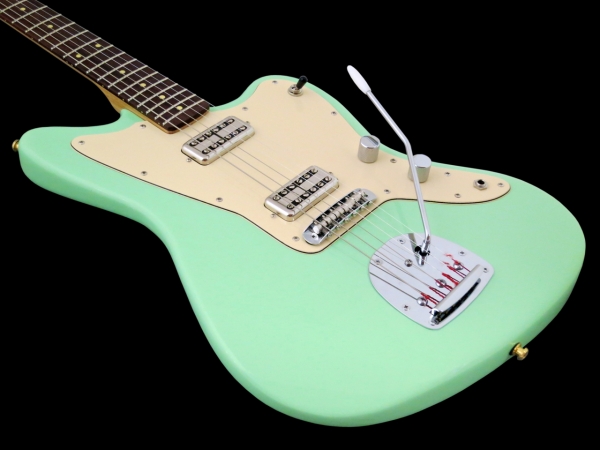
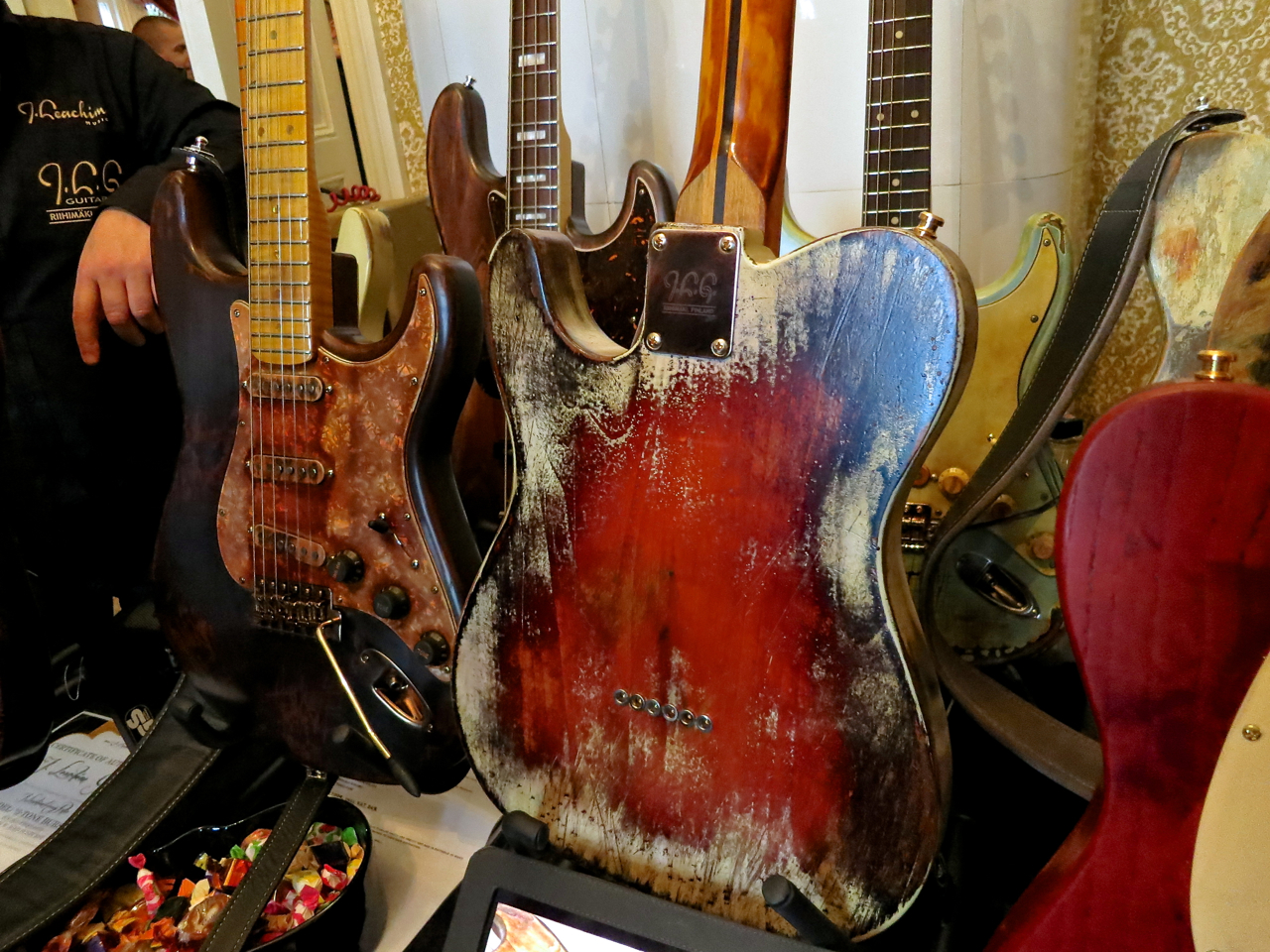
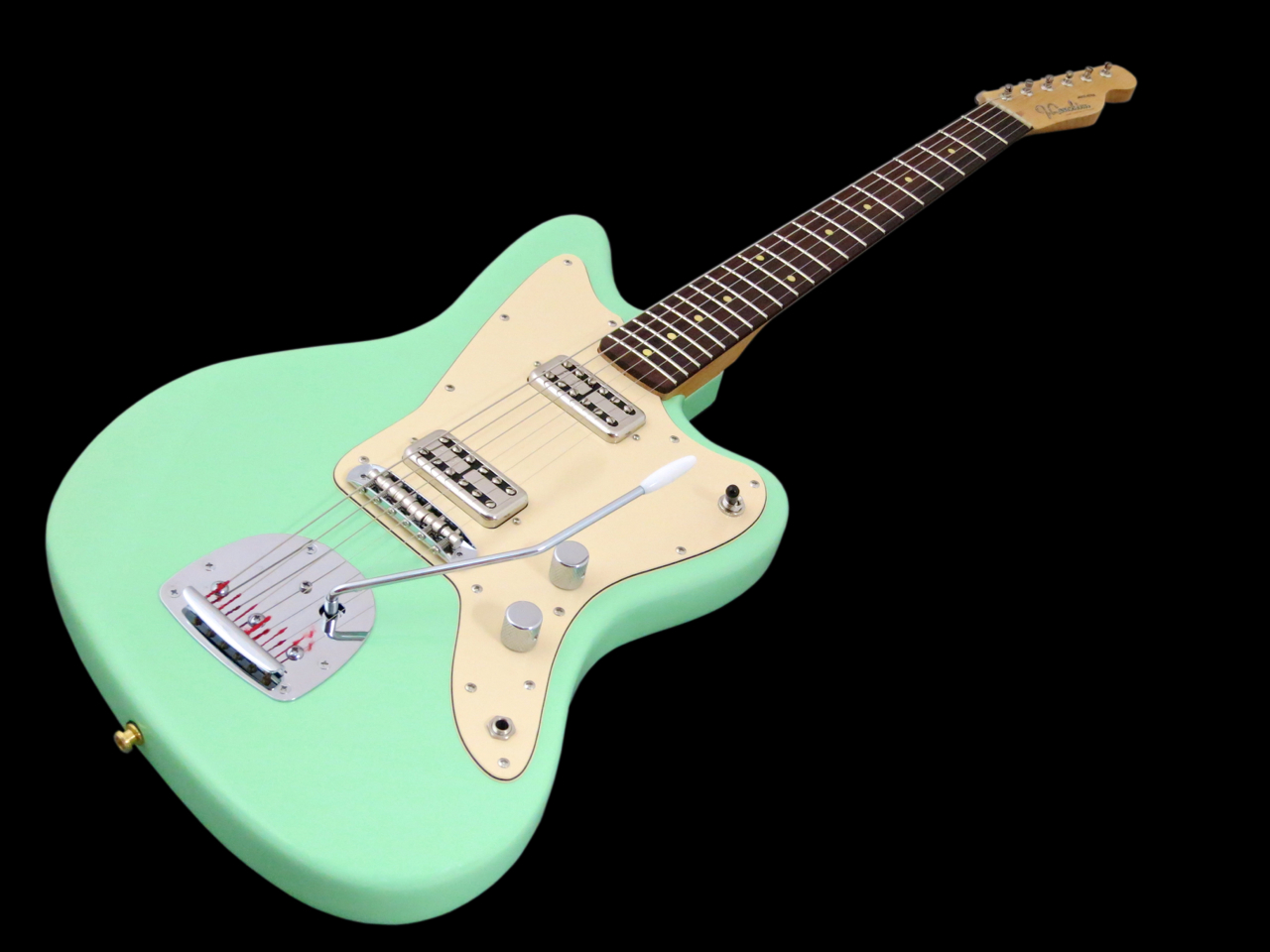
You could call J. Leachim Guitars Finland’s answer to Nash Guitars. Just like the American maker, JLG, too, don’t make their guitars from scratch, from the raw wood. Instead, J. Leachim assembles guitars from bought in unfinished necks and bodies, as well as parts and hardware sourced from a number of reputable sources. J. Leachim Guitars’ forte lies in their finish work, and the relicing of guitars.
J. Leachim’s main man, Jan Merivirta, supplied Kitarablogi.com with an example of his Jazzcaster model, which sports a pristine, “NOS” nitro finish.
****
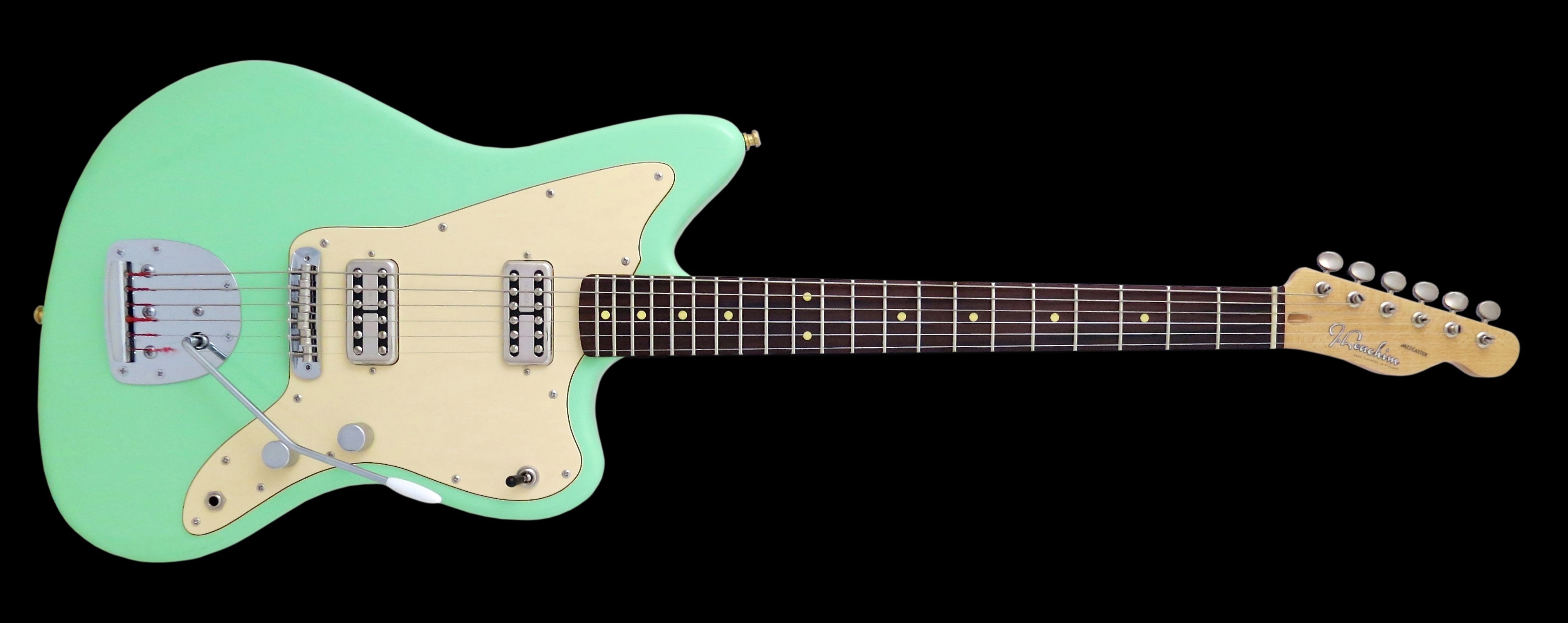
The J. Leachim Guitars Jazzcaster (prices start from approx. 1,300 €; hard case incl.) is a very enticing mix of different classic guitars:
The Jazzcaster’s maple neck has been sourced from Northwest Guitars. It’s a Tele-style neck sporting jumbo frets, as well as a modern fretboard radius of 9.5 inches.
The Guitarbuild body has been crafted from very lightweight swamp ash. Filtertron-sized pickup routs have been added at the J. Leachim workshop.
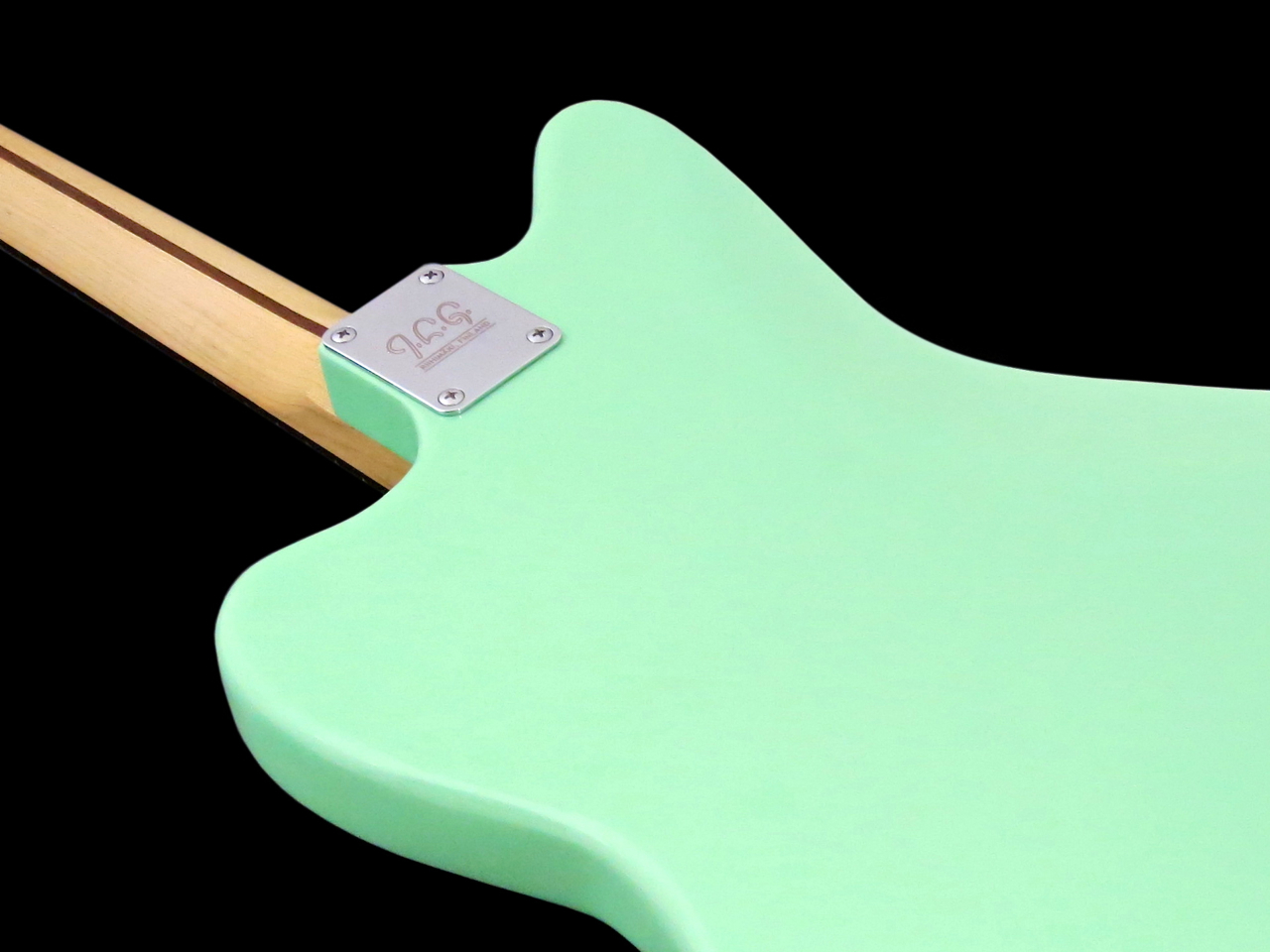
J. Leachim Guitars clearly know how to use nitro lacquer properly:
The body has received an exquisite, thinly applied gloss finish in Surf Green, while the neck has been finished with a thin satin clear coat.

The fretwork on the Jazzcaster is great. The rosewood fingerboard comes with 21 jumbo-sized frets.
The top nut has been carved from a piece of genuine bovine bone. Some may find the nut’s shaping a tad angular, but I don’t mind; it’s only cosmetics, after all.
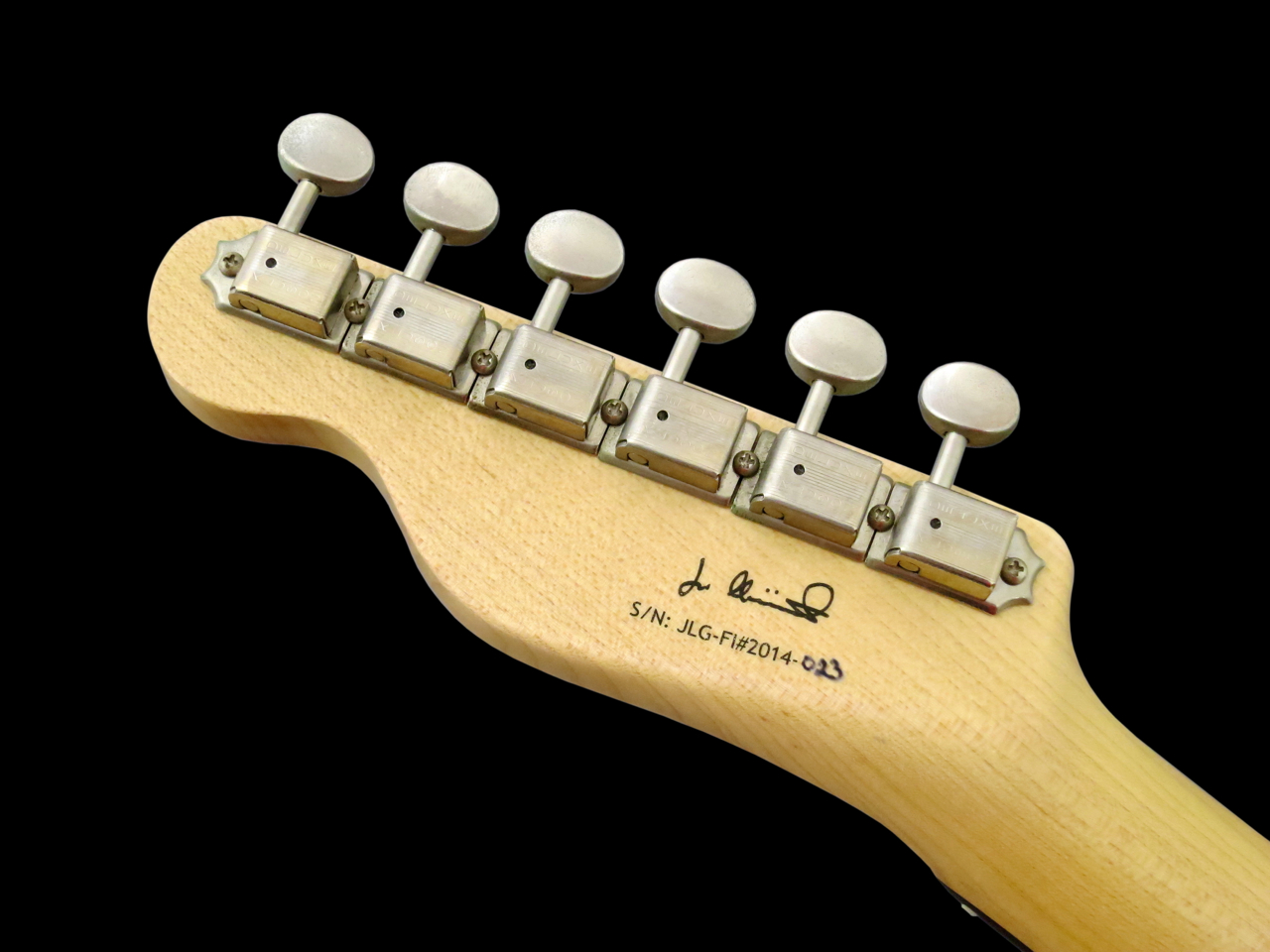
A nice set of lightly-aged Klusons takes care of tuning duties on this J. Leachim model.
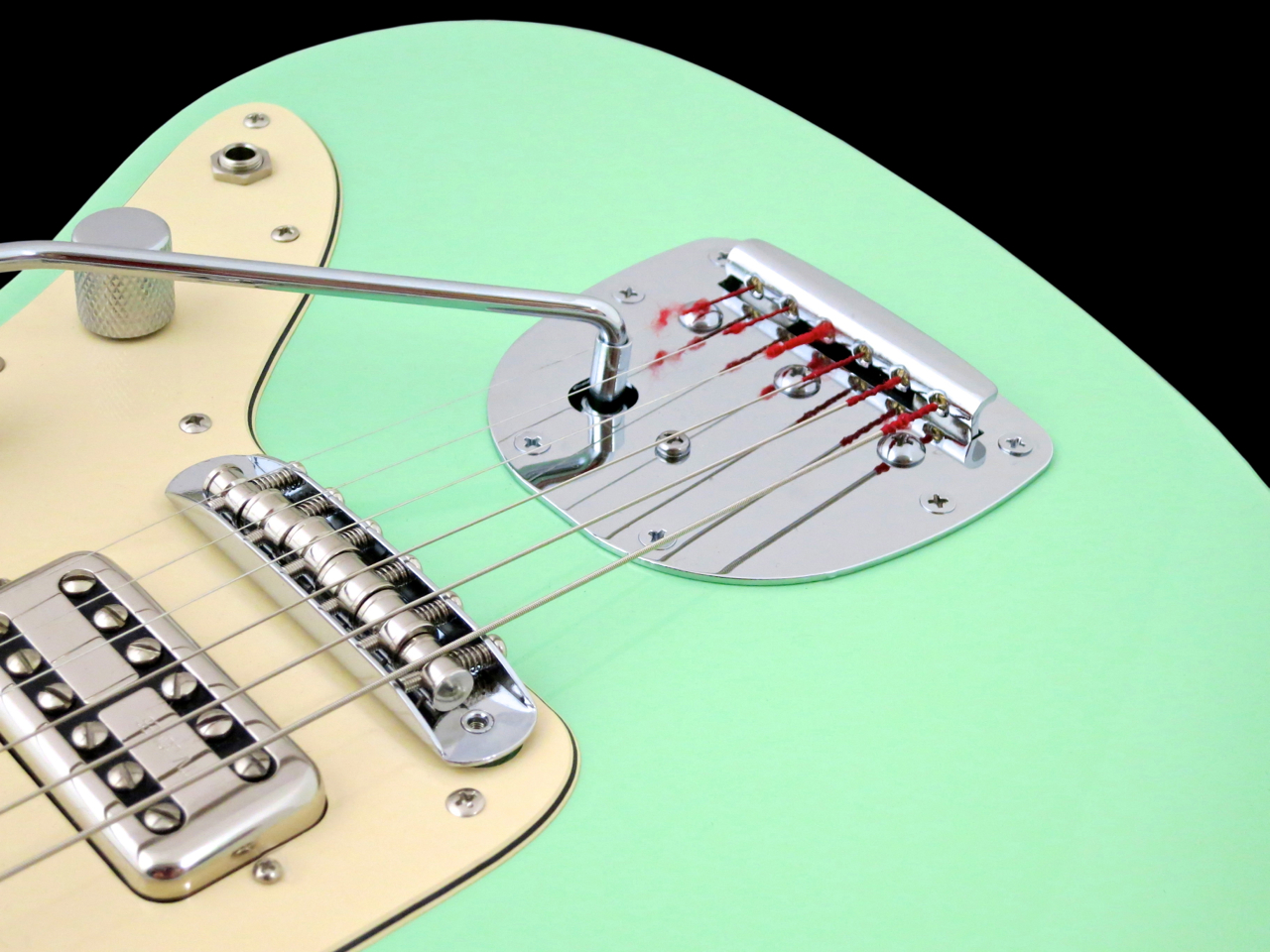
The Jazzcaster’s bridge and vibrato tailpiece have both been sourced from WD Music:
The vibrato is a version of the Fender Jazzmaster/Jaguar-vibrato, albeit without the original’s lock-off mechanism. The original locking mechanism is notoriously difficult to set up properly, so leaving it off is actually a good thing (in the view of most guitarists).
Many guitarists today dislike the original Jazzmaster-bridge, too, because the individual height-adjustment screws on the bridge saddles tend to work themselves loose with modern (light gauge) strings. Originally, this bridge – as well as the vibrato – has been designed to work with the stiffer string sets of the late 1950s (mostly 012 or 013 sets). With a set of 010s or 009s the Jazzmaster-bridge’s adjustment screws tend to rattle a lot.
Many modern makers – like J. Leachim Guitars – substitute the Jazzmaster-bridge with a Fender Mustang-bridge for this very reason. The Mustang-bridge is a direct replacement, and it uses differently sized bridge saddles to preset the fretboard radius permanently, so nothing can work itself loose and rattle.
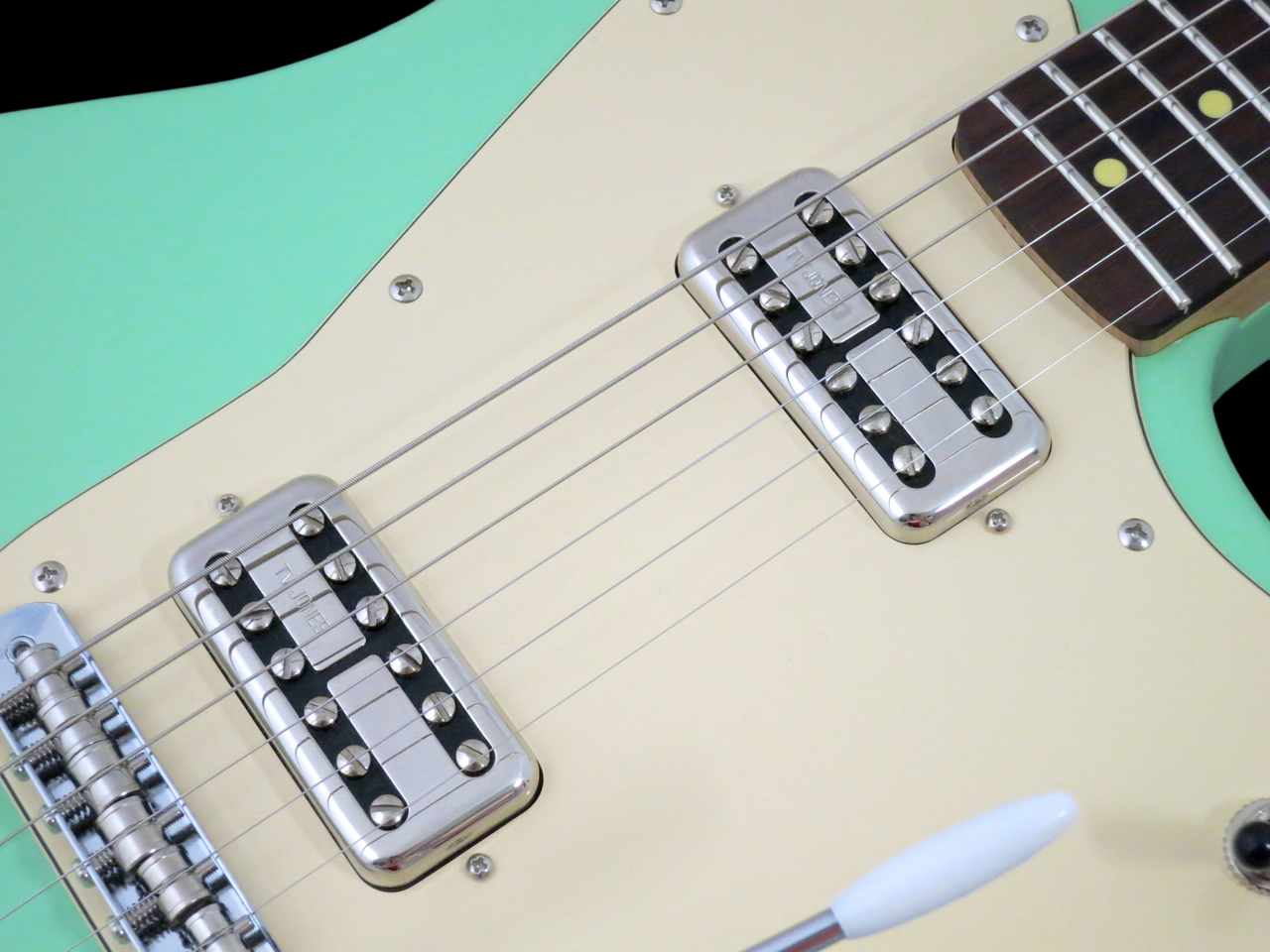
Gretsch Filtertron-style pickups are the ”in” thing at the moment.
J. Leachim’s Jazzcaster comes with a pair of TV Jones-pickups – there’s a vintage-type TV Classic in the neck position, and a more powerful Powertron model placed near the bridge.

The customer who ordered this particular Jazzcaster specified a reverse tone control (working clockwise), so this is what can be found on this instrument.
J. Leachim Guitars use a stereo phone jack, which keeps a firmer grip on the guitar lead’s plug, as well as making sure you always have a good connection to ground.
****
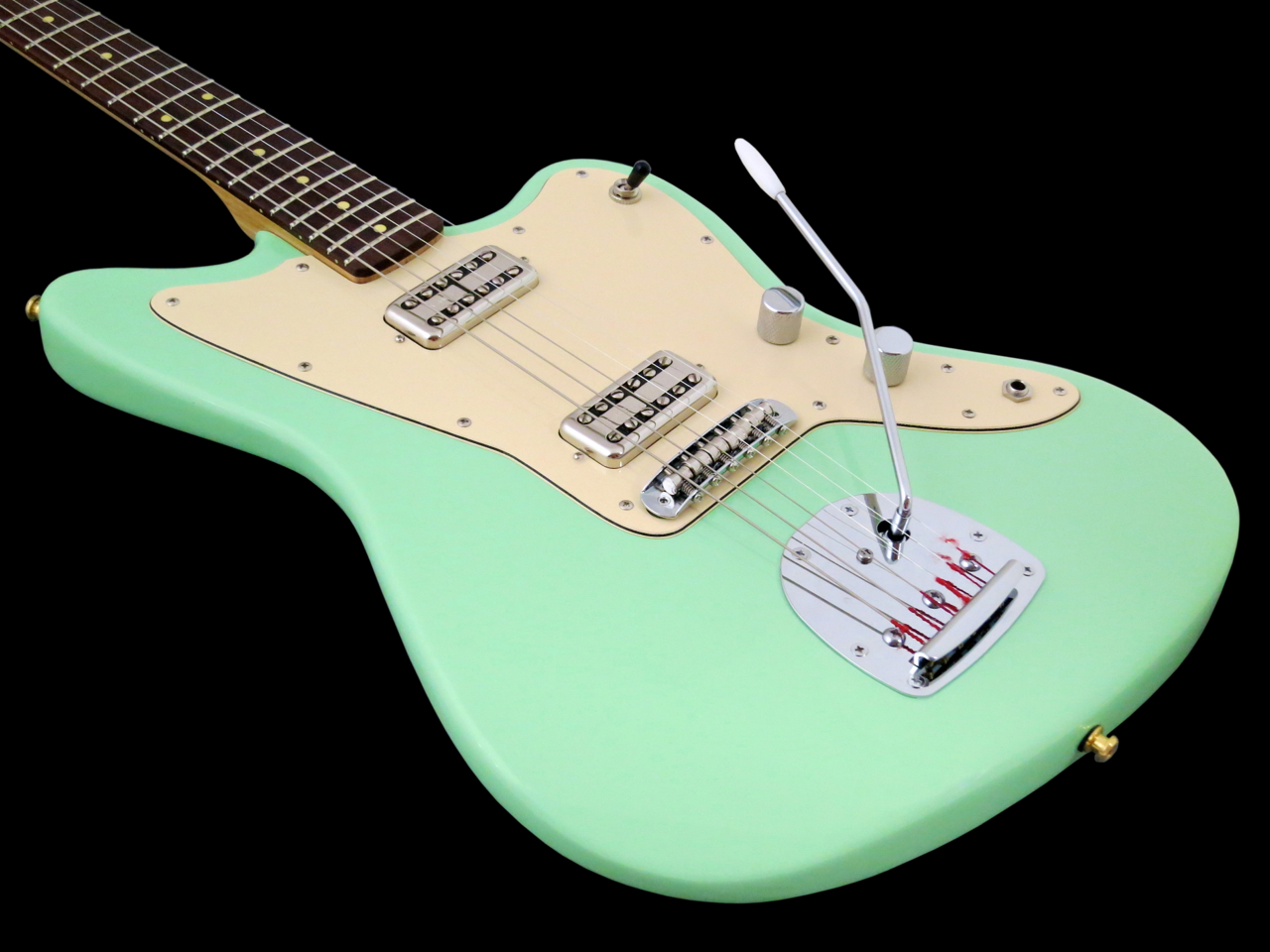
In my view, the J. Leachim Jazzcaster very successfully blends the ergonomics of the Jazzmaster body with a Gretschy tone. Thanks to its very smooth Jazzmaster-vibrato, the JLG Jazzcaster has a more open sound than, for example, a Cabronita Telecaster.
The Jazzcaster plays like a dream, as long as you’re willing to live with the typical, well-known compromises of the Jazzmaster/Jaguar-vibrato.
With modern, slinky strings, big bends – especially, when played higher up the neck – can quite easily make the high e-string jump out of its bridge groove. In a way this isn’t so much a fault, but more of a feature of this vibrato system, because the strings cross the bridge at a relatively shallow angle. With the stiff string sets of the late Fifties the system works fine, but for huge Blues bends with a contemporary 010-gauge set you should maybe invest in an additional bridge roller.
I would like to see a smoother taper on the tone control, though. On the review instrument the treble roll-off was more a matter of on or off, with everything happening right at the end of of the knob’s travel.
The Jazzcaster has a beautiful acoustic tone, with a bell-like ring and an open, yet firm body.
TV Jones’ acclaimed Filtertron-style pickups seem like a perfect fit for this model, adding a good deal of chime and twang, without sounding too bright or biting. Being humbuckers, the TV Jones pickups are also immune against hum and buzz, unlike a traditional Jazzmaster’s singlecoil units, which are not a million miles removed from a Gibson P-90.
This clip gives you an idea of the J. Leachim Jazzcaster’s clean sounds (starting with the neck pickup):
When plugged into an overdriven channel, the Jazzcaster wins you over with a chunky, aggressive and compact voice, which is just the ticket for Seventies-style Rock or Punk. Famous Filtertron-users in the Rock genre include AC/DC’s original rhythm guitarist Malcom Young, and the Who’s Pete Townshend, who frequently used Gretsch guitars as his ”secret weapon” in the studio.
Here’s the track from the Youtube-video – ”Seabird Flavour (Homage to Peter Green)”:
There are three rhythm parts – left channel (neck pickup), centre (neck pickup), and right channel (both pickups) – as well as the lead part, which uses both pickups (and the vibrato tailpiece).

****
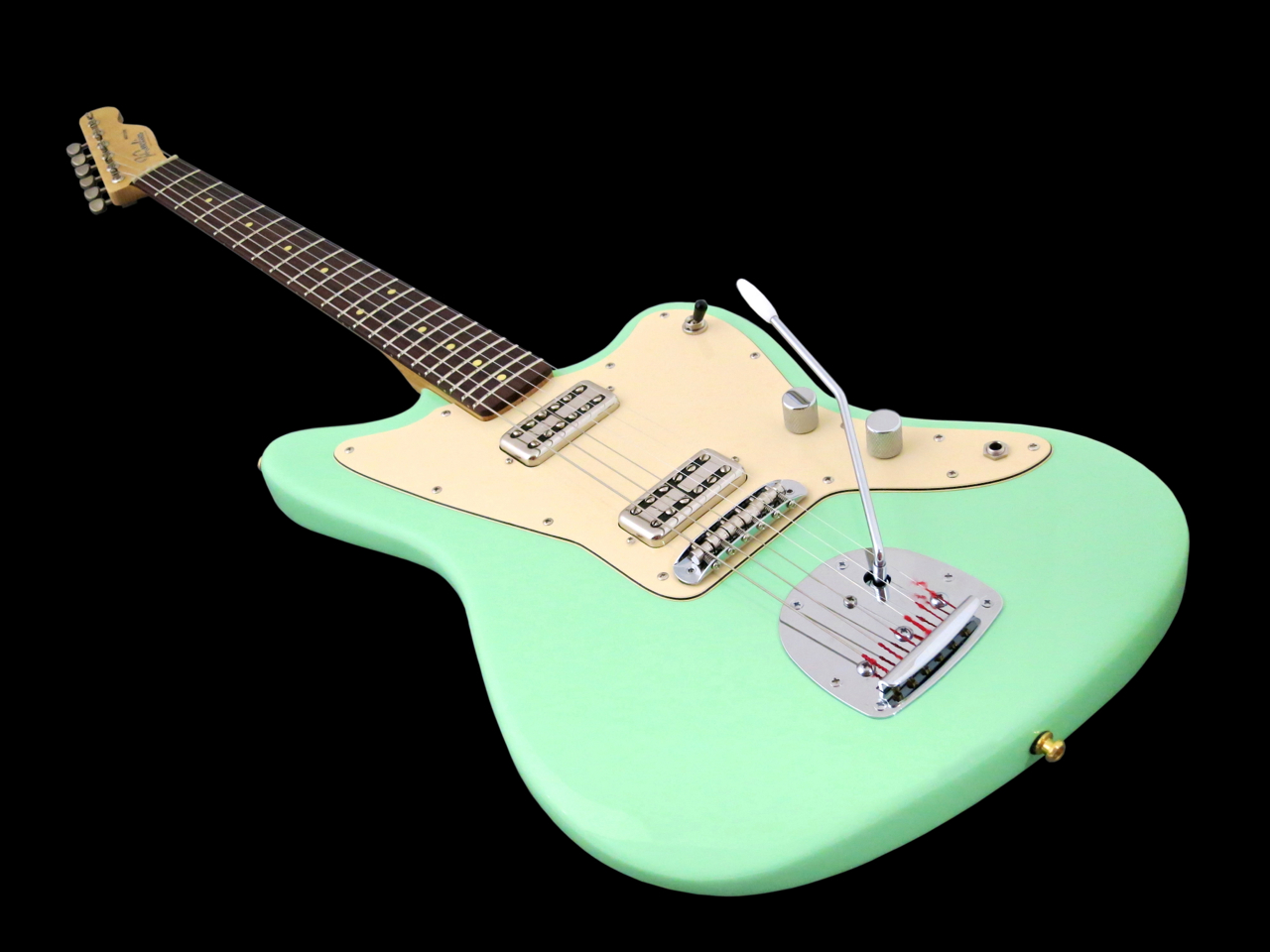
In my view, J. Leachim’s Jazzcaster is a beautiful, and very well-made, Fender-inspired guitar, with a sound that’s all its own. You could think the Jazzcaster was only for Jazz or Country, but in reality this fine guitar covers a much wider area of musical styles.
In any case, J. Leachim Guitars is yet another Finnish guitar brand worth keeping on your radar.
****
J. Leachim Guitars Jazzcaster
Price approx. 1,300 € (incl. hard case)
Contact: J. Leachim Music
****
Pros:
+ workmanship
+ finish
+ playability
+ smooth vibrato action
+ sound
Cons:
– shallow string angle across bridge (read the review)
– tone control could work smoother
Review: ESP USA Eclipse


This time we have something very special to feast your eyes on!
Many people may not know this, but ESP Guitars also runs its own, small West Coast workshop in California. The ESP USA factory produces limited numbers of its most popular shapes (currently three models), and its primary goal is to produce the best quality instruments for its customers.
Kitarablogi.com has been lucky to get to take one of these guitars for a spin – the ESP USA Eclipse.
****
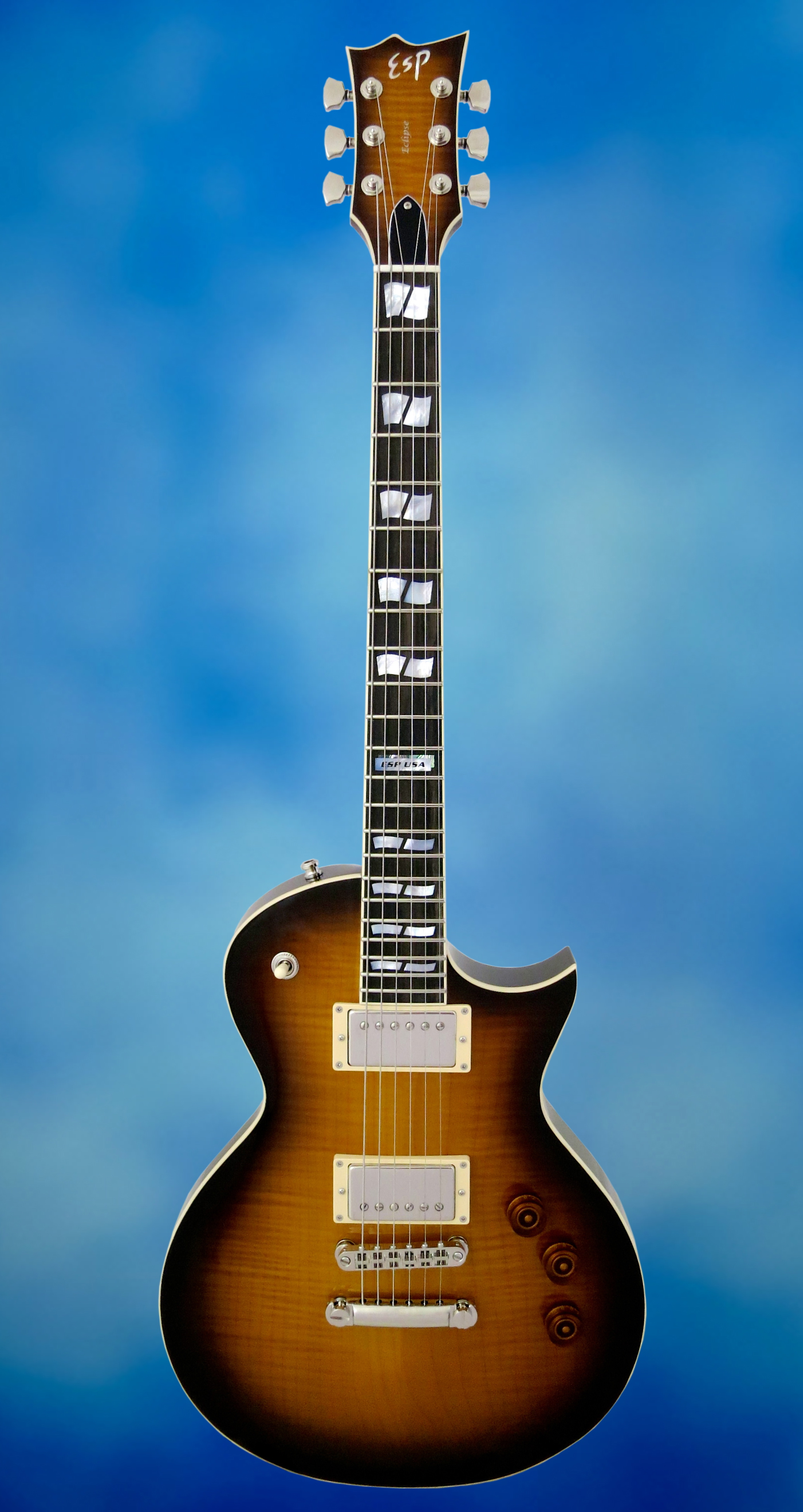
The ESP USA Eclipse (current price in Finland: 3.939 €) is the company’s ultimate version of their popular Eclipse model, using only the best materials and production methods.

One of the USA Eclipse’s special features is the ESP Set-Thru-Neck, which aims to combine the best attributes of a traditional set neck with the playability advantages of a through-neck.
ESP’s Set-Through-Neck is basically a set neck with a significantly larger tenon (both wider & deeper), which greatly improves the strength of the neck joint. Most set-neck guitars have a tenon which is somewhat narrow and shallow. In the ESP USA’s case, the width of the tenon is as large as the end of fingerboard and is almost as tall as the body. This allows the neck joint to be sculpted like a through-neck with no loss of structural integrity.
The result is a stronger neck joint, which is good for sustain, and it also makes it possible to do away with the traditional neck heel of a standard set-neck, resulting in a very comfortable playing experience.

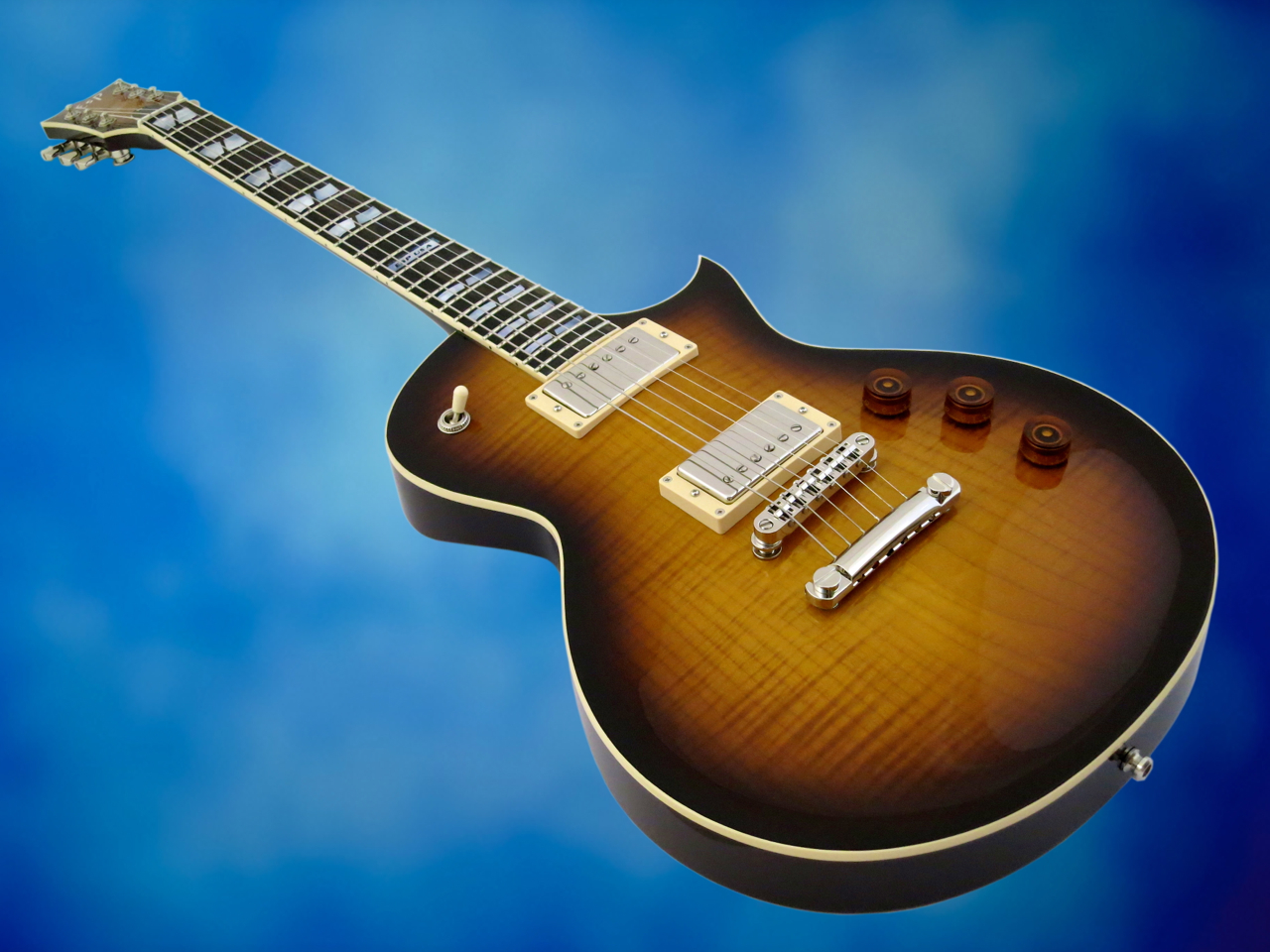
The Eclipse’s mahogany body sports a rib cage chamfer for comfort.

The guitar’s tuning is kept rock steady by a set of Sperzel USA locking machine heads.

The bound headstock of the USA Eclipse features a flamed mahogany overlay, finished in the same Tobacco Sunburst finish as the body’s carved maple top.
The top nut has been made from genuine bone.

We find a bound ebony fretboard with 22 jumbo frets, adorned with beautiful pearl and abalone inlays.
The fingerboard radius is a flattish 12 inches (305 mm).

The locking Sperzels are paired at the body end with a rock solid TonePros TOM-bridge and stopbar combo.
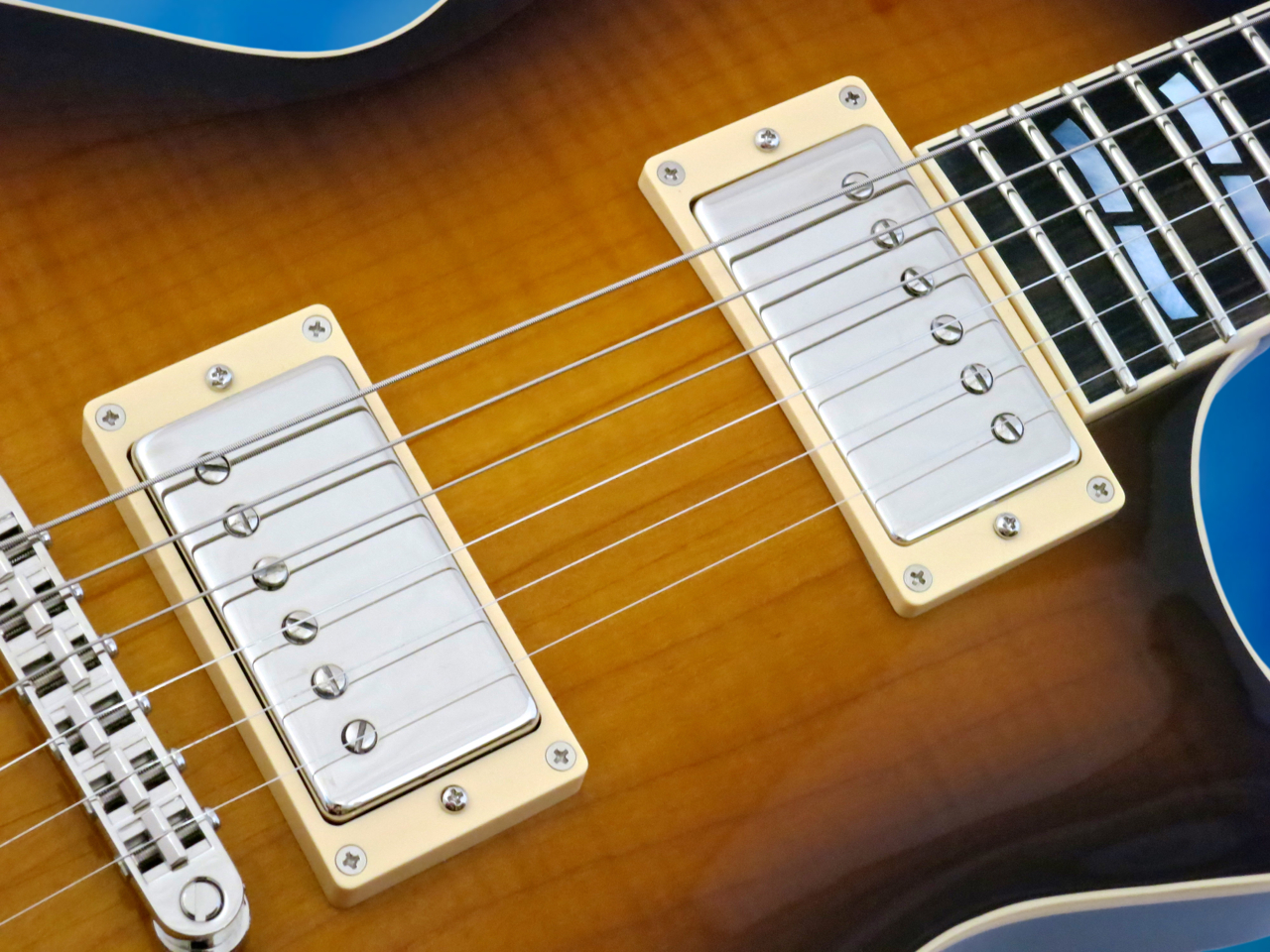
It’s quality all the way in the electronics department, too:
ESP’s USA Eclipse comes equipped with a pair of Seymour Duncan Alnico II Pro humbuckers (APH-1), which are vintage-voiced, warm-sounding pickups with moderate output levels (Slash’s favourites).

The control layout on this model has the bridge volume closest to the bridge pickup (for easy volume swells), while the middle knob is the neck volume.
The master tone control features a push/pull-switch splitting the humbuckers in the ”up” position.

The control cavity has received a layer of shielding paint, as well as a cover lined with aluminium foil.

****

This guitar really is a fantastic instrument! The ESP USA Eclipse is top quality incarnate, leaving nothing to be desired.
For a full-depth, Les Paul-inspired guitar the USA Eclipse is refreshingly light.
I don’t quite understand, why ESP insist on calling this neck profile a ”Thin U”. I agree, this neck doesn’t feel like a fat, clumsy baseball bat, but neither is it one of the notorious ”speed necks” of the Eighties. I would call the Eclipse’s rounded D-profile ”extremely comfortable”, and be done with it…
The USA Eclipse offers first-rate playability – light to the touch, offering just the right amount of resistance – across the whole fingerboard.
The vintage-voiced Seymour Duncan Alnico II Pro humbuckers are a perfect fit for this guitar, not least because of their versatility. You can have great-sounding, authentic Jazz tones, if you want, and then rock out without having to change guitars. The split humbucker sounds are very good, too, offering a brighter tonality and lower output levels. The ESP USA Eclipse covers a very wide range of different sounds and musical genres.
Here’s a short clip showing you the split humbucker sounds (starting with the neck pickup):
Next up, a similar clip with the full humbuckers:
In the demo track I have used split settings for the rhythm parts (left channel: both pickups; right channel: neck pickup), as well as the full bridge humbucker for the lead guitar:
****
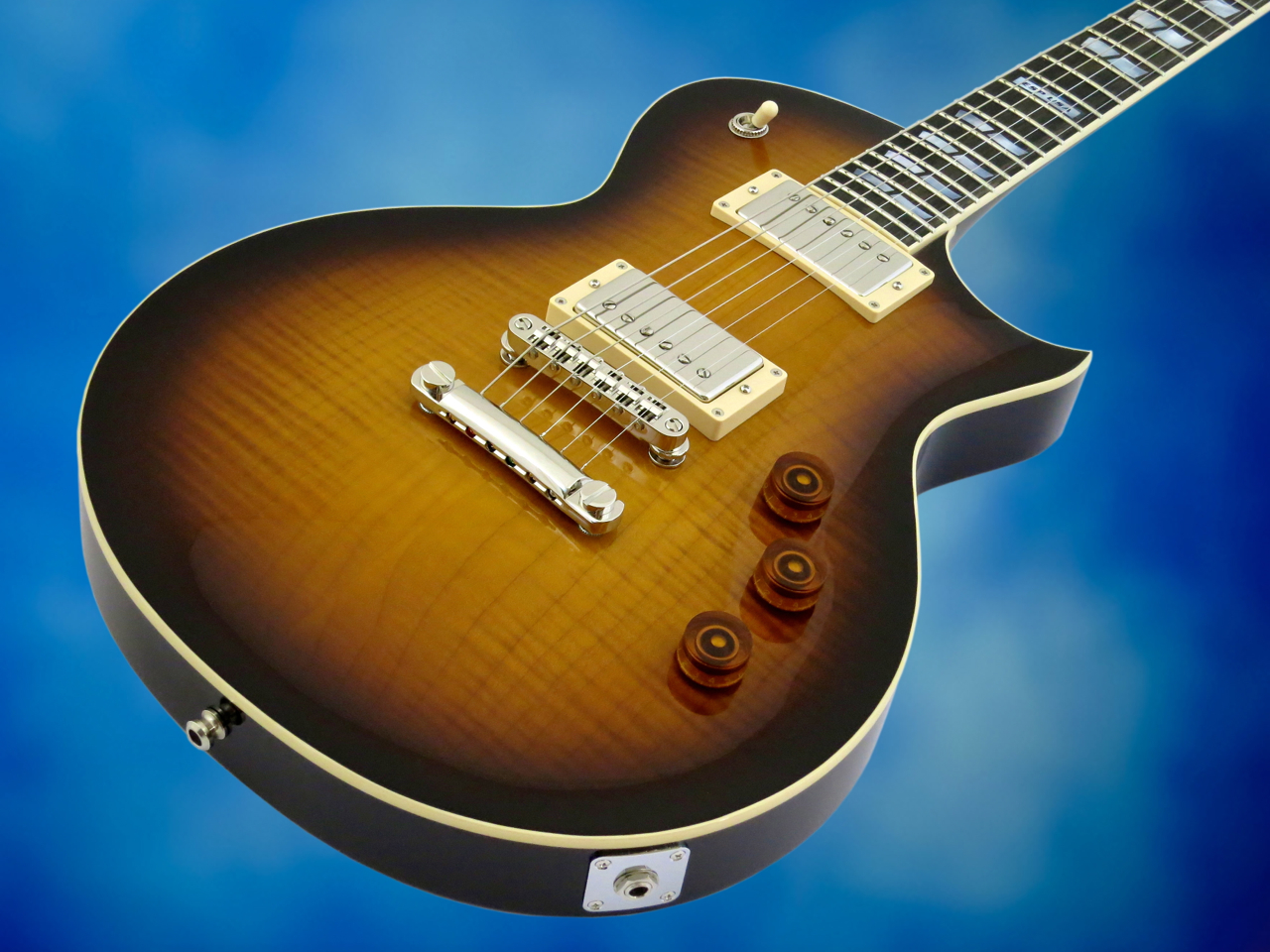
ESP’s USA Eclipse is a boutique grade guitar, backed by a large brand. Some manufacturers may ride on glories past, cashing in on their legendary brands. In contrast, ESP’s USA Eclipse really has the build quality, workmanship, and tone to justify its price tag.
In my view the ESP USA Eclipse is a gorgeous solidbody electric at a fair price.
****
ESP USA Eclipse
3.939 € (hard case included)
Finnish distributor: Musamaailma
****
Pros:
+ value for money
+ workmanship
+ Set-Thru-Neck construction
+ finish
+ splittable humbuckers
+ sound
Testipenkissä: J. Leachim Guitars Jazzcaster
Riihimäkiläistä J. Leachim Guitarsia voisi kutsua Suomen vastineeksi amerikkalaiselle Nash Guitarsille. Samoin kuin Nash Guitarsissa myös JLG:ssäkään ei rakenneta soittimia suoraan raa’asta puusta, vaan firmassa keskitytään puolivalmiiden runkojen ja kaulojen viimeistelyyn, osien relikointiin (jos toivottu), sekä kitaroiden kokoamiseen.
Saimme J. Leachimin pomolta, Jan Merivirralta, juuri valmistuneen Jazzcaster-mallin, joka on yksi firman ei-relikoiduista soittimista.
****
J. Leachim Guitarsin Jazzcaster (hintaluokka noin 1.300 €; kova laukku kuuluu hintaan) on mielenkiintoinen ja tutunoloinen yhteentörmäys eri klassikkokitaroiden aineksista:
Jazzcasterin kaula on Northwest Guitarsilta hankittu nykyaikainen Tele-kaula jumbonauhoilla, sekä (alkuperäistä hieman loivemmalla) 9,5-tuumaisella otelaudan radiuksella.
Erittäin kevyt suosaarnirunko tulee Guitarbuildin valikoimasta, ja siihen on lisätty J. Leachimin pajassa oikean mittaiset kolot Filtertron-tyypisille mikeille.
J. Leachimissä tiedetään ilmiselvästi miten nitrolakkaa käytetään oikein:
Rungon erittäin ohut, kiiltävä Surf Green -viimeistely on suorastaan herkullisen näköinen, kun taas kaulan satiinipinta tuntuu todella mukavalta.
Jazzcasterin nauhatyö on kiitettävällä tasolla. Ruusupuiseen otelautaan on asennettu 21 jumbo-kokoista nauhaa.
Soittimen satula on aitoa naudanluuta. Satulan ulkoreunojen kulmikkuus on pelkästään kosmeettinen makuasia, joka ei ainakaan minua haittaa pätkäkään.
Tässä J. Leachim soittimessa käytetään hienoja – ja kevyesti vanhoitettuja – Kluson-virittimiä.
Jazzcasterin talla ja vibrato tulevat WD Musicilta:
Vibrato on firman versio Fenderin Jazzmaster/Jaguar-vibrasta. Tarkkasilmäinen lukija on varmaan jo huomannut, että tässä versiossa alkuperäinen lukitusnappi puuttuu. Monien mielestä tämä on kuitenkin hyvä asia, koska alkuperäisen Fender-vibran lukitusmekanismi on melko hankala säätää toimivaksi.
Nykykitaristeille alkuperäinen Jazzmaster-tallakin on usein harmaiden hiuksien aiheuttaja. Tallapalojen yksittäiset säätöruuvit toimivat nimittäin suhteellisen hyvin ainoastaan 1950-luvun paksuilla kielisatseilla. Kevyillä nykysatseilla pikkuruiset säätöruuvit alkavat usein löystyä omatoimisesti soiton aikana, ja räminä voi alkaa.
Helpoin lääke tähän ongelmaan on käyttää Jazzmaster-tallan sijaan Fender Mustang -kitaran tallaa – se on muuten samanlainen, mutta Mustang-tallassa otelaudan kaarevuutta kompensoidaan eripaksuisilla tallapaloilla.
Gretsch Filtertron -tyyliset humbuckerit ovat tällä hetkellä erittäin ”in”.
J. Leachim Jazzcasteriin on asennettu kaksi TV Jones -mallia – vintage-tyylinen TV Classic on valittu kaulamikrofoniksi, kun taas tallamikrofonina toimii selvästi alkuperäistä tuhdimpi Powertron.
Tilaajan toiveesta tässä Jazzcasterissa on käänteisesti toimiva tone-potikkaa.
J. Leachim Guitarsin stereojakki pitää plugia tiukasti paikoillaan ja lisää maadoituksen toimintavarmuutta.
****
Tämä Jazzcaster-kitara yhdistää onnistuneesti Jazzmasterin ergonomiaa ja soitettavuutta Gretsch-maiseen soundiin. Sulavasti toimivan vibran ansiosta J. Leachim -kitaran soinnissa on kuitenkin hieman enemmän avoimuutta kuin sellaisissa risteyksissä kuin esimerkiksi Cabronita Teleissä.
Jazzcasterin soitettavuus on ensiluokkaista, kun vaan ottaa huomioon Jazzmaster- ja Jaguar-faneille tutut rajoitukset:
Nykyaikaisilla (lue: ohuilla) kielillä suuret Blues-venytykset (etenkin ylänauhoilla) nostavat usein korkean e-kielen ulos tallapalan uralta. Tämä on enemmän ominaisuus kuin vika, koska Jazzmaster-vibra – jossa kielet menevät tallan yli suhteellisen loivassa kulmassa – on suunniteltu 1950-luvun lopussa käytettäväksi hiotun 013-kielisatsin kanssa. Isot bendaukset 010-satsilla onnistuvat tällä vibratolla esimerkiksi asentamalla vibratoon kieliä alas vetävän lisärullan.
Ainoa pieni kritiikkikohta koskee tässä kitarassa tone-säätimen toimintaa, jossa diskantin vaimennus tapahtuu vasta ihan liikeradan lopussa.
Jazzcasterin kaunis akustinen ääni on kellomaisen helisevä ja hyvin avoin, muttei missään nimessä liian kevyt.
TV Jonesin Filtertron-tyyliset mikrofonit ovat mielestäni todella hyvä valinta tähän malliin, koska ne lisäävät soundiin oman twänginsä, joka on kuitenkin vähemmän pureva kuin esimerkiksi perinteinen Telecaster-tallamikki. Kaksikelaisina TV Jonesit ovat myös hyvin immuuneja ulkoisia häiriöitä vastaan, jotka voivat olla tavallisissa Jazzmaster-mikrofoneissa oikea riesa.
Tässä esimerkkejä J. Leachim Jazzcasterin puhtaista soundeista (alkaen kaulamikrofonista):
Särön kanssa Jazzcasterista lähtee loistavan ärhäkkä ja sopivan kompakti ääni, joka sopii mainiosti jopa 1970-luvun Rockiin ja Punkiin. Tunnetuin Filtertron-käyttäjä Rock-piireissä on ollut varmaan AC/DC:n Malcom Young. Myös Pete Townshend (The Who) käytti 70-luvulla usein Gretsch-kitaroita Filtertron-mikeillä ”salaisena aseena” studiossa, juuri niiden erikoisen särösoundin takia.
Viimeiseksi vielä videon ääniraita – ”Seabird Flavour (Homage to Peter Green)”:
Biisissä on kolme komppikitaraa – vasen kanava (kaulamikki), keskellä (kaulamikki) ja oikea kanava (molemmat yhdessä) – sekä molempia mikrofoneja (ja myös vibratallaa) käyttävä soolokitara.
****
J. Leachim Jazzcaster on mielestäni hyvin kaunis ja laadukas Fender-henkinen kitara omalla soundilla ja virtaviivaistetulla elektroniikalla. Ensisilmäyksellä Jazzcasteria voisi ehkä lokeroida pelkäksi Jazz- ja Country-kitaraksi, mutta todellisuudessa kitaran soundilliset antimet kattavat huomattavasti laajemman kirjon musiikkityylejä.
J. Leachim Guitars on joka tapauksessa yksi suomalainen tekijä lisää, jota tästedes kannattaa pitää silmällä.
****
J. Leachim Guitars Jazzcaster
Hintaluokka 1.300 € (sis. kovan laukun)
Lisätiedot: J. Leachim Music
****
Plussat:
+ työnjälki
+ viimeistely
+ soitettavuus
+ pehmeästi toimiva vibrato
+ soundi
Miinukset:
– kielten loiva kulma tallan yli (katso teksti)
– tone-säätimen ”jyrkkyys”
 Kitarablogi.com – Finland's premier Guitar and Bass blog
