****
****
Lisätiedot: Nordsound
Kitarablogi.com – Finland's premier Guitar and Bass blog
Juttuja kitaroista ja bassoista

****
The Zoom Corporation’s super-compact 9000-series digital multieffects caused quite a stir in the early 1990s. The company’s recent Zoom MultiStomp MS-50G (current rrp in Finland: 99 €) carries on this heritage by managing to squeeze most of the large Zoom G5’s processing power (reviewed in August 2012) into one regular-size single pedal.
****
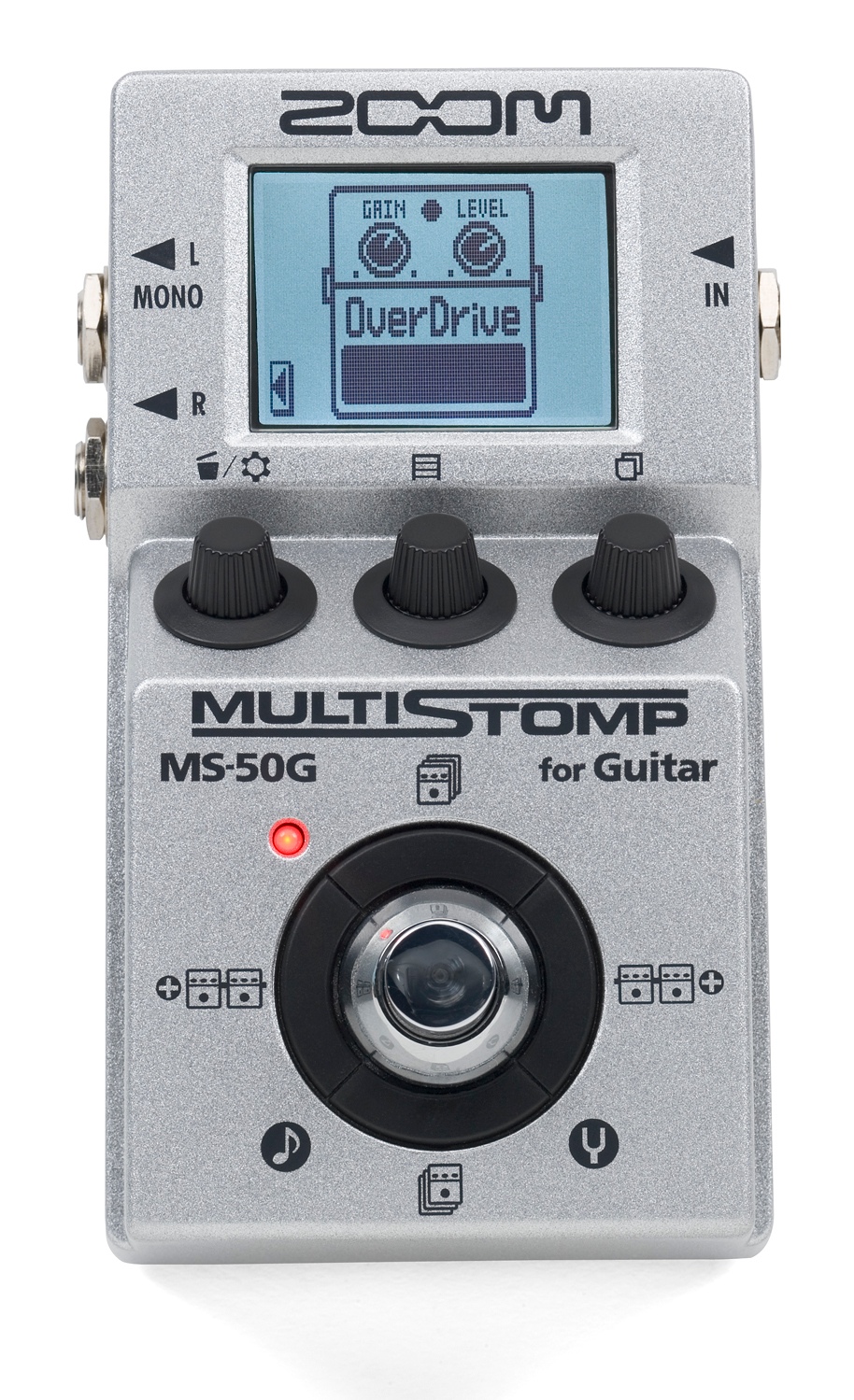
It may sound unbelievable, but it really is true – this small box holds in store a whopping 50 memory slots for your own effect patches. Each effect patch can consist of a signal chain of up to six different effects. The MS-50G offers you 55 different effect types to choose from – featuring everything from compressors and modulation effects all the way to distortions, amp modelling and whacky special effects. Naturally, the MultiStomp also comes equipped with a digital tuner.
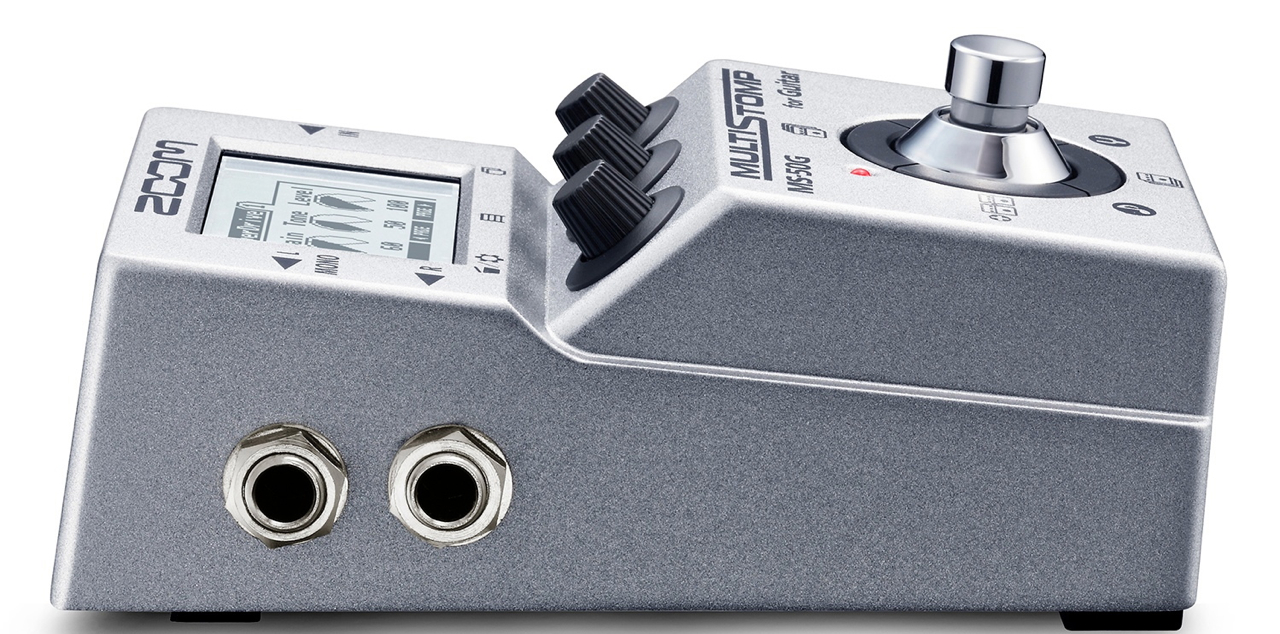
The Zoom MS-50G’s metal casing and its single foot switch feel reasonably chunky. The three parameter control knobs have been mounted at an angle underneath the LCD-display, out of the way of your foot’s path.
The pedal can be used in mono or in stereo. There is no headphones output on the MultiStomp, because it is meant to be used either as a standard guitar effect in front of your amp (or plugged into the effects loop) or for recording, connected straight to the front end of your soundcard or mixing console.

This compact Zoom is powered by two AA-sized batteries, giving you about seven hours of continuous use. Powering the pedal using a PSU (optional) is the more environmentally friendly way of doing things, and Zoom have made it easy for us by sticking to the Boss-standard (9 V, centre plus), making it easy to integrate the MS-50G into your existing pedal board.
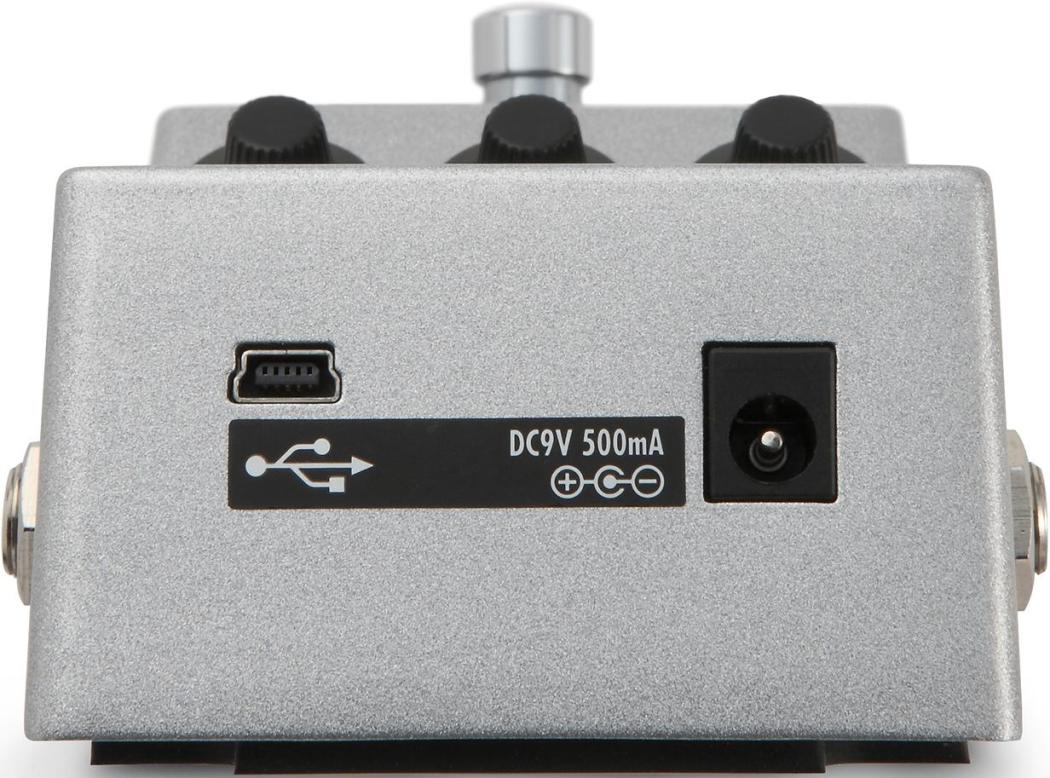
The USB-port on the front of the MultiStomp makes it possible to update the unit’s firmware.
****
There are two main ways of using the Zoom MS-50G’s effect patches:
The first way would be to manually select one patch, and the use the left/right cursor keys to choose the one effect in this patch (like chorus, distortion or delay) that you want to be able to turn on and off using the foot switch while performing. The unit automatically stores which effect you have selected in each given effect patch, so the next time you call up this patch you will already have your chosen effect connected to the foot switch.
The second way of using the Zoom is by utilising the MS-50G’s A/B-mode. A/B-mode allows you to select all the effect patches you will want to use, and put them in a running order by assigning a letter to each of the chosen effects (e. g.: ”SynthStar: A”, ”AsiaPalace: B”, ”PitchDist: C” etc). Once you’ve got your list in order, you can use the foot switch to hop through your list (starting from letter ”A” going up the alphabet). At the end of your list pressing the foot switch will get you back to the first patch in your list.
****
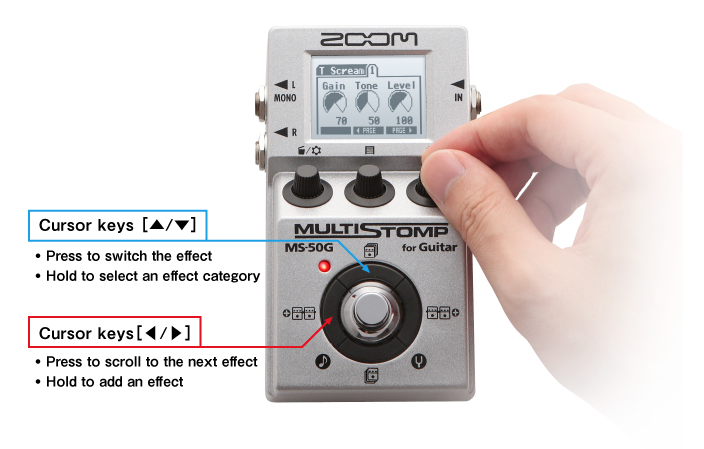
Very compact multieffects usually require a slightly steeper initial learning curve than larger boards, because the limited number of controls and push buttons always means you first have to get to grips with the unit’s user interface. Luckily, thanks to its logical structure and well-designed graphics the MultiStomp is an easy piece of gear to master.

I especially like the Effect Chain view, which makes changes to the order of effects inside a patch very easy. You simply lift the chosen module using the virtual magnet, and drop it where you want it to go.
****

Regardless of its compact size, the Zoom MS-50G MultiStomp is a fully-fledged member of the company’s G-series of guitar multieffects. While the MultiStomp won’t offer you all of the great features and effect types of its larger brethren – the G3 and G5 – the sheer amount of processing power and tasty effects on offer here is truly amazing. For the price of a decent single effect the MS-50G offers you a huge palette of different effects, while only taking up very little space on your pedal board.
****
I used a Tokai SG-75 plugged into the Zoom MS-50G to record all the guitar tracks on the YouTube video:
All of the other soundbites have been lifted from Kitarablogi’s reviews of the Zoom G3 and the larger G5:
Fender Stratocaster – detune – delay
Fender Stratocaster – dirty Tweed – tremolo
Tokai LC-85 – fixed wah – Marshall-type
Tokai LC-85 – phaser – Blackface-style
****
Zoom MS-50G MultiStomp
Current RRP in Finland 99 €
Finnish distributor: Studiotec
****
Pros:
+ value-for-money
+ sound
+ compact size
+ easy to use
+ versatile

****

Schecter probably aren’t known so much as manufacturers of acoustic guitars, but they do carry a few acoustic-electric models in their current line-up. We picked up a new model from Schecter’s Hellraiser range for a review – the Hellraiser Studio Acoustic.
****
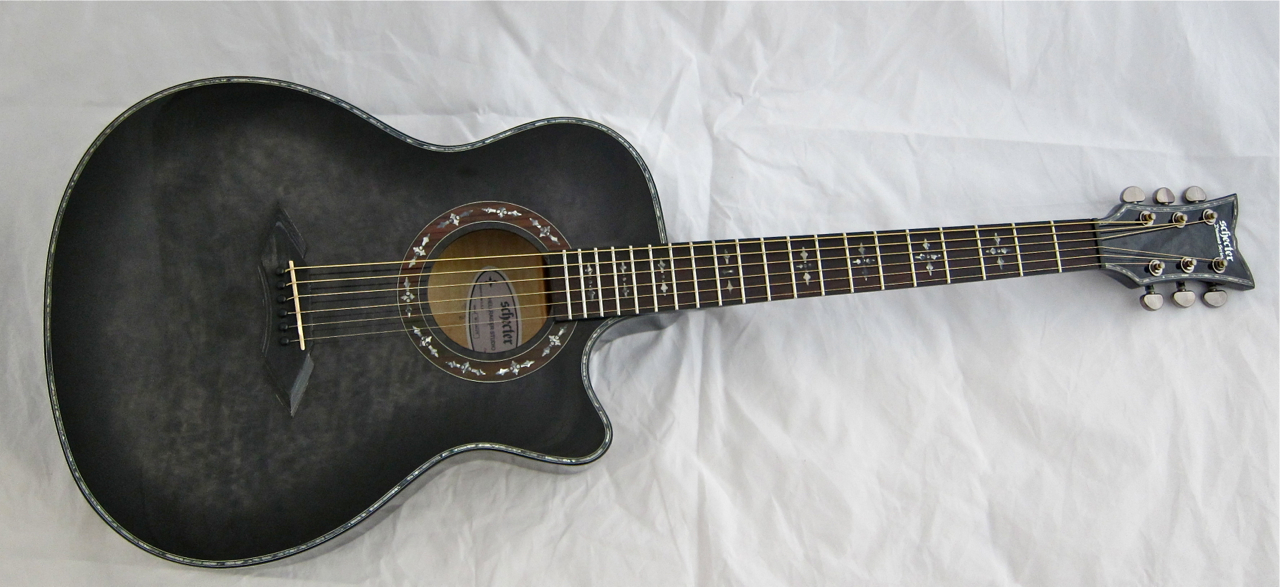
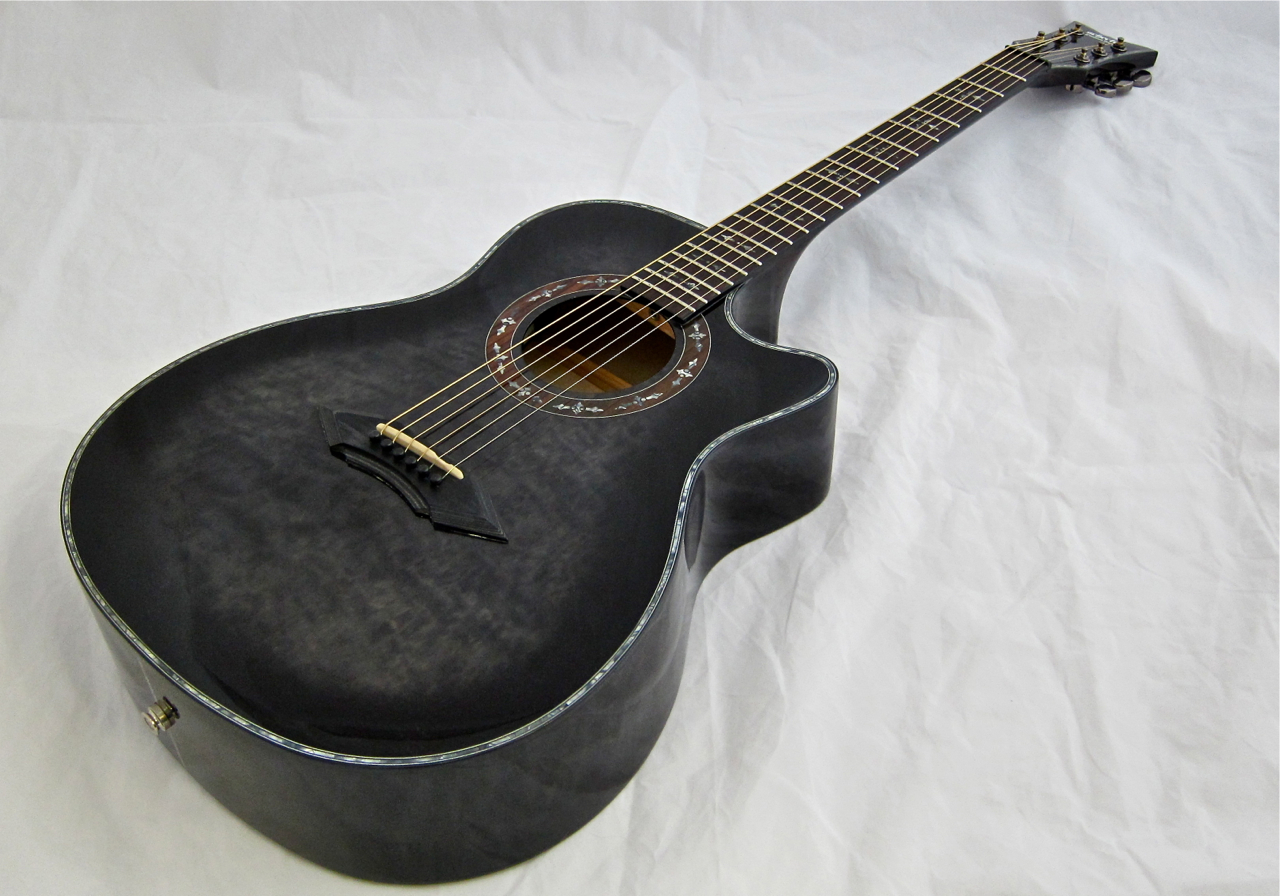
The Schecter Hellraiser Studio Acoustic (current street price in Finland approx. 600 €) is a stunning looker with a Grand Auditorium -sized, full-depth body.
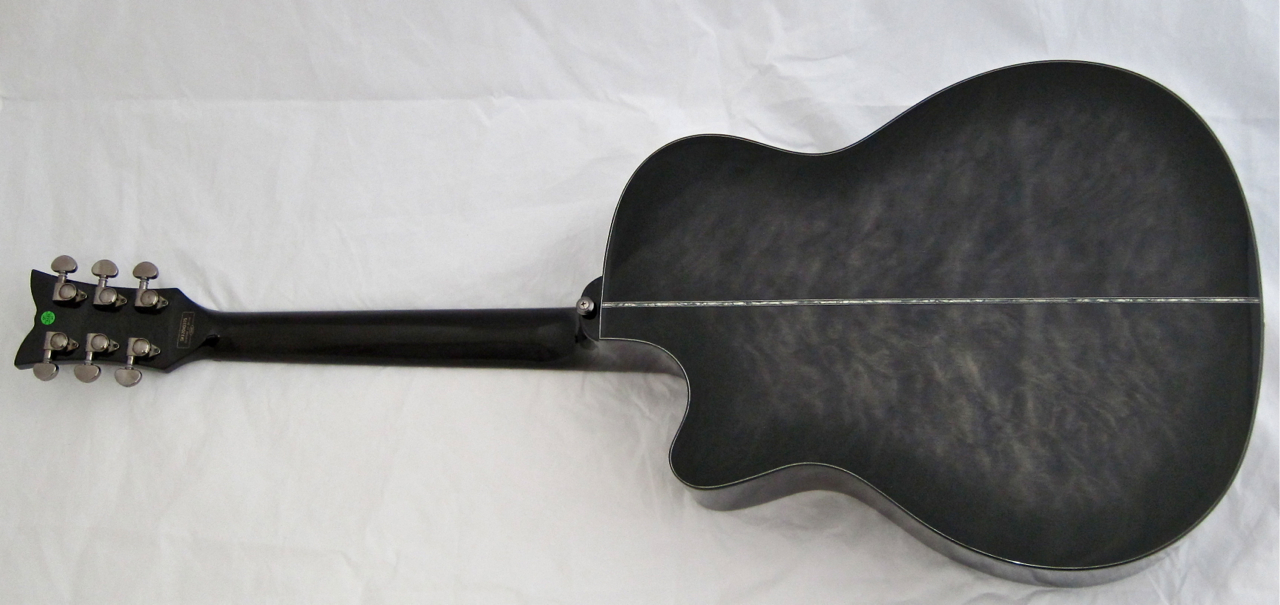
The whole body – top, rims and back – is crafted from beautiful, laminated quilted maple. Our review sample sports a fetching see-through-black gloss finish.
The glued-in neck, which is finished in solid gloss black, is made from mahogany.

Judging by its headstock shape, Schecter seems to be aiming the Hellraiser Studio squarely at the Rock and Metal crowd. The headstock features intricate binding in luscious grey pearloid framed by black and white strips of plastic.

The sealed Grover-tuners sport a cool and moody black chrome finish.

The bound rosewood fretboard comes equipped with 20 jumbo-sized frets, giving the guitar an effortless modern playing feel.
The Hellraiser Studio’s ’board is adorned with cleanly executed gothic-style cross inlays, made from grey pearloid.
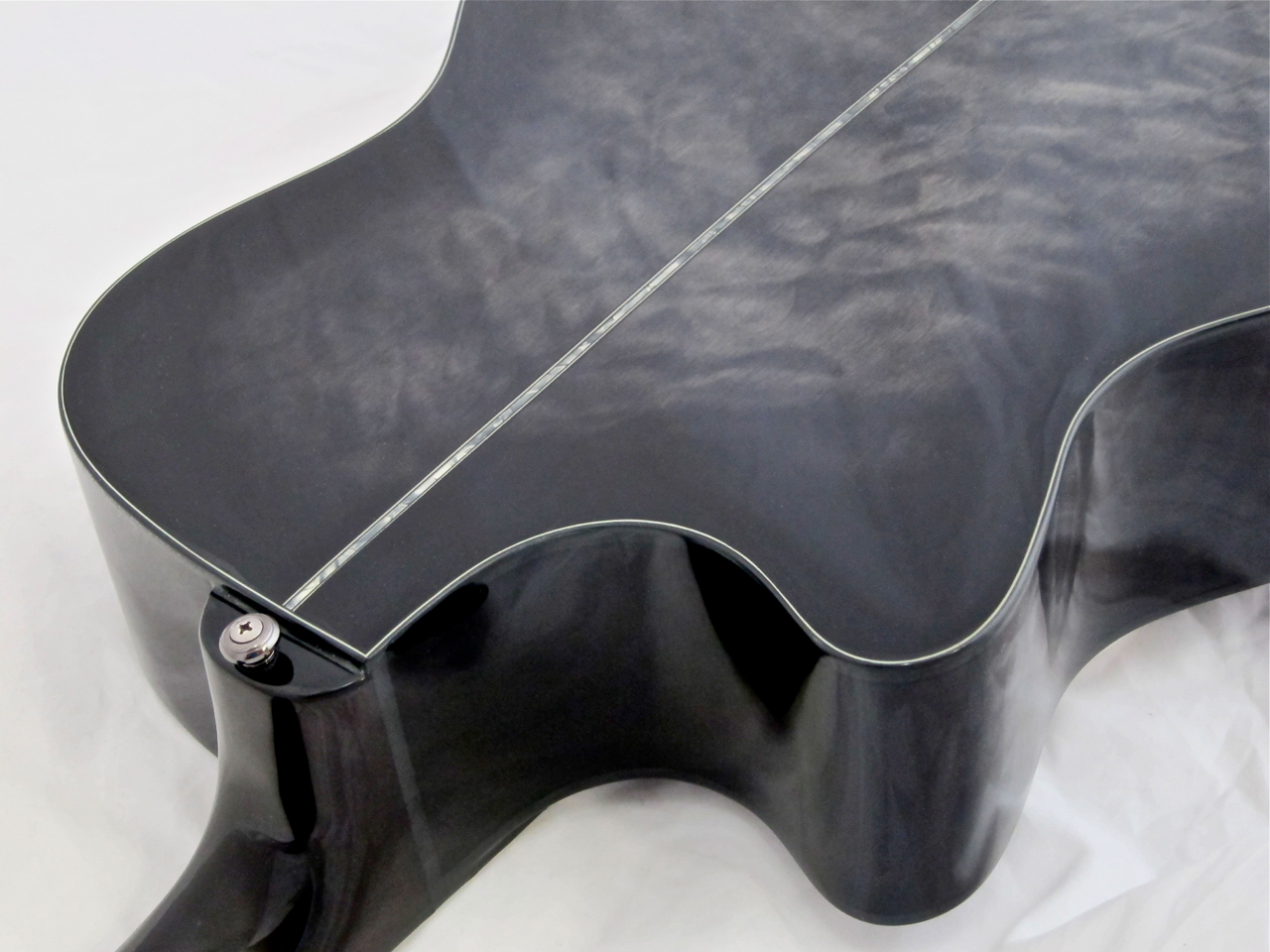
The stylish dark pearloid theme is carried over onto the soundbox – seen here in the back’s centre line.
Schecter’s Hellraiser Studio comes factory-equipped with a second strap button.

The guitar’s flowing lines are a thing of beauty.

The test sample’s bracings and kerfed linings look well made, even if there are a couple of glue specks in places.
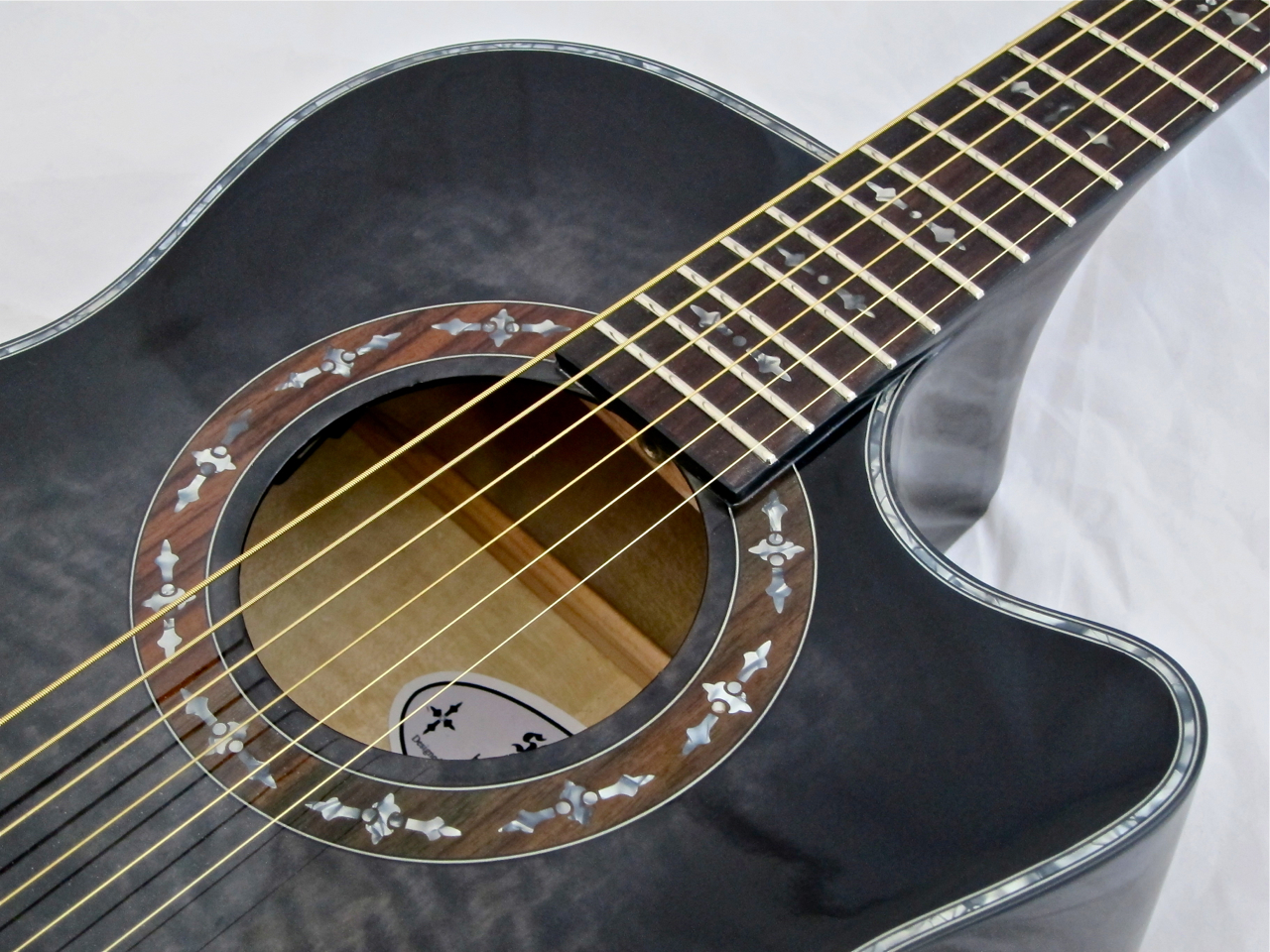
The gothic theme continues in the rosewood rosette’s inlays.

A very dark finish is a double-edged sword for any manufacturer, because any tiny imperfection shows up more clearly. On the review instrument a tiny amount of white glue can be seen seeping out from under the bridge – the only small slip-up on this nicely-finished guitar.
The bridge is an interesting design, made from a composite material based on wood and black resin. The octave-compensated bridge saddle is Graph Tech’s man-made alternative to ivory, called Tusq.
The under-saddle-transducer is a Fishmanin Sonicore piezo pickup.
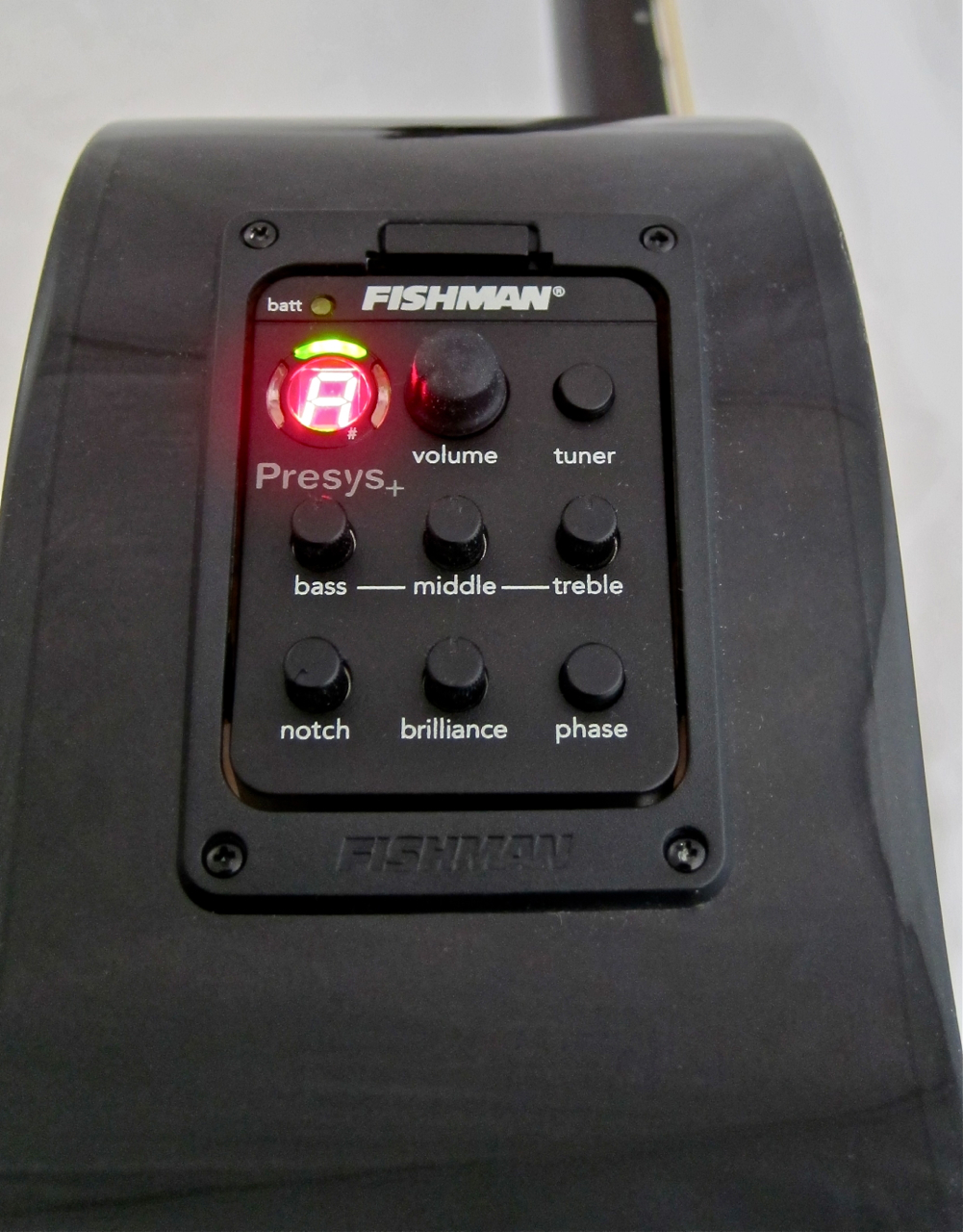
The UST’s signal is sent to a Fishman PreSys+ preamp featuring four-band EQ – bass, middle, treble and brilliance – a notch filter (to combat feedback or annoying stage resonances), a phase reverse switch (also for feedback removal), as well as a chromatic tuner, which also works without the guitar lead plugged in.

The PreSys+ makes battery changes a doddle.
****

Even though the Schecter Hellraiser Studio Acoustic is aimed at Rock musicians, Schecter haven’t chosen an overtly ”electric” neck profile for this steel-string – which is good in my opinion. The guitar’s well-rounded, medium D-profile feels great, giving you ample flesh to hold on to.
Sadly, our review sample suffers from some minor fretting issues, which lead to the high-e string buzzing at the first and 14. frets. Otherwise the set-up is good and the guitar plays well.
Nowadays it seems that many manufacturers have found out how to put together a good-sounding acoustic guitar using a laminated body. The Schecter Hellriser Studio is a good example of this. Even though you cannot find the out-and-out volume and punch of an all-solid shouter in a laminated steel-string, this Schecter really manages to hold its own, and do so with panache.
The all-maple body gives you a lively tone with a tight, sinewy bottom end, a clear mid-range (typical of maple-bodied steel-strings), as well as a nicely rounded top end. I see the Hellraiser Studio as a great choice for accompanying vocals, as the guitar’s clarity leaves ample space in the frequency spectrum for the singer.
The Fishman Sonicore/PreSys+ is a high-quality combination that sounds great right off the bat, without even touching the EQ. Fishman have managed to filter out most of the infamous nasal quack and attack click, so often found on lesser piezo systems. Thanks to this the Hellraiser’s EQ is freed up to fine-tune your (already great) basic tone, instead of having to combat any annoying tonal problems inherent in the original signal.
I recorded the following examples both acoustically (using an AKG C3000) and direct (with the Fishman’s EQ flat):
Fingerstyle – miked up (AKG C3000)
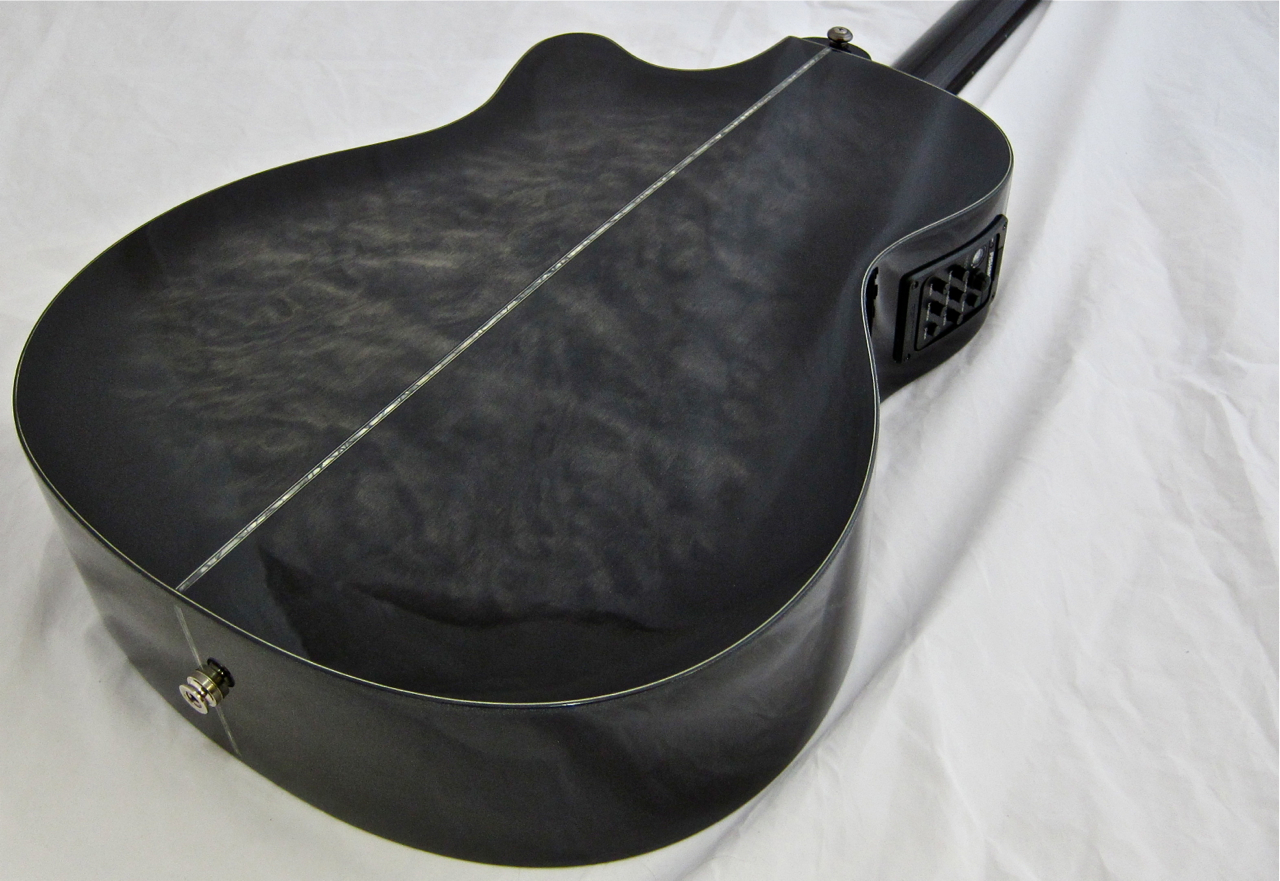
The review guitar’s fretting (or neck?) problem really is a shame, because overall this Schecter is an extremely nice acoustic-electric. Schecter are known for their stringent quality control, so maybe this here was the one guitar that slipped through.
Schecter’s Hellraiser Studio Acoustic is a beautiful instrument, offering easy playability and a great sound. The guitar’s clear voice records very well – regardless of whether you’re using a microphone or the fantastic on-board Fishman-system. I can only recommend a test run!
****
Schecter Hellraiser Studio Acoustic
Current street price in Finland approx. 600 €
Finnish distributor: Soundtools
****
Pros:
+ beautiful design
+ overall workmanship
+ playability
+ acoustic tone
+ pro-quality Fishman-electronics
Cons:
– some fretting issues on review sample
– some glue visible at bridge