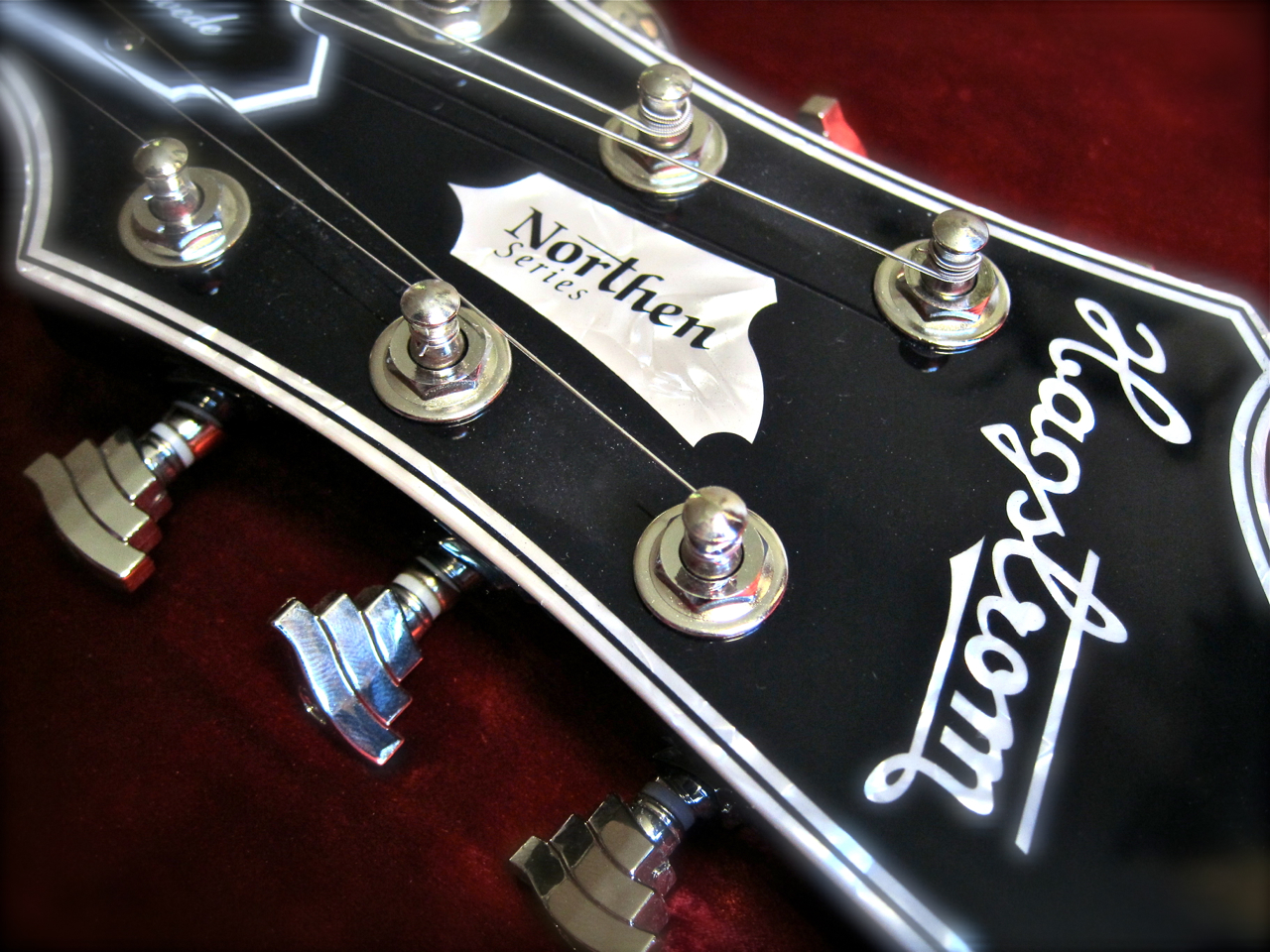
Tulossa… Hagström

Kitarablogi.com – Finland's premier Guitar and Bass blog
Juttuja kitaroista ja bassoista


Squier Vintage Modified Telecaster Bass on mielenkiintoinen sekoitus 1950-luvun Presarista ja Telecaster-kitarasta.
Bassossa on keskipitkä mensuuri (32 tuumaa/81,3 cm) ja yksi yksikelainen Duncan Designed -mikrofoni. Kolmiasentoinen kytkin mahdollistaa tavallisen sähköbassosoundin lisäksi myös erittäin tummia vaihtoehtoja tai nasaaleja baritoni-soundeja.
****

Squier Vintage Modified Telecaster Bass Special taas tarjoaa kaksi hyvin erilaista mikkiä samassa paketissa. Kaulan läheltä löytyy Fender Wide Range -humbuckeri ja tallan viereen on asennettu Duncan Designed -merkkinen Jazz-basson yksikelainen.

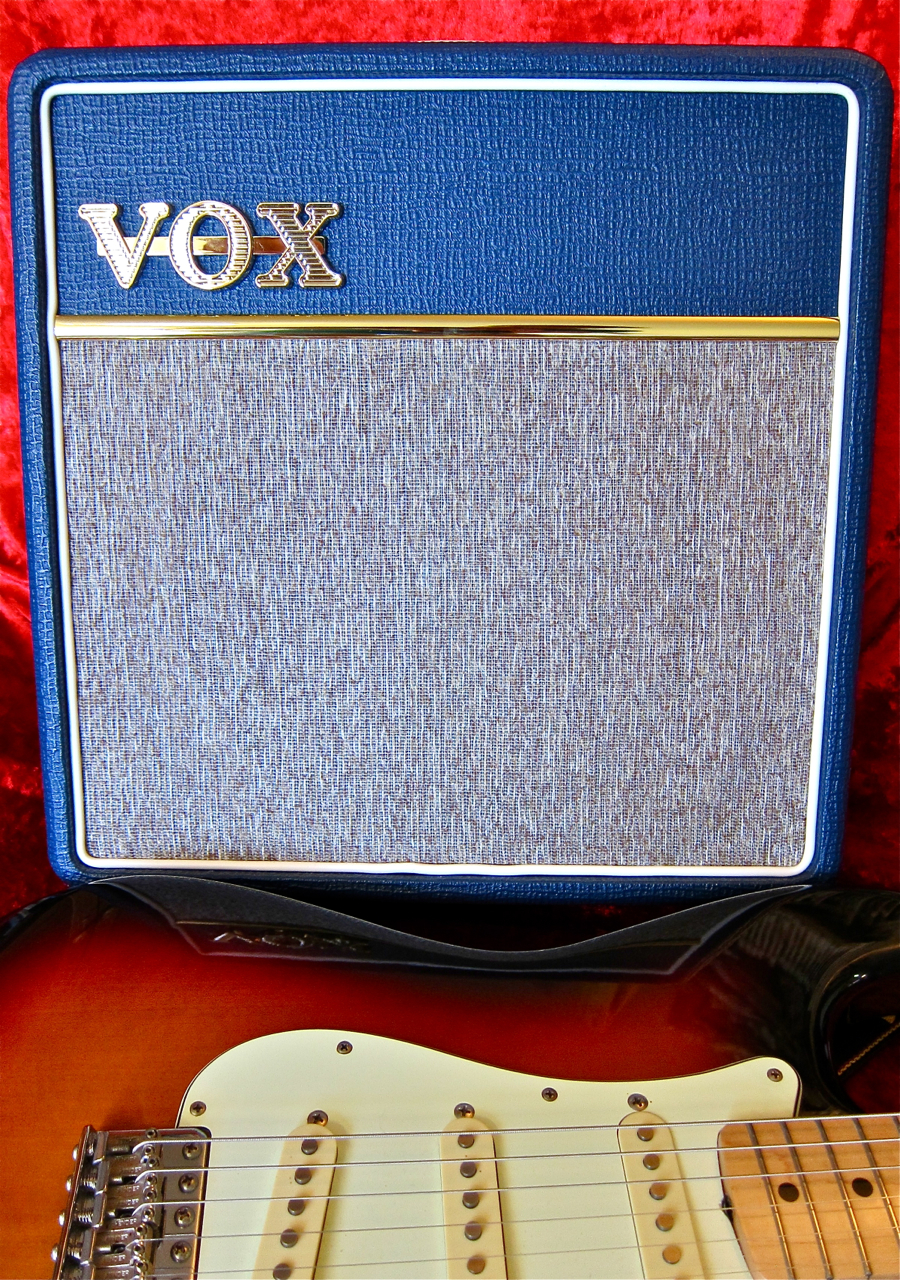
This is what it looks like – the brand-new Vox AC4 C1 Blue. I can already hear many of you thinking “What? Another AC4? Is it any different to the white AC4 TV?”
Granted, it is somewhat bewildering that Vox have several similarly named products in their range, so let me run you through the differences quickly:
At the moment of writing there are five different Vox AC4 valve amplifiers available. The Vox AC4 TV – which is available in three different guises – is the most affordable alternative, and aimed at the same market segment as ultra-compact modelling combos, such as the Roland Micro Cube.
At the other end of the price spectrum you can find the Vox AC4 HW, which is a very stylish hand-wired (HW) combo for the vintage fanatic. Just like the Sixties original, the AC4 HW is also equipped with a 12” Celestion speaker.
The new AC4 C1 Blue conveniently slots into the range between the two other AC4s. Vox’ C–series comprises new versions of the company’s most famous models, updated with nifty modern features.
****
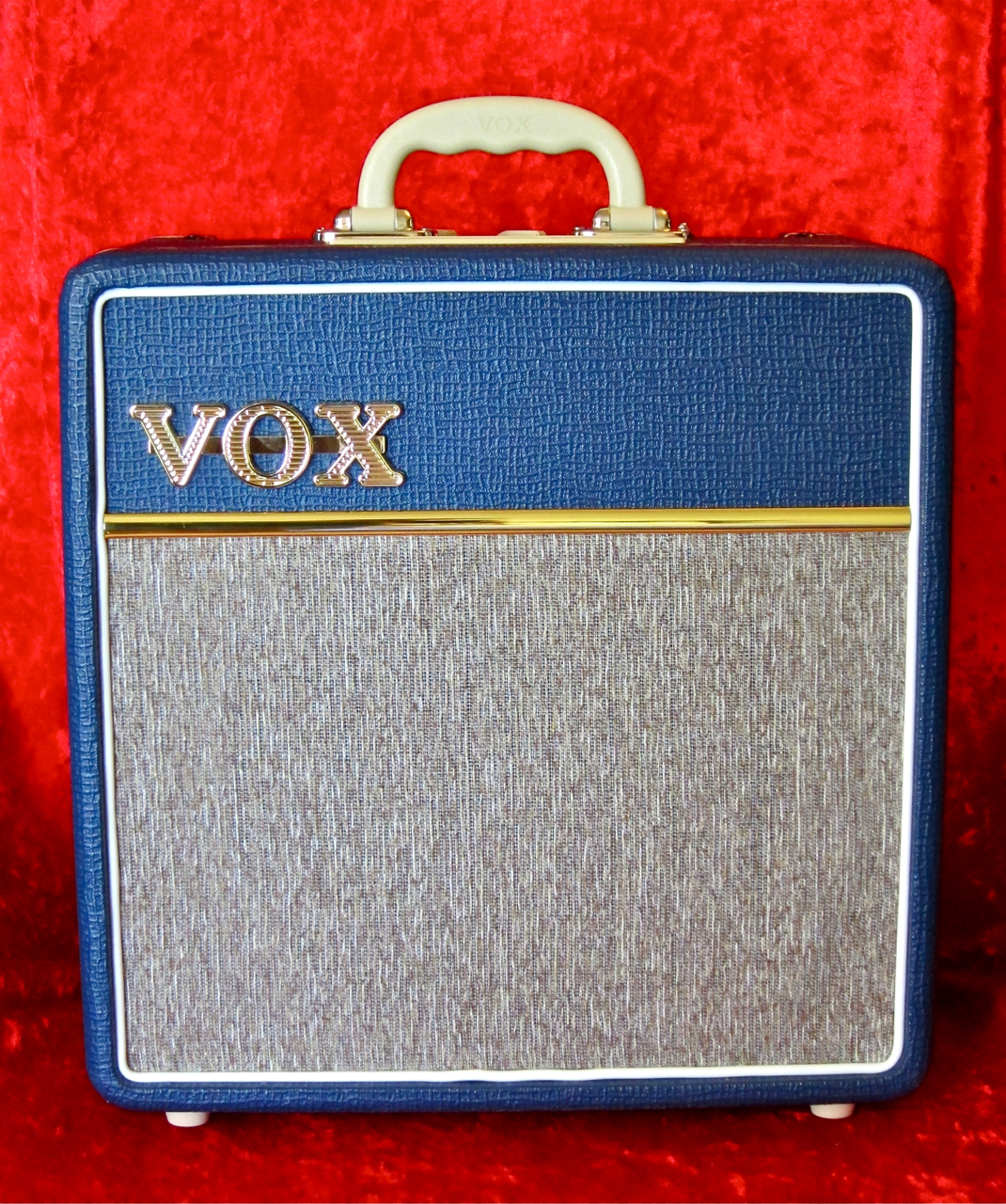
The Vox AC4 Blue (current street price in Finland 349 €) is a very beautiful combo amp, sporting the blue vinyl finish found on one special run from the Sixties, complete with the salt-and-pepper grille cloth.
Two 12AX7 valves are making up the preamplifier section, while the power amp is utilizing a single EL84. Output power is rated at four Watts (RMS) using a 16 Ohms speaker impedance.

The combo’s almost completely closed from the back. The back panel sports only two connectors – one for the power lead and another for connection of an external speaker. Ventilation is provided by a small opening right at the bottom of the combo’s back, as well as the customary small grille next to the carrying handle.
As is the case in quite a number of modern small valve combos, access to the valves is rather restricted in the AC4 C1 Blue. To change preamp valves you have to completely take off the whole back wall to get to the valves, which sit directly on the PCB-board. The owner’s manual recommend leaving valve exchanges to qualified service personnel to avoid the risk of an electric shock.
The Vox AC4 Blue comes equipped with the same special design already used successfully in the AC4 TV – a 10-inch Celestion VX10.

The front panel comprises controls for gain, bass, treble and master volume.
****
Vox has aimed to deliver genuine Top Boost –tone in a small package, and the AC4 C1 Blue really dishes out the goods. This little combo gives you all the legendary AC30 sounds, but at volume levels that fit your living room or home studio to a tee.
The AC4 C1 BL’s clean tones have plenty of jangle, coupled with Vox’ typical dose of grit and attitude. If your’re using powerful humbuckers, you’d better turn down your guitar’s volume a bit, unless you want to drive the combo into light Blues-overdrive.
For my taste the little Vox could do with a little bit less bite in the top end, but I got the trebles reigned in easily with the Treble-knob.
Upping the gain gets you into overdriven territory fairly quickly – from creamy Blues all the way to early Heavy Metal via Seventies Classic Rock. For out-and-out Nu-Metal the Vox AC4 Blue isn’t really the right amp, it just wasn’t designed to dish out that much grunt. For Brian May –type fat lead tones I’d recommend using a distortion pedal in front of the combo.
With its four Watts the AC4 C1 Blue has just enough power to annoy your neighbours – and for small gigs you could stick a microphone in front of it.
Here are a few soundbites (all clips start from the neck pickup):
****
Vox AC4 C1 Blue
current street price in Finland 349 €
Finnish distributor: EM Nordic
A big thank you goes to DLX Music Helsinki for the loan of the review amp!
Pros:
+ genuine Vox Top Boost -sounds
+ small size
+ Master Volume knob
+ cool looks
+ value-for-money
Cons:
– exchanging valves difficult
****
****


Zoom G5 (265 €) on japanilaisvalmistajan upouusi efektilautojen lippulaiva.
G5:n erittäin käyttäjäystävällinen toimintaperiaate on sama kuin pienemissä G3– ja B3-multiefekteissä, joita on jo testattu Kitarablogi.comissa aiemmin. Home-näkymässä – siis silloin kun yksi efektiketjun kaikkia efektejä tuodaan näkyville – Zoom toimii kuin erillisistä efektipedaaleista koottu pedaalilauta: jokaisen efektin näytössä näkee suoraan ikonista mistä efektistä on kyse, ja tärkeisiin parametreihin pääsee heti käsiksi näytön alla olevien säätimien avulla.
Zoom G5:ssa ideaa on lajennettu niin, että yhden patchin efektiketju voi koostua jopa yhdeksästä efektistä, vaikka suora pääsy on vain neljällä efektillä. Ratkaisun tähän pulmaan tuovat Scroll-näppäimet, joilla pystyy selaamaan efektiketjua eteen- ja taaksepäin. Scroll-näppäimillä tuodaan niitä efektejä näkyviin, joiden halutaan valitussa patchissa olevan sormien tai jalkakytkimien ulottuvilla. Kun vaihdetaan toiseen efektipatchiin laite muistaa automaattisesti viimeiset Scroll-asetukset, ja tuo patchin seuraavalla kerralla taas samalla tavalla näkyviin.

Zoom G5:n efektitarjonta on päätä huimaava – käyttäjä voi valita 145:stä efektityypistä, jotka ulottuvat perusefekteistä loistaviin vahvistinmallinuksiin, ja sieltä eteenpäin kaikenlaisiin syna- ja scifi-kaltaisiin efekteihin.
Efektipatcheja tallennetaan 99 pankkiin, kolme patchia per pankki. G5:een on valmiiksi asennettu vallan mainiosti toimivia tehdasefektejä, mutta koko muistin sisältö on vapaasti muokattavissa.

Pedaalilauta tarjoaa vielä kaksi lisäherkkua touhuun: ensimmäinen on Z-Pedal-niminen pedaali, joka toimii sekä perinteisellä ylös-alas-akselilla että vasemalle-oikealle-suunnalla. Z-pedaalilla pystyy tämän ansiosta ohjata useamman efektin parametreja samanaikaisesti, mikä helpottaa moniulotteisten ja monimutkaisten äänimaailmojen luomista entisestään.
Digitaaliefektien ja analogisten lähtöjen väliin on sijoitettu G5:ssa erittäin maukas Tube Booster, eli putkiboosteri, jonka voi käyttää signaalin orgaaniseen lämmittelyyn tai kätevänä sooloboosterina. Vahvistusta on tarjolla jopa 16 desibeliä!
G3:sesta tuttu kevyt rytmikone ja mainio loopperi ovat luonnollisesti käytettävissä myös tässä isommassa Zoom-laudassa.

Takapaneelin liitintarjonta on kattava, ja sieltä pitäisi löytyä kaikki mitä kitaristi tarvitsee keikalla tai studiossa.
USB-portin kautta voi päivittää G5:n firmwarea ja ohjelmoida/vaihtaa soundpatcheja Zoomin ilmaisella Edit & Share -softalla (PC & MAC). Lisäksi Zoom G5 toimii myös ulkoisena äänikorttina (44,1 kHz/16-bit) audiosekvensserille (PC & MAC). Jos omassa tietokoneessa ei vielä pyörii äänityssofta, on Zoom lisännyt pakettiin Steinbergin Cubase LE 6 -sekvensserin.
****
Zoomin G5 on mainio peli, jota on todella helppo käyttää. Soundien määrä on niin suuri, että efektien yksittäinen kuvaileminen olisi täysin turhaa touhua. Voin kuitenkin todeta, että mielestäni Zoom G5 on firman paras iso efektilauta tähän mennessä, ja pidän sen hinnan laadukkaiden soundien ja kestävän fyysisen olemuksen valossa hyvin edullisena.
Tässä muutama soundiesimerkki Zoom G5:n tehdaspatcheilla soitettuna:
DZ Drive + Booster – Stratocaster
Match30 + Booster – Stratocaster
US Blues + Booster – Stratocaster
****
Zoom G5
265 €
Maahantuoja: Studiotec
Plussat:
+ soundi
+ kestävä rakenne
+ erittäin laaja vahvistin- ja efektivalikoima
+ intuitiivinen käyttöliittymä
+ Z-Pedal
+ Tube Booster
+ USB-äänikortti
+ hinta-laatu-suhde
****




 Kitarablogi.com – Finland's premier Guitar and Bass blog