Review: Sennheiser MD421 Kompakt

Alkuperäinen juttu on ilmestynyt Rockway-blogissa.

****

****

In 1960, Sennheiser’s perhaps best-known microphone, the Sennheiser MD421, was released. The MD421 is a rather large and heavy microphone, and it is designed in quite a unique way.

This microphone uses a rather massive capsule with a large (27 mm/1.1 inch) diaphragm, which is carefully protected from handling and wind noise. In addition, the capsule has its own humbucker coil, which filters out electromagnetic hum and buzz out of the microphone signal.

A short “bass pipe” extends from the bottom of the capsule into the center of the microphone housing, which acts as a “bass chamber.” Depending on the year of manufacture of the MD421, this chamber may be either simply the plastic housing of the mic, or there may even be an injection-molded metal chamber inside the microphone.

A five-position rotary switch for the bass cut is embedded in the end of the housing – one extreme position “M” (Musik; music) lets the MD421 pass through the entire frequency range, while the second extreme position “S” (Sprache; speech) effectively removes most of the bass frequencies from the signal.

The new Sennheiser MD421 was available in versions with the German Klein-Tuchel connector (a larger and sturdier cousin of the DIN connector), as well as with an XLR connector.

The new model’s stand adapter was quite unique; the adapter had a long swivel leg on the stand side, while on the side that went into the microphone there was a rail with a spring mechanism. This rail is pushed into a groove in the belly of the microphone until the mechanism clicks into place.

The Sennheiser MD421 model became a huge sales success upon its release. Although the new microphone was relatively expensive, the quality of the MD421 was so convincing that the microphone was seen in almost every TV studio, concert stage, podium, and recording studio in the 1960s and 1970s – especially in Europe. When I was six years old, I had two things I wanted desperately to own – a Fender Jazz bass and “that creamy white Sennheiser”.

Although the MD421 was originally intended to be “everywhere”, over time the special strengths of the microphone led to it being seen most often in front of brass instruments, drums, and guitar and bass amplifiers.

The Sennheiser’s light-colored housing was permanently changed to black sometime in the late 1970s, and parallel versions of the MD421 were also introduced, for example some without an internal bass filter.

The Sennheiser MD421 has maintained its position, especially in the recording studio, to this day. The only criticisms are the model’s large size and weight, which can make it difficult to position the mic, and the reliability of the mic adapter, especially in heavy use. A microphone bouncing from a tom onto the drummer’s lap is not likely to inspire much confidence.

****

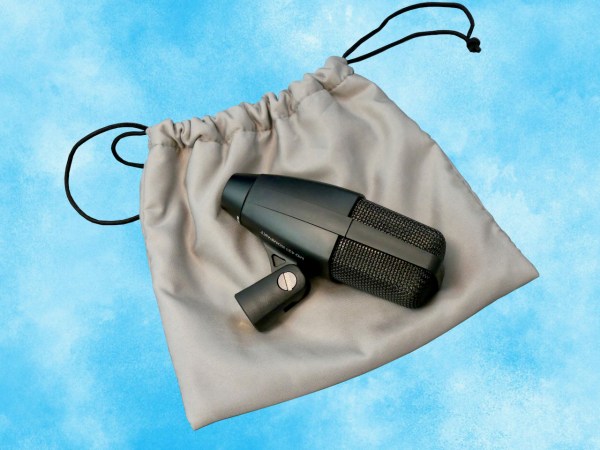
Sennheiser has finally listened to everyone who has been asking for a scaled-down version of the MD421 model. A few weeks ago, the Sennheiser MD421 Kompakt, a compact parallel version of the old classic, was released.

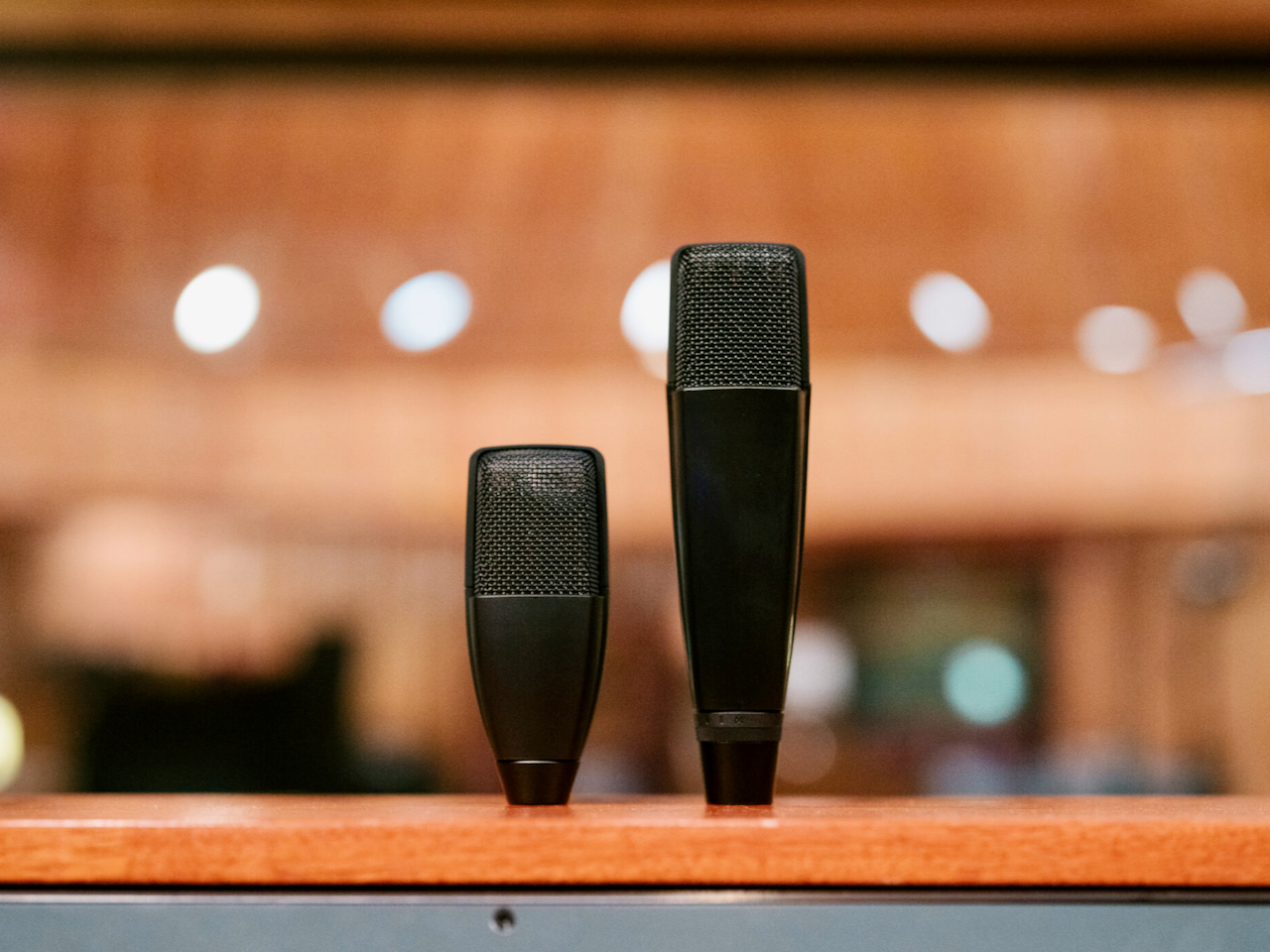
The Kompakt version (street price around 290 euros) is almost half the length of the original MD421 (12 cm versus 21.5 cm) and more than half the weight (159 g versus 385 g).

The microphone capsule in the new Kompakt version is exactly the same as in the classic version, and the volume of the bass chamber in the shorter body has been kept the same size. Thanks to this, it is no surprise that the frequency response (30 Hz – 17 kHz) and other technical values ​​​​of the MD421 Kompakt are also identical. The microphone’s shrinkage has been achieved by removing the bass filter unit of its big brother from the Kompakt.

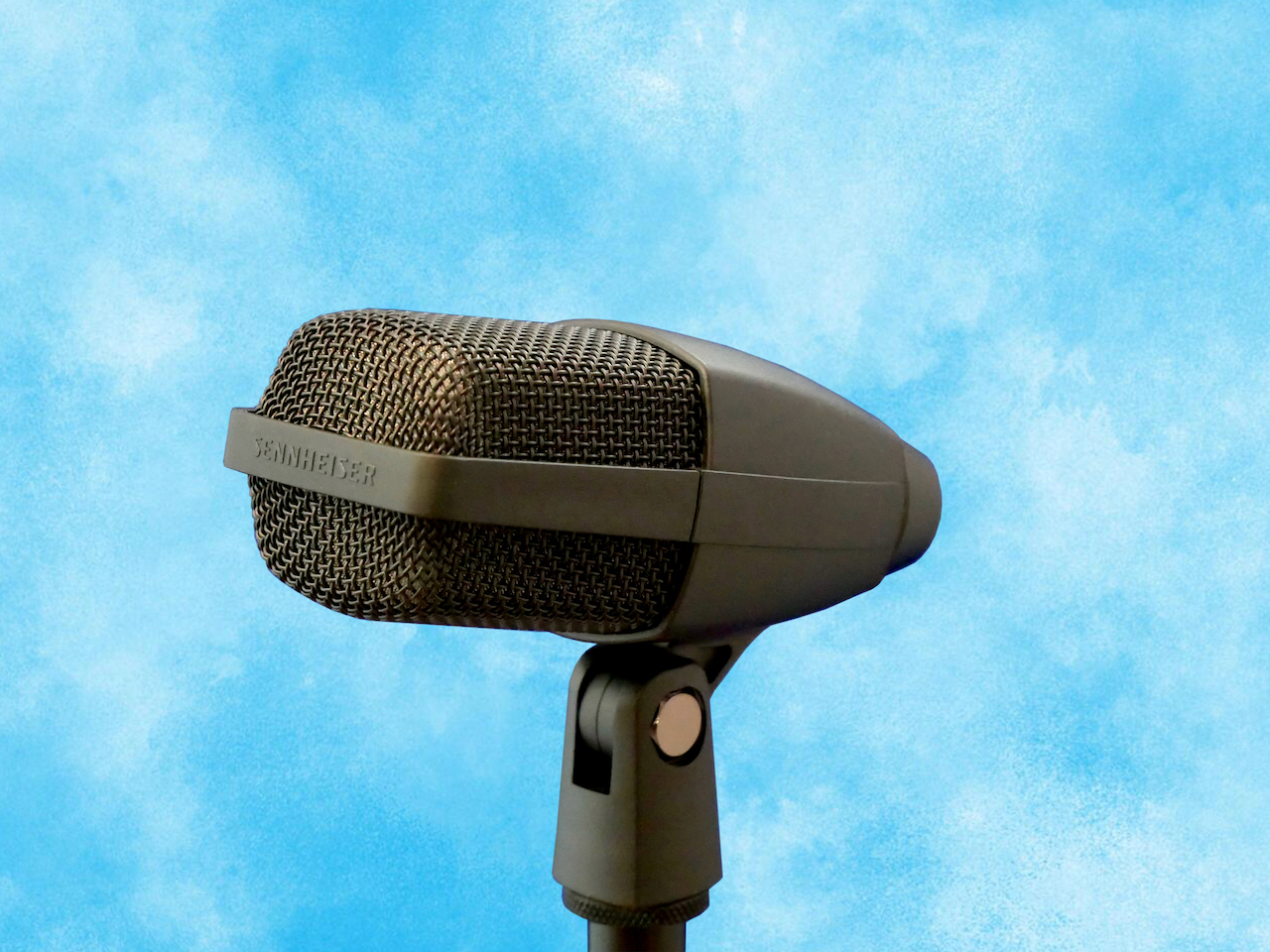
The Sennheiser MD421 Kompakt does not have a separate stand adapter, but here it is implemented as part of the microphone body. For drum recordings, the new mic is also available in a set version (street price approximately 315 euros), which already includes the MZH drum adapter suitable for the Kompakt. A storage bag is included in both sales packages.

The convenient size and low weight of the MD421 Kompakt make it very easy to place the new mic. The more compact body does not feel toy-like at all, but the mic has the same solid construction as its big cousin. I think the MD421 Kompakt would also be an excellent choice for a vocal mic on stage, as you don’t have to worry about your teeth, as you would with the full-size version, if someone hits the mic stand while you’re singing.

****

At least to my ears, the Sennheiser MD421 Kompakt sounds a little warmer than a Shure SM57, and the new mic’s presence emphasis is also at a higher frequency than the Shure. Whether this is a “good” or “bad” feature depends entirely on the source signal and your own preference.

****

For this review I recorded two demo songs with the Sennheiser. The first demo is a completely acoustic song, where every instrument and sound has been recorded with the MD421 Kompakt and a Cranborne Camden EC2 mic preamp. Song number two is a rock song, where the drums sounds are samples, but the bass and guitars have been captured with the MD421 Kompakt and the built-in microphone preamp of Universal Audio’s Volt 2 interface.

****

Testipenkissä: Raato Guitars Fuzzrocity

Raato Custom Guitars on tunnettu pajan nykytarpeisiin tehdyistä huippulaadukaista sähkö- ja bassokitaroistaan. Raato Guitarsin pomo Mika Ruotsalainen on hiljattain lisänyt kolme efektipedaalia brändin valikoimaan – yhden trebleboosterin, sekä pari fuzzia.

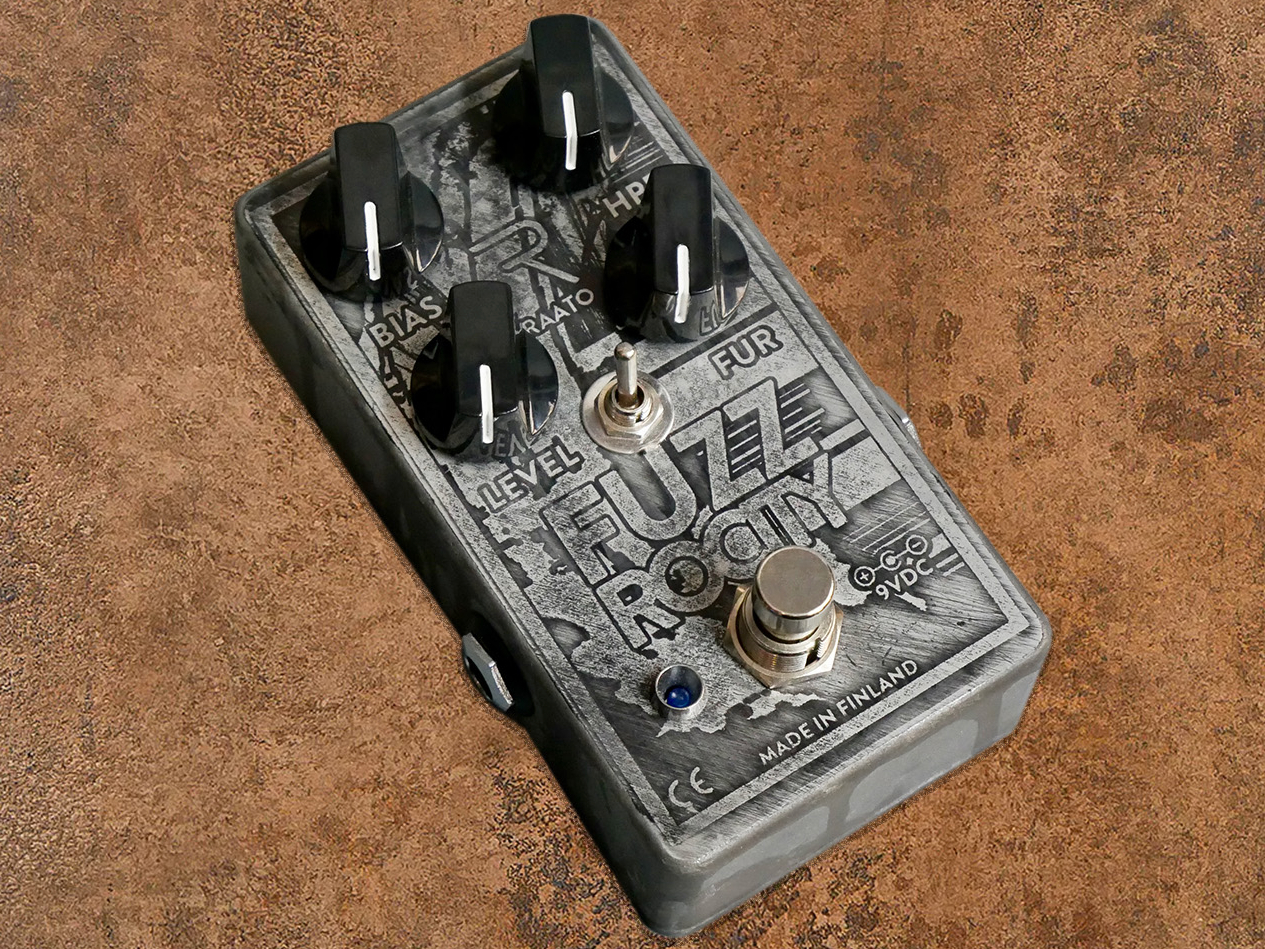
Upouusi Raato Fuzzrocity (268 €) on Fuzz Face -tyylinen piipohjainen fuzz-särö nykyajan kitaristeille. Tässä yhteydessä ”Fuzz Face -tyylinen” tarkoittaa nimenomaan efektin soundimaailma, sillä Fuzzrocity ei ole missään nimessä jonkun vintage-pedaalin klooni.

Kun kävin pajalla, Mika näytti minulle muutaman työn alla olevan Fuzzrocity-pedaalin. Hän käyttää erittäin laadukkaita osia, sekä oman suunnittelun mukaan tehtyjä piirilevyjä. Myös pedaalien grafiikat etsataan itse Raato Guitarsilla. Toimiakseen Raato-pedaalit tarvitsevat Boss-standardin mukaista yhdeksän voltin virtalähdettä.

Hyvä vintage Fuzz Face voi olla taivaallinen soundikokemus, mutta valitettavasti sillä ei ole paljon mahdollisuuksia säätää sitä soundia, kun tarjolla on ainoastaan Fuzz- ja Volume-säätimet. Riippuen soittajan musikkillisista tarpeista, sekä käytetystä kitarasta ja vahvistimesta, vintage-fuzz voi kuulostaa liian terävältä tai liian mutaiselta, etenkin nykyaikaisten alavireisten (tai seitsenkielisten) kitaroiden kanssa.

Lisäksi vanhat Fuzz Facet voivat aiheuttaa ongelmia yhteiskäytössä wah-pedaalin kanssa. Pedaalien välinen impedanssin yhteensopimattomuus voi aiheuttaa korvia raastavaa ulinaa.

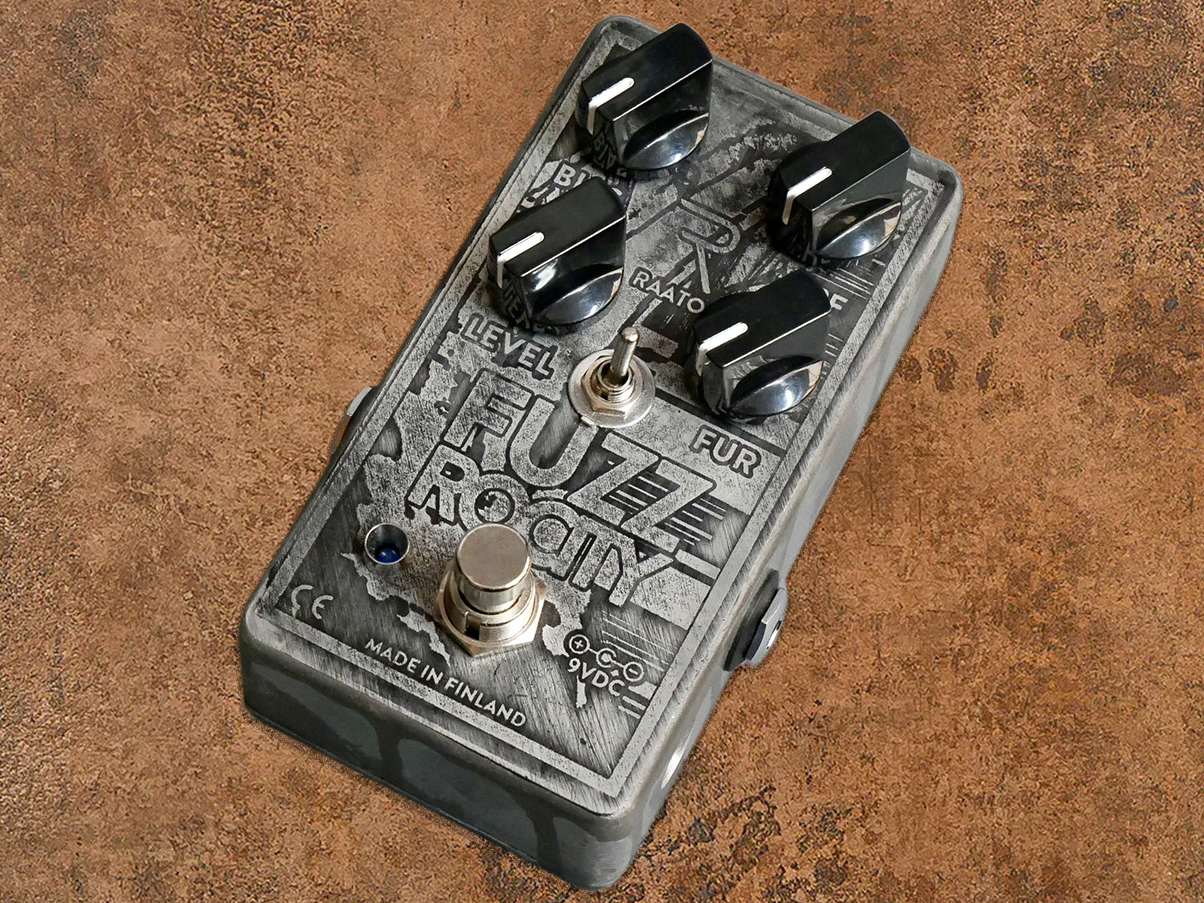
Raato Fuzzrocity on suunniteltu nykykitaristin tarpeita silmällä pitäen – pedaali tarjoaa laajan valikoiman herkullisia säröjä, sekä paljon säätövaraa eri genrejä ja tarpeita varten. Efektistä löytyy neljä säädintä:

BIAS antaa sinun säätää piitransistorien käyttöjännitettä, kun taas HPF tarkoittaa ylipäästösuodatinta, jolla voit poistaa särösignaalista mahdollisesti häiritseviä bassotaajuuksia. FUR vastaa tavallista fuzz- tai gain-säädintä tulosignaalille, kun taas LEVEL ohjaa lähtösignaalin voimakkuutta.

Lisäksi Fuzzrocitysta löytyy kolmisuuntainen minikytkin, joka antaa sinulle kaksi eri treble-filtteriä (sekä ohituksen keskiasennossa), jolla voi kesyttää tarvittaessa signaalin diskanttia.

Saat nykyaikaisen version Fuzz Face soundista, kun BIAS on lähes täysillä ja HPF pois päältä, jolloin FUR ja LEVEL toimivat vintage-faced Fuzz- ja Volume-säätimien tavalla. Ehdottaisin, että laitat tässä tapauksessa diskanttifiltterin kytkimen ala-asentoon.

Raato Fuzzrocity tarjoaa kuitenkin paljon laajemman kattauksen eri fuzz-soundeja, kun ottaa kaikki säätimet käyttöön.

BIAS-säätimen asetuksilla on erittäin suuri vaikutus tämän pedaalin luonteeseen ja dynamiikkaan. Matalilla BIAS-asetuksilla saat ”kuolevan pariston” soundeja, joissa esiintyy vahva geittaaminen ja hyvinkin rakeinen särösoundi. Avaamalla BIASia fuzz-sounds muuttuu kiinteämmäksi ja dynaamisemmaksi. Monet nyky-rock- ja metal-kitaristit hyötyvät pedaalin HPF-säätimestä, joka on tärkeä työkalu, silloin kun halutaan pitää mutaisia bassotaajuuksia aisoissa. FUR-säädin käyttäytyy – luonnollisesti – vuorovaikutteisesti BIAS-säätimen kanssa, ja sen soundien skaala ulottuu ”rikkinäisen sitarin” soundeista mietojen overdrive-soundien kautta tuomiopäivän fuzziin. Kolmiasentoinen treble-kytkin toimii hienosti purevuuden annostelijana.

Mika Ruotsalainen on suunnittelut Raato Fuzzrocity -pedaalinsa toimimaan saumattomasti myös vintage-tyylisten wah-wah-pedaalien kanssa, niin kuin kuulee tämän jutun alussa olevassa videossa, jossa käytin Voxin V845 suoraan Fuzzrocityyn.

Jutun lopussa oleva video taas näyttää, kuinka hyvin Fuzzrocity reagoi kitaran volume-säätimen muutoksiin.

Minun mielestäni Raato Guitarsin Fuzzrocity-särö on täysosuma, koska sillä saa erittäin laajan valikoiman erilaisia vintage-vivahteisia fuzz-soundeja, täysin ilman vintage-klooneille tyypillisiä ongelmia monissa nykypäivän genreissä.

Fuzzrocity-pedaali on piensarjoissa käsin tehty efekti, ja saatavilla hyvin järkevällä hinnalla. Pedaalilla on selkeästi luottotyökalun ainekset.

Review: Raato Guitars Fuzzrocity

Raato Custom Guitars is a Finnish maker of ultramodern handcrafted electric guitars and basses. Recently Raato’s main man Mika Ruotsalainen has introduced three effect pedals – a treble booster, as well as a pair of fuzz-boxes.

The Raato Fuzzrocity (268 €) is a Fuzz Face-flavoured silicon fuzz made for the modern guitarist. When I say ”Fuzz Face-flavoured” I mean the character of the fuzz sound, but the Fuzzrocity is not a clone of a vintage Fuzz Face.

Mika showed me a few Fuzzrocity pedals he was working on, when I visited his workshop, and I could see he was using high-quality parts and bespoke pcbs to assemble his pedals. The custom graphics are also etched into the pedals’ casings right there in the workshop. The pedal is powered by a Boss-standard 9V power supply.

A vintage Fuzz Face can be a thing of beauty, but it doesn’t offer much scope for adjustment, offering only Fuzz- and Volume-controls, without any option to adjust the resulting fuzz sound itself. Depending on the player’s requirements and equipment a vintage fuzz can sound too bright or too muddy, especially with modern downtuned (or seven-string) guitars.

Additionally, many original Fuzz Faces have a tendency to self-oscillate when used in conjunction with a wah-wah, due to impedance mismatching caused – in most cases – by the wah-pedal.

The Raato Fuzzrocity has been designed from the ground up to give you all of that delicious sound, while also offering plenty of scope for adjustment. There are four controls on offer:

BIAS lets you adjust the operating voltage for the silicon transistors, while HPF stands for ”high-pass filter” and lets you dial out any bottom end that might be clogging up your sound. FUR corresponds to your regular fuzz- or gain-control for the input signal, and LEVEL controls the output level.

Additionally, there’s a three-way mini-toggle that gives you two low-pass filter setting (plus bypass in the middle position) to tame the signals treble content, if necessary.

To get a modern version of a Fuzz Face sound, start off with the BIAS around 4 o’clock and the HPF turned to 7 o’clock. With this setting FUR and LEVEL correspond to a two-knob fuzz’s Fuzz- and Volume-controls, respectively. I’d recommend you set the three-way toggle to the downward position in this case.

But there’s a much wider array of tones to be gleaned from the Raato Fuzzrocity by using the controls to their fullest.

Settings of the BIAS-control have a very large bearing on the character and dynamics of this pedal. Set low BIAS will give you the sound of a ”dying” battery with plenty of gating and graininess. Turning BIAS up gradually will give you firmer fuzz sounds and more dynamic variation. For modern applications with drop-tuned and/or seven-string electrics and baritones, the HPF-knob is a crucial tool to keep any unwanted wooliness at bay. The FUR-control is – naturally – interactive with the BIAS settings, and it will take you all the way from ”broken sitar” tones and mild overdrive to doomsday fuzz. The three-way treble switch is really useful in tailoring the table content to suit your needs.

Mika Ruotsalainen has designed the Raato Fuzzrocity to work well with vintage-style wah-pedals, as you can easily hear in the video at the top of this review, where I have a Vox V845 running directly into the Fuzzrocity.

The video at the bottom of this video will show you for its part how well the Fuzzrocity responds to changes at your guitar’s own volume control.

In my view the Raato Fuzzrocity is a success on all fronts, because it manages to give you a wide variety of vintage-inspire fuzz sounds, without the drawbacks of vintage clones, and with far greater scope for adjustments.

The Fuzzrocity is handcrafted in Finland in very limited numbers and sold at a very reasonable price. This could easily become your go-to fuzz from now on.

Review: Bluetone Black King 15 Reverb

****

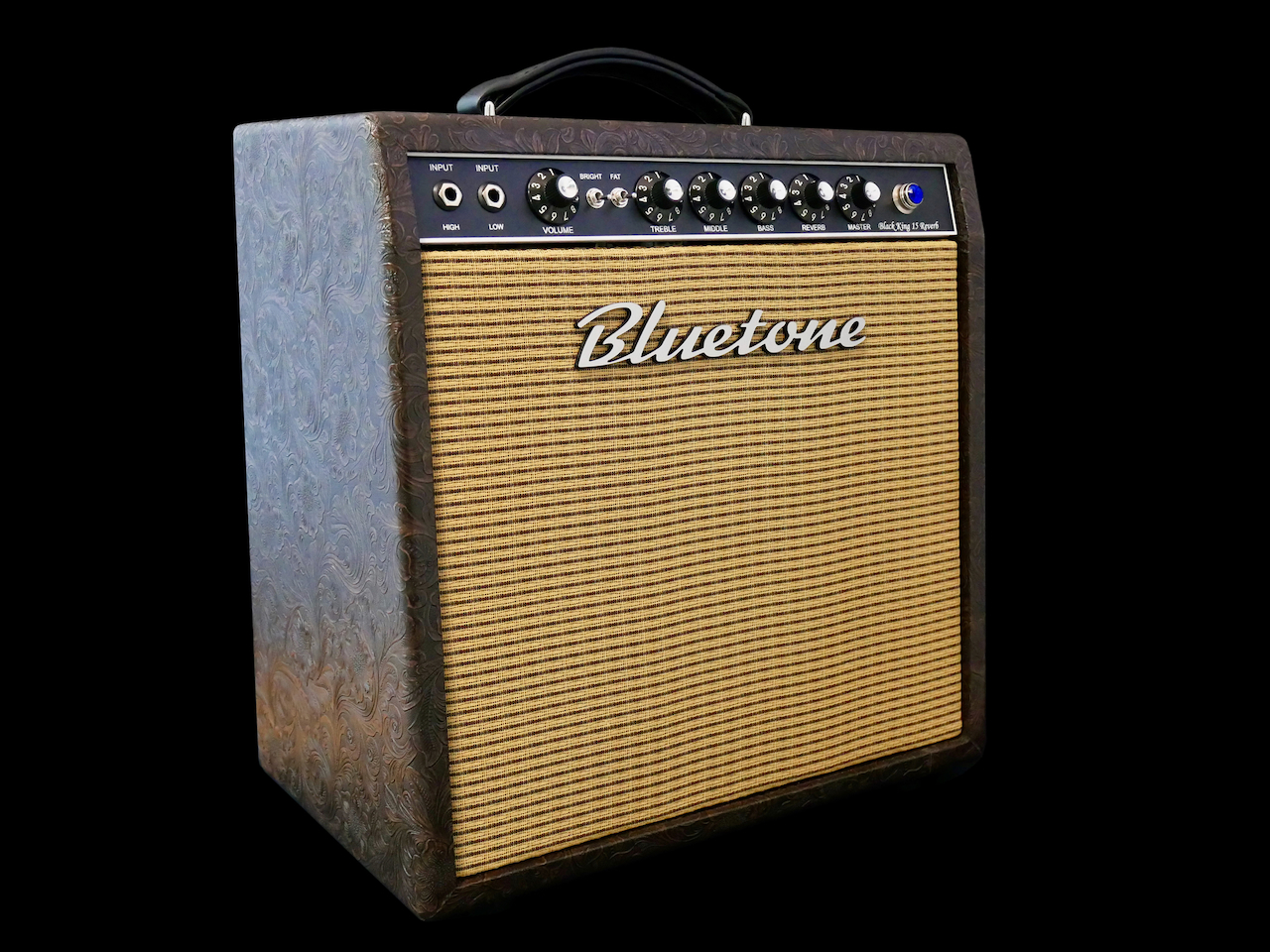
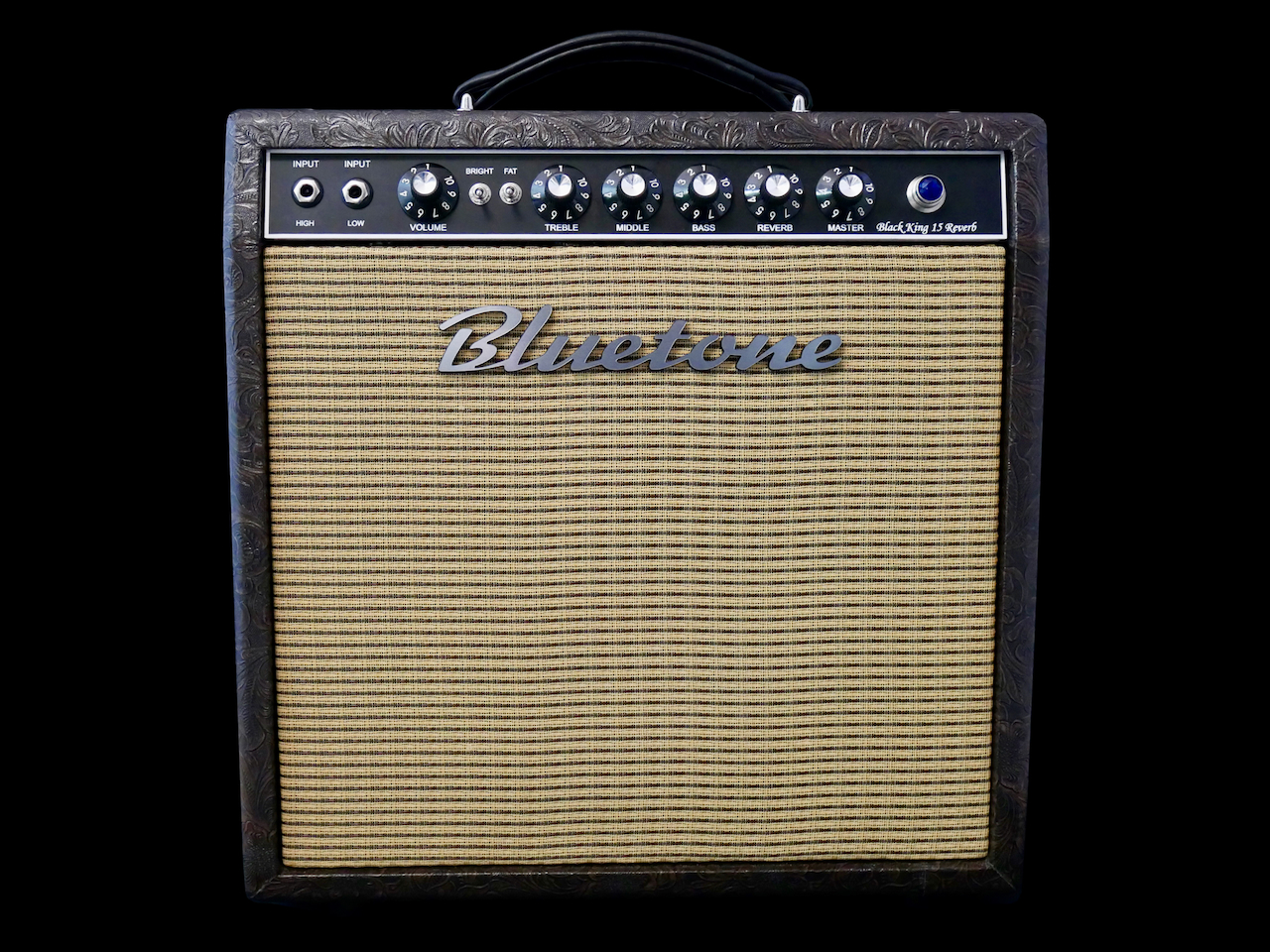
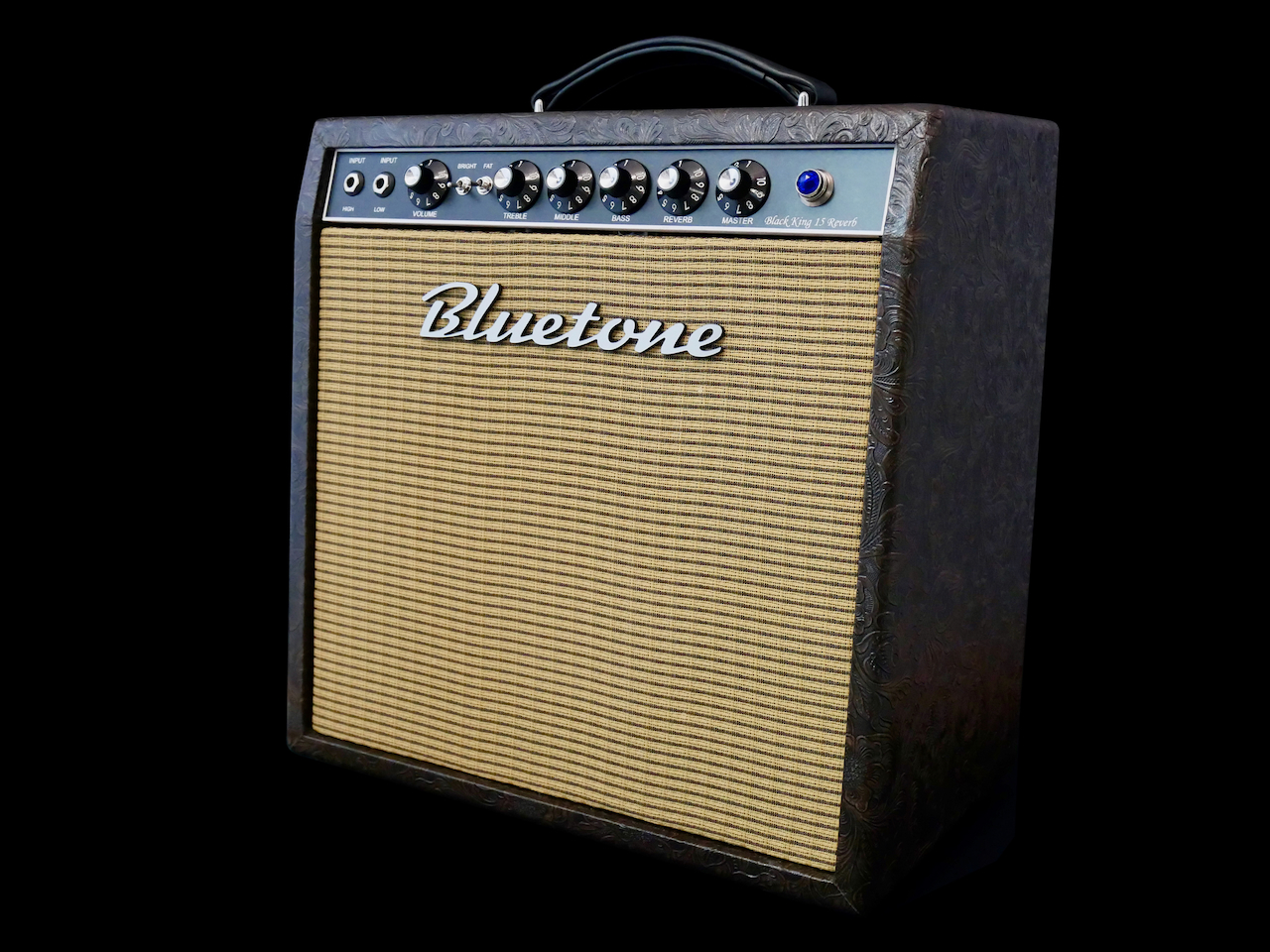
Bluetone’s new combo, the Black King 15 Reverb (prices start from 1,440 €), is a compact and lightweight (9 kg), handcrafted single-channel all-valve guitar amplifier. It’s the small brother of the Black King Reverb, offering 15 watts of output power from a pair of 6V6GT-valves.

The Black King 15 Reverb’s sound takes its cue from a rather rare Fender combo, the Vibro King, which was in production between 1993 and 2003, and which has become The Who’s Pete Townshend’s favourite live amp.

In terms of its sound and touch sensitive behaviour, the most crucial feature of the Black King 15 is the preamp’s gain structure and character, which is more aggressive than, say a Fender ”Blackface” amp, putting the new Bluetone combo squarely in the middle between ”Blackface”, ”Tweed” and Marshall-style amps.

****

Bluetone’s Black King 15 Reverb comes in a Fender-type combo cabinet of approximately the same size as a 1960s Fender Princeton combo. The fetching Country & Western covering, as well as the wheat-coloured grille cloth come as standard.

In addition to the Volume-control the front panel gives you access to a three-band EQ-section with two additional switchable boosts – Bright and Fat. There’s a control for the spring reverb, as well as for the (post phase inverter) Master Volume.

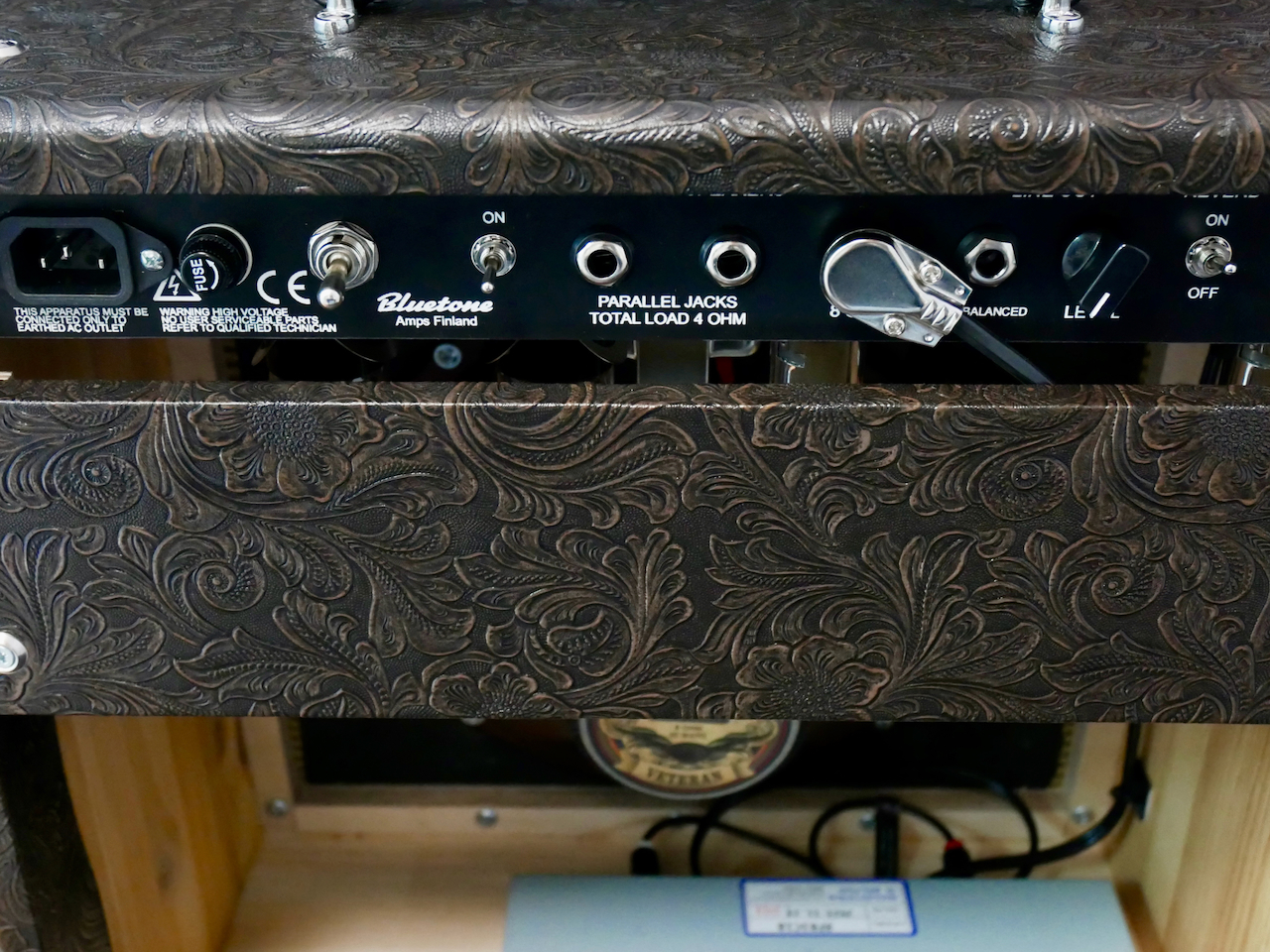
In addition to the Power On/Off-switch the back panel gives you a switchable internal dummy load that makes it possible to record the amp direct via its line output with the speaker turned off. There are also two outputs for external speakers, as well as an on/off-switch for the spring reverb.

The combo we got for review came with a ten-inch 20 watts Warehouse Speakers Veteran speaker. You can also order your Black King 15 Reverb with a model G10-C/S from the same company.

****

The Bluetone Black King 15 Reverb exudes an air of top-notch quality right from the get-go. Switching the combo on you’ll find an extremely low noise floor – the mark of a well-made boutique amp. Low self-noise is a direct result of careful planning, low-tolerance components, and the sensible placement of hum-inducing transformers on the amp chassis.

The Black King 15’s 6V6GT-powered power amp naturally adds a nice dose of Fender-ish character to proceedings. There’s a healthy amount of clean headroom to be had from this combo’s preamp, but tasty break-up sounds start entering the picture earlier than in a typical ”Blackface” amplifier.

In the ”break-up zone” the Black King Reverb 15 is very touch sensitive and dynamic. The more you put in the more distortion you get out.

The Black King 15 Reverb offers plenty of distortion, which can be had at low volume levels, thanks to the master volume control. This combo also likes effect pedals.

Thanks to the preamp’s excellent EQ-section and the additional boosts, dialling in a wide range of sounds is easy, making the Black King 15 suitable for many different musical genres.

If you’re looking for a combo with more aggression than a ”Blackface” has to offer, you should definitely try the Bluetone Black King 15 Reverb. This amp offers boutique-grade quality a a very reasonable price.

Testipenkissä: Bluetone Black King 15 Reverb

****

Bluetonen uusi Black King 15 Reverb (hinta alkaen 1.440 €) on kätevän kokoinen (9 kg), yksikanavainen ja käsintehty putkivahvistin. Se on vuoden alussa ilmestyneen Black King Reverb -kombon pikkuveli, joka tarjoaa 15 wattia päätetehoa kahdesta 6V6GT-putkista.

Black King 15 Reverbin soundillinen esikuvana on toiminut suhteellisen harvinainen Fender Vibro King -vahvistin, joka oli tuotannossa vuodesta 1993 vuoteen 2003, ja josta on sittemmin tullut The Who -yhtiön Pete Townshendin luottotyökalu livenä.

Tärkein ominaisuus soundin ja soitettavuuden kannalta on Bluetone Black King 15 -kombossa etuvahvistimen gain-rakenne, joka on hieman Blackface-tyyliä ärhäkkäämpi, ja joka istu soundiltaan Blackface-, Tweed- ja Marshall-tyypisten vahvistimien muodostuman kolmion keskipisteellä.

****

Bluetone Black King 15 Reverb -kombo on Fender-tyylisessä kotelossa, joka on samaa kokoluokkaa 1960-luvun Princeton-kombon kanssa. Country and Western -tolex ja vaaleanruskea etukangas ovat tässä mallissa standardia.

Etupaneelista löytyy etuasteen Volume-säätimen lisäksi kolmialueinen EQ-osasto kahdella lisäboosteilla – Bright (diskantti) ja Fat (ala-middle). Jousikaiulle löytyy oma säädin, samoin kuin vaihekääntäjän jälkeiselle Master-volyymille.

Takapaneeliin on päälle/pois-kytkimen lisäksi sijoitettu sisäisen keinokuorman kytkin, jolla saa kombon oman kaiuttimen kytkettyä turvallisesti pois päältä, jos haluaa käyttää pelkästään Black King 15:n omaa linjalähtöä. Lisäksi takapaneelista löytyy jakkeja ulkoisille kaiuttimille, sekä jousikaiun oma päälle/pois-kytkin.

Testikomboon on asennettu Warehouse Speakersin 20-wattinen kymppituumainen Veteran-kaiutin. Vaihtoehtoisesti Black King 15 Reverbiä saa myös saman firman G10-C/S-kauittimella varustettuna.

****

Bluetone Black King 15 Reverb -kombo on erittäin siististi toteutettu vahvistin, joka vaikuttaa laadukkaalta heti kättelyssä. Yksi silmiinpistävä ero tällaisen laadukkaan boutique-vahvistimen ja monen massatuotetun putkikombon välillä on Bluetonen todella alhainen kohina- ja hurinataso. Se kielii kombon laaddukkaista komponenteista ja tärkeiden osien – esimerkiksi muuntajien – osaavasta sijoittelusta laitteessa.

Black King 15 -vahvistimen 6V6GT-putkilla toimiva päätevahvistin antaa soundille luonnollisesti hyvin Fender-maisen karakteerin. Etuvahvistimen gain-rakenne tarjoaa hyvin headroomia puhtaille soundeille, mutta alkaa lisätä herkullista rosoa selvästi aiemmin kuin esimerkiksi tyypillinen Blackface-kombo.

Breakup-vyöhykkeellä Black King 15 Reverb mahdollistaa hyvin dynaamista soittoa, jossa vahvistin reagoi dynamiikkaan eriasteisella säröllä.

Black King 15 Reverb tarjoaa runsaasti säröä, ja kombon Master-volumen ansiosta se on saatavilla myös hyvin maltillisella volyymitasolla. Vahvistin myös pelaa erittäin hyvin efektipedaalien kanssa.

Etuvahvistimen loistava EQ-osasto Bright- ja Fat-lisäkytkimillä antaa kitaristille laajan skaalan erilaisia soundeja, minkä ansiosta Bluetone Black King 15 toimii ongelmitta monissa genreissä.

Jos Blackfacea hieman ärhäkkäämpi kompakti Fender-tyylinen kombovahvistin kiinnosta, kannattaa minun mielestäni ehdottomasti tutustua Bluetone Black King 15 Reverbiin. Se tarjoaa ehtaa boutique-laatua reiluun hintaan.

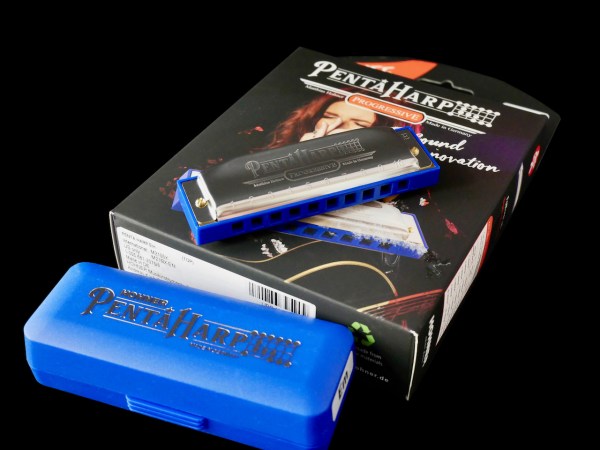
Testipenkissä: Hohner PentaHarp

Vanhan koulukunnan bluesiin kuuluu luonnollisesti huuliharppu, joko puhtaana PA:n kautta tai sitten murealla säröllä höystettynä pienen tweed-vahvistimen läpi soitettuna.

Ihme kyllä perinteisesti bluesia on soitettu tahallaan väärinkäyttämällä iloisia kansanlauluja varten keksittyä duuri-pohjaista soitinta. Perushuuliharppu on kymmenreikäinen soitin ns. Richter-vireessä. Böömiläinen Joseph Richter keksi tätä viritystä noin 200 vuotta sitten juuri sitä varten, että sillä pystyi soittamaan sekä melodian, että perussoinnut vaivattomasti.

Joskus 1880-90 luvulla muusikot Yhdysvalloissa keksivät, että aloittamalla huuliharpun skaalaa toisesta reiästä vetämällä – ns cross harp -soitto – ja bendaamalla muutama soittimen äänistä, duuri-soittimesta tuli suhteellisen helposti bluesille sopiva soitin. ”Suhteellinen” on tässä yhteydessä se ratkaiseva sana, koska bendaamiselle tarvittavat tekniikat – oikea hengitys, oikea suun muoto, oikea kielen käyttö – vaativat jonkin verran opettelua ja harjoittelua.

Huuliharppujen valmistajat ovat jo pitkään tarjonneet eri genreille sopivia hieman muunneltuja virityksia, niin kuin esimerkiksi Seydelin rock-musiikille optimoitu Wilde-viritys, mitkä kaikki kuitenkin ovat Richter-virityksen johdannaisia, joissa kaikissa bendaukset ovat yhä tärkeässä osassa.

Hohnerin PentaHarp (hinta noin 55 €) menee tässä selvästi pidemmälle. Tässä on huuliharppu, joka on tarkoitettu vaivattomaan blues- ja rock-soittoon, ilman tarvetta bendaamiselle tai muille erikoistekniikoille. PentaHarpin kanssa riittää, että pystyy puhaltamaan ilmaa tasaisesti ulos (ja vetämään sisään).

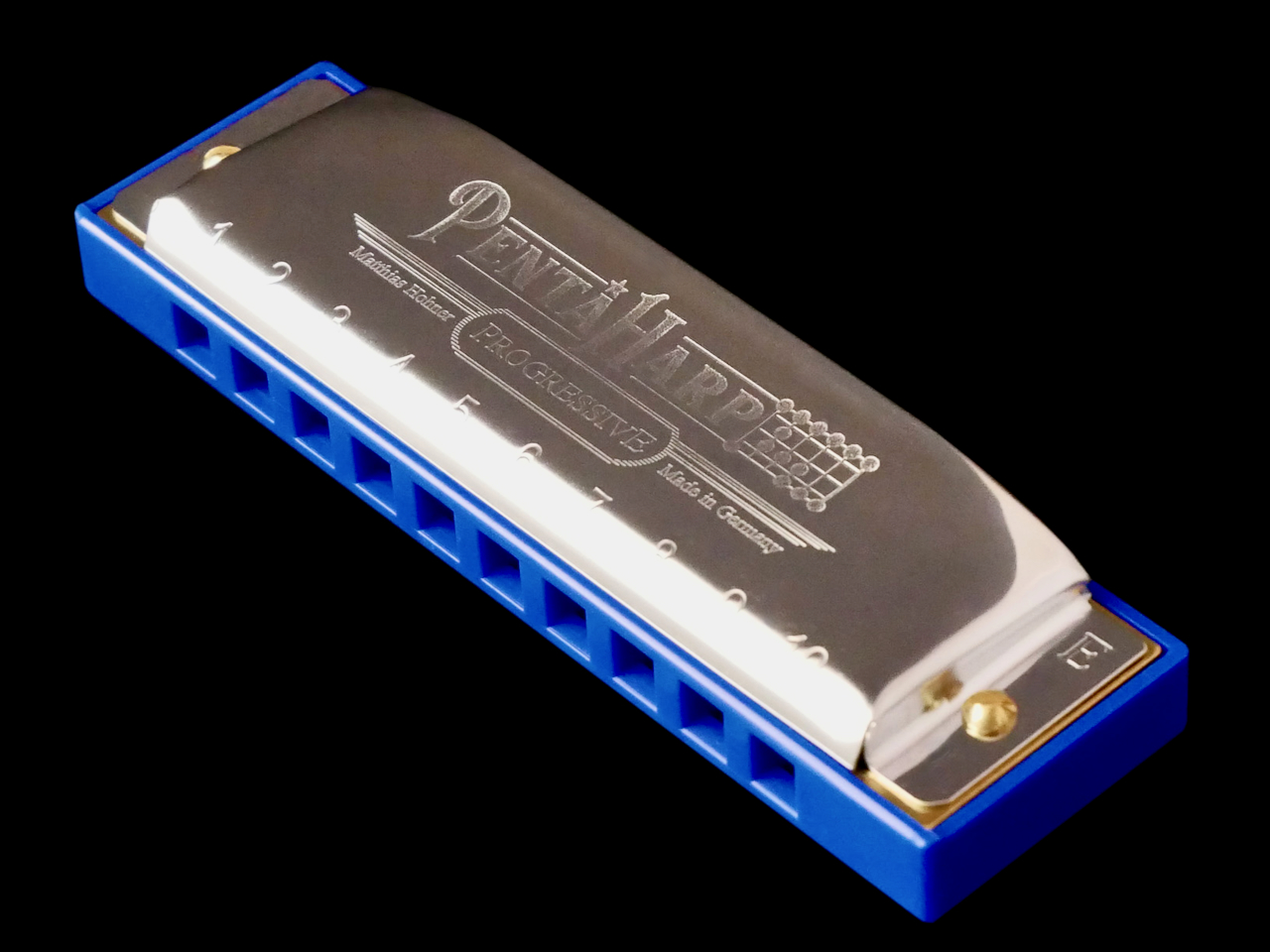
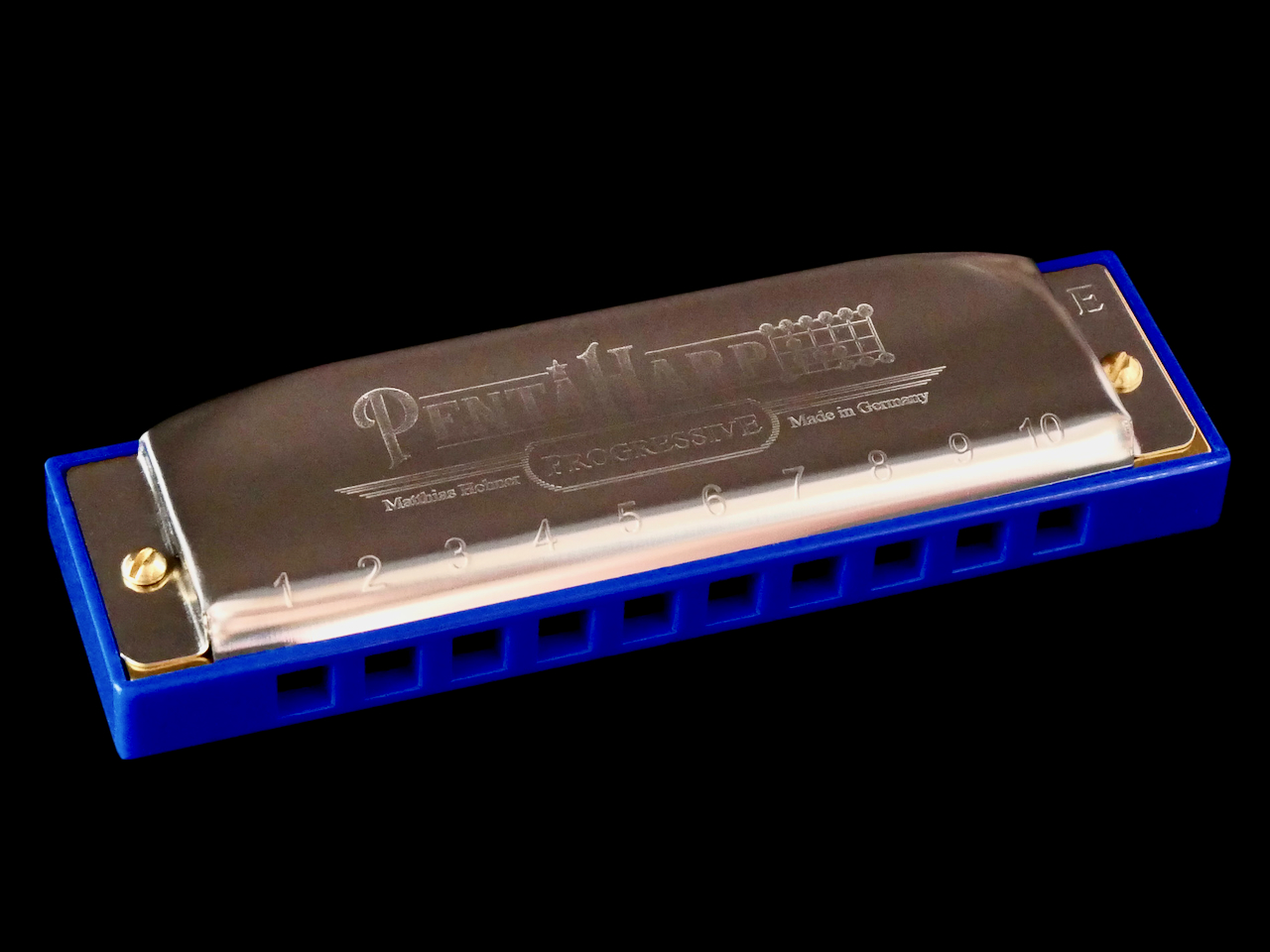
Hohner PentaHarp perustuu firman erittäin suosittuun Special 20 -malliin. Soittimen sininen runko viittaa siihen, että kyseessä on erikoisesta huuliharpusta.

PentaHarpin viritys tarjoaa hieman kolmen oktaavin verran pentatonista molli-skaalaa, johon on lisätty alennettu kvartti (ns. blue note). Kitaristien keskuudessa niin suositussa E-bluesissa äänet ovat siis: e-g-a-ais/b- h-d, minkä jälkeen sama toistuu seuraavassa oktaavissa.

PentaHarpilla pystyy siis soittamaan ongelmitta kitaristille tutulla ”in the box” -ajatelulla, ilman mitään kommervenkkejä soittotekniikan osalta. Hohner on perustanut PentaHarpille oman nettisivuston, jossa voi tutustua laajemmin mallin tuomien mahdollisuuksiin.

Hohnerin PentaHarp on laadukas soitin, joka tarjoaa perusharppua helpomman tavan tutustua bluesharpun soittamiseen. Jos haluat esimerkiksi lisätä silloin tällöin huuliharppua omaan soittoosi, ilman bendauksien opettelua, PentaHarpilla kyllä onnistuu.

PentaHarpin viritys tekee tästä huuliharpusta kuitenkin myös hieman rajoitetun, koska soittimella ei voi vaihtaa bluesista tai rockista suoraan folkille tai kantrille. PentaHarpissa ei oikeastaan onnistu vaivaton sointujen tai terssistemmojen soittaminen, koska vierekkäiden kanavien soittaminen ei aina soi harmonisella tavalla, toisin kuin Richter-harpuissa.

Hohnerin PentaHarp on hyvä soitin aloittelijoille, koska oikeiden nuottien etsimisen sijaan uusi bluesharpisti voi/täyttyy keskittyä hyvän perustekniikkaan, nimittäin oikean kanavan löytämiseen ja tasaiseen sisään- ja uloshengittämiseen. Etenkin liian voimakas ilman sisään vetäminen voi aiheuttaa tahattomia bendauksia tai ongelmia äänen syttymisen kanssa – huuliharpun virityksestä riipumatta.

****

Review: Vox V845 Wah-Wah

Alkuperäistä, laajempaa Rockway-juttua voi lukea TÄÄLLÄ.

Three examples showing the different basic styles of wah-pedal use:
• ”Papa…” – whacka-whacka Motown/Funk
• ”Voodoo…” – expressive wah-wah use
• ”Money…” – so-called ”cocked” wah-wah (pedal parked in one position)
****
• Vox V845 wah-wah
• Mad Professor Simble Overdrive
• Ibanez 850 Fuzz Mini
• Fender (Japan) Stratocaster and Hamer USA Studio Custom guitars
• Juketone True Blood valve combo

The Vox V845 is an interesting wah-pedal for at least three reasons – it’s made by the inventors of the wah-wah, it is very affordable (around 70-75 euros in Finland), and it is much lighter than regular Vox- or Dunlop-made wah-wahs (only 900 g compared to approx. 1.6 kg).

This drastic difference in weight is achieved by using a plastic core for both the main casing and the treadle. This core is then coated with an aluminium-based coating that gives the V845 the traditional look of a wah.

Electronically the Vox V845 is virtually identical to a vintage Vox-wah, apart from being built with a couple of PCBs and modern components.

An important improvement over the originals from the 1960s and 70s is the addition of a DC input, which allows you to power the V845 from a modern power supply.

The Vox V845 looks like a wah-wah, feels like a wah-wah, so it’s no surprise that it also sounds like a genuine Vox-wah. The V845 switches on and off in the traditional way by giving the switch beneath the treadle a push in the toe-down position. The sound is big and warm, and, typical for a Vox, a little less abrasive in the top end than a standard Dunlop Cry Baby. What’s not to like?

I’ve been using the Vox V845 for four years by this point, and it hasn’t given me any trouble so far. Check it out!

****

Here are two recent recordings I’ve used the V845 on:

****

Pidä blogia WordPress.comissa.

Ylös ↑