
Testissä mukana:
Lue testi TÄSTÄ.

Kitarablogi.com – Finland's premier Guitar and Bass blog
Juttuja kitaroista ja bassoista


Alkuperäinen, laajempi suomenkielinen juttu on luettavissa TÄÄLTÄ.
Thanks to technological progress and cheap Asian labour, you can already get a very decent Les Paul Standard copy these days for somewhere between 500 and 700 euros.
Here are four of those guitars presented in alphabetical order. I tried to obtain one of the new Epiphone-models from their Finnish distributor for this round-up, but to no avail.
****

GrassRoots G-LP-60S Honey Sunburst
• Current price in Finland: 559, – (incl. gig bag)
• Distributor: Musamaailma
GrassRoots is a brand in the ESP Guitars family, and concentrates on traditional electric guitars and basses. Even though the LP-60S is the least expensive guitar in this round-up, it comes in its own, high-quality gig bag. The finish on our review sample is called Honey Sunburst.

The G-LP-60S’ body is made from four side-by-side pieces of mahogany, with a top crafted from maple. The flame maple veneer on the curved top looks gorgeous.
The set mahogany neck is one piece of mahogany (!), except for the top half of the headstock. The bound fretboard has been made from beautiful pau ferro, while the LP-60S’ top nut is genuine bovine bone. The fretwork looks very decent.
The machine heads are nice copies of vintage Kluson tuners. The GrassRoots’ bridge is a modernised version of a Tune-o-matic, sporting six separate small metal clips to keep the bridge saddles in place.
The LP-60S’ pickups are GrassRoots’ own GH-1G humbuckers with metal covers. Looking beneath the electronics cavity covers, we found a closed three-way toggle switch, as well as four small pots and very clean soldering.

The first thing I noticed when I picked up the GrassRoots guitar is how light it is. I don’t know if GrassRoots uses any type of weight relief on the LP-60S, but the review sample’s weight clocks in at only 3.3 kgs.
The neck profile is a very ”fast” version of Gibson’s famous 60s neck, meaning a nicely rounded, but relatively slim C-shape. Musamaailma’s in-house guitar technician has expertly set up the review guitar, resulting in a buzz-free action of only 1.6 mm (bass-E) and 1.5 mm (treble-e).
I’d describe the GrassRoots humbuckers as vintage-powered, meaning they give a lot of scope for dynamics and a nice, rounded top end response. The neck ’bucker is flutey, while the bridge pickup offers ample kick and mid-range push. The GrassRoots G-LP-60S is a versatile LP Standard style guitar, which sounds great, offers a comfortably slender neck profile, and which doesn’t weigh a tonne.
****

Green LP STD Lemon Drop
• Current price in Finland: 498, –
• Distributor: Nordsound
Green Guitars is a Swedish brand with Far Eastern production to keep the prices musician-friendly. Green’s LP STD model comes in a fetching Lemon Drop finish, as well as sporting a few features that differ from standard vintage-fare.
The Green’s body uses three pieces of very lively mahogany. The arched maple top has been spruced up with a tiger striped flame maple veneer. Green’s LP STD sports a deeper cutaway than its famous forebear, resulting in a more pointed horn.
The set-in neck is carved out of three side-by-side strips of mahogany, which – in all probability – should add a little stiffness to the neck. The neck wrist is protected from headstock breaks by a volute.
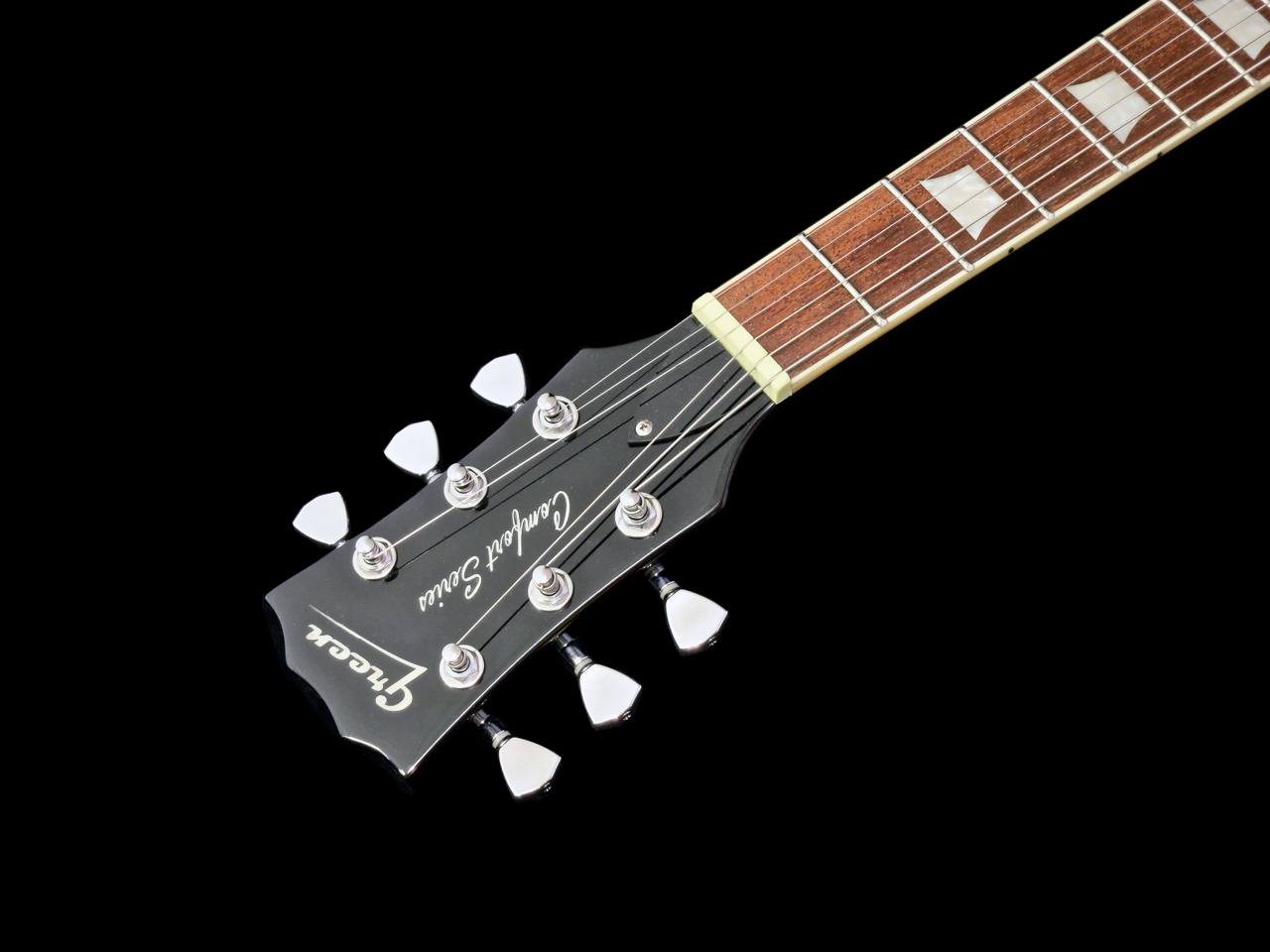
The Green features a set of modern tuning machines, as well as an up-to-date version of the Tune-o-matic bridge.
The bound rosewood fretboard comes with 22 well-installed medium-size frets. The nut is made from a cream coloured plastic.

Green’s LP STAD model sports a pair of open, zebra-coloured humbuckers. The electronics comprise a closed three-way toggle, as well as four small diameter pots. The soldering looks nice and clean.
Green’s neck profile is a smidgen bigger than that of the GrassRoots – I’d say the profile is somewhere halfway between a ’59 and a ’60 Gibson. The set-up on our test sample was very good, with the action clocking in at 1.7 mm (bass-E) and 1.5 mm (treble-e), without any fret buzz.
I’d describe the Green’s humbuckers as ”hot vintage”. This guitar has a big sound with a nice, fresh dose of treble. If you’re into Slash, this is the guitar I’d try out first.
****

Tokai Guitars ALS-62 Honey Burst
• Current price in Finland: 659, –
• Distributor: Tokai Guitars Nordic/Musamaailma
Tokai Guitars must be the most famous ”copy brand” in the world, whose instruments caused Fender and Gibson to do something about their sagging quality control back in the 1980s.
In addition to their top-of-the-line Japanese LS-models, Tokai also offers more affordable Chinese versions under the ALS-banner. The flame maple veneer – finished in a fetching Honey Burst – looks stunning, deep and chatoyant.
The Tokai ALS-62’s body uses four pieces of mahogany and a veneered arched maple top. In this series Tokai uses hard rock maple for their guitar necks – in this case we’re talking about a three-piece affair of neck, headstock, and neck heel.

Tokai uses jatoba as the material for its bound fretboard. We find 22 expertly-finished, medium-sized frets, as well as a genuine bone nut. The bridge is a fine version of the vintage Tune-o-matic, with a single metal bracket keeping the saddles in place. The bridge and stopbar ferrules have been sunk into the top wood for a very clean look.
The Tokai ALS-62 sports a pair of covered LSC-F-humbuckers. The electronics comprise a closed three-way toggle switch, plus four small pots. The soldering is very clean.

Tokai’s neck profile is my personal favourite, I must confess. It’s a rounded, not-too-fat 1959-style neck profile, offering your fretting had a good amount of ”meat” without too much bulk. The action is buzz-free, while being comfortably low at 1.6 mm (bass-E) and 1.4 mm (treble-e).
The Tokai ALS-62 sounds like ”the real thing”, leaving nothing to be desired. The neck pickup is creamy and flutey, while the bridge unit adds the right amount of grit to proceedings. The Tommi’s output is vintage-to-medium. This is a gorgeous guitar with a versatile sound to boot.
****

Vintage V100PGM Lemon Drop
• Current price in Finland: 576, –
• Distributor: Nordsound
Vintage Brand’s V100PGM Lemon Drop is an ”unofficial” signature guitar, offering you an affordable shot at the legendary LP played by three legends in a row – Peter Green, Gary Moore, and Kirk Hammett. The original guitar’s burst has long faded into an ”unburst” lemon drop shade, which is why the Vintage V100PGM Lemon Drop was first only available in that shade. Our test sample, on the other had, is Vintage’s view of what the guitar must have looked like brand new. So, here we have a beautiful cherry sunburst-coloured guitar, that is called ”Lemon Burst”, go figure.
Trev Wilkinson, who has designed this guitar for Vintage Brand, has added a few nifty updates to prevent the V100PGM from being a straight copy instrument:
The V100PGM’s mahogany body (three pieces) has a rounder bass-side shoulder and a much deeper cutaway that Gibson’s original. The top’s flame maple veneer sports extremely pretty and deep figuring.
The guitar’s neck – crafted from three side-by-side pieces of mahogany – is glued into the body by means of an asymmetrical neck joint, making excursions to the dusty end more comfortable.

The Vintage’s fingerboard is made from a trademarked material, called ”Lignum Rosa”, which translates from Latin as ”wood of the rose”. I can’t tell you what it actually is, but it looks and feels great, and it is home to 22 medium-sized, well-dressed frets. The top nut is Graph Tech’s NuBone material, which is a man-made alternative to ivory.
Surprisingly, the V100PGM comes with a set of Grover Deluxe vintage-type machine heads, instead of the Wilkinsons I’d have expected. The bridge on this Vintage is a Wilkinson-version of a modern Tune-o-matic.
The V100PGM comes with a pair of Wilkinson WVC-humbuckers. Like on the original, the neck unit has been installed ”upside down”, meaning with the adjustable pole screws facing the bridge, and with the wires hooked up in reverse, too. Gary Moore swapped the bridge pickup’s controls from the original bell-type to the early-Sixties ”reflectors”, because he wanted to be able to find the correct control without having to look at the guitar. This has been copied on the Vintage as well.
The V100PGM uses a closed three-way toggle switch and four small diameter pots. The soldering looks very decent.

The Vintage V100PGM comes with a slightly flatter version of a Gibson 60s C-neck, so we’re talking about a very ”fast” neck feel. The review guitars comfortable set-up gives you plenty of acoustic dynamic range at 1.9 mm (bass-E) and 1.7 mm (treble-e).
Thanks to their moderate output the Wilkinson-humbuckers offer plenty of dynamics and openness, with a nice, bell-like treble response. The neck pickup is warm, while the bridge unit sounds brighter.
On the Vintage V100PGM the three-way switch’s middle position opens the door to a wide spectrum of different tones, which differ from the usual LP middle-position sounds. With both volume controls turned up fully, you get a very wiry and bright sound, due to the out-of-phase pickups. Turning one of the volume controls down by a little, gradually adds bottom end and mid-range width. Depending on which volume knob is turned down, the resulting sounds will differ somewhat. Experimentation is allowed and will be rewarded with many different shadings. I think it’s fantastic that Vintage Brand offers somethign a bit out of the ordinary at this affordable price point.

Voit lukea testin TÄÄLLÄ.
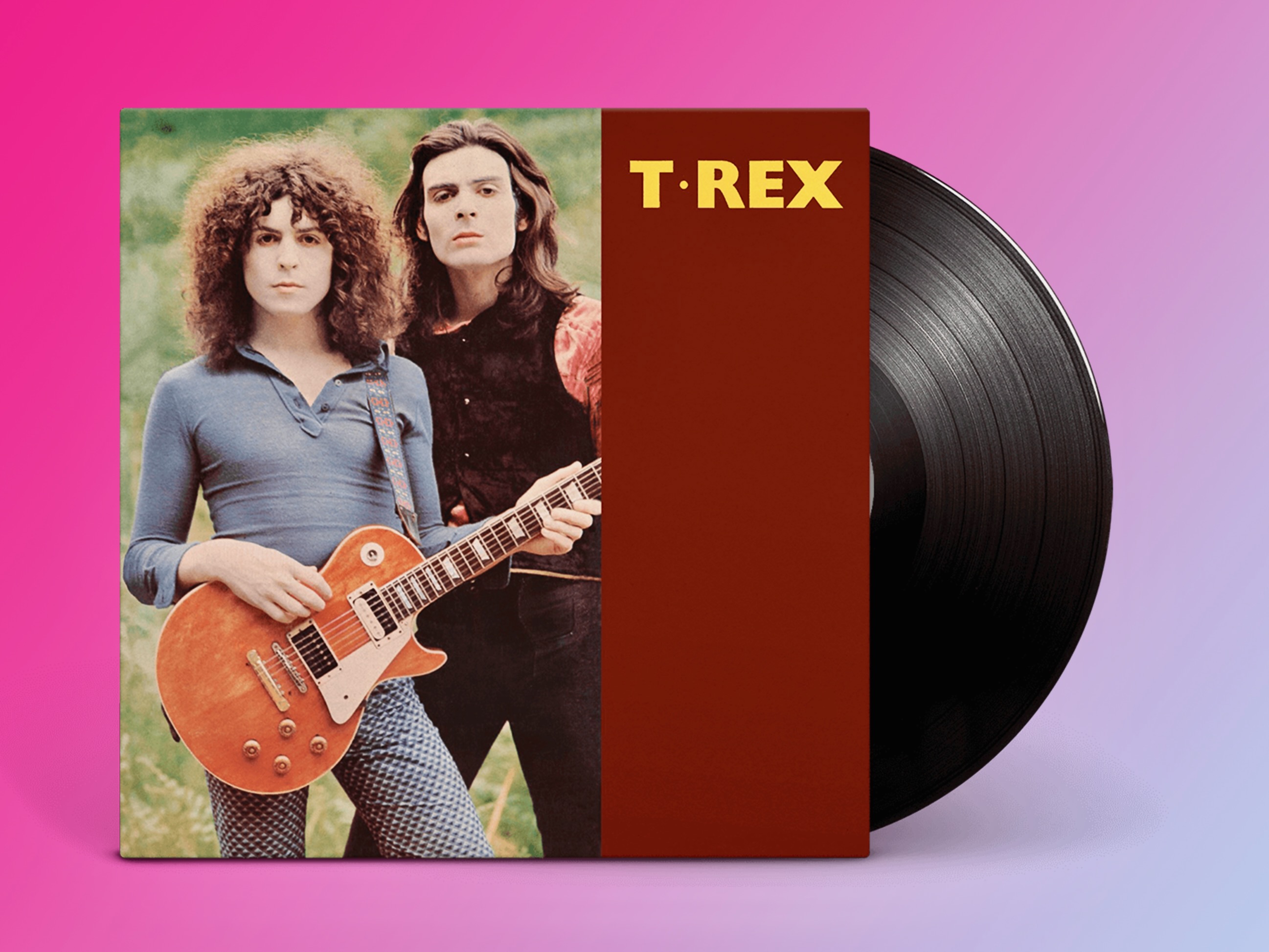
To many the Glam Rock genre was born with the release of T. Rex’ eponymous album in December 1970, as well as with the band’s two standalone singles ”Ride A White Swan” (10/1970) and ”Hot Love” (02/1971). The album ”Electric Warrior” (released in September ’71) – and especially its huge hit single ”Get It On (Bang A Gong)” – then shot the band into the stratosphere.
Marc Bolan’s idiosyncratic vocal delivery, charged with unveiled eroticism, was an important ingredient in the band’s success, but for many the real magic happened in the T. Rex guitar sound. Probably the most important ingredient in Bolan’s tone was a rather rare British fuzz box, called the John Hornby Skewes Shatterbox. Even though the Shatterbox was a two-in-one box that added a switchable treble booster to the fuzz, Marc Bolan tended to rely on the fuzz effect only, while using a Dallas Rangemaster for boosting purposes.
Fans of the T. Rex guitar sound were facing a dilemma; Rangemaster copies aren’t that hard to come by, but Shatterbox Fuzz copies are almost impossible to find. That is, until now…

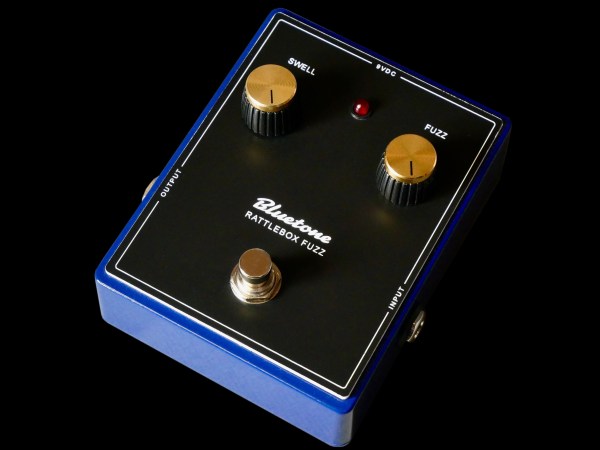
The brand-new Bluetone Rattlebox Fuzz (220, – €) is a slightly modernised version of the original 1960s Shatterbox.
Bluetone’s Rattlebox contains a sensibly updated version of the Shatterbox’ original fuzz circuit. The Rattlebox is extremely easy to use, because it sports only two controls – Swell (the gain control) and Fuzz (the volume).
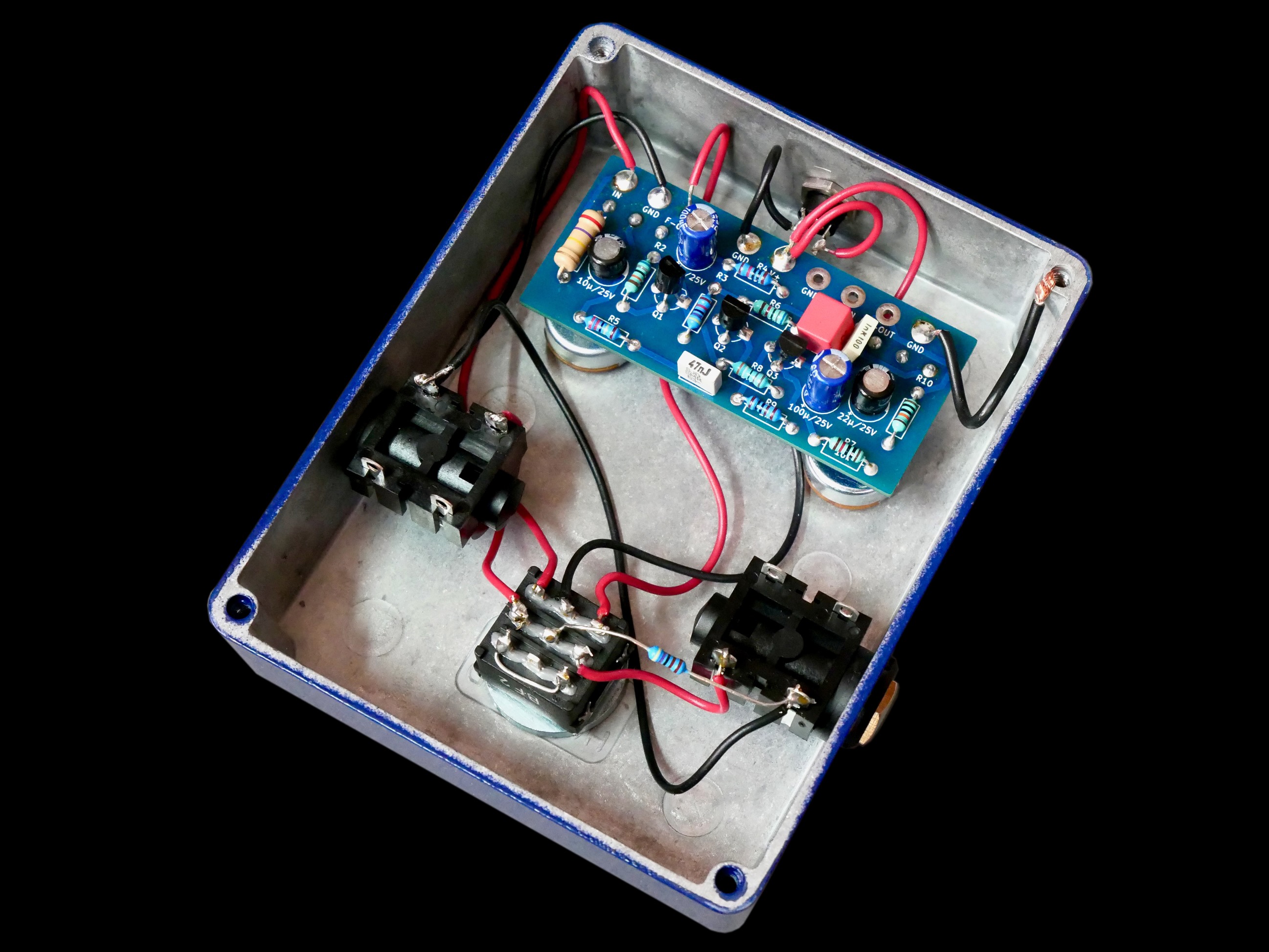
The Bluetone Rattlebox’ circuit is designed around three silicon transistors. The built-quality is top notch, without resorting to any point-to-point-voodoo. This effect runs on any Boss-type nine-volt power supply.
****
What does the Bluetone Rattlebox offer you that you cannot get from other fuzz pedal?
Compare to a silicon Fuzz Face, for example, the Rattlebox sounds much fatter, and its bite is situated in a slightly lower frequency range.
Speaking of which: Fuzz Faces – and similar designs – are usually used with the gain turned up full or almost full. Then you use you guitar’s volume control to find your personal sweet spot.
This ”pedal to the metal” approach doesn’t work that well, when applied to the Bluetone Rattlebox. There are two reasons for this:
For one, Bluetone’s new fuzz reacts very interactively to the pickup feeding the signal to the pedal, and, secondly, the ”wrong” choice of Swell setting will make the pedal gate rather easily, sometimes even sounding like a broken guitar cable.
The Rattlebox is best approached by carefully going over the settings across the whole range of the Swell control to find the best spots to achieve the desired sound with your guitar.
In this example I recorded a silicon Fuzz Face clone (first half) and the Bluetone Rattlebox (second half) with the controls turned full up on both pedals. With these settings the Rattlebox leaves clearly audible gating artefacts with the guitar’s (SG Junior copy) own volume turned down.
****
You can get beautiful and creamy rhythm sounds from the Bluetone Rattlebox, as the demo song proves. The lead guitar’s strong gating, on the other hand, is used here deliberately to accentuate each note’s start and finish.
Monien mielestä Glam Rock -genren lähtölaukaus oli T. Rex -bändin vuoden 1970 joulukuussa ilmestynyt albumi ”T. Rex”, sekä yhtiön singlet ”Ride A White Swan” (10/1970) ja ”Hot Love” (02/1971). Syyskuussa 1971 ilmestynyt albumi ”Electric Warrior” – ja etenkin sen sinkku ”Get It On (Bang A Gong)” – lähetti T. Rexiä sitten lopullisesti rakettimaiseen nousuun.
Marc Bolanin omintakeisen, eroottisesti latautuneen laulutyylin lisäksi, T. Rexin menestys perustui pitkälti Bolanin rouheaan kitarasoundiin. Tämän kitarasoundin tärkeä ainesosa oli melko harvinainen brittiläinen John Hornby Skewes Shatterbox Fuzz -pedaali. Vaikka Shatterboxissa oli fuzzin lisäksi vielä treble booster -osio, Bolan käytti mieluummin pelkästään Shatterboxin fuzz-osiota, jonka jälkeen hän ajoi signaalinsa vielä erillisen Dallas Rangemasterin kautta vahvistimeen.
T. Rex -fanien ongelma on pitkään ollut että, vaikka Rangemasterin kopioita on suhteellisen laajasti saatavilla, Shatterbox Fuzzin uusia versioita on ollut tähän mennessä erittäin hankala löytää.
Upouusi Bluetone Rattlebox Fuzz (220, – €) on nykyaikaistettu versio 60-luvun Shatterboxista.
Bluetone Rattleboxista löytyy pieteetillä päivitetty versio esikuvan fuzz-osiosta. Rattlebox on erittäin helppoa käyttää, kun laitteesta löytyy vain Swell- (gain) ja Fuzz-säätimet (volume).
Bluetone Rattleboxin fuzz-piiri on toteutettu kolmella piitransistorilla (engl.: silicon). Toteutus ja työnjälki on kauttaltaan ensiluokkaisen siisti. Rattlebox toimii ainoastaan ulkoisella yhdeksän voltin virtalähteellä.
****
Mitä erikoista Bluetone Rattlebox sitten tarjoaa muihin, enemmän tunnetuihin fuzz-laatikoihin nähden?
Esimerkiksi pii-Fuzz Faceen verrattuna Rattlebox tarjoaa runsaasti enemmän bassoa, ja sen purevuutta löytyy hieman matalammasta keskirekisteristä.
Fuzz Face -tyyliset fuzzit käytetään usein näin, että gainia laitetaan täysille (tai lähes täysille), minkä jälkeen käytetään kitaran volume-säädintä ns. sweet spotin hakemiseen.
Tämä ”nupit kaakkoon” -tyylinen lähestymistapa ei toimi kovin hyvin Rattleboxin kanssa kahdesta syystä:
Ensinnäkin tämä Bluetone-fuzz reagoi hyvin interaktiivisesti eri kitaroiden mikrofoneihin, ja toiseksi ”huonosti” asetettu Swell-arvo johtaa suhteellisen rankkaan geittaukseen, joka voi ääritapauksessa jopa kuulostaa rikkinäiseltä lähtöjakilta.
Rattleboxia kannattaa siis käyttää enemmän niin, että etsii rauhassa eri kitaroiden kanssa ne pisteet Swell-säätimen koko kaaresta, jossa soundi on omasta mielestä paras mahdollinen.
Tässä yksi soundiesimerkki Fuzz Face -kloonista (ensimmäinen puolisko) ja Bluetone Rattleboxista (toinen puolisko), jossa molempien pedaalien säätimet on avattu täysin. Näillä säädöillä ei pysty soittamaan SG Junior -tyylisellä kitaralla hiljaisia fraaseja, ilman Rattleboxin geittaamista.
****
Demobiisi kuitenkin todistaa, että oikeilla Swell-säädöillä löytyy Bluetone Rattleboxista myös herkullisia mietoja särösoundeja. Soolokitara taas käyttää pedaalin geittaamista tehokeinona, jolla alleviivataan jokaisen nuotin alku ja loppu.

The electric bass guitar – and especially a sunburst 1970 Fender Jazz Bass – was my first musical love. My father Jaroslav was the drummer of a professional show band in Germany, and as a child I was lucky to make the occasional trip to rehearsals, recording studios and some afternoon gigs with him. I loved the music, the instruments and the microphones, but most of all I loved to look at the bass player’s (Pavel) Fender Jazz with its huge chrome covers.
I took the roundabout way to becoming a bassist myself, first playing the violin, then the guitar, then the double bass and the piano. In 1985 I bought my first bass guitar – a Japanese Jazz Bass-copy, and I never looked back. That bass is still my go-to instrument.

Over time Tokai Japan instruments have become legendary in their own right. Tokai managed to offer the type of vintage-inspired instruments that guitarists and bassists in the 1970s were craving for, but couldn’t find from US manufacturers. To this day Tokai stands for top quality at a musician-friendly price.
****
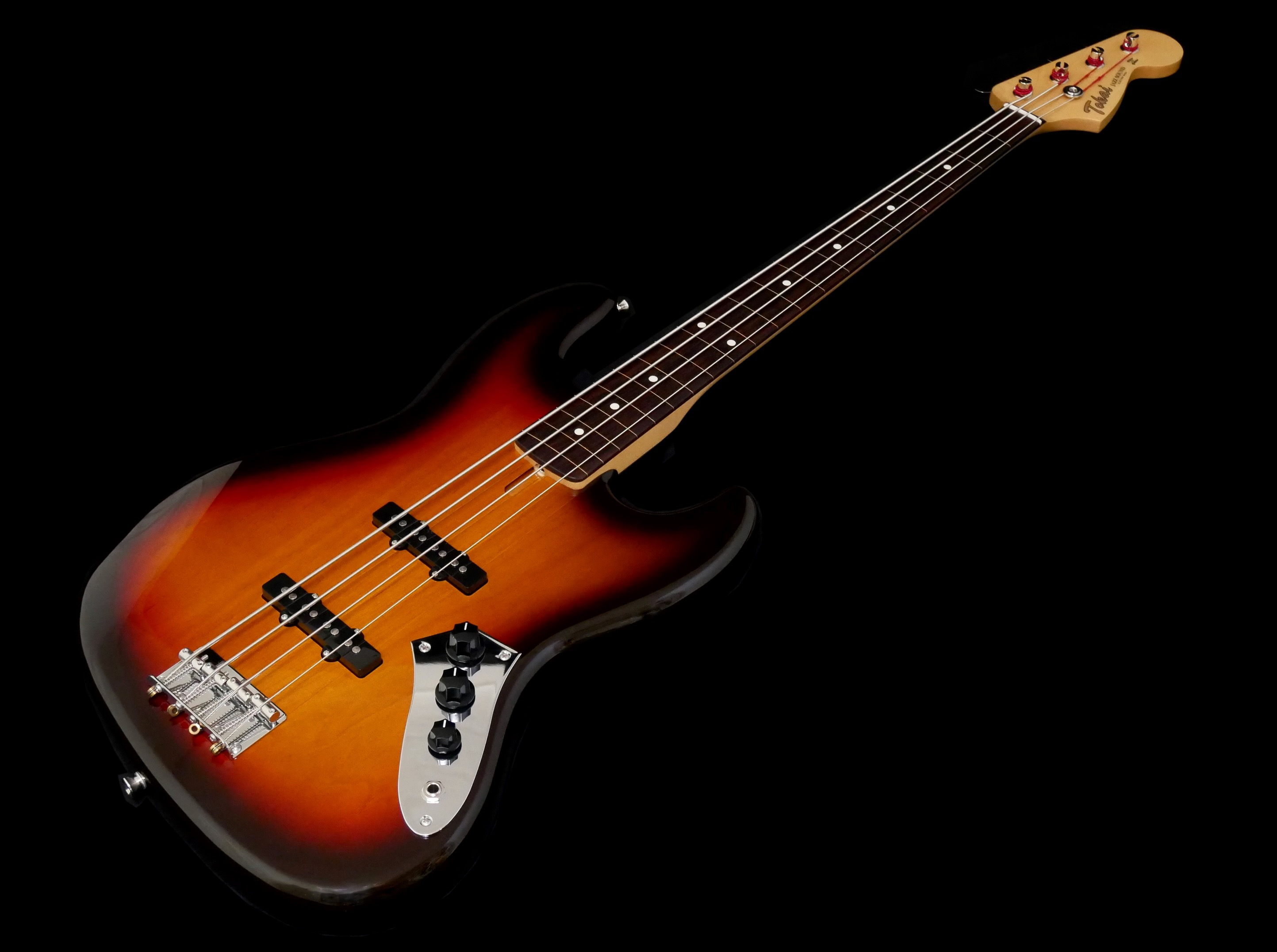
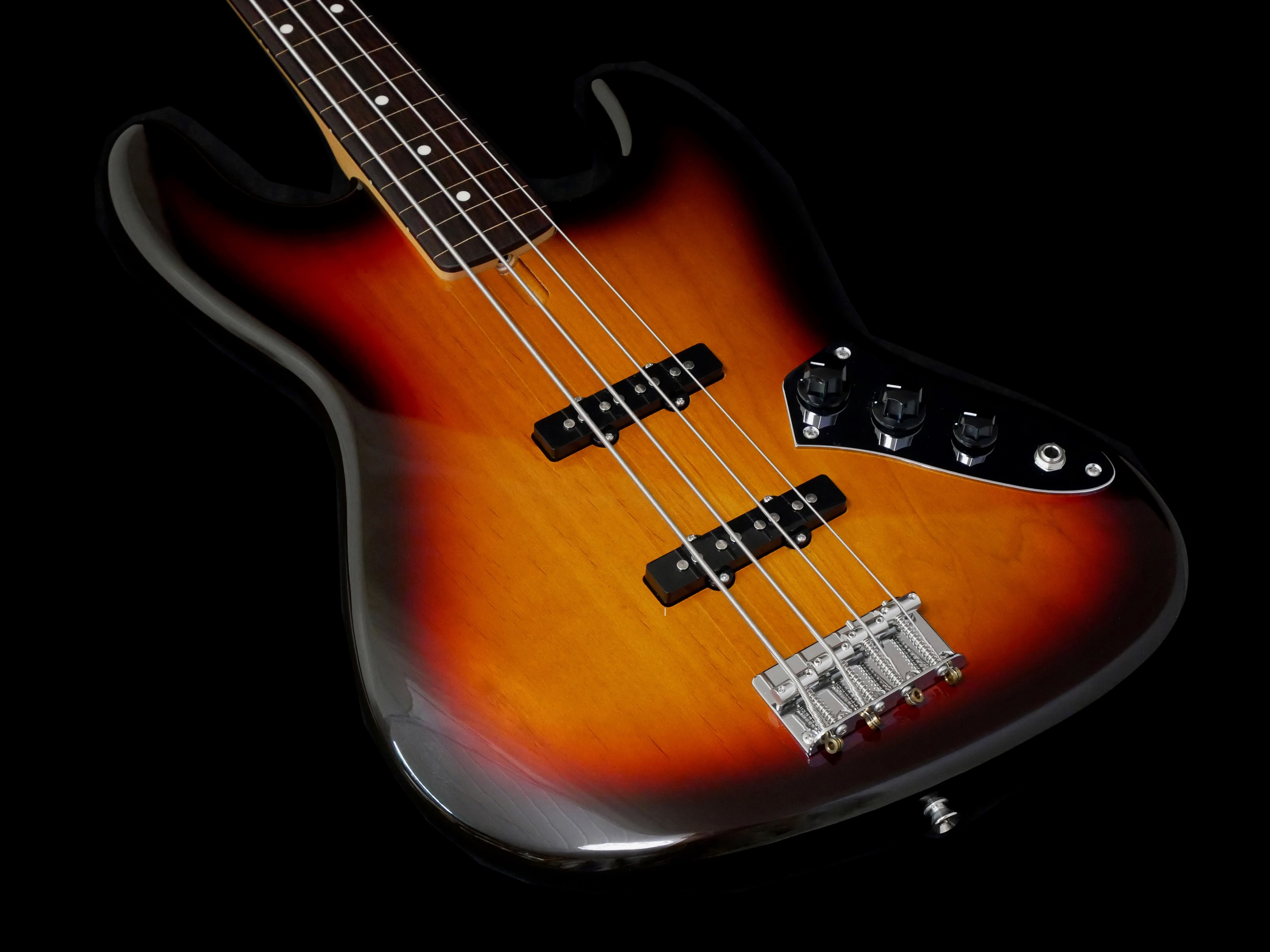
You could call the fretless Tokai TJB-55 FL (1.238,– €) Tokai’s unofficial Jaco Pastorius ”signature model” judging by its looks.
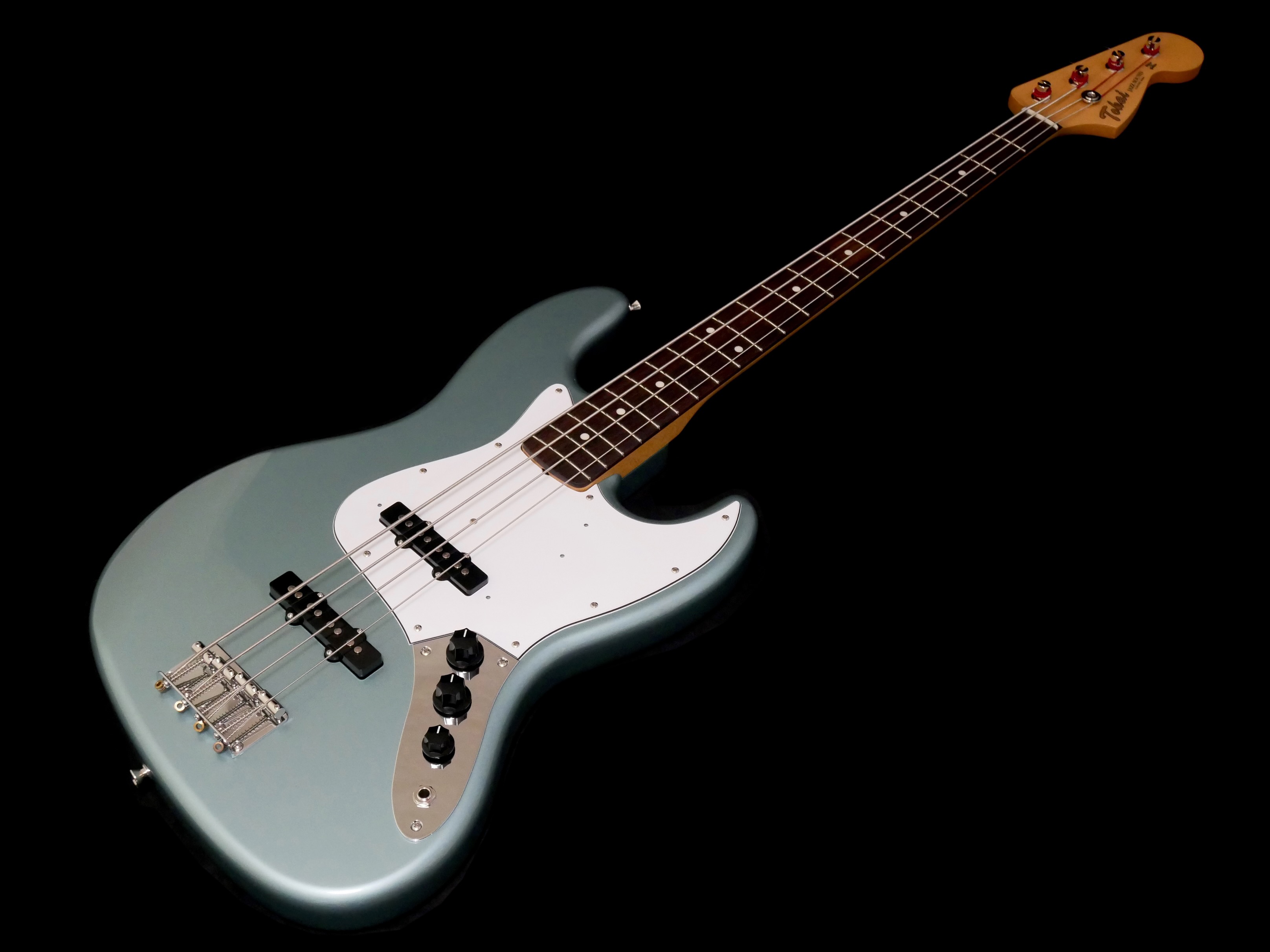
The fretted Tokai TJB-55 (999,– €) we received for this review is finished in a gorgeous metallic finish, called ocean turquoise metallic, which sits somewhere between green and silver.
The basic ingredients in both TJB-55 versions are high quality, traditional choices. True to their 1960s designation, both instruments feature alder bodies paired with maple necks.
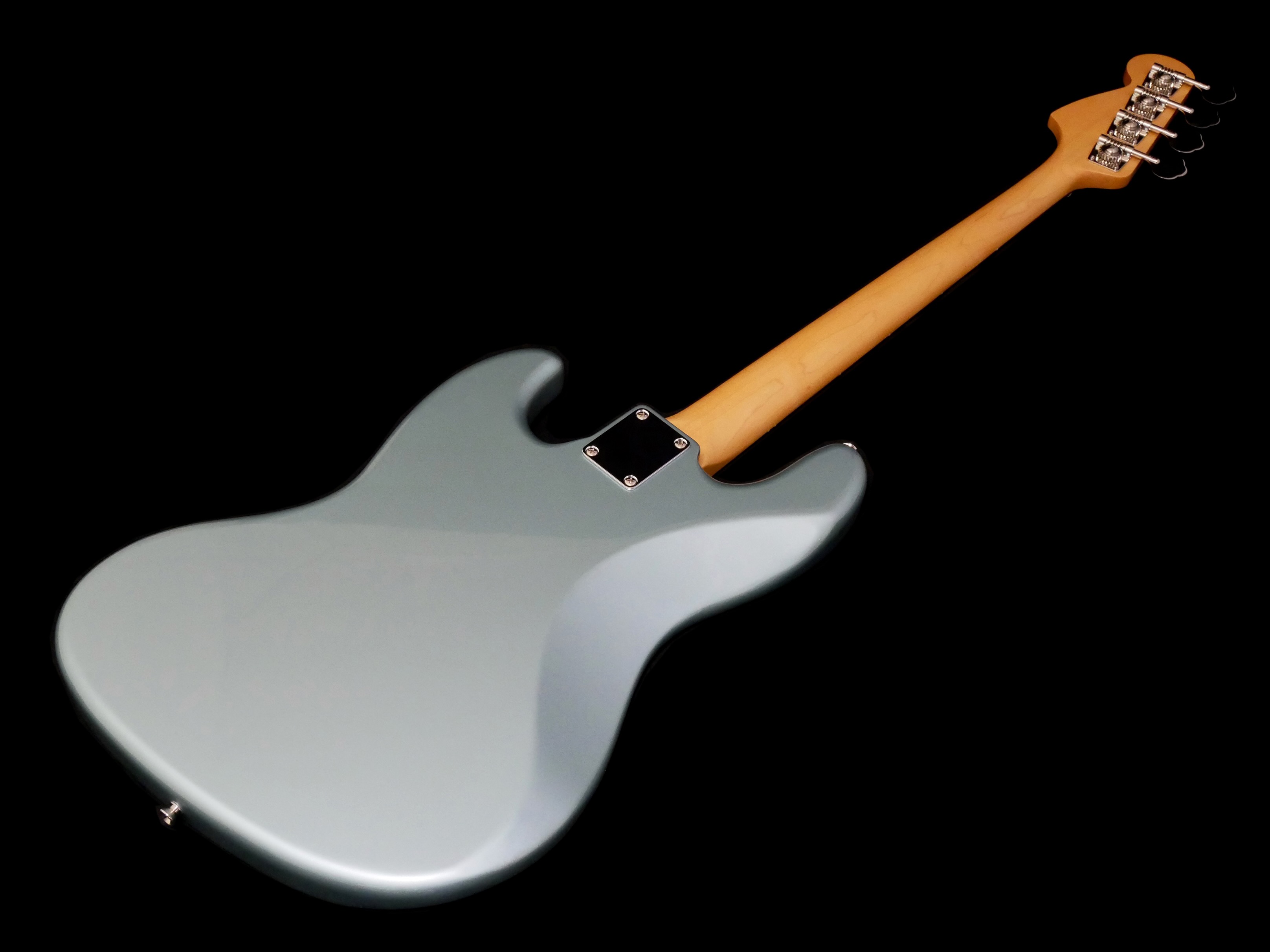
The ribcage chamfer is very deep and soft.
In contrast to vintage basses both necks here sport a thin satin finish. This is a welcome nod to most modern bass players, who prefer matte finishes to the glossy necks from way back, which are often described as a bit sticky.

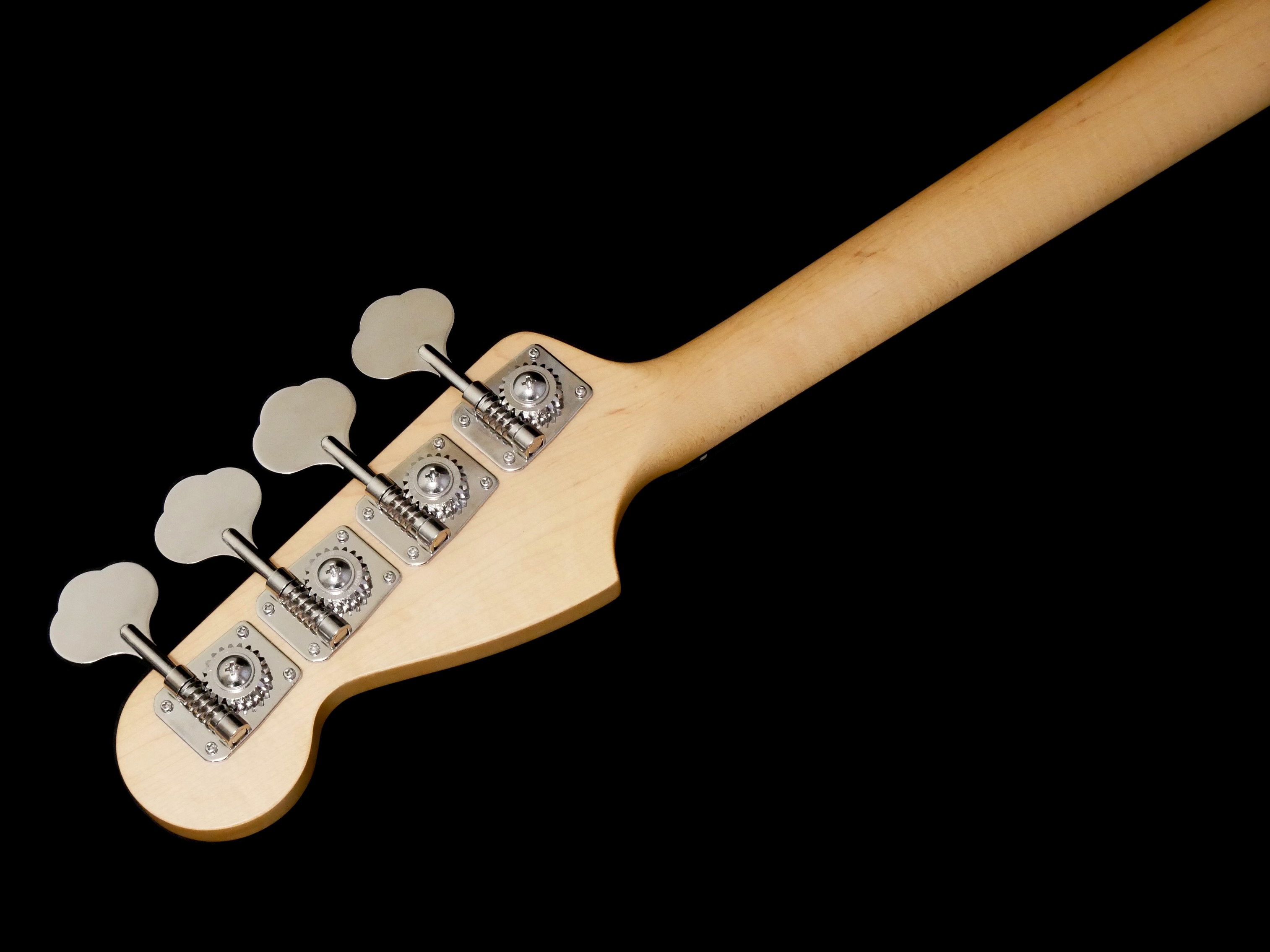
The machine heads on the TJB-55s are Gotohs which manage to retain a vintage look, while being smaller and lighter than original Klusons, Fenders or Schallers on vintage basses.
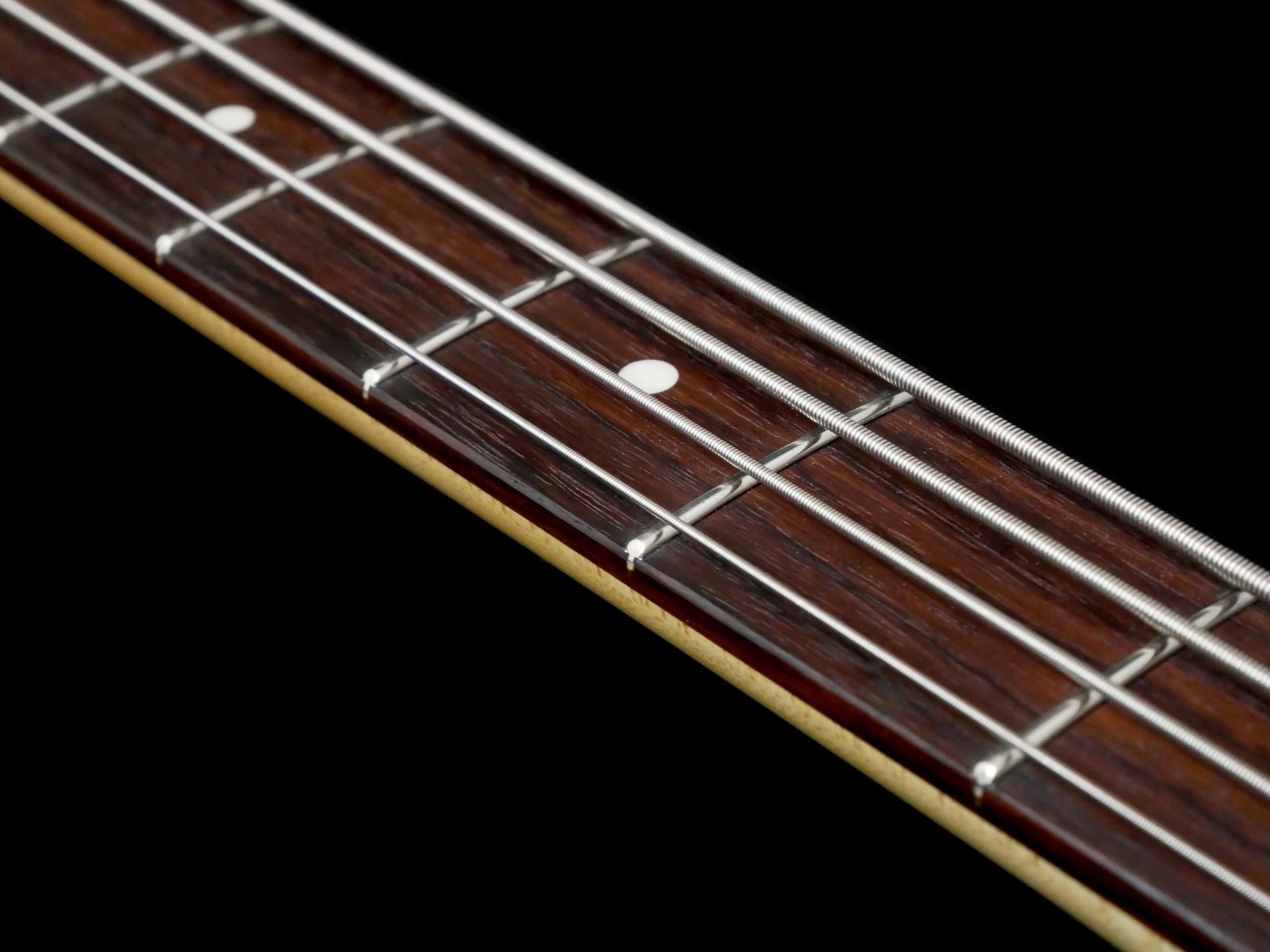
The regular Tokai TJB-55 sports 20 medium-sized frets in its beautiful rosewood fingerboard. The fretwork is top notch.
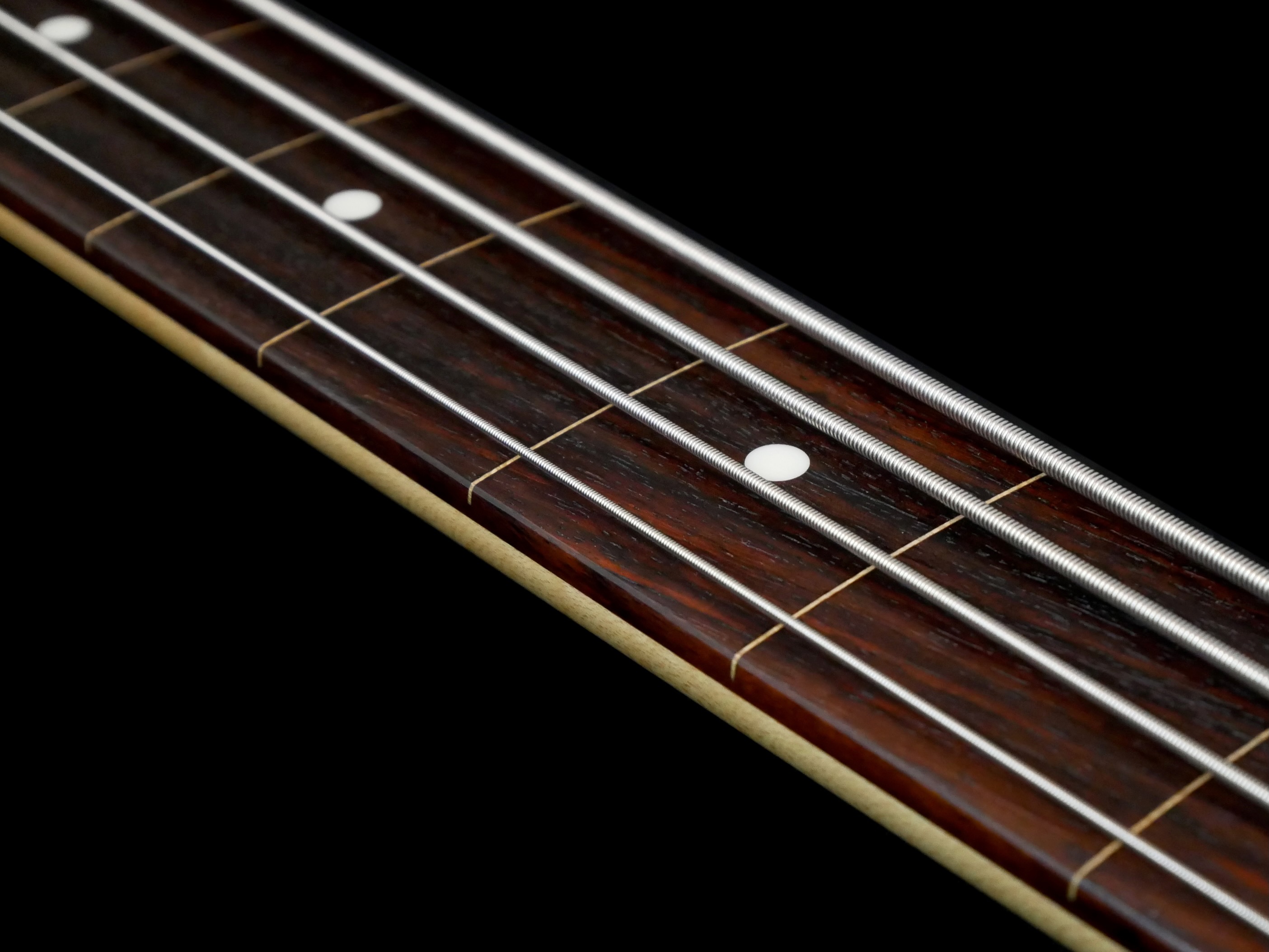
The fretless TJB-55 FL features fret lines made from maple; a welcome addition, especially for the occasional fretless player.
On forums – where else – you repeatedly find claims that rosewood might be too soft a wood for a fretless bass and roundwound bass strings. I own a well-loved and much-played 1976 Fender Precision Fretless, which – despite some light grooves in the ‘board – still plays fine.
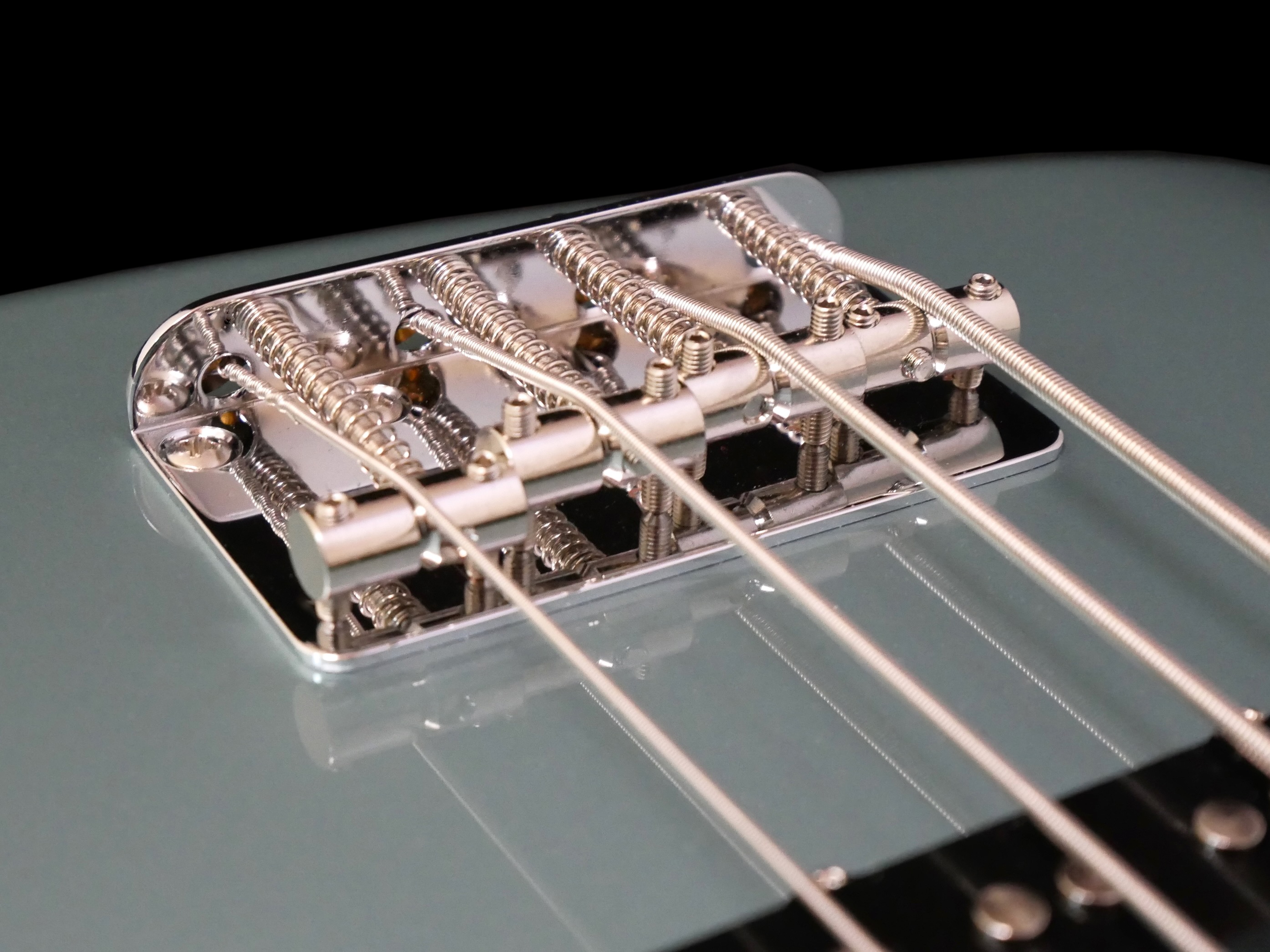
Gotoh’s well-made version of an early-Seventies Fender bridge fits the bill on both the TJB-55 and the TJB-55 FL.
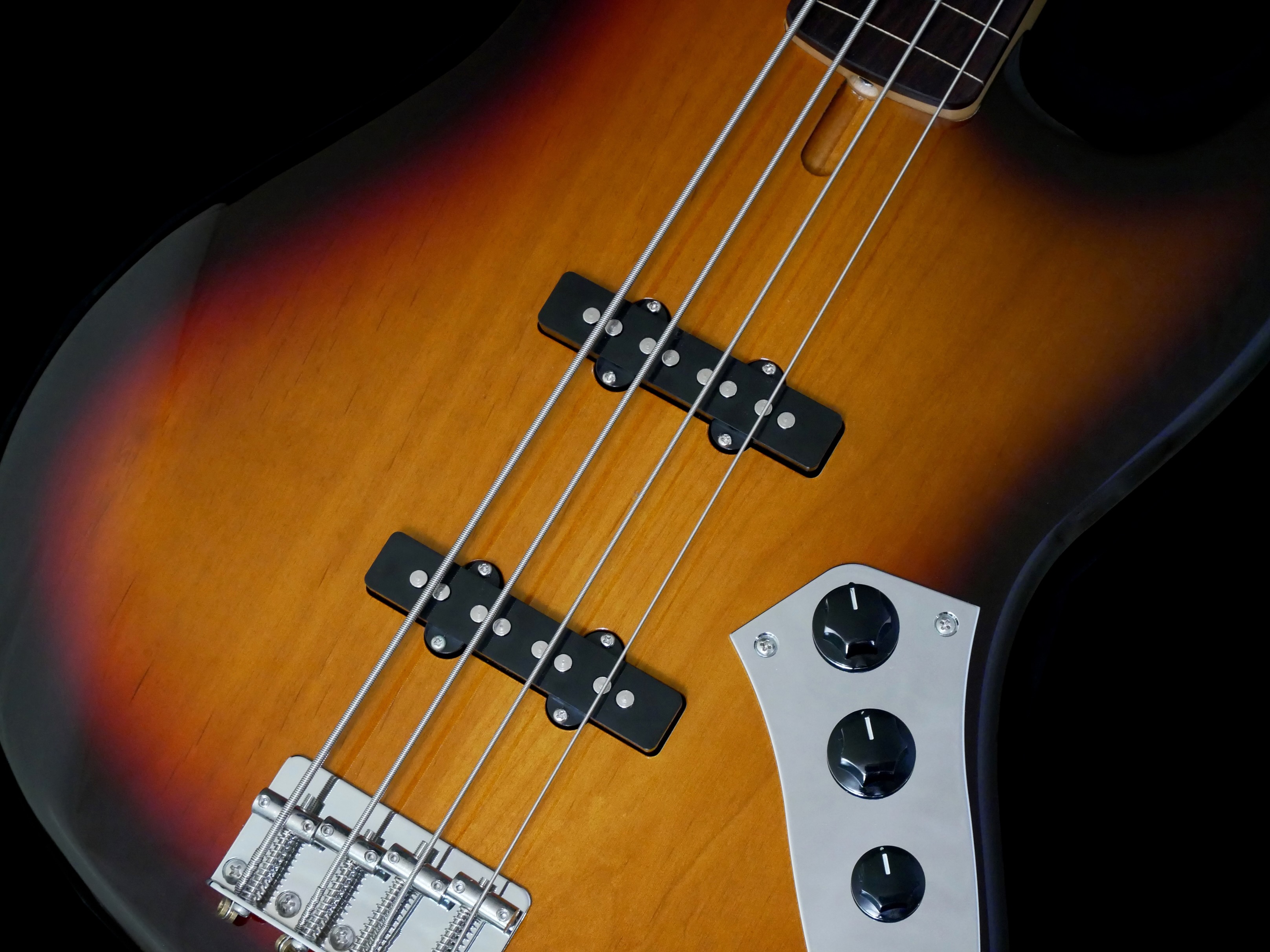
The legendary status of Jazz Basses is founded on two things – their great ergonomic properties, and their juicy yet transparent single-coil pickups.
Both Tokais come with a pair of the company’s own, excellent JB-Vintage Mark III pickups that promise vintage-style tones. The bridge pickup is reverse wound/reverse polarity to the neck unit, so the combination of both pickups is humbucking.
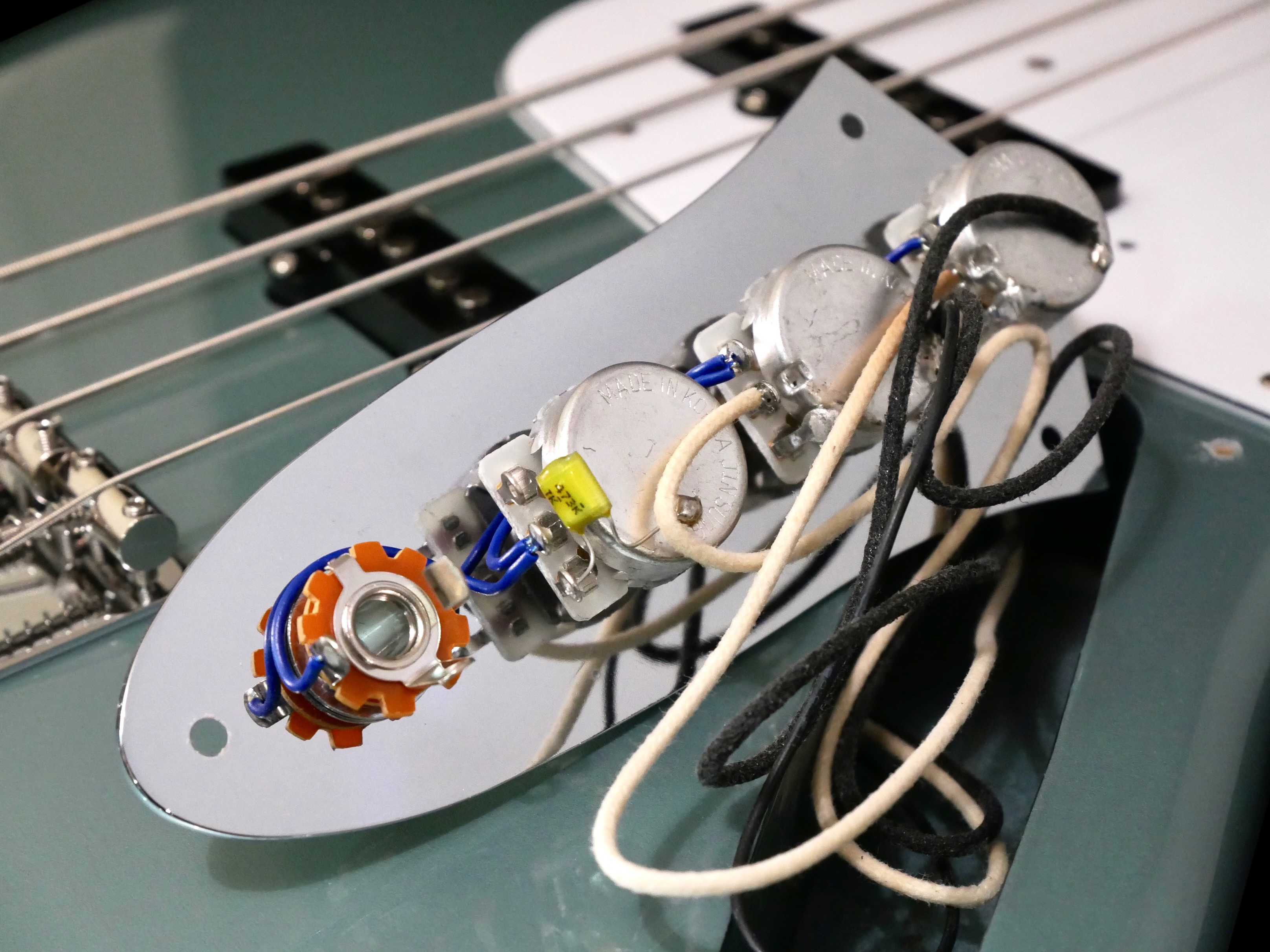
The quality of the electronic parts and the neatness of the wiring is a sight for sore eyes. Tokai even goes as far as equipping the pickups with period-correct (early-Sixties) wires with waxed cloth insulation.
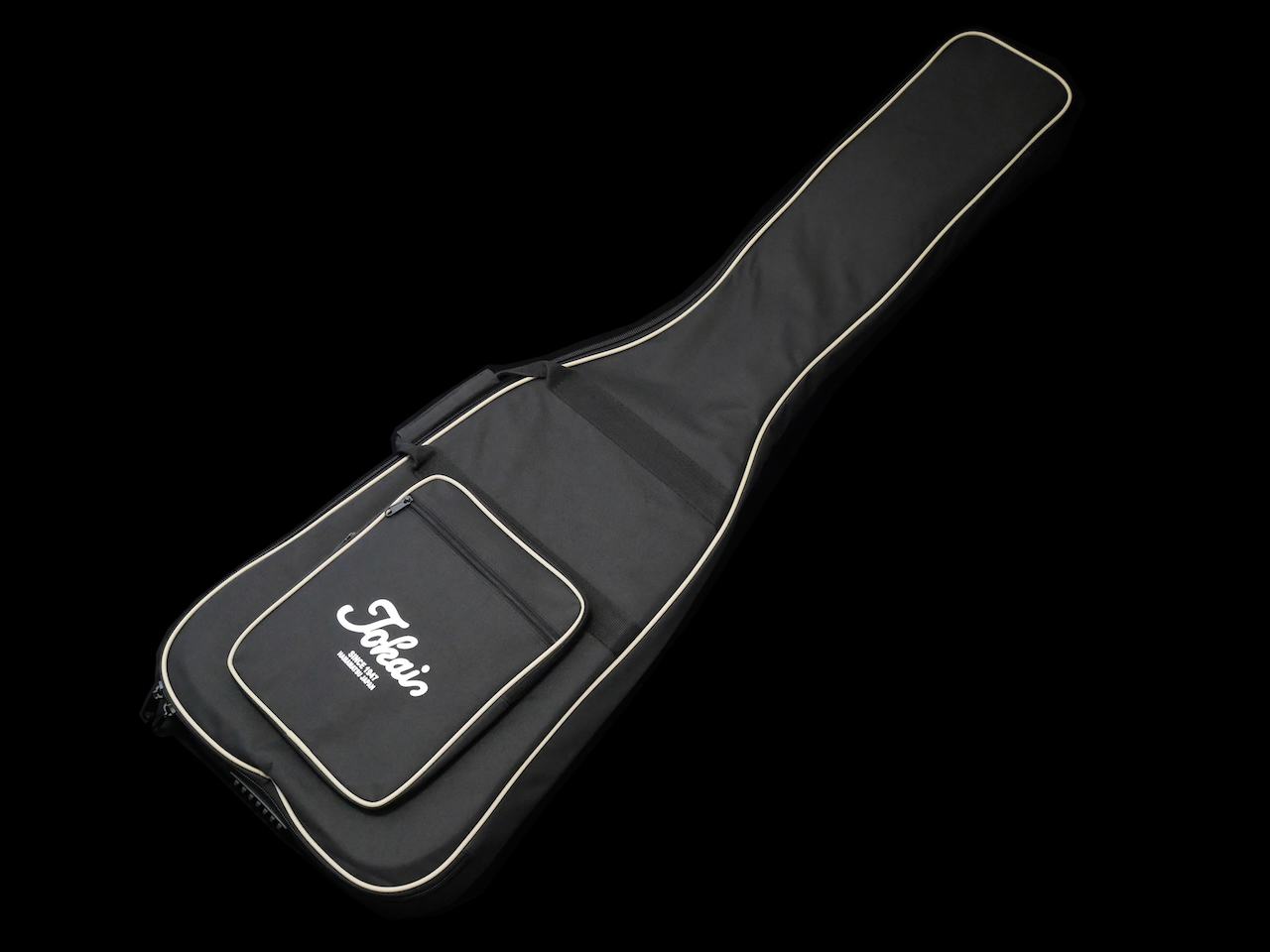
A high-quality gig bag comes supplied with both models. Inside the side pocket of the TJB-55 FL’s bag you will find a three-ply white pickguard, should you prefer that look.
****
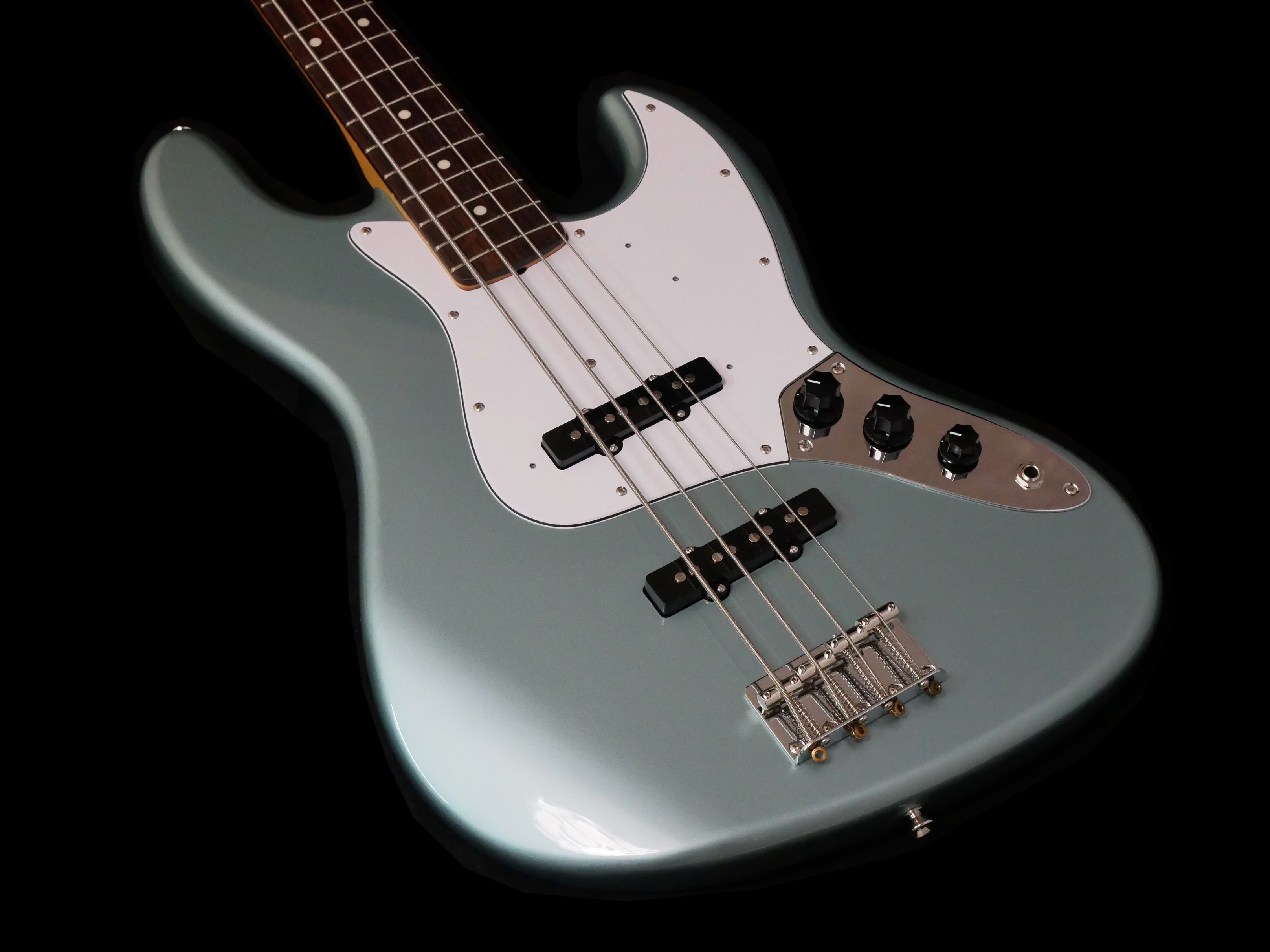
I don’t know how Tokai does it, but it has managed – once again – to imbue both basses with heaps of that proverbial “vintage mojo”, even though we’re looking at brand-new instruments here. The combination of top notch parts, along with the company’s proven track record, seems to make for a fantastic mix in both TJB-55s.
These two Tokais offer the best of all the great features of an early-Sixties Jazz Bass. The workmanship on both TJB-55s is second to none, the playability is very comfortable, and the sounds deliver big time. If you’re looking for some top-drawer “Jazz action”, you should definitely try one of these basses out.
****

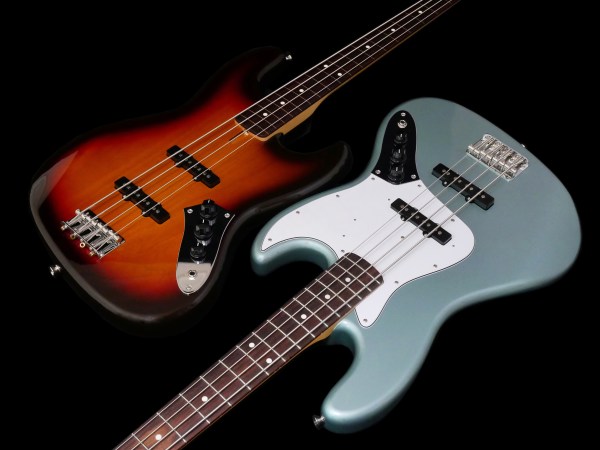
Sähköbasso – ja etenkin sunburst-värinen vuoden 1970 Fender Jazz Bass – oli elämäni ensimmäinen rakkaus. Isäni Jaroslav oli ammattirumpali saksalaisessa showbändissä, ja sain lapsena olla välillä mukana harjoituksissa, studioissa ja joissakin iltapäiväkeikoilla. Rakastin musiikkia, soittimia, mikrofoneja – mutta pääasiallinen katseenvangitseja minulle oli orkesterin basistin Pavelin Jazz-basso.
Kävin kiertotietä pitkin basistiksi; olin ensin viulisti, sitten kitaristi ja vielä kontrabasisti, mutta ensimmäinen kunnon soitin, jonka hankin omilla rahoillani vuonna 1985 oli japanilainen Jazz-basson kopio. Tämä satojen keikkojen basso on yhä minun lempisoitin.
Japanilaisista Tokai-soittimista on tullut ajan myötä legendaarisia. 1970-luvun lopussa Tokai tarjosi juuri sellaisia laadukkaita, vintage-tyylisiä sähkökitaroita ja -bassoja, joita soittajat halusivat, mutta joita ei silloin saatu Yhdysvalloista. Mutta myös nykyään japanilaiset Tokai-soittimet tarjoavat muusikoille laadukasta vintagea soittajalle ystävällisellä hintalapulla.
****
Nauhaton Tokai TJB-55 FL (1.238,– €) on kuin Tokain epävirallinen ”nimikkomalli” Jaco Pastoriukselle, legendaariselle nauhattoman Jazz-basson soittajalle.
Tämän testin nauhallinen Tokai TJB-55 (999,– €) on viimeistelty upealla metallivärillä – ocean turquoise metallic – joka on sinertevän hopea.
Molemmissa TJB-55-versioissa perusainekset ovat hyvin laadukkaita. Kuuskytluvulle uskollisesti bassojen rungot ovat leppää, kun taas ruuvikaulat veistetään kovasta vaahterasta.
Rungon mukavuusviiste on hyvin syvä ja mukava.
Kaulan viimeistely poikkea hieman vintage-reseptistä, sillä kumpikin basso tarjoaa ohuen mattapinnan muusikon otekädelle. Useat nykybasistit pitävät 1950-70-lukujen kiiltävän viimeistelyn liian ”tahmealta”, minkä vuoksi Tokai-bassojen satiinipintainen matta on hyvä valinta.
TJB-55-bassojen virittimet tulevat Gotoh:n mallistosta, ja ne yhdistävät onnistuneesti vintage-Schallereiden ulkonäköä hieman pienemmällä painolla. Lopputulos on entistäkin parempi balanssi.
Tokai TJB-55:n ruusupuiseen otelautaan on istutettu 20 medium-kokoista nauhaa. Nauhatyö on ensiluokkaista.
Tokai TJB-55 FL:n otelautaan taas on asennettu vaahteralinjat, jotka helpottavat – etenkin aloittelevan – fretless-basistin osumatarkkuutta.
Jotkut väittävät, että nauhatomaan bassoon ei sovi ruusupuuta, koska tämä puulaji olisi muka liian pehmeä nykyaikaiselle roundwound-kielille. Oma nauhaton bassoni on kuitenkin paljon soitettu vuoden 1976 Fender Precision Fretless, ja vaikka sen ruusupuuotelaudassa on pieniä uria, se ei haittaa menoa – ainakaan vielä – lainkaan.
Laadukas versio 1970-luvun Fender-tallasta istuu luonnollisesti erittäin hyvin vintage-tyliseen TJB-55 ja TJB-55 FL:ään.
Loistavan erogonomian lisäksi yksikelaisten mikrofonien maukas sointi seisoo Jazz-basson suosion keskipisteessä.
Molemmpiin Tokai-bassoihin on asennettu firman kuuluisia JB-Vintage Mark III -mikrofoneja, jotka lupaavat autenttisia 1960-luvun Jazz Bass -soundeja. Tokain mikit toimivat yhdessä käytettyinä humbuckerin tapaan hurinattomasti.
Tokai menee jopa niin pitkään, että mikrofonien johdot ovat 1960-luvun alussa käytetty malli, jossa eristys on hoidettu vahalla kyllästetyllä kangaskudoksella.
Laadukas keikkapussi kuuluu Tokai TJB-55 -bassoissa hintaan. TJB-55 FL:n mukaan tulee myös kolmikerroksinen valkoinen pleksi, jota voi asentaa itse, jos basson ”alaston” ulkonäkö ei jostain syystä miellytä.
****
En tiedä miten Tokai Japan sen tekee, mutta sekä TJB-55:ssä että TJB-55 FL:ssä on runsaasti sitä kuuluisa ”vintage-mojoa”, vaikka kyseessä on upouudet sähköbassot. Ilmeisesti näissä soittimissa kaikki laadukkaat osat ja firman pitkä kokemus vintage-kopioissa yhdistyvät suvereenisti laadukkaan lopputulokseen.
Jazz-bassojen parhaat ominaisuudet ja niiden klassisimmat soundit on onnistettu ikäänkuin tislaamaan näihin huippubassoihin. Tokain toteutus on kauttaaltaan laadukas, sekä bassojen soundit ja soitettavuus ensiluokkaista. Kannattaa siis ehdottomasti tutustua Tokai TJB-55 -bassoihin, jos on kiinnostunut pro-laadun Jazz-bassoista.
****
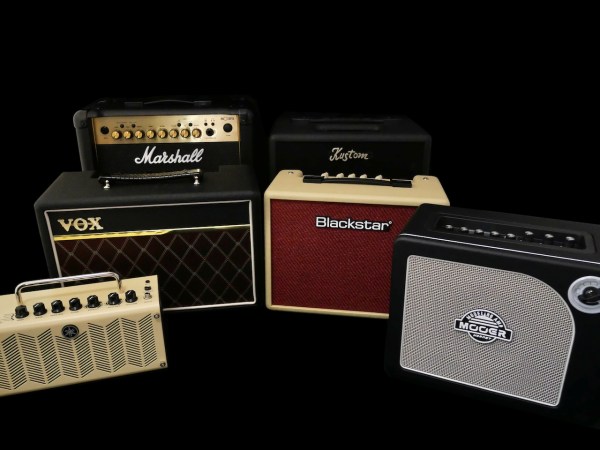
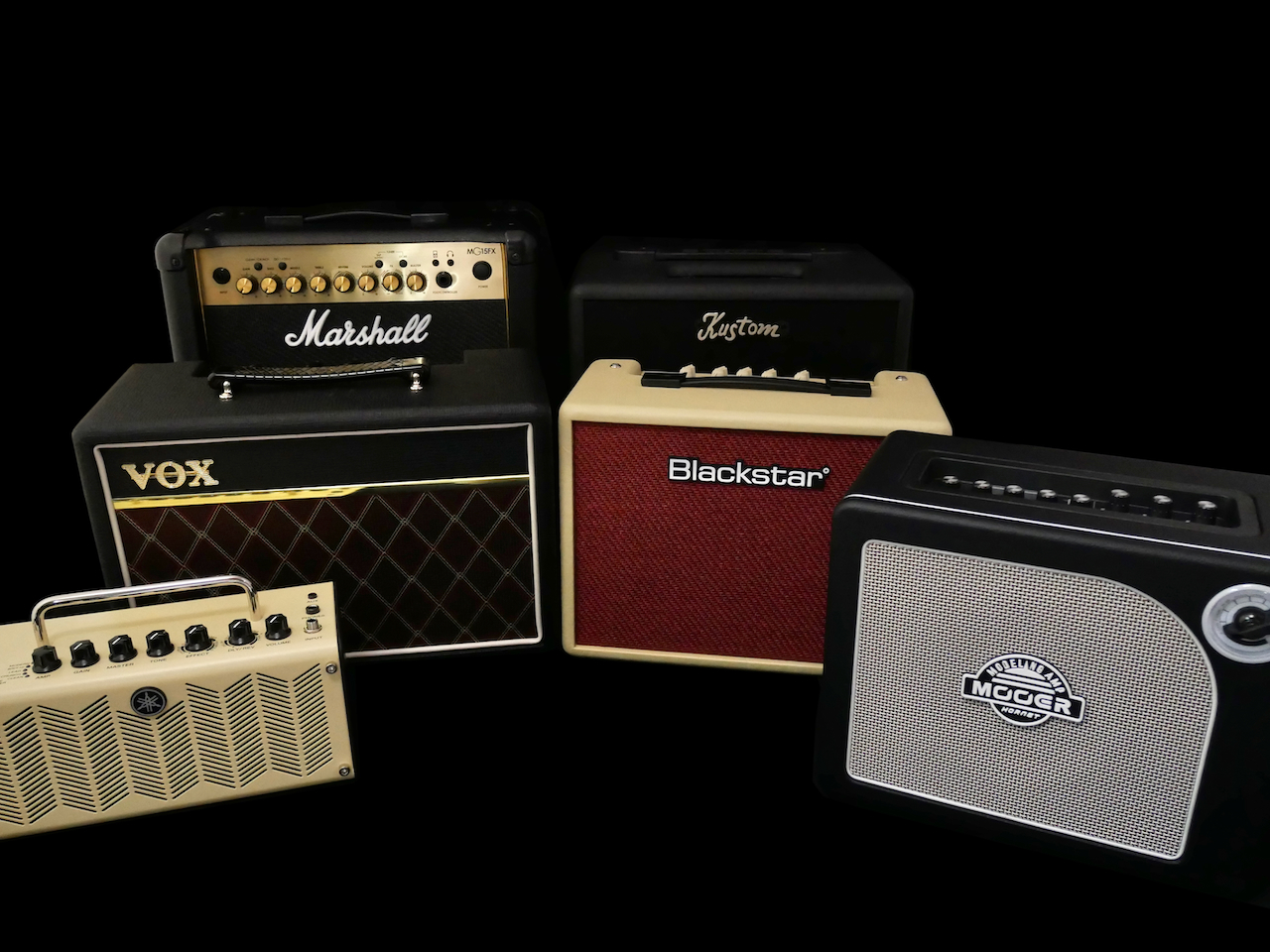
Uusi testi löytyy TÄÄLTÄ.
Mukana ovat:
• Yamaha THR5 Version 2
• Vox Pathfinder 10
• Mooer Hornet Black
• Marshall MG15FX Gold
• Kustom Mod-L20
• Blackstar Debut 15E
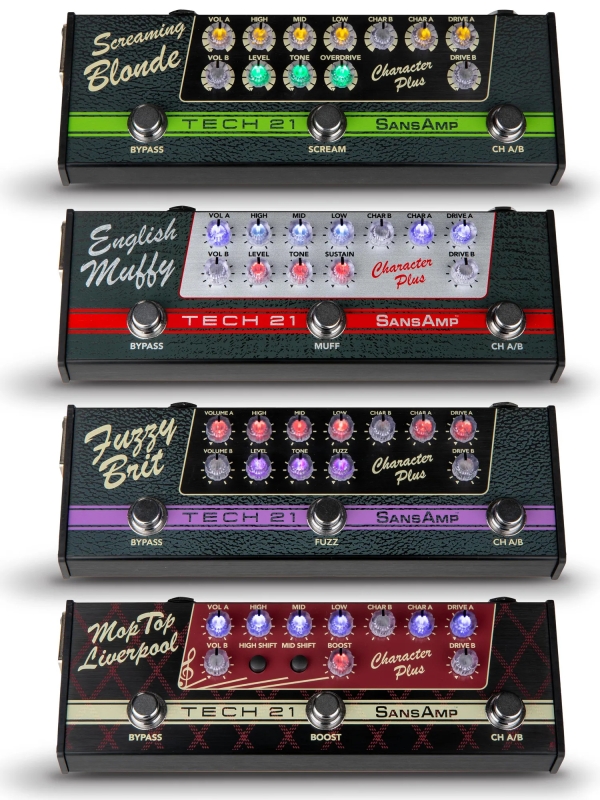
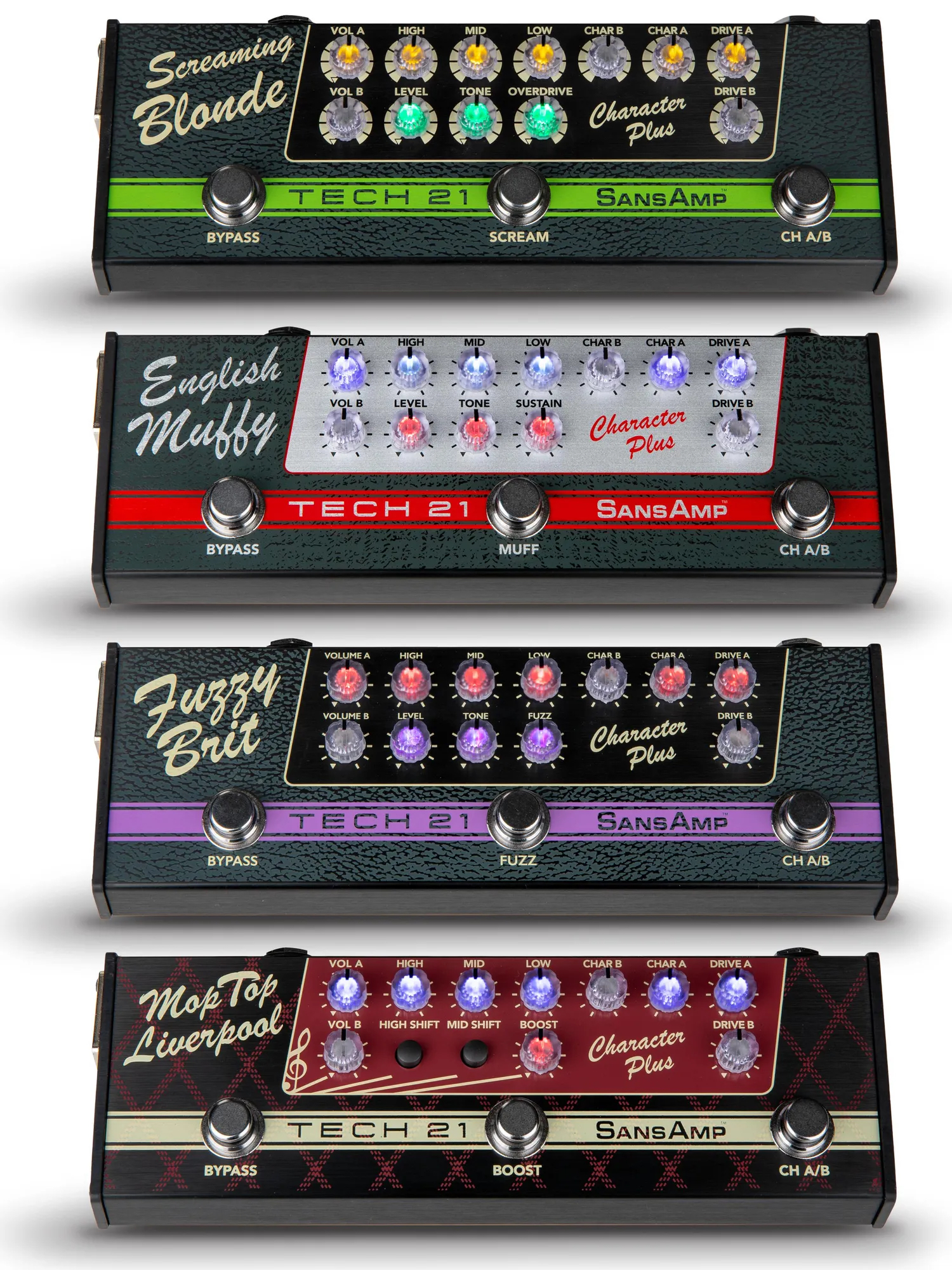
Tech 21 NYC tunnetaan erinomaisista analogisista SansAmp-vahvistin- ja kaiutinsimulaatioistaan, jotka ovat tehneet kitaran (tai basson) soittamisen ilman fyysistä vahvistinta mahdolliseksi kauan ennen digitaalisten mallintajien tai impulssivastetekniikan tuloa. Tech 21:n huippukompaktien Fly Rig -multiefektien valikoima perustuu yhtiön SansAmp-teknologiaan, ja ne tarjoaa keikkailevalle muusikolle koko signaaliketjun, joka mahtuu kätevästi gigbägin sivutaskuun.
Tech 21:n uusi Character Plus -sarja lähestyy hyvin samanlaista teemaa hieman eri näkökulmasta. Jokainen neljästä Character Plus -pedaalista (369 €, kpl) tarjoaa kitaristille ajattoman, klassisen vahvistimen ja lattiaefektin yhdistelmän. Character-nuppi, josta nämä pedaalit ovat saaneet nimensä, antaa sinun mennä portaattomasti valitun vahvistimen useiden eri versioiden läpi, ja uutuuspedaalien kaksikanavainen olemus helpottaa esimerkiksi komppi- ja soolosoundin säätämistä etukäteen.
EQ-osio on jaettu kunkin pedaalin molempien kanavien kesken, mikä saattaa näyttää paperilla hieman rajoittavalta, mutta osoittautui melko ongelmattomaksi tosielämässä.
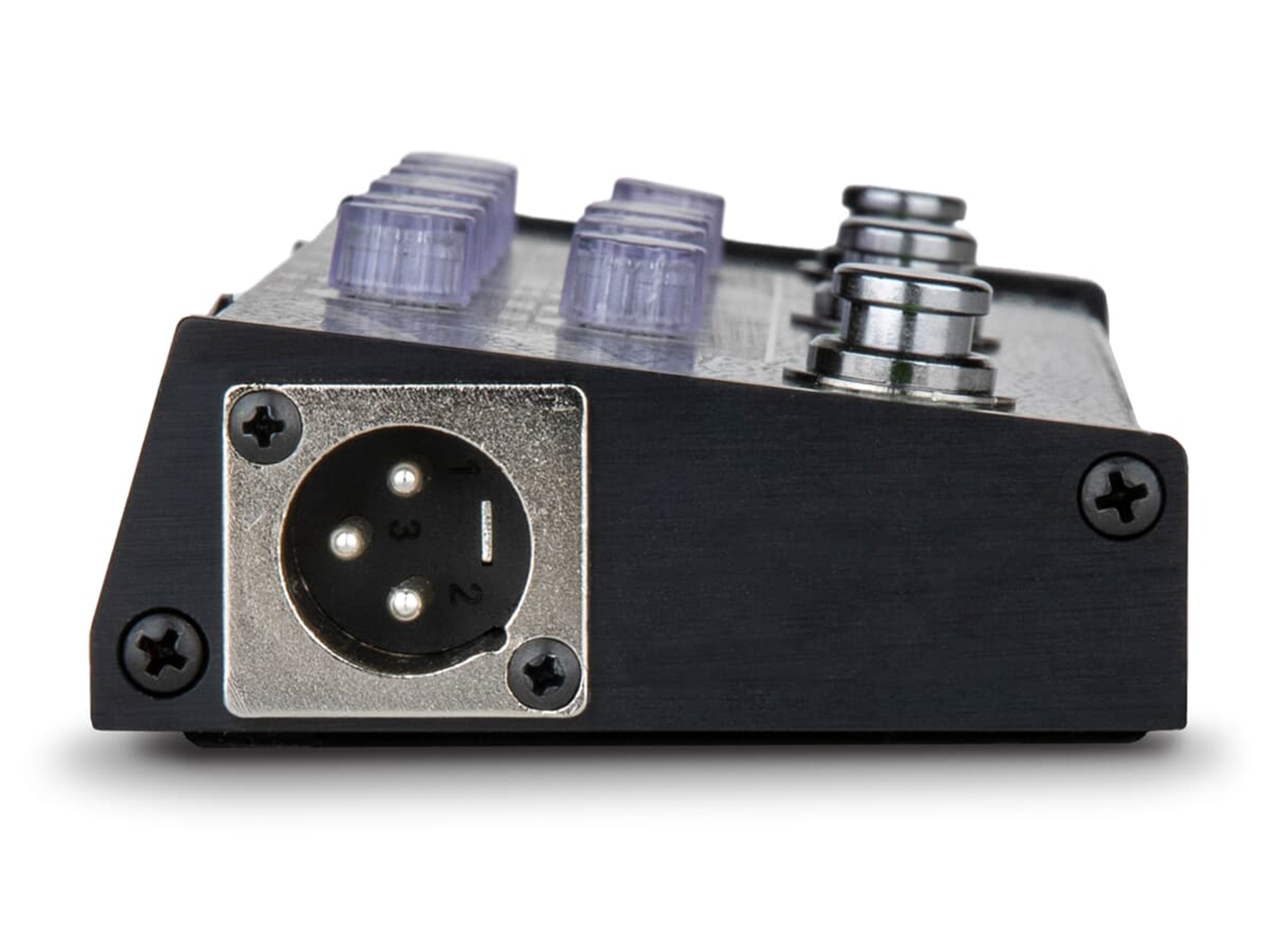
Character Plus -sarjassa on perinteiset jakit signaalin tuloa ja lähtöä varten, jos haluat käyttää efektin fyysisen vahvistimen edessä. Balansoidulla XLR-ulostulolla taas voi lähettää SansAmp-signaalin eteenpäin audiointerfacelle tai mikserille.
****
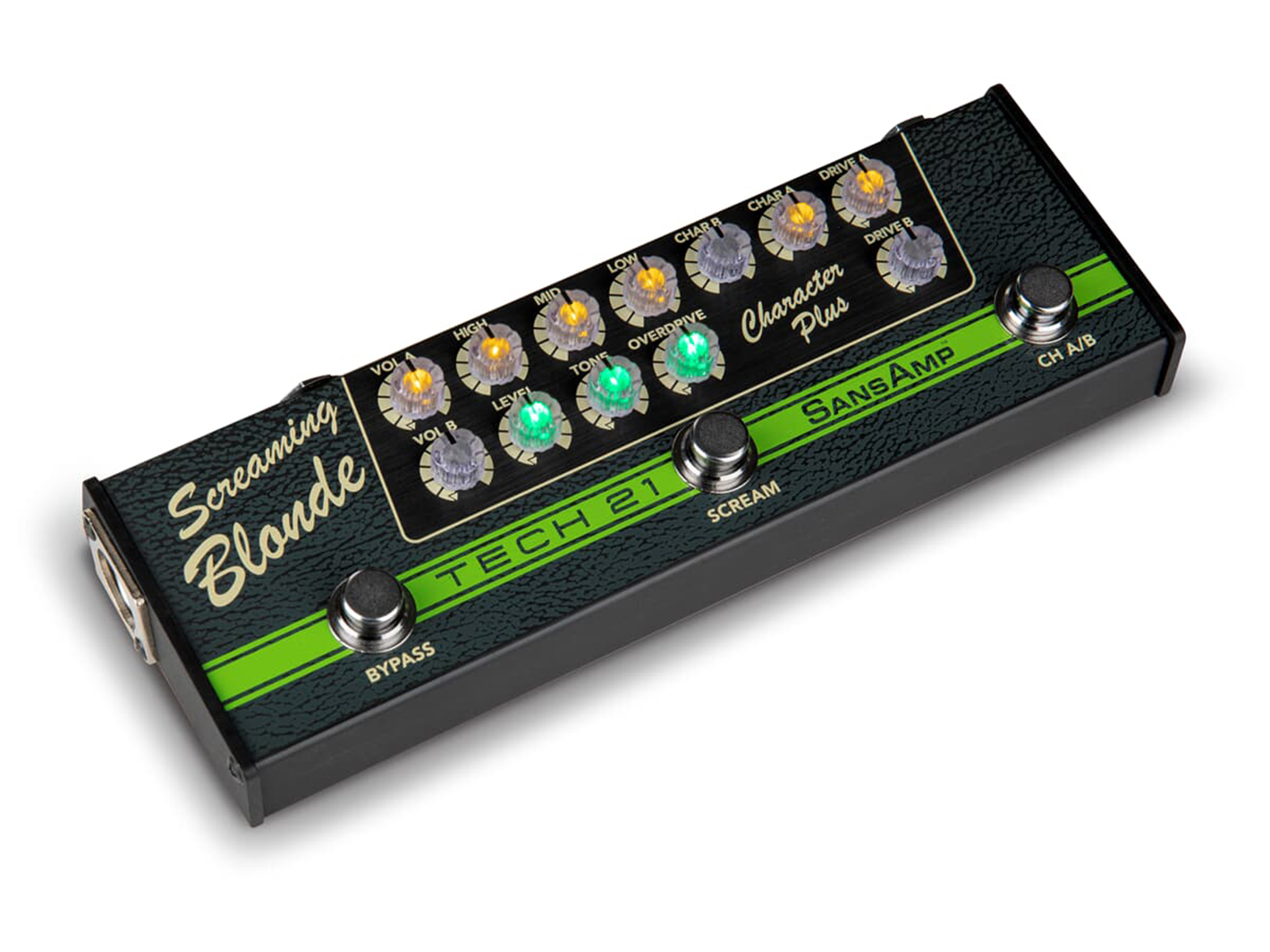
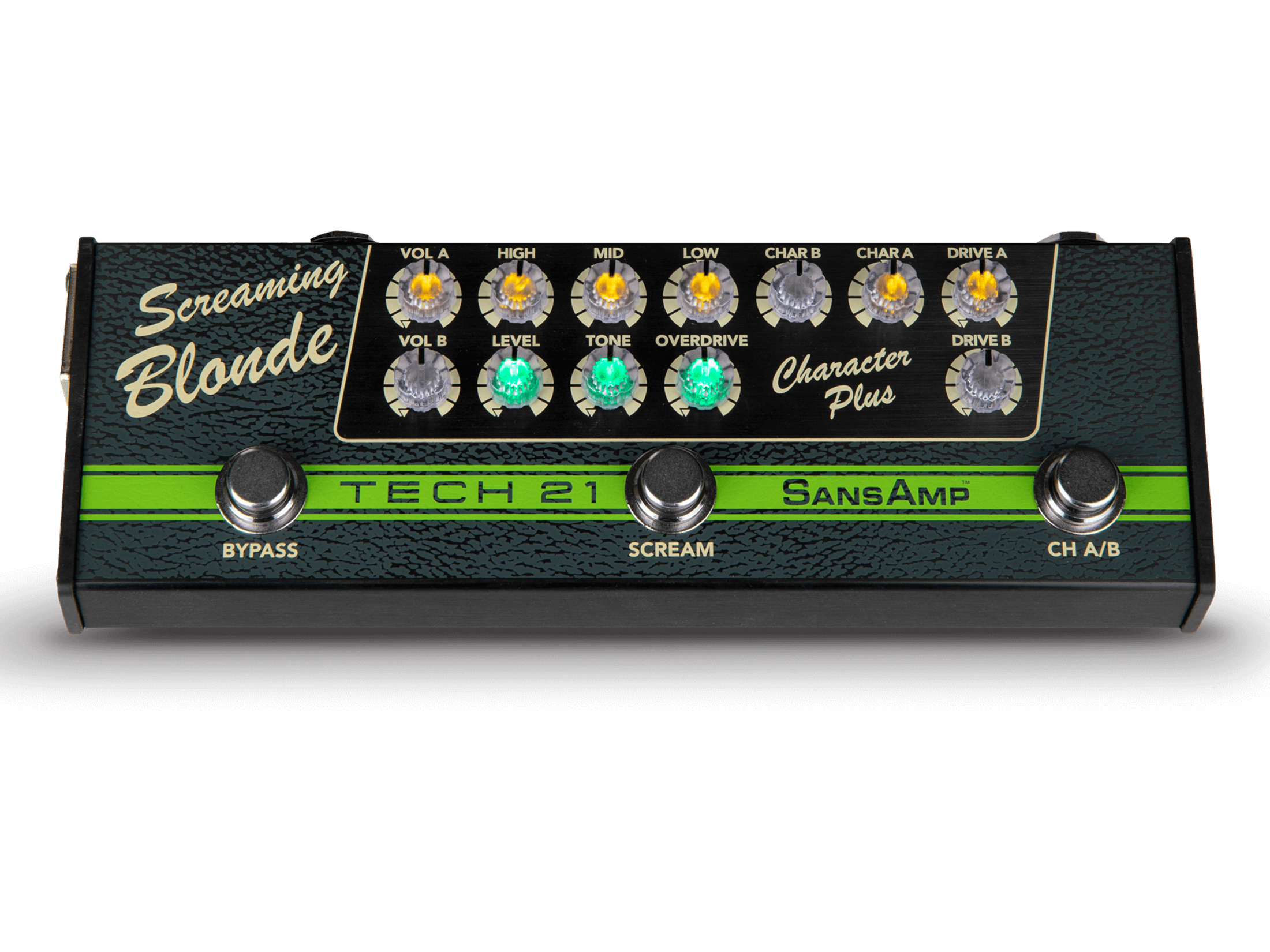
Tech 21 Screaming Blonde on sarjan Fender-vaikutteinen tapaus. Kummankin kanavan Character-säädin pyyhkäisee läpi erilaisia Fender-tyylisiä soundeja – Tweedistä Blackfaceen – ja säätimellä on myös vaikutusta kanavan gain-rakenteeseen.
Scream-kytkin aktivoi Tube Screamer -tyylisen overdrive-särön, joka on optimoitu toimimaan saumattomasti Screaming Blonden vahvistinkanavien kanssa, minkä ansiosta tämä poljin on loistava valinta kaikkeen tanssibändistä Texas- tai Chicago-bluesiin.
****

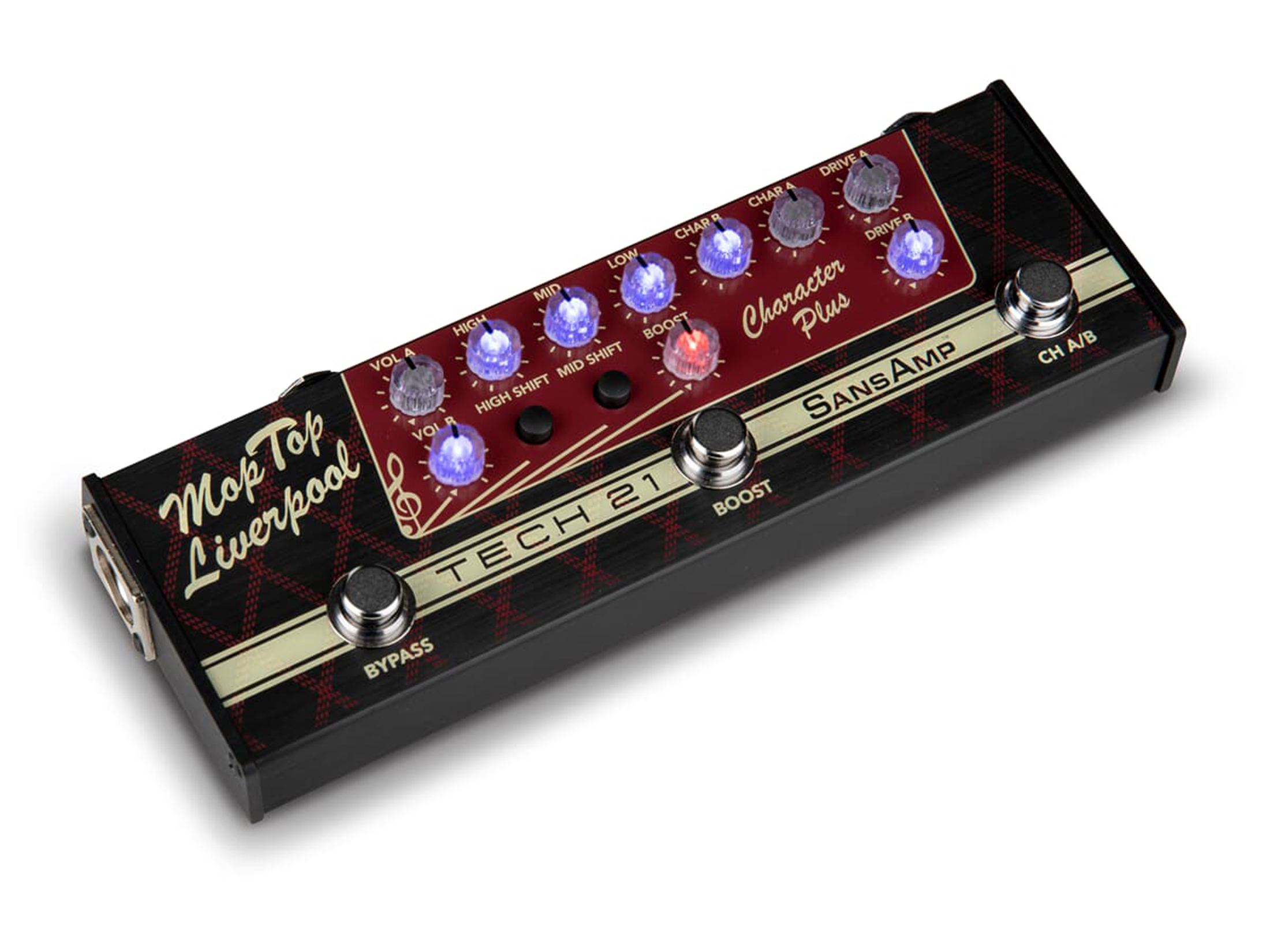
Tech 21 Mop Top Liverpool viittaa nimessään Beatlesiin, ja sekä nimi että timanttikangaskuvioinen grafiikka taas viittaavat Vox-tyyliseen SansAmp-piiriin. Toisin kuin muissa Character Plus -pedaaleissa, Mop Top Liverpoolista löytyy kaksi hieman erisoundista kanavaa. Tämä tarkoittaa, että pedaali mahdollistaa minkä tahansa tyypillisen AC30-äänen – Shadowsista aina Rory Gallagheriin tai Queeniin – varsinkin kun ylimääräinen Boost-osio on itse asiassa myös kaksi boosteria yhdessä pakkauksessa.
Vastapäivään kello 12 alkaen Boost-säädin lisää soundin runsaasti keskialuetta, kun taas myötäpäivään se lisää diskanttia signaaliin. Pari taajuudenvaihtopainiketta tekee Liverpool Mop Topista vielä entistäkin monipuolisemman.
****
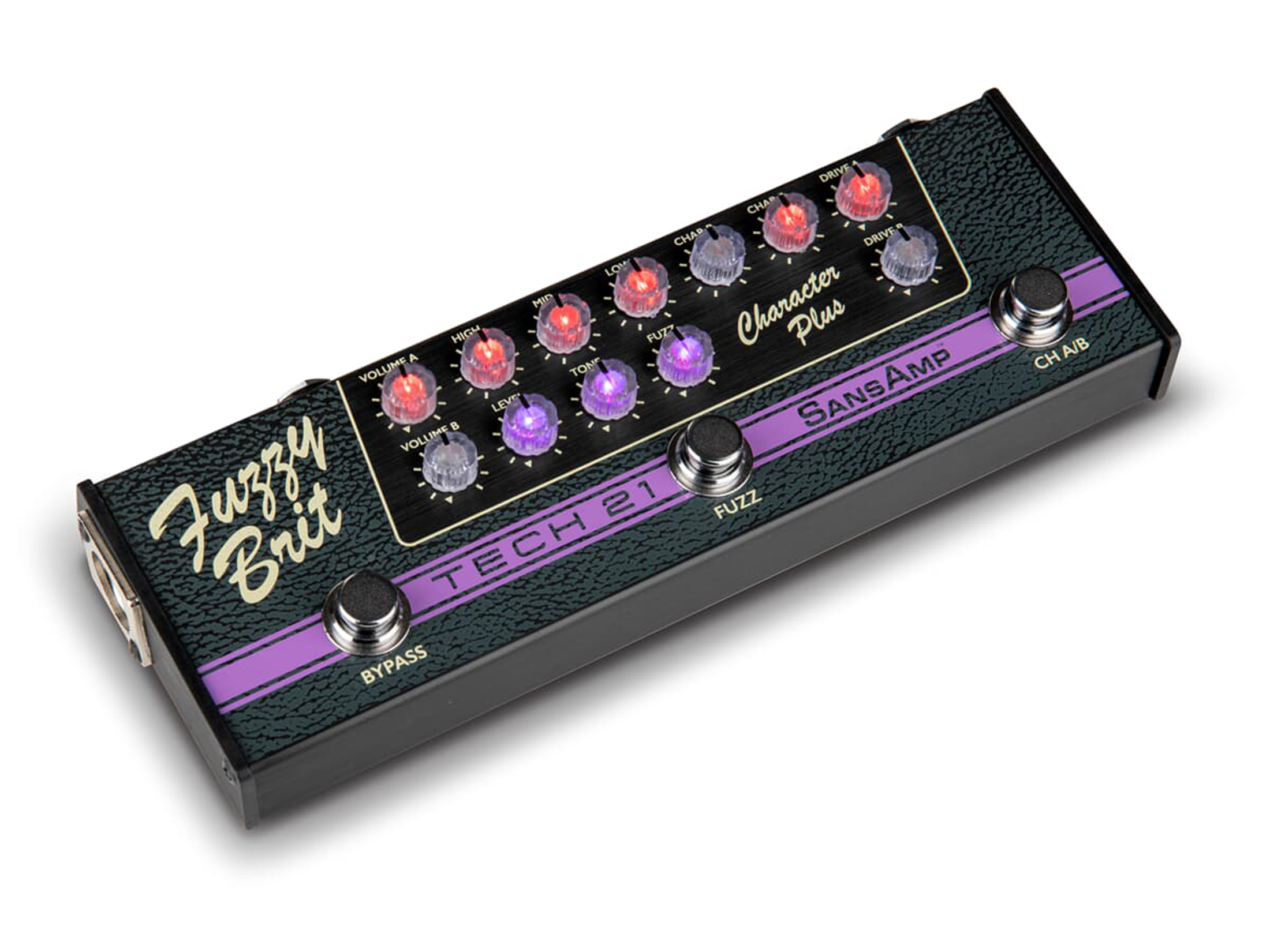
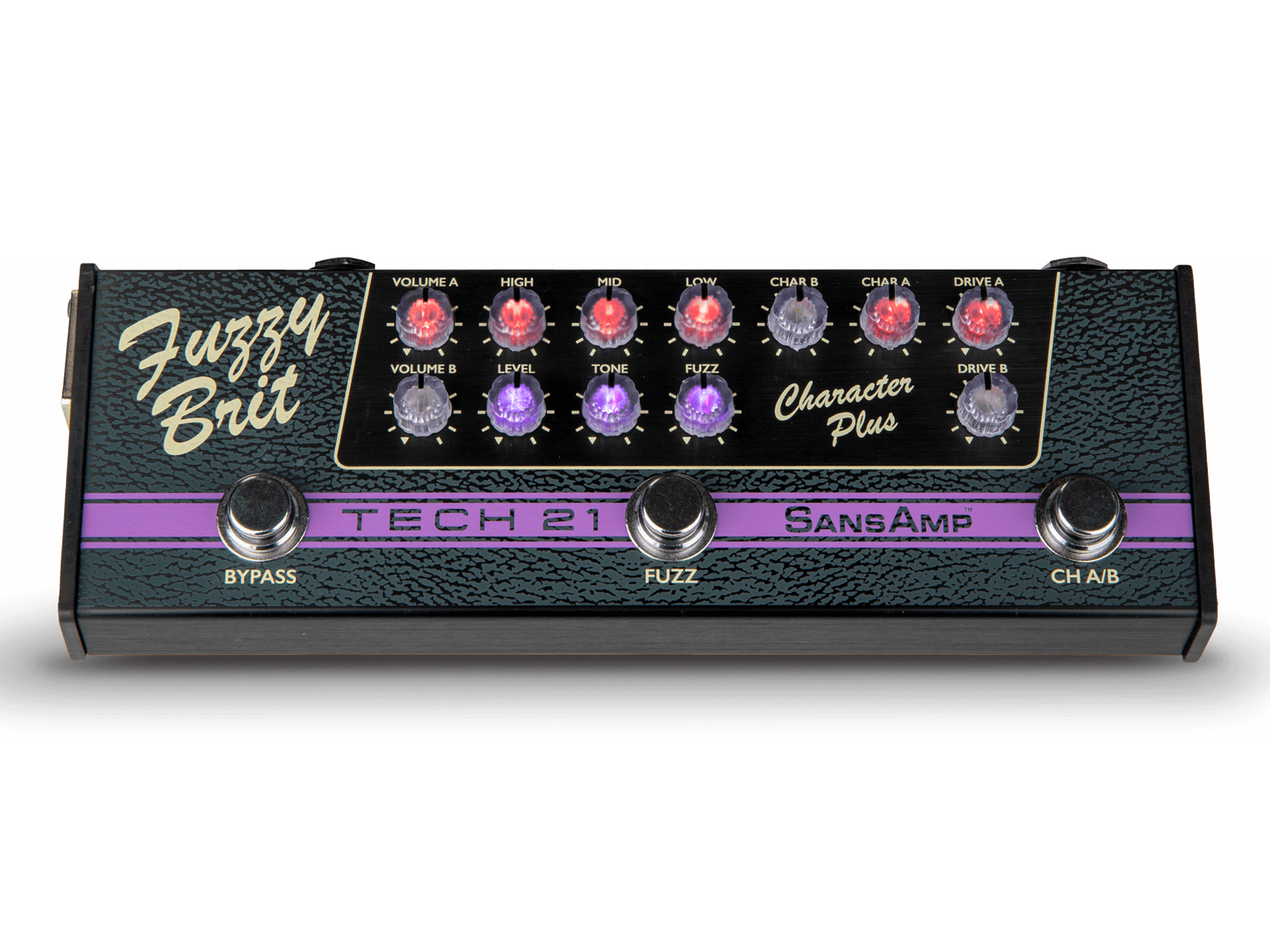
Tech 21 Fuzzy Brit vie asiat selvästi klassiseen Hendrix-soundin suuntaan, koska se sisältää kaksi Marshall-tyylistä kanavaa ja niiden lisäksi Fuzzface-tyylisen särön.
Character-säädin tarjoaa myös tässä joukon erilaisia, mutta yhtä klassisia versioita Marshall-murinasta ”Beanosta” aina ”Ladylandiin” ja 1970-luvun Metaliin.
Fuzz-piiri perustuu silikoni-Fuzzfaceen, mutta lisämausteena toimii tässä Tone-säätö, jonka avulla voit kesyttää liian terävää diskanttia.
****
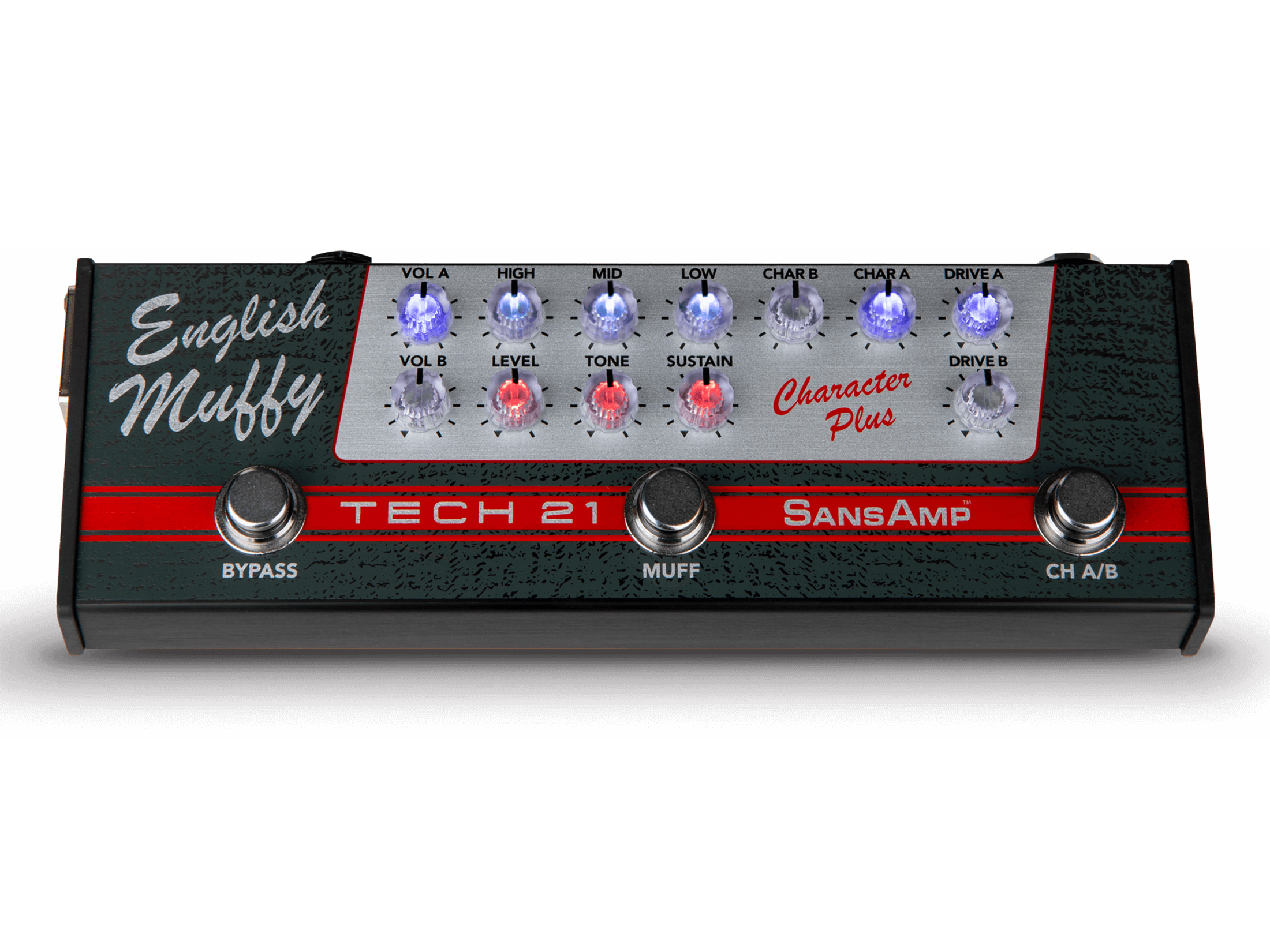
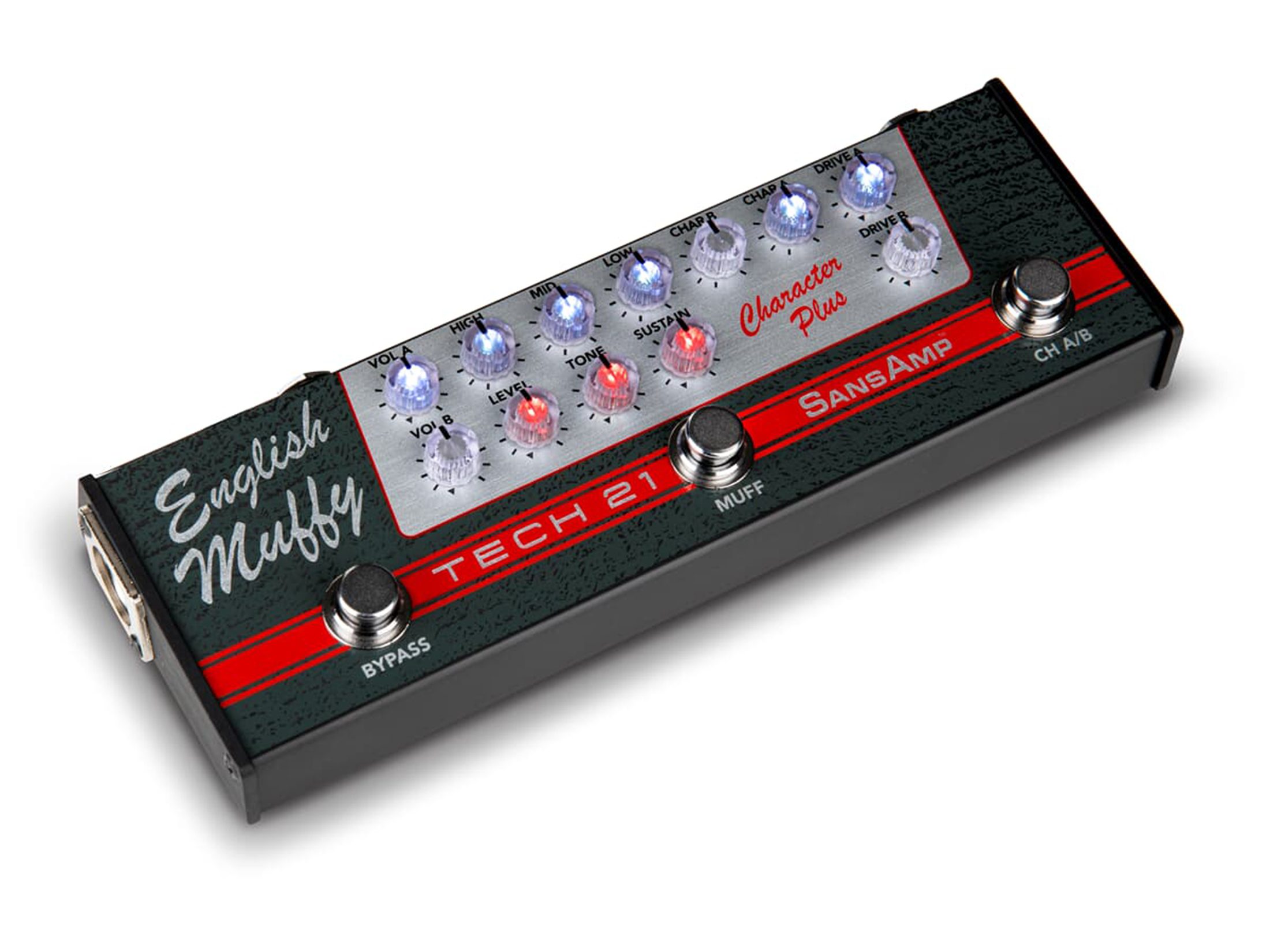
Tech 21 English Muffy vie asiat tiukasti 1970-luvun rock-alueelle, sillä pedaali tarjoaa klassinen Hiwatt-stäkin ja Big Muff Pi -särön yhdistelmä. Vaikka tämä pedaali on selkeästi suunnattu David Gilmour -faneille, se sopii erittäin hyvin mm. Who-tyylisen menoon.
Character-control vie sinut puhtaista soundeista (kello 7–10) rapeisiin rock-sävyihin (kello 11:stä ylöspäin). Korkeimmissa Character-asetuksissa mukaan kuvaan astuu vielä keskialueen boosteri.
Eri Big Muff -vuosikerrat voivat erota soundissa melkoisesti toisistaan, mutta Tech 21:n versio kuulostaa ainakin hyvin muhkealta ja kermaiselta.
****
Demokappaleena Tech 21 English Muffylle soitin lyhyen instrumentaaliversion Whon klassikkokappaleesta ”Won’t Get Fooled Again”:
****
Tässä on minun versioni Paul McCartneyn raga-vaikutteisesta kitarasoolosta Beatlesin kappaleessa ”Taxman”:
****
Valitsin shuffle-bluesin Screaming Blonden soundin demokappaleeseen:
****
Tässä on lyhyt instrumentaaliversio kappaleesta ”All Along The Watchtower” Jimi Hendrixin tyyliin:
****
Vietettyään jonkin aikaa tämän Tech 21:n SansAmp Character Plus -sarjan kvartetin kanssa, minusta tuntuu, että näiden polkimien pääjuttu on, kuinka hämmästyttävän hyvin ne toimivat. Saat erittäin käyttökelpoiset soundit käytännössä suoraan kädenkäänteessä. Character Plus -pedaalit eivät aseta käytännössä mitään esteitä soundin kuulemisen pään sisällä ja tämän soundin ”nauhalle” vangitsemisen välillä. Muutama pieni nuppien säätö ja olet valmis äänittämään.
Toki, jos haluat kokeilla erilaisia mikrofonityyppejä ja niiden sijoittelua, voit tehdä sen fyysisen vahvistimen tai digitaalisen mallinnusplugarin avulla, mutta aina on olemassa vaara, että saatat menettää ”luovan kipinän” ennen kuin kaikki on laitettu valmiiksi.
Tech 21 SansAmp Character Plus -sarjassa on kyse sujuvuudesta ja helppoudesta, erinomaisesta soundista tinkimättä.

