Virolainen aikakauslehti Kitarr on tyylikäs julkaisu kitaristeille. Lehti sisältää haastatteluja, testejä, juttuja vintage-soittimista sekä vinkkejä miten tulla paremmaksi soittajaksi.
Ajakiri Kitarr -lehdellä on myös hyvin näyttävä nettisivusto, joka täydentää ja laajentaa lehden sisältöä mm. videoilla.
”Egnater Tweaker-112 – The Valves Strike Back!” – If Kitarablogi were a tabloid, the headline would read something like this, because this is what Bruce Egnater’s new combo is all about: The Tweaker is designed to give the guitarist something akin to the extreme versatility of digital modelling amps or software in a genuine all-valve package.
****
The compact Tweaker-112 (current price in Finland: 656,44 €) is a 15-Watts valve combo, equipped with a single 12-inch Celestion G12H-30 Vintage -speaker. The design comes from the USA, but the amp is built in China to reassuringly high quality standards.
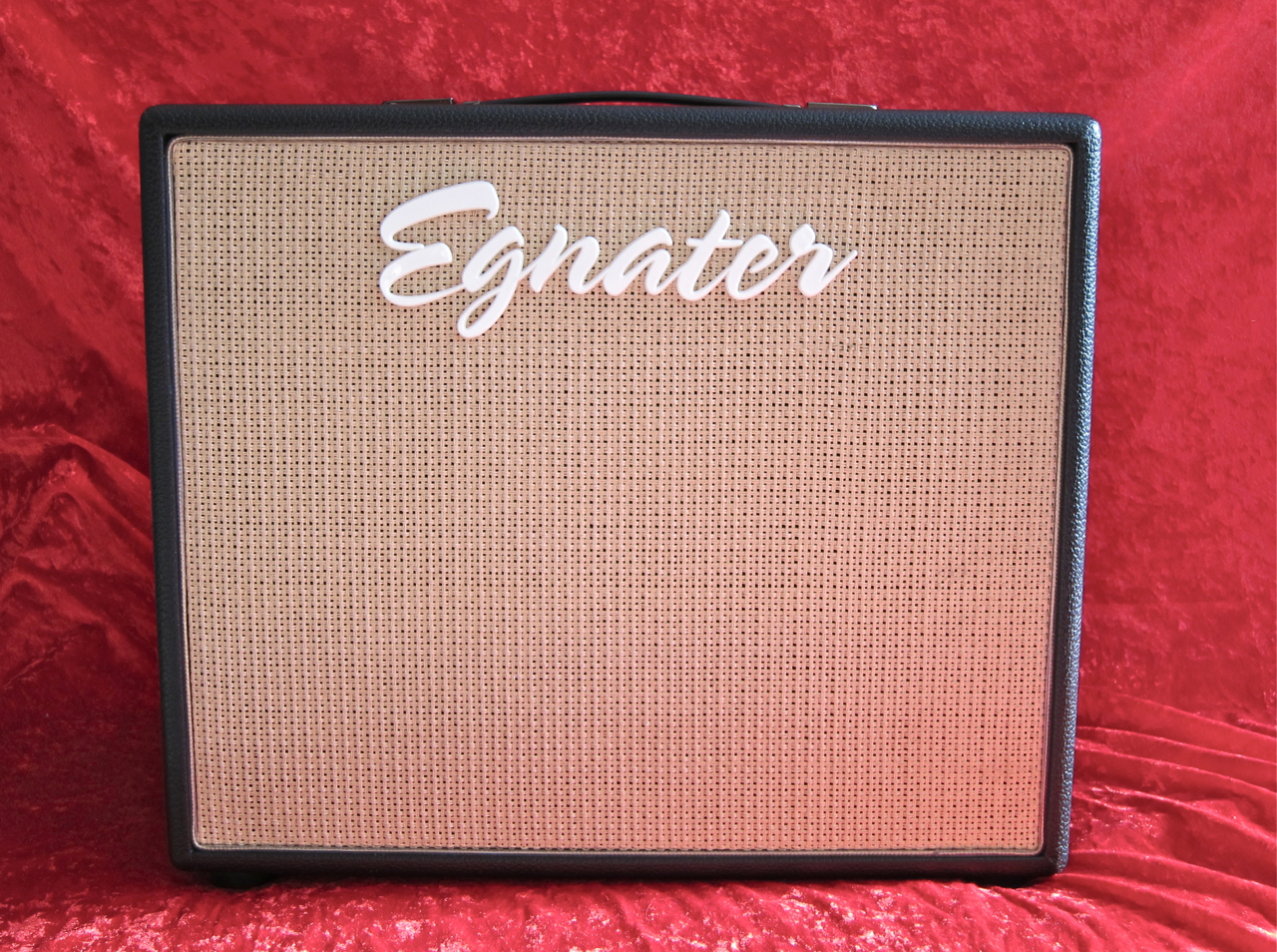
The front grille is an Orange-style weave, with the cabinet finished in black, textured vinyl.
The cabinet’s back is almost completely closed, which helps with achieving stack-type tonalities using a compact combo.
One of Celestion’s most well-known speakers…
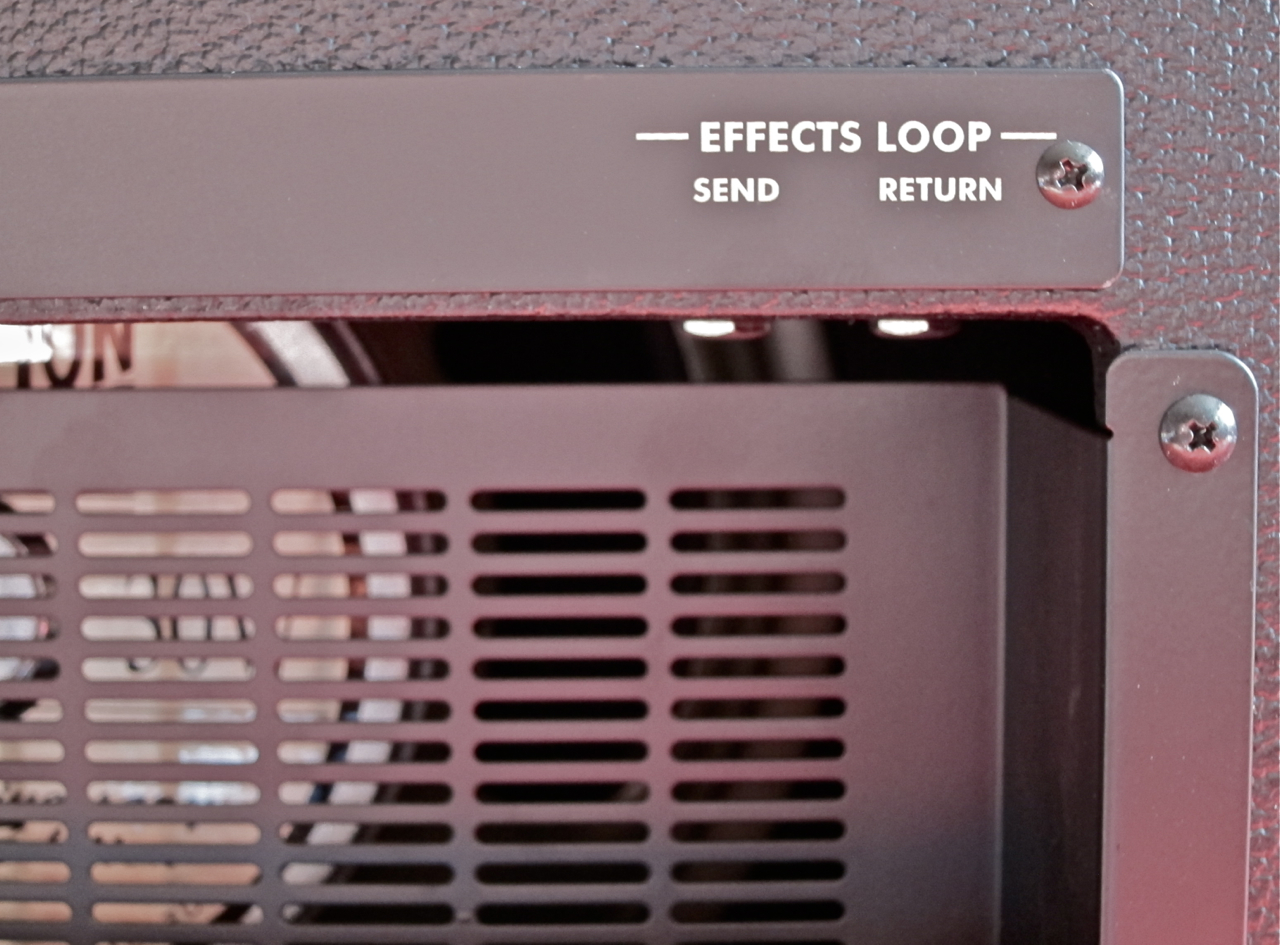
All the Tweaker’s connectors have been placed vertically above the back’s opening. This is probably a little unusual, but by no means a bad solution.
The workmanship looks reassuringly crisp both inside and out.
Like in many modern compact valve combos (the Vox AC4 TV and Marshall Class 5 spring to mind), the Tweaker-112 also has its valves placed above the speaker, facing forward, which makes valve changes a wee bit complicated. You have to take of the small back grille, and then fish for the correct valve you want to replace, while at the same time trying to get a visual clue, as to what you’re doing, by peeping through the combo’s small ventilation grille. Not my favourite way of handling this…
****
”Tweaker” – the name says it all. If you like to twiddle knobs and throw switches on the road to sonic nirvana, then this Egnater is just the amp for you.
Situated next to the input jack the first two mini-switches let you choose between a big or a tight bass end, and between a normal and a brighter basic tonality. By using the Clean/Hot-switch next to the gain-control you can coax the whole range of clean to heavily distorted tones from this single-channel combo.
Another mini-switch has been set aside to tweak the amp’s EQ-section. You can select from three options – Brit (Marshall-type), AC (Vox-type) and USA (Fender-type). The last switch is situated in the master section and gives you a choice between a vintage style quasi-linear frequency curve and a loudness-type metal setting.
****
Putting good descriptions to sounds is always rather hard – so take a listen to the soundbites I recorded for you, using my Fender ’62 Telecaster Custom -reissue, as well as my Hamer USA Studio Custom. All delays and reverbs have been added at during mixdown.
In my opinion, Egnater’s Tweaker-112 is a great little package, and I found it hard to give it back. Its biggest forte lies in recording work, where the combination of this combo’s huge variety of sounds, combined with different instruments and microphones can yield spectacular results. At 15 Watts (and equipped with a master volume control) the Tweaker-112 is also a perfect choice as your living-room amp.
You cannot, and should, not expect 100 percent authenticity from such a compact combo – especially when it comes to amp stack tones – still, I feel that the Tweaker offers you a kind of organic interactivity, especially in its dynamic range, which is still hard to emulate with digital amp modellers.
If you stick a mike in front of the Egnater Tweaker it can also be your partner on stage, but then I’d recommend using a few pedals in front of it for instant sound changes.
Tämän jutun otsikko voisi hyvin olla ”Egnater Tweaker-112 – putkien vastaisku”. Bruce Egnaterin Tweaker-kitarakombon juju on juuri siinä, että se lupaa digitaalisista mallinnuslaitteista ja -ohjelmista tuttua monipuolisuuta oikeassa täysputkivahvistimessa.
****
Kätevänkokoinen Tweaker-112 (656,44 €) on 15-wattinen, yhdellä Celestion G12H-30 Vintage -kaiuttimella varustettu yksikanavainen täysputkikombo. USA:ssa suunniteltu vahvistin on valmistettu Kiinassa, ja lopputulos on asiallisen laadukas.
Etukangas on Orange-vahvistimistakin tuttu rotinki-/ruokokudos, ja kotelo on saanut ylleen mustan tolex-päällysteen.
Kotelon takaseinä on lähes kokonaan suljettu. Tällainen ratkaisu helpottaa stäkkiä muistuttavan soundin aikaansaamista pienellä kombolla.
Yksi Celestionin tunnetuimmista kitarakaiuttimista…
Liittimet sähköjohdolle, kaiuttimille ja efektilenkille on asennettu takaseinän aukon ylläpuolelle, mikä on ehkä hieman epätavallinen, muttei missään nimessä huono ratkaisu.
Työnjälki näyttää myös vahvistimen sisällä hyvin siistiltä.
Kuten monessa muussa nykyaikaisessa kompaktissa kombossa (esimerkiksi Vox AC4 TV, Marshall Class 5), myös Tweaker-112:ssa putket on asennettu kaiutimen ylle niin, että niiden vaihtaminen on tavallista hankalampi operaatio. Takaritilä täyttyy ensin irrottaa, minkä jälkeen käden on löydettävä rikkinnäinen putki samalla kun silmä yrittää nähdä jotain tuuletusaukon läpi. Ei siis ehkä paras mahdollinen ratkaisu…
****
Sanan ”tweaker” olisi vapaasti suomennettuna ”hienovirittäjä”, ja kun katsoo kombon etupaneelia, tulee selväksi, miten tämä Egnater sai nimensä.
Heti tulon vieressä ovat ensimmäiset kaksi minikytkintä, joilla valitaan muhkean ja tiukan basson, sekä tavallisen ja kirkkaamman diskantin välillä. Gain-säätimen Clean/Hot-minikytkimellä yksikanavaisesta vahvistimesta saa koko skaalan puhtaita, rapeita ja särösoundeja.
Kolmikaistaisen EQ:n toimintaan voi vaikuttaa kolmiasentoisella pikkukytkimellä. Brit-, AC- ja USA-vaihtoehdot muuttavat etenkin EQ:n luonnetta Marshall-, Vox- tai Fender-kaltaiseksi. Viides ja viimeinen minikytkin löytyy master-osastolta, ja sillä valitaan perinteisen taajuusvasteen ja loudnessmaisen käyrän välillä.
****
Soundien kuvailu on aina hankalaa – on paljon parempi kuulla itse, millaisista soundeista on kyse. Esimerkit on soitettu Fender ’62 Telecaster Custom -uusintapainoksella, sekä kahdella humbuckerilla varustetulla Hamer USA Studio Custom -mallilla. Kaiut ja viiveet lisättiin miksausvaiheessa.
Egnater Tweaker-112 on mielestäni erittäin onnistunut kokonaiuus, josta on vaikea luopua. Etenkin studiotyöskentelyyn sekä olohuonekäyttöön kompakti kombo on loistavalla soundillaan vaikuttava monipuolinen valinta.
Täydellistä autenttisuutta ei noin pienellä pienellä kombolla luonnollisesti saavuteta – etenkään stäkkisoundien suhteen – mutta Tweakerissä on kuitenkin sellainen orgaanisuus, dynamiikka ja vuorovaikutus soittajan ja kitaratyypin kanssa, jota on yhä vaikea saavuttaa digitaalisessa maailmassa.
Egnater Tweaker-112 -kombo sopii myös (mikitettynä) keikkailuun, mutta silloin kannattaa varmasti pakata vielä mutama pedaaliefekti mukaan.
Paul Kossoff was the guitar powerhouse behind Free’s earthy Blues Rock sound.
Now Gibson Custom are honouring the late guitarist with a limited replica of his famous guitar with the release of the Paul Kossoff 1959 Les Paul Standard.
The Paul Kossoff -model is available as an aged replica or in Gibson’s VOS-format.
Paul Kossoff oli kitaristina Free-yhtiön Blues Rock -soundin kulmakivi.
Gibson Custom on hiljattain esittänyt uuden Paul Kossoff 1959 Les Paul Standard -mallinsa, joka on firman kunniaosoitus nuorena kuolleelle brittikitaristille.
Paul Kossoff -mallin saa joko täydellisenä jäljitelmänä (relic) tai Gibsonin VOS-viimeistelyllä.
Kyllä, myönnän sen: en ole mikään tosimies, kun kyse on askartelusta, puutöistä tai tee-se-itse-projekteista! Ei aina voi olla paras… 😉
Uskon kuitenkin, että lähes jokainen meistä voisi (ja ehkä pitäisikin) kokeilla oman kitaran tai basson ”rakentamista”. En puhu mistään puuaihiosta aloittamisesta, vaan siitä että kasaa oman soittimensa ostetuista osista.
On totta, ettei itse-kasattu kitara ole välttämättä ostettua massatuotannon tuotetta halvempi, mutta sellaisen projektin idea onkin siinä, että saa käsin kosketeltavaa tietoa siitä, miten sähköistettu lankkusoitin toimii. Se voi olla jopa hauskaakin…
****
Kasasin tämän kitaran – voidaan nimetä sitä ”Berka T” -malliksi – vuonna 2004. Halusin saada selvillä, millainen soitin syntyy juuri edullisista aineista.
Hankin kaikki Berka T:n osat SP-Elektroniikalta, tähtäimessä oli sellainen ”riisuttu” öljy-ja-vaha-meininki perloidipleksillä.
****
Runko on kolmesta leppäpalasta, joiden syykuviot ei ole yhteensovittu – tämä on tavallinen käytäntö edullisissa runkoissa. Rungon muotoilu on tyydyttävä ja työnjälki oli siisti myös kolojen ja kanavien osalta.
Ainoastaan hieman liian kapeaksi jäänyt kaulatasku oli pikkuisen yllättävää. Sain kuitenkin kaulaa asennettua ongelmitta suoraasti runkoon, mutta tällaiset jutut voivat tapahtua edullisilla osilla tai jos osat eivät ole peräisin samalta valmistajalta.
****
Kaula on vaahteraa, kun taas otelautaan on käytetty kauniisti kuvioitu palaa sonokeling-palisanteria.
Otelaudan radius on vintagea loivempi. Keskikokoiset nauhat on istutettu riittävän huolellisesti ainakin käyttämäni kieltenkorkeutta varten.
****
Kaulan kiinnitys taas on hyvinkin perinteinen – neljä ruuvia sekä teräksestä tehty kaulalevy.
****
Sekä talla että mikrofonit ovat peräisin Gotoh:n mallistolta: nykyaikaisessa tallassa on paksu pohjalevy sekä kuusi yksittäistä tallapalaa. Mikrofoneissa on pitkä, keraaminen tankomagneetti liimattu kelan alle, eikä vintage-tyylisesti kuusi lyhyttä alnico-magneettia.
Minun piti viilata tallamikin kansilevyä hieman kapeammaksi, koska se ei sellaisenaan sopinutkaan tallan aukon läpi. Jälleen yksi edullisista osista syntynyt pieni mutka matkassa.
****
Berka T -projekti ei ollut minun ensimmäinen kokeilu, joten kytkinnän juottaminen ei ollut mitenkään ongelmallista. Jotkut valmistajat tarjoilevat myös rakennussarjoja, joissa ei tarvita juotoskolvia, niin kuin TÄSSÄ.
Kolmiasentoinen kytkin oli yllättäen hieman liian iso rungon koloa varten. Poistin taltalla varovasti vähän puuta kolon pohjasta, ja sain lopulta kannen kiinni.
****
Nykyaikaisten virittimien asentaminen oli lastenleikkiä…
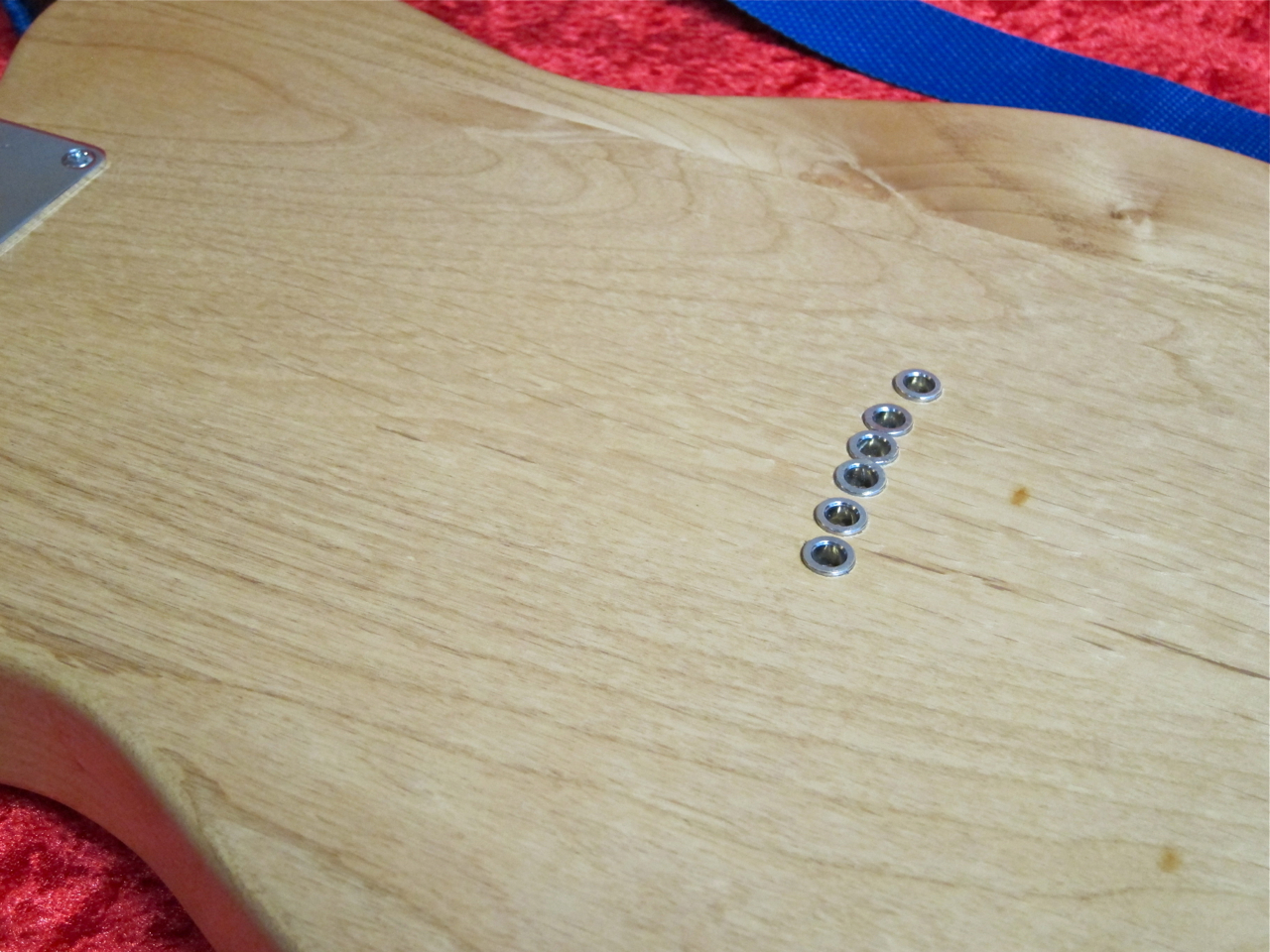
…mutta epäonnistuin pahasti kielikanavien poraamisessa ja holkkien asentamisessa.
Ensi kerralla pitäisi käyttää sapluunan sekä poraustelineen!
****
Kaikki kaikessa olen melko tyytyväinen valmiiseen Berka T:hen! Sen osat maksoivat hieman yli 300 €, mutta opin jälleen kaikenlaista tämän projektin kautta.
Kitaran soitettavuus on ihan OK, vaikka kaulaprofiili voisi mielestäni olla pyöreämpi ja hieman paksumpi. Edullisista Gotoh-mikeistä lähtee yllättävän hyvä soundi, vaikka ne ovatkin vähän vintagea – twängiä kuitenkin löytyy.
Blackstar is one of the hottest guitar amp companies around at the moment. Their first Series One -heads have found their way into many a professional’s back line, due to their muscular tone and extreme versatility. Their more recent sweet little HT-5 and HT-1 combos can already be found in many studios and living-rooms around the globe.
New from Blackstar comes the HT-Venue-range. This series promises to offer more affordable amps that still aim to give you the full ”Blackstar Experience”.
****
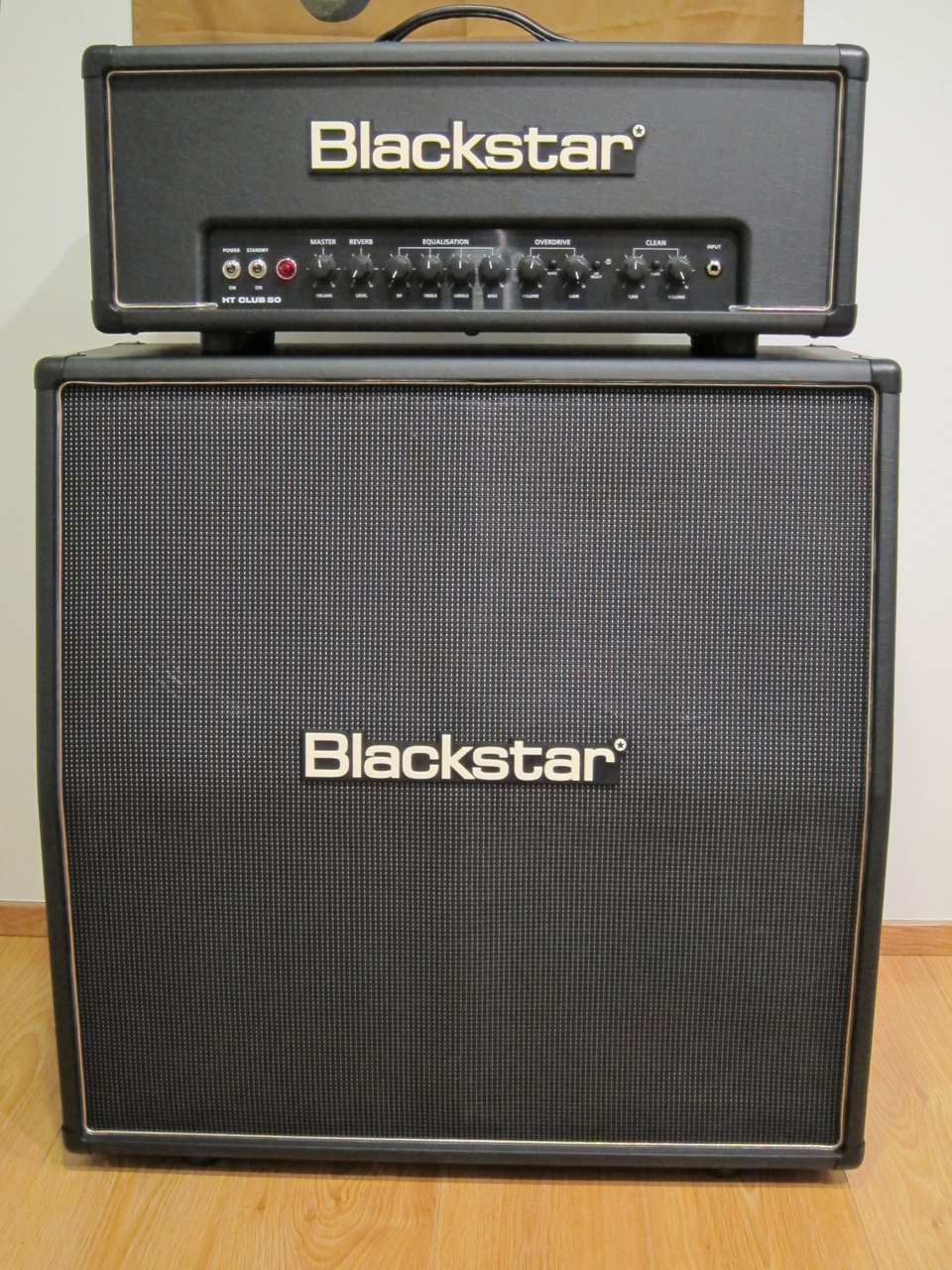
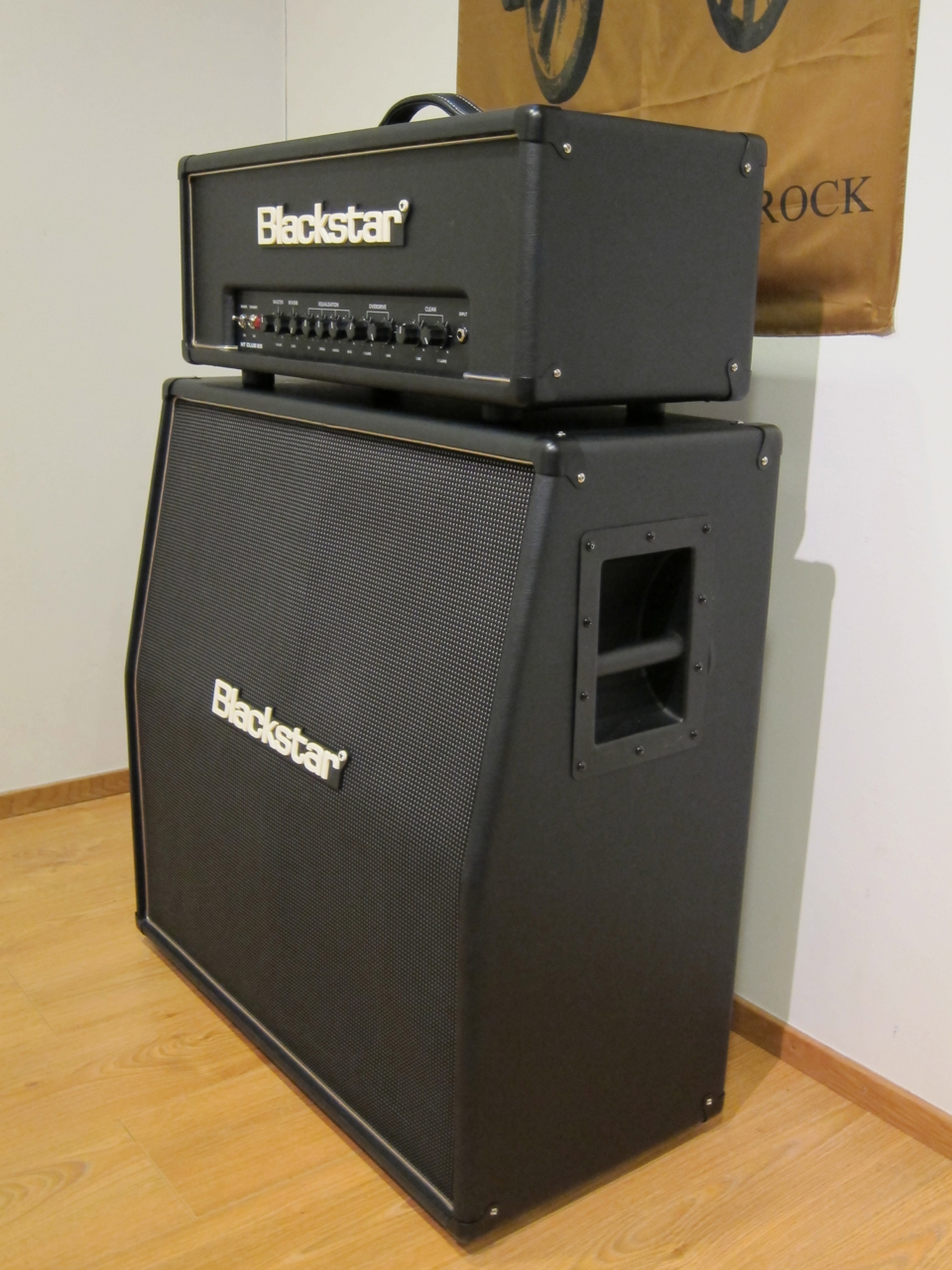
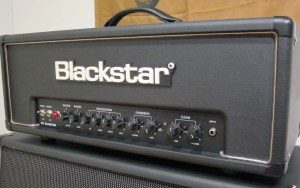
Kitarablogi.com got the 50 Watts HT Club 50 head (current price in Finland: 591 €), as well as the Celestion-equipped HTV-412A cabinet (current price in Finland: 435 €) for reviewing.
The whole Blackstar range is engineered in the UK, but built in South Korea. The Venue-half-stack looks very stylish, with somewhat more of a vintage-type charm compared to Series One models.
Workmanship is top-notch – this gear clearly made to stand the rigours of the road.
****
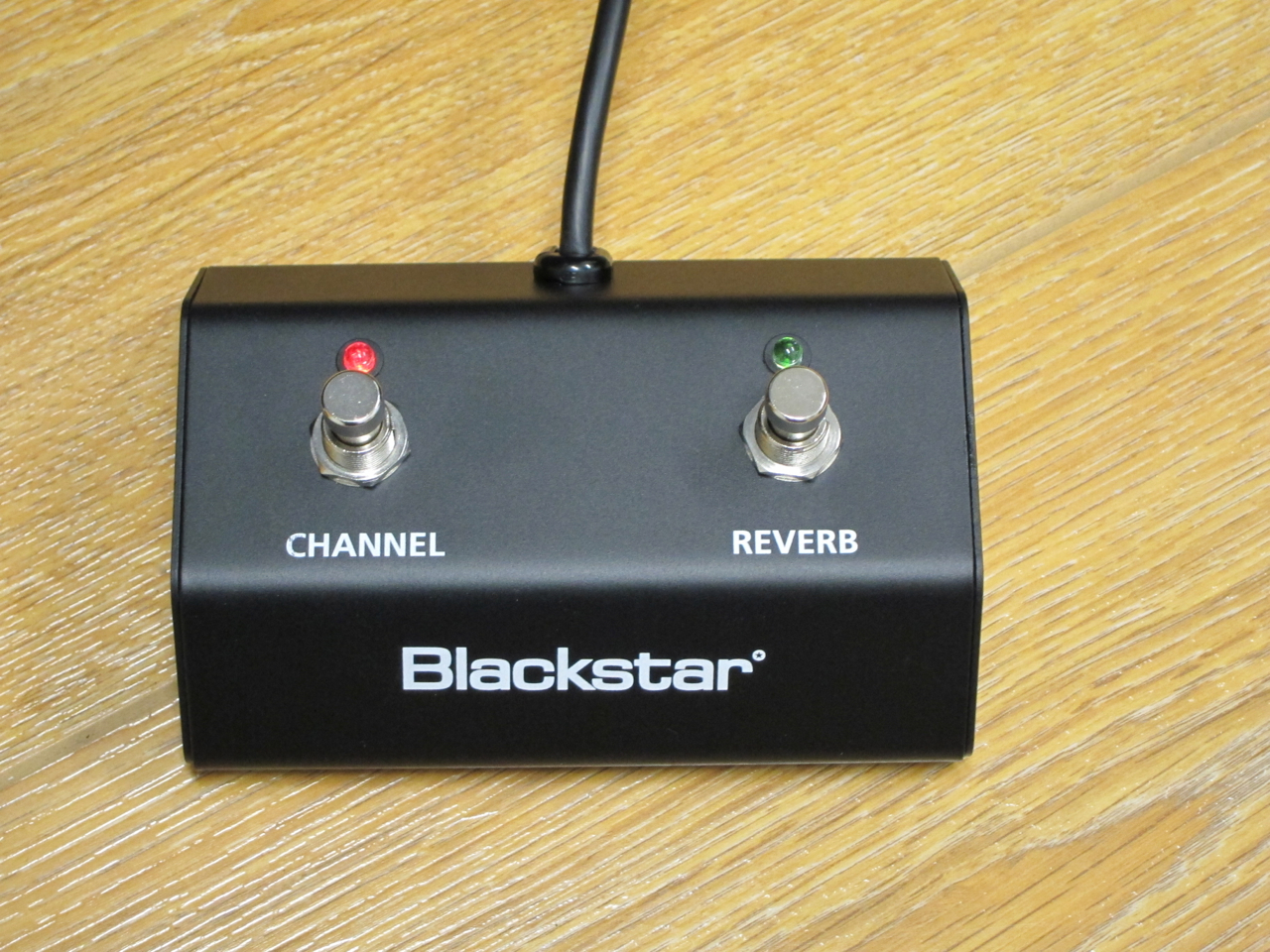
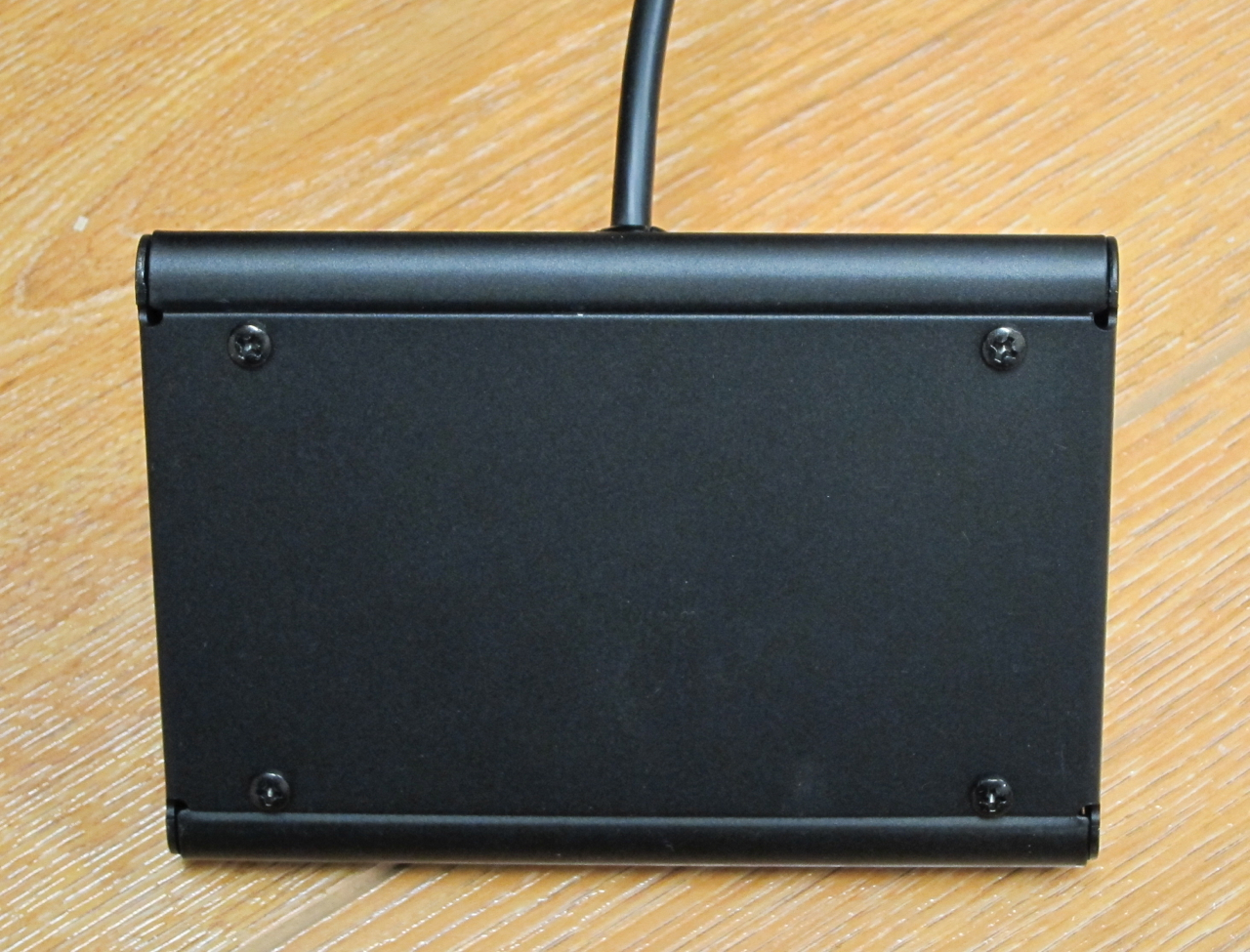
The HT Club 50’s two-switch pedal is a sturdy little number…
…but I feel that its practicality could be improved significantly with some skid-resistent material stuck to its underside.
****
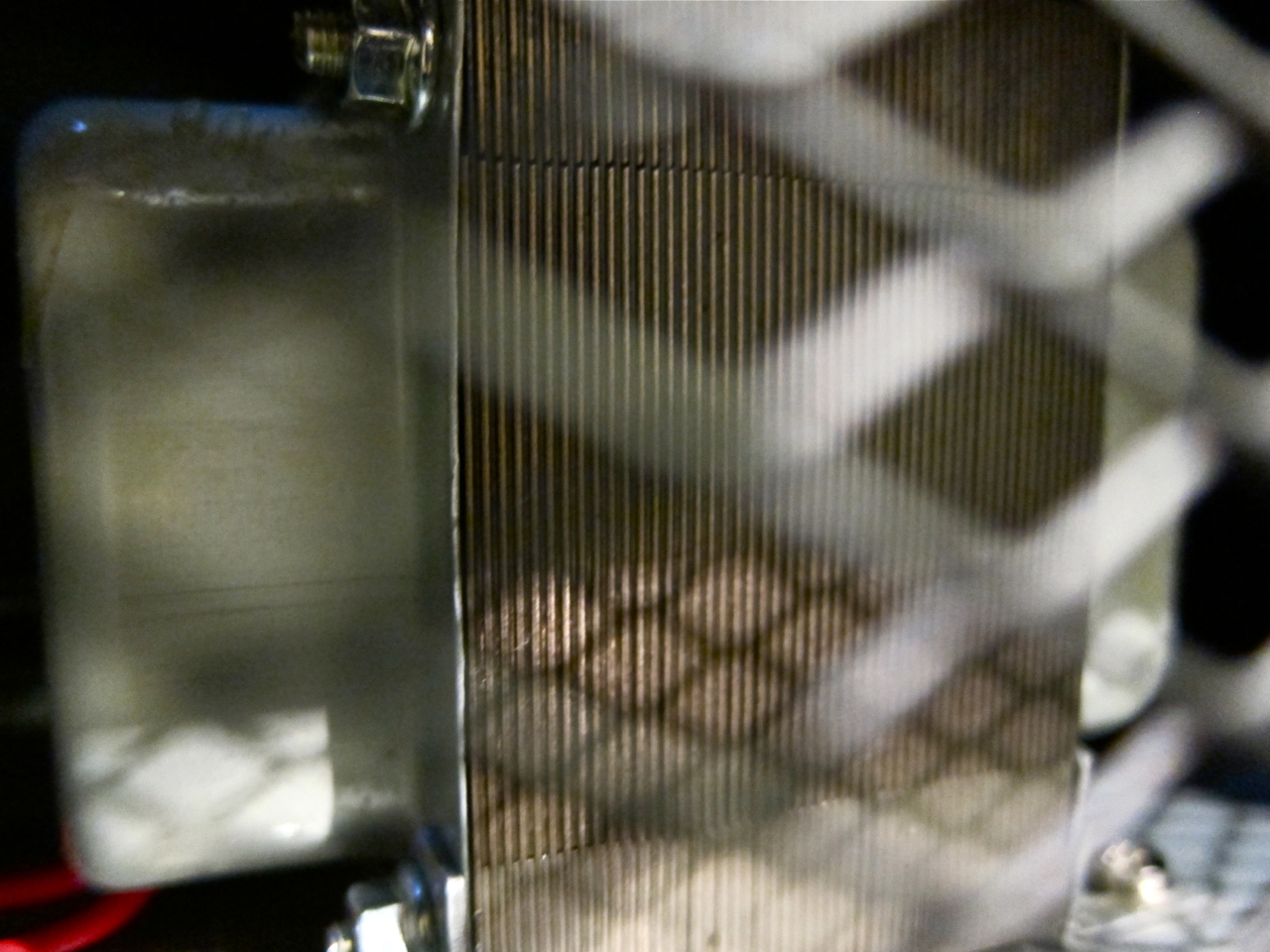
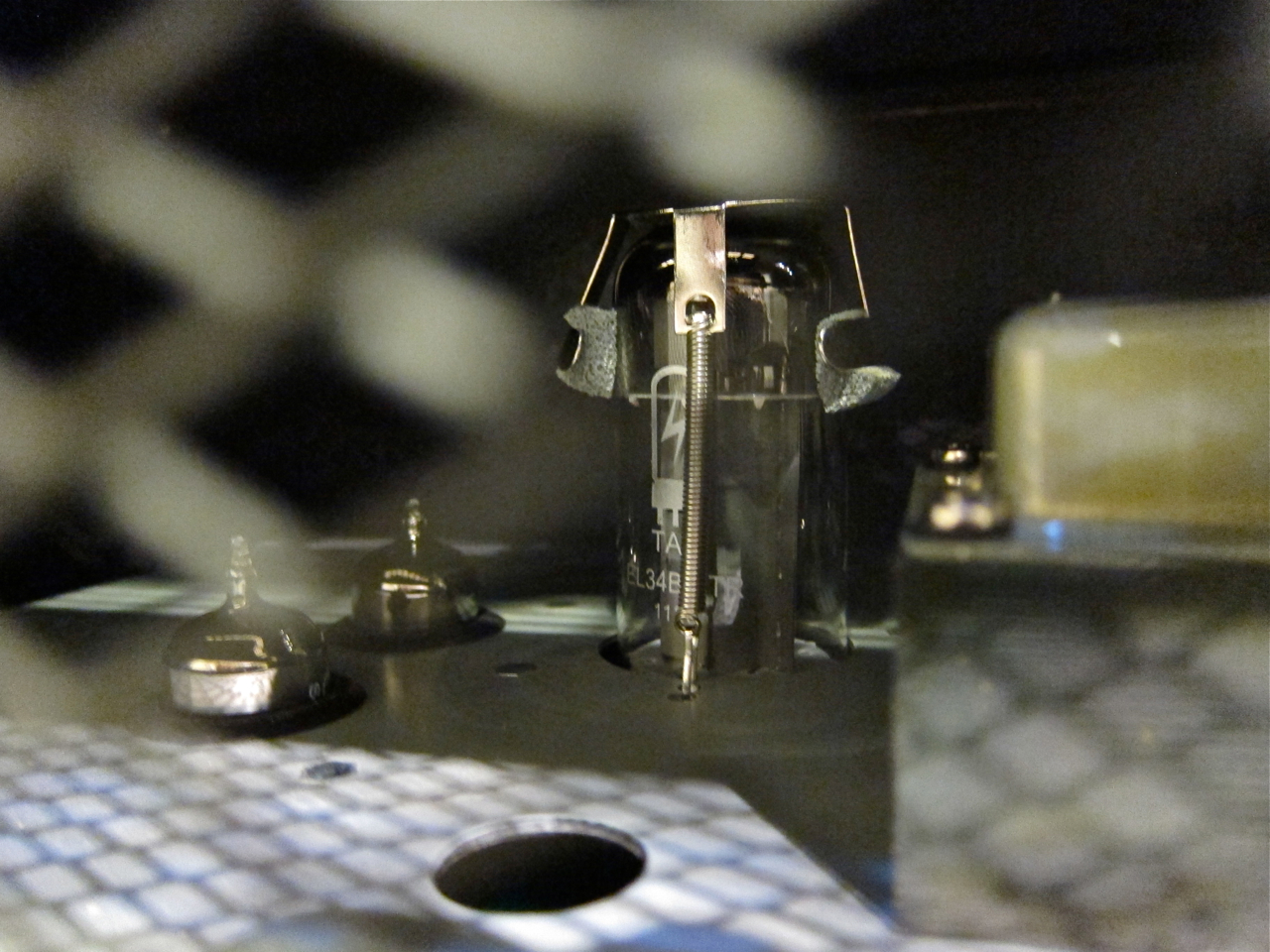
The head’s insides look very tidy, and the quality of the components used is reassuring.
We find a pair of ECC83-tubes working in the HT Club 50’s preamp, as well as twin EL34s making up the power amp section, which steers performance expectations in a Marshall-ey sort of direction.
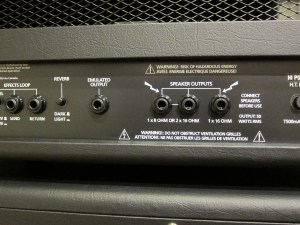
The HT Club 50 sports three cabinet outputs on its back panel for different cabinet configurations…
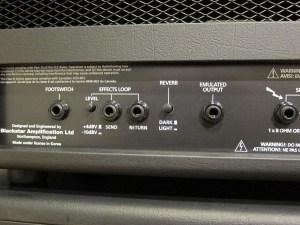
…as well as an excellent speaker-emulating direct output. The Reverb-switch offers you the choice between a full-bodied version and a leaner counterpart of the nice digital reverb’s offerings. Next to it there’s the effects loop.
****
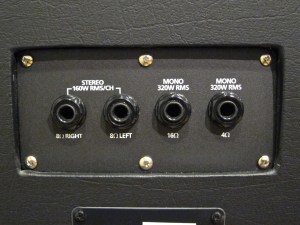
Blackstar’s angled HTV-412A cabinet can be run in mono or in stereo, the latter splitting the cabinet’s four 12″ speakers into groups of two.
****
The head is a two-channel affair, but as usual with Blackstar, each channel has its own ace up its proverbial sleeve:
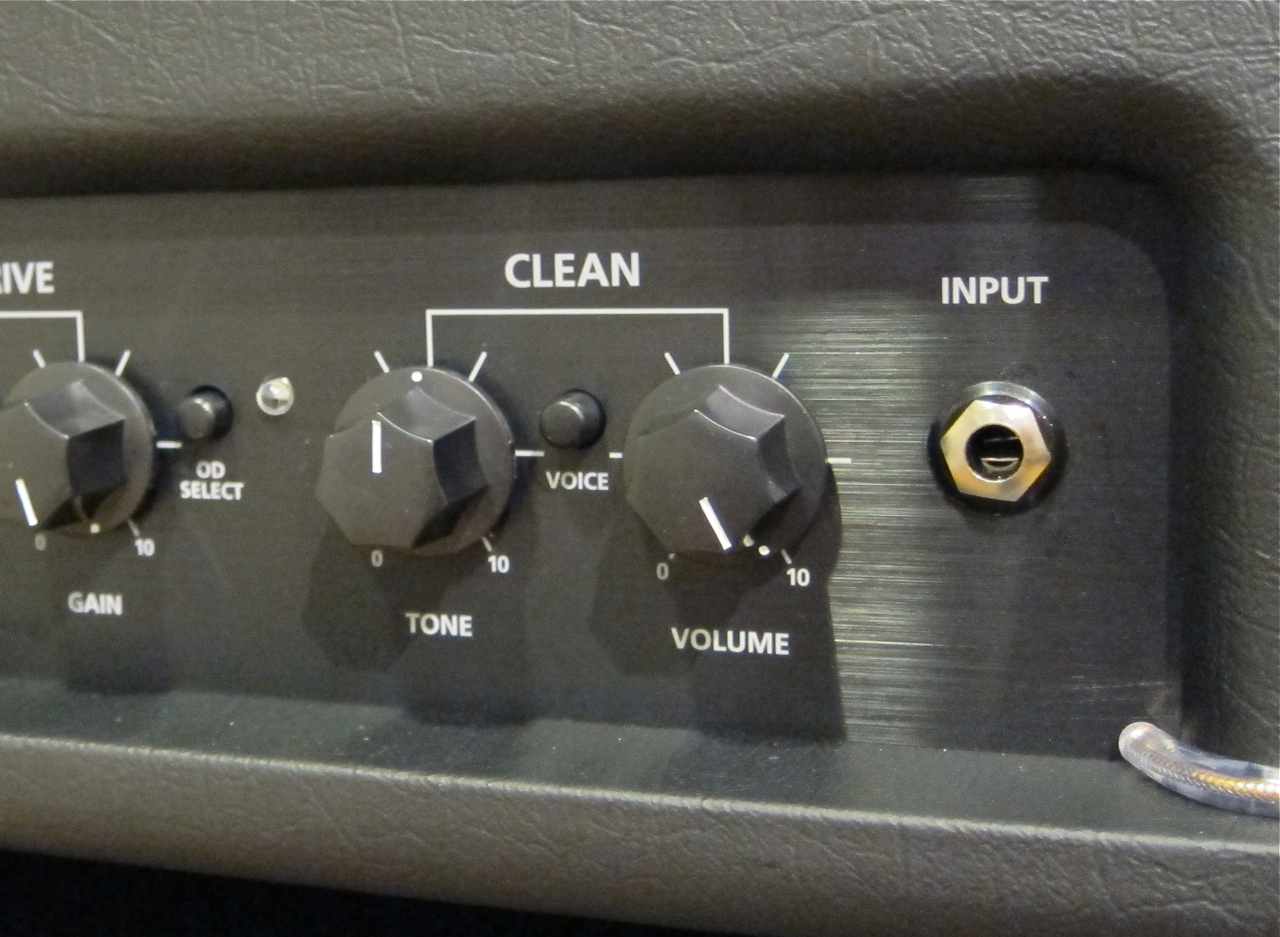
The Clean channel is ease-of-use embodied, offering only two simple controls for volume and tone. But the Voice-button opens up the gates to two different worlds of clean:
Modern Clean has headroom in spades and stays clean and transparent at virtually all gain settings, regardless of the guitar used.
Boutique Clean, on the other hand, is a much more interactive beast, with some tasty sag, compression and even overdrive on offer, once you turn up the wick a little bit (or when using hot pickups).
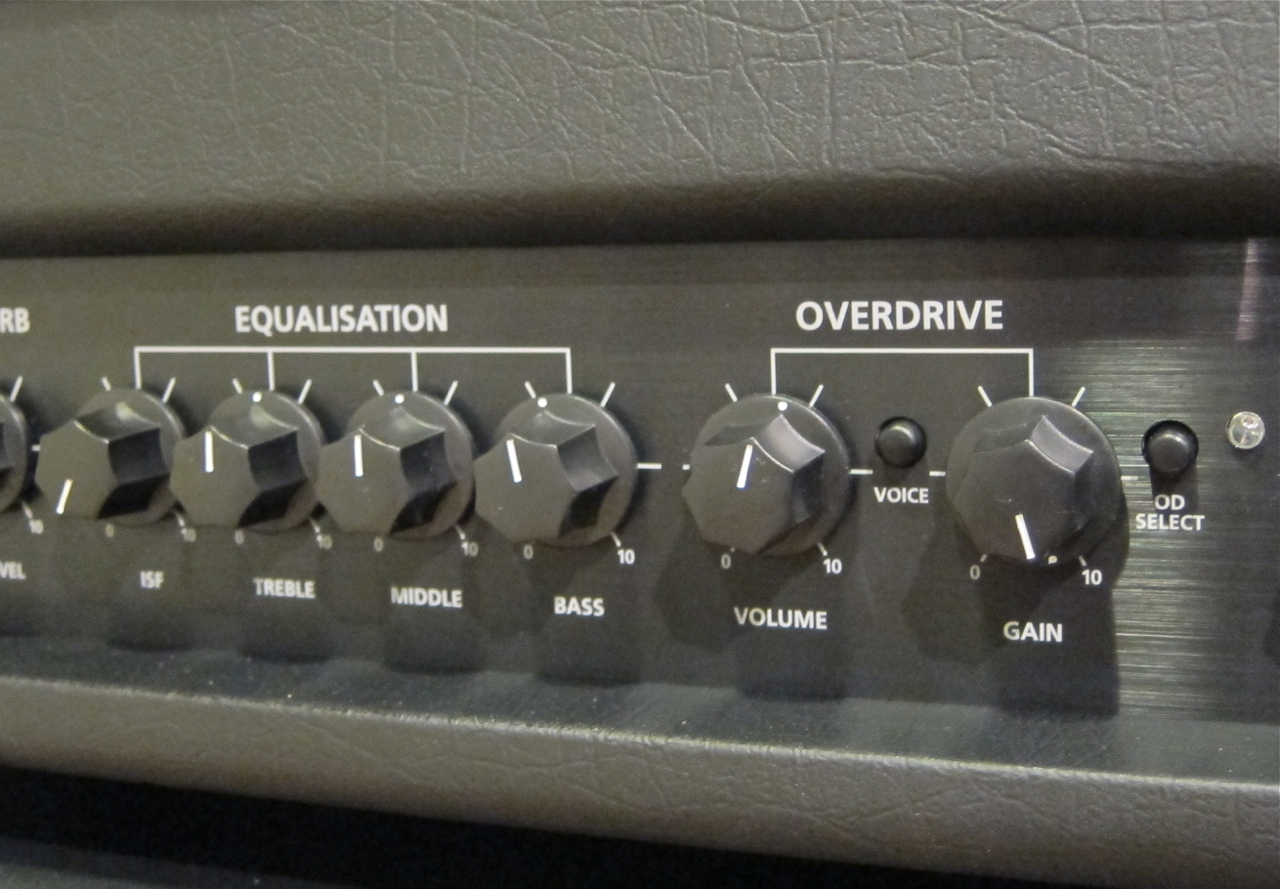
The Overdrive channel offers a bit more in terms of adjustability: Adding to the gain and channel volume knobs, it has a three-band EQ, as well as Blackstar’s ingenious ISF-control.
ISF stands for Infinite Shape Feature. While the knob may have been placed together with the tone controls, ISF offers far more than a simple tone-tweaking. With ISF at zero the amp behaves like a typical US-style amp – there’s a tight bottom end, the attack is very precise and the tone has a light loudness-curve applied. With ISF at ten the amp sounds significantly warmer with a crunchy mid-range and a healthy amount of softening sag at higher gain levels.
When you keep in mind that the Overdrive channel also is equipped with its own Voice-switch – Classic Overdrive leaning towards typical Marshall-territory, and Modern Overdrive going the Rectifier-way – the options opening up before you are sheer endless and truly staggering.
In my opinion Blackstar’s HT Club 50/HTV-412A half-stack is one of the best guitar amps out there at the moment, not even taking into account its relatively low price. It is quite rare to find an amp, which gives you great clean and overdriven tones from the get-go, without having to touch the EQ section first. Blackstar’s HT Club 50 is one such amp, where the EQ section is really only used for fine-tuning the tone, and not for rectifying the amp’s shortcomings.
Yes, there are a few finer details where corners have been slightly cut (in comparison to a Series One head) to be able to achieve the HT Club 50’s keen price point, but it still gives you the genuine Blackstar-tones and -versatility, without any foul compromises.
Due to its versatility this is one amp that’s hard to pidgeonhole into a one-trick pony. The HT Club 50 is a great choice if you appreciate versatility in a gig-worthy package.
I can declare freely and from the bottom of my heart that I am not the most handy when it comes to DIY and using tools! You can’t win ’em all… 😉
Still, most of us could, and probably should, try their hands at ”building” their own electric solidbody guitar or bass. I use the quotation marks here, because I’m not talking about building, as in ”raw wood”, but rather about assembling an instrument from prefabricated parts.
A self-assembled guitar is almost certainly not cheaper than buying a mass-produced item. The idea behind the whole process is rather to get a true, hands-on insight into what makes an electric guitar tick. And it’s fun…
****
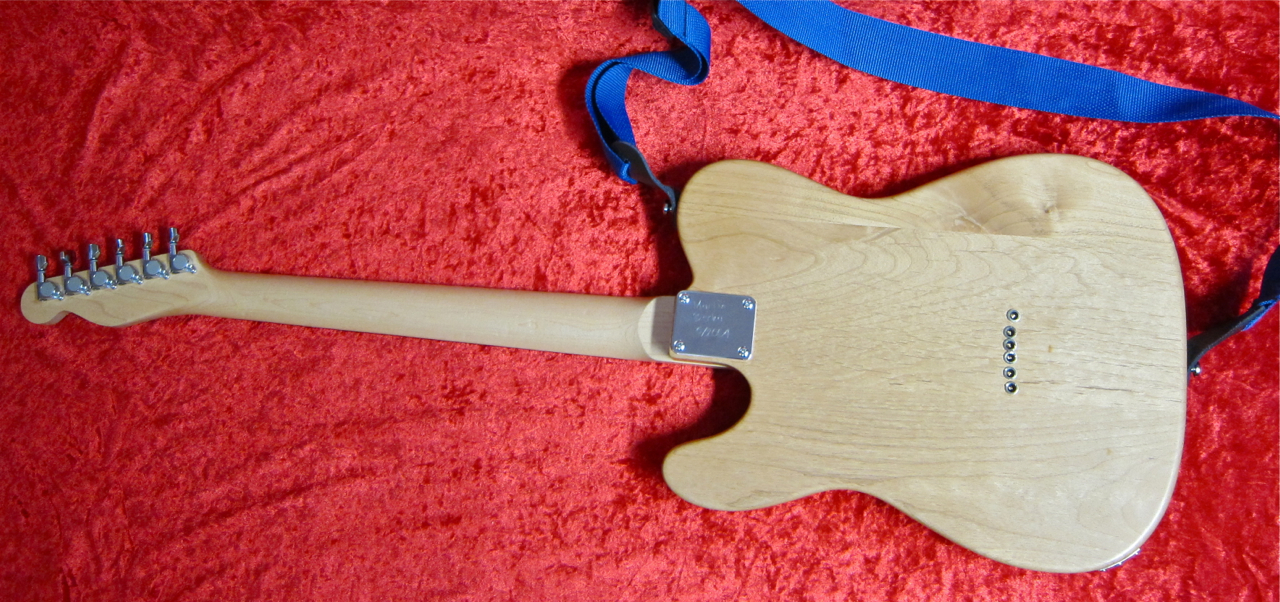
I assembled this guitar – let’s call her the ”Berka T” – in 2004. I specifically wanted to find out what kind of instrument you end up with using comparatively inexpensive parts.
I got all the ingredients for the Berka T from SP-Elektroniikka in Oulu (Finland), aiming for stripped Tele-with-pearloid-pickguard-look in an oil and wax finish.
****
The body is a three-piece alder affair, with the pieces’ grain not really matched, which is absolutely normal at this price level. The shaping is OK and the routings reasonably clean.
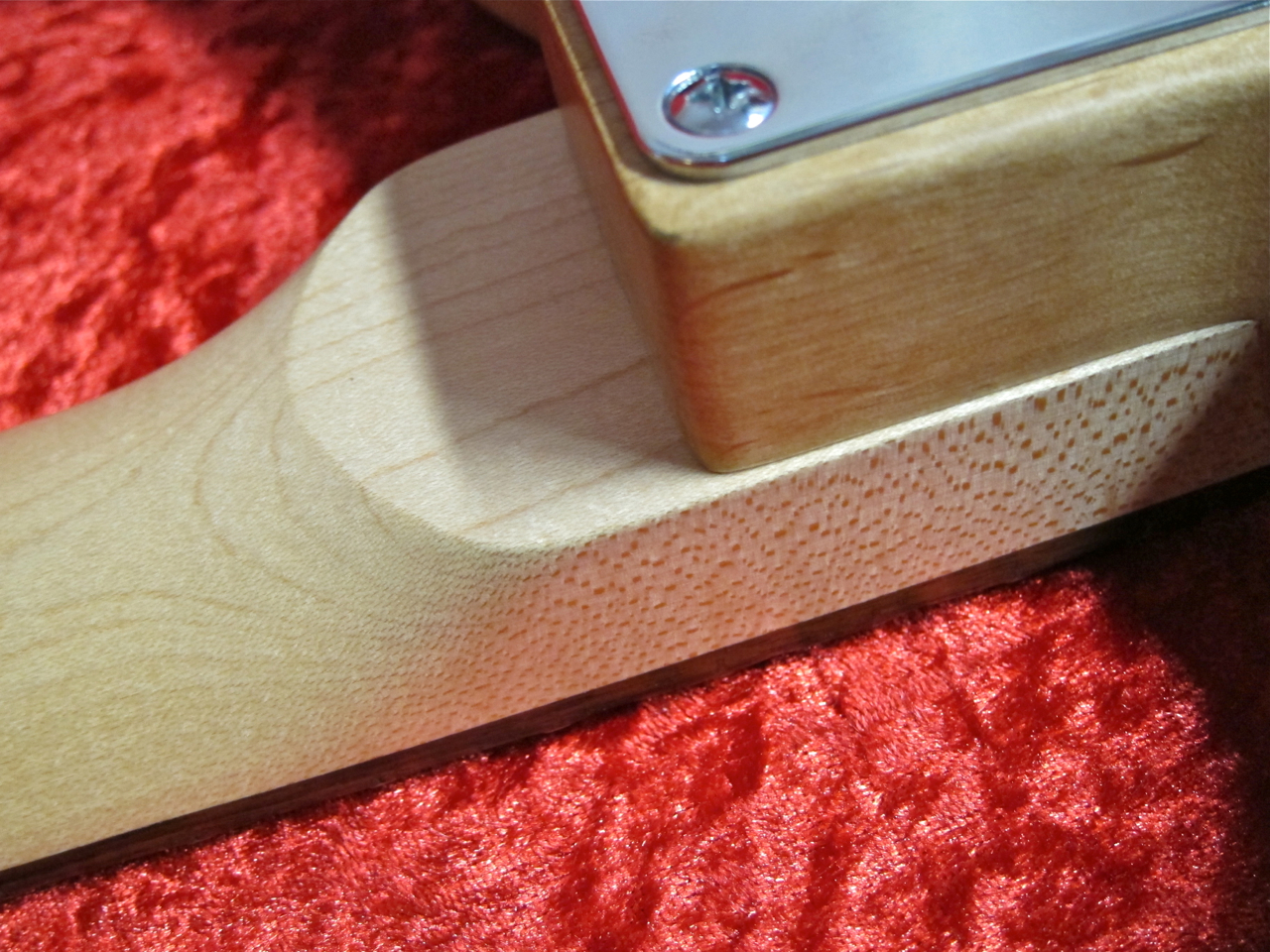
The only strange thing is that the treble facing side of the neck pocket doesn’t quite line up with the neck’s heel. I nevertheless got the neck installed correctly, but things like these can happen when buying less expensive parts.
****
The neck is maple, which I finished with wax and oil, while the fretboard is made from a nice and lively piece of sonokeling.
The ’board has a flat radius and medium-sized frets, which had been installed sufficiently well for a nice medium action.
****
The neck has been mated to the body in time-honoured fashion via four screws and a steel plate.
****
The bridge and pickups – all made by Gotoh – are decidedly non-vintage: The bridge features a thick base-plate and six separate saddles, while the singlecoil pickups are cheap units with ceramic bar magnets stuck to the bottom of their bobbins, instead of traditional alnico slug magnets.
I had to file the bridge pickup’s top plate down by a tiny little bit, because it wouldn’t fit through the bridge otherwise. Again, not untypical when using inexpensive parts.
****
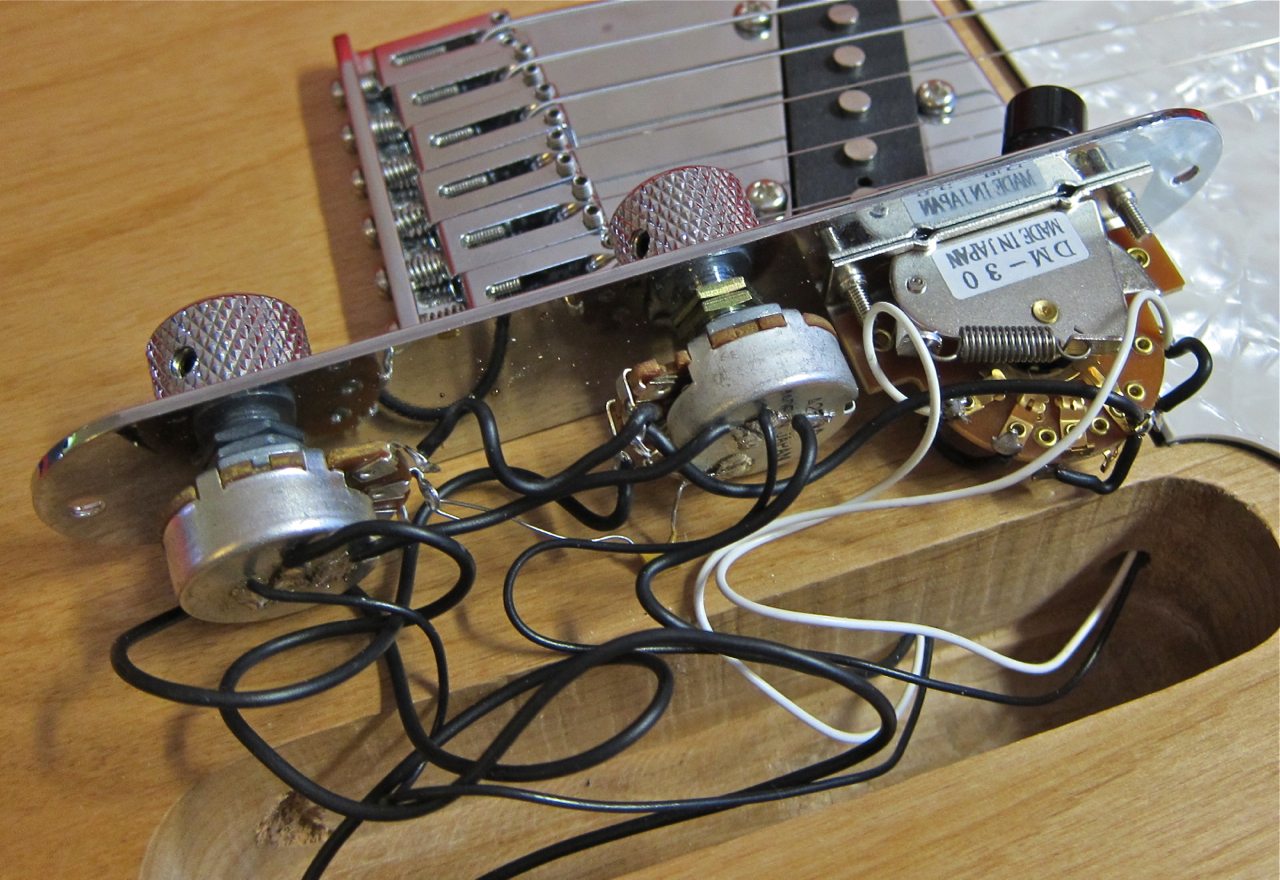
This hadn’t been my first project, so I had no problems wiring and soldering the electronic components correctly. Some companies also offer pre-wired kits for the complete newcomer.
The nice three-way switch was deeper than the body channel, so I had to gouge out a little bit of wood by hand to make the assembly fit the body.
****
I had no problems installing the modern tuners…
…but made a mess of a hack job of installing the string ferrules.
Mental note: Do prepare a jig! Use a drill stand for drilling the holes next time!
****
All in all, I’m rather satisfied with my Berka T! It cost a little over 300 € to make, and I learned a few new lessons during assembly.
The guitar plays well, even though I would prefer a rounder and fatter neck profile. The cheap Gotoh-pickups sound surprisingly good – they’re a little hotter and fatter than a standard vintage-style Tele-set, but still have enough spank and quack to satisfy.


















 Kitarablogi.com – Finland's premier Guitar and Bass blog

