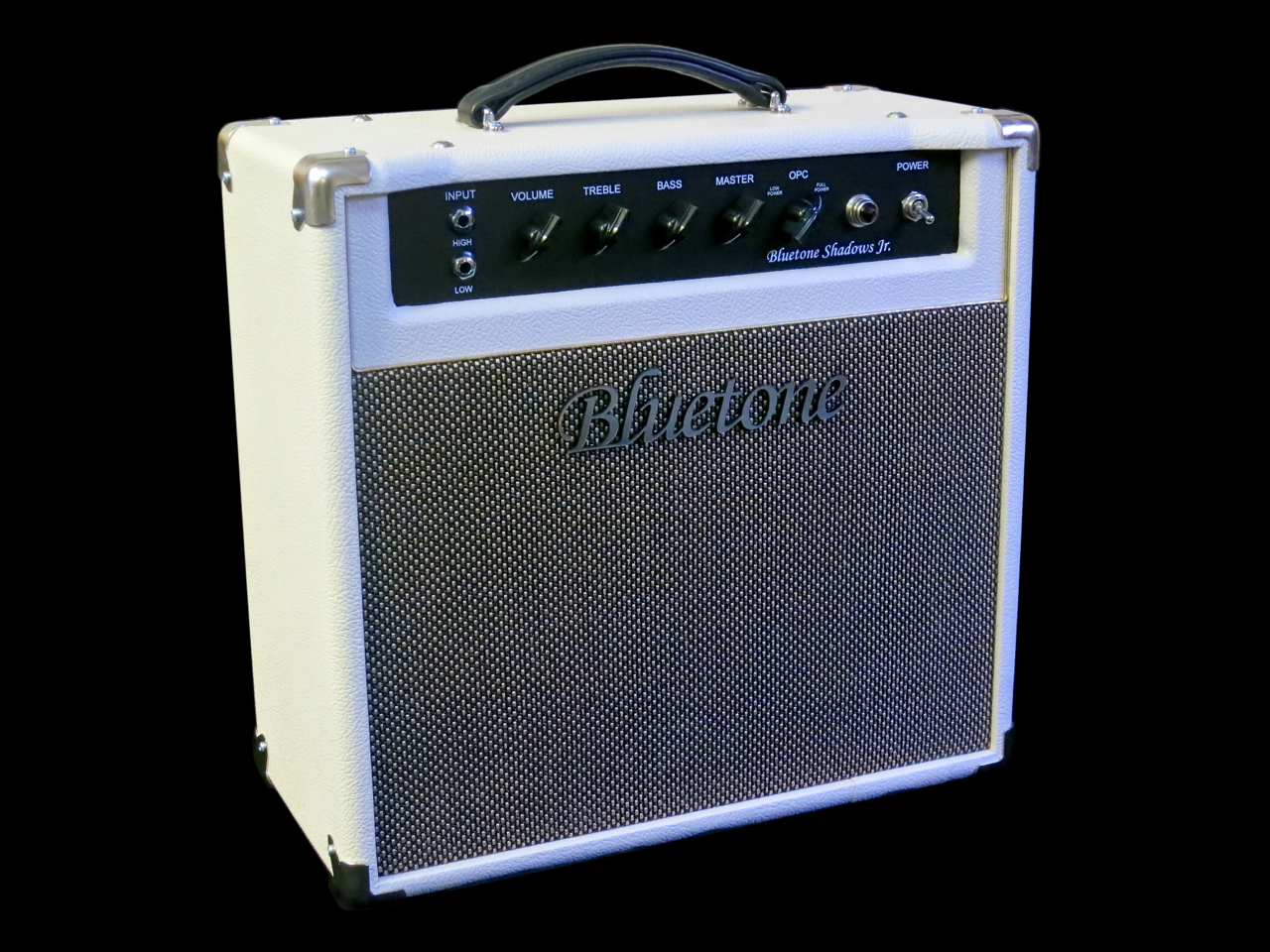
The Bluetone Shadows Jr. (combo starting at around 1,300 €) is a hand-built, all-valve guitar combo, whose sound is based on the classic Vox AC15. Instead of being a straight, slavish copy, though, the Shadows Jr. incorporates many of the up-to-date features that have made Bluetone such a well-regarded boutique maker.
****
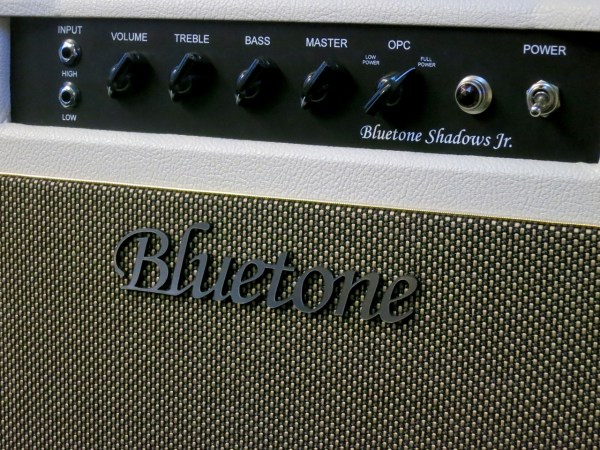
The Shadows Jr. has the clean and business-like looks that active players truly appreciate. You don’t want to be slowed down on stage by a control panel that’s hard to decipher. The Bluetone is clarity itself.
This is a single-channel all-valve combo running in Class AB mode giving you maximum output power at just over 10 watts.
The Shadows Jr. is designed around a trio of 12AX7 preamp tubes and a pair of EL84s powering the speaker. The combo’s power valves are cathode-biased, which means that swapping tubes won’t necessitate a trip to your friendly amp technician.
Bluetone is one of the very few amp makers who use torroidal power transformers. These doughnut-shaped devices (the black thing in the upper left corner) are lighter and more dependable than traditional transformer designs, and they offer more exact tolerances. As a valve amp is highly dependable on a stable and electronically quiet power supply for superior tone, Bluetone decided on using torroidal transformers early on, and they’ve never looked back.
The Warehouse Guitar Speakers Green Beret is an excellent choice for a strongly Brit-flavoured combo. Bluetone break in all of the speakers they use with low-frequency sine waves.
Despite being a compact single-channel combo amp (weighing only around 10 kg), the Bluetone Shadows Jr. offers an amazing amount of different clean and gain tones, thanks in no small part to the amp’s PPIMV master volume and the three-step OPC-switch.
PPIMV stands for ”post-power inverter master volume”, which is the preferred way of master volume design at Bluetone Amps, because it eats up the least amount of an amplifier’s tone, when in use. And if you turn the master volume knob all the way up, a PPIMV design makes the master volume ”disappear” electronically, making it completely transparent.
OPC, on the other hand, stands for ”output power control”. On the Shadows Jr. you have a choice of three settings, giving you 0.2, two or the full 10 watts of power, respectively. The magic of the OPC circuit is that it will turn volume levels down very noticeably without changing the tonal character of your settings, while also leaving almost all of the dynamics intact. Many lesser output power designs will turn a clean setting into an overdriven sound when you select a lower output level. The Shadows Jr. will sound almost the same on ten, two or 0.2 watts – the small tonal differences are the result of the speaker being driven differently. With the OPC at the lowest setting you will get approximately 95 percent of the full ”Shadows Jr. experience” at bedroom/apartment block volume levels. That’s fantastic!
The back panel gives you a choice of using the internal speaker or an external 4- or 8-ohm cabinet.
Bluetone have also included their tasty buffered, switchable effects loop with a dedicated volume control. When the loop is not in use, the circuit can also serve as a handy lead boost.
****
Are you looking for a cool little tone machine with a strong Vox-y flavour, and no-compromise build quality? You should do yourself a favour and try the Bluetone Shadows Jr.
The Shadows Jr. ticks all the right boxes:
You get that classic clean tone with that sweet mid-range ”attitude”. A clean tone that is lively, but never glassy or brittle.
With the front-end volume near the other extreme you’ll get overdrive and distortion that is more gritty and dynamic – think later era Beatles, windmilling Townshend, or multilayered May – than creamy and compressed.
But don’t forget to check out the wide scope of break-up Blues and Rock ’n’ Roll sounds to be had between 11 and 2 o’clock on the volume (gain) control (depending on the guitar used). You’re in for hours of wailing soloing and chunky rhythms without ever needing an overdrive stompbox.
Here’s a Gibson Les Paul Junior on its own:
Demo track number one features two rhythm guitar tracks – a Fender Stratocaster (stereo left) and a Gibson Les Paul Junior (right) – as well as a Hamer USA Studio Custom on lead duty:
The second demo track features a Gibson Les Paul Junior (rhythm left), an Epiphone Casino (rhythm right), and a Fender Telecaster (lead guitar):
****
The Bluetone Shadows Jr. is a fantastic little tone machine for the Vox-inclined player, who likes warm clean tones, dynamic break-up sounds, and gritty late-Sixties/early-Seventies dirt.
The build quality is miles ahead of any mass-produced guitar amplifier – this is a handcrafted boutique-grade valve amp. Modern additions like the PPIMV master volume, the OPC circuit, and the switchable effects loop, also raise this amp above any vintage-style copies.
For many the crucial question with low-wattage amps is volume. How loud is the Bluetone Shadows Jr?
Let’s just say that if you’ve only ever tried 10-watt tranny combos before you’re in for quite a surprise! These are ten (-plus) watts of British-style valve amp majesty, with every last ounce of loudness wrung out of the power amp and speaker.
With the OPC and the master on full, this little chap will easily get you into trouble with your neighbours in your block of flats on clean tones alone. If you don’t need 100 percent clean tones, the Shadows Jr. will easily get you through many rehearsals and gigs in small venues. And there’s always the option to stick a mic in front of the speaker.
So, don’t expect a Heavy Metal-type volume onslaught, but be prepared for some serious business.
Tällä kertaa Kitarablogi sai hieman erikoisemman herkkupalan testattavaksi – Fender Jazzmasteriin perustuva Tokai TJM-140.
Kun alkuperäinen Jazzmaster ilmestyi vuonna 1958, Fenderillä oli tähtäimessä Jazz- ja Lounge-musiikin soittajat, joiden mielestä firman aikaisemmat mallit soivat aivan liian terävästi ja kantrimaisesti. Jazzmaster oli myös ensimmäinen Fenkku, jolla oli ruusupuusta veistetty otelauta (jotain, jota firman myyntitiimi oli jo pidemmän aikaa toivonut ulkonäöllisistä syistä).
Valitettavasti uuden huippumallin vastaanotto oli suhteellisen vaisu. Monille Jazz-kitaristeille myös Fenderin uutuusmalli näytti kielillä varustetulta leipälaudalta, ja alkuinnostuksen jälkeen monet sen aikakauden soittajista pitivät kitaran elektroniikkaa turhan monimutkaisena, mikä oli sääli.
Viime vuosina Jazzmaster-tyyliset offset-runkoiset kitarat elävät uutta nousukautta, minkä ansiosta myös Tokai on päättänyt julkaista oman versionsa kitarasta.
****
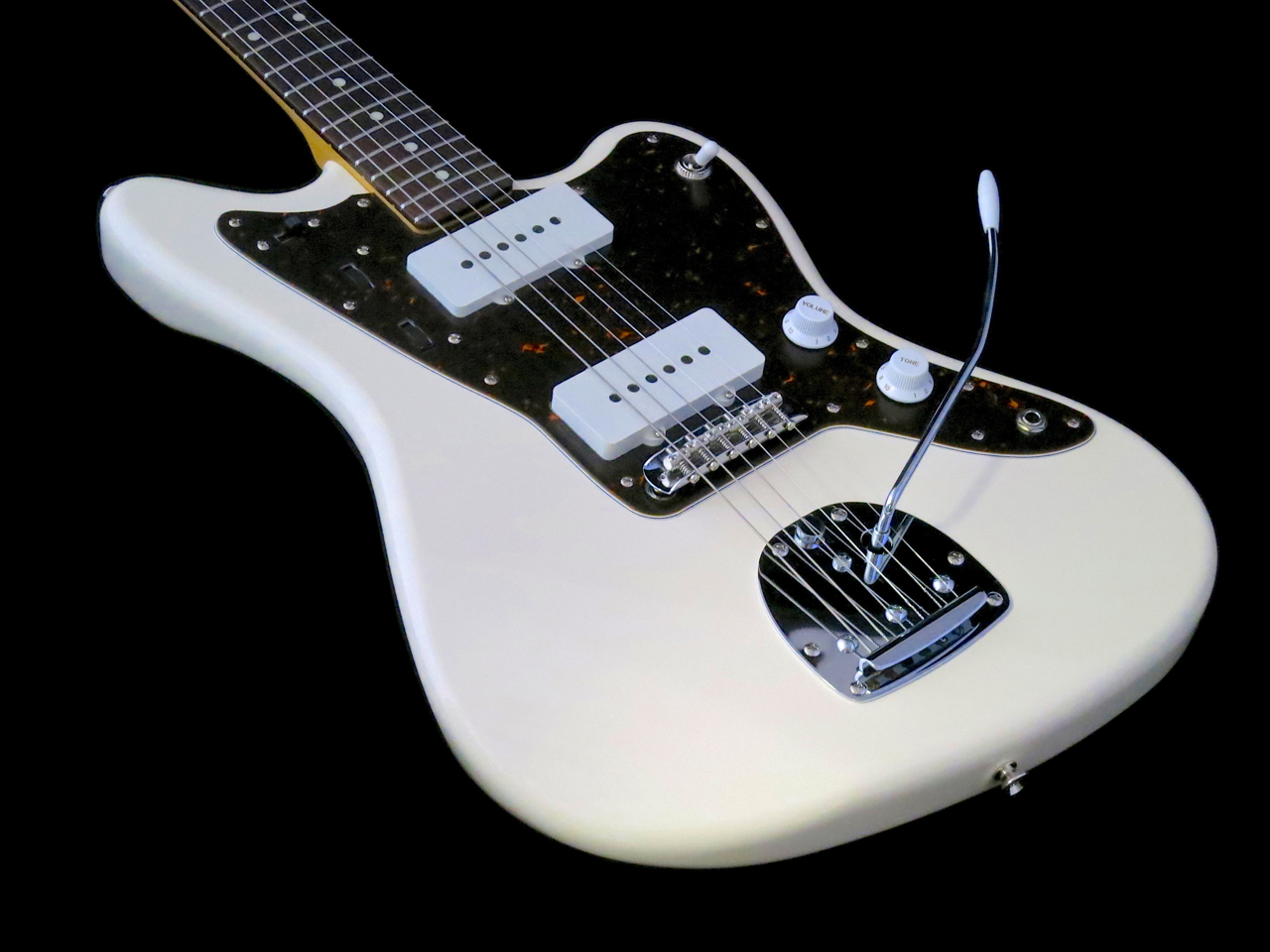
Tokai TJM-140 Silver Star (testattu versio 1.495 €; perusversio 1.445 €) on hyvin laadukas japanilainen tulkinta Jazzmaster-teemasta, joka pysyy kaikissa pääasioissa uskollisena alkuperäiseen klassikkoon, muutamalla hyvin perustellulla nykyaikaisella parannuksella. Testiyksilöä on lisäksi kustomoitu testiä varten erittäin laadukkailla Seymour Duncan Antiquity -mikrofoneilla.
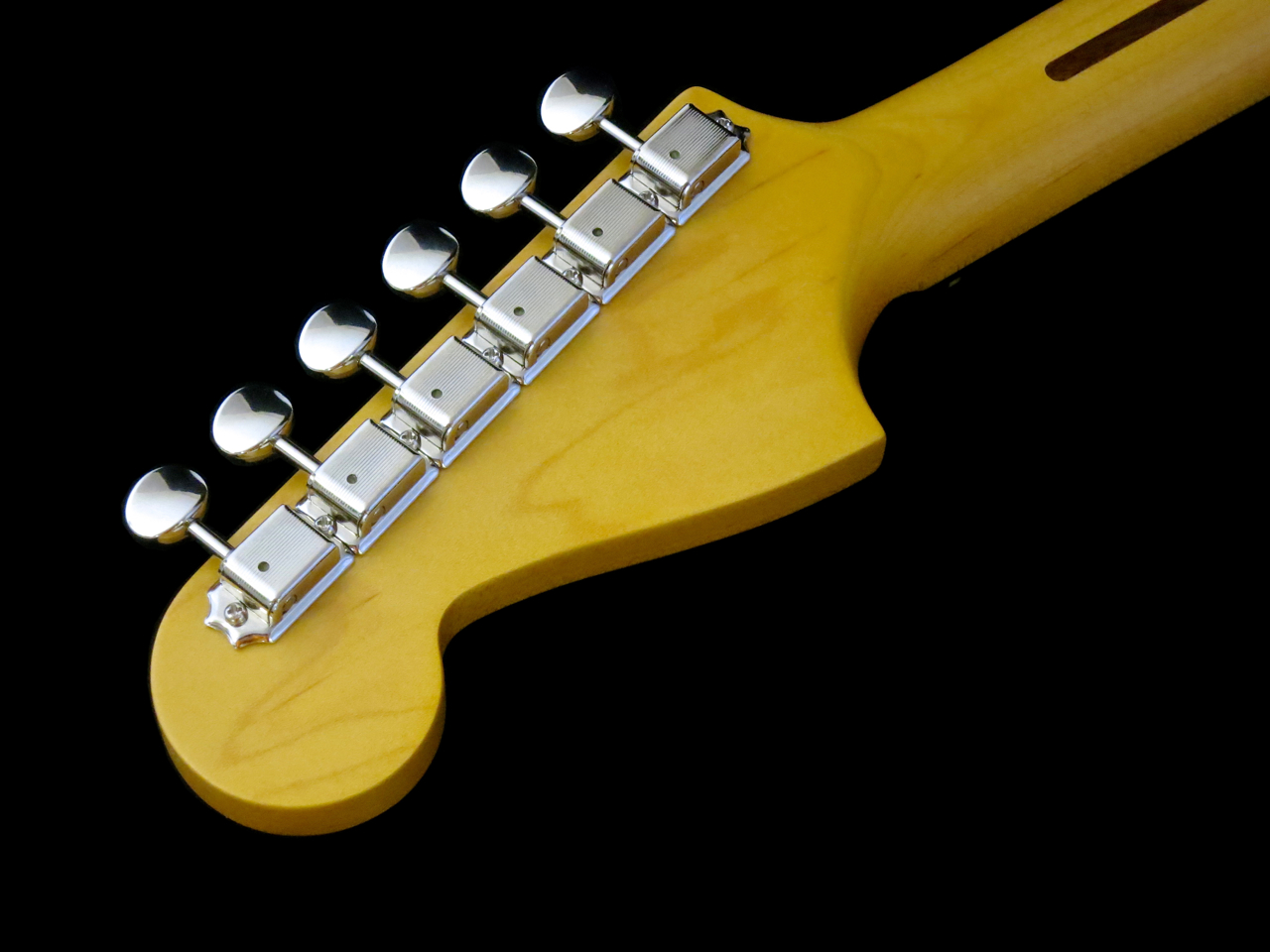
Tokai TJM-140:ssä elää vahvasti varhaisen 1960-luvun henki – tässä mallissa on alkuperäinen pieni viritinlapa, sekä ruusupuinen otelauta ilman reunalistoitusta ja pienillä pyöreillä otemerkeillä.
Olympic white -tyylisen viimeistelyn alta löytyy kurvikas leppärunko, kun taas mattaviimeistelty kaula on veistetty vaahterasta.
TJM-140:n kaularautaan pääsee kätevästi käsiksi lavan puolelta, mikä on erittäin tervetullut parannus.
Tokain laadukkaat Kluson-kopiot tulevat Gotohin valikoimasta.
Otelautaan on siististi asennettu 22 medium-kokoista nauhaa.
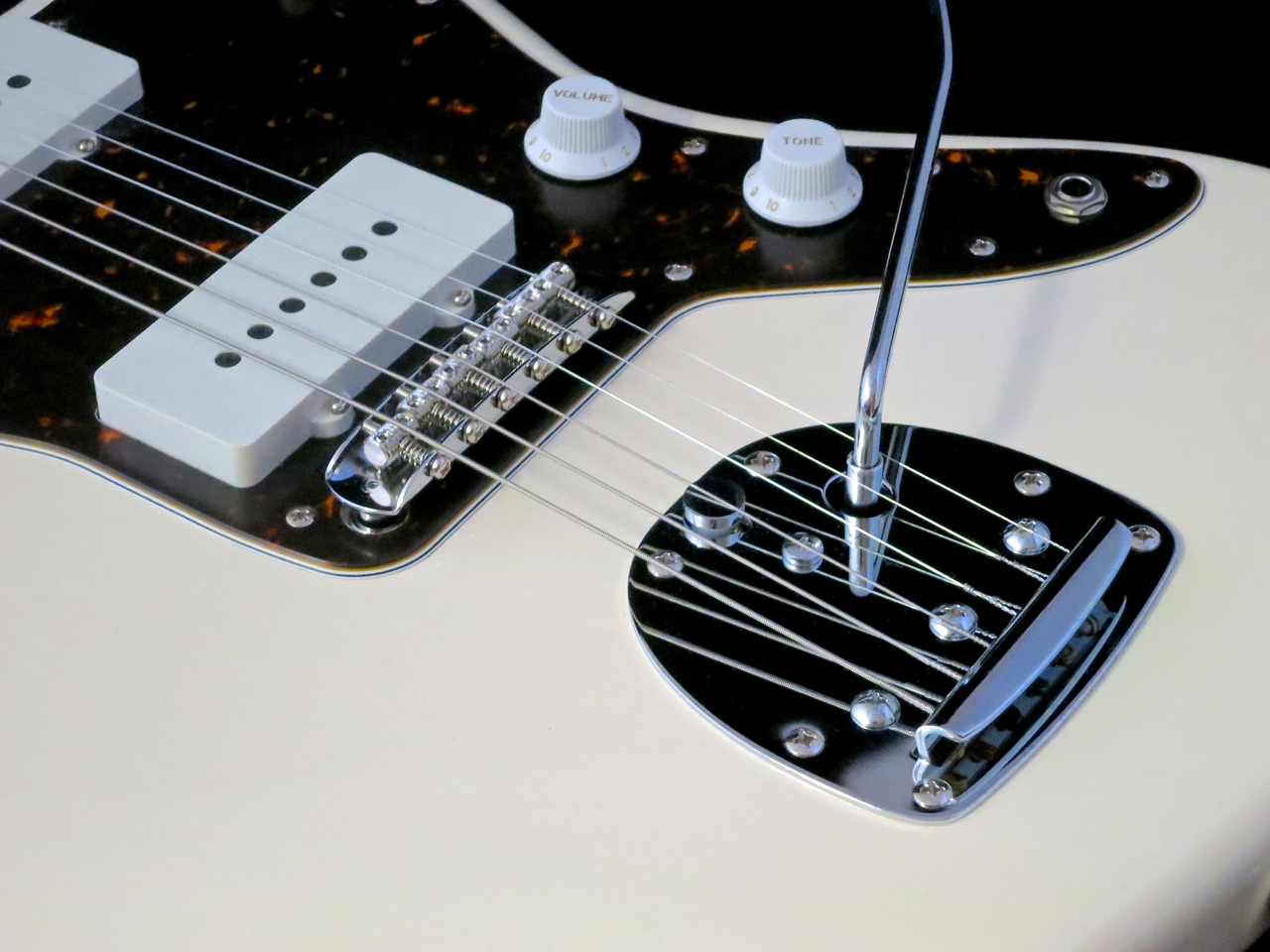
Leo Fender kehitti Jazzmasteria varten uuden vibratojärjestelmän. Jazzmaster-vibrassa (jota käytettiin myöhemmin myös Jaguarissa) on edestä runkoon upotettu veitsenterä-laakeroitu kieltenpidin, sekä erillinen talla, joka keinuu runkoon upotetuissa metalliholkissa hieman edestakaisin, silloin kun vibratoa käytetään. Tokai Silver Starissa käytetään järjestelmästä tarkkaa japanilaista jäljitelmää.
Jazzmaster-mikrofoneja voi hyvällä omatunnolla pitää Fenderin versiona Gibson P-90 -mikrofonista. Molemmissa mikkimalleissa on hyvin leveät, mutta suhteellisen matalat kelat. Mikrofonien magneettikenttien rakenteet kuitenkin poikkeavat toisistaan: Gibson käyttää P-90:ssä kahta pitkää ja matalaa harkkomaista magneettia kelan alla, kun taas Jazzmaster-mikissä on kuusi lyhyttä, kelan läpi menevää tankomagneettia.
Seymour Duncan Antiquity -setissä tallamikrofoni on kaulamikrofoniin nähden käämitty vastasuuntaan ja sen magneetit ovat ylösalaisin (reverse wound/reverse polarity), minkä ansiosta mikeistä muodostuu yhteiskäytössä humbucker.
Elektroniikan erikoisuus on Jazzmaster-kitaroihin lisätty erillinen ns. “komppi-piiri”. Kaulamikrofonin yllä olevalla liukukytkimellä voi kytkeä TJM-140-mallin ns. soolotilasta komppitilaan, jossa ainoastaan kaulamikki on päällä, ja sen signaali menee tällöin kytkimen viereen pleksiin upotettuihin volume- ja tone-säätimien läpi.
Soolotilassa taas kitaran soundia säädetään sen sijaan soittimen perinteisellä kolmiasentoisella kytkimellä, sekä master-volumella ja -tonella.
****
Minun mielestäni jokaisen kitaristin pitäisi ainakin kerran elämässään kokeilla Jazzmaster- tai Jaguar-tyylistä kitaraa, niiden mukavan offset-rungon takia. Joidenkin mielestä näiden mallien epäsymmetrinen vyötärö ja pyöristetty olemus tuntuu jopa Stratoa mukavammalta.
Tokain TJM-140 on malliesimerkki mukavasta Jazzmaster-tyylisestä kitarasta. Testikitara on suhteellisen kevyt, kaulan ovaali C-profiili istuu todella hyvin käteen, ja kitara saapui testiin esimerkillisillä säädöillä.
Jazzmaster-vibrato tulee kuitenkin jatkossakin jakamaan käyttäjien mielipiteitä. Paikkaan työnnettävä vibrakampi ei ole aina niin toimintavarma kuin ruuvattava Strato-kamppi, ja se repsottaa myös melko löysästi mekanismissa. Jos taas on tottunut käyttämään nykyaikaisia 009- tai 010-kielisatseja vibrajärjestelmän loivasta kielikulmasta tallassa voi koitua ongelmia. Raskas plektrakäsi ja/tai isot bendaukset voivat johtua suhteellisen ohuilla kielillä siihen, että yksi kuin toinenkin kieli voi hyppiä välillä pois tallapalan urasta, mikä vaikuttaa sitten suoraan kitaran vireeseen ja soittotuntumaan.
Tokai TJM-140 Silver Staria ei oikein voi kritisoida vibraton toiminnasta, sillä kitaran tarkoitushan on olla tarkka kopio alkuperäisestä klassikosta. On kuitenkin tärkeää, että tietää näistä mahdollisista ongelmakohdista ja niiden ratkaisemisesta.
Helpoin tapa ratkaista Jazzmaster-vibran ongelmat on käyttää 1950-luvun kielikokoja – siis: 011- tai 012-satseja punotuilla g-kielillä. Jos tällainen tuntuu liian karulta voi vibramekanismin eteen helposti lisätä (ruuvaamalla) Whizzo Buzz Stop -nimisen Bigsbyn-kaltaisen rullan, joka lisää kielten alasvetoa, mikä pitää kitaran kielet paremmin talapalojen urissa. Jos lisärulla ei miellytä jostain syystä, voi myös korvata alkuperäisen järjestelmän Mastery-vibratolla ja -tallalla, jotka on suunniteltu nykyaikaisia kielisatseja varten.
Myös soundiltaan Tokai TJM-140 on erinomainen lajinsa edustaja. Antiquity-mikeillä kitara soi heleästi, mutta paljon lämpimämmin kuin esim. Strato-tyylinen kitara. Komppi-piiri leikkaa tahallaan kaulamikrofonin signaalista hieman diskanttia, mutta ilman että soundi muuttuisi mutaiseksi.
Tältä kuulostaa Tokai TJM-140 Bluetone Shadows Jr. -kombon ja Boss SD-1 -särön kautta soitettuna:
****
Tokain TJM-140 on hyvin laadukas japanilainen versio Fender Jazzmasterista. Tokain soittotuntuma on erinomainen ja sen soundi ei todellakaan jätä toivomisen varaa. Alkuperäinen Jazzmaster-/Jaguar-vibra tulee varmaan jatkossakin jakamaan kitaristien mielipiteitä, vaikka Tokai-kitarassa on käytössä laadukas versio alkuperäisestä. Vibraton pehmeässä soundissa ei kuitenkaan ole mitään vikaa. Suosittelen koeajelua!
• Handmade in Finland
• All-valve Class AB single-channel combo
• 10 W, 2 W or 0.2 W of output power (OPC)
• Diode recitified
• Two-band EQ
• PPIMV Master Volume
• Built-in buffered FX loop/booster
• 3 x ECC83 (12AX7) & 2 x EL84
• One 10-inch WGS Green Beret speaker (25 Watts/8 Ohms)
****
Demo Track
All guitars recorded with the Bluetone Shadows Jr. (no pedal effects used). Delay and reverb added during mixdown.
• Rhythm guitars: Fender Stratocaster (left channel) & Gibson Les Paul Junior (right channel)
• Lead guitar: Hamer USA Studio Custom
Tokai Guitars’ extremely well-made Japanese – uhm – tributes to classic electric guitars from the 1950s and ’60s were one of the main reasons why industry giants, such as Fender and Gibson, started their own Far Eastern brands, like Squier and Epiphone, in the Eighties.
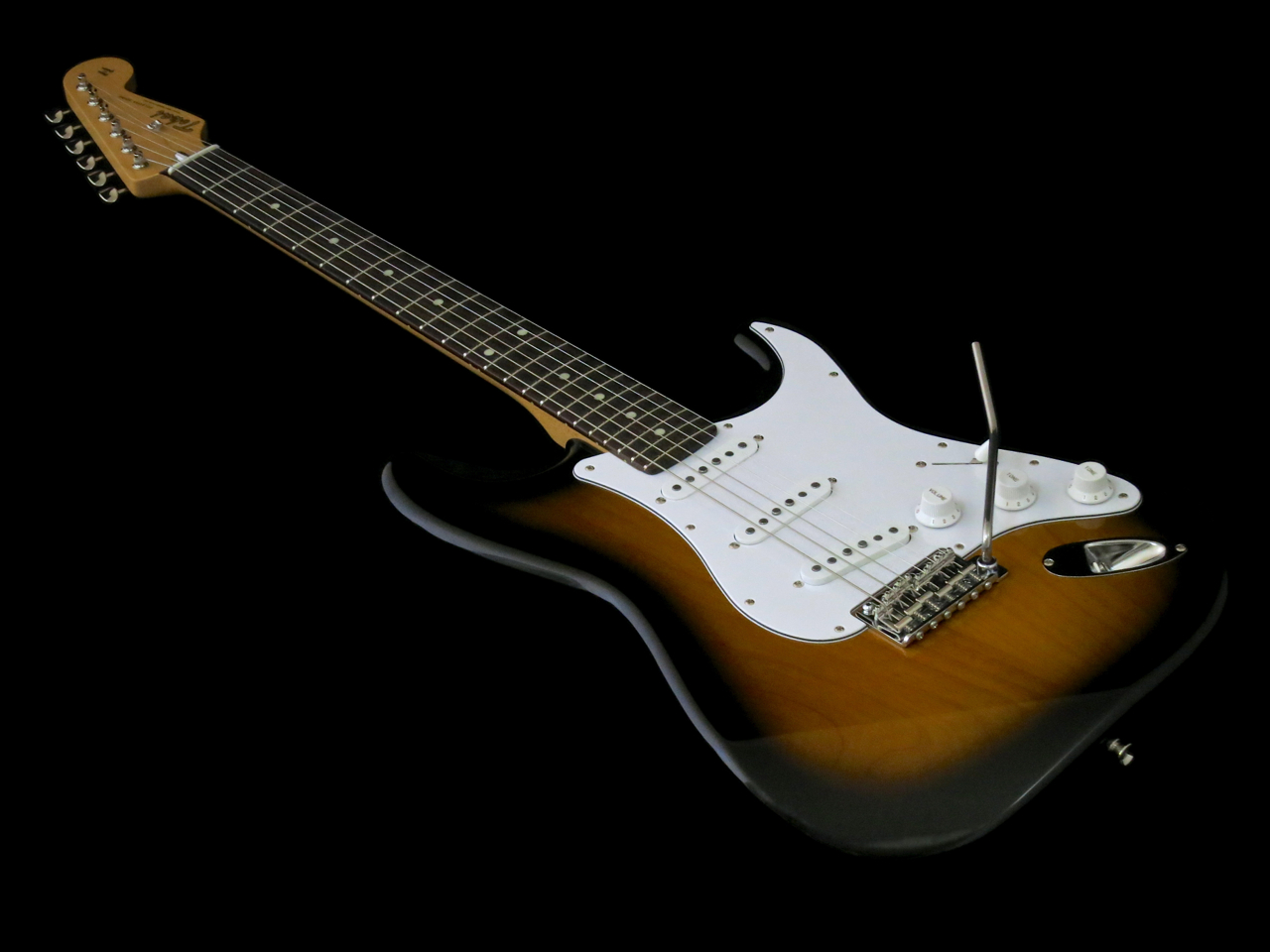
Yet Tokai doesn’t cling slavishly to the past, instead the company is also regularly coming up with up-to-date versions of their best-loved models. Their newest updated Strat-style electric is the Tokai TST-50 Modern (999 €; comes with a hard case), which was developed in cooperation with Tokai Guitars Nordic.
****
You could be forgiven to think the TST-50 Modern was a cracking 1960s reissue model at first glance, especially as some of the basic ingredients are virtually identical:
We find a bolt-on maple neck with a rosewood fretboard, and a premium class alder body adorned with a beautiful two-tone sunburst finish.
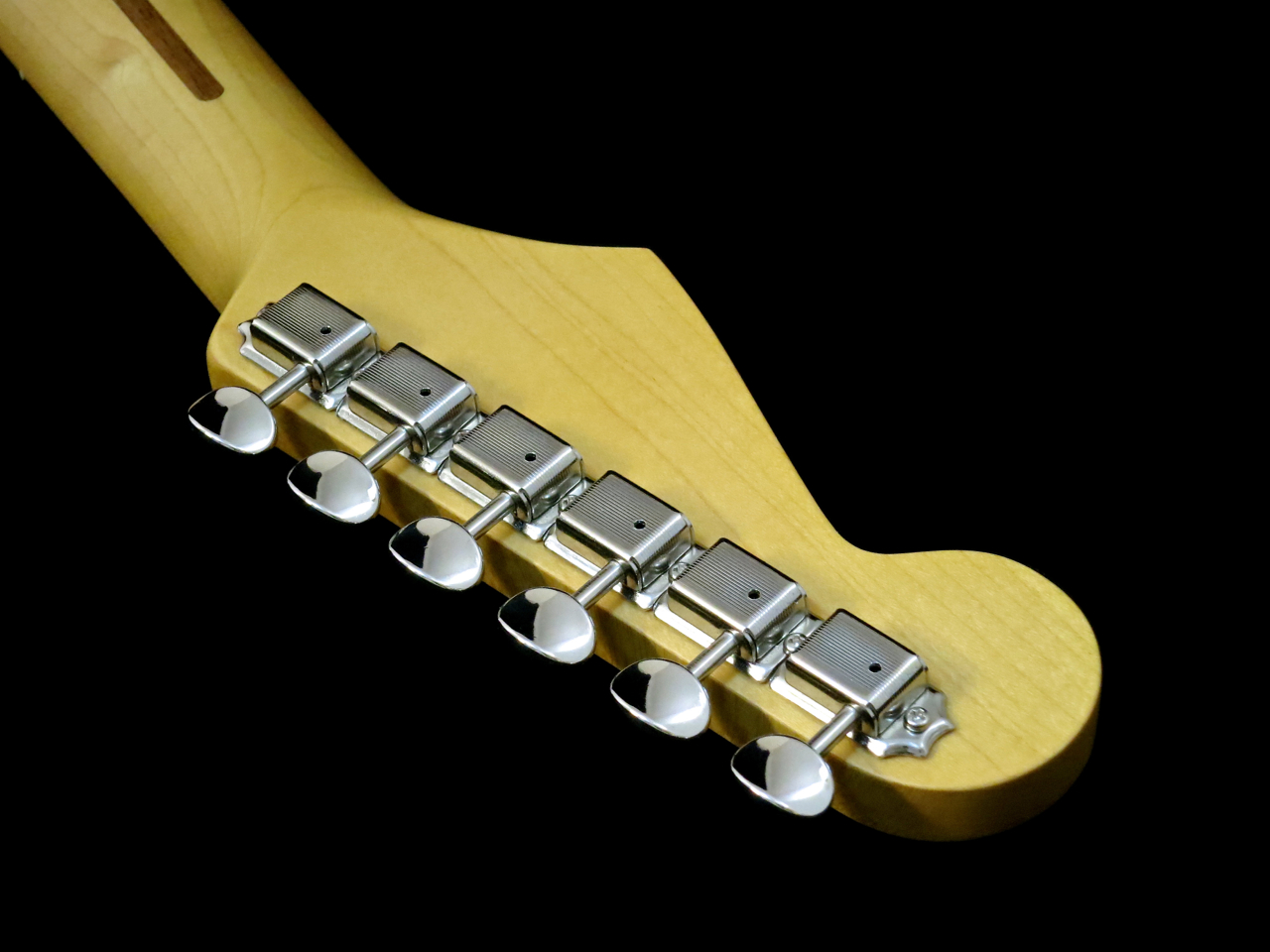
But a closer look at the headstock gives us a clue that this isn’t a run-of-the-mill TST-50:
A bullet truss rod adjuster on the TST-50 Modern allows you to tweak your neck relief without having to detach the neck from the body, as on vintage style S-type guitars. But despite the bullet truss rod, Tokai have chosen – wisely, in my opinion – to stick with the original four-screw neck attachment.
The Tokai TST-50 Modern comes with a 9.5 inch fingerboard radius, which means that the feel is slightly flatter than on vintage Stratocasters (that usually feature a 7.25 inch radius), but still more curved, and thus more Fender-ish, than Gibson’s flatter 12 inch radius. The TST-50 Modern also sports chunkier frets (Dunlop 6105), making it easier to play than the thin wire used on vintage originals. In combination with the flatter fingerboard radius the bigger frets also make string bending a great deal less work. As a final flourish this models gives you an additional fret (22 instead of 21).
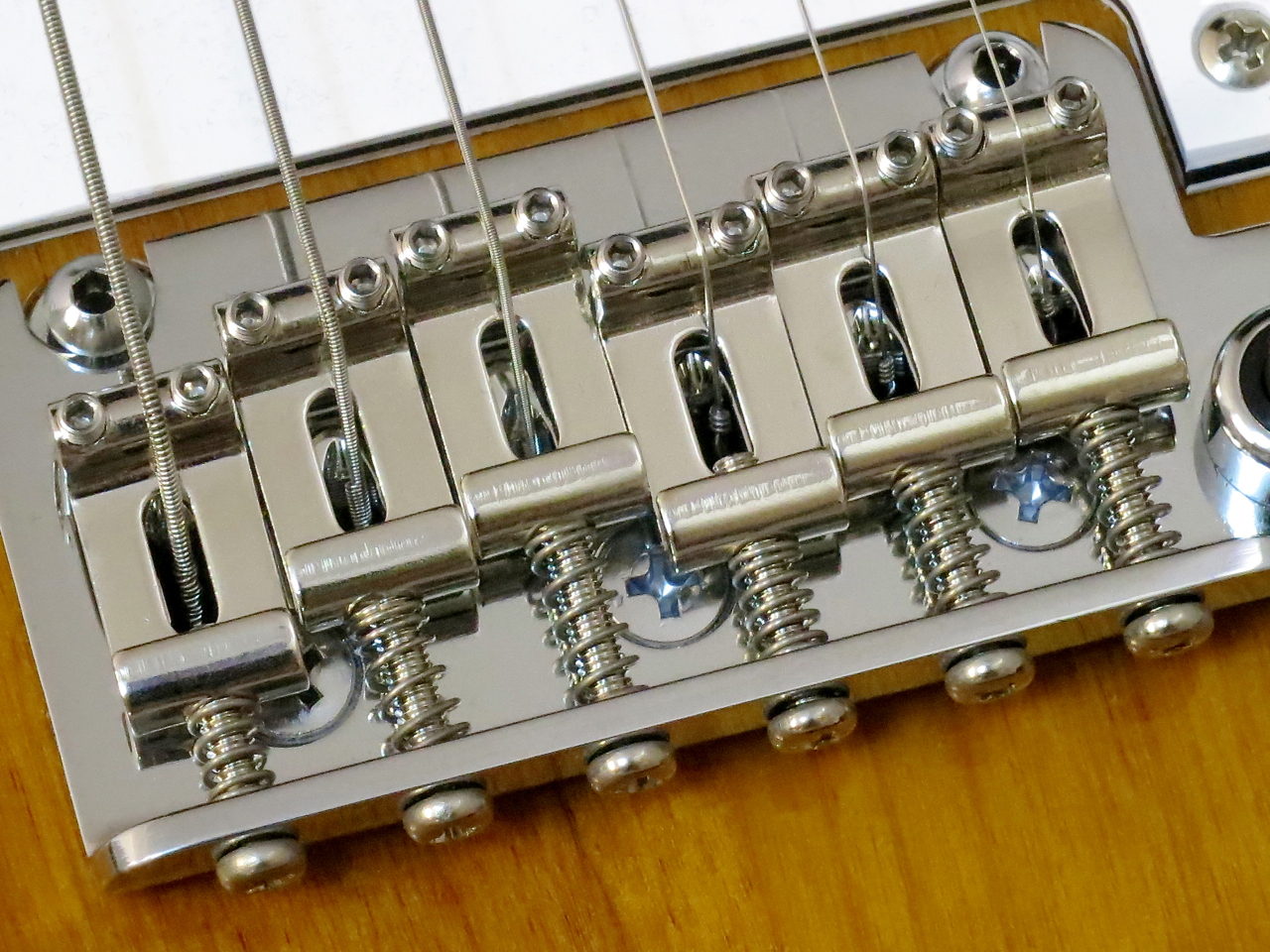
The classic six-screw Stratocaster vibrato bridge was a huge engineering achievement back in 1954. No other vibrato offered that much travel, coupled with excellent sound and very fair return to pitch.
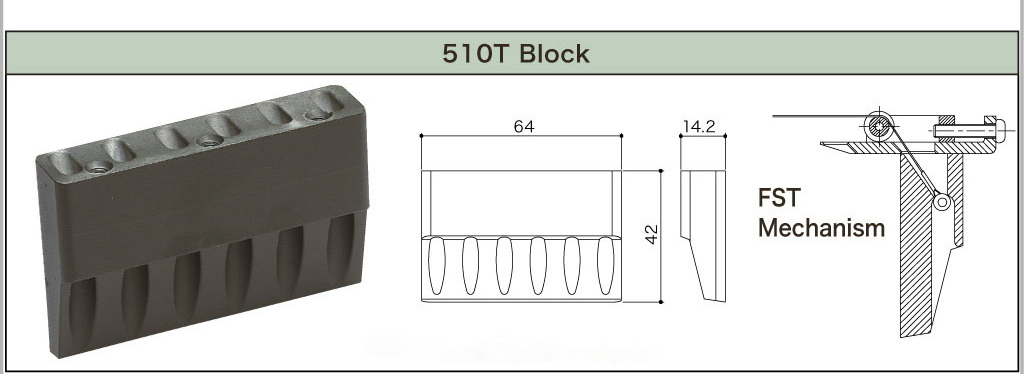
Now – 60 years later – many players do look for an even smoother and more precise ride, than what the vintage model can offer. For these guitarists the Tokai TST-50 Modern offers a modern, two-post vibrato bridge – the Gotoh 510T model.
Gotoh’s 510T-vibrato comes with the company’s groundbreaking FST-block. The string channels inside the FST-block have been drilled much deeper than in a vintage block, which anchors the ball ends much closer to the bridge plate. The strings then pass the bridge plate at a shallow angle, without being pressed hard against the plate’s sharp edges. Thanks to Gotoh’s FST-system the vibrato’s return to pitch is improved vastly, because the strings’ ball ends stay in place firmly. Additionally, this system cuts down significantly on string breakages due to friction between the strings and the bridge’s base plate (like normally seen on vintage Strat bridges).
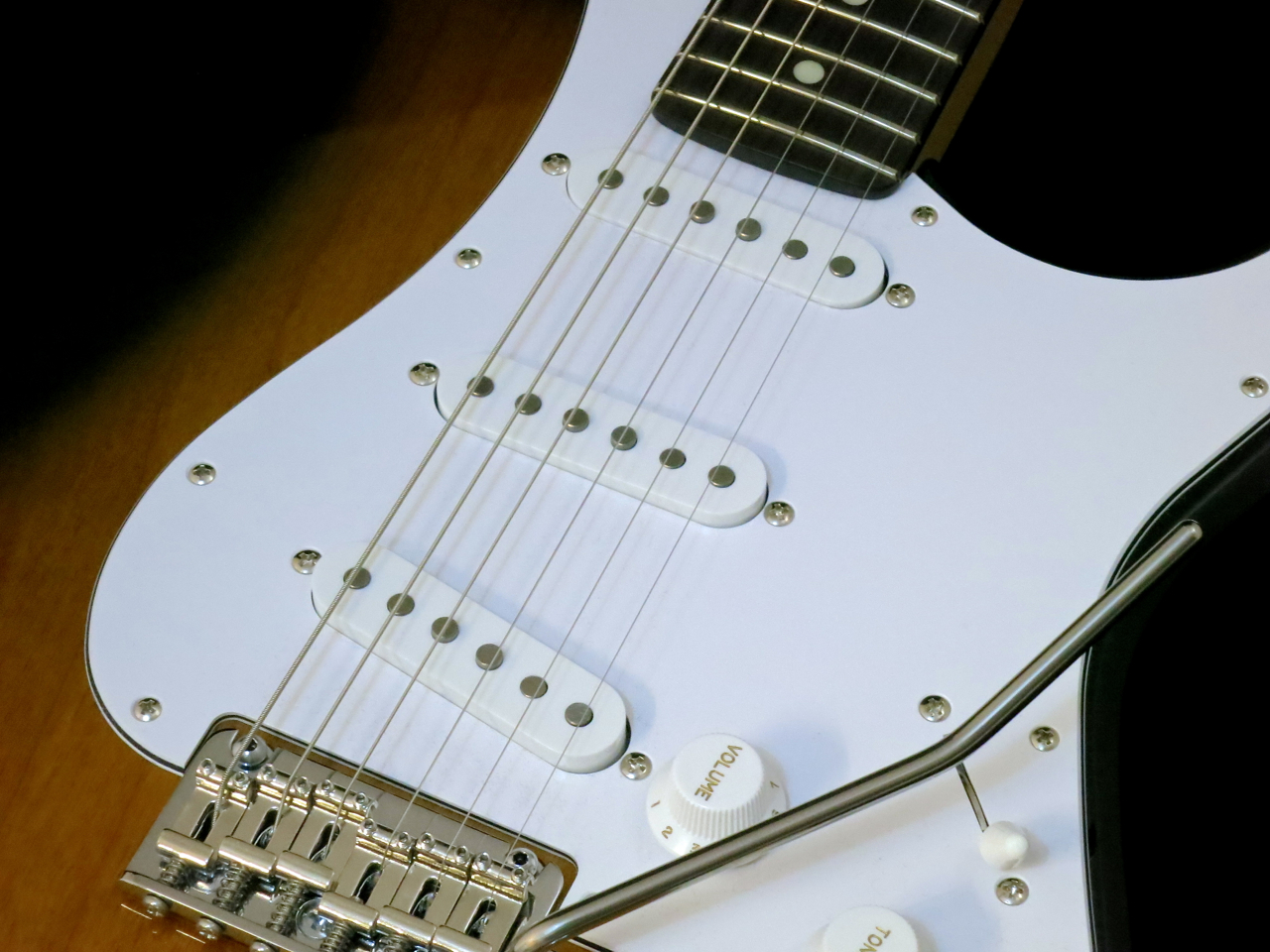
When it comes to its pickups and control layout, Tokai’s TST-50 Modern follows a classic footpath – a trio of Tokai’s acclaimed Vintage ST pickups, along with a five-way switch, a master volume, and tone controls for the neck and middle pickups. Hidden beneath the three-layer scratchplate there’s a humbucker routing, in case you want to customise you guitar further.
****
Vintage or modern, fans of Strat-style guitars expect a high level of ergonomics from their instrument, and Tokai’s Japanese TST-models never disappoint. All the body contours have been copied from the famous 1957/58 originals – it doesn’t get any more streamlined than this.
The satin-finished neck features an oval C-profile, which is just the Sixties-type of neck shape I enjoy the most on an S-style guitar. Thanks to the flatter fretboard radius and the medium-jumbo frets, the playing feels of the TST-50 Modern is similar to that of a well-loved, much-played, and refretted vintage model (but without any scratches or dents, of course).
The Gotoh 510T vibrato works like a dream. It’s smooth and precise, but doesn’t add any unwelcome metallic overtones or sharpness to the sound (unlike some Floyd Rose bridges).
The Tokai TST-50 Modern sounds like a top-drawer Strat should.
Here’s a clip with the Tokai TST-50 Modern plugged into a hand-wired Tweed Champ clone (a Juketone True Blood):
I’ve used Electro-Harmonix’ Germanium 4 Big Muff Pi and Nano Big Muff Pi pedals on the demo track (in addition to the Tokai and a Blackstar HT-1R valve combo):
****
Gear reviewers often face criticism for not ”dishing the dirt” on the equipment they test, but in the Tokai TST-50 Modern’s case there isn’t really anything negative to write about. This is an extremely well-made updated version of the most famous electric guitar of them all. The Tokai combines modern playability with delicious vintage sounds.