
****
Northstar-kitaroiden testi löytyy TÄÄLTÄ.
****
Kitarablogi.com – Finland's premier Guitar and Bass blog
Juttuja kitaroista ja bassoista
****
Alkuperäinen juttu on ilmestynyt Rockway-blogissa.
****
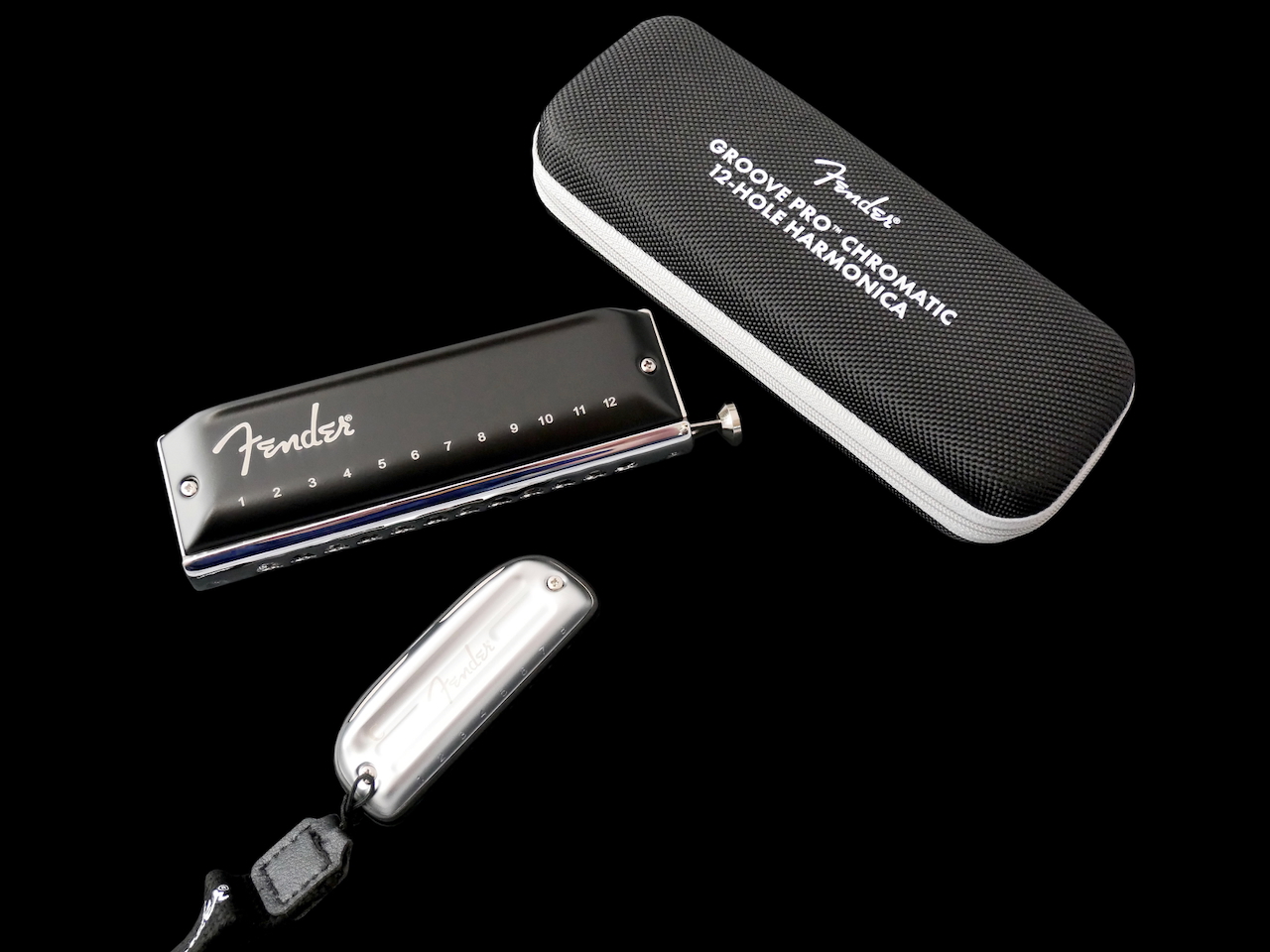
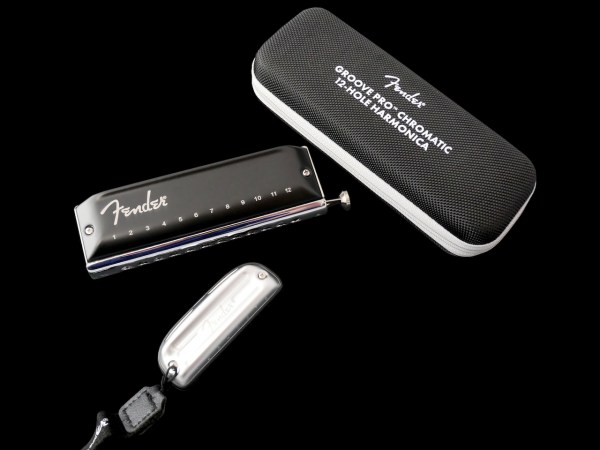
In March 2025, Fender released two new harmonica models.
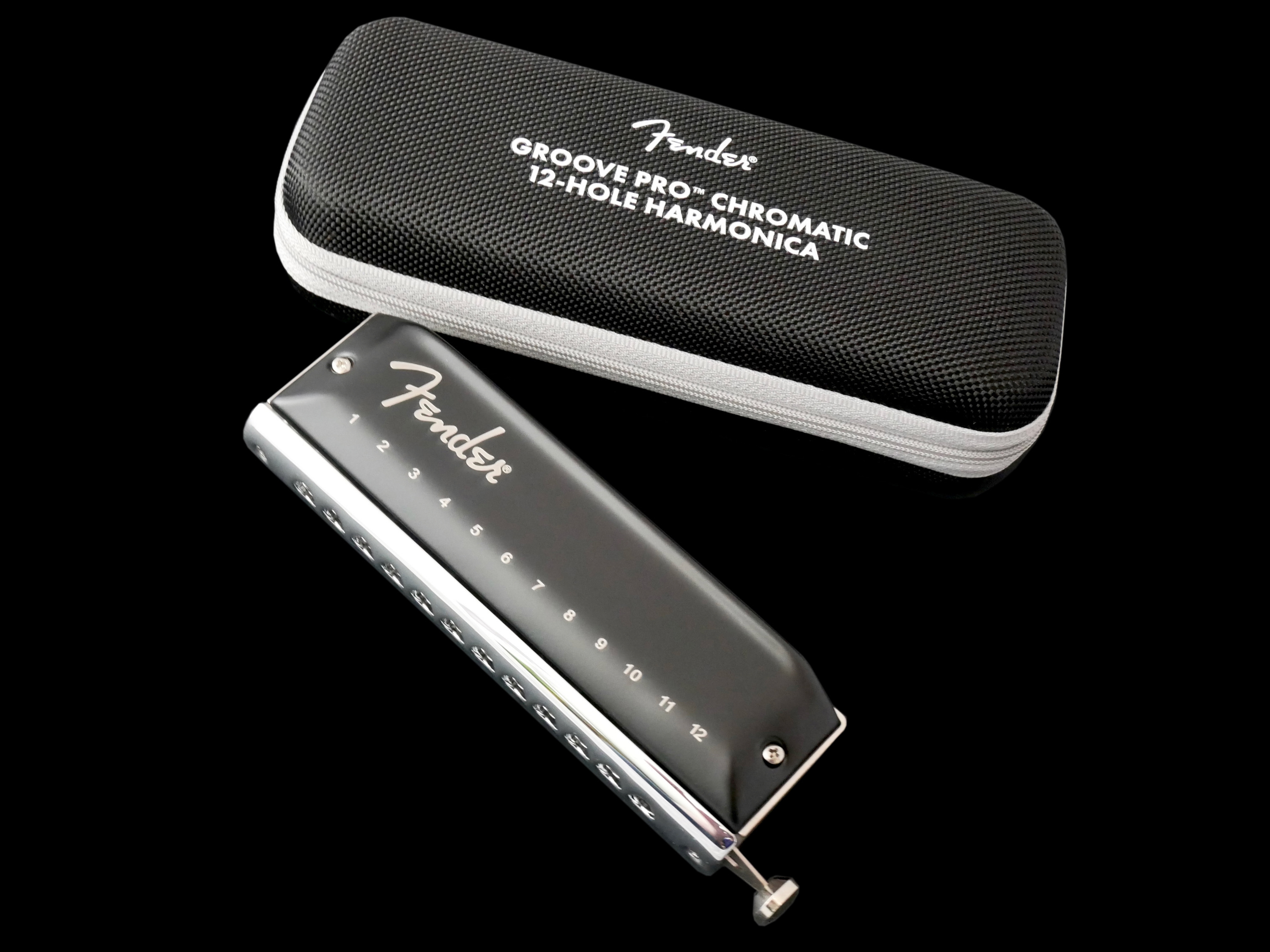
The smaller of these is the very compact diatonic Fender Blues Junior (€35), which is available in three keys (C, G, and A). The other new addition is the company’s first chromatic harmonica, called the Fender Groove Pro (€79).
****
A standard diatonic harp with ten holes is already a nice compact instrument that fits easily in a trouser pocket. However, almost all manufacturers have always had even smaller instruments available for different purposes.
About 15 years ago, the German traditional manufacturer C.A. Seydel found a new approach to the miniature diatonic harmonica when it invented its Big Six collection. In the Big Sixes, the distance between the holes remains the same as in a full-size harmonica, but instead of ten channels, only the first six were offered. According to Seydel, most blues players usually only use these holes, because the bends are best done in these, and therefore the missing high notes are not a problem at all.
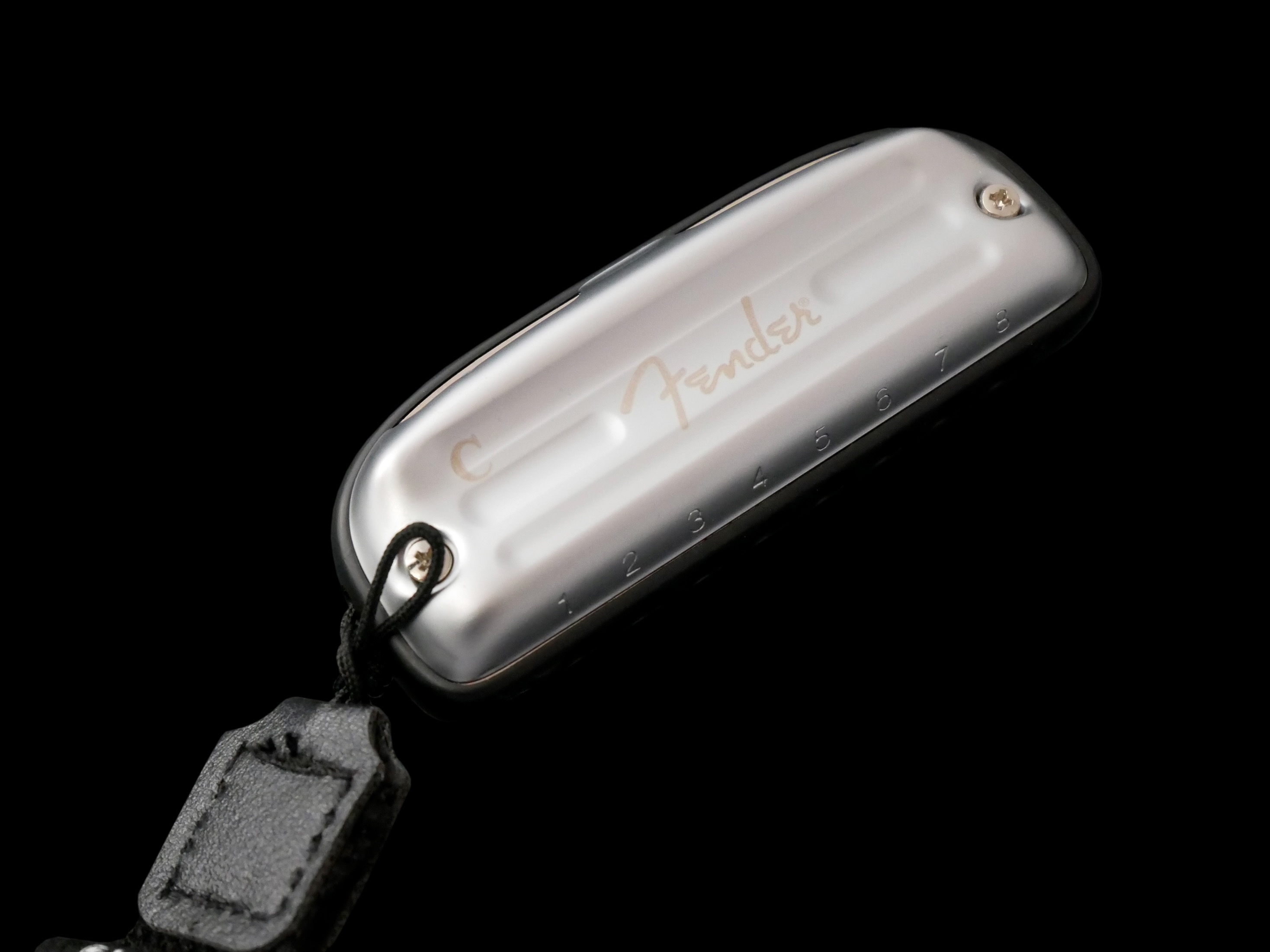
Fender’s brand new Blues Junior 8-Hole Diatonic model is based on the same idea, but offers two channels more tonal range than the Seydel Big Six. The harmonica is sold with a lanyard and a cleaning cloth.
The Fender Blues Junior’s design is very sleek and beautiful. The steel covers have a matte finish, while the harp’s comb is made of black ABS plastic. The appearance of the Blues Junior resembles a slightly smaller version of the Hohner Golden Melody model.
Because the channels on the front of the body have round holes, at first glance it may seem that they are closer together in the new Fender than usual. However, the distance between the channels is the standard 7.5 mm.
Fender’s contract manufacturer seems to have top-notch quality control, as the Blues Junior is suitably airtight, while the sensitivity of the phosphor bronze reeds has been adjusted appropriately.
The Fender Blues Junior harmonica is precisely tuned and very comfortable to play. The Blues Junior is a pleasantly loud harp with a deliciously crunchy sound.
In the demo above, I have used a model of a distorted tweed amplifier.
****
Since each air channel in a chromatic harmonica is connected to no fewer than four reeds, so-called valves have been found in chromatic models almost from their inception.
In modern instruments, the valves are made of lightweight plastic. They are narrow flaps that are glued to the reed plate at the opposite end of each reed. Thanks to the valves, when you blow into the harp, the air only goes through the blowing reed of the channel, while during drawing, the air only flows through the reed that is played during the draw.
The advantages of valves are – in addition to airtightness – the more precise attack of the chromatic harmonica and a louder sound. On the other hand, valves make bends practically impossible, because bends are based on the modulation caused by the opposite reed of the same channel. In addition, the valves can sometimes stick to the reed plates due to the humidity of the exhaled air, which makes it difficult to sound the reed and can give the attack a slight duck whistle-like roughness.
Because valves add to the price of chromatic harps – but also because of the drawbacks of valves – a new wave of cheaper, valveless chromatic harmonicas has emerged in recent years. According to bloggers and YouTube testers, the Chinese manufacturer Easttop seems to be a fairly high-quality manufacturer of affordable chromatic harps.
Why do I mention the Easttop brand here? Well, because Fender’s brand new Groove Pro Chromatic is clearly manufactured by Easttop – it’s a so-called OEM version – of their own Forerunner 2.0 model. The abbreviation “OEM” comes stands for “original equipment manufacturer”, and it means that the manufacturer does not put their own brand logo on the product, but the logo of the brand in question – in this case Fender.
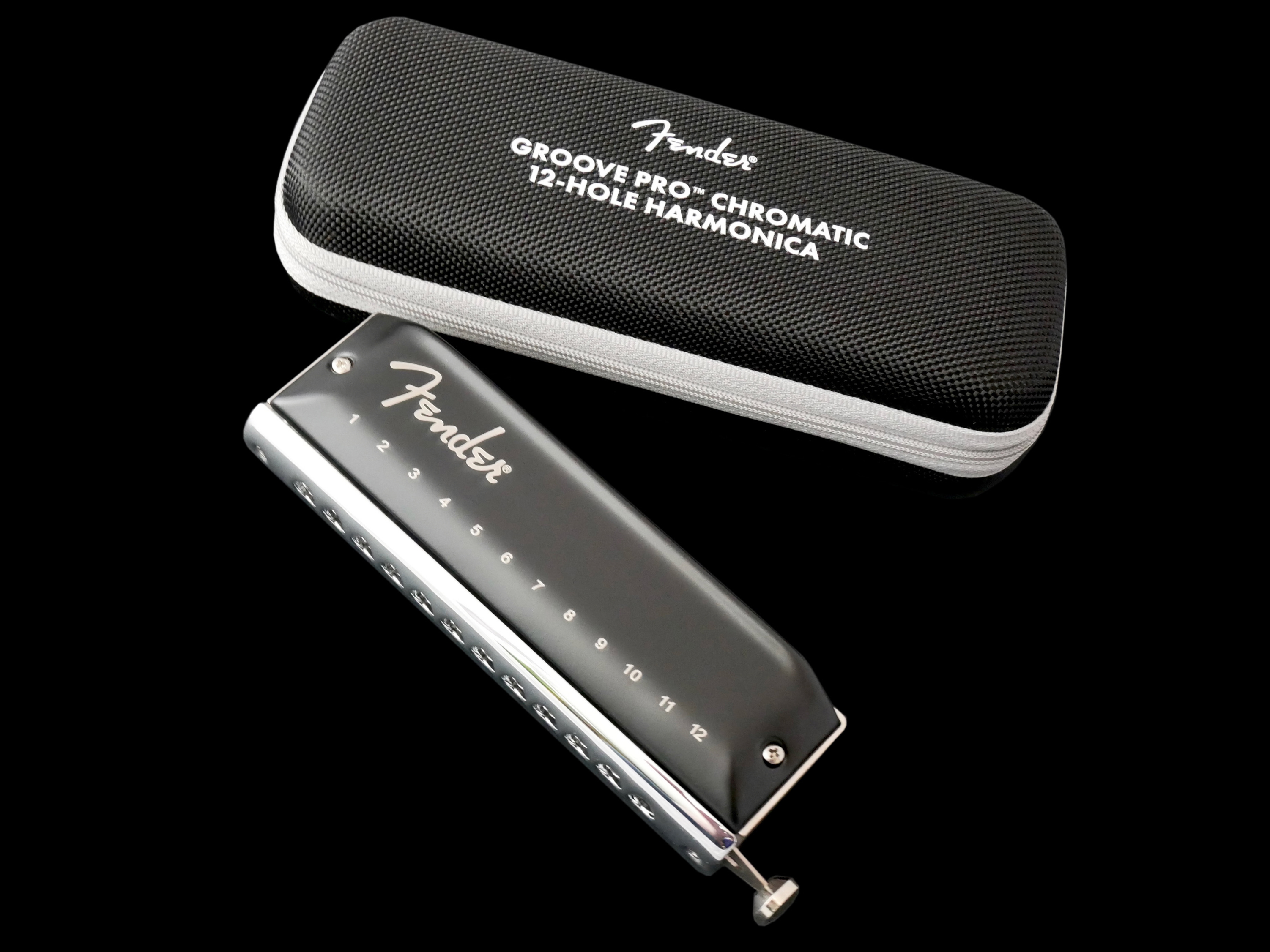
In any case, Fender’s new Groove Pro seems to be of very high quality and its transparent comb has a nice weight, which increases the volume and ”weight” of the sound in chromatic harmonicas. The Fender Groove Pro has 12 channels, which means that the harp has a three-octave range (c1-c4). In addition to the harmonica, the package includes a very high-quality, pencil-case style soft case and a cleaning cloth.
The Groove Pro has a very nice rounded cast metal mouthpiece with round holes. The switching mechanism feels fast and it is also pleasantly quiet. The harmonica’s reeds are made of phosphor bronze. The mouthpiece and matte black steel covers are shaped in such a way as not to cause problems with a player’s beard or moustache.
I think the Fender Groove Pro’s tuning and sound are really good. The new harp’s airtightness is also a positive surprise – although it does require a little more air to play than a harmonica with valves, the difference is not striking. Although the volume of the Fender’s sound is – naturally – a bit lower than my Hohner Chrometta or Hohner Discovery, it is easier to play the lowest notes on the Groove Pro (read: in tune) even with poor playing technique, because the valves do not have the braking effect on the reeds’ attack.
Even ten years ago, wiser people than me said that buying a chromatic harp for under a hundred euros was throwing money in the trash, because the cheap harps of the time let a lot of excess air through, and because they were very poorly tuned.
In recent years, the quality of inexpensive chromatic harmonicas has increased significantly, of which the brand new Fender Groove Pro is a very good example. I can only recommend this model – and not only to beginners.
****
Alkuperäinen juttu on ilmestynyt Rockway-blogissa.
****
****

In 1960, Sennheiser’s perhaps best-known microphone, the Sennheiser MD421, was released. The MD421 is a rather large and heavy microphone, and it is designed in quite a unique way.
This microphone uses a rather massive capsule with a large (27 mm/1.1 inch) diaphragm, which is carefully protected from handling and wind noise. In addition, the capsule has its own humbucker coil, which filters out electromagnetic hum and buzz out of the microphone signal.
A short “bass pipe” extends from the bottom of the capsule into the center of the microphone housing, which acts as a “bass chamber.” Depending on the year of manufacture of the MD421, this chamber may be either simply the plastic housing of the mic, or there may even be an injection-molded metal chamber inside the microphone.
A five-position rotary switch for the bass cut is embedded in the end of the housing – one extreme position “M” (Musik; music) lets the MD421 pass through the entire frequency range, while the second extreme position “S” (Sprache; speech) effectively removes most of the bass frequencies from the signal.
The new Sennheiser MD421 was available in versions with the German Klein-Tuchel connector (a larger and sturdier cousin of the DIN connector), as well as with an XLR connector.
The new model’s stand adapter was quite unique; the adapter had a long swivel leg on the stand side, while on the side that went into the microphone there was a rail with a spring mechanism. This rail is pushed into a groove in the belly of the microphone until the mechanism clicks into place.
The Sennheiser MD421 model became a huge sales success upon its release. Although the new microphone was relatively expensive, the quality of the MD421 was so convincing that the microphone was seen in almost every TV studio, concert stage, podium, and recording studio in the 1960s and 1970s – especially in Europe. When I was six years old, I had two things I wanted desperately to own – a Fender Jazz bass and “that creamy white Sennheiser”.
Although the MD421 was originally intended to be “everywhere”, over time the special strengths of the microphone led to it being seen most often in front of brass instruments, drums, and guitar and bass amplifiers.
The Sennheiser’s light-colored housing was permanently changed to black sometime in the late 1970s, and parallel versions of the MD421 were also introduced, for example some without an internal bass filter.
The Sennheiser MD421 has maintained its position, especially in the recording studio, to this day. The only criticisms are the model’s large size and weight, which can make it difficult to position the mic, and the reliability of the mic adapter, especially in heavy use. A microphone bouncing from a tom onto the drummer’s lap is not likely to inspire much confidence.
****
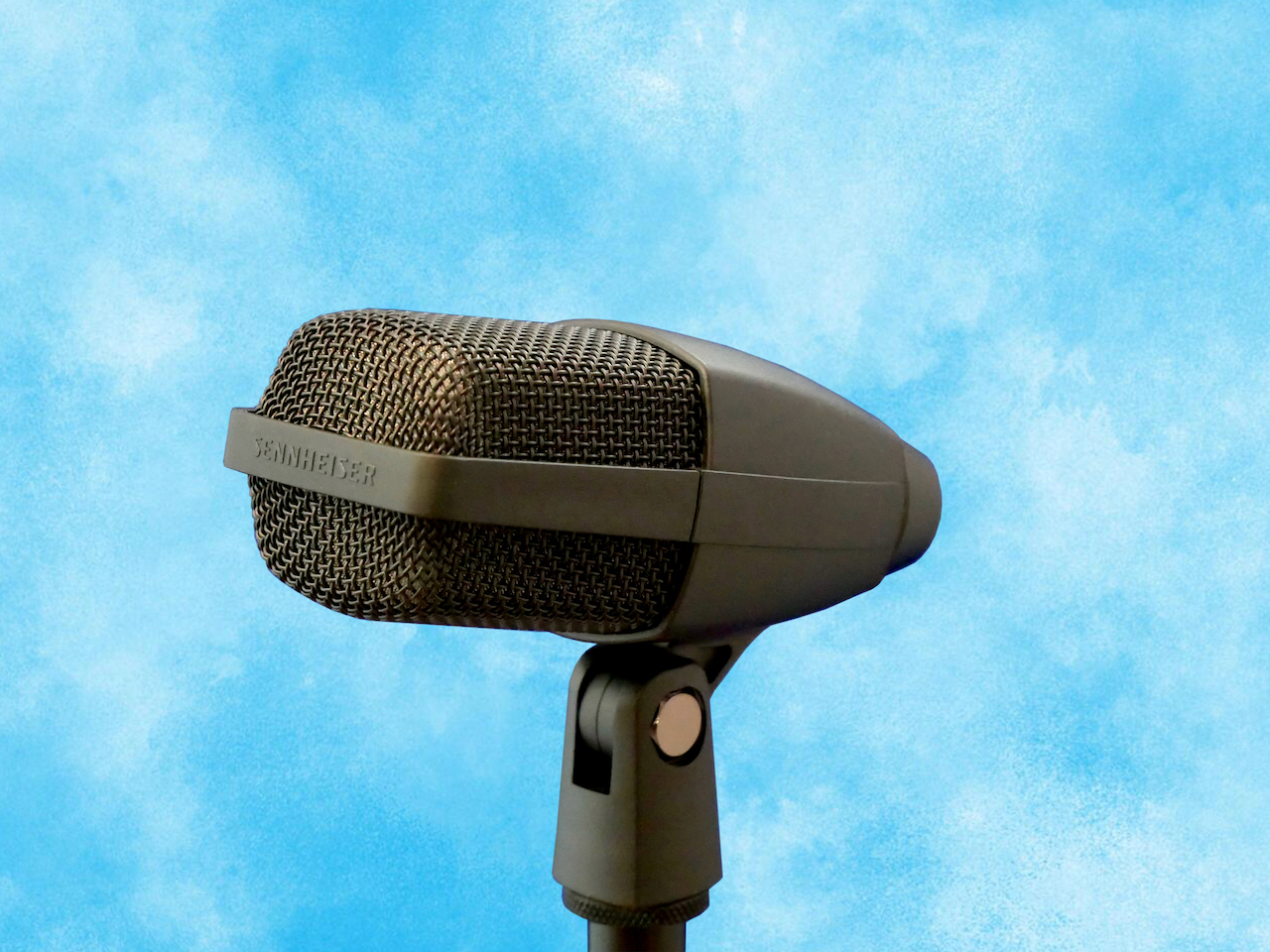
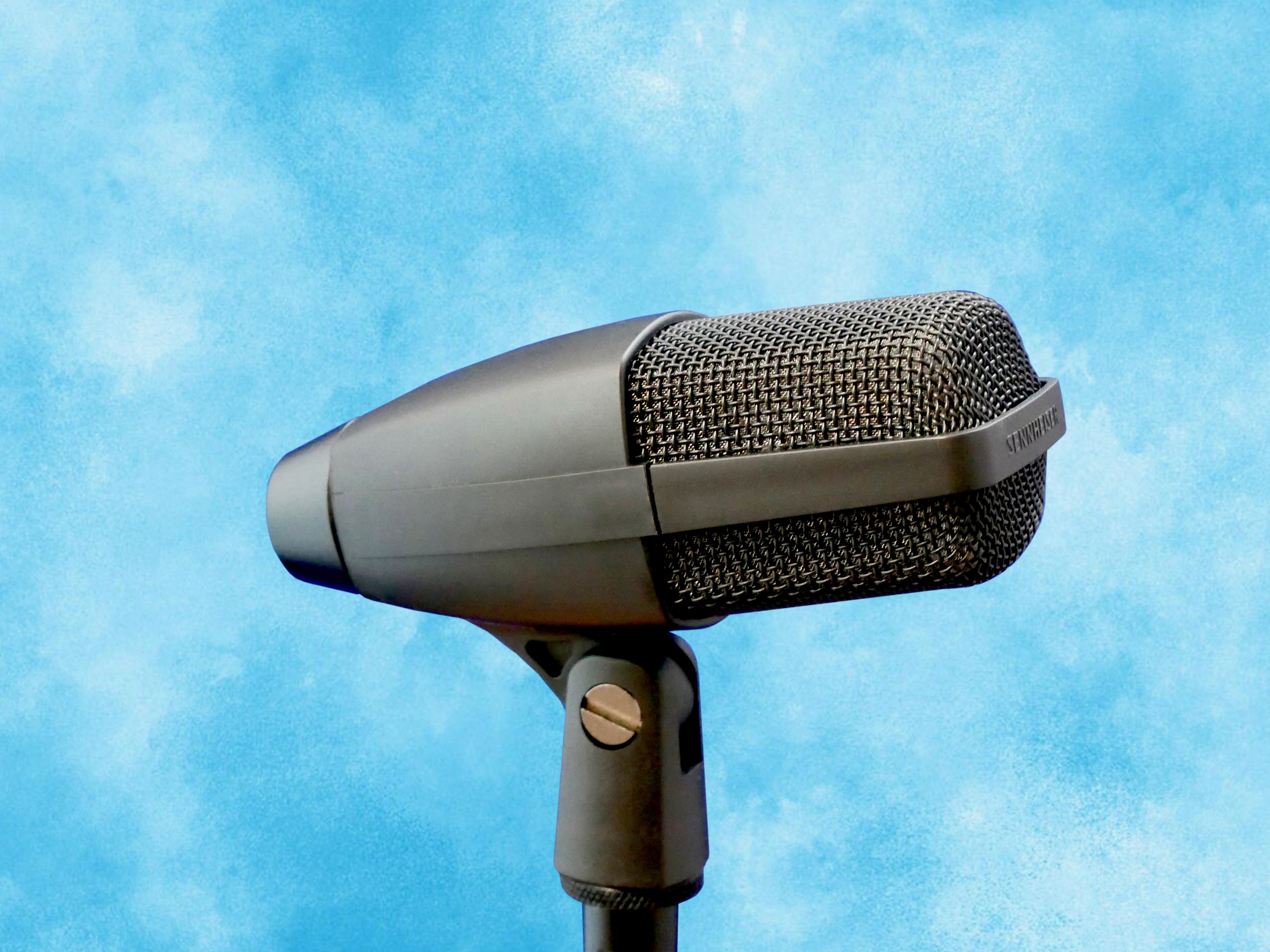
Sennheiser has finally listened to everyone who has been asking for a scaled-down version of the MD421 model. A few weeks ago, the Sennheiser MD421 Kompakt, a compact parallel version of the old classic, was released.
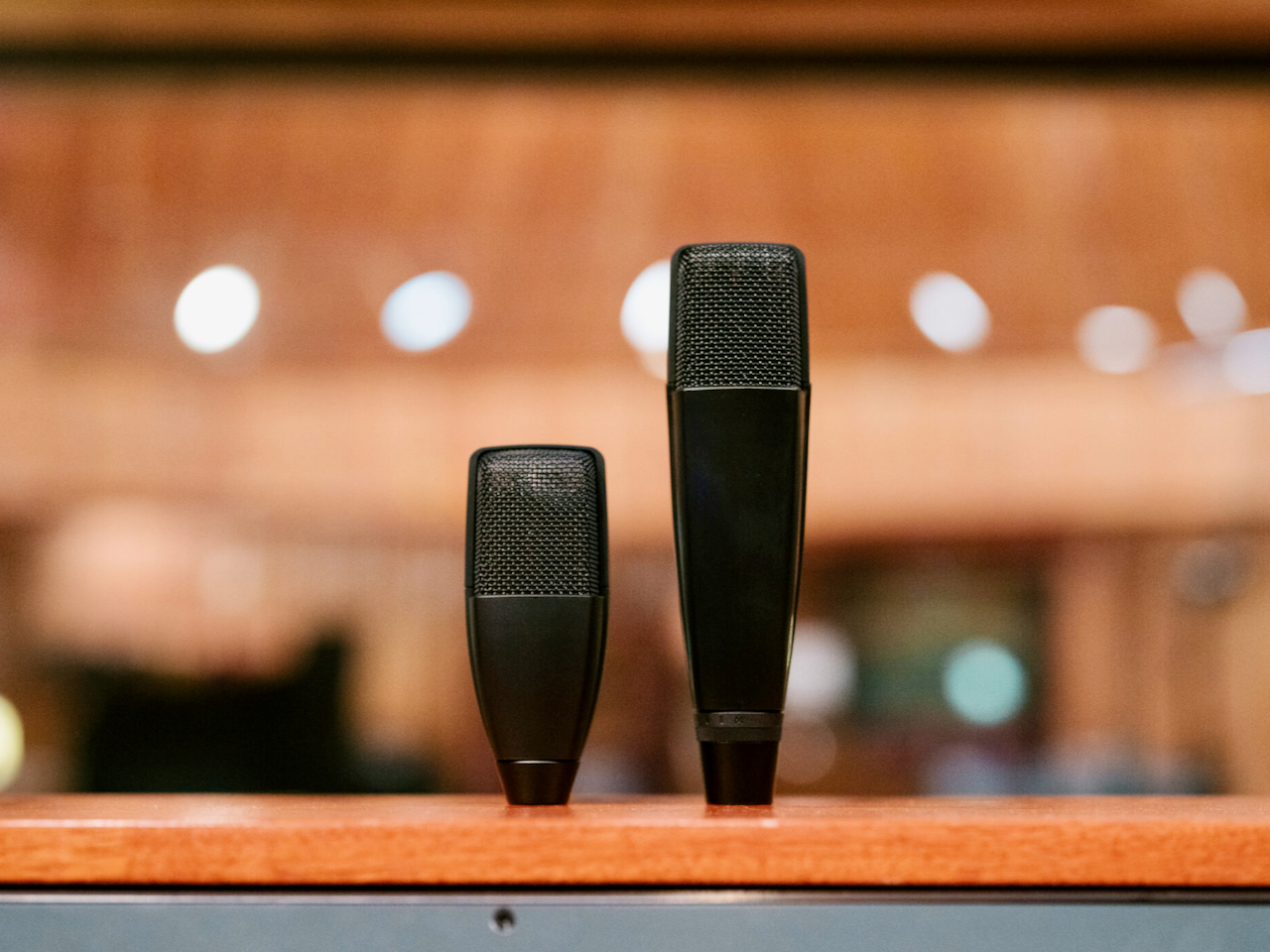
The Kompakt version (street price around 290 euros) is almost half the length of the original MD421 (12 cm versus 21.5 cm) and more than half the weight (159 g versus 385 g).
The microphone capsule in the new Kompakt version is exactly the same as in the classic version, and the volume of the bass chamber in the shorter body has been kept the same size. Thanks to this, it is no surprise that the frequency response (30 Hz – 17 kHz) and other technical values of the MD421 Kompakt are also identical. The microphone’s shrinkage has been achieved by removing the bass filter unit of its big brother from the Kompakt.

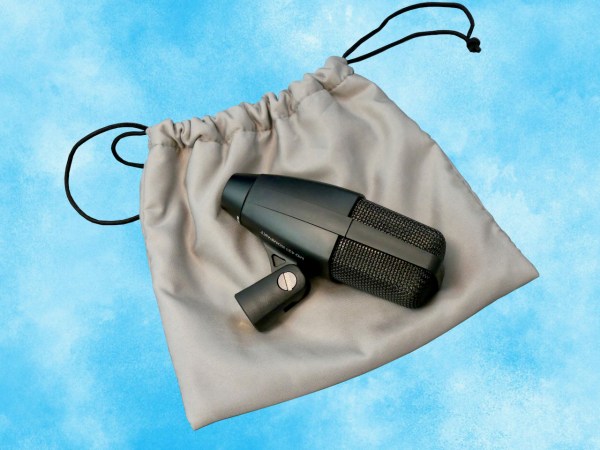
The Sennheiser MD421 Kompakt does not have a separate stand adapter, but here it is implemented as part of the microphone body. For drum recordings, the new mic is also available in a set version (street price approximately 315 euros), which already includes the MZH drum adapter suitable for the Kompakt. A storage bag is included in both sales packages.
The convenient size and low weight of the MD421 Kompakt make it very easy to place the new mic. The more compact body does not feel toy-like at all, but the mic has the same solid construction as its big cousin. I think the MD421 Kompakt would also be an excellent choice for a vocal mic on stage, as you don’t have to worry about your teeth, as you would with the full-size version, if someone hits the mic stand while you’re singing.
****
At least to my ears, the Sennheiser MD421 Kompakt sounds a little warmer than a Shure SM57, and the new mic’s presence emphasis is also at a higher frequency than the Shure. Whether this is a “good” or “bad” feature depends entirely on the source signal and your own preference.
****
For this review I recorded two demo songs with the Sennheiser. The first demo is a completely acoustic song, where every instrument and sound has been recorded with the MD421 Kompakt and a Cranborne Camden EC2 mic preamp. Song number two is a rock song, where the drums sounds are samples, but the bass and guitars have been captured with the MD421 Kompakt and the built-in microphone preamp of Universal Audio’s Volt 2 interface.
****
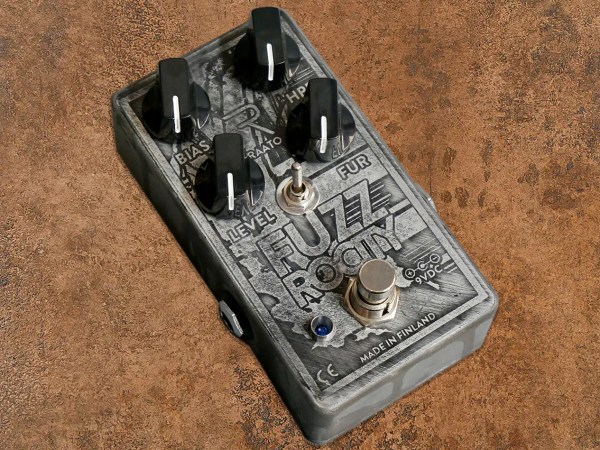
Raato Custom Guitars on tunnettu pajan nykytarpeisiin tehdyistä huippulaadukaista sähkö- ja bassokitaroistaan. Raato Guitarsin pomo Mika Ruotsalainen on hiljattain lisänyt kolme efektipedaalia brändin valikoimaan – yhden trebleboosterin, sekä pari fuzzia.
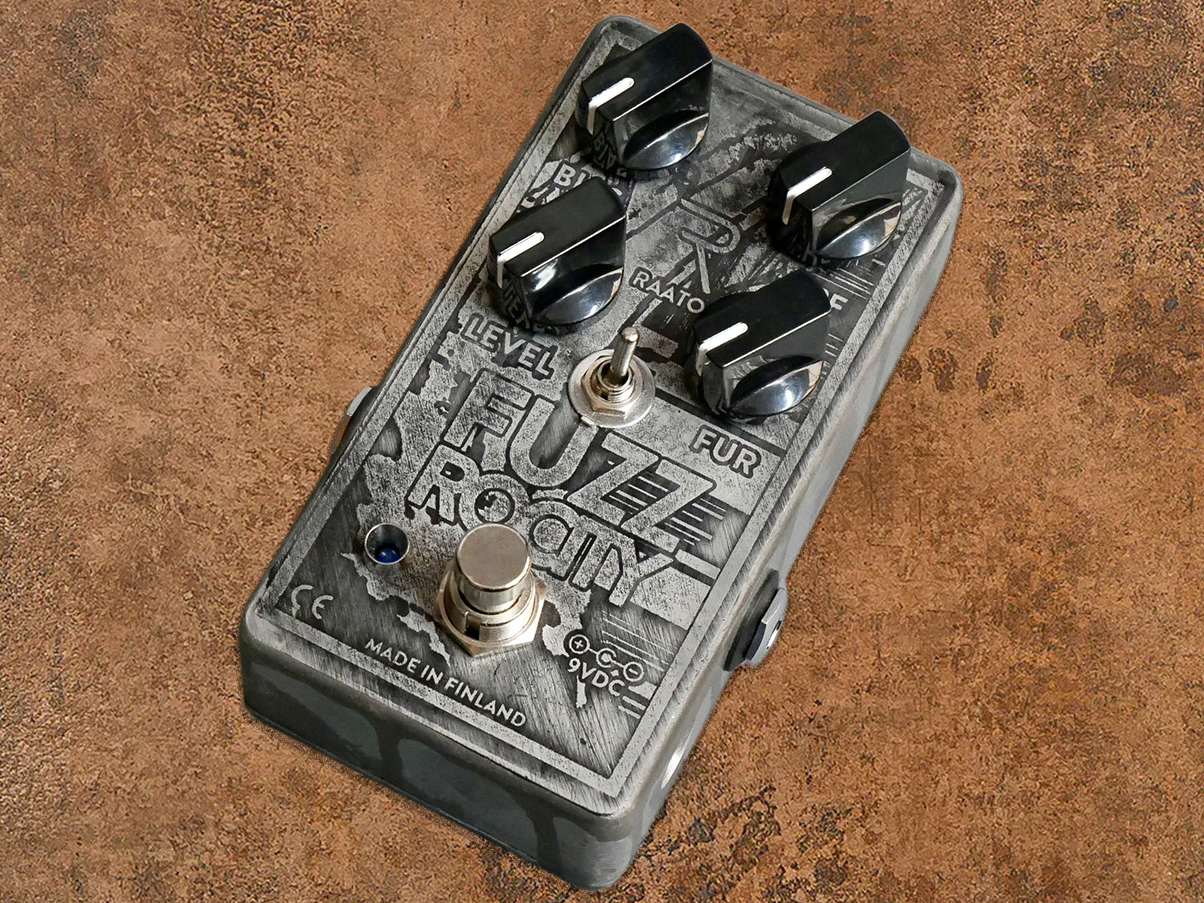
Upouusi Raato Fuzzrocity (268 €) on Fuzz Face -tyylinen piipohjainen fuzz-särö nykyajan kitaristeille. Tässä yhteydessä ”Fuzz Face -tyylinen” tarkoittaa nimenomaan efektin soundimaailma, sillä Fuzzrocity ei ole missään nimessä jonkun vintage-pedaalin klooni.
Kun kävin pajalla, Mika näytti minulle muutaman työn alla olevan Fuzzrocity-pedaalin. Hän käyttää erittäin laadukkaita osia, sekä oman suunnittelun mukaan tehtyjä piirilevyjä. Myös pedaalien grafiikat etsataan itse Raato Guitarsilla. Toimiakseen Raato-pedaalit tarvitsevat Boss-standardin mukaista yhdeksän voltin virtalähdettä.
Hyvä vintage Fuzz Face voi olla taivaallinen soundikokemus, mutta valitettavasti sillä ei ole paljon mahdollisuuksia säätää sitä soundia, kun tarjolla on ainoastaan Fuzz- ja Volume-säätimet. Riippuen soittajan musikkillisista tarpeista, sekä käytetystä kitarasta ja vahvistimesta, vintage-fuzz voi kuulostaa liian terävältä tai liian mutaiselta, etenkin nykyaikaisten alavireisten (tai seitsenkielisten) kitaroiden kanssa.
Lisäksi vanhat Fuzz Facet voivat aiheuttaa ongelmia yhteiskäytössä wah-pedaalin kanssa. Pedaalien välinen impedanssin yhteensopimattomuus voi aiheuttaa korvia raastavaa ulinaa.
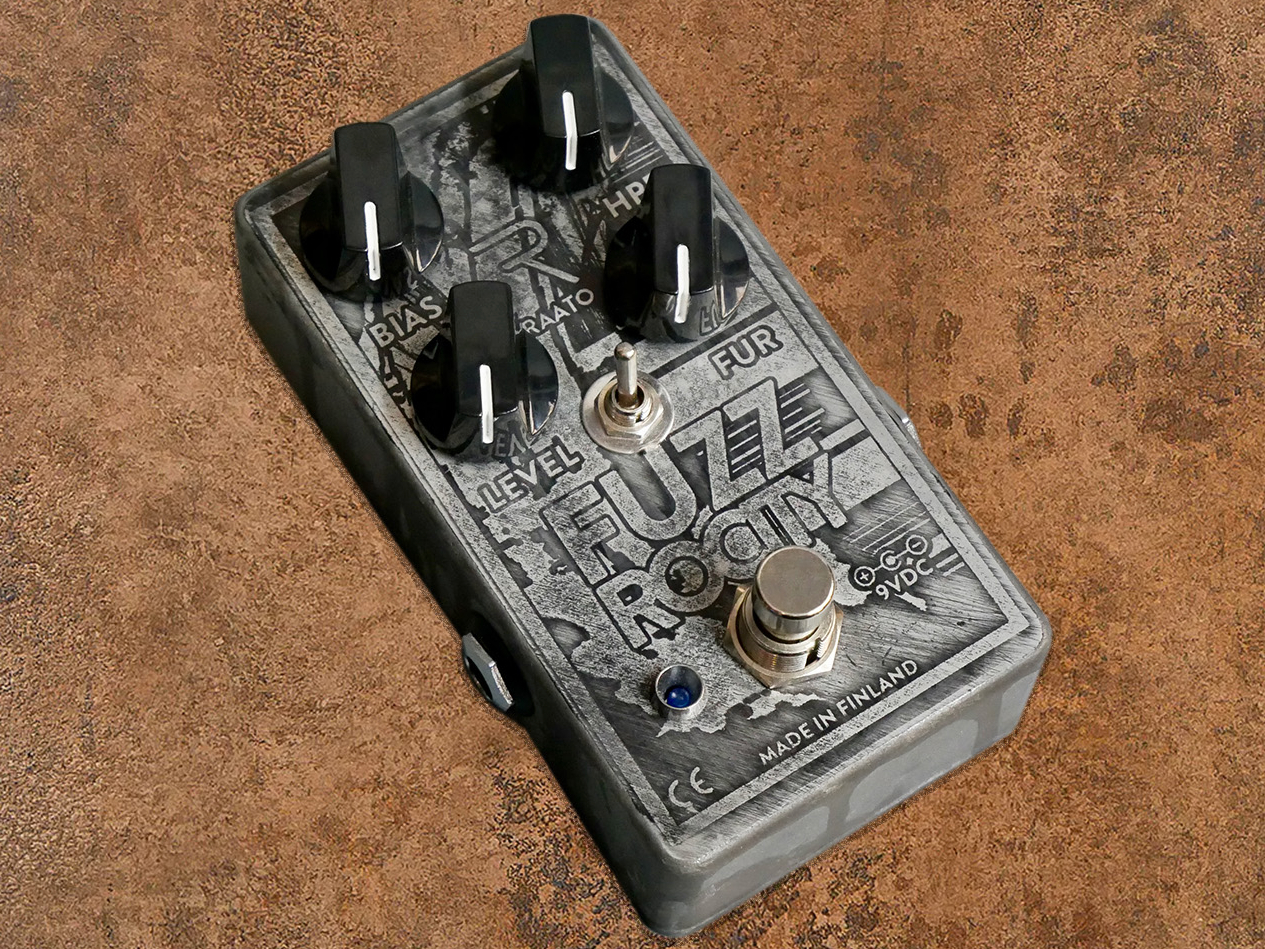
Raato Fuzzrocity on suunniteltu nykykitaristin tarpeita silmällä pitäen – pedaali tarjoaa laajan valikoiman herkullisia säröjä, sekä paljon säätövaraa eri genrejä ja tarpeita varten. Efektistä löytyy neljä säädintä:
BIAS antaa sinun säätää piitransistorien käyttöjännitettä, kun taas HPF tarkoittaa ylipäästösuodatinta, jolla voit poistaa särösignaalista mahdollisesti häiritseviä bassotaajuuksia. FUR vastaa tavallista fuzz- tai gain-säädintä tulosignaalille, kun taas LEVEL ohjaa lähtösignaalin voimakkuutta.
Lisäksi Fuzzrocitysta löytyy kolmisuuntainen minikytkin, joka antaa sinulle kaksi eri treble-filtteriä (sekä ohituksen keskiasennossa), jolla voi kesyttää tarvittaessa signaalin diskanttia.
Saat nykyaikaisen version Fuzz Face soundista, kun BIAS on lähes täysillä ja HPF pois päältä, jolloin FUR ja LEVEL toimivat vintage-faced Fuzz- ja Volume-säätimien tavalla. Ehdottaisin, että laitat tässä tapauksessa diskanttifiltterin kytkimen ala-asentoon.
Raato Fuzzrocity tarjoaa kuitenkin paljon laajemman kattauksen eri fuzz-soundeja, kun ottaa kaikki säätimet käyttöön.
BIAS-säätimen asetuksilla on erittäin suuri vaikutus tämän pedaalin luonteeseen ja dynamiikkaan. Matalilla BIAS-asetuksilla saat ”kuolevan pariston” soundeja, joissa esiintyy vahva geittaaminen ja hyvinkin rakeinen särösoundi. Avaamalla BIASia fuzz-sounds muuttuu kiinteämmäksi ja dynaamisemmaksi. Monet nyky-rock- ja metal-kitaristit hyötyvät pedaalin HPF-säätimestä, joka on tärkeä työkalu, silloin kun halutaan pitää mutaisia bassotaajuuksia aisoissa. FUR-säädin käyttäytyy – luonnollisesti – vuorovaikutteisesti BIAS-säätimen kanssa, ja sen soundien skaala ulottuu ”rikkinäisen sitarin” soundeista mietojen overdrive-soundien kautta tuomiopäivän fuzziin. Kolmiasentoinen treble-kytkin toimii hienosti purevuuden annostelijana.
Mika Ruotsalainen on suunnittelut Raato Fuzzrocity -pedaalinsa toimimaan saumattomasti myös vintage-tyylisten wah-wah-pedaalien kanssa, niin kuin kuulee tämän jutun alussa olevassa videossa, jossa käytin Voxin V845 suoraan Fuzzrocityyn.
Jutun lopussa oleva video taas näyttää, kuinka hyvin Fuzzrocity reagoi kitaran volume-säätimen muutoksiin.
Minun mielestäni Raato Guitarsin Fuzzrocity-särö on täysosuma, koska sillä saa erittäin laajan valikoiman erilaisia vintage-vivahteisia fuzz-soundeja, täysin ilman vintage-klooneille tyypillisiä ongelmia monissa nykypäivän genreissä.
Fuzzrocity-pedaali on piensarjoissa käsin tehty efekti, ja saatavilla hyvin järkevällä hinnalla. Pedaalilla on selkeästi luottotyökalun ainekset.







 Kitarablogi.com – Finland's premier Guitar and Bass blog