Testipenkissä: Tech 21 Fly Rig 5

****

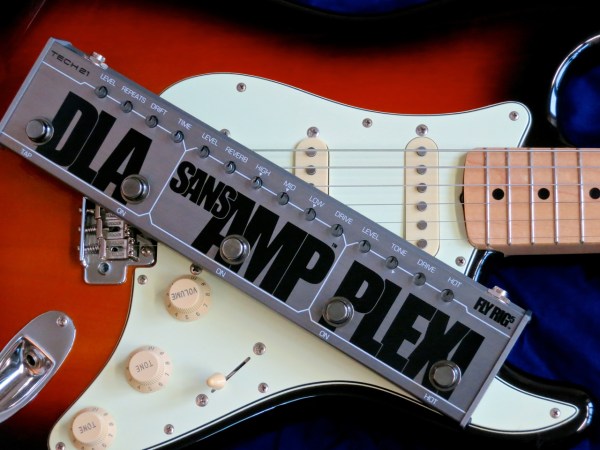
Tech 21 Fly Rig 5 – with Strat

Tech 21 NYC on firma monien oivien soittolaitteiden takana, esimerkiksi SansAmp-sarjan analogiset vahvistin- ja kaappimallintajat, Bass Driver DI-boksi ja Trademark-vahvistimet ovat firman käsialaa. Kaikille näille tuotteille on yhteistä se, että ne ovat erittäin toimivia ja helppokäyttöisiä ratkaisuja sellaisiin pulmiin, joita ammattikitaristi kohtaa päivittäin.

Tech 21:n uusin laite on suunnattu paljon lentokeikkoja tekevän kitaristin tarpeisiin. Megakompaktin, metallinhohtoisen, pedaalilaudan kaltaisen uutuuslaitteen nimi on Fly Rig 5.

****

Tech 21 Fly Rig 5 – full top

Kuten näkyy tämän jutun avauskuvasta, Tech 21 Fly Rig 5 (299 €) ei ole todellakaan koolla pilattu. Pikkulauta sopii helposti gigbägin etutaskuun, sekä monen kitaralaukun tarvikeosastoon. Vahvistimen vuokraaminen keikkapaikalla ei ole enää tarpeellista – nyt täytyy pakata mukaan enää kitara, Fly Rig –lauta, muutama johto, sekä viritysmittari. Ja ei kun menoksi.

Fly Rig 5:n ulkokuori on valmistettu kokonaan metallista, ja sen paneelin harjattu pinta näyttää erittäin tyylikkäältä.

Tech 21 Fly Rig 5 – with PSU

Pikkulauta toimii 12 voltin tasavirralla (150 mA/miinus keskellä) ja sen virtalaite kuuluu (luonnollisesti) hintaan.
Tech 21 Fly Rig 5 – Plexi + Hot

Tech 21: uutukaisen nimeksi on valittu Fly Rig 5, koska lautaan on mahdutettu viisi erilaista efektiä/toimintaa.

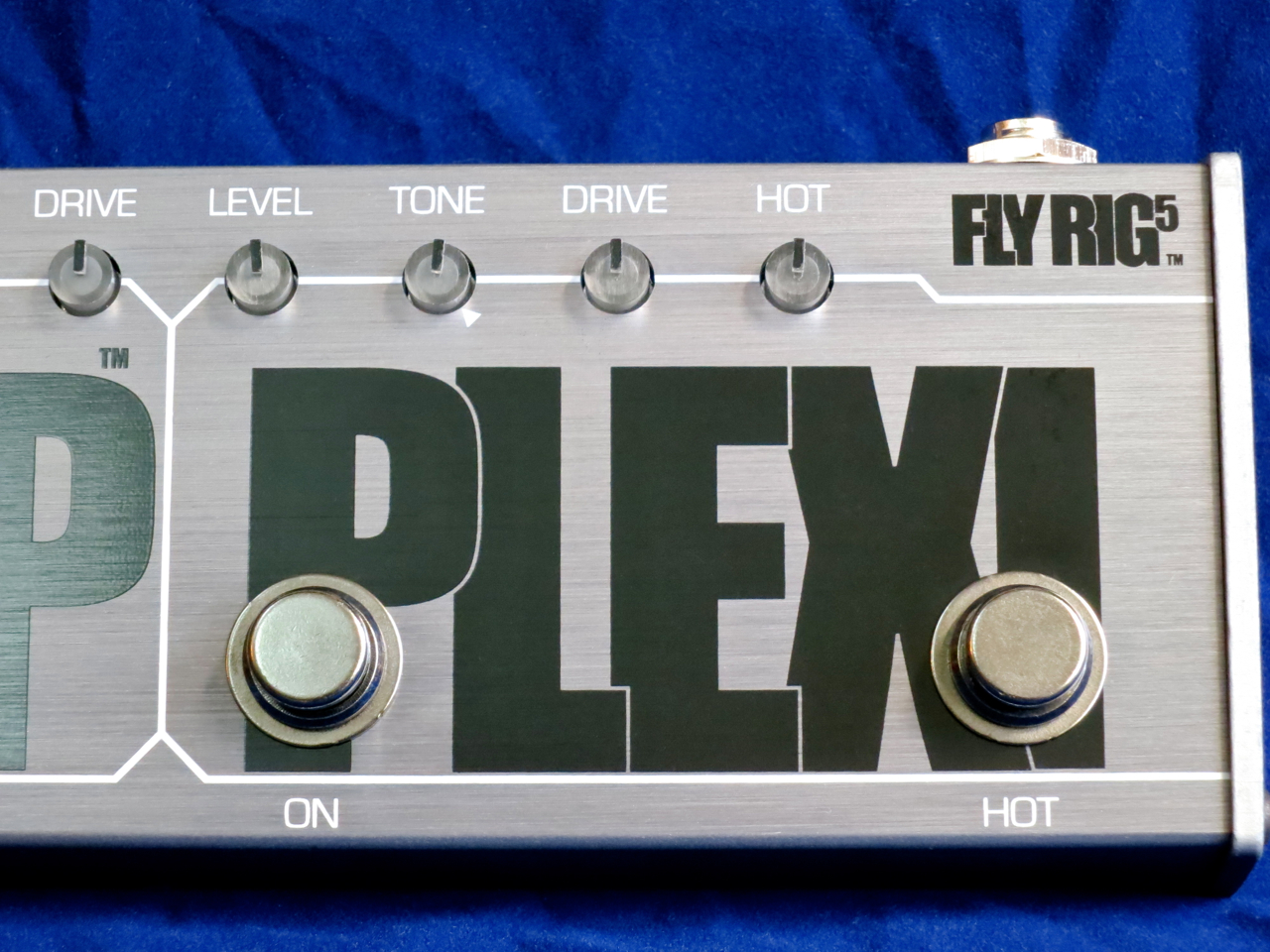
Kaksi ensimmäistä efektiä löytyy Plexi-osiosta: Hot on säädettävä boosteri, josta saa tarvittaessa jopa 21 dB lisävahvistusta signaaliin. Toinen toiminta on Tech 21:n mallinnus vanhasta Marshall Plexi –kitaranupista (lainattu firman Hot-Rod Plexi-pedaalista), joka tarjoaa säädöt gainille (Drive), tonelle ja lähtötasolle (level).

Tech 21 Fly Rig 5 – SansAmp

Fly Rigin seuraava osio on SansAmp-osasto, joka pohjautuu Tech 21:n legendaarisiin analogeihin SansAmp-pedaleihin. SansAmpiin sisältyy analoginen vahvistin- ja kaappimallinnus kolmialueisilla taajuuskorjaimilla, sekä kaunisääninen kaiku.

Tech 21 Fly Rig 5 – DLA

Viimeisen osion nimi on DLA (lyhenne englanninkielisestä sanasta delay), ja se tarjoaa viive-efektin tap tempo –toiminnolla. Drift-säätimellä voi lisätä signaaliin portaattomasti nauhakaiun-tyylistä huojuntaa.

Tech 21 Fly Rig 5 – front panel

****

Tech 21 Fly Rig 5 – Tech 21 logo

Tech 21:n Fly Rig 5 on erittäin helppo käyttää: Jokainen jalkakytkin ja säädin on nimetty selkeästi. Tämän lisäksi jokaisen osion säätimet loistavat – jokainen omassa värissä – silloin kun kyseinen efekti tai toiminto on päällä.

Laudan erittäin kompakti koko vaatii kuitenkin yhden pienen hinnan: säätimet ovat suhteellisen pieniä, mikä vaatii ainakin nakkisormiselta hieman tarkkuutta niitä säätäessä. Toisaalta, kun omat asetukset on kerran löydetty, niitä ei varmaan lähdetä muuttamaan keskellä keikkaa – ja keikkakoneeksi Fly Rig on suunniteltu.

Soundillisesti Tech 21:n uutukainen täyttää ammattikitaristin vaatimukset kiitettävästi. Fly Rigin soundi on erinomainen ja sen eri efektit kattavat varmasti lähes jokaisen kitaristin perustarpeet keikkatilanteessa. Plexi-tyylinen särökanava, SansAmp-mallinnus, boosteri, viive ja kaiku erittäin kompaktissa paketissa tekevät Fly Rig 5:stä oivan työkalun Jazz-, Blues-, Rockabilly-, Pop- tai Rock-kitaristeille. Metalli-miehet tarvitsevat luultavasti enemmän säröä, sekä varmaan myös kohinaportin, genren soundeja varten, mutta he eivät luultavasti olekaan tämän laudan varsinainen kohderyhmä.

Tässä pätkässä soitan kaikki Fly Rig 5:n efektejä läpi vaahterakaulaisella Fender Stratocasterilla. Ihan alussa Fly Rig on kokonaan pois päältä:

Seuraavaksi samankaltainen audioesimerkki, tällä kerralla humbuckereilla varustetulla Hamer USA Studio Custom -kitaralla, jossa on enemmän säröä ja pidempi viiveaika:

Tässä olen simuloinut vanhaa nauhakaiku-soundia DLA-osion Drift-toiminnolla:

Fly Rigissä on myös yksi ”piilotettu” ominaisuus: DLA-osiota pystyy myös käyttää choruksena. Chorus-efekti syntyy hyvin lyhyestä viiveestä, jossa on mieto syklinen vireen huojunta. Lyhyellä Time-asetuksella ja lisäämällä hieman Driftiä signaaliin syntyy hieno chorus-efekti (soitan tässä Stratolla):

Tech 21 Fly Rig 5 – angle 2 + lights

****

Tech 21 Fly Rig 5 – all on

Jos soitat usein pistekeikkoja ulkomailla, eikä budjetti tai taustaryhmä anna myöten raahata vahvistintasi kaikkialle mukaan, Tech 21 Fly Rig 5 on kuin juuri sinulle tehty.

Tässä on onnistettu pakkaamaan kaikki tärkeimmät efektit ja ominaisuudet, joita keikkaileva kitaristi tavallisesti tarvitsee, yhteen kompaktiin pedaalilautaan. Ja lopputulos kuulostaa erittäin hyvältä ja inspiroivalta.

Joillekin vintage-ystäville Fly Rig varmasti voi tuntua liian modernilta, koska sillä ei ole sitä vintage-voodoa. Mutta jos tarvitset toimivan, käytännönläheisen ja ongelmavapaan ratkaisun, millä saat musiikkisi yleisölle, Tech 21:n Fly Rig 5 on kerrassaan loistava valinta!

****

Tech 21 NYC Fly Rig 5

299 €

Maahantuoja: Musamaailma

****

Plussat:

+ kestävän-oloinen metallikotelo

+ koko

+ paino

+ ominaisuudet

+ soundi

+ vastinetta rahalle

Miinukset:

– säätimien pienuus

Tech 21 Fly Rig 5 – angle 1

Review: Tech 21 Fly Rig 5

****

Tech 21 Fly Rig 5 – with Strat

Tech 21 NYC is the company behind many groundbreaking products, such as the SansAmp range of amp modelling stomp boxes, the Bass Driver DI or the all-analogue modelling guitar amps of the Trademark series.

What all these products have in common is that they’re no-nonsense tools to make the life of the gigging and recording guitarist (and bassist) easier.

Tech 21’s newest product is designed to do away with the need to hire a guitar amp for fly-in gigs. It’s an ultra-compact and sleek, pedalboard-style device called the Fly Rig 5.

****

Tech 21 Fly Rig 5 – full top

As you can see from the picture at the start of this review, the Tech 21 Fly Rig 5 (current price in Finland: 299 €) is extremely compact. It will fit in the pouch of a gig bag, as well as in the accessories compartment of many guitar cases. Just pack your guitar, the Fly Rig, a couple of cables and your tuner – and you’re ready to roll!

The Fly Rig 5’s sturdy housing is completely made from metal, and its brushed fascia gives it a cool modern look.

Tech 21 Fly Rig 5 – with PSU

The unit runs on 12 Volts of DC-power (150 mA/centre negative) and the power supply unit is (naturally) included.

Tech 21 Fly Rig 5 – Plexi + Hot

Tech 21 call their new creation the Fly Rig 5, because it features five different main functions/effects.

Two of these functions are grouped together under the Plexi banner. The first one, labelled Hot, is an adjustable clean boost of up to a whopping 21 dB. Secondly, you will find an analogue model of a Marshall Plexi head (based on the Hot-Rod Plexi pedal), with its controls comprising Drive, Tone and Level.

Tech 21 Fly Rig 5 – SansAmp

The next section is called SansAmp and includes Tech 21’s legendary analogue amp (and miked up cabinet) emulator (with three-band EQ), as well as a reverb effect.

Tech 21 Fly Rig 5 – DLA

The last section is labelled DLA (short for delay) and offers you a delay effect with tap tempo. Thanks to the Drift-control you can also dial in grungy tape echo-type wow and flutter.

Tech 21 Fly Rig 5 – front panel

****

Tech 21 Fly Rig 5 – Tech 21 logo

Tech 21’s Fly Rig 5 is really very easy to use: All the controls and footswitches are clearly labelled, and the control knobs of each section light up in a different colour to give you an easy to read visual clue as to which sections are currently on and which are turned off.

There’s one very minor trade-off due to the über-compact nature of this ’board, and that’s the small, slightly fiddly nature of the control knobs. On the other hand, you’re hardly likely to make major adjustments to your settings in the middle of a gig – and gigging is what the Fly Rig was conceived for.

In terms of its sound and performance, Tech 21’s newcomer easily fulfills the high standards guitarists have come to expect of the products of this company. The Fly Rig 5 sounds awesome and does exactly what it says on the tin. This combination of SansAmp, Plexi-style overdrive, booster, delay and reverb delivers the goods for the large majority of guitarists – be it Jazz, Blues, Rockabilly, Pop or Rock, the Fly Rig delivers! Metal and Thrash guitarists will most probably demand more gain and the inlusion of a noise gate, but I’d reckon that the metal crowd aren’t really the intended target group for this type of ’board.

Here’s a run-through of all of the Fly Rig 5’s effects, played on a maple-necked Fender Stratocaster. The clip starts with the Fly Rig turned off:

Here’s a similar run-through using a humucker-equipped Hamer USA Studio Custom, adding a bit more overdrive and a longer delay time:

The Delay-section’s Drift-control makes it easy to simulate tape echo effects:

A ”hidden” feature of the Fly Rig 5 is the possibility to use the Delay-section as a chorus effect. Because a chorus is basically nothing more than a slightly wobbly, very slightly offset doubling of the guitar signal, you can achieve this effect by setting the Delay-section’s Time-control to something very short, and using the Drift-control to adjust the chorus’ depth. Here’s an audio clip of a chorus setting, played with a Strat:

Tech 21 Fly Rig 5 – angle 2 + lights

****

Tech 21 Fly Rig 5 – all on

If you play a lot of fly-in gigs, and have neither the budget nor the manpower to lug a large guitar rig across the globe, Tech 21 NYC’s Fly Rig 5 is a true godsend.

It offers the most important features and effects a guitarist needs on stage or in the studio. And — most importantly – it sounds really great and inspiring.

True, using a device like the Fly Rig may not be as ”authentic” as using a real amp in the eyes of some anoraks, because Tech 21’s brand-new tool doesn’t have the ”kudos” of a mythical vintage amp. But if you’re after a pro-quality, lightweight, no-nonsense solution that will get your sound to the audience with the least amount of fuss and hassle, Tech 21’s Fly Rig 5 is hard to beat!

****

Tech 21 NYC Fly Rig 5

299 €

Finnish distributor: Musamaailma

****

Pros:

+ sturdy, all-metal construction

+ size

+ weight

+ features

+ sound

+ value for money

Cons:

– tiny control knobs

Tech 21 Fly Rig 5 – angle 1

Review: Warwick LWA 1000

****

Warwick LWA 1000 – opener

German maker Warwick is offering a wide range of different bass amplifiers alongside their famous basses.

One of their newest products is the Warwick LWA 1000 – an ultra-compact, yet very powerful amp head.

****

Warwick LWA 1000 – front

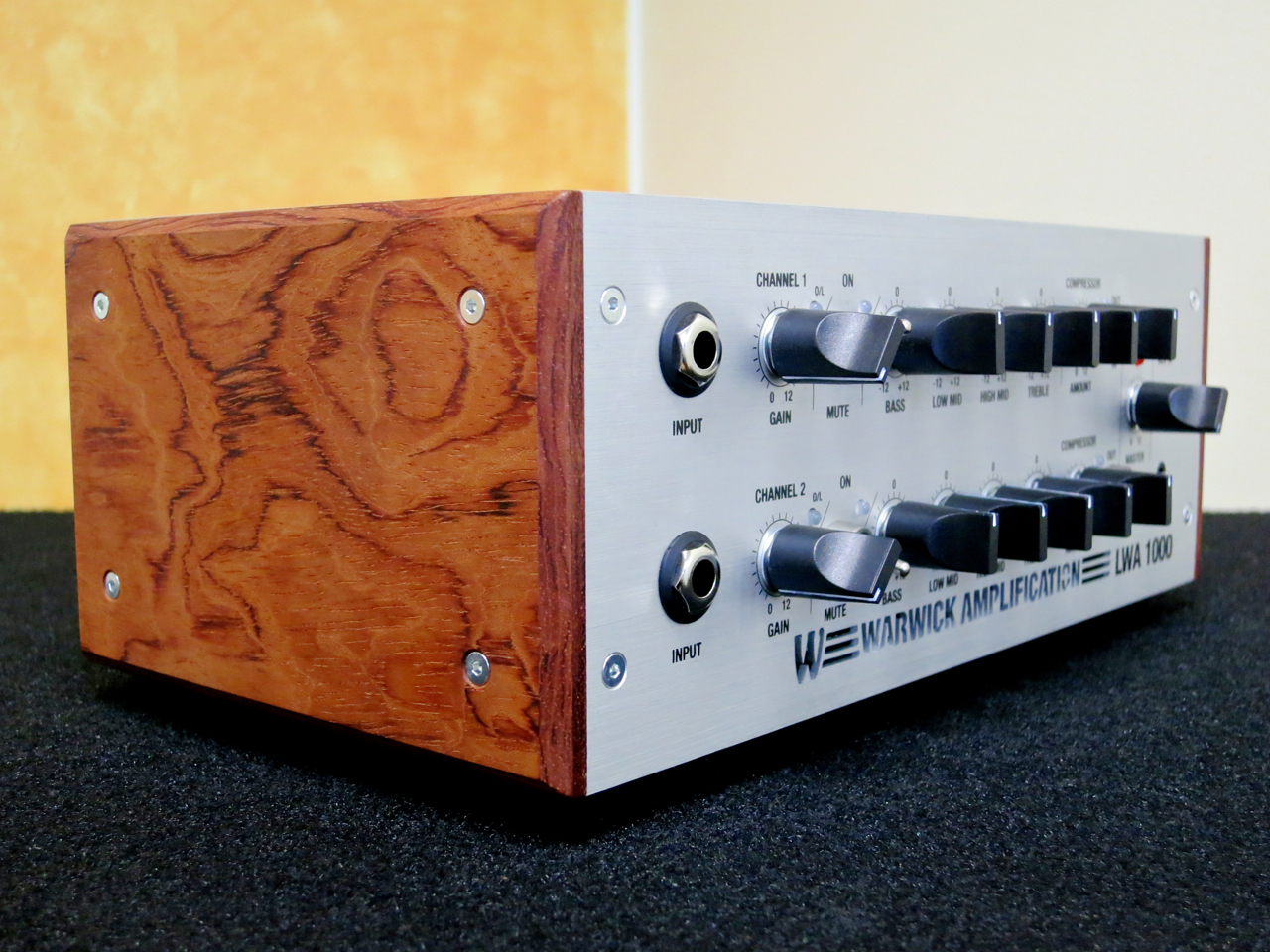
The Warwick LWA 1000 (current price in Finland: 789 €) is small and lightweight enough (2.75 kg) to fit into many gig bags. Optionally, you can also get a rack installation kit or a padded shoulder bag for this head.

As hinted at by its name, the LWA 1000 offers you up to 1,000 Watts of power (into a 4 Ohm cabinet, 500 W into 8 Ohms). Warwick have managed to squeeze this all into a compact package by using a Class D power amplifier.

Warwick LWA 1000 – front panel inputs

Warwick’s two-channel preamp has been transplanted from their Hellborg-series, and promises to offer audiophile sound quality from its low-noise Class A circuits.

The two channels of the LWA 1000 are identical, and they can either be used to amplify two different instruments (each plugged into their own input) or to offer two different sounds for use with a single bass (a footswitch comes included with the amp).

Warwick LWA 1000 – front panel EQs

There’s a four-band EQ section in each channel, offering up to 12 dBs of cut/boost per band.

Warwick LWA 1000 – front panel comp + master

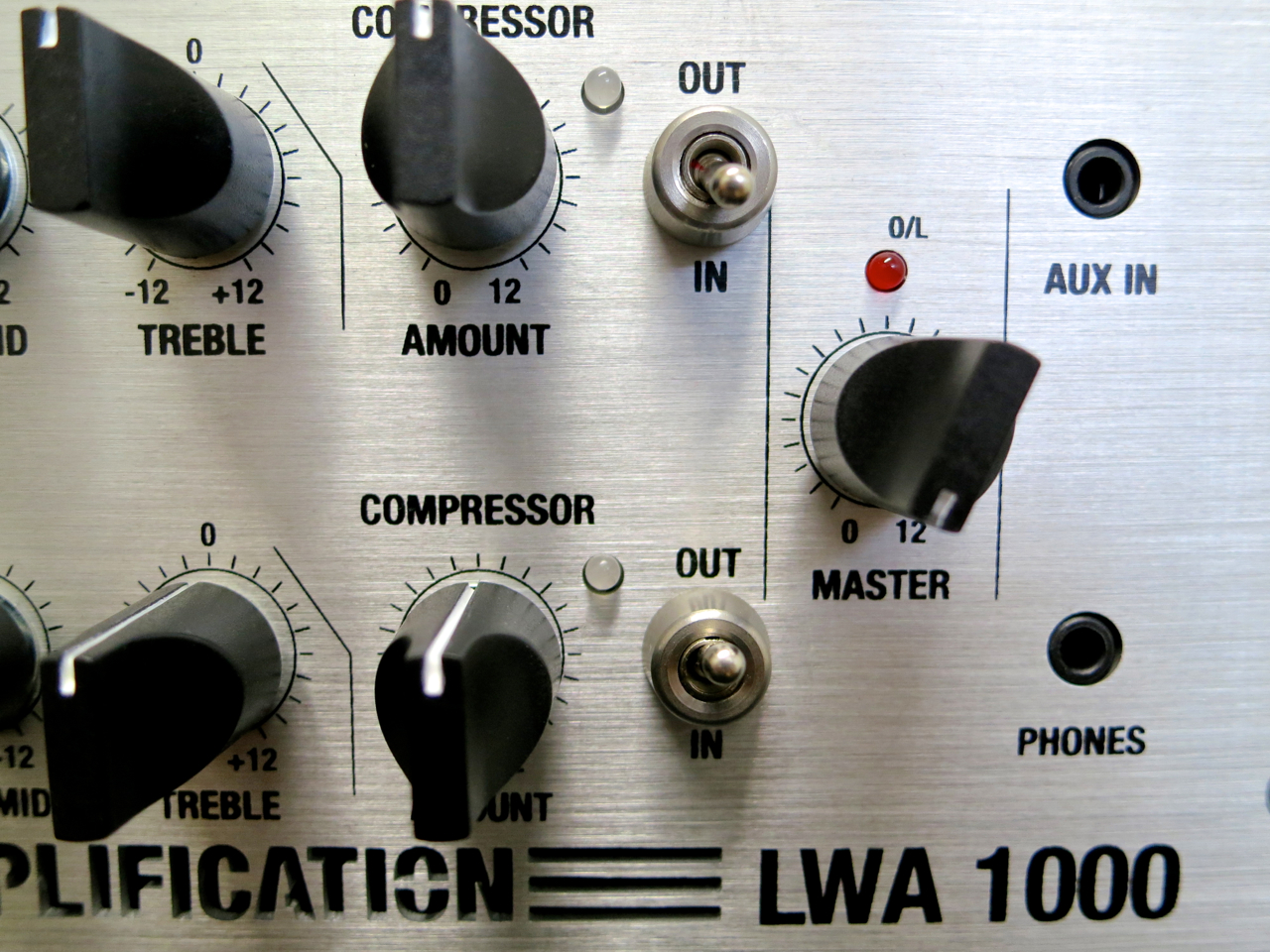
The last link in the preamps’ signal chain is Warwick’s easy-to-use compressor.

The master section offers an auxiliary input to feed your mp3-player into, as well as a headphones output for silent practice.

Warwick LWA 1000 – angle 2

The stylishly understated look of the Warwick LWA 1000 calls to mind high-end HiFi-equipment. You can get the amp head in two finishes – brushed aluminium and matte black.

Warwick LWA 1000 – back

”Lightweight and compact” doesn’t equal ”stripped-down” in the LWA’s case – this is a fully featured bass amplifier:

Of the four jacks on the back panel one is the tuner output, two are used for the effects loop, and the last one is an unbalanced, line level output. This Warwick head also sports a built-in DI-box with its dedicated Pre/Post-switch, as well as a ground lift switch for safe earth loop breaking.

Warwick LWA 1000 – angle

In addition to the amp head itself (and its power cord), the package includes a footswitch and a long, pro-quality TRS-lead (aka a stereo cable).

Warwick LWA 1000 – footswitch

You use your regular instrument lead to connect your bass to the footswitch, and the TRS-cable goes between the footswitch and either one of the LWA 1000’s channel inputs. The TRS tip carries the bass signal, while the ring connection is used to switch between amp channels.

Warwick LWA 1000 + WAC 410

I tested the Warwick LWA 1000 through a Warwick WCA 410 cabinet.

The pro-quality WCA 410 (current price in Finland: 380 €) is a chunky bass-reflex cabinet, equipped with four ten-inch speakers and a four-inch treble horn.

****

Warwick LWA 1000 – glowing

Warwick’s LWA 1000 offers truckloads of ultra-clean, quality bass tone in a very compact format. In contrast to many other bass amplifiers the LWA adds only very little unwanted colouration to your instrument’s tone.

Some bassists rely on certain sonic artifacts from their amp for their own signature sound (like tube saturation or distortion, or a non-linear frequency curve), and this is as valid an approach as others (rock on, guys!). Others – myself included – get their kicks from just the type of clean and linear amplification the Warwick LWA 1000 head provides.

The channel EQs work like a dream and the built-in compressors are musical and intuitive to use.

In the studio you will appreciate this head’s processor controlled ventilator, which works very quietly, and only springs into action when needed.

The sound clips I have recorded will give you a good idea of the sheer power this Warwick provides. If you listen closely, you can hear the metal grilles of the studio’s air conditioning system rattle along with the playing in places:

****

Warwick LWA 1000 – logo

Warwick’s LWA 1000 is just my kind of bass amplifier. The sound is very clear and dynamic, and there’s enough power on tap to shut up your guitarist.

****

Warwick LWA 1000

789 €

Finnish distributor: Musamaailma

****

Pros:

+ power

+ size

+ lightweight

+ ultra-clean tone

+ footswitch included

Review: EBS FuzzMo

EBS FuzzMo – top

The good people of EBS Sweden are now bringing a healthy dose of fuzz to the bassist’s toolbox.

****

EBS FuzzMo – angle 1

The EBS FuzzMo (current price in Finland: 169,90 €) is a fuzz-type high gain distortion developed especially for bass.

This stompbox is made in China to the EBS’ exacting standards. It’s a sturdy pedal with very positive feeling controls.

The FuzzMo can be powered in three ways:

If you use an EBS amp from the Drome-, Gorm-, HD- or TD-series, you can use a TRS-cable (aka a stereo cable) to feed phantom power from the amp to the effect pedal.

EBS FuzzMo – battery

The FuzzMo pedal also runs off a standard 9 V battery, but you will need a screwdriver to take off the base plate first.

EBS FuzzMo – angle 2

The third alternative is to employ a Boss-type power supply (9 V DC, centre negative) to fire up the stompbox.

****

EBS FuzzMo – controls

Even though the EBS FuzzMo looks somewhat similar to the company’s Billy Sheehan -pedal, the controls on the fuzz work in a different way.

The FuzzMo doesn’t do ”nice and sweet” – the Gain control offers fuzz from medium-crunchy to balls-to-the-wall-fuzz. Shape adjusts the tone of the fuzz effect – not in the way a traditional tone control does, but rather by changing the waveform of the fuzz signal. At seven o’clock the sound is quite warm and organic with the waveform approaching a square, while five o’clock is far brighter and more aggressive with the waveform resembling a triangle.

The mini-switch underneath the FuzzMo-logo (called Character) also plays an important part in the stompbox’ sound:

Switched to the left no EQ’ing is applied to the signal (FLAT). In the middle position there’s a slight attenuation of the mid-range. SCOOP on the right side results in a very Metal-style scooped-mid tone with plenty of bite.

Modern bass effects often split the bass signal at the input. One half is fed through the effect, while the other half is kept dry and mixed into the wet signal before it reaches the output. The advantage of doing things this way is that it enables you to keep your bottom end and dynamic attack intact.

This is just the way EBS’ FuzzMo works, too:

You use the Volume knob to adjust the fuzz signal’s volume level, and then use the Blend control to add the desired amount of dry bass. This feature is especially important in fuzz pedals for bass, because the hard clipping of a fuzz effect practically negates all your playing dynamics by design. With the FuzzMo there will be no problems with your tone becoming mushy, clogged up and indistinct, because the Blend control lets you restore your bass guitar’s punch and low end.

Here’s a bit recorded with a Jazz Bass (both pickups on) and a relatively low Gain setting:

In this clip I added some more fuzz and bite to a Rickenbacker played with a plectrum:

Thanks to the ability to blend in the dry signal, the EBS FuzzMo also works extremely well with a five-string (in this case a Yamaha BB with active EMGs):

Note that on all these audio clips the Gain control stayed below one o’clock. If you want you can take things much, much further with this EBS-pedal!

EBS FuzzMo – angle 3

The FuzzMo is a typical EBS-pedal – it’s a sturdy, pro-quality stompbox and it sounds great. If you’re a purveyor of sleazy, dirty and aggressive bass tones, you should definitely give this baby a spin!

****

EBS Sweden FuzzMo

169,90 €

Finnish distributor: F-Musiikki

****

Pros:

+ build quality

+ can be powered in three ways

+ sound optimised for bass

+ three-way EQ-switch

+ Blend control

+ offers a lot of gain

Cons:

– no quick access to battery

Pidä blogia WordPress.comissa.

Ylös ↑