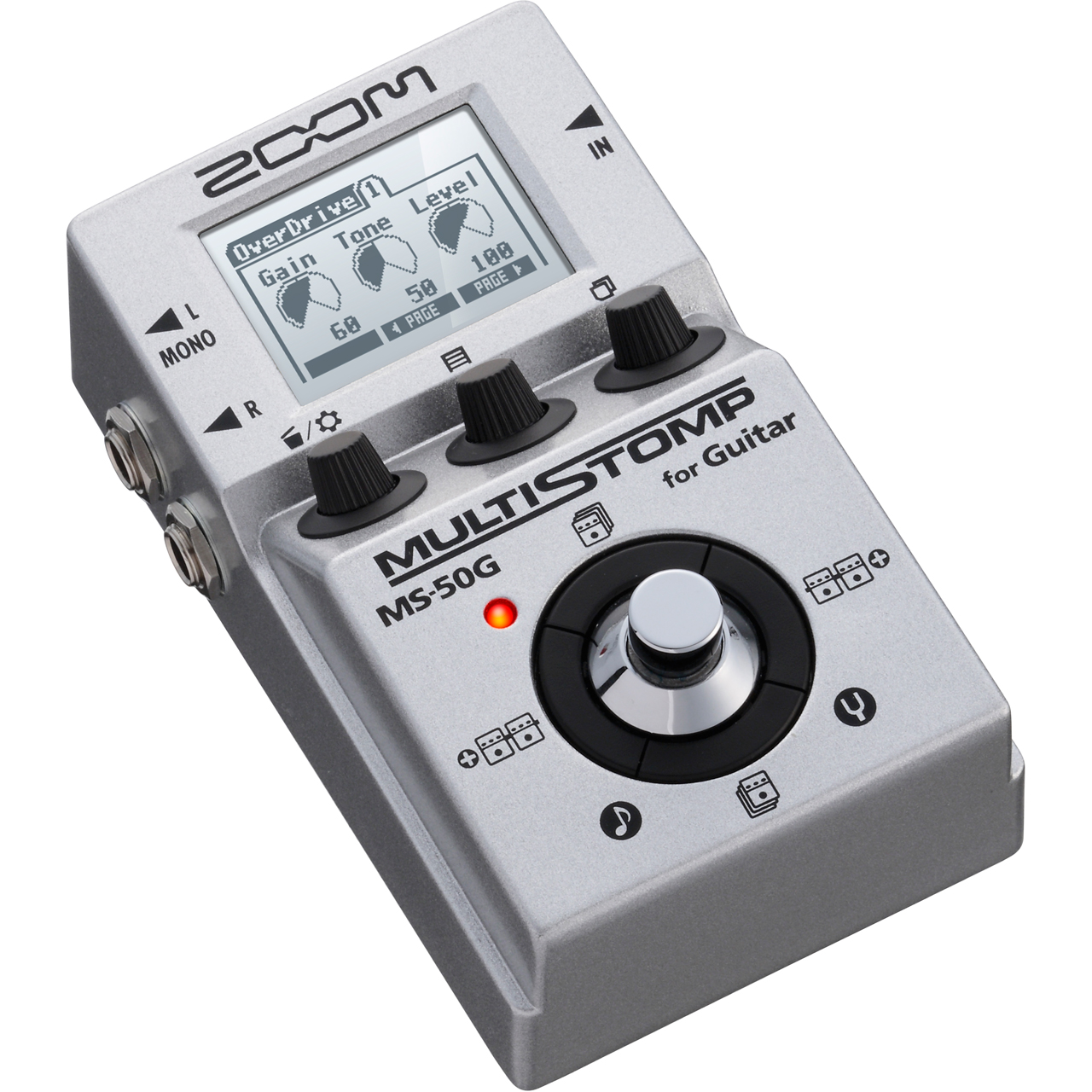
Testi tulossa – Zoom MS-50G

Kitarablogi.com – Finland's premier Guitar and Bass blog
Juttuja kitaroista ja bassoista

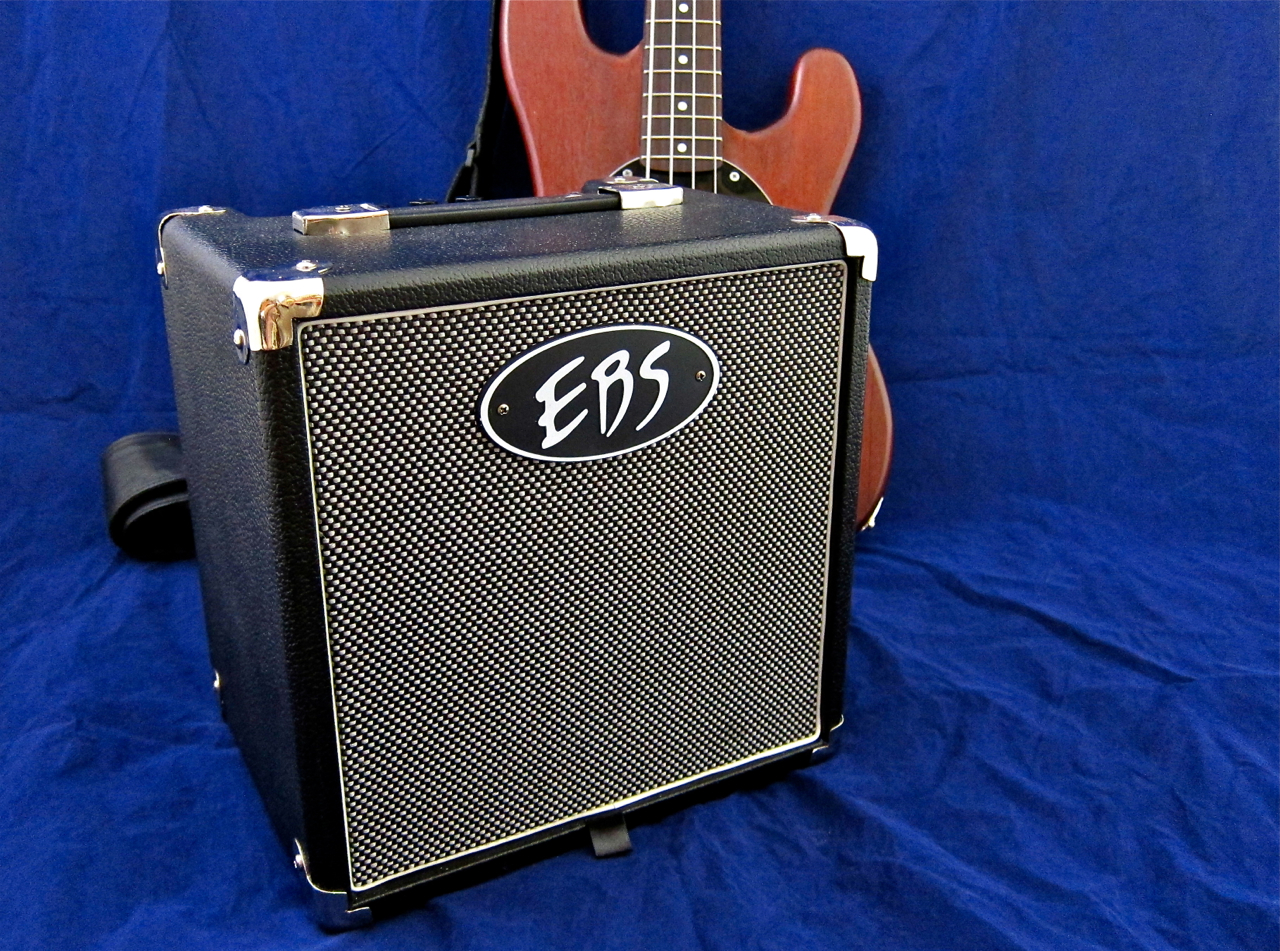
EBS Sweden’s latest product – the Session 30 – is the company’s smallest bass combo to date, and meant for practicing, recording and home use.
****
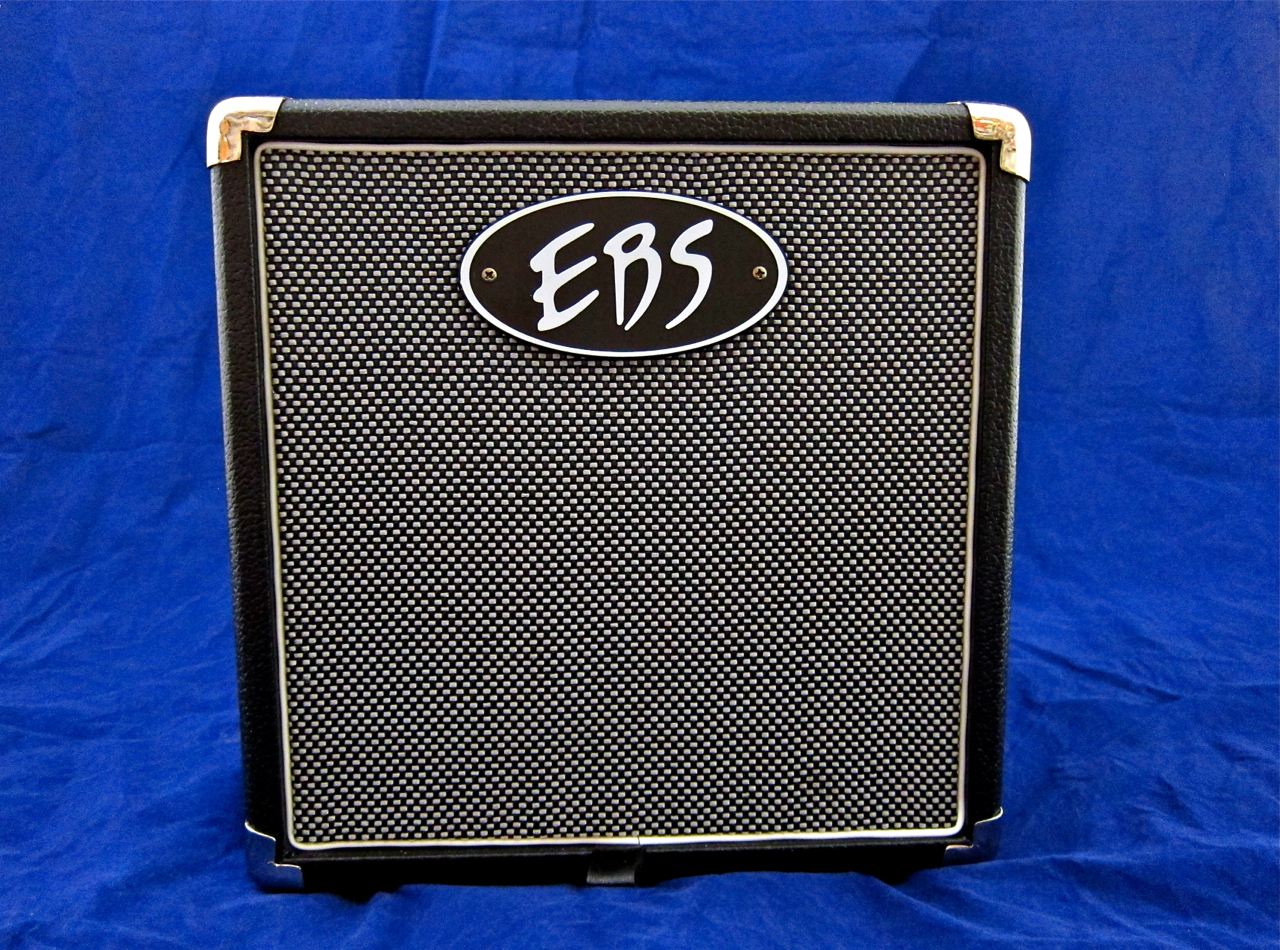
The diminutive and lightweight EBS Classic Session 30 (current price in Finland approx. 169 €) is part of EBS’ Made-in-China Classic-series.
As its name suggests, the Session 30 offers 30 Watts of rms-power.
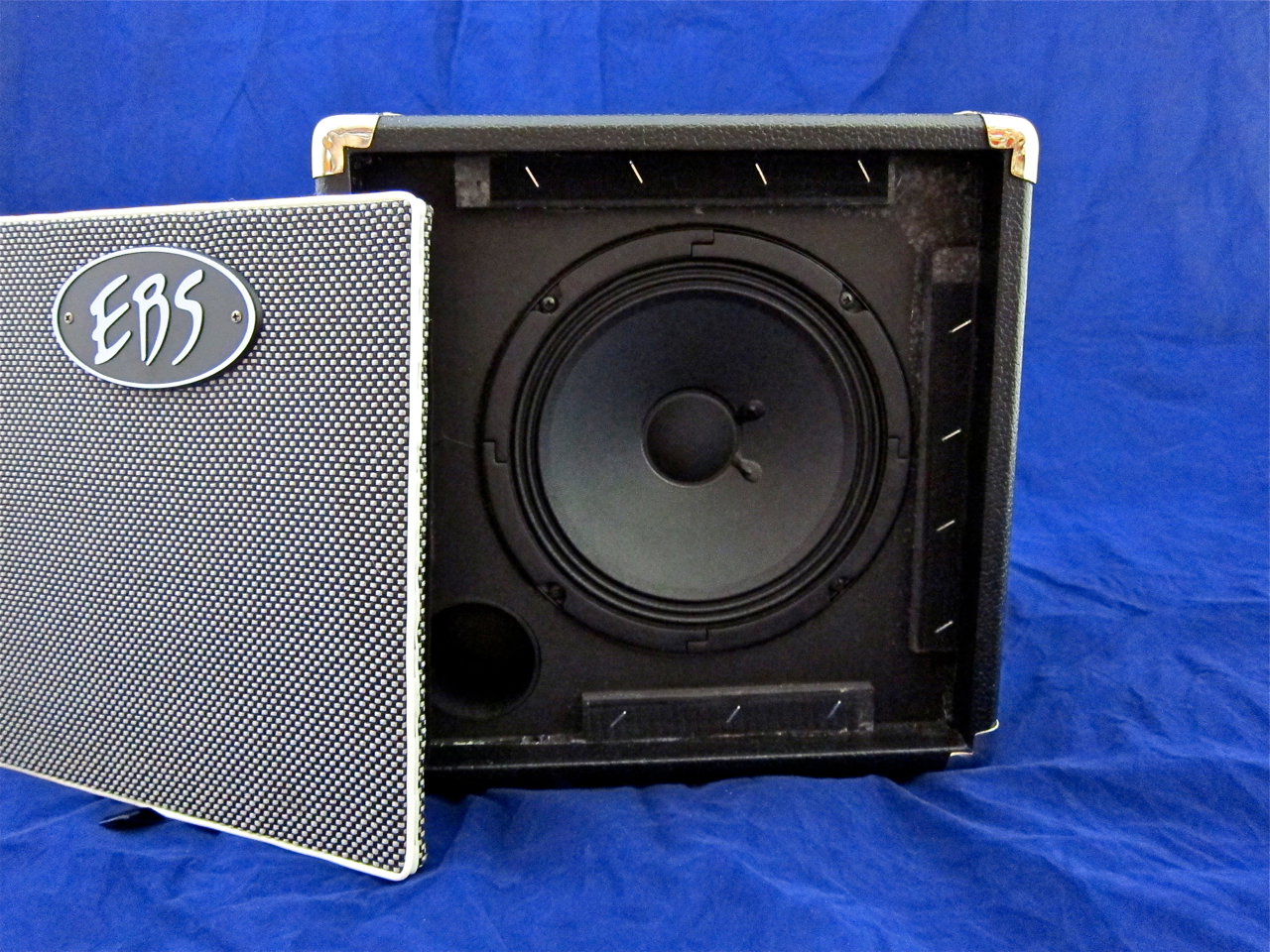
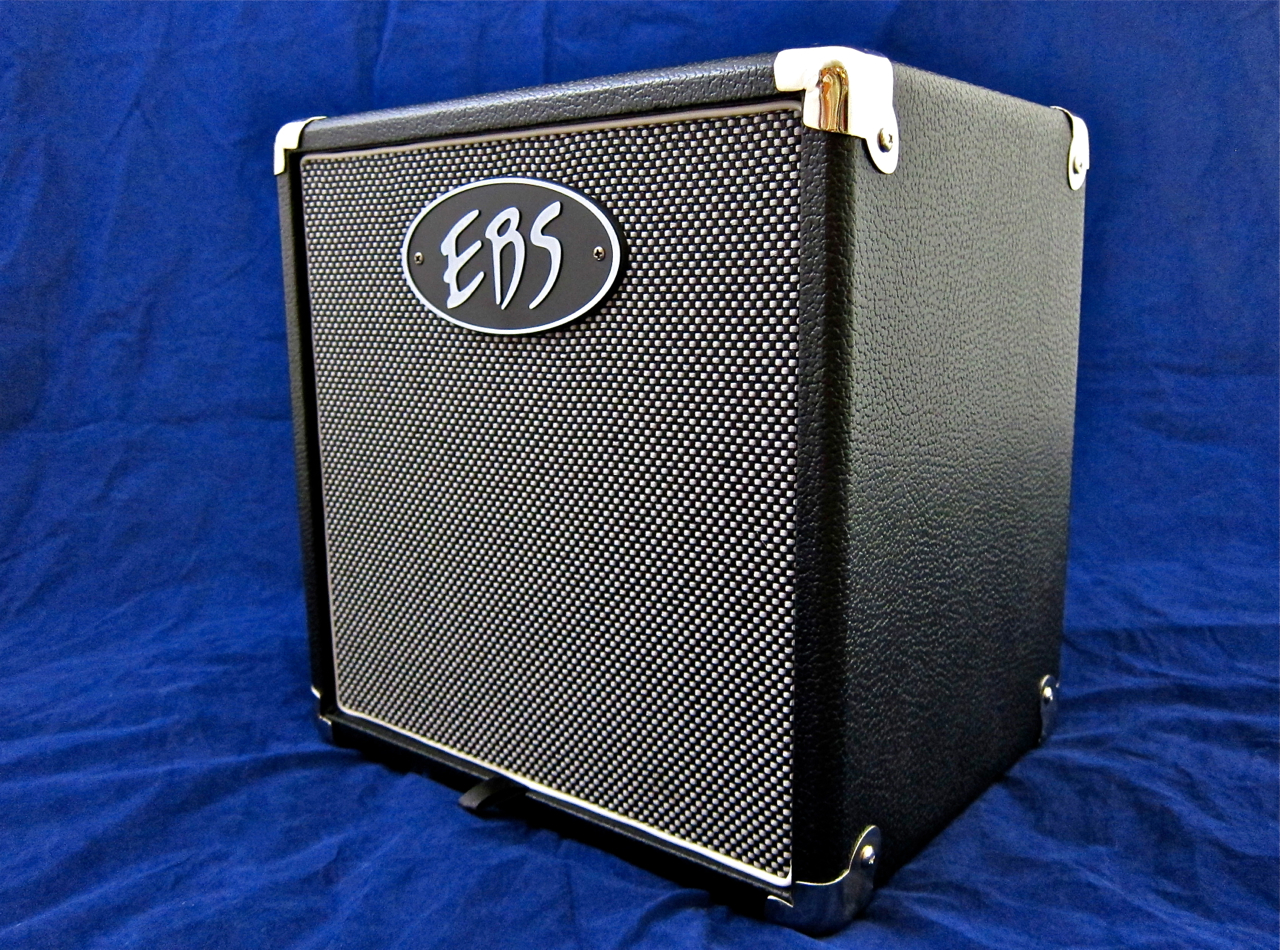
Its eight-inch speaker sits in a front-ported baffle. The stylish grille cloth is attached in a traditional way using velcro.
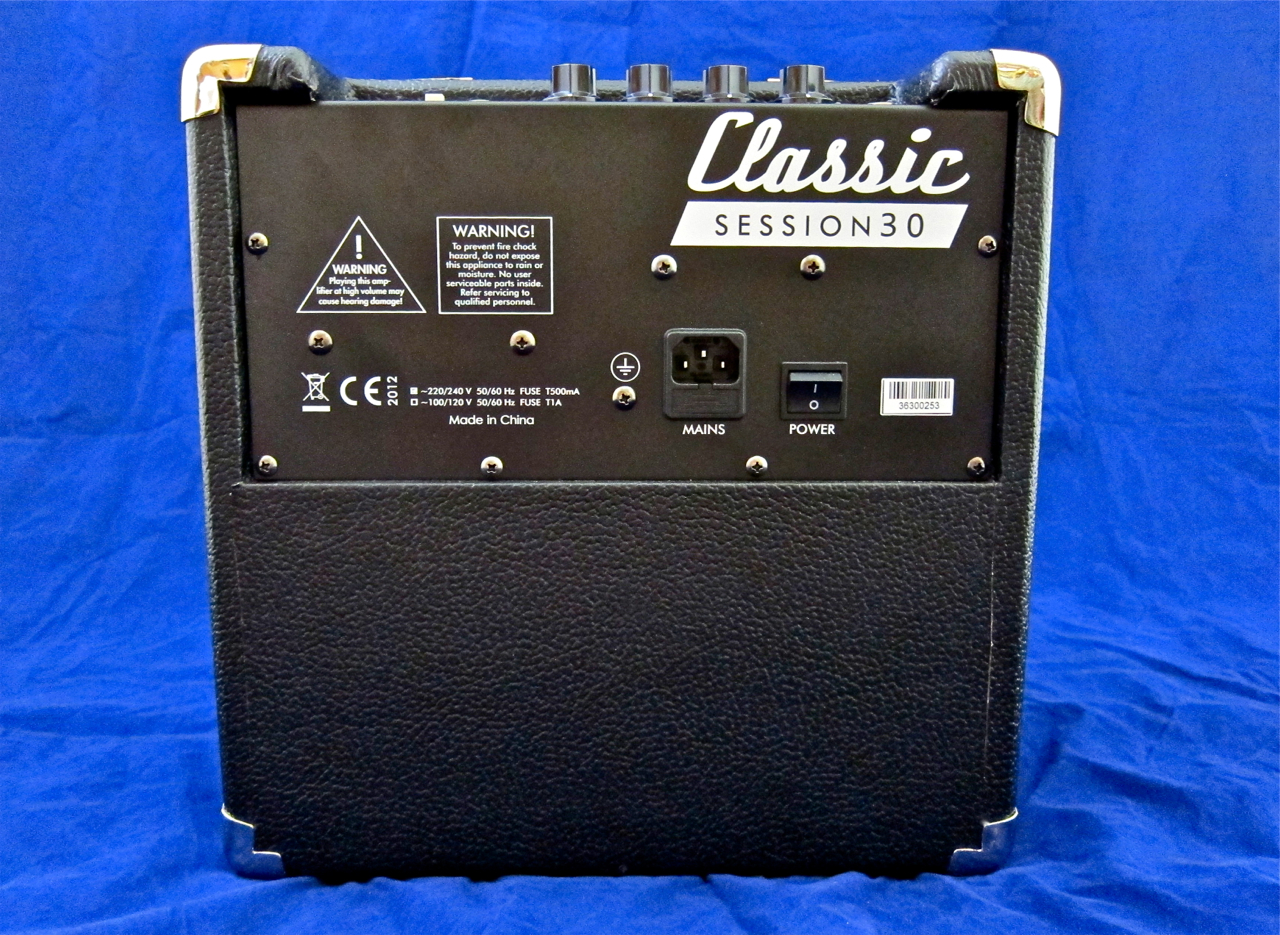
The combo’s back is fully closed. EBS have added a separate grounding point next to the power connector, which may come in handy in the studio for combatting mains hum.
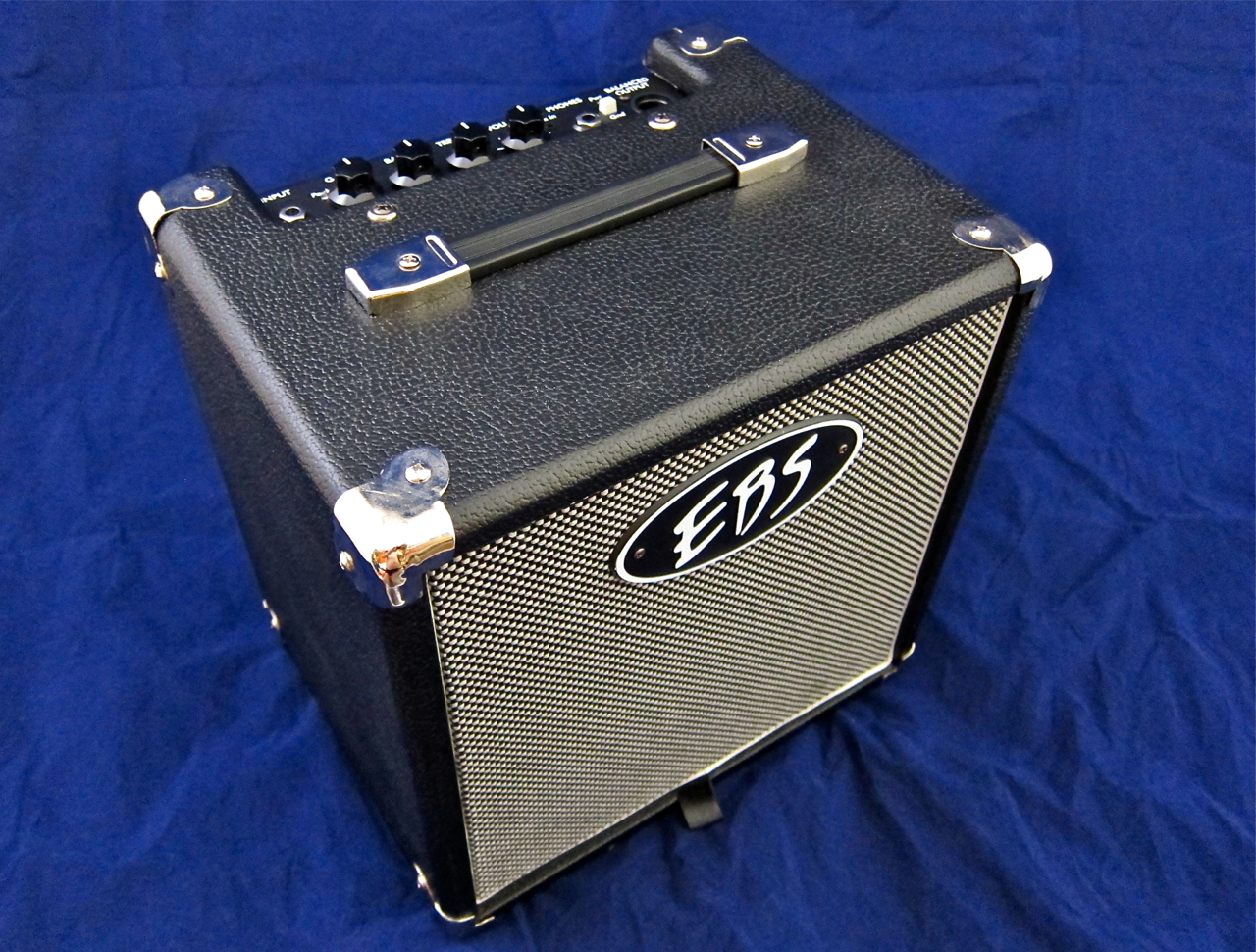
The Session 30 weighs just under nine kilos, so it is very easy to carry around by its top handle.
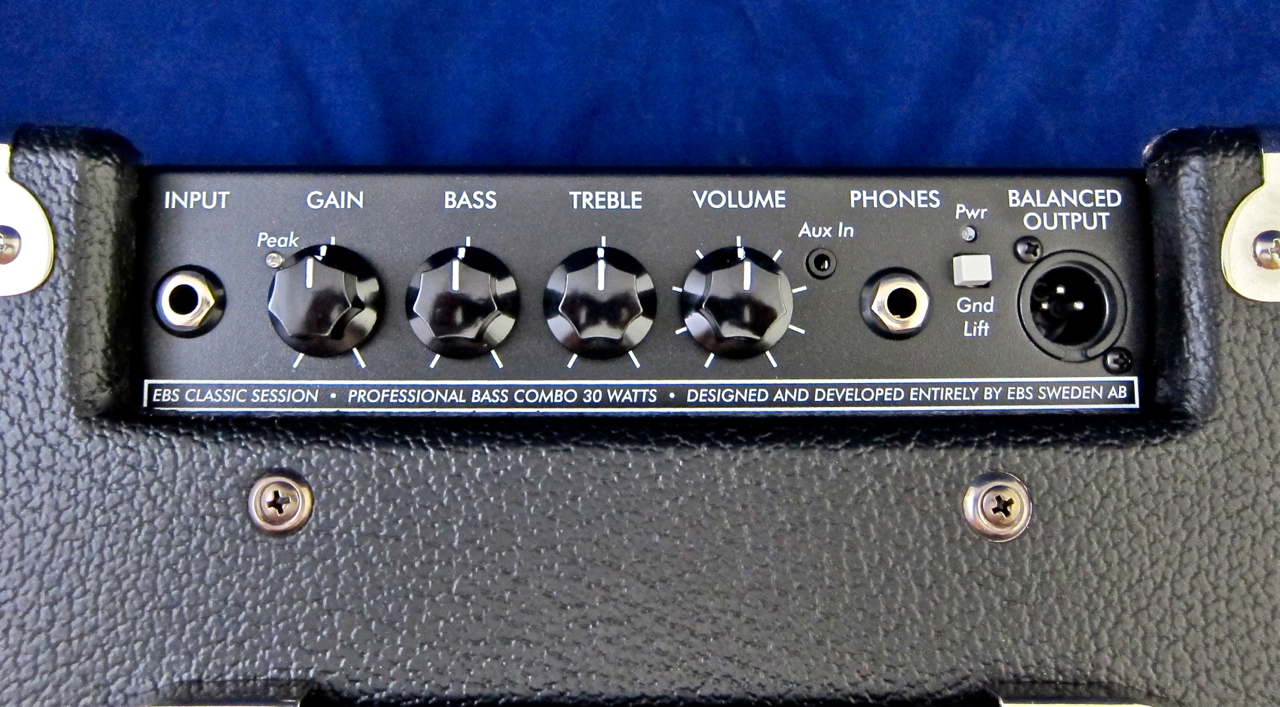
The control panel comprises of four control knobs – with a peak indicator next to the gain control.
For practicing, EBS have added a mini-jack, so you can connect an mp3-player, as well as a full-sized headphones output.
A very rare feature in this price range is the combo’s balanced XLR-output, which makes the Session 30 handy as a studio DI-box with its own monitor. Using the Ground Lift -switch enables you to break possible earth loops safely.
****
It would be completely unrealistic to expect a mighty roar from such a tiny bass combo.
But I must stress that the EBS Classic Session 30 really delivers the good in terms of its sound quality. This isn’t a murky-sounding piece of junk, but a great little tool – regardless of its very fair price.
This little ’un delivers genuine EBS Classic Series -tone at levels fit for tuition and home use. The bass register is warm, the mid-range tone clear, and the top end has a nice, soft silkiness to it.
The eight-inch speaker and small cabinet will show you the white flag, if the combo is taken to its limits, by vibrating and buzzing, but used sensibly, the EBS Session 30 holds its own nicely.
The combo’s XLR-output works great, and sends a healthy, pristine signal to your console or sound-card.
In my opinion, the EBS Classic Session 30 is a fine little practice amp and a handy tool in the small project studio.
****
The sound bites were recorded by mixing the combo’s DI-signal with the sound picked up by a condenser mic placed in front of the speaker:
****
EBS Classic Session 30
169 €
Finnish distributor: F-Musiikki
****
Pros:
+ value-for-money
+ size
+ weight
+ sound
+ DI-output
****

****

The Zoom Q2HD (current rrp in Finland: 205 €) is the company’s brand-new lightweight video recorder. Aside from full-HD video recording this new unit also offers MS-stereo.
In MS-stereo two different microphone types are used to create two discrete signals, called Mid and Sides. The advantages of MS are that placement of the two mics in relation to each other isn’t as critical for overall phase coherence as in other techniques, and that you can adjust the amount of room in relation to the mid-signal during mixing.
Classic MS-stereo uses a cardioid microphone for picking up the mid-signal with a bidirectional mic turned 90 degrees (= shooting sideways) to record the side-sound. You will get a stereo sound picture from these two discrete signals by ”decoding” them: The mid-mic’s signal will be sent to the mixing console and panned dead centre. The sides-mic’s signal must be split to two channels, with one being panned hard left, and the other hard right with its polarity switched.
But, luckily, the Zoom Q2HD’s user won’t have to bother with the technical background, because you are only required to set the correct recording level and choose the stereo width you want from one of the five different options (mono to 150 deg) .
Naturally, the Q2HD can also record with Auto Gain (three settings: Concert, Solo and Meeting), and its high-pass filter will keep low end rumbling at bay.
Zoom’s Q2HD records incoming audio as linear wave-files (44,1/48/96 kHz, 16/24-bit) or using AAC-compression (64–320 kbps, 48 kHz). The unit also allows you to record audio-only files.
****

The Q2HD is a typical Zoom video recorder in the sense that it is used with the unit in a vertical position. All inputs, outputs and controls have been placed on the recorder’s sides, while all transport and menu functions are controlled using the buttons below the crisp two-inch display. There’s even a tiny loudspeaker built in for a quick preview of the recorded material.
The camera uses a 3.2-inch CMOS-sensor with five million pixels, and a fixed focus and aperture (1,32 m – ∞, F: 3,2). There are three lighting presets on offer – Auto, Concert Lighting ja Night – a well as a digital zoom (4 x).
The video is processed and stored in H.264/Mpeg-4-format as MOV-files.
****

The Zoom Q2HD is extremely user-friendly: all of its menu-icons fit onto one screen, and the device’s parameters have been kept to a minimum. The unit’s well-made graphics enhance the user-experience nicely.
The Q2HD is powered by two AA-batteries (or rechargeables), giving you approximately two hours of video filming or four hours of audio recording.
****

You can watch recorded video in a slightly larger format using Zoom’s Landscape-feature (see picture above).
Zoom’s Q2HD also lets you perform the most basic of video editing inside the recorder itself , offering Divide- and Trim-operations.
****
Zoom also supply their basic Handy Share software on the mini-SD-card that comes with the recorder. The software works on both Windows- (XP 32-bit or better) and Mac-run computers (Mac OSX 10.4.6 or better).

Handy Share offers basic video editing…
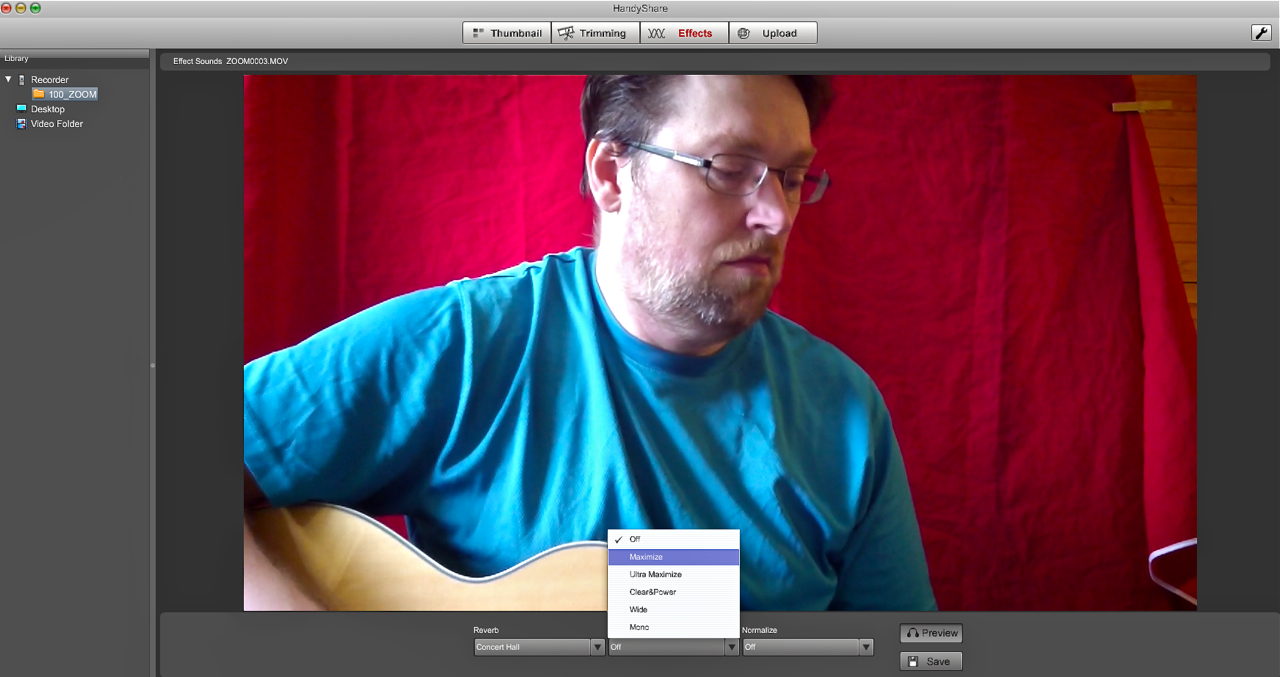
…as well as audio processing using reverb, compression and normalisation. The audio effects can be previewed before rendering them to the video-file.
Zoom’s Handy Share is quite OK for starters, even though many free video editing programmes, like Windows’ Movie Maker or Apple’s iMovie, will offer a lot more features and larger scope for adjustment.
****

The Zoom Q2HD can also be used as a stereophonic usb-microphone, or as a webcam for chatting or live-streaming (for example via UStream). In streaming mode Zoom’s handy delay-parameter allows you to compensate for audio-video-offsets (bad synchronisation).
****
In my opinion the Zoom Q2HD is a nice little tool for making You Tube -videos.
Although the video quality of some digital still cameras is even better than that of the Zoom, the Q2HD’s far superior audio will swing many buying decisions.
The Zoom Q2HD’s clean and clear audio will enable you to make full-HD net videos you can listen to, as well as watch.
The following audio snippets were recorded to give you an idea of what the different stereo-width settings sound like. The distance between the Q2HD and the acoustic guitar stays the same from clip to clip:
****
Zoom Q2HD
205 €
Finnish distributor: Studiotec
Pros:
* HD-video
* quality MS-stereo sound
* easy to use
* lightweight
* can also be used as an MS-stereo usb-microphone
* can be used to stream video
****

****

One of Roland’s many new products for 2012 is the GA-112 – a COSM-based guitar combo using the company’s modelling technology to come up with a sound all of its own.
The GA-112 – as well as its larger 2 x 12″ brother, the GA-212 – utilises a specially designed COSM-model called Progressive Amp. Progressive Amp promises to give you the full scale of possible amp tones – from ultra-clean all the way to bone-crushingly dirty – from a single digital amp model, using only the gain-control and the combo’s EQ.
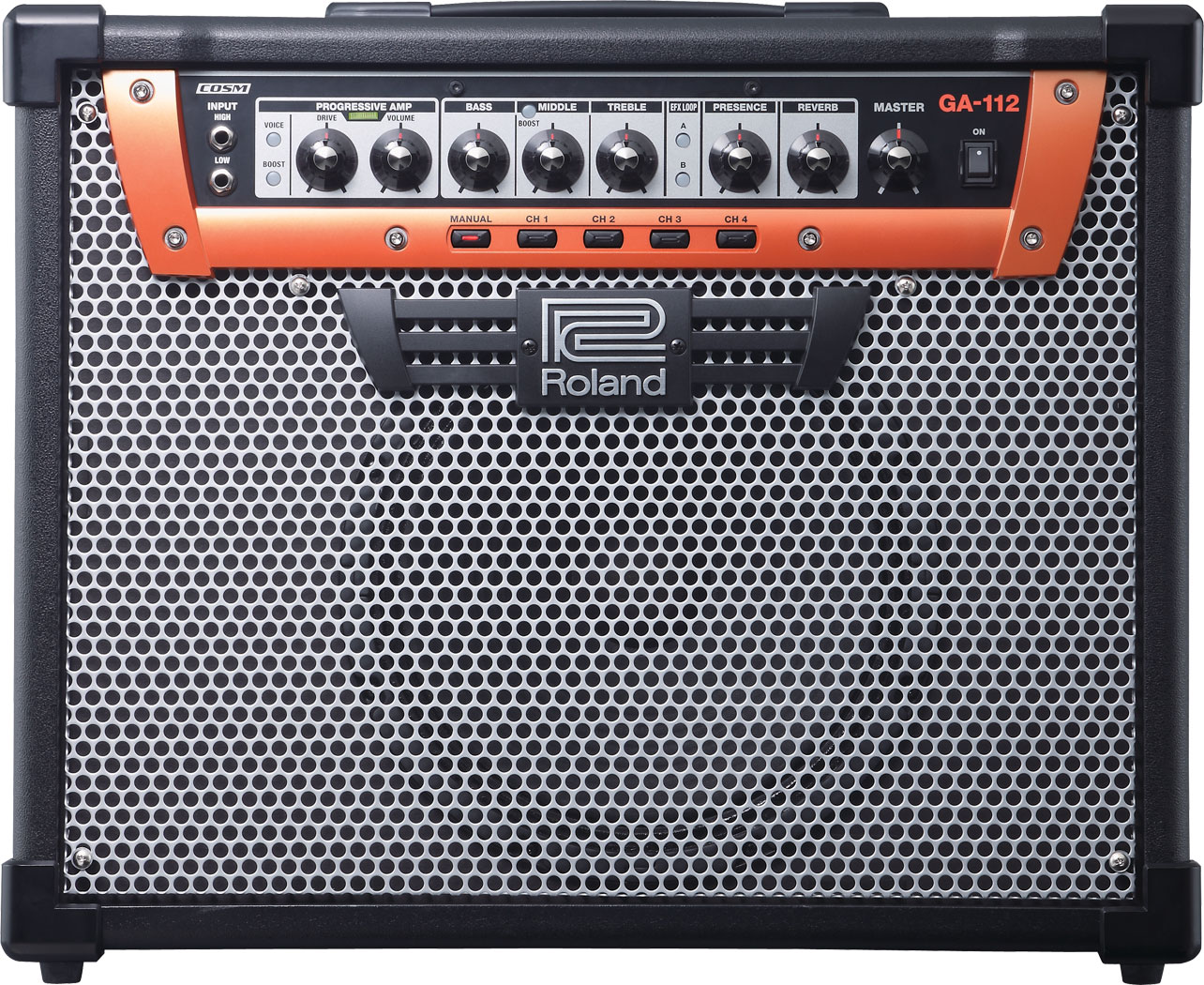
The 100-Watt Roland GA-112’s (current price in Finland: 844 €) looks combine many features from older Roland guitar amps.
The front panel is somewhat reminiscent of the legendary Jazz Chorus combo, while the cabinet’s black vinyl cover, as well as the extremely sturdy metal speaker grille have been borrowed from the company’s long-running Cube-range.
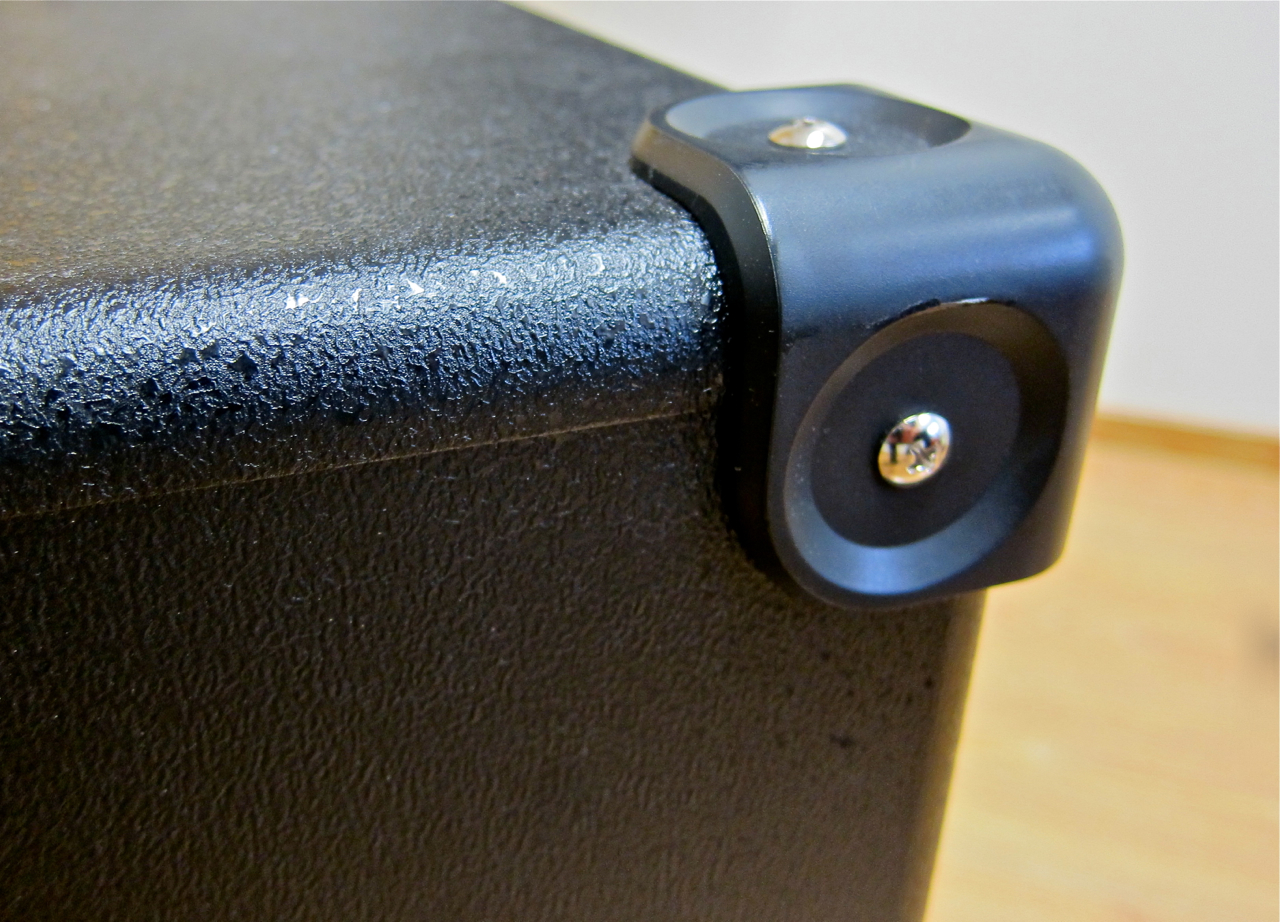
The GA-112’s chunky plastic corner protectors are designed to withstand the rough life of a gigging amplifier.
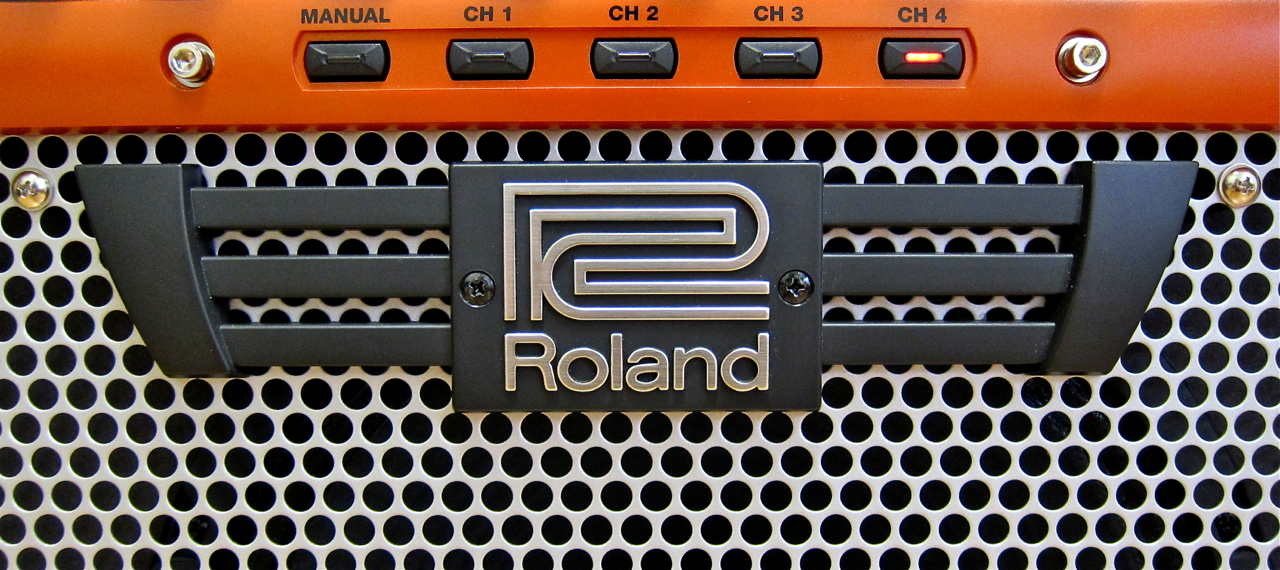
This Roland is equipped with a fully-digital preamp section offering a whopping five channels – four user-storable selections, plus the current control knob settings in Manual-mode.

Regardless of all the digital circuitry inside, the GA-112’s front panel is very clean and easy to understand. All push-buttons are backlit, and all the knobs for storable parameters (meaning all, but the Master Volume) have been equipped with red position LEDs. This combo’s settings are easy to read even on a completely darkened stage.
Apart from its two input jacks, the front section offers two buttons – Boost and Voice, which adds a slight loudness EQ-curve to the signal.
The Progressive Amp -section’s oblong LED-indicator is a great way to keep you in the picture in regard to the character of the current amp channel/settings, by changing its colour according to the gain setting. A green light, for example, tells you that you are paddling safely in totally clean waters, while purple or white means you are sailing close to distortion meltdown.
The EQ-section is a three-band affair with an added mid-boost for fattening up your tone.
Before travelling onward to the Presence- and reverb-controls your signal can be send to either or both of the GA-112’s effect loops. Both loops’ on/off-status is stored channel-specifically along with all the other channel data, which means that changing channels also automatically switches the loops on or off.
The GA-combo’s only internal effect is its lushly-voiced digital reverb.
Roland’s GA-112 stores all changes to one channel’s settings automatically each time you switch to another channel, which makes the combo quite intuitive to work with.

The effect loops have been placed alongside all the other connectors on the back panel.

You can choose between a parallel and a series signal path for each loop, and set the correct nominal signal level (-10 dB or +4 dB) for your chosen outboard effects.
The back panel also gives you a tuner output and a line level output for connection to a mixer. You can also daisy-chain two GA-112s for large venues.

For full switching control on-stage you have to buy Roland’s own GA-FC-footcontroller, which allows you to switch channels, turn the boost on or off, as well as switch on/off the effect loops and the reverb.
It would have been a nice move, though, if Roland had included a simple up/down-footswitch for channel-switching with the amp.
****
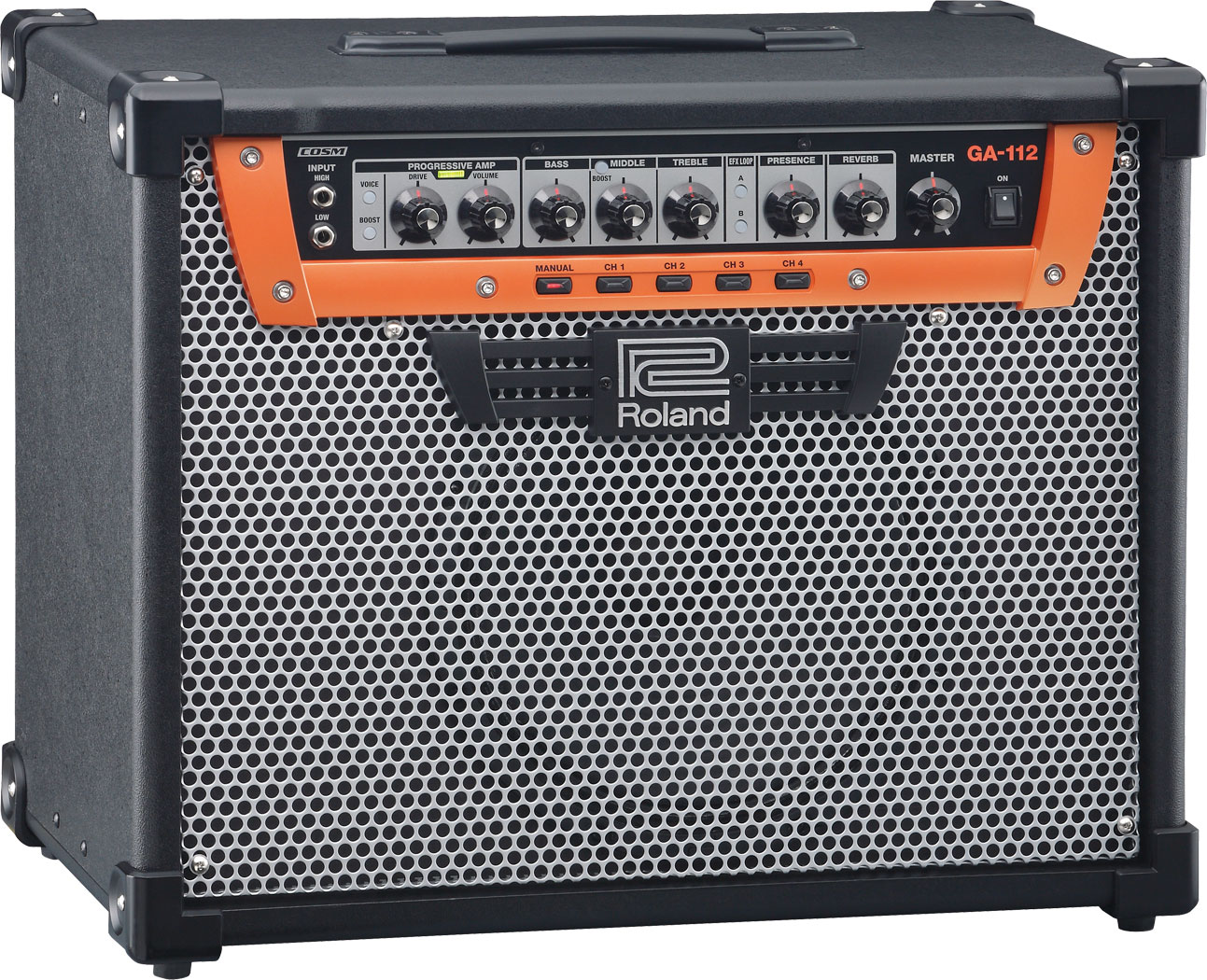
Roland’s GA-112 isn’t your traditional modelling amp, as it doesn’t feature heaps of different models of famous amps, vintage and new, or loads of different internal effects. The approach has been radically different here.
The GA-112’s main advantages are its healthy basic sound, as well as the Progressive Amp’s huge versatility and tweakability, giving you everything from totally clean to full-on metal.
The Roland isn’t about the authenticity of vintage amp models when compared to the physical originals from yesteryear. This is a modelling amp that isn’t modelling any specific amps, but uses it digital power to offer the guitarist a blank canvas with a large palette of colours.
The Roland GA-112 makes a great job of offering most guitarists their sound with the minimal amount of fuss and a practically flat learning curve.
Warm Jazz-cleans or biting Country-picking can be dialled in in no time. Organic and dynamically rich Trad Blues and Seventies Rock can also be had. And the GA-112’s merciless Metal-riffing will have you headbanging until the janitor takes the main fuse hostage.
Roland’s two switching effect loops open up many interesting possiblilities for seasoning your tones.
I suggest you make a beeline for your nearest Roland-dealer, if you are interested in making the GA-112 your personal command centre on-stage or in the studio.
****
Here are a couple of examples using the Roland GA-112 without any external effects:

****
Roland GA-112
844 €
Finnish distribution: Roland Scandinavia
****
Pros:
+ basic sound
+ extremely wide scale of gain
+ programmable
+ two effect loops
+ power
+ sturdy build
Cons:
– footcontroller optional
****

****

A pre-aged guitar – to some people it’s the daftest idea ever, while others think relicing imbues the instrument with its own type of charm.
But one thing is clear: artificial ageing is here to stay!
This time we will take a new-old ESP for a spin – the Eclipse II FM FT Distressed.
****

The ESP Eclipse II Distressed (current price in Finland: 1.889 €) is a Japanese quality instrument treated to look and feel like a 50-year-plus veteran of the stage and studio.
The rather realistic impression is achieved not only by dings, dents and scratches, but also by using a laqcuer that looks old and sunken in.

The flip side of the Eclipse II Distressed’s body has also received lots of scratches and a bout of artificial belt buckle rash. The neck, though, has been left fairly clean.
The mahogany looks scrumptious, and the finish does its bit to underscore the lively wood grain.

ESP have restrained themselves from adding over-the-top finish cracks, which is a good decision, in my opinion.
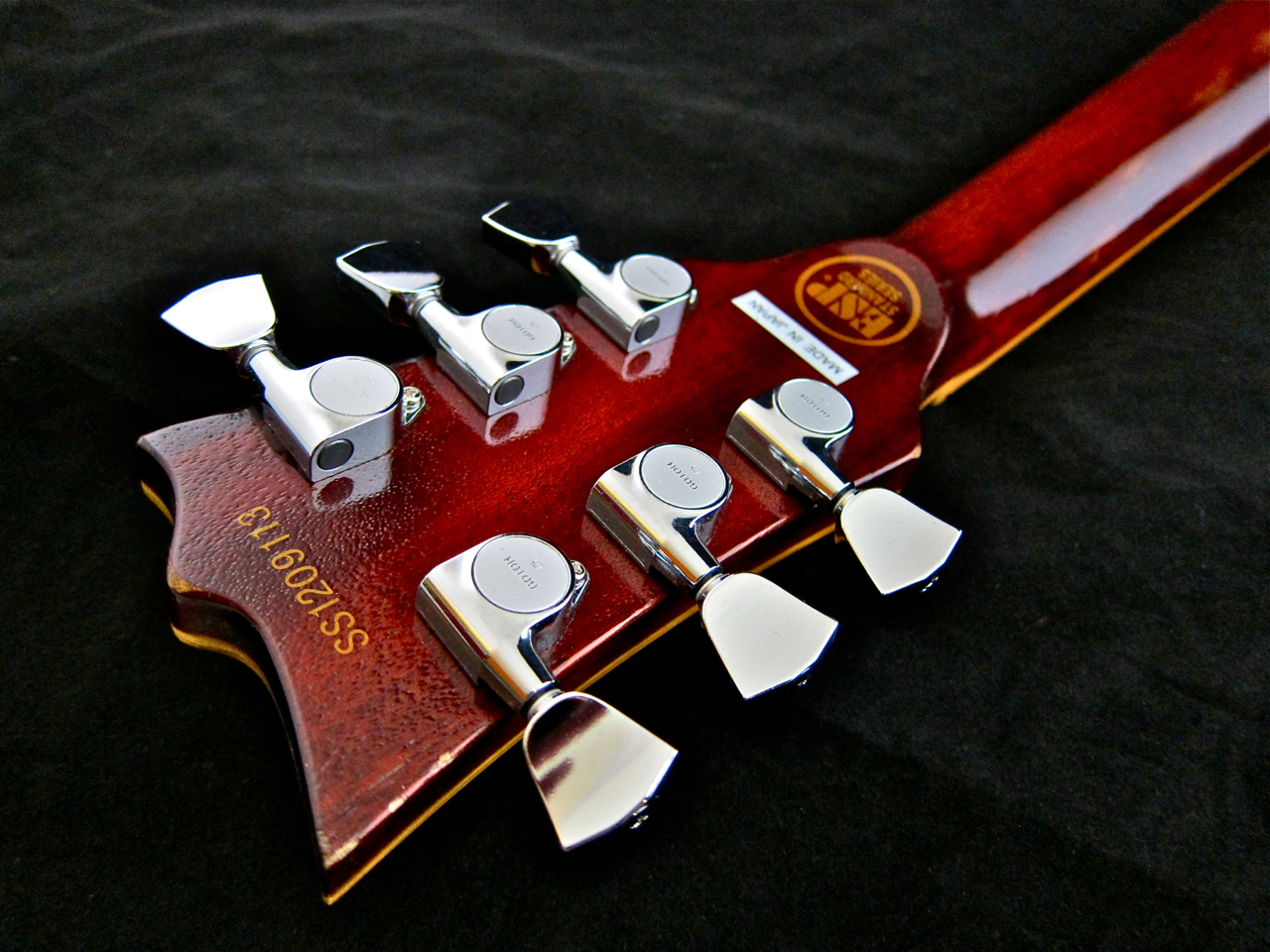
The Gotoh-machines look traditional, but are in fact up-to-date locking tuners.

The Eclipse’s beautiful rosewood ’board and jumbo-sized frets have been left untouched by relicing – this is a brand-new guitar with a pristine playing feel, great!

The neck joint is a traditional set-in job.

This viewing angle makes it easy to spot all the dents in the sunken in finish (click the picture for a larger view).

The Distressed-model comes fitted with Seymour Duncans: The neck unit is a ’59-model, while a Duncan JB -humbucker has been installed near the bridge.
The brushed metal covers fit the ESP’s lightly-aged look to a tee.
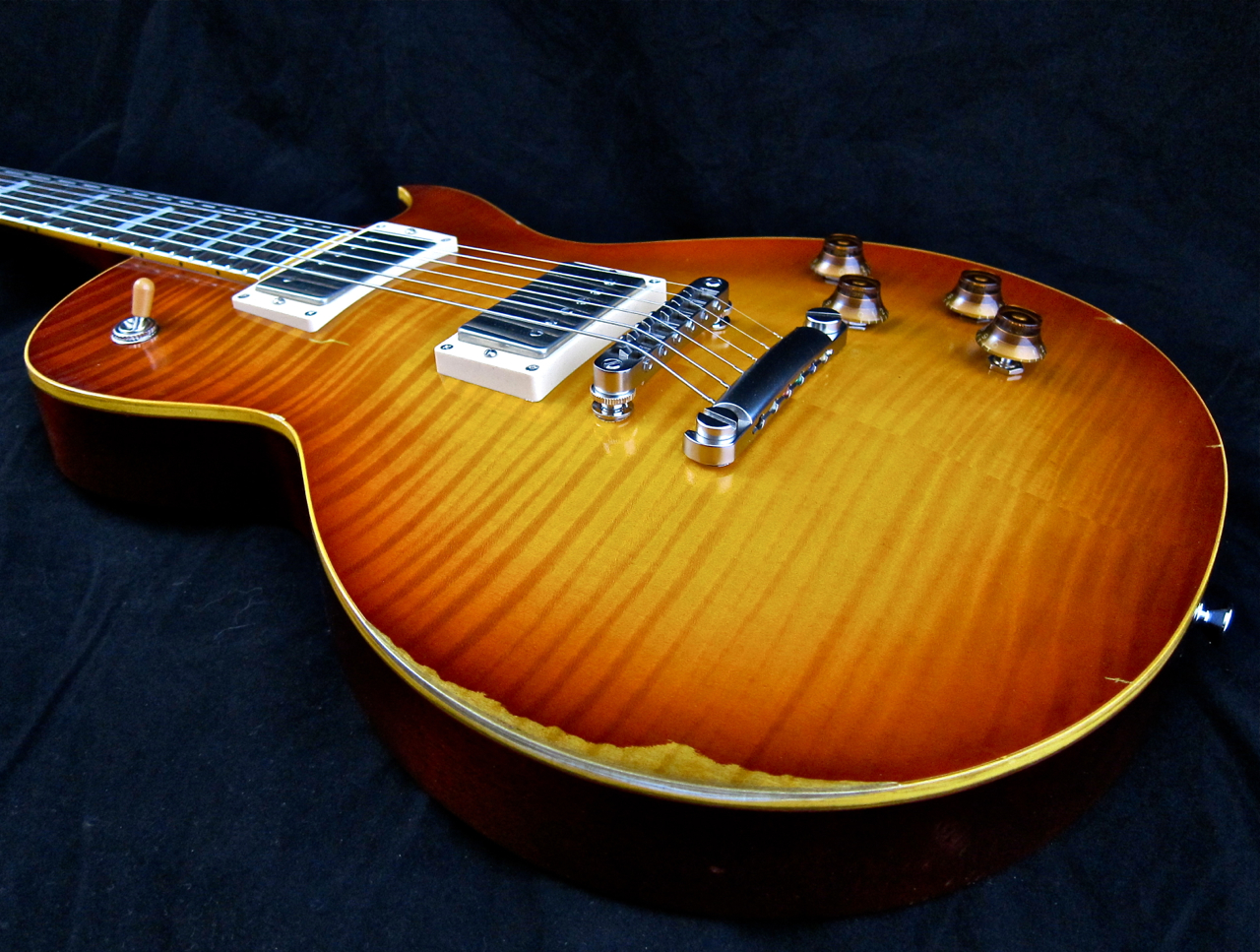
The neck pickup’s tone control is equipped with a push/push-switch that splits the humbuckers in the up-position.

Everything’s hunky-dory in the control cavity – quality parts, clean workmanship and thorough shielding wherever you look.
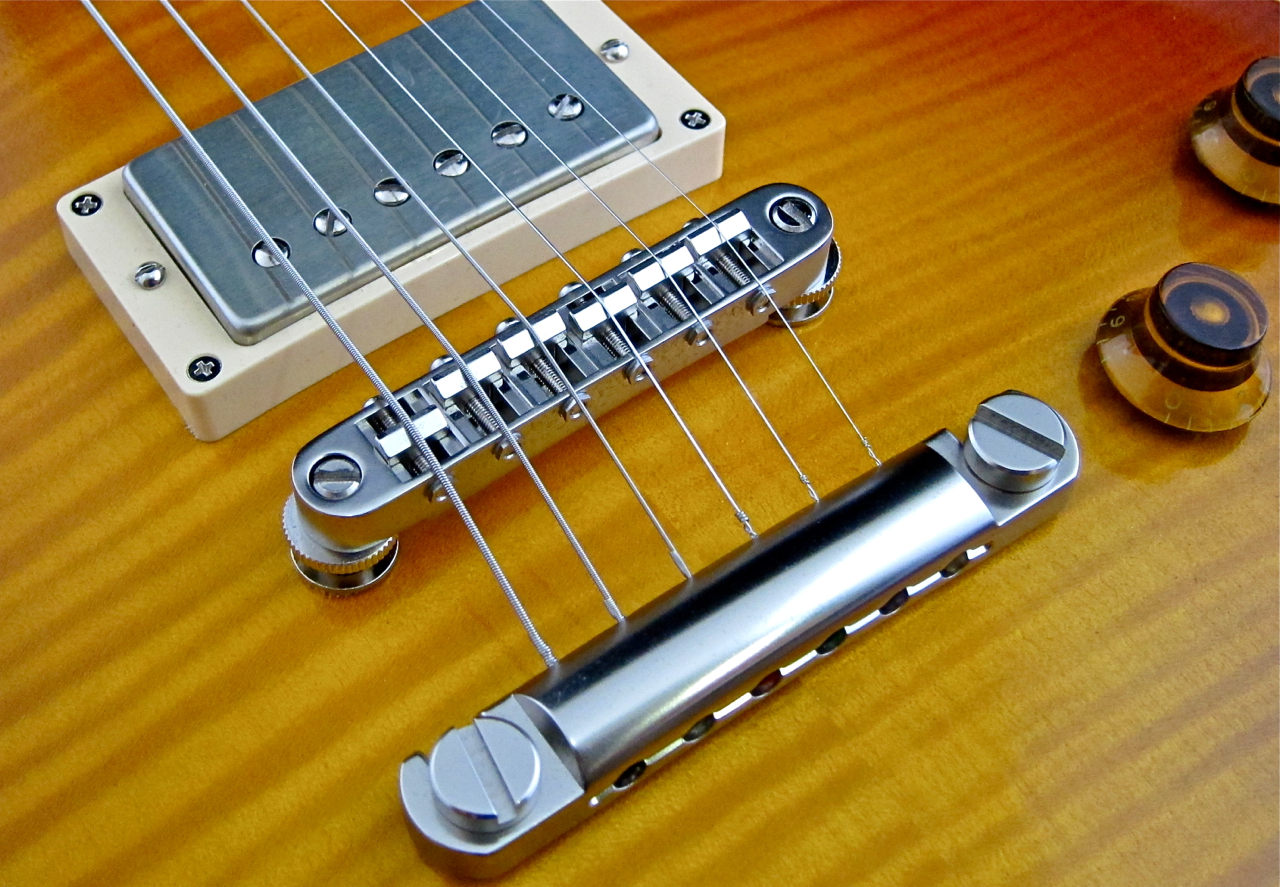
The tune-o-matic-type bridge and the guitars tailpiece are quality parts made by Gotoh.
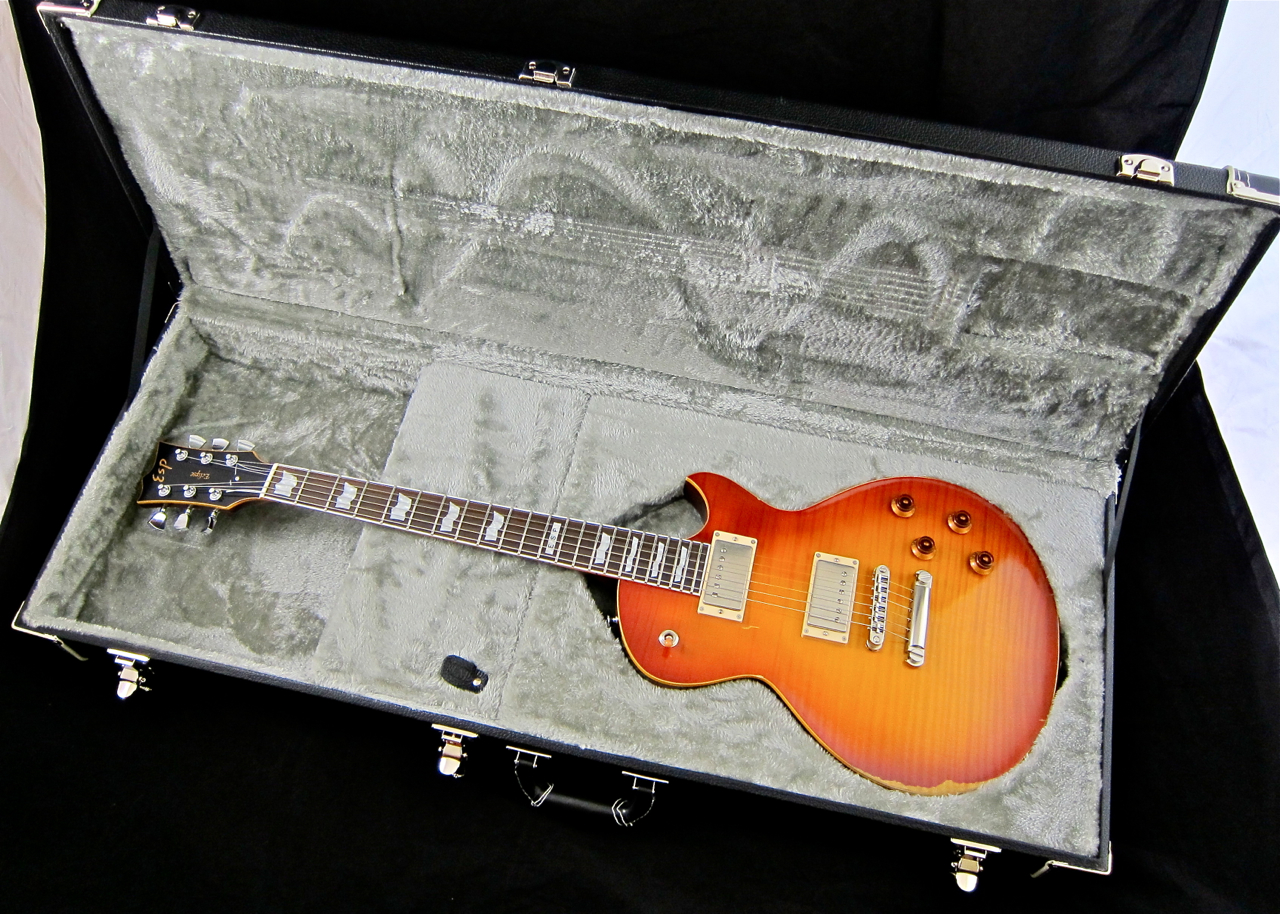
The ESP Eclipse II Distressed is sold in its own, beautiful case.
****

Many players complain about the weight of a good deal of LP-type electrics, which can give you a sore shoulder or a hurting back. I can only suggest that these guitarists take a stoll to their friendly ESP-dealer, if this test sample is anything to go by!
I don’t know whether it’s in the wood selection or whether ESP employ an Emmental-method (like Gibson) for weight-relief – by drilling large-diameter holes into the mahogany before gluing the maple top on – but this ESP is the most lightweight LP-style guitar I have ever played!
The neck profile is a very friendly medium-depth ”D”, not far removed from Gibson’s 60s-neck. The sunken-in finish feels smooth and fast, and the fine fretwork and large fretboard radius make for an easy playability.
It’s hard to gauge whether this is due to the relicing or not, but the ESP Eclipse II Distressed feels really live. The guitar breathes and resonates freely, and its fine acoustic tone has a nice warmth and a sinewy midrange.
Seymour Duncan’s ’59/JB-pairing is an excellent choice for the ESP Eclipse II. The pickups have a good balance between themselves, and manage to convey this instrument’s tonefulness onwards to the amp with fine detail. The ability to split the ’buckers adds three fresh and springy selections to your arsenal.
Both sound examples start with the split neck pickup, followed by the full neck pickup, and so on:
ESP Eclipse II Distressed – clean
ESP Eclipse II Distressed – distorted
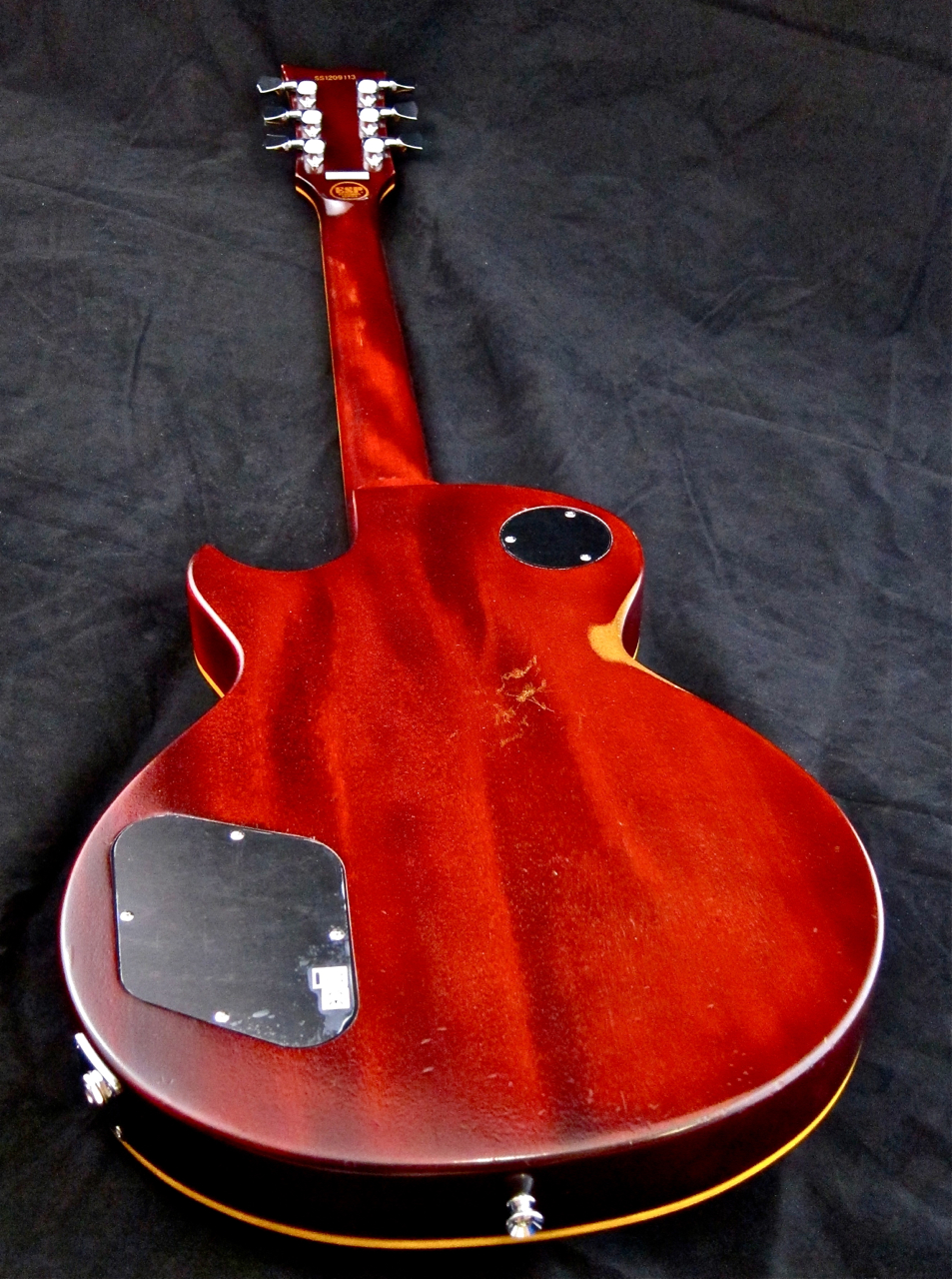
Regardless of your stance towards pre-aged guitars, there’s no denying that ESP’s Eclipse II Distressed is a fine, high-quality instrument, with its own hefty dose of charm. Shame we had to give it back…
****
ESP Eclipse II FM FT Distressed
Current price in Finland: 1.889 €
Finnish distributor: Musamaailma
Pros:
+ looks
+ sound
+ weight
+ playability
+ coil-split
+ workmanship
****

EBS Swedenin uutuus – Session 30 – on firman pienin kombo tähän mennessä, joka on tarkoitettu koti-, äänitys- ja harjoituskäyttöön.
****
Pieni ja kevyt EBS Classic Session 30 (169 €) kuuluu valmistajan vintage-tyyliseen, Kiinassa valmistettuun Classic-sarjaan.
Session 30 tarjoaa nimensä mukaisesti 30 wattia lähtötehoa.
Kahdeksantuumainen kaiutin istuu refleksikotelossa, jolla on auko edessä. Tyylikäs etukangas on kiinnitetty perinteiseen tapaan tarranauhoilla.
Harjoituskombon takapuoli on täysin suljettu. Virtajohdon liittimen ja virtakytkimen viereen EBS on lisännyt vielä maadoituspisteen, josta voi olla hyötyä hurinan minimoimisessa, silloin kun vahvistinta käytetään studioympäristössä.
Session 30:n paino jää alle yhdeksän kiloa, joten kombo on todella helppo kuljettaa kantokahvallaan.
Kombon paneeli tarjoaa säätimiä gainille (jolla on oma Peak-ledi), bassolle, diskantille sekä volumelle.
Harjoituskäyttöä varten EBS on lisännyt Session-vahvariin minijakin mp3-soittimelle ja kuulokelähdön.
Harvinaisuus tässä hintaluokassa on pikkukombon balansoitu XLR-lähtö, joka tekee Session 30:stä myös kätevän DI-boksin omalla monitoroinnilla studiokäyttöä varten. Ground Lift -kytkimellä saa katkaistua tehokkaasti mahdollisista maalenkeistä aiheuttavan brummin.
****
Pikkuisesta, kahdeksantuumaisella kaiuttimella varustetusta harjoituskombosta ei voi odottaa seiniä vavisuttavaa bassotoistoa ja äänenpainetta – se olisi täysin epärealistinen.
Toisaalta täyttyy korostaa, että EBS Classic Session 30:stä lähtee kunnon bassosoundi. Tämä kombo ei missään nimessä ole kumiseva leluvahvistin, erittäin reilusta hinnastaan huolimatta.
Pikkuvahvistin tarjoaa aitoa EBS Classic -sarjan soundia opetus- ja harjoituskäyttöön sopivalla volyymillä. Bassorekisteri on lämmin, keskialue siisti ja yläkerta silkkisen pehmeä.
Kun vääntää master volumen täysille – tai jo vähän aikaisemmin viisikielisellä bassolla – mukaan kuvaan astuu odotetusti myös kombon (ja kaiuttimen) pienestä koosta aiheuttuvaa resonointia ja surinaa, mutta järkevässä käytössä EBS:n pienokainen pärjää mainiosti.
Session 30:n XLR-lähtö toimii sekin moitteettomasti, välittämällä kombon laatusignaalia puhtaasti eteenpäin mikserille tai äänikortille.
Mielestäni EBS Classic Session 30 on mainio harjoitusvahvistin, sekä erittäin kätevä työkalu kotistudiossa.
****
Seuraavat esimerkit on äänitetty käyttämällä samanaikaisesti sekä kondensaattorimikrofonia kaiuttimen edessä että kombon suoraa XLR-lähtöä:
****
EBS Classic Session 30
169 €
Maahantuoja: F-Musiikki
****
Plussat:
+ hinta-laatu-suhde
+ koko
+ paino
+ soundi
+ DI-lähtö
****

Over the last decade Bogner Amplification have achieved a legendary status among fans of boutique amps.
Bogner’s best-known design is probably the Uberschall-model, which is aimed squarely at the connoisseur of high-gain amps. But the company also build several vintage-inspired amps, one of which is the Bogner Goldfinger combo.
****

Bogner’s Goldfinger 45 1×12 (current price in Finland: 2.946 €) is quite large for a 1×12”-combo. Its dimensions are in a similar league as the 2 x 12 Vox AC30. The reason behind the large and deep cabinet lies in the fatter tone it produces.
The Goldfinger’s preamp section has been designed around four 12X7- and one 12AT7-valve, with the main amplifier running a quartet of 6V6-types. The combo is rated at 45 Watts, but its power can be reigned in using the front panel’s Standby/Hi/Low-toggle, as well as the Full/Half-switch around the back.
The top-drawer valve amplification circuit and the combo’s high-class plywood cabinet naturally make themselves felt on the scales. Handling 30 kilos worth of weight using the Goldfinger’s sole top handle isn’t quite a walk in the park.

The Bogner Goldfinger 45 is a two-channel amplifier, with the clean channel called α – or Alpha.
On the right side of the picture you can spot the Alpha-channel’s controls – gain, master volume (”Loudness”), as well as a three-band EQ-section – with the added attraction of not one, but two bright-switches. Pre Bright spices up the signal in front of the gain control, with Post Bright being inserted into the Loudness-circuit. Pre Bright has a sharper and more dynamic character, in contrast to Post Bright’s somewhat more open tone. Both the gain- as well as the Loudness-settings affect the amount of brightness added via the switches – the louder you go, the less top end bite is added.
On the picture’s right hand side you’ll find the Goldfinger’s master section, with controls for reverb, master presence and the Post FX -loop. One of the Bogner-combo’s coolest features is hinted at by the miniswitch labelled Pre FX/Boost – the input has its own effects loop.
You could use the Pre FX -loop for adding a booster, compressor or outboard EQ-pedal to your signal chain, which then can be switched on or off using the combo’s own footswitch board. If you don’t have anything plugged into the Pre FX -loop, you can use the loop’s own buffer amp as a signal booster, with the amplification level adjustable on the back panel.

The name of the Goldfinger’s overdrive channel is Ω, or Omega, and it’s got a slightly different architecture compared to the Alpha-channel.
The Omega-channel offers you two basic charatcers to choose from, called 80 ja Loud 69. Loud 69 is the more vintage-type setting of the pair, giving you a moderate amount of gain with plenty of dynamics, reminding me of early Marshall-amps or the rudeness of a hollering Hiwatt. ”Loud” is a very good term here, as with identical settings Loud 69 is much louder and punchier than the far creamier 80-selection.
Setting the Omega to 80 morphs the Goldfinger into a Classic Rock -aficionado’s dream machine. There’s lot of gain on tap with a good helping of fat and creamy compression, which calls to mind Mesa/Boogie-style Westcoast-sounds or Gary Moore’s singing Marshall-tones.
In addition to its three-band EQ, Omega also offers a control named Gain EQ, which allows you to change the channel’s tonal focus from warm and fat all the way to biting and bright. Because the Gain EQ -control sits at the channel’s front end, its setting also influences the amount of overdrive.

A full-length spring reverb tank is situated in its own bag at the bottom of the cabinet.
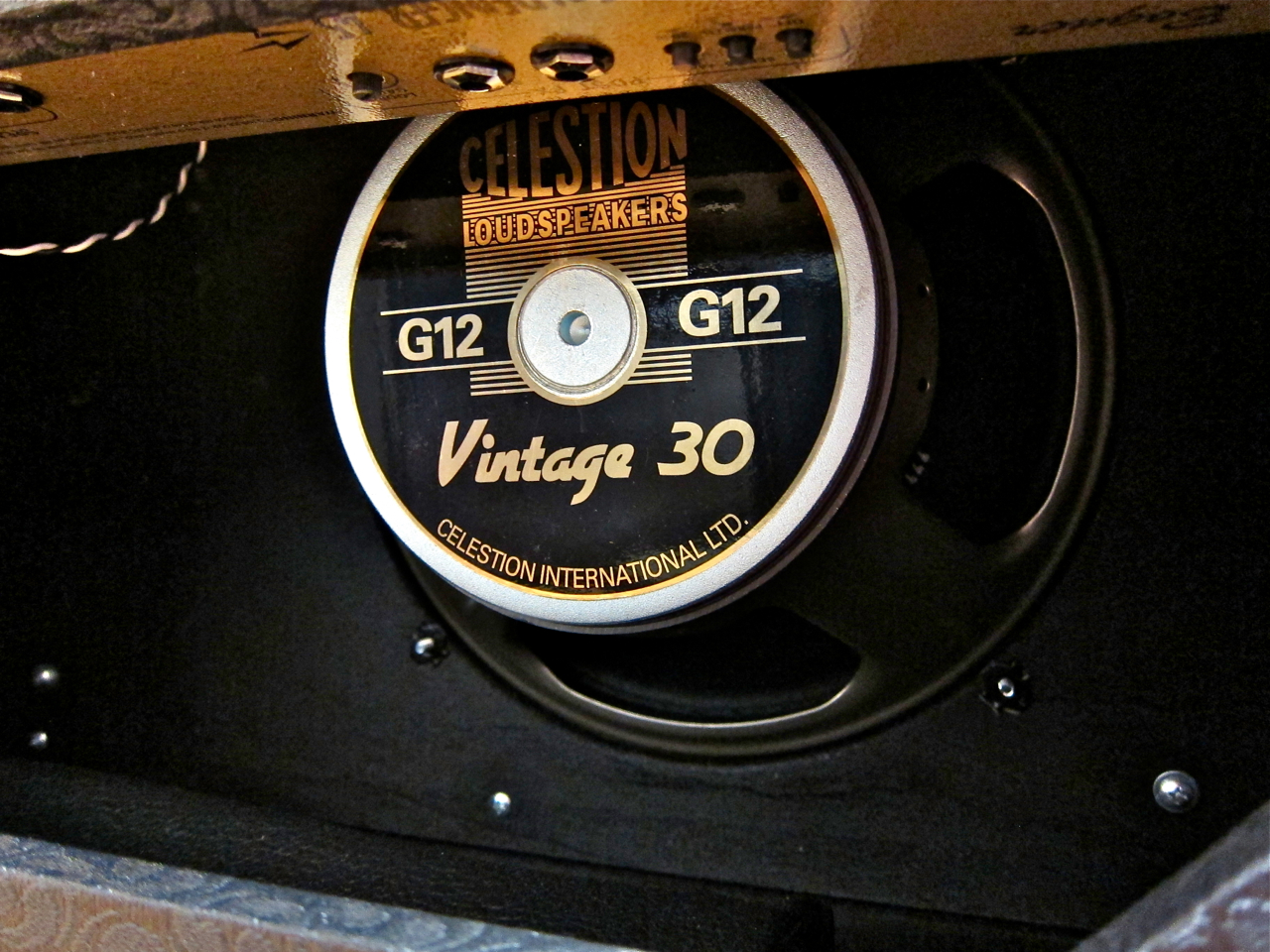
Bogner’s Goldfinger 45 speaks via one of the world’s most-loved speakers – a Celestion G12 Vintage 30.

Because the Goldfinger-combo basically utilises the head of the same name, only flipped on its side, a more fitting name for the back panel might be ”bottom panel” in this case. All connectors, switches and controls face downward, which isn’t so great for accessibility and visibility.

On the right hand side you can find the connectors and the level control for the Pre FX -loop, as well as the socket for the footboard’s screw-in connector.

Bogner’s Post FX -loop offers a plethora of options.
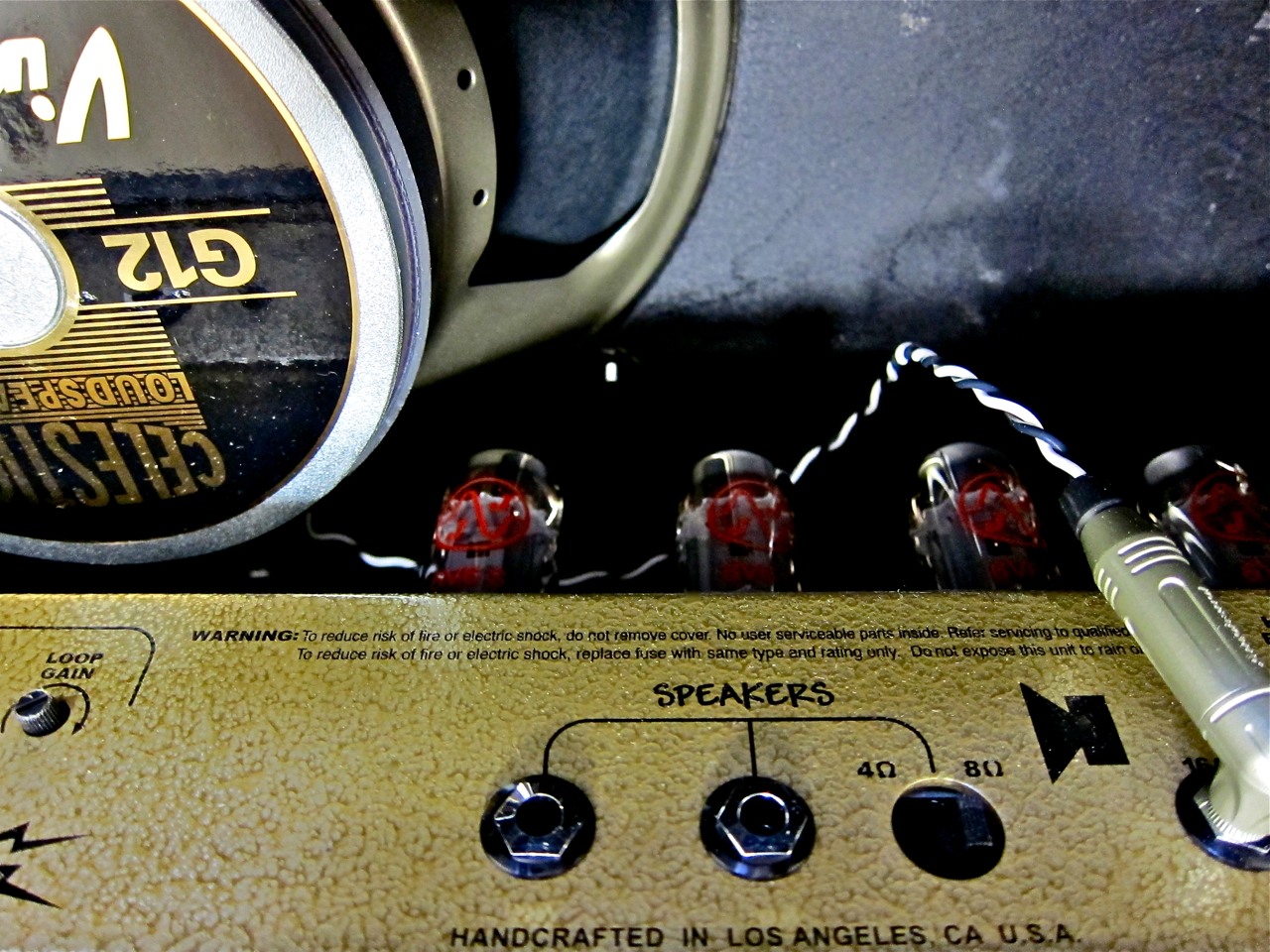
There are two additional speaker outputs on offer, with the impedance switch sitting right next to them.
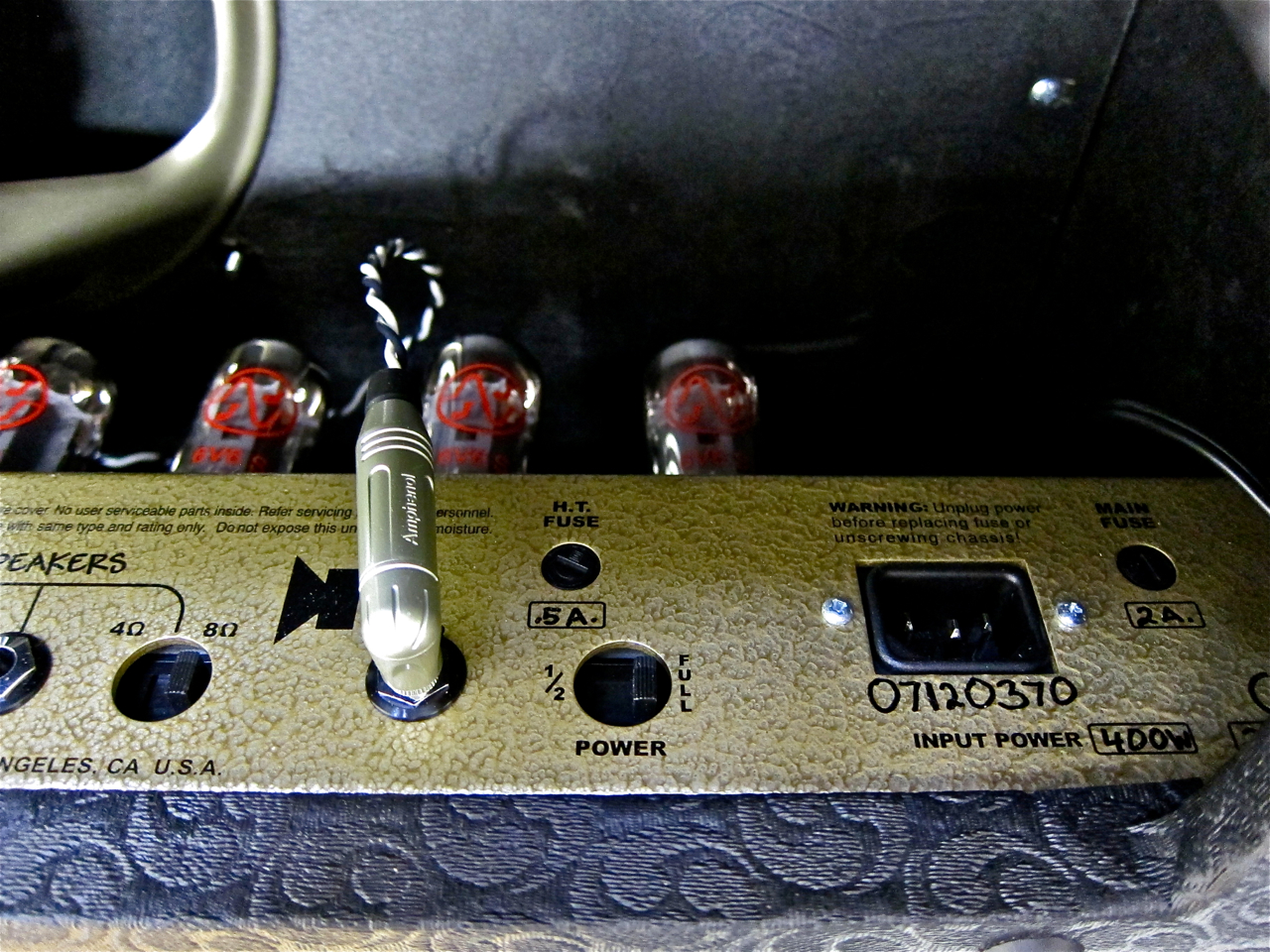
…and last, but not least, the amp’s fuses, as well as the half-power switch for the main amp section.

Just as the combo itself, the accompanying footswitch board is built to last, and sports the same structured, golden finish as the combo’s control panel.
****
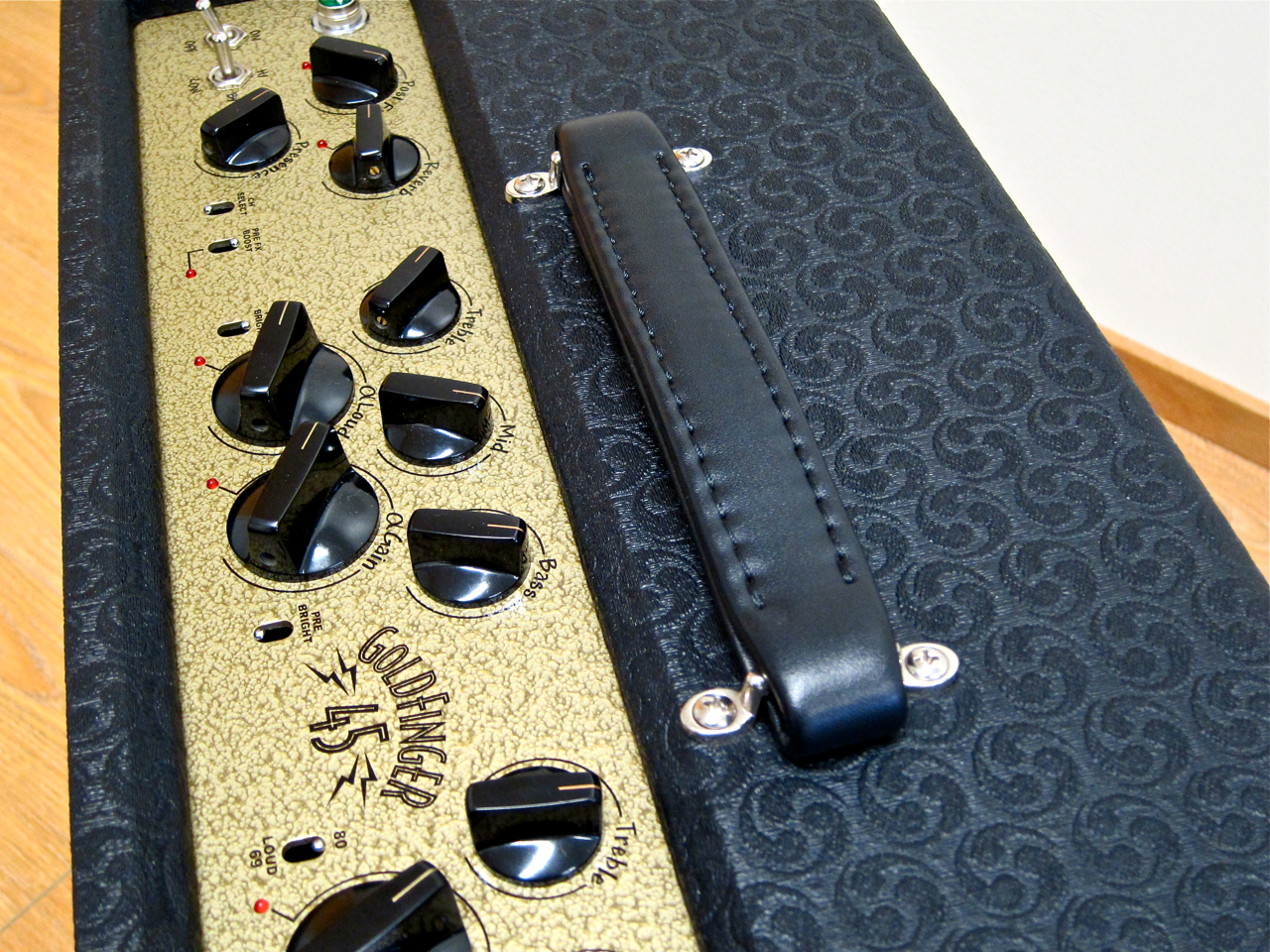
The Bogner Goldfinger 45 is an extremely versatile valve-amplifier. Per se this doesn’t really tell you anything, because in many designs versatility comes at the price of a mediocre basic tone.
The Bogner Goldfinger’s outstanding quality really shows in this respect, as each and every link in the signal chain only serves to enhance this combo’s fantastic basic tone.
True, if you don’t know what you’re doing, you can get bad sounds out of the Bogner, regardless – for example by heaping both Alpha-channel brights on top of a Fender Strat or Tele – but in those cases it’s the user who’s to blame, not the amp.
Used with good taste, though, the Bogner Goldfinger will enhance the basic character of your guitar’s tone to bring out the best in your playing.
The combo’s spring reverb sounds fantastically lush, with the reverb-knob giving you anything from a nice little sprinkle to full-out Surf Mania.
The only two things I am not totally in love with are the downward-facing back panel, as well as the loud thud emanating from the Omega’s Mode-switch, when used with the amp running. According to the owner’s manual this loud noise is perfectly normal, but it still bothers me a bit, not being able to switch between Loud 69 and 80 on-the-fly.
All in all, I feel that the Bogner Goldfinger 45 is a very strong contender for the title of ”Best Combo ever”. The price tag is steepish, but well in line with the amp’s quality and this particular market segment as a whole.
Here are some sounds I recorded with the Bogner Goldfinger combo:
Alpha (Post Bright on) – Hamer Studio Custom
Omega (Loud 69) – Fender Stratocaster
Omega (Loud 69) – Hamer Studio Custom
Omega (80) – Fender Stratocaster
Omega (80) – Hamer Studio Custom
****
Bogner Goldfinger 45 1×12 -kombo
Current price in Finland: 2.946 €
Finnish distribution: Musamaailma
Pros:
+ workmanship
+ sound
+ versatility
+ pedalboard included in price
+ half-power switch
+ reverb sound
Cons:
– back panel placement not very practical
– Loud 69/80-switch’s thud



 Kitarablogi.com – Finland's premier Guitar and Bass blog