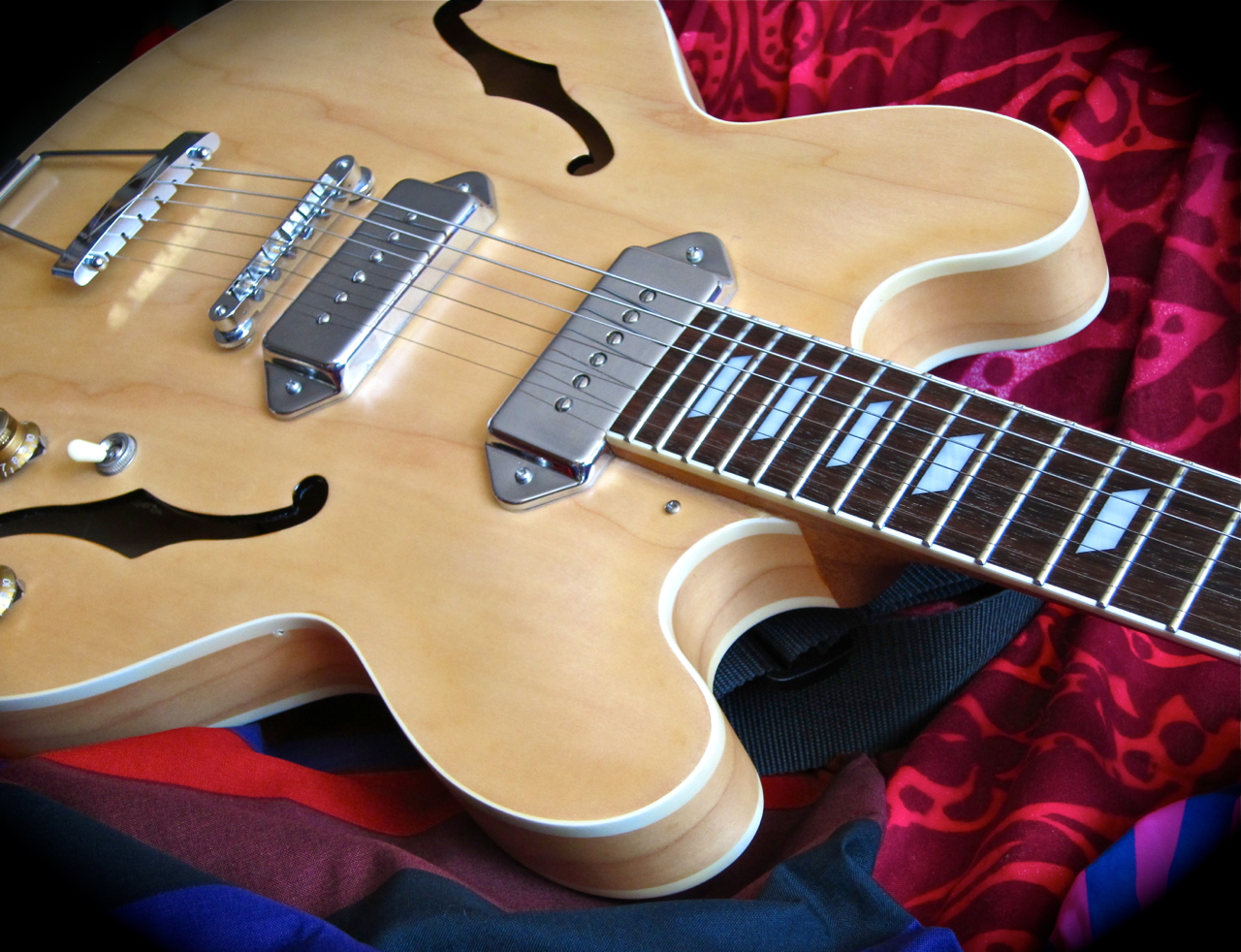
Here’s a nice Epiphone Flying V video

Juttuja kitaroista ja bassoista
****
Here’s an old clip from the Sixties of Paul Simon and his younger brother Eddie performing the instrumental Anji (by Davey Graham).

****
Marshall Amplification celebrate their 50th anniversary this year. To honour the occasion the company is releasing five small anniversary models, produced in limited numbers. Each model of these one-Watt all-valve heads and combos has been designed to represent one era in Marshall-history, both in looks and in sound.

Kitarablogi.com had the pleasure to review the Sixties and Seventies combos – the JTM1C and JMP1C.
****

The JTM1C-combo (current street price in Finland approximately 700 €) nails the look of early JTM-models perfectly. Just like the famous Bluesbreaker-combo, the JTM1C sports a golden nameplate with the old-style block lettering and the famous salt-and-pepper grille cloth of yore.

Valve purists will be delighted at the sight of just one volume- and one tone-control – nothing stands in the way of pure tone.

Even though the anniversary models aren’t wired point-to-point in the vintage style, the electronic lay-out and PCB-build look very sturdy and clean. Two ECC83/12AX7-valves run in the preamp section, while the power amp employs one ECC82/12AU7.
The Marshall JTM1C is equipped with the same, fine Celestion speaker, which had been developed for the Class 5 combo – the ten-inch G10F-15.

The combo’s half-open back looks as clean as the front.

The Power-button next to the two external speaker jacks drops the maximum output of the amp from one Watt to 0.1 Watts.
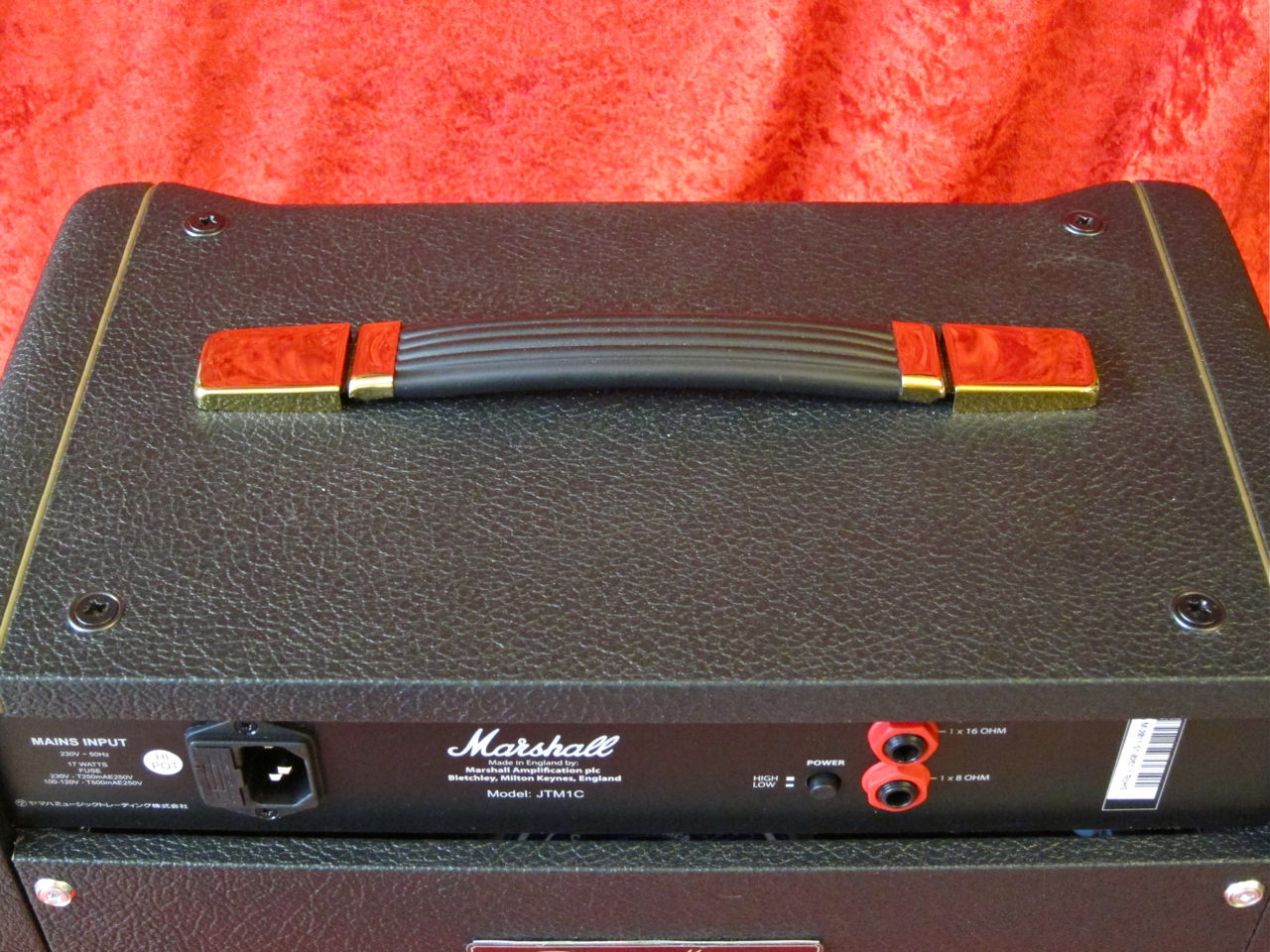
The same Marshall-handle is used on all of the anniversary amps.
****
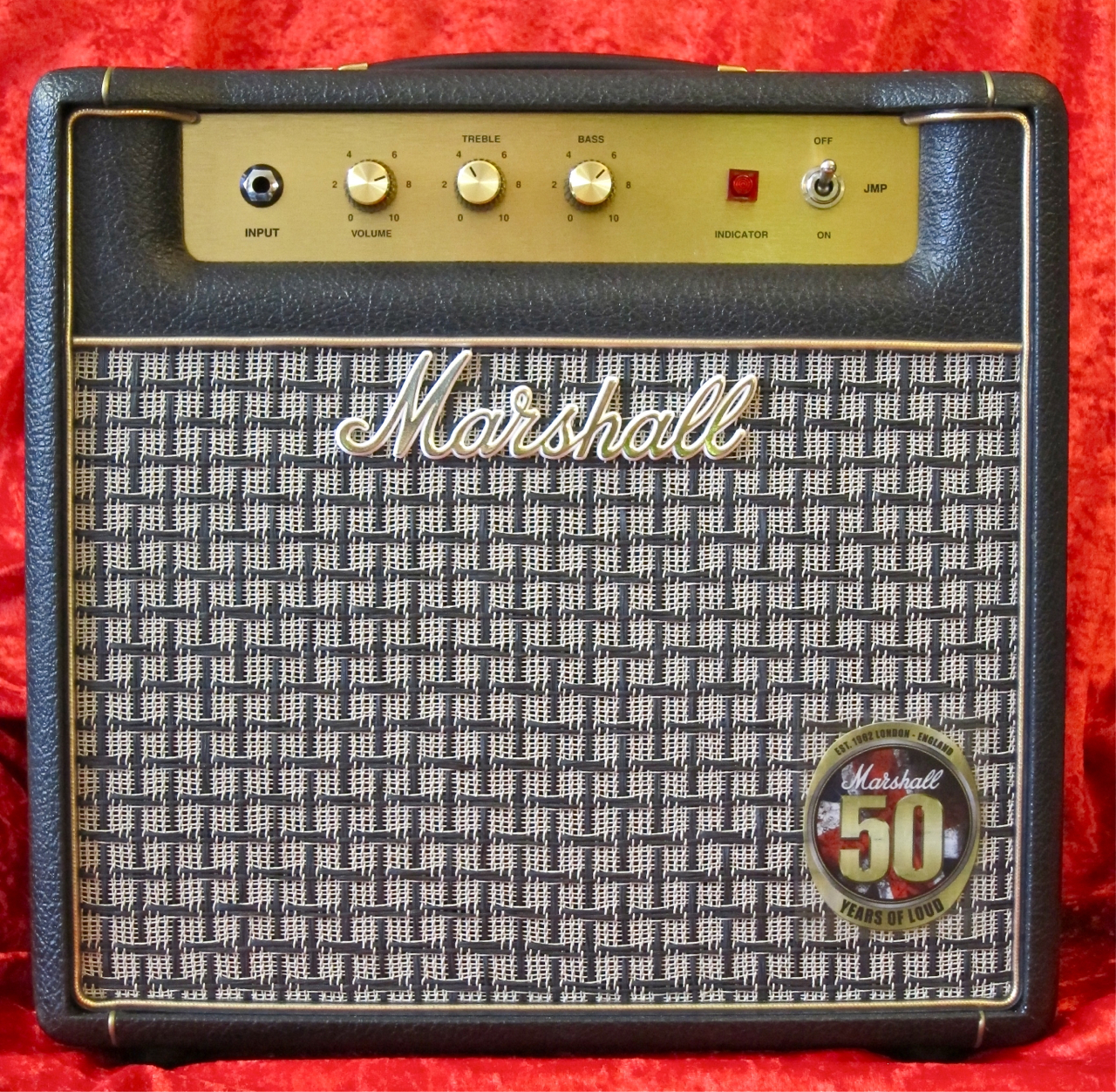
The Seventies are represented by the JMP1C (current street price in Finland approximately 700 €), which displays the famous Marshall script logo, as well as the light grey grille cloth with the dark weave that’s typical of many amps from that era.
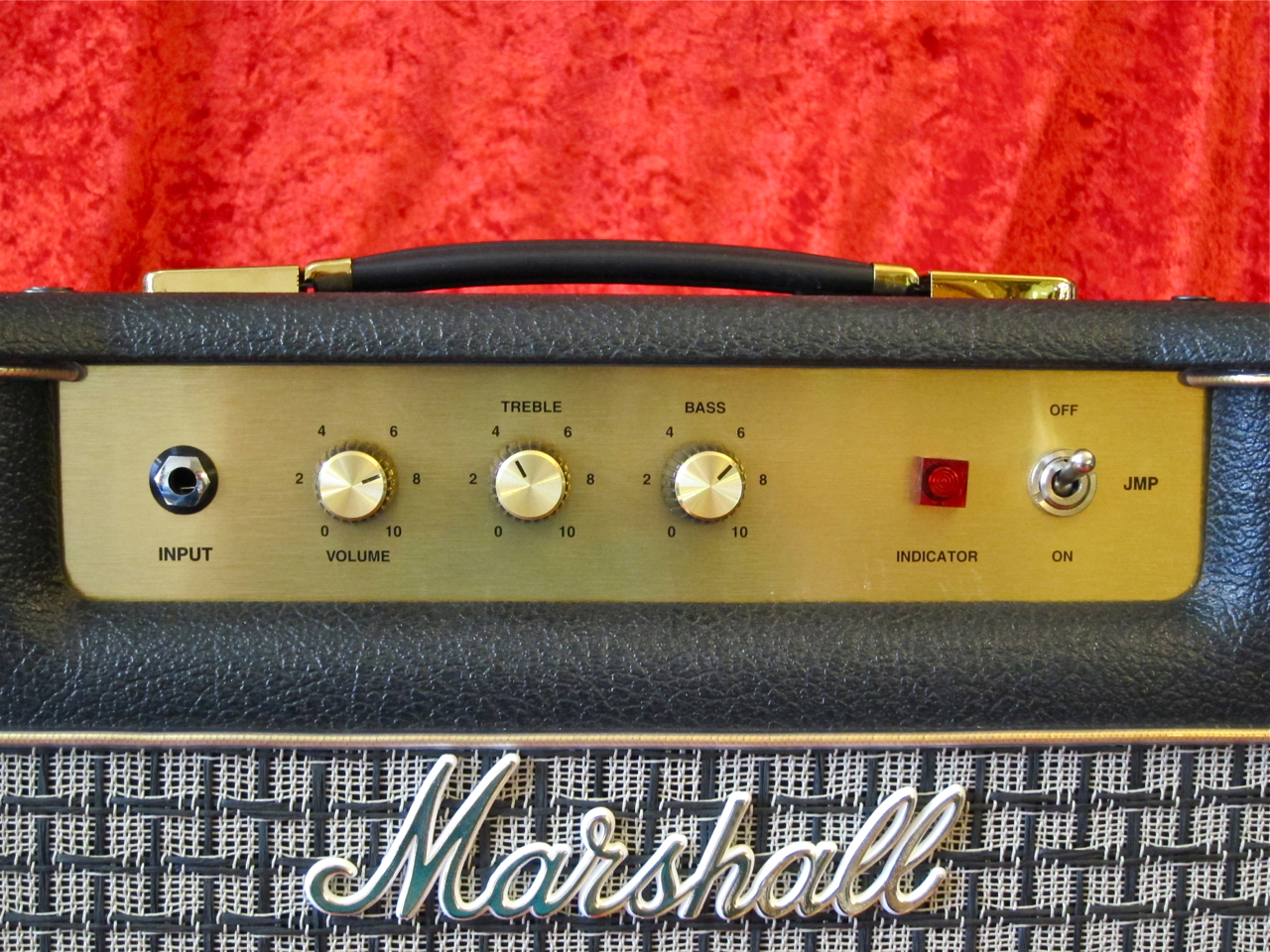
This anniversary model features three controls – volume, treble and bass.
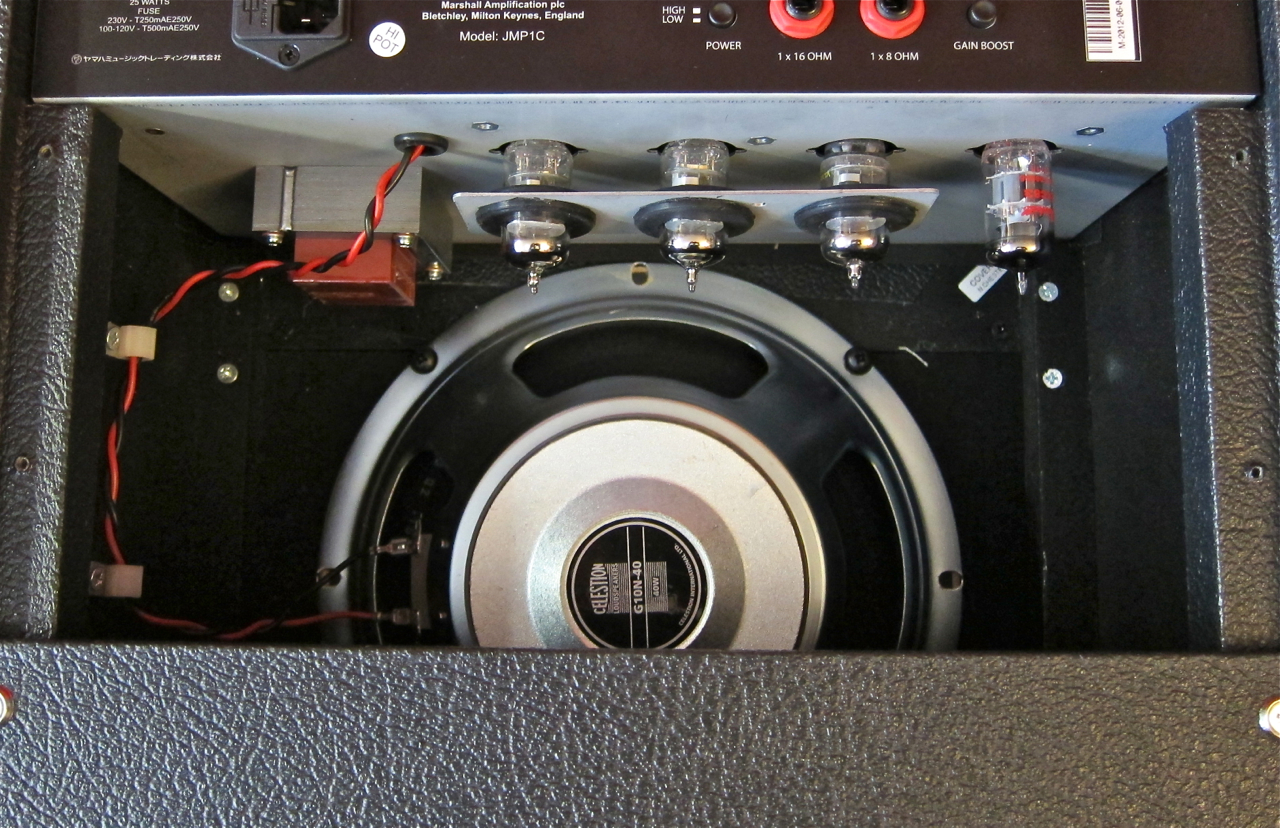
The JMP1C’s design uses four valves: two ECC83/12AX7’s in the preamp section, and two ECC81/12AT7-models for the power stage. The speaker, too, is different here – it’s a ten-inch Celestion G10N-40.
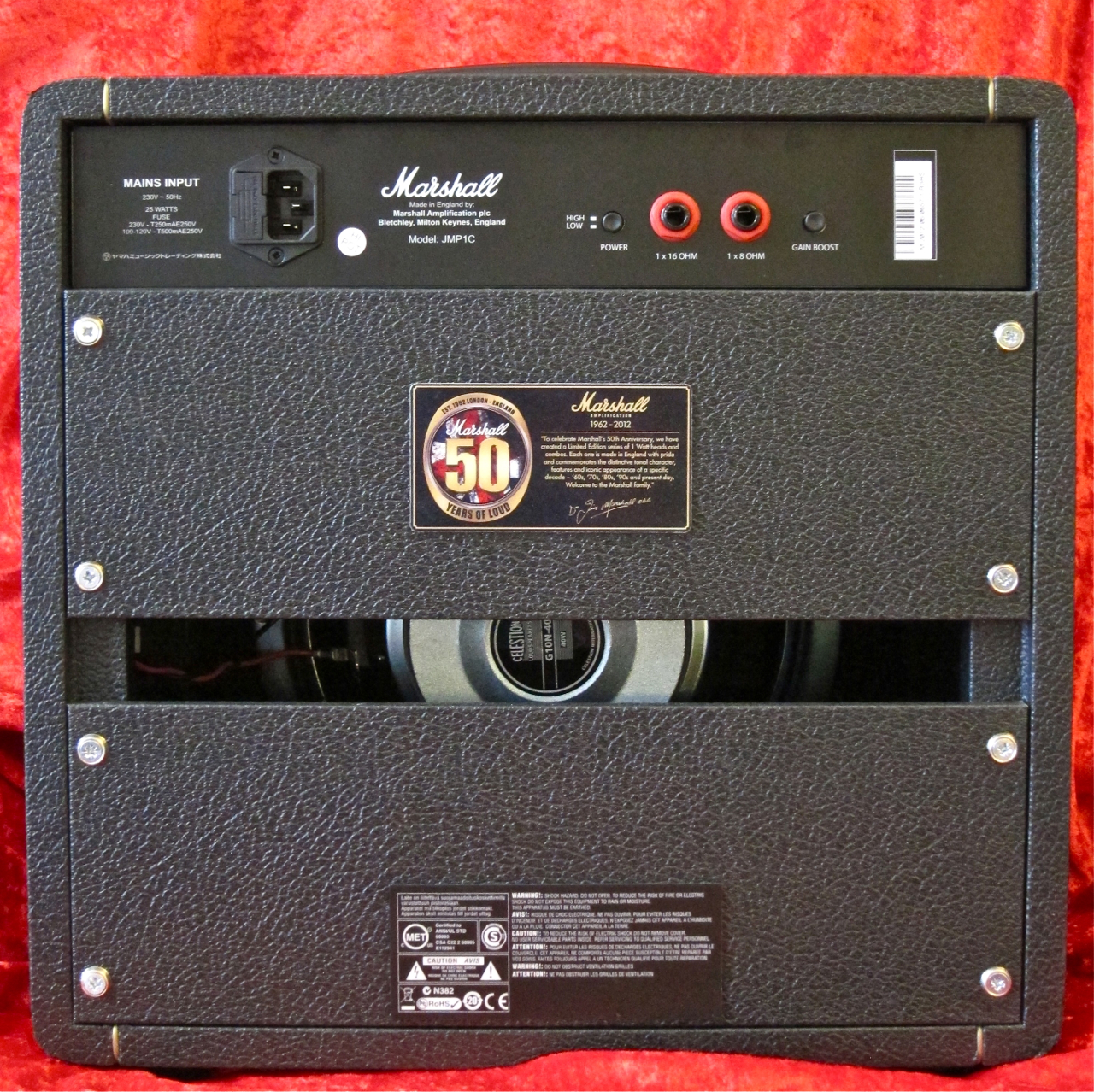
Looking from the back the JMP1C seems to look almost exactly like the JTM1C; but wait…
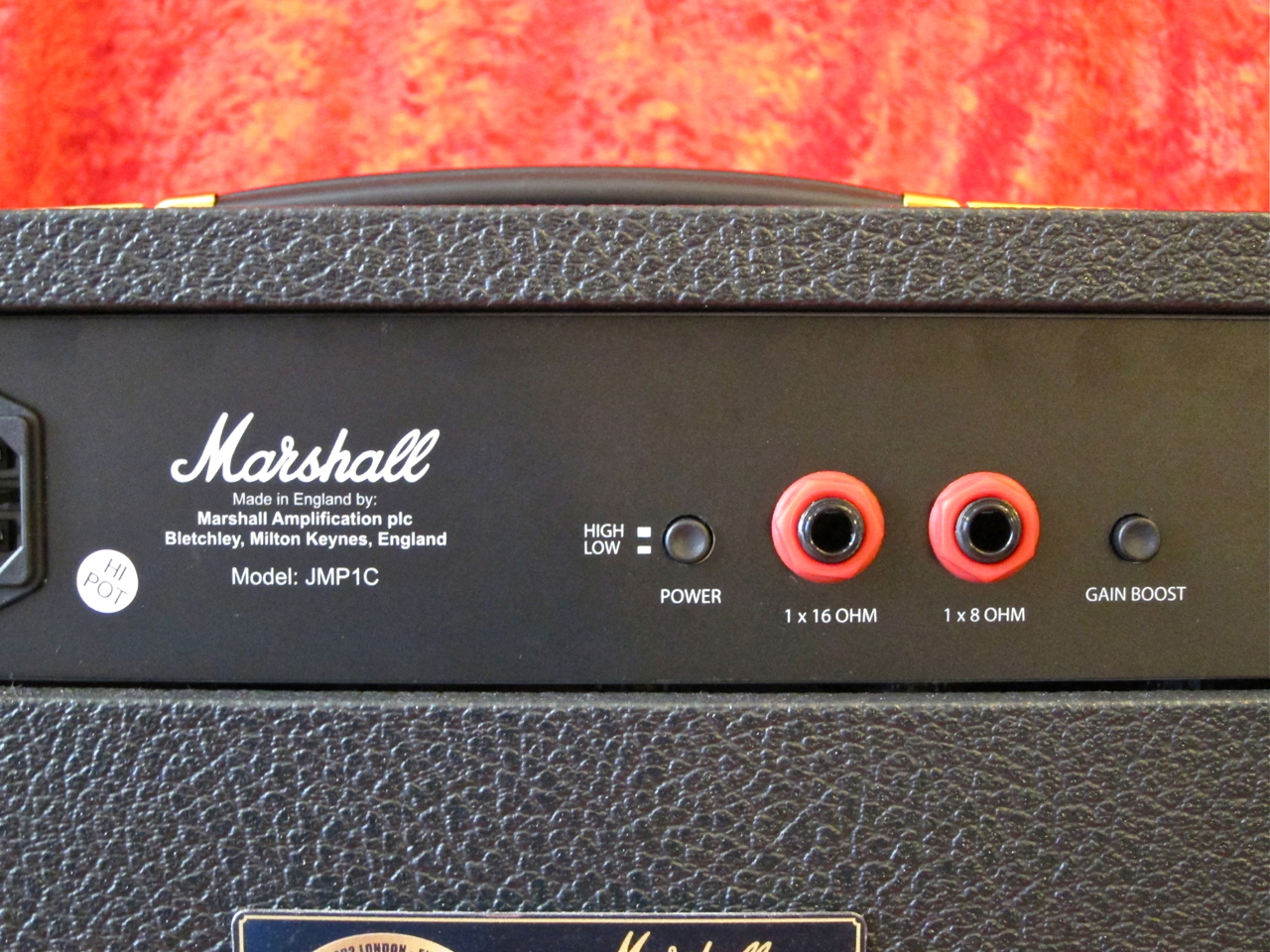
…there’s a second pushbutton next to the speaker outputs, labelled Gain Boost.
****
It’s interesting to note the sonic differences between these two combos.
Set clean the Marshall JTM1C has a fine, open and bright ring to its voice, while the JMP1C is noticeably fatter and more mid-centric. Neither of the combos is endowed with a lot of clean headroom, but I found the Sixties version to be somewhat better suited for clean playing:
Marshall JTM1C – Telecaster/clean
Marshall JMP1C – Telecaster/clean
****
Regardless of what guitar is used, once the volume control reaches about 12 o’clock both amps are definitely in overdriven territory. The JTM’s drive tones are warmer and smoother than those of the JMP. The JMP1C’s overdriven sounds are fresher and crunchier, with a distinct stack-like tonality, in contrast to the JTM1C’s Bluesbreaker-inspired delivery:
Marshall JTM1C – Les Paul Junior/overdrive
Marshall JMP1C – Les Paul Junior/overdrive
****
At full throttle – and with the JMP’s Gain Boost activated – the differences are clearer still: The JTM1C is really creamy and warm, while the JMP1C has a far more aggressive and snarling take on things. You could say the JTM1C is the bluesier alternative, while the JMP1C caters for the classic rock fans:
Marshall JTM1C – Hamer Studio Custom/full gain
Marshall JMP1C – Hamer Studio Custom/full gain
Both combos are rather loud for one-watters. Turned up full the volume is not quite loud enough to annoy your neighbours during the day, but almost, which is where the handy Power-button on the back panel comes in and saves the day.
****
700 Euros for such small combos may sound like a lot of money to some, but you shouldn’t forget two things: Firstly, all anniversary models are built in the UK, and not in China, and secondly, these are limited edition runs, making them interesting for collectors. If Marshall had chosen to release 50- or 100-Watt stacks to commemorate their five decades in business, the price of such models would have been above most of our budgets. With these cool one-Watt amps most Marshall fans are getting the opportunity to acquire their own piece of Marshall-history, without going bankrupt.
I feel the reviewed combos are great little amps that are a fitting tribute to both Marshall the company, as well as to their founder, the late Jim Marshall!
****
Marshall 50th Anniversary -combos
Finnish Distributor: EM Nordic
A big thanks to DLX Music for the loan of the review samples!
****
Marshall JTM1C
Pros:
+ workmanship
+ sound
+ output power can be curtailed
+ small size
+ collectability
****
Marshall JMP1C
Pros:
+ workmanship
+ sound
+ gain booster
+ output power can be curtailed
+ small size
+ collectability
****

****
Marshall Amplification juhlii tänä vuonna 50-vuotis syntymäpäiviään. Juhlan kunniaksi firma julkaisi viisi pientä juhlavahvistinta, joita rakennetaan rajoitetuissa erissä. Yksiwattiset täysputkinupit ja -kombot on suunniteltu niin, että ne edustavat soundiltaan ja ulkonäöltään aina tiettyä aikakautta Marshallin historiassa.
Kitarablogi.com sai testiin 1960- ja 1970-lukua edustavat kombot – JTM1C ja JMP1C.
****
JTM1C-kombon (katuhinta noin 700 €) ulkonäkö on varhaisten JTM-mallien, kuten esimerkiksi Bluesbreaker-kombon, mukainen: kultainen, vanhalla logolla varustettu laatta ja kuuluisa, harmahtava etukangas.
Soundipuristi ilahtuu spartaanisesta säädintarjonnasta – volyymi/vahvistus-säädin sekä yksi tone-potikka, siinä kaikki.
Vaikka juhlamallit eivät ole vintage-tyylisesti point-to-point käsinjuotettuja, elektroniikan toteutus piirilevyineen on hyvin laadukas. Etuasteputkina toimii kaksi ECC83/12AX7-putkea ja pääteputki on ECC82/12AU7.
Marshall JTM1C:hen on asennettu jo Class 5 -kombosta tuttu erikois-Celestion: kymppituumainen G10F-15.
Kuten kombon etupuoli, myös takapuoli komeilee erittäin siistillä työnjäljellään.
Kahden kaapilähdön lisäksi takapaneeliin on sijoitettu ”Power”-nappi, jolla kombon tehot saa laskettua yhdestä watista 0,1:een wattiin.
Kaikissa juhlamalleissa on sama Marshall-kantokahva.
****
1970-lukua edustavassa JMP1C:ssä (katuhinta noin 700 €) on käytössä meille kaikille niin tuttu ”käsin kirjoitettu” Marshall-logo, sekä harmaa, ruudullinen etukangas.
Tässä juhlamallissa on aikakauden mukaisesti ”kunnon” taajuuskorjaimet – erilliset säätimet diskantille ja bassolle.
JMP1C:ssä käytetään peräti neljää putkea: kaksi ECC83/12AX7-etuasteputkea, sekä päätevahvistimessa kaksi ECC81/12AT7-mallia. Myös kaiutin on tässä toinen, nimittäin kymmenentuumainen Celestion G10N-40.
Takaa katsottuna JMP1C näyttää lähes samanlaiselta kuin JTM1C; mutta – hetkinen…
…kaiutinlähtöjen toisella puolella on toinen nappi. Gain Boost -nimityksen perusteella voi varmaan odottaa, että tästä kombosta varmasti löytyy tarpeeksi säröä.
****
On todella mielenkiintoista huomata minkälaisia soinnillisia eroja kahdesta hyvin samankaltaisista komboista löytyy.
Puhtaissa soundeissa Marshall JTM1C soi avoimella ja kirkkaamalla äänellä, kun taas JMP1C:n ääni on keskialuevoittoisempi ja lämpimämpi. Molemmissa vahvistimissa ei ole erityisen paljon puhdasta headroomia, mutta 1960-luvun uusintapainos vetää mielestäni puhtaissa soundeissa pidemmän korren:
Marshall JTM1C – Telecaster/puhdas
Marshall JMP1C – Telecaster/puhdas
****
Viimeistään volume-säätimen puolessavälissä kummankin kombon soundi on selvästi säröllä. JTM:n särösoundit ovat miedompia ja lämpimämpiä kuin JMP:n. JMP1C on säröllä runsaasti tuoreempi ja rapeampi ja se kuulostaa enemmän vahvistinstäkiltä kuin JTM, jonka sointi on hyvin Bluesbreaker-tyylinen:
Marshall JTM1C – Les Paul Junior/särö
Marshall JMP1C – Les Paul Junior/särö
****
Kun gain on täysillä ja JMP:n boosti on aktivoituna, särösoundien selvä ero vielä korostuu. JTM1C on hyvin kermainen ja lämmin, kun taas JMP:llä on tarjolla selkeästi enemmän säröä ja soundi on rouheampi. Sanoisin, että JTM1C on bluesimpi, kun taas JMP1C rokkimpi:
Marshall JTM1C – Hamer Studio Custom/gain täysillä
Marshall JMP1C – Hamer Studio Custom/gain täysillä
Kummatkin vahvistimet ovat melko kovaäänisiä yksiwattisiksi komboiksi. Täysillä niillä voi juuri ja juuri soittaa päiväsaikaan kerrostaloasunnossa, joten on erittäin hyvä, että molemmista löytyy myös tehonpudotuskytkin.
****
Noin 700 euroa yksiwattisesta kombosta voi kuulostaa melko kalliilta, mutta ei sovi unohtaa, että juhlamallit valmistetaan kokonaan Englannissa (eikä Kiinassa), ja että kyse on myös keräilykohteesta. Jos Marshall olisi päättänyt valmistaa 50- tai 100-wattisia vahvistimia juhlan kunniaksi, niiden hinta olisi ollut liian korkea tavalliselle kitaristille. JTM1C:n ja JMP1C:n (ja muiden juhlasarjan pikkuvahvistimien) ansiosta lähes jokainen halukas voi ostaa itselleen palan Marshall-historiaa, omaa taloudellista tilannetta vaarantamatta.
Molemmat kombot ovat mielestäni erittäin onnistuneita kunnianosoituksia sekä Marshall-vahvistinfirmalle että juuri edesmenneelle perustajalle Jim Marshallille!
****
Marshall 50th Anniversary -kombot
Maahantuoja: EM Nordic
Kiitos DLX Musicille testiyksilöiden lainasta!
****
Marshall JTM1C
Plussat:
+ työnjälki
+ soundi
+ kaksi päätetehoa
+ pieni koko
+ keräilyarvo
****
Marshall JMP1C
Plussat:
+ työnjälki
+ soundi
+ kaksi päätetehoa
+ gain-boosteri
+ pieni koko
+ keräilyarvo
****

This review could have carried the title ”Elegant Twins”, as both models from Yamaha’s brand-new A-series look very much alike.
The A-series looks like Yamaha’s answer to Taylor Guitars – it encompasses eight guitars in all, half of them Dreadnoughts and the other half in Grand Concert -size. All models feature a cutaway and a pickup system, as well as a new, organic-feeling type of matte finish rather reminiscent of some Taylors.


****

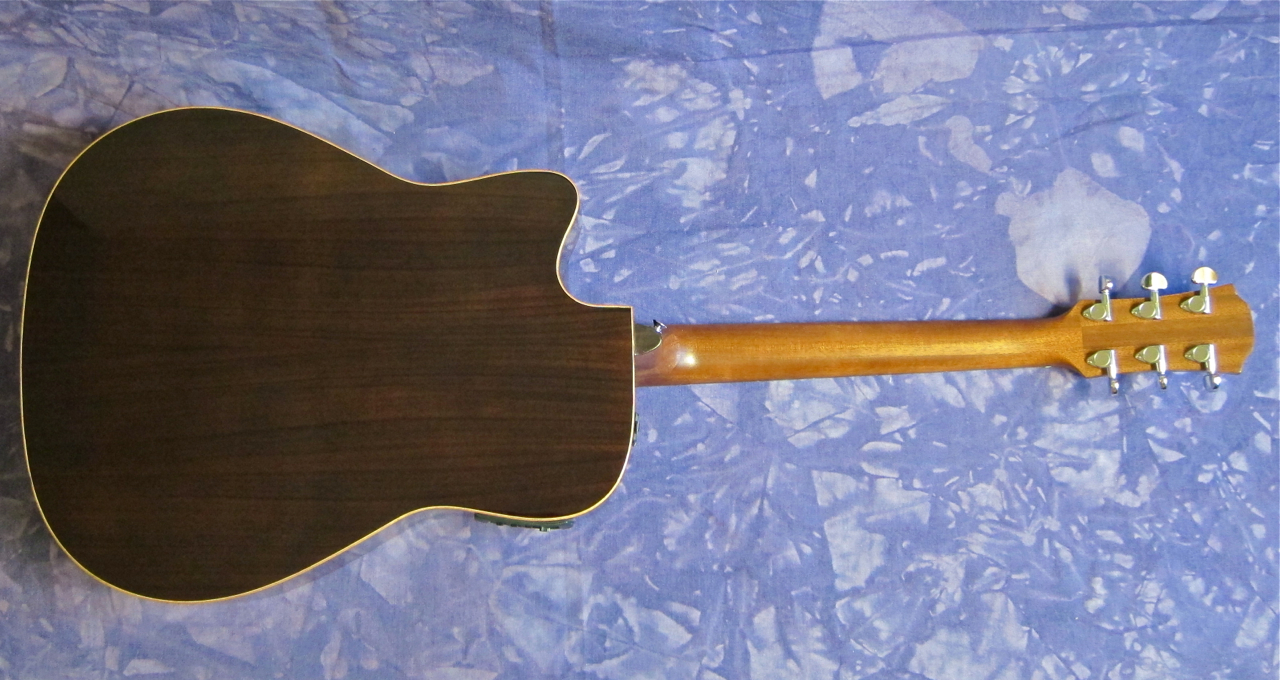
The Yamaha A1R (current recommended price in Finland: 639 €) is the less expensive guitar of the two on review here. The model’s nicely grained sitka spruce top is solid wood, with the rosewood sides and back being made of veneer.

The A1R’s headstock has received a rosewood facing.
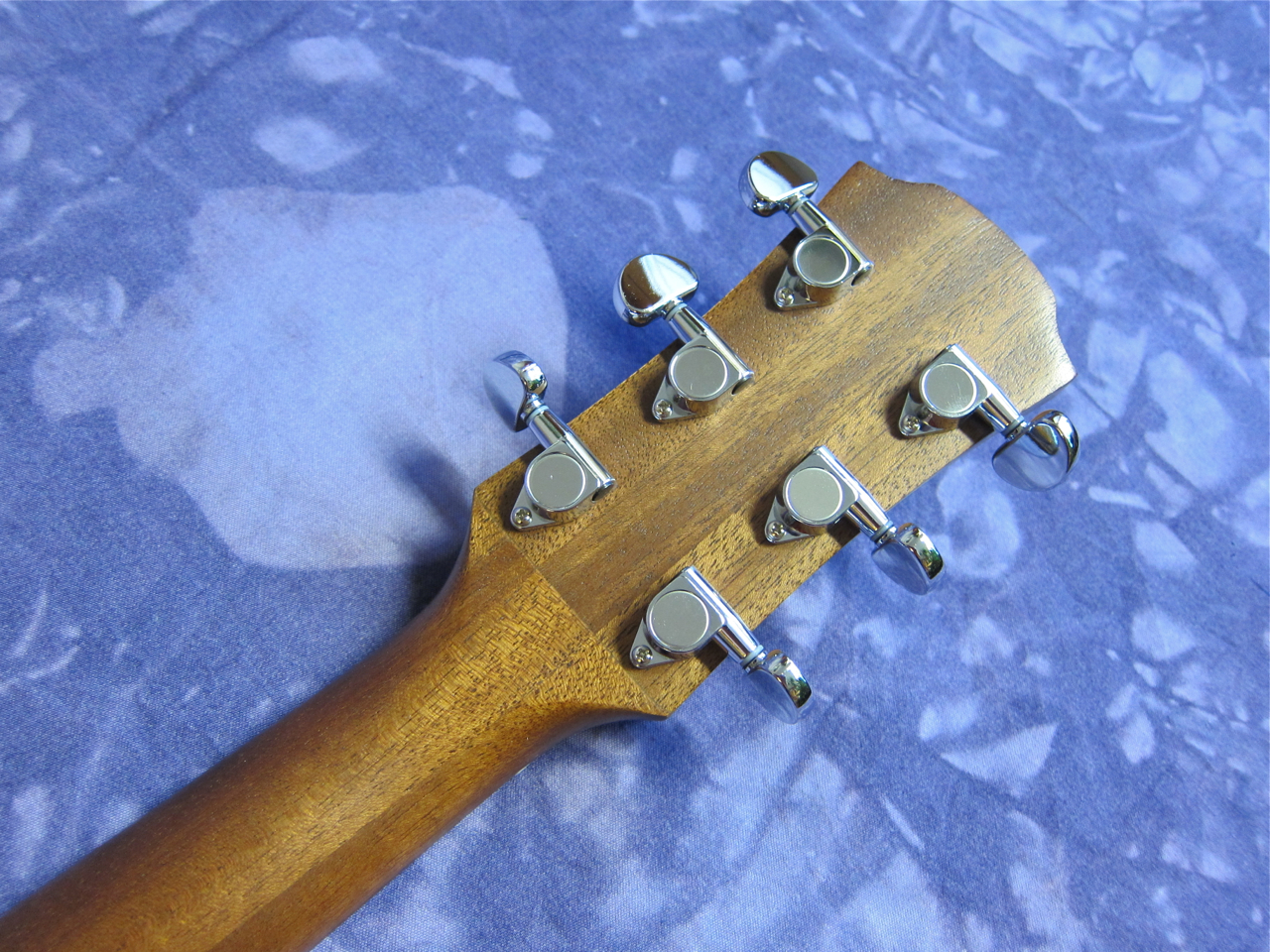
Yamaha uses the same type of sealed tuners on the bulk of their steelstring acoustics. The lower A-series models sport necks made from three long and narrow pieces of mahogany. The separate headstock has also been put together from several pieces, and it has been glued on next to the E-tuners.

Our test sample displayed some nice fret work, as well as stylishly understated tiny dots in its rosewood fingerboard.

The heel of the neck has been built up using smaller pieces of mahogany. This saves cost, as well as natural resources, as the company are able to use smaller neck blanks and wood cut-offs.
The quick access battery compartment can be found next to the heel. Yamaha uses two AA-batteries in all of their A-series preamps.

The A1R’s body is of typical Dreadnought size.

The rosette consists of black and white rings around the soundhole. The faux-tortie scratchplate is similar to plates used on the Gibson Country & Western -model and on many Taylor guitars.

The binding looks very nice with its outer ply of mahogany.

The rosewood bridge is one of Yamaha’s own designs, and feels smooth to the touch. The piezo pickup is situated beneath the compensated saddle.

All A1- ja AC1-guitars come equipped with Yamaha’s analogue System 66 -preamp, which sports a three-band EQ with adjustable midrange frequency, as well as an on-board tuner.

The A-series range features stylish end pins with an integrated output jack.
****


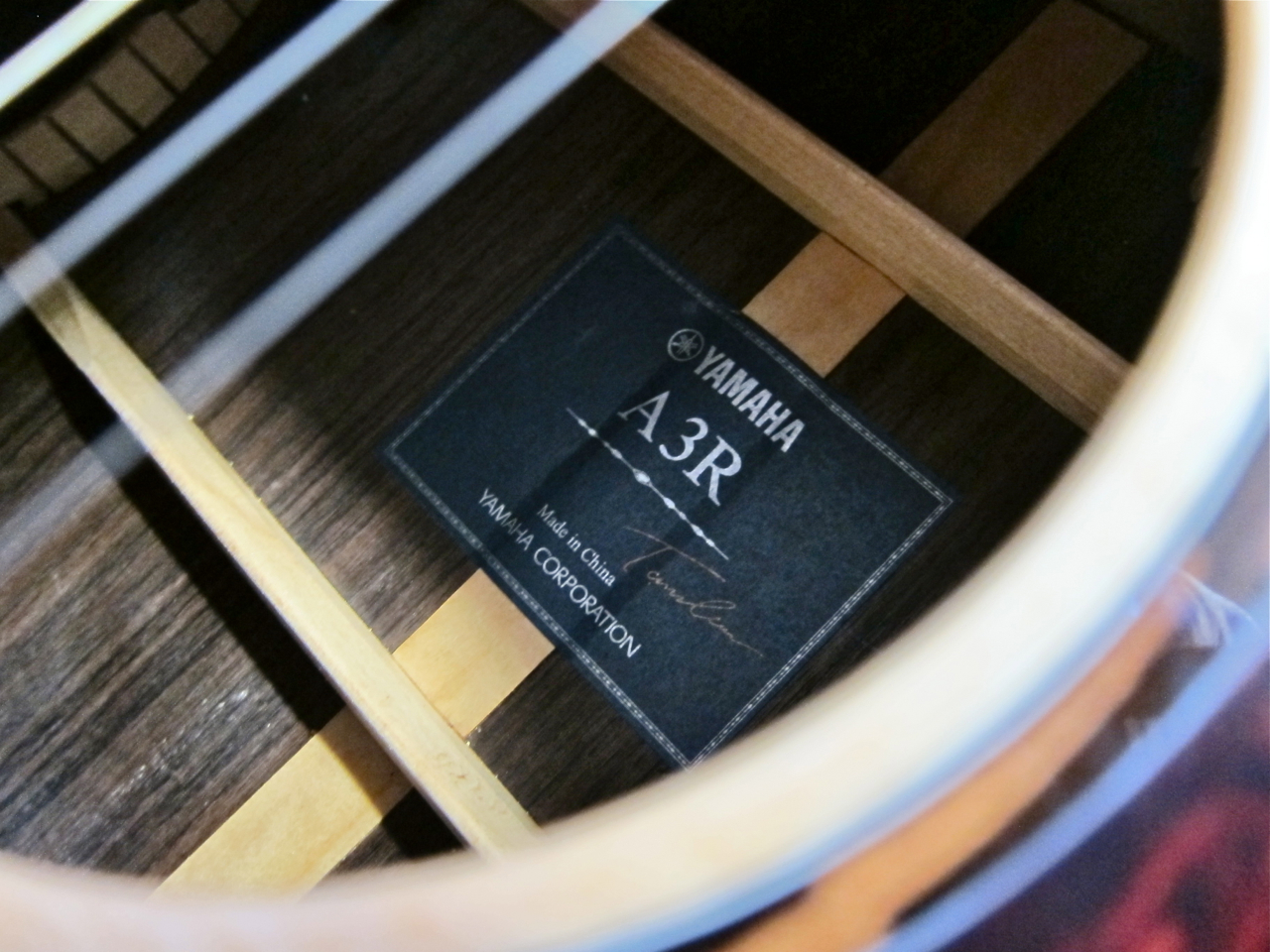
The A1R’s bigger sister, called Yamaha A3R (current recommended price in Finland: 849 €), is somewhat better endowed, as it is an all-solid-wood acoustic guitar. The top is – again – sitka spruce, with solid Indian rosewood used for the rims and the back.
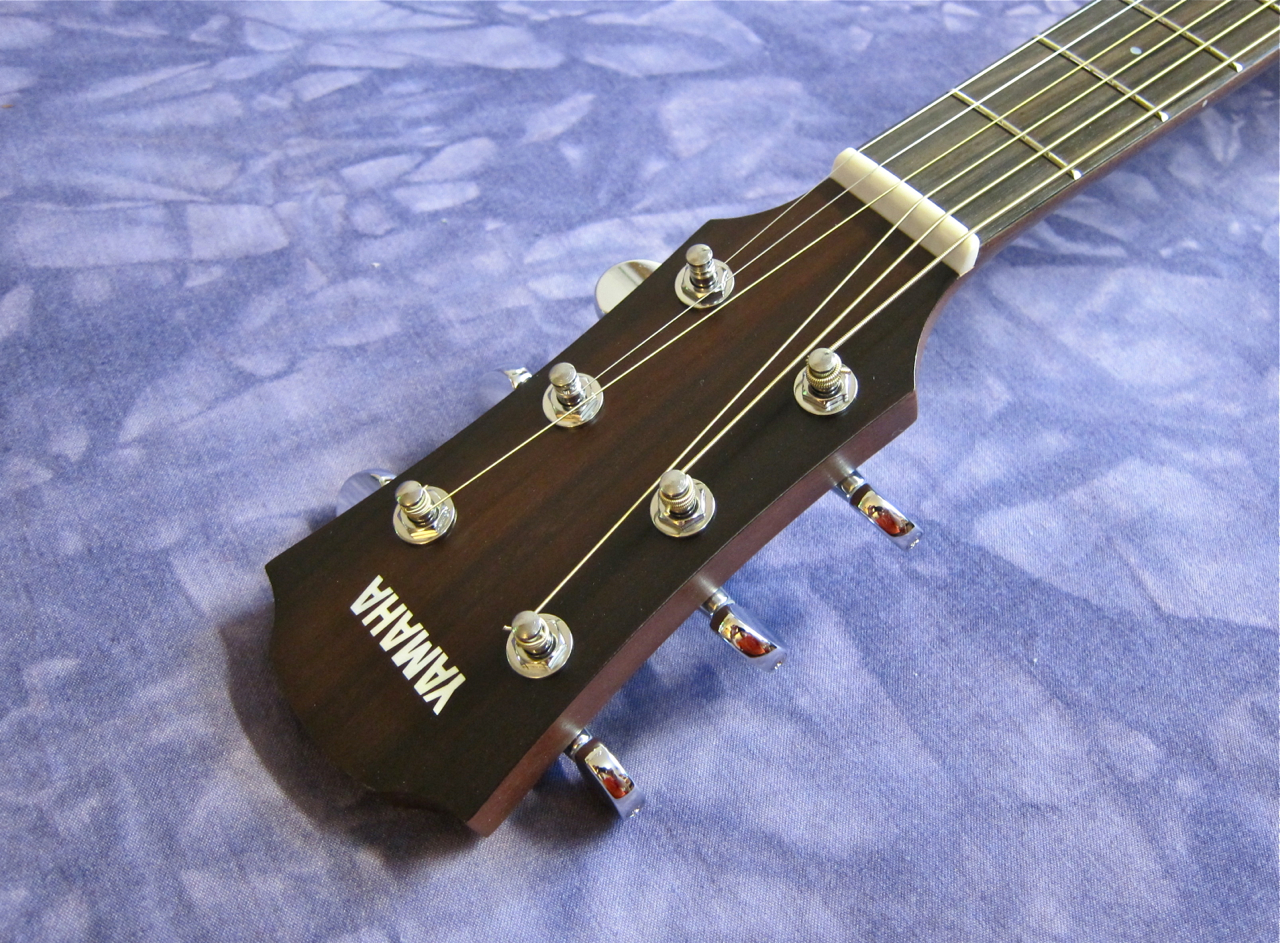
From the front both headstocks look virtually identical…

…but a look at the back reveals a neck made from one piece of mahogany (plus a separate one-piece headstock) on the A3R.
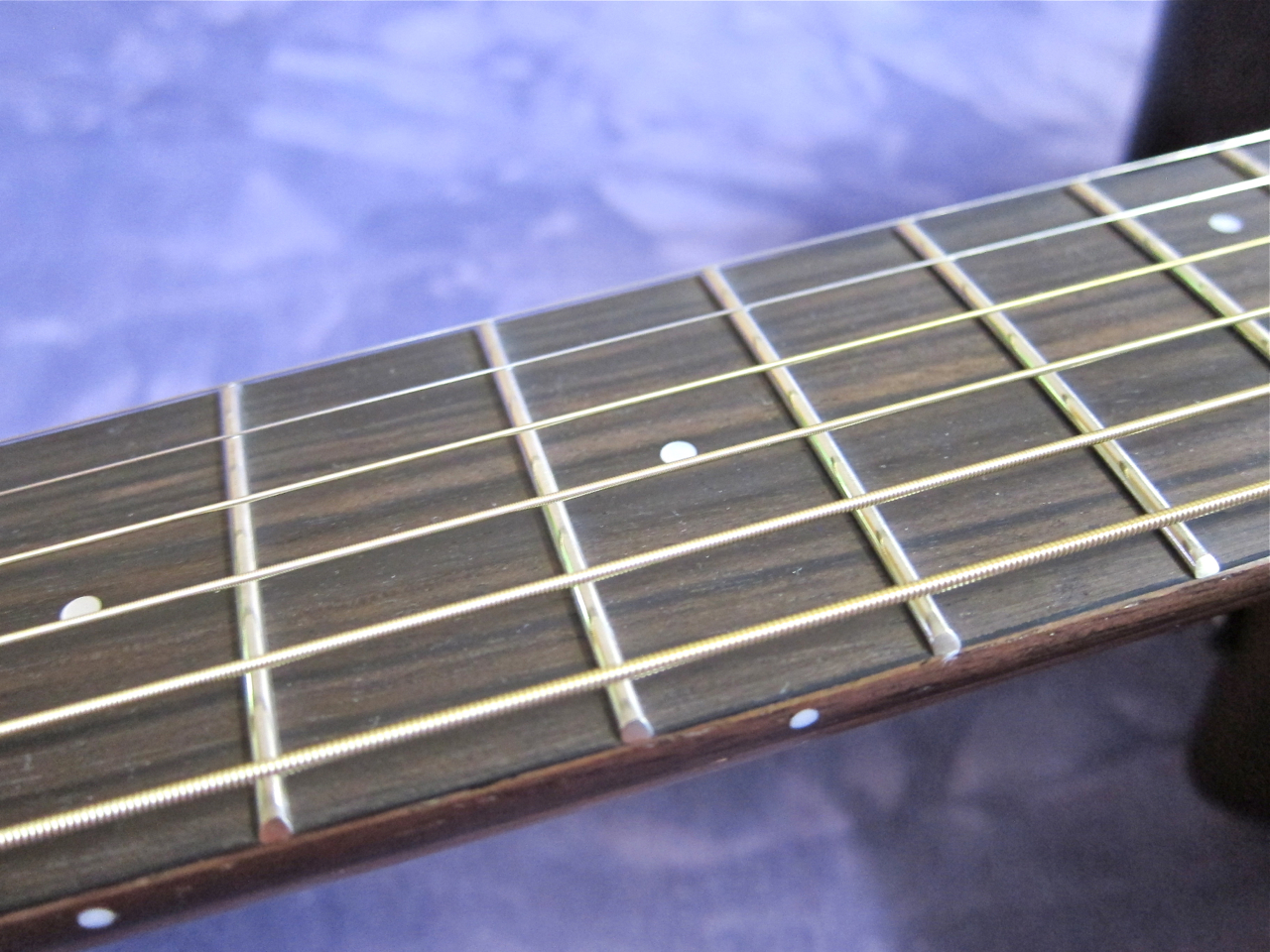
Again, we found fine fretwork on the A3R – this time on a light-coloured ebony board.

Our test sample displayed a heel, which was more carefully matched in colour and grain to the rest of the neck’s mahogany.
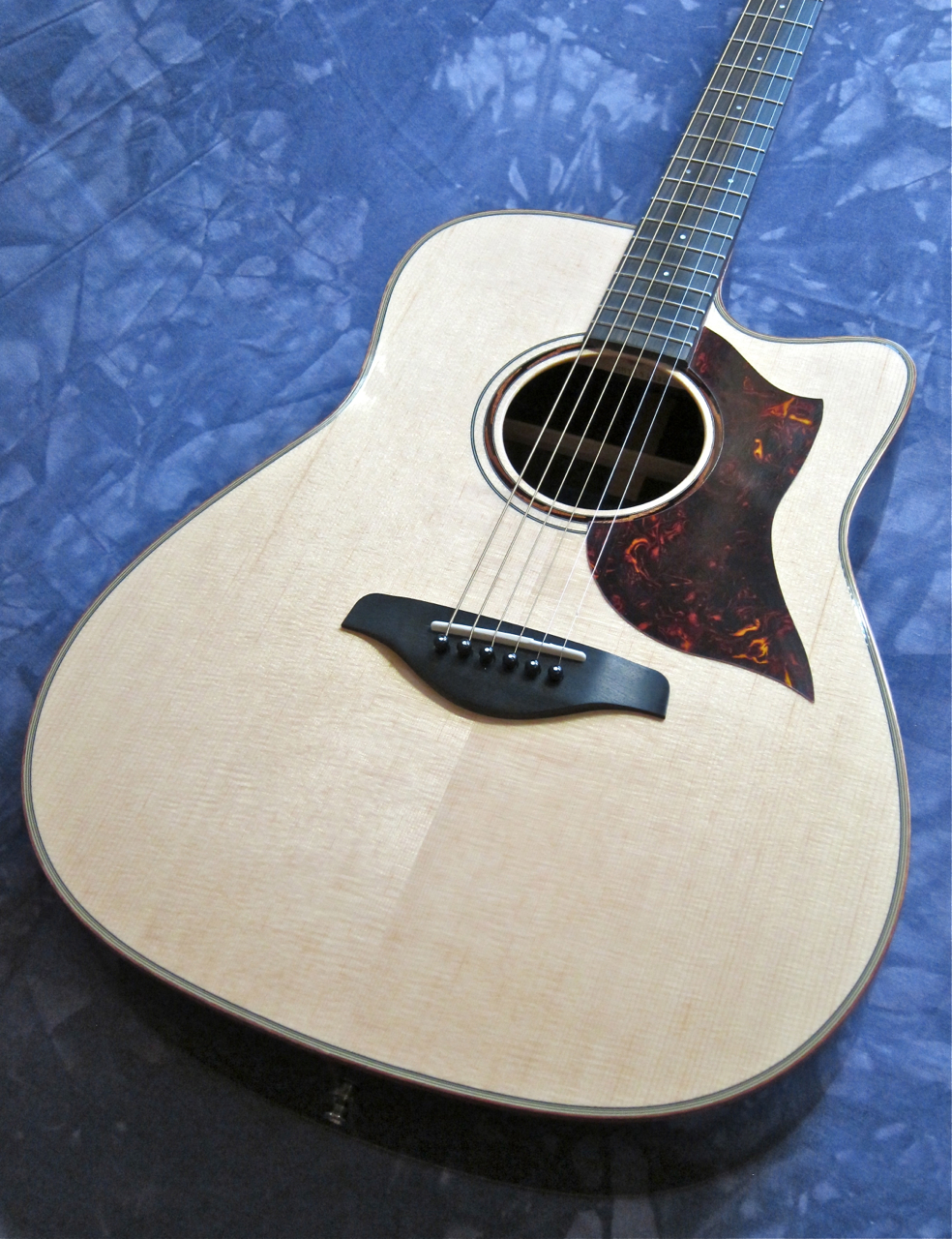
Look at that beautiful top with rich cross-silking…

An inner ring put together using mahogany and ebony gives the A3R an touch of added class.
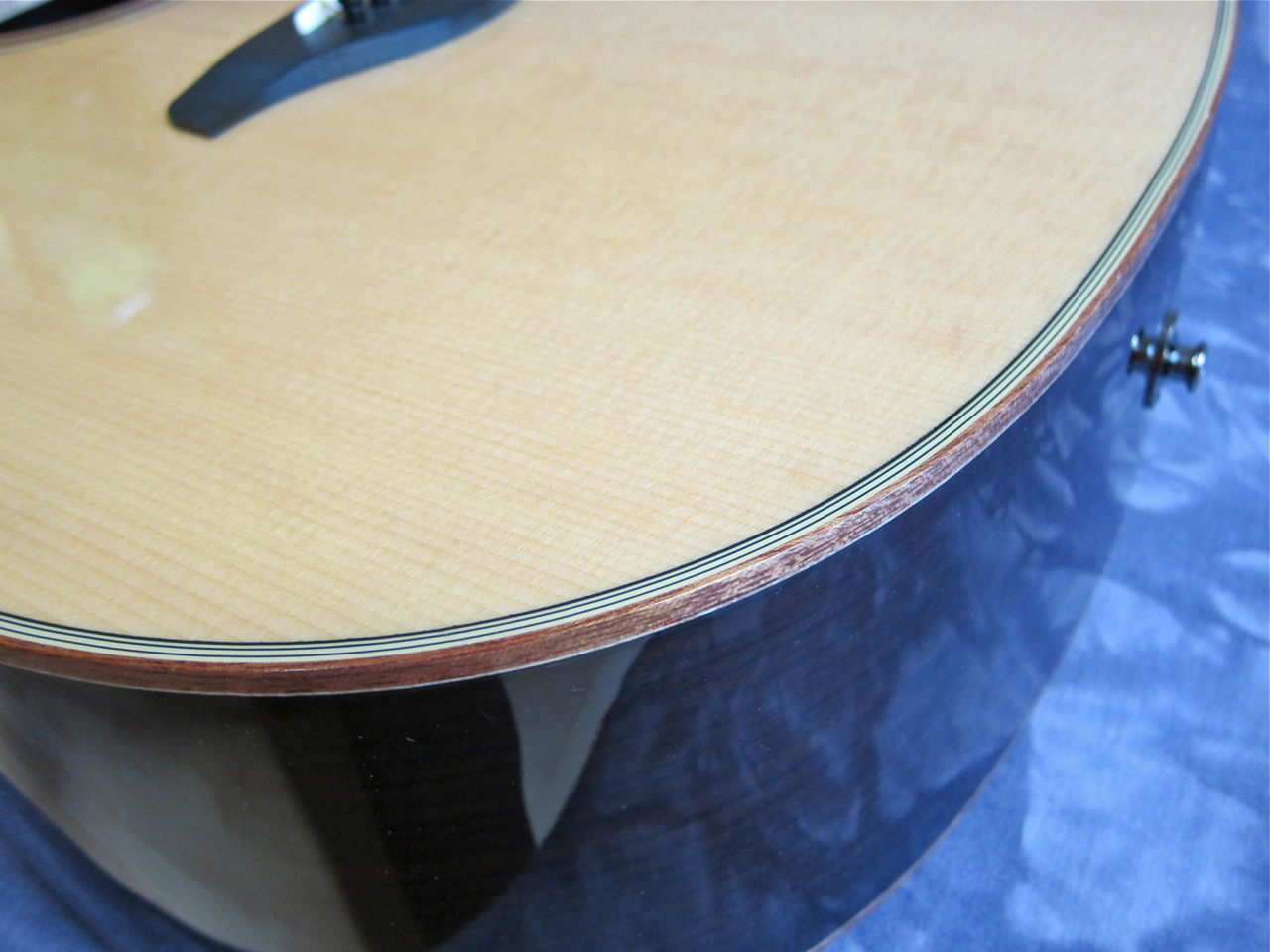
The binding follows the same pattern as on the less expensive model.

The bridge features the same design, but in the A3R’s case it has been crafted from ebony.

The Yamaha A3R is equipped with a System 63 SRT -preamp offering both the analogue pickup signal, as well as three digitally modelled virtual microphones to pick from. SRT-modelling takes the piezo’s signal and digitally morphs it to sound like this particular guitar model being miked up (either close-up or from a little bit further away). You can choose between a virtual large-diaphragm condenser microphone (Type 1), a small-diaphragm condenser (Type 2) or a ribbon microphone (Type 3). You can also adjust the amount of virtual body resonance picked up.
Adding to all this the System 63 SRT features a three-band EQ, an on-board tuner, as well as automatic feedback reduction (A.F.R.).
****
Both Yamahas feel virtually the same, with identical medium-sized D-shape neck profiles and a comfortable medium-low action. The best bit is the new open-grained matte finish that really let’s you feel the neck wood.
Played acoustically both models display a dense, piano-like ring, with plenty of attack and sparkle.
The all-solid construction of the A3R results in a warmer low end and a little more volume. The A1R sounds a tad drier and more upfront.
The A1R’s System 66 gives you a nice, middle-of-the-road piezo tone, with the typical quacking attack and direct dryness of a piezo.
The A3R’s System 63 SRT -preamp offers more scope for adjustment.
The SRT-modelling sounds quite realistic, and goes a very long way in removing all piezo-ness in the guitar’s amplified tone – regardless of the chosen virtual mic. The sound is realistic enough for many live and studio applications, even though I’m quite sure a solo guitar-virtuoso will still insist on having his (or her) guitar miked up in the real world.
****
Yamaha A-series
Finnish distributor: F-Musiikki
****
Yamaha A1R
639 €
Pros:
+ value for money
+ neck profile
+ neck finish
+ workmanship
+ acoustic tone
+ good piezo sound
Cons:
– typical piezo artifacts
****
Yamaha A3R
849 €
Pros:
+ value for money
+ neck profile
+ neck finish
+ workmanship
+ acoustic tone
+ SRT-modelling
****
****

****