Contact: Musamaailma & Flaxwood Guitars

Review: Hotone Audio Skyline pedals

****

Some of the cuddliest pieces of equipment at this year’s Frankfurt Musikmesse came in the guise of Hotone Audio’s ranges of micro-sized effect pedals and amplifier heads.

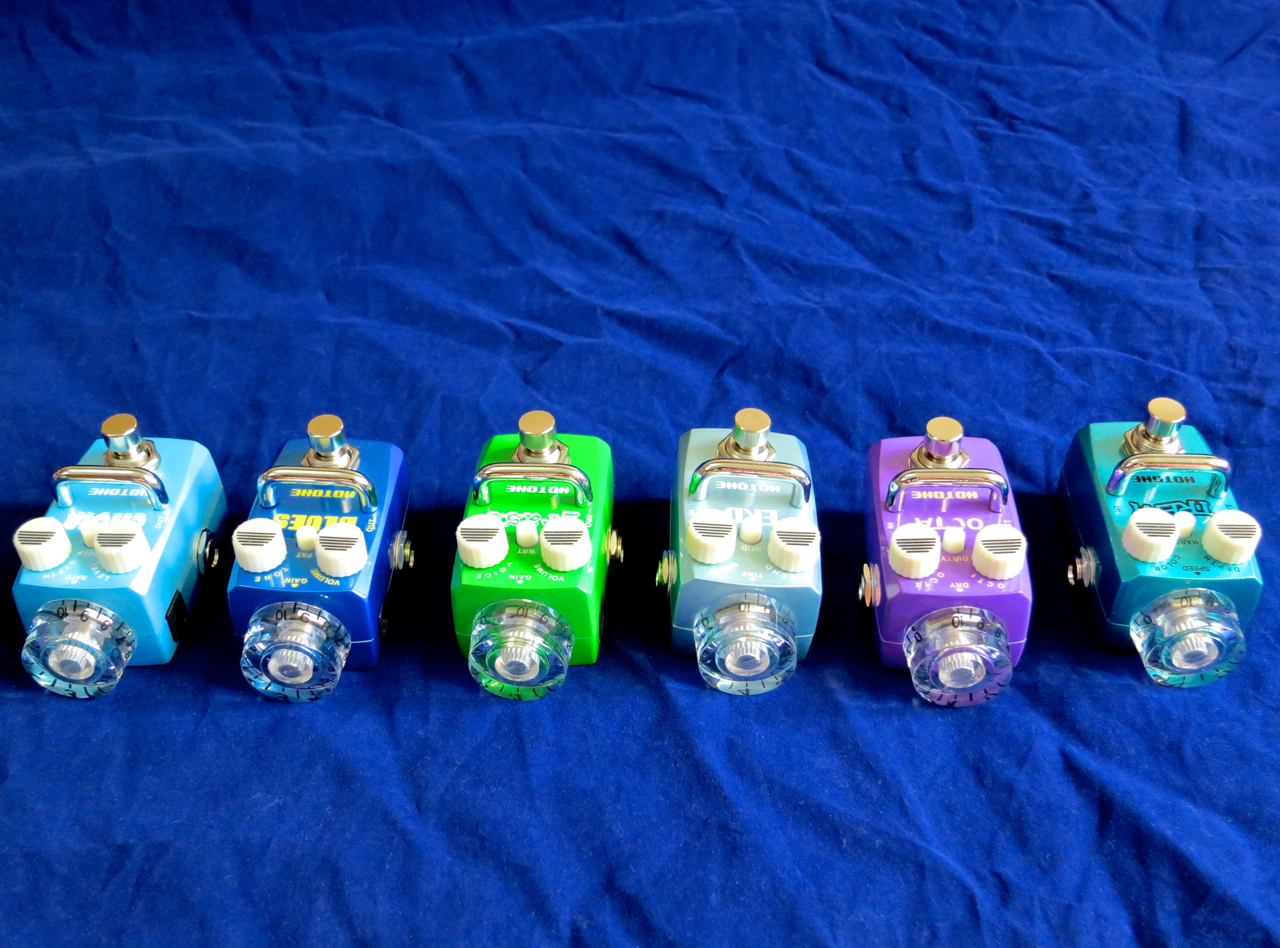
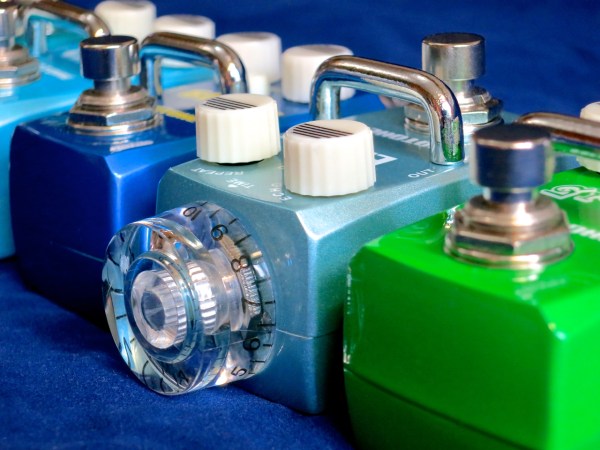
The special eye-catcher with the Skyline-series pedals is the transparent Gibson-style control at their front end.

Two coloured status-LEDs behind the transparent knob light up, whenever the effect is switched on.
Naturally, you cannot fit a nine volt battery inside such a tiny pedal, which is why Hotone Skyline pedals have to get their juice from a power supply (9 V, negative centre – not included).
****

The dark blue Hotone Blues (current price in Finland: 65 €) is an overdrive pedal specialised in producing juicy Blues tones by using a pair of overdrive circuits wired up in series.

The big knob is for gain adjustment, while the two noctilucent (meaning: they glow in the dark) knobs deal with tone and master volume, respectively.

Engaging the Fat-button adds a bigger bottom end to proceedings.
Listen to Hotone’s own demo of the Blues pedal:
****

Hotone’s Choir pedal (65 €) comes in a fetching baby blue colour scheme. This is the analogue chorus pedal of the Skyline series, built around a Panasonic BBD MN3207 bucket-brigade chip.

The Gibson-knob controls speed, while chorus depth and effect are controlled by the smaller knobs.

Depressing the Deep-switch will send you to the bubbly depths of psychedelia.
****

The Hotone Eko (65 €) is a delay offering you some analogue character.

The Eko’s maximum delay time is around 500 ms, which is long enough for most Rockabilly, Rock and Pop applications, but maybe just a bit too short for serious Brian May-style layering.

The Mod feature adds a sprinkle of tape-style wow and flutter to your delay sound.
****

The Skyline series also includes a Tube Screamer-inspired vintage overdrive, called the Hotone Grass (65 €).

The pedal offers you controls for gain, volume and Voice (tone).

The BRT-switch (for ”bright”) adds top end bite to your tone.
****

One of Hotone’s newest pedals – the Octa (80 €) – is an octaver that features both ”octave down” (OCT1), as well as ”octave up” (OCT2) signal in two different operating modes.

The regular Clean-mode is polyphonic, meaning you can play chords, too.

Octa’s Dirty-mode gives you a vintage-style, monophonic experience (you can only play single note runs), and sounds funky and greasy (in a good way).
And yes, you can use the Hotone Octa with your bass, too!
****
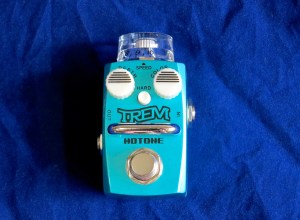
Hotone’s Trem (65 €) is an über-compact – yes, you guessed it – opto-tremolo pedal.

In addition to tremolo speed and depth you can also adjust the tone colour of the effect.

When choosing the Hard-mode the trem effect changes from a smooth, sine-style wobble to a harder on/off-type effect.
****

Despite their diminutive size Hotone’s Skyline-pedals aren’t toys, but grown up guitar effects!
Their zinc-alloy casing seems to be very sturdy, while the bent metal rod north of the footswitch works effectively in preventing your foot from hitting the pedal controls. Each pedal comes with two stick-on base covers – the non-slip rubber-type cover is for straight-on-the-floor use, while the velcro-style counterpart makes creating a micro-sized pedalboard possible.
The large control knobs aren’t just a visual gimmick, but also make it much easier to place three controls on such small pedals.
In terms of effect quality Hotone’s Skyline series is straightforward in the best sense of the word. Each of the six pedals I tried does exactly what you’d expect it to do, winning me over with a very decent sound. At these low prices you’d be crazy to expect esoteric boutique-quality effects, instead the Hotone Skyline pedals proved to be great guitar effects for your everyday needs.
I recorded a demo song with the review sextet:
• rhythm guitars: Hotone Choir (panned left), Hotone Trem (centre) and Hotone Eko (right)
• lead guitars: 1. Hotone Blues, 2. Hotone Octa, and 3. Hotone Grass
I used my Gibson SG Melody Maker for all of the guitar tracks, played through a Blackstar HT-1R valve combo:

****
Hotone Audio Skyline Series
Current prices in Finland: 65-80 €
Finnish distributor: R-Jam Group
****
Pros:
+ size
+ value-for-money
+ sound
Testipenkissä: Hotone Audio Skyline -pedaalit
****
Yksi todellinen valopilkku tämänvuotisessa Frankfurt Musikmessessä oli Hotone Audion mallisto mikrokokoisia efektipedaaleja ja vahvistinnuppeja.
Skyline-sarjan pikkupedaalien visuaalinen juju piilee niiden isokokoisissa, Gibson-tyylisissä säätimissä kotelon etupuolella.
Nupin takana on upotettu kaksi värillistä LEDiä.
Tällaisiin pikkulootiin ei luonnollisesti mahdu paristoja sisään, minkä takia Hotone Skyline -efektit toimivat Boss-standardia noutavalla virtalähteellä (9 V, miinus keskellä – ei kuulu hintaan).
****
Sininen Hotone Blues (65 €) on Blues-säröihin erikoistunut säröpedaali, joka saa kermaiset soundinsa kaksivaiheisesta overdrive-piiristä.
Isolla nupilla säädetään efektin gain-määrää, kun taas pienet valkoiset säätimet toimivat tonena ja master volumena.
Fat-kytkimellä saadaan lisää tuhtia alakertaa menoihin.
Tässä on Hotonen oma Blues-pedaalin demo:
****
Vaaleansininen Hotone Choir (65 €) on Skyline-sarjan analoginen choruspedaali, ja se perustuu Panasonic BBD MN3207 -”ämpäriketjuun”.
Gibson-nupilla määrätään vatkauksen nopeutta, kun taas pikkusäätimillä säädetään efektoidun signaalin voimakkuutta ja efektin syvyyttä.
Deep-kytkintä painamalla saa efektistä vielä syvemmän.
****
Hotone Eko (65 €) on firman analogimallinnuksella varustettu digitaalinen viive.
Ekon maksimaalinen viiveaika on noin 500 ms, mikä kattaa hyvin tyypilliset Rautalanka-, Pop- ja Rock-musiikin tarpeet.
Mod-kytkimellä voi lisätä viive-efektiin nauhakaiku-tyylistä huojuntaa ja modulaatiota.
****
Skyline-sarjan vintage-tyylinen overdrive-särö on nimeltään Hotone Grass (65 €).
Pedaalissa on säätimet gainea, äänensävyä ja lähtötasoa varten.
BRT-kytkimellä saa esiin lisää purevuutta.
****
Hotonen uusin pedaali – Octa (80 €) – on oktaaveri, joka tarjoaa sekä ala- (OCT1) että yläoktaavin (OCT2), ja sillä on sen lisäksi vielä kaksi eri toimintamoodia.
Puhtaassa ja polyfonisessa perusmoodissa on mahdollista soittaa jopa sointuja.
Dirty-moodissa pedaali muuttuu monofoniseksi, ja efektin soundista tulee – vanhan analogioktaaverin tavoin – herkullisen likainen.
Hotone Octa -pedaalia voi muuten käyttää myös basson kanssa!
****
Hotone Trem (65 €) on optotremolo erittäin kompaktissa koossa.
Tremoloefektin nopeuden ja syvyyden lisäksi pystyy Trem-pedaalissa säätämään myös efektin soundia.
Painamalla Hard-kytkimen sisään tremoloefekti muuttuu pehmeästä siniaalto-kaltaisesta soundista, enemmän on/off-tyyppiseen soundiin.
****
Pienuudesta ja hauskasta ulkonäöstä huolimatta Hotonen Skyline -sarjan pedaalit eivät ole leluja, vaan ihan oikeita kitaraefektejä.
Sinkistä valettu kotelo tuntuu hyvin kestävältä, ja jalkakytkimen yläpuolelle asennettu metallikaari suojaa pieniä säätimiä tehokkaasti polkaisujen voimalta. Jokaisen pedaalin mukaan tulee sekä paksu kumimainen pohja että tarranauhapohja – käyttäjä voi liimata sopivimman pohjan käyttötarkoituksen mukaan efektipedaalin pohjaan.
Kotelon etupuoleen sijoitettu säädin ei ole vain visuaalinen kikka, vaan se helpottaa myös tuntuvasti kolmen säätimien (ja yhden kytkimen) käyttöä näin pienikokoisessa paketissa.
Soundillisesti Hotonen Skyline-sarja on suoraviivainen ja mutkaton sanojen parhaassa merkityksessä. Jokainen kokeilemani pedaali teki juuri sitä mitä siltä odotin, ja pedaalimallisto vakuutti minut hyvillä soundeillaan. Tarjolla ei ehkä ole esoterista putiikkilaatua – ja olisi hullua odottaa sellaista näin edullisista efekteistä – mutta jokainen testaamani Hotone Skyline -pedaali on hyvin käyttökelpoinen ja inspiroiva ”jokapäivän efekti”.
Äänitin seuraavan demobiisin kaikki kitararaidat Hotone-pikkupedaaleilla:
• komppiraidat: Hotone Choir (vasemmalla), Hotone Trem (keskellä) ja Hotone Eko (oikealla)
• liidit: 1. Hotone Blues, 2. Hotone Octa ja 3. Hotone Grass
Käytin kaikissa raidoissa Gibson SG Melody Maker -kitarani, sekä Blackstar HT-1R -putkikombon:
****
Hotone Audio Skyline Series
Hinnat: 65-80 €
Maahantuoja: R-Jam Group
****
Plussat:
+ koko
+ hinta-laatu-suhde
+ soundi
Testipenkissä: Tech 21 Fly Rig 5
****
Tech 21 NYC on firma monien oivien soittolaitteiden takana, esimerkiksi SansAmp-sarjan analogiset vahvistin- ja kaappimallintajat, Bass Driver DI-boksi ja Trademark-vahvistimet ovat firman käsialaa. Kaikille näille tuotteille on yhteistä se, että ne ovat erittäin toimivia ja helppokäyttöisiä ratkaisuja sellaisiin pulmiin, joita ammattikitaristi kohtaa päivittäin.
Tech 21:n uusin laite on suunnattu paljon lentokeikkoja tekevän kitaristin tarpeisiin. Megakompaktin, metallinhohtoisen, pedaalilaudan kaltaisen uutuuslaitteen nimi on Fly Rig 5.
****

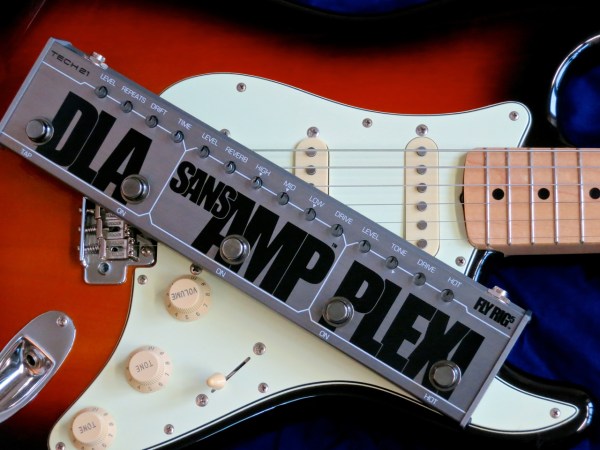
Kuten näkyy tämän jutun avauskuvasta, Tech 21 Fly Rig 5 (299 €) ei ole todellakaan koolla pilattu. Pikkulauta sopii helposti gigbägin etutaskuun, sekä monen kitaralaukun tarvikeosastoon. Vahvistimen vuokraaminen keikkapaikalla ei ole enää tarpeellista – nyt täytyy pakata mukaan enää kitara, Fly Rig –lauta, muutama johto, sekä viritysmittari. Ja ei kun menoksi.
Fly Rig 5:n ulkokuori on valmistettu kokonaan metallista, ja sen paneelin harjattu pinta näyttää erittäin tyylikkäältä.

Pikkulauta toimii 12 voltin tasavirralla (150 mA/miinus keskellä) ja sen virtalaite kuuluu (luonnollisesti) hintaan.
Tech 21: uutukaisen nimeksi on valittu Fly Rig 5, koska lautaan on mahdutettu viisi erilaista efektiä/toimintaa.
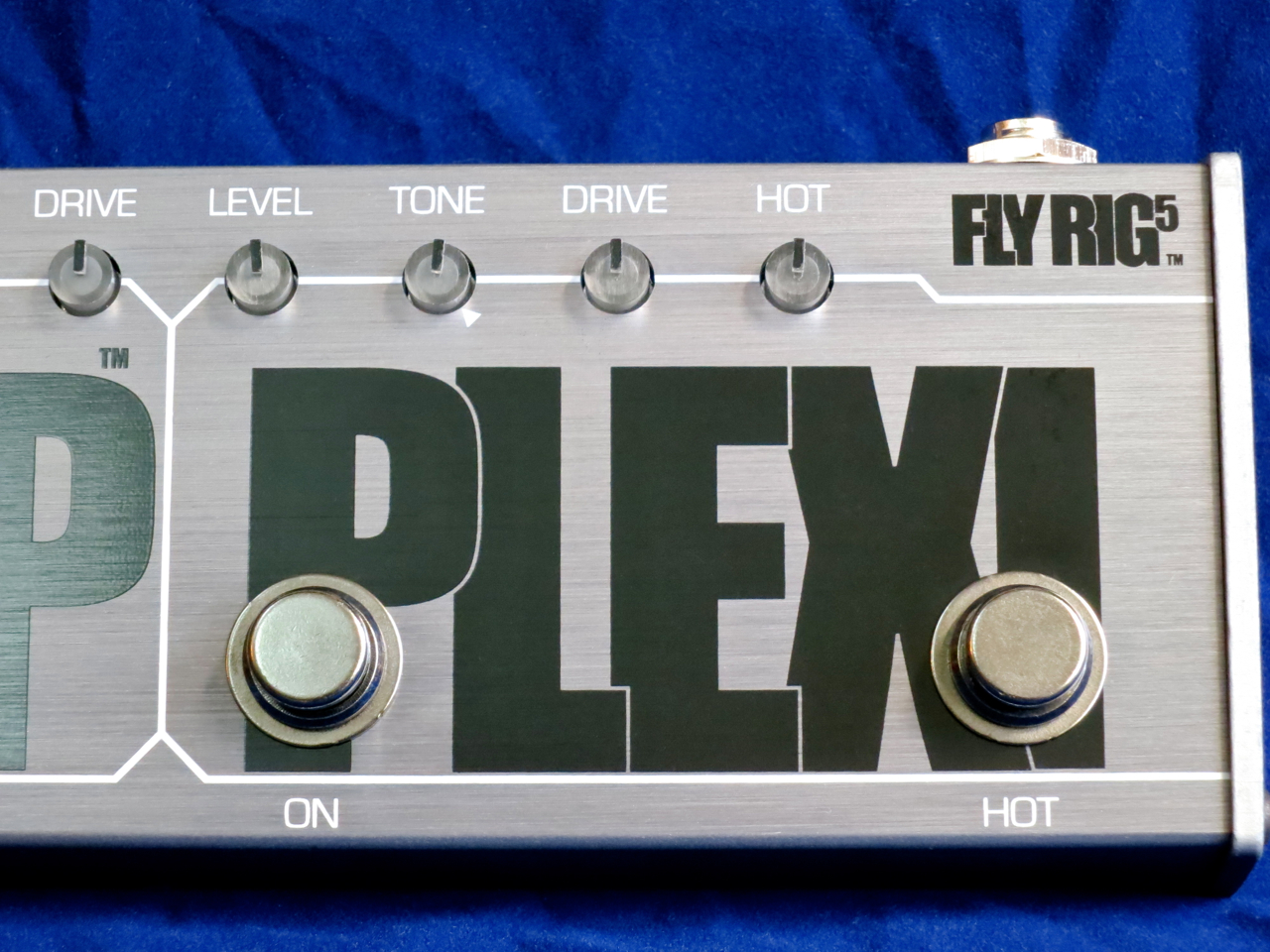
Kaksi ensimmäistä efektiä löytyy Plexi-osiosta: Hot on säädettävä boosteri, josta saa tarvittaessa jopa 21 dB lisävahvistusta signaaliin. Toinen toiminta on Tech 21:n mallinnus vanhasta Marshall Plexi –kitaranupista (lainattu firman Hot-Rod Plexi-pedaalista), joka tarjoaa säädöt gainille (Drive), tonelle ja lähtötasolle (level).

Fly Rigin seuraava osio on SansAmp-osasto, joka pohjautuu Tech 21:n legendaarisiin analogeihin SansAmp-pedaleihin. SansAmpiin sisältyy analoginen vahvistin- ja kaappimallinnus kolmialueisilla taajuuskorjaimilla, sekä kaunisääninen kaiku.

Viimeisen osion nimi on DLA (lyhenne englanninkielisestä sanasta delay), ja se tarjoaa viive-efektin tap tempo –toiminnolla. Drift-säätimellä voi lisätä signaaliin portaattomasti nauhakaiun-tyylistä huojuntaa.

****

Tech 21:n Fly Rig 5 on erittäin helppo käyttää: Jokainen jalkakytkin ja säädin on nimetty selkeästi. Tämän lisäksi jokaisen osion säätimet loistavat – jokainen omassa värissä – silloin kun kyseinen efekti tai toiminto on päällä.
Laudan erittäin kompakti koko vaatii kuitenkin yhden pienen hinnan: säätimet ovat suhteellisen pieniä, mikä vaatii ainakin nakkisormiselta hieman tarkkuutta niitä säätäessä. Toisaalta, kun omat asetukset on kerran löydetty, niitä ei varmaan lähdetä muuttamaan keskellä keikkaa – ja keikkakoneeksi Fly Rig on suunniteltu.
Soundillisesti Tech 21:n uutukainen täyttää ammattikitaristin vaatimukset kiitettävästi. Fly Rigin soundi on erinomainen ja sen eri efektit kattavat varmasti lähes jokaisen kitaristin perustarpeet keikkatilanteessa. Plexi-tyylinen särökanava, SansAmp-mallinnus, boosteri, viive ja kaiku erittäin kompaktissa paketissa tekevät Fly Rig 5:stä oivan työkalun Jazz-, Blues-, Rockabilly-, Pop- tai Rock-kitaristeille. Metalli-miehet tarvitsevat luultavasti enemmän säröä, sekä varmaan myös kohinaportin, genren soundeja varten, mutta he eivät luultavasti olekaan tämän laudan varsinainen kohderyhmä.
Tässä pätkässä soitan kaikki Fly Rig 5:n efektejä läpi vaahterakaulaisella Fender Stratocasterilla. Ihan alussa Fly Rig on kokonaan pois päältä:
Seuraavaksi samankaltainen audioesimerkki, tällä kerralla humbuckereilla varustetulla Hamer USA Studio Custom -kitaralla, jossa on enemmän säröä ja pidempi viiveaika:
Tässä olen simuloinut vanhaa nauhakaiku-soundia DLA-osion Drift-toiminnolla:
Fly Rigissä on myös yksi ”piilotettu” ominaisuus: DLA-osiota pystyy myös käyttää choruksena. Chorus-efekti syntyy hyvin lyhyestä viiveestä, jossa on mieto syklinen vireen huojunta. Lyhyellä Time-asetuksella ja lisäämällä hieman Driftiä signaaliin syntyy hieno chorus-efekti (soitan tässä Stratolla):

****

Jos soitat usein pistekeikkoja ulkomailla, eikä budjetti tai taustaryhmä anna myöten raahata vahvistintasi kaikkialle mukaan, Tech 21 Fly Rig 5 on kuin juuri sinulle tehty.
Tässä on onnistettu pakkaamaan kaikki tärkeimmät efektit ja ominaisuudet, joita keikkaileva kitaristi tavallisesti tarvitsee, yhteen kompaktiin pedaalilautaan. Ja lopputulos kuulostaa erittäin hyvältä ja inspiroivalta.
Joillekin vintage-ystäville Fly Rig varmasti voi tuntua liian modernilta, koska sillä ei ole sitä vintage-voodoa. Mutta jos tarvitset toimivan, käytännönläheisen ja ongelmavapaan ratkaisun, millä saat musiikkisi yleisölle, Tech 21:n Fly Rig 5 on kerrassaan loistava valinta!
****
Tech 21 NYC Fly Rig 5
299 €
Maahantuoja: Musamaailma
****
Plussat:
+ kestävän-oloinen metallikotelo
+ koko
+ paino
+ ominaisuudet
+ soundi
+ vastinetta rahalle
Miinukset:
– säätimien pienuus


Review: Tech 21 Fly Rig 5

****
Tech 21 NYC is the company behind many groundbreaking products, such as the SansAmp range of amp modelling stomp boxes, the Bass Driver DI or the all-analogue modelling guitar amps of the Trademark series.
What all these products have in common is that they’re no-nonsense tools to make the life of the gigging and recording guitarist (and bassist) easier.
Tech 21’s newest product is designed to do away with the need to hire a guitar amp for fly-in gigs. It’s an ultra-compact and sleek, pedalboard-style device called the Fly Rig 5.
****
As you can see from the picture at the start of this review, the Tech 21 Fly Rig 5 (current price in Finland: 299 €) is extremely compact. It will fit in the pouch of a gig bag, as well as in the accessories compartment of many guitar cases. Just pack your guitar, the Fly Rig, a couple of cables and your tuner – and you’re ready to roll!
The Fly Rig 5’s sturdy housing is completely made from metal, and its brushed fascia gives it a cool modern look.
The unit runs on 12 Volts of DC-power (150 mA/centre negative) and the power supply unit is (naturally) included.
Tech 21 call their new creation the Fly Rig 5, because it features five different main functions/effects.
Two of these functions are grouped together under the Plexi banner. The first one, labelled Hot, is an adjustable clean boost of up to a whopping 21 dB. Secondly, you will find an analogue model of a Marshall Plexi head (based on the Hot-Rod Plexi pedal), with its controls comprising Drive, Tone and Level.
The next section is called SansAmp and includes Tech 21’s legendary analogue amp (and miked up cabinet) emulator (with three-band EQ), as well as a reverb effect.
The last section is labelled DLA (short for delay) and offers you a delay effect with tap tempo. Thanks to the Drift-control you can also dial in grungy tape echo-type wow and flutter.
****
Tech 21’s Fly Rig 5 is really very easy to use: All the controls and footswitches are clearly labelled, and the control knobs of each section light up in a different colour to give you an easy to read visual clue as to which sections are currently on and which are turned off.
There’s one very minor trade-off due to the über-compact nature of this ’board, and that’s the small, slightly fiddly nature of the control knobs. On the other hand, you’re hardly likely to make major adjustments to your settings in the middle of a gig – and gigging is what the Fly Rig was conceived for.
In terms of its sound and performance, Tech 21’s newcomer easily fulfills the high standards guitarists have come to expect of the products of this company. The Fly Rig 5 sounds awesome and does exactly what it says on the tin. This combination of SansAmp, Plexi-style overdrive, booster, delay and reverb delivers the goods for the large majority of guitarists – be it Jazz, Blues, Rockabilly, Pop or Rock, the Fly Rig delivers! Metal and Thrash guitarists will most probably demand more gain and the inlusion of a noise gate, but I’d reckon that the metal crowd aren’t really the intended target group for this type of ’board.
Here’s a run-through of all of the Fly Rig 5’s effects, played on a maple-necked Fender Stratocaster. The clip starts with the Fly Rig turned off:
Here’s a similar run-through using a humucker-equipped Hamer USA Studio Custom, adding a bit more overdrive and a longer delay time:
The Delay-section’s Drift-control makes it easy to simulate tape echo effects:
A ”hidden” feature of the Fly Rig 5 is the possibility to use the Delay-section as a chorus effect. Because a chorus is basically nothing more than a slightly wobbly, very slightly offset doubling of the guitar signal, you can achieve this effect by setting the Delay-section’s Time-control to something very short, and using the Drift-control to adjust the chorus’ depth. Here’s an audio clip of a chorus setting, played with a Strat:
****
If you play a lot of fly-in gigs, and have neither the budget nor the manpower to lug a large guitar rig across the globe, Tech 21 NYC’s Fly Rig 5 is a true godsend.
It offers the most important features and effects a guitarist needs on stage or in the studio. And — most importantly – it sounds really great and inspiring.
True, using a device like the Fly Rig may not be as ”authentic” as using a real amp in the eyes of some anoraks, because Tech 21’s brand-new tool doesn’t have the ”kudos” of a mythical vintage amp. But if you’re after a pro-quality, lightweight, no-nonsense solution that will get your sound to the audience with the least amount of fuss and hassle, Tech 21’s Fly Rig 5 is hard to beat!
****
Tech 21 NYC Fly Rig 5
299 €
Finnish distributor: Musamaailma
****
Pros:
+ sturdy, all-metal construction
+ size
+ weight
+ features
+ sound
+ value for money
Cons:
– tiny control knobs


 Kitarablogi.com – Finland's premier Guitar and Bass blog