The Fender Telecaster – tone at the expense of intonation?

Why do we need intonation adjustment?

On string instruments, the fret spacing along the fretboard is calculated according to a mathematical formula. This formula is theoretical, though, and doesn’t take into account variables, such as string tension (tuning), string thickness (gauge) and string height (action). These variables make the actual pitch of a string, which is pressed down against a fret, deviate from the theoretically correct pitch. To compensate for this pitch offset, you need some sort of intonation adjustment that sets the correct intonation (or octave compensation) for each string.

Martin_D-42K_2006_brdt_opt

On acoustic guitars correct intonation is achieved by an angled bridge saddle, often carefully shaped to fine-tune the compensation further.
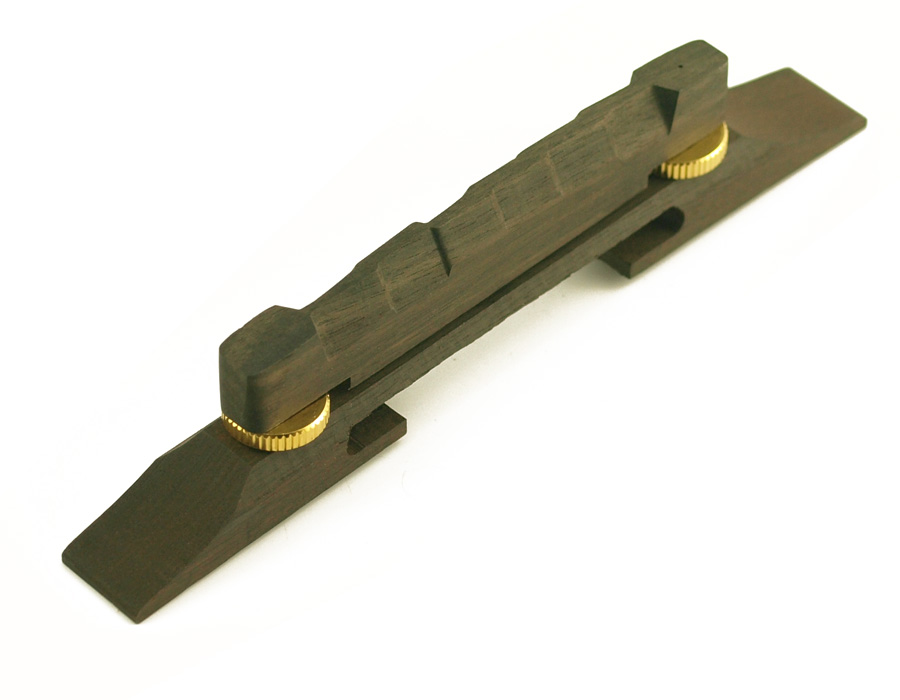
Jazz guitar bridge

Early electric guitars were basically modified archtop acoustics, which carried on using traditional rosewood (or ebony) archtop bridges with carved ”steps” presetting the intonation. Overall intonation adjustment was carried out by moving the whole bridge carefully closer to (or further away from) the neck.

****

Fender 52 Reissue

The advent of the – much clearer-sounding – solidbody electric guitar necessitated a more precise approach to the problem of intonation adjustment.

52 Tele Bridge

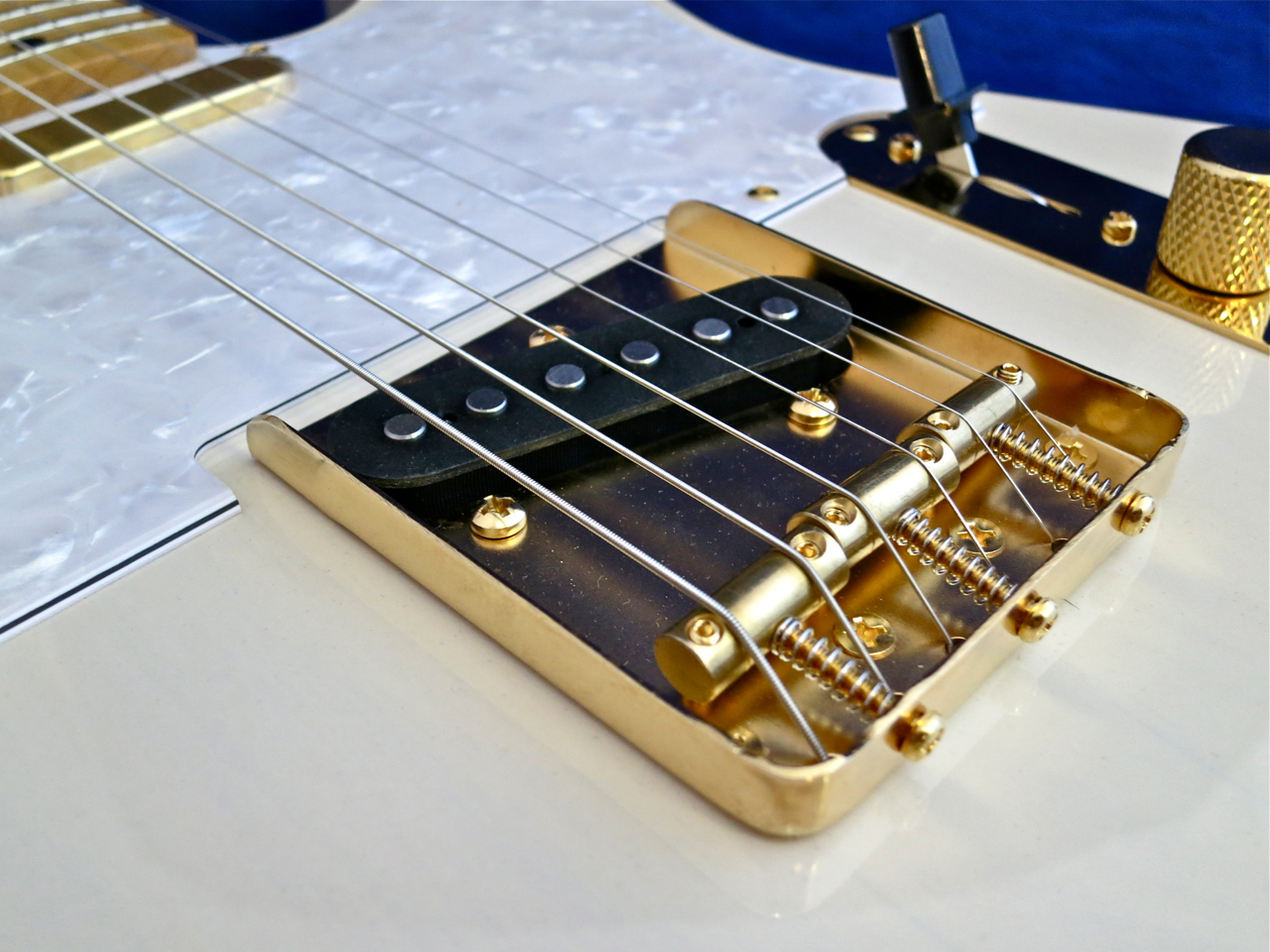
Leo Fender’s novel Esquire/Broadcaster/Telecaster-bridge featured a mounting plate for the bridge pickup, as well as individual action adjustment for each string, and octave compensation in string pairs.
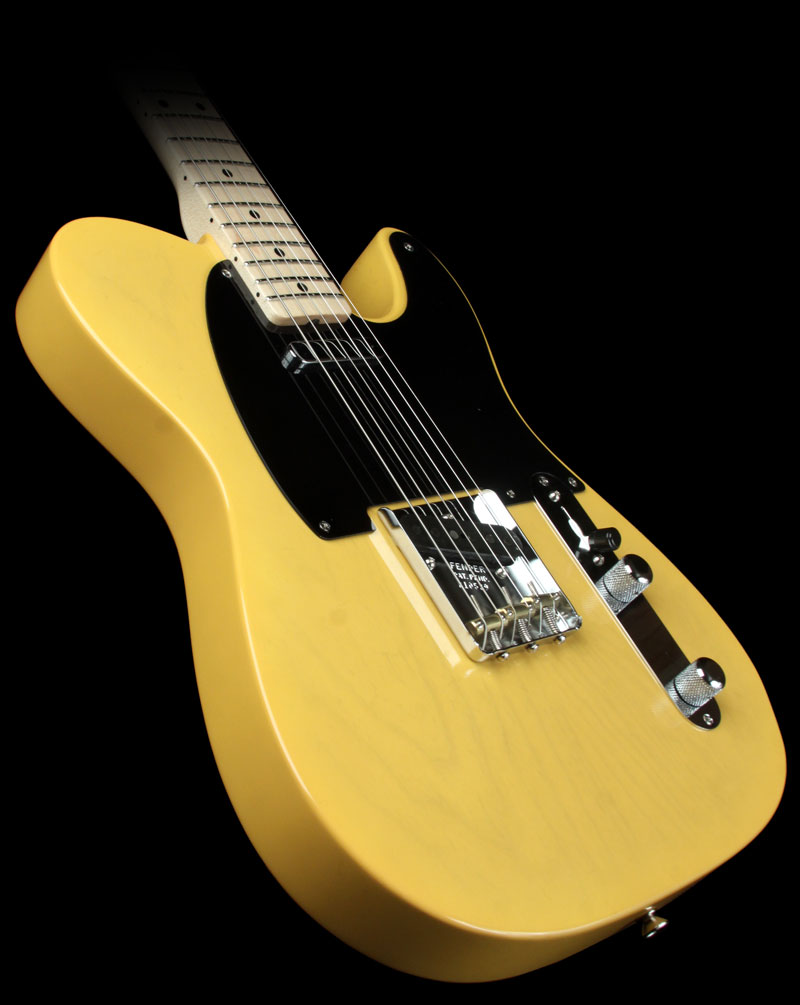
Fender_Custom_Shop_52_Telecaster_Nocaster_Blonde_R10539_1

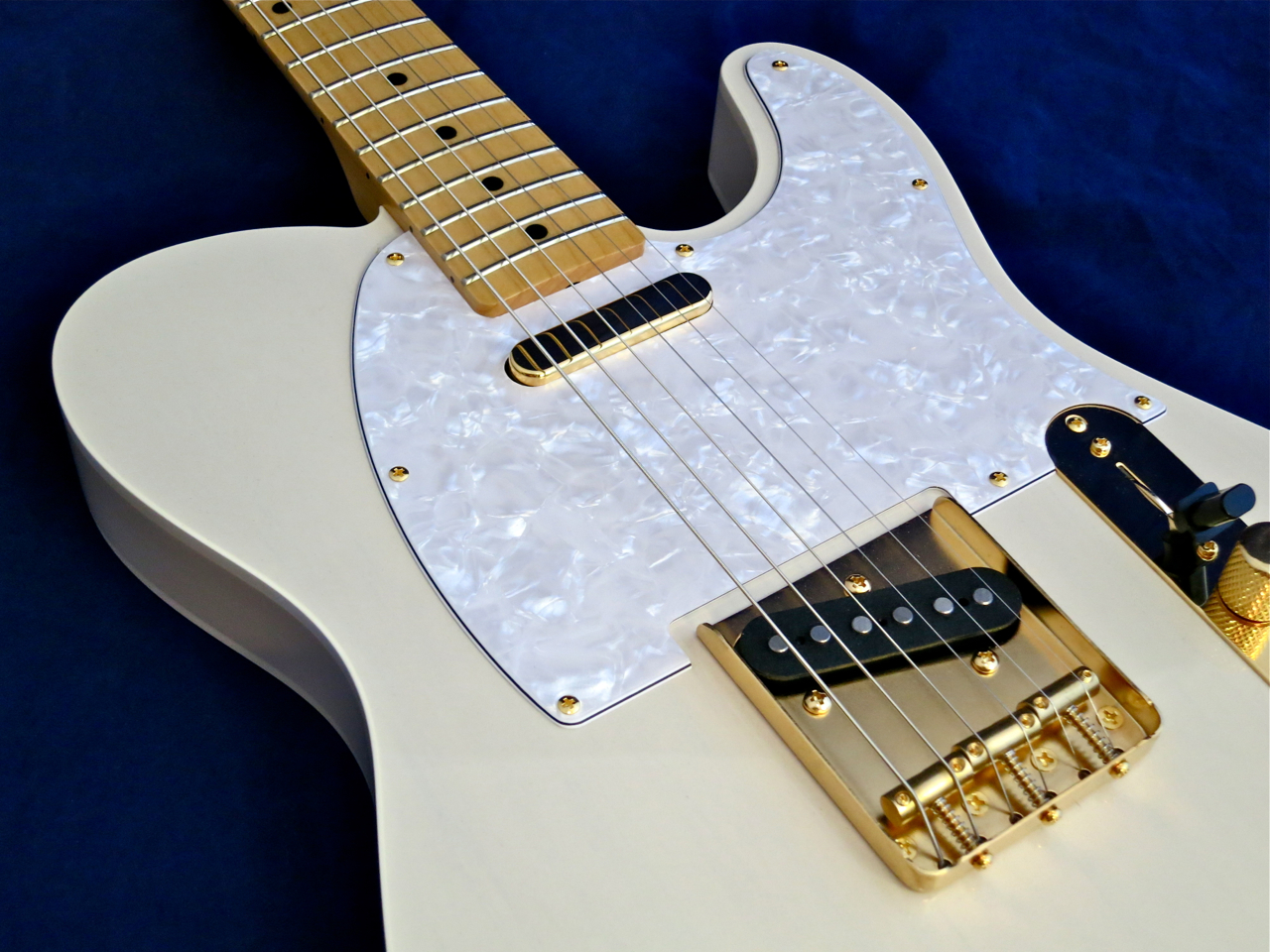
Fender’s Telecaster bridge assembly plays a huge part in this model’s distinctive, twangy tone, laying the foundation for the model’s classic status.

close-up Fender bridge

brucke-und-ta

Over the course of the 1950s and 60s, Fender experimented with different saddles – smooth brass, smooth steel, threaded steel, and steel saddles with a single notch per string – but the basic, three-saddle formula stayed firmly in place. You got fantastic tone, but not perfectly spot-on intonation.

****

70s Fender six-saddle

Twenty years after the original launch of Fender’s first solidbody electric, things had evolved.

In 1952 the original three-saddle bridge was less of a compromise, because the regular string sets of that time (012s or 013s) had a wound g-string. With a wound g-string the biggest step in intonation adjustment was between the b- and the g-string, and, as they were catered for by different saddles, a good, working compromise could be found.

By the late Sixties, ”slinky” string sets with plain g-strings had become the norm. This shifted the intonation step between the highest wound string and the lowest plain string onto a single, rigid bridge saddle (for the D- and g-string).

Fender retained the traditional three-saddle bridge on its standard Telecaster, but introduced six-saddle bridges on many of its new models in the Seventies. Pictured above is the six-saddle bridge from a (second version) Custom Telecaster (introduced in 1972).

Although this bridge finally offered perfect intonation, some players criticised this type of bridge for ”sounding” thinner (or brighter) than the original version. This might also have been due to changes in the precise specifications of the bridge pickup at that time, though.

Hipshot 6-saddle

Modern Fender 6-saddle

More recent six-saddle designs by makers like Hipshot, Gotoh or Fender are based on a thicker bridge plate. These are perfectly serviceable, modern designs, which offer precise intonation. Many Tele-anoraks still steer clear of these bridge types, however, because the more rigid bridge plate tends to tame the bridge pickup’s twang noticeably.

****

Another approach to better intonation on a Telecaster is to keep the twang-enhancing three-saddle ashtray bridge in place, but modify the saddles.

Joe Barden angled

Pickup specialist Joe Barden came up with angled brass saddles in his design for the late Tele-master Danny Gatton.
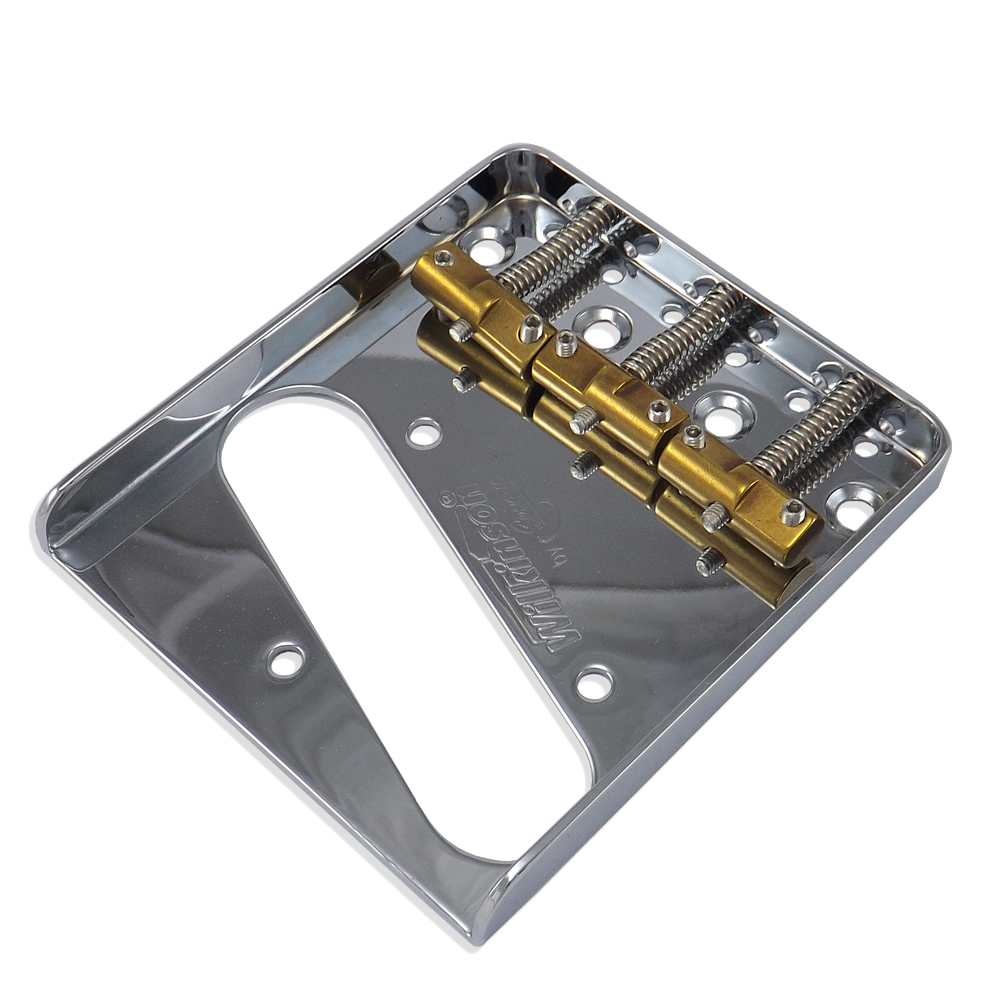
Wilkinson

Graph Tech

Wilkinson’s and Graph Tech’s designs have two different, preset jump-off points per saddle – one for each string.

These three approaches (Barden, Wilkinson, and Graph Tech) work very well in providing good intonation, while keeping the Telecaster-tone intact, as long as you use string sets with a plain g-string.

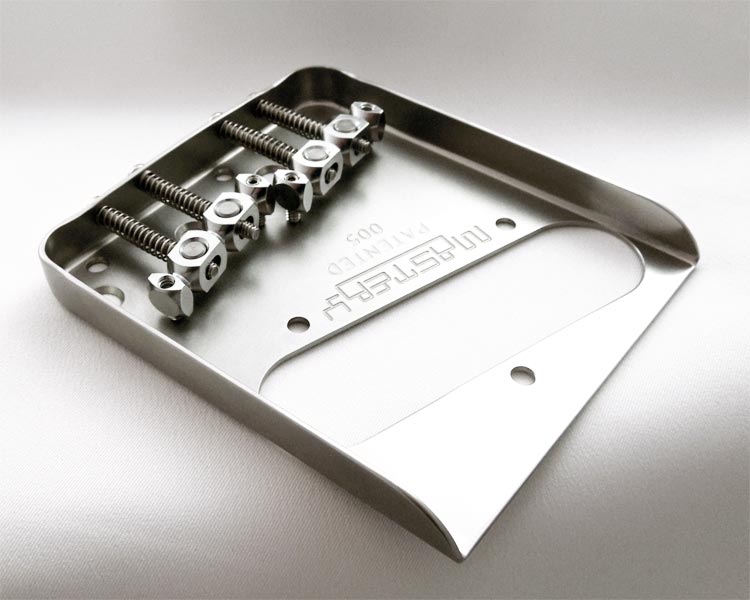
pivoting brass saddles

Mastery stainless steel

If you want to retain your three-saddle twang, but want to have more freedom in choosing your string gauges, the best way to go are saddles with an angle adjustment. Good examples are Wilkinson’s replacement brass saddles (above), or this stainless steel Tele-bridge by Mastery.

****
p1_u2nu2p1fg_so

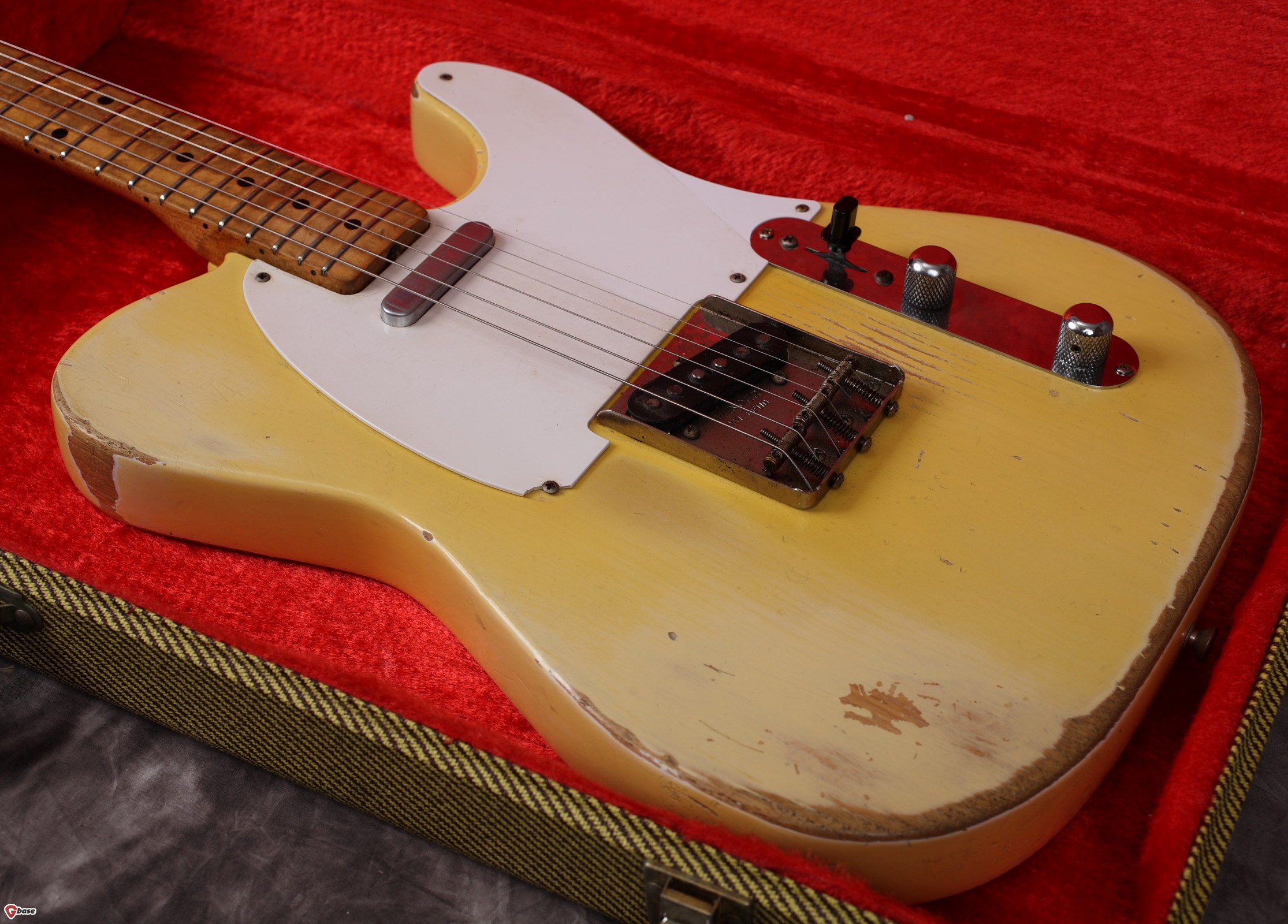
How come that the vintage-type Fender Telecaster, with all its intonation flaws, is still in production and still very successful? The answer is that people have always been creative in working out solutions to design shortcomings.

In the Telecaster’s case this means finding a way to ”sweeten” the guitar’s slightly flawed intonation.

Here are three (of a myriad of) possible approaches:

1.) The fifty percent approach

After you’ve put on a set of new strings, use your digital tuner to set the (12th fret) intonation correctly for both E-strings, as well as the g-string (I call them the most critical strings). Then tune your guitar by tuning the open E-strings and the g-string to pitch. The remaining three strings (A, D, and b) are then tuned, so that the pitch at the seventh fret is correct (giving you E, a, and f#).

The A-, D-, and b-strings will be a little off in their intonation going up (or down) from the seventh fret, but overall the pitch will be much sweeter, than if you had tuned these strings to their correct open string pitches. You can then fine-adjust your sweetening by ear, using first position chords as a reference.

2.) Tuner sweetening

After you’ve put on a set of new strings, use your digital tuner to set the (12th fret) intonation, so that each string pair is slightly off in an approximately even way. With the E- and A-pair this would mean that the E-string’s intonation comes out slightly sharp, while the A-string’s intonation is a tiny bit flat. The next pair would see the D-string a bit flat, while the (plain) g-string is a tad sharp. The last pair would have the b-string a bit sharpish, with the e-string a little flat. Then tune the guitar by tuning all strings, so the pitch is correct at the seventh fret.

Now all strings will be a little off in their intonation going up (or down) from the seventh fret, but overall the pitch will be much sweeter, than if you had tuned them to their correct open string pitches. You can then fine-adjust your sweetening by ear, using first position chords as a reference.

3.) Sweetening to the A

After you’ve put on a set of new strings, use your digital tuner to set the (12th fret) intonation, so that each string pair is slightly off in an approximately even way. With the E- and A-pair this would mean that the E-string’s intonation comes out slightly sharp, while the A-string’s intonation is a tiny bit flat. The next pair would see the D-string a bit flat, while the (plain) g-string is a tad sharp. The last pair would have the b-string a bit sharpish, with the e-string a little flat. Then tune your guitar by first tuning the open A-string to pitch. Next, tune all the other strings by ear, using the A-string as your reference:

• E-string at the fifth fret against open A

• D-string at the seventh fret against open A (or A-string 12th fret harmonic)

• g-string at the second fret against open A (or A-string 12th fret harmonic)

• b-string at the tenth fret against open A (or A-string 12th fret harmonic)

• e-string at the fifth fret against open A (or A-string 12th fret harmonic)

You can then fine-adjust your sweetening by ear, using first position chords as a reference.

****

Remember, none of the above tuning tips is set in granite. Tuning and intonating a three-saddle Telecaster is a dark art, and most players have developed their own way of sweetening their guitar’s intonation. Let your ears be your guide!

Fender-American-Special-Telecaster-Olympic-White-Maple004

Review: Vox Mark III + Mark V

****

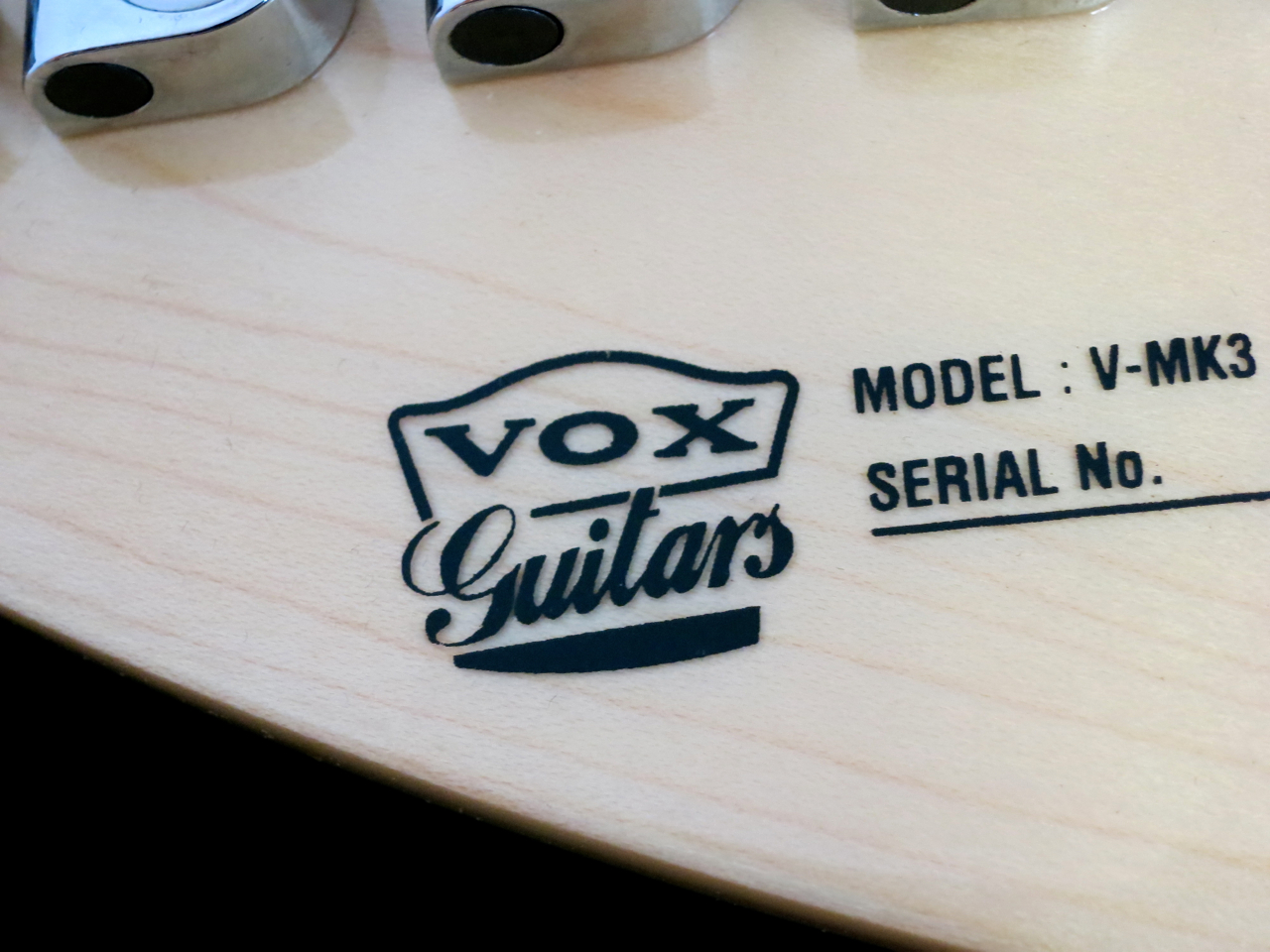
Vox Mark III – headstock logo

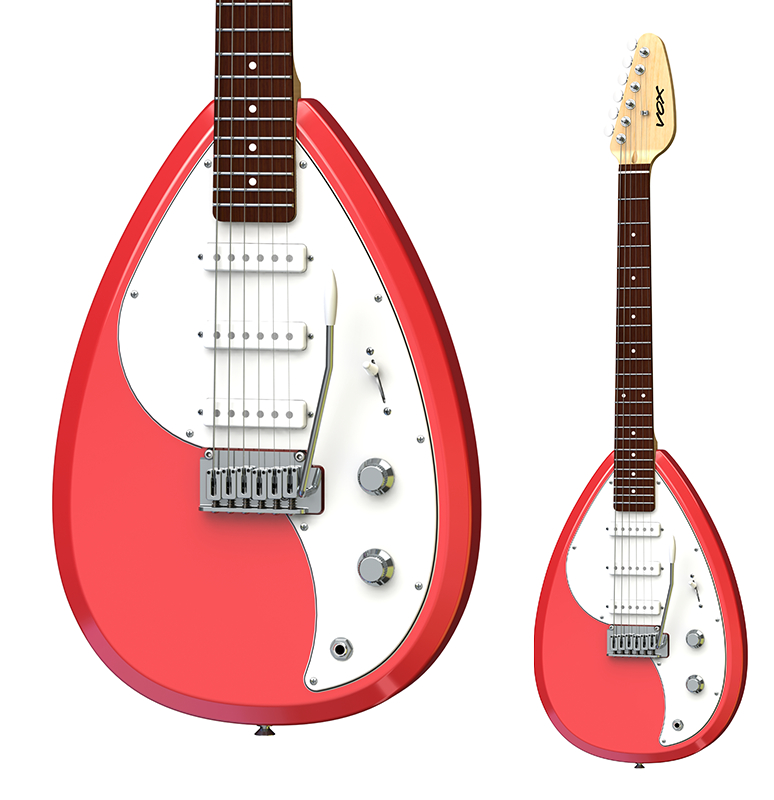
Vox’ legendary Sixties guitars, the Mark III and the Mark V – aka the Vox Teardrop (Mark III) and the Vox Phantom (Mark V) – have made a comeback! These Brit Boom-guitars have claimed their place in history as the chosen axes of the Rolling Stones’ original lead guitarist Brian Jones (Mark III) and Tony Hicks (Mark V) of the Hollies.

But the best news is that these new versions come at quite affordable prices!

****

Vox Mark III – full front

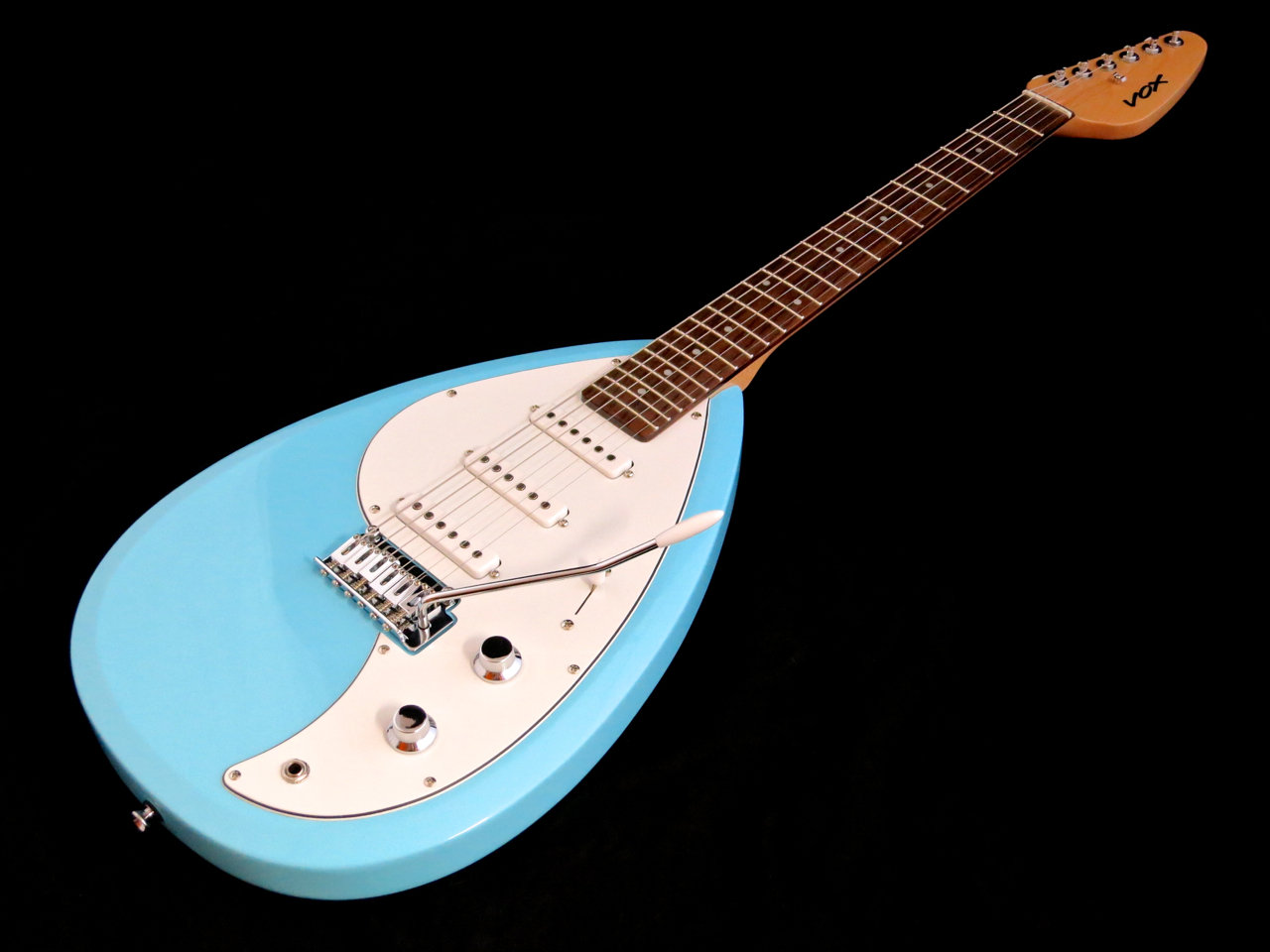
The Vox Mark III (current price in Finland approx. 355 €) sports a symmetrical body, which calls to mind old lutes or the Greek bouzouki.

This reissue comes with a short 22-inch scale (610 mm), making it an ideal beginner’s instrument.

Vox Mark III – full back

The Teardrop is build from a basswood body and a bolt on maple neck. The fretboard is crafted from rosewood.

Vox Mark III – headstock

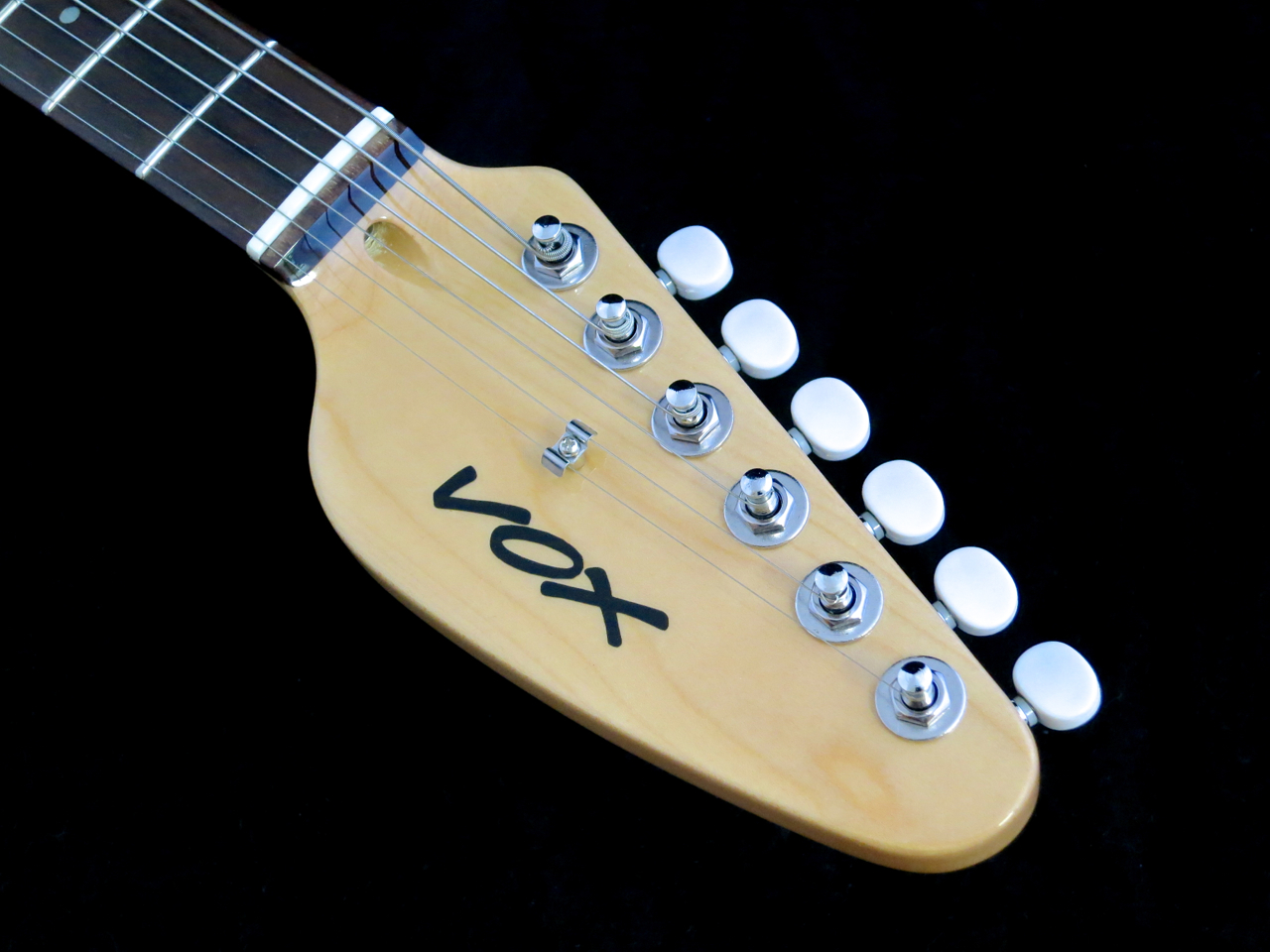
The new, smaller version of the legendary Vox-headstock cuts down on neck weight and thus improves the guitar’s balance.

Vox Mark III – tuners

The Mark III is equipped with a set of modern sealed tuning machines that sport off-white buttons.

Vox Mark III – vibrato

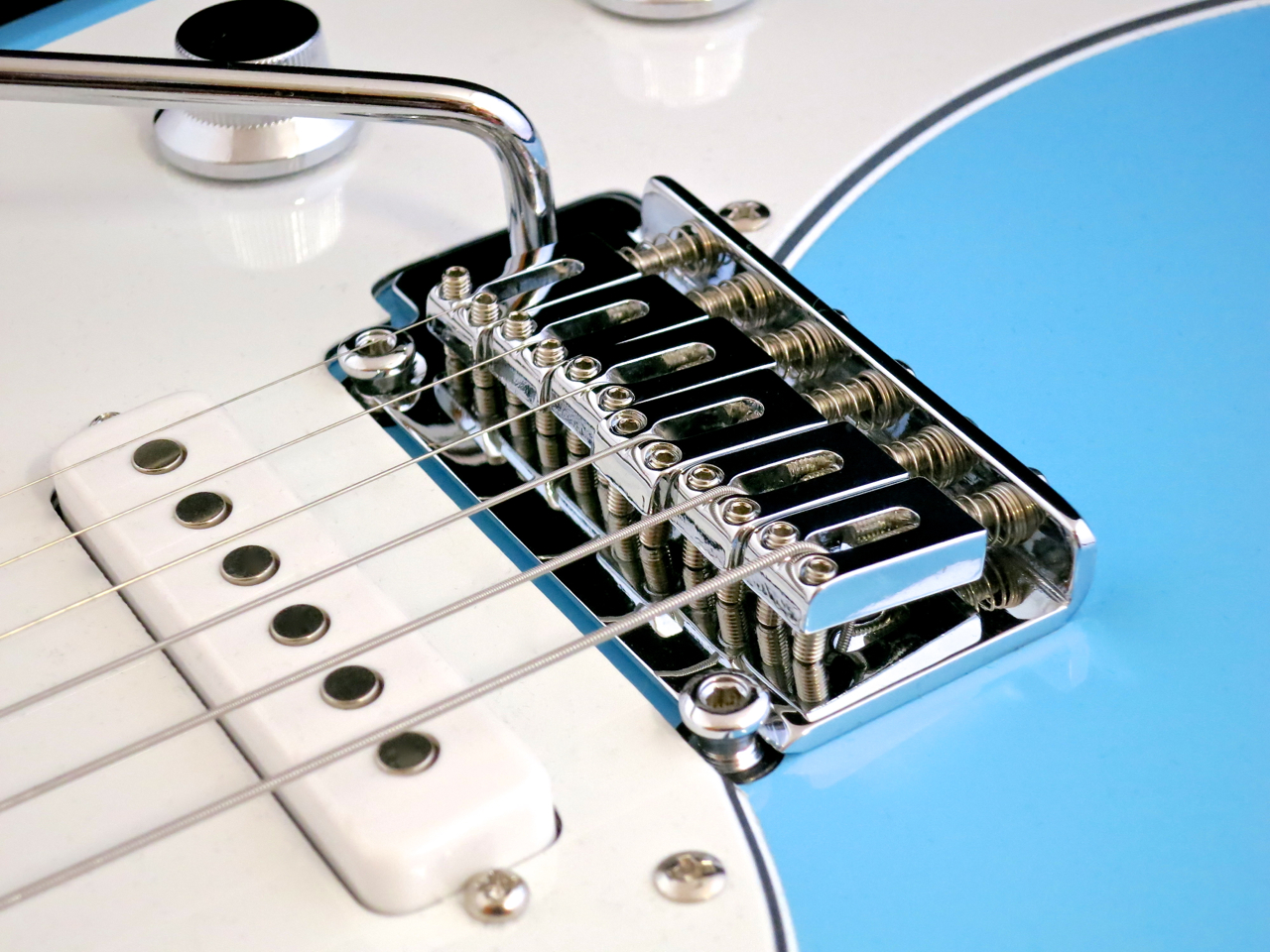
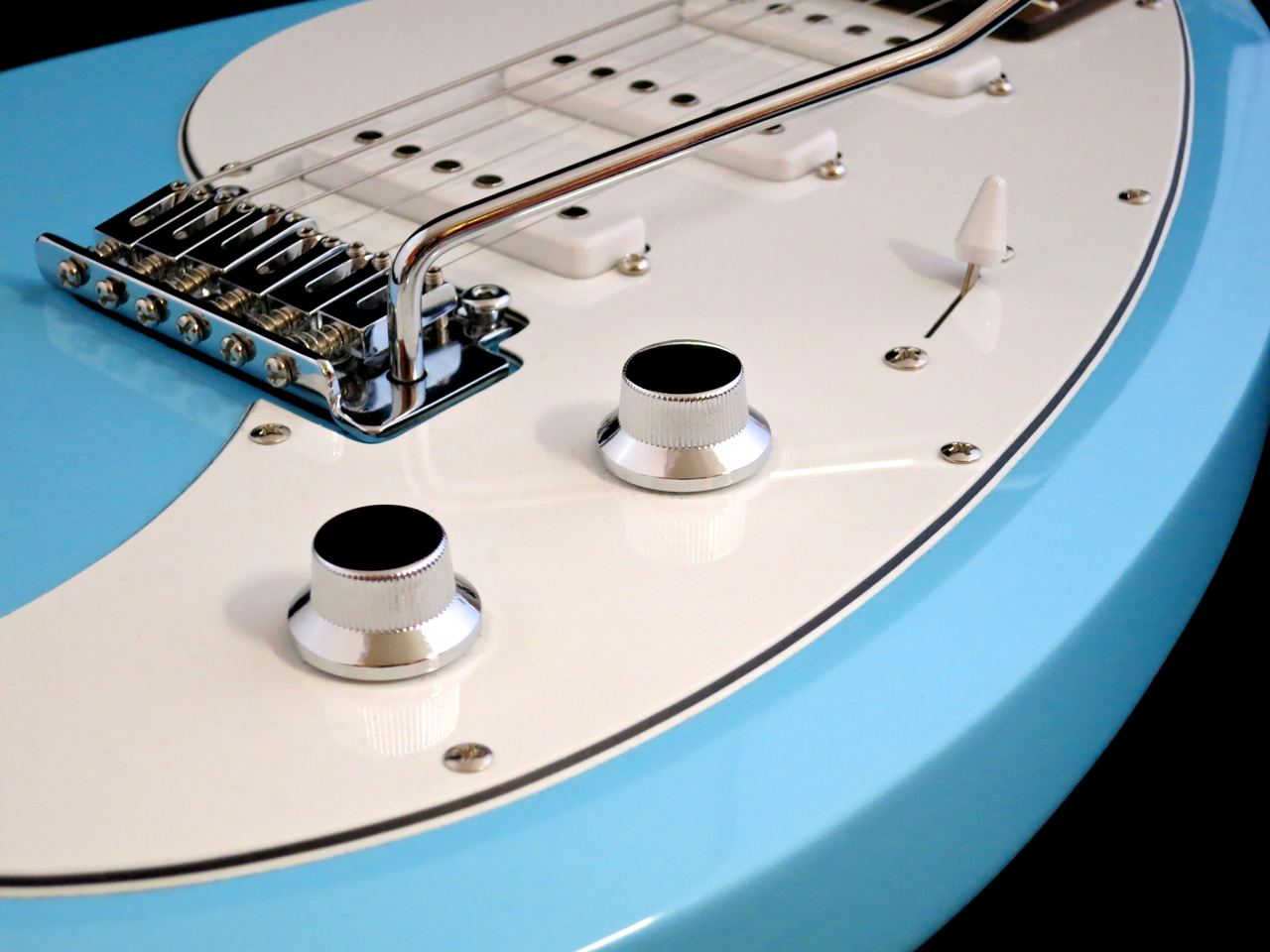
Both Voxes comes with a modern two-post vibrato bridge.

Vox Mark III – vibrato springs

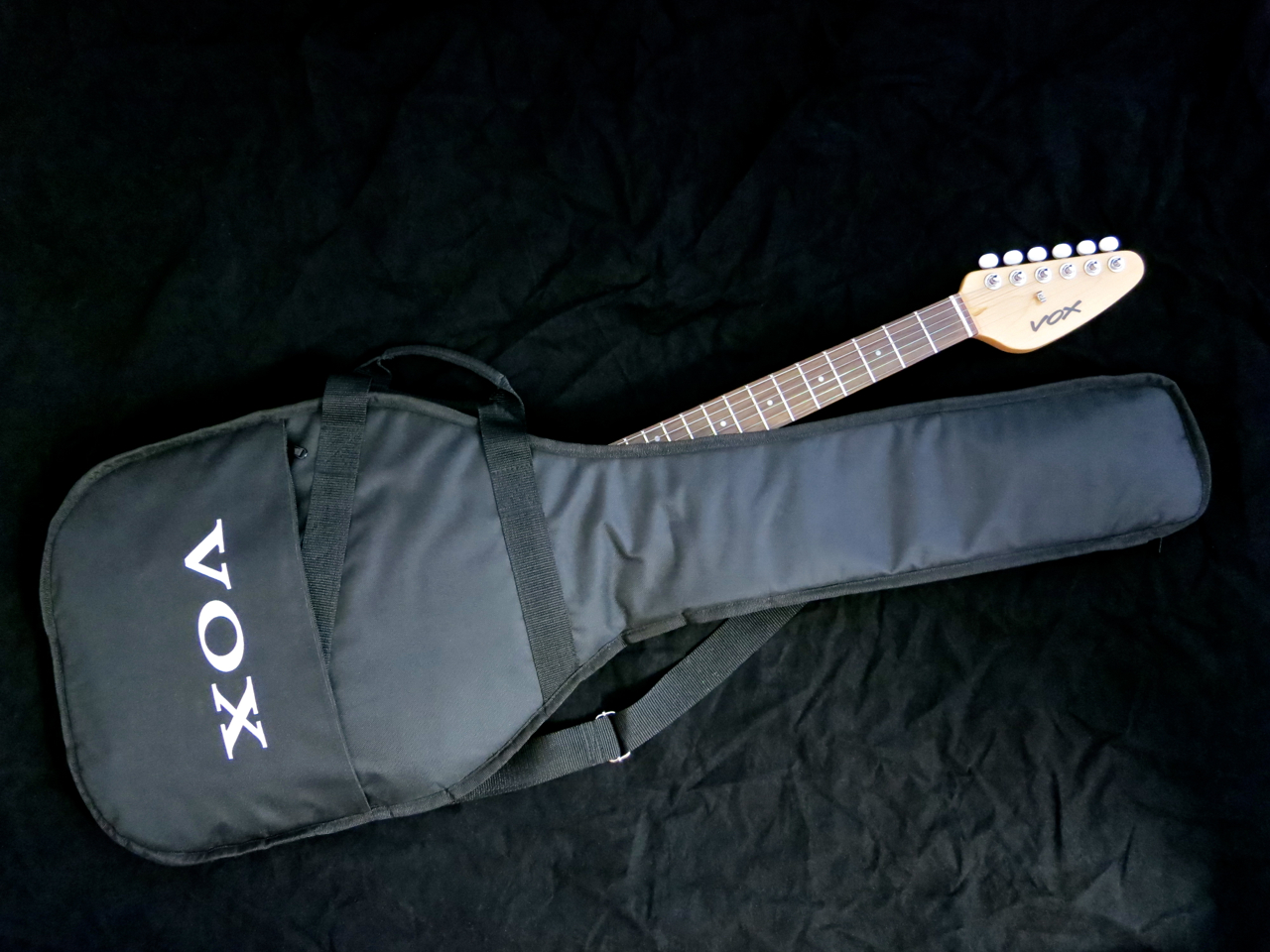
Three springs are factory-installed, but you can find a fourth spring in the gig bag, should you desire a firmer feel.

Vintage-snobs probably will scoff at the narrow tremolo block used in this vibrato. There are claims that this type of block diminishes sustain, but on the other hand Floyd Rose systems also use narrow blocks and nobody’s complaining.

Vox Mark III – pickups

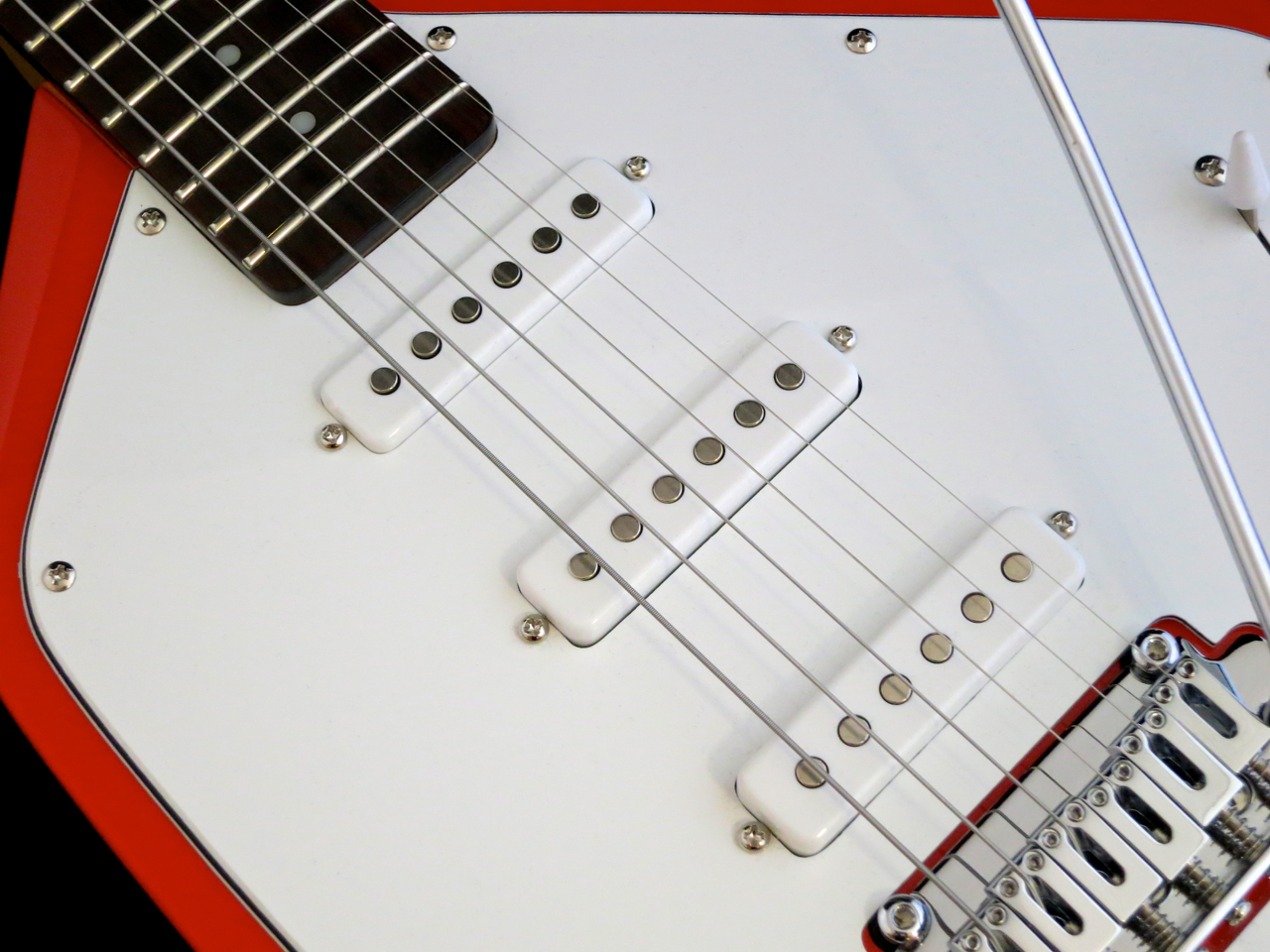
There are three singlecoil pickups mounted to the three-ply scratchplate, meaning we’re in for a nice, sprightly vintage tone in all likelihood.

Vox Mark III – controls

The traditional passive electronics comprise a five-way switch, as well as a master volume and a tone control.

****

Vox Mark V – full front

The basic ingredients for the angular Vox Mark V (current price in Finland approx. 355 €) are virtually the same as in the Mark III.

Vox Mark V – full back

There’s a rib cage contour in the Phantom’s basswood body, too.

Vox Mark V – headstock

Both Mark-models feature gloss-finished maple necks with truss rod access at the headstock.

Vox Mark V – vibrato

The vibrato bridge is surrounded the large pickguard of the Mark V.

Vox Mark V – frets

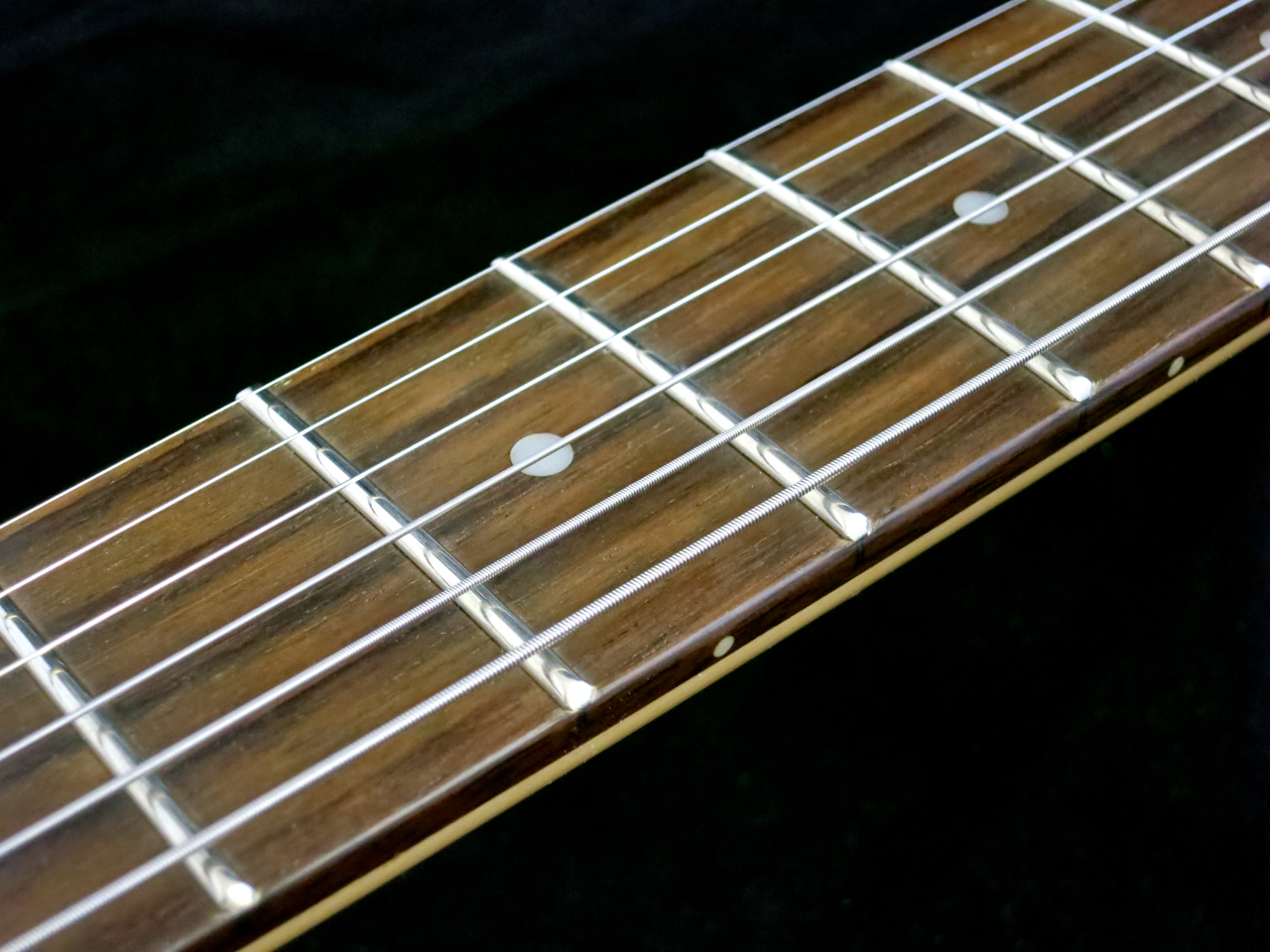
Both Voxes display very decent fretwork, which isn’t always a given in this affordable price bracket. The frets have been polished to a gleam and all ends have been rounded off carefully.

Vox Mark V – pickups

Vox Mark V Phantom is equipped with the same pickups…

Vox Mark V – controls

…and the same controls as the Mark III Teardrop.

Vox Mark III – gigbag

Both Vox Marks are sold with a nice gig bag!

****

Vox Mark III – beauty shot 2

The Vox Mark III is a very compact electric guitar, with our test sample also being nicely light in weight. Due to its very rounded body the Terdrop probably isn’t the most comfortable ”sofa guitar”, but on a strap everything feels hunky dory.

The whole vibe is quite reminiscent of, say a Fender Mustang, no doubt because of the Mark III’s short-scale, gloss-finished neck with its round D-profile. With the factory set of 010-gauge strings bending is very effortless. Our test sample’s very low – but buzz free – action (E: 1,6 mm/e: 1,3 mm) pays testament to Vox’ workmanship. Used in moderation the vibrato works decently, but don’t expect Floyd Rose-style return to pitch.

The Vox Mark III rings very nicely with a fresh and firm acoustic voice.

The clean tones of the Vox Teardrop works great in a Sixties-style poppy, jangly context or for funky workouts:

Add some overdrive for some nice, sinewy vintage Rock-sounds:

Vox Mark III – back beauty

****

Vox Mark V – beauty shot 2

The Vox Mark V doesn’t seem to want to fit in you lap – it takes a while to get comfortable, when playing sitting down. Our lightweight test samples’ strapped-on balance proved to be excellent, though.

In most respects the Phantom feels very similar to the Mark III, with its comfortable, vintage-style neck. Straight out of the gig bag our test sample’s intonation was a bit fruity on a couple of strings, but this was corrected in no time with the correct screwdriver. The action was set quite low (E: 1,6 mm/e: 1,1 mm) on the Mark V, too. And again, as with the Teardrop, the Phantom still rang nice and true without any rattling. Well done, Vox! Should you prefer a slightly firmer feel, I’d suggest moving up to a 011-gauge string set.

Both Voxes sound almost indentical – acoustically, as well as amped up.

This is the Mark V Phantom’s clean delivery, played through a small Marshall combo:

I really like the gritty and slightly rude Rock-sounds you can get from the Mark V:

Vox Mark V – back beauty

****

Vox Mark III – beauty shot 1

Due to their unconvetionally-shaped bodies, Vox’ Mark range always runs the slight risk of being regarded as mere ”poser guitars”, better suited to music videos that to actually making music.

This is far from the truth, though, because these new versions of the Mark III and Mark V really deliver nicely vintage-tinged sounds for the Pop, Beat, Blues, and Classic Rock genres. In view of their pocket-friendly prices, quality workmanship, quirky looks and great sounds, I can only applaud Vox for bringing back the classic Teardrop and Phantom models. Try one!
Vox Mark V – beauty shot 1

****

Vox Mark-series guitars

Vox Mark III Teardrop – 355 €

Vox Mark V Phantom – 355 €

Finnish distributor: EM Nordic

A big thank you goes to DLX Music Helsinki for the loan of the review guitars!
****

Pros (both models):

+ classic looks

+ workmanship

+ playability

+ sound

+ gig bag included in price

Cons (both models):

– not the most natural ”sofa guitars”

Vox Mark III – Vox crest

Testipenkissä: Vox Mark III + Mark V

****

Vox Mark III – headstock logo

Voxin 1960-luvun Mark III- ja Mark V -kitarat – jotka tunnetaan myös nimillä Teardrop (Mark III) ja Phantom (Mark V) – ovat jälleen saatavissa musiikkikaupoista. Brittiboomi-mallien tunnetuimmat käyttäjät olivat 1960-luvulla Rolling Stonesien Brian Jones (Mark III) ja Hollies-yhtiön Tony Hicks (Mark V).

Todella ilahduttavaa on, että uusi Vox-kaksikko on saatavilla erittäin maltillisella hinnalla.

****

Vox Mark III – full front

Vox Mark III (355 €) muistuttaa symmetrisellä rungollaan hieman kreikkalaista busukia.

Uusintapainos valmistetaan lyhyellä 22-tuuman (610 mm) mensuurilla, minkä ansiosta se sopii hyvin myös nuorten soittimeksi.

Vox Mark III – full back

Lehmusrunkoon ruuvattu kaula on veistetty vaahterasta, ja Teardropin otelauta on palisanteria.

Vox Mark III – headstock

Legendaarinen Vox-lavan uusi versio on hieman pienempi kuin alkuperäinen ja mielestäni paljon alkuperäistä kätevämpi.

Vox Mark III – tuners

Nykyaikaisissa suljetuissa virittimissä on valkoisia muovinuppeja.

Vox Mark III – vibrato

Vox Mark III on varustettu nykyaikaisella vibratallalla.

Vox Mark III – vibrato springs

Tehtaalta Mark III ja Mark V lähtevät kolmella jousella varustettuina, mutta topatussa pussissa on pakattu vielä yksi jousi mukaan.

Vintage-snobit eivät luultavasti tykkää tämän vibran ohuesta blokista, koska sanotaan, että sustainin kannalta massiivisempi on parempi. Toisaalta myös Floyd Rose -vibroissa käytetään vintagea ohuempaa blokkia.

Vox Mark III – pickups

Vox-mallin kolmesta yksikelaisista voi varmasti odottaa raikasta soundia kuuskytluvun hengessä.

Vox Mark III – controls

Elektroniikka koostuu yhdestä viisipykäläisestä kytkimestä, sekä master tone- ja master volume -säätimistä.

****

Vox Mark V – full front

Kulmikkaan Vox Mark V:n (355 €) perusresepti on periaatteessa sama kuin Mark kolmosessa.

Vox Mark V – full back

Myös Fantomin lehmusrunkoon on lisätty mukavuusviiste soittajan kylkiluita/vatsaa varten.

Vox Mark V – headstock

Mark-mallien kaulat ovat samanlaisia, aina kiiltävää viimeistelyä myöten.

Vox Mark V – vibrato

Mark V:ssa kolmikerroksinen pleksi ympäröi kitaran vibratallaa.

Vox Mark V – frets

Vox-soittimien nauhatyö on yllättävän laadukasta, kun katsoo Mark-mallien hintalappuja. Nauhat on kiillotettu ja niidet päät on pyöristetty huolellisesti.

Vox Mark V – pickups

Vox Mark V Phantom -kitarassa käytetään samoja mikrofoneja…

Vox Mark V – controls

…sekä samaa elektroniikkaa kuin Mark III Teardropissa.

Vox Mark III – gigbag

Topattu pussi kuuluu Mark-malleissa hintaan!

****

Vox Mark III – beauty shot 2

Vox Mark III on erittäin kompakti kitara, ja testissä käynyt yksilö mukavan kevyt. Rungon pyöreän muotoilun takia Teardrop ei ole ehkä maailman luontevin ”sohvakitara”, mutta hihnan varressa kitaraa on hyvin mukava kantaa.

Lyhyen skaalan ja kiiltäväksi lakatun, pyöreällä D-profiililla varustetun kaulan ansiosta tällä Voxilla on samantyyppiset vibat kuin esimerkiksi Fenderin Mustang-mallissa, ja tehdaskieliä (010-satsi) on erittäin helppoa venyttää. Vaikka kielet oli säädetty hyvin lähelle otelautaa (E: 1,6 mm/e: 1,3 mm), Mark III Teardrop soi puhtaasti ja rämisemättä. Vibratalla toimii maltillisesti käytettynä hyvin, mutta Floyd Rosen haastajaksi sitä ei tietenkään ole.

Vox Mark III:n akustinen ääni on hyvin Fender-mainen, mutta samalla kauniin lämmin.

Vox Teardrop -mallin puhdas soundi sopii vaikkapa rautalankaan tai funk-musiikkiin:

Säröpuolella homman nimi on Vintage Rock:

Vox Mark III – back beauty

****

Vox Mark V – beauty shot 2

Vox Mark V on sylissä hieman vastahakoinen tapaus, ja hyvän soittoasennon löytämiseen menee tovi. Kevyt testiyksilö roikkuu kuitenkin hihnassa todella hyvässä tasapainossa.

Phantomin soittotuntuma on erittäin lähellä Teardrop-mallia, nimittäin vintage-tyylinen ja mukava. Testiyksilössä intonaatio oli säädetty kahdelle kielelle hieman nuotin vierestä, mutta homma hoitui nopeasti ristiruuvarilla. Kitaran tatsi oli säädetty myös Vox Mark V:ssa hyvin kevyeksi (E: 1,6 mm/e: 1,1 mm). Jos haluaa soittotuntumasta vielä kiinteämmän, suosittelisin pykälän paksumman 011-satsin käyttämistä.

Molemmat Vox-kitarat kuulostavat miltei samalta, sekä akustisesti että vahvistimen kautta soitettuina.

Tällainen on Mark V Phantomin puhdas soundi pienen Marshall-kombon kautta soitettuna:

Mark V:n Rock-soundista löytyy mukavasti karkeutta ja asennetta:

Vox Mark V – back beauty

****

Vox Mark III – beauty shot 1

Vox Mark -mallien erikoisten runkomuotojen takia voisi helposti erehtyä lokeroimaan Teardrop- ja Phantom-kitarat pelkiksi ”musiikkivideo-kitaroiksi”.

Totuus on kuitenkin, että sekä Mark III että Mark V toimivat ilahduttavan hyvin Pop-, Beat-, Blues- ja Classic Rock -genreissä. Uudet Voxit tarjoavat roimasti vastinetta rahalle, koska niiden soitettavuus ja soundi ovat enemmän kuin kohdillaan. Suosittelen!

Vox Mark V – beauty shot 1

****

Vox Mark -sarjan kitarat

Vox Mark III Teardrop – 355 €

Vox Mark V Phantom – 355 €

Maahantuoja: EM Nordic

Suuri kiitos DLX Musiikille testisoittimien lainaamisesta!

****

Plussat (molemmat mallit):

+ ulkonäkö

+ työnjälki

+ soitettavuus

+ soundi

+ topattu pussi kuuluu hintaan

Miinukset (molemmat mallit):

– eivät istu kovin luontevasti sylissä

Vox Mark III – Vox crest

”Pisara” ja ”Fantomi” tulivat takaisin – Vox Mark III ja Mark V

markiii_rd

markv_wh

1960-luvun legendaariset Vox III– (aka Teardrop) ja Mark V -mallit (aka Phantom) ovat tulleet takaisin, uusina edullisina versioina.

Kitaroissa on ruuvikaula vaahterasta palisanteriotelaudalla, sekä lehmusrunko. Molemmat mallit ovat lyhytskaalaisia (61 cm), ja niissä on kolme yksikelaista mikrofonia ja moderni Strato-tyylinen vibratalla.

Kitaroiden lisäksi Vox tarjoaa nyt myös lyhytskaalaisia Mark III ja Mark V -bassoja.

lg_markiii_bass_sf

lg_markv_bass_bk

****

Maahantuoja: EM Nordic

Review: Tokai TTE-55

****

Tokai TTE-55 – beauty shot

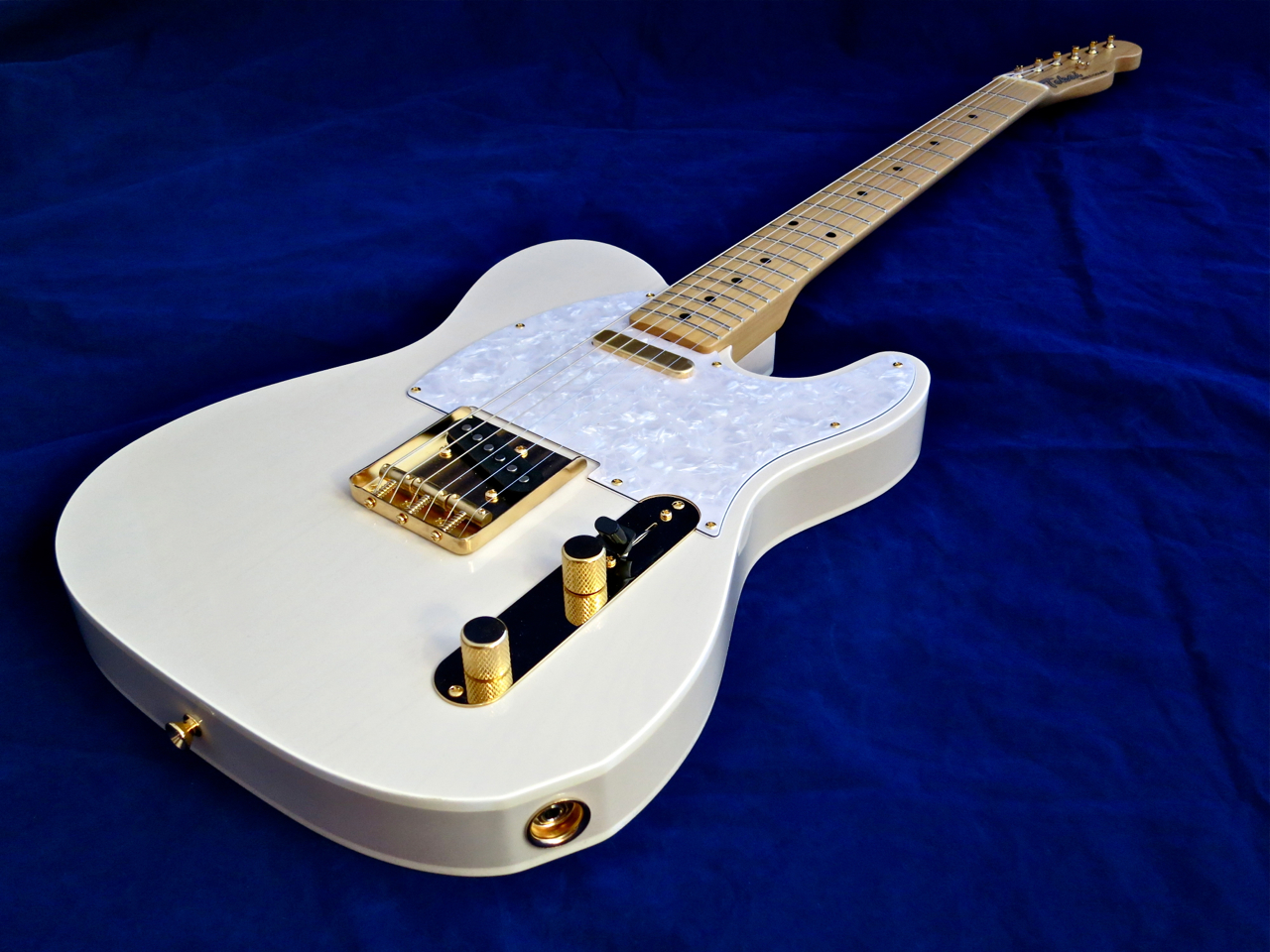
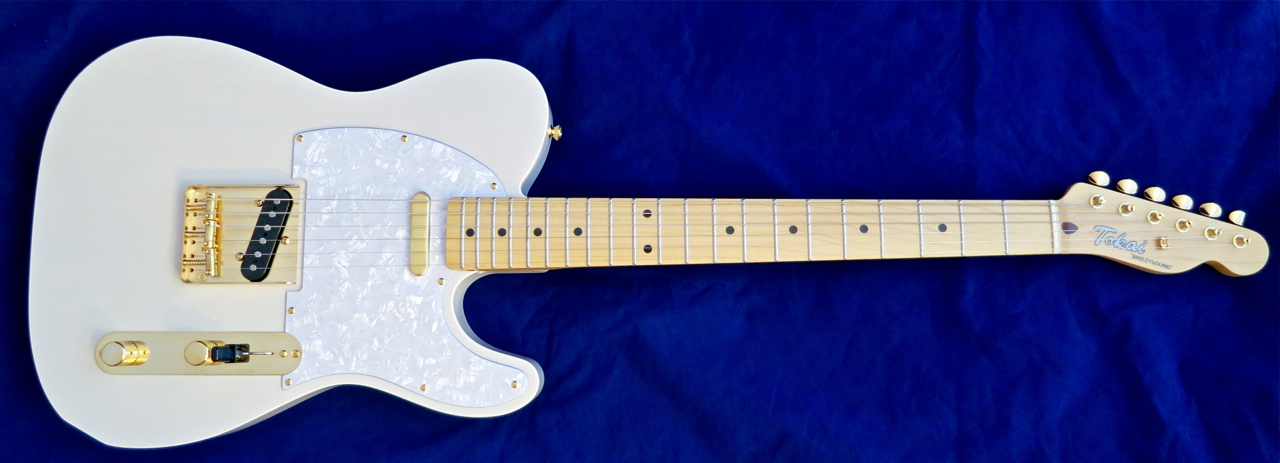
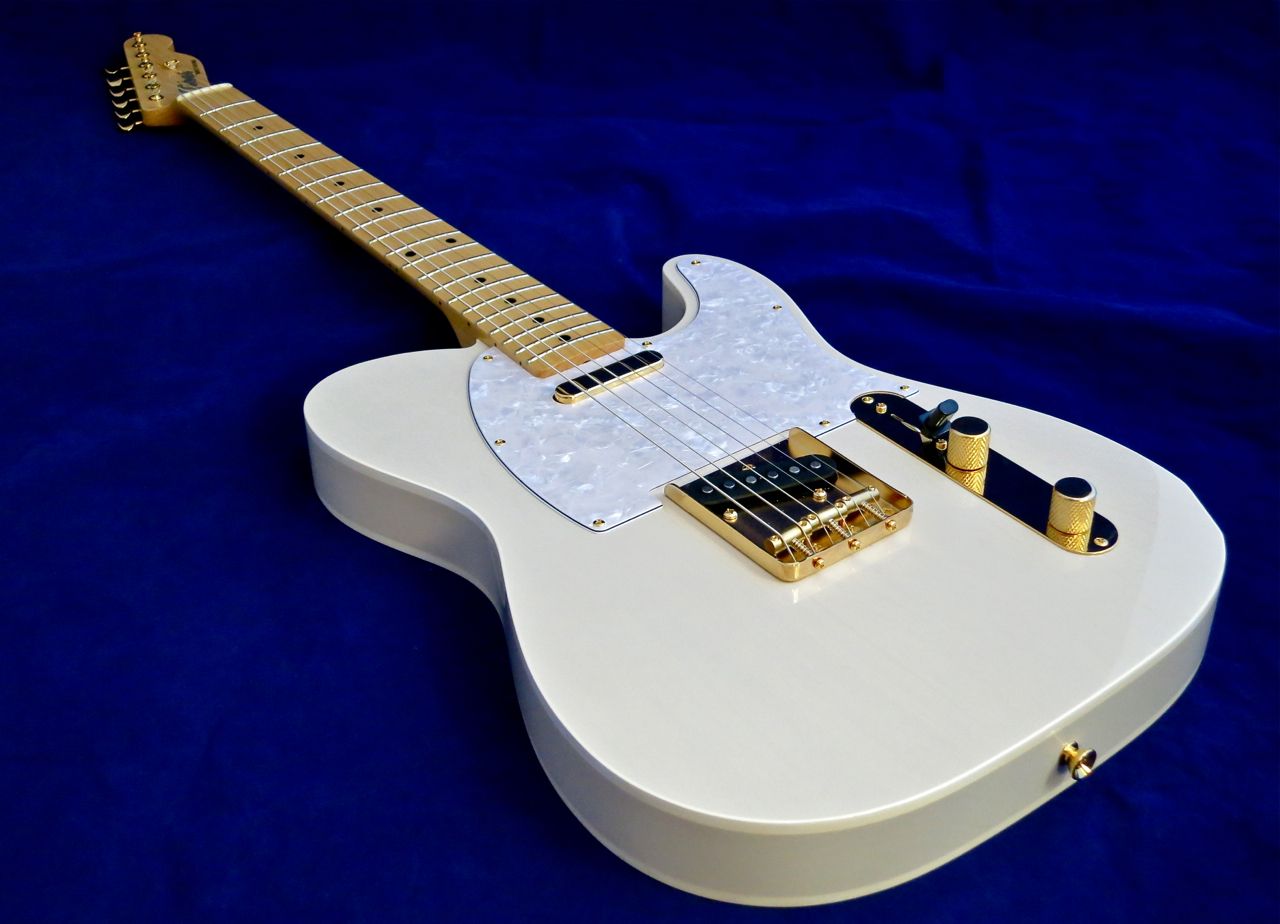
Tokai’s TTE-55 is the company’s newest made-in-Japan Tele-type guitar. The TTE-55 isn’t meant to be a dead-on copy of a Tele from a certain period, but rather something like a Tokai ”best-of-vintage-T” model.

****

Tokai TTE-55 – full front

You can get the Tokai TTE-55 (current price in Finland: 848 €) with either a one-piece maple neck – as on our White Blonde review sample – or equipped with a rosewood ’board.

The finish of the hardware is dependent on the body’s colour – in our case here the Tokai sports gold coloured hardware, which embues this Tele with a good dose of Mary Kaye -style panache.

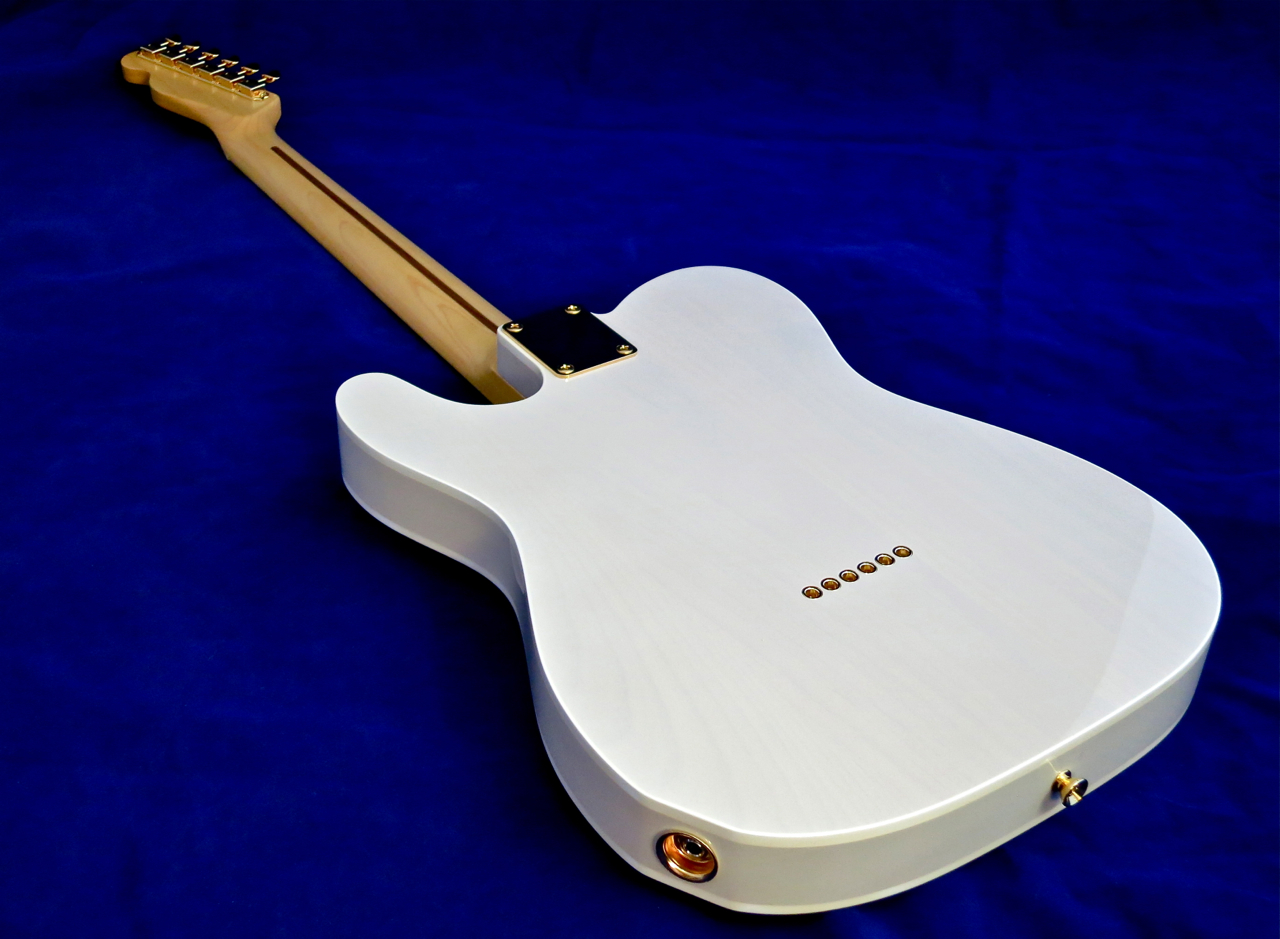
Tokai TTE-55 – full back

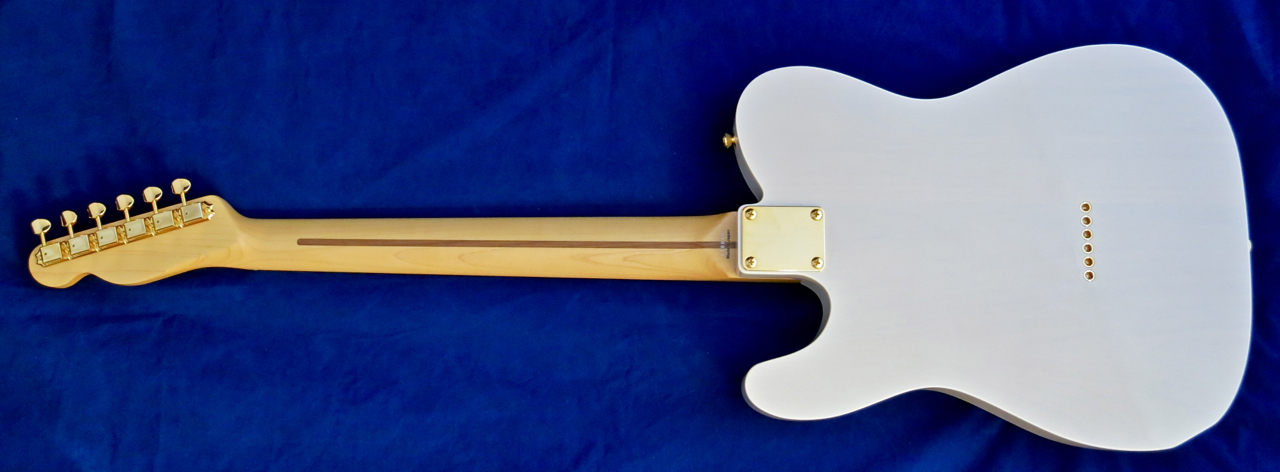
The 1950s-type neck is screwed to a Sixties-type, bound alder body.

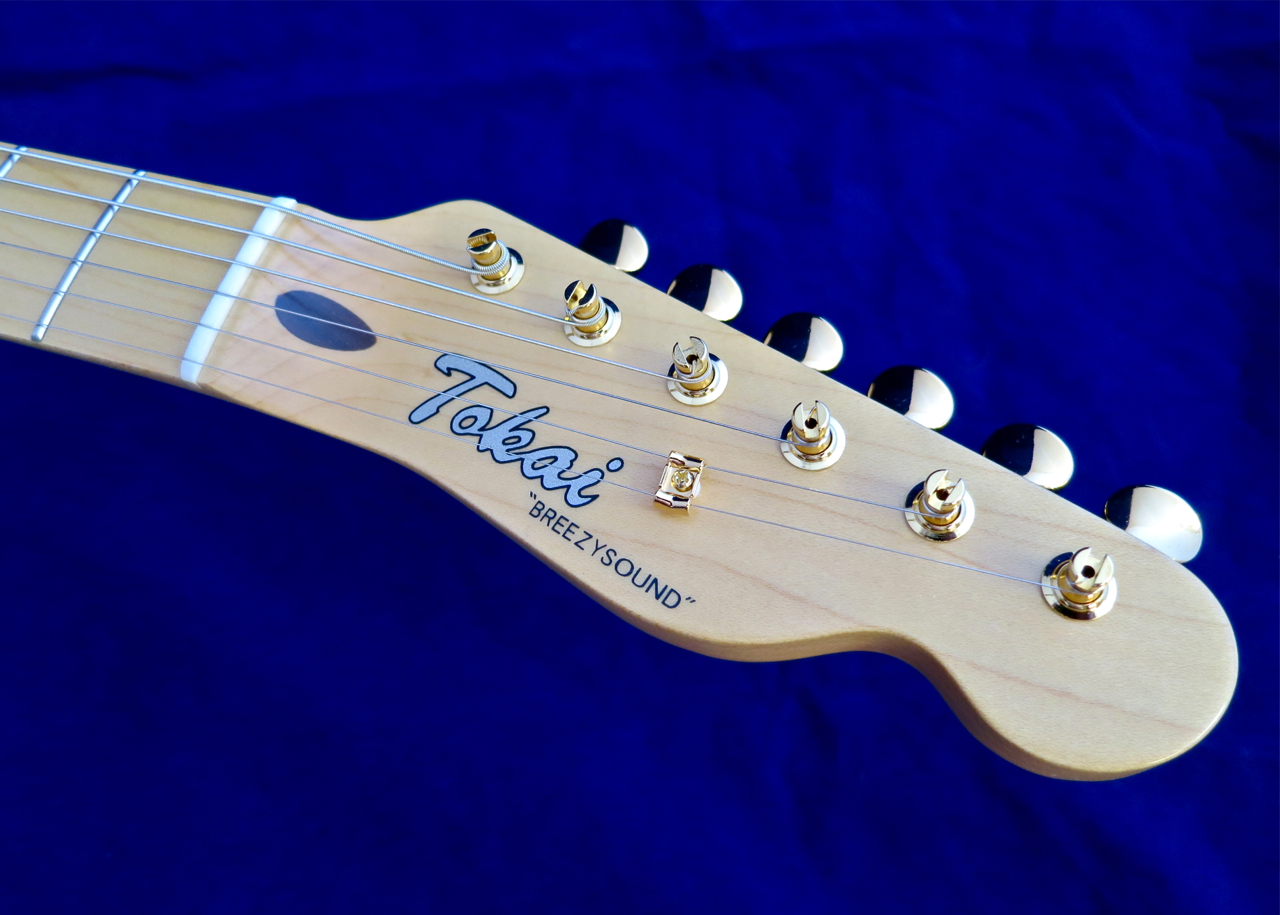
Tokai TTE-55 – headstock

The fine Kluson-copies have one major advantage over more recent designs: The nifty safety posts prevent any sharp string ends from sticking out.

The neck’s silky-smooth satin finish is a much more modern feature, as are the 21 jumbo-sized frets. Top marks to Tokai for the quality of their fretwork!

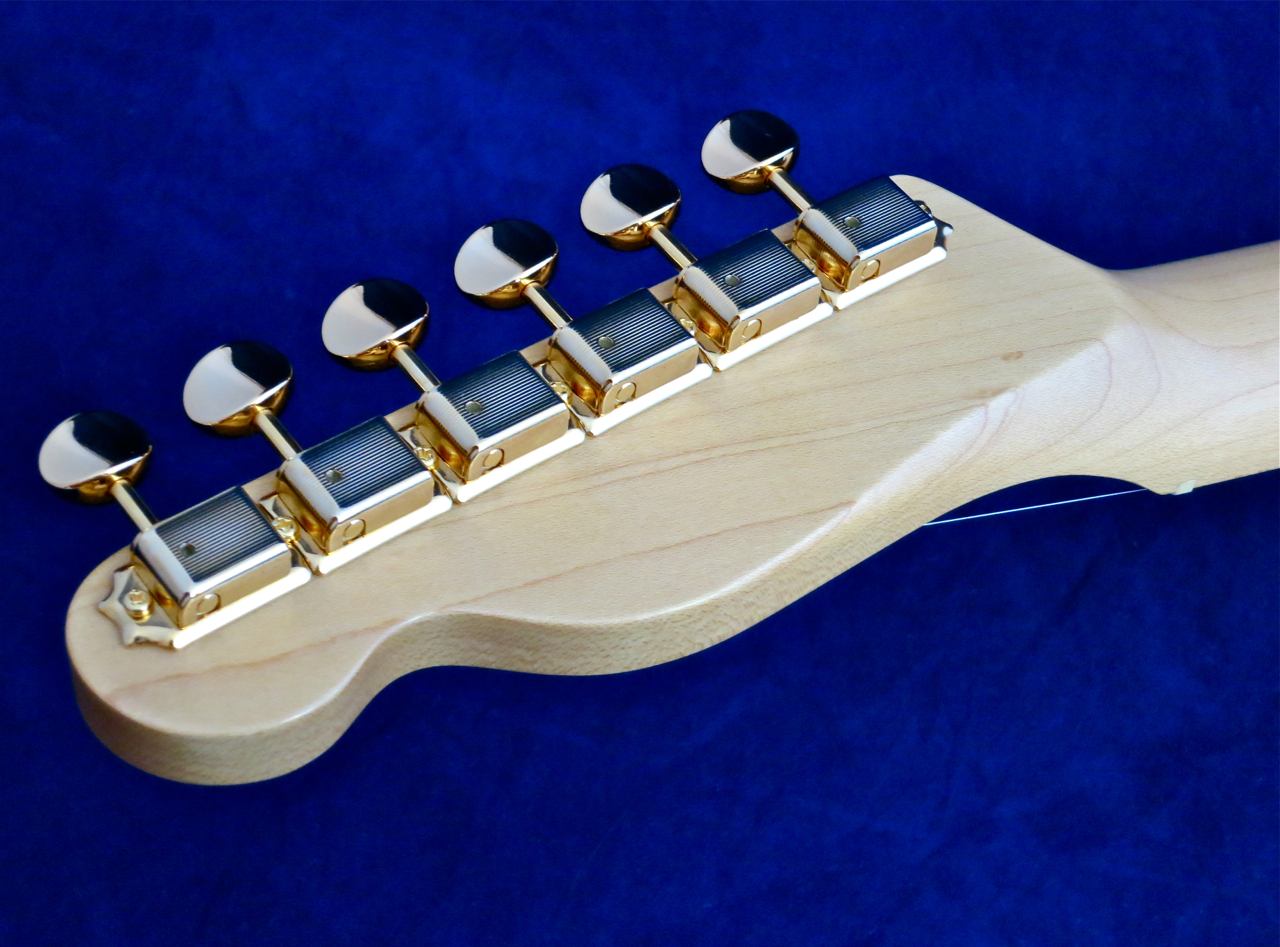
Tokai TTE-55 – tuners

Timeless beauty – this is a sight I never tire of…

Tokai TTE-55 – bridge

Not all vintage Tele-bridges are the same – the originals went through several different incarnations between the Fifties and now, especially when it comes to the material chosen for the bridge saddles. Tokai’s TTE-55 sports brass saddles, which is the favourite choice for juicy tone among vintage-anoraks.

Tokai TTE-55 – pickups

You can’t get more classic than a Tele-type guitar’s pickup combination: The neck pickup is a narrow unit with its own shielding metal cover, while the chunkier bridge pickup hangs suspended from the bridge plate.

Tokai TTE-55 – controls

In 1967 the Tele’s switching was changed to the now-classic format of a three-way blade switch for neck/both/bridge-selection, coupled with a master volume and a master tone control.

Tokai TTE-55 – switch and pots

There’s plenty of quality on offer on the inside, too, with a VLX-switch and two GF-potentiometers keeping everything ship-shaped.

Vintage-freaks will dig the cloth-covered pickup leads.

****

Tokai TTE-55 – beauty shot 2

Our test sample is of medium weight – not the lightest Tele ever, but still really comfortable.

The Tokai TTE-55’s neck profile is right down my alley, being a well rounded and full ”D”. There’s enough girth to support your left hand nicely, but not so much as to make the neck feel too fat or hard to play .

The neck’s contemporary finish and the modern fret size result in a very bend-friendly guitar with a great action (E: 1,9 mm/e: 1,7 mm).

There’s always a bit of compromise to deal with, when it comes to a Tele-type guitar’s intonation, due to the shared bridge saddles. But this hasn’t prevented this guitar type to become a true classic – the compromises one can deal with easily.

It’s build like a Tele, it looks like a Tele, and, yes, the Tokai TTE-55 also sounds like a Tele. The neck pickup’s tone is well rounded, with a charming amount of wood to its voice. Put the switch in the middle position, and you’ll be funking with Prince. And the bridge pickup on its own is bang on the money for all your Country-, Rockabilly- and Blues-needs.

Tokai’s TTE-55 is a great choice for virtually any musical genre, with the exception of Hard Rock and Metal.

In light of this review, I can only conclude that the Tokai TTE-55 is a top quality instrument, which offers a whole lot of Tele-goodness at a very moderate price.

Tokai TTE-55 – back beauty

****

Tokai TTE-55

848 €

Finnish distributor: Musamaailma

****

Pros: 

+ value-for-money

+ workmanship

+ component quality

+ neck profile

+ sound

Cons:

– the traditional Tele-compromise when it comes to exact intonation

Testipenkissä: Tokai TTE-55

****

Tokai TTE-55 – beauty shot

Japanissa valmistettu Tokai TTE-55 on firman uusin Tele-tyylinen kitara. TTE-55 ei ole yhden tietyn Tele-aikakauden jäljitelmä, vaan Tokain tyylikäs ”Best of” -ratkaisu.

****

Tokai TTE-55 – full front

Tokai TTE-55 (848 €) on saatavilla joko yksiosaisella vaahterakaulalla – niin kuin White Blonde -värinen testiyksilö – tai palisanteriotelaudalla.

Rungon väristä riippuu myös metalliosien väri – tässä tapauksessa kaikki metalliosat ovat kullanväriset, mikä antaa soittimelle varsin juhlallisen ulkonäön.

Tokai TTE-55 – full back

1950-luvun tyylinen vaahterakaula on kiinnitetty vankalla ruuviliitoksella 1960-luvun tyyliseen, reunalistoitettuun leppärunkoon.

Tokai TTE-55 – headstock

Laadukkaiden Kluson-kopioden suuri etu on, että terävät kieltenpäät on upotettu turvallisesti viritystapeihin.

Mattaviimeisteltyyn kaulaan on asennettu 21 jumbo-kokoista nauhaa. Erittäin siisti nauhatyö saa täydet pisteet!

Tokai TTE-55 – tuners

Ajatonta kauneutta on aina kaunista katsella…

Tokai TTE-55 – bridge

Vintage-tyylisestä Tele-tallasta on olemassa muutamia eri versioita, mikä tulee tallapalojen materiaaliin. Tokai käyttää TTE-55-mallissaan Tele-fanien keskuudessa suosituinta vaihtoehtoa messinkitallapaloilla.

Tokai TTE-55 – pickups

Mikrofonivarustus on sekin jo pitkään ollut klassikko: kaulan lähelle on sijoitettu melko kapea, metallikuorella varustettu mikrofoni, kun taas leveämpi tallamikrofoni on kiinnitetty suoraan tallan pohjalevyyn.

Tokai TTE-55 – controls

Vuoden 1967:n kytkentä on Tele-tyylisissä kitaroissa se kultastandardi – kolmiasentoinen kytkin, sekä master volume ja master tone.

Tokai TTE-55 – switch and pots

Pölysuojattu VLX-kytkin ja laadukkaat GF-potentiometrit takaavat, että Tokain huoltoväleistä tulee tosi pitkät.

Vintage-fanit taas iloitsevat mikkijohtojen kangaseristyksistä.

****

Tokai TTE-55 – beauty shot 2

Testisoitin kuuluu painonsa suhteen mukavaan keskikastiin – se ei ole raskas kitara, muttei myöskään erityisen kevyt.

Tokai TTE-55:n kaulaprofiili on suoraan minun henkilökohtaiselta suosikkiosastolta – se on pyöreä ja täyteläinen D-profiili. Kaulassa on juuri sillä oikealla tavalla paksuutta, joka tukee sopivasti vasenta kättä, olematta kuitenkaan liian paksu tai raskas soittaa.

Nykypäiväiset paksut nauhat, sekä kaulan satiinipintainen viimeistely, tekevät hyvin säädetyn (E: 1,9 mm/e: 1,7 mm) kitaran soittamisesta helppoa. Etenkin venytykset onnistuvat huomattavasti paremmin kuin pienillä vintage-tyylisillä nauhoilla.

Tele-tyylisen kitaran intonaatiossa on aina tietynlainen kompromissi, kun tallassa on ainoastaan kolme tallapalaa, mutta tämä ei estänyt, että tästä kitaratyypistä tuli klassikko. Kompromissin kanssa voi hyvinkin elää.

Se on rakennettu kuin Tele, se näyttää Teleltä, ja, kyllä, Tokai TTE-55 myös kuulostaa Teleltä. Kaulamikrofonin soundi on herkullisen pyöreä, mutta samalla myös notkea. Kytkimen keskiasennosta taas saa selville, mista Prince sai aikoinaan oman Funkynsä. Ja tallamikrofonin twang on herkkua Countryn, Rockabillyn ja Bluesin ystäville.

Tokai TTE-55 sopii loistavasti lähes kaikkiin musiikkityyleihin – ainoastaan Metal-osastolle en suosittelisi tätä vintage-tyylistä mallia.

Tokai TTE-55 – puhdas

Tokai TTE-55 – säröllä

Tämän testin perusteella voin vain todeta, että Tokai TTE-55 on hyvin laadukas ja perinnetietoinen Tele-tyylinen kitara erittäin kohtuulliseen hintaan.

Tokai TTE-55 – back beauty

****

Tokai TTE-55

848 €

Maahantuoja: Musamaailma

****

Plussat: 

+ hinta-laatu-suhde

+ työnjälki

+ osien laatu

+ kaulaprofiili

+ soundi

Miinukset:

– perinteinen Tele-kompromissi soundin ja intonaation välillä

Review: Hagström Viking Deluxe Baritone + Northen Swede

This time Kitarablogi.com takes a closer look at two Hagström models: The Viking Deluxe Baritone is a Far-Eastern-made baritone-guitar, made to please the friends of low riffage, while the brand-new Northen Swede is part of the company’s new high-end line, which is handmade in the Czech Republic.

****

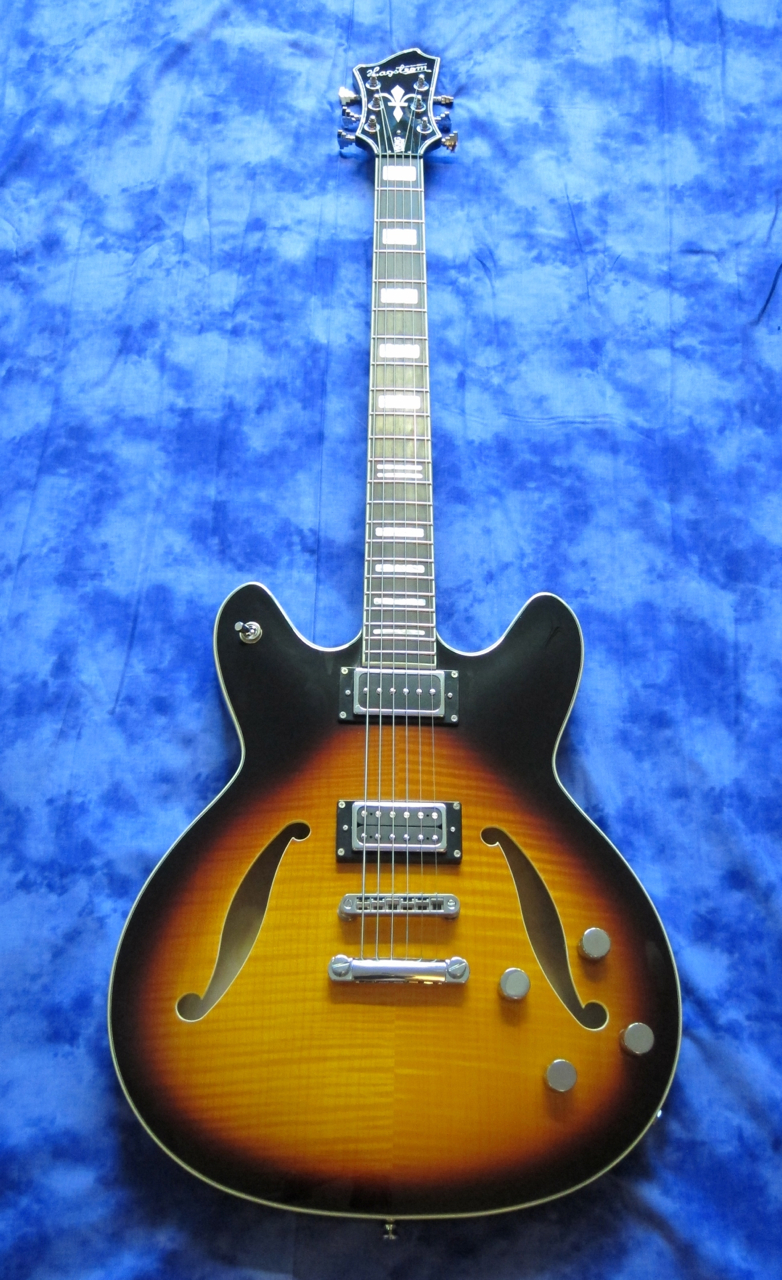
The Hagström Viking Baritone (current street price in Finland approx. 600 €) is the newest addition to the Viking-line. This long-necked beauty features the same stylish curves and semi-acoustic body as the rest of the Vikings.

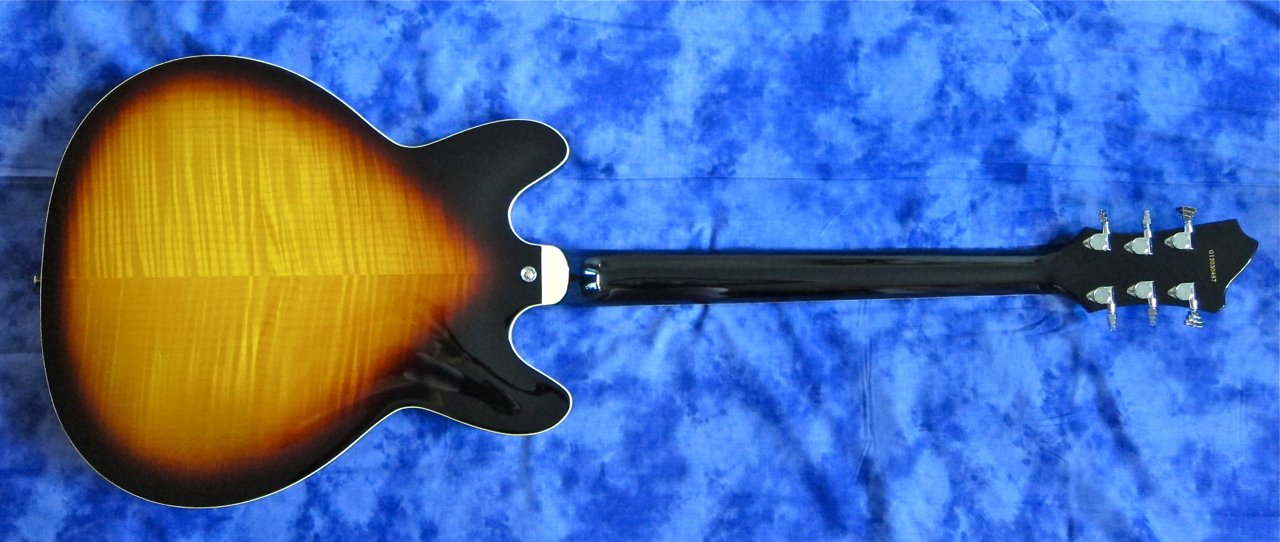
The Canadian hard rock maple neck is glued into the body, which is made from flame maple plywood.

Hagström’s headstock simply oozes 1950’s glitzy panache, with its ultraclean binding and inlay work.

The top nut, on the other hand, is up to date, using self-lubricating, man-made Black Tusq.

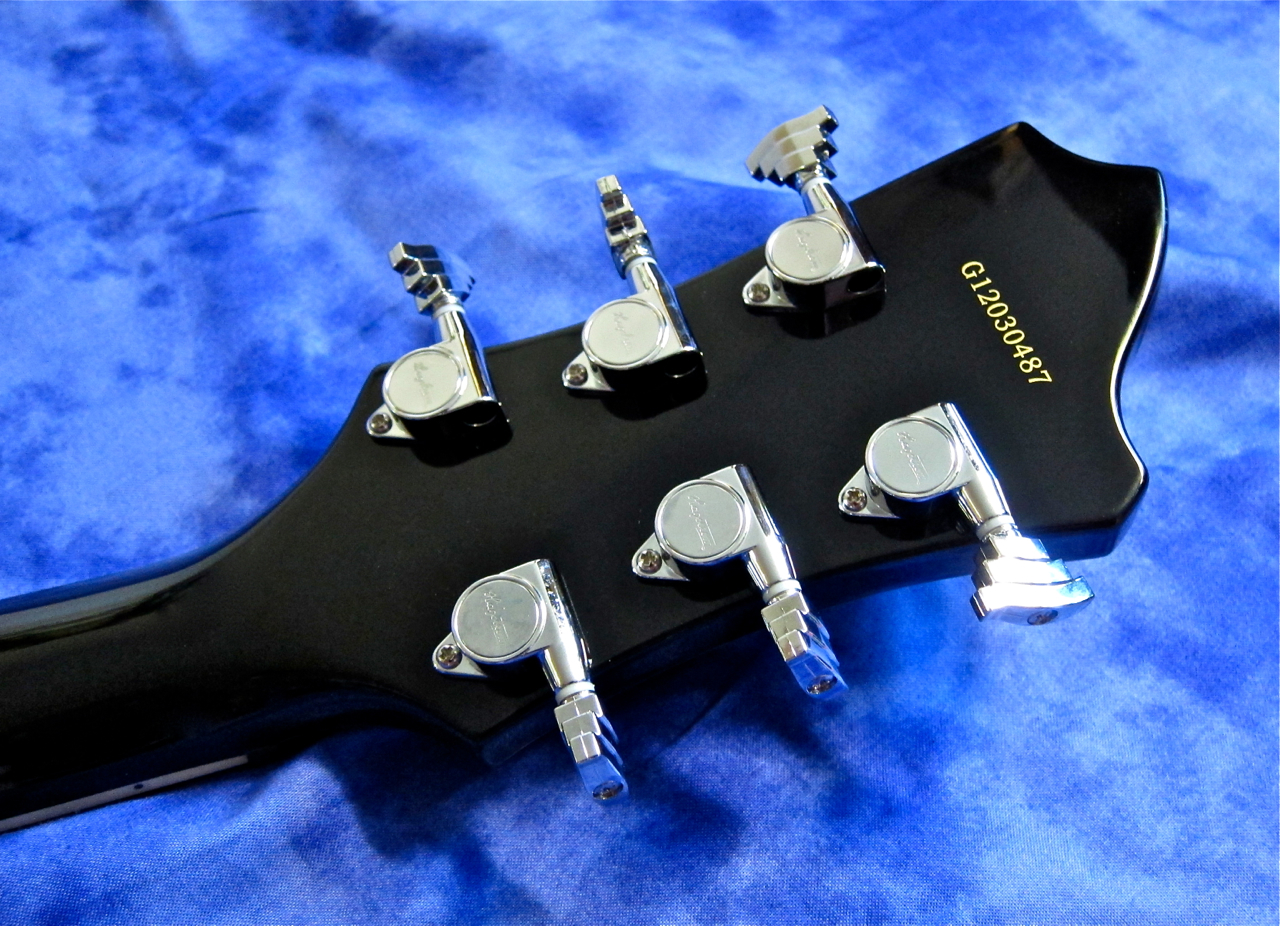
Modern sealed Hagström-tuners keep things steady.

One of Hagström’s special features is their Resinator-fingerboard. Resinator is a man-made alternative to ebony – in both looks and sound – and is made using wood fibres and resin.

The fretwork is rather good on our test sample, apart from a few fret ends, which felt a tiny bit sharpish in places.

Inside the plywood soundbox you can see the Viking Baritone’s full-length mahogany centre block.

The centre block is what turns a fully acoustic guitar into a semi. It improves attack and sustain, as well as greatly reducing the danger of howling feedback at higher volume levels.

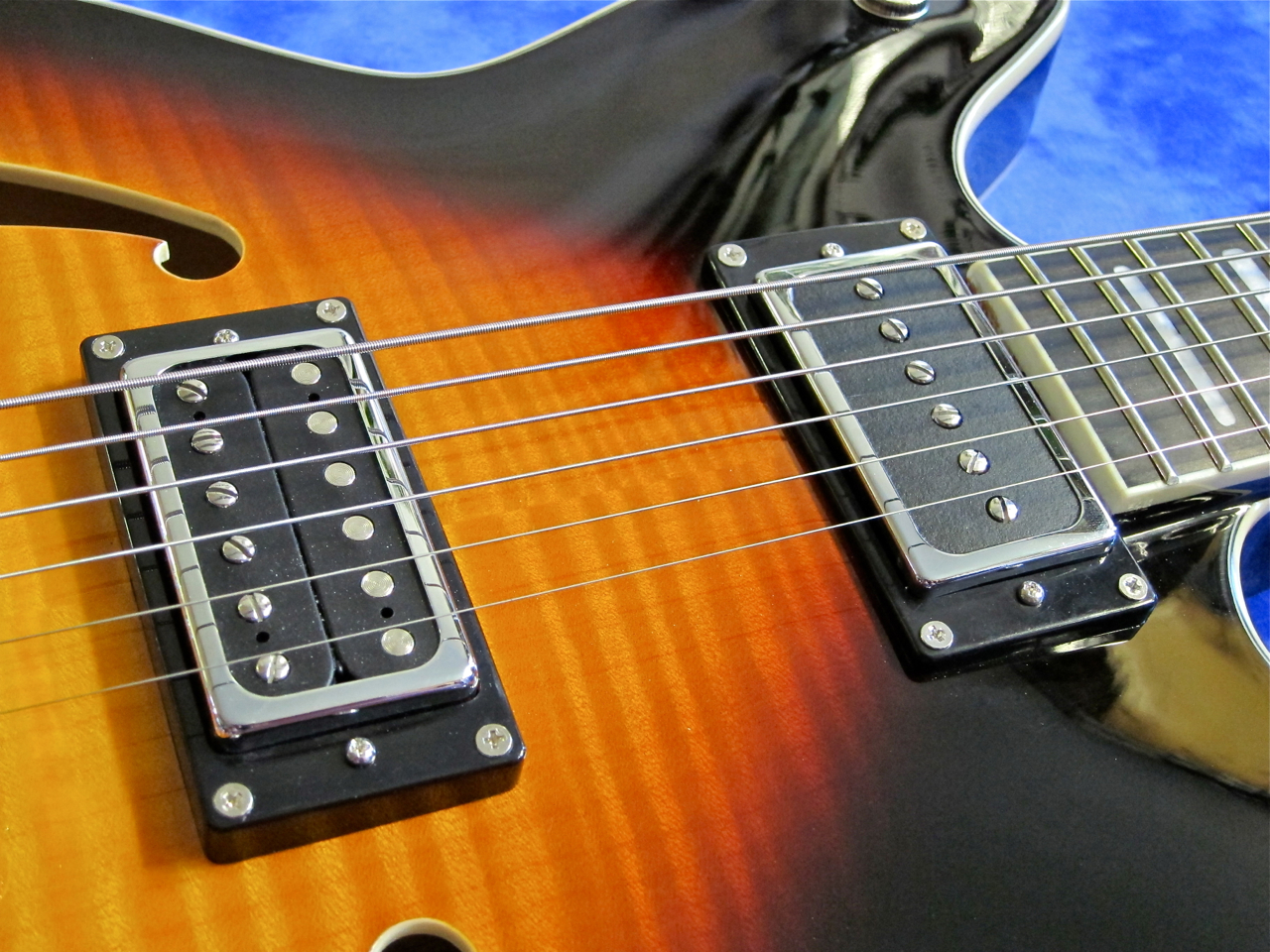
Hagström have optimised this Viking’s choice of pickups for use in a baritone-guitar:
The neck pickup is Hagström’s new P-Urified unit, which is a P-90-type singlecoil in humbucker-size. Employing a singlecoil in the neck position makes great sense, as it improves tonal clarity, while steering clear of any potential mushiness.

The bridge unit is Hagström’s great Custom 58 -humbucker, whose moderate output and nice dynamic range fit the P-Urified perfectly.

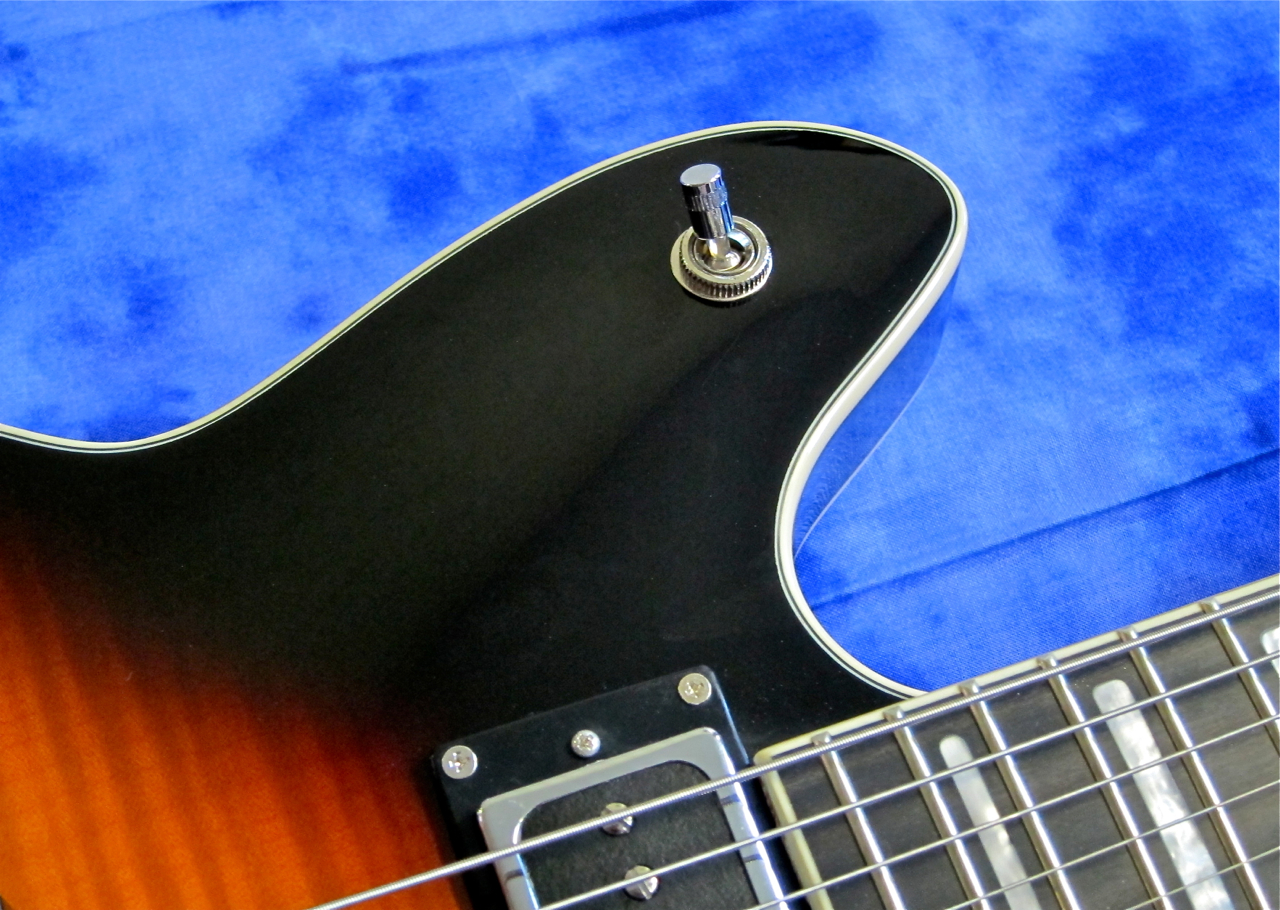
The three-way toggle sits on the Viking Baritone’s top horn.

It’s nice to see quality long-throw pots and clean workmanship inside the Viking.

The classic Gibson-type bridge and stopbar combination works fine on a semi like this.

****

Thanks to its nice, moderate weight the Hagström Viking Baritone sits comfortably in your lap, with good strapped-on balance, too, regardless of a whiff of neck-heaviness due to its long neck.

The neck profile is a fleshy, but not too fat ”D”. Due to a baritone-guitar’s longer scale length (28″/71,1 cm) a newbie will need a little time to adjust his (or her) technique, but after a few minutes or so muscle memory will take the reigns without any problems.

The Viking Baritone’s choice of pickups really does it for me, fitting this guitar’s acoustic tone to a tee. The freshness of the neck pickup, together with its deliciously woody response, will keep even the lowest runs clear and punchy. And the moderately-powered bridge humbucker adds just the right amount of bite and grit to proceedings.

I feel that Hagström’s Viking Baritone is a fine baritone for all occasions and all styles of music (well, probably apart from the most massive of high-gain applications).

Listen to these two audio clips (the pickup order is: neck – both – bridge):

Hagström Viking Deluxe Baritone – clean

Hagström Viking Deluxe Baritone – crunchy

****

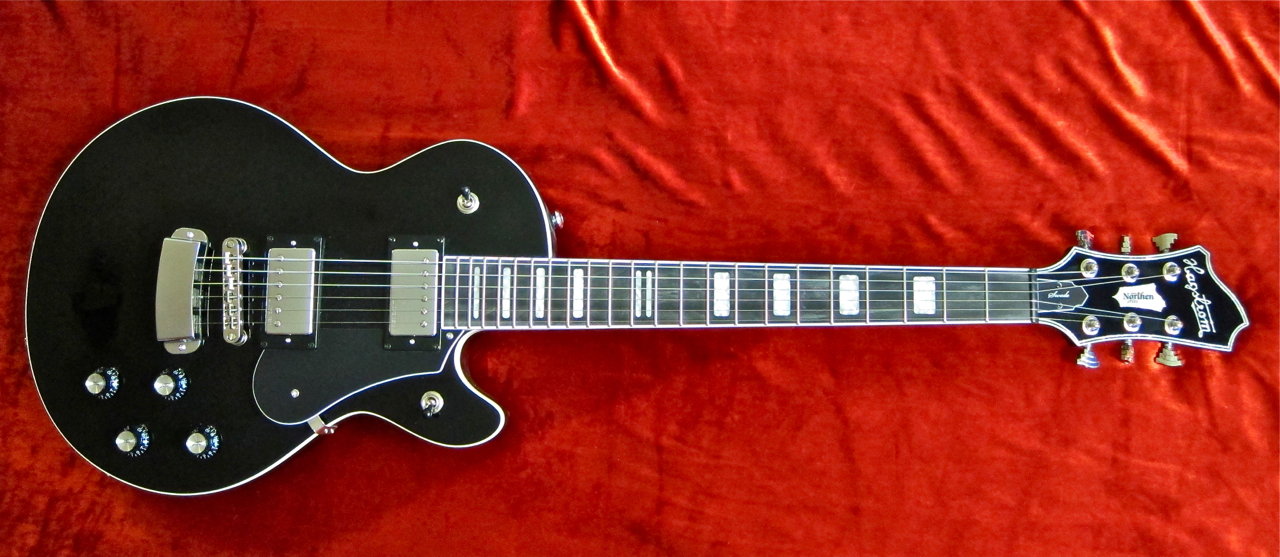
The Hagström Northen Swede (current street price in Finland approx. 1.200 €) is a high-quality, EU-made reissue of the classic Swedish model of yore.

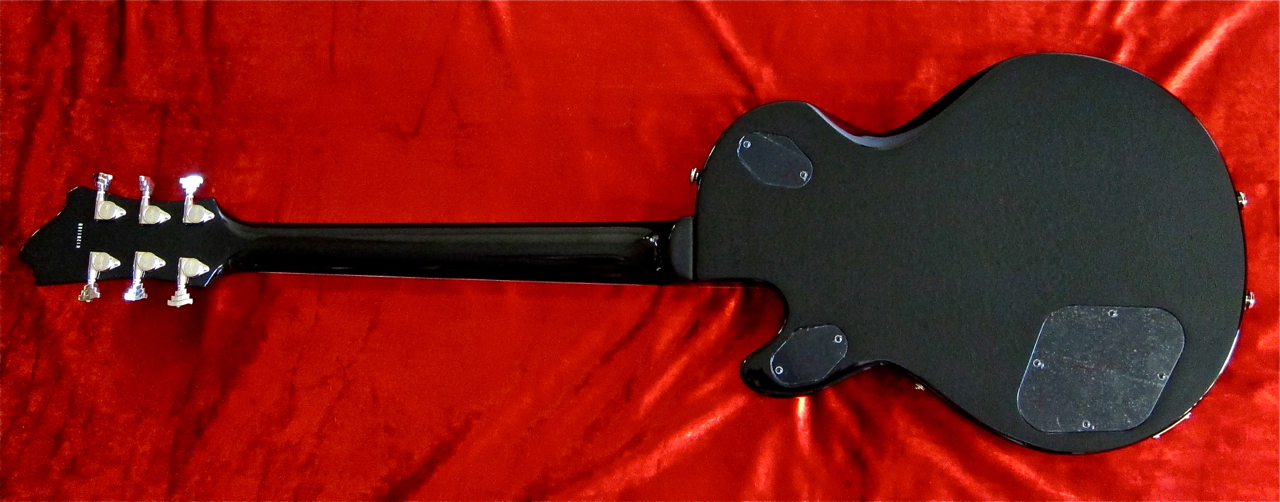
We’re talking about a set-neck solidbody, made almost completely from African mahogany (note: the cover plates look strange in this pic, because they still have their protective foils stuck on top).

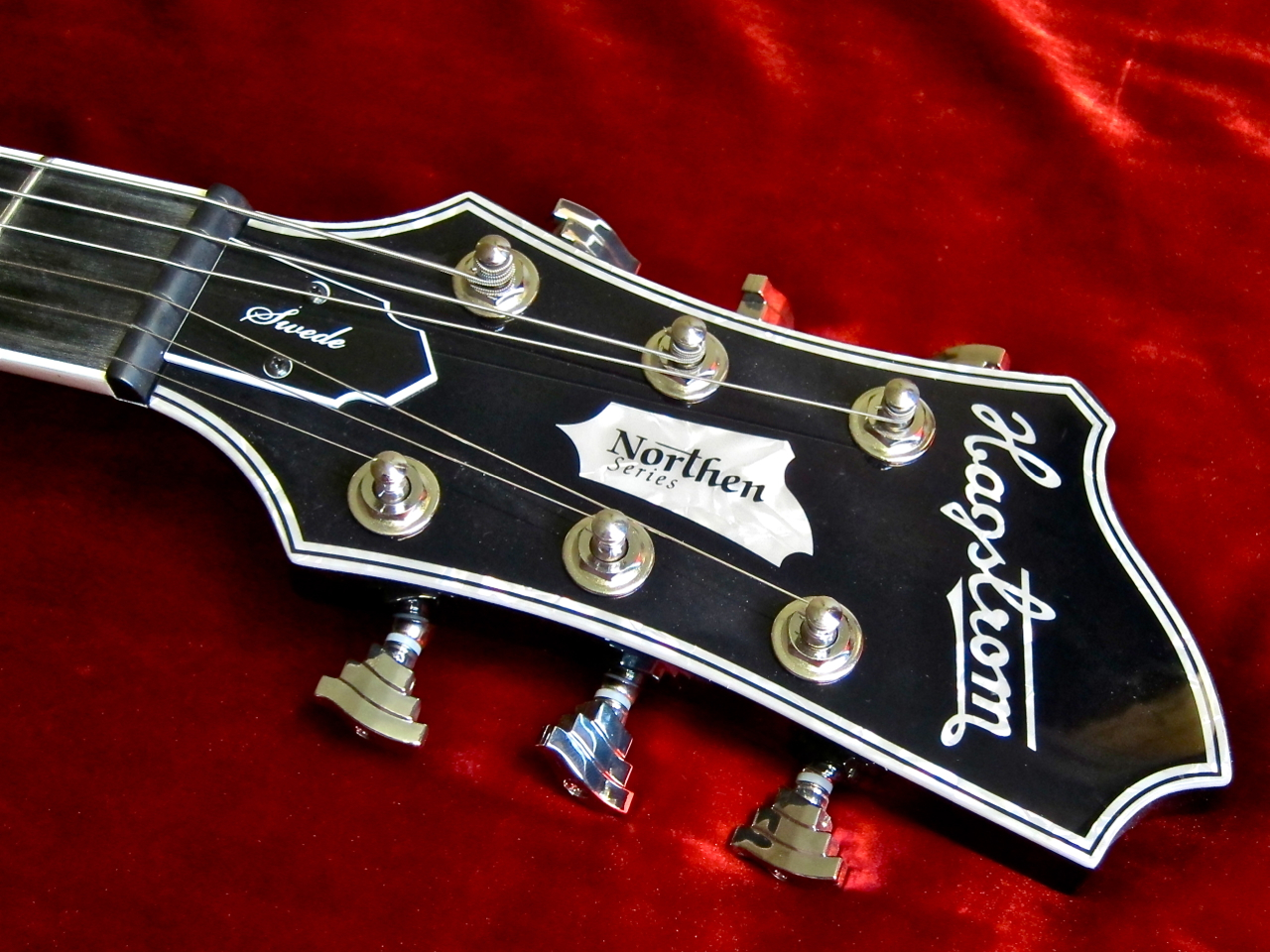
The large pearloid inlay proudly displays the Northen-series’ logo.

The Hagström-tuners have an 18:1 gear ratio and a smooth and precise feel.

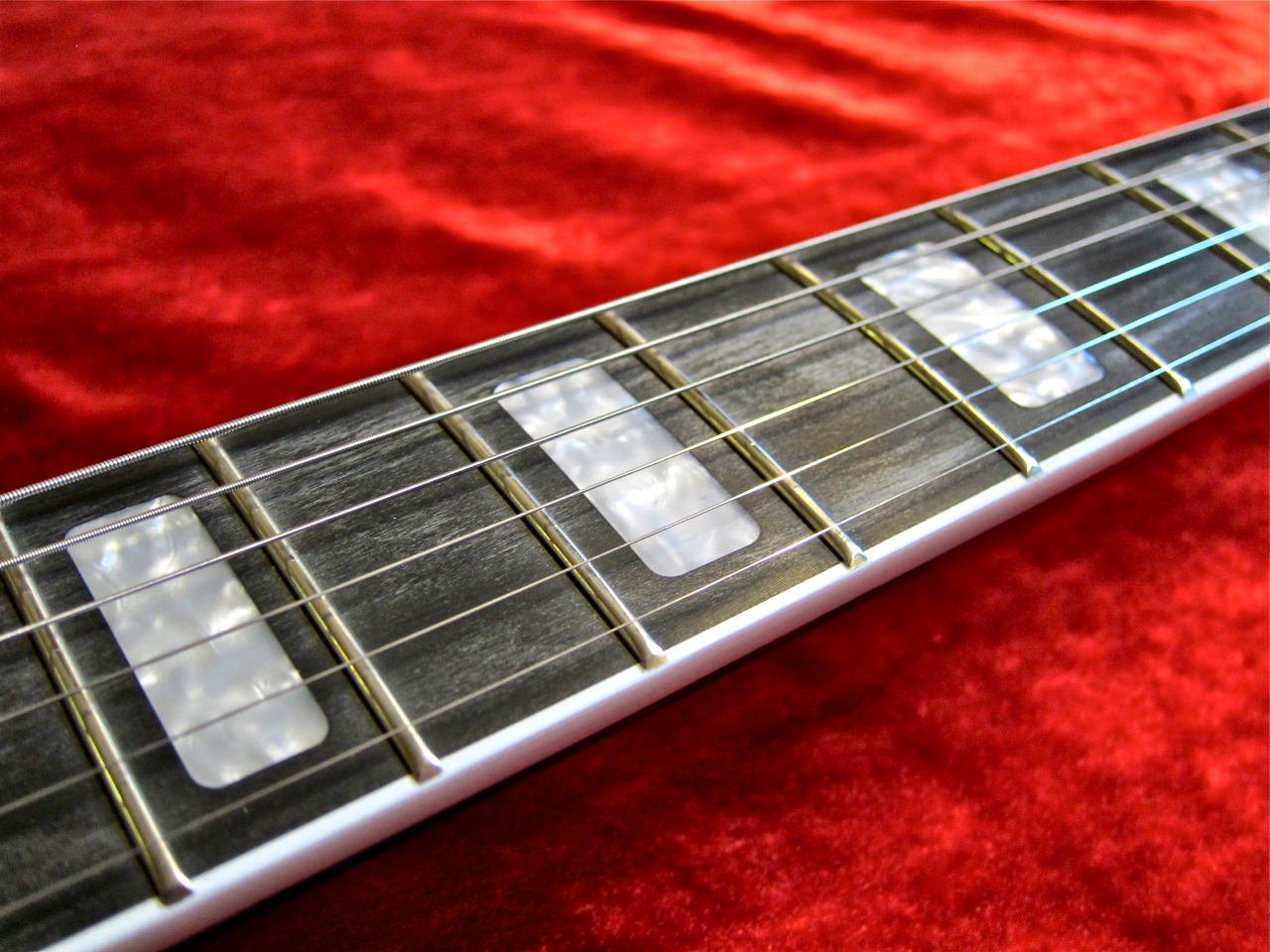
The Northen Swede’s Resinator-board looks more lively than its counterpart on the Viking Baritone. The fretwork is very good.

One special, time-tested feature of all Hagström necks is the H-Expander truss rod system. The H-Expander truss rod sits in a rigid aluminium bar with an H-shaped cross-section. The whole system is then mounted into a tight-fitting, profiled slot inside the the neck, resulting in greater rigidity and thus a better vibrational transfer than most other truss rod systems provide.

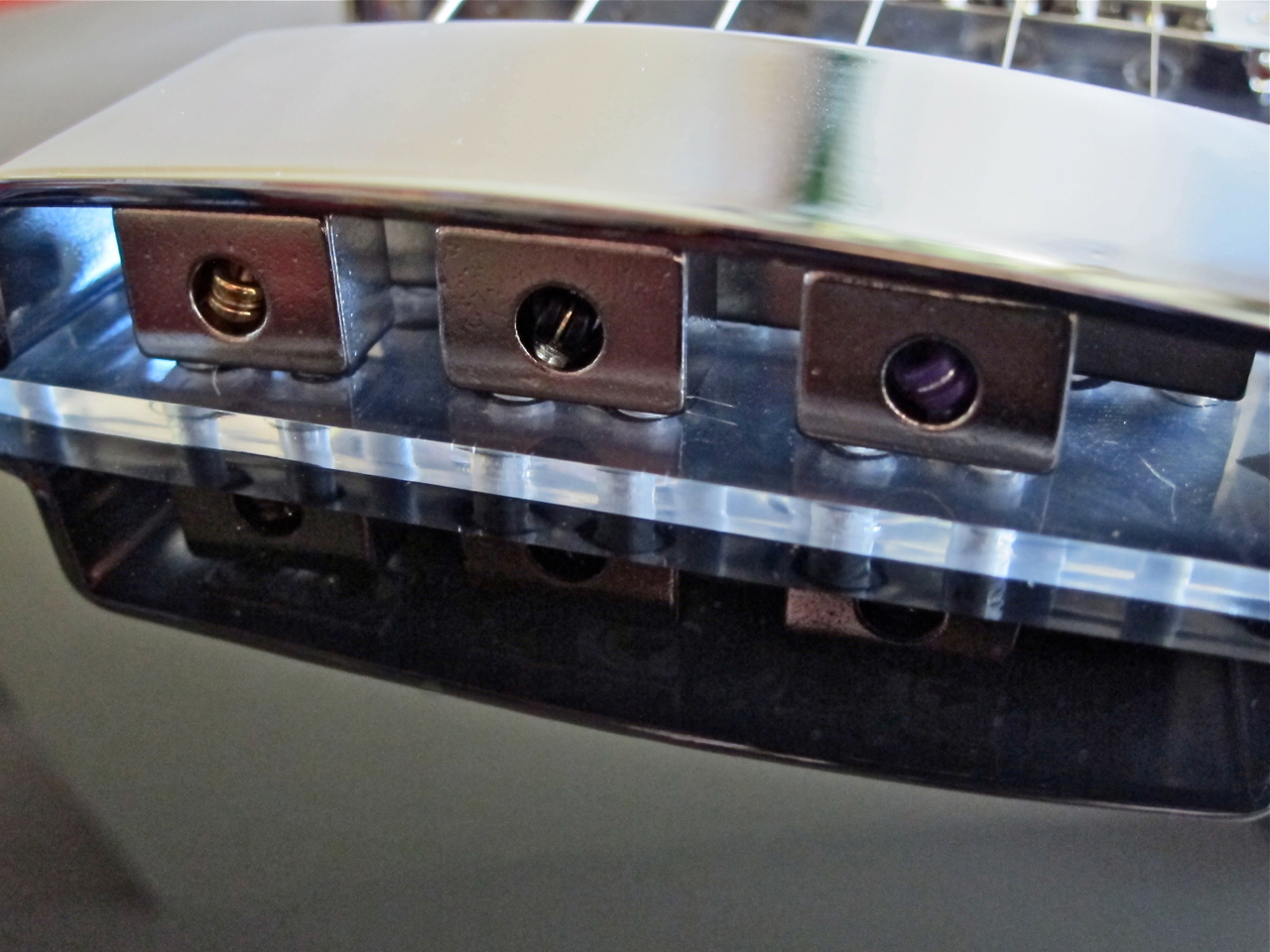
The Swede features Hagström’s idiosyncratic tailpiece, using individual string retainers mounted onto a perspex plate.

Swedish pickup-guru Johan Lundgren is the force behind the Northen Swede’s classy pickups. The guitar is equipped with a pair of No. 2 -humbuckers, which are powered by Alnico 2 magnets.

The Hagström Swede sports two three-way toggle switches: The switch on the guitar’s shoulder is your usual pickup selector, while the one on the treble-side horn is a tone filter -switch.

The tone filter’s middle position is off, with the ”up” selection giving you a mild presence roll-off, while the ”down” position results in a noticeably greater treble and high-mid cut.

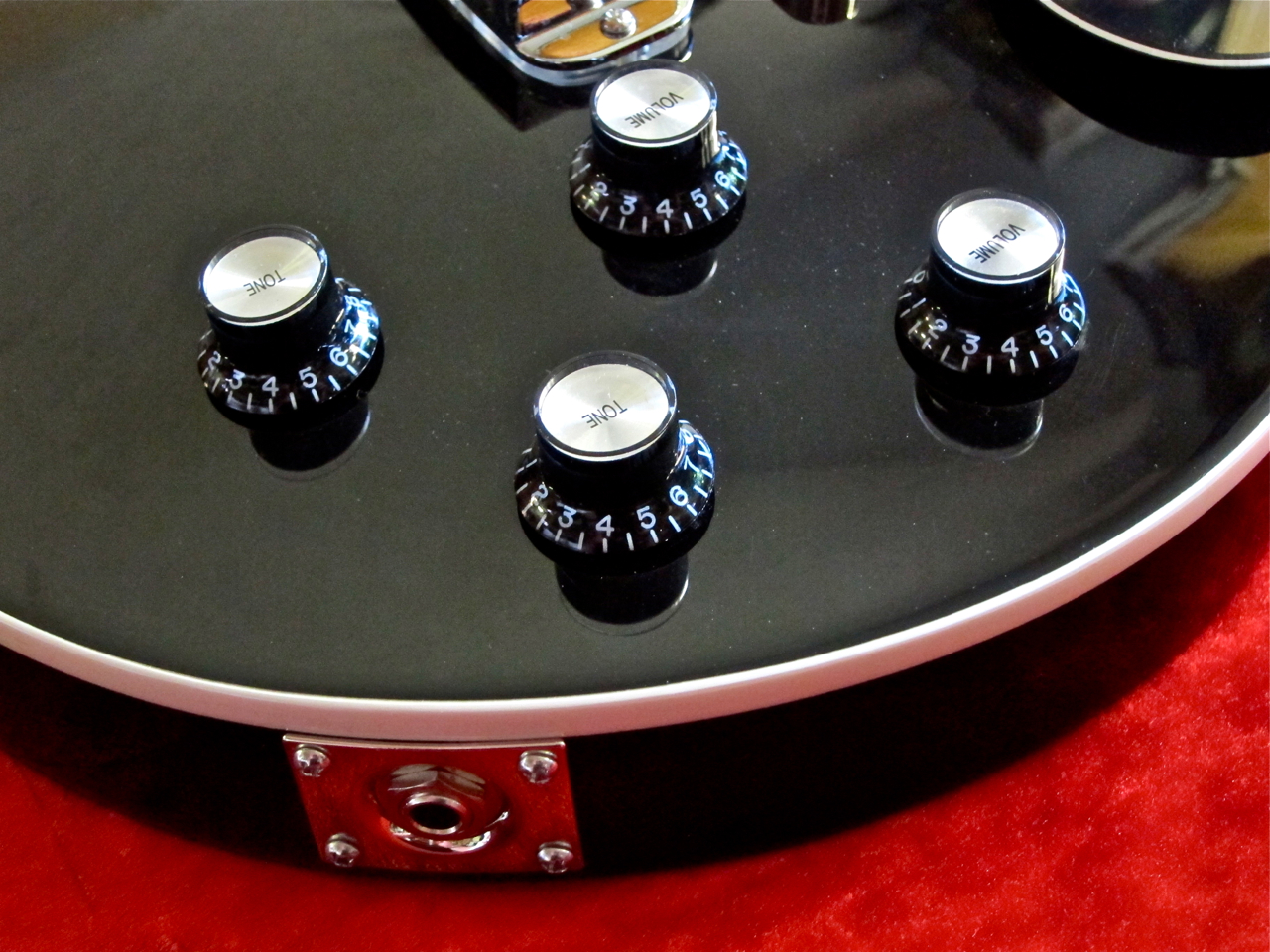
The control knobs work in the standard Les Paul -fashion, with each pickup being provided with its own set of volume and tone controls.

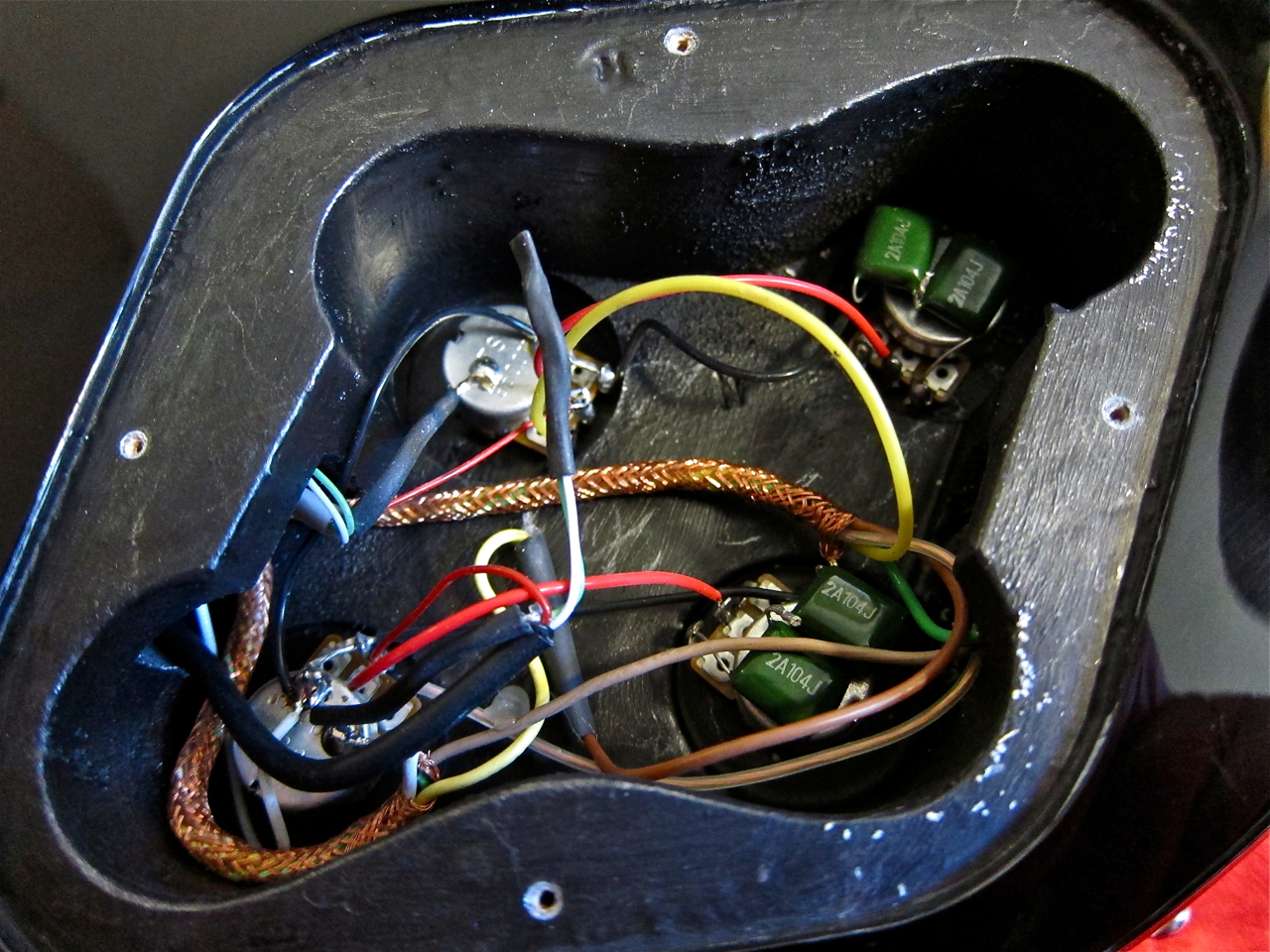
Quality components, clean soldering and thorough screening, using conductive paint and an aluminium-lined lid, get the thumbs up from this here reviewer.

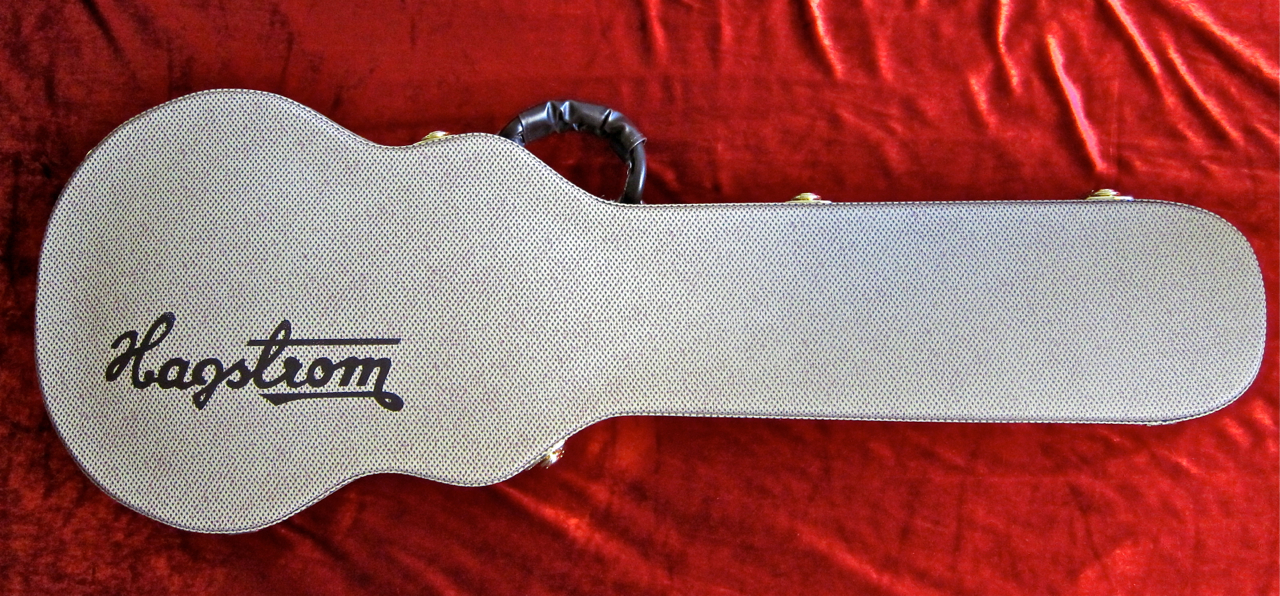
A sturdy and beautiful Hagström-case is included in the Northen Swede’s price.

****

The Hagström Northen Swede’s well-rounded neck profile feels great to me. The nicely polished frets and the ’board’s 12-inch camber make for a fast and effortless playing experience.

Thanks to the fantastic interplay between the tone filter -switch and the guitar’s controls, the tonal options afforded by this Swede are virtually limitless. The Lundgren-designed pickups have a very clear and clean basic tonal character, which enables you to make the most of the Northen Swede’s passive electronics.

In my opinion Hagström’s Northen Swede is a top-quality guitar offering a great deal of tonal variation to the discerning guitar connoisseur. In light of its Czech origin, I must say that the Northen Swede truly represents quality European workmanship at a very moderate price.

All the following audio clips have been recorded with the tone filter -switch starting at off, then going to moderate roll-off, with the last phrase using the full treble cut selection:

Hagström Northen Swede – neck pickup/clean

Hagström Northen Swede – both/clean

Hagström Northen Swede – bridge pickup/clean

Hagström Northen Swede – neck pickup/crunchy

Hagström Northen Swede – both/crunchy

Hagström Northen Swede – bridge pickup/crunchy

****

…and here we have both Hagströms in action:

Hagström Viking Baritone + Northen Swede – the video’s audio

****

Hagström-guitars

Finnish distributor: EM Nordic

A big thank you to DLX Music Helsinki for the loan of the review instruments!

****

Hagström Viking Deluxe Baritone

Current street price in Finland about 600 €

Pros:

+ sound

playability

+ workmanship

+ weight

+ pickups

Cons:

– fingerboard binding felt a tad angular on test sample

****

Hagström Northen Swede

current street price in Finland about 1.200 €

Pros:

+ made in the EU

+ sound

+ versatility

+ Lundgren-pickups

+ workmanship

+ playability

+ weight

****

Testipenkissä: Hagström Viking Deluxe Baritone + Northen Swede

Tässä jutussa tutustutaan kahteen Hagström-malliin: puoliakustinen Viking Deluxe Baritone on Kauko-Idästä peräisin oleva baritonikitara matalien riffien ystäville, kun taas upouusi Northen Swede valmistetaan käsityönä Tšekinmaassa.

****

Hagström Viking Baritone (katuhinta noin 600 €) on Viking-perheen uusi, pitkäkaulainen tulokas, jolla on samat tyylikkäät muodot ja sama puoliakustinen perusrakenne kuin muissakin Viking-malleissa.

Luja vaahterakaula on liimattu kauniiseen, muotoon prässätystä vaahteravanerista valmistetuun runkoon.

Hagströmin lapa huokuu 1950-luvun jazzkitaroiden äärimmäistä tyylikkyyttä, monikerroksisella reunalistoituksellaan ja siistillä upotustyöllään.

Satula taas on laadukkaasta, kitkaa vähentävästä Black Tusq -materiaalista.

Myös Hagström-virittimet ovat nykyaikaista suljettua sorttia.

Hagström-kitaroiden erikoisuuksiin kuuluu Resinator-otelauta. Resinator on keinotekoinen materiaali puusta ja hartsista, jonka sanotaan olevan soundillisesti hyvin lähellä eebenpuuta.

Nauhatyö on toteutettu testisoittimessa hyvin siististi, ainoastaan nauhojen päät olisivat voineet olla vielä hivenen verran pyöreämmät.

Vanerikopan sisällä on paksu keskipalkki mahongista, joka kulkee kaulaliitoksesta koko matkan rungon läpi.

Keskipalkki tekee kitarasta puoliakustisen (muuten se olisi täysiakustinen). Se parantaa kitaran atakkia ja sustainea (= soinnin kestoa), ja se vähentää myös ratkaisevasti ontosta kopasta syntyvän feedback-ulinan vaaran.

Mikrofonivarustus on Viking Baritonessa optimoitu juuri baritonikäyttöä varten:
Kaulamikrofonina toimi Hagströmin uusi P-Urified-malli, joka on peeysikymppinen humbuckerkoossa. Yksikelaisen käyttö kaulan lähellä pitää matalat taajuudet siistimpänä ja parantaa soundin selkeyttä.

Tallamikrofoni taas on Hagstömin selkeä-ääninen Custom 58 -malli, joka sopii maltillisen tehonsa ansiosta erittäin hyvin P-Urified-kaltaisen kaulamikin kanssa yhteen.

Kolmiasentoinen mikkivalitsin sijaitsee Viking Baritonen yläsarvella.

Vikingin kytkennössä käytetään laadukkaita isokokoisia potentiometrejä. Työnjälki on elektroniikankin osalta hyvin siisti.

Klassinen Gibson-tyylinen tallan ja kietenpitimen yhdistelmä on toimiva ratkaisu.

****

Hyvin malttillisen painoinen Hagström Viking Baritone istuu erittäin hyvin soittajan sylissä, ja roikkuu hihnassakin melko rauhallisena erittäin lievästä kaulanpainoisuudestaan huolimatta.

Kaulaprofiili on tuhti, mutta ei missään nimessä ylipaksu ”D”. Baritonikitaran pidempi mensuuri (28″/71,1 cm) vaatii lyhyen tutustumisvaiheen, mutta lihasmuistin sisäänajon jälkeen soitto sujuu ongelmitta.

Viking Baritonen mikrofonit ovat mielestäni erinomaiset, ja ne sopivat tälle kitaralle loistavasti. Kaulamikrofonin tuoreus ja maiskuvan pähkinäinen keskialue pitää myös erittäin matalat juoksut siisteinä ja erottelevina. Maltillinen tallahumbuckeri taas pysyy hyvin dynaamisena ja avoimena.

Hagström Viking Baritone on todella maukas yleisbaritoni, joka sopii erittäin hyvin kaikille musiikkityyleille – ehkä rankimpaa Thrashia lukuunottamatta.

Tässä kaksi audiopätkää (järjestys: kaulamikki – molemmat – tallamikki):

Hagström Viking Deluxe Baritone – puhdas

Hagström Viking Deluxe Baritone – säröllä

****

Hagström Northen Swede (katuhinta noin 1.200 €) on eurooppalaisvalmisteinen laatuversio vanhasta ruotsalaisesta klassikkokitarasta.

Kyseessä on liimakaulainen lankkukitara, joka on veistetty otelautaa lukuunottamatta täysin afrikkalaisesta mahongista (huom: kuvassa muovikansien suojamuovit vielä paikoillaan).

Lapaan on upotettu sarjan nimeä kantava, helmiäismuovista tehty laatta.

Hagström-virittimien välityssuhde on 18:1, ja niiden tuntuma on hyvin sulava.

Northen Sweden Resinator-otelauta näyttää eloisemmalta kuin Viking Baritonen vastine. Nauhatyö on erittäin huolellinen.

Hagström-kaulojen erikoisuus piilee firman erittäin lujassa H-Expander-kaularaudassa. H-profiiliseen alumiinikuoreen asennettu kaularauta istuu erittäin tiukasti kaulapuussa, minkä ansiosta kaula värisee voimakkaamin.

Tune-o-matic-tyylisen tallan aisapari on Hagströmin oma kieltenpidin, jossa kielet ankkuroidaan erillisiin metalliblokkeihin.

Ruotsalainen mikkiguru Johan Lundgren on mies Northen Swede -mallin loistavien mikrofonien takana. Kyseessä ovat No. 2 -nimisiä kuorellisia humbuckereita, jotka rakennetaan miedoilla Alnico 2 -magneetteilla.

Hagström Swedessä on kaksi kolmiasentoista vipukytkintä: kitaran olkapäässä istuva kytkin on tavallinen mikkivalitsin, kun taas sarven kytkin on tone-filtteri.

Filtterikytkimen väliasento on neutraali, ylös-asennossa astuu kuvaan mieto preesens- ja diskanttisuodin, kun taas ala-asentolla valitaan rajumpi treble-filtteriä.

Säätimet toimivat perinteisellä, Les Paul -tyylisellä tavalla – kummallekin mikrofonille on omat volume- ja tone-säätönsä.

Laadukkaita komponentteja, siistiä juotostyötä ja toimiva häiriösuojaus grafiittimaalilla ja alumiinilla vuoratulla kannella ilahduttavat testaajan.

Laadukas Hagström laukku kuuluu Northen Sweden hintaan.

****

Hagström Northen Swede -kitaran täyteläinen kaulaprofiili istuu todella mukavasti ainakin minun käteeni. Sulavaksi työstetyt nauhat ja otelaudan loiva kaarevuus (12″) tekevät soittotuntuman erittäin helpoksi.

Tone Filter -kytkimen ja säädinosaston saumattomasta yhteistyöstä syntyy lähes rajaton soundien leikkikenttä. Lundgren-mikkien hyvin tuoreen perusäänen ansiosta pystyy hyödyntämään täysin kaikki kytkennän tuomia mahdollisuuksia.

Northen Swede on mielestäni loistava ja erittäin monipuolinen kitara laatutietoiselle, joka sopii genrelle kuin genrelle. Soittimen tšekkiläisen alkuperänsä vuoksi pidän pyydettyä hintaa hyvin kohtuullisena – Northen Swede edustaa eurooppalaista laatua reiluun hintaan.

Kaikissa seuraavissa ääniesimerkeissä soittojärjestys on Tone Filter -pois päältä –> mieto suodatus –> rajumpi diskanttileikkaus:

Hagström Northen Swede – kaulamikki/puhdas

Hagström Northen Swede – molemmat/puhdas

Hagström Northen Swede – tallamikki/puhdas

Hagström Northen Swede – kaulamikki/säröllä

Hagström Northen Swede – molemmat/säröllä

Hagström Northen Swede – tallamikki/säröllä

****

Ja tässä soivat molemmat Hagströmit yhdessä:

Hagström Viking Baritone + Northen Swede – videon audioraita

****

Hagström-kitarat

Maahantuoja: EM Nordic

Kiitos DLX Music Helsingille testisoittimien lainasta!

****

Hagström Viking Deluxe Baritone

katuhinta noin 600 €

Plussat:

+ soundi

+ soitettavuus

+ työnjälki

+ paino

+ mikrofonit

Miinukset:

– testikitarassa hieman kulmikas otelaudan reunalistoitus

****

Hagström Northen Swede

katuhinta noin 1.200 €

Plussat:

+ valmistettu EU:ssa

+ soundi

+ monipuolisuus

+ Lundgren-mikrofonit

+ työnjälki

+ soitettavuus

+ paino

****

Pidä blogia WordPress.comissa.

Ylös ↑