
****


****
Kitarablogi.com – Finland's premier Guitar and Bass blog
Juttuja kitaroista ja bassoista

****

TC Electronic’s Röttweiler-distortion (current street price in Finland 129 €) specializes in brutal distortion sounds, and doesn’t waste any time on sissy stuff.
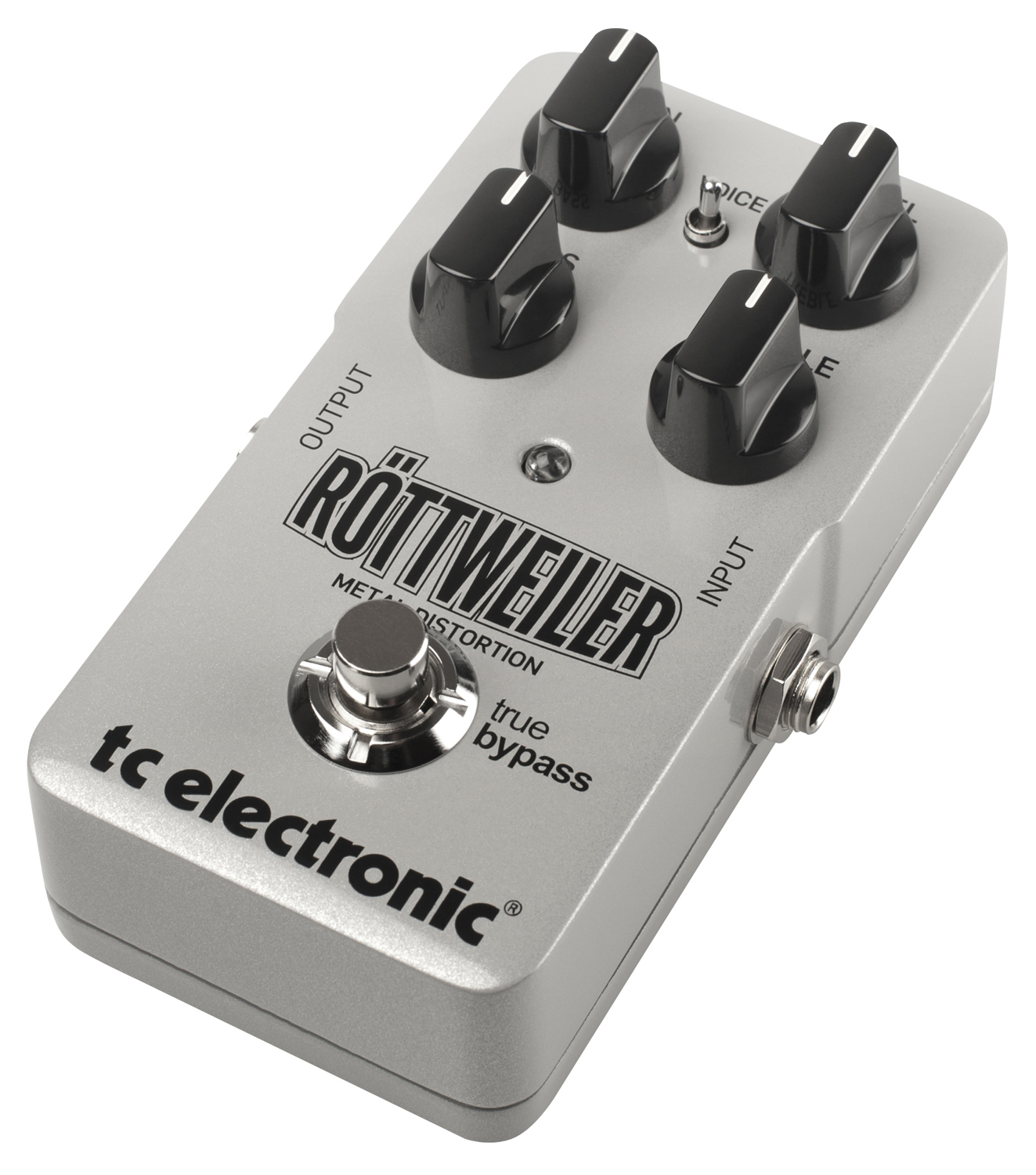
The gain control takes you from quite a lot of distortion to complete über-Metal-mayhem – so don’t go looking for besuited and well-behaved Blues-tones here. The Voice-switch gives you two different shades of brutal: One selection is fatter in the mid-range for more classic Hard Rock and Metal stuff, while the other selection gives you the scooped out tones favoured in many contemporary styles. The pedal also offers bass and treble controls for fine-tuning your tone.
The TC Electronic Röttweiler is a brilliant tool for the Metal-aficionado, which turns any amp into a high-gain monster stack.
Here are three sound clips, which Miloš Berka recorded using a seven-string Schecter into a clean amp setting:
****

TC Electronic’s The Dreamscape (current street price in Finland 245 €) is John Petrucci’s signature effect pedal. It contains six different modulation effects, as well as one memory slot for a Tone Print.
The Dreamscape can be run in mono as well as in stereo. If you take off the bottom plate you’ll gain access to two tiny switches – one allows you to select either true or buffered bypass, while the other enables you to set the pedal to wet signal only, which is handy if you use the Dreamscape in a parallel effects loop.
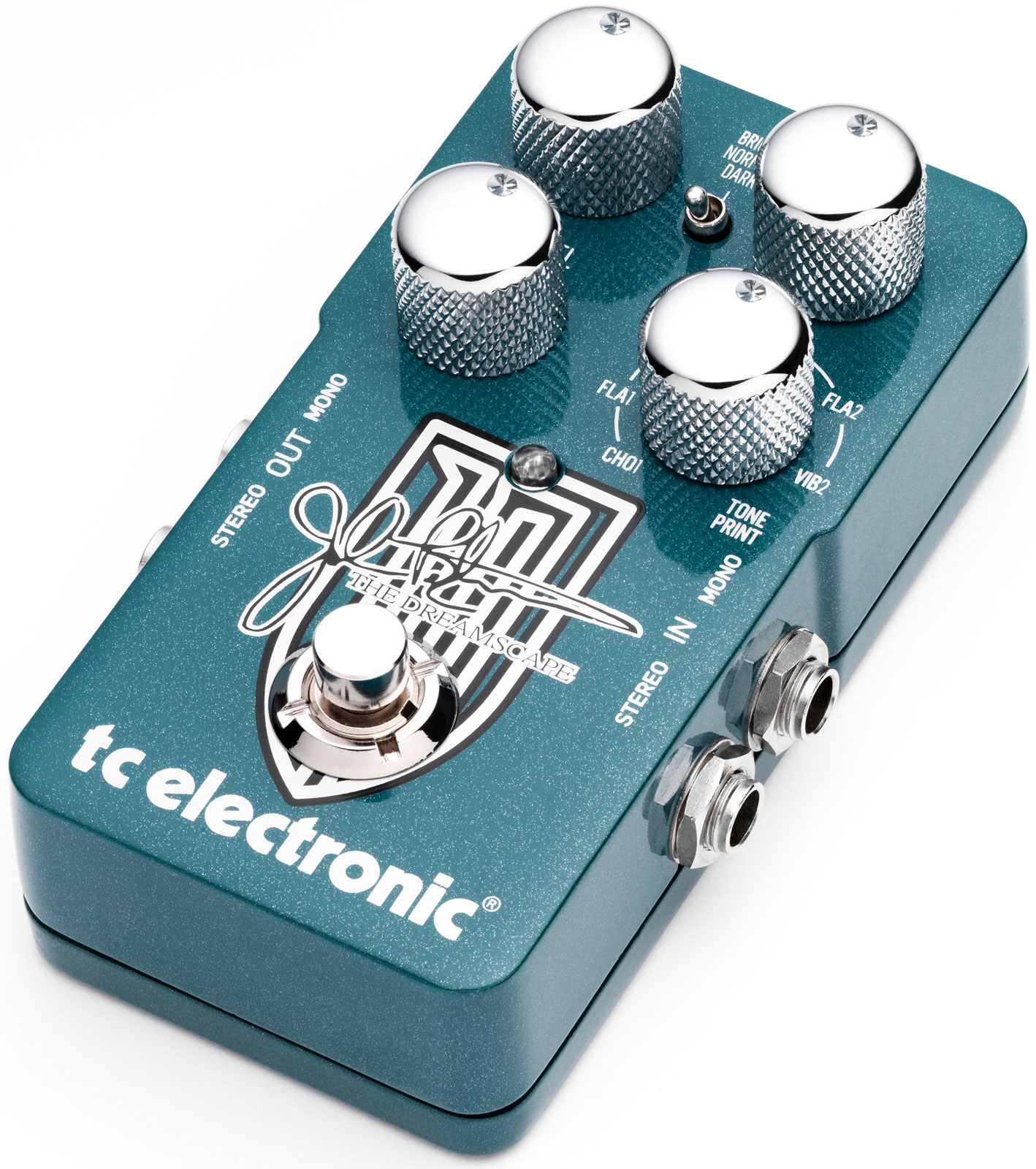
The Dreamscape comprises controls for depth, speed and level. A three-way mini-toggle lets you select between three different EQ curves – from soft and dark to bright and upfront.
John Petrucci has chosen and grouped the six effects in such a way that the effects numbered ”1” are suited to his clean styles, while the second variations go with his overdriven tones. Personally, I wouldn’t draw so drastic a line, as I got great results with any of the six effects in all types amp of settings. This pedal’s main idea is in offering two distinctly different versions each of the three effect types included – namely chorus, flanger and vibrato – that behave and sound different to each other.
Here are some example sounds I recorded using a Fender Stratocaster:
At 245 € the TC Electronic Dreamscape is the priciest Tone Print -pedal to date. Some of the price will surely be a signature pedal premium. But you shouldn’t forget the fact that John Petrucci’s pedal also offers six different effects plus one Tone Print -slot in one compact package. Looking at the Dreamscape from this angle makes the higher retail price sound much more reasonable.
****
TC Electronic guitar pedals
Finnish Distributor: Soundtools
****
Röttweiler Distortion
current street price 129 €
Pros:
+ compact
+ specialized tool for Metal
+ great sound
+ versatile in its own genre
Cons:
– Voice-switch in a tight spot
****
The Dreamscape
current street price 245 €
Plussat:
+ compact
+ six modulation effects
+ Tone Print -enabled
+ versatile
+ also works in stereo
Cons:
– higher price than other Tone Print -pedals
– Bright-switch in a tight spot
****
****
TC Electronicin Röttweiler-särö (katuhinta 129 €) on erikoistunut rankkoihin soundeihin, eikä haaskaa aikaa turhalle hienostelulle.
Gain-säätimen vaikutusalue ulottuu kovasta säröstä vielä kovempaan — Blues-tyylisiä pikkusärösoundeja on Röttweilerilta siis turha etsiä. Kaksiasentoinen Voice-kytkin tarjoaa kaksi eri perussoundia: off-asennossa keskialue on tuhdimpi klassisia Hard Rock- ja Metal-soundeja varten, kun taas on-asennossa Röttweilerista lähtevät purevammat Thrash-soundit, joissa on selvästi vähemmän matalaa keskialuetta (engl. scooped mids). Soundien hienosäätöön pedaali tarjoaa vielä sävynsäätimet bassolle ja diskantille.
TC Electronic Röttweiler on loistava erikoistyökalu metallimusiikin ystäville, joka saa jokaisen vahvistimen kuulostamaan tulikuumalta high gain -stäkiltä.
Tässä kolme esimerkkisoundia, joita Miloš Berka soitti seitsenkielisillä Schecterillä puhtaan vahvistimeen:
****
TC Electronic The Dreamscape (katuhinta 245 €) on John Petruccin nimikkopedaali, joka sisältää kuusi modulaatioefektiä sekä yhden Tone Print -muistipaikan.
Dreamscape-pedaalia voi käyttää sekä mono- että stereofonisissä ympäristöissä. Pohjalevyn alla löytyy muista Tone Print -efekteistä tutut kaksi minikytkintä, jolla voi valita suoran tai bufferoidun bypass-tilan välillä, sekä kytkeä efektoimattoman signalin kokonaan pois pedaalin lähtöistä, kun käyttää rinnakaiskytkennöllä olevaa efektilenkkiä.
Dreamscapen säätimillä voi vaikuttaa valitun efektin syvyteen (depth), vatkauksen nopeuteen (speed), sekä pedaalin lähtötasoon. Kolmiasentoinen minikytkin tarjoaa efektoidun signaalin kolmella eri kirkkaudella – tummasta ja miedosta Dark-vaihtoehdosta kirkkaan ja selkeään Bright-valintaan.
John Petruccin valitsemat efektit on ryhmitetty kitarasankarin omien tarpeiden mukaan niin, että kolmen efektin ykkösvaihtoehto on sellainen, jonka Petrucci käyttää puhtaissa soundeissa, ja kakkonen on tarkoitettu särösoundeille. Itse en vetäisi rajan ollenkaan niin tiukasti, sillä sain kaikilla kuudella efektillä hyviä soundeja aikaiseksi. Pedaalin juju on mielestäni juuri siinä, että jokaisesta efektityypistä on olemassa kaksi erilaisia versiota, joilla on hieman erilainen soundi, ja jotka reagoivat eri tavalla säätöihin.
Olen äänittänyt tällaiset pätkät Fender Stratocasterilla:
TC Electronic The Dreamscape on 245:llä eurolla kallein Tone Print -pedaali. Osa hinnasta on luultavasti nimikkomallin lisäys, mutta toisaalta tarjoaa tämä pedaali samassa paketissa peräti kuusi erilaista, laadukasta modulaatioefektiä sekä yhden Tone Print -muistipaikan. Pedaalin monipuolisuuden valossa hinta ei kuulostaa enää kovin pahalta.
****
TC Electronic -kitarapedaaleja
Maahantuoja: Soundtools
****
Röttweiler Distortion
katuhinta 129 €
Plussat:
+ kompakti
+ erikoistunut Metal-musiikkiin
+ hyvä soundi
+ omassa genressään monipuolinen
Miinukset:
– Voice-kytkin ahtaassa paikassa
****
The Dreamscape
katuhinta 245 €
Plussat:
+ kompakti
+ kuusi modulaatioefektiä
+ Tone Print -muistipaikka
+ monipuolinen
+ stereofoninen
Miinukset:
– muita Tone Print -pedaaleja korkeampi hinta
– Bright-kytkin ahtaassa paikassa
****

Jarmo Hynninen is one of Finland’s top guitarists and guitar instructors.
Watch his excellent version of the old Jazz standard Caravan, which he recorded using his trusty Gretsch 6120 Reverend Horton Heat -guitar going through Fractal Audio’s Axe-FX II rack effect:


The Boss FB-2 Feedbacker/Booster (current price in Finland: 105 €) is a specialised tool to help you achieve musical feedback at moderate volume levels. Additionally this pedal also functions as a powerful level booster. The FB-2 is a typical Boss-pedal, from the classic sturdy cast-metal casing to its four control knobs, which offer separate level controls for the booster and the feedback sections, as well as an overall tone control and the booster’s Character knob.
****

The booster is turned on and off by stepping shortly onto the footswitch. For feedback you need to hold the switch down continuously.
I couldn’t find any precise specifications for the amount of gain on offer here, but my educated guess would be at at least 12 dB. Apart from the different options afforded by the FB-2’s tone and Character controls, the booster’s ”sound” and the way it interacts with your rig is naturally dependent upon your amp settings and amp type. A clean channel on a high-headroom amp will give you a clean boost, while a low-headroom amp will tend to break up into natural distortion. Using an overdriven amp different levels of boost and/or compression will result from using this pedal. It is possible to give your signal a kick in the behind without changing your basic tone, or you can use the tone and Character controls to achieve a completely different lead tone to contrast your rhythm sound.
The tone knob works between the extremes of warm/fat and bright/sharp, while Character can take you seamlessly from a linear boost all the way to a dramatic mid-range hump. The FB-2’s tone-shaping abilities are as powerful as the pedal is easy to use.
****
Boss’ feedback function gives you credible feedback with the least amount of fuss at living-room volume.
In principle the feedback function is the exact opposite of how a vocal processor’s automatic feedback defeat works: the pedal analyses your signal constantly and then boosts the frequency which seems most likely to feed back.
Because we deal with genuine feedback – and not an effect based on sampling – the pedal’s feedbacker needs a guitar amp to function. I also tried the FB-2 using studio monitors, but the results were not entirely satisfactory, and the feedback rather hard to control – in all likeliness due to a studio monitor’s wide and linear frequency range. This pedal is a guitar effect and should be used in tandem with an amp.
Using the pedal with a clean amp reminded me slightly of E-Bow-sounds, but I feel the FB-2 works best in an overdriven context, because the sounds take on a more fluid singing timbre and the effect is more easily controlled. As usual you can influence, and change, which of the overtones is fed back by changing your position relative to the amp’s speaker.
The Boss FB-2 is an amazing, fun and useful piece of gear that offers you both a flexible booster, as well as easy-to-control feedback.
The following soundbite has been recorded at low volume levels using a Roland Micro Cube (Brit Combo -model):
****
Boss FB-2 Combo Drive
Current price in Finland: 105 €
Finnish distributor: Roland Scandinavia
****
Pros:
+ small size
+ two effects in one
+ versatile booster
+ makes feedback possible at moderate volume (e.g. in the living-room)
+ price
****
****
Bossin FB-2 Feedbacker/Booster (105 €) on kitaristin erikoistyökalu musikaalisen feedbackin aikaansaamiseeen. Vahvistinkierron lisäksi FB-2 toimii myös tehokkaana boosterina, joka antaa tarvittaessa reilusti lisäpotkua kitarasignaalille.
FB-2 on tyypillinen Boss-pedaali, jolla on valumetallista valmistettu kestävä runko, kytkimen läpän alle piilotettu yhdeksän voltin paristo, sekä neljä säädintä.
Boosterille ja feedbackille on omat volume-säätimensä, seuraa yleis-tone, sekä vain boost-toimintoon vaikuttava Character-säädin.
****
Boosteri kytketään päälle ja pois tavallisella lyhyellä polkaisulla, kiertäminen taas saadaan aikaiseksi pitämällä poljinta alas painettuna.
Vahvistuksen tarkkaa arvoa ei ilmoiteta missään, mutta ainakin tusinan verran desibelejä näyttää FB-2:sta lähtevän. Boosterin ”soundi” ja vaikutus riippuu luonnollisesti – tone- ja Character-asetuksien lisäksi – pitkälti käytetystä vahvistimesta. Puhtaan kanavan kanssa käytettynä boosti voi olla joko täysin puhdasta (vahvistin isolla headroomilla) tai se voi yliohjata vahvistimen (pienempi headroom), kun taas särökanavalla paljon riippuu kanavan gain-asetuksista ja headroomista. FB-2:n boosterilla voi tuoda lisää säröä signaaliin, vaikuttamatta kuitenkin soundin yleisilmeeseen, tai sillä voi luoda rytmisoundista hyvinkin erilaisen soolosoundin.
Tone-säädin vaikuttaa yleissoundiin akselilla lämmin/muhkea–kirkas/terävä, kun taas Characteria voi säättää portaattomasti lineaarisen boostin (kaikkia taajuuksia vahvistetaan saman verran) ja vahvan mid-boostin välillä. Taajuuskorjaimien toiminta on siis yhtä tehokasta ja monipuolista kuin laite on helppokäyttöinen.
****
Boss FB-2:n Feedback-toiminnolla saadaan aikaiseksi katu-uskottava kierto jo hyvin maltillisella volyymillä.
Pedaali on lauluprosessoreista tuttujen feedback-poistajien täysi vastakohta: se analysoi salamannopeasti tulosignaalin ja vahvistaa sen alueen, joka sillä hetkellä lähtee todennäköisimmin kiertämään.
Koska kyse ei ole keinotekoisesta kierrosta – esimerkiksi sample/freeze-pohjalla – vaan aidosta feedbackista, kitaran täytyy olla kytkettynä Boss-pedaalin kautta vahvistimeen. Kokeilin FB-2:sta myös studiomonitoreiden kautta, mutta tällöin touhusta tuli monitoreiden laajemman ja tasaisemman taajuusvasteen takia hieman hankalasti kontrolloitavaa. Tämä pedaali on siis kitaraefekti ja tarvitsee kitaravahvistimen aisaparikseen.
Puhtailla vahvistinasetuksilla pedaalin soundi tuo mieleen E-Bow-tyylisiä äänimaailmoja, mutta itse käyttäisin FB-2:ta enemmän särökanavalla, koska soundi on silloin laulavampi ja koko touhua on särön tuoman kompression ansiosta selvästi helpompi hallita. Soittimen asento suhteessa kaiuttimeen muuttaa tutulla tavalla lopputulosta eli resonoiva ylätaajuus saattaa vaihtua toiseen.
Boss FB-2 on hämmästyttävä, hauska ja monipuolinen laite, joka tarjoaa sekä erittäin monikäyttöisen boosterin että helposti ohjattavan kierron.
Ääniesimerkki on äänitetty hyvin maltillisella volyymillä Roland Micro Cuben (Brit Combo -vahvistinmalli) kautta:
****
Boss FB-2 Combo Drive
105 €
Maahantuoja: Roland Scandinavia
****
Plussat:
+ pieni koko
+ kaksi efektiä samassa paketissa
+ boosterin monipuolisuus
+ mahdollistaa feedbackin käytön myös kotioloissa
+ hinta
****
****

****

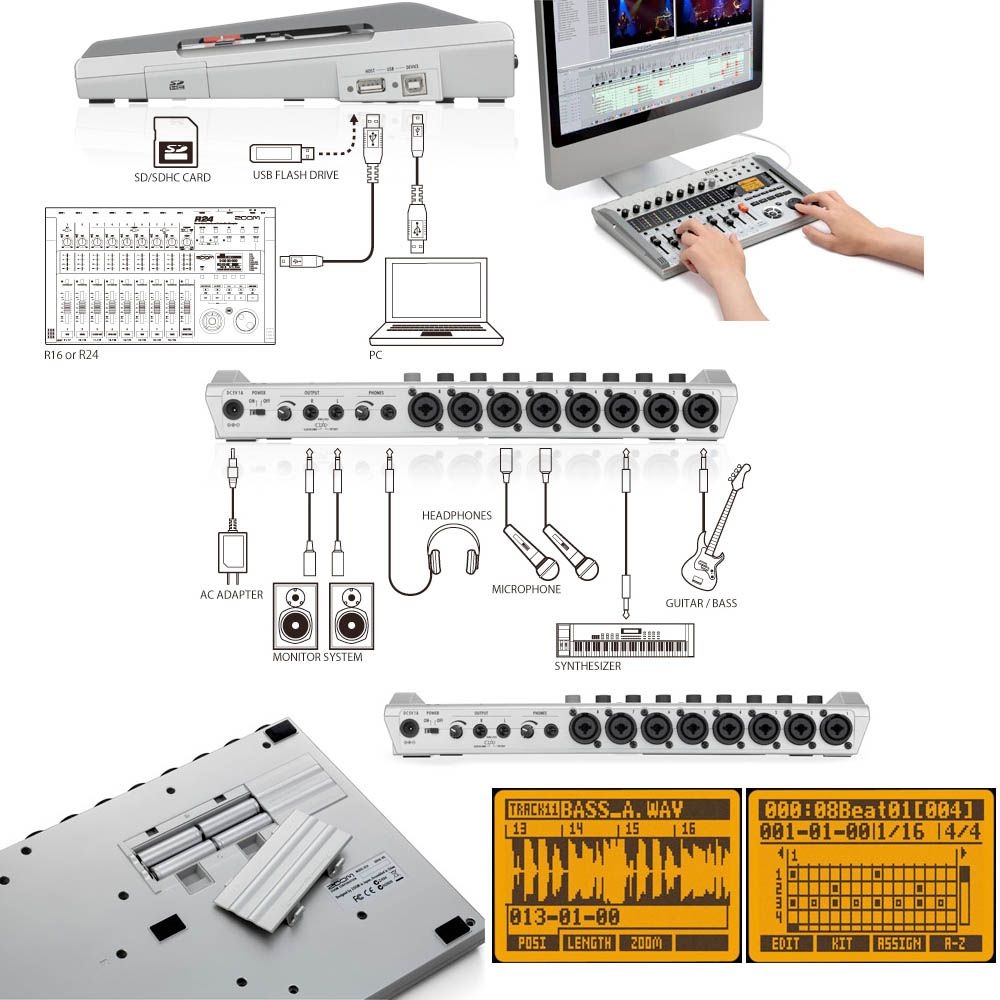
The Zoom R24 (current street price in Finland: 479 €) is a compact and very lightweight, but still quite nifty and versatile unit: The Zoom’s main purpose is to serve as a stand-alone digital multitracker (24 tracks, recording to SD-cards), but it can also be used with a computer as an external soundcard and/or a control surface for an audio sequencer (Cubase LE 5 comes included in the box).
The R24 is ready to go wherever you want to use it, thanks to its ability to run on six AA-batteries, as well as with the included, compact power supply.
This Zoom offers eight XLR/phone-combo inputs, which equals the maximum number of simultaneous recording tracks.
****
Zoom have kept the R24’s signal routing deliberately spartan and easy-to-use. Each of the inputs is hardwired to its corresponding channel fader and from there on to the corresponding recording track. It’s what-you-see-is-what-you get, basically, but with one important twist. As the R24’s mixer deals with 24 tracks, but offers only eight faders, the unit uses the same type of channel bank system, which larger digital consoles also tend to employ.
There are three fader banks (or fader planes) available for use: 1–8, 9–16 and 17–24. In the context of recording this means that each input signal can be assigned to one of the three tracks corresponding to its fader: Input 1, for example can thus be recorded either on Track 1, Track 9 or Track 17.
The R24’s inputs have been equipped ith slightly different features: Input 1 is ready to take direct signals coming froma high impedance instruments, such as an electric guitar, in addition to line level signals. Inputs 3–8 offers switchable phantom power (48 or 24 Volts), while the signal off the built-in stereo condenser mics can only be routed to Inputs 7 and 8.
But what happens if you want to record more than, say, three tracks of direct-injected guitar? No problem! The very handy Swap-button lets you swap the just-recorded track’s content with any other track you want. This means that while you have to record certain signals to certain tracks, you can then easily free up these tracks for new recordings.
****

The Zoom R24 is filled to the brim with useful features: Each mixer channel has its own 3-Band EQ section, as well as two sends to the internal send/return-effect units (Chorus and Reverb). An extremely versatile insert-effect section holds a plethora of fine guitar and bass amp models (lifted from Zoom’s own G2Nu– and B2 effects pedals), as well as algorithms tailored to vocals, drums and keyboards, plus the very useful mastering section.
The sound quality on offer is remarkable for a unit in this price bracket. It would be unrealistic to expect high-end pro-quality effects from what is basically a lower mid-price home recording device. But still, it is quite remarkable what quality you get in return for a modest outlay these days!
As the heart of your own studio, the Zoom also makes it possible to build up loop- and sample-based backings. It is also equipped with a decent built-in programmeable drum machine.
Editing, sampling and looping naturally feels a bit clumsy, when you’re used to grafic interfaces and a large computer display. But with a little persistence and some elbow grease you can achieve astonishing results on a unit such as the R24.
And as if the features so far hadn’t been enough already to make the R24 seem like a real bargain, Zoom is supplying Steinberg’s Cubase LE 5 -sequencer in the box, along with a usb-stick filled with great drum loops by Peter Erskine and Big Fish Audio.
The Zoom R24 is a handily-sized and advantageously-priced little 24-tracker, that will be perfect as you personal demo-machine, or for cutting decent recordings of your band’s rehearsals or gigs in a jiffy. The recording can the be mixed and mastered either internally in the R24 or using and audio sequencer (like Cubase).
And if one of your bandmates happens to own his/her own Zoom R24, you can even slave one machine to the other, and record a whopping 16 tracks simultaneously!
****
Zoom R24 – internal stereo mics – Taylor 110CE
****
Zoom R24
Finnish distributor: Studiotec
Street price: 479 €
Pros:
• price
• weight and size
• ease of use
• can be run on batteries
• internal stereo microphones
• versatile effects
• basic sound
Cons:
• all-plastic build
• small display

****
A chorus effect is produced by splitting a signal in two, and then slightly delaying one half (by less than 50 ms) and adding a tad cyclical pitch modulation to it. At the output both the dry and the effected half are summed, resulting in a lush, shimmering effect, which at times may even sound like two instruments playing at once.
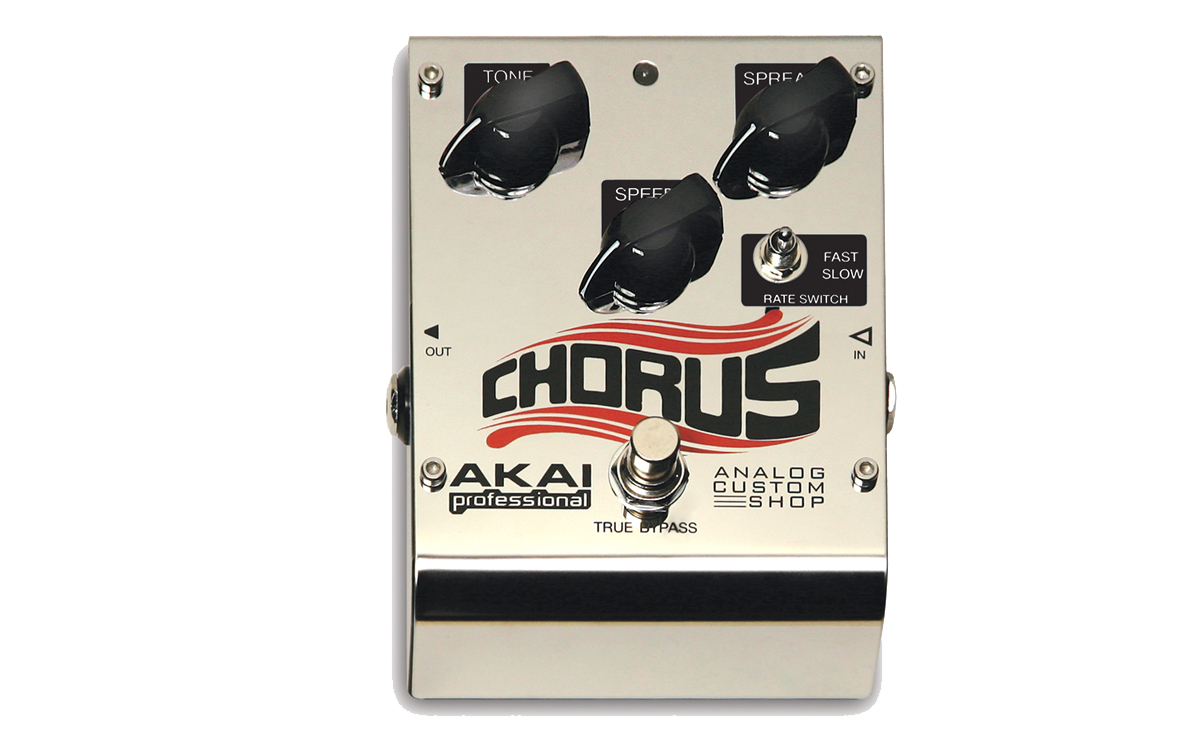
The Akai Chorus (current street price in Finland: 69 €) is an old-school analogue effect. This pedal doesn’t use A/D-converters and digital processing, deriving its tones instead from a good old condenser circuit, as well as an analogue LFO. Most anoraks feel that this is the only way to fly when it comes to chorus-pedals, even if an analogue chorus always tends to contain a tiny amount of hiss, not found in modern digital equivalents.

As with all Akai Analog Custom Shop -pedals, the Chorus also features a sturdy steel chassis and true bypass switching.
The Akai-pedals are powered by one 9 V battery or an optional, Boss-compliant power supply.

Akai’s Chorus is quite a versatile little bugger. The Rate-switch offers two different speed ranges for the LFO, and the Speed-knob takes care of fine-tuning the speed. Spread lets you determine the depth of the chorus effect, while the Tone-knob is self-explicable.
Here’s an example of the Spread-knob’s range: Akai Chorus – Spread-knob
I even tried the Akai Chorus on keyboard sounds:
Akai Delay & Chorus – Clavinet
I liked the Akai Chorus’ sound very much, and was positively surprised by its low hiss levels.
A stereo output option might have been great, for those of us who use stereo set-ups on stage, but this is the only drawback of the Akai-pedal, in my opinion.
Most of us do it in mono, though, and in such applications the Akai Chorus performs very nicely, indeed.
****
The first tapeless delay pedals in the Seventies were based on a chain of capacitors and timed electronic switches. The condensers record the incoming signal, while the switches feed the playback of the delayed signal, as well as passing the signal on to the next capacitor in the chain.
Because the principle behind this type of delay is reminiscent of a bucket brigade of people, working together to put out a blaze, these pedals are called bucket brigade delays.

Akai’s Analog Delay (current street price in Finland: 69 €) is such a vintage-type delay.
The coolest bit about a bucket brigade delay is the sound of the delays, which are always rather lo-fi and slightly dirty, with the fidelity deteriorating further with each repeat. Clean and crisp digital delays didn’t arrive on the scene before the early Eighties.
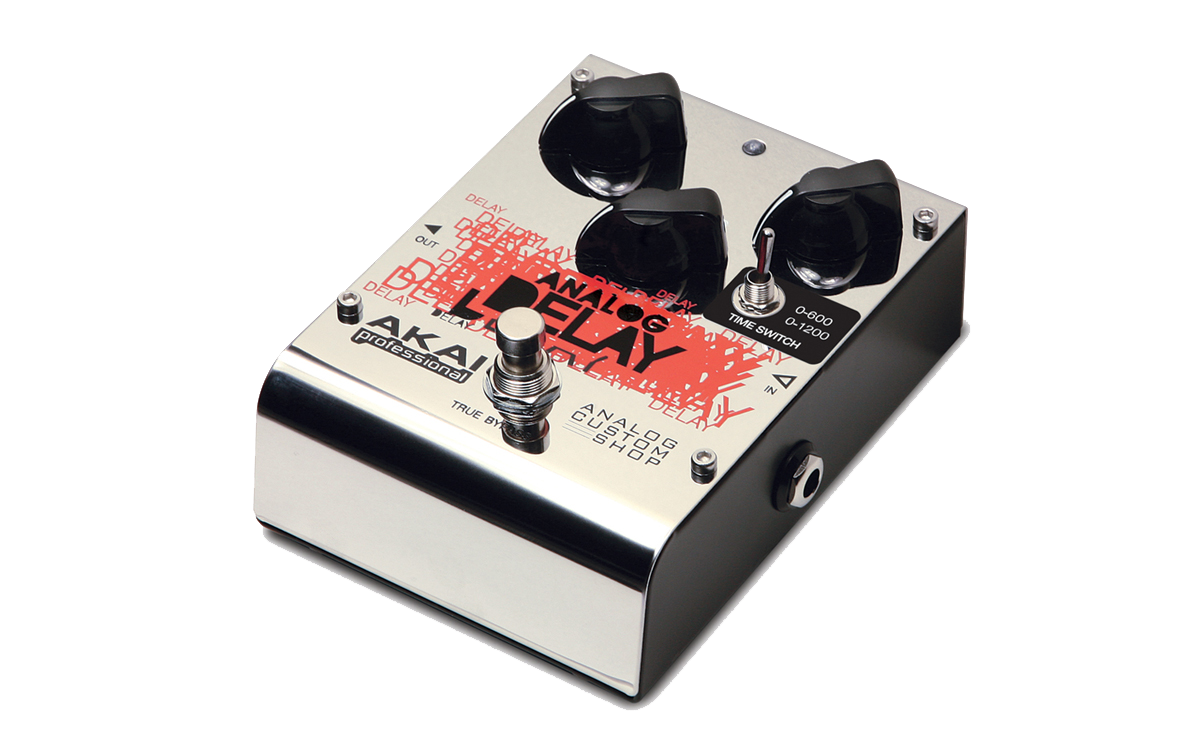
The mini-switch on the Akai lets you choose between two different delay ranges, with the shorter one (0 – 600 ms) offering slightly crisper tones, and the longer one (0 – 1,200 ms) being a bit greasier.
The shorter delay option is perfect for slapback echoes: Akai Analog Delay – Whispering
The longer option lets you build Brian May -style walls of sound: Akai Analog Delay – guitar wall
On high Repeat-settings – two o’clock or above – the delay starts to feed back on itself, with the delay volume increasing and the sound rushing in on you like an avalanche: Akai Analog Delay – feedback avalanche
What a groovy little pedal! Akai’s Analog Delay gives you the authentic tones of a bucket brigade unit, warts and all. The increasing amounts of hiss on the longest settings are a design feature of a vintage-type delay as this, and not a fault. Something for the true lovers of earthy grime!
****
Akai Analog Delay ja Chorus – à la Mr Summers
****
Akai Analog Custom Shop -pedals
Finnish Distributor: Studiotec
****
Akai Chorus
Street price: 69 €
Pros:
+ price
+ sound
+ sturdy build
+ versatile
Cons:
– mono only
****
Akai Analog Delay
Street price: 69 €
Pros:
+ price
+ sound
+ sturdy build
+ long delay times
****


 Kitarablogi.com – Finland's premier Guitar and Bass blog