Testipenkissä: ESP USA Eclipse

ESP USA Eclipse – case

Tällä kertaa on tarjolla todella harvinaista herkkua!

Vaikka moni kitaristi sitä ei tiedä, on ESP Guitarsilla myös pieni custom-paja USA:n länsirannikolla. ESP USA rakentaa ESP-artisteille tarkoitettujen custom-soittimien lisäksi myös muutamia kitaramalleja piensarjatuotannossa. Tällä hetkellä maailmalle lähtee alle 20 kitaraa kuukaudessa, ja testaajan suureksi iloksi yksi niistä saapui hiljattain Suomeen – ESP USA Eclipse.

****
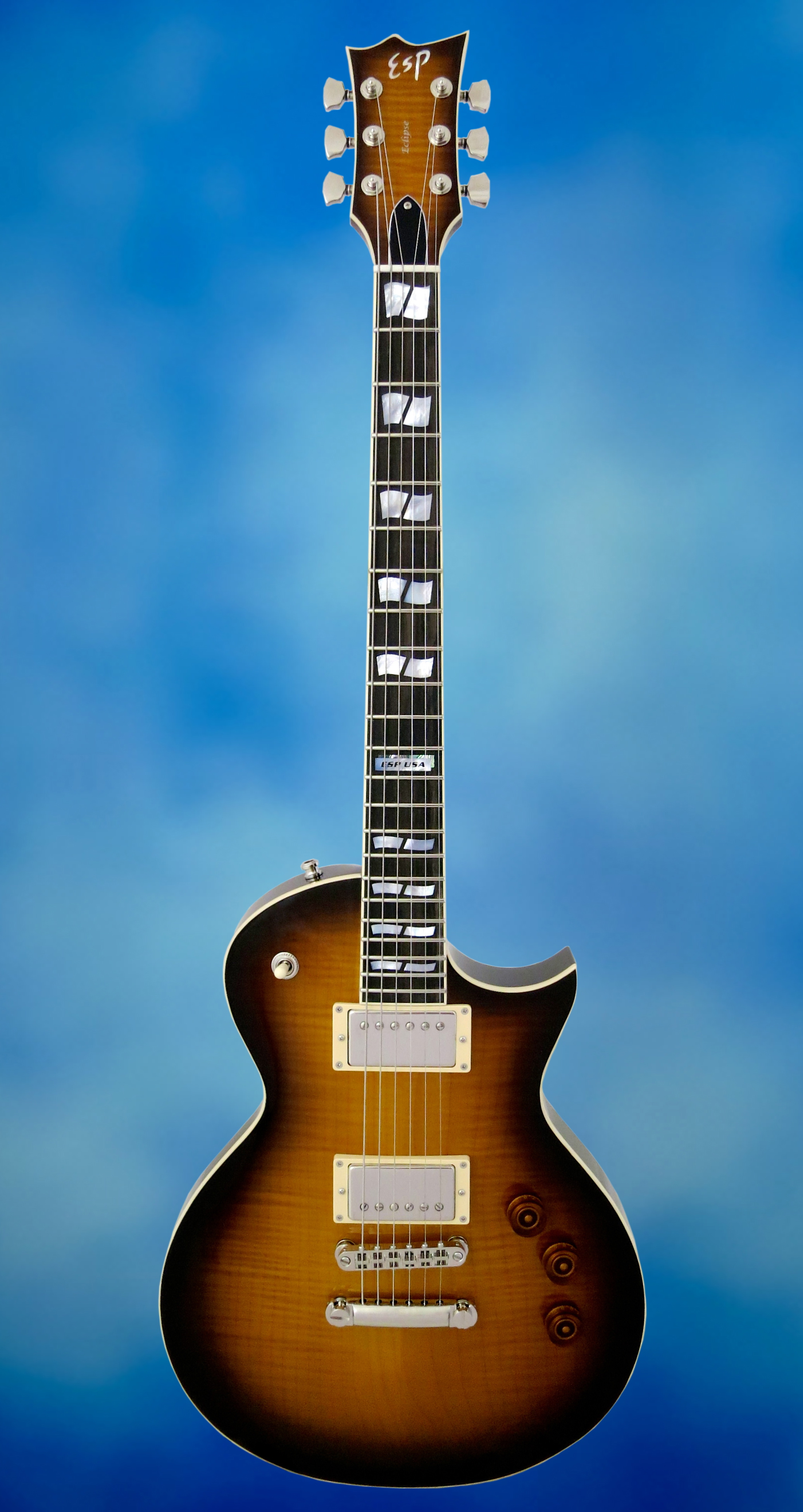
ESP USA Eclipse – full front

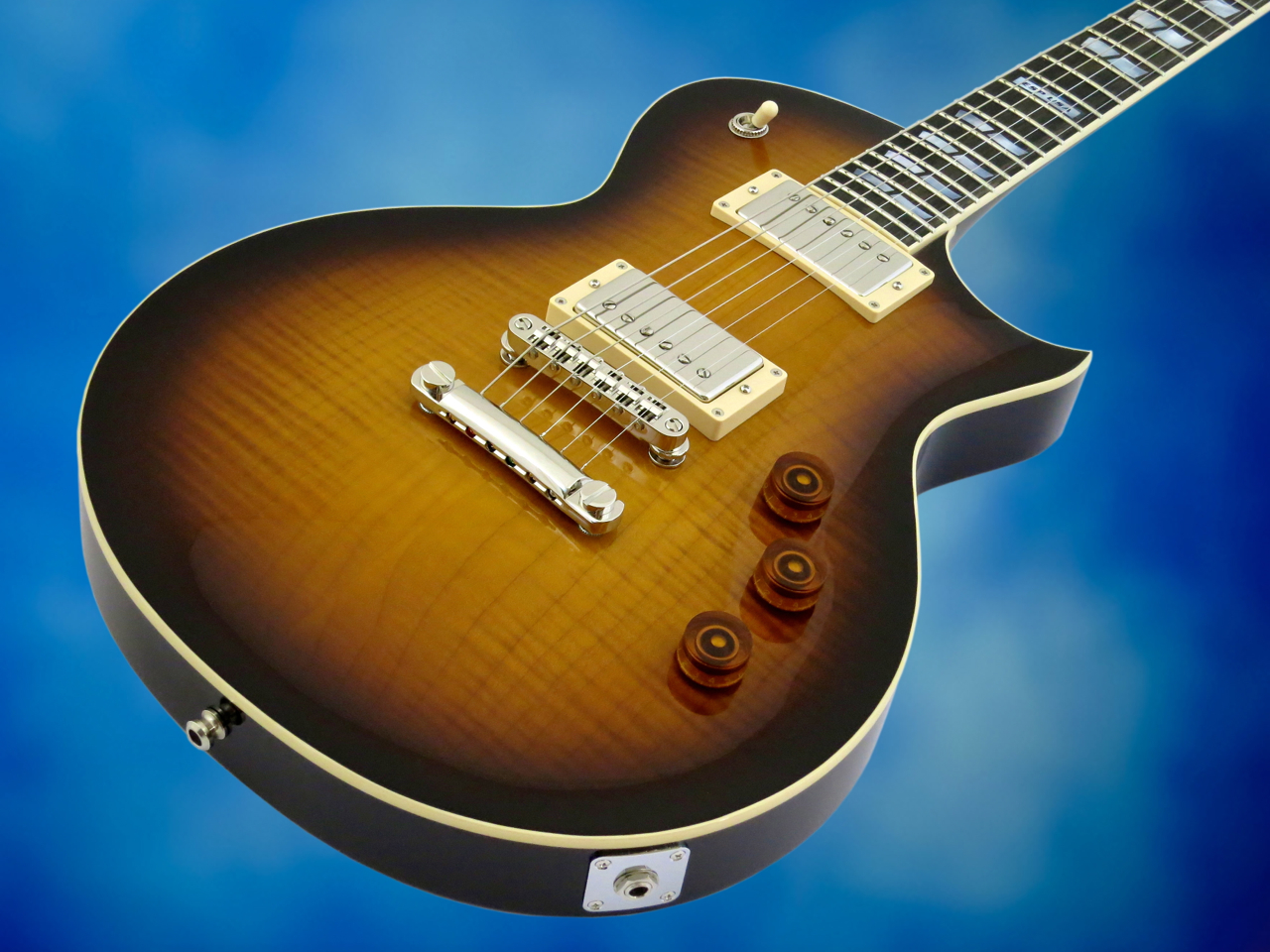
ESP USA Eclipse (3.939 €) on firman ultimatiivinen versio Eclipse-mallista, jossa käytetään vain parhaita raaka-aineita, osia ja rakennusmenetelmiä.

ESP USA Eclipse – neck joint

Yksi USA Eclipsen erikoisuuksista on ESP:n Set-Thru-Neck-kaulaliitos, jossa yhdistetään liimaliitoksen ja kokonaan rungon läpi menevän kaulan parhaita ominaisuuksia.

Firman Set-Thru-liitoksessa on kyse erittäin syvästi ulottuvasta liimaliitoksesta. Kun perinteisissä liimaliitoksissa kaulan kieleke ulottuu kaulahumbuckerin alle, jatkuu USA Eclipsen tapauksessa kaulan mahonki vaahterakannen alla ihan tallaan saakka.

Tästä syntyy – ainakin teoriassa – lujempi kaulaliitos ja sen seurauksena pidempi sustain-vaihe. Samalla Set-Thru-liitos mahdollistaa myös erittäin sulavan liitoskohdan ilman kaulankorkoa.

ESP USA Eclipse – back beauty

Eclipsen mahonkirunkoon on lisätty oiva mukavuusviiste.

ESP USA Eclipse – tuners

Vireen suhteen ei jätetä mitään sattumaan varaan, kun lapaan on asennettu Sperzel-lukkovirittimiä.

ESP USA Eclipse – headstock

USA Eclipsen reunalistoitetun lavan etupuolen loimuvaahteravaneri on viimeistelty samaan Tobacco Sunburst -väritykseen kuin rungon vahvasti kaareva vaahterakansi.

Tämän kitaran satula on veistetty aidosta naudanluusta.
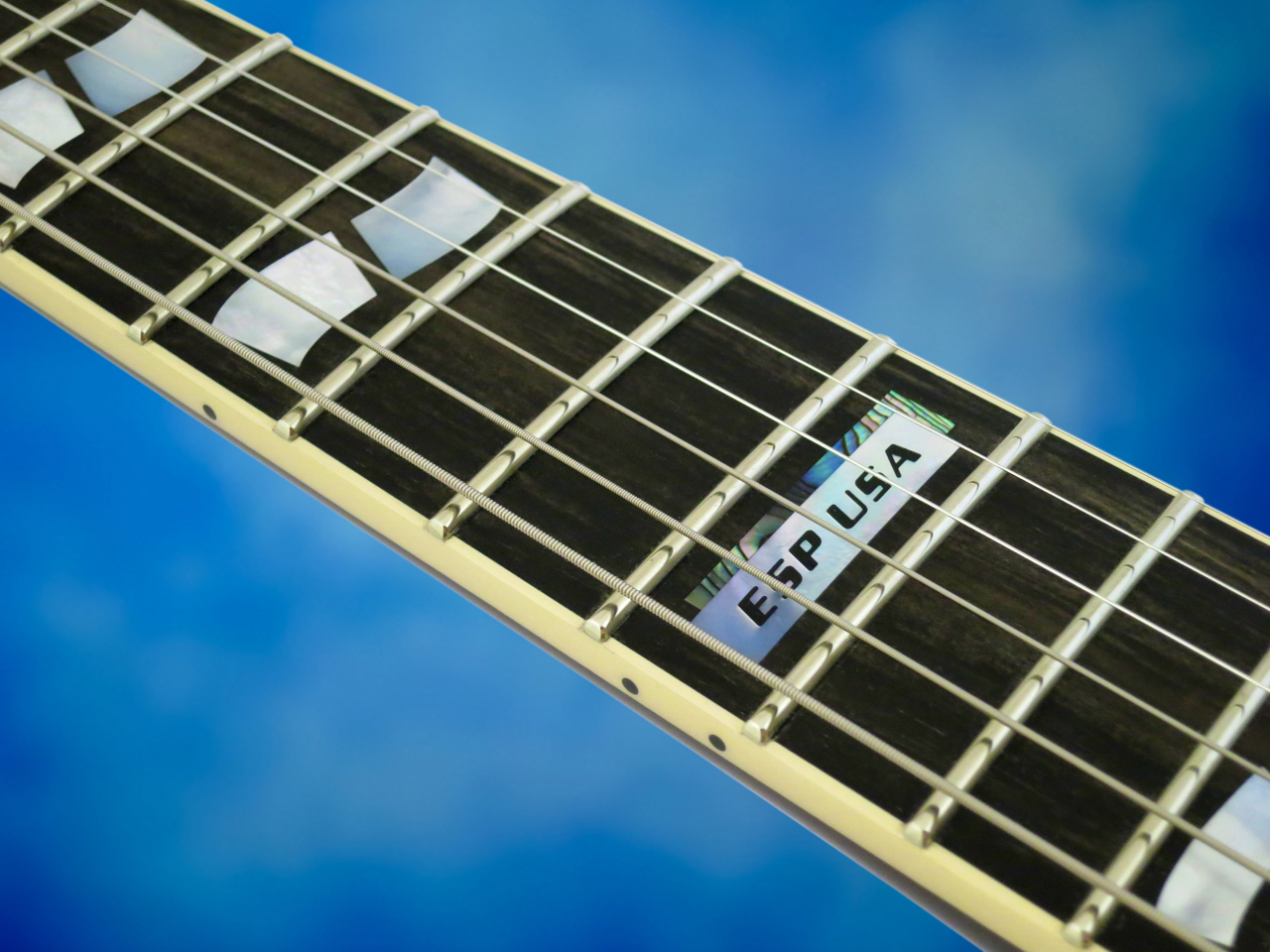
ESP USA Eclipse – fretboard

Reunalistoitettuun eebenpuuotelautaan on asennettu 22 jumbo-kokoista nauhaa, sekä upeat upotukset aidosta helmiäisestä.
Otelautaradius on suhteellisen loivat 12 tuumaa (305 mm).

ESP USA Eclipse – TonePros bridge

Rungon puolella on Sperzel-virittimien aisapariksi valittu Tone Prosin lukittava Tune-o-matic-talla ja palkkimainen kieltenpidin.
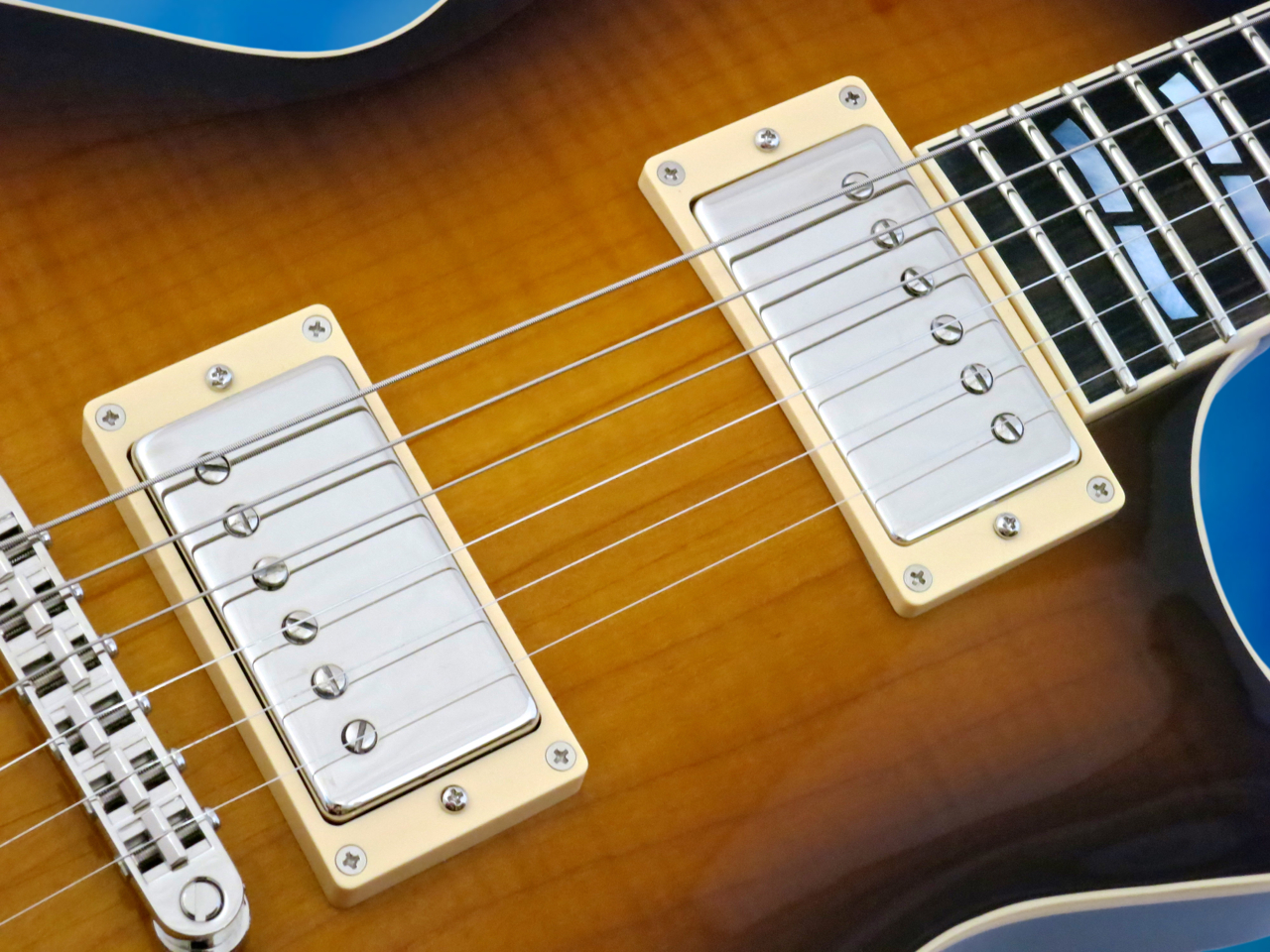
ESP USA Eclipse – pickups

Erittäin laadukas linja jatkuu myös mikrofonien suhteen:

ESP USA Eclipse on varustettu kahdella Seymour Duncan Alnico II Pro -humbuckereilla (APH-1), jotka ovat vintage-tyyliset, lämpimät mikrofonit (ja esimerkiksi Slashin lempimikit).

ESP USA Eclipse – controls

Tämän mallin volume-potikat toimivat niin, että tallan lähellä oleva potikka vaikuttaa tallamikrofoniin, ja keskimmäinen säädin on varattu kaulamikille.

Master tone -säätimeen on piilotettu nostokytkin, jolla voi puolittaa molemmat mikrofonit.

ESP USA Eclipse – control cavity

Kitaran laadukas, passiivinen elektroniikka on suojeltu ulkoisilta häiriöiltä grafiittipitoisella maalilla, sekä alumiinifoliolla vuoratulla kannella.

ESP USA Eclipse – body beauty 2

****

ESP USA Eclipse – beauty shot

Tämä kitara on kerrassaan mahtava soitin! ESP USA Eclipse suorastaan huokuu aitoa laatua, eikä todellakaan jätä minkäänlaista toivomiseen varaa.

Täyspaksuiseksi LP-tyyliseksi kitaraksi USA Eclipse on mukavan kevyt.

En ymmärrä miksi ESP kutsuu tämän soittimen erittäin mukavaa kaulaprofiilia ”Thin U:ksi”. On totta, että Eclipsen mukavan pyöreä D-profiili ei tunnu lainkaan paksulta pesäpallomailalta, mutta – onneksi – tämä kaula ei myöskään ole 1980-luvun ohuen ohut ”vauhtikaula”. Erittäin mukavaksi minä kutsuisin tätä kaulaa…

Jenkki-Eclipsen soitettavuus on mielestäni ensiluokkaista – kevyt, muttei löysä – ja kitara soi puhtaasti ja kauniisti koko otelaudassa.

Seymour Duncanin vintage-tyyliset Alnico II Pro -humbuckerit sopivat tähän soittimeen täydellisesti, juuri niiden monipuolisuuden ansiosta. Hyvin maltillista lähtötehoa omaavat humbuckerit toimivat yhtä loistavasti puhtaaseen perinne-Jazziin kuin rankkaan särökäyttöönkin. Myös puolitettujen mikrofonien sointi on erittäin käyttökelpoinen, minkä ansiosta USA Eclipse kattaa hyvin laajan alueen soundeja ja musiikkityylejä.

Ensimmäisessä klipissä kuullaan puolitettujen humbuckerien puhtaita soundeja (alkaen kaulamikistä):

Toisessa audioklipissä taas soivat täydet humbuckerit:

Demobiisissä vasemmalta tuleva komppikitara käyttää molempia puolitettua mikrofonia yhdessä, kun taas oikealta tulevissa wah-osuuksissa soi puolitettu kaulamikki yksin. Särökitara käyttää täyttä tallamikrofonia:
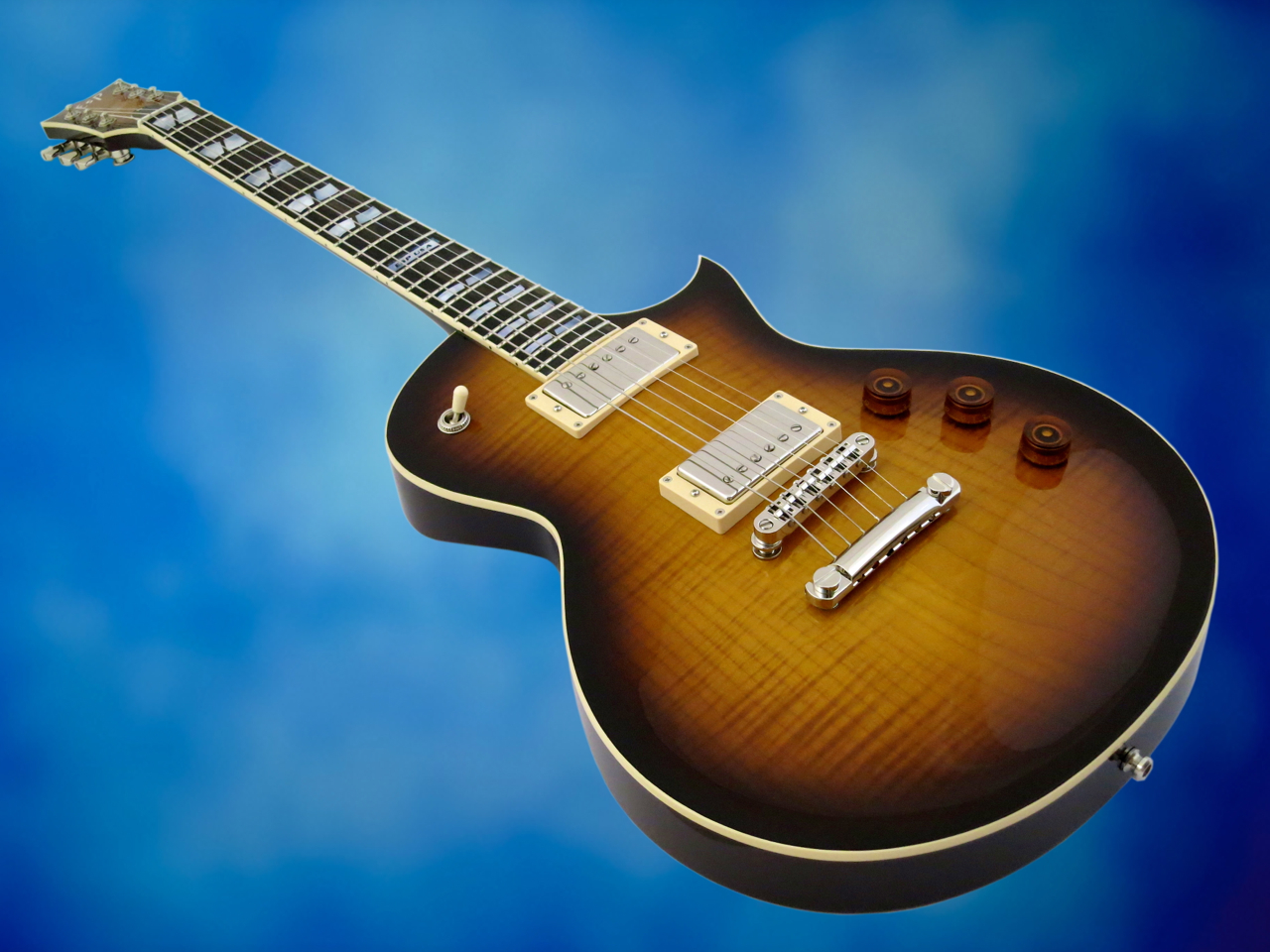
ESP USA Eclipse – beauty shot 2

****

ESP USA Eclipse – body beauty

ESP USA Eclipse on suuren valmistajan oma boutique-luokan huippusoitin. Toisin kuin joissakin perinnemerkeissä, USA Eclipsen tapauksessa hintalappu on suorassa yhteydessä tämän soittimen laatuun, eikä pelkästään brändi-imagoon.

ESP USA Eclipse on mielestäni loistosoitin, jossa hinta ja laatu ovat selvästi sopusuhteessa.

****

ESP USA Eclipse

3.939 € (kova laukku sisältyy hintaan)

Maahantuoja: Musamaailma

****

Plussat:

+ hinta-laatu-suhde

+ työnjälki

+ Set-Thru-Neck-kaula

+ viimeistely

+ mikrofonien puolitus

+ soundi
Review: Jericho Guitars Fusion

Usually, we get the products we review from the Finnish distributors, or directly from Finnish guitar- or amp-makers.

This time, though, I was approached by guitarist Jaakko Rytsölä. Jaakko had ordered a guitar for himself, liked what he got, and is now thinking seriously about importing this brand, in partnership with Espoo-based company Guitarworx.

Jericho Guitars – who are based in Plano, Texas – are a brand specialising exclusively in long-scale baritone electric guitars. Jericho use what they call a ping-pong manufacturing process: The raw tonewood is hand-selected at a wood supplier in British Columbia (Canada), and then sent to a manufacturer in South Korea for all the basic neck and body work. The half-finished guitars are then shipped back to Texas, where they are assembled and set up. According to Jericho, this process results in high-quality instruments with a player-friendly price tag.

Jericho have already caused quite a few waves with their Avenger model, which is squarely aimed at the Hard ’n’ Heavy crowd. Now the company has introduced a new model, called the Jericho Fusion. We received a preproduction version of the Jericho Fusion Black And Gold-version for review.

****

Jericho Fusion – full front – smaller

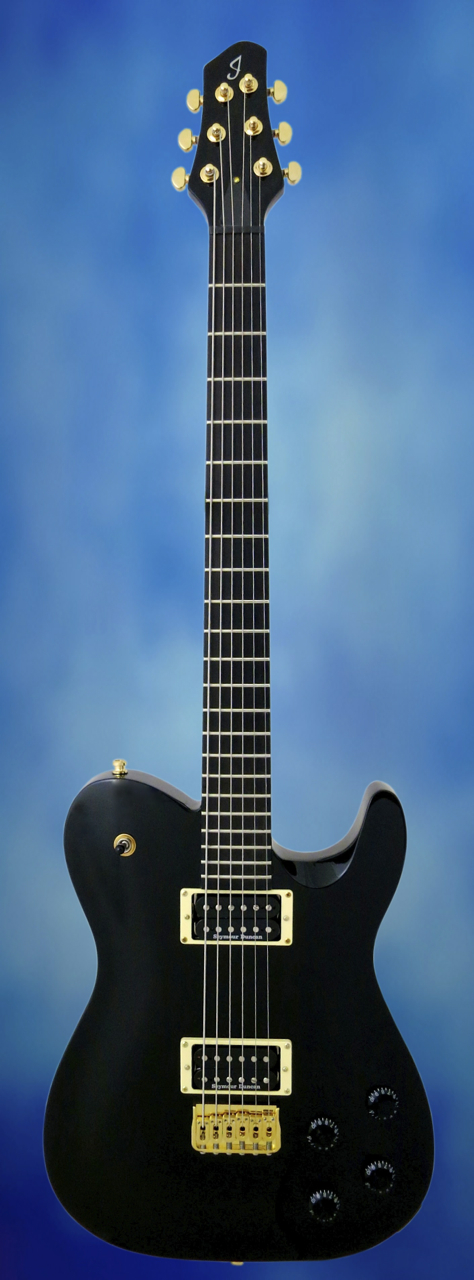
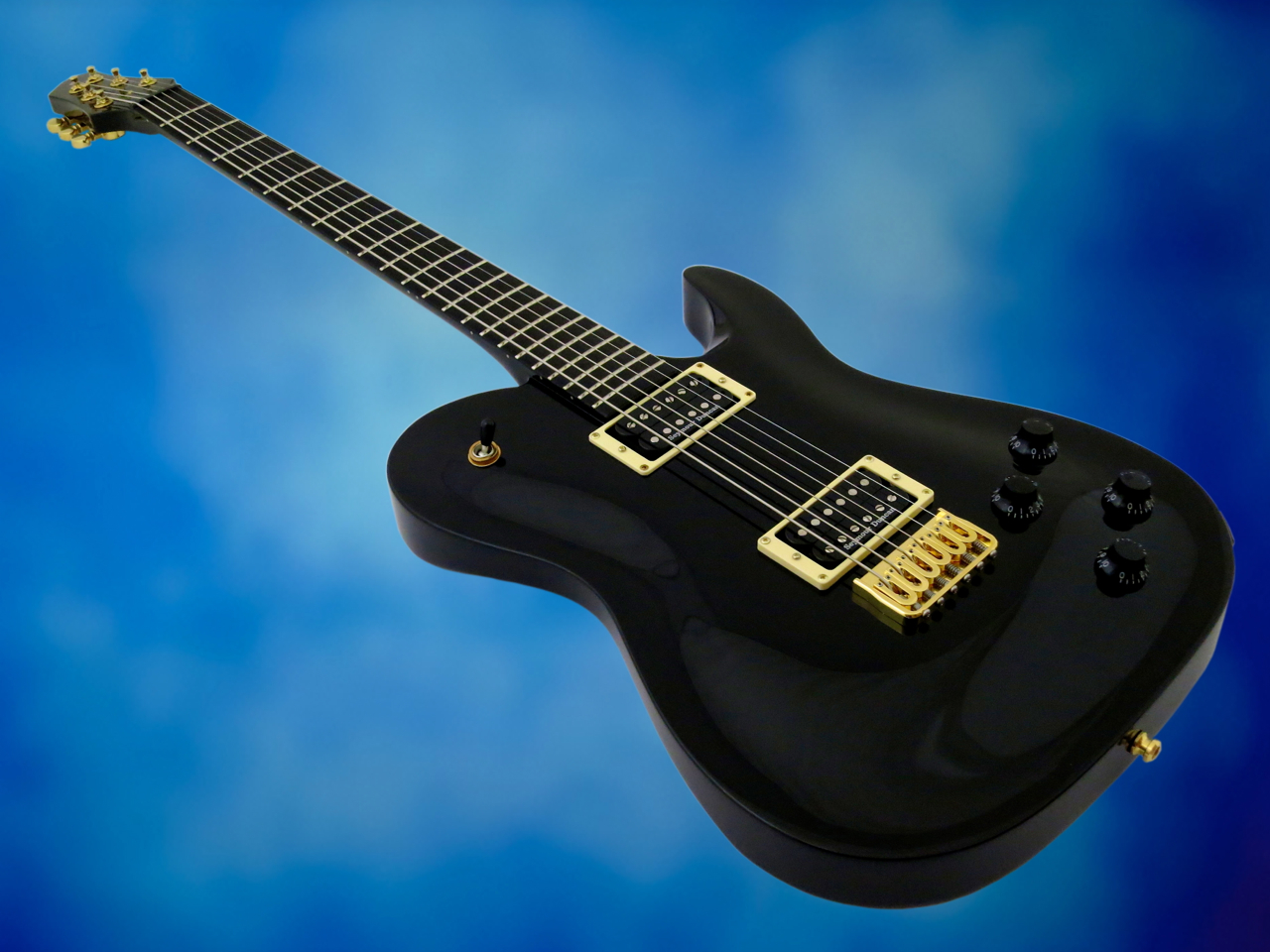
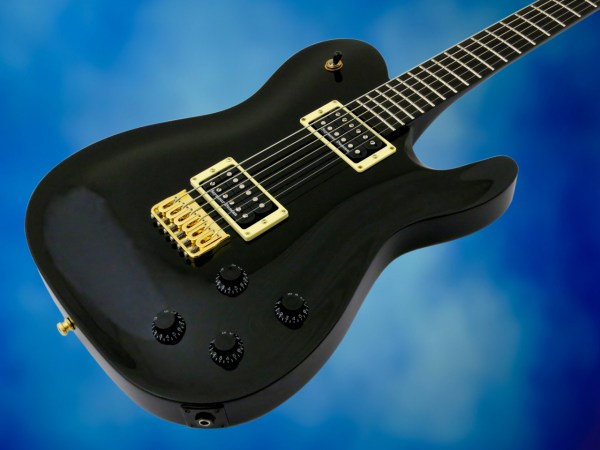
The Jericho Fusion (price in Finland approximately 999 €) is a sleek and elegant baritone guitar, with a body outline that is based on the venerable Fender Telecaster.

The Fusion has a three-piece mahogany set neck, as well as a mahogany body with a contoured front.

The Fusion has a scale length of 26.9″, which means 68.3 cm in the metric system.

Jericho Fusion – back beauty

The body’s back features a generous rib cage chamfer.

Jericho Fusion – headstock

Jericho’s headstock design looks very nice, and offers almost straight string pull, which is a definite plus for tuning stability.

The Fusion comes with a self-lubricating black Graph Tech Tusq XL nut.

Jericho Fusion – tuners

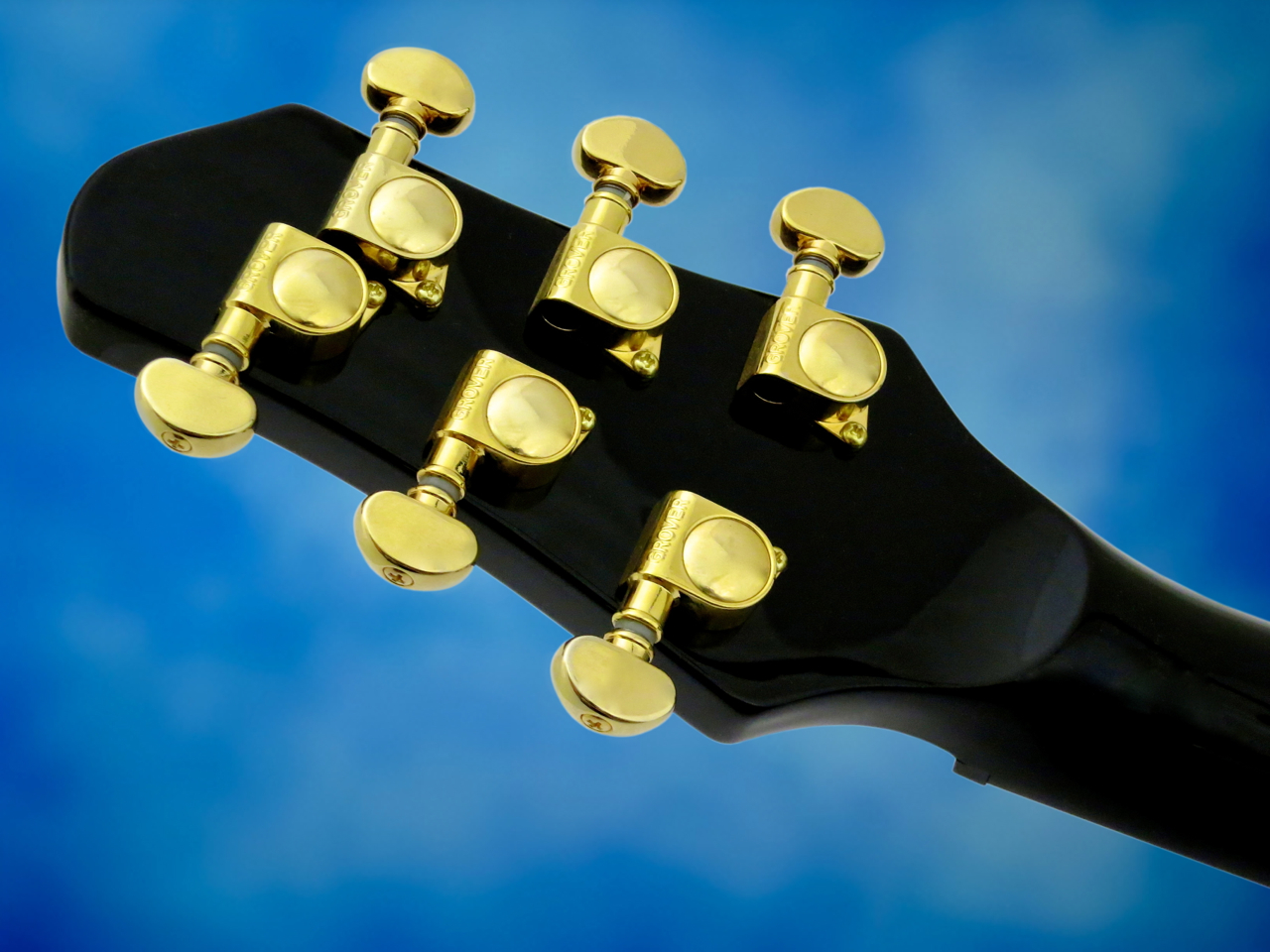
A set of golden Grover Rotomatics keeps the tuning solid.

Jericho Fusion – fingerboard

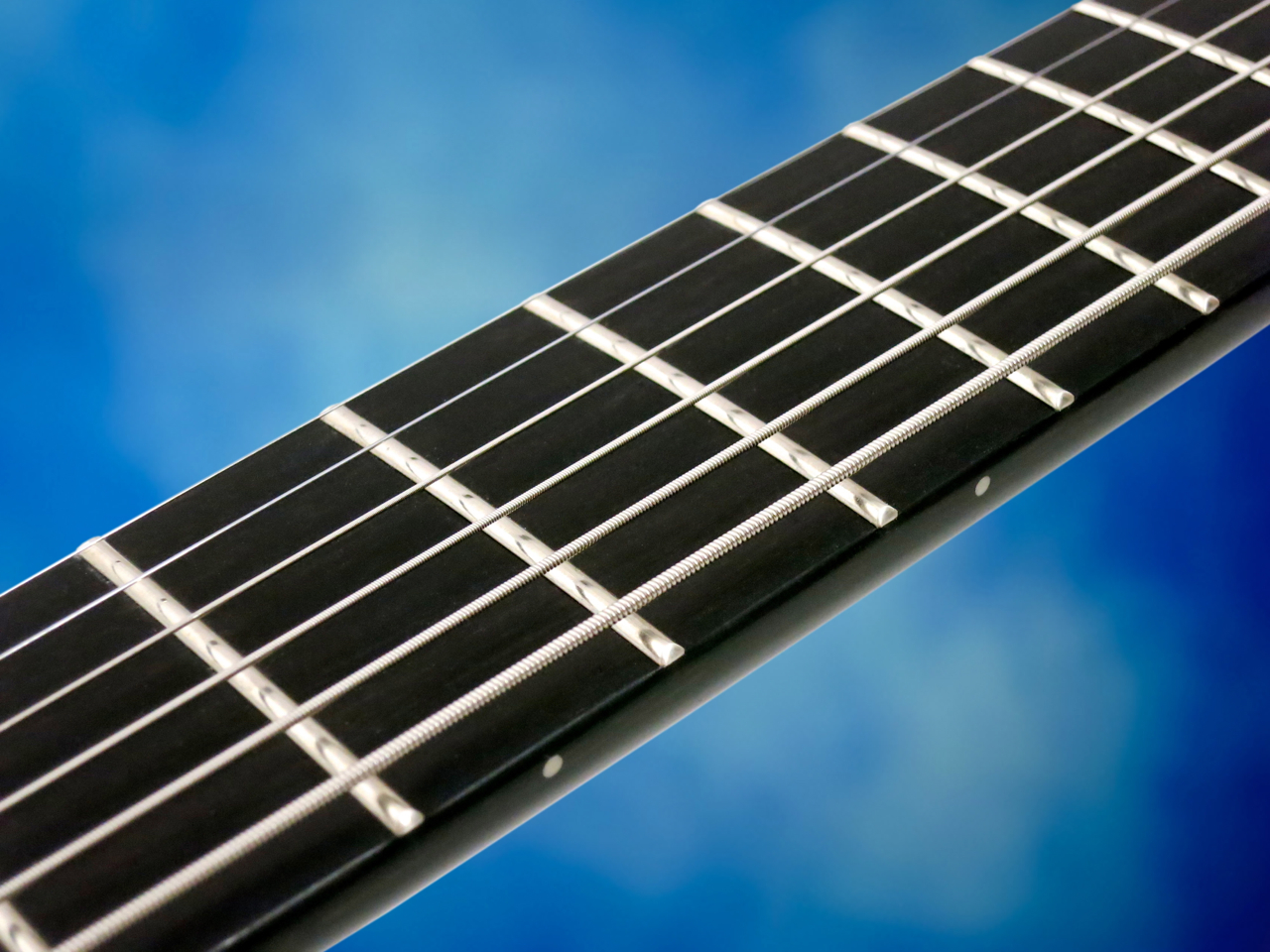
The black ebony fretboard sports 22 medium-sized frets.

Jericho Fusion – bridge

The bridge is a chunky Hipshot design, constructed from a machined brass base and stainless steel bridge saddles.

Jericho Fusion – pickups

The Jericho Fusion comes equipped with a classic pair of Seymour Duncan humbuckers – a ’59-model in the neck position, and a Custom TB-5 at the bridge.

Jericho Fusion – controls

The guitar’s controls are configured in traditional Les Paul-style, giving you independent volume and tone controls for each pickup.

Jericho Fusion – control cavity NEW

A look under the hood reveals quality components and clean workmanship. Our preproduction review guitar has regular Les Paul-style wiring, but production models will come with push/pull-pots for splitting the humbuckers.

****

Jericho Fusion – beauty shot 2

The Jericho Fusion is a great player. Actually – and this might come as a bit of a surprise – it is very easy for the guitarist to adjust to the longer-than-usual scale length. After a minute or two, you simply forget about the longer scale, and just get on with playing.

The guitar’s neck profile is a neither too slim, nor too fat, ”D”. Our review sample had a comfortable medium weight, and it came with a very low and slinky setup.

While Jericho’s Avenger was designed to be a balls-to-the-wall Metal-machine, the new Fusion model covers much more musical and tonal ground, thanks to its less powerful pickups. Don’t worry, the Jericho Fusion can do the head-banging stuff with aplomb, too, but this guitar also holds very lush clean tones in store, should you be so inclined.

Here’s a short clip of all three toggle switch settings (starting at the neck), played through a clean amplifier:

And here’s the audio track from the You Tube-video:

Jericho Fusion – body beauty

****

Jericho Fusion – beauty shot – NEW

Jericho Guitars’ Fusion is a great-playing, versatile modern baritone electric. This guitar is well-made, no-nonsense tone machine for the player who wants to go low or even lower. Let’s hope that Jericho’s instruments will soon become more widely available in Finland.

****

Jericho Guitars Fusion

Price in Finland: c. 999 €

Tiedustelut: Guitarworx

****

Pros:

+ elegant design

+ workmanship

+ playability

+ sound

The Fender Telecaster – tone at the expense of intonation?

Why do we need intonation adjustment?

On string instruments, the fret spacing along the fretboard is calculated according to a mathematical formula. This formula is theoretical, though, and doesn’t take into account variables, such as string tension (tuning), string thickness (gauge) and string height (action). These variables make the actual pitch of a string, which is pressed down against a fret, deviate from the theoretically correct pitch. To compensate for this pitch offset, you need some sort of intonation adjustment that sets the correct intonation (or octave compensation) for each string.

Martin_D-42K_2006_brdt_opt

On acoustic guitars correct intonation is achieved by an angled bridge saddle, often carefully shaped to fine-tune the compensation further.

Jazz guitar bridge

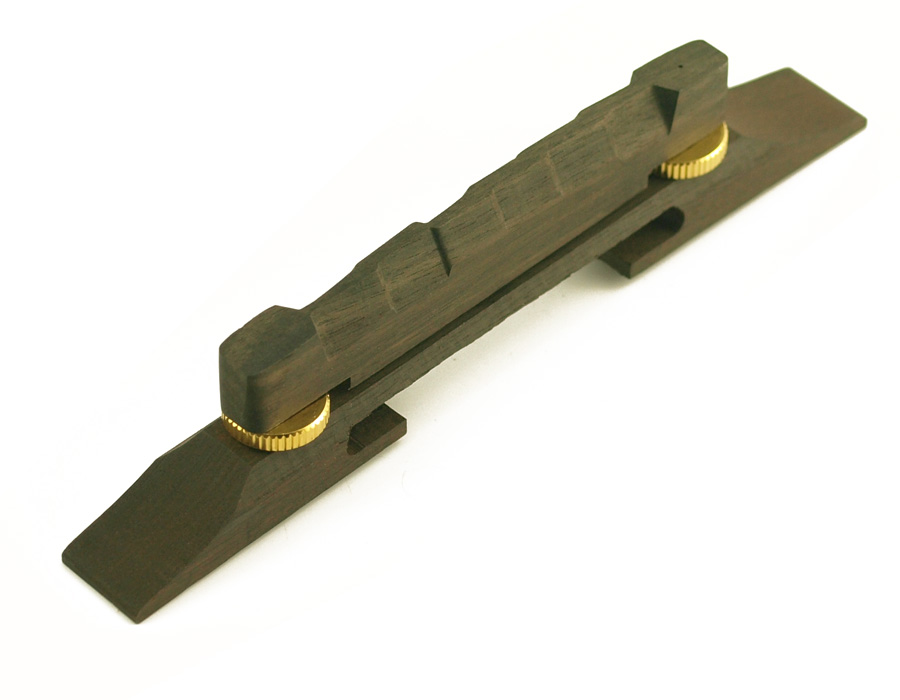
Early electric guitars were basically modified archtop acoustics, which carried on using traditional rosewood (or ebony) archtop bridges with carved ”steps” presetting the intonation. Overall intonation adjustment was carried out by moving the whole bridge carefully closer to (or further away from) the neck.

****

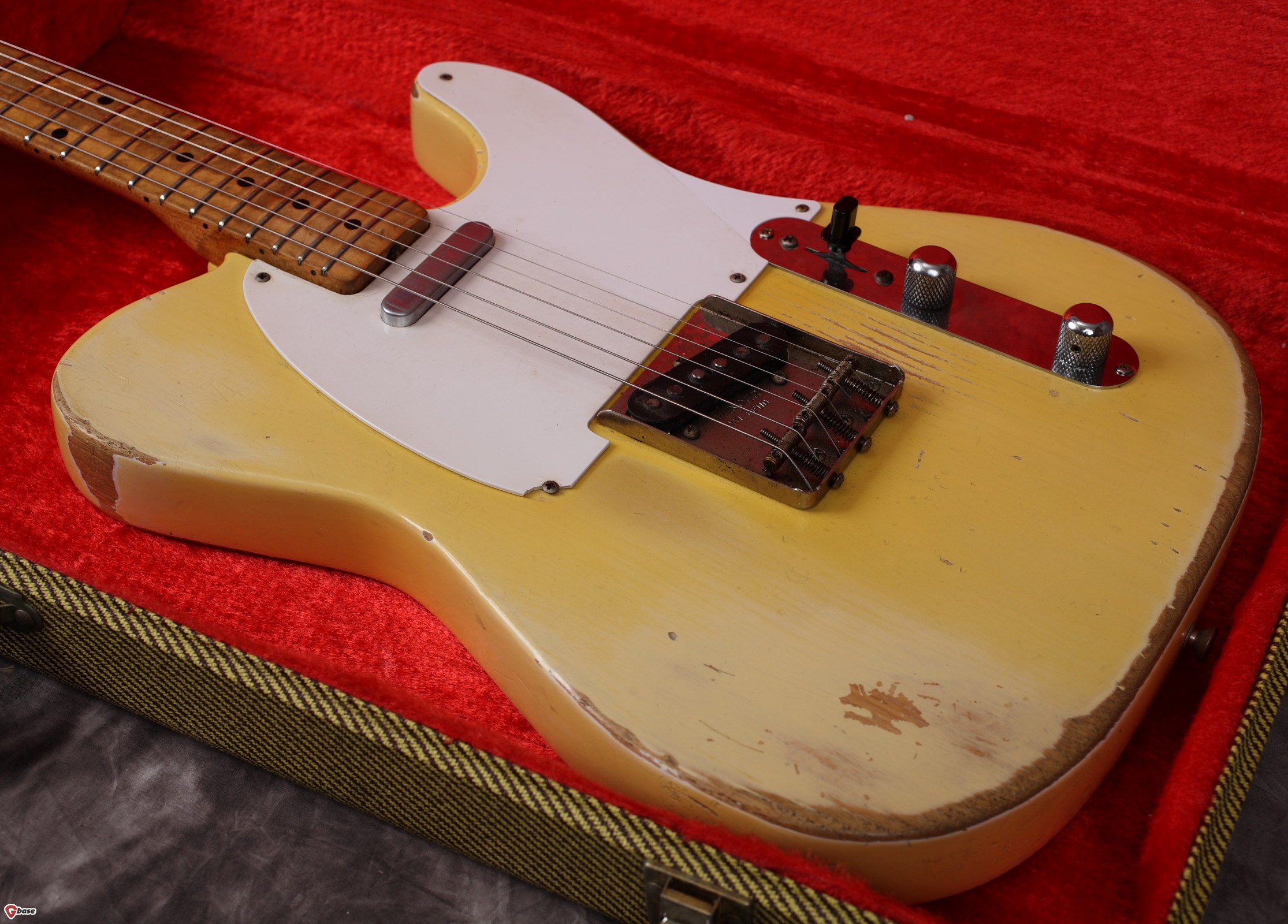
Fender 52 Reissue

The advent of the – much clearer-sounding – solidbody electric guitar necessitated a more precise approach to the problem of intonation adjustment.

52 Tele Bridge

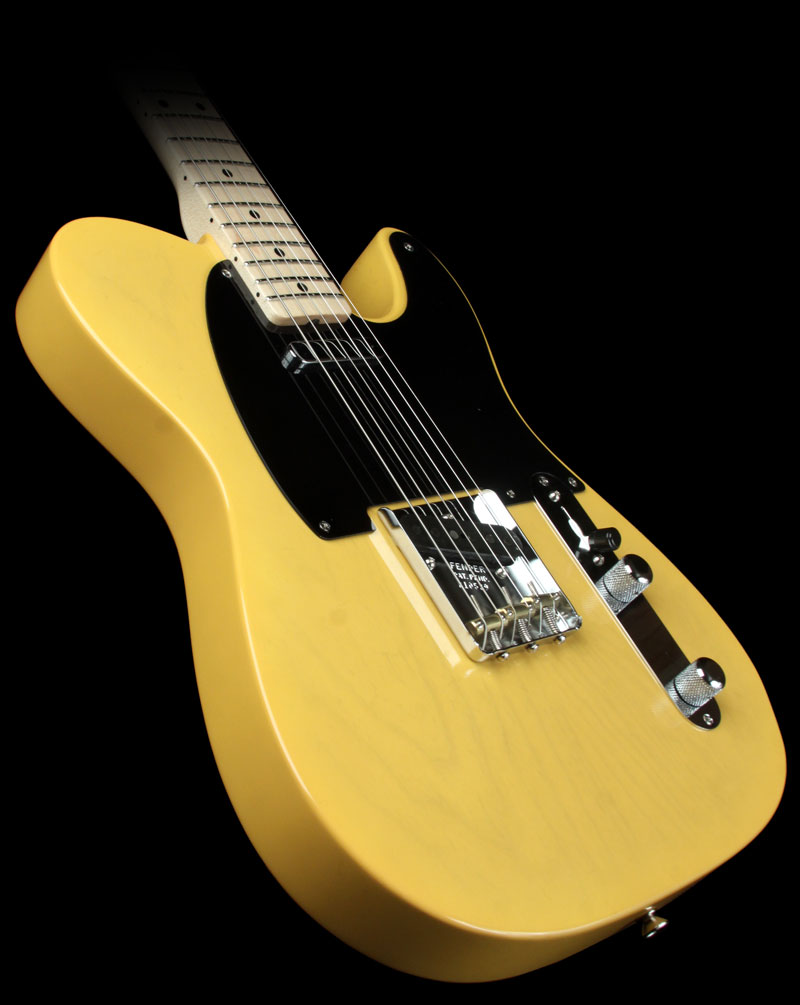
Leo Fender’s novel Esquire/Broadcaster/Telecaster-bridge featured a mounting plate for the bridge pickup, as well as individual action adjustment for each string, and octave compensation in string pairs.

Fender_Custom_Shop_52_Telecaster_Nocaster_Blonde_R10539_1

Fender’s Telecaster bridge assembly plays a huge part in this model’s distinctive, twangy tone, laying the foundation for the model’s classic status.

close-up Fender bridge

brucke-und-ta

Over the course of the 1950s and 60s, Fender experimented with different saddles – smooth brass, smooth steel, threaded steel, and steel saddles with a single notch per string – but the basic, three-saddle formula stayed firmly in place. You got fantastic tone, but not perfectly spot-on intonation.

****

70s Fender six-saddle

Twenty years after the original launch of Fender’s first solidbody electric, things had evolved.

In 1952 the original three-saddle bridge was less of a compromise, because the regular string sets of that time (012s or 013s) had a wound g-string. With a wound g-string the biggest step in intonation adjustment was between the b- and the g-string, and, as they were catered for by different saddles, a good, working compromise could be found.

By the late Sixties, ”slinky” string sets with plain g-strings had become the norm. This shifted the intonation step between the highest wound string and the lowest plain string onto a single, rigid bridge saddle (for the D- and g-string).

Fender retained the traditional three-saddle bridge on its standard Telecaster, but introduced six-saddle bridges on many of its new models in the Seventies. Pictured above is the six-saddle bridge from a (second version) Custom Telecaster (introduced in 1972).

Although this bridge finally offered perfect intonation, some players criticised this type of bridge for ”sounding” thinner (or brighter) than the original version. This might also have been due to changes in the precise specifications of the bridge pickup at that time, though.

Hipshot 6-saddle

Modern Fender 6-saddle

More recent six-saddle designs by makers like Hipshot, Gotoh or Fender are based on a thicker bridge plate. These are perfectly serviceable, modern designs, which offer precise intonation. Many Tele-anoraks still steer clear of these bridge types, however, because the more rigid bridge plate tends to tame the bridge pickup’s twang noticeably.

****

Another approach to better intonation on a Telecaster is to keep the twang-enhancing three-saddle ashtray bridge in place, but modify the saddles.

Joe Barden angled

Pickup specialist Joe Barden came up with angled brass saddles in his design for the late Tele-master Danny Gatton.

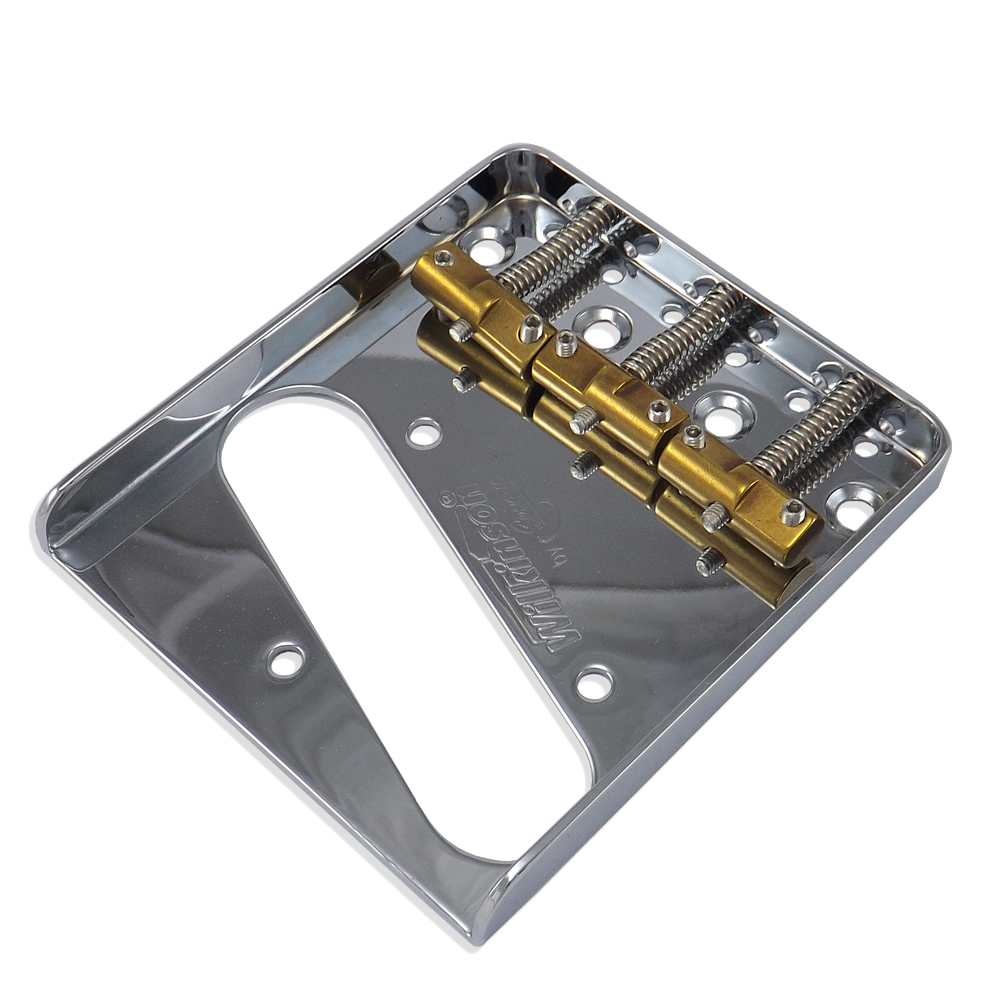
Wilkinson

Graph Tech

Wilkinson’s and Graph Tech’s designs have two different, preset jump-off points per saddle – one for each string.

These three approaches (Barden, Wilkinson, and Graph Tech) work very well in providing good intonation, while keeping the Telecaster-tone intact, as long as you use string sets with a plain g-string.

pivoting brass saddles

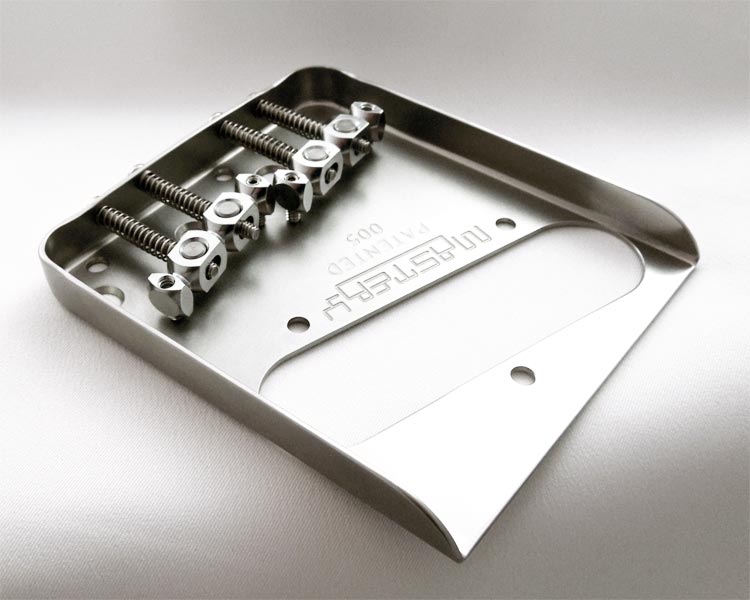
Mastery stainless steel

If you want to retain your three-saddle twang, but want to have more freedom in choosing your string gauges, the best way to go are saddles with an angle adjustment. Good examples are Wilkinson’s replacement brass saddles (above), or this stainless steel Tele-bridge by Mastery.

****

p1_u2nu2p1fg_so

How come that the vintage-type Fender Telecaster, with all its intonation flaws, is still in production and still very successful? The answer is that people have always been creative in working out solutions to design shortcomings.

In the Telecaster’s case this means finding a way to ”sweeten” the guitar’s slightly flawed intonation.

Here are three (of a myriad of) possible approaches:

1.) The fifty percent approach

After you’ve put on a set of new strings, use your digital tuner to set the (12th fret) intonation correctly for both E-strings, as well as the g-string (I call them the most critical strings). Then tune your guitar by tuning the open E-strings and the g-string to pitch. The remaining three strings (A, D, and b) are then tuned, so that the pitch at the seventh fret is correct (giving you E, a, and f#).

The A-, D-, and b-strings will be a little off in their intonation going up (or down) from the seventh fret, but overall the pitch will be much sweeter, than if you had tuned these strings to their correct open string pitches. You can then fine-adjust your sweetening by ear, using first position chords as a reference.

2.) Tuner sweetening

After you’ve put on a set of new strings, use your digital tuner to set the (12th fret) intonation, so that each string pair is slightly off in an approximately even way. With the E- and A-pair this would mean that the E-string’s intonation comes out slightly sharp, while the A-string’s intonation is a tiny bit flat. The next pair would see the D-string a bit flat, while the (plain) g-string is a tad sharp. The last pair would have the b-string a bit sharpish, with the e-string a little flat. Then tune the guitar by tuning all strings, so the pitch is correct at the seventh fret.

Now all strings will be a little off in their intonation going up (or down) from the seventh fret, but overall the pitch will be much sweeter, than if you had tuned them to their correct open string pitches. You can then fine-adjust your sweetening by ear, using first position chords as a reference.

3.) Sweetening to the A

After you’ve put on a set of new strings, use your digital tuner to set the (12th fret) intonation, so that each string pair is slightly off in an approximately even way. With the E- and A-pair this would mean that the E-string’s intonation comes out slightly sharp, while the A-string’s intonation is a tiny bit flat. The next pair would see the D-string a bit flat, while the (plain) g-string is a tad sharp. The last pair would have the b-string a bit sharpish, with the e-string a little flat. Then tune your guitar by first tuning the open A-string to pitch. Next, tune all the other strings by ear, using the A-string as your reference:

• E-string at the fifth fret against open A

• D-string at the seventh fret against open A (or A-string 12th fret harmonic)

• g-string at the second fret against open A (or A-string 12th fret harmonic)

• b-string at the tenth fret against open A (or A-string 12th fret harmonic)

• e-string at the fifth fret against open A (or A-string 12th fret harmonic)

You can then fine-adjust your sweetening by ear, using first position chords as a reference.

****

Remember, none of the above tuning tips is set in granite. Tuning and intonating a three-saddle Telecaster is a dark art, and most players have developed their own way of sweetening their guitar’s intonation. Let your ears be your guide!

Fender-American-Special-Telecaster-Olympic-White-Maple004

Review: Vuorensaku T-Style Custom

****

Vuorensaku T headstock – preview – mid

Vuorensaku is a guitar maker from the Finnish town of Jyväskylä. Luthier-Artisan Saku Vuori repairs and builds all types of string instruments. Vuorensaku also winds his own brand of custom pickups.

When it comes to handcrafted instruments, Vuorensaku isn’t relying on any specific range of models, instead this is a true custom workshop which makes one-offs according to its customers’ wishes.

Saku Vuori is a member of The Guild of Finnish Luthiers.

****

Vuorensaku T-Style – full front – bgr

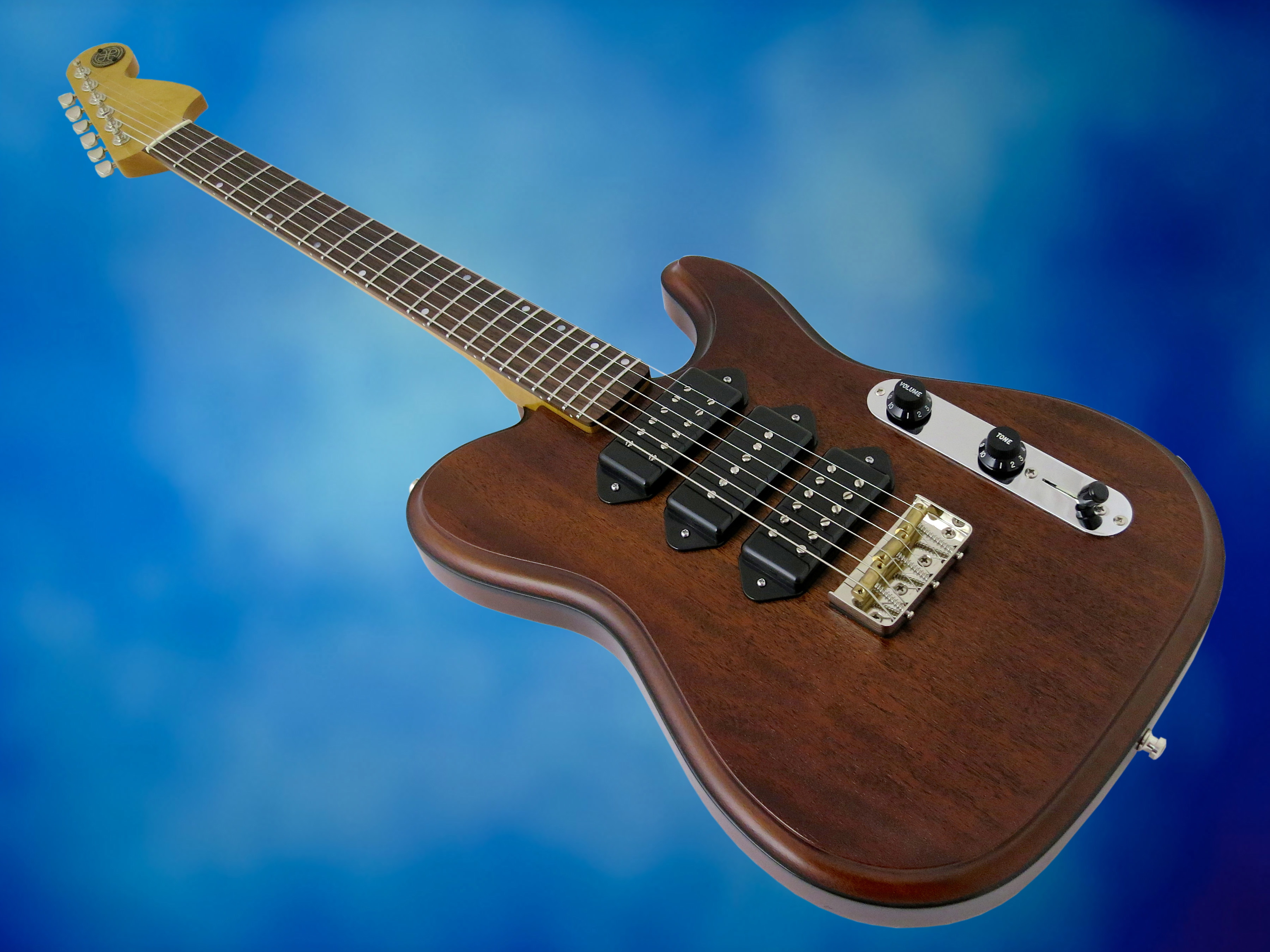
Saku sent us a recently finished solidbody electric for review – a very cool crossbreed of a Seventies Fender Telecaster Deluxe and a Fifties Gibson ES-5 Switchmaster. Vuorensaku’s guitars usually are designated by their serial number only, but for the sake of simplicity I will name this instrument the ”Vuorensaku T-Style Custom”.

Vuorensaku T-Style – full back – bgr

The T-Style Custom has been crafted from quality tonewoods:

The bolt-on neck has been carved from a piece of lightly flamed Canadian hard rock maple, and it features an Indian rosewood fretboard. The bound-top body consists of two pieces of very lightweight African mahogany. The centre glue line is virtually impossible to make out, thanks to Vuorensaku’s extremely crisp workmanship.

Vuorensaku T-Style – headstock – bgr

The Vuorensaku’s nut is crafted from genuine moose bone.

The fretboard comes with a modern, bend-friendly radius (9.5″) and sports 21 medium-sized stainless steel frets.

Vuorensaku T-Style – tuners – bgr

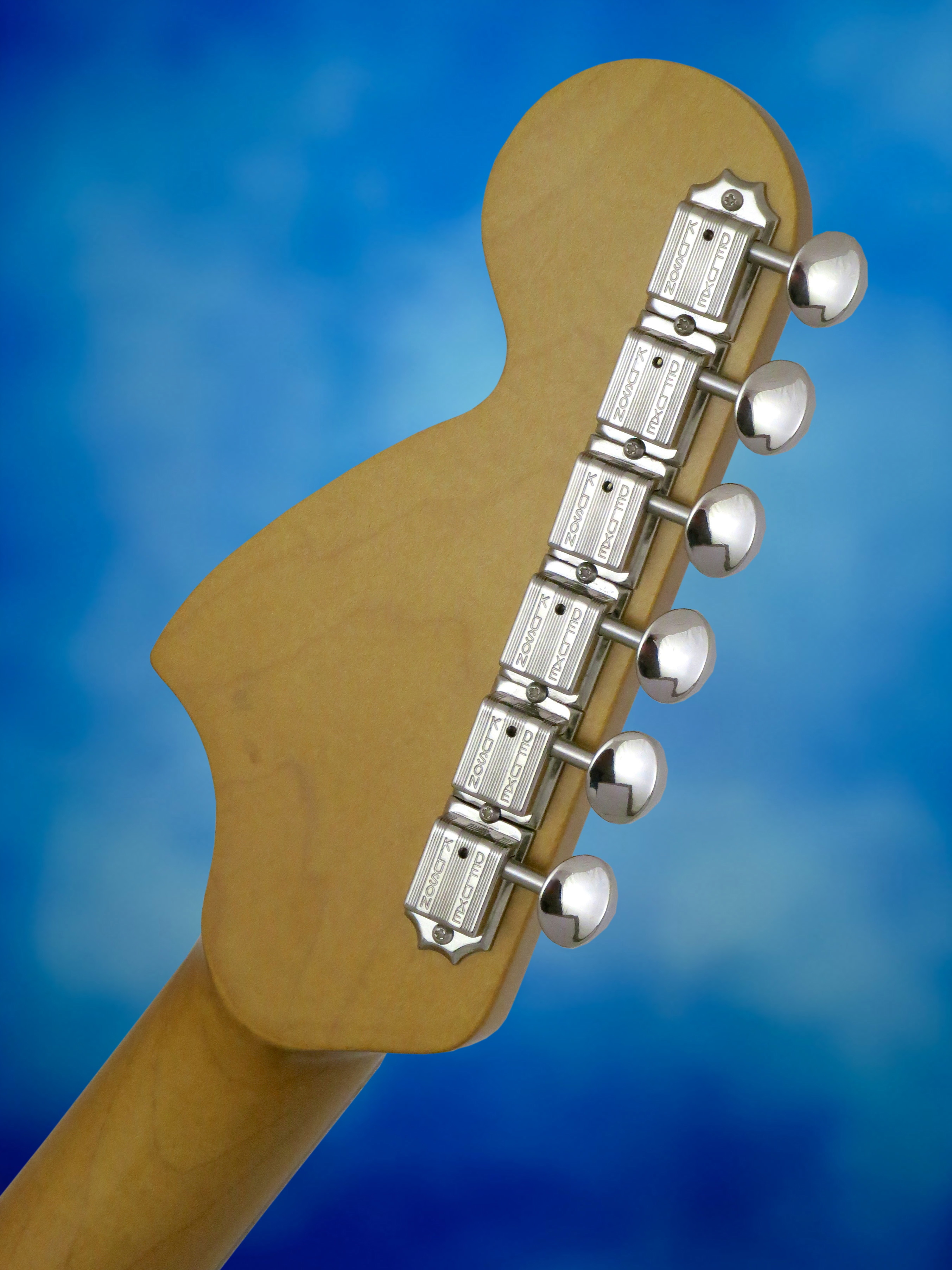
The T-Style Custom’s updated Kluson Deluxe-tuners may have that famous vintage look, but they work much more smoothly than their forebears from the 1950s.

Vuorensaku T-Style – back beauty – bgr

The neck joins the body in time-honoured fashion, using four wood screws and a rectangular steel plate.

Thanks to the T-Style Custom’s satin nitro-finish this instruments simply oozes with natural elegance, feeling very friendly to the touch.

Vuorensaku T-Style – bridge

Kluson’s fantastic Half-Size Tele-bridge is a clever way of bringing genuine Tele Twang to non-Tele guitars, as well as making it possible to use this type of bridge in combination with different bridge pickups.

Many guitarists still favour the (almost archaic) three-saddle Telecaster-bridge for its gorgeous tone, especially when it comes with three brass saddles (like this Kluson does). The threads for the intonation screws on the T-Style Custom’s bridge have been deliberately cut at an angle to improve the guitar’s intonation.

Vuorensaku T-Style – pickups 1 – bgr

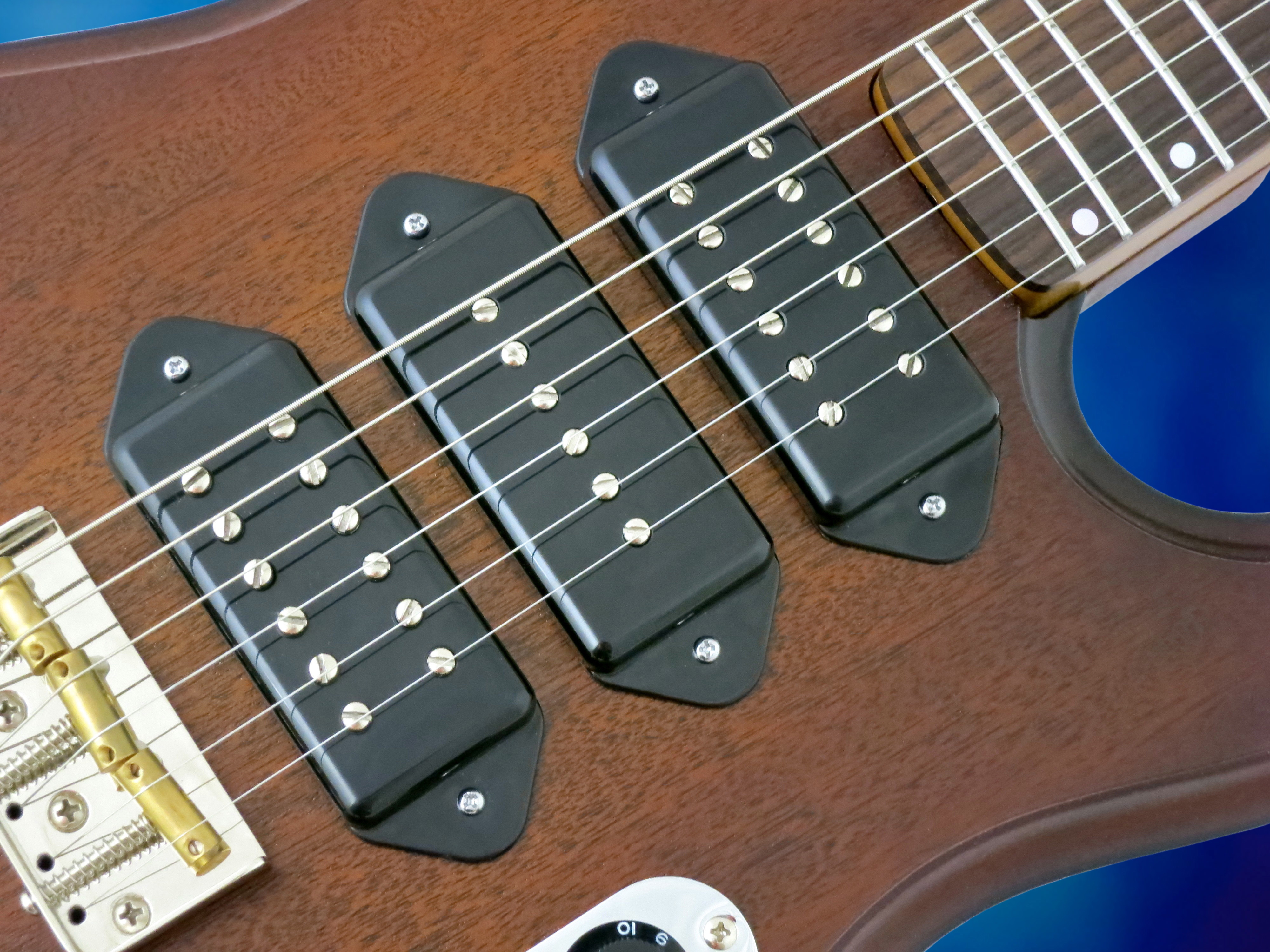
Vuorensaku’s customer specified three Dog Ear-pickups for his dream guitar, so a set of said pickups was sourced from another Finnish maker – Rautia Guitars from Joensuu.

Veijo Rautia’s Dog Ear-set comprises a pair of splittable humbuckers for the neck and bridge positions, as well as a P-90-type singlecoil in the middle.

Vuorensaku T-Style – controls – bgr

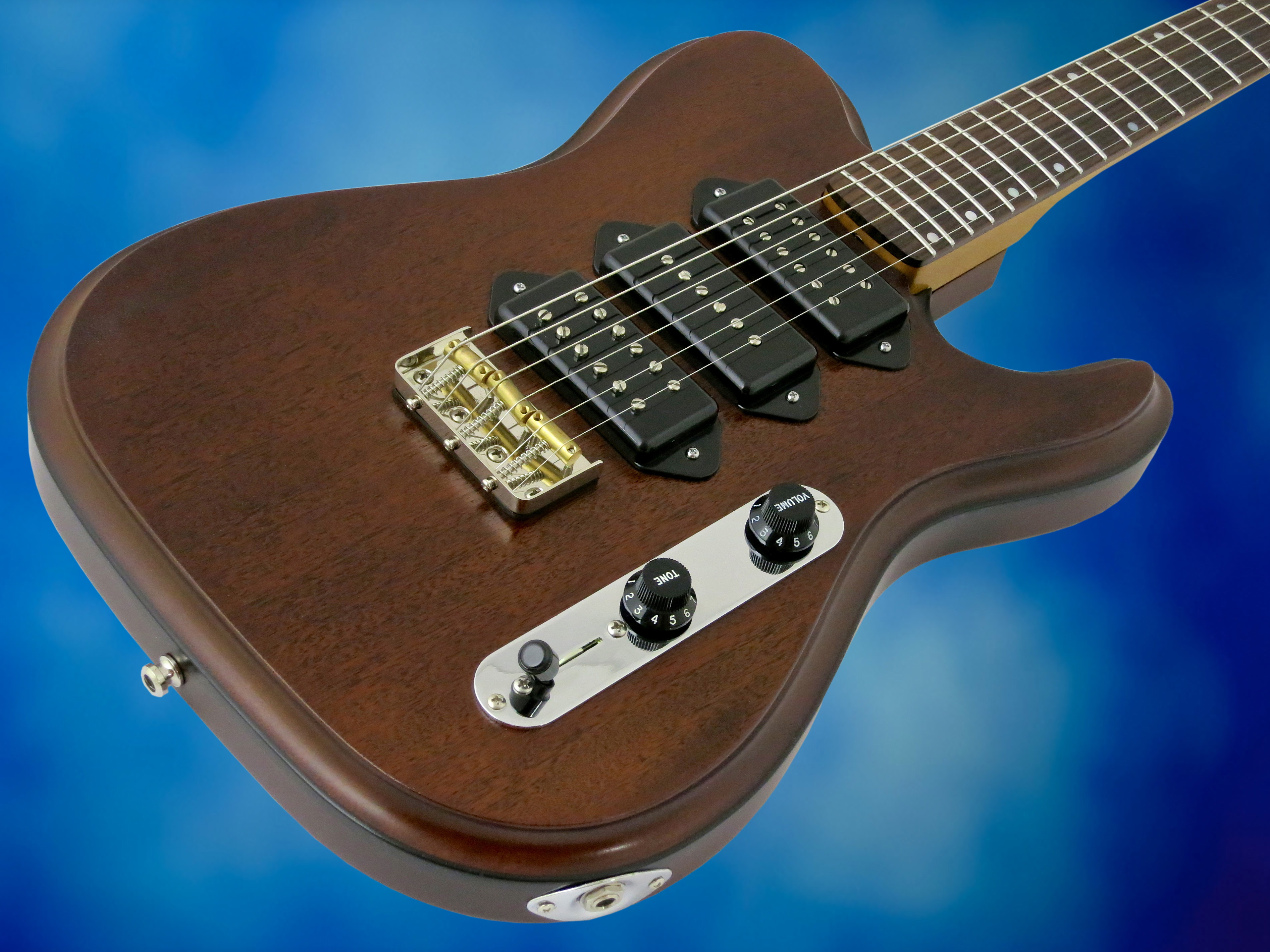
The control panel has been turned the ”wrong” way around to facilitate easy master volume access.

Vuorensaku T-Style – electronics – bgr

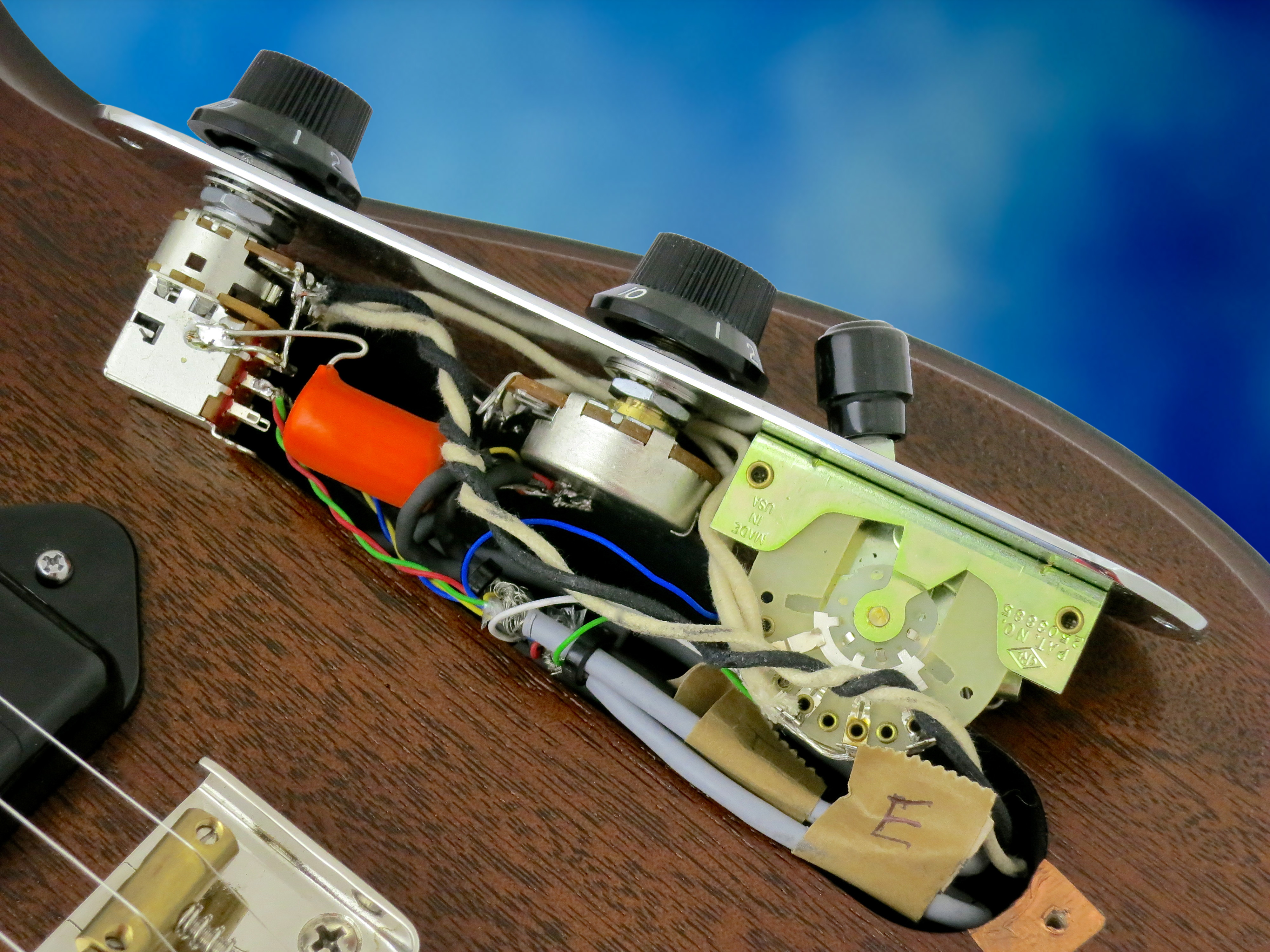
Ingeniously, Saku Vuori has managed to fit all the necessary components into the guitar’s small traditional Tele control cavity:

The volume control comes equipped with a push/pull-switch for splitting the humbuckers. The five-way blade switch works like on a Fender Strat. As you can easily see from the photo the workmanship is very clean and the components are of top quality.

****

Vuorensaku T-Style – beauty 2 – bgr

The Vuorensaku T-Style Custom scores top marks for workmanship and playability! Handmade instruments of such high calibre always possess that little something extra, a special feel that is nigh on impossible to find in a mass-produced guitar.

The T-Style Custom is a lightweight instrument. With a slippery nylon strap you might even notice a hint of neck-heaviness, but nothing a nice leather strap couldn’t get to grips with easily.

The fat C-profile of this Vuorensaku’s neck is just what the doctor ordered. The combination of this profile with the modern fretboard radius and the gorgeous fretwork, makes for a fantastic playing feel that’s fast and easy to control. The setup was superb with a set of 010s and a low action (low-E: 2.1 mm/high-e: 1.5 mm).

Acoustically, the Vuorensaku sounds just like the prime exponent of a Fender-type guitar it is – open and ringing.

Played amplified, the T-Style Custom offers a broader, much more diverse picture, which isn’t really surprising, as the Vuorensaku comes equipped with a completely different set of pickups, compared to your run-of-the-mill Tele. The guitar’s three pickups, five-way switch, and humbucker split gives you a very cool selection of different Gibson- and Fender-style tones.

I love this Vuorensaku to bits, but I found a small point to moan about, too. The bridge pickup’s signal level is noticeably weaker than that of the neck pickup. This isn’t due to any shoddy workmanship, though, but rather down to the Dog Ear-type of pickup mounting, and a phenomenon many Gibson- and Epiphone-owners are well aware of. It’s very hard for a reviewer to criticise a custom-ordered guitar, because there’s always the possibility that the guitar was meant to perform in this way. Still, if this were my instrument, I’d ask Saku Vuori to add a small plastic shim (1.5-2 mm) beneath the bridge pickup to raise it closer to the strings.

The Rautia Guitars Dog Ear-set sounds fantastic. Thanks to the moderate output of the humbuckers, there’s never any danger of the sound getting mushy or ill-defined. The ’buckers also sound great in split-mode, and combining the two humbuckers with a rude-sounding P-90 in the middle position can only be described as a stroke of genius.

This clip gives you an idea of the guitar’s sounds with the humbuckers split (starting with the neck pickup):

Here we have a similar clip featuring the full humbuckers:

And to round it off, here’s the audio from the You Tube-video:

Vuorensaku T-Style – body beauty 1 – bgr

What a guitar! The Vuorensaku T-Style Custom is another excellent example of the fantastic quality of Finnish guitar-making. Too bad the owner wants his guitar back…

****

Vuorensaku T-Style Custom

Price range for a similar guitar: 2,500 – 3,000 €

A big ”thank you” goes to the promoter of the Rockkaamo Festival, Mr Jani Savolainen, for the loan of his guitar!

Pros:

+ Made in Finland

+ handcrafted

+ workmanship

+ playability

+ sound

Cons:

– balance between neck and bridge pickup

Vuorensaku T-Style – body beauty 2 – bgr

Pidä blogia WordPress.comissa.

Ylös ↑