

Juttuun pääsee TÄLLÄ LINKILLÄ.
****
Kitarablogi.com – Finland's premier Guitar and Bass blog
Juttuja kitaroista ja bassoista
Alkuperäinen suomenkielinen versio tästä jutusta löytyy Rockway-blogissa.
****

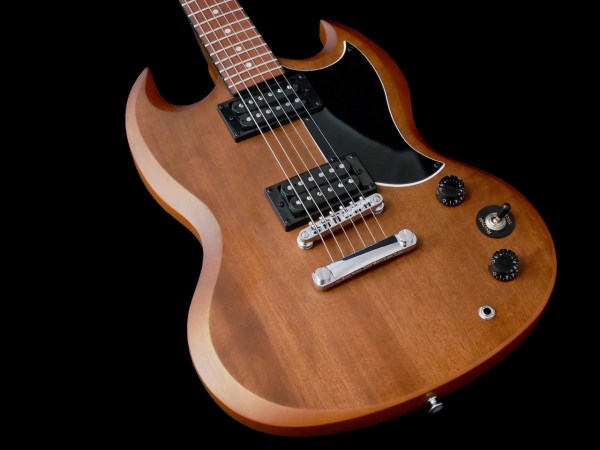
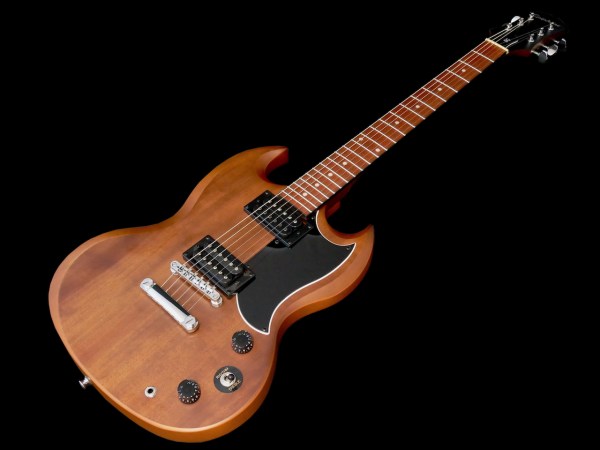
The Epiphone SG Special VE (”street price” around 240 euros in Finland) is currently the cheapest official SG replica. The letters VE stand for “Vintage Edition”, which refers to the model’s matte finish.
On the website of Epiphone’s importer – Algam Nordic – the SG Special VE is only available in matte black and matte brown (i. e. walnut), but on Epiphone’s own website the cherry red matte finish is still listed as an option. I would guess that all three options are still available at Finnish music stores.
The Epiphone SG Special VE looks a lot like the company’s own version of Gibson’s 1970s model “The SG”, especially in the walnut finish.
Should you fancy a gloss finish and chrome covered pickups, I can point you to the brand-new Epiphone SG Tribute model, which will probably replace the Special VE over time.
****
****

The Chinese SG Special VE is a very affordable instrument, which is why the guitar offers slightly unconventional detail solutions in some areas. However, the workmanship is of surprisingly high quality throughout – at least on the review instrument.
The Epiphone’s body is carved from poplar. Poplar is a basic, good instrument wood, its only ”flaw” being the wood’s dull grain pattern, which is why Music Man, for example, only uses it for solid-coloured instruments.
On the SG Special VE, this has been solved by gluing very nice looking veneers of African mahogany onto the flat middle sections of the body (front and back). This trick also preserves the traditional mahogany look of SG guitars in the VE model.

The Fender-style neck joint is a very rare solution in Gibson-style guitars these days, but it fits well on this affordable SG, especially since the joint is really tight and neat. The Epiphone SG Special VE’s neck is made of beautiful Gabon mahogany (another name for the wood is okoume). The neck is basically a one-piece affair, with a second piece added for the upper end of the headstock. The glue joint is visible below the e-string tuners.

Although this is not mentioned anywhere in the official specs, the SG Special’s reddish rosewood fingerboard has been given black plastic binding. The fingerboard is neatly fitted with 22 medium-sized frets, as well as round pearloid fingerboard inlays.
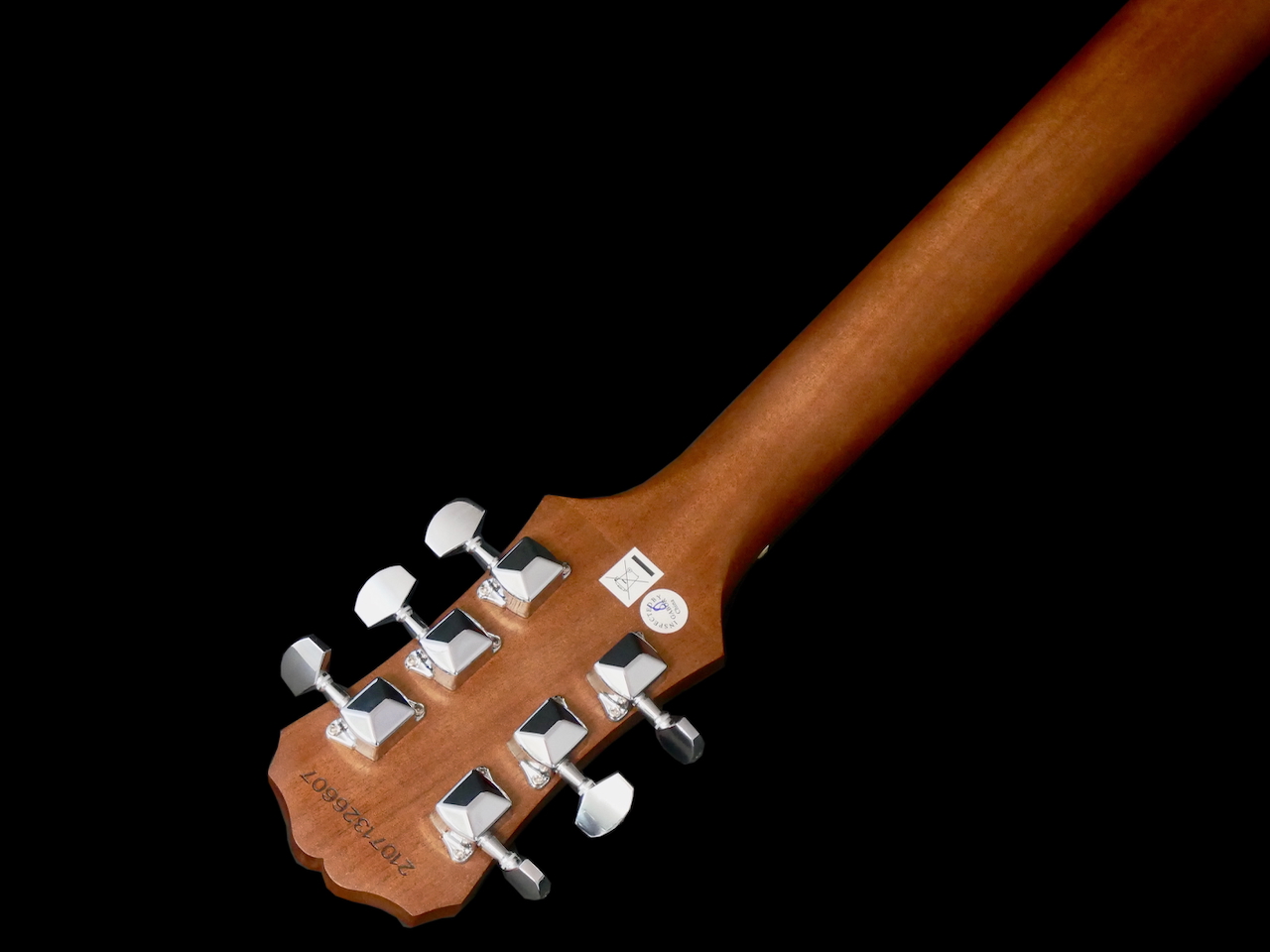
The hardware department consists of Epiphone’s Lock-Tone bridge and tailpiece, as well as inexpensive closed tuners. These machine heads are regularly criticised, for example in YouTube videos, for being ”bad at keeping the guitar in tune”.
In reality, this perceived problem is based on the fact that modern tuners usually have a tuning ratio of 18:1 or even 20:1. The pair of numbers tells us how often the tuner knob must be turned so that the tuner’s post (where the string is attached) turns one full turn. Special VE’s very affordable tuners, on the other hand, operate with a “coarse” ratio of 14:1 – the same ratio seen on many acoustic guitars from the 1970s. These old-fashioned tuners have a slightly jumpier character when it comes to tuning – it is very easy to turn past the correct pitch – and also have significantly more “play” than modern machine heads. As long as you remember to always tune each string up from flat to the correct pitch, these tuners work reasonably well, and there are no problems with tuning stability.
****
****
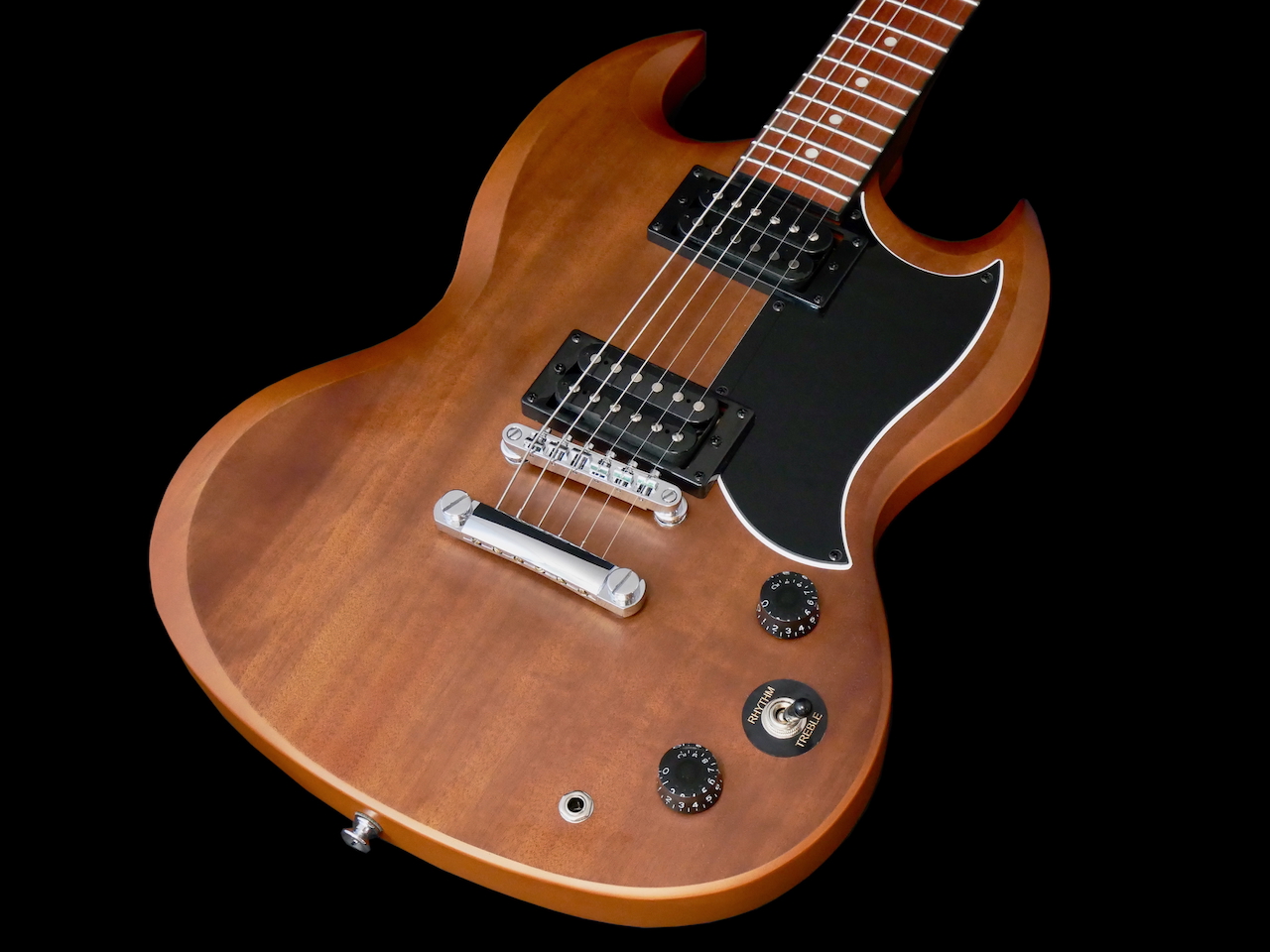
The Epiphone SG Special VE features the company’s own open 650R and 700T humbuckers, which are very powerful pickups with ceramic magnets. This pair of pickups represent Epiphone’s affordable take on Gibson’s 1970s Dirty Fingers humbuckers, and they have a very strong midrange and big bass.
Traditionally, two-pickup Gibson or Epiphone electric guitars often have a group of four controls in addition to a three-position toggle switch. For modern guitarists, a master volume control that affects the entire guitar is – especially in live situations – often a more functional solution than individual controls for each pickup. Also for beginners, a solution like the SG Special VE, which offers only master volume and master tone controls in addition to the switch, is clearly a better option.
The electronics compartment of the Epiphone test guitar is very clean, as are the solder joints. The parts themselves are – naturally – inexpensive, but I didn’t find anything to complain about in terms of functionality.

Can a guitar in this price range, with a bolt-on neck and a body made from ”the wrong type of wood”, be a real, proper SG? Comparing the Epiphone with three other SGs, I can say that the short answer is “yes!”
I find it very funny that both Gibson’s and Epiphone’s headquarters are apparently afraid to tell people about the real neck profiles of their guitars. Everywhere you look these days, it (almost) always says “slim taper D-neck”, regardless of the model. Do Epiphone’s decision-makers really think that players would be afraid of anything other than thin 90s profiles?
In reality, the neck profile of the Epiphone SG Special VE model is a nicely rounded, but not too thick D-profile, which I think suits an SG-style instrument very well.
There was nothing wrong with the review instrument’s set-up, and the guitar’s playability is more than okay, especially considering the Special VE’s low price.
The Epiphone’s balance on the strap is even slightly better than on many average SGs, because the neck sits about two centimeters deeper in the body than usual, due to the Special VE’s bolt-on neck.
The Epiphone SG body sits nicely in the lap and hangs comfortably against the player’s body when using a strap.
The review instrument’s acoustic voice is very healthy, and I didn’t find any disturbing dead spots.
If you use the Epiphone SG Special VE model with a vintage-style amplifier that doesn’t have a master volume control – like, for example, with a good Fender Champ copy – the instrument’s hot pickups get more distortion out of the amplifier, which I think is a good thing.
With effects pedals, it’s worth using the SG Special VE’s well-functioning master volume, because some effects – for example, some overdrives and many modulation effects – can easily ”clog up” with very hot pickups. But this is what controls on an electric guitar are for.
In my opinion, the Epiphone SG Special VE is a surprisingly nice guitar for the money. It offers a lot of mileage at a really budget-friendly price. If you like the look of the SG, the Special VE is definitely an instrument worth trying out.
****
****
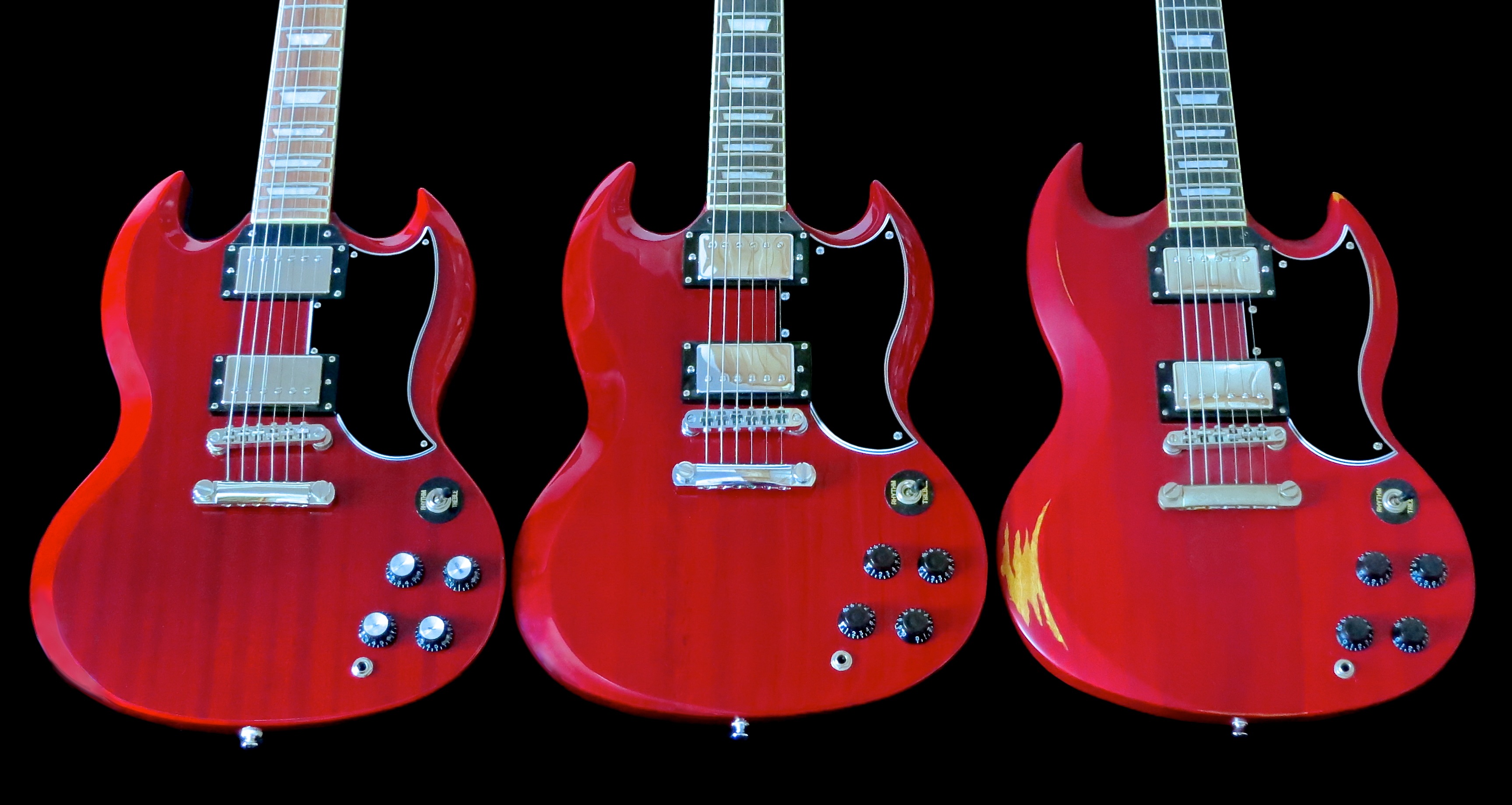
When I started getting interested in electric guitars I first gravitated towards Jazz boxes, for some strange reason. I was ten years old, and a Beatles and Stevie Wonder fan, but the most beautiful guitar guitar to me was the Ibanez George Benson model.
In the mid-Seventies I got into Paul McCartney’s post-Beatles band Wings. Their fabulous lead guitarist Jimmy McCulloch was my first Gibson SG ”hero”. Great bluesy playing style coupled with a fat tone.
But along came Punk (not my cup of tea), as well as New Wave and Synthpop, which were all genres that veered more towards the wiry tones of Teles and Strats.
I got into a band, but as singer and bassist, so my first ”proper” instrument was a Squier Jazz Bass. My first electric guitar was an inexpensive Aria, a black Strat-style instrument with a then-fashionable spiky ”hockey stick” headstock.
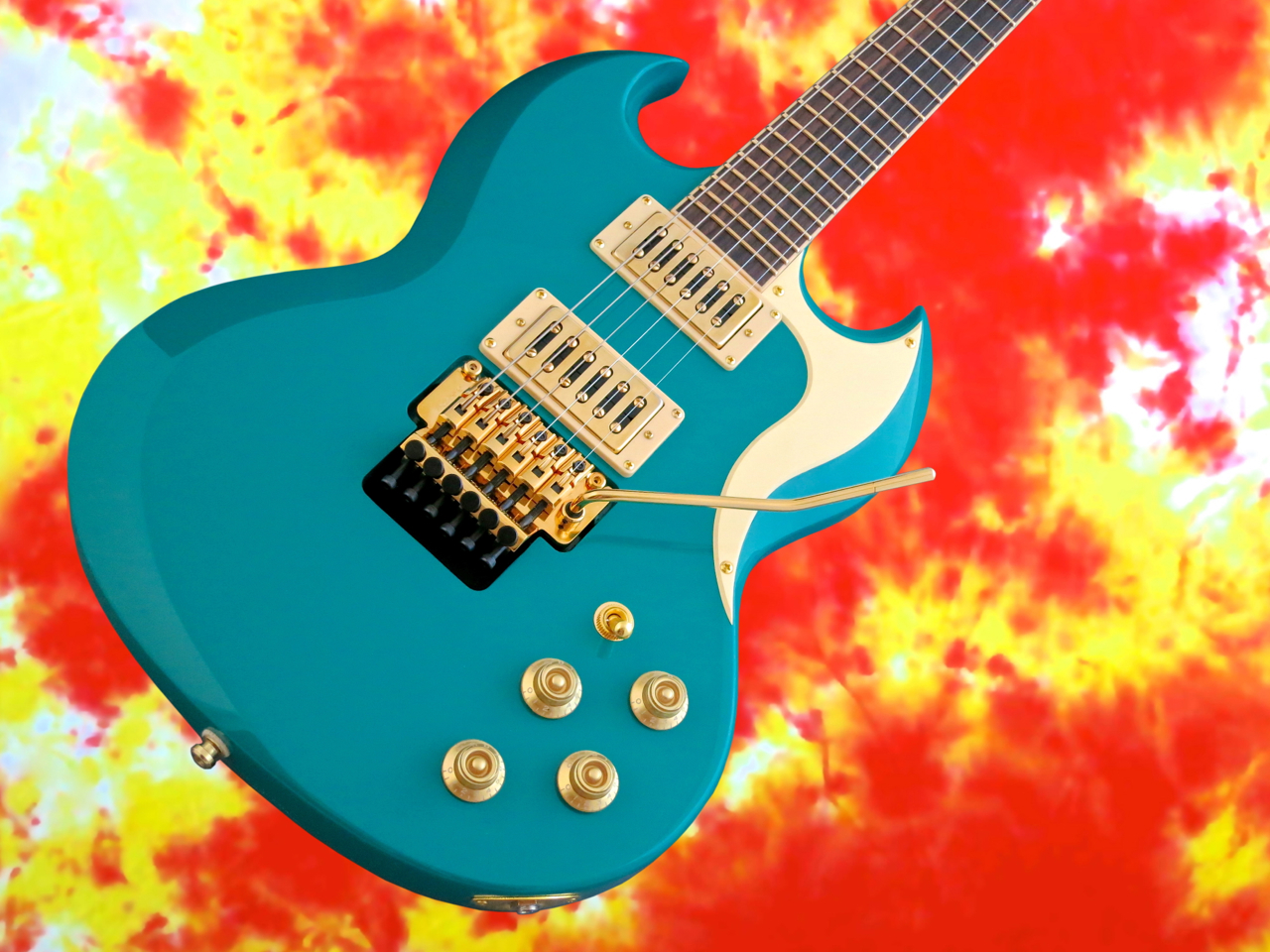
Over the years I found out that I’m more of a two-pickup or single-pickup guitarist. I got into Telecasters, Les Pauls Standards and Juniors. The few times SGs crossed my path, I found them a little uncomfortable to wear and cumbersome to use.
About fifteen years ago two players made me reconsider my attitude towards SG-style guitars.
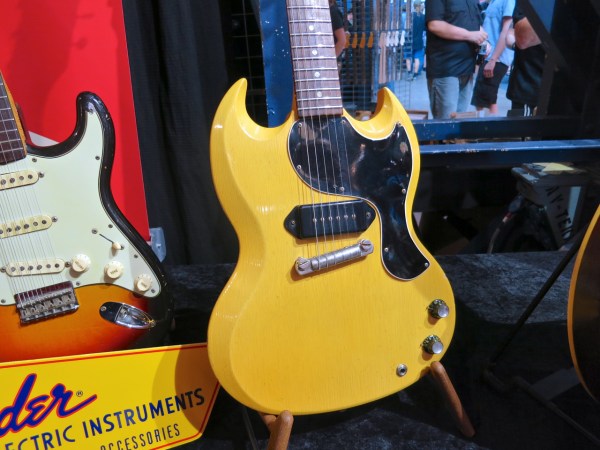
A friend of mine invited me to watch the full DVD-version of the Woodstock Festival (1969), as well as The Who documentary ”The Kids Are Alright”. I was mesmerized by the energy and fat tones that Carlos Santana and Pete Townshend got from their 1960s Gibson SG Specials. I was already a P-90s fan, but the combination of this big-sounding single coil pickup and an SG somehow seemed to make a lot of sense.
Since then I have been fascinated by SG-style guitars. Yes, they can be a little more temperamental than, say, a Les Paul, and sometimes the long neck causes issues with dead notes – especially around the 12th fret on the D- and g-strings – but I still love their look, feel and sound. For me it was an acquired taste at first, but now my go-to guitars, especially for live work, are Teles and SGs.
Here are some SG-related videos from the Kitarablogi channel:
****
****
****
****
****
****
****
Does a Groove Tubes FatFinger-clamp add sustain to an electric guitar?
** Listen with headphones or using stereo monitors! **
My own little test proves inconclusive, with the results seemingly more dependent on things such as plectrum attack and vibrato than on the FatFinger.
In the clean clip the track without the FatFinger seems to sustain longer, while in the overdriven clip the result seems the other way around.
• Guitar: 2006 Epiphone SG (G-400)
• Pedal: Mad Professor Simble OD
• Microphone: Sennheiser e609
Here’s a demo featuring the Blackstar HT-5R Mk III’s overdrive channel.
• Rhythm guitar parts: Epiphone Les Paul Standard 60s; recorded with a Shure SM7B
• Lead guitar parts: Jackson JS32 Dinky Archtop; recorded direct via the Cab Rig output
Testi tulossa: https://blogi.rockway.fi
• All guitar tracks played with the Epiphone SG Special VE
• Amps used: Bluetone Shadows Jr & Bluetone Black Prince Reverb
• Mics used: Shure SM7B & Sennheiser e609
• Preamp used: Cranborne Audio Camden EC2






 Kitarablogi.com – Finland's premier Guitar and Bass blog