Carlos Santana is my Tone God!

Last Monday Carlos Santana and his excellent band played in Helsinki’s football stadium (that’s soccer to you Americans).

Fantastic sound, great musicianship – it really was one of the best concerts I’ve ever been to!

If you have a chance to see Santana on the current European tour, you should really do so  😉

____________________________

I simply adore Carlos’ lead sound.

Here’s a short bit paying homage to the man: Hairloss Manana

I recorded it using two review guitars:

• a PRS SE Custom for the rhythm parts

• a PRS McCarty for the lead

I’m not ashamed to admit I used a Behringer V-Amp2 in front of my Pro Tools -system.

________________________________

Last month I recorded this song to test a Tascam Portastudio for Riffi: Guitar (G-A-S)

I didn’t plan on recording something Santana-ish – it simply happened.

By the way, the whole thing was recorded using only real instruments (and without a click-track).

The guitar is an Epiphone Slash Goldtop through a Mad Professor Little Green Wonder into a Fender ’57 Twin-Amp reissue.

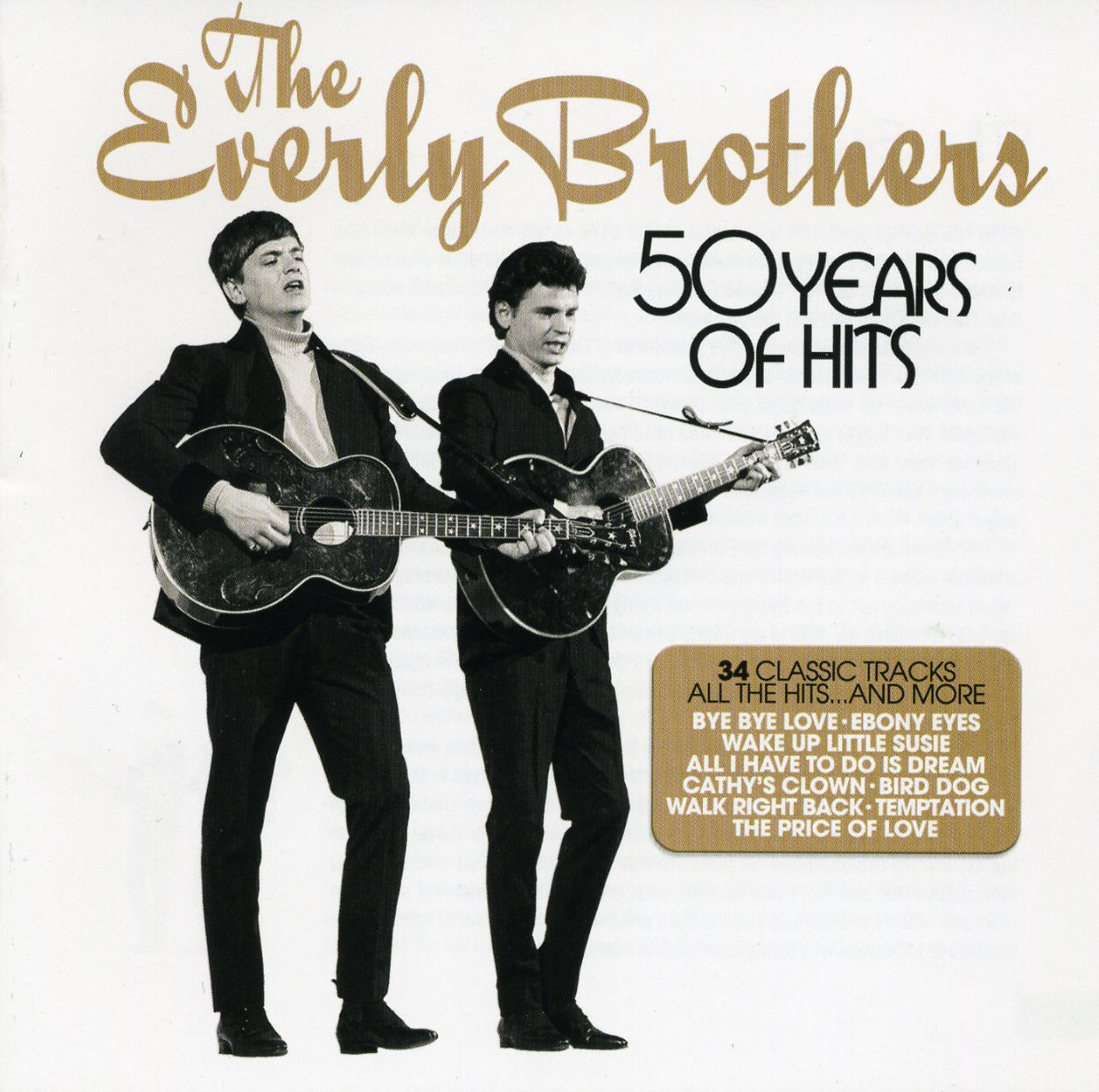
Gibson Everly Brothers – when a guitar becomes a star

Post- Les Paul & Mary Ford and pre-Beatles the Everly Brothers were, without doubt, the Pop music sensation in the USA. The brothers – Phil and Don – provided a great mix of Rock’n’Roll -raucousness and Country -cleanliness to reach mass appeal. Their hits are true Pop gems and their golden vocal harmonies are legendary, inspiring many other acts, such as Simon and Garfunkel and the Beatles.

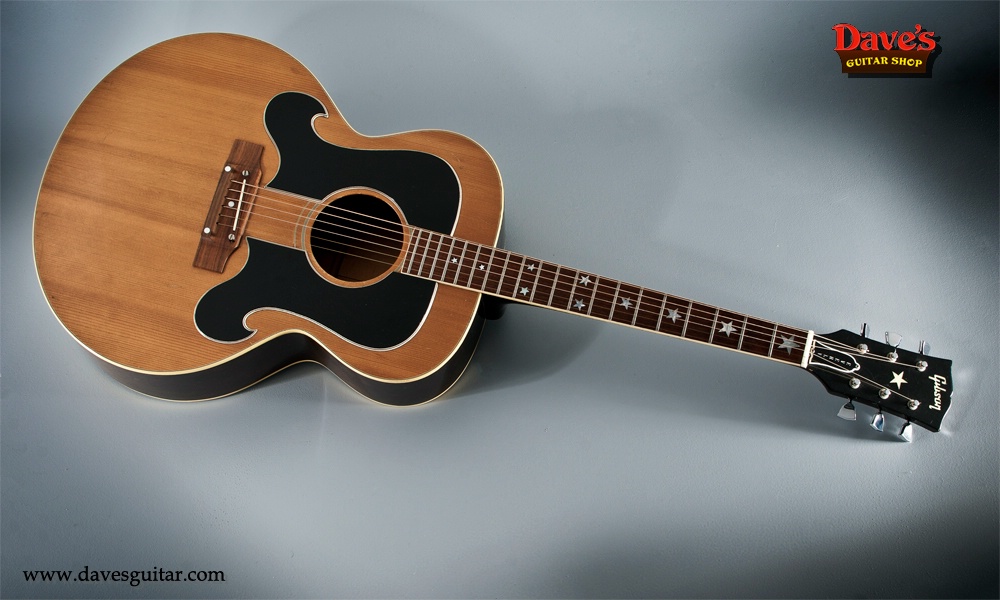
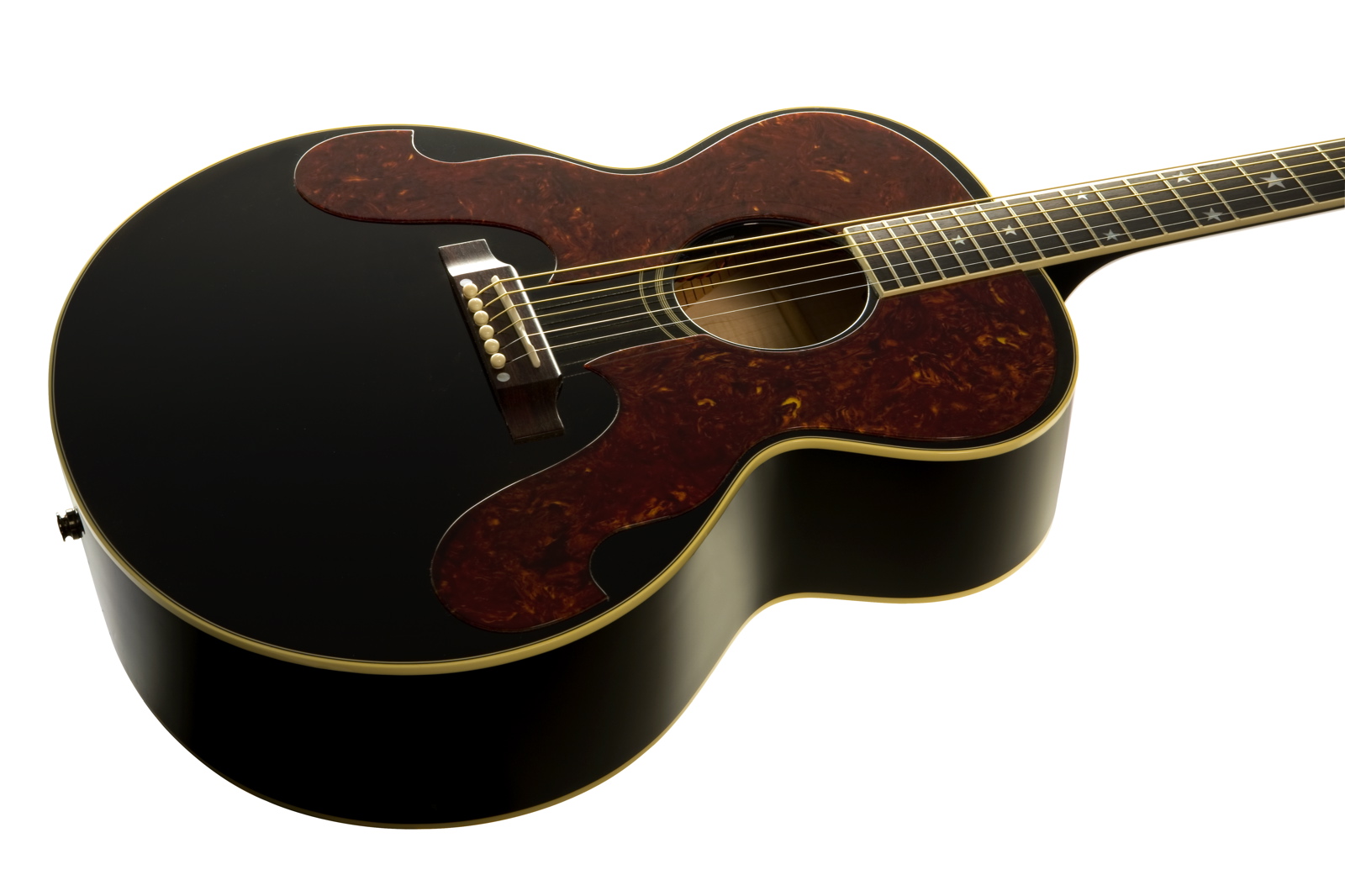
In 1962 Gibson released a signature model, based on a downsized Super Jumbo body, and featuring two large pickguards, star-shaped inlays and a pin-less, adjustable bridge. The large tortoise-pattern pickguards dampen the spruce top somewhat. In conjunction with the maple back and rims this results in a great strummer with a very precise attack and a transparent mid-range, extremely well suited to accompany vocals, and belting out those strummed Everly-riffs.

There were also versions with white pickguards.

In the late Sixties Gibson changed the pickguards’ size and shape, and also started offering the Everly Brothers -model in natural finish alongside the original black.

The Gibson Everly Brothers -model is one of the few cases of an acoustic guitar having its own owners’ club. Proud users include stars like Paul McCartney and Albert Lee.

Epiphone and Orville have issued their own reissues over the years – called the SQ-180 and Don Everly Signature.

Gibson Acoustic is offering a brand-new Billie Joe Armstrong Signature J-180, which is basically an Everly Brothers -model with an added Fishman -pickup system. A review of this model will be published in Riffi-magazine in our issue 5/2011.

Pawnshop or Casino, Sir?

One of Fender’s foxiest new models is the Mustang Pawnshop Special. The guitar is based on the original Mustang, but has been ”pre-modded” with a hard-tail bridge, two humbucking pickups as well as a different wiring, which allows for coil-splitting.

****

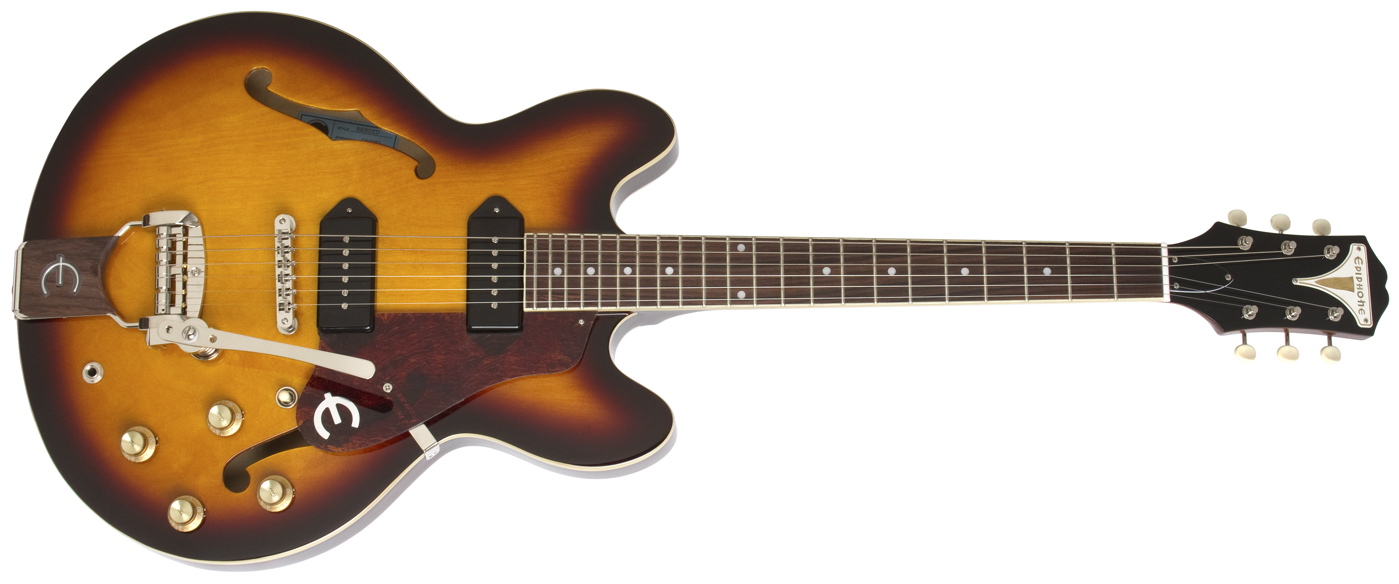
Epiphone’s new limited edition ”1961 Casino” is a very close remake of my favourite guitar as it was when it was released in 1961. It features P-90s with black plastic covers, a Gibson-type headstock (like on Paul McCartney’s Casino) with a metal logo, as well as a see-through faux-tortoise pickguard. Only 1,961 special edition Casinos will be produced, some with Epiphone’s own ”version” of a Bigsby vibrato, called Tremotone.

Gibson Flying V – tai: kaksi vuosikymmentä etuajassa

Vuonna 1957 Ted McCartyn mitta oli täynnä. Gibsonin toimitusjohtajaa ärsyttivät ainaiset puheet firman vanhanaikaisuudesta ja tylsyydestä muiden valmistajien ja joidenkin kitaristien keskuudessa. Etenkin Fenderin tuomat uudet tuulet kitaroiden valmistuksessa ja markkinoinnissa saivat McCartya uskomaan, että Gibson tarvitsi jotain mullistavan uutta mallistossansa.

Pidettiin kokonainen sarja aivoriihi-istuntoja, jossa yritettiin löytää mahdollisimman omanlaatuisia kitaroita. Pomo itse keksi tällaiset muodot:

Kun ensimmäinen prototyyppi oli valmis, joku nauroi ”Hehee, tämä näyttää lentävältä V-kirjaimelta!”, ja siinä olikin uutukaiselle sopiva nimi.

Kun Flying V näytettiin ensimmäistä kerta NAMMissa (1958, samalla esiteltiin myös Explorer-mallin), varsin erikoinen kitara oli yksi messujen kohokohtista. Kaula ja runko veistettiin korina-puusta ja metalliosat olivat kullattuja.

Ongelma oli vain, että omintakeinen kitara oli aikansa edellä, minkä takia siitä ei tullut myyntimenestys. Alkuperäinen painos (1958–’59) jäi alle 100 kappaletta, ja myös niistä jotkut käytettiin vain mainoskylttinä joidenkin musiikkiliikeiden edessä.

Kuuskytluvun keskivaiheella musiikkimaku oli jo muuttanut sen verran raskaampaan suuntaan, että Gibson päätti yrittää uudestaan. Uusi Flying V oli mahongista, ja sillä oli perinteinen Gibson-kieltenpidin. Myös säätimet oli hieman eri järjestyksessä tässä uusintapainoksessa (katso alle).

Jimi Hendrix käytti juuri sellaista 60-luvun mallia, aina kun halusi Stratoa paksumpia soundeja.

Mutta vasta 1970-luvulla, kun Hard Rock ja Metal keksittiin, tuli Veestä muodikas lavakitara, sekä lavakarismansa että Gibson-soundinsa ansiosta.

Ja se lentää yhä vain eteenpäin; juuri tällä hetkellä Gibson tarjoaa upouuden seitsenkielisen Veen aktiivimikityksellä rankkaan riffitykseen.

Myös uudesta, laajennetusta Melody Maker -sarjasta löytyy Flying V – Flying V Melody Maker – jolla on mahonkikaula, vaahterarunko, tallahumbucker omalla volume-säätimellä sekä yksinkertainen wraparound-talla – that’s it.

Flying V:n ainoa huono ominaisuus on, ettei mallia voi soittaa istuen. Toisaalta, kukahan moshaa istuen?

😉

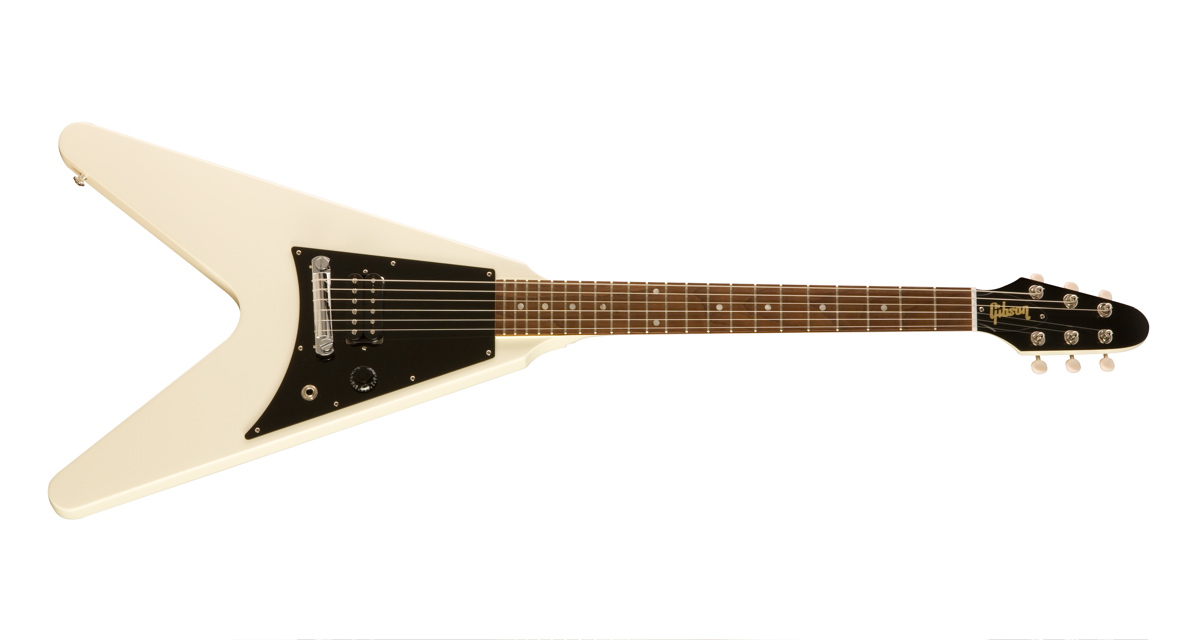
The Gibson Flying V, or: Two Decades Ahead Of Its Time

In 1957 Gibson’s then president, Ted McCarty, grew tired of the company being slagged off as ”boring old farts” by some of its competitors. Especially the fresh touch brought to guitar-making (and marketing) by young upstarts Fender, made McCarty determined that something had to be done to put the ”stuffy” image behind them.

They held a series of brain-storming sessions with a view to coming up with the most outrageous designs imaginable. Ted McCarty himself came up with this:
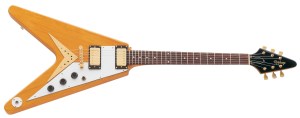
When the first prototype was built somebody said (laughing, no doubt): ”Hey, this thing looks like a flying Vee!”, and the name stuck.

When the Flying V was first shown at the Winter NAMM show in 1958 – along with its sister model the Explorer – it sure was the show-stopper McCarty had hoped for, with its radical shape, korina neck and body and gold parts.

The problem was the model was way ahead of its time, and didn’t really sell well in its original form. Less than 100 Flying V’s were shipped to dealers during 1958-9, with some ending up as shop signs (!) to draw in customers.

In the mid-60s times had changed, though, and heavier music was becoming en vogue, so Gibson decided to reissue the Flying V, albeit with a standard stop-tailpiece, a different control layout and the company’s customary mahogany used for the body and neck.

It was this version that Jimi Hendrix used whenever he needed a fatter sound than his Stratocaster could provide him with.

But it was really only with the advent of Hard Rock and Metal in the 1970s that the Vee really took off as a fashionable guitar, as it offered both cool looks and fat Gibson-tone in the right proportions.

Since then the Flying V has never really left us; right now, for example, Gibson are offering an EMG-equipped, active 7-string version for ultra-brutal riffing.

And brand-new is a budget version of the Vee, called the Flying V Melody Maker, which gives you the essence of what the Vee’s about in a nutshell: a mahogany neck glued to a maple body, one powerful humbucker, a single volume control and a simple wraparound bridge topping it all off – that’s it.
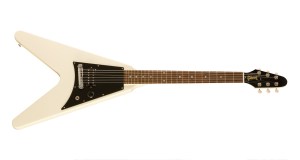
The Flying V only has one single drawback – you can’t play the model sitting down. But then again, headbanging doesn’t really work sitting down…

😉

Three shades of P-90 **** Kolme kertaa P-90

Here are three soundbites I recorded for you of three different P-90 bridge pickups on three different guitars:

• the Epiphone Casino has Göldo pickups with metal covers

• the Vintage VS6 Mick Abrahams has Wilkinson soapbars with plastic covers

• the Gibson Les Paul Junior comes with a Gibson P-90 and a plastic dog-ear cover

All guitars were played through a clean Fender-type amp model with a Boss SD-1 in front.

Casino bridge P-90

VS6 Mick Abrahams bridge P-90

Junior P-90

Tässä ovat kolme soundiesimerkkiä kolmesta kitaroista ja niiden P-90 tallamikrofoneista:

• Epiphone Casinossa on Göldo-mikit, joilla on metallikansi

• Vintage VS Mick Abrahams -nimikkomallissa on Wilkinson-mikit muovikansilla (saippuapalat)

• Gibson Les Paul Juniorissa on firman oma P-90 muovikannella

Kaikki kitarat soitettiin puhtaan Fender-tyylisen mallinnuksen ja Boss SD-1 pedaalin läpi.

Classic Guitars, part 5: Gibson ES-335

Gibson’s ES-335, which was introduced in 1958, is one of the all-time bestselling models in the company’s history, and has been in production ever since, making it the Gibson model with the second longest uninterrupted production run (only the ES-175 has been in production longer, since 1949).

Ted McCarty, Gibson’s president from 1948 to 1966, has always stated that, looking back, he thought the ES-335 was his finest achievement.

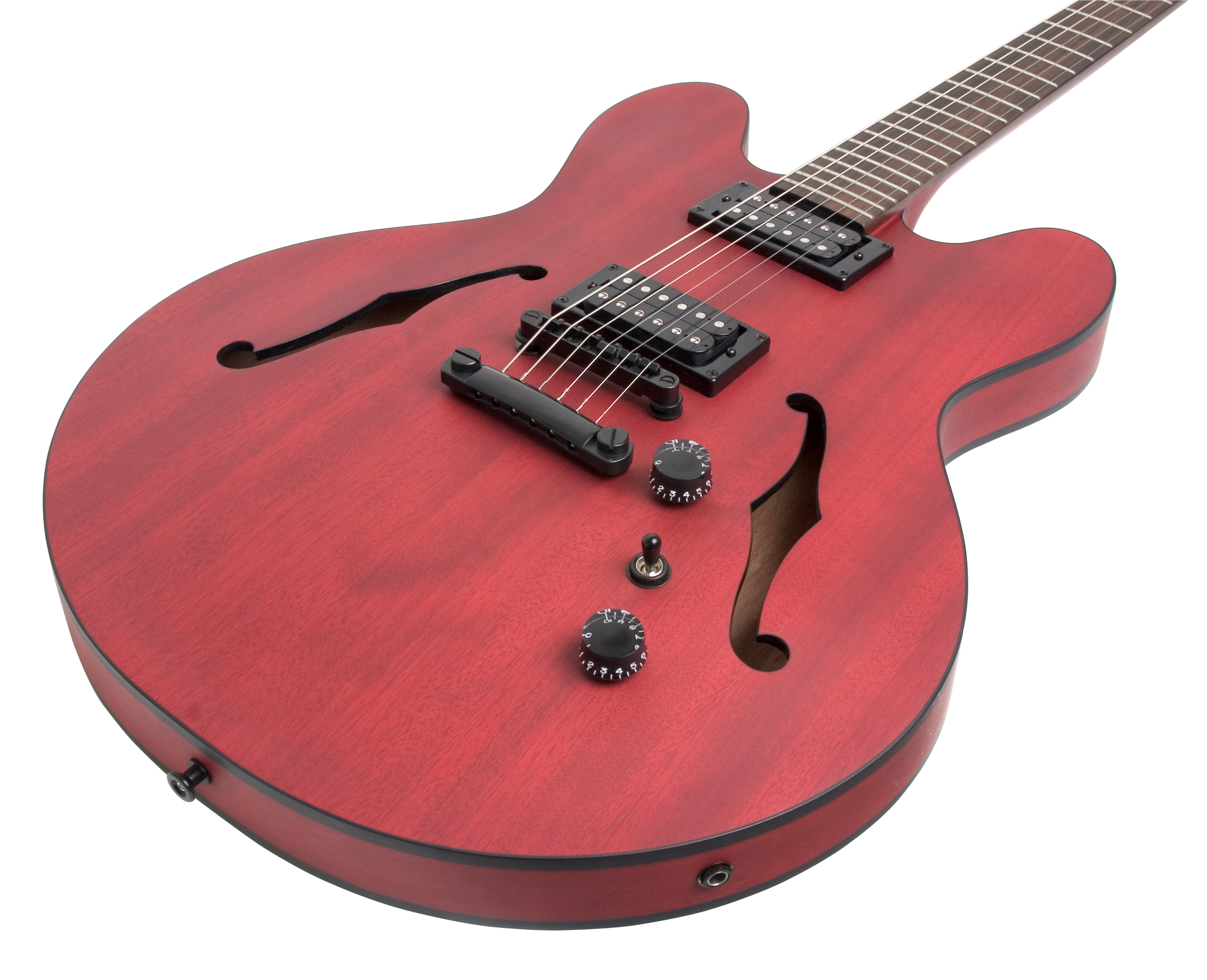
The ES-335 has a thinline body made from steam-pressed maple plywood. Although the guitar does remind you of a classic Gibson hollow-body Jazz-box, this model is actually halfway solidbody in terms of its build.

This is because a semiacoustic electric guitar has a solid wood centre block running the length of the body from the neck joint all the way down to the back strap button. The centre block gives a semi a longer sustain, while keeping howling feedback at bay.

The block also allows the use of Gibson’s typical solidbody hardware – namely the Tune-o-matic-bridge and the stop bar – which add some clarity to the mix.

For their part, the ES-335’s hollow wings bring a bit of air to the mid-range, making the guitar sound more open and airy than a Les Paul for example.

Due to its relatively large body, a semi isn’t probably the best model for a small beginner (of less than 160 cm height), but as long as size isn’t an issue this lightweight and well-balanced ergonomic style of guitar is a fine choice.

Gibson’s subsidiary Epiphone has produced many of its own variants in the 335-style since the 1960s – from the glitzy Sheraton (the natural-coloured guitar in this post) to the minihumbucker-equipped Riviera, with its own, slightly brighter tone.

The relatively new Epiphone Dot Studio gives you superb bang-for-the-buck, with its pared down, no-nonsense looks. Here the body is made from mahogany plywood, with the controls streamlined to one master volume and one master tone.

____________________________________________________________

I’m an avid fan of the semi-style body.

Here’s a snapshot of my Epiphone Casino and a late-70s/early-80s ES-335-copy made in Japan by Kasuga:

Listen to both guitars here

Save

Save

Klassikkokitarat, osa 5: Gibson ES-335

Vuonna 1958 ilmestynyt ES-335 on yksi Gibsonin suurimmista myyntimenestyksistä ja firman toiseksi pisin yhtäjaksoisesti tuotannossa oleva sähkökitara (ES-175 jazzkitara on tullut ulos 1949).

Silloinen Gibsonin pomo Ted McCarty on sanonut useissa haastatteluissa, että ES-335 oli hänen mielestään hänen paras saavutus – sekä ergonomialtaan että soundiltaan.

ES-335:n ohut runko on valmistettu muotoon prässätystä vaahteravanerista. Vaikka kitaran ulkonäkö muistuttaa perinteistä jazzkitaraa, on malli kuitenkin lankkukitaran ja onttokoppaisen jazzmallin välimaastossa.

Puoliakustisen kitaran rungossa on nimittäin sustainea pidentävä, ja feedbackin ulinalta suojava keskipalkki, joka kulkee koko matkan kaulalta toiselle hihnatapille.

Keskipalkki mahdollistaa myös Gibson-lankkukitaroista tutun palkkimaisen kieltenpitimen käyttöä, mikä lisää hieman soinnin kiinteyttä.

Ontot sivuosat taas tuovat ES-335-tyyliseen kitaraan avoimemman keskialueen ja pyöreämmän atakin, jos vertaa vaikkapa Les Pauliin.

Verraten ison koppansa ansiosta perinteinen puoliakustinen ei ole ehkä sopivin valinta pienikokoiselle aloittelijalle (alle 160 cm), mutta muille suhteellisen kevyt ja hyvin balansoiva ergonominen malli sopii hyvin.

Gibsonin tytäryhtiö Epiphone on jo 1960-luvulla teyhnyt omia variaatioita ES-335 teemasta – esimerkiksi alkuperäismallia prameampi Sheraton (vaalea kitara tässä jutussa) tai pikkuhumbuckerilla varustettu Riviera, jolla on hieman kirkkaampi soundi.

Yllättävän edullinen Epiphone Dot Studio -malli taas on uudempaa tuotantoa, ja se tarjoaa ES-335:n konseptin sopivasti pelkistetyssä muodossa. Runko on tässä mahonkivanerista, ja kolmiasentoisen kytkimen lisäksi on tarjolla ainoastaan master volume ja master tone -säätimet.

____________________________________________________________

Itsekin pidän suuresti puoliakustisista kitaroista.

Tässä yksi kuva minun Epiphone Casinosta ja minun japanilaisesta Kasuga ES-335 -kopiosta (valmistettu joskus 70/80-luvun taitteessa):

Niiden soundeja voi kuunnella tässä.

Save

Classic Guitars, part 4: Gibson SG

At the moment the Gibson SG is extremely popular – the trendiest model on the block.

Unbelievable as it may seem with hindsight, the SG was designed in 1961 as the Les Paul’s replacement. Ted McCarty and his team were eager to come out with a sexier, lighter and more practical electric guitar, in place of the then somewhat unpopular Les Paul.

Les Paul himself wasn’t overly enthusiastic about the new model, so he decided not to renew his endorsement deal in 1963. From that moment on the ”new and improved Les Paul Standard” became the Gibson SG Standard (SG = solid guitar). By the way, Gibson brought back the original Les Paul in 1969.

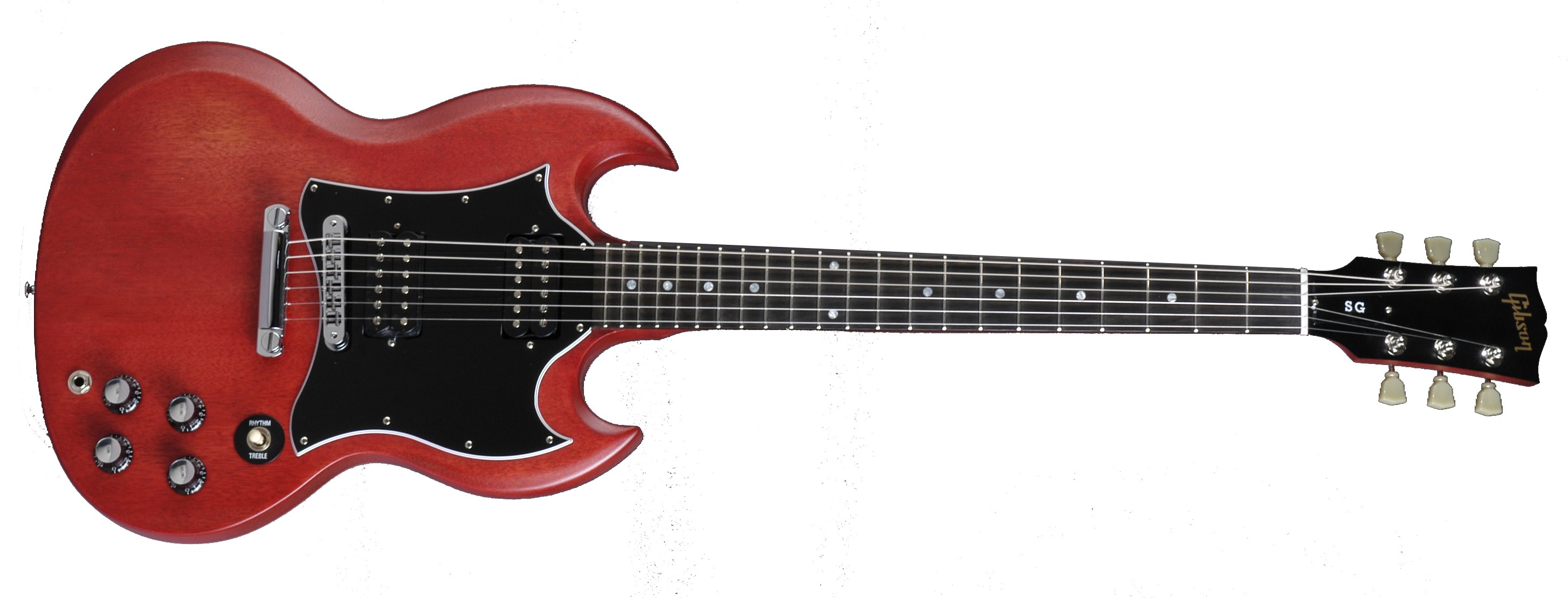
The main new feature of the SG was its sleek and curvy body, crafted entirely from mahogany. The glued neck joint was moved so that all of the guitar’s frets were easy to access.

Due to the new neck joint the front humbucker had to be moved a little towards the bridge for added stability, which in turn slightly thins out the pickup’s sound.

The SG’s thin and light body results in a fresher, more resonant and transparent tone, when compared to a Les Paul.

Thanks to its thin body, light weight and (normally) fixed bridge the SG is a fine choice for a first guitar. Only its very slight tendency towards neck heaviness can sometimes mar the nigh-on perfect picture.

As with all Gibson models, I’d advise anybody to purchase a quality gig bag or case with an SG-style guitar, to protect it against neck or headstock breakage.

Gibson’s Faded-series offers amazing value for money. These USA-made models offer less bling by doing away with the fingerboard binding, the large crown inlays and the regular gloss finish. But apart from the more modest visuals, the Faded-instruments are thoroughbred Gibsons.

Pidä blogia WordPress.comissa.

Ylös ↑