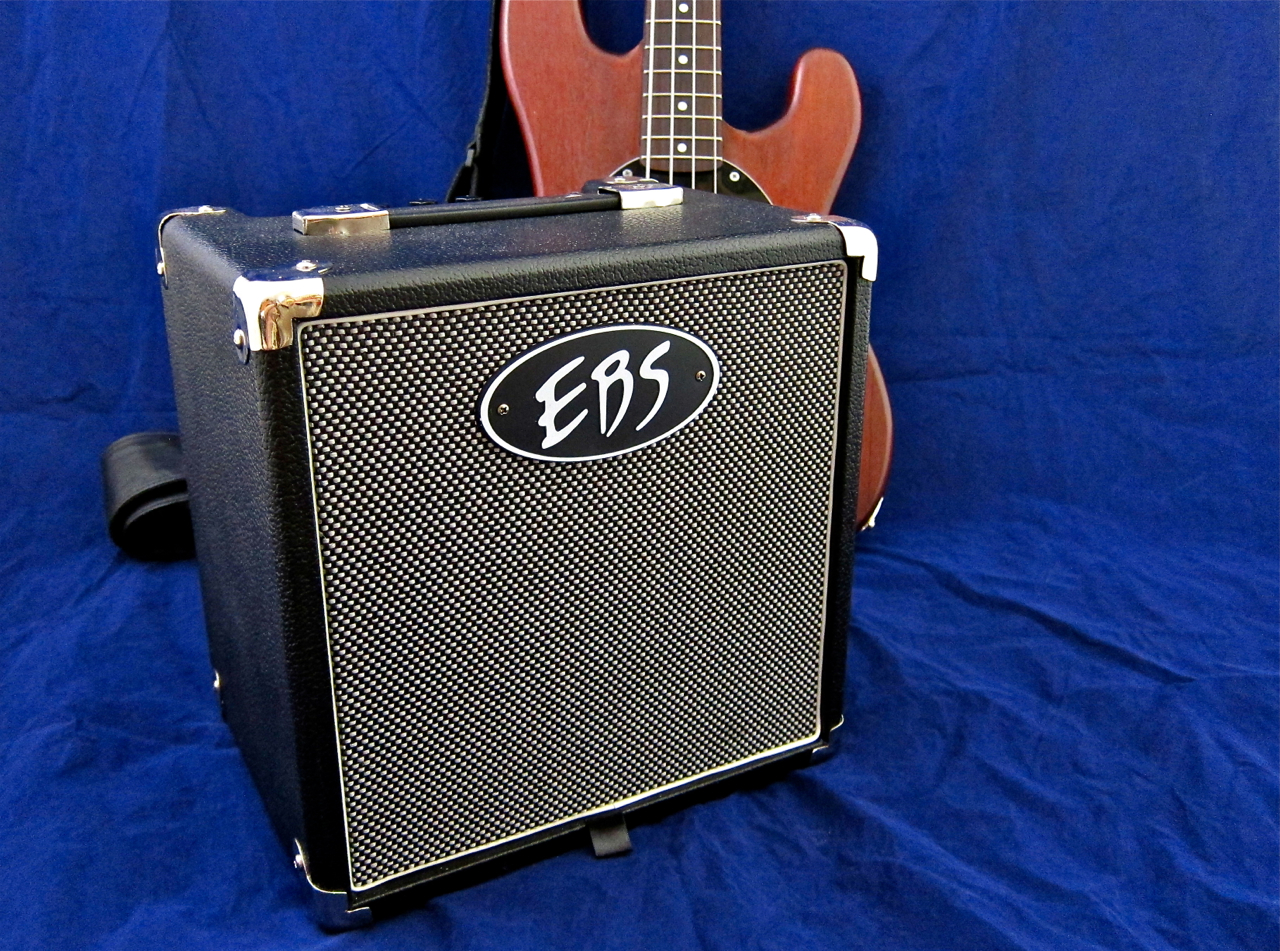
EBS Sweden’s latest product – the Session 30 – is the company’s smallest bass combo to date, and meant for practicing, recording and home use.
****
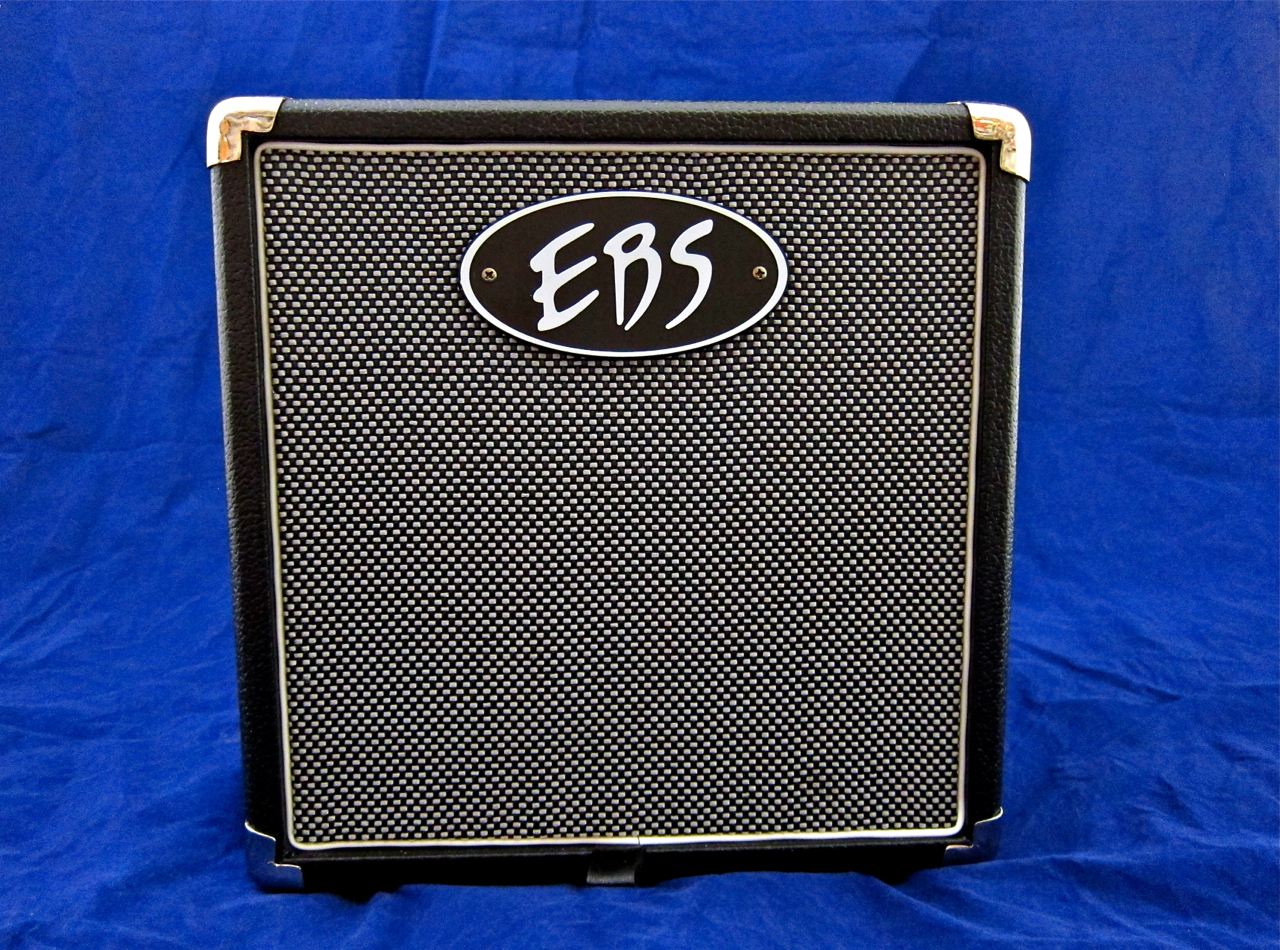
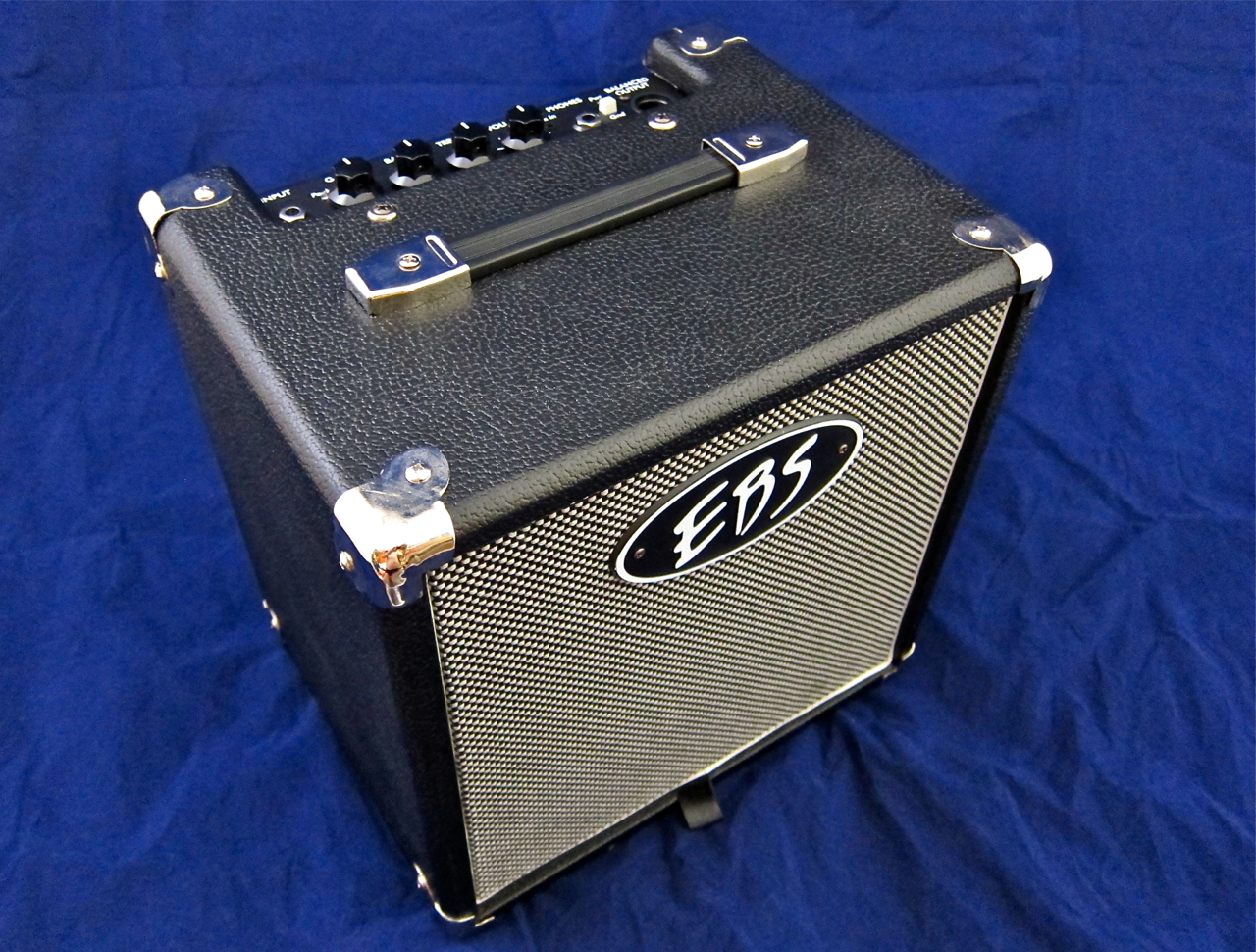
The diminutive and lightweight EBS Classic Session 30 (current price in Finland approx. 169 €) is part of EBS’ Made-in-China Classic-series.
As its name suggests, the Session 30 offers 30 Watts of rms-power.
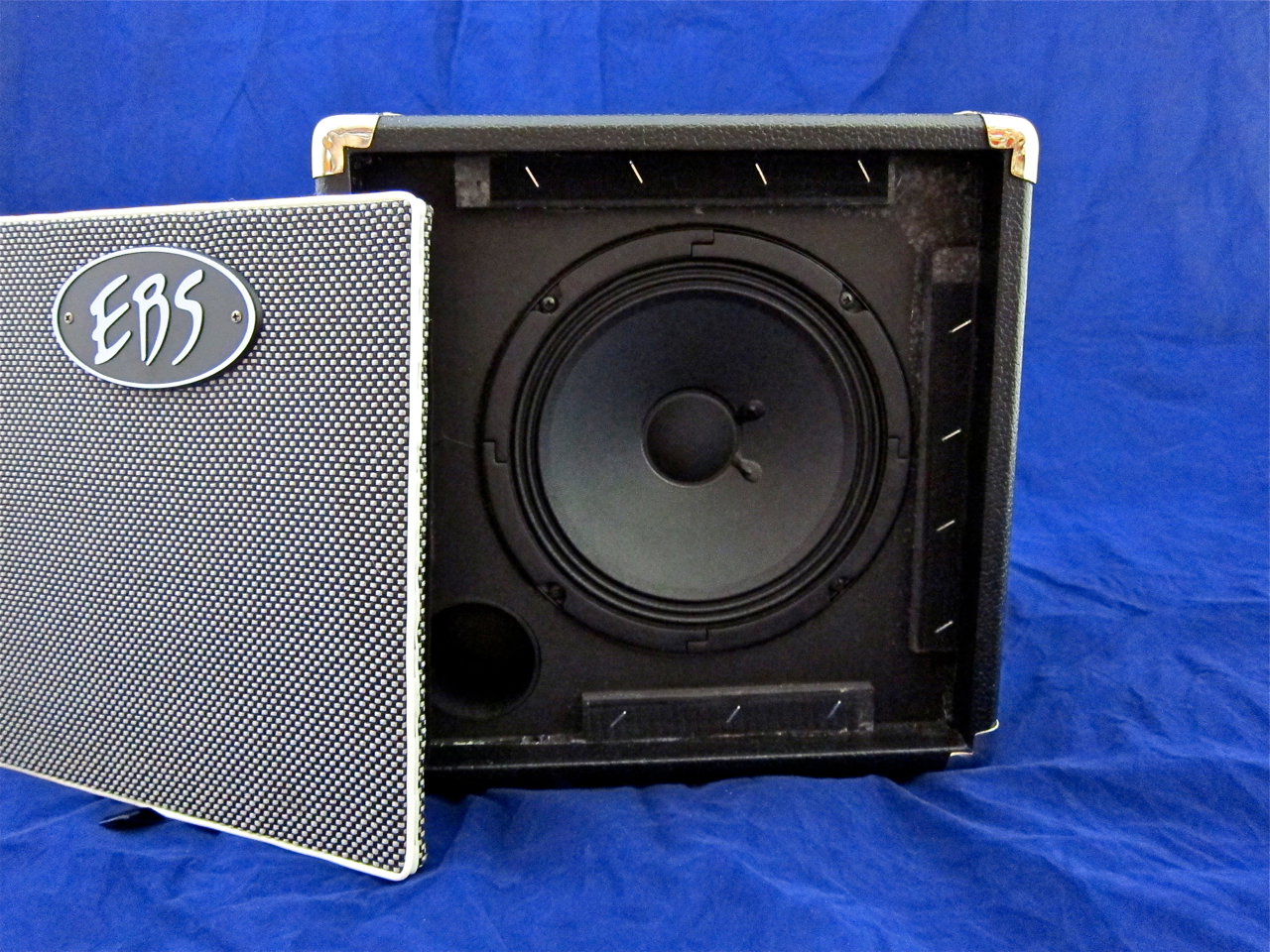
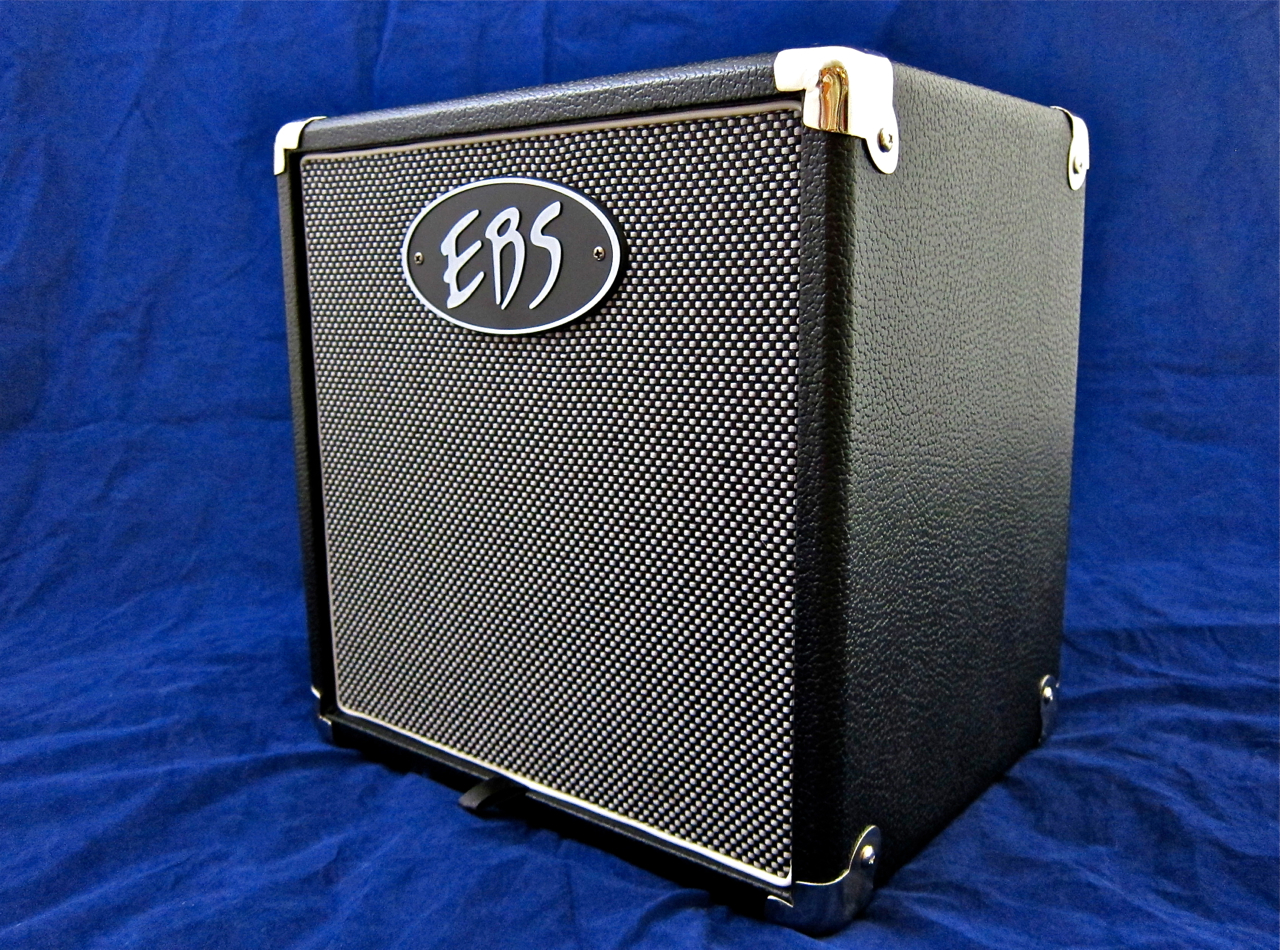
Its eight-inch speaker sits in a front-ported baffle. The stylish grille cloth is attached in a traditional way using velcro.
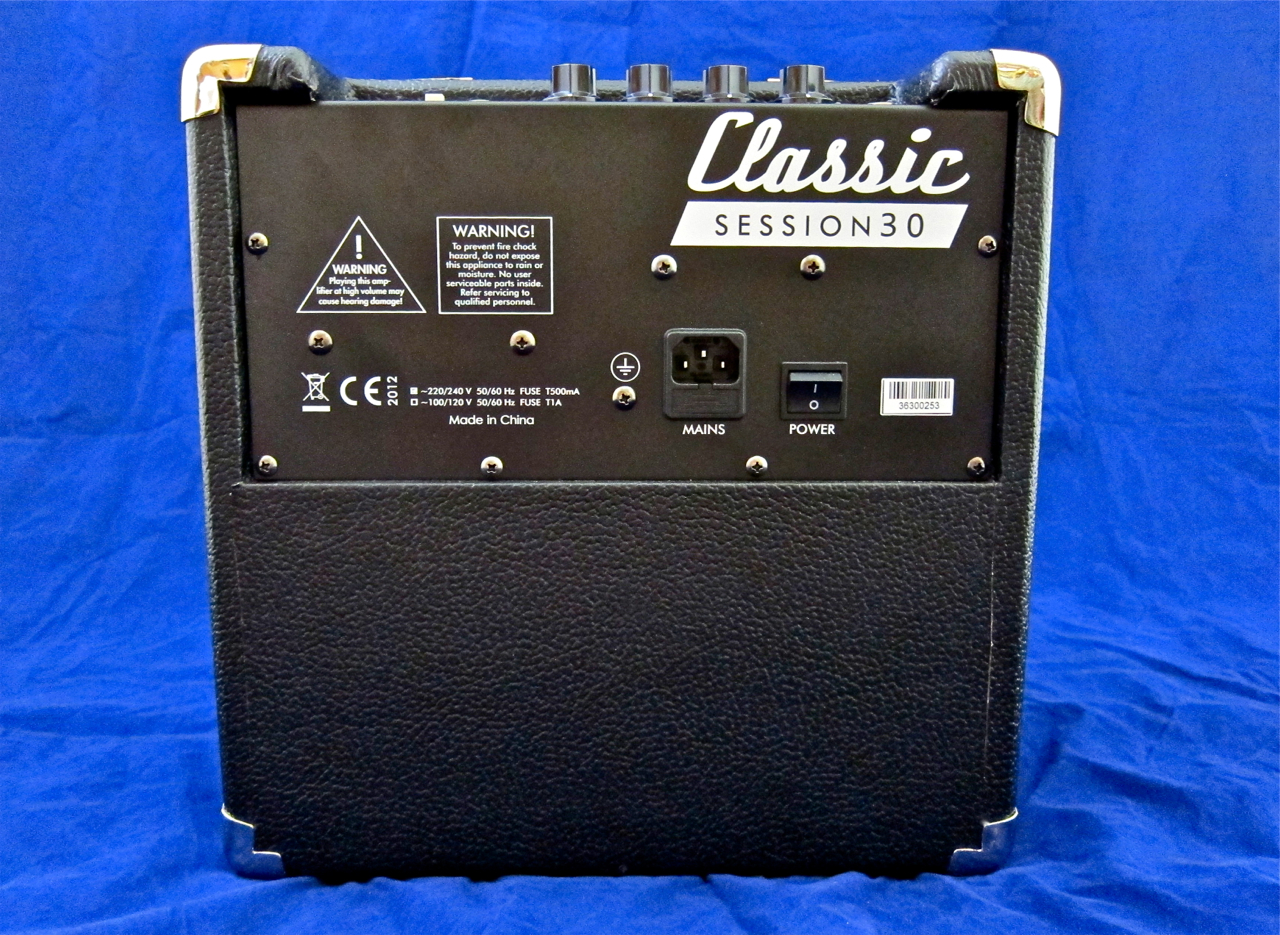
The combo’s back is fully closed. EBS have added a separate grounding point next to the power connector, which may come in handy in the studio for combatting mains hum.
The Session 30 weighs just under nine kilos, so it is very easy to carry around by its top handle.
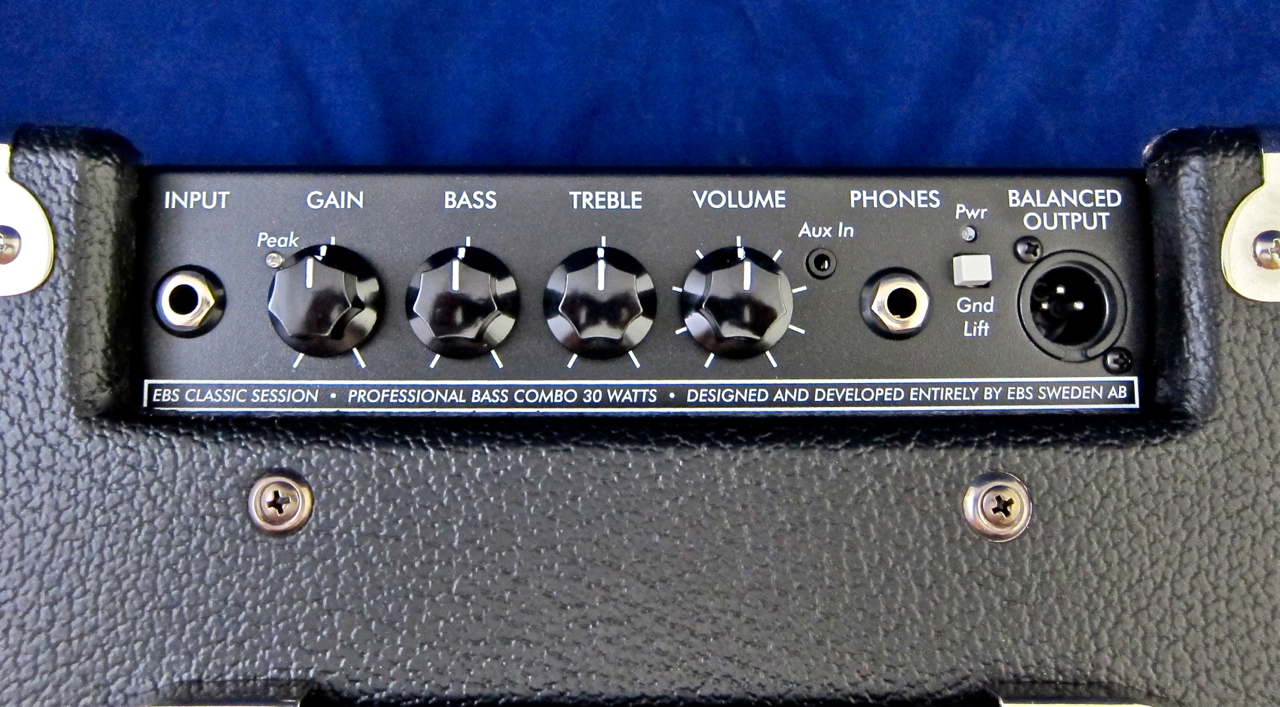
The control panel comprises of four control knobs – with a peak indicator next to the gain control.
For practicing, EBS have added a mini-jack, so you can connect an mp3-player, as well as a full-sized headphones output.
A very rare feature in this price range is the combo’s balanced XLR-output, which makes the Session 30 handy as a studio DI-box with its own monitor. Using the Ground Lift -switch enables you to break possible earth loops safely.
****
It would be completely unrealistic to expect a mighty roar from such a tiny bass combo.
But I must stress that the EBS Classic Session 30 really delivers the good in terms of its sound quality. This isn’t a murky-sounding piece of junk, but a great little tool – regardless of its very fair price.
This little ’un delivers genuine EBS Classic Series -tone at levels fit for tuition and home use. The bass register is warm, the mid-range tone clear, and the top end has a nice, soft silkiness to it.
The eight-inch speaker and small cabinet will show you the white flag, if the combo is taken to its limits, by vibrating and buzzing, but used sensibly, the EBS Session 30 holds its own nicely.
The combo’s XLR-output works great, and sends a healthy, pristine signal to your console or sound-card.
In my opinion, the EBS Classic Session 30 is a fine little practice amp and a handy tool in the small project studio.
****
The sound bites were recorded by mixing the combo’s DI-signal with the sound picked up by a condenser mic placed in front of the speaker:
EBS Swedenin uutuus – Session 30 – on firman pienin kombo tähän mennessä, joka on tarkoitettu koti-, äänitys- ja harjoituskäyttöön.
****
Pieni ja kevyt EBS Classic Session 30 (169 €) kuuluu valmistajan vintage-tyyliseen, Kiinassa valmistettuun Classic-sarjaan.
Session 30 tarjoaa nimensä mukaisesti 30 wattia lähtötehoa.
Kahdeksantuumainen kaiutin istuu refleksikotelossa, jolla on auko edessä. Tyylikäs etukangas on kiinnitetty perinteiseen tapaan tarranauhoilla.
Harjoituskombon takapuoli on täysin suljettu. Virtajohdon liittimen ja virtakytkimen viereen EBS on lisännyt vielä maadoituspisteen, josta voi olla hyötyä hurinan minimoimisessa, silloin kun vahvistinta käytetään studioympäristössä.
Session 30:n paino jää alle yhdeksän kiloa, joten kombo on todella helppo kuljettaa kantokahvallaan.
Kombon paneeli tarjoaa säätimiä gainille (jolla on oma Peak-ledi), bassolle, diskantille sekä volumelle.
Harjoituskäyttöä varten EBS on lisännyt Session-vahvariin minijakin mp3-soittimelle ja kuulokelähdön.
Harvinaisuus tässä hintaluokassa on pikkukombon balansoitu XLR-lähtö, joka tekee Session 30:stä myös kätevän DI-boksin omalla monitoroinnilla studiokäyttöä varten. Ground Lift -kytkimellä saa katkaistua tehokkaasti mahdollisista maalenkeistä aiheuttavan brummin.
****
Pikkuisesta, kahdeksantuumaisella kaiuttimella varustetusta harjoituskombosta ei voi odottaa seiniä vavisuttavaa bassotoistoa ja äänenpainetta – se olisi täysin epärealistinen.
Toisaalta täyttyy korostaa, että EBS Classic Session 30:stä lähtee kunnon bassosoundi. Tämä kombo ei missään nimessä ole kumiseva leluvahvistin, erittäin reilusta hinnastaan huolimatta.
Pikkuvahvistin tarjoaa aitoa EBS Classic -sarjan soundia opetus- ja harjoituskäyttöön sopivalla volyymillä. Bassorekisteri on lämmin, keskialue siisti ja yläkerta silkkisen pehmeä.
Kun vääntää master volumen täysille – tai jo vähän aikaisemmin viisikielisellä bassolla – mukaan kuvaan astuu odotetusti myös kombon (ja kaiuttimen) pienestä koosta aiheuttuvaa resonointia ja surinaa, mutta järkevässä käytössä EBS:n pienokainen pärjää mainiosti.
Session 30:n XLR-lähtö toimii sekin moitteettomasti, välittämällä kombon laatusignaalia puhtaasti eteenpäin mikserille tai äänikortille.
Mielestäni EBS Classic Session 30 on mainio harjoitusvahvistin, sekä erittäin kätevä työkalu kotistudiossa.
****
Seuraavat esimerkit on äänitetty käyttämällä samanaikaisesti sekä kondensaattorimikrofonia kaiuttimen edessä että kombon suoraa XLR-lähtöä:
Upouusi Yamaha P-105 on rahapussille ystävällinen, kevyt digitaalinen piano, joka sopii sekä koti- että keikkakäyttöön.
Yamaha P-105 (F-Musiikin hinta 659 €) on saatavilla sekä mustana (P-105B) että valkoisena (P-105WH).
P-105:n koskettimisto on Yamaha Graded Hammer -tyyppiä, jossa koskettimet on painotettu kuten akustisessa pianossa: bassopuolen koskettimia on hieman raskaampi painaa kuin diskanttipuoleisia koskettimia.
Muovirunkoinen P-105 painaa vain 12 kiloa, ja se mahtuu sellaisenaan mukavasti tavalliselle kosketintelineelle. Lisävarusteina on saatavilla myös Yamahan kotikäyttöön suunniteltu puinen LH85-jalusta ja kolmipedaalinen LP5A-pedaaliyksikkö.
Koskettimiston lisäksi Yamaha on satsannut myös P-105:n äänentoistoon. Digipianon runkoon on upotettu tehokas vahvistin (2 x 7 W) ja yllättävän täyteläisen kuuloinen kaksitiekaiutinjärjestelmä refleksiaukkoineen.
Monista ominaisuuksistaan huolimatta Yamaha P-105 on todella helppo käyttää.
Volume-liukusäätimen viereen on sijoitettu pianon metronomi-, Pianist- ja splittausosasto.
Tavallisen metronomi-klikin lisäksi tarjoaa P-105 myös kymmenen eri rumpupatternia beatista sambaan ja valssiin.
Pianist on Yamahan oma harjoitustyökalu – jonkinlainen arpeggiaattorin ja säestysautomatiikan risteytys – joka muuttaa vasemman käden…
There’s surprisingly little information available on the net when it comes to classical/nylon-string guitars.
Now Kitarablogi.com comes to the rescue:
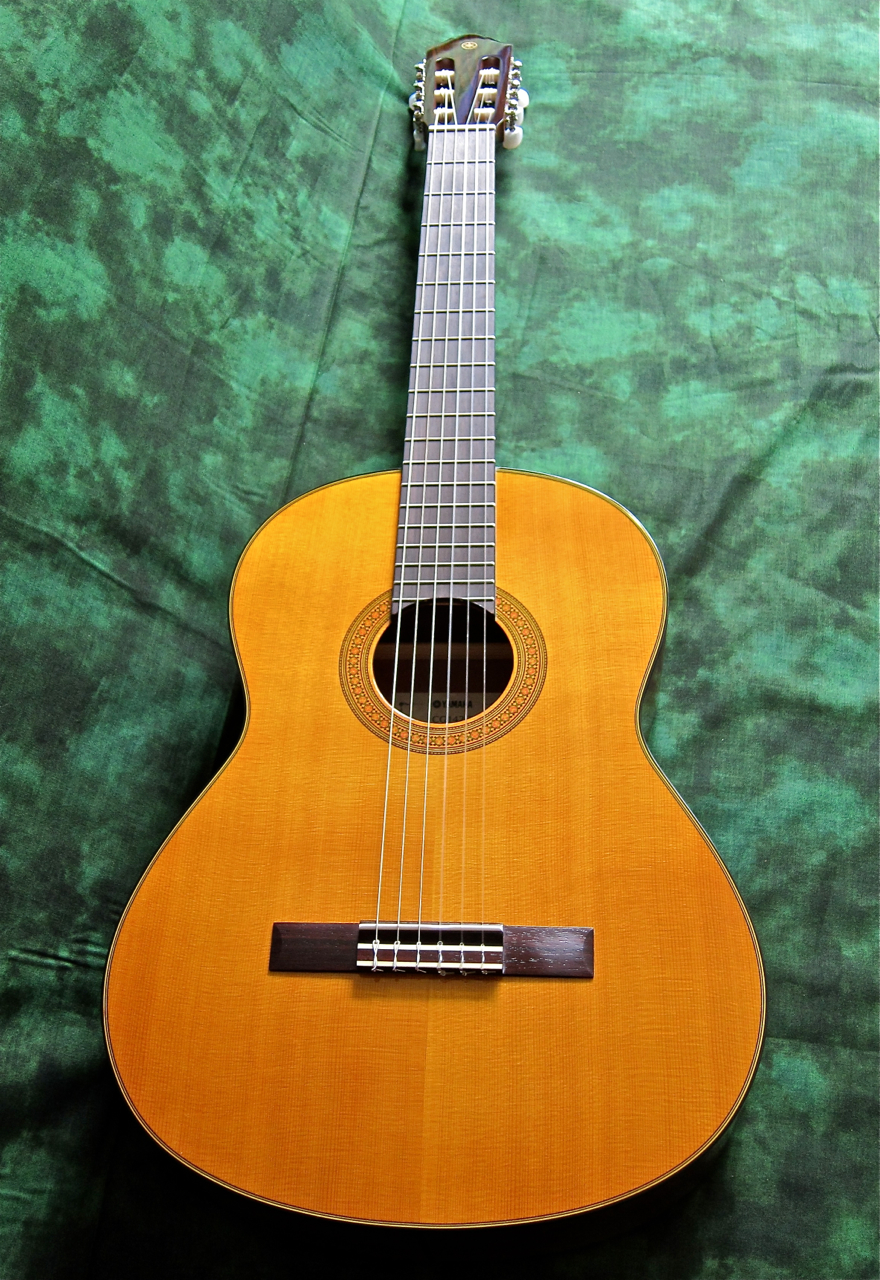
Yamaha’s C- and CG-series instruments are the best-selling classical guitars in Finland. We selected a solid cedar -topped Yamaha CG142C for this review.
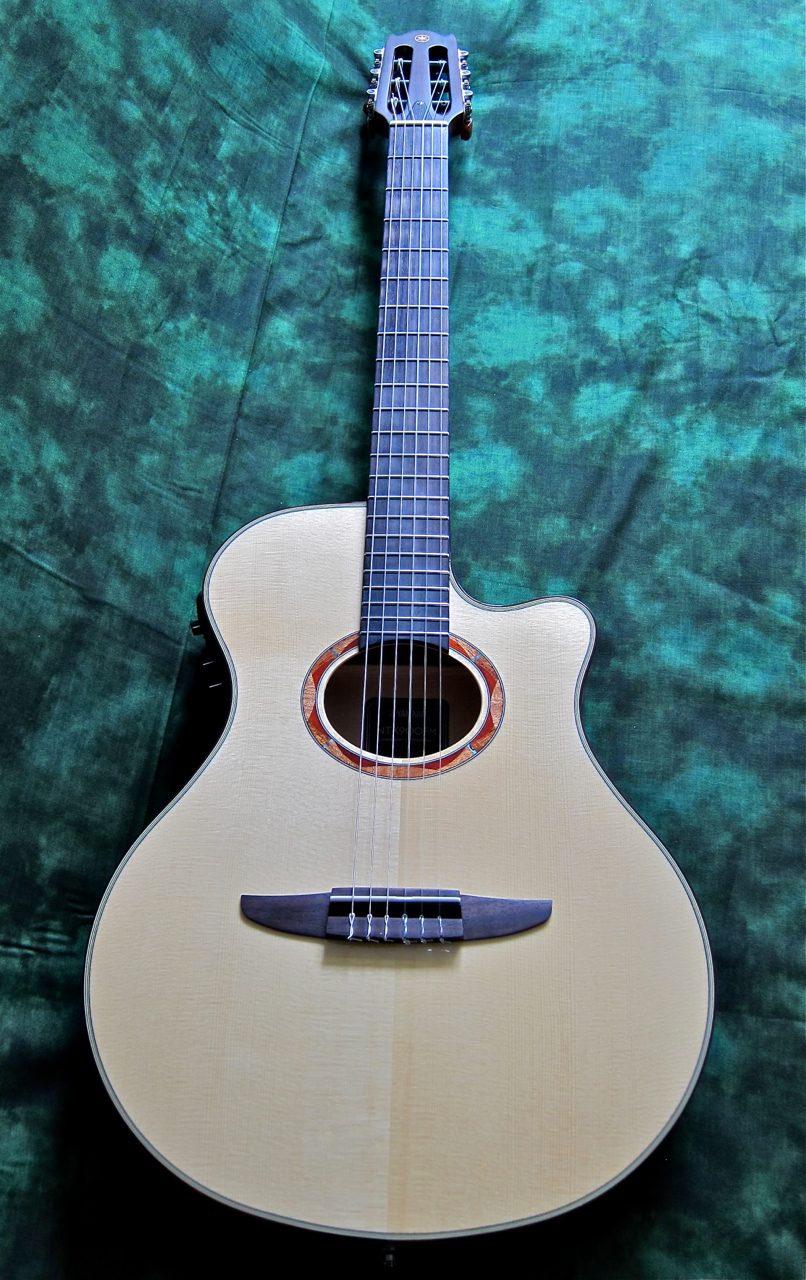
The Yamaha NTX900FM is a very interesting hybrid model – a nylon-string with a pickup and preamp system, as well as a narrower-than-classical nut width.
****
Typical of the company’s output, Yamaha’s CG142C (current street price in Finland approx. 300 €) is an extremely clean piece of work with the understated charm of a classical guitar. All CG-series guitars are build with solid tops – spruce-topped models have an ”S” suffix to their name, while cedar models are denoted with a ”C” at the end of their model name.
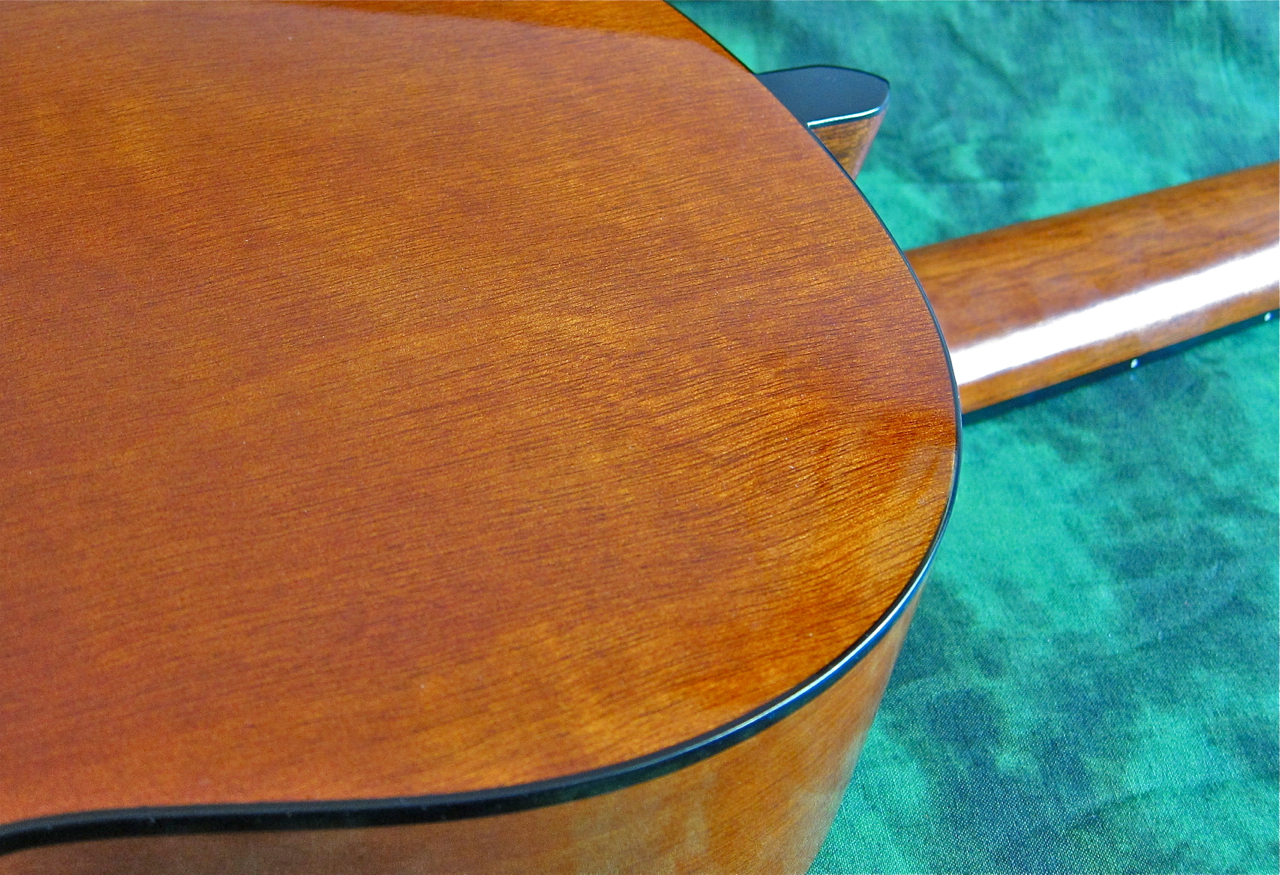
The neck, as well as the body’s back and rims, has been crafted from nato-wood. Nato is a South-East Asian tree species (lat. Palaquium) which looks and sounds similar to mahogany. The neck is solid wood, while the body (apart from the top) uses nato-plywood.
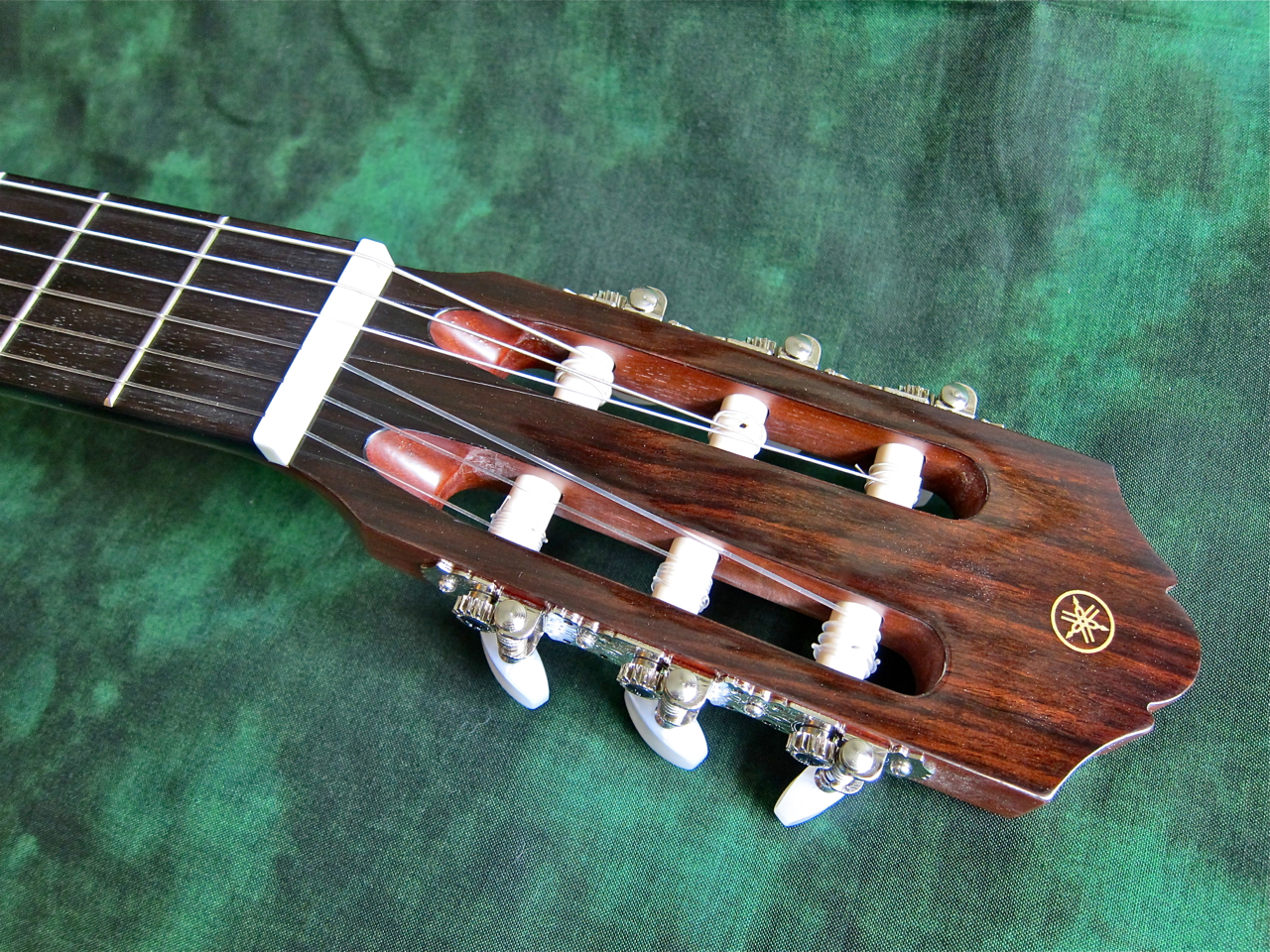
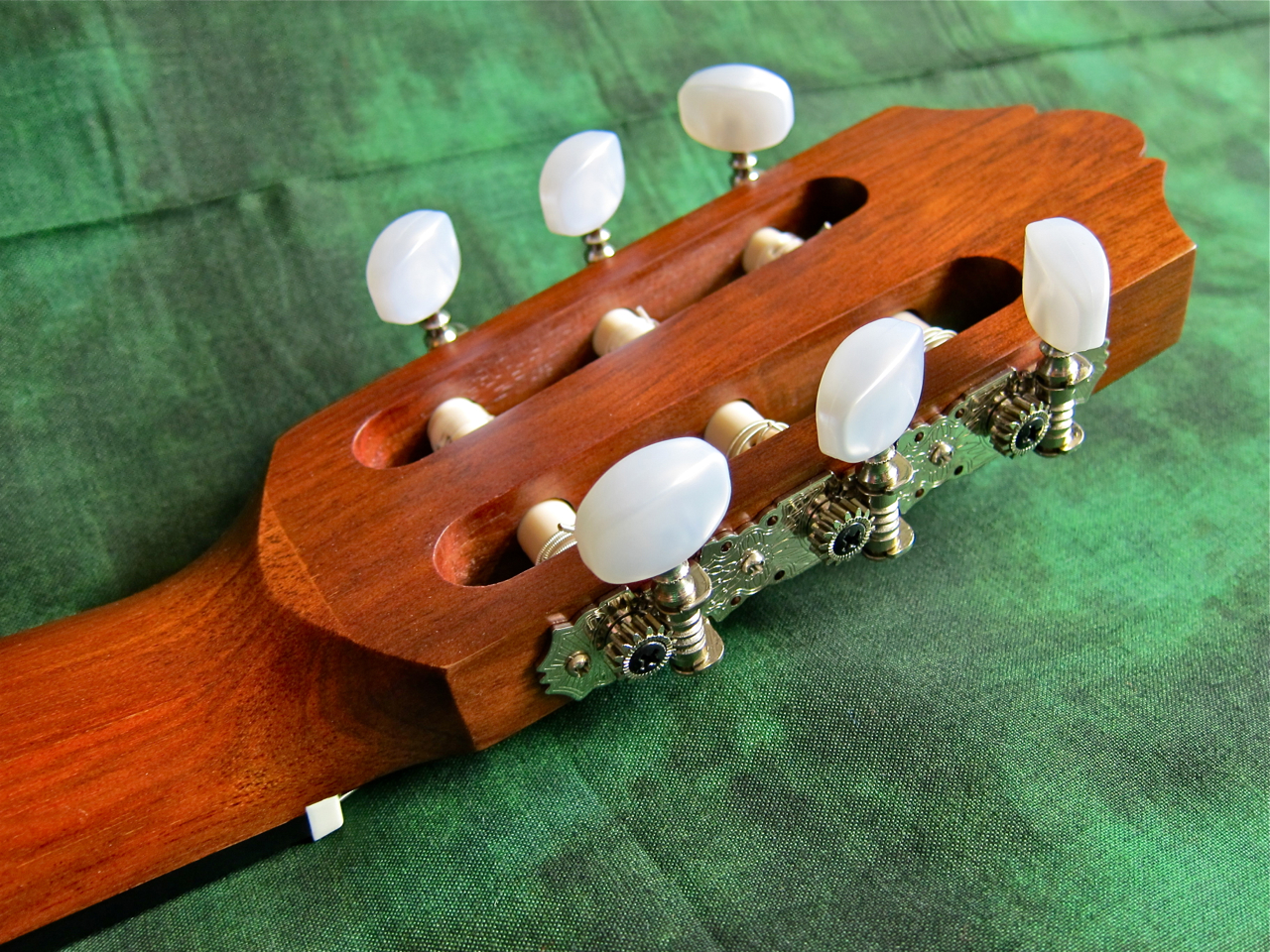
The headstock sports a beautiful rosewood veneer.
The CG142C comes equipped with traditional, open tuners. The headstock has been glued to the main part of the neck right above the neck wrist.
The satin-finished neck has been made by gluing together three strips of nato side-by-side. Added onto this main part is the neck heel, built up from several pieces of nato. Using small cut-offs in this way not only keeps costs sufficiently low, but also helps to save natural resources.
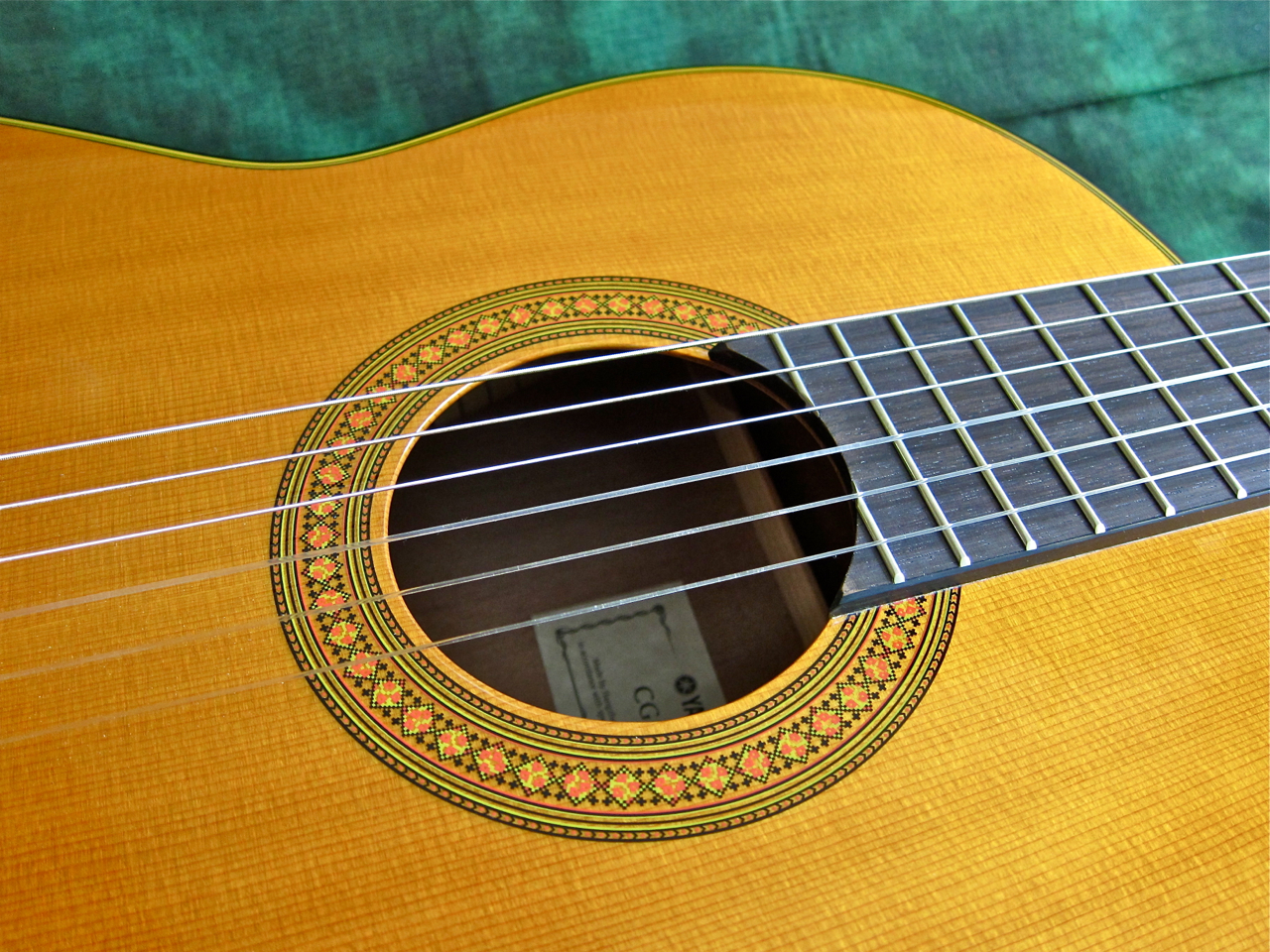
The bound rosewood fretboard sports traditional small and narrow frets.
The CG142C’s beautiful rosette is actually a decal, stuck onto the top prior to lacquering, which is common practice on many budget classicals. Higher-priced models feature rosettes crafted from many small pieces of wood and other materials.
Here’s a close-up look at the top’s five-ply binding.
The back’s black binding is carried across to the heel cap.
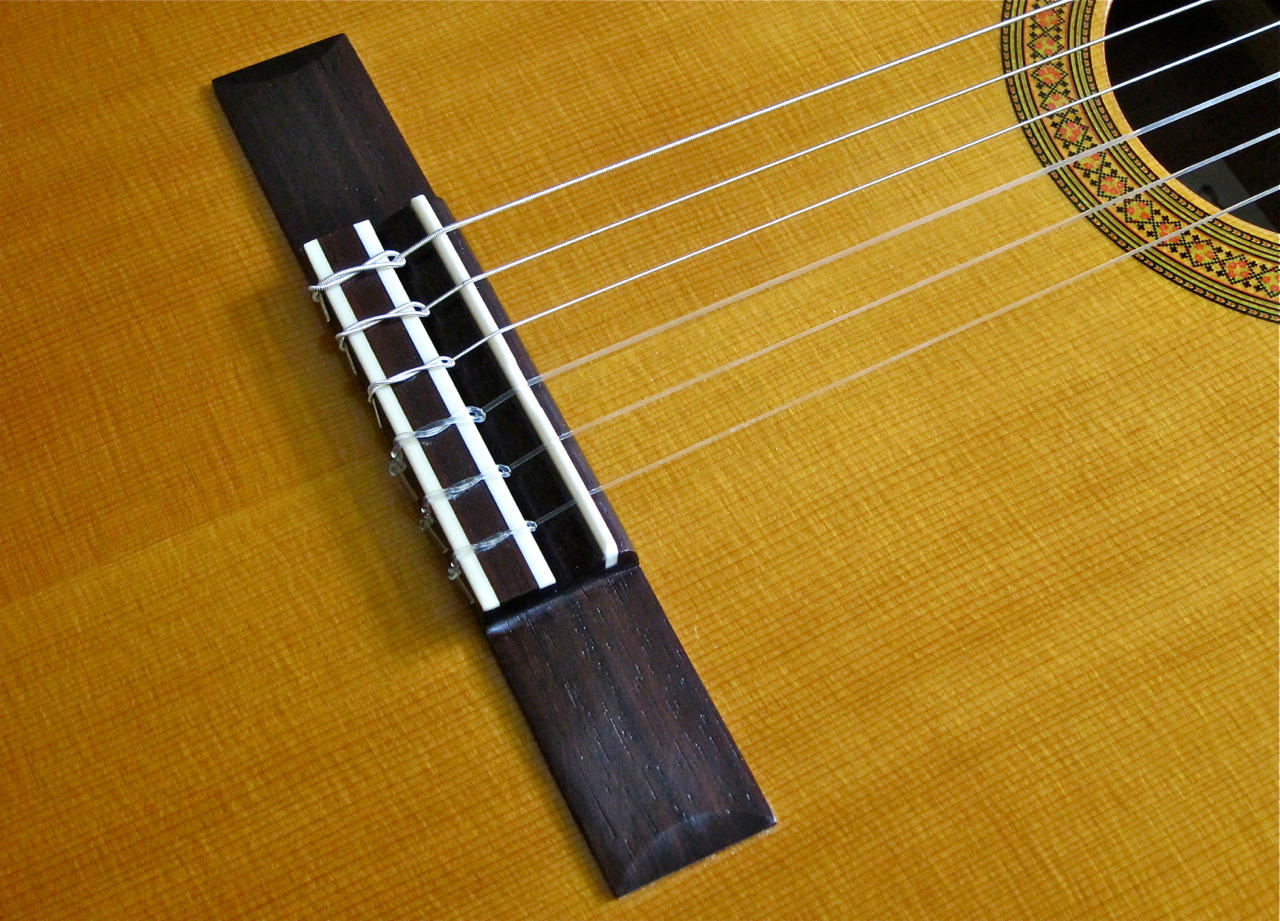
The Yamaha CG142C’s rosewood bridge is quite fetching in its poised simplicity.
Yamaha’s classical guitars tend to display clean workmanship on the inside also.
****
The Yamaha NTX900FM (current street price in Finland approx. 800 €) is the nylon-string cousin of the company’s APX-guitars. It has been designed for the guitarist who needs a quality pickup system, but doesn’t necessarily like the traditional wide and flat classical neck profile.
The NTX900FM’s top has been crafted from solid Engelmann-spruce.
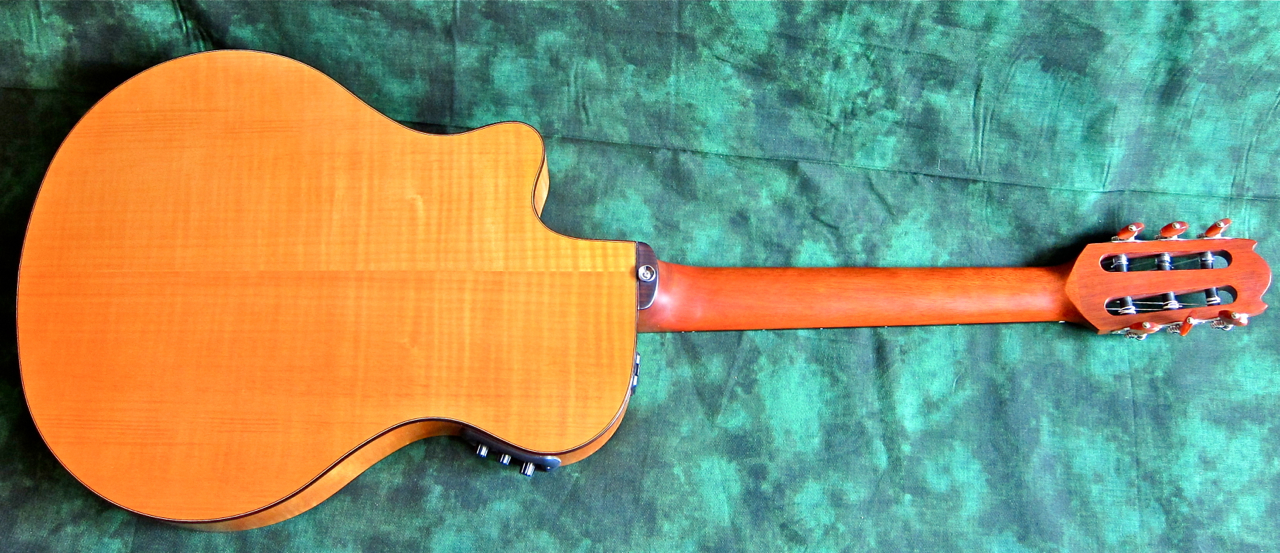
The nato neck has been glued to the maple body.
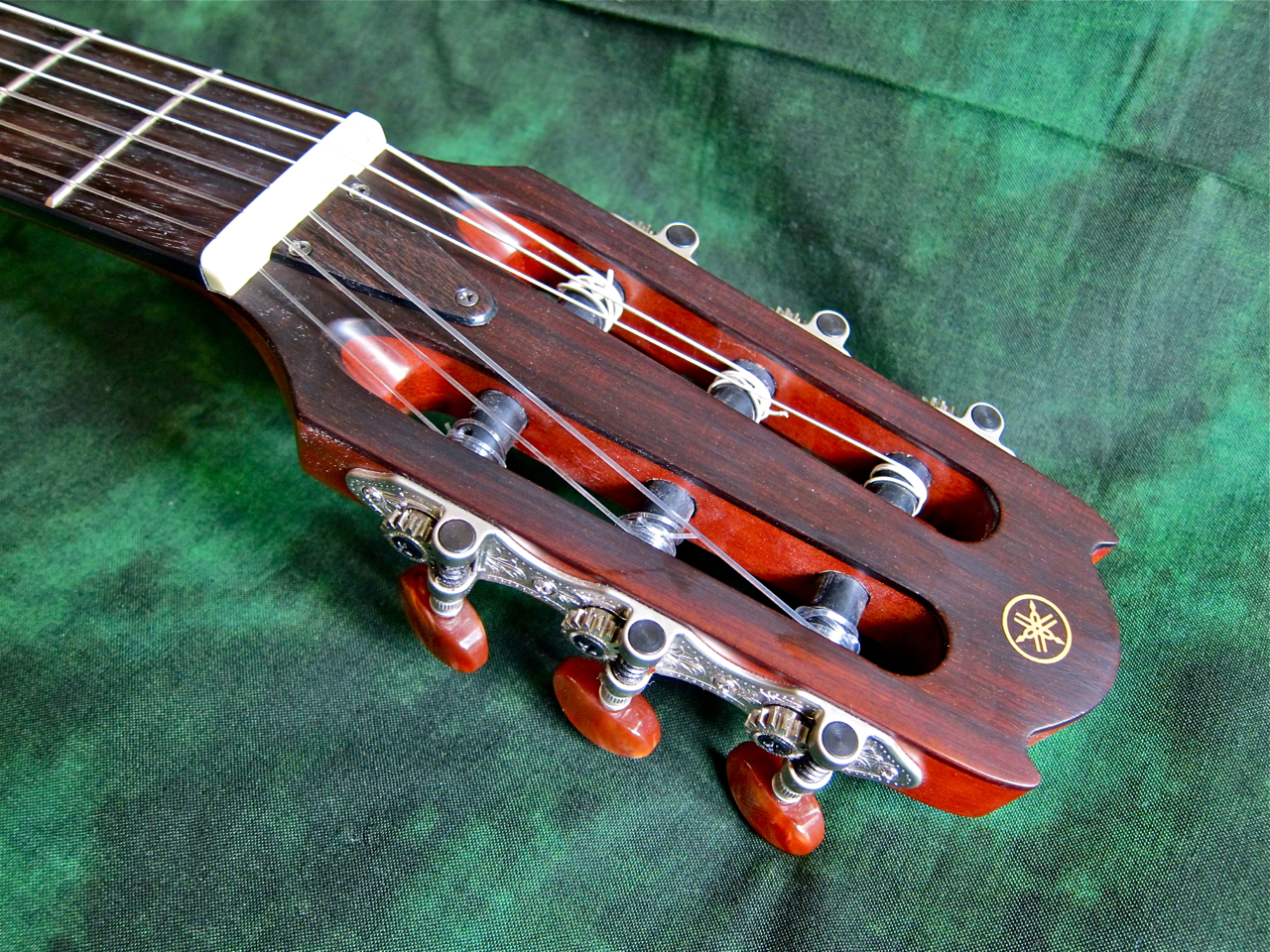
The headstock displays a cool and contemporary look…
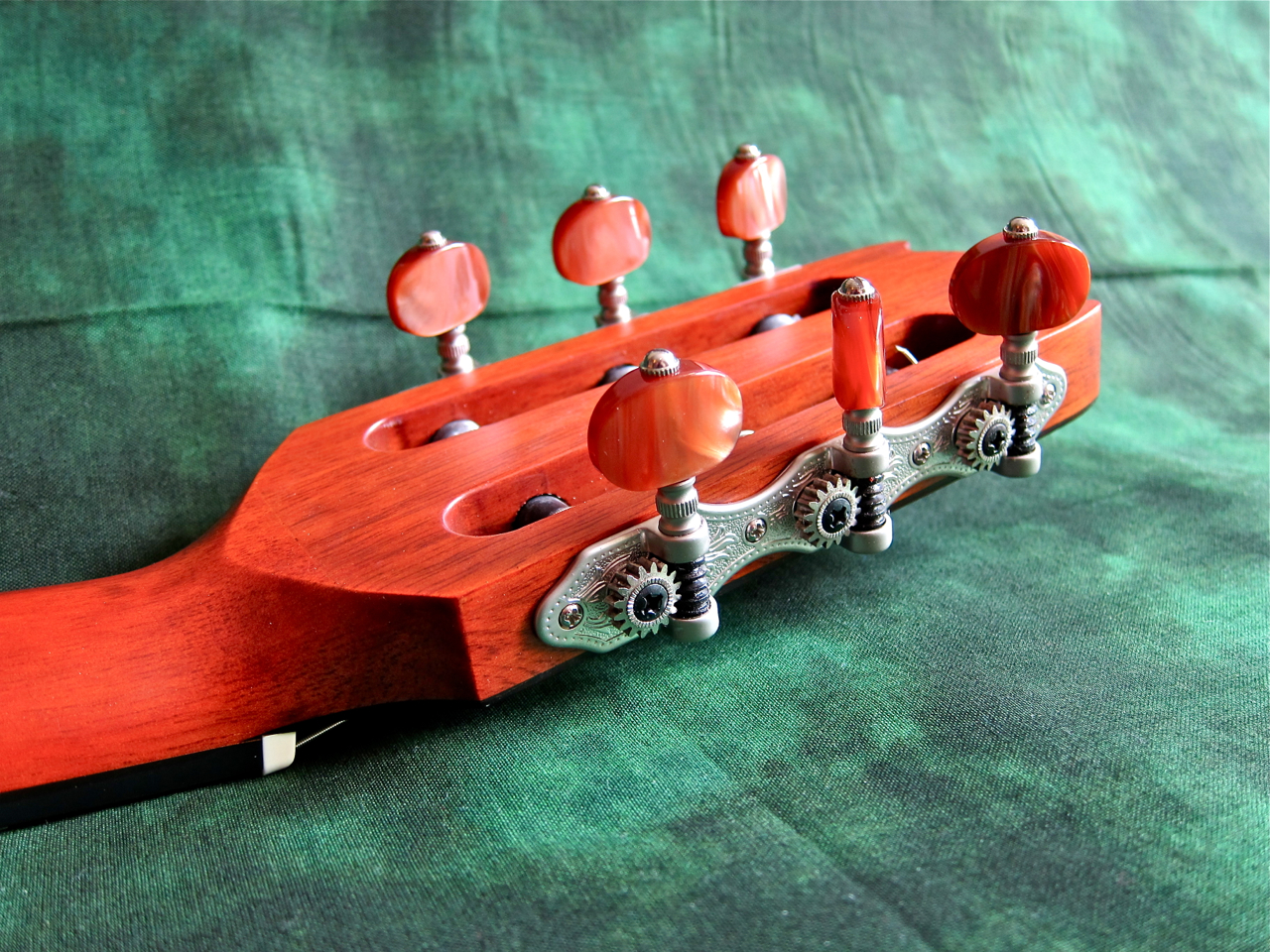
…which is complemented by the nice tuners.
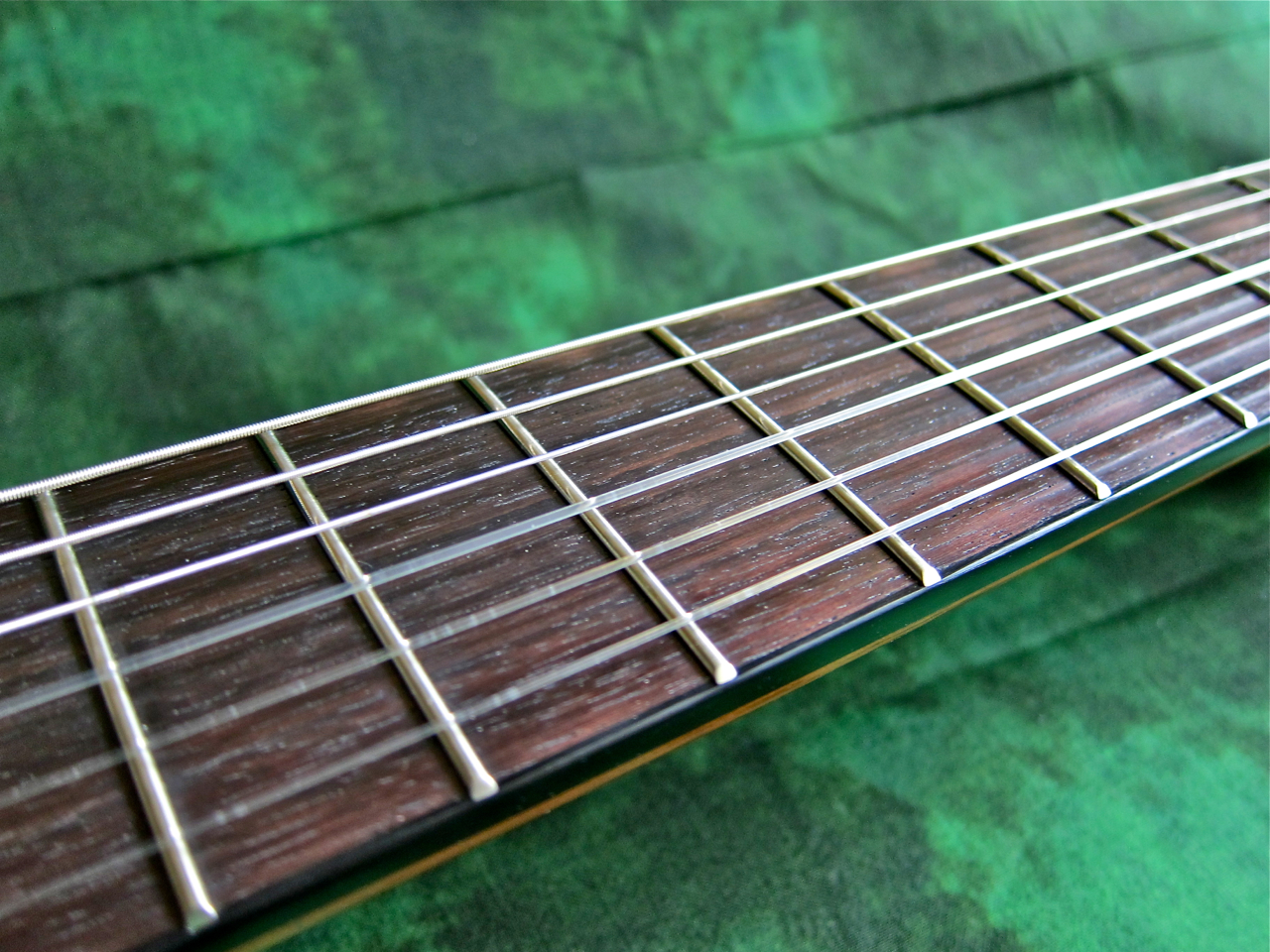
The NTX’ bound fingerboard is rosewood and comes with traditional frets.
NTX-guitars have the same type of body shape as their APX-brethren, and, just like the APX-guitars, the NTX-body is also shallower than what you’d expect from a classical guitar (with a depth of about 75 %).
The NTX900FM’s rosette has been beautifully crafted from various pieces of wood, as well as small bits of abalone.
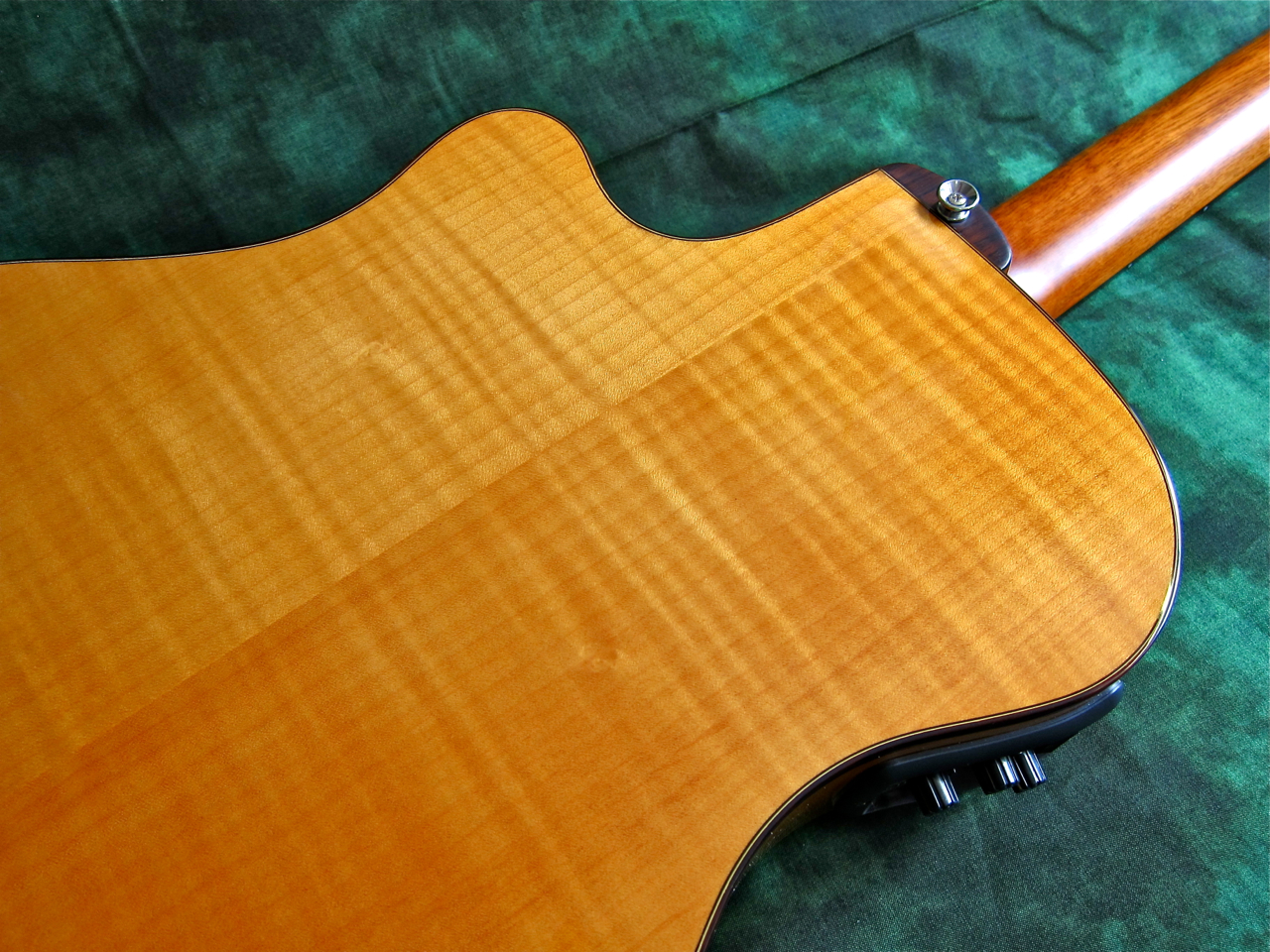
The honey-coloured finish of the flame maple soundbox looks good enough to eat.
Thes NTX900’s rosewood bridge also breaks with classical tradition in a stylish way.
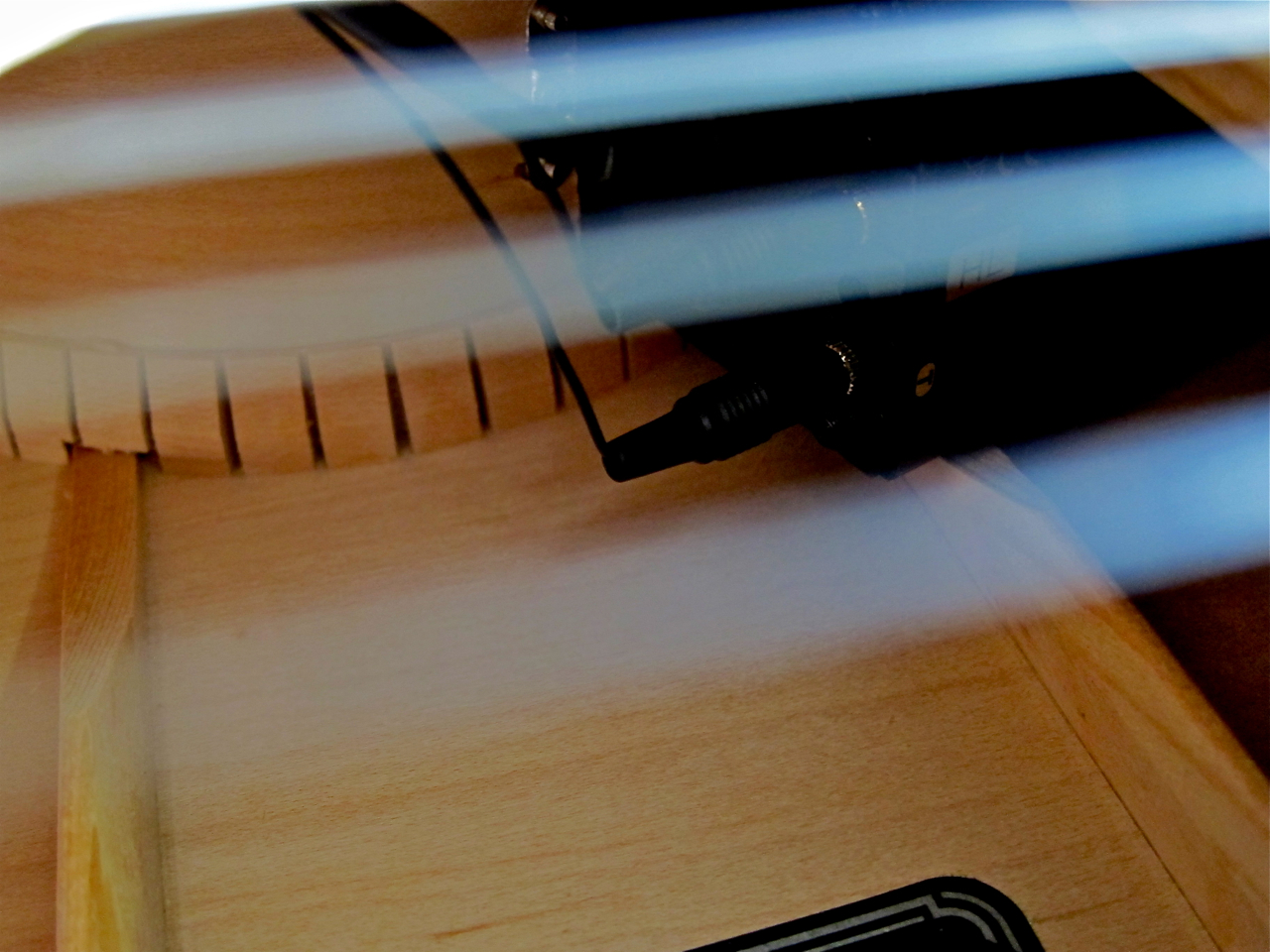
This guitar’s preamp is Yamaha’s ART System 61, which is a two-band preamp with separate piezo transducers for the bass and treble string triplets. This enables you to adjust signal levels independently for the bottom and top halves. The ART System 61 preamp is equipped with a three-band EQ and a digital tuner.
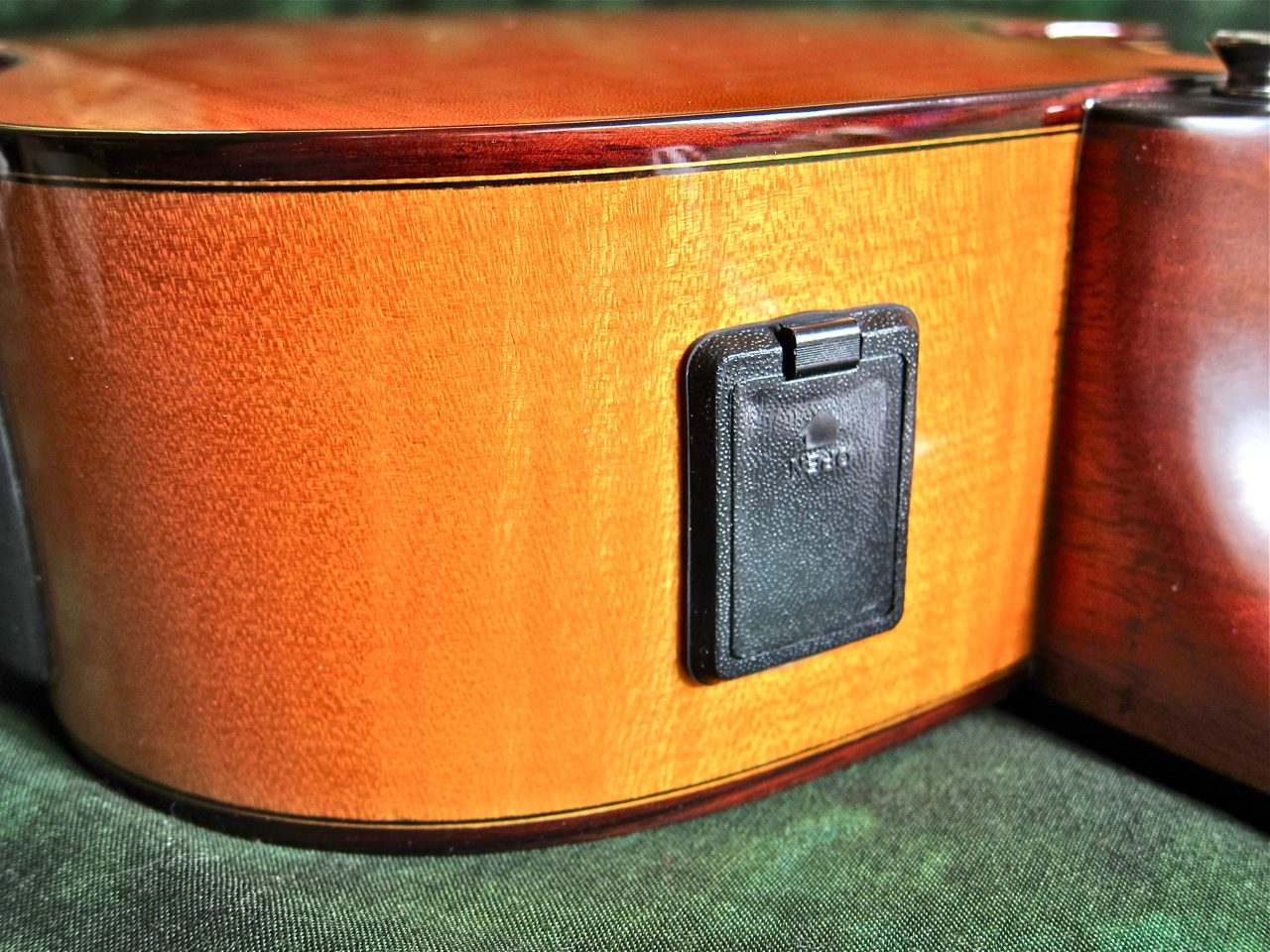
The battery compartment has been placed next to the neck heel.
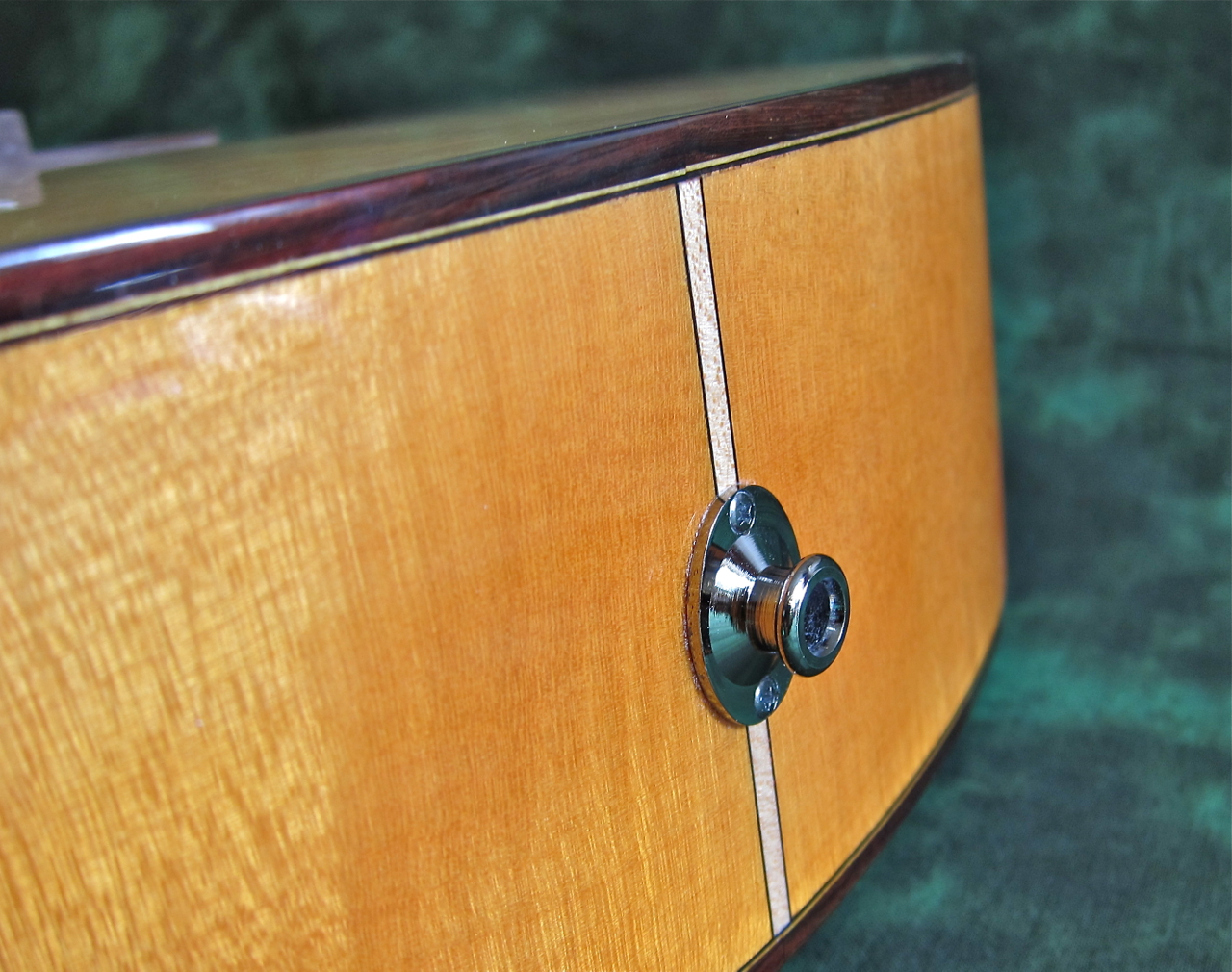
NTX900FM carries two strap buttons, with the bottom one doubling as the piezo system’s output jack.
The workmanship is clean and neat all around – inside and out.
****
****
Yamaha’s CG412C feels like a typical classical guitar: The nut width is a whopping two inches (52 mm) and the neck profile is true to style, namely flat and broad-shouldered. Such a traditional neck gives your left hand plenty of breathing room for complex fingerings, but barre chords require more attention and strength compared to a steel-string.
From an electric player’s standpoint a traditional classical set-up looks impossible, with the action at the 12th fret typically somewhere around 3.5 mm, but this is standard, comfortable fare on a nylon-string. Nylon strings are much softer than steel strings, and they also require a higher action to allow for their larger excursion.
Yamaha’s CG412C sings with a nice, full-bodied voice and an open tonal character. The guitar doesn’t project as well as an expensive classical does, but in its own price bracket the Yamaha CG142C clearly is a winner.
The nut width of the Yamaha NTX900FM’s neck lies halfway between a standard steel-string and a classical guitar, measuring 48 mm. The neck’s more tapered, slimmer and rounder D-profile makes for a much friendlier feel for the non-classical guitarist.
The NTX also comes with a lower string action (bottom-E: 3,1 mm/high-e: 2,6 mm at the 12th fret). This clearly narrows the guitar’s dynamic range, but also makes it easier to play for most of us.
Due to its shallower body and the use of maple for the soundbox, the NTX900FM isn’t particularly loud or full-bodied acoustically. The available volume is enough for practicing or song-writing, but this guitar doesn’t project in the way a traditional nylon-string does.
Using the on-board pickup system changes things dramatically, turning the Yamaha NTX900FM into an interesting addition to your guitar arsenal. Yamaha’s ART-system works extremely well, and the separate volume controls for the bass and treble sides come in handy for fine-tuning your tone. The under-saddle transducers are also quite immune against handling noises, and the whole system is refreshingly low on hiss.
In my opinion the Yamaha NTX900FM is a good choice if you’re looking for nylon-string tones with a steel-string feel – or if you’re into juicing up your nylon with effects.






















 Kitarablogi.com – Finland's premier Guitar and Bass blog