

Lisätiedot: Fender
Kitarablogi.com – Finland's premier Guitar and Bass blog
Juttuja kitaroista ja bassoista
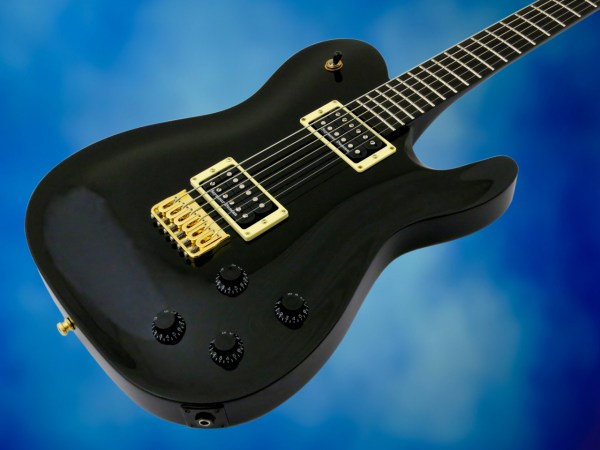
Usually, we get the products we review from the Finnish distributors, or directly from Finnish guitar- or amp-makers.
This time, though, I was approached by guitarist Jaakko Rytsölä. Jaakko had ordered a guitar for himself, liked what he got, and is now thinking seriously about importing this brand, in partnership with Espoo-based company Guitarworx.
Jericho Guitars – who are based in Plano, Texas – are a brand specialising exclusively in long-scale baritone electric guitars. Jericho use what they call a ping-pong manufacturing process: The raw tonewood is hand-selected at a wood supplier in British Columbia (Canada), and then sent to a manufacturer in South Korea for all the basic neck and body work. The half-finished guitars are then shipped back to Texas, where they are assembled and set up. According to Jericho, this process results in high-quality instruments with a player-friendly price tag.
Jericho have already caused quite a few waves with their Avenger model, which is squarely aimed at the Hard ’n’ Heavy crowd. Now the company has introduced a new model, called the Jericho Fusion. We received a preproduction version of the Jericho Fusion Black And Gold-version for review.
****
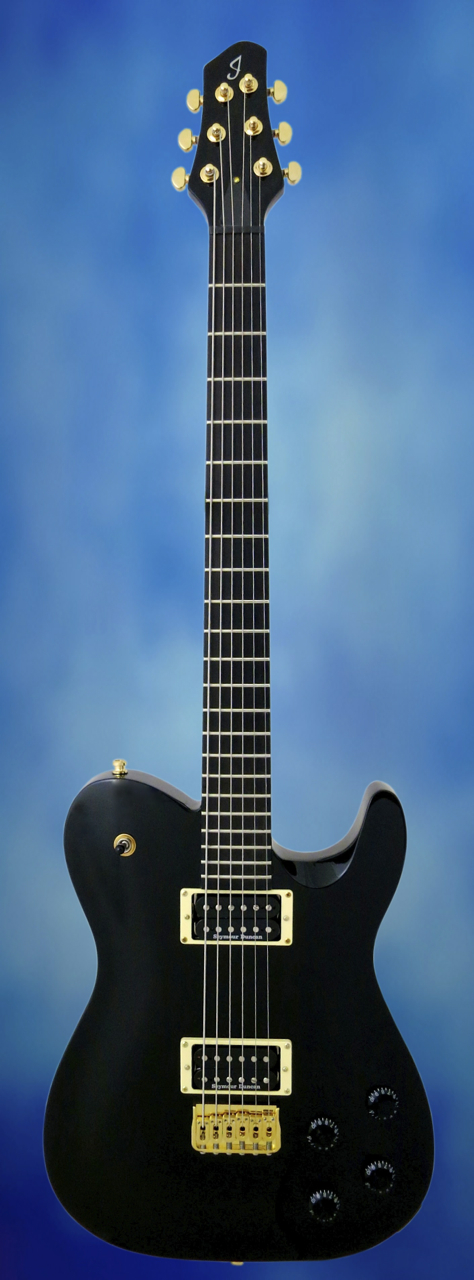
The Jericho Fusion (price in Finland approximately 999 €) is a sleek and elegant baritone guitar, with a body outline that is based on the venerable Fender Telecaster.
The Fusion has a three-piece mahogany set neck, as well as a mahogany body with a contoured front.
The Fusion has a scale length of 26.9″, which means 68.3 cm in the metric system.

The body’s back features a generous rib cage chamfer.

Jericho’s headstock design looks very nice, and offers almost straight string pull, which is a definite plus for tuning stability.
The Fusion comes with a self-lubricating black Graph Tech Tusq XL nut.
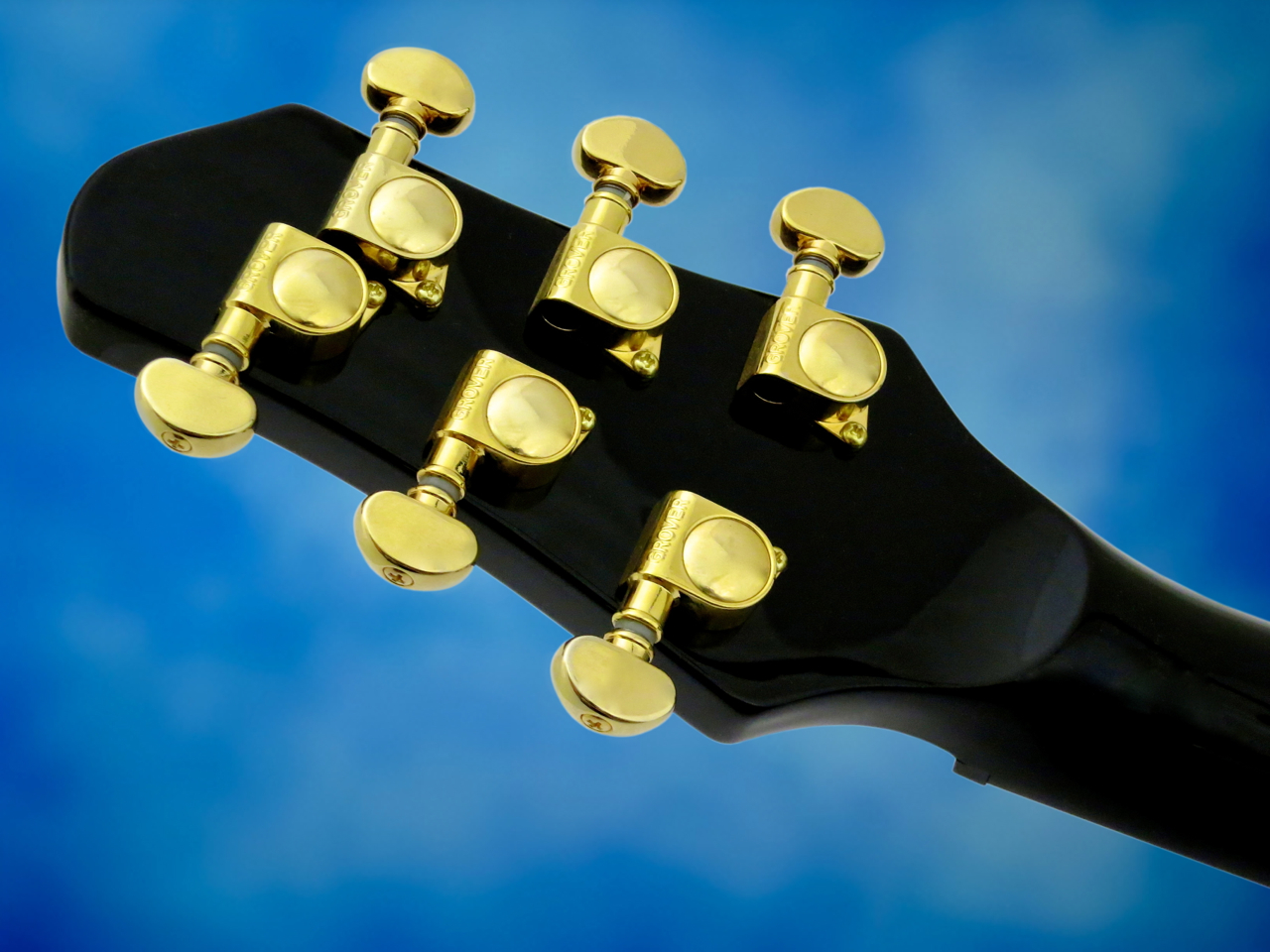
A set of golden Grover Rotomatics keeps the tuning solid.
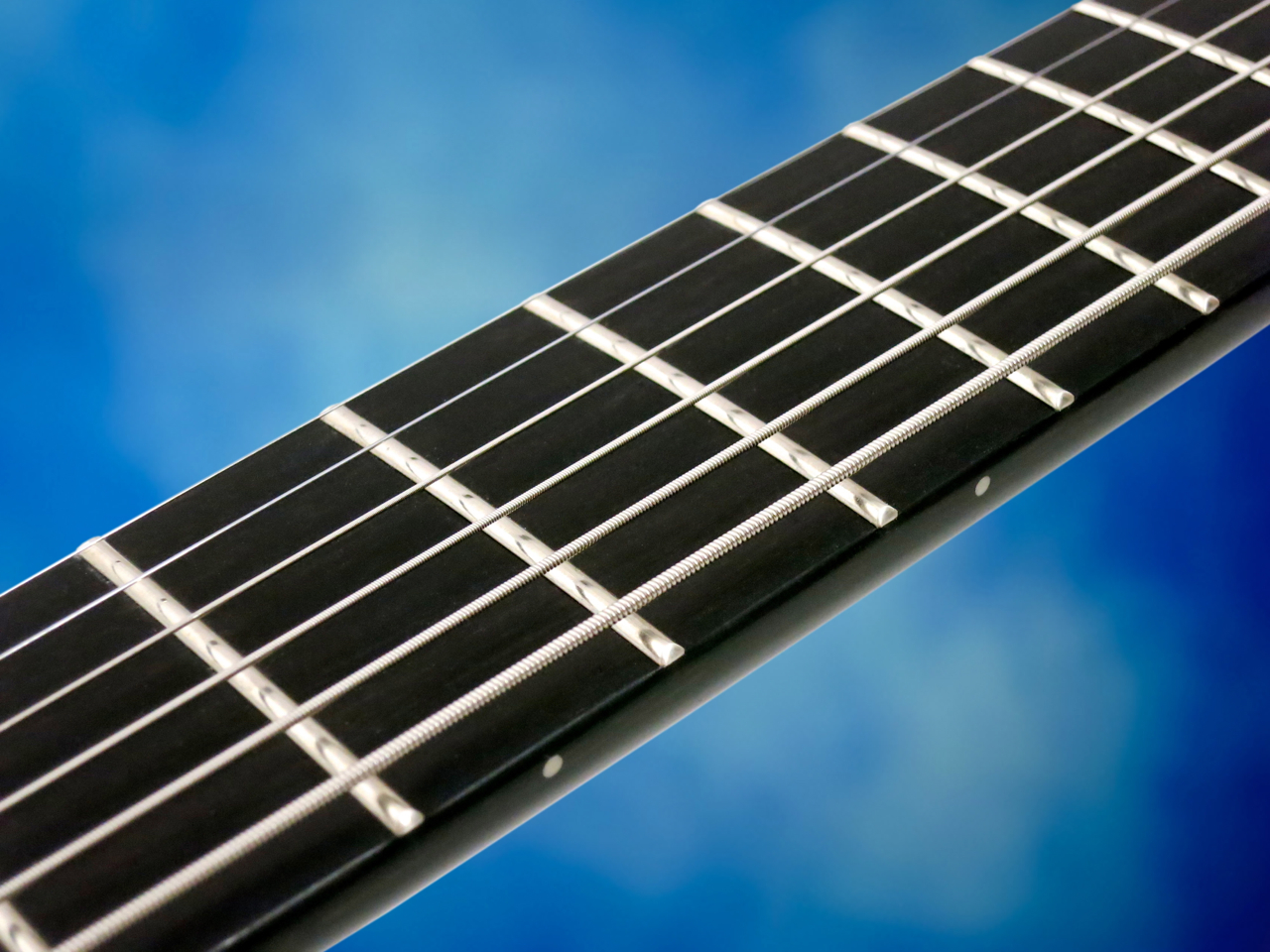
The black ebony fretboard sports 22 medium-sized frets.

The bridge is a chunky Hipshot design, constructed from a machined brass base and stainless steel bridge saddles.

The Jericho Fusion comes equipped with a classic pair of Seymour Duncan humbuckers – a ’59-model in the neck position, and a Custom TB-5 at the bridge.

The guitar’s controls are configured in traditional Les Paul-style, giving you independent volume and tone controls for each pickup.

A look under the hood reveals quality components and clean workmanship. Our preproduction review guitar has regular Les Paul-style wiring, but production models will come with push/pull-pots for splitting the humbuckers.
****
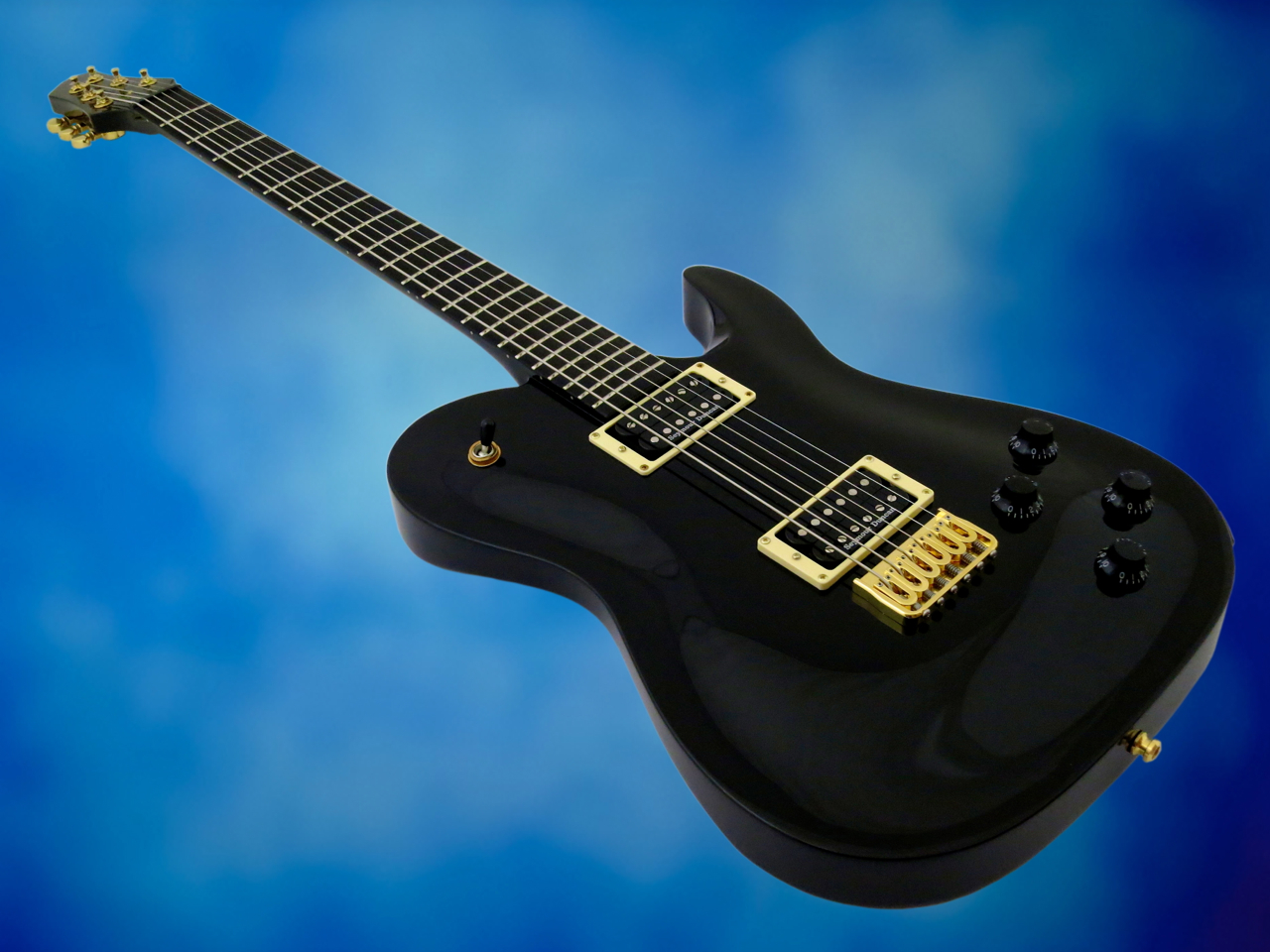
The Jericho Fusion is a great player. Actually – and this might come as a bit of a surprise – it is very easy for the guitarist to adjust to the longer-than-usual scale length. After a minute or two, you simply forget about the longer scale, and just get on with playing.
The guitar’s neck profile is a neither too slim, nor too fat, ”D”. Our review sample had a comfortable medium weight, and it came with a very low and slinky setup.
While Jericho’s Avenger was designed to be a balls-to-the-wall Metal-machine, the new Fusion model covers much more musical and tonal ground, thanks to its less powerful pickups. Don’t worry, the Jericho Fusion can do the head-banging stuff with aplomb, too, but this guitar also holds very lush clean tones in store, should you be so inclined.
Here’s a short clip of all three toggle switch settings (starting at the neck), played through a clean amplifier:
And here’s the audio track from the You Tube-video:

****

Jericho Guitars’ Fusion is a great-playing, versatile modern baritone electric. This guitar is well-made, no-nonsense tone machine for the player who wants to go low or even lower. Let’s hope that Jericho’s instruments will soon become more widely available in Finland.
****
Jericho Guitars Fusion
Price in Finland: c. 999 €
Tiedustelut: Guitarworx
****
Pros:
+ elegant design
+ workmanship
+ playability
+ sound


Lisätiedot: Fender

Why do we need intonation adjustment?
On string instruments, the fret spacing along the fretboard is calculated according to a mathematical formula. This formula is theoretical, though, and doesn’t take into account variables, such as string tension (tuning), string thickness (gauge) and string height (action). These variables make the actual pitch of a string, which is pressed down against a fret, deviate from the theoretically correct pitch. To compensate for this pitch offset, you need some sort of intonation adjustment that sets the correct intonation (or octave compensation) for each string.

On acoustic guitars correct intonation is achieved by an angled bridge saddle, often carefully shaped to fine-tune the compensation further.
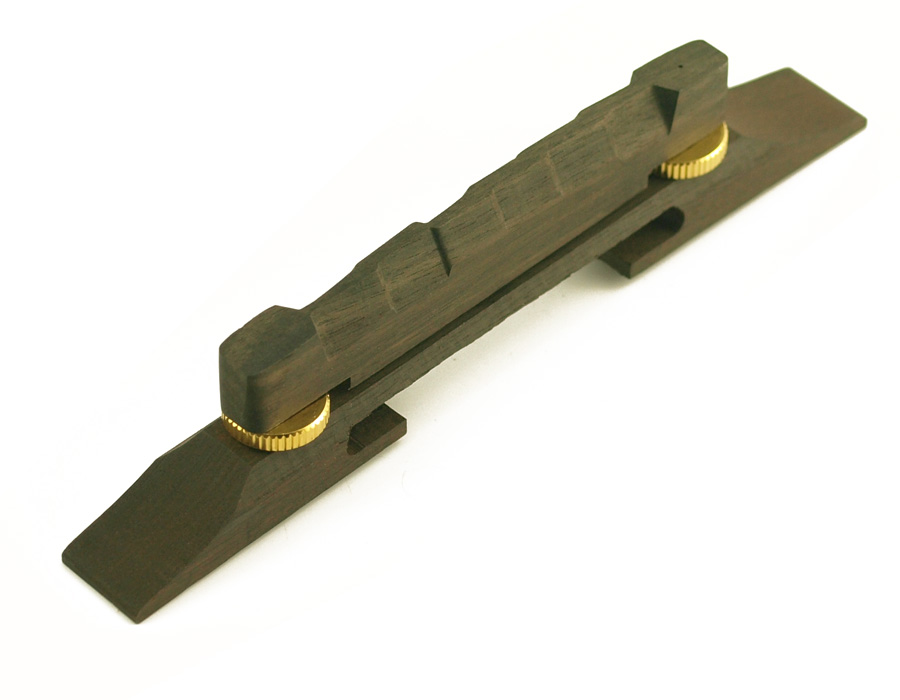
Early electric guitars were basically modified archtop acoustics, which carried on using traditional rosewood (or ebony) archtop bridges with carved ”steps” presetting the intonation. Overall intonation adjustment was carried out by moving the whole bridge carefully closer to (or further away from) the neck.
****

The advent of the – much clearer-sounding – solidbody electric guitar necessitated a more precise approach to the problem of intonation adjustment.

Leo Fender’s novel Esquire/Broadcaster/Telecaster-bridge featured a mounting plate for the bridge pickup, as well as individual action adjustment for each string, and octave compensation in string pairs.
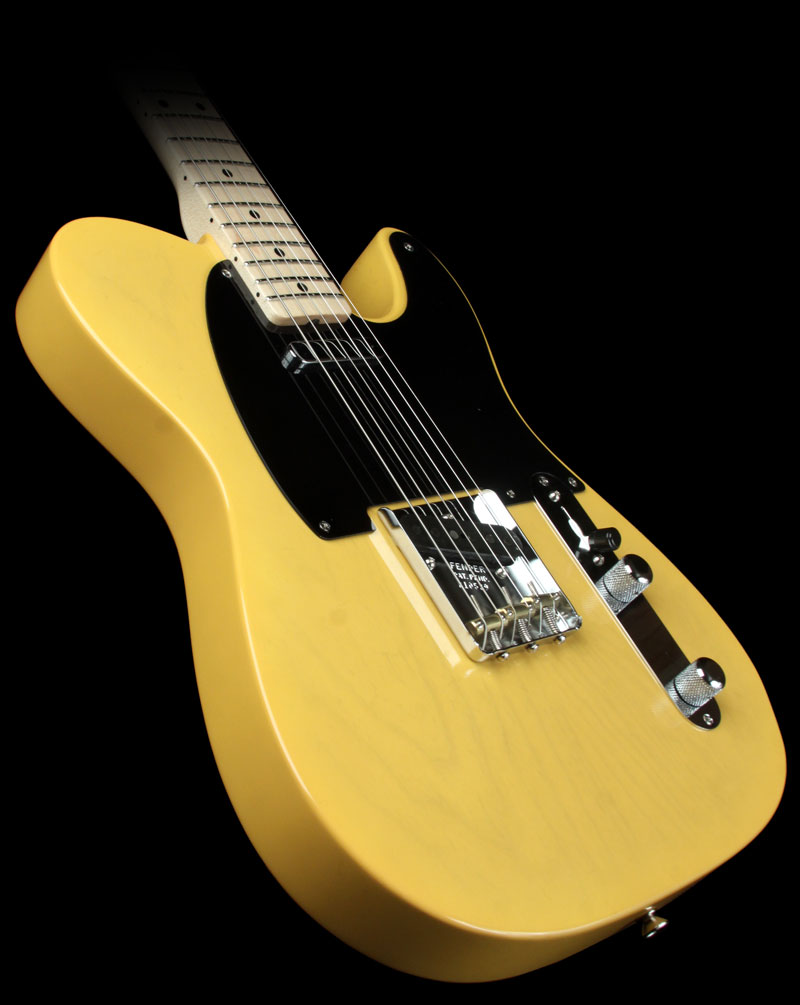
Fender’s Telecaster bridge assembly plays a huge part in this model’s distinctive, twangy tone, laying the foundation for the model’s classic status.


Over the course of the 1950s and 60s, Fender experimented with different saddles – smooth brass, smooth steel, threaded steel, and steel saddles with a single notch per string – but the basic, three-saddle formula stayed firmly in place. You got fantastic tone, but not perfectly spot-on intonation.
****

Twenty years after the original launch of Fender’s first solidbody electric, things had evolved.
In 1952 the original three-saddle bridge was less of a compromise, because the regular string sets of that time (012s or 013s) had a wound g-string. With a wound g-string the biggest step in intonation adjustment was between the b- and the g-string, and, as they were catered for by different saddles, a good, working compromise could be found.
By the late Sixties, ”slinky” string sets with plain g-strings had become the norm. This shifted the intonation step between the highest wound string and the lowest plain string onto a single, rigid bridge saddle (for the D- and g-string).
Fender retained the traditional three-saddle bridge on its standard Telecaster, but introduced six-saddle bridges on many of its new models in the Seventies. Pictured above is the six-saddle bridge from a (second version) Custom Telecaster (introduced in 1972).
Although this bridge finally offered perfect intonation, some players criticised this type of bridge for ”sounding” thinner (or brighter) than the original version. This might also have been due to changes in the precise specifications of the bridge pickup at that time, though.


More recent six-saddle designs by makers like Hipshot, Gotoh or Fender are based on a thicker bridge plate. These are perfectly serviceable, modern designs, which offer precise intonation. Many Tele-anoraks still steer clear of these bridge types, however, because the more rigid bridge plate tends to tame the bridge pickup’s twang noticeably.
****
Another approach to better intonation on a Telecaster is to keep the twang-enhancing three-saddle ashtray bridge in place, but modify the saddles.

Pickup specialist Joe Barden came up with angled brass saddles in his design for the late Tele-master Danny Gatton.
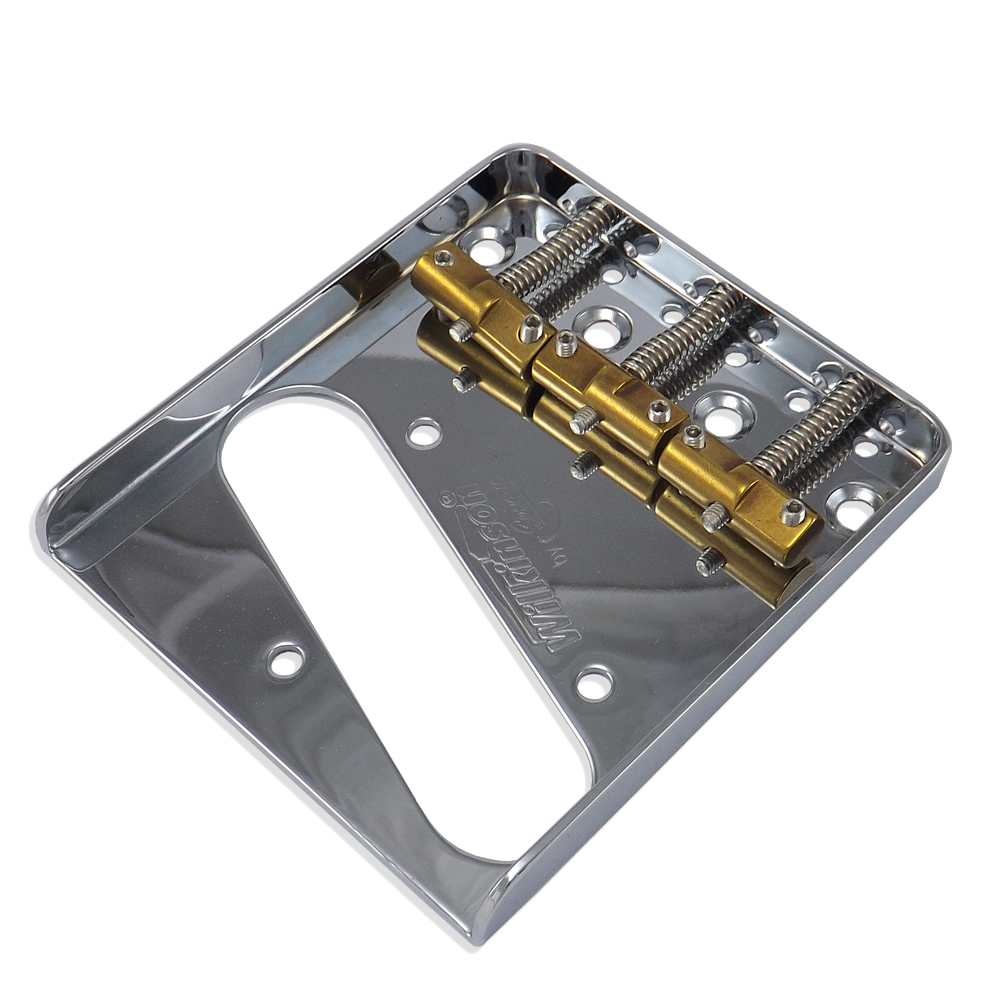

Wilkinson’s and Graph Tech’s designs have two different, preset jump-off points per saddle – one for each string.
These three approaches (Barden, Wilkinson, and Graph Tech) work very well in providing good intonation, while keeping the Telecaster-tone intact, as long as you use string sets with a plain g-string.

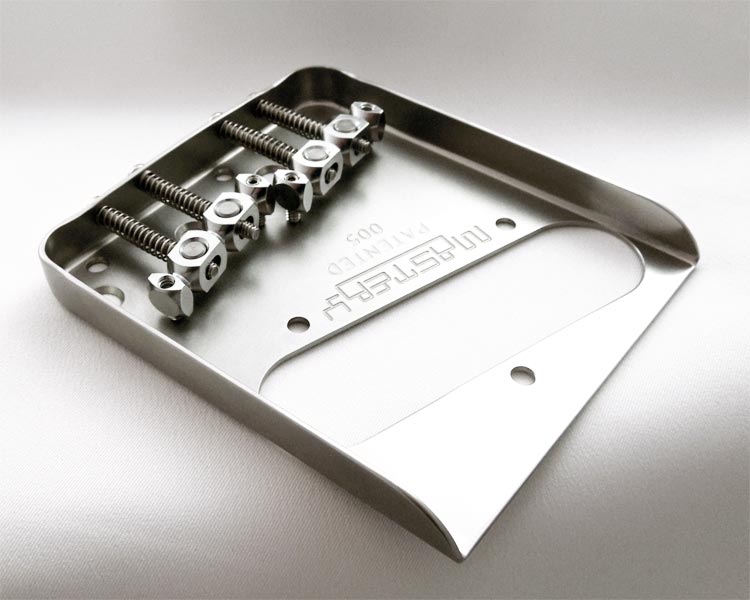
If you want to retain your three-saddle twang, but want to have more freedom in choosing your string gauges, the best way to go are saddles with an angle adjustment. Good examples are Wilkinson’s replacement brass saddles (above), or this stainless steel Tele-bridge by Mastery.
****
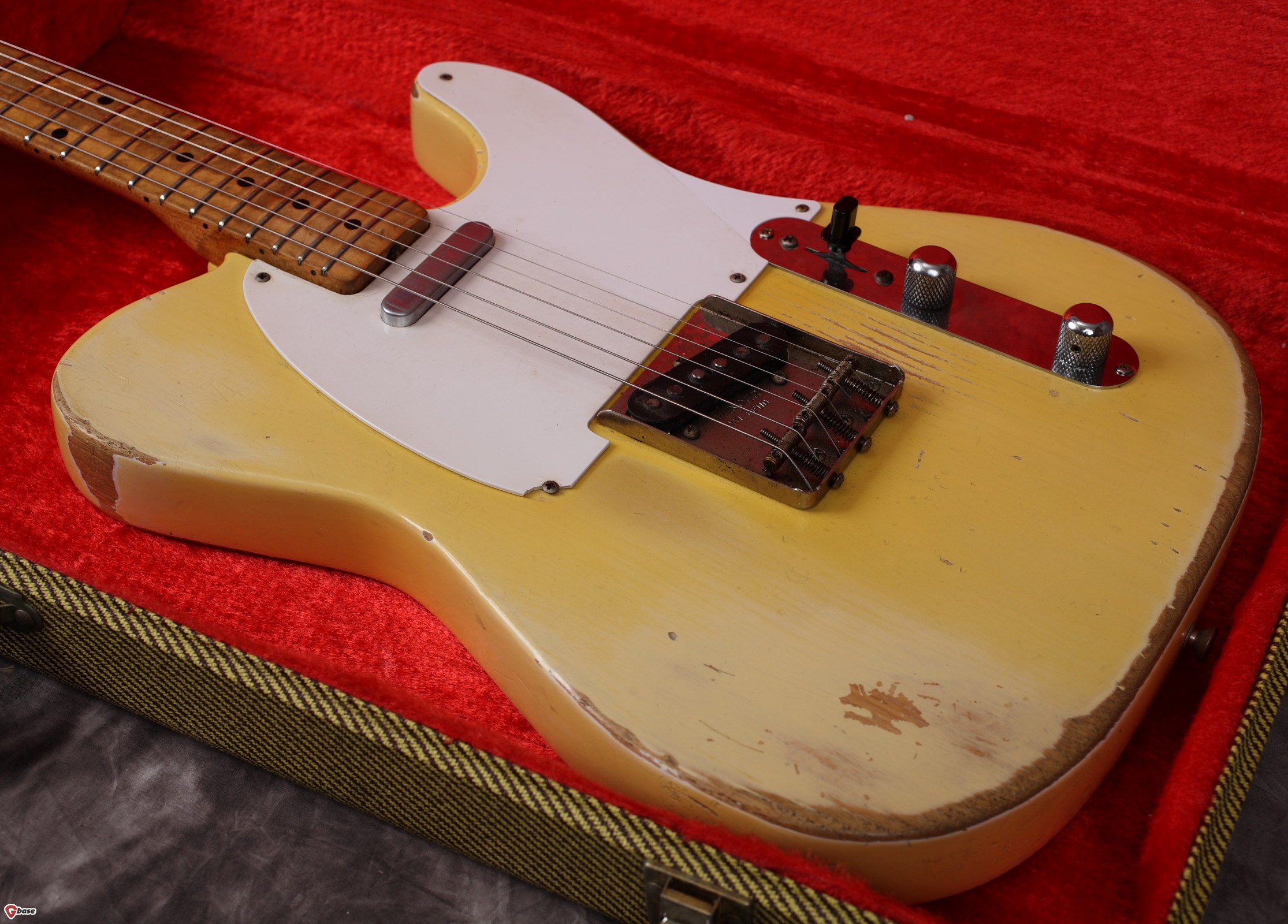
How come that the vintage-type Fender Telecaster, with all its intonation flaws, is still in production and still very successful? The answer is that people have always been creative in working out solutions to design shortcomings.
In the Telecaster’s case this means finding a way to ”sweeten” the guitar’s slightly flawed intonation.
Here are three (of a myriad of) possible approaches:
1.) The fifty percent approach
After you’ve put on a set of new strings, use your digital tuner to set the (12th fret) intonation correctly for both E-strings, as well as the g-string (I call them the most critical strings). Then tune your guitar by tuning the open E-strings and the g-string to pitch. The remaining three strings (A, D, and b) are then tuned, so that the pitch at the seventh fret is correct (giving you E, a, and f#).
The A-, D-, and b-strings will be a little off in their intonation going up (or down) from the seventh fret, but overall the pitch will be much sweeter, than if you had tuned these strings to their correct open string pitches. You can then fine-adjust your sweetening by ear, using first position chords as a reference.
2.) Tuner sweetening
After you’ve put on a set of new strings, use your digital tuner to set the (12th fret) intonation, so that each string pair is slightly off in an approximately even way. With the E- and A-pair this would mean that the E-string’s intonation comes out slightly sharp, while the A-string’s intonation is a tiny bit flat. The next pair would see the D-string a bit flat, while the (plain) g-string is a tad sharp. The last pair would have the b-string a bit sharpish, with the e-string a little flat. Then tune the guitar by tuning all strings, so the pitch is correct at the seventh fret.
Now all strings will be a little off in their intonation going up (or down) from the seventh fret, but overall the pitch will be much sweeter, than if you had tuned them to their correct open string pitches. You can then fine-adjust your sweetening by ear, using first position chords as a reference.
3.) Sweetening to the A
After you’ve put on a set of new strings, use your digital tuner to set the (12th fret) intonation, so that each string pair is slightly off in an approximately even way. With the E- and A-pair this would mean that the E-string’s intonation comes out slightly sharp, while the A-string’s intonation is a tiny bit flat. The next pair would see the D-string a bit flat, while the (plain) g-string is a tad sharp. The last pair would have the b-string a bit sharpish, with the e-string a little flat. Then tune your guitar by first tuning the open A-string to pitch. Next, tune all the other strings by ear, using the A-string as your reference:
• E-string at the fifth fret against open A
• D-string at the seventh fret against open A (or A-string 12th fret harmonic)
• g-string at the second fret against open A (or A-string 12th fret harmonic)
• b-string at the tenth fret against open A (or A-string 12th fret harmonic)
• e-string at the fifth fret against open A (or A-string 12th fret harmonic)
You can then fine-adjust your sweetening by ear, using first position chords as a reference.
****
Remember, none of the above tuning tips is set in granite. Tuning and intonating a three-saddle Telecaster is a dark art, and most players have developed their own way of sweetening their guitar’s intonation. Let your ears be your guide!


JAM Pedals is a Greek maker of boutique effect pedals, whose products are now available in Finland, too (distributed by R-Jam Group).
JAM Pedals’ products are all-analogue, built by hand from first-rate components. Some models even rely on hard to come by NOS-chips and -transistors for their sound.
Most JAM-models can also be ordered in point-to-point versions, or with customised specifications and/or artwork.
All JAM Pedals come in hand-painted, unique designs, and are delivered with a cloth sack for storage, as well as a JAM-logo’d plectrum.
All the effects tested in this review run on a nine volt battery or a (Boss-type) power supply (not included).
****
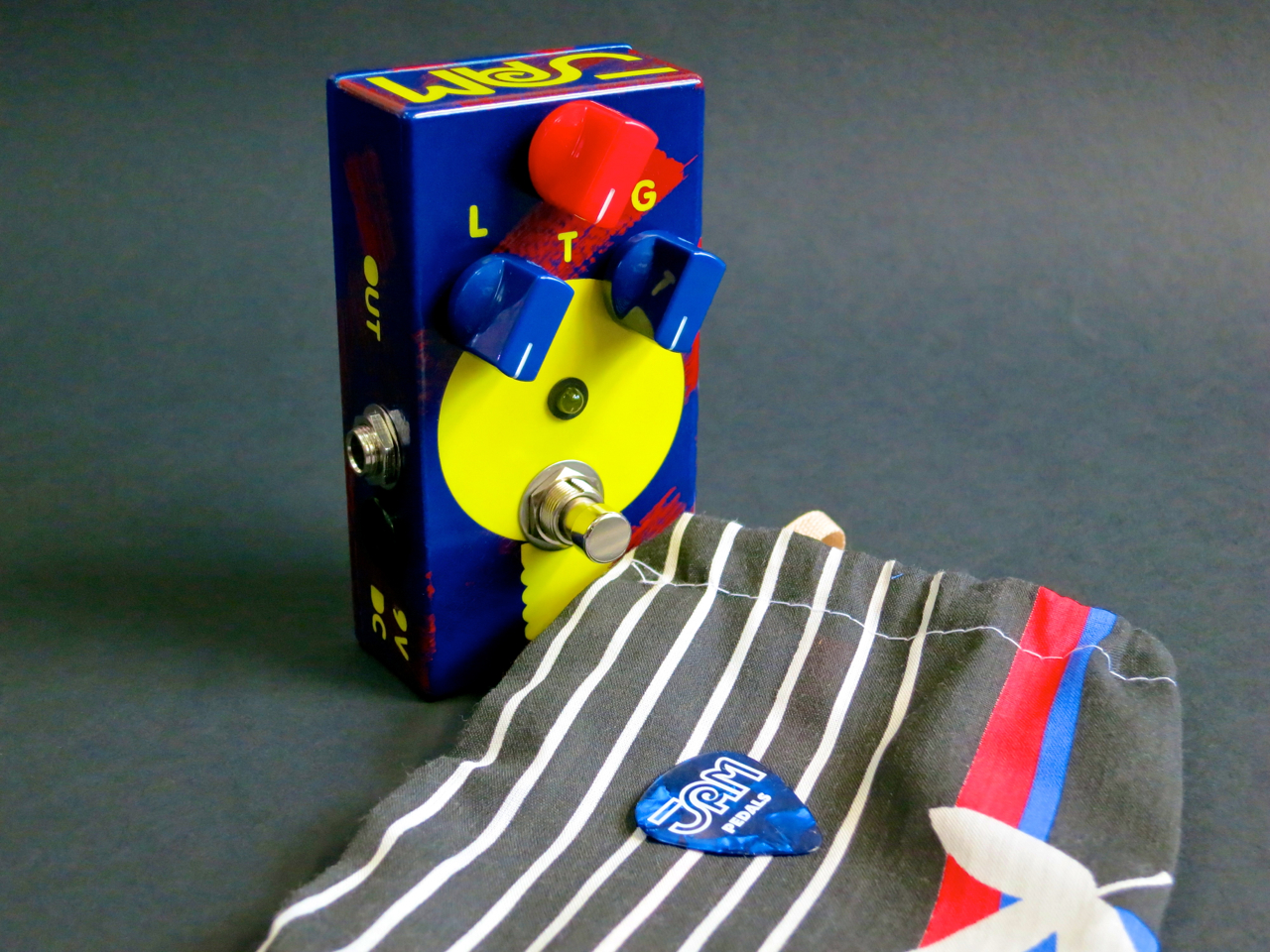
JAM Pedals offers four different versions of its Tube Dreamer overdrive pedal.
Their compact Tube Dreamer 58 is the company’s take on the ultimate Ibanez Tube Screamer 808 pedal. The circuit is built around an original JRC4558D-chip.

The JAM Tube Dreamer 58 (current price in Finland: 185 €) wins you over with a healthy dose of that classic, creamy Tube Screamer mid-range. The TD58’s forte, though, is the vastly improved dynamic range of the JAM-model, and the more organic, amp-like overdrive structure, achieved by using three diodes for asymmetrical clipping.
This sound clip – like all the others in this review – has been recorded using a Fender Stratocaster and a Blackstar HT-1R valve combo:

****

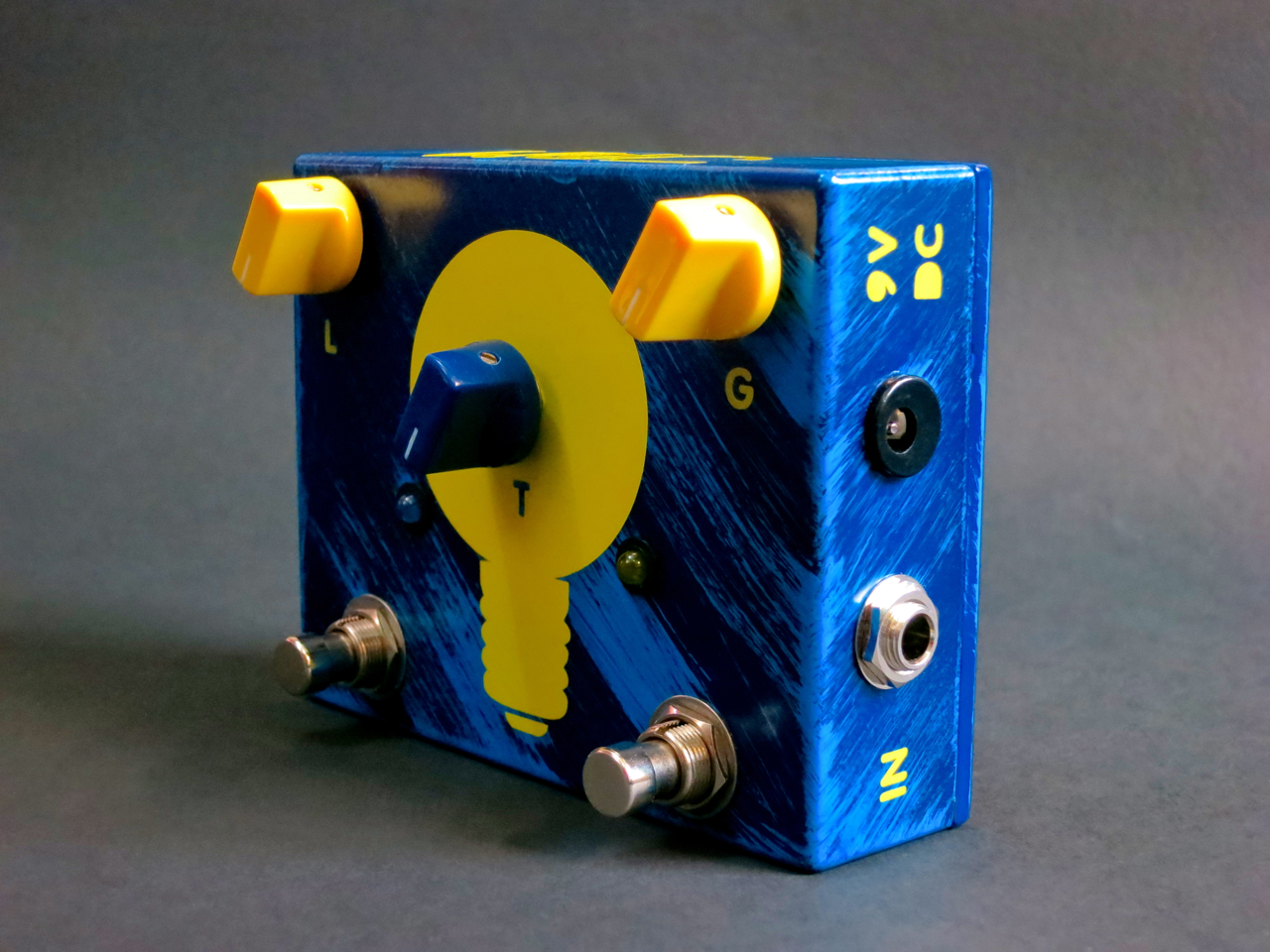
The flagship model Tube Dreamer pedal is called the JAM Tube Dreamer+ (current price in Finland: 225 €), and is the deluxe version of the JAM Tube Dreamer 72, which is designed a ”secret chip”.

The Plus-version adds a high-gain-/boost-circuit (left footswitch) on top of the moderate-gain overdrive section (right footswitch).
The Tube Dreamer+ is shipped with the high-gain circuit adding only more gain to proceedings, but you can also adjust the high-gain circuit’s internal trimmer to deliver copious amounts of signal boost, whenever it is switched on.
In terms of its sound, the Tube Dreamer+ gives more than a passing nod to 1970s Blues Rock and Heavy Metal. Despite its high-gain boost, this JAM-model hasn’t been designed for contemporary Thrash Metal.
****

JAM Pedals’ stompbox fuzz is called Red Muck, and it comes in a Soviet-inspired colour scheme, complete with hammer and sickle graphics.
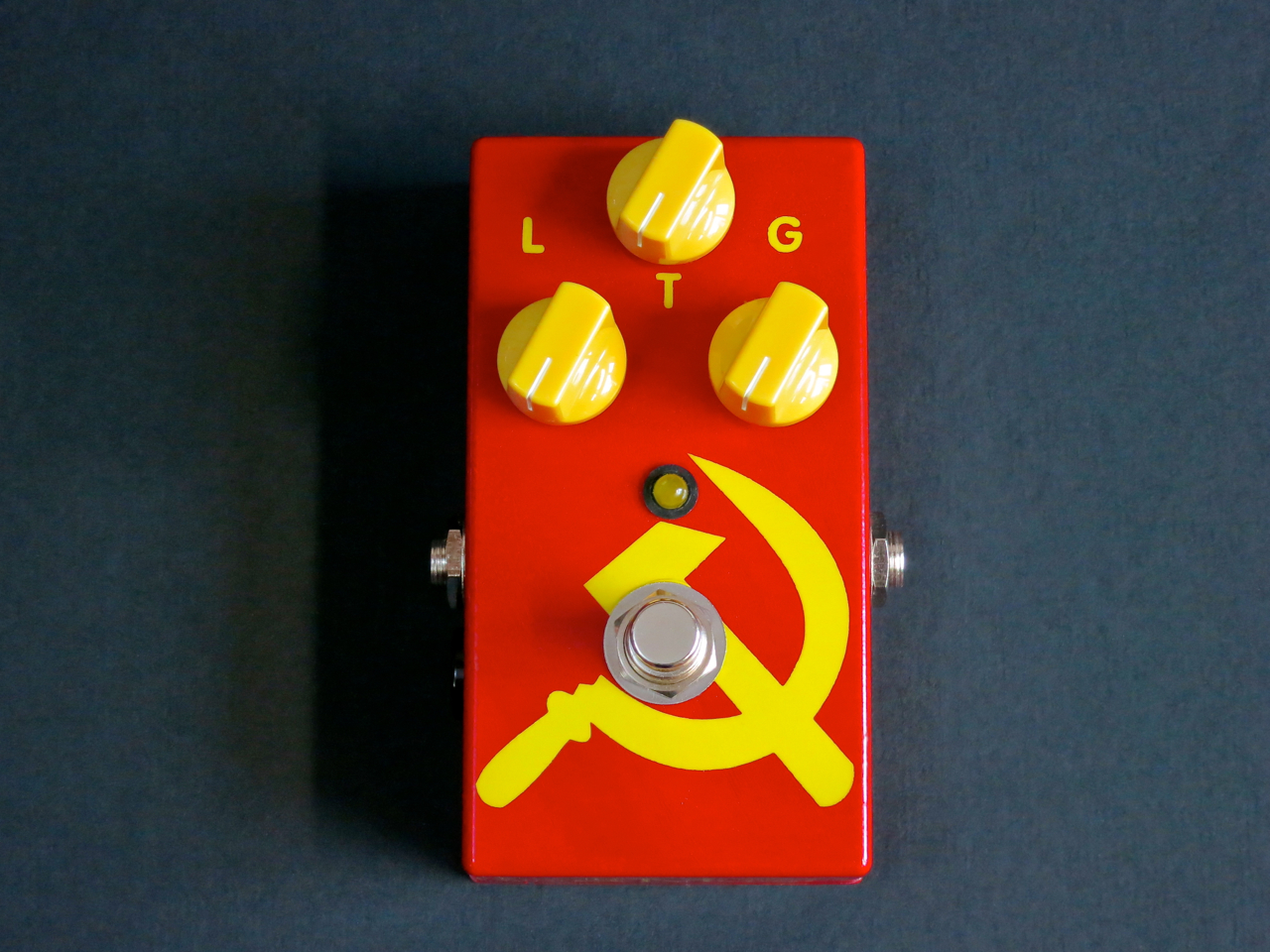
The starting points for the Red Muck fuzz’ (current price in Finland: 209 €) tone were the classic, early Big Muff -sounds.
JAM has refined the original fuzz character to come up with a much more versatile pedal. JAM’s Red Muck reacts extremely well to changes in the guitar’s volume knob settings, while the overall delivery is noticeably fatter and creamier, when compared to many other fuzz-effects. This pedal also takes well to full chords, and doesn’t mush up so quickly.
I have to admit that JAM’s Red Muck has quickly become my favourite fuzz box.
Listen for the tonal changes, as I slowly raise the volume control at the beginning of this clip:

****

The JAM WaterFall (259 €) is a dual-function effect pedal, offering chorus and vibrato in one compact package.

The two effects in the WaterFall have been designed around two legendary Panasonic-chips (the MN3101 and the MN3007), on which some of the earliest Boss modulation effects were also based.
The mini-switch on the right is for selecting the effect – chorus or vibrato (v) – while the switch on the opposite side lets you choose between a milder, vintage (-) version of the chosen effect, or its more drastic, modern counterpart.
The WaterFall’s chorus is simply superb, sounding very natural and musical:
Vibrato may not be the most-commonly used effect, but the WaterFall’s reading must surely be one of the sweetest-sounding there is:

****

JAM Pedals’ The Ripple (199 €) is an easy-to-use phaser. There’s only a single Speed-control for the effect, and that’s all.

This is one lush-sounding phaser – you can’t get more musical than this! The Ripple has a rich and organic tone, broadening your guitar sound, yet it never seems to usurp the show or hog the limelight.

****

The Delay Llama?! The guys at JAM HQ sure do have a sense of humour!
JAM’s Delay Llama (265 €) is an analogue, lo-fi delay pedal in the spirit of the early Eighties.

The Delay Llama features a classic bucket-brigade circuit, which uses an updated version Panasonic’s legendary MN3205-chip. The maximum delay time offered is approximately 600 ms. An internal trim port allows you to adjust the maximum number of repeats available from the Repeats-control.
The Delay Llama will bring sonic fulfilment to fans of the BBD-sound – there’s plenty of grease on tap, and each new repeat degenerates noticeably from the one before. Factory settings even allow for the Repeat-control to cause infinite and distorting feedback loops, something for the fans of psychedelic and experimental music.

****

In my opinion, these JAM Pedals offer the genuine boutique pedal experience at fair prices! They sound great, they look cool, their noise floor is low, and the pedals consume surprisingly little (battery) power. Give them a try!
****
JAM Pedals
effect pedals from Greece
Tube Dreamer 58 – 185 €
Tube Dreamer+ – 225 €
Red Muck – 209 €
WaterFall – 259 €
The Ripple – 199 €
Delay Llama – 265 €
****
Pros:
+ handmade
+ hand-painted
+ sound
+ low power consumption

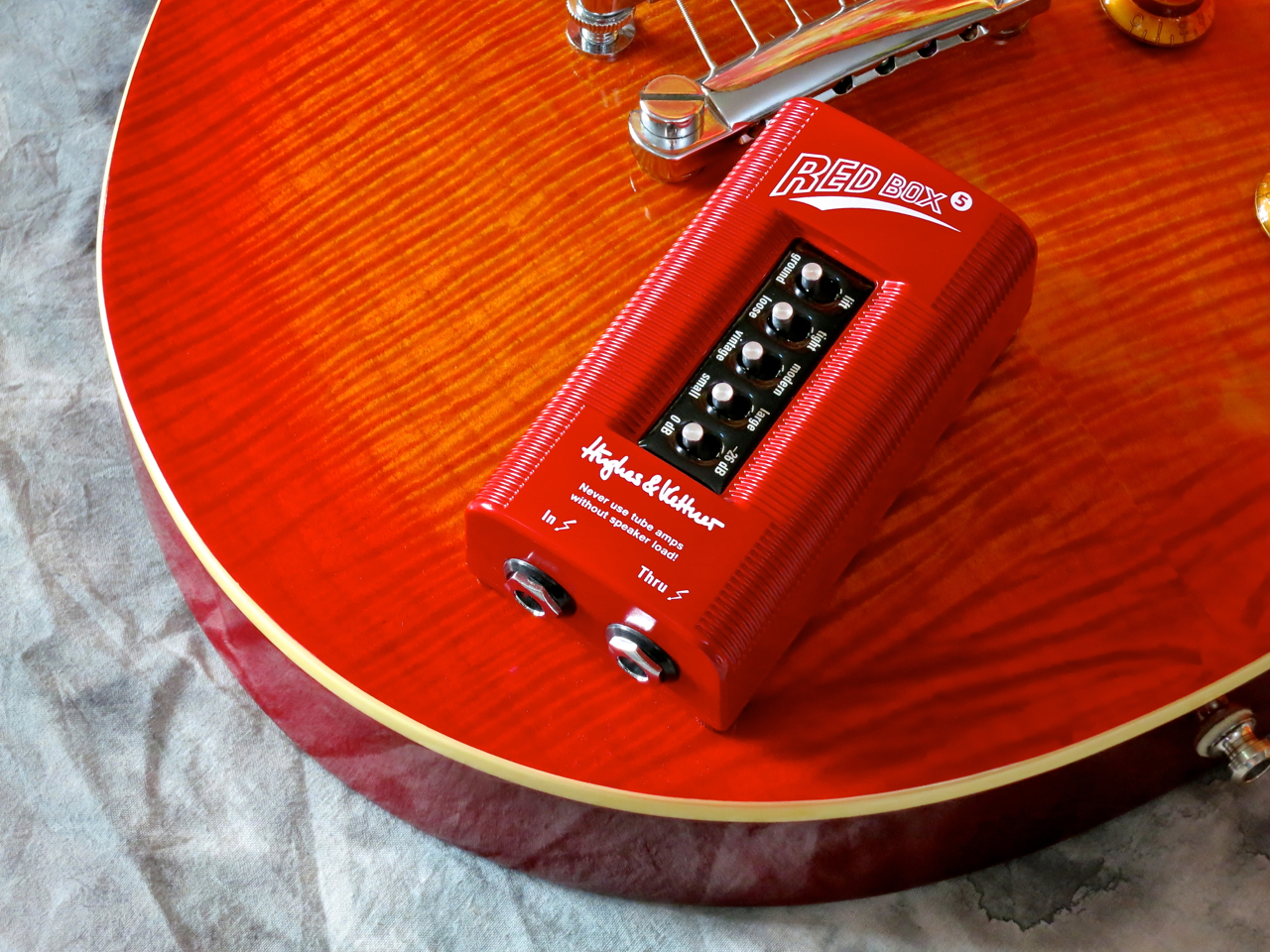
Hughes & Kettner’s Red Box has been a runaway success, ever since the first version was introduced in the late Eighties.
The Red Box is a specialised DI-box for your guitar amp. Traditionally, DI-boxes are meant to transform the high impedance signal of an electric guitar (or bass) into a low impedance signal fit for direct connection to a recording (or PA) console.
The Red Box, on the other hand, is inserted between the amp’s speaker output and the speaker (cabinet). Hughes & Kettner’s analogue cabinet modelling then makes it possible to send the sound of a miked up guitar speaker to the mixing desk (or sound card) without having to actually put a microphone in front of the amp’s speaker.
Hughes & Kettner haven’t been resting on their laurels, though. They have updated and improved the Red Box every once in a while, with the most recent version being the Red Box 5 tested here.
****
The Hughes & Kettner Red Box 5 (current price in Finland: 89,90 €) feels like a sturdy little blighter in its very compact cast-metal casing.
The Red Box’ switch panel has been sunk into the unit’s face, keeping the switches secure from mechanical damage or accidental changes to the settings.

Guitarists and guitar techs will rejoice in the fact that this little helper isn’t finicky when it comes to its power supply:
The Hughes & Kettner works just as well running on an internal 9 volts block, as it does powered by phantom power off the mixer, an external PSU. The Red Box will work with voltages from 9 to 12 V DC (centre negative) or even AC. So, finding a wall wart for this device should be a piece of cake!
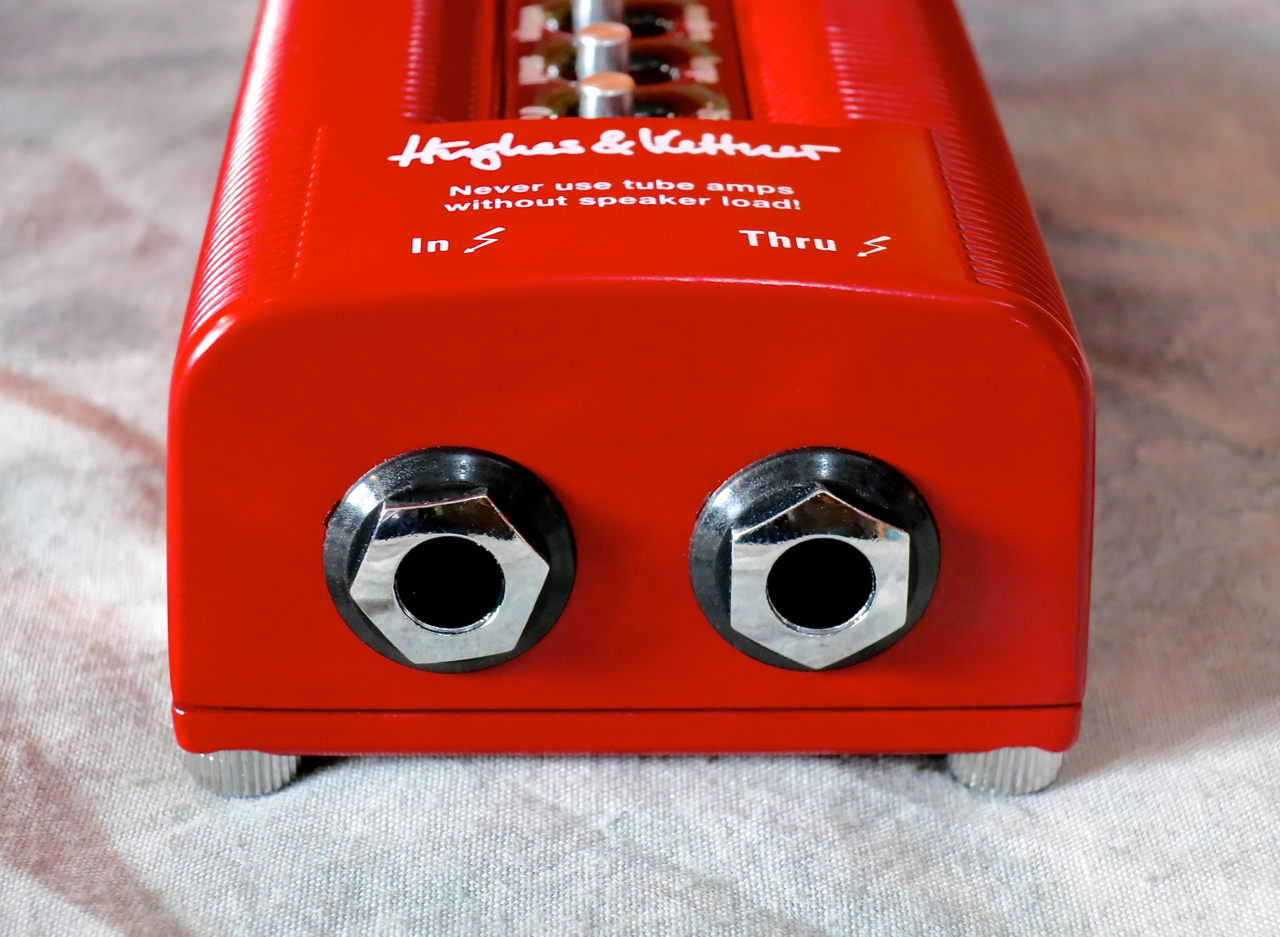
The speaker connectors have been placed at the Hughes & Kettner’s bottom end:
The amp’s speaker output is connected to the Red Box’ In-jack, while the Thru-jack will send an unadulterated signal to your speaker (cabinet).
It is very important that you don not confuse the Red Box – which is a DI-box – with a dummy load! If you’re using a valve amplifier (or a hybrid with a tube power amp) you really have to make sure to have the correct speaker load (in ohms) connected, whenever you use the amp. Using the Red Box without a speaker or dummy load will fry your amp’s power section or audio transformer!

The Red Box’ top end holds the balanced XLR DI-output, as well as the power supply (not included) connector.
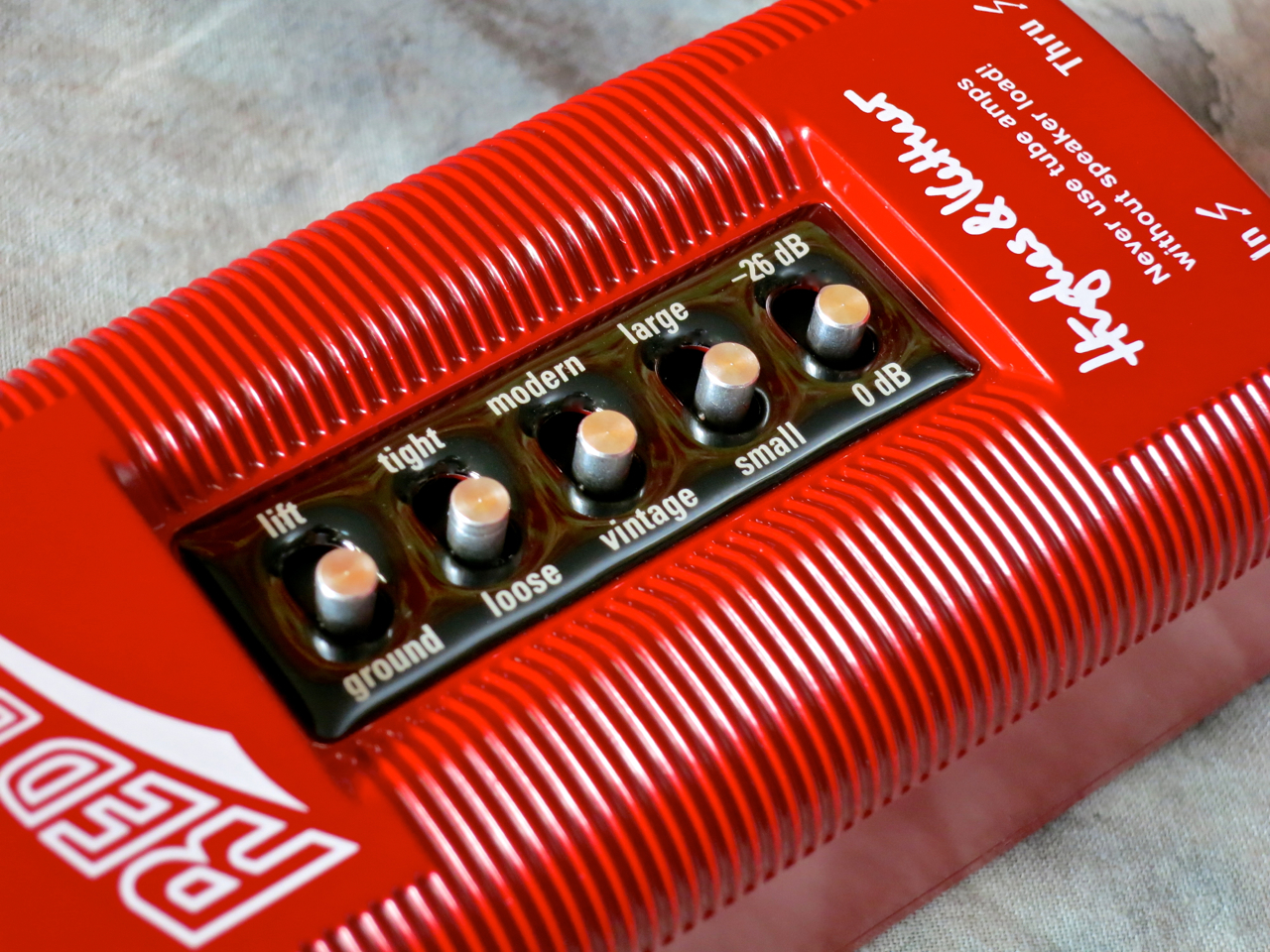
The Hughes & Kettner unit offers you five switches to tailor the DI-box’ output to your specific requirements:
There’s a ground lift switch (to cut any humming ground loops), a bass response switch, modern or vintage pre-EQ, a switch for the size of the virtual cabinet, as well as a 26 dB pad to prevent the DI-signal from overloading the console’s input.

A black velvet bag is also thrown in with the Red Box.
****

A ”great guitar sound” is probably one of our universe’s most subjective matters. Any guitar signal chain offers plenty of different variables. When you throw in the chosen cabinet, as well as the microphone and its placement relative to the speaker, the options available are virtually infinite. Nobody in their right mind can demand that a small DI-box, such as the Red Box 5, can actually offer any and all of the tonal options theoretically possible.
The Hughes & Kettner Red Box 5 raison d’être is to offer a handful of ”Best of” miked cabinet sounds, straight off of the amp’s speaker output to the mixing console (or sound card), without the hassle of having to set up a physical microphone, or having to account for the different sound characteristics of different rooms (for example on a tour). And in this the Red Box 5 truly excels.
To give you an idea of how well the Red Box 5’s sound stands up to a physical microphone, I have recorded a few clips simultaneously using a Shure SM57 and the Red Box. I used a Blackstar HT-1R running into an Änäkäinen Rumble speaker. The Red Box 5 was set to ”loose”, ”vintage” and ”large”.
Here’s a clean example, close-miked with the Shure:
And here’s the same example recorded direct with the Red Box:
Next I went for a crunchy amp sound; here’s the close-miked version:
And this is the same example DI’d through the Hughes & Kettner:
****
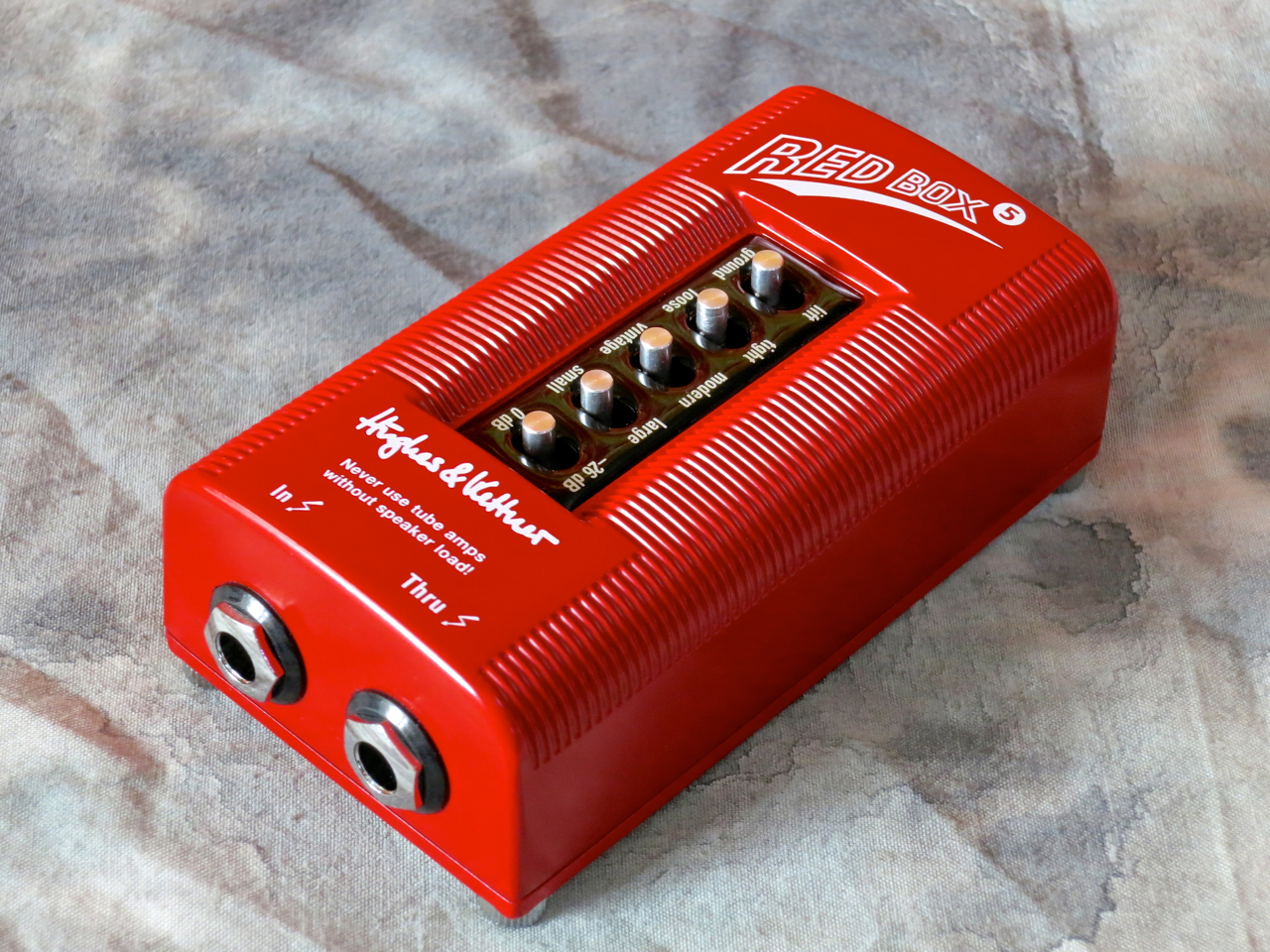
Hughes & Kettner’s Red Box 5 is a fabulous tool, especially for onstage use. No need to put up a mic anymore, which means no more feedback and bleed problems. The Red Box 5 will give you consistently excellent DI’d guitar amp tones with the least amount of hassle.
****
Hughes & Kettner Red Box 5
Current price in Finland: 89,90 €
Finnish distribution: F-Musiikki
****
Pros:
+ very compact size
+ multiple means of power supply
+ different tonal options
+ pro-quality cabinet modelling



 Kitarablogi.com – Finland's premier Guitar and Bass blog