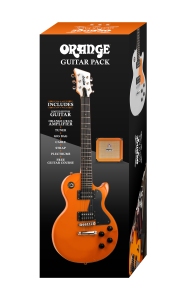
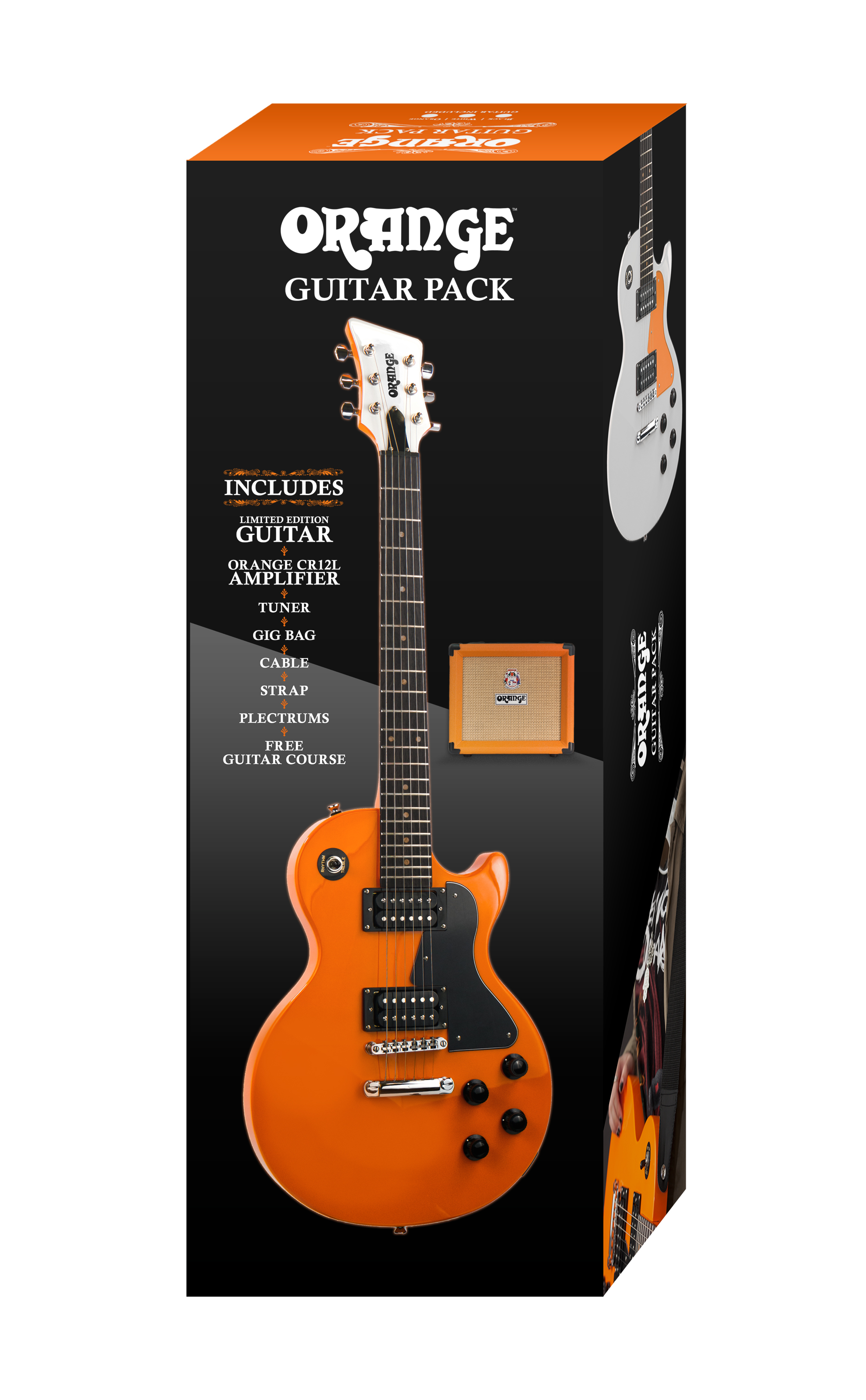
Orange Amplification are proud to launch, in time for Christmas, their new Orange Guitar Pack containing everything needed to start playing, all in one box. Created to get the next generation of guitarists playing, or encourage lapsed performers to get back in the saddle, this quality, affordable pack contains an Orange Guitar, Orange Crush PiX 12L amplifier combo, Orange branded gig bag, headstock tuner, guitar lead plus plectrums and strap. Also included is the new Orange Music Education Rock Guitar beginner guitar tuition course with access to over ten video tutorial lessons and backing tracks.
Orange Amplification tuo markkinoille ensimmäisen kitara- ja vahvistinpakettinsa. Orange Guitar Pack:iin sisältyy uusi Orange Guitar -sähkökitara, Orange Crush PiX 12L kitarakombo, topattu kitarapussi, klipsiviritysmittari, kitarajohto, sekä hihna ja muutama plektra. Paketista löytyy myös aloitteilijoille suunnattu Orange Music Education Rock Guitar -videokurssi.
Albion Amplification is a new name on the Finnish market, even though the brand has been in existence since 2010.
Albion’s main man is genuine amp guru and bonafide living legend Steve Grindrod. Mr Grindrod left an indelible mark in the field of amplifier design as Marshall’s chief designer for over 20 years. In the beginning of the Noughties, after leaving Marshall, he also worked for Vox for a few years.
Albion was founded in 2009 as a joint venture between Grindrod and Chinese audio specialists IAG Group. Albion’s guitar and bass amplifiers are produced in their own plant in China under the direct supervision of Steve Grindrod, who has moved there from the UK.
****
The Albion TCT35C (recommended retail price in Finland: 865 €) is part of the company’s TCT-series, which is aimed directly at the guitarist who needs a versatile amp.
The TCT-series offers two-channel, all-valve amplifiers built with a very open architecture that allows for maximum flexibility. At the moment of writing, the TCT-series comprises two combos and three amp heads.
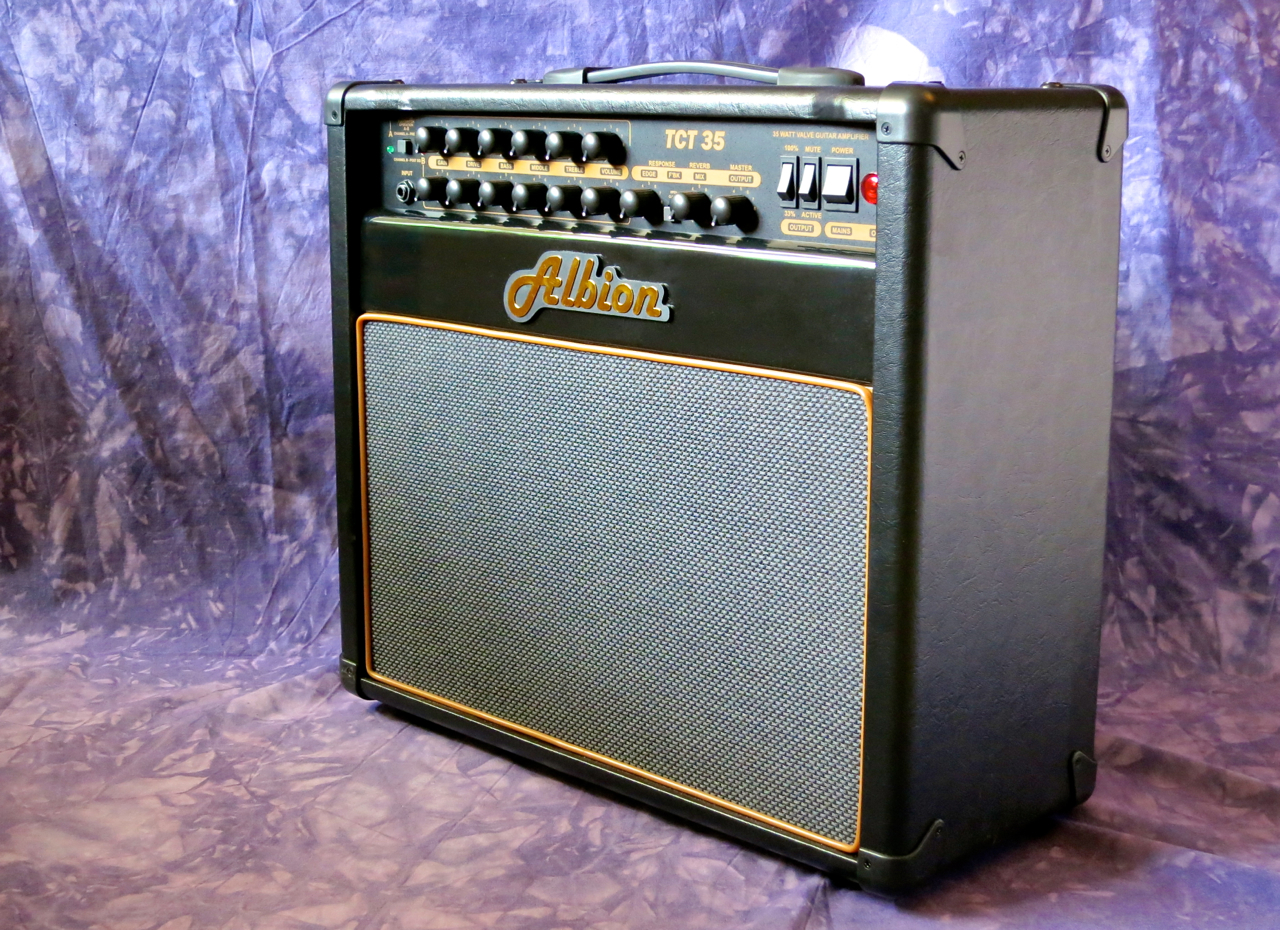
The TCT35C has a cabinet made of high-quality birch plywood. The panel carrying the golden script logo is a solid piece of walnut, which has received a piano black finish on our review sample (there’s also a see-through wine red version available).
The overall finishing quality is on a very high level, and the TCT35C looks rather stylish in a businesslike, slightly understated way.
The combo weighs in at about 24 kilos, which is rather moderate for an all-valve amp of this size.
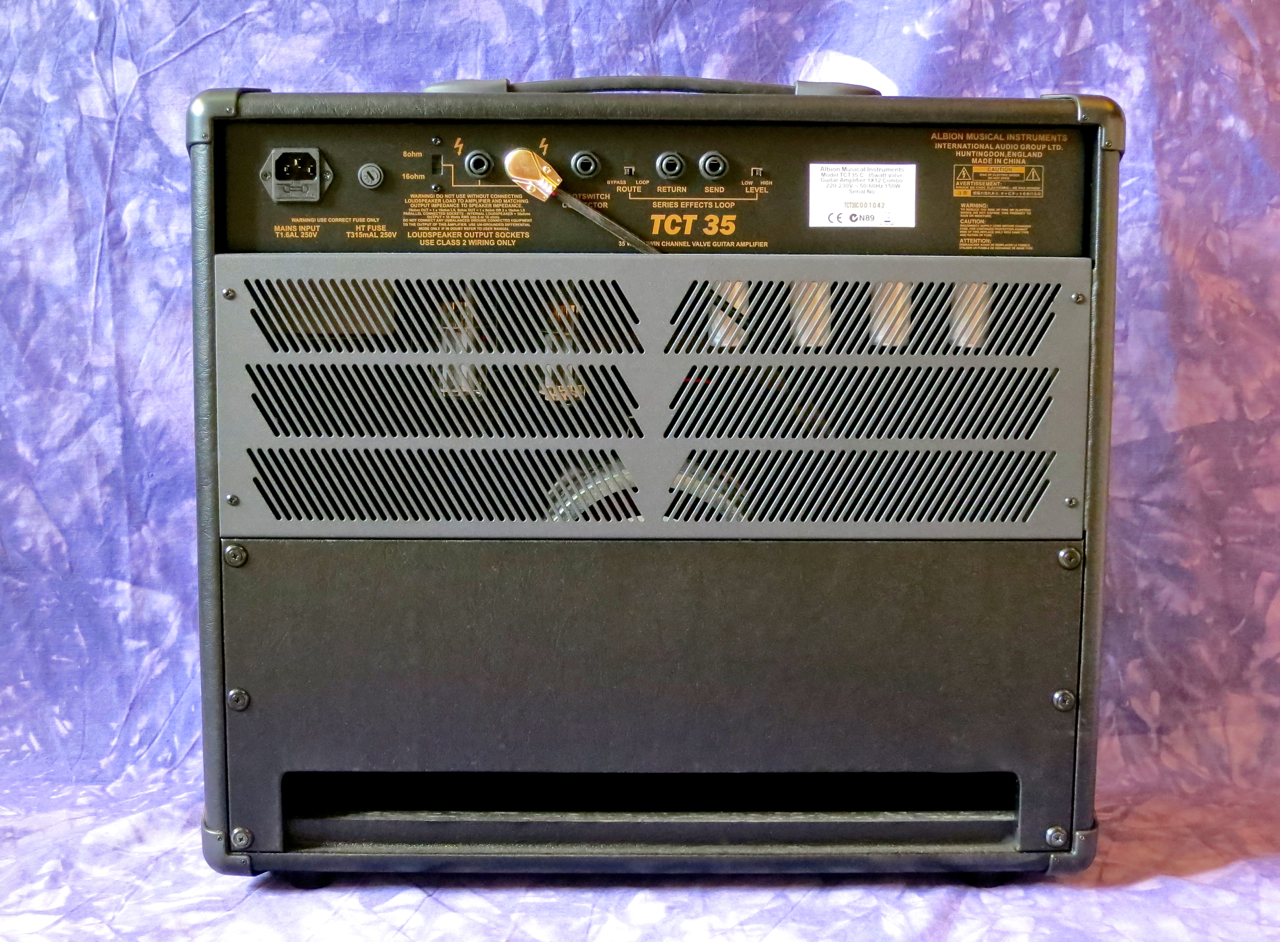
The cabinet features a half-closed back with a sturdy metall grille protecting the valves (or ”tubes”, for our North American friends).
Albion’s TCT35C employs three 12AX7 valves (aka ECC83) in its preamplifier section. A fourth 12AX7 is used as the combo’s phase inverter.
The power amp section churns out approximately 35 Watts of power (RMS), using a pair of 6L6 valves.
All Albion amps use IAG Group’s pro-quality audio transformers, which are well regarded by Hifi-enthusiasts and used in IAG’s Leak and Luxman valve amplifiers.
Albion produces all of their PCBs, metal parts and speakers in their own factory to Steve Grindrod’s exacting specifications.
The TCT35C comes equipped with a 12-inch Albion G1280-VSR-16 speaker, which has power rating of 80 Watts and an impedance of 16 Ohms.
A two-switch footswitch unit comes supplied with the combo. It allows for channel switching, as well as the muting of the on-board digital reverb unit.
The unit is shipped with the output jack on the right hand side, but if you prefer to have the connector on the left, you can switch things around easily. Simply unscrew the six screws holding the footswitch assembly in the chassis, pull the assemby out, turn it around, put the switches back into the chassis and tighten the screws. Brilliantly easy!
****
Even though both of the Albion TCT35C’s channels sport the same controls, the channels have been designed differently:
In Channel A the guitar signal is first routed through the EQ-section, before it reaches the main gain stages. In Channel B the signal first goes from the input jack to the gain section and is only then fed into the EQ-department. Even though both channels will give you sounds from clean all the way to high gain, each channel has its own distinct character and ”feel”.
One special feature of TCT-series amps are their twin gain controls – called Gain and Drive. The first amplification stage is called Gain, while the second one is called Drive, and each adds their own type of gain structure and character to a channel’s tone. By experimenting with different combinations of a channel’s Gain and Drive settings you will get a plethora of different sounds and responses to playing dynamics.
The combo’s Master-section offers some additional features for even more tonal flexibility:
The Edge-control is a presence/brightness control for the power amp, which allows you to tailor the TCT35C’s bite to your own requirements. The F’BK-switch (short for ”feedback”) offers you two different power amp responses – you can either go for more bite and a very tight attack or choose a creamier delivery with much more fat compression.
Steve Grindrod has chosen to use digital reverb on his TCT-amps, because they tend to stand up better to the demands of a high gain amp.
Thanks to its output power switch you can also run the combo at only 33 % of its output power. As were dealing with a genuine valve amp here, this power drop also lowers the clean headroom and adds some tasty power amp compression to the signal.
The TCT35C’s effects loop is deliberately using solid state technology, as Steve Grindrod aims for a clean and transparent signal transfer in this section.
****
The Albion TCT35C combo is an extremely flexible guitar amp, thanks to its well-designed channel architecture and its extremely efficient channel equalisers.
This isn’t a one-trick pony at all, but rather a guitar sound enthusiast’s dream machine, offering a large palette of different tones.
Despite the fact that both channels will ”do” clean as well as dirty tones, Channel B will offer you more gain than Channel A. ”Fender-style” and ”Marshall-style” are far too narrow to adequately describe the different characters provided by Channels A and B, but there are clear differences apparent in their mid-range sounds and bass responses.
The effective Channel EQs, as well as the Master-section’s Edge- and Feedback-controls add their bits to the Albion’s versatility. While the TCT35C is quite an intuitive amp to use, I’d still recommend you take your time to find out all the features and sounds this combo has to offer.
These eight audio clips only scratch the surface of what the Albion TCT35C’s tonal versatility.
Let’s start with two clean examples using Channel A; first the Stratocaster:
…followed by a Les Paul-style Hamer Studio Custom:
Here are two crunchy clips played through Channel A. First the Strat:
…and then the Hamer:
These are two crunchy clips using Channel B – the Stratocaster first:
…followed by the double-humbucker Hamer:
And as a finale two high gain examples (Channel B) – starting with the Strat:
…and finishing with the Hamer (in Drop-D):
****
Wow, what a fantastic amp! I can’t think of any musical genre the Albion TCT35C couldn’t master.
The TCT35C is an extremely versatile valve amplifier offering loads of great sounds. Despite being quite a compact combo there’s plenty of volume on tap.
Steve Grindrod’s vast knowledge and experience in the field of amp design really shows in the way the Albion is put together, as well as in the quality of the sounds on offer in the TCT35C and in the low amounts of hiss (even in high gain settings).
****
Albion TCT35C
Current RRP in Finland – 865 € (street price approximately 800 €)
Albion Amplification on Suomalaisille muusikoille uusi tuttavuus, vaikka firma on valmistunut kitara- ja bassovahvistimia jo vuodesta 2010.
Firman takana on yksi vahvistinalan suurimmista guruista, Steve Grindrod. Grindrod toimi vuodesta 1973 lähtien Marshallin pääsuunnittelijana yli 20 vuotta, minkä jälkeen hän siirtyi 2000-luvun alussa vielä muutamaksi vuodeksi Voxille.
Albion syntyi vuonna 2009 yhteistyönä Grindrodin ja kiinalaisen IAG Group -konsernin välillä. Albion-vahvistimet valmistetaan Kiinassa heidän omassa tehtaassaan Steve Grindrodin johdolla, joka asuu paikan päällä.
****
Albion TCT35C (suositushinta 865 €) kuuluu firman TCT-sarjaan, joka on suunniteltu monipuolisuutta arvostavia kitaristeja varten.
TCT-sarjan vahvistimet ovat kaksikanavaisia täysputkikoneita hyvin avoimella, ja paljon säätövaraa tarjoavalla arkkitehtuurilla. TCT-sarjaan kuuluu tällä hetkellä kaksi komboa ja kolme nuppia.
TCT35C:n kotelo on valmistettu laadukkaasta koivuvanerista. Albion-logoa kantava palkki on täyttä pähkinäpuuta, joka on saanut ylleen kiiltävän mustan lakkauksen (myös tummanpunainen versio on saatavilla).
Viimeistelyn taso on kiitettävän korkea ja TCT35C näyttää – ainakin omasta mielestäni – asiallisen tyylikkäältä.
Kombon paino on noin 24 kiloa, mikä on maltillista tämänkokoiselle putkikombolle.
Kotelon selkäpuoli on puoliksi avoin. Putket on sijoitettu turvallisesti metalliritilän taakse.
Albionin TCT35C:ssä kolme 12AX7-putkea (toiselta nimeltään ECC83) on etuvahvistimen perustana. Vahvistimesta löytyvä neljäs 12AX7 toimii tässä kombossa päätevahvistimen vaiheenkääntäjänä.
Päätevahvistin toimii kahdella 6L6-putkella, joista irtoaa noin 35 wattia (RMS) tehoa.
Albion-vahvistimissa käytetään IAG Groupin omia laadukkaita audiomuuntajia, jotka ovat ennestään tuttuja esimerkiksi Hifi-puolen Leak- ja Luxman-putkivahvistimista.
Samoin kuin Albionin käyttämät piirilevyt ja metalliosat, myös firman vahvistimissa ja kaapeissa käytetyt kaiuttimet tehdään Albionin omassa tehtaassa Steve Grindrodin tarkkojen speksien mukaan.
TCT35C:hen on asennettu 12-tuumainen Albion G1280-VSR-16, jolla on 16 ohmin impedanssi ja 80 watin tehonkesto.
Kombon mukana tulevalla jalkakytkimellä voi vaihtaa vahvistimen kanavia, sekä mykistää kombon digitaalikaiun.
Tehtaalta kytkin toimitetaan siten, että jakki on oikealla puolella. Johdon paikan pystyy kuitenkin vaihtamaan kätevästi ja nopeasti irrottamalla ylhäällä näkyvät kuusi ruuvia, nostamalla kytkinmoduulin ulos kotelosta, ja asentamalla sen toisinpäin. Nerokasta!
****
Albionin TCT35C tarjoaa kaksi kanavaa, joiden välillä on yksi ratkaiseva ero:
A-kanavassa signaali kulkee ensin EQ-osaston läpi, siis ennen varsinaista gain-osastoa. B-kanavassa taas signaali etenee tulojakista gain-osastoon ja vasta sen jälkeen taajuuskorjaimille. Vaikka kumpikin kanava tarjoaa soundeja puhtaasta high-gainiin, kanavat kuulostavat – ja ”tuntuvat” – juuri näiden eri reitityksien vuoksi erilaiselta.
TCT-sarjassa erikoisuutena ovat kanavien kaksi gain-säädintä – Gain ja Drive. Gain-säätimellä säädetään valitun kanavan ensimmäisen esivahvistusasteen vahvistustasoa. Toista vahvistusastetta taas kontrolloidaan Drive-säätimellä. Yhdistämällä näiden kahden vahvistuspiirien eri vaikutuksia signaaliin, saadaan luotua hyvin erityylisiä soundeja.
Master-osastostakin löytyy muutama TCT35C:n monipuolisuutta tukeva ominaisuus:
Edge-säädin on päätevahvistimeen vaikuttava preesens-/diskanttisuodin, jolla soundiin saa hyvin tarkasti lisättyä oman maun mukaan purevuutta tai pehmeyttä. F’BK-kytkin (lyhenne sanasta ”Feedback”) tarjoaa kaksi erilaista päätevahvistimen perusluonetta – joko hieman purevampi, hyvin tarkalla atakilla varustettu vaihtoehto tai sitten kermaisempi versio muhkealla kompressiolla.
Grindrod on valinnut TCT-sarjaan tietoisesti digitaalisen kaiun, koska se toimii hänen mielestään paremmin tehokkaassa high gain -vahvistimessa.
Tehokytkimen ansiosta Albionin tehon voi pudottaa alhaisemmaksi studio- tai olohuonekäyttöä varten. Koska kyseessä on putkivahvistin, tehon pudottamisen (toivottu) lieveilmiö on pääteasteen alhaisempi headroom ja lisätty kompressio.
TCT35C:n efektilenkki on toteutettu transistoritekniikalla, koska Steve Grindrod haluaa pitää signaalin mahdollisimman puhtaana tässä kohtaa signaaliketjua.
****
Albion TCT35C -kombo on erittäin monipuolinen peli, sen avoimen kanava-arkkitehtuurin ja erittäin tehokkaiden EQ-osastojen ansiosta.
Tämä ei todellakaan ole yhden tai kahden soundin putkivahvistin, vaan kokeilunhaluisen soundimetsästäjän unelmakone, joka kattaa varmalla otteellaan hyvin laajan spektrin soundeja.
Vaikka molemmista kanavista irtoaa sekä puhtaita että särösoundeja, tarjoaa kanava B kuitenkin selvästi enemmän gainia kuin A-kanava. ”Fender-” ja ”Marshall-tyylinen” ovat käsitteinä sinänsä liian kapeat kuvailemaan A- ja B-kanavan perusluonetta, mutta eroja kyllä löytyy etenkin keskialueen soinnissa ja basson muhkeudessa.
Erittäin tehokkaat EQ:t, sekä kombon Edge-säädin ja F’BK-kytkin lisäävät reseptiin ihan omat mausteensa. Albion-kombon käyttö on sinänsä intuitiivista, mutta vahvistin on niin monipuolinen, että kaikkiin ominaisuuksiin kannattaa todellakin tutustua rauhassa.
Nämä kahdeksan audiopätkää ovat vain pieni näyte Albion TCT35C:n tarjoamista soundeista.
Lähdetään liikkeelle kahdella puhtaalla esimerkillä A-kanavan tarjonnasta – ensin Stratocaster:
…ja sitten Les Paul-tyylinen Hamer Studio Custom:
Tässä kaksi crunch-tyylistä särövaihtoehtoa A-kanavasta – Stratocasterilla:
…ja Hamerilla soitettuna:
Tällaisia crunch-tyylisiä soundeja löysin B-kanavasta – Strato ensin:
…sitten tulee Hamer:
Ja lopuksi vielä kaksi high gain -pätkää – ensin vintage-tyylinen Stratocaster:
…ja viimeisenä humbuckereilla varustettu Hamer (drop-D-virityksessä):
****
Vau, mikä vahvistin! En keksi mikään musiikkilajia, johon Albionin TCT35C-kombo ei sopisi.
TCT35C on erittäin monipuolinen putkivahvistin todella terveellä soundilla, joka on kompaktista koostaan huolimatta varsin kovaääninen.
Steve Grindrodin pitkän linjan vahvistinalan kokemus näkyy Albionin laadukkaassa toteutuksessa, kombon monipuolisissa ominaisuuksissa, sekä TCT35C:n erittäin alhaisessa kohinatasossa (jopa gain-säätimien äärirajoilla).
****
Albion TCT35C
Suositushinta – 865 € (arvioitu katuhinta noin 800 €)
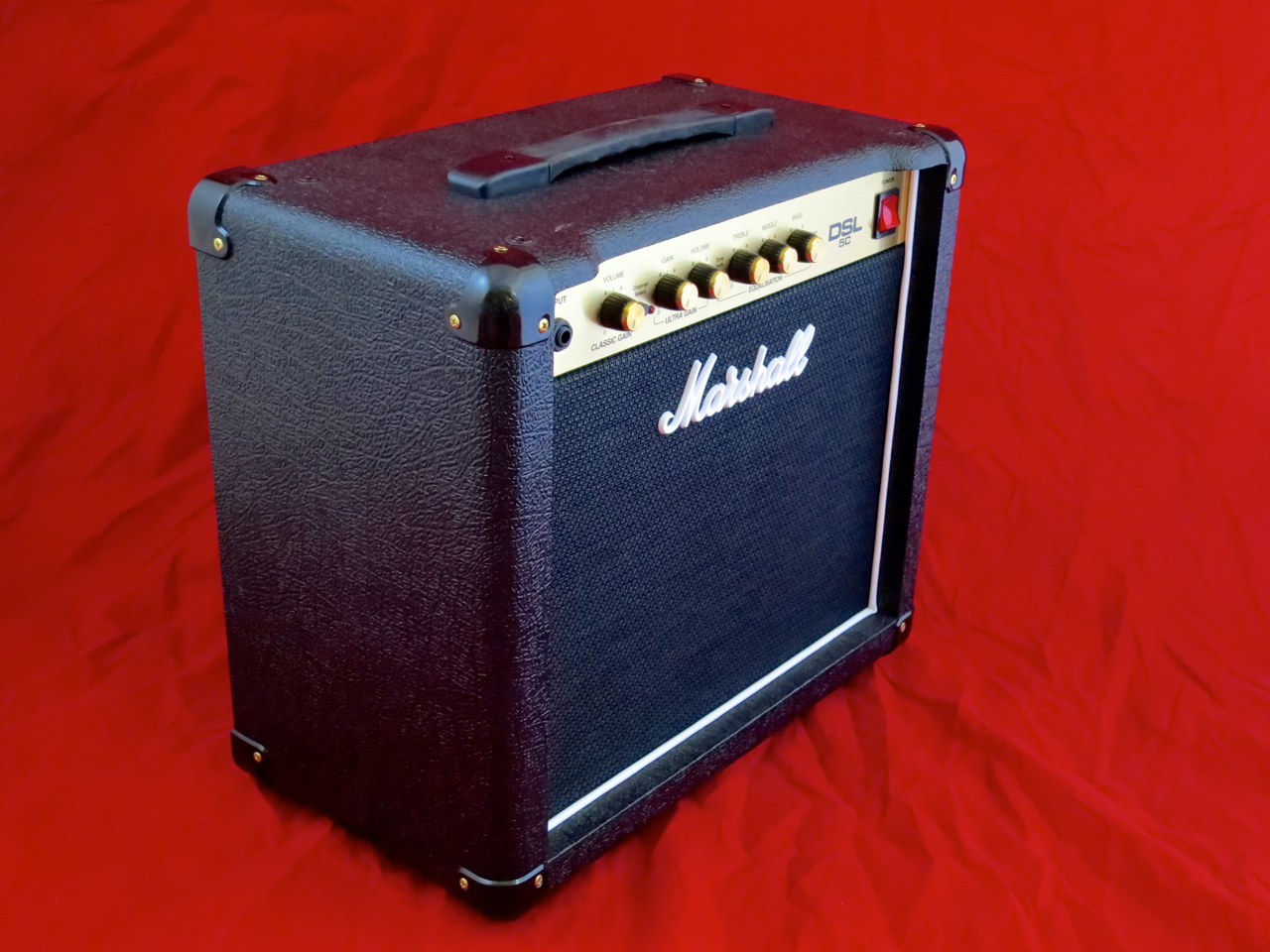
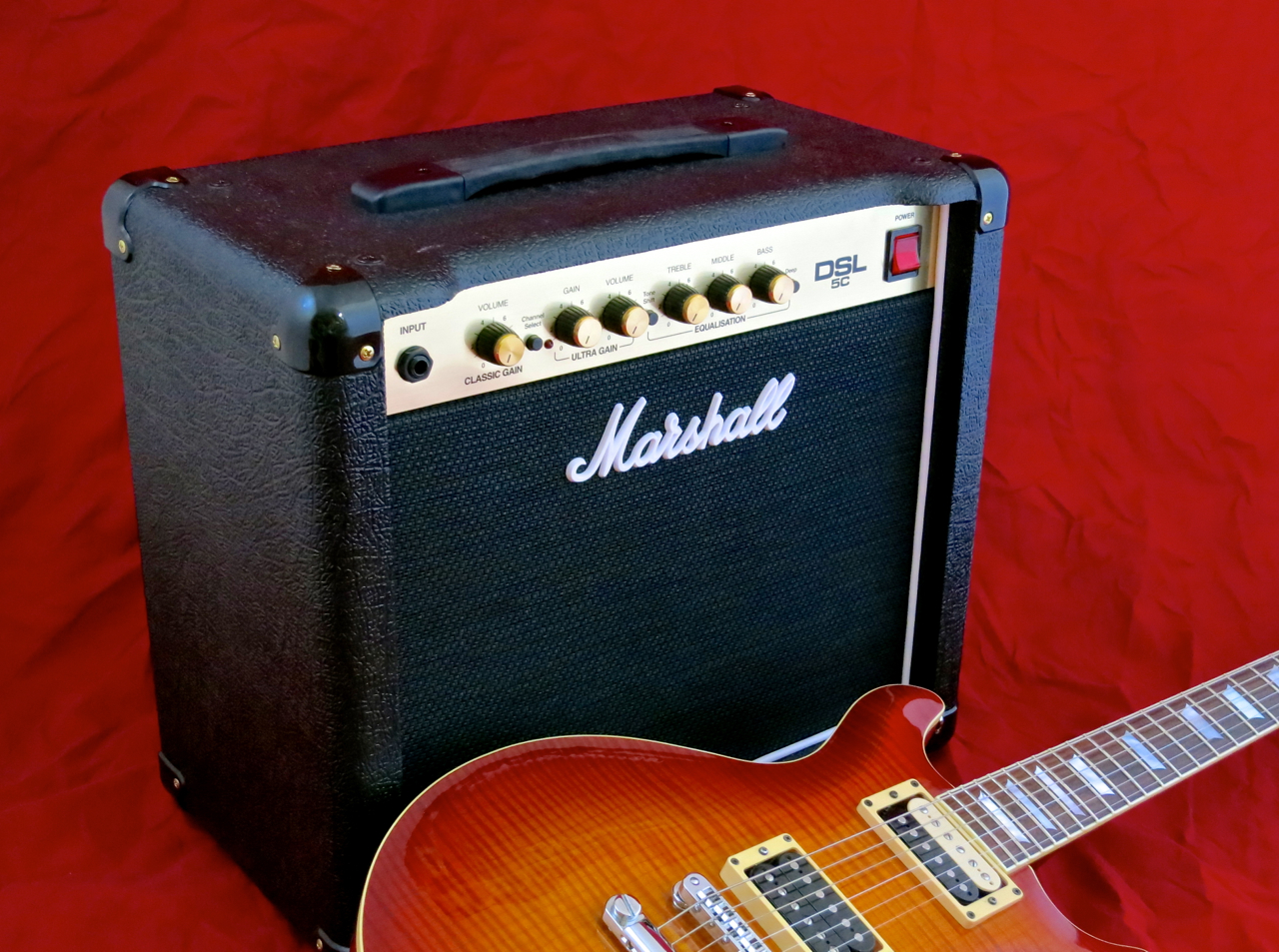
Marshall’s DSL5C combo is the newest – and smallest – member of the DSL-series.
The DSL-range has its roots in the year 1997, when Marshall introduced their – now legendary – JCM2000 Dual Super Lead -head. The JCM2000 was the first Marshall amp that combined a vintage-voiced Plexi-channel and a modern Ultra Gain -channel in one chassis.
The production run of the original DSL-series was discontinued in 2007, with the JVM-range superseding it. The new DSL-series offers the company’s most-affordable all-valve amps to date, which are produced at Marshall’s own facility in Vietnam.
****
As you can easily guess by its name, the Marshall DSL5C (current street price in Finland around 520 €) is a five-Watt, two-channel combo.
In terms of its looks and the quality of its finish, this is a genuine Marshall. Quality control at the Vietnamese factory seems to as stringent as in Britain, and the combo looks great and feels well-made and sturdy.
The DSL5C comes with an open back cabinet. The upper opening in the cabinet’s back is covered with a metal grille to keep stray fingers and hot tubes apart form each other.
This little Marshall uses three preamp valves (ECC83/12AX7), plus a single power amp tube (ECC99/12BH7).
The DSL5C’s speaker is a ten-inch Celestion Ten 30, which is meant to provide a big, warm bottom-end, coupled with a healthy dose of ”Celestion grunt” and bite.
This compact combo weighs less than five kilos, making it very easy to carry, using its rubberised handle.
****
The Marshall DSL5C is a two-channel, all-valve combo:
Channel one – Classic Gain – is voiced to give you a classic Marshall 1959 -style tone and gain structure. The Classic-channel goes from bright and clean all the way to mid-level, classic crunch. Due to the fact that this channel doesn’t have a master volume, distorted sounds can only be had at very high volume levels – unless you switch to Low Power mode (more on this further down).
True to its name, the second channel – Ultra Gain – is made for modern, saturated high-gain sounds.
Both channels share a three-band EQ-section, which means a certain amount of tonal compromises will have to be made. But thanks to the way both channels have been voiced, a shared EQ doesn’t pose any real problems in the Marshall DSL5C’s case.
Pushing in the Tone Shift switch will give you a thinned out, sharper mid-range, making it ideal for many Thrash Metal tones. Engaging Deep bolsters the bottom-end at the output stage for a fatter sound.
The back panel offers you an effects loop, as well as a footswitch jack for the DSL5C’s sturdy channel switch (supplied, see pic below).
There’s a very nifty speaker-emulated output designed into this Marshall combo, which works in two different ways, depending on the setting of the Power-switch:
In Full Power mode the output gives out a line level signal, which can be sent to a mixing console or your recording equipment. The speaker will run even with a plug connected to the output. In Low Power mode (the manual says 0.5 Watts, the website 1 W) the output level is changed to work with headphones, and plugging a pair of cans in will mute the speaker. The Aux In only works in Low-mode, and its signal will be sent directly to the headphones.
****
In my opinion Marshall’s DSL5C is a fantastic-sounding little Rock- and Metal-combo, ideally suited for use in your bedroom, for practice, for recording and for backstage warm-up.
My only small niggle would be with the emulated output of our review sample, which produced more hiss than what I’d have expected. Anyhow, I was able to EQ out most of the hiss for the sound clips, meaning it really isn’t that much of a problem. And then there’s always the possibility that there was something wrong with this particular combo…
The DSL5C’s two channels enable you to get a wide variety of different Rock-, Metal- and Thrash-sounds out of this little combo, depending on your gain-, volume- and EQ-settings, but also on the power mode chosen. Going to Low Power doesn’t only drop your output levels, but also adds a lot of tasty, squashy power amp compression. This means that you can choose between very tight sounds (Full Power) and fatter, compressed tones (Low Power) by using the switch on the back panel.
All sound clips have been recorded in Full Power mode to allow for direct comparison between the miked up sound of the speaker and the speaker-emulated output.
For starters I played my Stratocaster through a clean setting on the Classic-channel (recorded with a Shure SM57):
…and here’s what the same bit sounds like recorded directly via the emulated output:
Here’s the Classic-channel and the neck pickup of my double-humbucker Hamer Studio Custom (miked up):
…and the same clip recorded direct:
Here’s my Strat into the Ultra-channel (Tone Shift off), recorded with the SM57:
…and its speaker-emulated counterpart:
This is the Hamer, tuned to Drop-D into the Ultra-channel (Tone Shift on), miked up:
…and this is the direct recorded version:
****
Marshall’s cute and cuddly new five-watter, the DSL5C, is a great choice as a first tube combo (”My first Marshall”), as well as a precision tool for any guitarist in those situations, when high wattage is more of a problem than an advantage (like at home or in the project studio).
The DSL5C delivers genuine, all-valve Marshall-tone in a handy package, and the combo’s Vietnamese origin means it’s also very affordable.
Marshallin DSL5C on DSL-sarjan uusin, ja samalla myös pienitehoisin jäsen.
DSL-sarjan juuret ulottuvat vuoteen 1997, jolloin Marshallin legendaarinen JCM2000 Dual Super Lead -nuppi julkaistiin. JCM2000 oli silloin ensimmäinen Marshall, jossa oli yhdistetty Plexi-tyylinen vintage-kanava ja moderni Ultra Gain -kanava.
Alkuperäisen DSL-sarjan tuotanto lopetettiin vuonna 2007, jolloin JVM-sarja tuli sen tilalle. Uusi DSL-sarja tarjoaa firman edullisimmat putkivahvistimet, joita valmistetaan Marshallin omassa tehtaassa Vietnamissa.
****
Nimensä mukaisesti Marshall DSL5C (katuhinta noin 520 €) on viisiwattinen, kaksikanavainen putkikombo.
Vahvistimen ulkonäkö – samoin kuin viimeistelyn taso – on ehtaa Marshallia. Vietnamilaisessa tehtaassa laadunvalvonta näyttää pelaavan kiitettävästi, ja kombo tuntuu heti kättelyssä luotettavalta ja kestävältä.
Kotelon rakenne on DSL5C:n tapauksessa avoin. Takaseinän ylempään aukkoon on asennettu metalliritilä, joka suojaa vahvistinputkia kosketukselta ja kitaristin käsiä kuumilta putkilta.
Pikku-Marsun putkivarustus koostuu kolmesta etuasteputkesta (ECC83/12AX7) sekä yhdestä pääteputkesta (ECC99/12BH7).
DSL5C:n kaiutin on 10-tuumainen, keraamisella magneetilla varustettu Celestion Ten 30, jolle luvataan lämmintä bassorekisteriä, sekä monelle Celestion-kaiuttimelle tyypillistä purevuutta preesensalueella.
Tämä kompakti uutuuskombo painaa vain viisi kiloa, minkä ansiosta se on erittäin helppo kuljettaa sen kumimaisella kahvalla.
****
Marshall DSL5C on kaksikanavainen putkikombo:
Ykköskanava – Classic Gain – tarjoaa klassista Marshall 1959 -mallia muistuttavaa soundia ja gain-rakennetta. Classic-kanava ulottuu kirkkaista clean-soundeista keskivahvoihin vintage-säröihin. Koska tähän kanavaan ei ole lisätty omaa Master Volume -säädintä, Classicin särösoundeja saa esiin kuitenkin ainoastaan hyvin kovalla volyymitasolla, silloin kun päätevahvistin on 5 W -moodissa.
Nimensä mukaisesti kakkoskanava – Ultra Gain – on luotu tarjoamaan nykyaikaisia high gain -soundeja.
Molemmille kanaville yhteinen EQ-osasto tarkoittaa luonnollisesti, että soundin kannalta täytyy elää jonkin verran kompromisseja tekemällä, mutta Marshall DSL5C:n tapauksessa tästä ei koidu minkäänlaisia ongelmia.
Tone Shift -kytkimellä saa esiin loudnessmaisia Metal-soundeja, kun taas ilman Tone Shiftiä pikku-Marsulla on täyteläisempi keskialue. Deep-kytkin taas vaikuttaa päätevahvistimen bassotoistoon, ja lisää tarvittaessa muhkeamman bassorekisterin.
Takapaneelista löytyy efektilenkin ohella myös liitin pakettiin kuuluvalle kanavavaihto-kytkimelle (katso alla).
DSL5C:n kaappimallinnettu lähtö toimii kahdella eri tavalla, pääteasteen Power-kytkimen asennosta riippuen:
Power täysille jakki on linjatasoinen lähtö mikserille tai äänikortille, ja kombon oma kaiutin toimii myös silloin, kun linjalähtöä käytetään. Low Power -moodissa (käyttöohjeessa lukee 0,5 W, nettisivulla taas 1 W) sama lähtö toimii kuuloketasolla, ja kuulokkeen liittäminen jakkiin mykistää vahvarin oman kaiutinta.
****
Marshall DSL5C on mielestäni erittäin hyvältä kuulostava Rock- ja Metal-kombo koti-, harjoitus-, äänitys- ja warm up -käyttöön.
Ainoa kritiikkini kohdistuu kombon kaappimallinnettuun lähtöön, joka – ainakin testikoneessa – kohisi enemmän kuin mitä olisin odottanut. Tässä voi kuitenkin olla hyvinkin kyse yksilöviasta.
DSL5C:n kahdesta kanavasta saa esiin hyvin erilaisia soundeja, riippuen etupaneelin gain- ja volume-säädöistä, mutta myös päätevahvistimen Power-kytkimestä. Päätetehon pudottaminen aiheuttaa headroomin kutistamisen, mikä nostaa selvästi kompression määrää entisestään. Power-moodin valinnassa ei siis ainoastaan ole kyse pelkästä volyymistä, vaan myös siitä halutaanko soundista tiukemman (Full Power) vai muhkeamman (Low Power).
Kaikki ääninäytteet on äänitetty Full Power -moodissa.
Tässä ensin Stratocaster soitettu Classic-kanavan kautta Shure SM57 -mikrofonilla poimittuna:
…ja tässä sama pätkä linjalähdön kautta:
Tällainen on mikitetty puhdas soundi Hamer Studio Customin kaulamikillä soitettuna:
…ja sama pätkä linjalähdön kautta:
Tällainen on Straton soundi Ultra-kanavan kautta (Tone Shift on pois päältä) SM57 äänitettynä:
…ja sama pätkä linjalähdön kautta:
Tässä soitan Hamer-kitaraa Drop-D-virityksessä Ultra-kanavaan (Tone Shift päällä):
…ja sama linjalähdön kautta poimittuna:
****
Marshallin viisiwattinen DSL5C sopii loistavasti sekä ensimmäiseksi putkikomboksi (”My first Marshall”) että varttuneen soittajan työkaluna, sellaisissa tilanteissa, joissa isosta styrkkarista on enemmän haittaa kuin hyötyä (esim. kotistudiossa tai olohuoneessa).
DSL5C tuo aidon Marshall-soundin myös pieneen huoneeseen, ja kombon vietnamilaisen alkuperän ansiosta tämän putkivahvistimen hinta on kukkarolle ystävällinen.










 Kitarablogi.com – Finland's premier Guitar and Bass blog