Contact: TOOB
Review: Hagström Fantomen


You could call Hagström’s Fantomen (Swedish for The Phantom) a signature guitar of sorts, as it has been designed in collaboration with Swedish Metal band Ghost.
In terms of its outline the Fantomen is not a million miles removed from Gibson’s forgotten Seventies classic the RD, which was sunk by the ill-advised addition of active electronics. The Hagström Fantomen, in contrast, has been designed as a straightforward and practical, yet versatile, electric guitar for the Rock and Metal guitarist. Let’s take a look…
****

The Hagström Fantomen (current price in Finland ca. 850 €) marries a set mahogany neck to a relatively thin mahogany body (3.5 cm/1.38″).
The Fantomen is available in black and white finishes, too, but I must say that the sunburst finish on our test sample is a stunner, really showing off the two-piece body’s wood grain.

The front of the body sports multi-ply binding, while a comfortable ribcage chamfer has been added to the back.

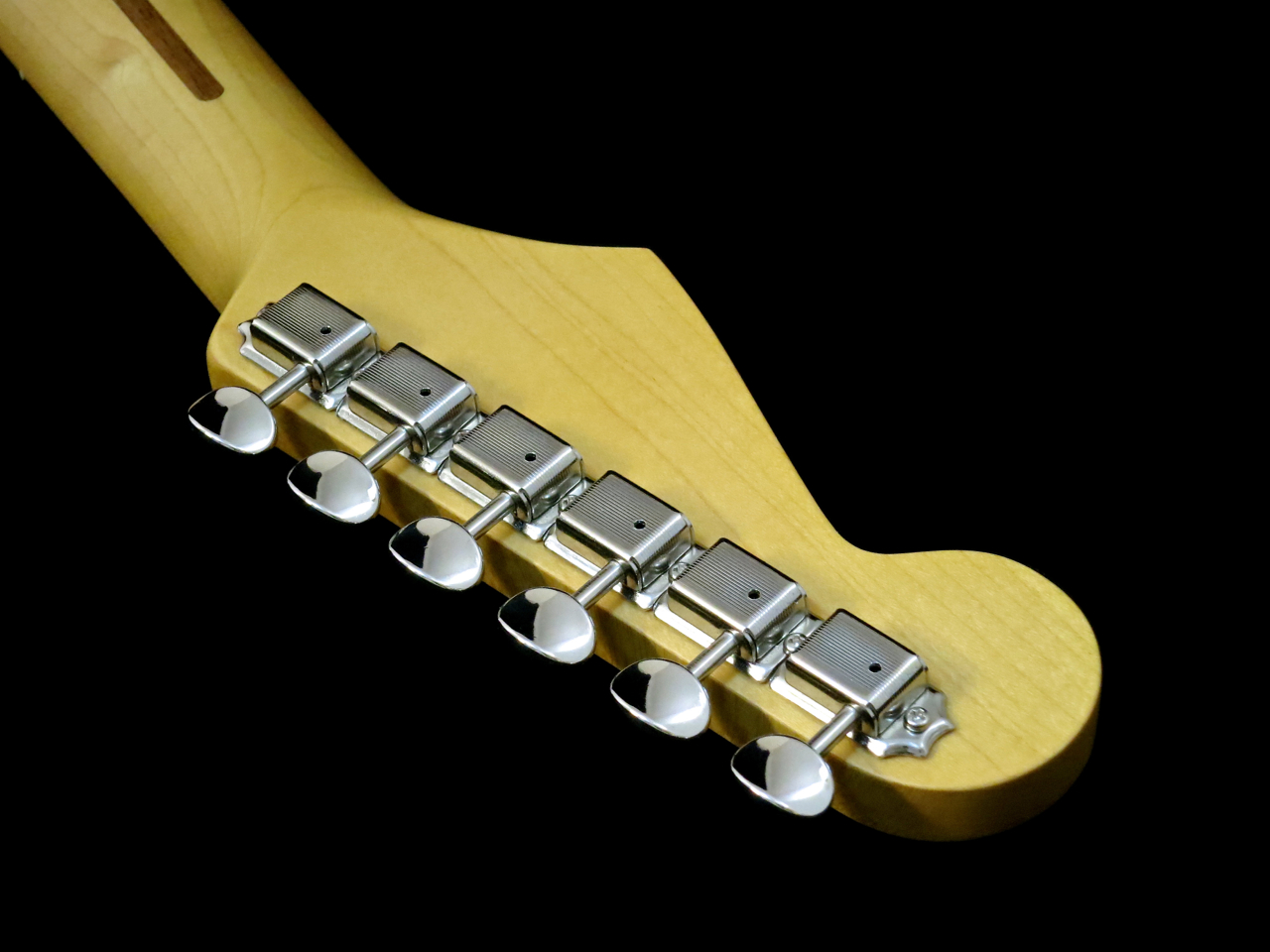
Hagström’s stylish headstock is a bona fide design classic, as are the stepped tuner buttons.
Two special features are included in all Hagström models:
The Hagström H-Expander truss rod is an ingenious piece of engineering. The adjustable rod sits inside a metal rail with an H-shaped cross-section. The entire assembly is then inserted into a slot of the same shape that has been cut into the neck wood. The H-Expander requires less wood to be removed than any of the other traditional truss rod designs, which is a good thing for the structural integrity of the neck, which in turn benefits the guitar’s tone and sustain.
Hagström has also long been favouring its proprietary Resinator-material for all of the company’s fingerboards. Long before the recent ban of genuine rosewoods was even on the horizon, Hagström found a way to bond sustainable wood slivers and resin into man-made ebony, calling the material Resinator.
The Fantomen has a Fender-style scale of 64.8 cm (25.5″) and offers 22 medium-jumbo frets on its 15-inch radius fretboard.

The chrome hardware further comprises a tune-o-matic-type bridge and a stopbar tailpiece, as well as a set of Hagström’s H-embossed knurled control knobs.

For their Fantomen model Hagström turned to Swedish pickup guru Johan Lundgren, who designed a set of Far Eastern Lundgren Designed humbuckers for the model.
The neck humbucker is loaded with an Alnico II magnet, while the bridge unit uses a stronger Alnico V version.
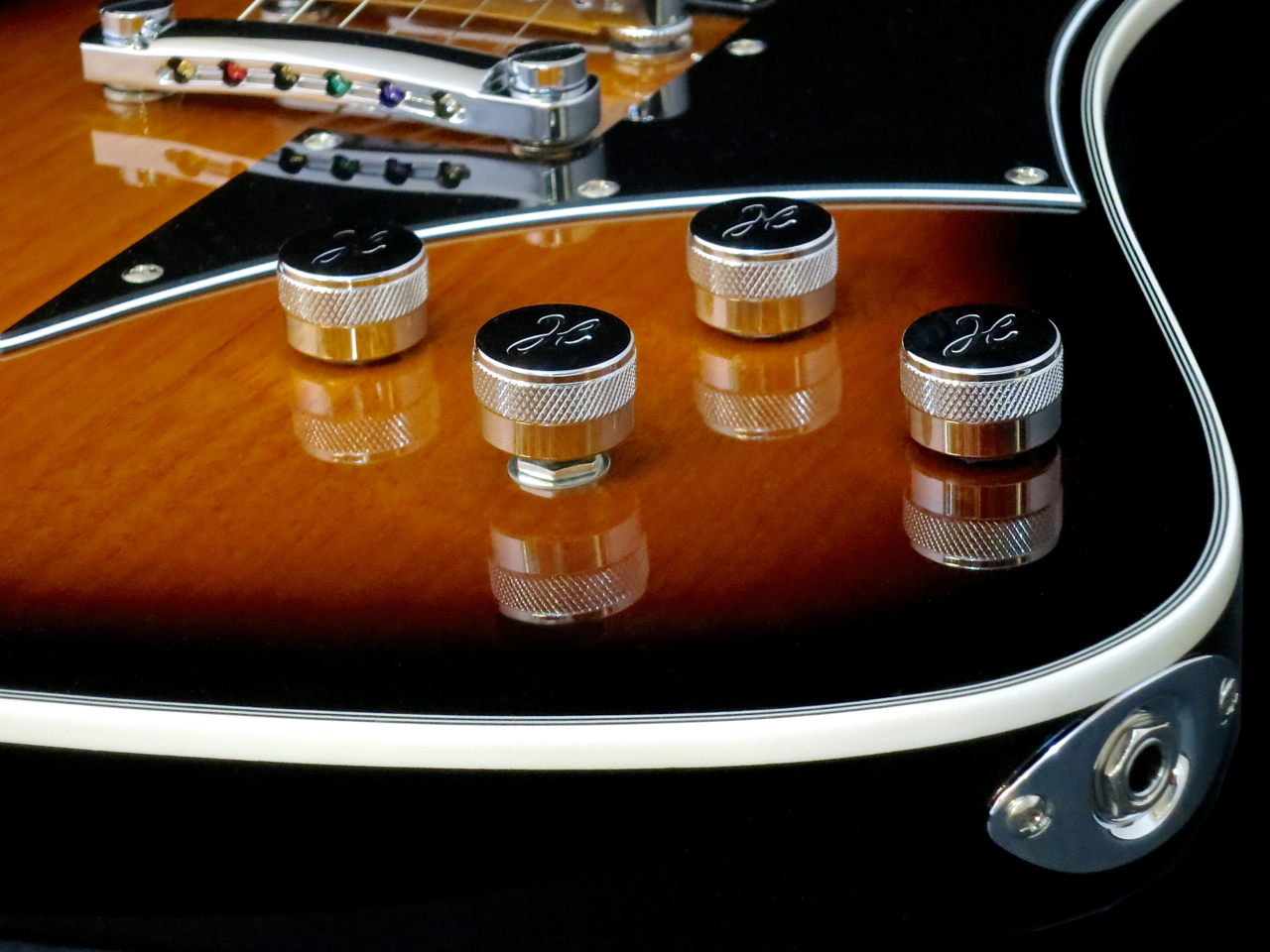
The Gibson-type control setup of two volumes and two tones is further augmented by push/pull-switches in the tone controls that split the humbuckers.
****

For such a comparatively large-bodied guitar the Hagström Fantomen is rather comfortable to ”wear” and play. Our test sample’s weight is on the moderate side of medium.
The neck profile is a slim D and the excellent, buzz-free setup makes the test sample a real player. The fretwork is very competent, even though our test guitar’s frets would have benefitted from a few minutes more attention during polishing. Straight out of the box there’s a tiny amount of coarseness you can feel during bends, which will disappear by itself, though, simply by playing the Fantomen regularly.
The decision to use humbuckers with a moderate output level in the Fantomen really pays off. The tones this Hagström delivers are nuanced, dynamic and three-dimensional. The Fantomen is a guitar that faithfully translates a player’s touch into music, meaning it can be gentle just as well as aggressive. The coil splits go a long way in providing fairly authentic single-coil sounds for those Fendery moments.
Here is a clip showing you the six main pickup selections played through a Bluetone Shadows Jr. boutique combo. The full humbucker settings come first:
The demo song was recorded using a Juketone True Blood amp (Tweed Champ clone) and a Bluetone Shadows Jr. combo. No pedals were used:
****

Even though the Fantomen was designed in collaboration with a Metal band, Hagström haven’t fallen into the trap of creating a one-dimensional, balls-to-the-wall screamer. The looks may say ”Rock”, but Hagström’s Fantomen also offers fine clean tones, turning this model into a great all-rounder.
****
Hagström Fantomen
Current price in Finland approx. 850 €
Finnish distributor: EM Nordic
Pros:
+ workmanship
+ sound
+ versatility
+ value for money
Cons:
– gigbag not included
Hagström Fantomen – Now on Soundcloud
Lisätiedot: DLX Musiikki
Review: Bluetone Shadows Jr.
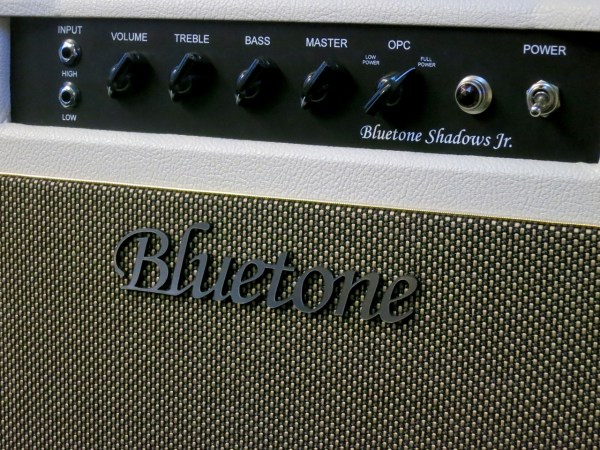
Following in the wake of their very popular Shadows Reverb combo, Finnish boutique makers Bluetone Amps have recently introduced a smaller sibling, called the Shadows Jr.
The Bluetone Shadows Jr. (combo starting at around 1,300 €) is a hand-built, all-valve guitar combo, whose sound is based on the classic Vox AC15. Instead of being a straight, slavish copy, though, the Shadows Jr. incorporates many of the up-to-date features that have made Bluetone such a well-regarded boutique maker.
****
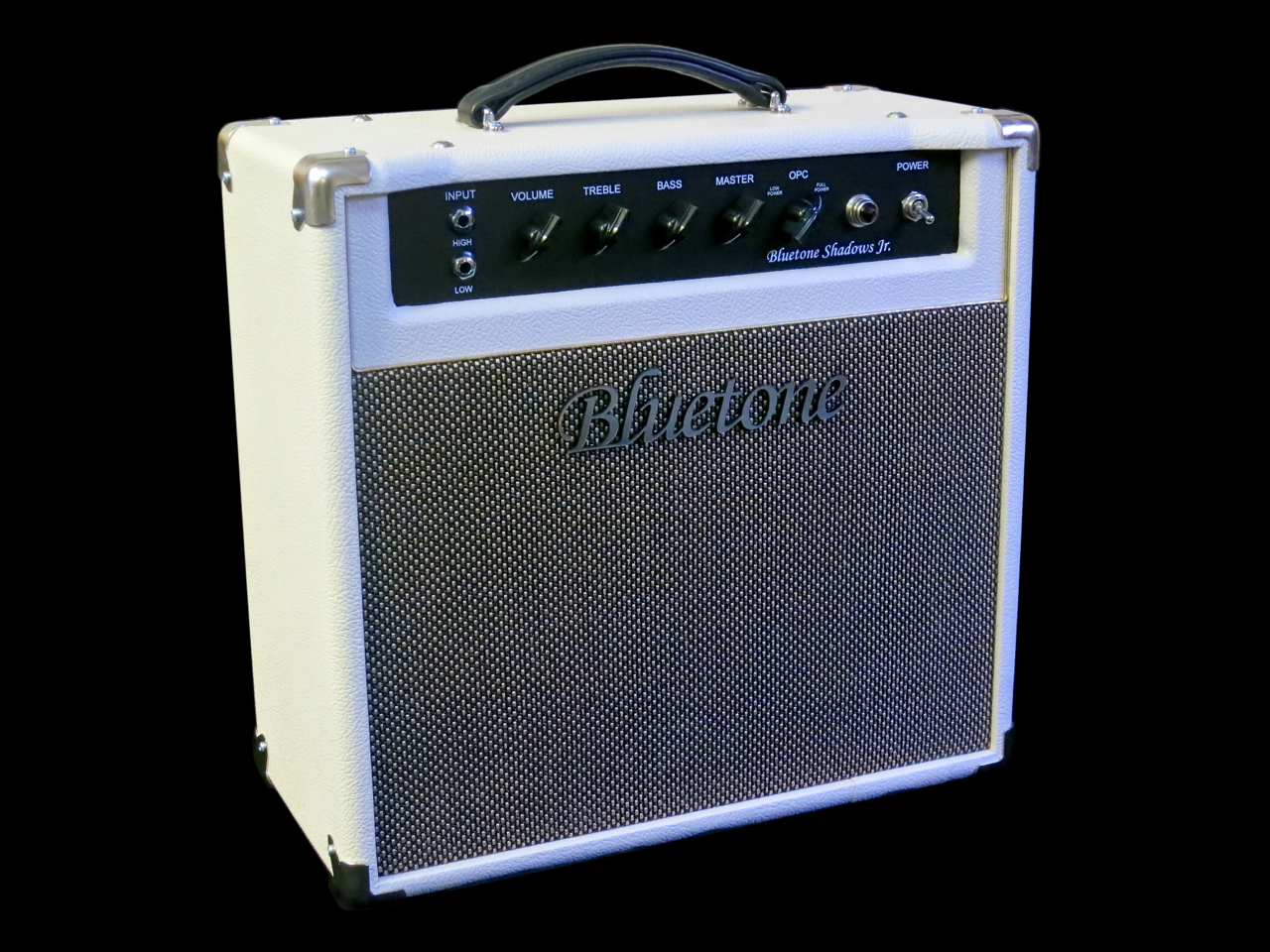
The Shadows Jr. has the clean and business-like looks that active players truly appreciate. You don’t want to be slowed down on stage by a control panel that’s hard to decipher. The Bluetone is clarity itself.

This is a single-channel all-valve combo running in Class AB mode giving you maximum output power at just over 10 watts.
The Shadows Jr. is designed around a trio of 12AX7 preamp tubes and a pair of EL84s powering the speaker. The combo’s power valves are cathode-biased, which means that swapping tubes won’t necessitate a trip to your friendly amp technician.
Bluetone is one of the very few amp makers who use torroidal power transformers. These doughnut-shaped devices (the black thing in the upper left corner) are lighter and more dependable than traditional transformer designs, and they offer more exact tolerances. As a valve amp is highly dependable on a stable and electronically quiet power supply for superior tone, Bluetone decided on using torroidal transformers early on, and they’ve never looked back.

The Warehouse Guitar Speakers Green Beret is an excellent choice for a strongly Brit-flavoured combo. Bluetone break in all of the speakers they use with low-frequency sine waves.

Despite being a compact single-channel combo amp (weighing only around 10 kg), the Bluetone Shadows Jr. offers an amazing amount of different clean and gain tones, thanks in no small part to the amp’s PPIMV master volume and the three-step OPC-switch.
PPIMV stands for ”post-power inverter master volume”, which is the preferred way of master volume design at Bluetone Amps, because it eats up the least amount of an amplifier’s tone, when in use. And if you turn the master volume knob all the way up, a PPIMV design makes the master volume ”disappear” electronically, making it completely transparent.
OPC, on the other hand, stands for ”output power control”. On the Shadows Jr. you have a choice of three settings, giving you 0.2, two or the full 10 watts of power, respectively. The magic of the OPC circuit is that it will turn volume levels down very noticeably without changing the tonal character of your settings, while also leaving almost all of the dynamics intact. Many lesser output power designs will turn a clean setting into an overdriven sound when you select a lower output level. The Shadows Jr. will sound almost the same on ten, two or 0.2 watts – the small tonal differences are the result of the speaker being driven differently. With the OPC at the lowest setting you will get approximately 95 percent of the full ”Shadows Jr. experience” at bedroom/apartment block volume levels. That’s fantastic!

The back panel gives you a choice of using the internal speaker or an external 4- or 8-ohm cabinet.
Bluetone have also included their tasty buffered, switchable effects loop with a dedicated volume control. When the loop is not in use, the circuit can also serve as a handy lead boost.
****
Are you looking for a cool little tone machine with a strong Vox-y flavour, and no-compromise build quality? You should do yourself a favour and try the Bluetone Shadows Jr.
The Shadows Jr. ticks all the right boxes:
You get that classic clean tone with that sweet mid-range ”attitude”. A clean tone that is lively, but never glassy or brittle.
With the front-end volume near the other extreme you’ll get overdrive and distortion that is more gritty and dynamic – think later era Beatles, windmilling Townshend, or multilayered May – than creamy and compressed.
But don’t forget to check out the wide scope of break-up Blues and Rock ’n’ Roll sounds to be had between 11 and 2 o’clock on the volume (gain) control (depending on the guitar used). You’re in for hours of wailing soloing and chunky rhythms without ever needing an overdrive stompbox.
Here’s a Gibson Les Paul Junior on its own:
Demo track number one features two rhythm guitar tracks – a Fender Stratocaster (stereo left) and a Gibson Les Paul Junior (right) – as well as a Hamer USA Studio Custom on lead duty:
The second demo track features a Gibson Les Paul Junior (rhythm left), an Epiphone Casino (rhythm right), and a Fender Telecaster (lead guitar):
****
The Bluetone Shadows Jr. is a fantastic little tone machine for the Vox-inclined player, who likes warm clean tones, dynamic break-up sounds, and gritty late-Sixties/early-Seventies dirt.
The build quality is miles ahead of any mass-produced guitar amplifier – this is a handcrafted boutique-grade valve amp. Modern additions like the PPIMV master volume, the OPC circuit, and the switchable effects loop, also raise this amp above any vintage-style copies.
For many the crucial question with low-wattage amps is volume. How loud is the Bluetone Shadows Jr?
Let’s just say that if you’ve only ever tried 10-watt tranny combos before you’re in for quite a surprise! These are ten (-plus) watts of British-style valve amp majesty, with every last ounce of loudness wrung out of the power amp and speaker.
With the OPC and the master on full, this little chap will easily get you into trouble with your neighbours in your block of flats on clean tones alone. If you don’t need 100 percent clean tones, the Shadows Jr. will easily get you through many rehearsals and gigs in small venues. And there’s always the option to stick a mic in front of the speaker.
So, don’t expect a Heavy Metal-type volume onslaught, but be prepared for some serious business.
****
Bluetone Amps Shadows Jr.
Prices starting from 1,300 €
Contact: Bluetone Amps
Pros:
+ Handmade in Finland
+ Master volume
+ OPC
+ Effects loop
+ Sound
+ Value-for-money
Bluetone Shadows Jr – The Kitarablogi video

• Handmade in Finland
• All-valve Class AB single-channel combo
• 10 W, 2 W or 0.2 W of output power (OPC)
• Diode recitified
• Two-band EQ
• PPIMV Master Volume
• Built-in buffered FX loop/booster
• 3 x ECC83 (12AX7) & 2 x EL84
• One 10-inch WGS Green Beret speaker (25 Watts/8 Ohms)
****
Demo Track
All guitars recorded with the Bluetone Shadows Jr. (no pedal effects used). Delay and reverb added during mixdown.
• Rhythm guitars: Fender Stratocaster (left channel) & Gibson Les Paul Junior (right channel)
• Lead guitar: Hamer USA Studio Custom
Recorded with a Shure SM57.


Review: Tokai TST-50 Modern

Tokai Guitars’ extremely well-made Japanese – uhm – tributes to classic electric guitars from the 1950s and ’60s were one of the main reasons why industry giants, such as Fender and Gibson, started their own Far Eastern brands, like Squier and Epiphone, in the Eighties.
Yet Tokai doesn’t cling slavishly to the past, instead the company is also regularly coming up with up-to-date versions of their best-loved models. Their newest updated Strat-style electric is the Tokai TST-50 Modern (999 €; comes with a hard case), which was developed in cooperation with Tokai Guitars Nordic.
****

You could be forgiven to think the TST-50 Modern was a cracking 1960s reissue model at first glance, especially as some of the basic ingredients are virtually identical:
We find a bolt-on maple neck with a rosewood fretboard, and a premium class alder body adorned with a beautiful two-tone sunburst finish.

But a closer look at the headstock gives us a clue that this isn’t a run-of-the-mill TST-50:
A bullet truss rod adjuster on the TST-50 Modern allows you to tweak your neck relief without having to detach the neck from the body, as on vintage style S-type guitars. But despite the bullet truss rod, Tokai have chosen – wisely, in my opinion – to stick with the original four-screw neck attachment.

The Tokai TST-50 Modern comes with a 9.5 inch fingerboard radius, which means that the feel is slightly flatter than on vintage Stratocasters (that usually feature a 7.25 inch radius), but still more curved, and thus more Fender-ish, than Gibson’s flatter 12 inch radius. The TST-50 Modern also sports chunkier frets (Dunlop 6105), making it easier to play than the thin wire used on vintage originals. In combination with the flatter fingerboard radius the bigger frets also make string bending a great deal less work. As a final flourish this models gives you an additional fret (22 instead of 21).

The classic six-screw Stratocaster vibrato bridge was a huge engineering achievement back in 1954. No other vibrato offered that much travel, coupled with excellent sound and very fair return to pitch.
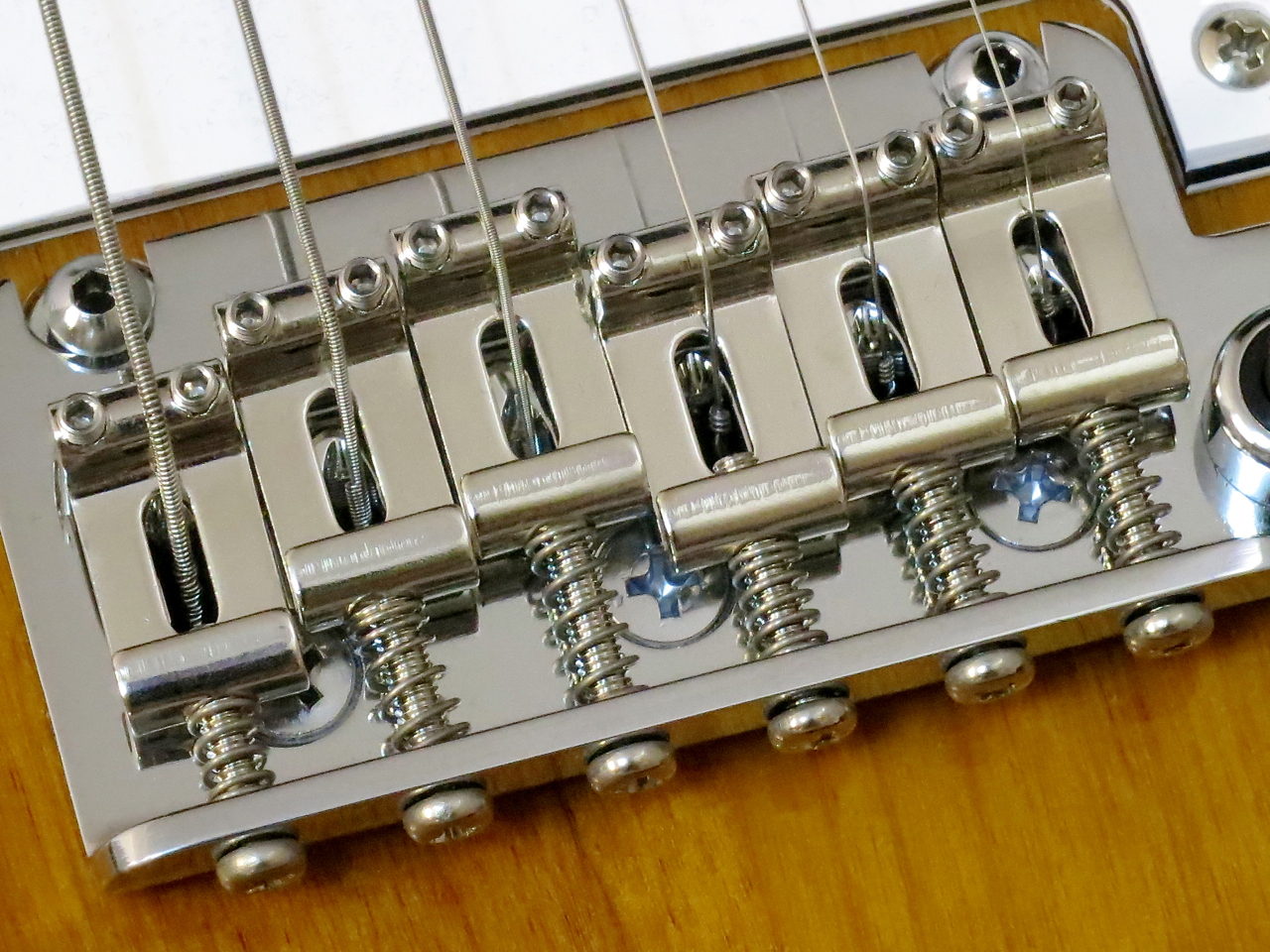
Now – 60 years later – many players do look for an even smoother and more precise ride, than what the vintage model can offer. For these guitarists the Tokai TST-50 Modern offers a modern, two-post vibrato bridge – the Gotoh 510T model.
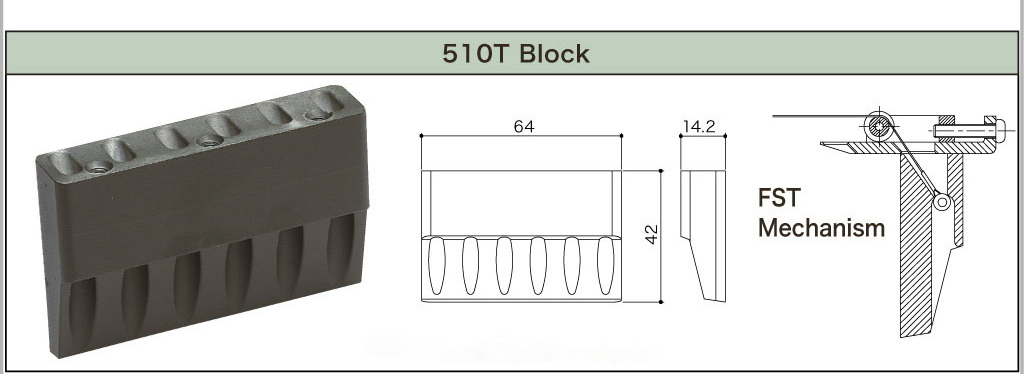

Gotoh’s 510T-vibrato comes with the company’s groundbreaking FST-block. The string channels inside the FST-block have been drilled much deeper than in a vintage block, which anchors the ball ends much closer to the bridge plate. The strings then pass the bridge plate at a shallow angle, without being pressed hard against the plate’s sharp edges. Thanks to Gotoh’s FST-system the vibrato’s return to pitch is improved vastly, because the strings’ ball ends stay in place firmly. Additionally, this system cuts down significantly on string breakages due to friction between the strings and the bridge’s base plate (like normally seen on vintage Strat bridges).
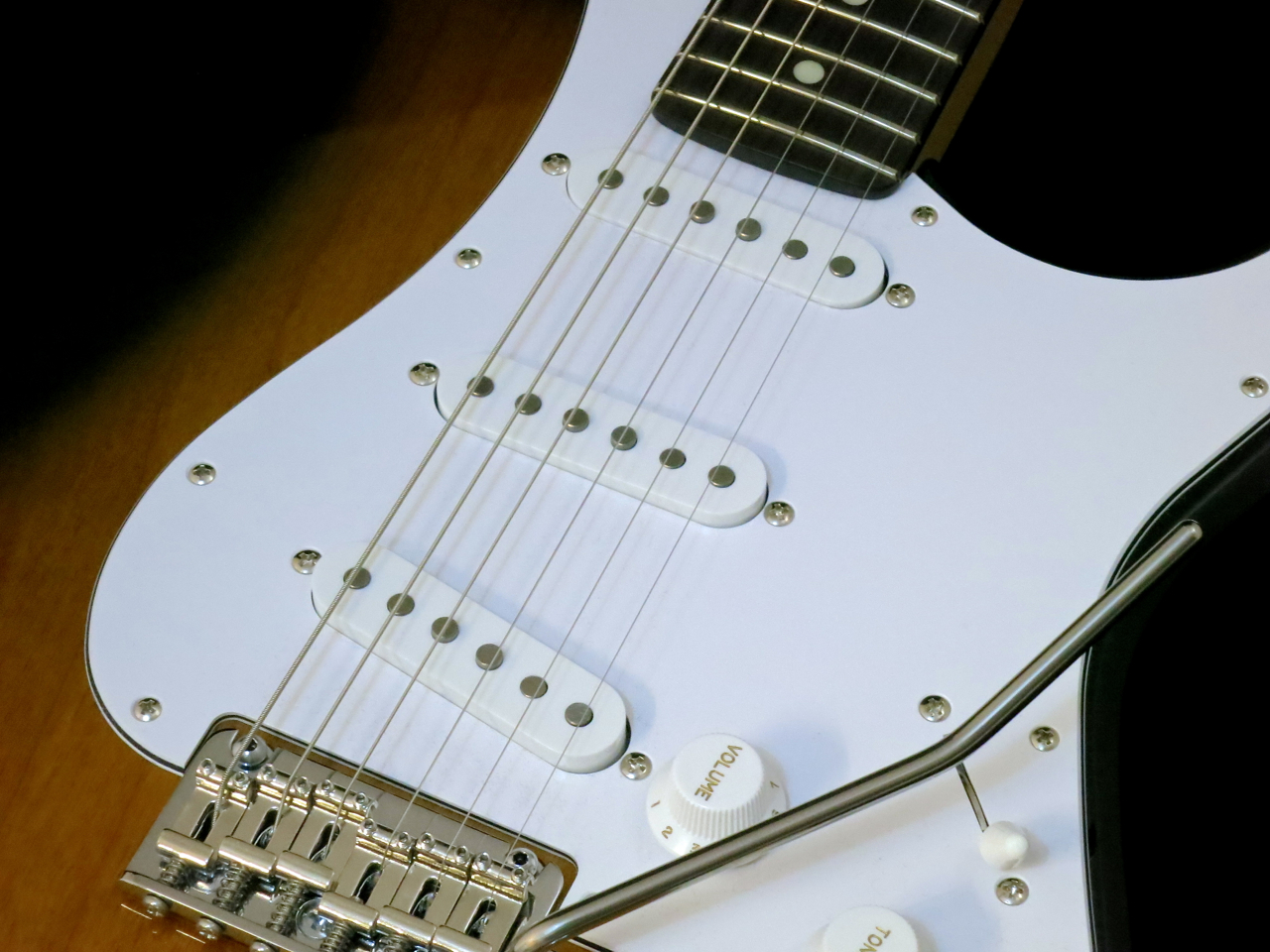
When it comes to its pickups and control layout, Tokai’s TST-50 Modern follows a classic footpath – a trio of Tokai’s acclaimed Vintage ST pickups, along with a five-way switch, a master volume, and tone controls for the neck and middle pickups. Hidden beneath the three-layer scratchplate there’s a humbucker routing, in case you want to customise you guitar further.
****

Vintage or modern, fans of Strat-style guitars expect a high level of ergonomics from their instrument, and Tokai’s Japanese TST-models never disappoint. All the body contours have been copied from the famous 1957/58 originals – it doesn’t get any more streamlined than this.

The satin-finished neck features an oval C-profile, which is just the Sixties-type of neck shape I enjoy the most on an S-style guitar. Thanks to the flatter fretboard radius and the medium-jumbo frets, the playing feels of the TST-50 Modern is similar to that of a well-loved, much-played, and refretted vintage model (but without any scratches or dents, of course).
The Gotoh 510T vibrato works like a dream. It’s smooth and precise, but doesn’t add any unwelcome metallic overtones or sharpness to the sound (unlike some Floyd Rose bridges).
The Tokai TST-50 Modern sounds like a top-drawer Strat should.
Here’s a clip with the Tokai TST-50 Modern plugged into a hand-wired Tweed Champ clone (a Juketone True Blood):
I’ve used Electro-Harmonix’ Germanium 4 Big Muff Pi and Nano Big Muff Pi pedals on the demo track (in addition to the Tokai and a Blackstar HT-1R valve combo):

****
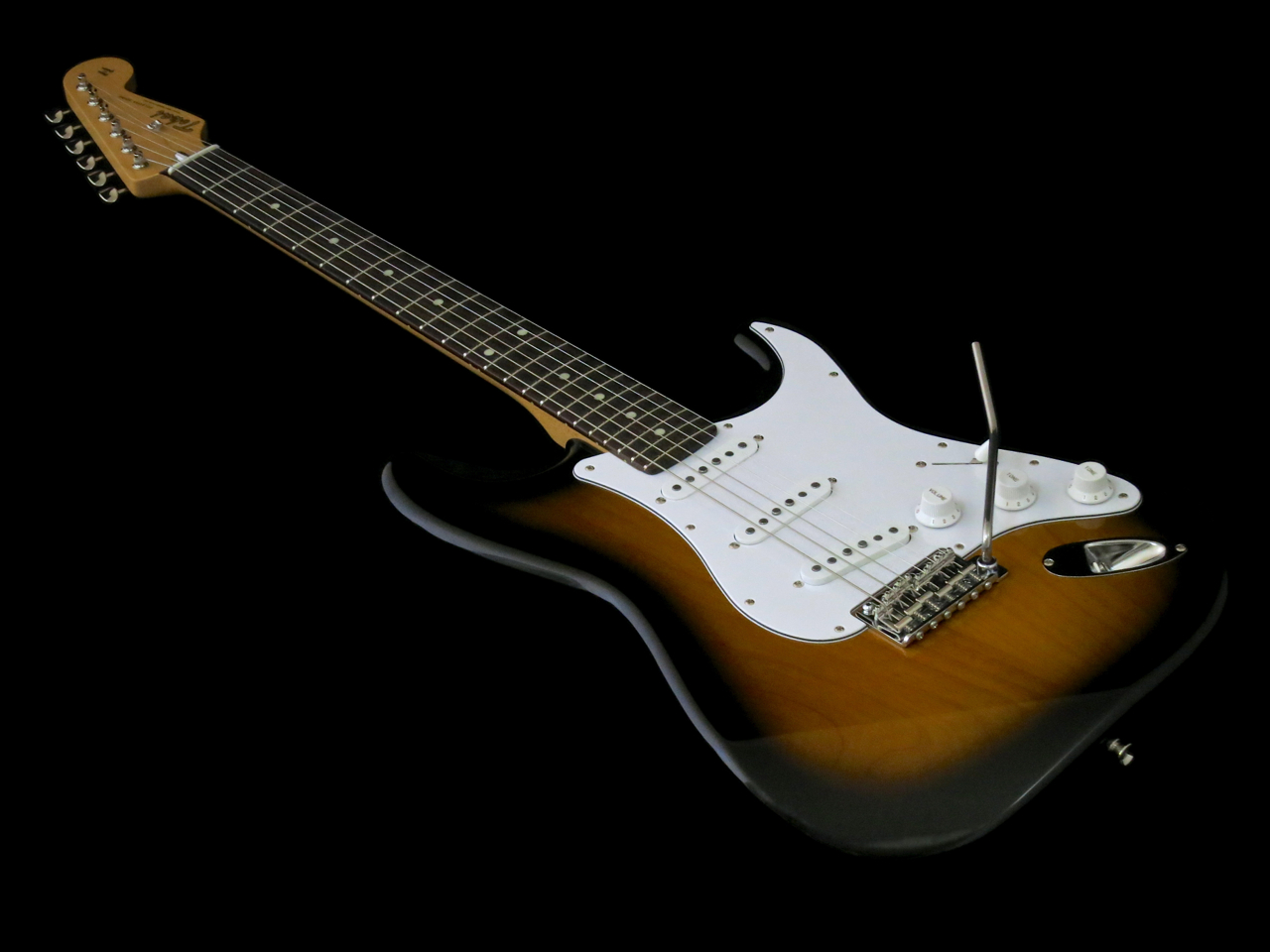
Gear reviewers often face criticism for not ”dishing the dirt” on the equipment they test, but in the Tokai TST-50 Modern’s case there isn’t really anything negative to write about. This is an extremely well-made updated version of the most famous electric guitar of them all. The Tokai combines modern playability with delicious vintage sounds.
****
Tokai Guitars TST-50 Modern
999 € (quality hard case included)
Finnish distribution: Musamaailma
Pros:
+ Japanese craftsmanship
+ sensible updates
+ playability
+ sound
+ outstanding value-for-money