Alkuperäinen suomenkielinen versio tästä jutusta löytyy Rockway-blogissa.
****

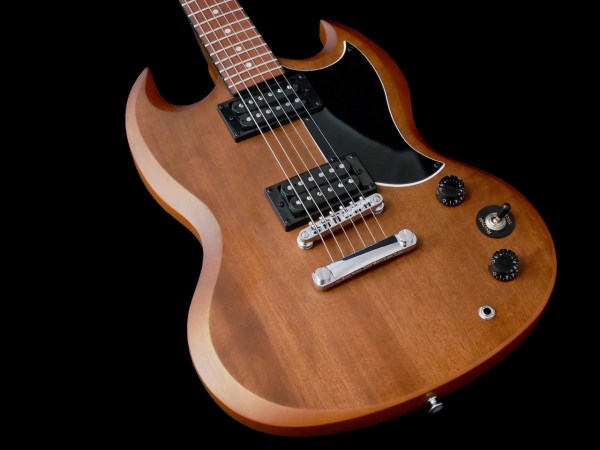
The Epiphone SG Special VE (”street price” around 240 euros in Finland) is currently the cheapest official SG replica. The letters VE stand for “Vintage Edition”, which refers to the model’s matte finish.
On the website of Epiphone’s importer – Algam Nordic – the SG Special VE is only available in matte black and matte brown (i. e. walnut), but on Epiphone’s own website the cherry red matte finish is still listed as an option. I would guess that all three options are still available at Finnish music stores.
The Epiphone SG Special VE looks a lot like the company’s own version of Gibson’s 1970s model “The SG”, especially in the walnut finish.
Should you fancy a gloss finish and chrome covered pickups, I can point you to the brand-new Epiphone SG Tribute model, which will probably replace the Special VE over time.
****
****

The Chinese SG Special VE is a very affordable instrument, which is why the guitar offers slightly unconventional detail solutions in some areas. However, the workmanship is of surprisingly high quality throughout – at least on the review instrument.
The Epiphone’s body is carved from poplar. Poplar is a basic, good instrument wood, its only ”flaw” being the wood’s dull grain pattern, which is why Music Man, for example, only uses it for solid-coloured instruments.
On the SG Special VE, this has been solved by gluing very nice looking veneers of African mahogany onto the flat middle sections of the body (front and back). This trick also preserves the traditional mahogany look of SG guitars in the VE model.

The Fender-style neck joint is a very rare solution in Gibson-style guitars these days, but it fits well on this affordable SG, especially since the joint is really tight and neat. The Epiphone SG Special VE’s neck is made of beautiful Gabon mahogany (another name for the wood is okoume). The neck is basically a one-piece affair, with a second piece added for the upper end of the headstock. The glue joint is visible below the e-string tuners.

Although this is not mentioned anywhere in the official specs, the SG Special’s reddish rosewood fingerboard has been given black plastic binding. The fingerboard is neatly fitted with 22 medium-sized frets, as well as round pearloid fingerboard inlays.
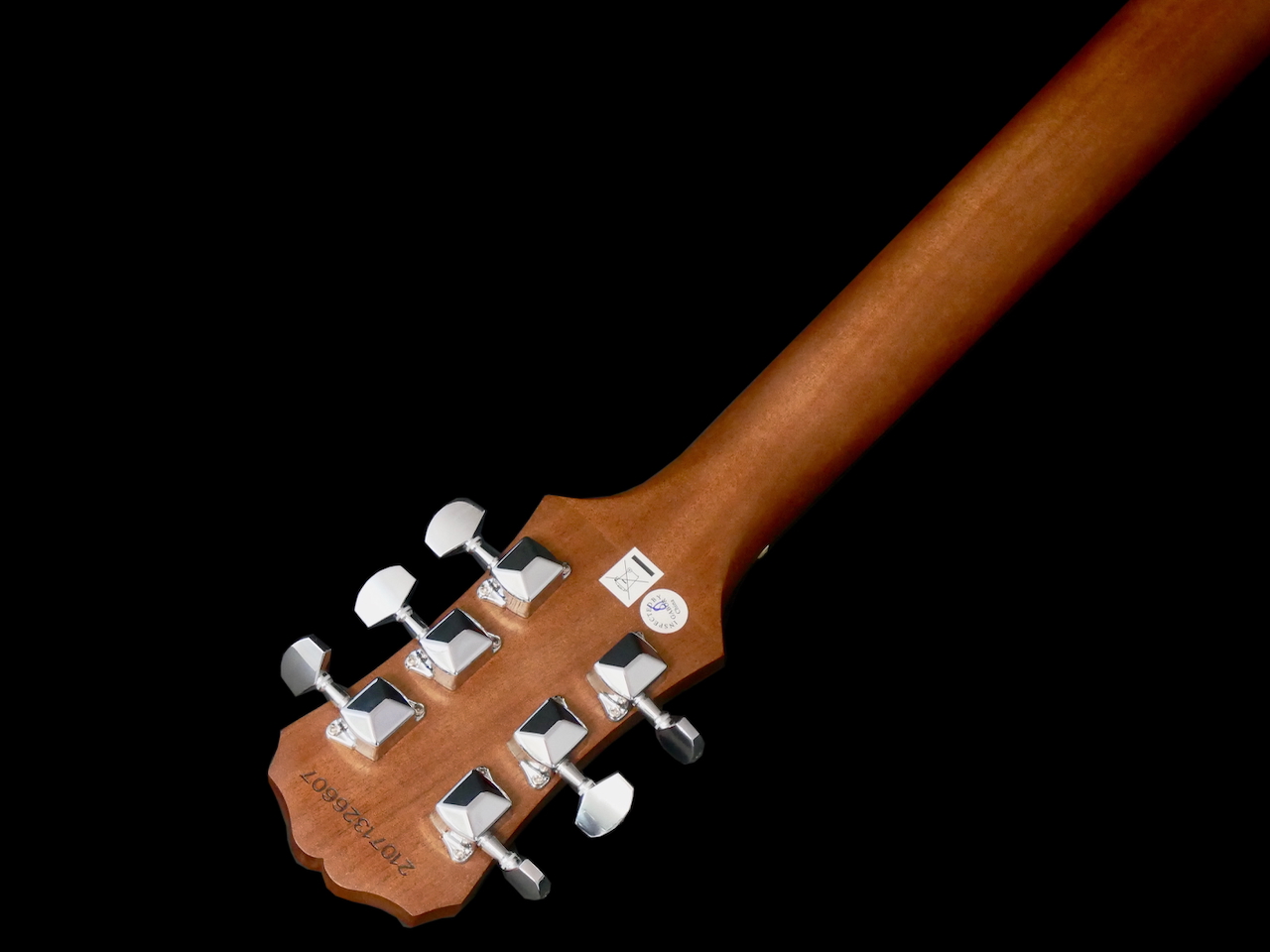
The hardware department consists of Epiphone’s Lock-Tone bridge and tailpiece, as well as inexpensive closed tuners. These machine heads are regularly criticised, for example in YouTube videos, for being ”bad at keeping the guitar in tune”.
In reality, this perceived problem is based on the fact that modern tuners usually have a tuning ratio of 18:1 or even 20:1. The pair of numbers tells us how often the tuner knob must be turned so that the tuner’s post (where the string is attached) turns one full turn. Special VE’s very affordable tuners, on the other hand, operate with a “coarse” ratio of 14:1 – the same ratio seen on many acoustic guitars from the 1970s. These old-fashioned tuners have a slightly jumpier character when it comes to tuning – it is very easy to turn past the correct pitch – and also have significantly more “play” than modern machine heads. As long as you remember to always tune each string up from flat to the correct pitch, these tuners work reasonably well, and there are no problems with tuning stability.
****
****
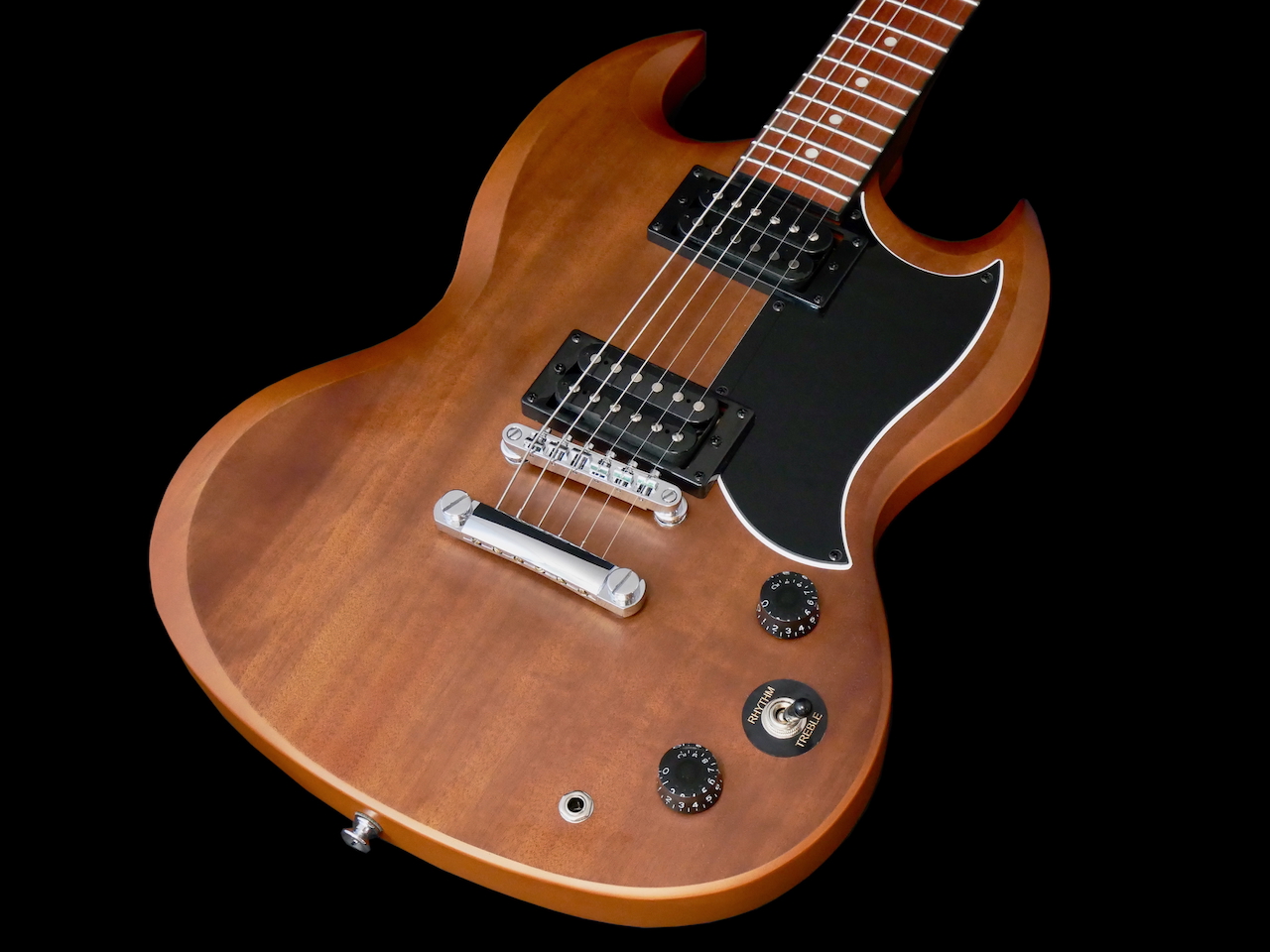
The Epiphone SG Special VE features the company’s own open 650R and 700T humbuckers, which are very powerful pickups with ceramic magnets. This pair of pickups represent Epiphone’s affordable take on Gibson’s 1970s Dirty Fingers humbuckers, and they have a very strong midrange and big bass.
Traditionally, two-pickup Gibson or Epiphone electric guitars often have a group of four controls in addition to a three-position toggle switch. For modern guitarists, a master volume control that affects the entire guitar is – especially in live situations – often a more functional solution than individual controls for each pickup. Also for beginners, a solution like the SG Special VE, which offers only master volume and master tone controls in addition to the switch, is clearly a better option.
The electronics compartment of the Epiphone test guitar is very clean, as are the solder joints. The parts themselves are – naturally – inexpensive, but I didn’t find anything to complain about in terms of functionality.

Can a guitar in this price range, with a bolt-on neck and a body made from ”the wrong type of wood”, be a real, proper SG? Comparing the Epiphone with three other SGs, I can say that the short answer is “yes!”
I find it very funny that both Gibson’s and Epiphone’s headquarters are apparently afraid to tell people about the real neck profiles of their guitars. Everywhere you look these days, it (almost) always says “slim taper D-neck”, regardless of the model. Do Epiphone’s decision-makers really think that players would be afraid of anything other than thin 90s profiles?
In reality, the neck profile of the Epiphone SG Special VE model is a nicely rounded, but not too thick D-profile, which I think suits an SG-style instrument very well.
There was nothing wrong with the review instrument’s set-up, and the guitar’s playability is more than okay, especially considering the Special VE’s low price.
The Epiphone’s balance on the strap is even slightly better than on many average SGs, because the neck sits about two centimeters deeper in the body than usual, due to the Special VE’s bolt-on neck.
The Epiphone SG body sits nicely in the lap and hangs comfortably against the player’s body when using a strap.
The review instrument’s acoustic voice is very healthy, and I didn’t find any disturbing dead spots.
If you use the Epiphone SG Special VE model with a vintage-style amplifier that doesn’t have a master volume control – like, for example, with a good Fender Champ copy – the instrument’s hot pickups get more distortion out of the amplifier, which I think is a good thing.
With effects pedals, it’s worth using the SG Special VE’s well-functioning master volume, because some effects – for example, some overdrives and many modulation effects – can easily ”clog up” with very hot pickups. But this is what controls on an electric guitar are for.
In my opinion, the Epiphone SG Special VE is a surprisingly nice guitar for the money. It offers a lot of mileage at a really budget-friendly price. If you like the look of the SG, the Special VE is definitely an instrument worth trying out.
****
****







 Kitarablogi.com – Finland's premier Guitar and Bass blog