

****
Lisätiedot: EM Nordic
Kitarablogi.com – Finland's premier Guitar and Bass blog
Juttuja kitaroista ja bassoista

Today bass legend James LoMenzo took time out to hold a clinic at the Soundtools store in Helsinki (Finland).


James, who’s a very jovial and positive guy, mingled with the crowd and made everybody feel at home.


James talked about his experiences as a bassist.


He took questions from the audience…

…and gave everybody an in-depth look at his signal chain.

Attendants were even invited to give it a go themselves.

****
The Zoom Corporation’s super-compact 9000-series digital multieffects caused quite a stir in the early 1990s. The company’s recent Zoom MultiStomp MS-50G (current rrp in Finland: 99 €) carries on this heritage by managing to squeeze most of the large Zoom G5’s processing power (reviewed in August 2012) into one regular-size single pedal.
****
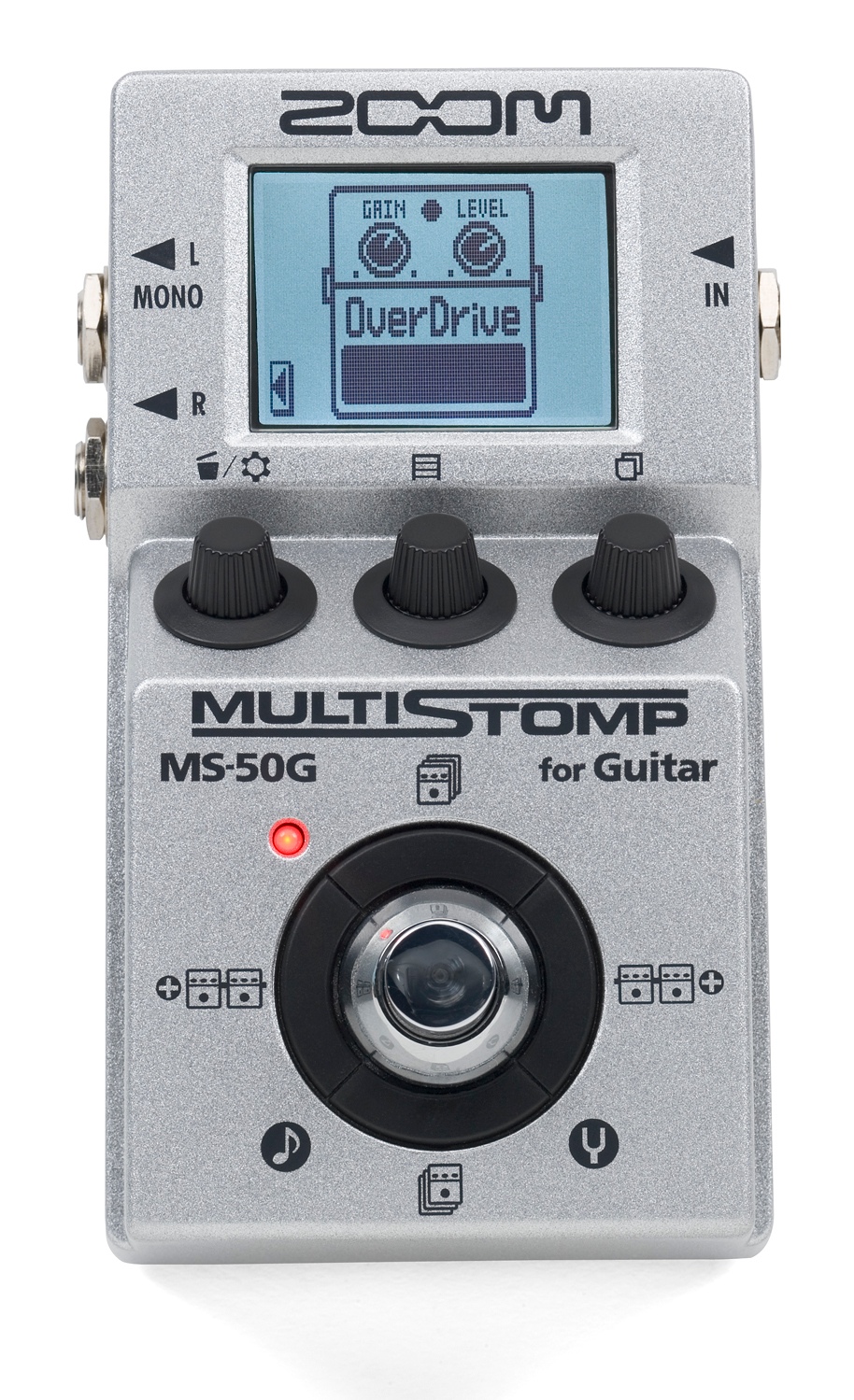
It may sound unbelievable, but it really is true – this small box holds in store a whopping 50 memory slots for your own effect patches. Each effect patch can consist of a signal chain of up to six different effects. The MS-50G offers you 55 different effect types to choose from – featuring everything from compressors and modulation effects all the way to distortions, amp modelling and whacky special effects. Naturally, the MultiStomp also comes equipped with a digital tuner.
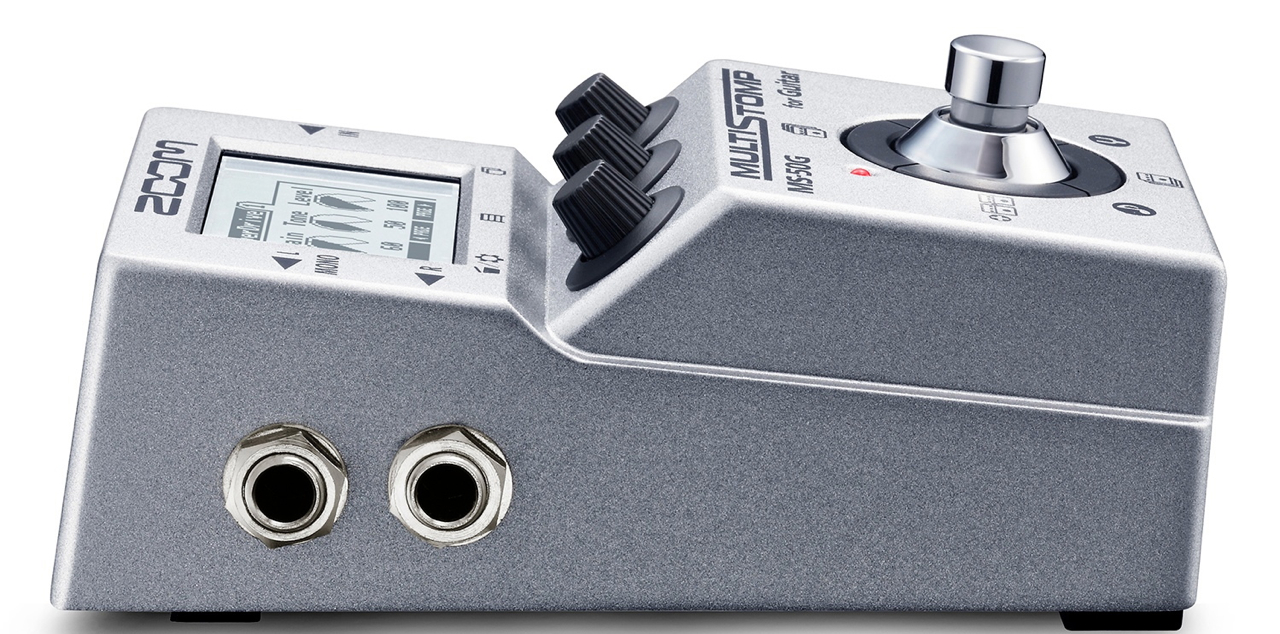
The Zoom MS-50G’s metal casing and its single foot switch feel reasonably chunky. The three parameter control knobs have been mounted at an angle underneath the LCD-display, out of the way of your foot’s path.
The pedal can be used in mono or in stereo. There is no headphones output on the MultiStomp, because it is meant to be used either as a standard guitar effect in front of your amp (or plugged into the effects loop) or for recording, connected straight to the front end of your soundcard or mixing console.

This compact Zoom is powered by two AA-sized batteries, giving you about seven hours of continuous use. Powering the pedal using a PSU (optional) is the more environmentally friendly way of doing things, and Zoom have made it easy for us by sticking to the Boss-standard (9 V, centre plus), making it easy to integrate the MS-50G into your existing pedal board.
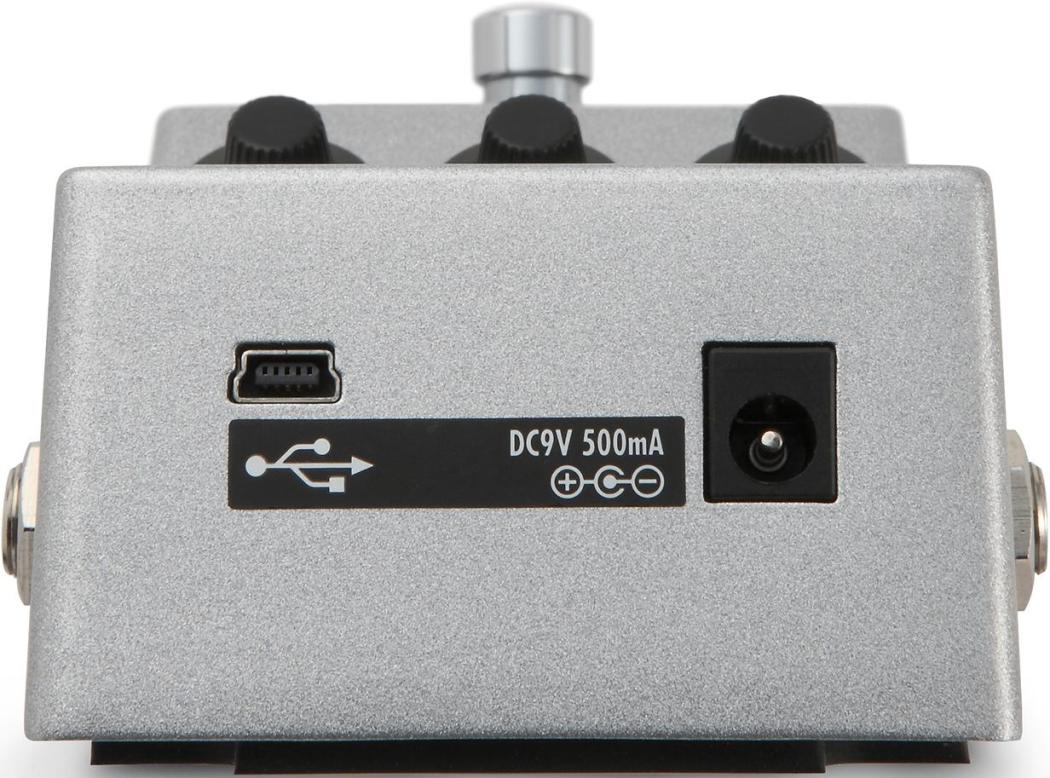
The USB-port on the front of the MultiStomp makes it possible to update the unit’s firmware.
****
There are two main ways of using the Zoom MS-50G’s effect patches:
The first way would be to manually select one patch, and the use the left/right cursor keys to choose the one effect in this patch (like chorus, distortion or delay) that you want to be able to turn on and off using the foot switch while performing. The unit automatically stores which effect you have selected in each given effect patch, so the next time you call up this patch you will already have your chosen effect connected to the foot switch.
The second way of using the Zoom is by utilising the MS-50G’s A/B-mode. A/B-mode allows you to select all the effect patches you will want to use, and put them in a running order by assigning a letter to each of the chosen effects (e. g.: ”SynthStar: A”, ”AsiaPalace: B”, ”PitchDist: C” etc). Once you’ve got your list in order, you can use the foot switch to hop through your list (starting from letter ”A” going up the alphabet). At the end of your list pressing the foot switch will get you back to the first patch in your list.
****
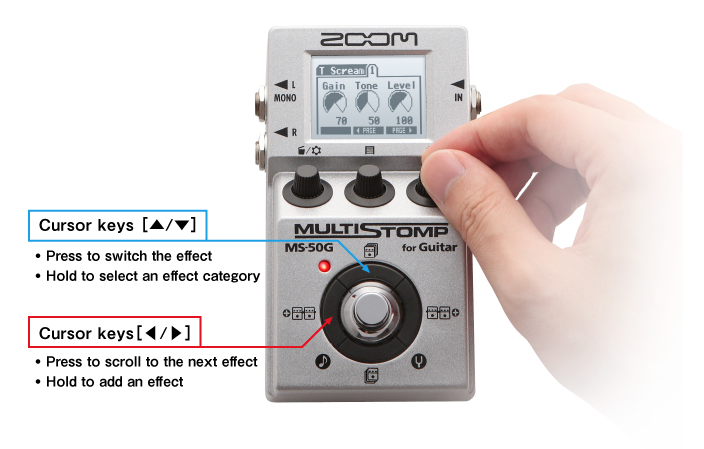
Very compact multieffects usually require a slightly steeper initial learning curve than larger boards, because the limited number of controls and push buttons always means you first have to get to grips with the unit’s user interface. Luckily, thanks to its logical structure and well-designed graphics the MultiStomp is an easy piece of gear to master.

I especially like the Effect Chain view, which makes changes to the order of effects inside a patch very easy. You simply lift the chosen module using the virtual magnet, and drop it where you want it to go.
****

Regardless of its compact size, the Zoom MS-50G MultiStomp is a fully-fledged member of the company’s G-series of guitar multieffects. While the MultiStomp won’t offer you all of the great features and effect types of its larger brethren – the G3 and G5 – the sheer amount of processing power and tasty effects on offer here is truly amazing. For the price of a decent single effect the MS-50G offers you a huge palette of different effects, while only taking up very little space on your pedal board.
****
I used a Tokai SG-75 plugged into the Zoom MS-50G to record all the guitar tracks on the YouTube video:
All of the other soundbites have been lifted from Kitarablogi’s reviews of the Zoom G3 and the larger G5:
Fender Stratocaster – detune – delay
Fender Stratocaster – dirty Tweed – tremolo
Tokai LC-85 – fixed wah – Marshall-type
Tokai LC-85 – phaser – Blackface-style
****
Zoom MS-50G MultiStomp
Current RRP in Finland 99 €
Finnish distributor: Studiotec
****
Pros:
+ value-for-money
+ sound
+ compact size
+ easy to use
+ versatile

****
The UK’s favourite brand of acoustic guitars – Tanglewood – is steadily growing a devoted following in Finland, too, thanks to their wide variety of different models, as well as the company’s knack for providing fantastic value for money.
This time Kitarablogi.com takes a closer look at two guitars from opposing ends of Tanglewood’s price range:

The Tanglewood TW28-CLN is one of the brand’s most affordable instruments, and is part of the Evolution-series.
Tanglewood’s Finnish distributor – Musamaailma – has equipped the test sample with a Seymour Duncan soundhole pickup, the humbucking Woody (SA-3 HC).

Tanglewood’s TW1000HSRE is the top model of the Heritage-series, and comes factory-equipped with a Fishman-pickup and Sonitone-preamp.

By the way, Musamaailma throws in a nifty Kyser Lifeguard humidifier for free with the purchase of any Tanglewood acoustic guitar, so you can be sure that your new instrument won’t suffer the detrimental effects of central heating during the cold season.
****

Tanglewood’s TW28-CLN (current price in Finland: 201 €) is a Dreadnought with a soundbox made from plywood, and a set mahogany neck.
The top is crafted from very nice looking cedar…

…while the rims and the back have been made of laminated mahogany.
The whole instrument – with the exception of the gloss-lacquered headstock veneer – has been finished in a very thin, clear satin finish.

The TW28-CLN’s headstock sports a rosewood veneer.

In this picture you can clearly spot the glue line, where the headstock has been added to the neck, as well as the very decent sealed machine heads.

Even though the Evolution-series is all about affordability, this Tanglewood has been spruced up with some nice cosmetic touches: The rosewood fingerboard, for example, has been bound using genuine maple!
The frets are of medium size, and the fretwork looks and feels very crisp and clean.
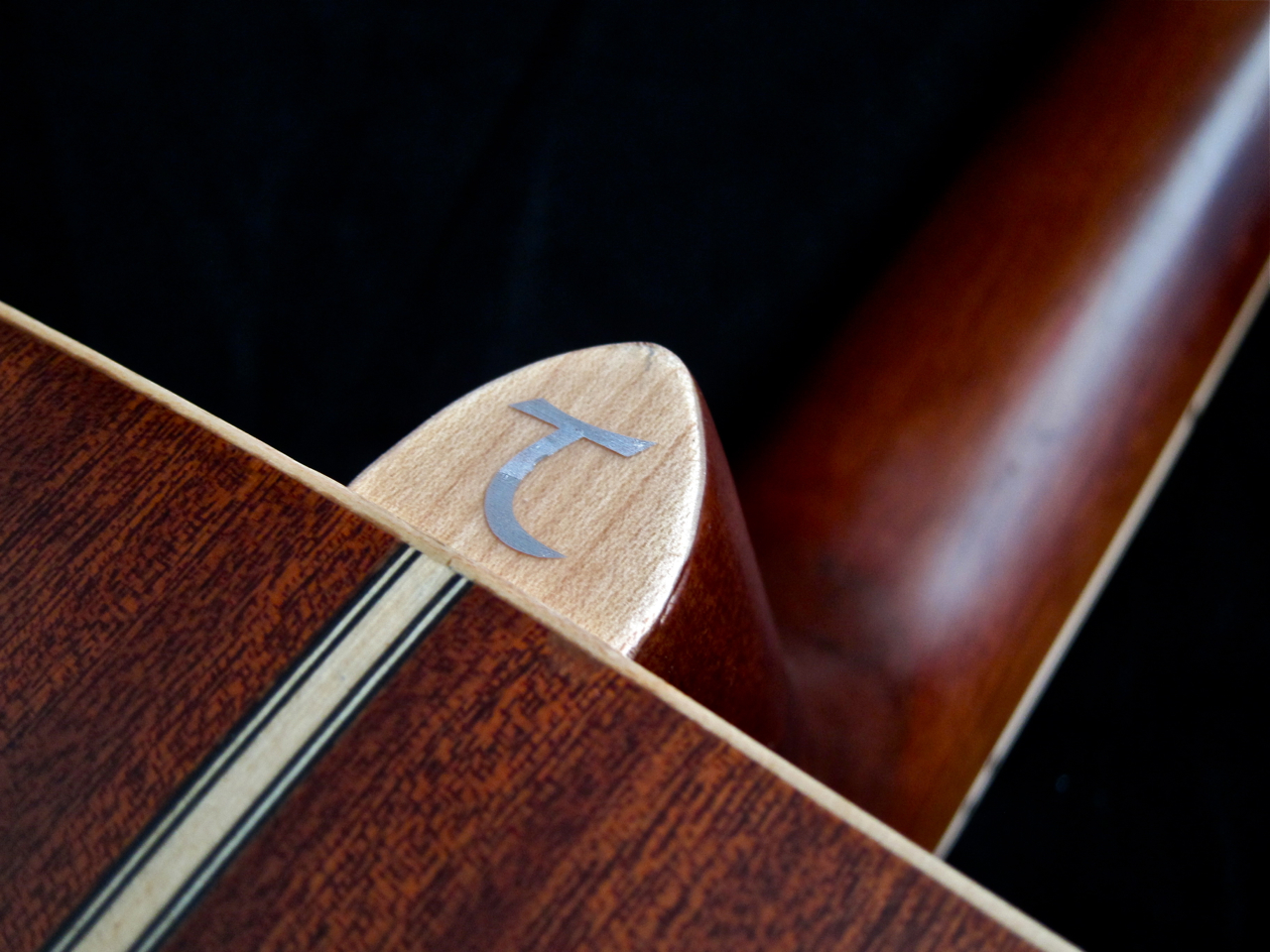
The neck’s heel-cap has been adorned with a maple overlay and a ”Tanglewood-T” made from holographic aluminium foil.

Tanglewood’s TW28-CLN exudes a certain down-to-earth, organic stylishness: There is no scratchplate, but the instrument features multiple binding, and also sports a pretty, bird-shaped bridge.
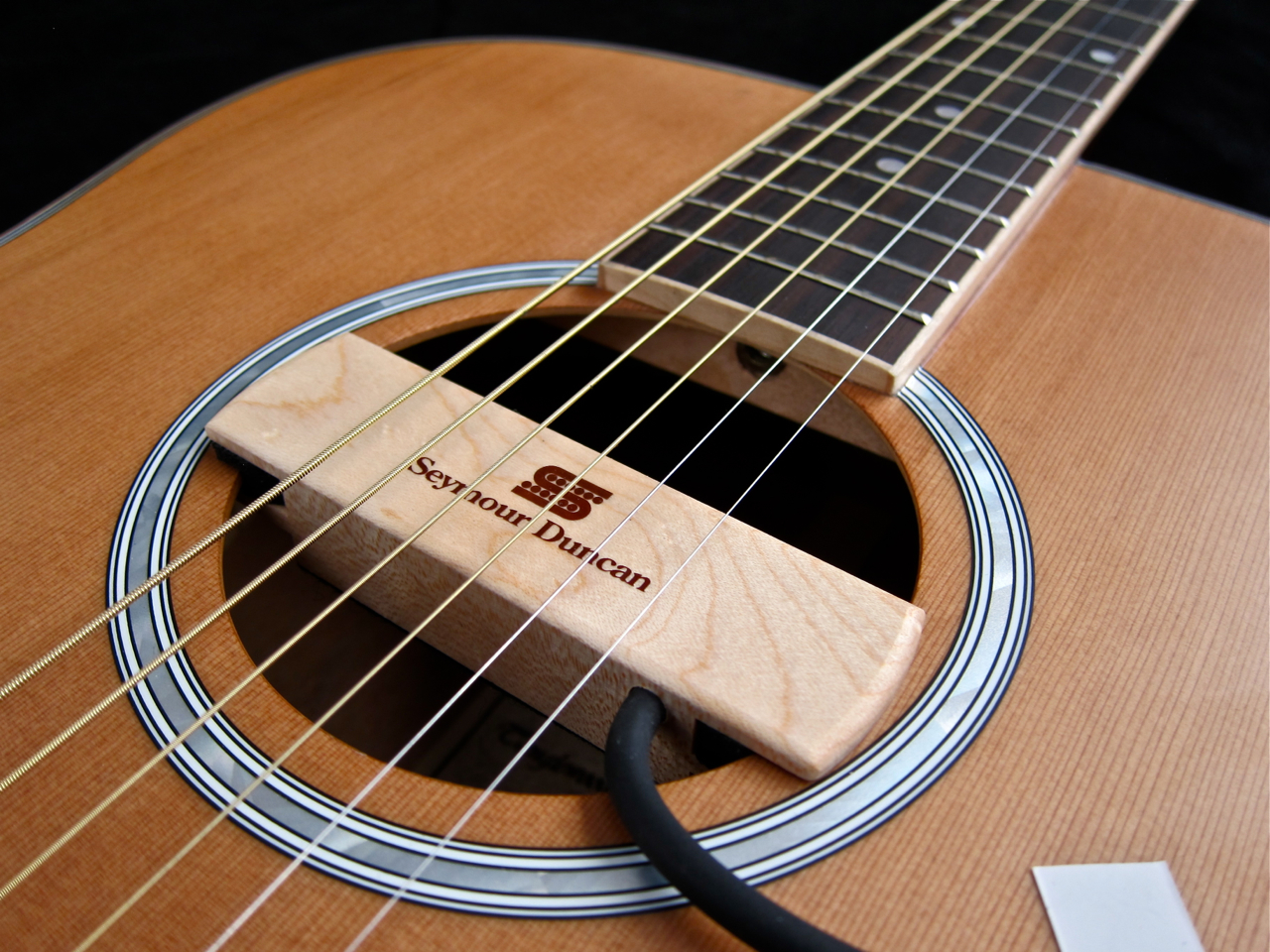
The looks of the Seymour Duncan Woody pickup (current price in Finland 61.70 €) complements the TW28’s earthy looks. This magnetic pickup is a stacked humbucker featuring double-potted (wax and resin) coils in a maple casing.
The Woody fits most regular soundholes (with a diameter between 9.8 and 10.4 cm) and is kept in place by chunky foam inserts on its sides.
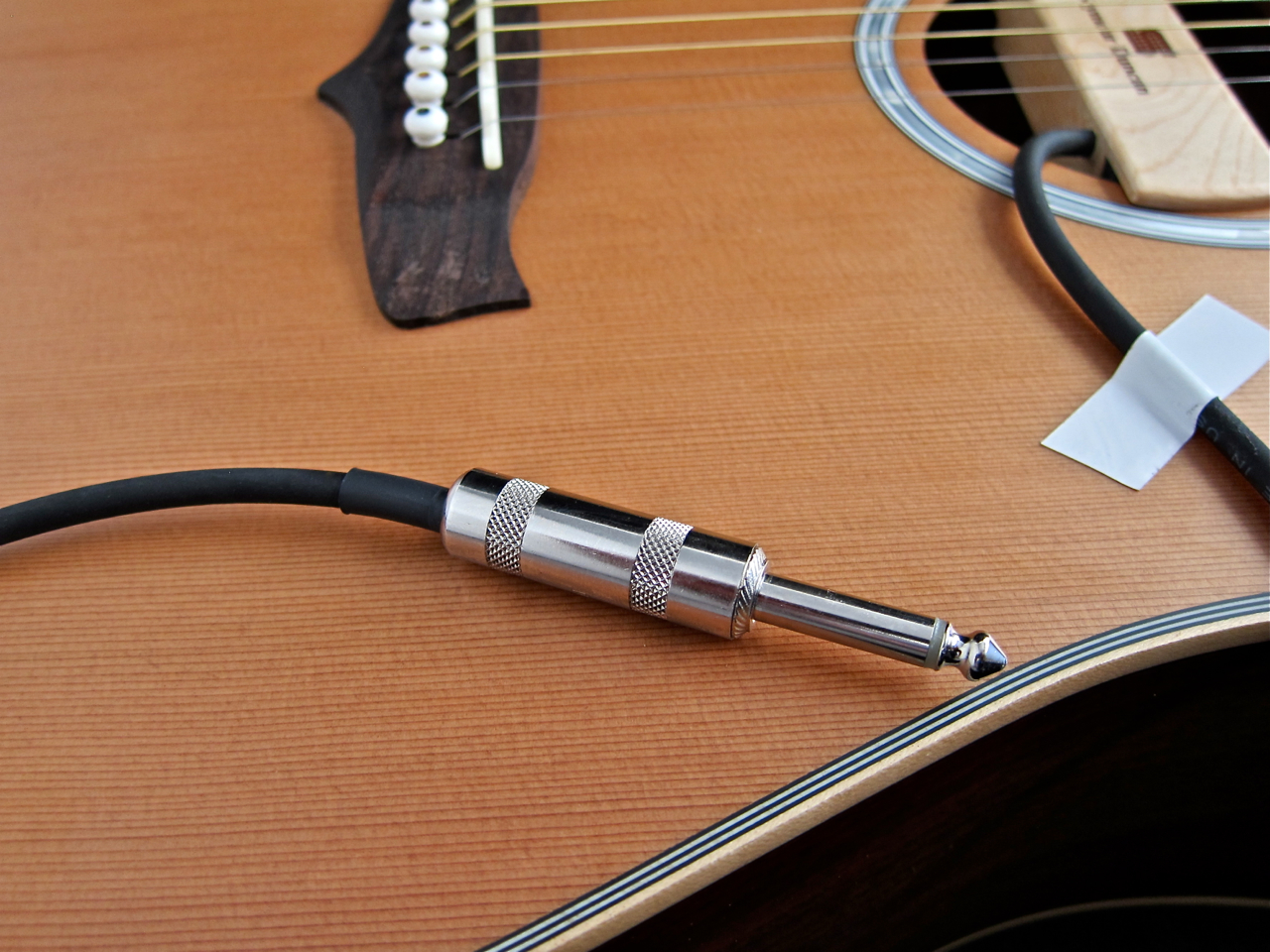
The pickup’s quality lead is approximately five metres long.
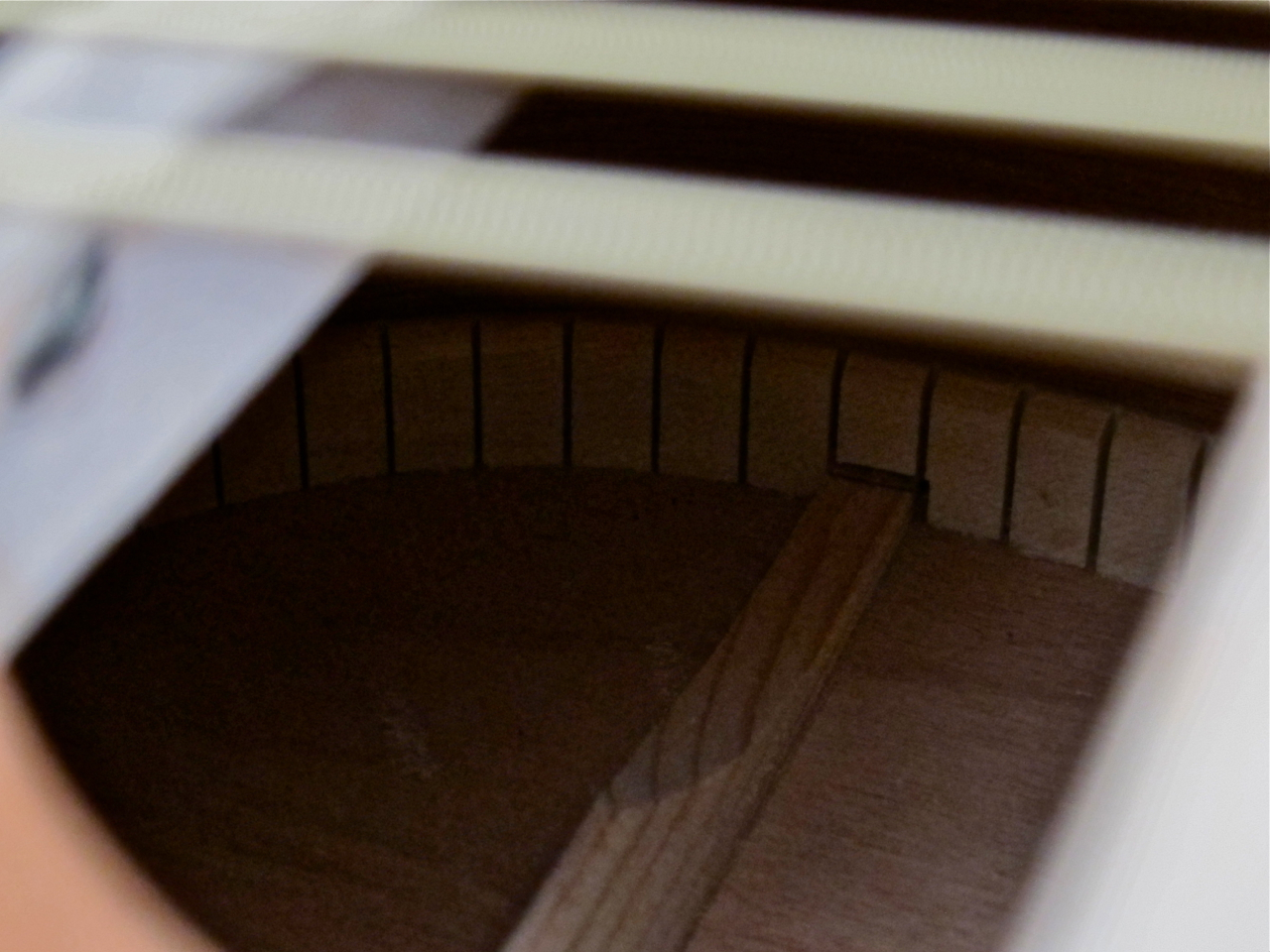
Tanglewood’s standard of workmanship is delightfully crisp, even when it comes to their most affordable models.
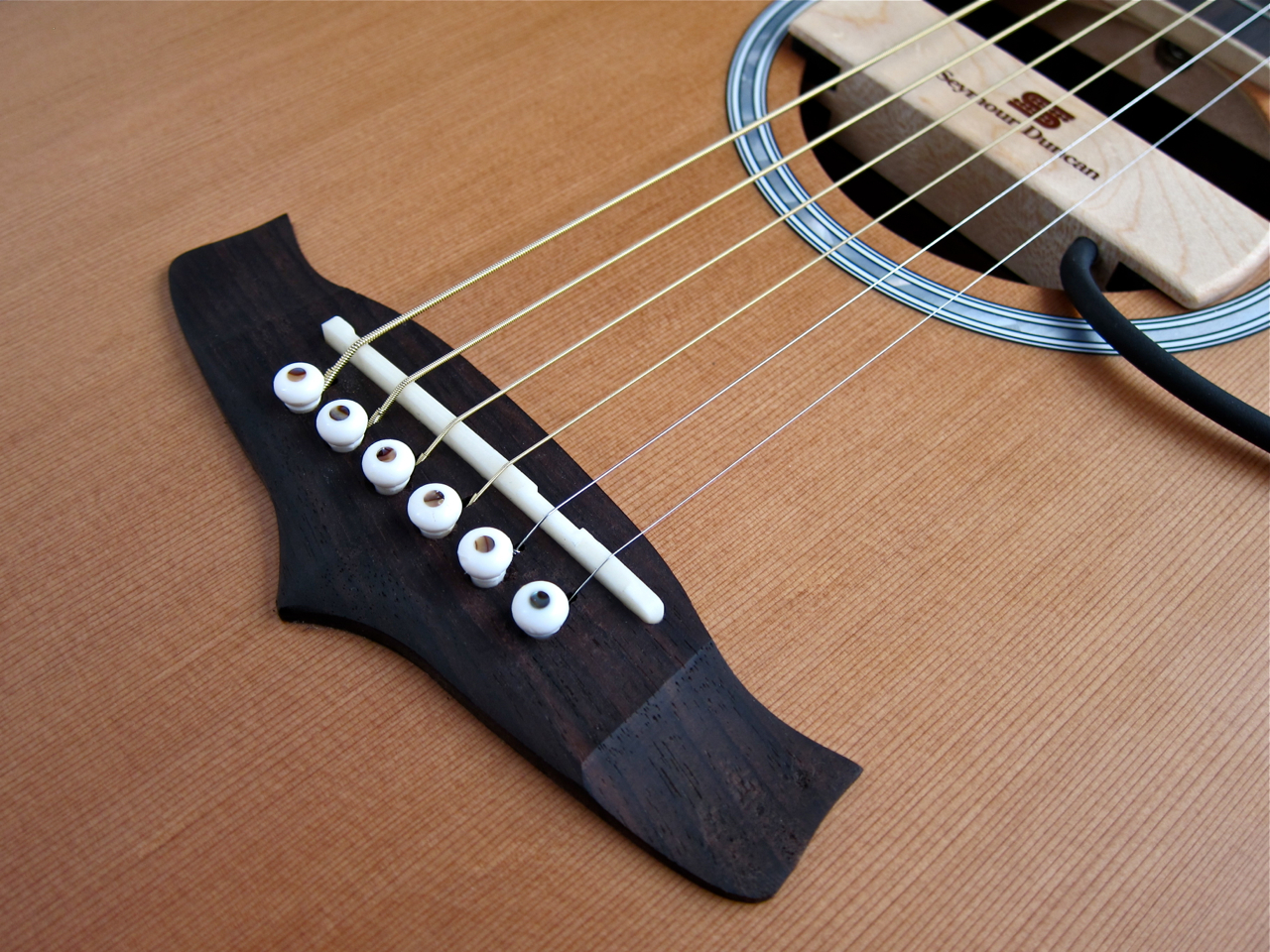
Both the top nut, as well as the compensated bridge saddle have been carved from bovine bone.
****

There is a certain logic behind the Tanglewood TW1000HSRE’s (current price in Finland: 1,137 €) hard-to-enunciate model designation: The letters in the suffix stand for the guitar’s Herringbone-trim (H), its solid rosewood back and sides (SR), and the factory-installed Fishman-electronics (E).
Engelmann spruce has been chosen for this model’s solid wood top.
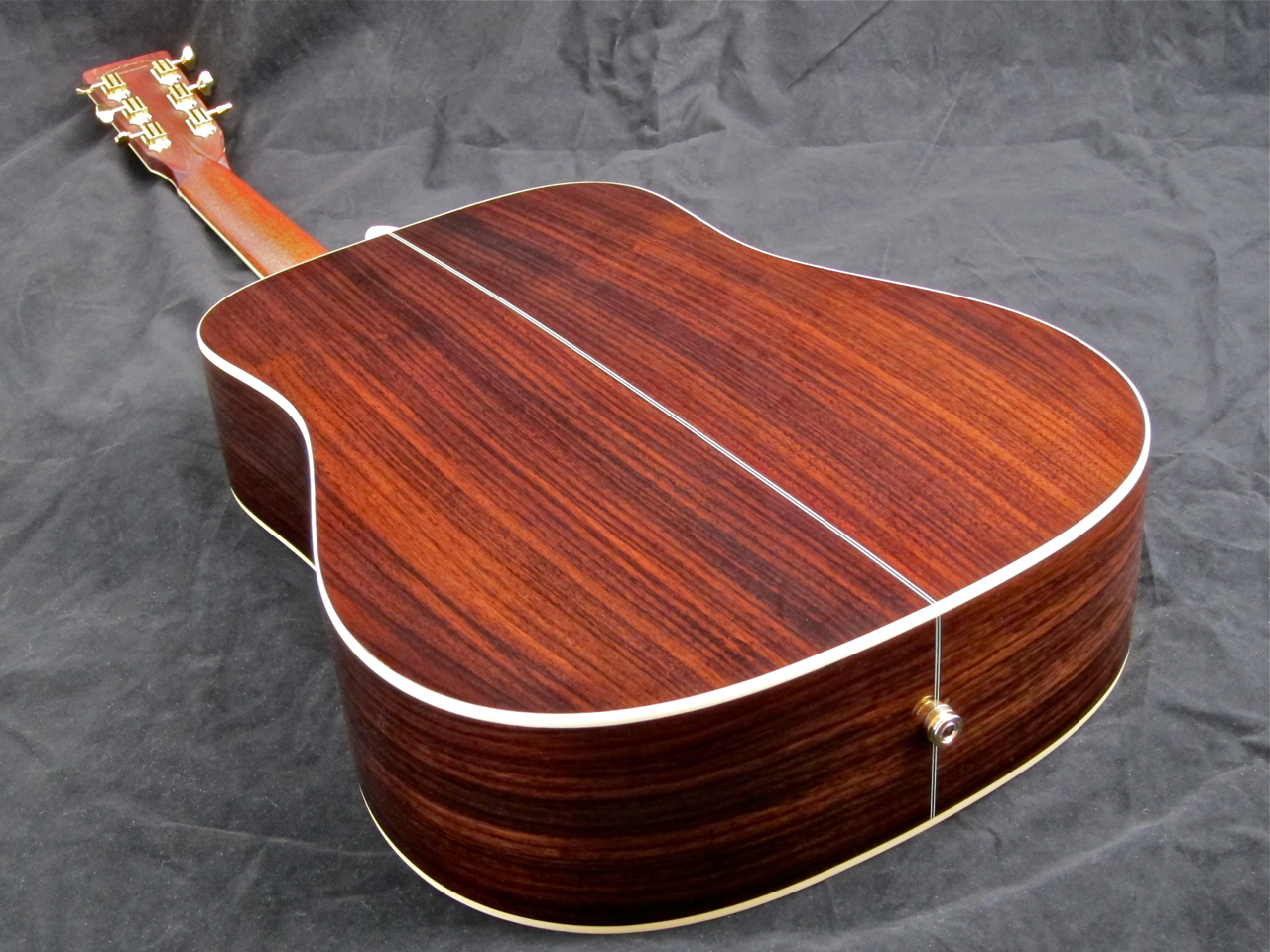
The fine Indian rosewood used for the TW1000 is breathtakingly beautiful.

The same material has also been used for the headstock veneer.
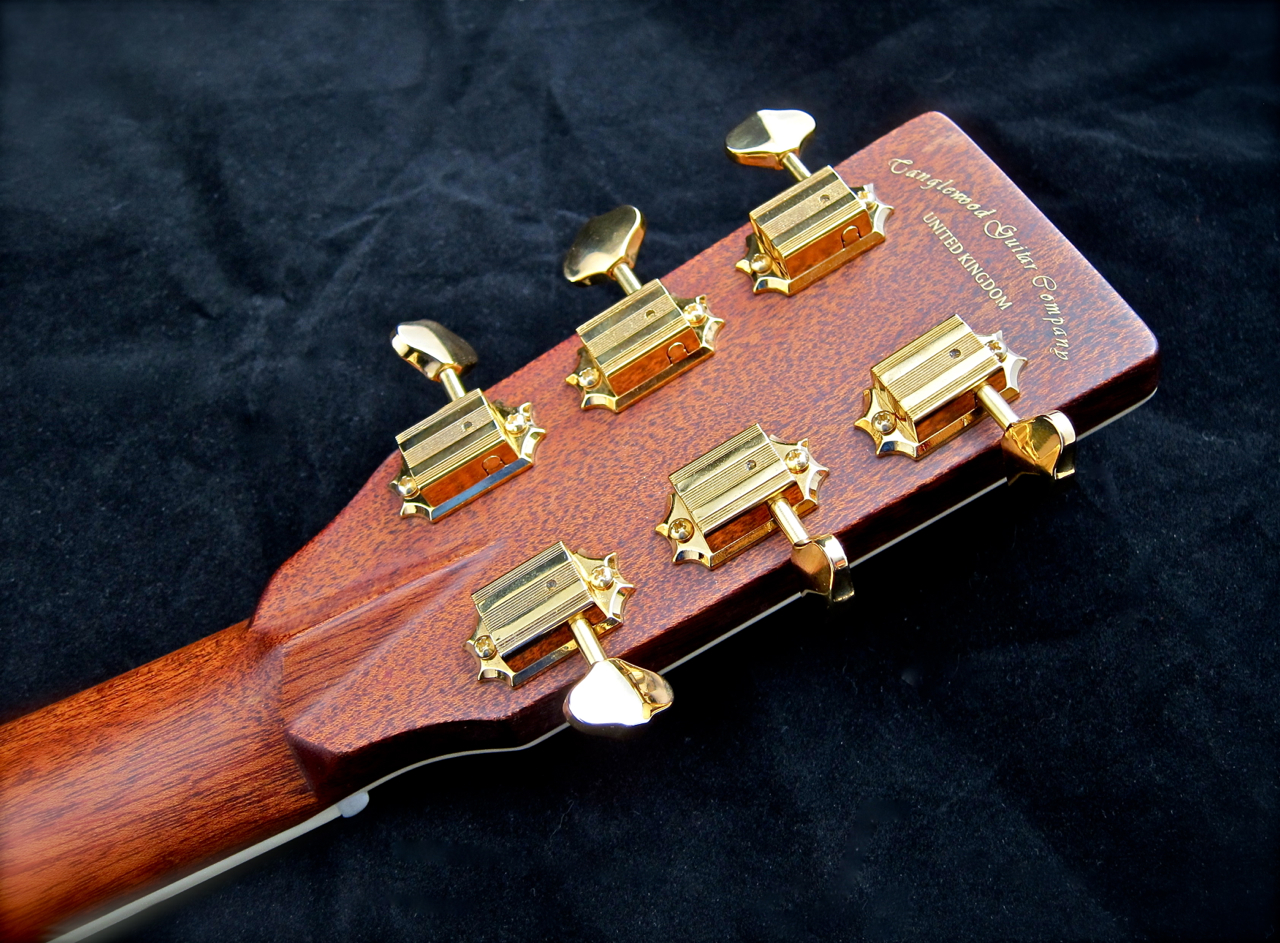
Vintage-aficionados will be delighted at the sight of the diamond-shaped headstock volute, so reminiscent of vintage Martins (and their reissues).
The gold-coloured tuners may look light straight vintage copies, but they have been designed to feature a much more practical, modern gear ratio. The result is a very smooth and precise tuning feel.

Only the best ingredients go into the making of Tanglewood’s top models – this Dread’ sports genuine mother-of-pearl inlays (in a D-45’s hexagonal style) in its ebony fretboard.
The inlay work and fretting are top-notch!

Just look at that rosewood…
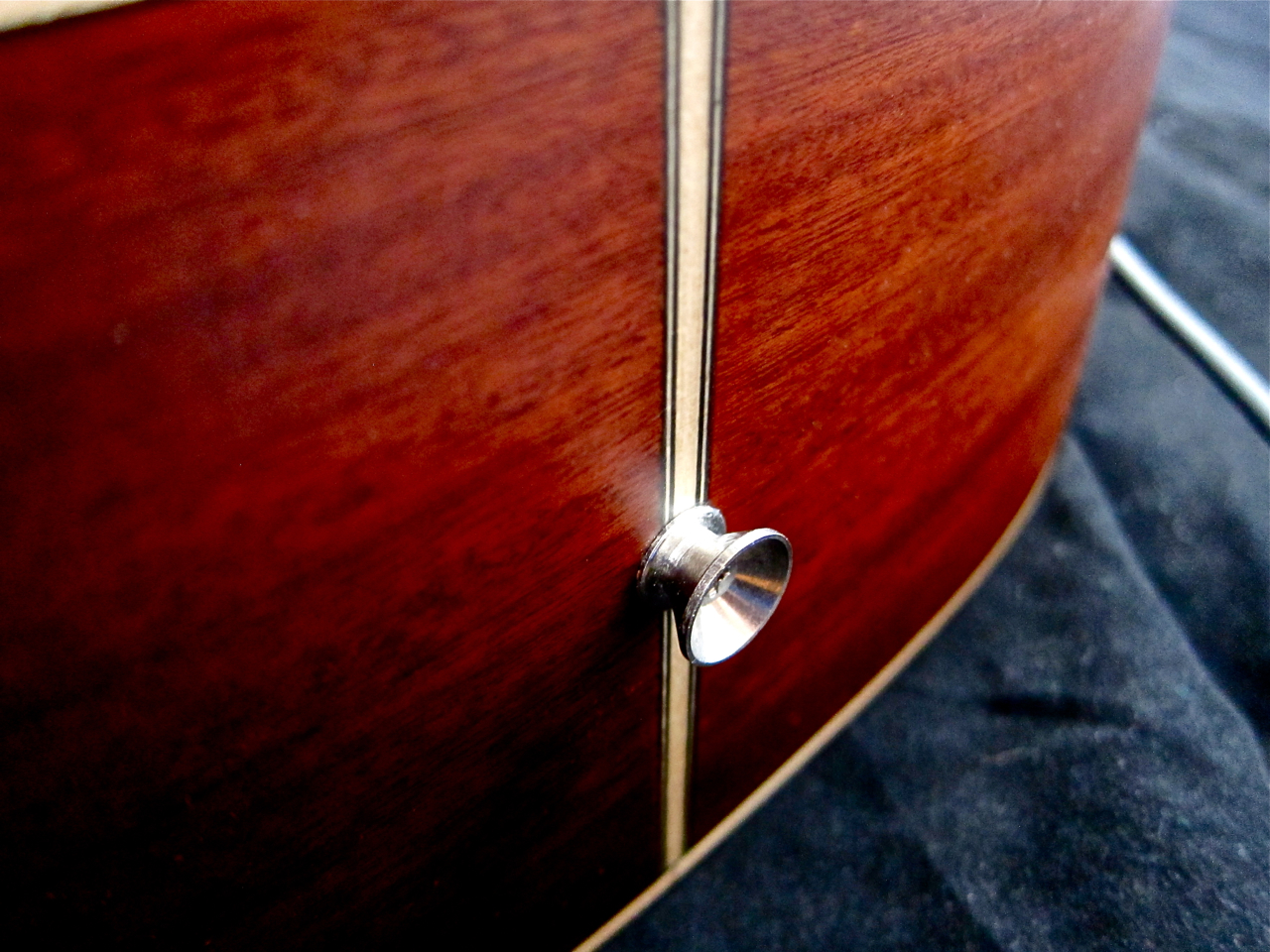
All Tanglewoods come equipped with a second strap button – a small, but nevertheless very nice little detail.
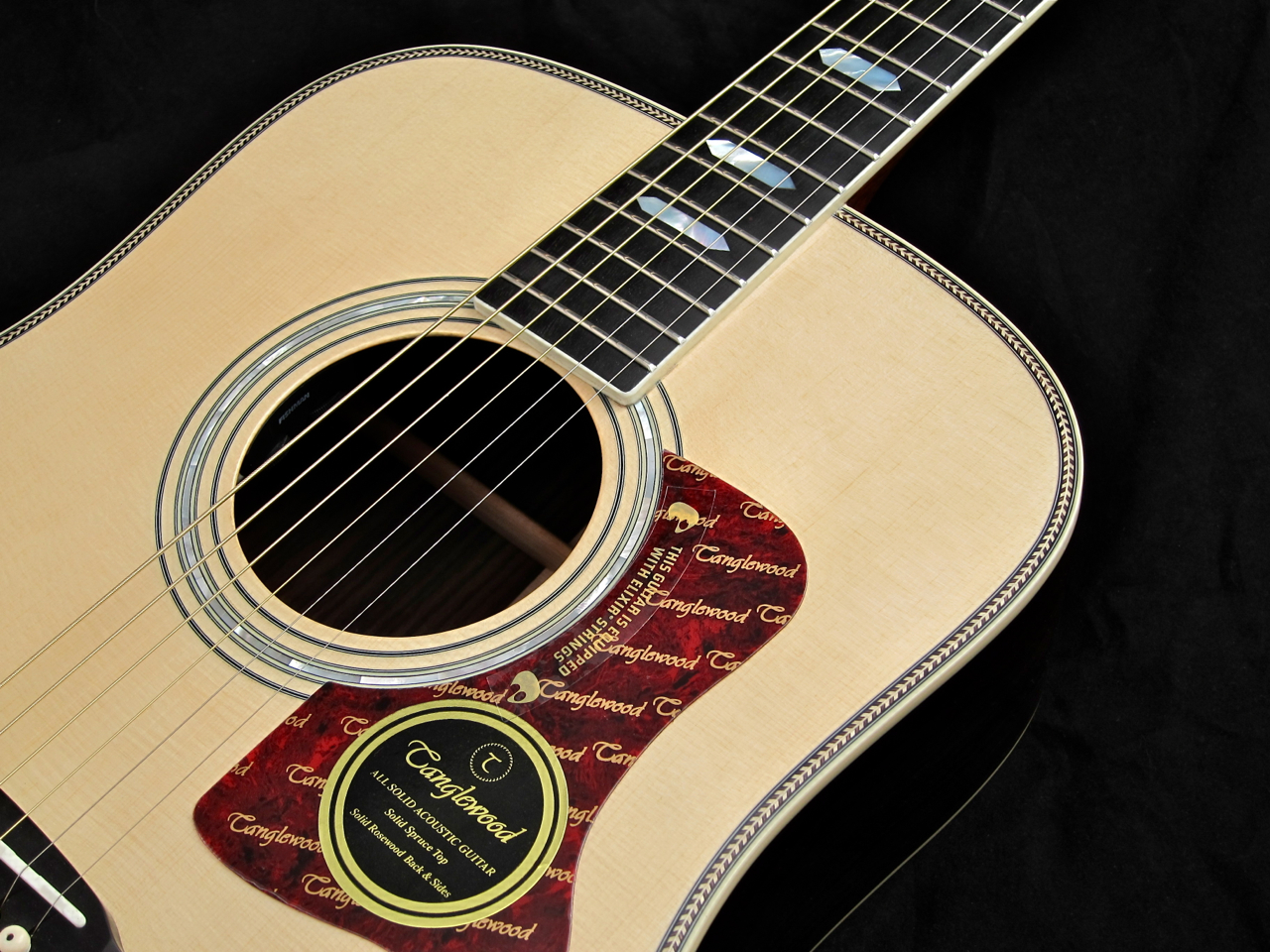
Genuine mother-of-pearl inlays in the rosette, along with Herringbone-binding – this is a guitar enthusiast’s wet dream come true!
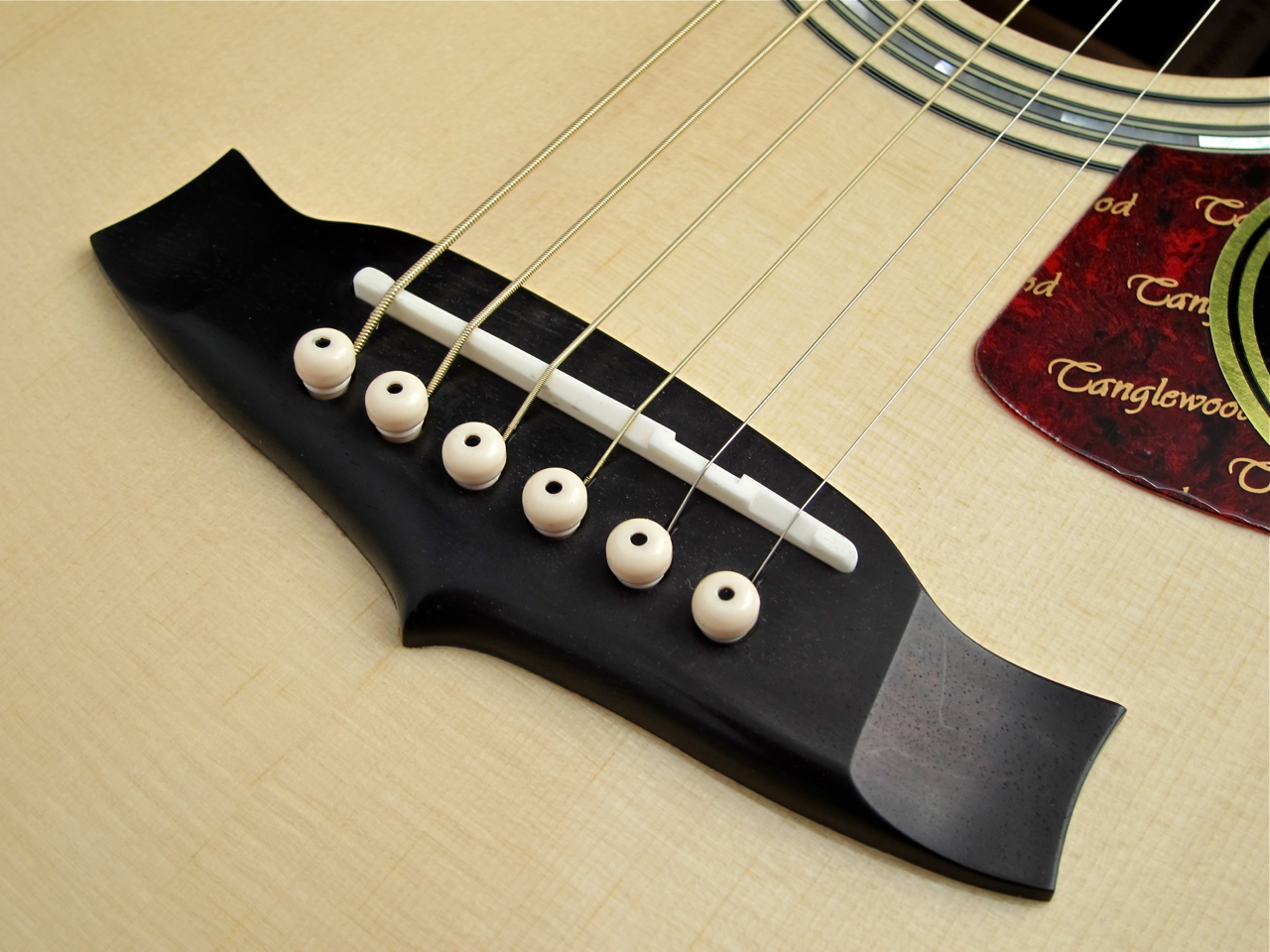
Here’s a second glimpse at Tanglewood’s stylish steel-string bridge – this time crafted from luscious ebony.
Tucked away beneath the bone saddle is a Fishman Sonicore piezo pickup, which feeds a Sonitone-preamp.

The Sonitone’s controls are mounted beneath the soundhole’s bass side edge.
The system is simplicity incarnate, offering a volume control (bridge-facing side) and an easy-to-use tone control (neck-facing side).
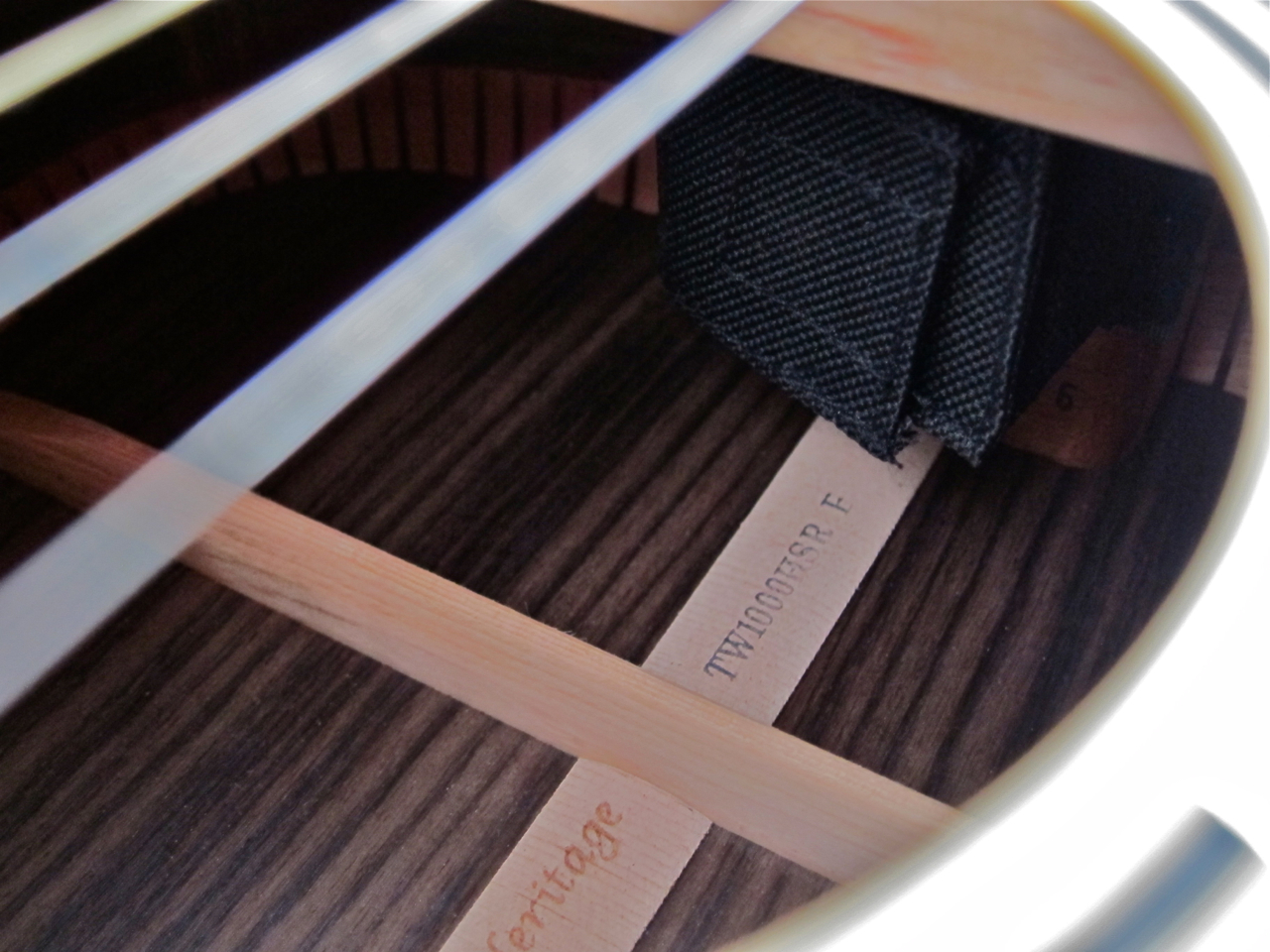
Tanglewood have chosen to keep the TW1000HSRE’s good looks intact, by using a battery pouch, velcro’d to the neck block. There is one drawback, tough: You have to loosen the strings to get to the pouch, meaning quick battery-changes mid-set are impossible.
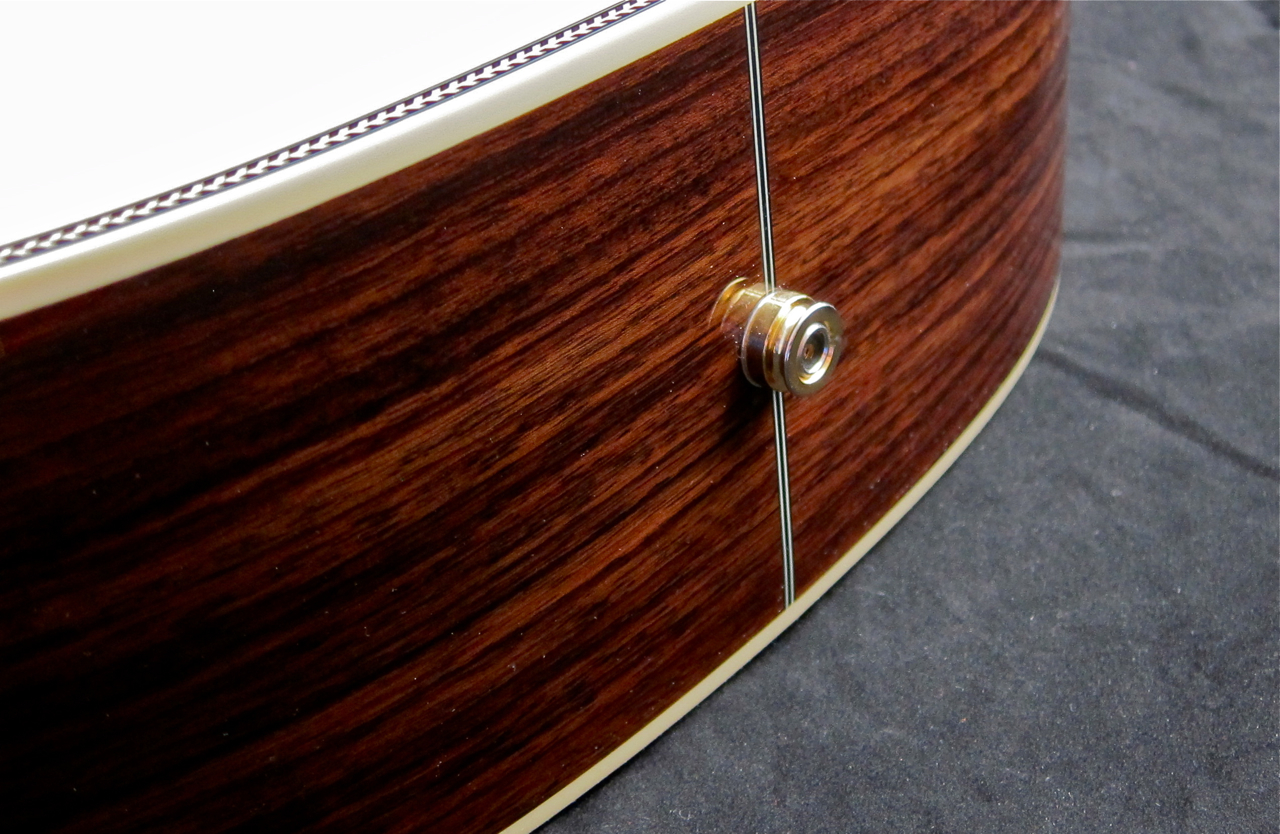
The output jack is integrated into the guitar’s end pin.
****

Our review sample of the TW28–CLN is a very lightweight and comfortable instrument, even though its broad shoulders are a few millimetres wider than those of some other Dreadnoughts. The guitar sits nicely in your lap and feels well-balanced.
For the guitar’s price the standard of its satin finish is quite good – there are a couple of tiny grainy spots on the back of the neck, but overall the feel is very nice.
The neck profile will fit into most players’ hands – it’s a D-profile of medium depth with a slight whiff of a soft V blended in.
The TW28-CLN is a very decent player, thanks to its clean fretwork and comfortable set-up (string height @ 12th fret: bottom-E = 2.6 mm, top-e = 1.7 mm). String spacing is a good middle-of-the-road choice – 3.7 cm at the nut and 5.5 cm at the bridge. It’s a workable compromise for both fingerstylists and plectrum strummers.
I was surprised by the test sample’s punch and volume! After the first few strums I really had to check the label to make sure I hadn’t been given this model’s solid top cousin (the TW28-CSN) by mistake.
The TW28-CLN wins you over with its warm and clear voice. Thanks in no small part to its tight bass response, this model is very easy to record with a condenser microphone set up in front of it.
Seymour Duncan’s Woody sounds old-fashioned in a very nice way: The bottom end is warm, the mid-range is plummy and the trebles are airy and pleasant. If you’re after an authentic Sixties Pop guitar tone, the Woody will get you there in no time. Many of the early Beatles-stuff (pre-1966), for example, was recorded with their Gibsons miked up, as well as plugged into their Vox amps. Furthermore, I’m quite sure the Woody’s vintage-tinged tones will also please the slide guitar fraternity.
Here are some sound examples of the TW28-CLN recorded with an AKG microphone, as well as using the Duncan Woody:
****

To say Tanglewood’s TW1000HSRE is a ”great guitar for its price” or a ”very decent Chinese-made instrument” would do this guitar a grave injustice. The TW1000HSRE is simply a great guitar, carefully crafted from top quality materials – period! Our review sample is that sort of guitar that puts a quick stop to any kind of brand snobbery.
The guitar’s finish is flawless, and the instrument plays like a dream.
We have a mid-sized, oval C-Profile, coupled with a generous string spacing – 3.95 cm at the nut and 5.75 cm at the bridge – which makes a lot of difference to fingerstyle players.
The set-up is superb, with the guitar playing cleanly across the whole neck, despite the comfortably low action (bottom-E: 2.0 mm, top-e: 1.6 mm).
The TW1000HSRE’s acoustic tone and punch will bowl you over! The bottom end is fat and rich, the mid-range has character in spades, and the top end sparkles like a diamond. This is a very hard guitar to put down.
The Fishman Sonicore-piezo and Sonitone-preamp seem like the perfect match for this Tanglewood – a really inspired choice. The Fishman system sounds surprisingly ”acoustic” with not so much as a whiff of piezo quack or dryness. The amplified tone is a couple of degrees more upfront, and a tiny bit fuller, than the TW1000HSRE’s acoustic voice, but it’s very close. Coming to grips with the Sonitone only requires seconds. I left the tone control on full – if you need more scope for adjustment you’ll most probably find it in your acoustic amp or at the mixing console.
****
If there’s a conclusion to be drawn from this review, then maybe it is that Tanglewood seem to consistently offer fantastic value at any price-point. And this is regardless of whether you chose one of their affordable models (like the TW28-CLN) or something from the very top of their catalogue (like the TW1000HSRE).
****
Tanglewood TW28-CLN
Tanglewood TW1000HSRE
Seymour Duncan Woody soundhole pickup
Finnish distributor: Musamaailma
****
Tanglewood TW28-CLN
Current price in Finland: 201 €
Pros:
+ value-for-money
+ workmanship
+ playability
+ sound
****
Tanglewood TW1000HSRE
Current price in Finland: 1,137 €
Pros:
+ top grade instrument
+ value-for-money
+ workmanship
+ playability
+ acoustic sound
+ preamp sound
****
Seymour Duncan Woody (SA-3 HC)
Current price in Finland: 61.70 €
Pros:
+ very affordable
+ easy to install
+ stylish
+ vintage-type tone
Cons:
– vintage-type tone




 Kitarablogi.com – Finland's premier Guitar and Bass blog