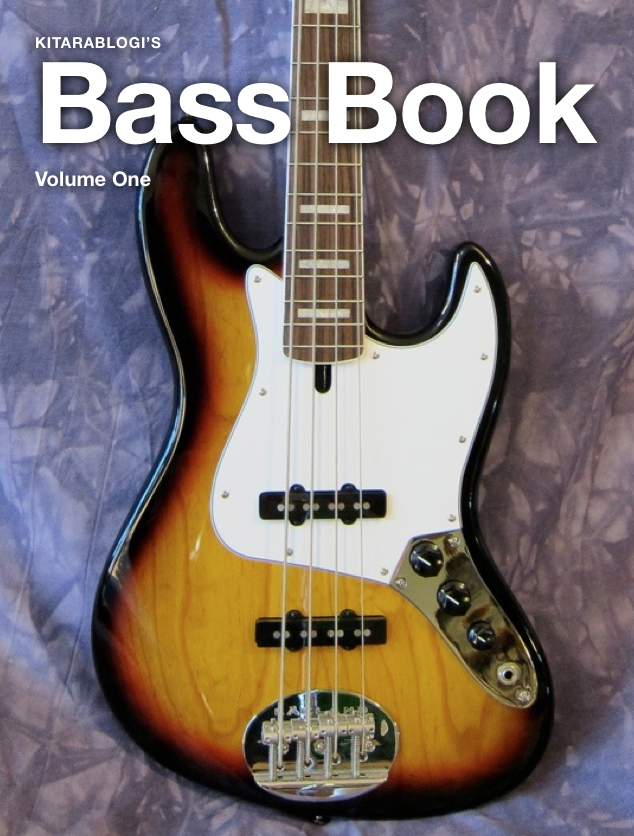
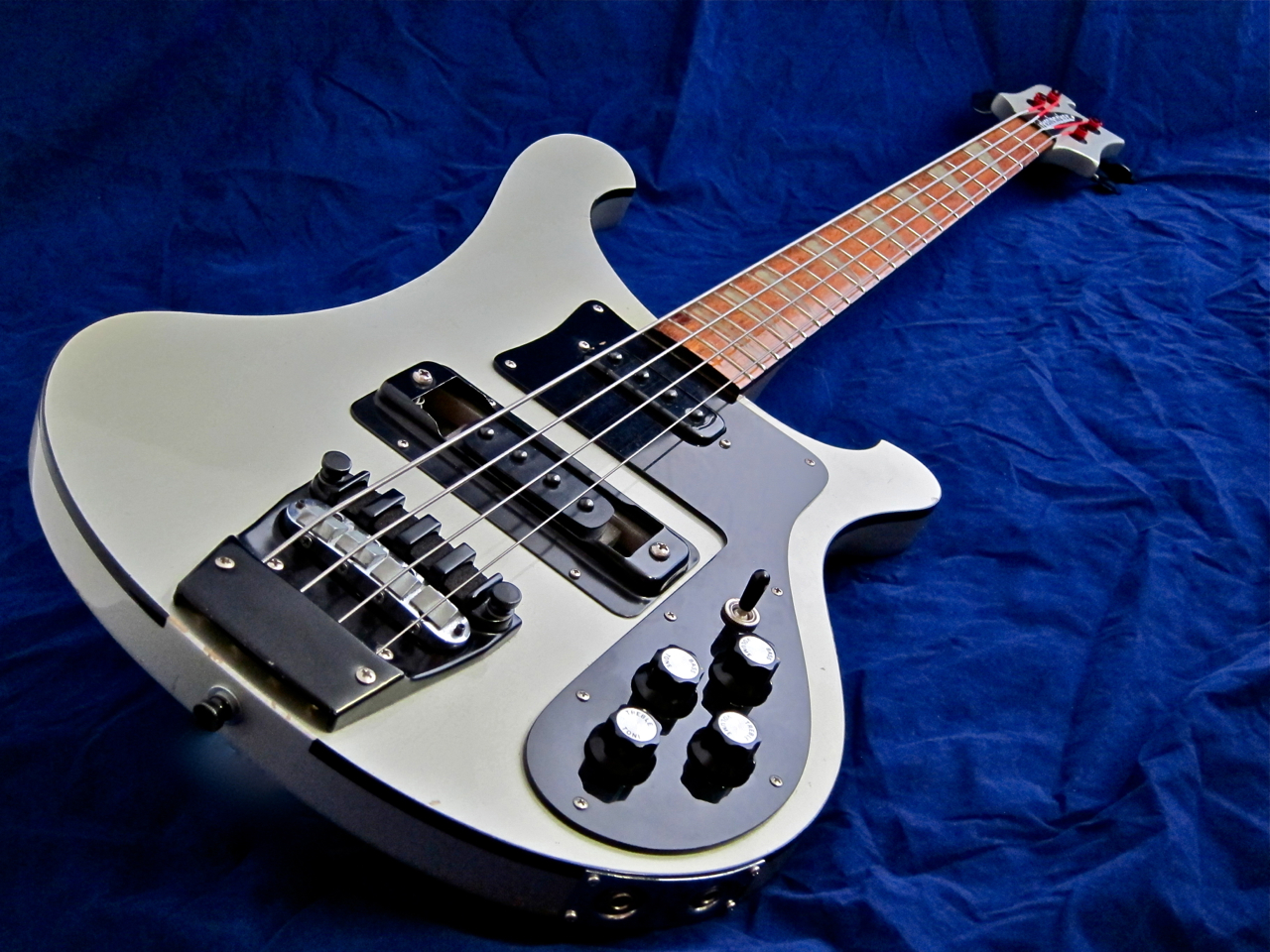
Bass Bookissa esitellään yhdeksän eri bassoa kuvilla ja soundeilla. Soittimien kirjo ulottuu suomalaisesta Kataja Custom Shopista Laklandiin, Mannedesignista Rickenbackeriin, ja Schecterista Spectorin kautta Tokai-bassoon.
Lataa kirja tästä LINKISTÄ tai suoraan iBookstorelta.
There are a lot of changes in store for ESP/LTD-instruments in 2013, because ESP have decided to reshuffle and restructure their whole product range.
In future the name ESP will only appear on the headstocks of Japanese ESP Custom Shop instruments. ESP’s Standard series will be renamed E-II.
New for LTD in 2013 is their Made-in-Japan Elite series, which has been designed to offer the very best of what this brand has to offer.
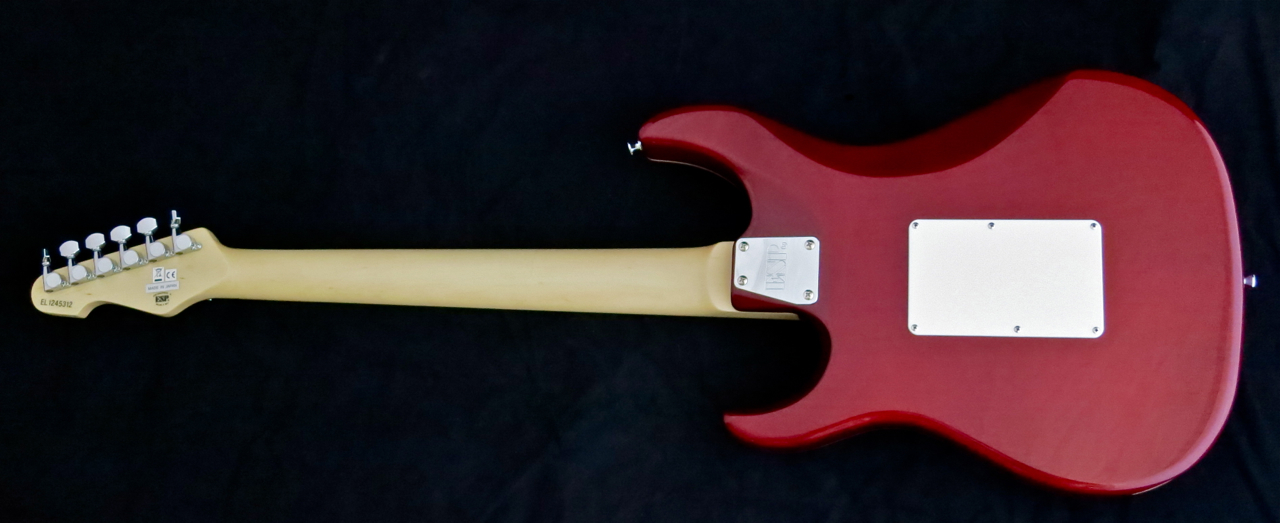
Kitarablogi has received a brand-new LTD Elite ST-1 -guitar for review. The model is available in two permutations – either equipped with a rosewood ’board neck and active EMG-pickups (LTD Elite ST-1/R EMG) or (like our review sample) sporting a maple fretboard and passive Seymour Duncan pickups (LTD Elite ST-1/M).
****
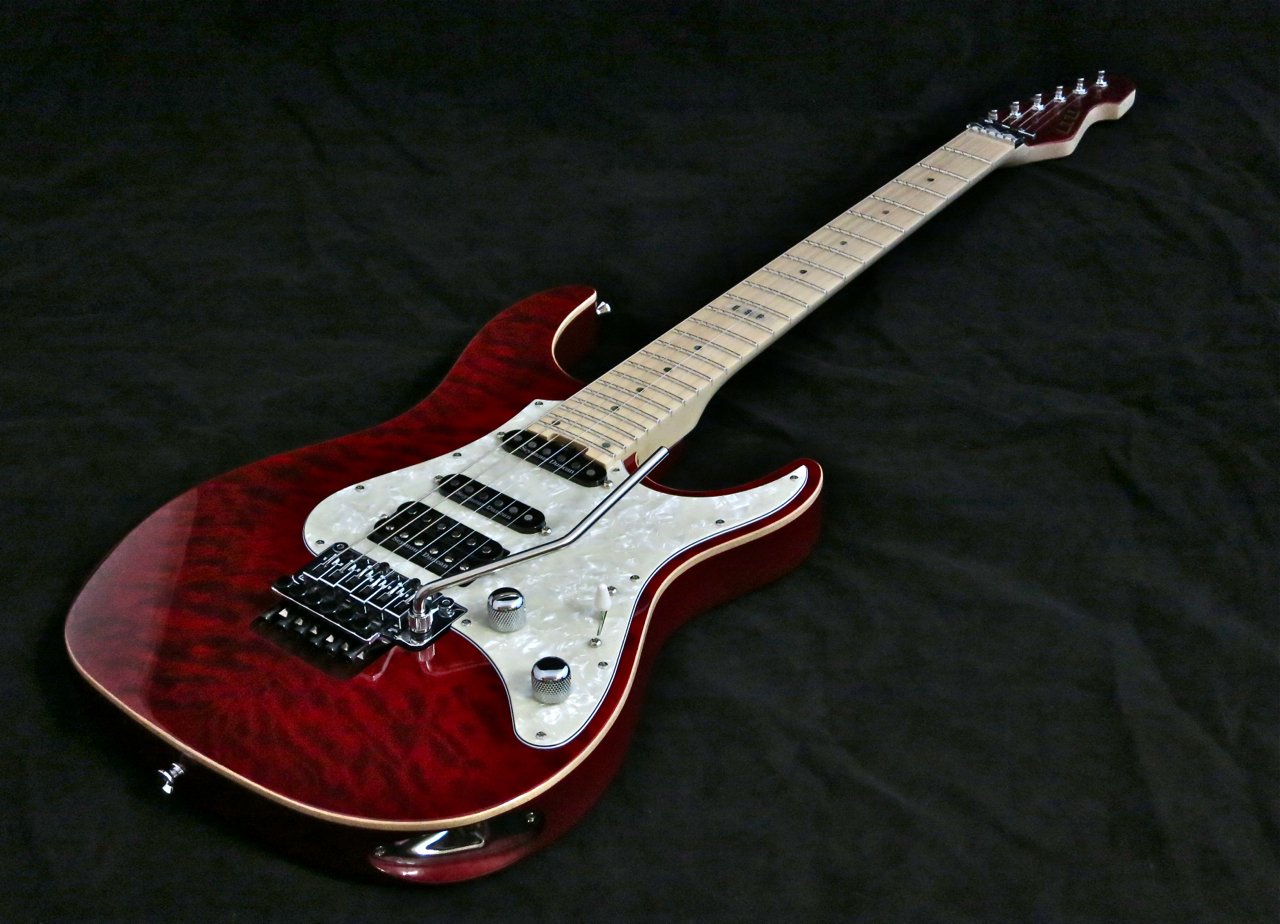
The brand-new LTD Elite ST-1/M (1.387 €) is a stunningly beautiful guitar, which manages to blend successfully an air of timelessness with the appeal of a sleek widdle-machine.
This version is released in two different finishes – the blue Aqua Marine and the See-Through Black Cherry of our test sample – while the EMG-version is only available in See-Through Black.
The basic ingredients making up the Elite ST-1 follow a traditional recipe: A bolt-on maple neck and an alder body.
The sleek ESP-neck joint makes excursions to the dusty end of the fingerboard just that bit more comfy.
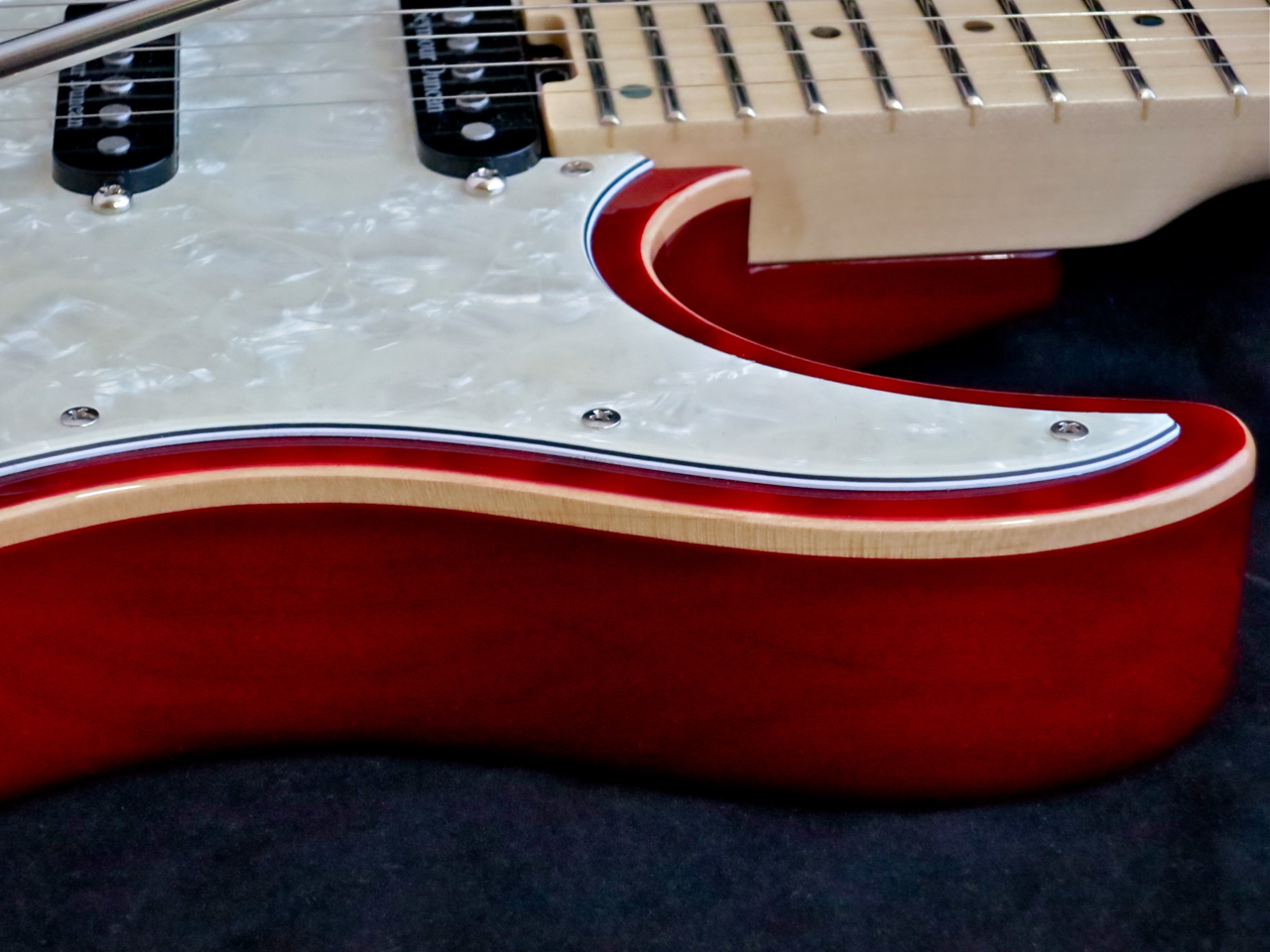
The front of the body is spruced up by a maple top carrying a quilt maple veneer.
By leaving the edges of the maple top uncoloured you get what is known as ”fake binding”.
The ST-1 is equipped with 24 jumbo frets. The quality of the fretwork is exemplary, and the same holds true for the finish of the neck, which blends a satin-lacquered back with a gloss-finished fretboard.
Quality is also the name of the game when it comes to the guitar’s hardware.
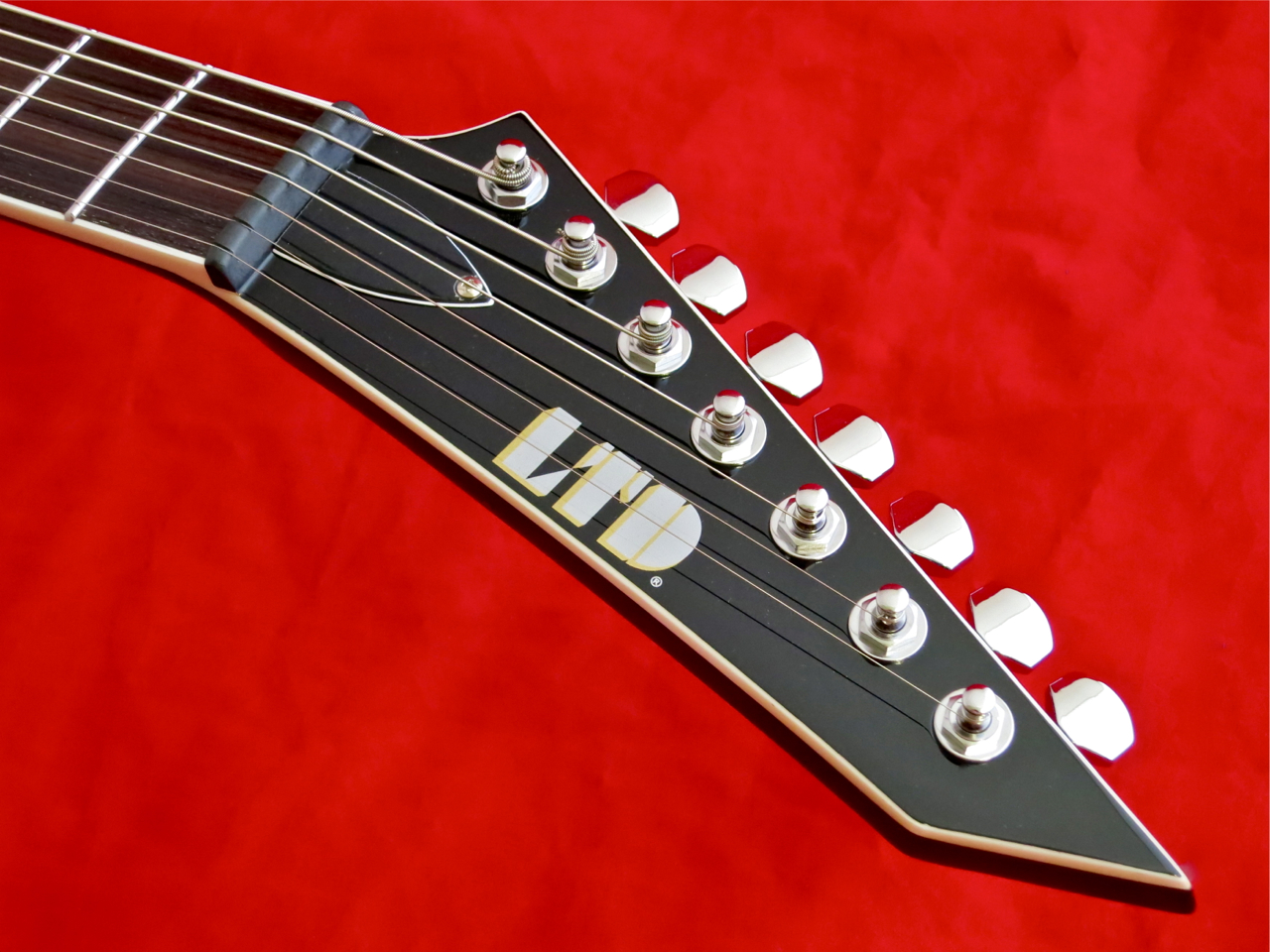
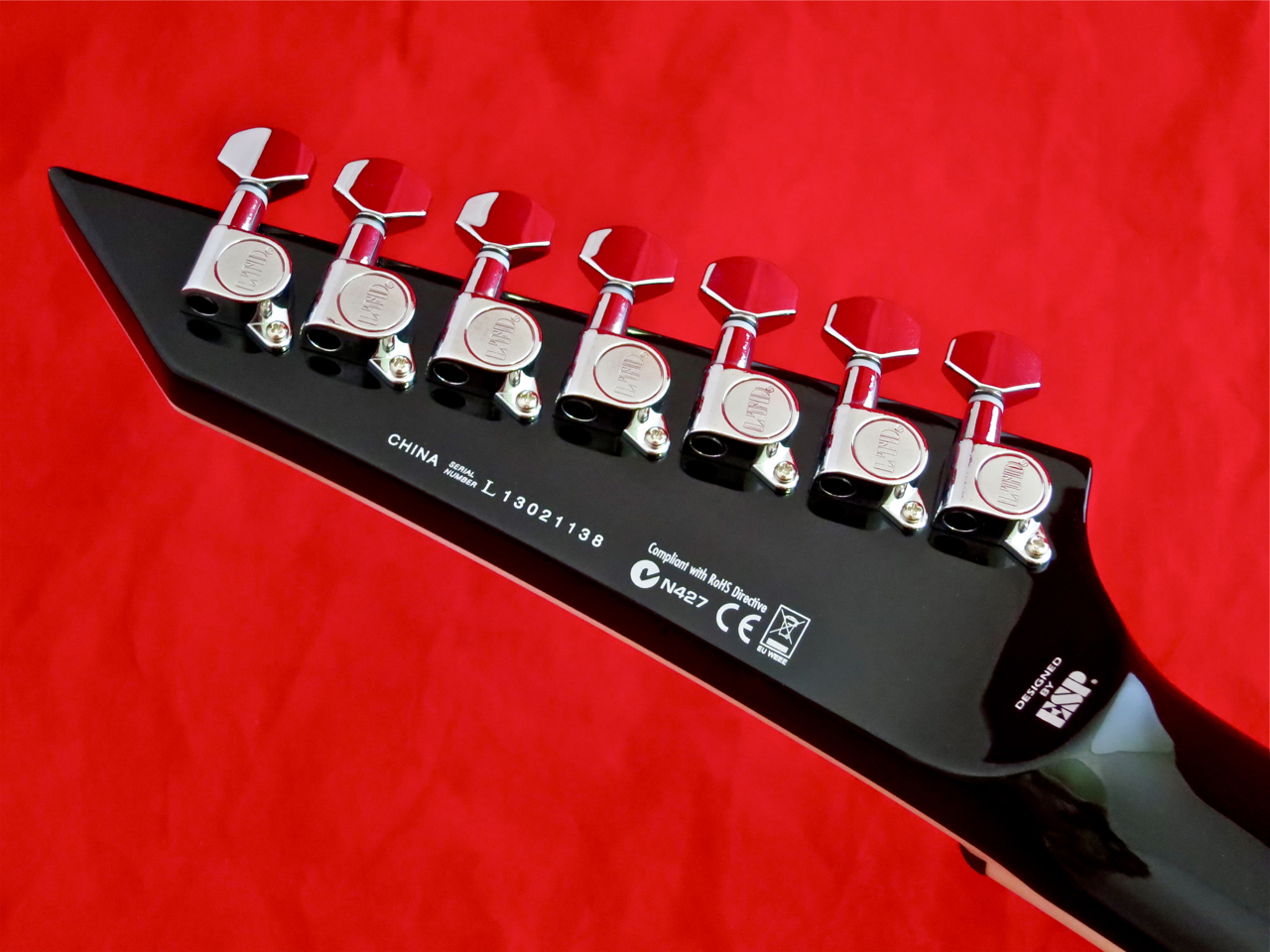
The chrome-plated, sealed tuning machines are Gotoh units.
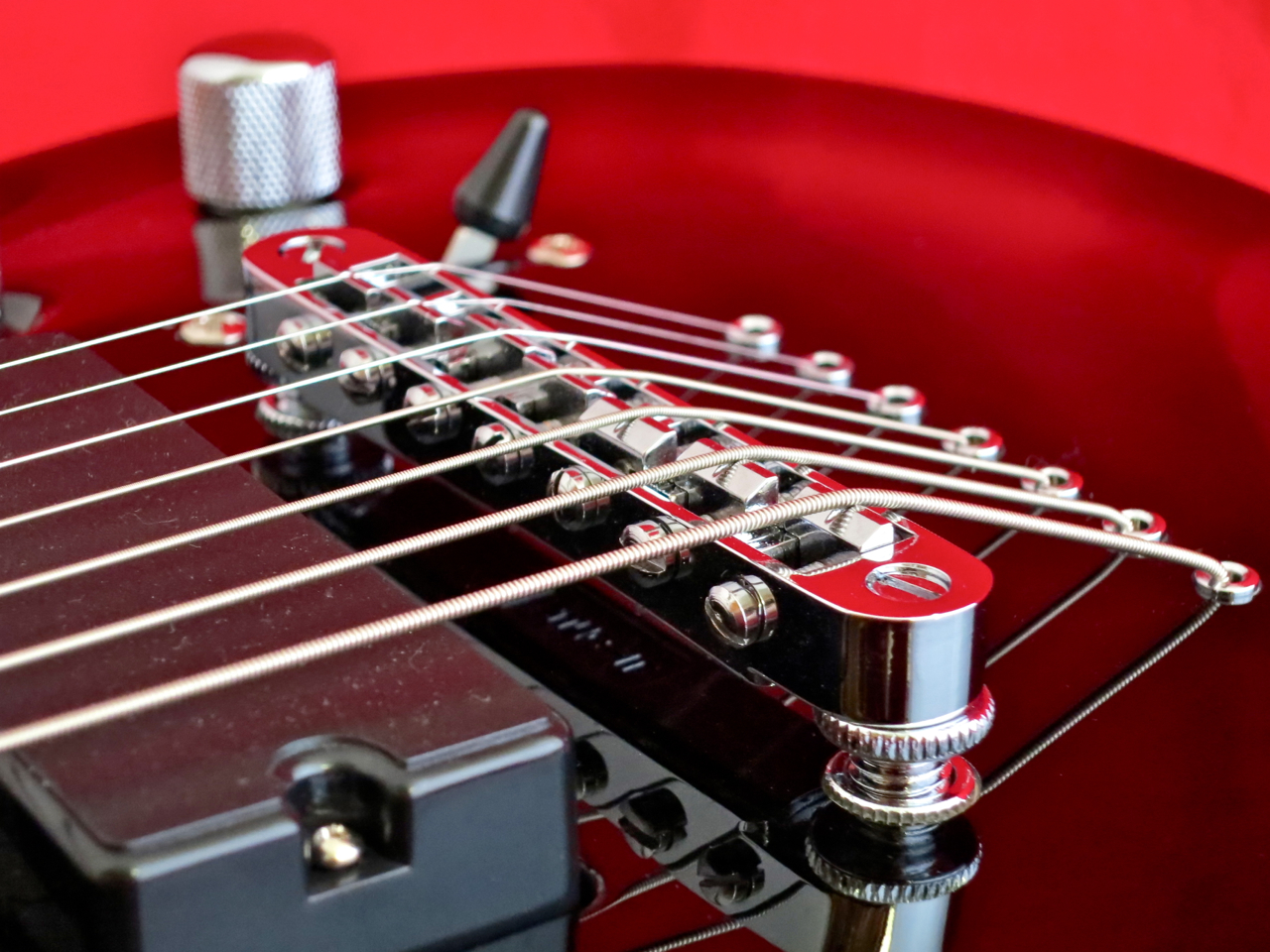
The Floyd Rose vibrato is the top-drawer Original-version, made from steel in Germany by the Schaller company.
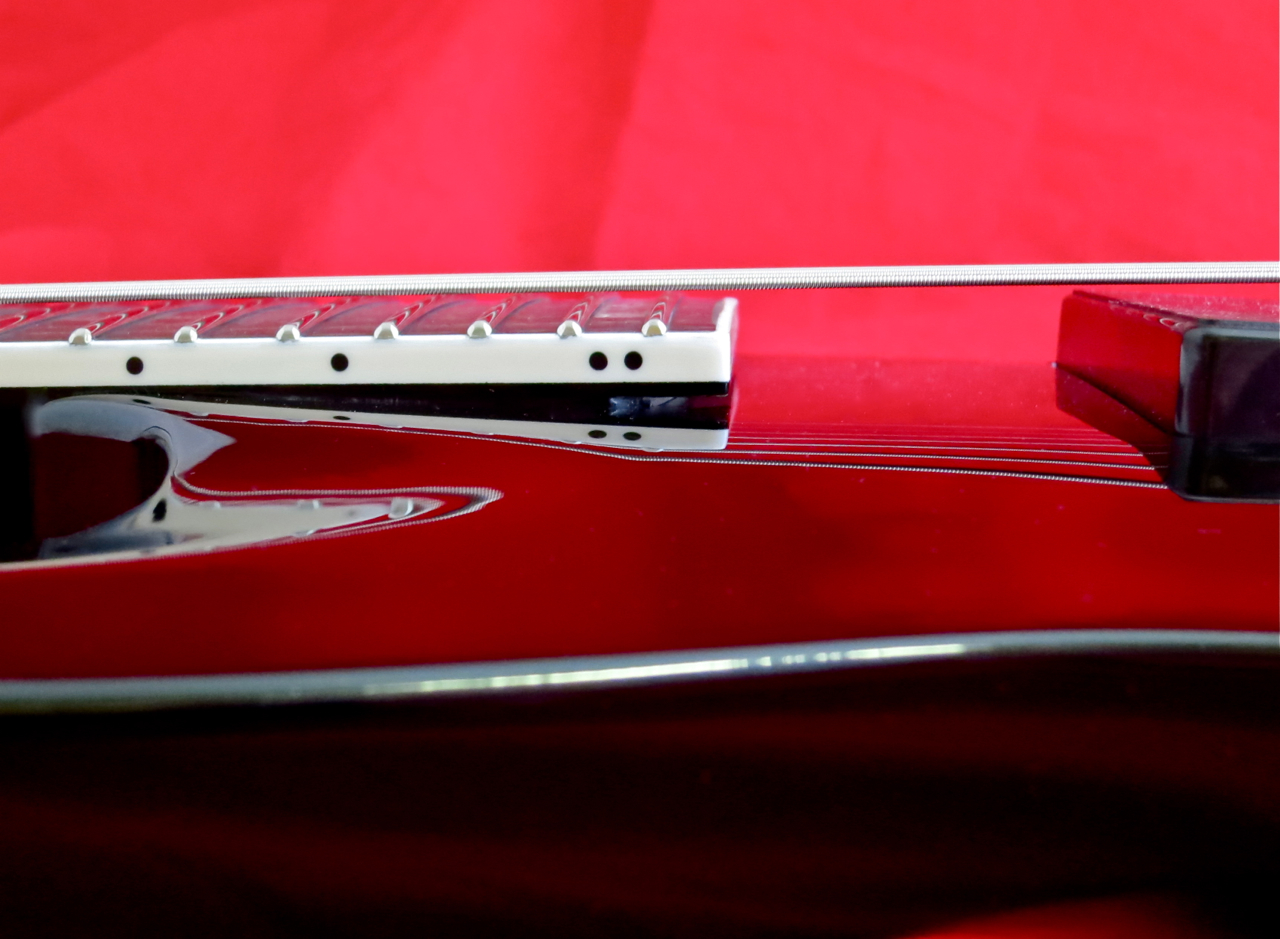
This is what a well-installed locking nut looks like.
The string retainer bar pulls the strings down onto the nut, so the tuning doesn’t change when a string lock is opened or closed.
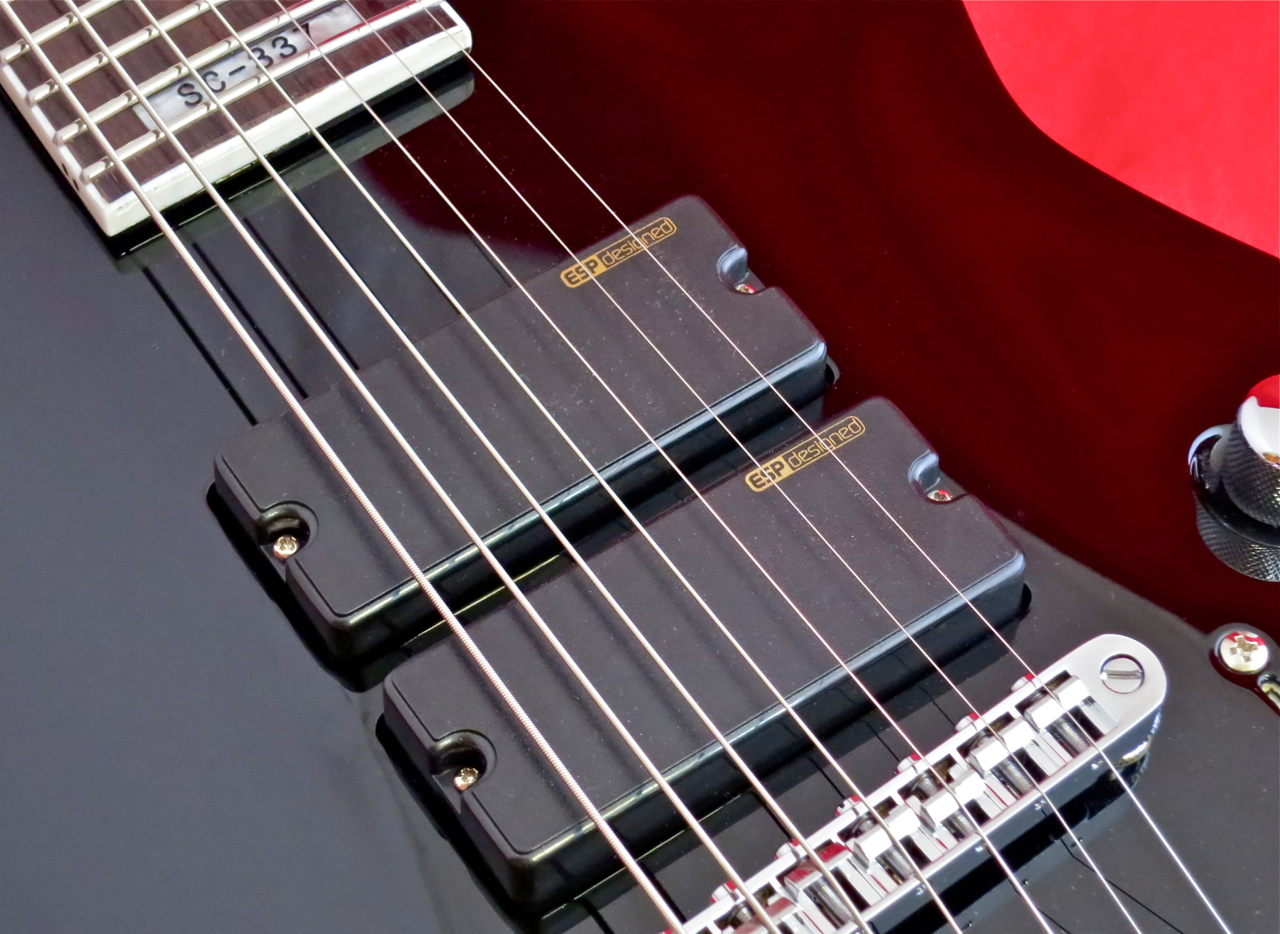
Seymour Duncan is the brand of choice for the LTD Elite ST-1/M when it comes to pickups:
The neck and middle units are stack-coil STK-S4-models, which promise genuine singlecoil tone bar the usual hum. The bridge humbucker is the company’s excellent, hotter-than-vintage Custom-model (SH-11).
The LTD’s truss rod can be adjusted without any component removal. Simply turn the wheel between the 24th fret and the neck pickup, using something like a small screwdriver or a nail.
The ST-1’s comprises a five-way switch, as well as master volume and tone controls.
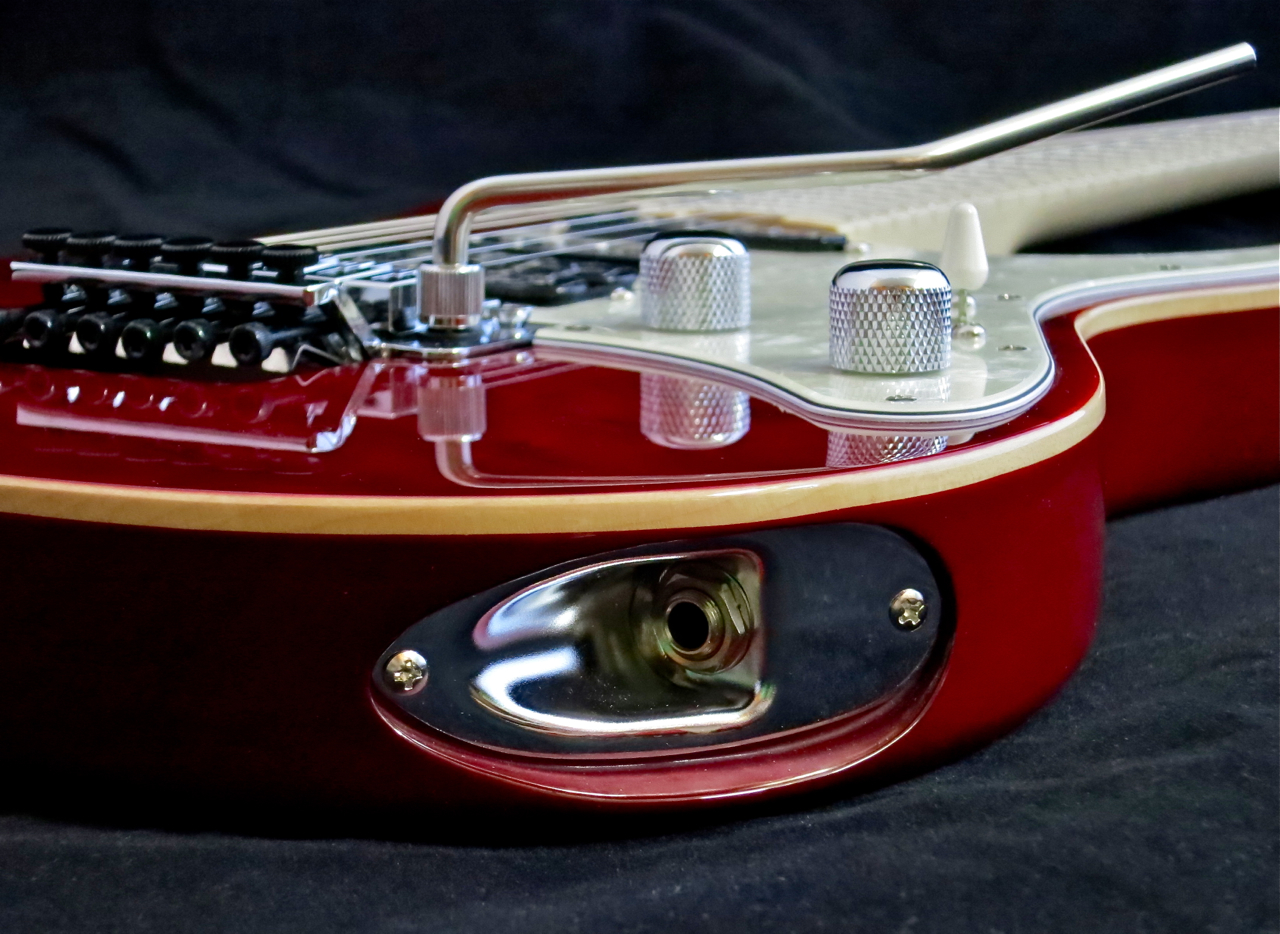
The jack plate has been sunk into the side of the body, making it easy to secure your guitar lead between the guitar and your strap.
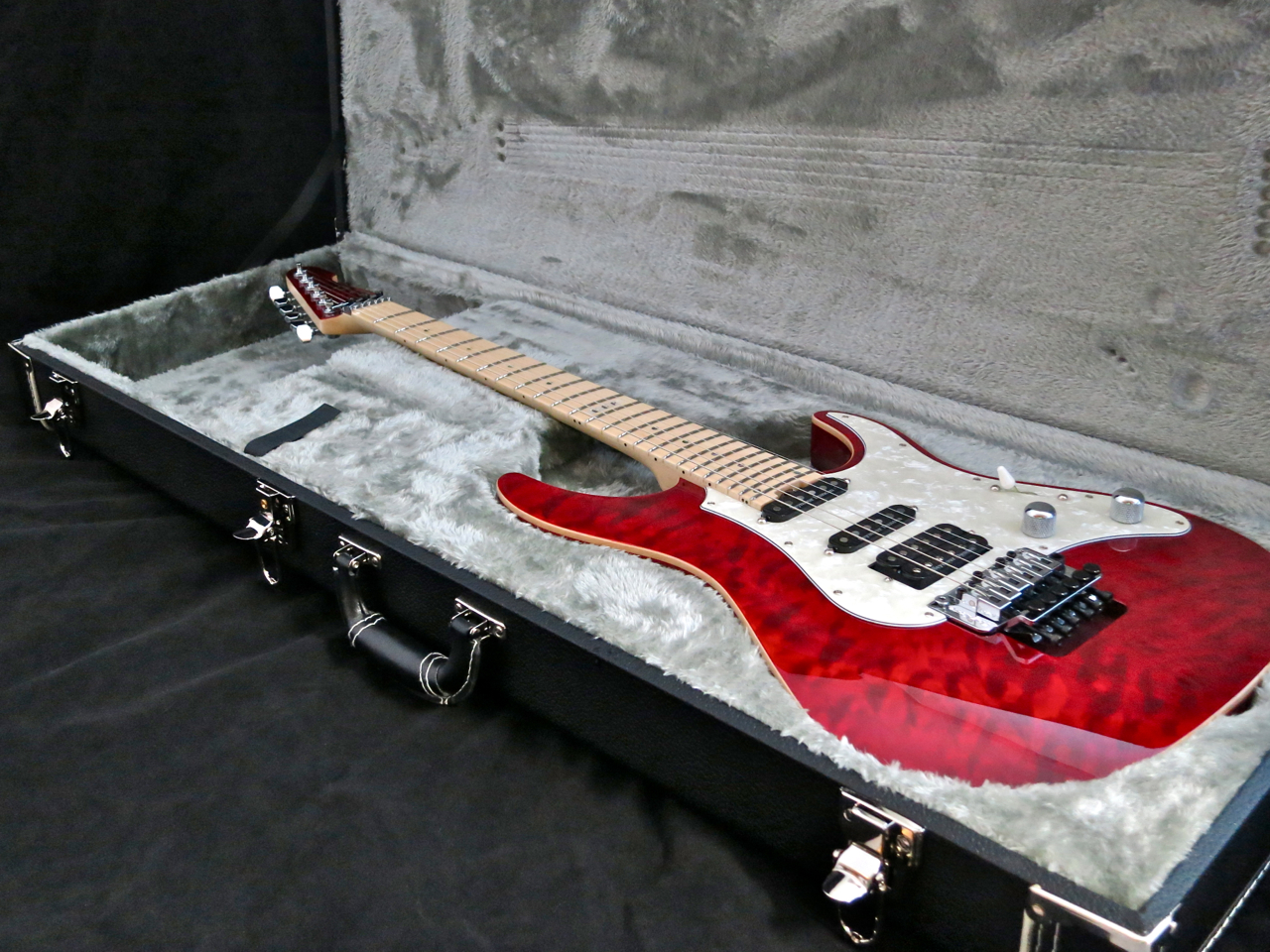
All LTD Elite series instruments are sold with their own quality hard case!
****
The LTD’s specs sheet mentions a ”thin U-profile”, which calls to mind the 1990s and dreadful, hand-tiring ”speed necks”.
I needn’t have worried, though, because in fact the Elite ST-1’s neck turns out to be a reasonably chunky affair – very good for both playing comfort and good sustain. I would call this neck profile a ”medium-thickness D”.
The review instrument arrived with an excellent set-up, making the guitar very easy to play. Even though the action was adjusted quite low (E: 1,6 mm/e: 1,4 mm), the Elite’s acoustic tone was superb and totally free of fret rattling. The fat and tall frets feel great and provide a fast launch pad for your fingerboard excursions.
A cheap – or badly installed – Floyd Rose bridge can be a real headache, when it comes to tuning stability and sound.
Luckily, the excellent LTD Elite doesn’t suffer from any vibrato-related problems, making this instrument a real showcase for Japanese quality and workmanship. The guitar plays great and sounds fantastic, and the vibrato bridge works like a dream, even if you like to abuse your whammy bar.
The beautiful voice of the ST-1 carries over nicely into a clean amp’s signal. The sound sample starts with the neck pickup:
In an overdriven and distorted context the Elite ST-1’s hum-cancelling stack-coil pickups are a real treat. The Seymour Duncans give you authentic and wiry Strat-type tones, but completely free from hum and buzz.
Switching to the Custom-humbucker is like engaging an additional afterburner for that extra kick:
At first the reorganisation of all things ESP might be a bit confusing, but I’m sure we’ll all get to grips with the new nomenclature quickly. One thing is clear, though:
The LTD Elite ST-1 is one of the best Superstrat-style guitars that I’ve ever had the pleasure to play. This LTD is a top-drawer, professional instrument with a fantastic feel and outstanding tone.
Based on this review it seems clear that the Elite-series really offers you the best of LTD at a fair price.
All of the five guitar tracks on this tune have been played using the LTD Elite ST-1:
Mannedesign is the more affordable, Far Eastern-produced brand of Italian company Manne Guitars.
Apart from Mannedesign’s wide array of electric guitars and basses the brand’s model range also includes several steel-string acoustics, two of which are featured in this review:
The Parlour-sized Mannedesign PFM and Roberto Dalla Vecchia’s signature-Dreadnought, the RDV.
****
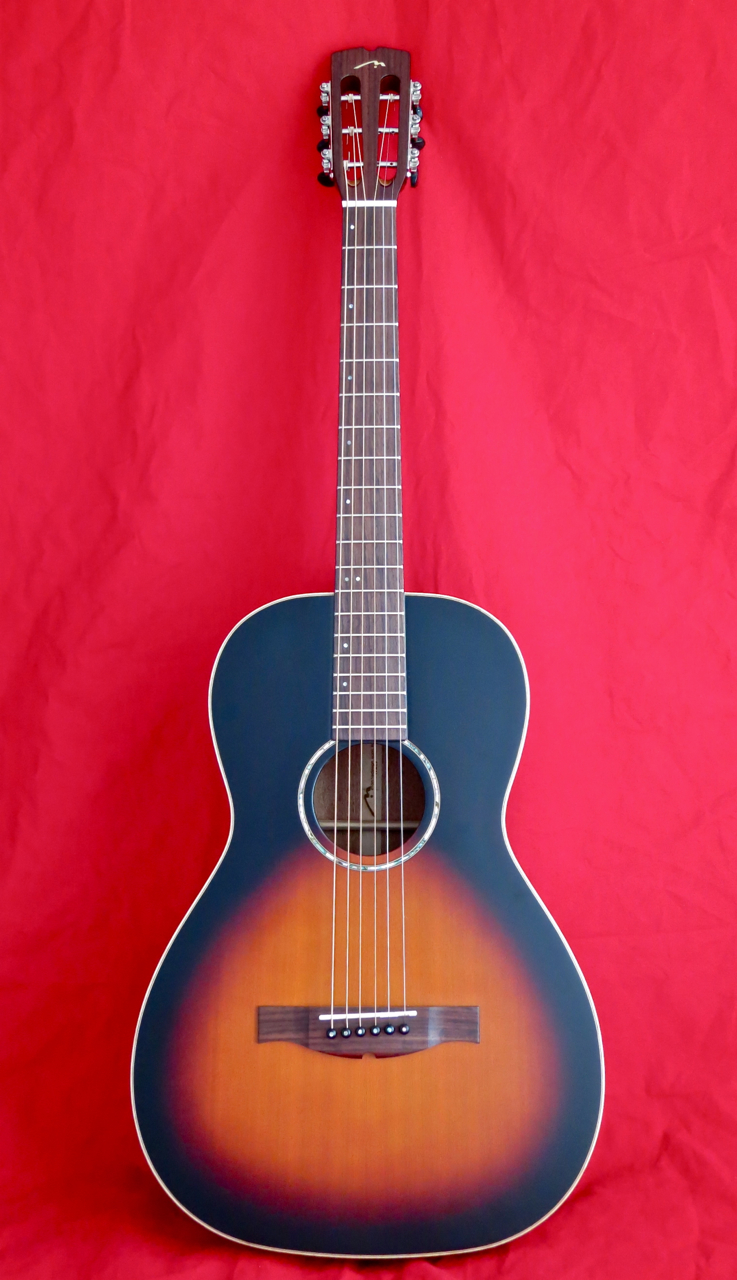
The Mannedesign PFM (660 €) is an all-solid, small-bodied instrument for the Blues-, Folk- and Roots-guitarist, who is looking for a vintage-toned guitar.
The deep and rich matte finish on the PFM’s cedar top embues the instrument with a good dose of street credibility.
The mahogany neck is one-piece, save for the upper half of the headstock, and a another piece used to get the neck heel up to its full length. The neck joint is a the 12th fret, just like it was on many guitars in the 1930s.
The back and rims of the soundbox have been crafted from beautiful solid mahogany.
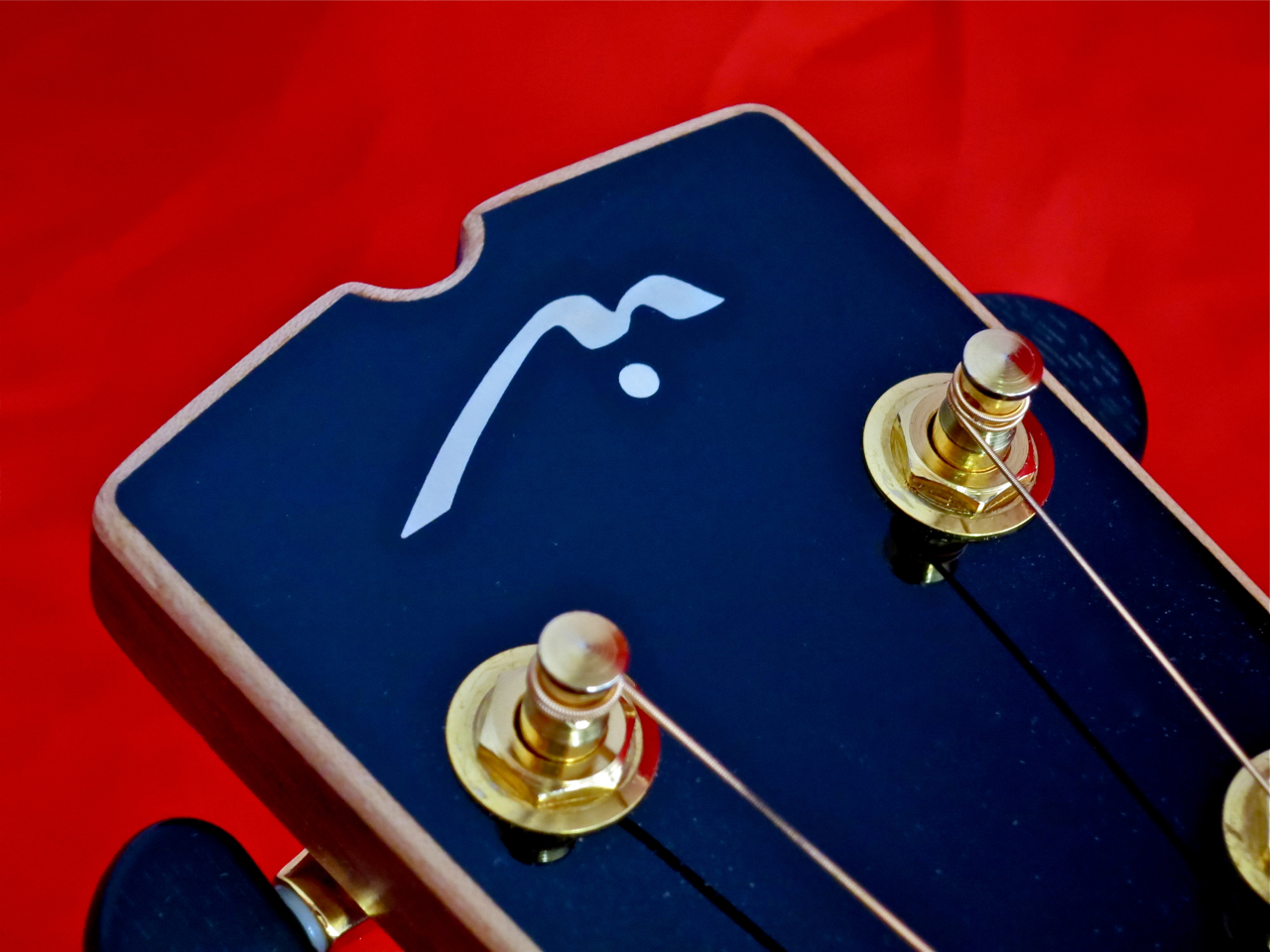
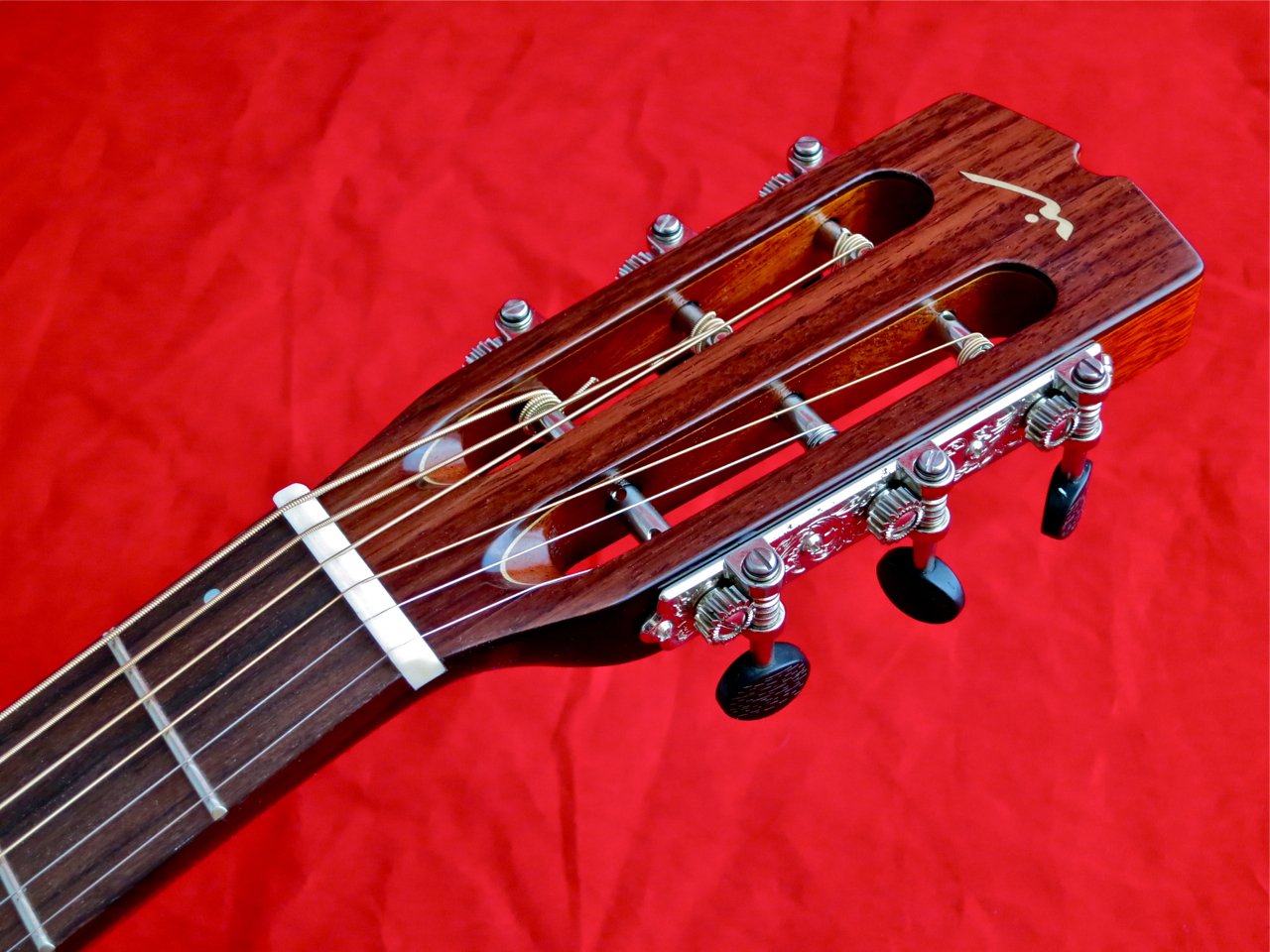
The headstock sports a rosewood veneer, which has been beautifully inlaid with a maple Mannedesign-logo.
TRhe top nut has been carved from genuine bone.
Gotoh supplies this model’s quality open tuning machines, which are a well-designed update on vintage tuners.
The Mannedesign’s rosewood fingerboard holds 19 well-seated, medium-sized frets.
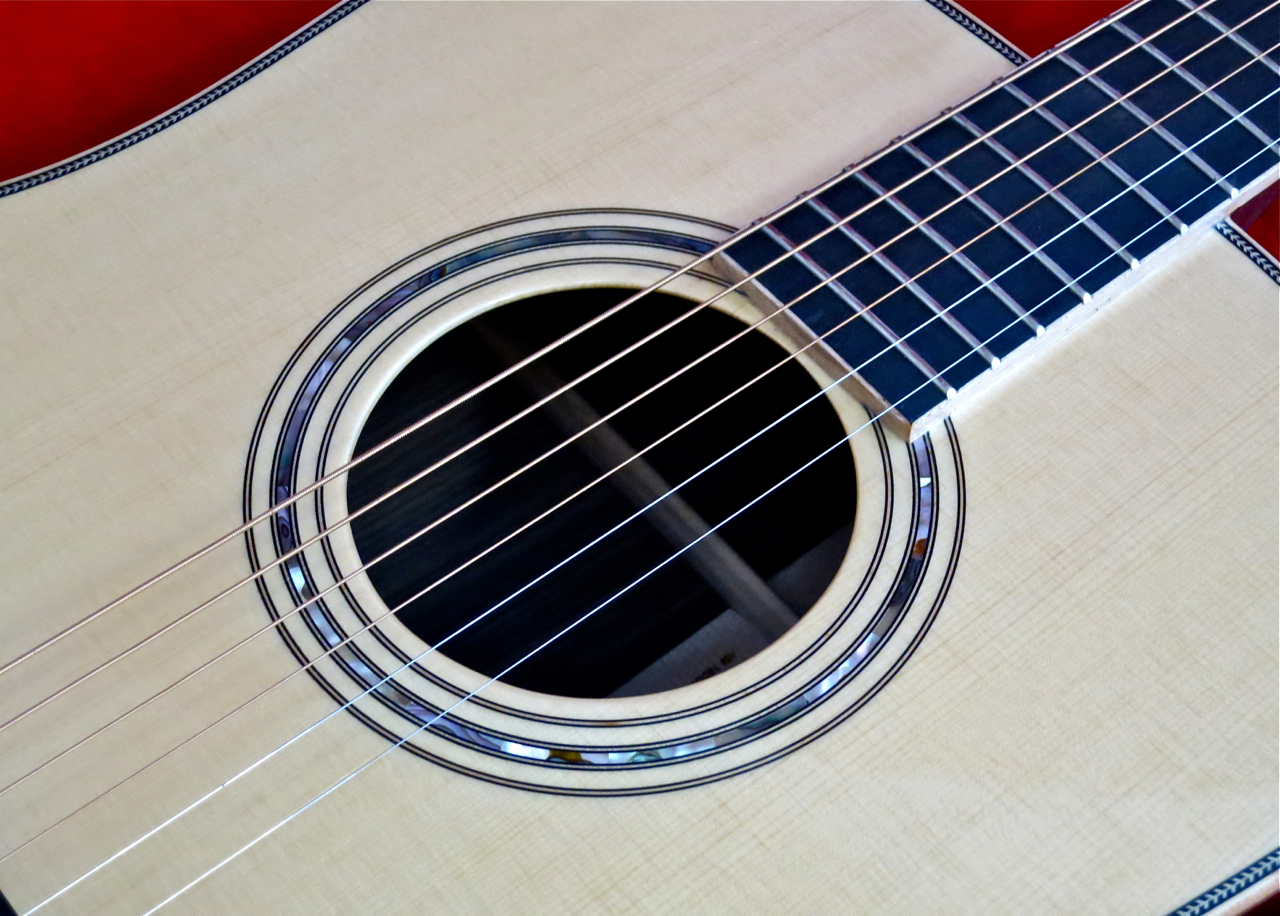
The PFM’s body has been adorned with stylish flame maple binding, while the guitar’s beautiful rosette sports abalone inlays.
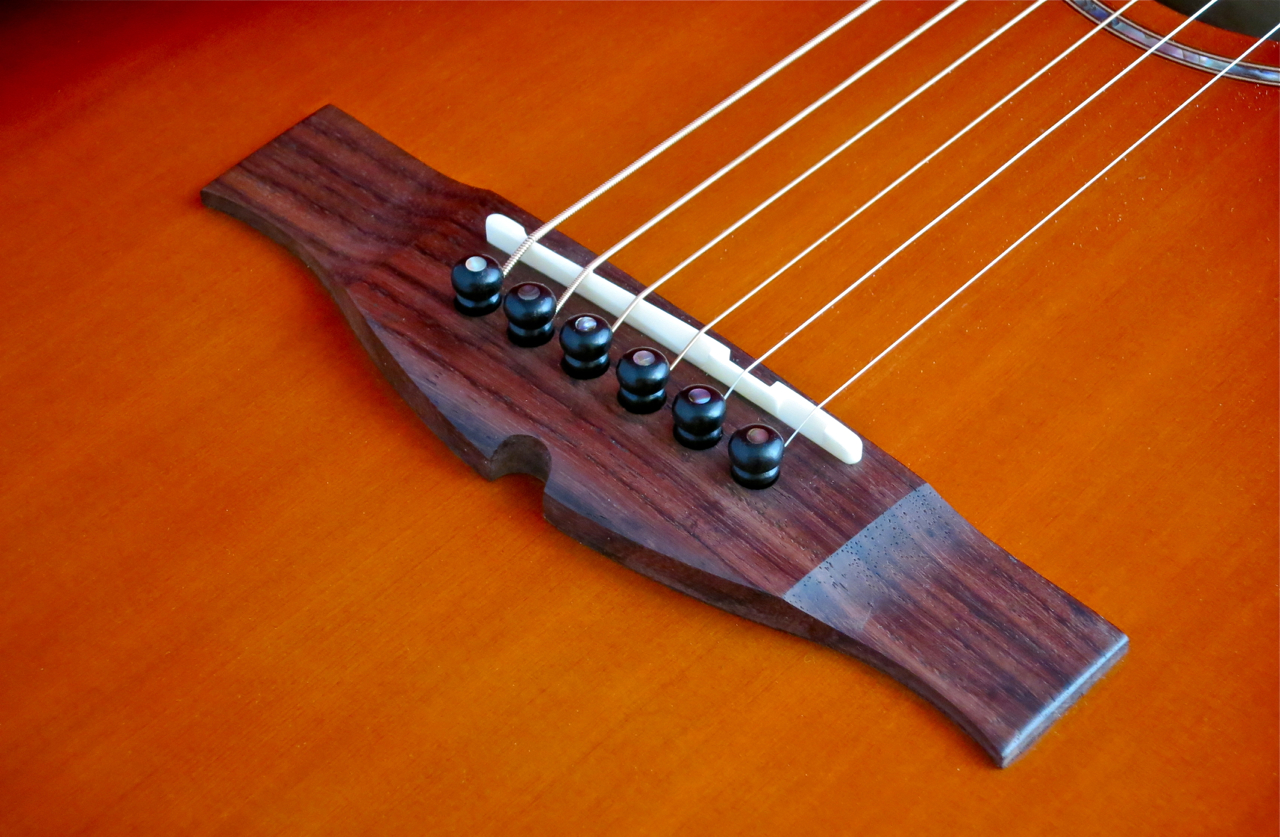
The characteristic dip of the Mannedesign’s headstock is mirrored in the rosewood bridge’s design.
The compensated bridge saddle has been made – just like the top nut – from bovine bone, which is still one of the best materials for this purpose.
****
Roberto Della Vecchia is an Italian Fingerstyle-wizard – I can only recommend hopping over to his website to check the man out!
Della Vecchia’s Mannedesign RDV -signature model (950 €) is a gorgeous Dreadnought guitar carefully crafted from traditional materials. AA-quality sitka spruce is used for the guitar’s solid top.
The RDV’s mahogany neck is one-piece, save for a separate bit used to make up the neck heel.
The solid Indian rosewood used for the back and the rims is stunningly beautiful.
The body of the guitar comes with a gloss finish, while the neck has been finished with a matte lacquer.
The headstock facing is black ebony, inlaid with a mother-of-pearl Mannedesign-logo.
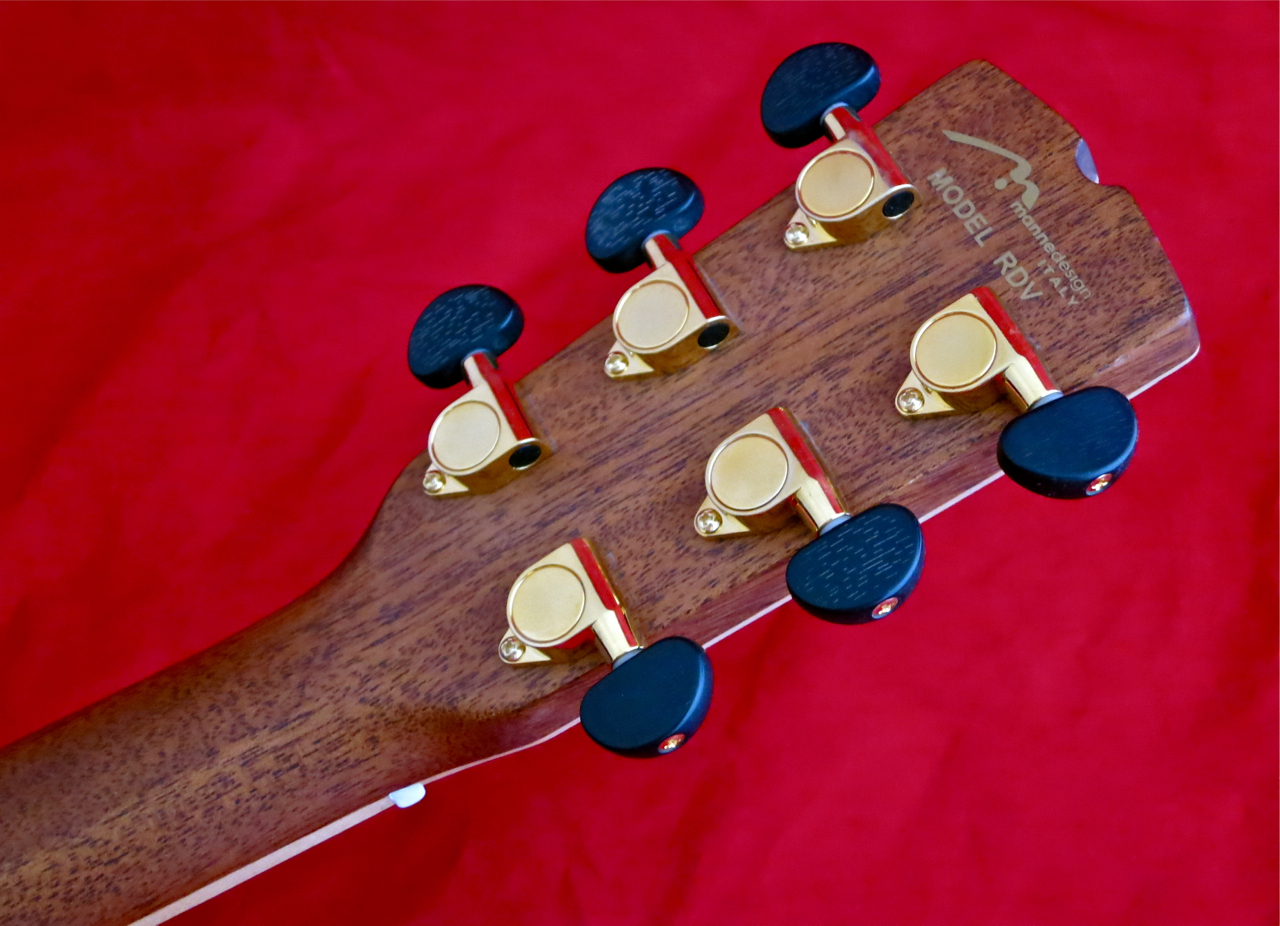
The RDV comes equipped with gold-coloured Gotoh tuners with ebony-styled plastic tuning buttons.
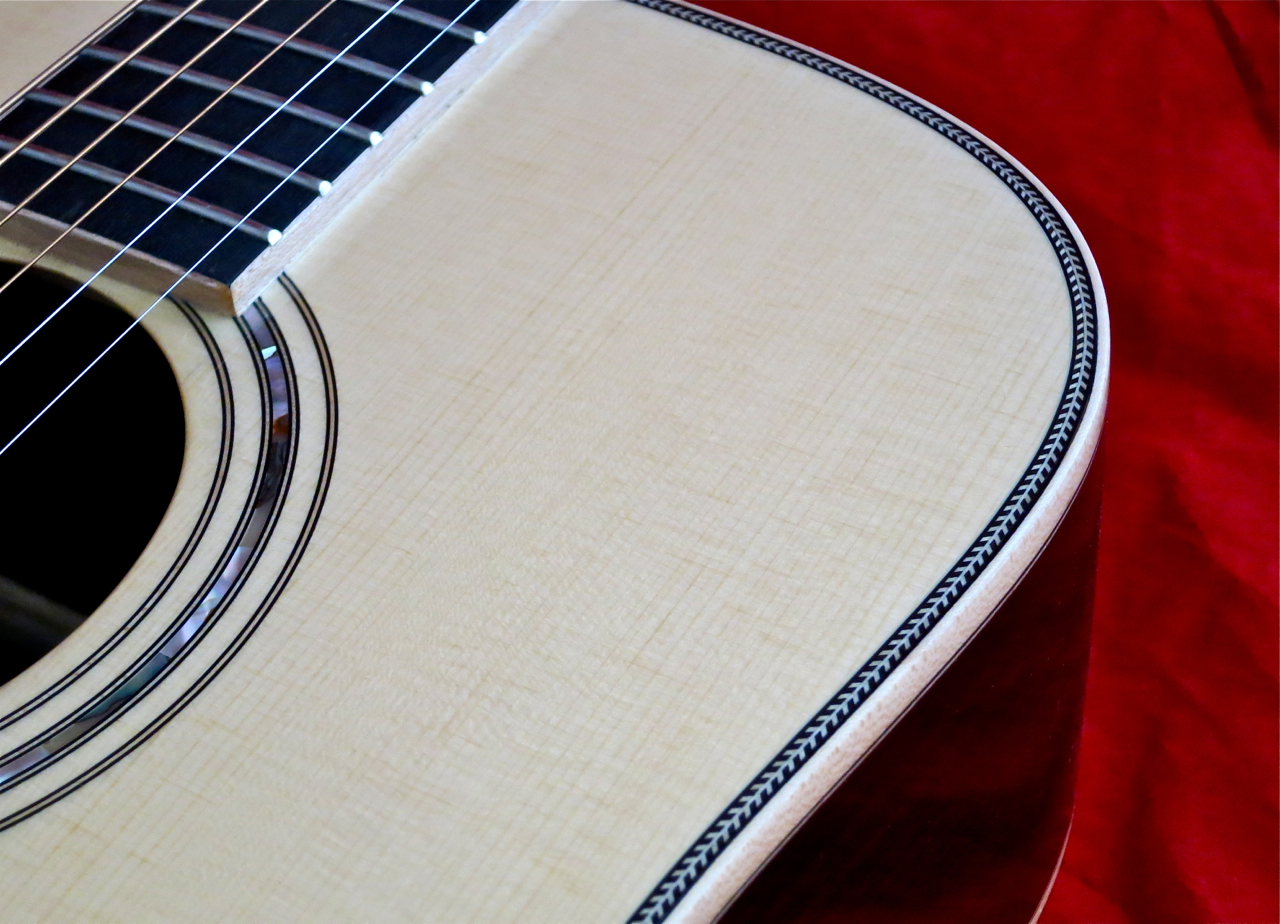
Maple binding frames the ebony fingerboard. The RDV is equipped with 20 medium-sized frets.
The back’s centre line has been inlaid with a very beautiful black-and-white motif.
In addition to the maple edge binding the top also sports very crisp-looking herringbone purfling.
The rosette’s central ring is made up of genuine mother-of-pearl.
The RDV’s bridge is the same design we’ve already seen on the PFM, but this time crafted from deep black ebony.
****
As most do Parlour-sized guitars, the Mannedesign PFM has a medium-length scale of 63 cm, which makes bending the 012-gauge strings relatively easy to bend. Instead of a ”vintage-correct” – and often loathed – V-profile neck, Mannedesign have opted for a more sensible and nice-feeling middle-of-the-road D-profile. The guitar’s nut width measures 4,4 cm, while the string spacing (E to e) at the bridge stands at 5,4 cm – good for both plectrum player, as well as fingerstylists. The test sample was set up with a very friendly action (E: 1,9 mm/e: 1,5 mm).
The Mannedesign PFM is a typical Parlour-guitar in the best possible sense. The guitar’s sound is quite dry and has a barking attack, with a strong and slightly nasal overall mid-range focus. Fingerstyle-guitarists will love the relatively light bass register, which keeps things transparent. When using a plack, you will be positively surprised by how well the PFM is able to cut through and project – great for Ragtime and early Blues. The Mannedesign PFM also records really well, because it doesn’t clutter the low-mid and bass registers.
****
The Mannedesign RDV has the long scale (63 cm) typical of a Dreadnought. Roberto Della Vecchia requested a slightly wider-than-usual string spread at the bridge (5,9 cm) to accommodate the needs of fingerstyle players. The neck profile is a very nice, oval C. The Della Vecchia model’s set-up was superb, with a nice and comfortable action (E: 2,0 mm/e: 1,5).
Rosewood-bodied Dreads often turn out to be great ”shouters”, which also holds true for the RDV’s healthy volume levels. There’s plenty of lush bass on tap, with a warm mid-range and shimmering top-end to boot. The Mannedesign RDV is a prime exponent of the famous Dreanought-sound, offering you volume, character and dynamics in spades.
****
Mannedesign-instruments still have a rather low profile here in Finland. Still, based on this review I can only recommed a closer look at the brand’s acoustic offerings.
Upouusi LTD SC-337 on seitsenkielinen Stephen Carpenter -nimikkomalli, joka istuu ominaisuuksiltaan (ja hinnaltaan) juuri sopivasti vielä edullisemman passiivikitaran – LTD SC-207 (369 €) – ja keskihintaisen, aktiivisen kaula-läpi-rungon-mallin – LTD SC-607B:n (986 €) – välissä.
****
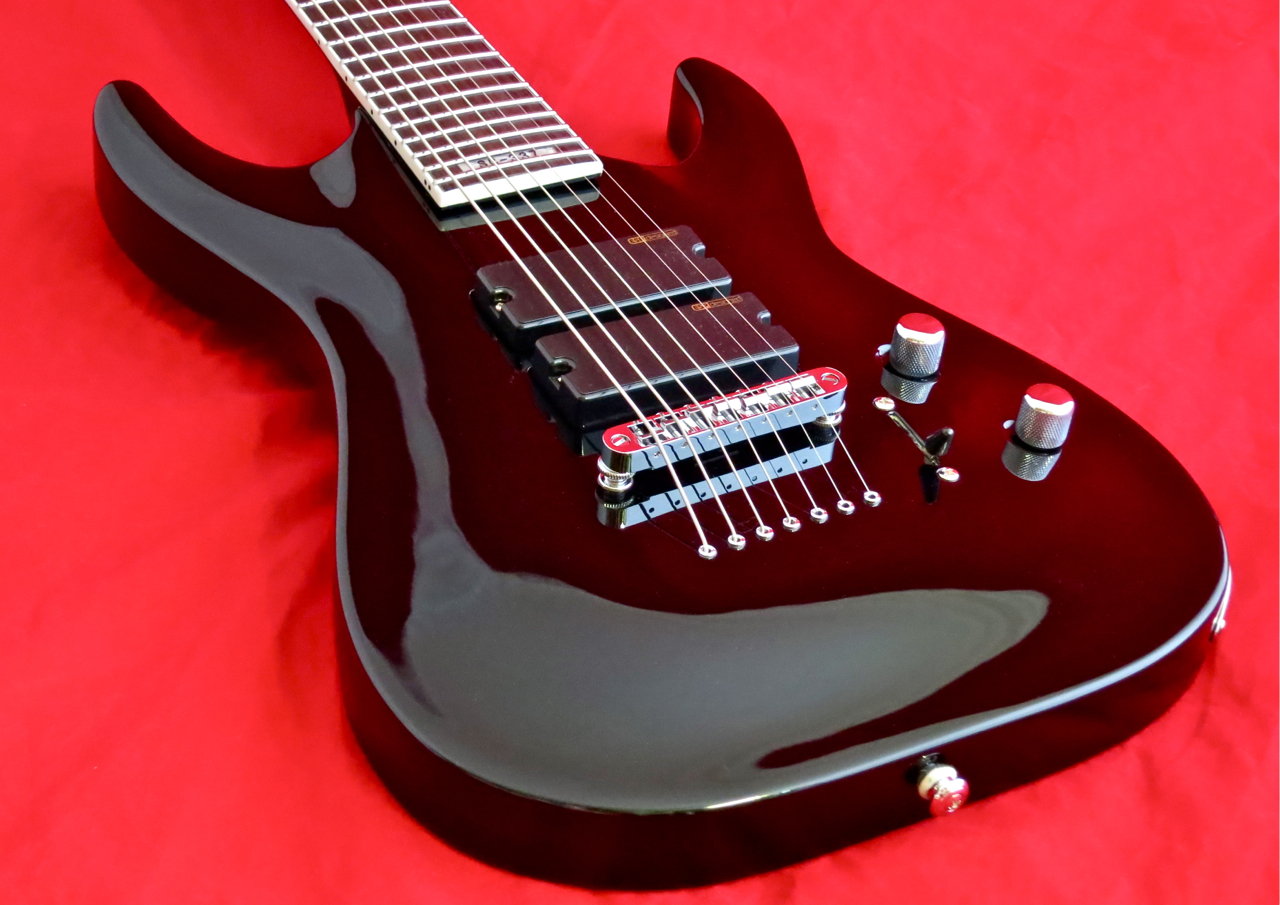
LTD SC-337 (438 €) on ruuvikaulainen, aktiivimikrofoneilla varustettu seitsenkielinen sähkökitara.
Tätä Carpenter-mallia rakennetaan tavallisella täyspitkällä mensuurilla (64,8 cm/25,5 tuumaa), kun taas kalliimmat versiot valmistetaan vielä pidemmällä baritonimensuurilla (68,6 cm/27 tuumaa). Baritonimensuurin eduksi mainitaan yleensä sen hieman selkeämpää matalien kielten soundia, kun taas tavallista mensuuria on helpompi soittaa (etenkin alimmilla nauhoilla).
SC-337:n kaula on vaahteraa, kun taas runko veistetään lehmuksesta.
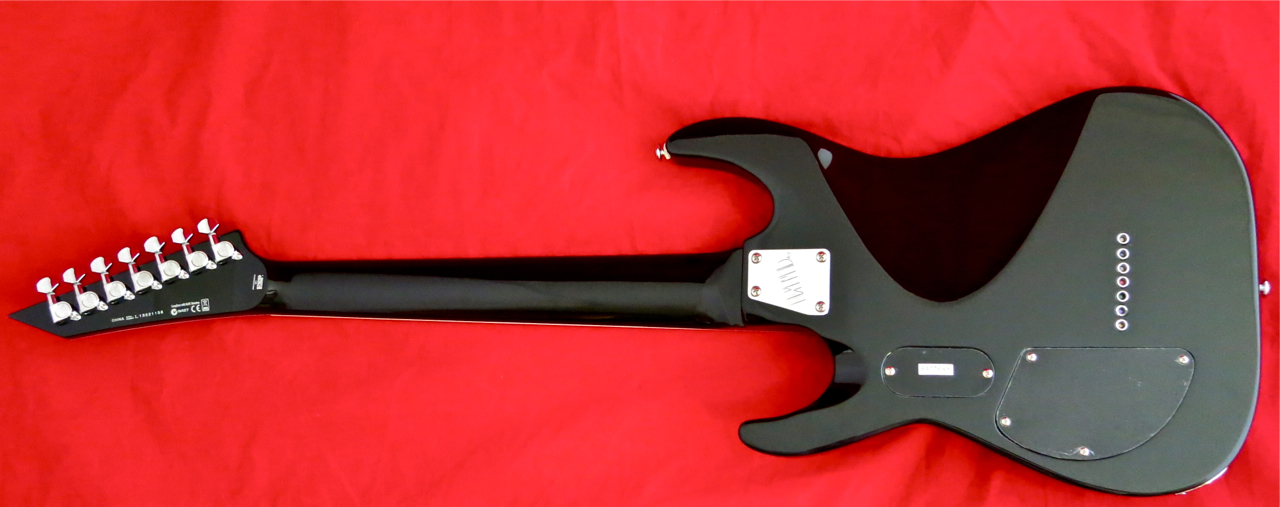
Rungon takapuolen syvän viisteen ansiosta kitara tuntuu erittäin mukavalta, ja mallin kaunis musta viimeistely sopii hyvin Metal-genreen.
Perinteistä sulavampi kaulaliitos helpottaa pääsyä korkeisiin nauhoihin.
Kaulaa on kallistettu taaksepäin, mikä helpottaa Gibson-tyylisen tallan käyttöä.
Gotoh-tyyliset virittimet toimivat jouhevasti ja varmasti.
Satulan kohdalle sijoitettu volute-paksunnos vähentää taakse kallistuvan viritinlavan murtumisen riskiä, jos vaikka kitara sattuisi vahingossa kaatumaan.
LTD:n palisanteriotelautaan on istutettu 24 paksua ja korkeaa nauhaa.
Nauhatyö oli testiyksilössä todella huolellinen, ja otelaudan valkoinen reunalistoitus hyvin siisti.
SC-337:n talla on nykyaikainen – ja luonnollisesti seitsenkielinen – versio Tune-o-matic-tallasta. Kielet taas pujotetaan rungon läpi.
Stephen Carpenter -nimikkomallissa käytetään kahta aktiivista ESP Designed -humbuckeria.
Kaikista Carpenter-kitaroista löytyy hieman epätavallinen keskimikki/tallamikki-asetelma. Homman tarkoitus on estää matalan H-kielen puuroutumista etumikrofonissa.
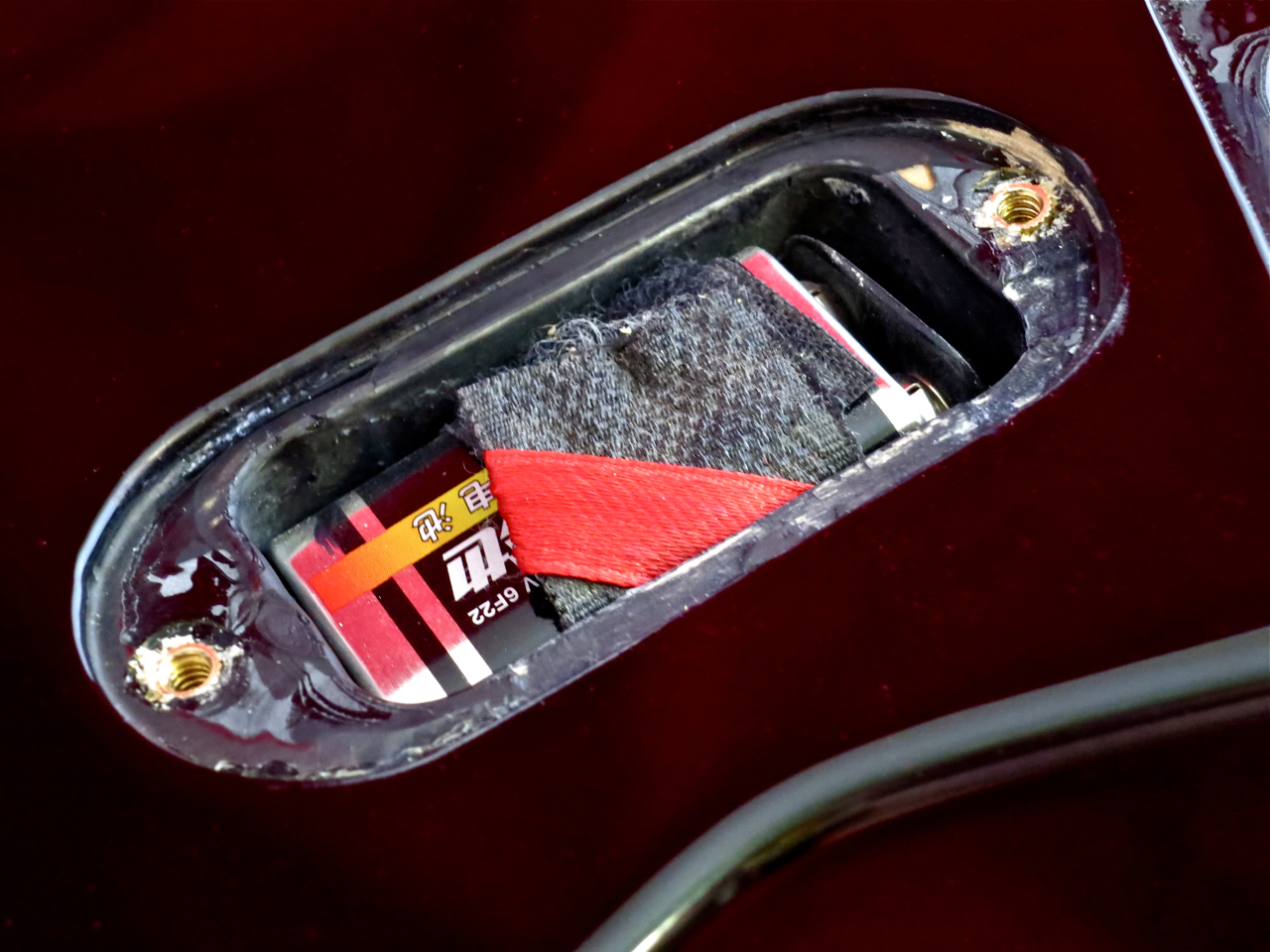
Paristolokeron kansi on kiinnitetty koneruuveilla, joita varten runkoon on upotettu kierreholkit. Se on varma ja kestävä ratkaisu.
Kolmiasentoisen mikrofonivalitsimen lisäksi löytyy SC-337:ssä vielä master volume ja master tone -säätimet.
Kytkin on sijoitettu niin, että mikkien valinta onnistuu pikkusormella samanaikaisesti kielten demppauksen kanssa.
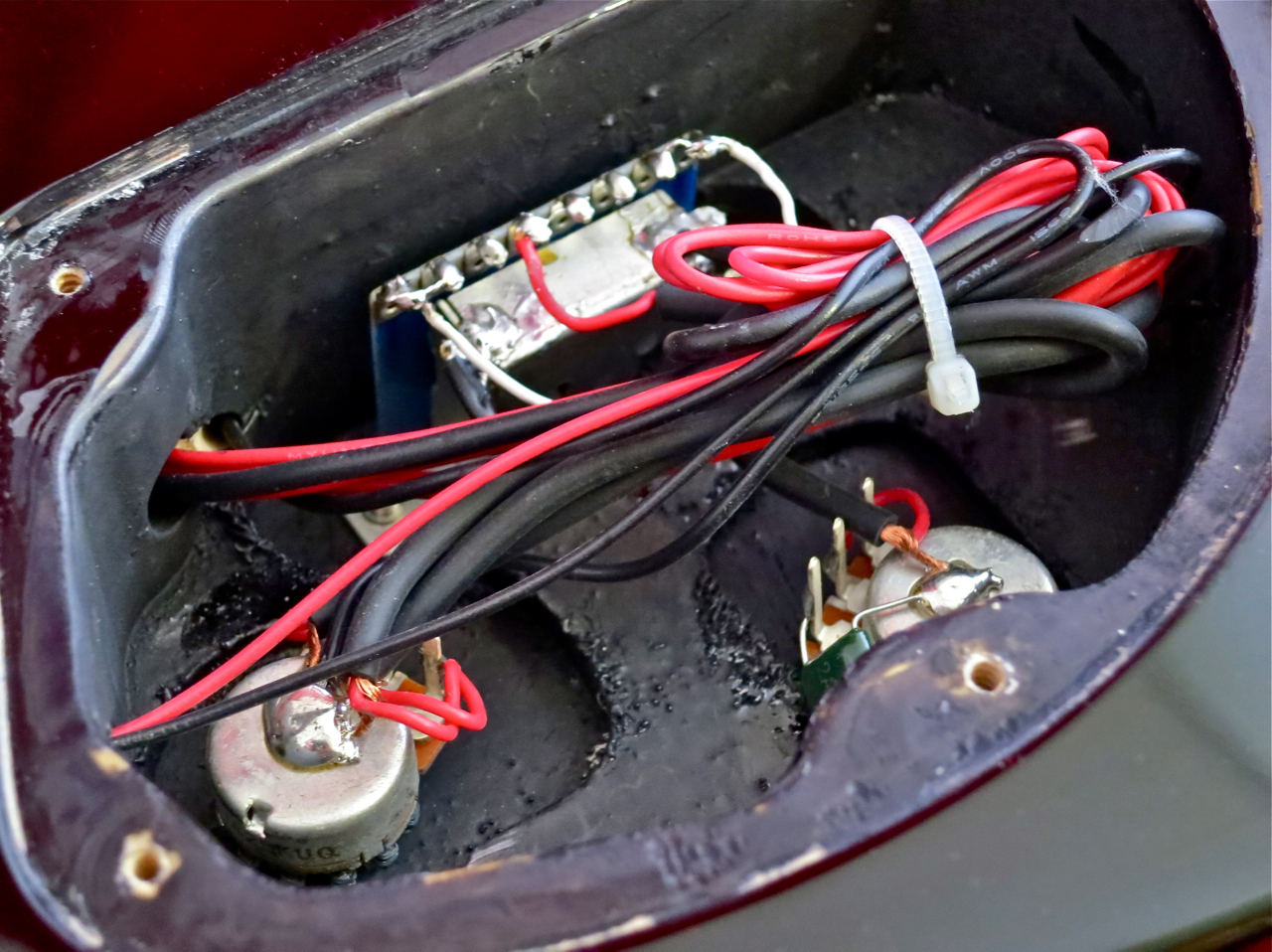
Vaikka LTD:n elektroniikkalokero ei ole ehkä maailman siistein, on käytettyjen komponenttien laatu kitaran hintaan nähden kuitenkin hyvässä kunnossa ja lokeron häiriösuojaus sähköä johtavalla maalilla huolellinen.
****
Seitsenkieliseksi kitaraksi on testissä käynyt LTD SC-337 yllättävän kevyt soitin. Carpenter-malli istuu hyvin soittajan sylissä, ja se roikkuu erittäin mukavasti ja rauhallisesti hihnassa.
Kaulaprofiili on laakea ja suhteellisen ohut ”U”, jolla tulin itse heti hyvin toimeen.
Testiyksilön erinomaisen nauhatyön ansiosta SC-337:n kielet on saatu hyvin matalaksi (Ala-H: 1,7 mm/ylä-e: 1,2), ja täysin ilman kielten räminää! Soittotuntuma on erittäin kevyt ja nopea.
Vaikka tämän LTD:n ulkonäkö viittaa vahvasti Metal-genren suuntaan, on SC-337 mielestäni huomattavasti monipuolisempi soitin. Kitaran laadukkaista aktiivihumbuckereista lähtee nimittäin ilahduttavan avoin soundi, joka on – sanan parhaassa merkityksessä – neutraalinen. Mikrofoneissa on kyllä tehoa, mutta samalla myös rutkasti dynamiikka. Sointi ei muutu koskaan ikävän tunkkaiseksi tai honottavaksi, vaan on myös puhtaana enemmän kuin käyttökelpoinen.
Tässä esimerkissä soundia on maustettu hieman choruksella:
LTD SC-337 on oikea valinta, kun meno muuttuu rankaksi!
Aktiivimikrofonien häiriövapaus ja niiden teho, sekä bassoalueen potku ja keskialueen avoimuus ovat lajityypin suuria valtteja, eivätkä LTD:n ESP Designed -mikrofonit jätä soittajaa pulaan. Oikeissa käsissä SC-337 muuttuu musiikilliseksi nyrkkiraudaksi.
Tällainen oli meno nykyaikaisen high gain -kanavan läpi soitettuna:
Mielestäni LTD:n SC-337 on tällä hetkellä selvästi paras seitsenkielinen sähkökitara alle viidensadan euron hintaluokassa. Uudessa Carpenter-mallissa kitaran ominaisuudet, sen soitettavuus ja soittimen soundi ovat enemmän kuin kohdallaan. Tämä LTD tarjoaa ison siivun pro-meininkiä uskomattoman edulliseen hintaan.
ESP/LTD-tuoteperhe elää vuonna 2013 murroksessa, koska ESP on päättänyt jakaa eri sarjansa uudelleen.
Tulevaisuudessa ESP tulee esiintymään brändinä ainoastaan japanilaisen ESP Custom Shop -soittimissa. ESP:n Standard-sarjan soittimille on luotu uusi brändi: E-II.
Uusi on myös LTD:n japanilainen Elite-sarja, joka on suunniteltu edustamaan LTD-soittimien absoluutista parhaimmistoa.
Saimme testiin uunituoreen LTD Elite ST-1 -kitaran. Malli on saatavilla kahtena versiona, joko palisanteriotelaudalla ja EMG-mikrofoneilla varustettuna (LTD Elite ST-1/R EMG) tai – testikitaran lailla – vaahteraotelaudallisena ja Seymour Duncan -mikeillä (LTD Elite ST-1/M).
****
Upouusi LTD Elite ST-1/M (1.387 €) on kyllä häkellyttävän upea kitara, jossa yhdistyvät ajaton kauneus ja huipputrimmatun soittimen ominaisuudet herkullisella tavalla.
Tätä mallia saa kahdella eri värillä – sininen Aqua Marine tai testisoittimen See-Through Black Cherry – kun taas EMG-version viimeistely on läpikuultava See-Through Black.
Elite ST-1:n perusainekset ovat hyvinkin perinteiset: ruuvikaula on veistetty vaahterasta, ja kitaran runko on leppää.
Kaulaliitos taas on veistetty perinteistä katsoen huomattavasti sulavampaan muotoon.
Rungon etupuolella komeilee quilt-kuvioisella loimuvaahteraviilulla päällystetty vaahterakansi.
Kannen reunat on jätetty taidokkaasti värjäämättä, mistä syntyy kaunis ”reunalistoitus” (engl. fake binding).
ST-1:n vaahteraotelautaan on asennettu 24 jumbo-kokoista nauhaa. Nauhatyön laatu on esimerkillinen, samoin kuin kaulan viimeistely, jossa mattapintainen kaulan takaosa yhdistyy kiiltävään lakkaukseen otelaudassa.
Myös metalliosien sarakkeella LTD Elitessä luotetaan ainoastaan vankkaan laatuun.
Kromatut virittimet tulevat Gotohin japanilaisesta tuotannosta.
Kitaran Floyd Rose -vibratalla on se aito, saksalaisen Schallerin valmistama teräksinen Floyd Rose Original -malli.
Tältä näyttää huolellisesti asennettu lukkosatula.
Lavanpuoleinen palkki vetää kielet oikeassa kulmassa satulan yli, minkä ansiosta soittimen vire ei muutu lukkojen avaamisessa tai sulkemisessa.
LTD Elite ST-1/M -mallin mikrofonit tulevat Seymour Duncanin valikoimasta:
Kaula- ja keskimikki ovat STK-S4-mallia, joissa kaksi päällekkäistä kelaa pitävät hurinan loitolla. Tallamikki taas on Duncanin loistava, hieman vintagea tuhdimpi Custom-malli (SH-11).
Kaularaudan säätö hoidetaan ST-1:ssä kätevästi kääntämällä kaulamikrofonin ja viimeisen nauhan välistä pyörää.
ST-1:n kytkentä koostuu viisiasentoisesta mikkivalitsimesta, sekä master volume ja master tone -säätimistä.
Lähtöjakki on asennettu rungon reunaan niin, että johto voidaan viedä luontevasti soittimen ja hihnan välistä eteenpäin vahvistimeen.
LTD Elite -sarjan soittimissa laadukas laukku kuuluu hintaan!
****
LTD:n spekseissä lukee kaulaprofiilin kohdalla ”ohut U-profiili”, ja jotenkin tämä kuvaus tuo minulle mieleen 1990-luvun karseita, kättä väsyttäviä ”vauhtikauloja”. Mutta ei ole syytä paniikkiin, sillä Elite ST-1:n kaula tarjoaa riittävästi ”lihaa” mukavaa soittotuntumaa ja hyvää sustainea varten! Itse käyttäisin mieluummin ilmaisun ”keskivahva D-profiili” tämän kaulan kuvaamiseen.
Testikitara oli erinomaisessa trimmissä ja erittäin helpposoittoinen. Akustisesti LTD ST-1 soi kauniisti ja täysin rämisemättä, vaikka kielet oli säädetty hyvin matalalle (E: 1,6 mm/e: 1,4 mm). Paksut ja korkeat jumbo-nauhat luovat nopean soittoalustan, jossa kielten venyttäminen sujuu kuin tanssi.
Halpa – tai huonosti asennettu – Floikka voi helposti pilata kitaran soundin, ja tehdä virittämisestä suoranaista helvettiä.
Laadukas LTD Elite ei tunne tällaisia ongelmia lainkaan, sillä se on varustettu laatuosilla ja rakennettu japanilaisella pikkutarkkuudella. Kitara soi eloisasti ja pitkään, ja sen jouhevasti toimiva vibrato pitää vireen esimerkillisesti rankasta kammen käytöstä huolimatta.
ST-1:n kaunis akustinen ääni säilyy hyvin puhtaan vahvistinkanavan läpi soitettuna (liikkeelle lähdetään kaulamikrofonista):
Särökäytössä Elite ST-1:n hurisemattomat stack coil -mikrofonit ovat huima etu, jos vertaa niihin perinteisten yksikelaisten toimintaa. Erinomaisista Seymour Duncan etu- ja keskimikrofoneista lähtee aito, tuore Strato-tyylinen sointi, mutta täysin häiriöäänistä vapaana.
Custom-humbuckerin valinta viisiasentoisella kytkimellä taas polkaise kitaran turboa päälle, ja meno vaan kuin paranee:
ESP:n brändien uudelleen strukturoiminen voi olla ensialkuun kitaristeille hieman hämäävää, mutta yksi asia tuli tässä testissä hyvinkin selvää:
LTD Elite ST-1 on yksi parhaimmista Superstrat-tyylisistä kitaroista, joilla minulla oli koskaan iloa soittaa. Tämä LTD on selvästi pro-luokan soitin erinomaisella soittotuntumalla ja laadukkaalla äänellä.
Elite-sarjaan myötä LTD tarjoaa japanilaista huippulaatua reiluun hintaan.
Tämän biisin viisi kitararaitaa on kaikki soitettu LTD Elite ST-1:llä:
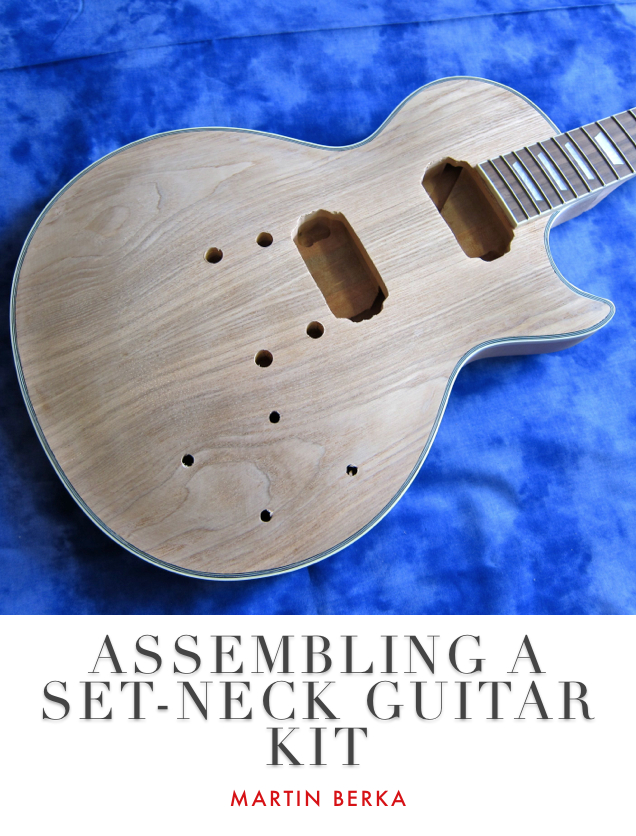
The brand-new eBook from ”Mr Kitarablogi” – Martin Berka – takes you through the process of assembling a guitar kit from the viewpoint of a novice.
”Assembling a Set-Neck Guitar Kit” is not meant as an all-encompassing encyclopedia of guitar-building knowledge, but rather as a description of how this affordable kit was transformed from a heap of components into a working electric guitar.
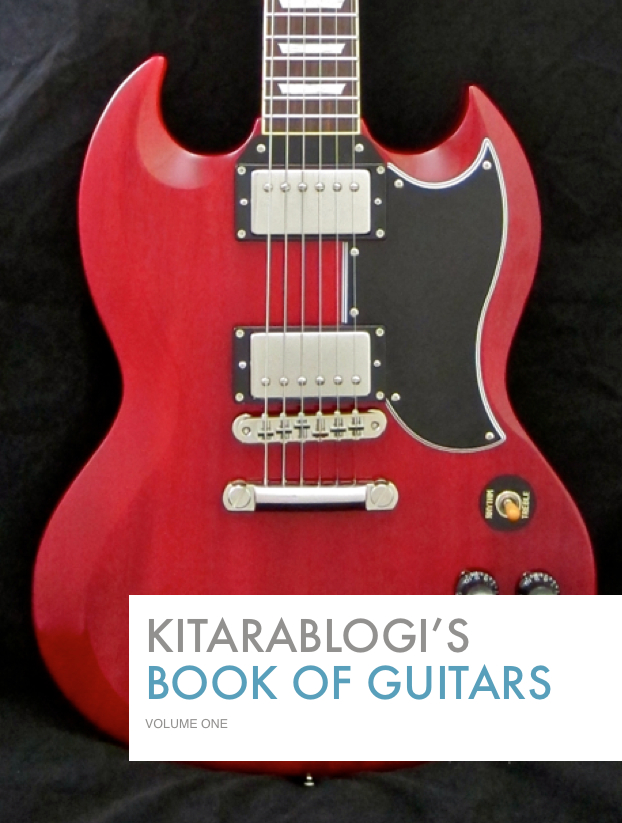
Kitarablogi’s Book of Guitars-kirjassa on yli 100 sivua kitarakuvia, Duesenbergistä ja ESP:stä, PRS:n ja Schecterin kautta Yamahaan. Klikkaamalla kirjan audio-ikoneita saa kuuluville esimerkkisoundeja jokaisesta eKirjaan kuvatuista malleista.
Saat ilmaisen kitarakirjan TÄÄLTÄ tai menemällä iBookstoreen!
Kitarablogi’s Book of Guitarsfeatures over 100 pages of guitar photography, getting up close with many different models starting with Duesenberg and ESP, and continuing all the way to PRS, Schecter and Yamaha. Click on the audio-icons in the eBook to hear sound samples of all the guitars covered in this interactive tome.
Get your free copy HERE or by visiting your iBookstore!
Ruokangas Guitars have launched a semi-hollow version of their Unicorn -model, a single-cut carved top electric. Master luthier Juha Ruokangas is known as a pioneer of using Spanish Cedar and Arctic Birch tonewoods in his guitars, and the Unicorn Artisan follows this trademark wood recipe as well.
The light weight body and the set-in neck of the guitar are made of Spanish Cedar, the top wood is Finnish Arctic Birch and the fretboard options include East Indian Rosewood, Brazilian Rosewood (CITES), Ebony and Arctic Birch. Other specs include handwound Unicorn Custom pickups, TonePros locking bridge and aluminium tailpiece, 2-way truss rod, stainless steel frets and Gotoh SD510 tuners.
As always, you can customize your Ruokangas guitar in a lot of different ways. We offer loads of colors, various top grades, neck profiles, fret sizes, wirings, finishes etc. Go create your own Unicorn Artisan in the Ruokangas Guitar Builder (TM) online guitar configurator tool.





























 Kitarablogi.com – Finland's premier Guitar and Bass blog