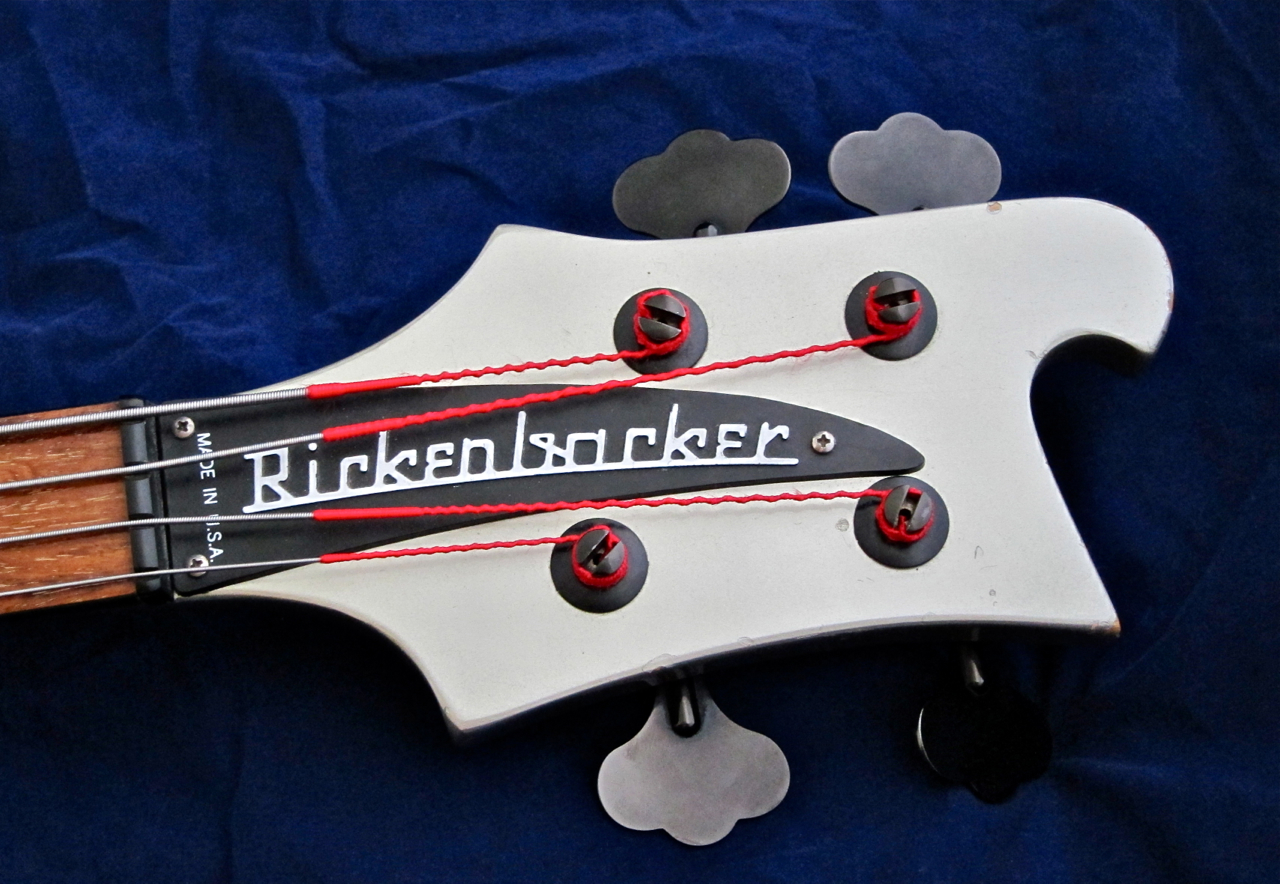
My Rickenbacker 4003 is finished in silver, and sports the black hardware so common on 1980s Rickenbackers.
Old Rickies from the 1960s use Kluson tuners. Seventies models were most often equipped with Grover tuners. By the Eighties Rickenbacker had switched to Rickenbacker-branded Schaller tuners from Germany.
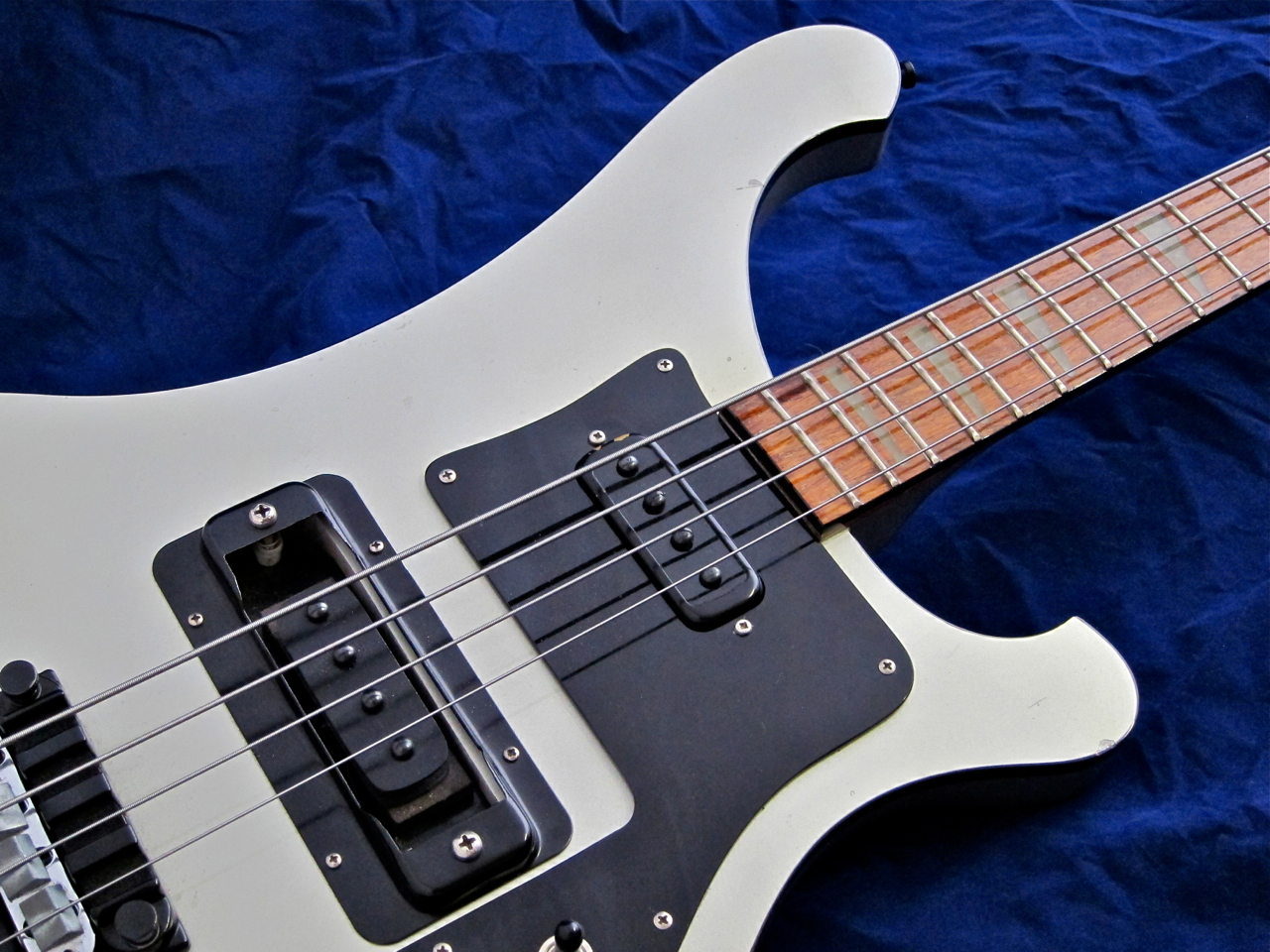
The original 4001 basses featured triangular ”shark-fin” inlays that went all the way from one edge of the fretboard to the other, effectively cutting the ’board into many pieces. The Rickenbacker 4003 has redesigned and slightly smaller inlays.
Viewed from the top both singlecoil pickups seem identical.
While the units feature virtually identical polepieces and coils, they do differ in the details. The neck pickup is powered by a single, flat bar magnet stuck underneath the bobbin.
The 4003’s distinctive bridge pickup tone of the Eighties model is produced by using a unique, thick rubber/ceramic-compound magnet that has a large gap (for the wiring) on the fingerboard-facing side. The hand rest has been removed by the previous owner.
The Rickenbacker bass bridge stands in its own recess inside the combined tailpiece and mute assembly.
In the Eighties Rickenbacker experimented with different tailpiece thicknesses, leading to quite a few bridge assemblies featuring two additional screws close to the ball ends. These factory-installed screws keep the – slightly too flexible – tailpiece from being bent out of shape by the string pull.
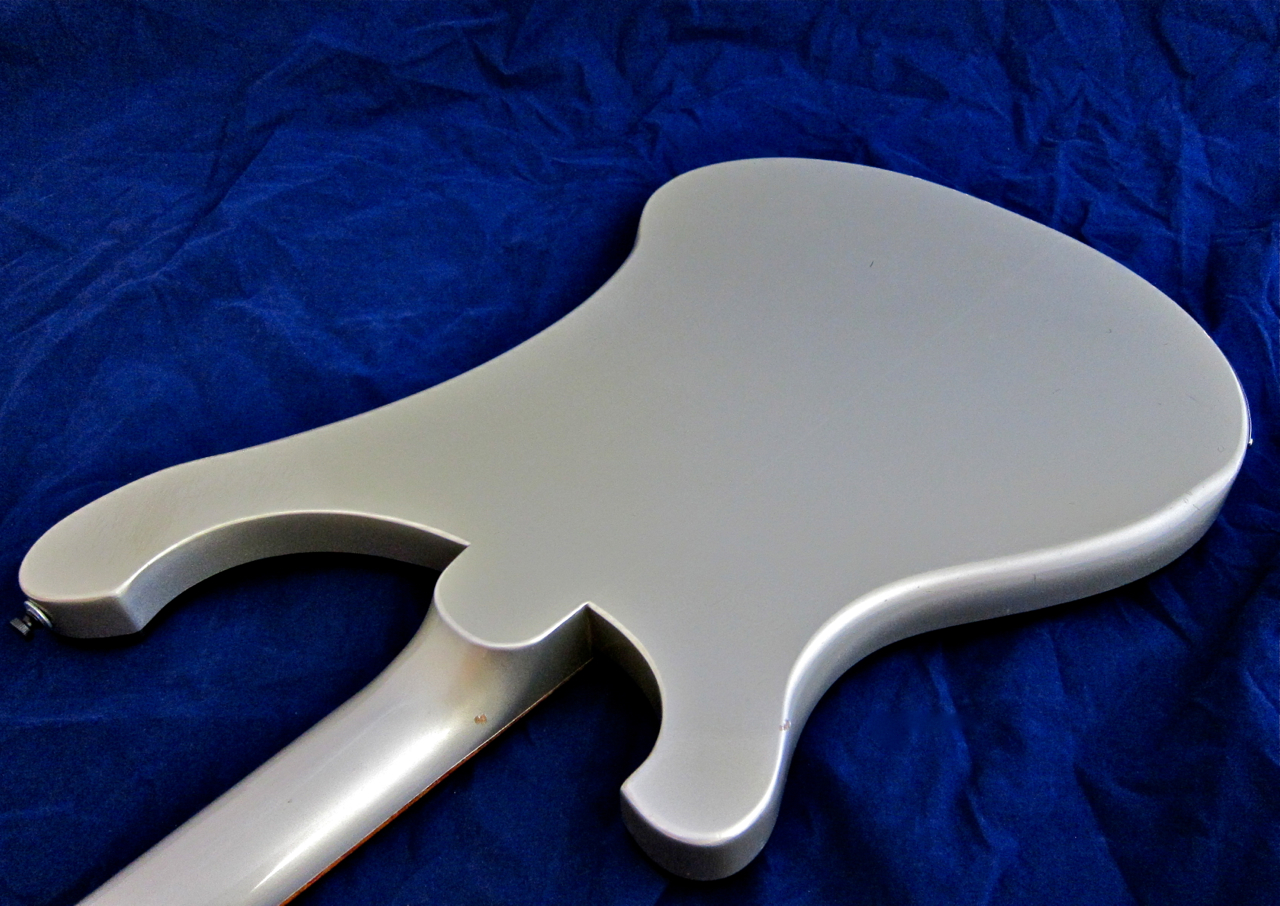
The body binding on Rickenbacker basses is usually glued to the body wings before the wings are attached to the through-neck.
Look closely, and you’ll be able to spot the glue-lines demarcating the through-neck.
Rickenbacker used several different numbering schemes throughout the decades. In 1987 they introduced a new numbering system with a letter indicating the month of production (A = January) and a number standing for the year (0 = 1987). Additionally there are four numbers on the lower edge of the jack plate (digitally wiped from this photograph).
The Rick-O-Sound-output is for use with a Y-cable (stereo plug to two mono plugs), splitting the pickup signals for use with two amplifiers or for adding different effects to each of the pickups.
In the mid-Seventies both of the guitar industry’s giants – Fender and Gibson – had lost their innovative edge and much of their corporate prestige. Both companies had been taken over by large corporations, and profit margins started to push quality control into the background.
Many discerning guitarists were starting to subscribe to the notion of ”They’re not making ’em like they used to”, which left the doors wide open to Far Eastern copy guitars, as well as to small boutique makers.
PRS Guitars, just like Hamer Guitars, took Gibson’s classic solidbody designs as a basis for their ”modern vintage” models.
With PRS Guitars it all started with a young Paul Reed Smith converting one spare bedroom at his childhood home into a workshop in 1975. By the next year he had already moved into a small workshop in Annapolis, and started attracting customers such as Ted Nugent and Peter Frampton. His first guitars were based closely on the double cutaway Gibson Les Paul Special, but featured humbucking pickups.
A few years down the road Paul Smith added fancy flame maple tops into the mix, and he managed to sell four of these guitars to Carlos Santana. Santana’s signature PRS models are still based on these original guitars.
But Smith wasn’t satisfied with simply producing refined versions of past Gibson-classics, so he set out to develop the ultimate solidbody guitar.
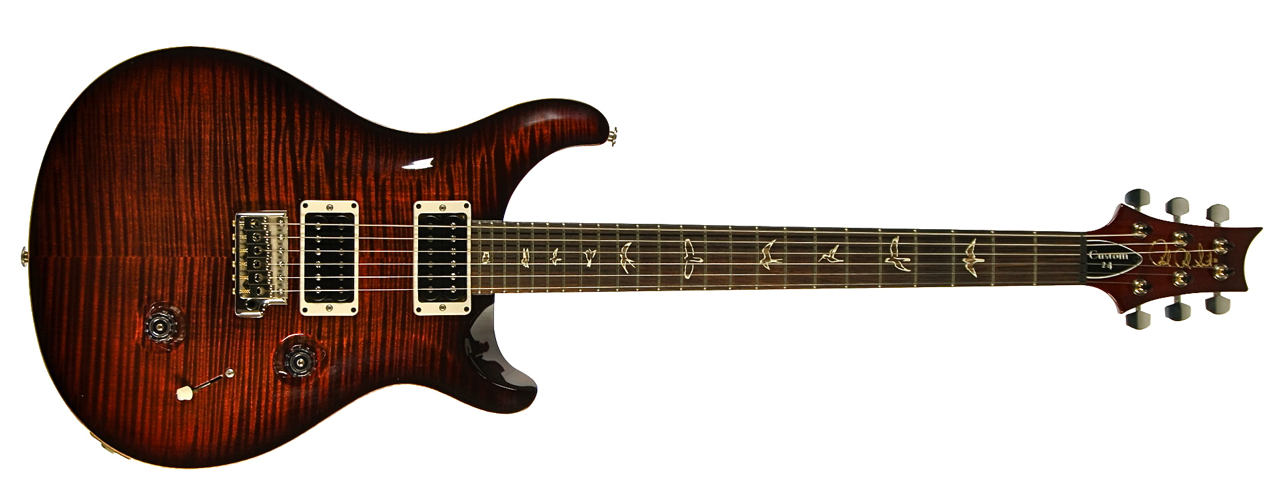
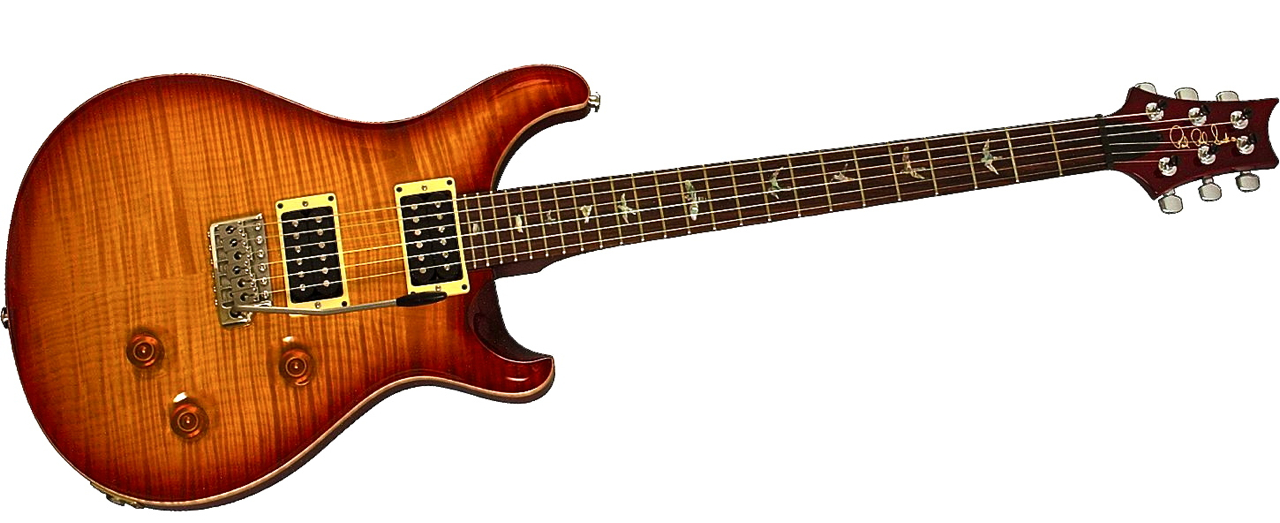
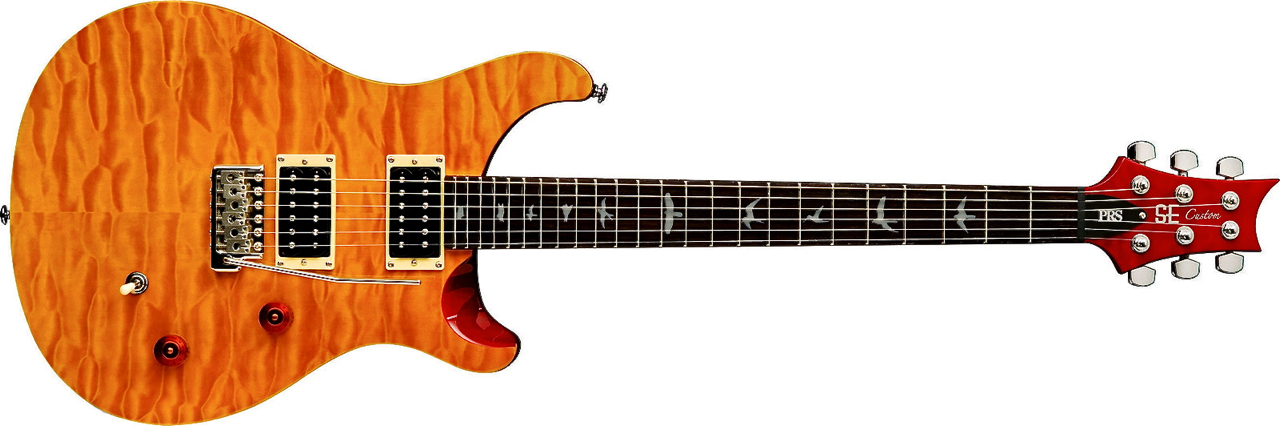
By 1985 Paul Smith had finalised his vision and started his own production facility. At the NAMM shows of 1985 Smith unveiled the PRS Custom 24 – the model that has defined the whole brand to this day. The new guitar ingeniously combined the best features of a Gibson Les Paul Standard and a Fender Stratocaster, as well as including many of Smith’s own improvements – not least the smooth and reliable PRS-vibrato and his own (Schaller-made) locking tuners.
The PRS Custom 24 combines Gibson-style materials and construction with a Fender-like outline, balance and (in most cases) a vibrato bridge. Added into the mix are a middle-of-the-road 25-inch (63.5 cm) scale length – about halfway between the softer Gibson (24.75″/62.9 cm) and the harder Fender (25.5″/64.8 cm) scale lengths – as well as two PRS-humbuckers with coil-splits.
Originally the Custom 24 came equipped with two knobs and one mini-switch. The knob closest to the bridge pickup was (and still is) the master volume control, with the second knob actually being a five-way rotary pickup selector, and not a control pot. The mini-switch was called the Sweet Switch, and served in lieu of a regular tone control, by giving you a set tone with rolled-off highs.
The Sweet Switch was replaced by a regular tone control around 1989, and these days many Customs also feature a regular five-way pickup selector.
Over the years PRS have changed many details in the construction, harware and electronics of their guitars, but the Custom 24 still carries the essence of what PRS Guitars are all about – it is a beautiful, yet practical quality instrument. Or as Carlos Santana put it in an interview with Paul Reed Smith a few years ago: ”It’s a guitar that gives you no excuses not to play to the best of your abilities.”
This time Kitarablogi.com takes a closer look at two Hagström models: The Viking Deluxe Baritone is a Far-Eastern-made baritone-guitar, made to please the friends of low riffage, while the brand-new Northen Swede is part of the company’s new high-end line, which is handmade in the Czech Republic.
****
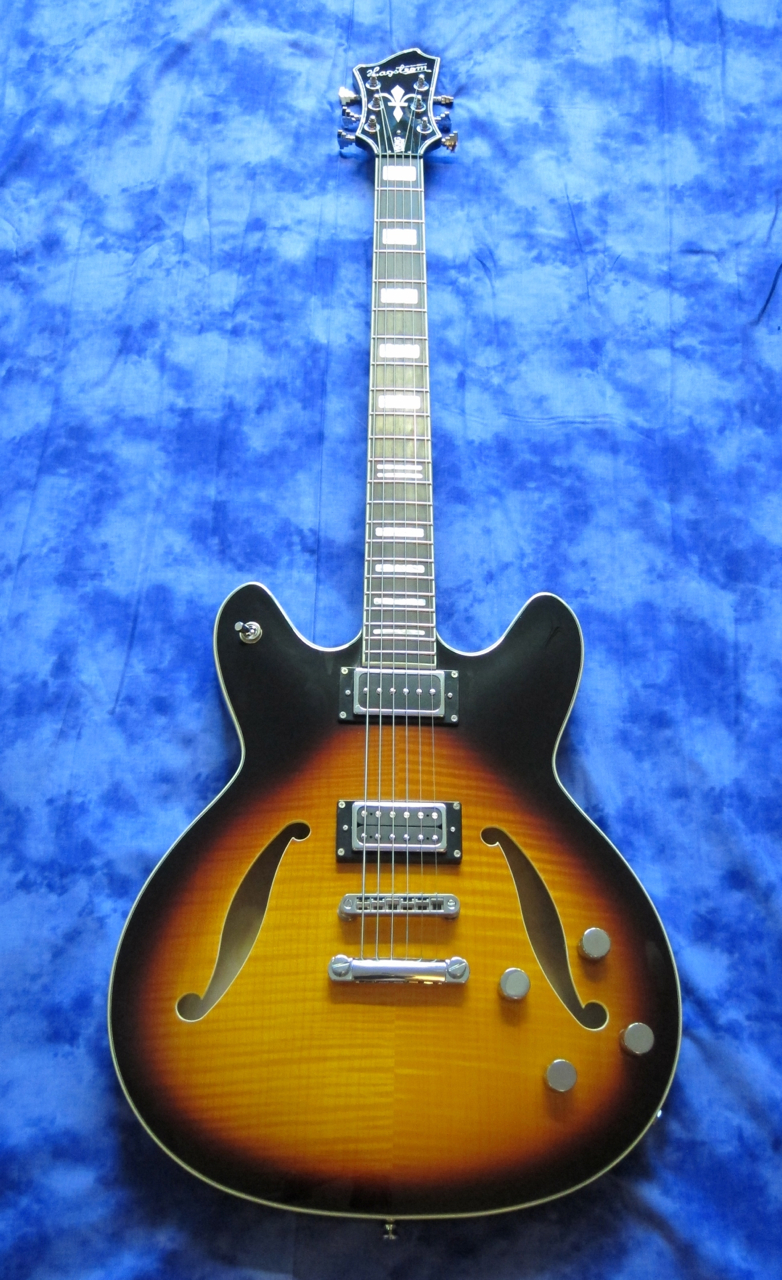
The Hagström Viking Baritone (current street price in Finland approx. 600 €) is the newest addition to the Viking-line. This long-necked beauty features the same stylish curves and semi-acoustic body as the rest of the Vikings.
The Canadian hard rock maple neck is glued into the body, which is made from flame maple plywood.
Hagström’s headstock simply oozes 1950’s glitzy panache, with its ultraclean binding and inlay work.
The top nut, on the other hand, is up to date, using self-lubricating, man-made Black Tusq.
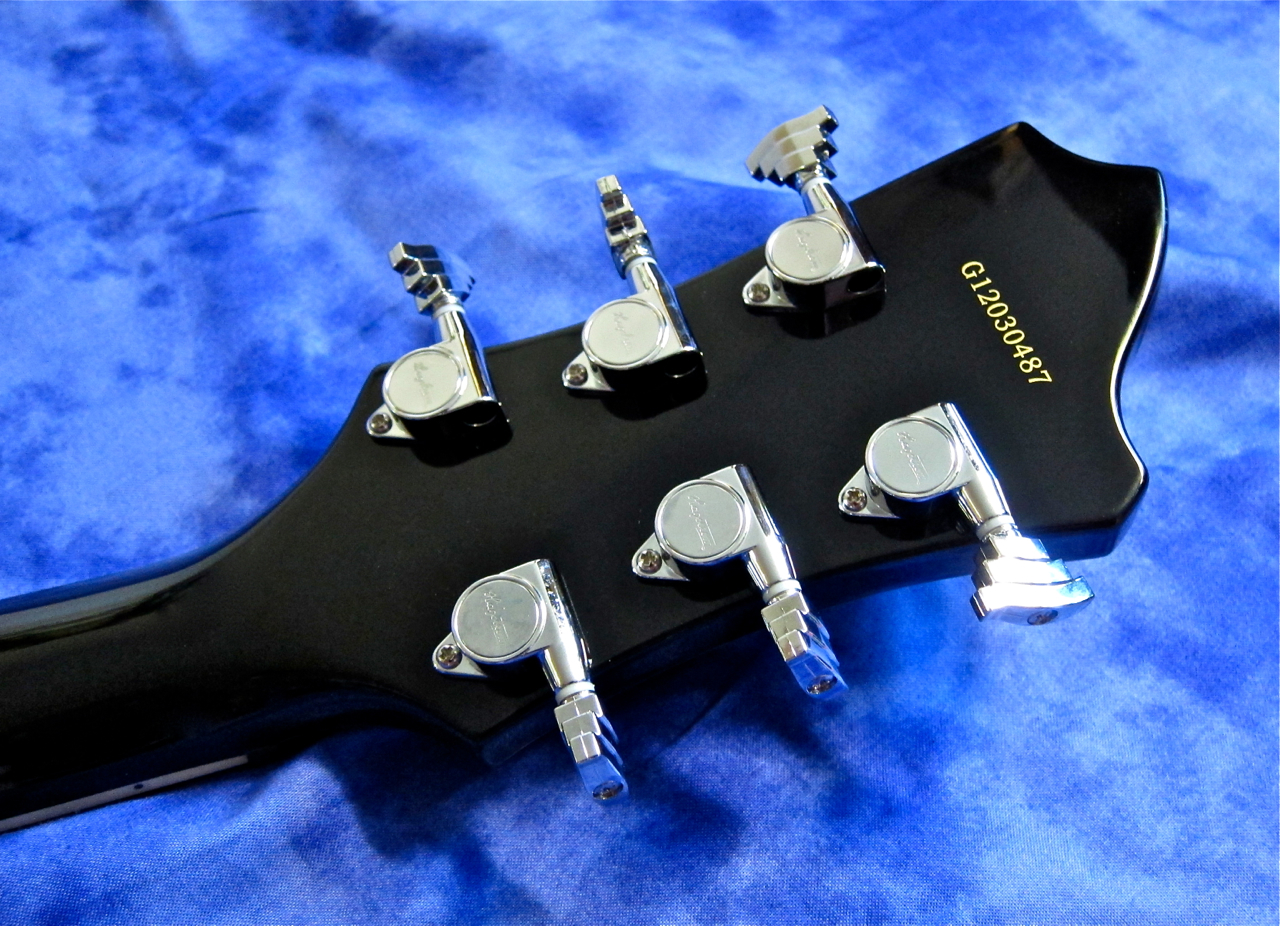
Modern sealed Hagström-tuners keep things steady.
One of Hagström’s special features is their Resinator-fingerboard. Resinator is a man-made alternative to ebony – in both looks and sound – and is made using wood fibres and resin.
The fretwork is rather good on our test sample, apart from a few fret ends, which felt a tiny bit sharpish in places.
Inside the plywood soundbox you can see the Viking Baritone’s full-length mahogany centre block.
The centre block is what turns a fully acoustic guitar into a semi. It improves attack and sustain, as well as greatly reducing the danger of howling feedback at higher volume levels.
Hagström have optimised this Viking’s choice of pickups for use in a baritone-guitar:
The neck pickup is Hagström’s new P-Urified unit, which is a P-90-type singlecoil in humbucker-size. Employing a singlecoil in the neck position makes great sense, as it improves tonal clarity, while steering clear of any potential mushiness.
The bridge unit is Hagström’s great Custom 58 -humbucker, whose moderate output and nice dynamic range fit the P-Urified perfectly.
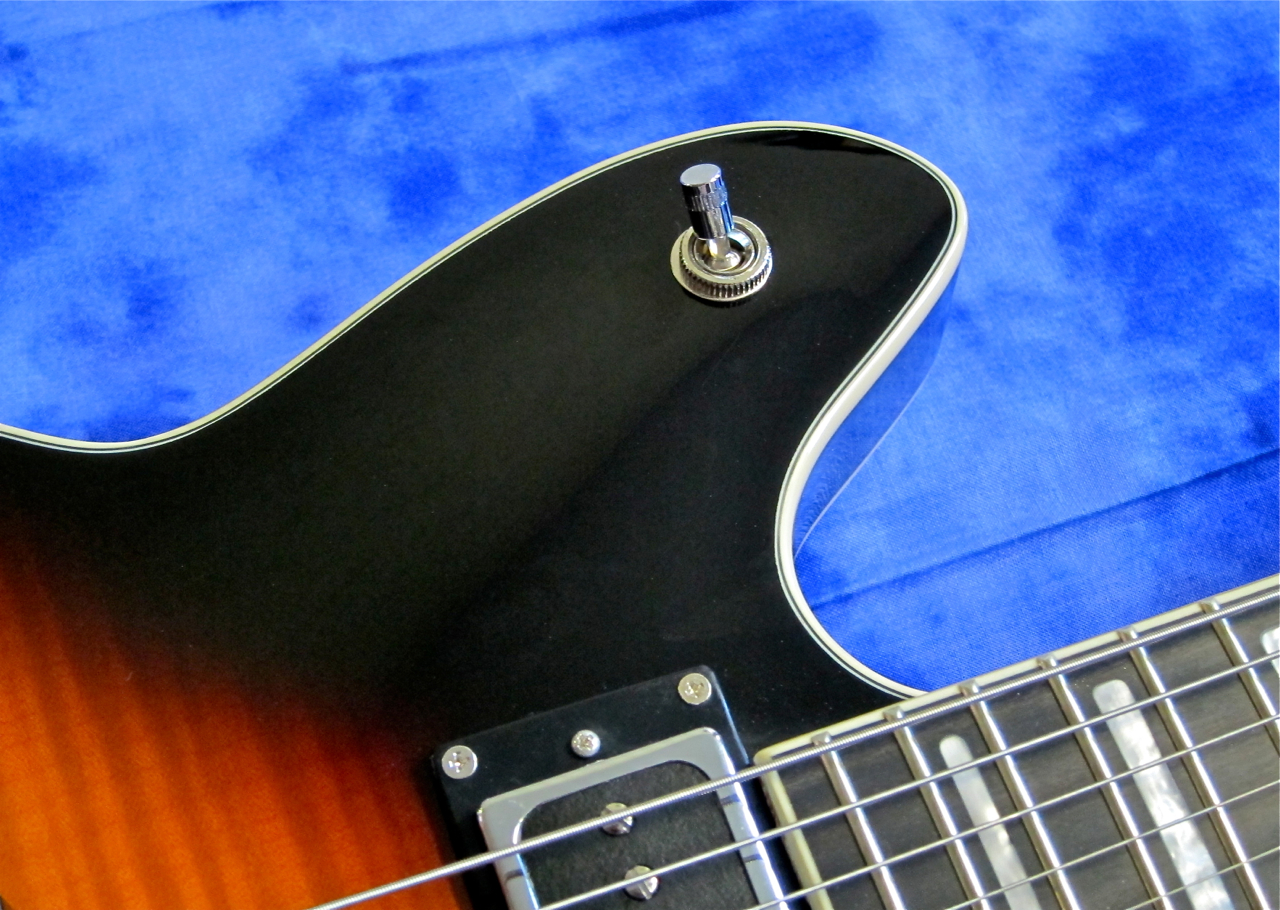
The three-way toggle sits on the Viking Baritone’s top horn.
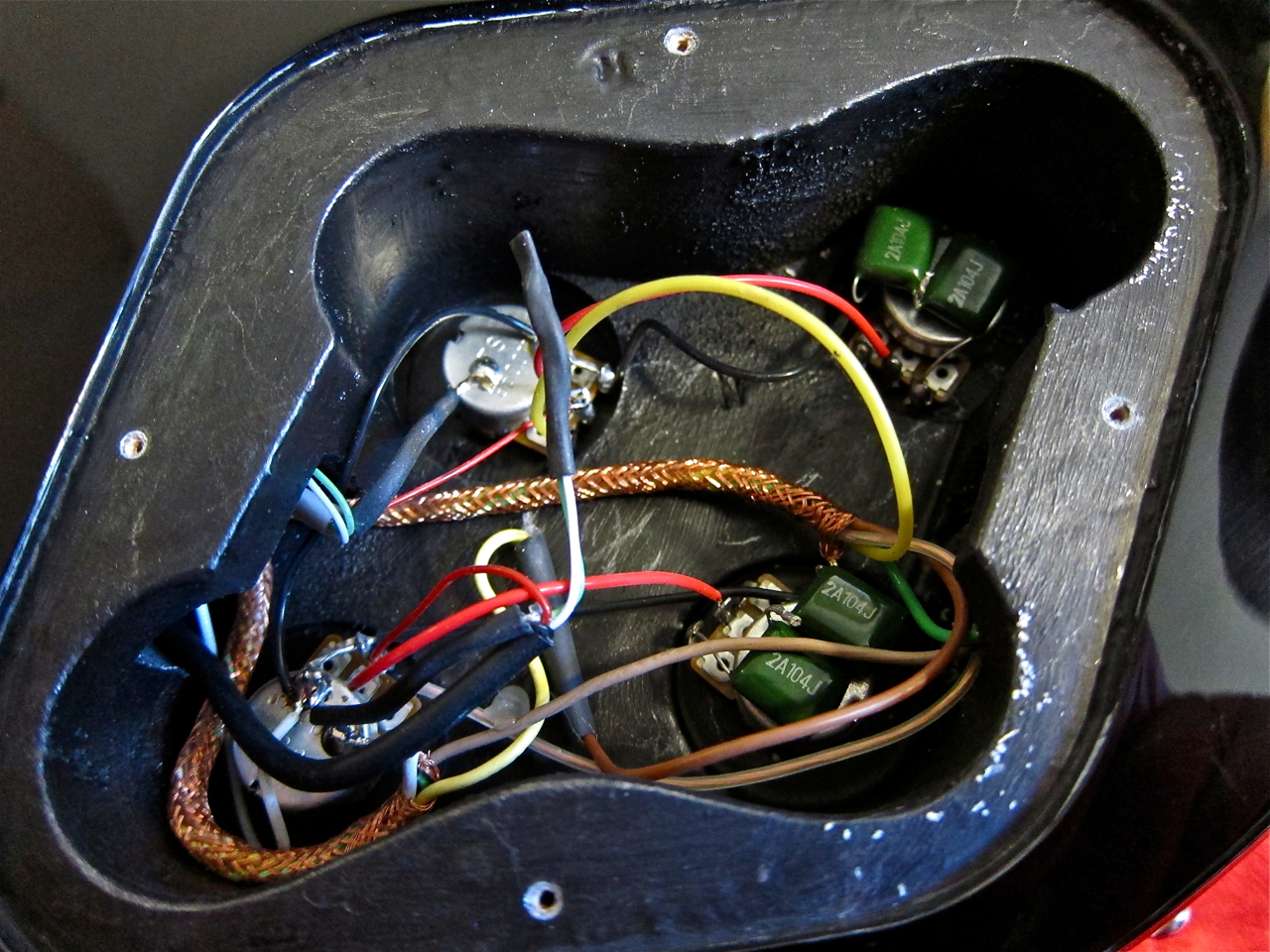
It’s nice to see quality long-throw pots and clean workmanship inside the Viking.
The classic Gibson-type bridge and stopbar combination works fine on a semi like this.
****
Thanks to its nice, moderate weight the Hagström Viking Baritone sits comfortably in your lap, with good strapped-on balance, too, regardless of a whiff of neck-heaviness due to its long neck.
The neck profile is a fleshy, but not too fat ”D”. Due to a baritone-guitar’s longer scale length (28″/71,1 cm) a newbie will need a little time to adjust his (or her) technique, but after a few minutes or so muscle memory will take the reigns without any problems.
The Viking Baritone’s choice of pickups really does it for me, fitting this guitar’s acoustic tone to a tee. The freshness of the neck pickup, together with its deliciously woody response, will keep even the lowest runs clear and punchy. And the moderately-powered bridge humbucker adds just the right amount of bite and grit to proceedings.
I feel that Hagström’s Viking Baritone is a fine baritone for all occasions and all styles of music (well, probably apart from the most massive of high-gain applications).
Listen to these two audio clips (the pickup order is: neck – both – bridge):
The Hagström Northen Swede (current street price in Finland approx. 1.200 €) is a high-quality, EU-made reissue of the classic Swedish model of yore.
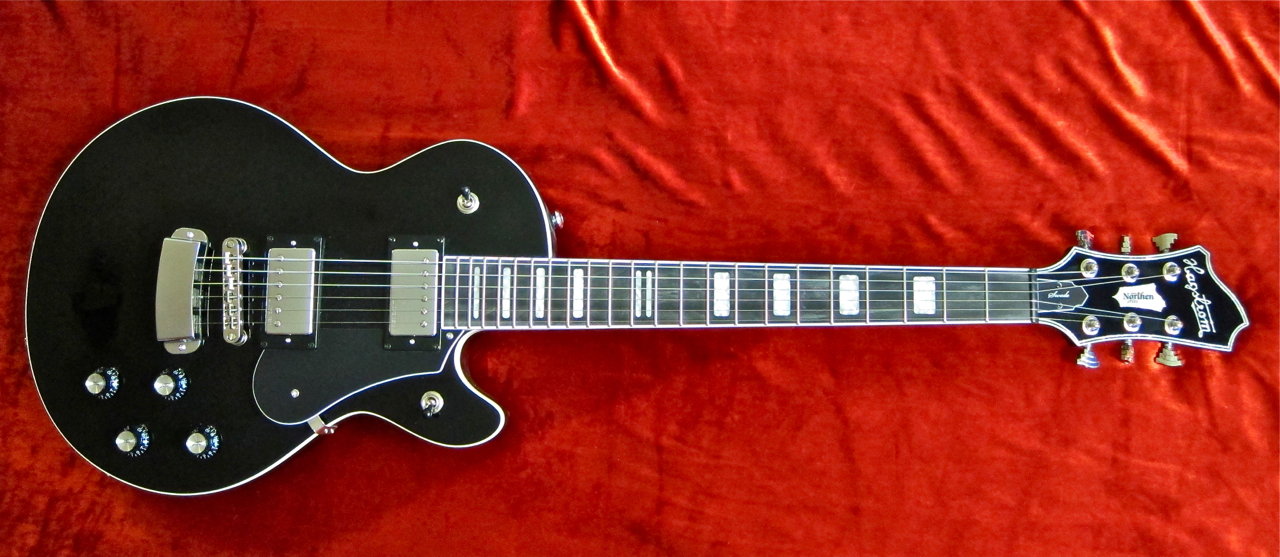
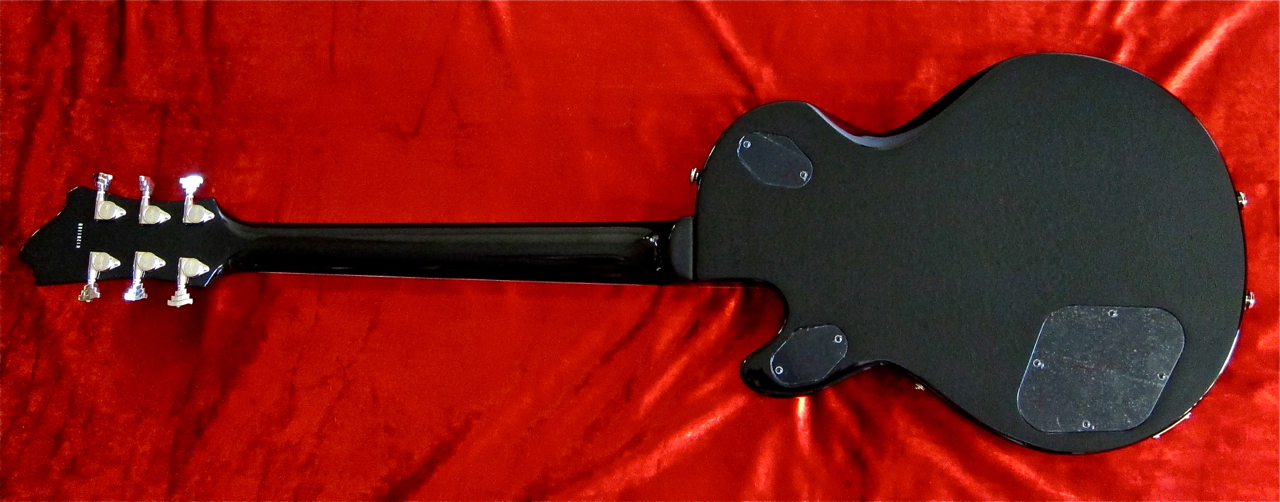
We’re talking about a set-neck solidbody, made almost completely from African mahogany (note: the cover plates look strange in this pic, because they still have their protective foils stuck on top).
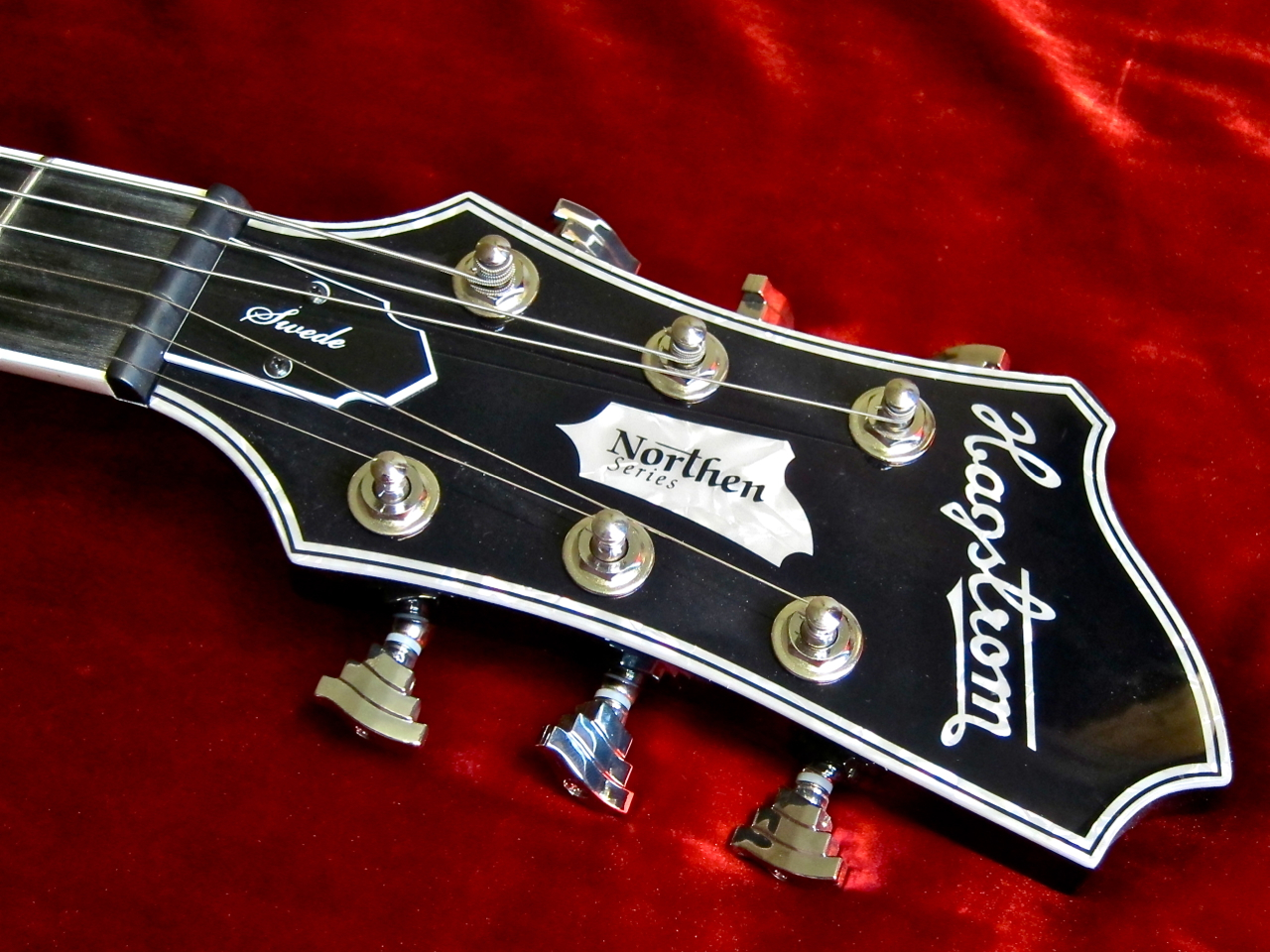
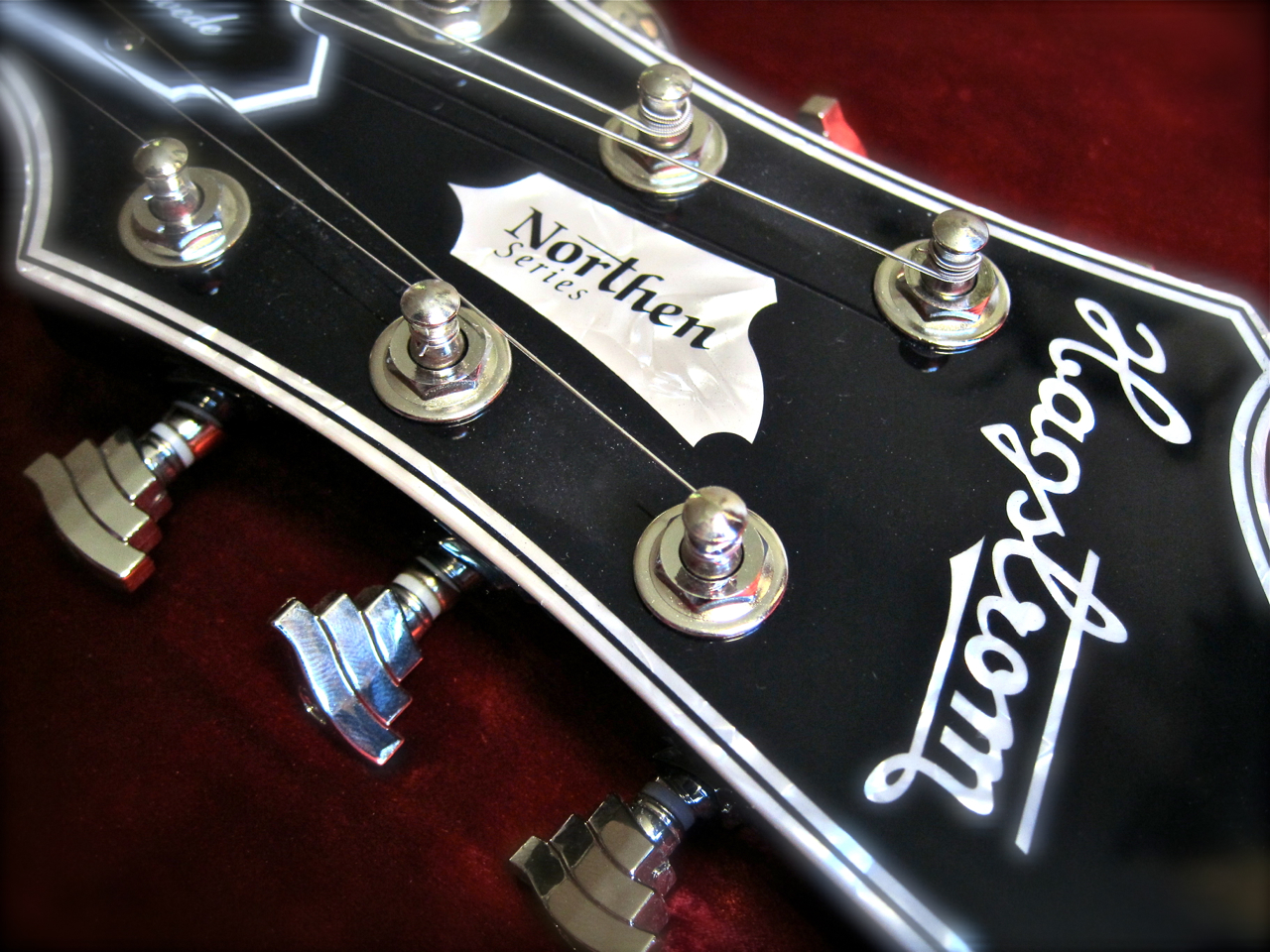
The large pearloid inlay proudly displays the Northen-series’ logo.
The Hagström-tuners have an 18:1 gear ratio and a smooth and precise feel.
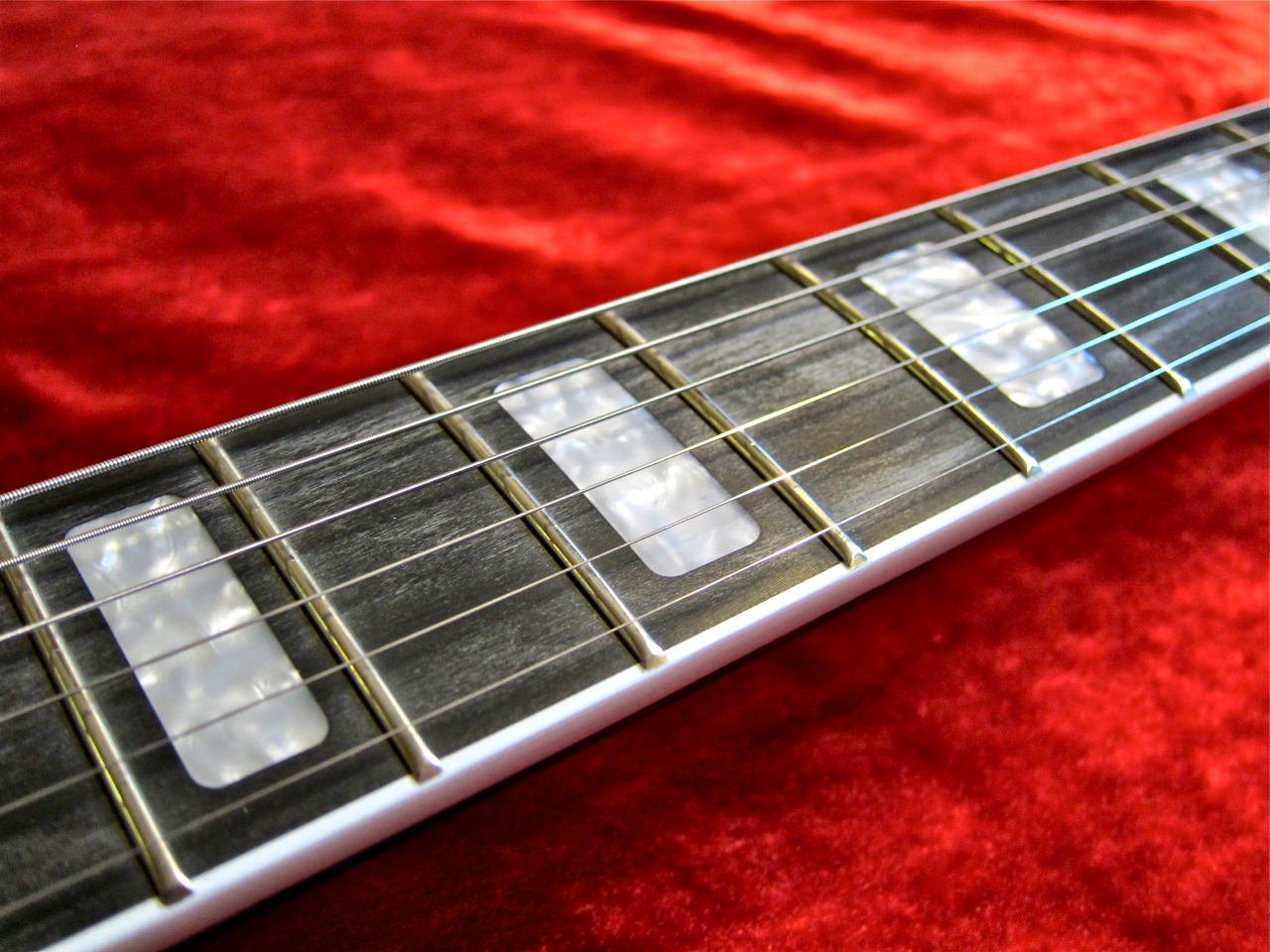
The Northen Swede’s Resinator-board looks more lively than its counterpart on the Viking Baritone. The fretwork is very good.
One special, time-tested feature of all Hagström necks is the H-Expander truss rod system. The H-Expander truss rod sits in a rigid aluminium bar with an H-shaped cross-section. The whole system is then mounted into a tight-fitting, profiled slot inside the the neck, resulting in greater rigidity and thus a better vibrational transfer than most other truss rod systems provide.
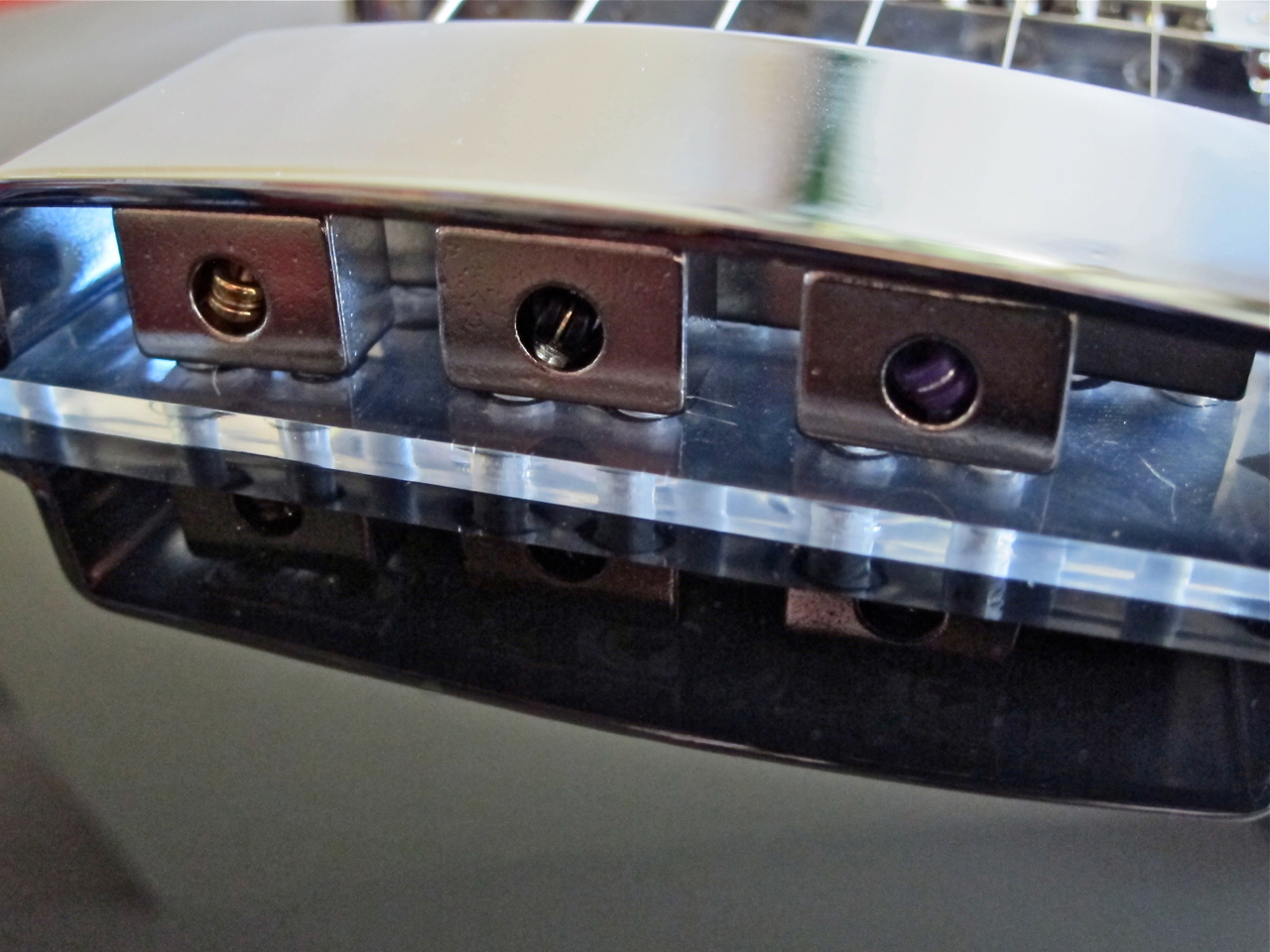
The Swede features Hagström’s idiosyncratic tailpiece, using individual string retainers mounted onto a perspex plate.
Swedish pickup-guru Johan Lundgren is the force behind the Northen Swede’s classy pickups. The guitar is equipped with a pair of No. 2 -humbuckers, which are powered by Alnico 2 magnets.
The Hagström Swede sports two three-way toggle switches: The switch on the guitar’s shoulder is your usual pickup selector, while the one on the treble-side horn is a tone filter -switch.
The tone filter’s middle position is off, with the ”up” selection giving you a mild presence roll-off, while the ”down” position results in a noticeably greater treble and high-mid cut.
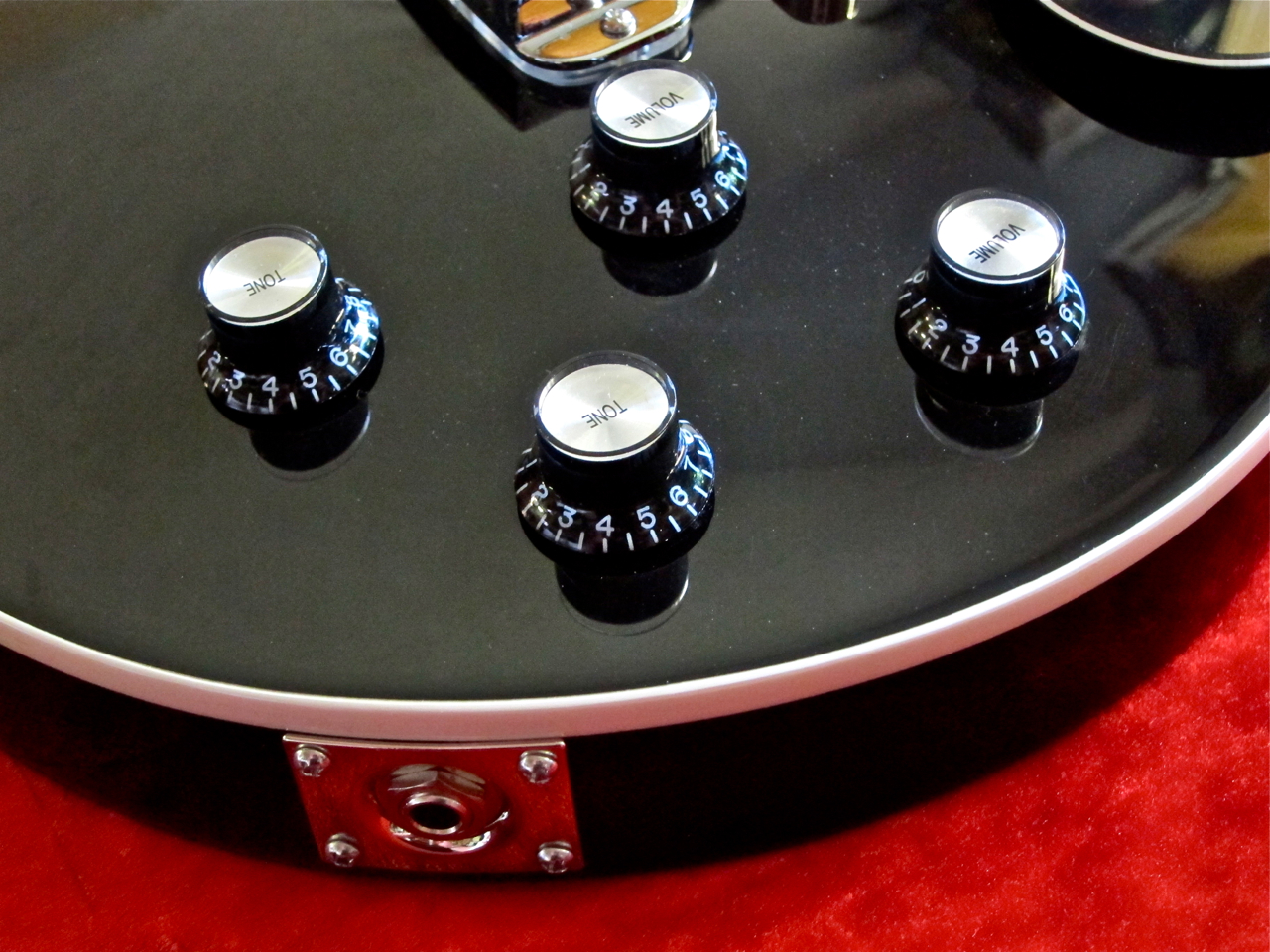
The control knobs work in the standard Les Paul -fashion, with each pickup being provided with its own set of volume and tone controls.
Quality components, clean soldering and thorough screening, using conductive paint and an aluminium-lined lid, get the thumbs up from this here reviewer.
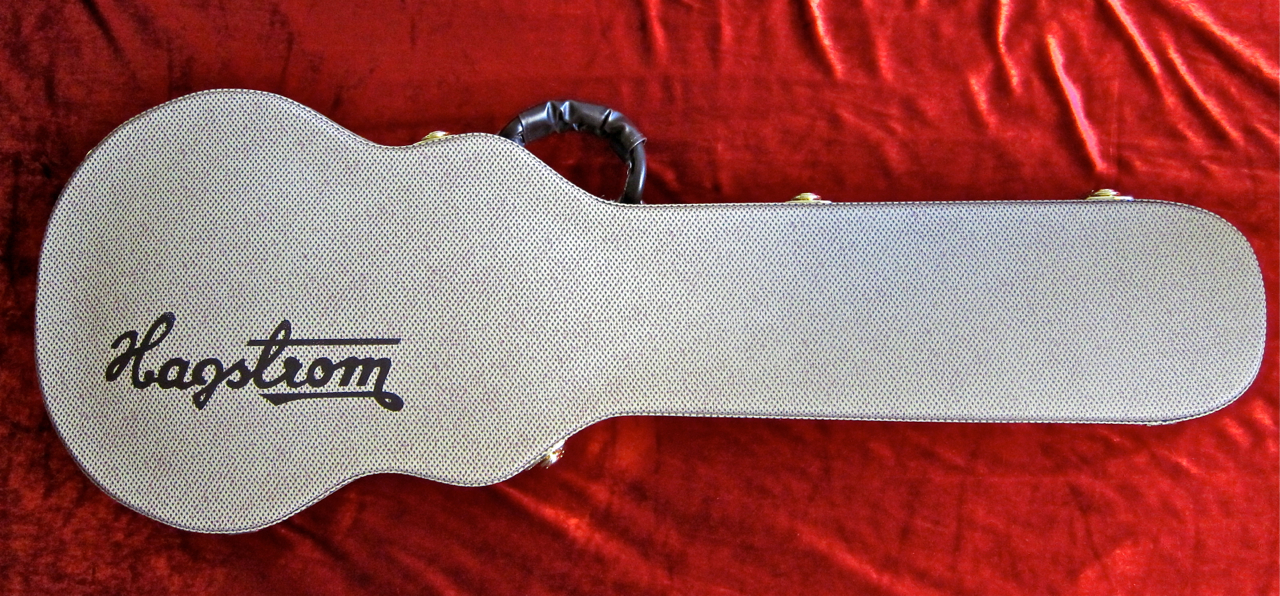
A sturdy and beautiful Hagström-case is included in the Northen Swede’s price.
****
The Hagström Northen Swede’s well-rounded neck profile feels great to me. The nicely polished frets and the ’board’s 12-inch camber make for a fast and effortless playing experience.
Thanks to the fantastic interplay between the tone filter -switch and the guitar’s controls, the tonal options afforded by this Swede are virtually limitless. The Lundgren-designed pickups have a very clear and clean basic tonal character, which enables you to make the most of the Northen Swede’s passive electronics.
In my opinion Hagström’s Northen Swede is a top-quality guitar offering a great deal of tonal variation to the discerning guitar connoisseur. In light of its Czech origin, I must say that the Northen Swede truly represents quality European workmanship at a very moderate price.
All the following audio clips have been recorded with the tone filter -switch starting at off, then going to moderate roll-off, with the last phrase using the full treble cut selection:
Tässä jutussa tutustutaan kahteen Hagström-malliin: puoliakustinen Viking Deluxe Baritone on Kauko-Idästä peräisin oleva baritonikitara matalien riffien ystäville, kun taas upouusi Northen Swede valmistetaan käsityönä Tšekinmaassa.
****
Hagström Viking Baritone (katuhinta noin 600 €) on Viking-perheen uusi, pitkäkaulainen tulokas, jolla on samat tyylikkäät muodot ja sama puoliakustinen perusrakenne kuin muissakin Viking-malleissa.
Luja vaahterakaula on liimattu kauniiseen, muotoon prässätystä vaahteravanerista valmistetuun runkoon.
Hagströmin lapa huokuu 1950-luvun jazzkitaroiden äärimmäistä tyylikkyyttä, monikerroksisella reunalistoituksellaan ja siistillä upotustyöllään.
Satula taas on laadukkaasta, kitkaa vähentävästä Black Tusq -materiaalista.
Myös Hagström-virittimet ovat nykyaikaista suljettua sorttia.
Hagström-kitaroiden erikoisuuksiin kuuluu Resinator-otelauta. Resinator on keinotekoinen materiaali puusta ja hartsista, jonka sanotaan olevan soundillisesti hyvin lähellä eebenpuuta.
Nauhatyö on toteutettu testisoittimessa hyvin siististi, ainoastaan nauhojen päät olisivat voineet olla vielä hivenen verran pyöreämmät.
Vanerikopan sisällä on paksu keskipalkki mahongista, joka kulkee kaulaliitoksesta koko matkan rungon läpi.
Keskipalkki tekee kitarasta puoliakustisen (muuten se olisi täysiakustinen). Se parantaa kitaran atakkia ja sustainea (= soinnin kestoa), ja se vähentää myös ratkaisevasti ontosta kopasta syntyvän feedback-ulinan vaaran.
Mikrofonivarustus on Viking Baritonessa optimoitu juuri baritonikäyttöä varten:
Kaulamikrofonina toimi Hagströmin uusi P-Urified-malli, joka on peeysikymppinen humbuckerkoossa. Yksikelaisen käyttö kaulan lähellä pitää matalat taajuudet siistimpänä ja parantaa soundin selkeyttä.
Tallamikrofoni taas on Hagstömin selkeä-ääninen Custom 58 -malli, joka sopii maltillisen tehonsa ansiosta erittäin hyvin P-Urified-kaltaisen kaulamikin kanssa yhteen.
Kolmiasentoinen mikkivalitsin sijaitsee Viking Baritonen yläsarvella.
Vikingin kytkennössä käytetään laadukkaita isokokoisia potentiometrejä. Työnjälki on elektroniikankin osalta hyvin siisti.
Klassinen Gibson-tyylinen tallan ja kietenpitimen yhdistelmä on toimiva ratkaisu.
****
Hyvin malttillisen painoinen Hagström Viking Baritone istuu erittäin hyvin soittajan sylissä, ja roikkuu hihnassakin melko rauhallisena erittäin lievästä kaulanpainoisuudestaan huolimatta.
Kaulaprofiili on tuhti, mutta ei missään nimessä ylipaksu ”D”. Baritonikitaran pidempi mensuuri (28″/71,1 cm) vaatii lyhyen tutustumisvaiheen, mutta lihasmuistin sisäänajon jälkeen soitto sujuu ongelmitta.
Viking Baritonen mikrofonit ovat mielestäni erinomaiset, ja ne sopivat tälle kitaralle loistavasti. Kaulamikrofonin tuoreus ja maiskuvan pähkinäinen keskialue pitää myös erittäin matalat juoksut siisteinä ja erottelevina. Maltillinen tallahumbuckeri taas pysyy hyvin dynaamisena ja avoimena.
Hagström Viking Baritone on todella maukas yleisbaritoni, joka sopii erittäin hyvin kaikille musiikkityyleille – ehkä rankimpaa Thrashia lukuunottamatta.
Tässä kaksi audiopätkää (järjestys: kaulamikki – molemmat – tallamikki):
Hagström Northen Swede (katuhinta noin 1.200 €) on eurooppalaisvalmisteinen laatuversio vanhasta ruotsalaisesta klassikkokitarasta.
Kyseessä on liimakaulainen lankkukitara, joka on veistetty otelautaa lukuunottamatta täysin afrikkalaisesta mahongista (huom: kuvassa muovikansien suojamuovit vielä paikoillaan).
Lapaan on upotettu sarjan nimeä kantava, helmiäismuovista tehty laatta.
Hagström-virittimien välityssuhde on 18:1, ja niiden tuntuma on hyvin sulava.
Northen Sweden Resinator-otelauta näyttää eloisemmalta kuin Viking Baritonen vastine. Nauhatyö on erittäin huolellinen.
Hagström-kaulojen erikoisuus piilee firman erittäin lujassa H-Expander-kaularaudassa. H-profiiliseen alumiinikuoreen asennettu kaularauta istuu erittäin tiukasti kaulapuussa, minkä ansiosta kaula värisee voimakkaamin.
Tune-o-matic-tyylisen tallan aisapari on Hagströmin oma kieltenpidin, jossa kielet ankkuroidaan erillisiin metalliblokkeihin.
Ruotsalainen mikkiguru Johan Lundgren on mies Northen Swede -mallin loistavien mikrofonien takana. Kyseessä ovat No. 2 -nimisiä kuorellisia humbuckereita, jotka rakennetaan miedoilla Alnico 2 -magneetteilla.
Hagström Swedessä on kaksi kolmiasentoista vipukytkintä: kitaran olkapäässä istuva kytkin on tavallinen mikkivalitsin, kun taas sarven kytkin on tone-filtteri.
Filtterikytkimen väliasento on neutraali, ylös-asennossa astuu kuvaan mieto preesens- ja diskanttisuodin, kun taas ala-asentolla valitaan rajumpi treble-filtteriä.
Säätimet toimivat perinteisellä, Les Paul -tyylisellä tavalla – kummallekin mikrofonille on omat volume- ja tone-säätönsä.
Laadukkaita komponentteja, siistiä juotostyötä ja toimiva häiriösuojaus grafiittimaalilla ja alumiinilla vuoratulla kannella ilahduttavat testaajan.
Laadukas Hagström laukku kuuluu Northen Sweden hintaan.
****
Hagström Northen Swede -kitaran täyteläinen kaulaprofiili istuu todella mukavasti ainakin minun käteeni. Sulavaksi työstetyt nauhat ja otelaudan loiva kaarevuus (12″) tekevät soittotuntuman erittäin helpoksi.
Tone Filter -kytkimen ja säädinosaston saumattomasta yhteistyöstä syntyy lähes rajaton soundien leikkikenttä. Lundgren-mikkien hyvin tuoreen perusäänen ansiosta pystyy hyödyntämään täysin kaikki kytkennän tuomia mahdollisuuksia.
Northen Swede on mielestäni loistava ja erittäin monipuolinen kitara laatutietoiselle, joka sopii genrelle kuin genrelle. Soittimen tšekkiläisen alkuperänsä vuoksi pidän pyydettyä hintaa hyvin kohtuullisena – Northen Swede edustaa eurooppalaista laatua reiluun hintaan.
Kaikissa seuraavissa ääniesimerkeissä soittojärjestys on Tone Filter -pois päältä –> mieto suodatus –> rajumpi diskanttileikkaus:
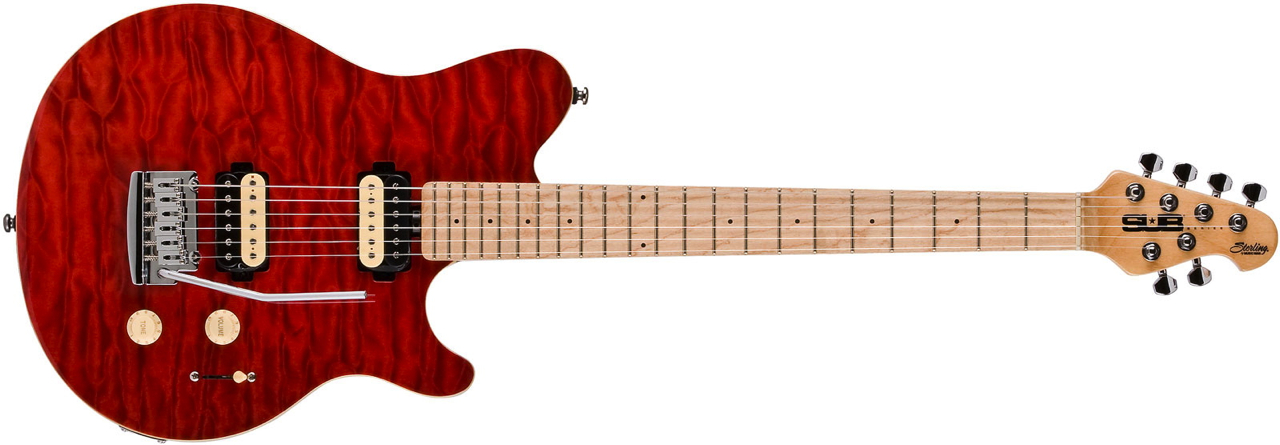
Uusi Sterling (by Music Man) S.U.B. -sarja tuo Music Manin klassikkomalleja kaikkien ulottuville, kitaroiden alhaisten hintojen ansiosta.
Silo 3 on edullinen versio Music Man Silhouette -kitarasta. Silo-mallissa on kaksi tuhtia yksikelaista mikrofonia, sekä humbuckeri vibratallan vieressä.
Ax 3 taas on Axis-mallin edullinen versio, ja se tarjoaa kaksi humbuckeria, viisiasentoisen kytkimen ja vibratallan.
Molemmissa kitaroissa on viidellä ruuvilla kiinnitetty vaahterakaula, Silo 3:ssa voi valita jopa vaahtera- ja palisanteriotelaudan välillä.


























 Kitarablogi.com – Finland's premier Guitar and Bass blog