
Uutuus: Squier Vintage Modified Jaguar

Kitarablogi.com – Finland's premier Guitar and Bass blog
Juttuja kitaroista ja bassoista

****

The PRS Studio -model, which was introduced last year, bundles all the improvements of the last few years in one single instrument. The Studio sports a long list of new – or improved – features, such as the Narrowfield-humbuckers.
****

In Gibson-speak ”studio” usually means a less expensive, slightly scaled-down model. In the PRS Studio’s case the word ”studio” denotes a guitar that is meant to be very versatile.
The PRS Studio (current price in Finland around 3,000 €) is a set-neck electric guitar, with the company’s traditional 25-inch (63,5 cm) scale. A great-looking flame maple top comes as standard on the Studio. PRS offer several different colour finishes, as well as a choice between a wraparound bridge or a PRS vibrato.
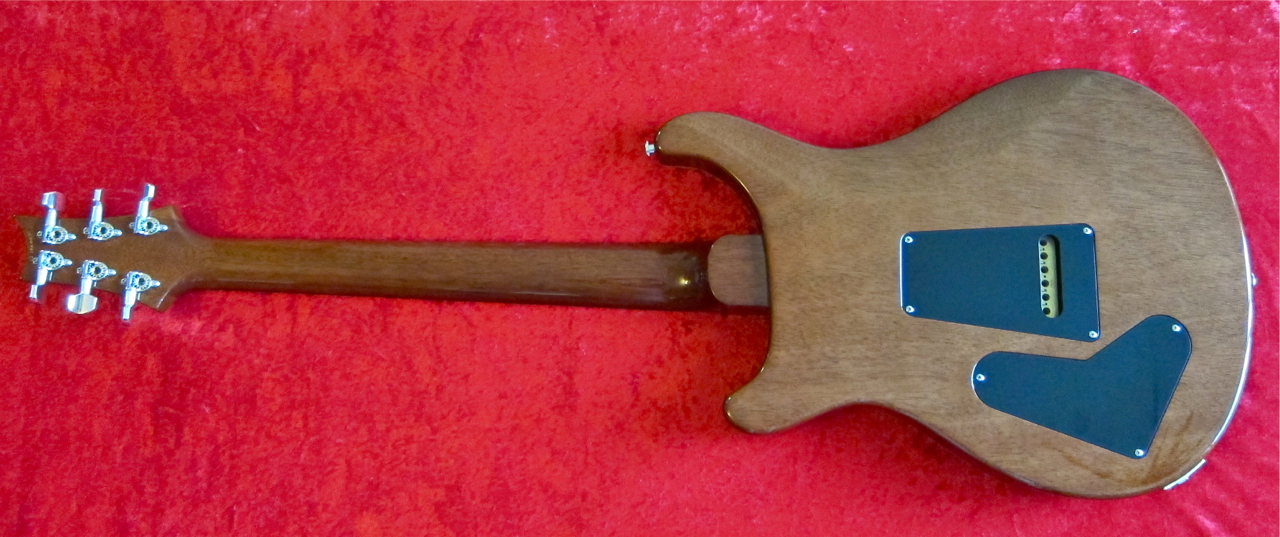
Both the neck and the back of the body are crafted from top-quality mahogany. The Studio is offered with two new neck profiles: The fuller version is called Pattern Neck, while its slimmer counterpart is designated as Pattern Thin.
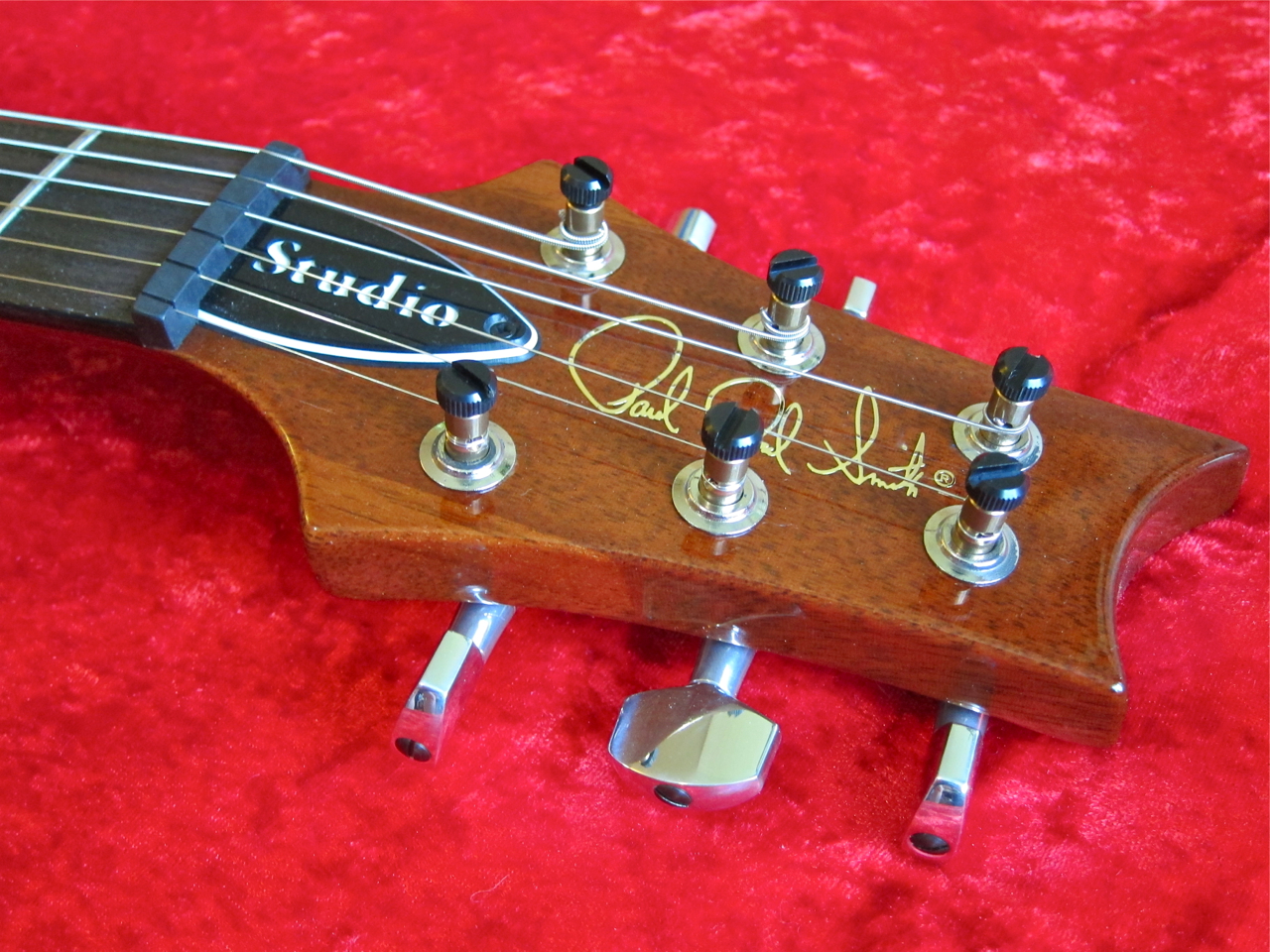
The new PRS Phase III locking tuners feature brass string posts and bushings with a much tighter fit.

I assumed that the reason for the open casings was weight reduction, but I was wrong. In one of PRS’ You Tube videos Mr Smith states that the main reason for this design change were the cool looks.

The company’s new bird inlays are standard on the Studio-model – cream coloured outlines filled with walnut.
The fretwork on our test sample was truly exemplary.

Here’s a good look at PRS’ customary neck joint – its big heel is good for sustain.

Over the past decades the PRS body shape has become a classic design in itself.

A breath-taking view for most guitar connoisseurs – the famous ”fake” binding, which is achieved by leaving the rim of the maple top unstained.
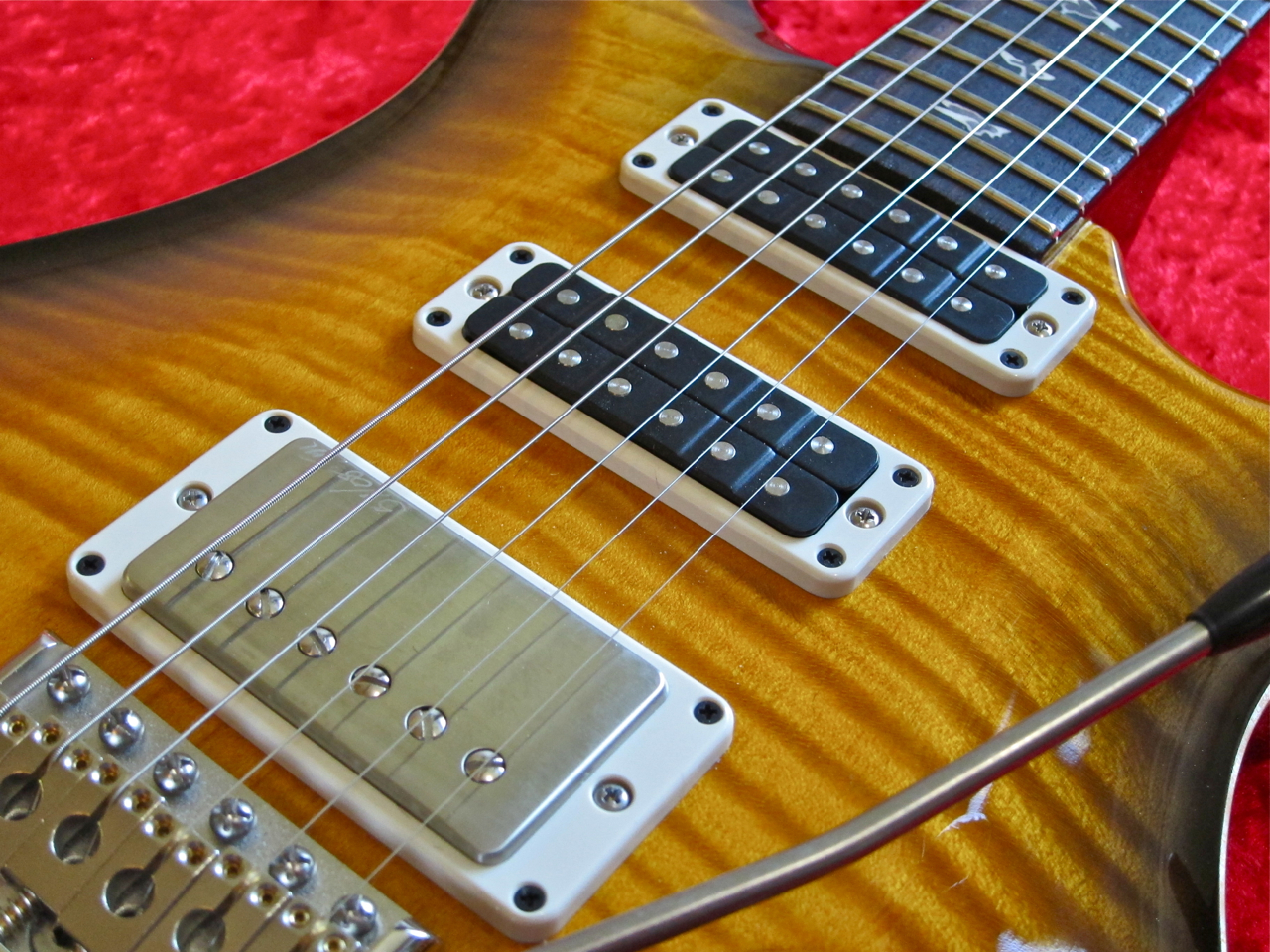
In the last years PRS has given its pickups a thorough overhaul, which has spawned a few new models: The Studio comes equipped with the new PRS 57/08 -humbucker in the bridge position. Many PRS-fans claim that this is the company’s best-ever vintage-type humbucker. The 57/08’s metal cover is brushed aluminium, and bridge versions have their model number deliberately engraved upside-down.
The brand new Narrowfield-humbuckers are very special beasts, indeed, with a sound of their own. The Narrowfield has a full-size humbucker’s output level and warm basic character, but thanks to its much narrower magnetic window the higher-mids and treble range both sound fresher and more transparent.

A push-pull-switch inside the tone control lets you split the bridge pickup.

PRS’ vintage-style vibrato is a fine improvement on Leo Fender’s original Stratocaster-bridge.

The vibrato block is milled from solid brass.

This is what the review sample’s control cavity looks like – not the cleanest PRS I’ve ever seen. Luckily the sawdust doesn’t seem to hamper the guitar’s functionality.

A classy hard case rounds out this package.
****

According to Paul Reed Smith himself, the Studio’s new Pattern neck profile is actually a return to the very beginning of PRS Guitars, when PRS was a tiny little workshop. The Pattern Neck isn’t miles away from the famous Wide-Fat-profile, but it is clearly rounder with much less shoulders to it.
The Studio’s ergonomics and playability can be summed up in one word – fantastic. The guitar is feather-light, and its slender body with the long upper horn balances perfectly on a strap – despite the neck joining the body at the 20th fret.
The PRS vibrato comes set up with four springs and works buttery and precisely with perfect return-to-pitch.
Acoustically the Studio performs like a true PRS – there’s a good dose of Gibson-ish set-neck character, mixed with a drier and and tighter attack. The warm, well-rounded, but fresh character is carried evenly across the whole fretboard.
The Narrowfield-pickups are a very interisting new breed. They don’t pretend to be sound like Strat-sized ’buckers, but give you plenty of humbucker warmth, coupled with more presence and a nice top end sheen. The Narrowfields work well in combinations, where you’d normally expect a couple of Fender-style singlecoils. In my opinion this is the first time I’ve heard a guitar, where a third humbucker makes tonal sense.
The moderately-powered PRS 57/08 -humbucker is the perfect partner for the Narrowfields, because it, too, has a fresh and dynamic tone. Splitting the 57/08 even gives you quite credible Fender-sound approximations.
The soundbites all start with the neck pickup on its own, flicking through all the switch positions with the bridge humbucker split. The final two repeats are the middle-plus-bridge and bridge-alone selections with the full humbucker in use:
****

Three thousand Euros is quite a lot of money for one guitars. True, but I feel the PRS Studio is really worth each Cent – it is a guitar crafted to the highest standards from top-quality materials. The result is one of the best guitars coming from a large-volume manufacturer. Outstanding playability, coupled with the fantastic tone of the new pickups put this PRS in a league of its own.
****
PRS Guitars Studio
Current price in Finland: approx. 3,000 €
Finnish distributor: EM Nordic
A big thank you to DLX Music Helsinki for the loan of the review sample!
Pros:
• sheer quality
• workmanship
• playability
• smooth vibrato
• sound
• versatility
Cons:
• sawdust in the control cavity
****
****
Viime vuoden puolella ilmestynyt PRS Studio -malli on firman jatkuvan kehityksen tämänhetkinen huipentuma. Tähän kitaraan sisältyy pitkä lista parannuksia monissa yksityiskohdisssa, sekä PRS:n uudet Narrowfield-humbuckerit.
****
Gibsonilla sana ”studio” viittaa tavallisesti ”standardia” edullisempaan versioon. PRS Guitarsin Studio-mallissa ei todellakaan ole kyse säästöversiosta, vaan nimi tulee tämän mallin monipuolisista soundimahdollisuuksista.
PRS Studio (DLX Musicin hinta 2.995 €) on liimakaulainen sähkökitara firman perinteisellä 25-tuumaisella (63,5 cm) mensuurilla. Pramea loimuvaahterakansi on jokaisessa Studiossa vakiona. Malli on saatavana usealla eri värityksellä, sekä PRS-vibratallalla tai firman wrapover-tallalla varustettuna.
Sekä kaula että rungon takaosa ovat ensiluokkaista mahonkia. Studiota valmistetaan kahdella uudella kaulaprofiililla: Pattern Neck on täyteläisempi vaihtoehto, kun taas Pattern Thin Neck on ohuempi.
Uusissa PRS Phase III -virittimissä on kielten lukitus, messingistä tehdyt tapit, sekä vintagea tiukemmin lapaan istuvat kaulukset.
Oletin, että virittimien puoliavoimiim koteloihin on päädytty painosyistä, mutta yhdessä firman You Tube -videossa Herra Smith kertoo, että tämä ratkaisu on valittu, koska ”se näyttää niin kivalta”.
PRS Studion vakiovarustukseen kuuluvat myös ruusupuisen otelaudan lintu-upotukset. Uusimmassa versiossa on kermanvaalea ulkoreuna ja pähkinäpuusta veistetty sisäosa.
Nauhatyö on testisoittimessa suorastaan esimerkkillistä.
Tältä näyttää Paul Reed Smith Guitarsin perinteinen liimaliitos sustainea lisäävällä, tukevalla kaulakorolla.
Firman rungon muotoilusta on tullut vuosien myötä klassikko.
Kitarafaneille tämä on suorastaan henkeäsalpaava näky – PRS:n kuuluisa ”feikki” reunalistoitus, jossa kannen reuna jätetään värjäämättä.
Viime vuosina PRS:n mikrofonivalikoima on käynyt läpi perusteellisen uudistusprosessin: tallamikrofoniksi on valittu PRS:n vintage-tyylinen 57/08-humbucker, joka on monien mielestä paras PRS-humbucker ikinä. 57/08:n metallikansi on harjattua alumiinia, ja pikanttina detaljina mikin mallitunnus on tallaversioissa aina päälaellaan.
Uusinta uutta on kaula- ja keskiasemaan asennettu Narrowfield-humbucker, joka on ihan uusi mikrofonityyppi omalla soundillaan. Narrowfieldissä on vintage-humbuckerin lähtöteho ja lämmin perusluonne, mutta kapeamman magneettisen ikkunan ansiosta erilainen preesensalueen rakenne ja hieman tuoreempi diskantti.
Tone-potikassa on nostokytkin, joka puolittaa yläasennossa tallahumbuckerin.
PRS:n vintage-tyylinen vibrato on itsekin legendaarinen parannus Leo Fenderin alkuperäisestä Strato-vibrasta.
Vibrablokki on valmistettu isosta messinkipalasta.
Tällaiselta testisoittimen elektroniikkalokero näyttää – ei ehkä siistein näkemäni PRS-kitara, mutta puupöly ei haittaa mitenkään kitaran toimivuutta.
Laadukas laukku kuuluu luonnollisesti PRS Studion hintaan.
****
Studion uusi Pattern-kaulaprofiili on itseasiassa PRS-kitaroiden alkuperäinen profiili sitä ajasta, kun PRS oli vielä pikkuinen custom-paja. Pattern Neck on lähellä vanhaa Wide Fat -profiilia, mutta aavistuksen verran lihaksikkaampi ja selvästi pyöreämpi. Wide Fat -kaulan hartiat on poistettu PRS:n uudesta Pattern Neckistä.
Studio-mallin soittettavuutta ja ergonomiaa voi kuvailla yhdellä sanalla – ensiluokkainen. Kitara on kevyt, ja sen ohut – ja yläsarvella varustettu – runko roikkuu tasapainoisesti hihnassa, vaikka kaulaliitos on vasta 20:n nauhan kohdalla.
Neljällä jousella varustettu PRS-vibra toimii hyvin jouhevasti ja tarkasti, ja se palaa käytön jälkeen nätisti nolla-asentoonsa ilman vireongelmia.
Akustisesti soitettuna PRS Studio soi kuin tyyppillinen PRS – Gibson-tyylinen perusluonne, mutta hieman kuivemmalla ja tiukemmalla atakilla. Kuulas, mutta lämmin karakteeri, sekä pitkä sustain ovat tasaisesti läsnä koko kitarassa.
Narrowfield-mikrofonit ovat erittäin mielenkiintoinen uutuus. Ne eivät yritäkään olla häriövapaita, Strato-tyylisiä mikrofoneja. Sen sijaan Narrowfieldistä saa loistavia solakkaampia humbucker-soundeja, jotka todellakin toimivat loistavasti kolmen mikrofonin kattauksessa. Etenkin viisipykäläisen vipukytkimen väliasennoissa eron tavallisien ja NF-humbuckereiden välillä on helppo havaita.
Hyvin maltillisella teholla toimiva PRS 57/08 -humbucker sopii tähän settiin täydellisesti, koska senkin sointi on dynaaminen ja hienostuneen raikas. Splitattuna 57/08:sta saa irti jopa melko uskottavia Fender-kaltaisia soundeja.
Seuraavissa esimerkeissä soitan kytkimen asennot läpi kaulamikistä ensin puolitettuun tallamikrofoniin. Lopuksi tulevat vielä ne kaksi asentoa, joissa tallahumbuckeri on kytketty täysille:
****
Kolmetuhatta euroa on aika paljon rahaa yhdestä sähkökitarasta. PRS Studio on kuitenkin täysin hintansa arvoinen: soitin on valmistettu parhaista osista suurella huolella. Lopputulos on mielestäni yksi parhaimmista, sarjatuotannossa valmistettavista kitaroista. Soitettavuus on ensiluokkainen, ja uusien mikrofonien ansiosta tämä PRS on monipuolisuudessaan ihan omaa luokkaansa.
****
PRS Guitars Studio
DLX Musicin hinta: 2.995 €
Maahantuoja: EM Nordic
Kiitos DLX Music Helsingille testikitaran lainaamisesta!
Plussat:
• laatu
• työnjälki
• soitettavuus
• vibran toiminta
• soundi
• monipuolisuus
Miinukset:
• hieman puupölyä testiyksilön elektroniikkalokerossa
****


Tokai AJB-55 BB ja Seymour Duncan Basslines Quarter Pound -mikrofonit – testi tulossa.
A Tokai AJB-55 BB equipped with Seymour Duncan Basslines Quarter Pound -pickups – a review is in the works.
****

Kuvat: Miloš Berka
****

Tässä alkutilanne: uuden kielisatsin lisäksi tarvitset viritysmittarin, sekä kelaamisen nopeuttajaksi pienen muovivivun. Kun kerran poistetaan kaikki kielet kitarasta, on ehkä hyvä idea myös puhdistaa soitin. Puhdistusliinalla voi myös suojata kitaraa kolhuilta. Itse käytän myös saksia yhdessä työvaiheessa (katso lopusta).
Myös nailonkielisille kitaroille on tarjolla erilaisia kielisatseja. Klassisen kitaran tapauksessa kielisatseja ei tarjota paksuuden mukaan lajiteltuna, vaan ratkaiseva kriteeri on kielten veto/jäykkyys. High tension -satsi tuntuu jäykemmältä ja soi hieman kirkkaammalta kuin low tension -satsin kielet. Myös valmiiksi kustomoituja kielipakkauksia on olemassa, joissa esimerkiksi punotut bassokielet ja kirkkaat diskanttikielet ovat peräisin saman valmistajan kahdesta eri sarjasta.
Nailonkielisessä kitarassa kielisatsin vaihtaminen ei vaikuta dramaattisesti kitaran intonaatioon tai säätöihin, kyse on enemmän eri soittotatsista ja soundista. Kokeilumielessä voi siis vaihtaa turvallisesti yhdestä lajista toiseen, niin kauan kun kielet on tarkoitettu nimenomaan klassiselle tai Flamenco-kitaralle.
Itse olen suurikokoinen mies, jolla on voimakas soittotyyli – valitsen siis high tension -kieliä.
****
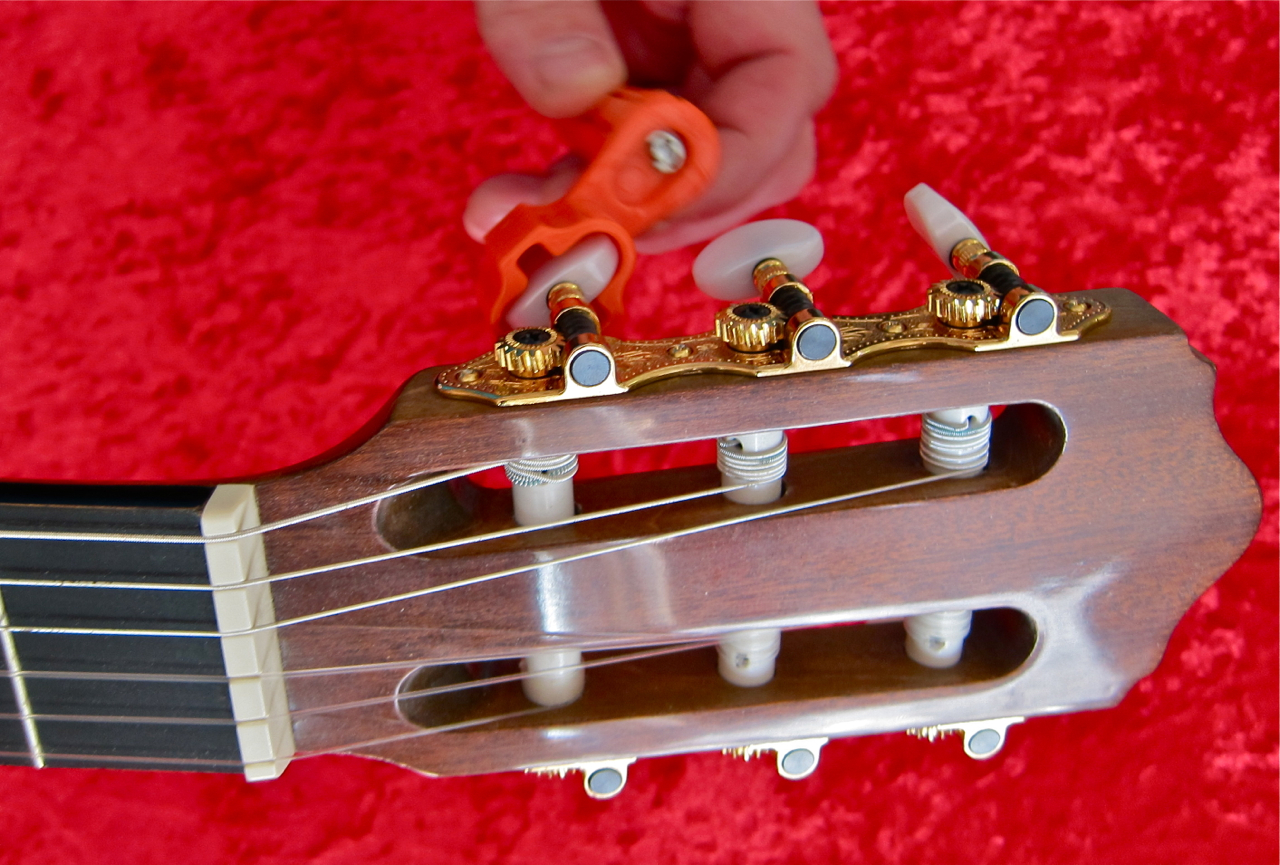
Ensin vanhat kielet löysätään kokonaan – vivulla tämä käy käden käänteessä. Jos kitarasi koneistot tuntuvat epätavallisen jäykiltä, voit lisätä pari tippaa öljyä hammasradan ja kierretangon väliin tai ehkä myös löysätä hammasratojen kiinnitysruuveja aavistuksen verran.
****

Kun kielet ovat täysin velttoja, leikkaan kielet kylmästi kahtia. Näin ei tarvitse vetää koko kieltä tallan tai virittimen läpi, ja vaihtaminen nopeutuu.
****

Avaan vanhojen kielten solmut…

…ja poistan ne sekä tallasta…
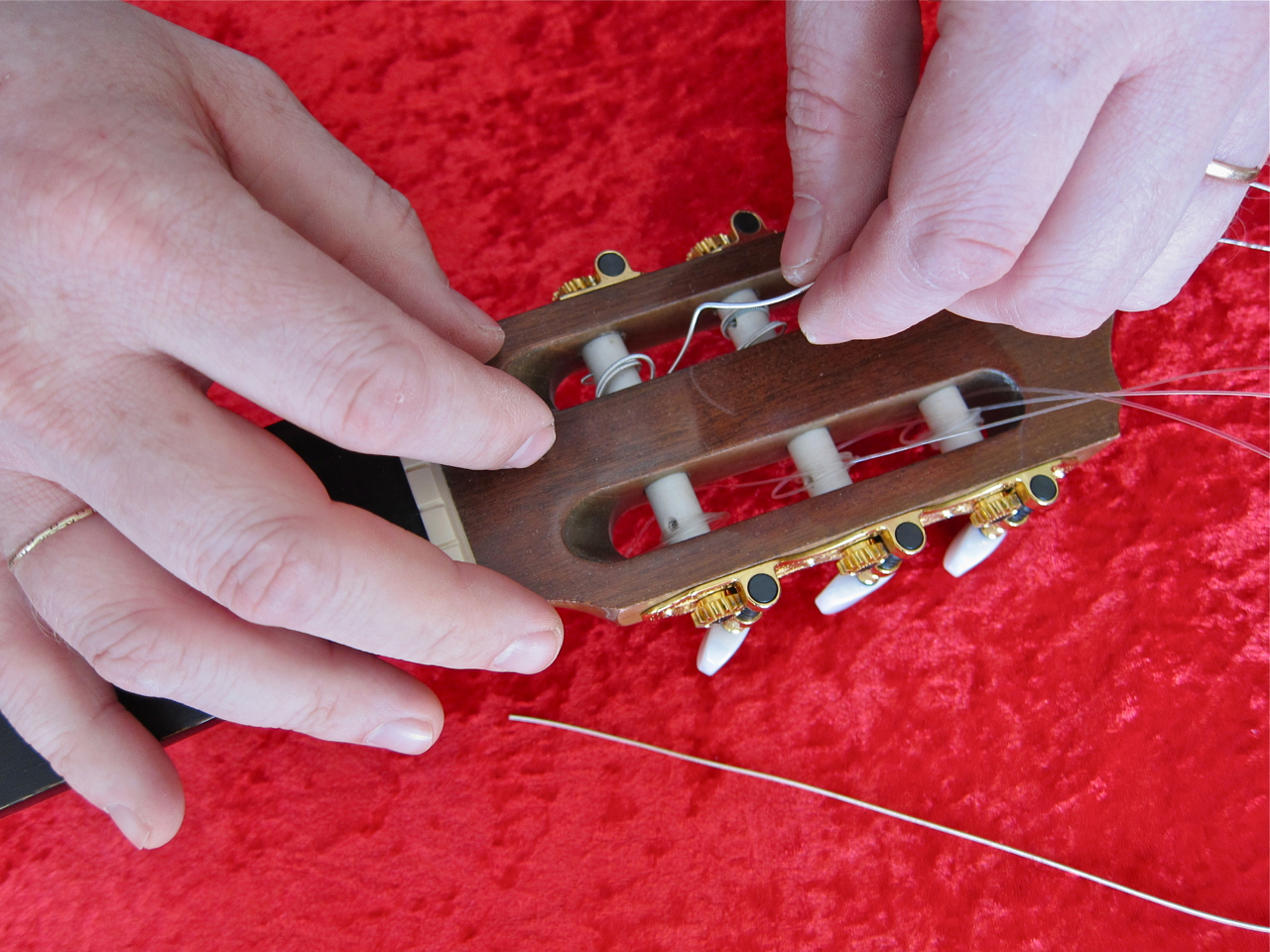
…että virittimistä.
****

Uusi kieli työnnetään ensin kaulan puoleiselta sivulta tallasta läpi.
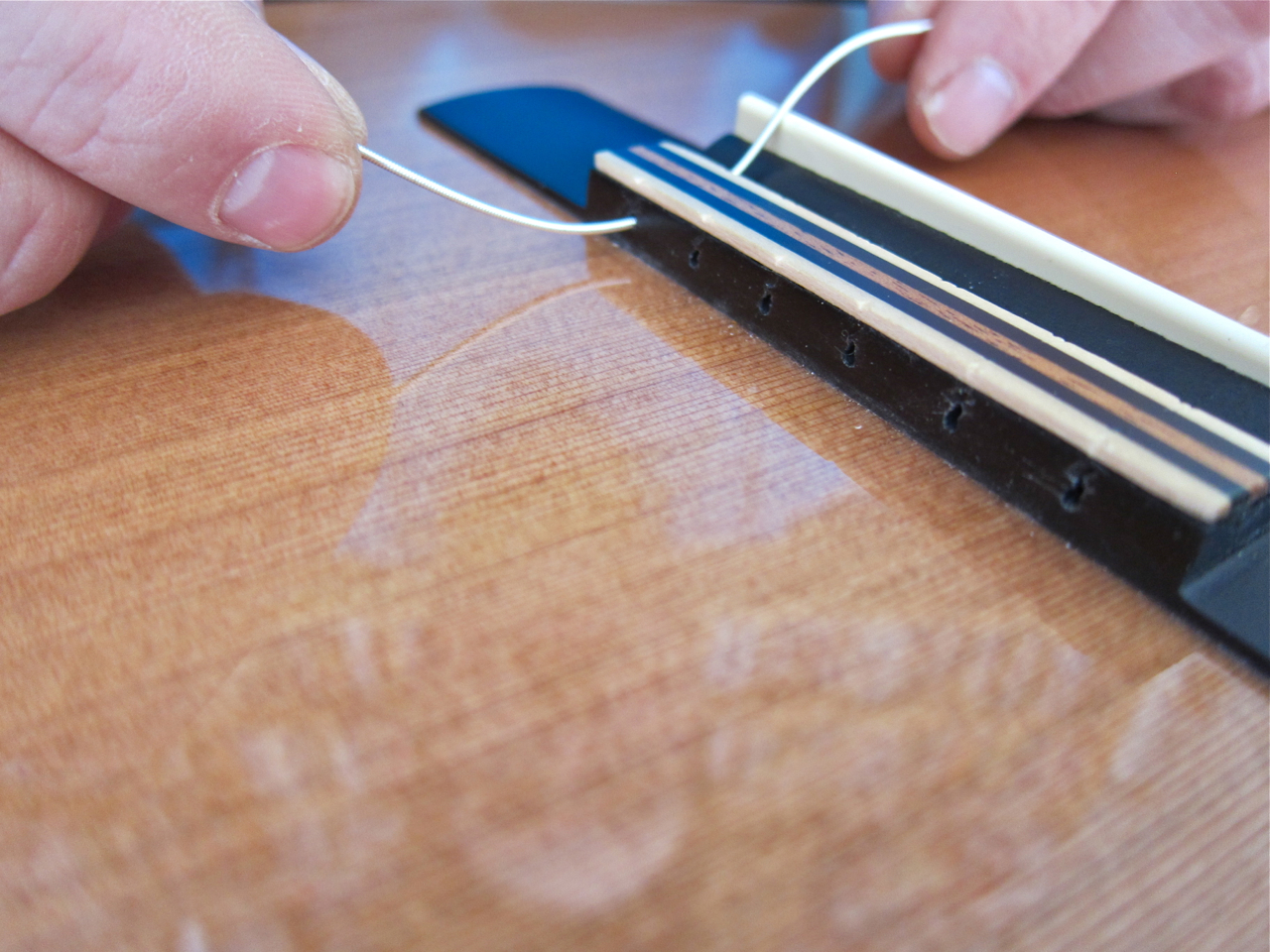
Lyhyt pätkä kielestä vedetään tallasta ulos ja ylös…

…ja vedetään ensin kerran pitkän kielipalan alitse, ja sen jälkeen muutaman kerran itsensä ympäri.
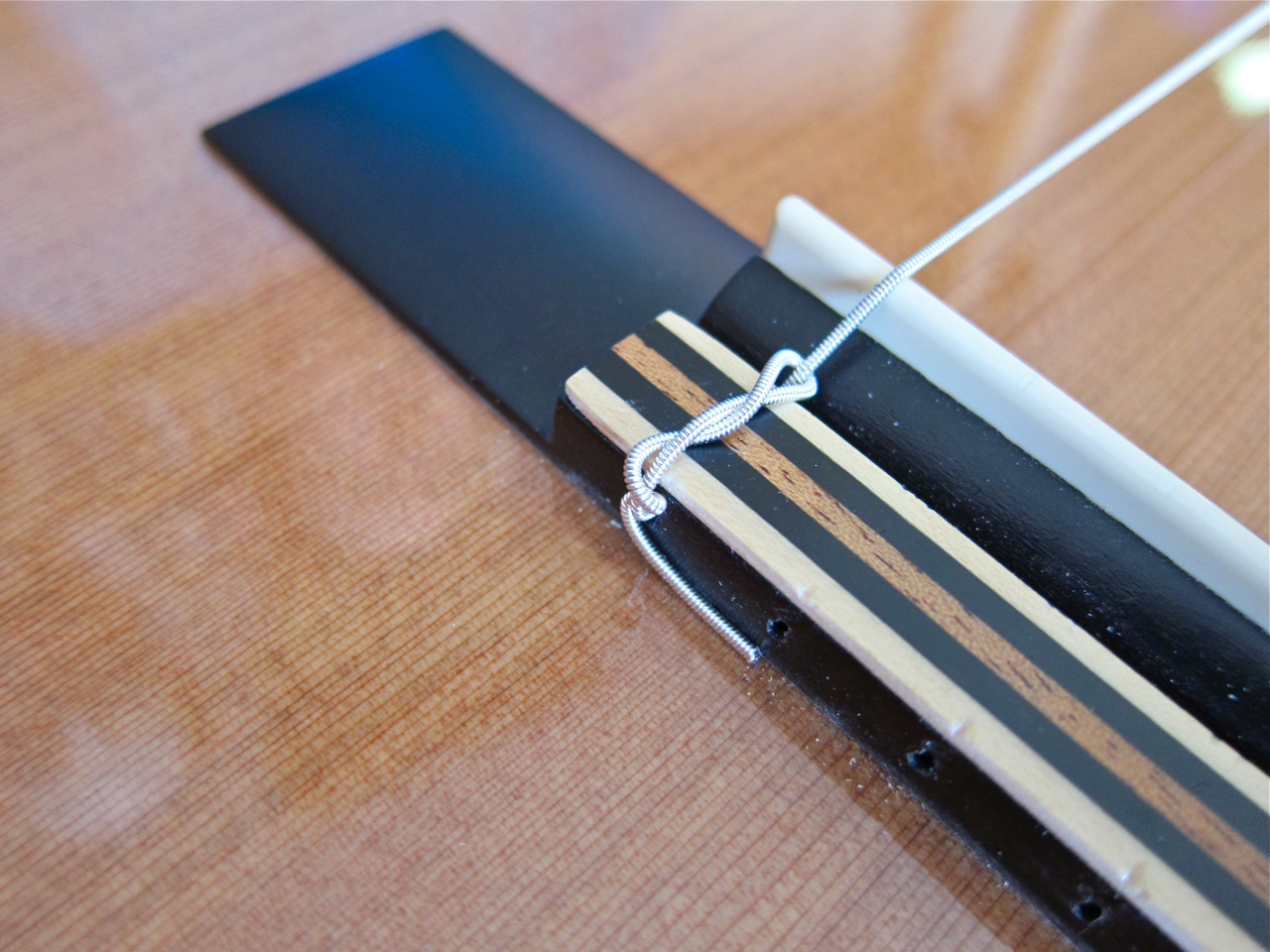
Lopputuloksen pitäisi näyttää tämänkaltaiselta.
Jotkut soittajat käyttävät bassokielillä erilaista menetelmää, jossa kielet lukitaan yhdellä isolla silmukalla. Molemmat versiot toimivat ja ovat ”sallittuja” – makukysymyksiä luultavasti. Tässä on kuva yhdestä Ramírez-kitarasta, jossa käytetään sitä toista kiinnitystapaa:

****
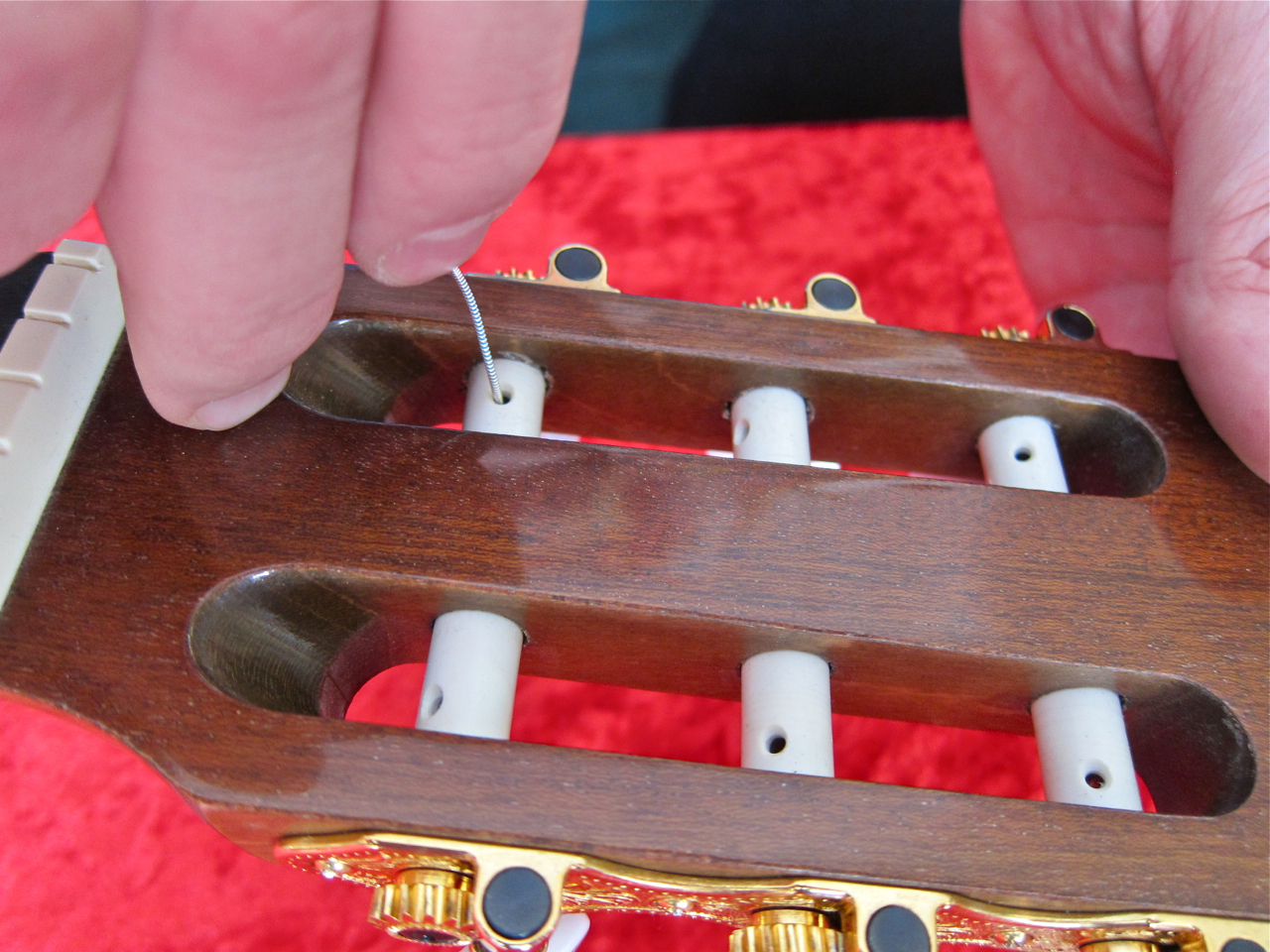
Kielen toinen pää pujotetaan virittimen läpi…

…minkä jälkeen kielen voi lukita itseensä vetämällä kielen vapaata päätä sen otelautaan menevän osaan alitse.
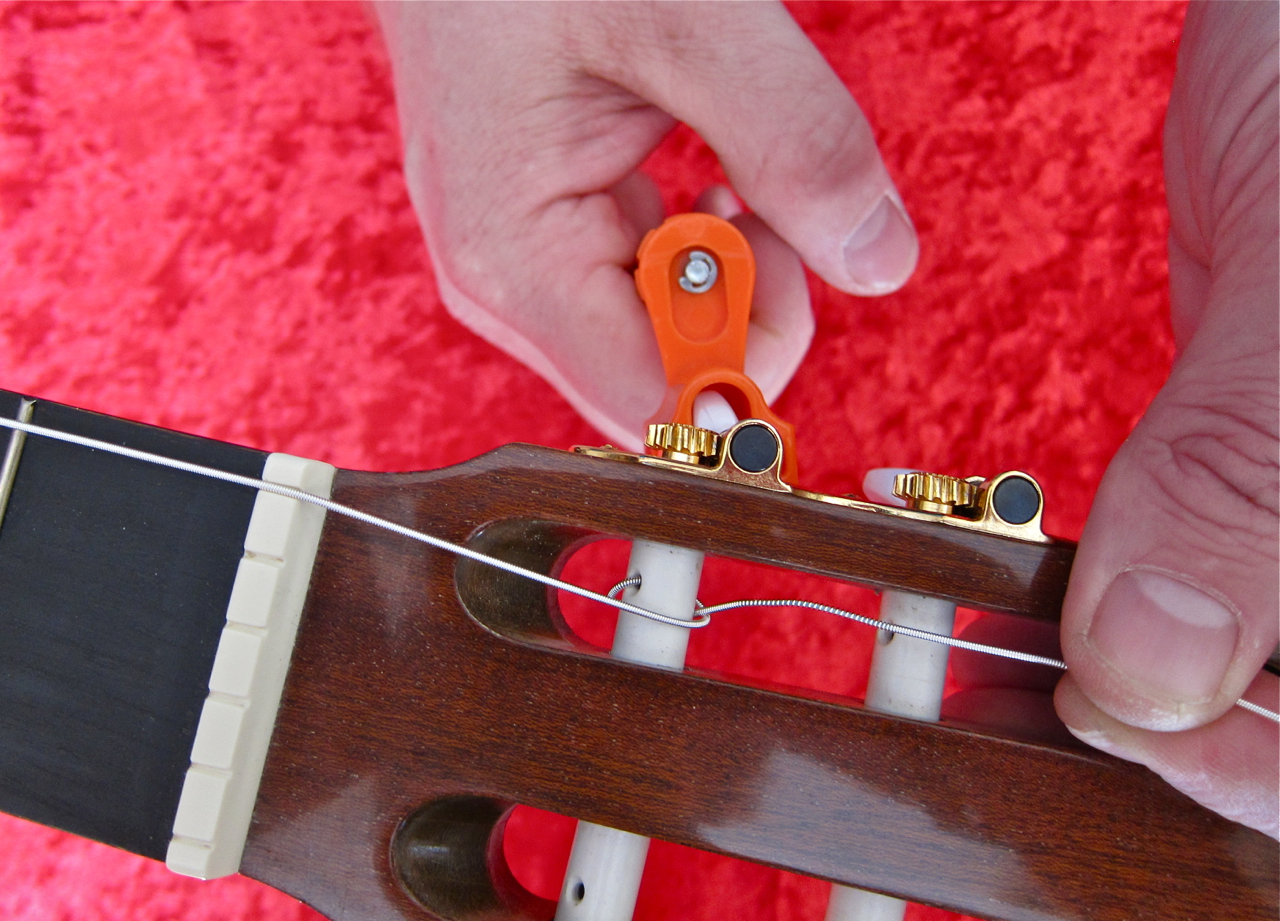
Seuraavaksi voi jo virittää uuden kielen.
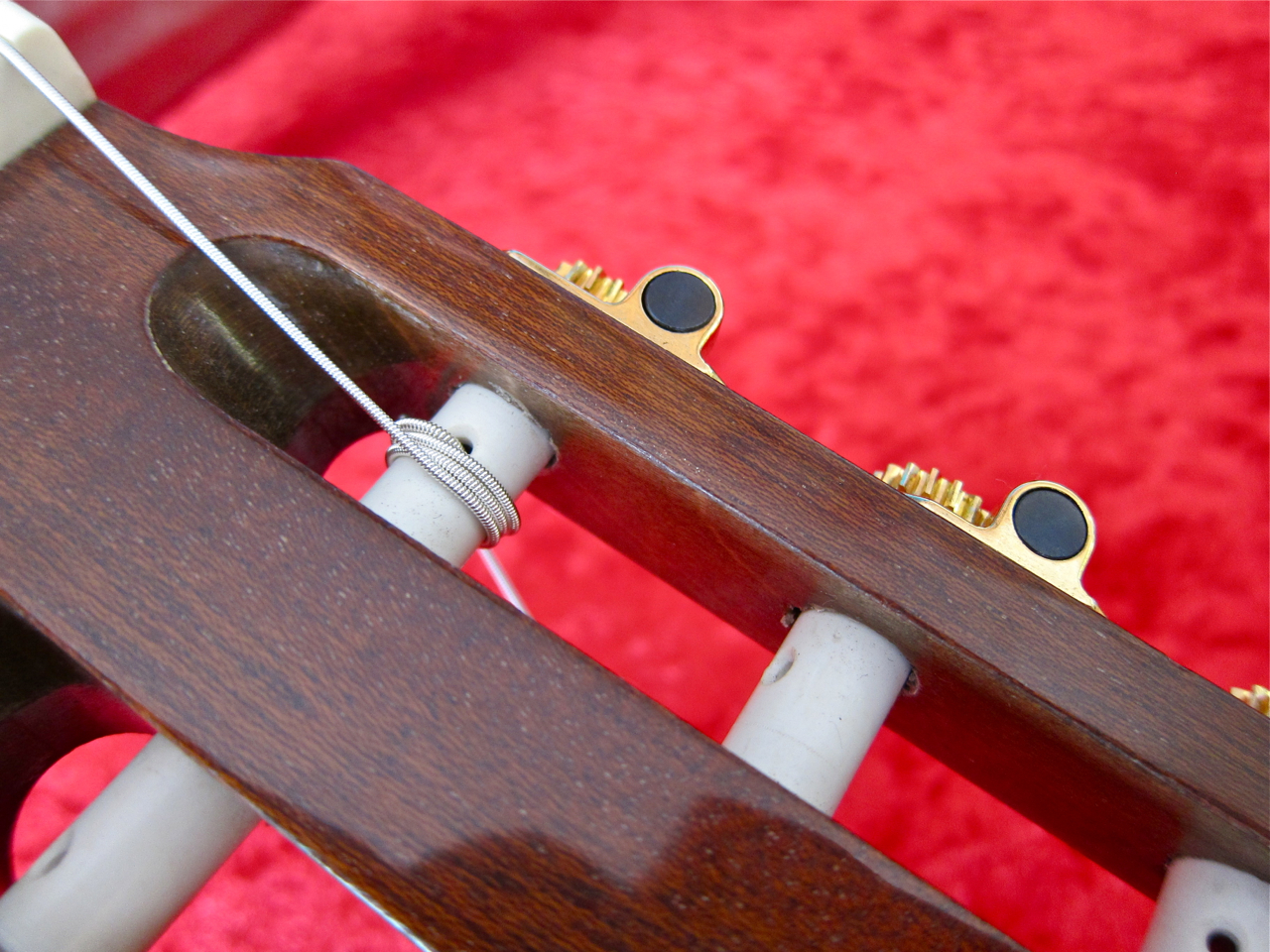
Ja tällainen on suunnilleen onnistuneen toimenpiteen lopputulos.
****
Itse aloitan aina satulan ulkoreunoista ja jatkan sieltä poispäin kielipareissa (E-e, A-h, D-g).
Ei ole yhtään huono idea venyttää uusia kieliä samalla lailla kuin teräskielisissä tai sähkökitaroissa. Tosiasia on kuitenkin, että nailonkielet tarvitsevat huomattavasti pidemmän ajan, ennen kuin ne pysyvät vireessä. Ei ole siis syytä turhautua, jos joutuu ensimmäisinä päivinä kieltenvaihdon jälkeen virittää useasti!
Muuten: useat ammattilaiskitaristit eivät vaihda nailonkielisessä heti koko satsia kerrallaan. Usein on nimittäin niin, että täysin muovista valmistetut diskanttikielet kestävät soittoa huomattavasti pidempään kuin saman satsin bassokielet, joissa on suhteellisen ohuen silkkikudoksen ympärille punottu pehmeää metallia.
Nailonkielisessä kitarassa ei voi (eikä tarvitse) säätää intonaatiota – kun uudet kielet ovat päällä, soitto voi alkaa.
Photos: Miloš Berka
****
Here’s what you need for the procedure: A string winder comes in very handy for taking off and putting on the strings, and a tuner is needed to get the guitar up to pitch. I use a pair of scissors to make life a little easier for myself (see below). A polishing cloth may come in handy for cleaning and/or protecting your guitar.
There are different string tensions available. Unlike on a steel string or an electric, you can use any type of classical guitar string on your guitar without the need for a complete set-up. A differently tensioned set won’t noticeably affect your intonation, but it will make a difference in the guitar’s feel, action and sound – feel free to experiment.
I’m a big guy with a strong touch, so I use high-tension sets…
****
First you need to slacken the strings completely. If your guitar’s tuners are particularly hard to turn, use one or two drops of light oil on the cogs, or try loosening the (black) screws which hold the cogs to the tuner posts by a tiny amount.
****
Once the strings are free from tension, I use the scissors to cut each string into two pieces. I find this makes taking the strings off a little easier, because you don’t have to feed all the string through either the tuner or the bridge for removal.
****
Untie the knot at the bridge…
…then remove the old string from the bridge…
…as well as the tuner.
****
Feed one end of the fresh string through the neck-facing side of the bridge.
Take the short end sticking out towards end of the body…
…and tie it into a sling, by first feeding the short end under the long piece and then tying to itself.
The final result should look somewhat like this.
Some guitarists use a different technique on the lower three strings, utilising only one large loop. Both ways are valid, but the slightly more elaborate way seems to work best for me.
Here’s a picture of a Ramírez strung in the other way:
****
Feed the other end of the string through the appropriate tuner…
…pull it through and lock it in by putting the string end underneath the part going to the fingerboard…
…and then wind it to pitch.
This is what the result should look like.
****
I find it easiest to string up a classical guitar from the nut upward, so I work in pairs – E-e, A-b, D-g.
You can do some string-stretching on a nylon-strung guitar, just the way you’d do it on an steel-string or electric, but in general nylon strings need much longer to settle into pitch. So, don’t be annoyed or alarmed if you have to retune rather often during the first few days of use!
By the way: Some professional classical guitarists don’t change the whole set each time. The three top strings, which are all-nylon, usually tend to stay useable for longer than the three bass strings, made of a thin fiber core and spun with soft metal.
There’s no real scope for intonation-adjustment on a classical guitar, so once the strings are on you’re ready to go.

Kramer Pacer on hyvä esimerkki 1980-luvun syntyneestä Superstr*to kitaralajista, ja sillä on kaikki tyypilliset perusominaisuudet:
Stratocaster-tyylinen runko, Gibson Explorerista lainattu lätkämailan muotoinen lapa, tallahumbuckeri, sekä Floyd Rose -vibra.


VintageKramer-sivuston mukaan tämä Pacer Custom II on American-sarjan kitara vuosilta ’87 –’89.
Alun perin (1970-luvun loppupuolella) Kramer-kitaroiden erikoisuus oli alumiinista tehty kaula. 1980-luvun loppupuolella firma oli siirtynyt kuitenkin takaisin perinteisiin puukauloihin. Kaulat ja rungot ostettiin yhteistyökumppaneilta – Pacer Custom II:n tapauksessa Japanista ESP:n tehtaalta – mutta soittimet koottiin USAssa käyttäen firman omaa elektroniikkaa sekä aitoja Floyd Roseja.
Sulava runko on tässä kitarassa poppelista, kaula vaahterasta ja otelauta palisanterista.

Tässä versiossa lapa on Kramerin teräväkärkinen malli. Palkkimainen alasvedin pitää kielet tiukasti lukkosatulaa vasten.

Paksut nauhat ja loiva otelauta kuuluvat nekin Superstr*toon – silloisen sankarikitaristin työkaluun.

Kaula on rakennettu kolmesta pitkästä vaahterapalasta…
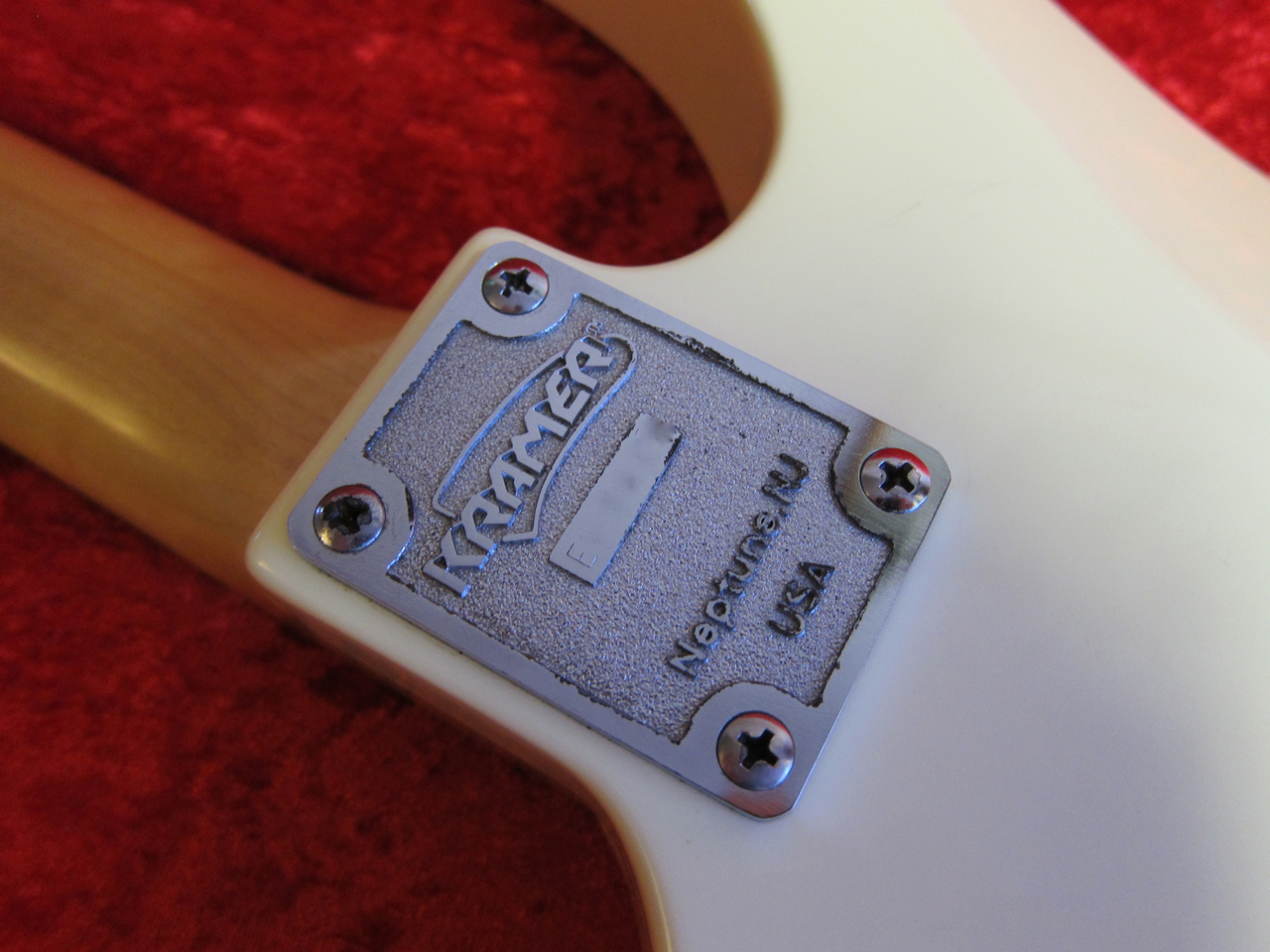
…ja se liitetty runkoon perinteisellä tavalla ruuvaamalla.

Vaikka Floikalla varustetussa kitarassa lavan virittimet käytetään ani harvoin, ovat nekin Pacer Custom II:ssa aitoa laatutavaraa saksalaisvalmistajalta Schaller. USA-Floydin kuusiokoloavaimet on hyvä pitää aina mukanaan, sillä ilman niitä kielten vaihtaminen ei onnistuu.

Custom II:ssa on kaksi yksikelaista mikrofonia sekä yksi humbucker tallan lähellä.

Säätimet toimivat kuten normi-Stratossa – master volume, kaulan tone ja keskimikrofonin tone-säädin. Minikytkimellä saadaan kolme erilaista kytkentävaihtoehtoa tallamikrofonista: perinteinen humbucker (sarjakytkentä), yksikelainen (vain tallan puoleinen kela) sekä kirkkaampi humbucker (rinnakkaiskytkentä).
Tällaisia soundeja saa vintage-Kramerista:
Kramer Pacer Custom II – puhdas
****
Tämä kitara on mukavan kevyt soitin. Kaulan profiili on silloiselle vauhtikitaralle tyypillinen hyvin laakea ”D” – mikä on minulle hieman liian ohut ja leveä – mutta tämä Pacer on loistavassa trimmissä. Kramer Pacer Custom II on vanha laatukitara – ulkonäkö voi olla hieman vanhentunut, mutta sen soitettavuus ja soundi ovat vielä täysin ajankohtaiset.
****
Kiitos Tommi Posalle, jolle tämä Kramer kuuluu!

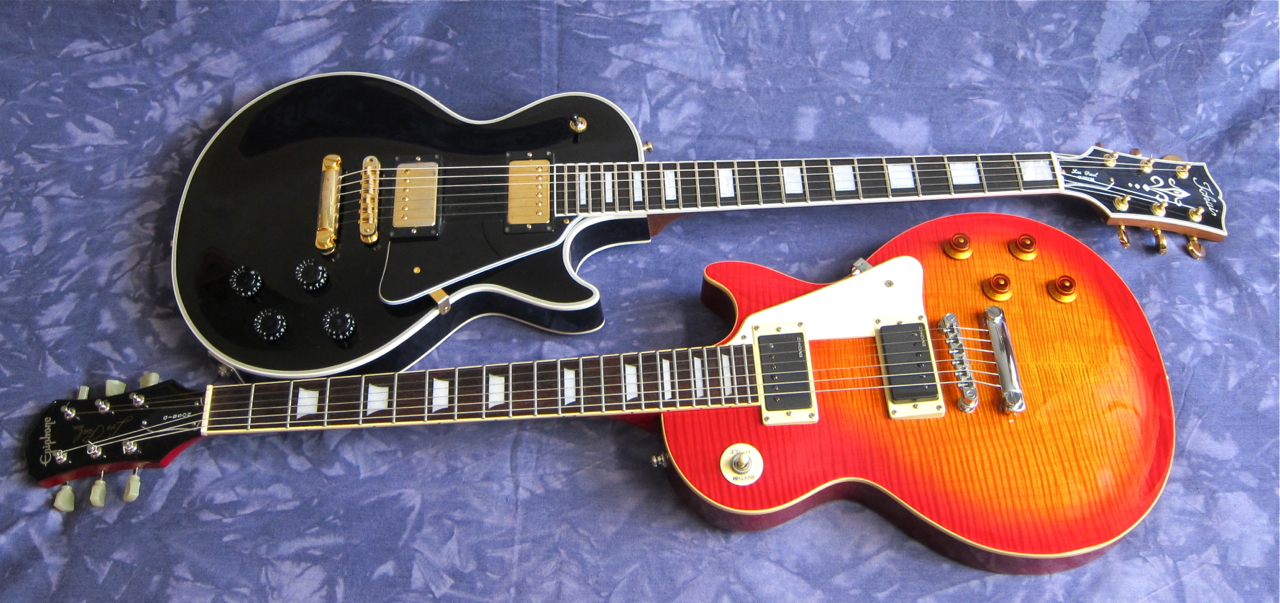
Tokai LC-85 Ltd. (2005) & Epiphone Les Paul Standard (1999)

****
ESP’s Eclipse is one of the company’s most successful models, because it fuses effortlessly a classic outline with modern features.
The ESP Eclipse is available in many different variations, of which the ESP Eclipse-I CTM (current price in Finland: 1.668 €) is the series’ equivalent to the venerable Gibson Les Paul Custom.

A matte-black finish with a yellow-ish overcoat, multi-laminated binding, gold-coloured hardware, an ebony fretboard with large pearloid inlays, as well as a pair of EMG-pickups endow the Eclipse-I CTM with an extremely stylish look. This Japanese guitar is sold in its own high-quality case.

Sound-fetishists will be more than happy about the ESP’s genuine bone nut, as well as the vintage-style truss rod. This type of truss rod requires a much narrower rout compared to many modern designs, and removing less of the neck’s mahogany will most likely result in a fuller-bodied tone and stronger attack.

ESP is using Gotoh’s excellent self-locking Magnum Lock tuners. Changing strings is a breeze and tuning stability is rock solid.
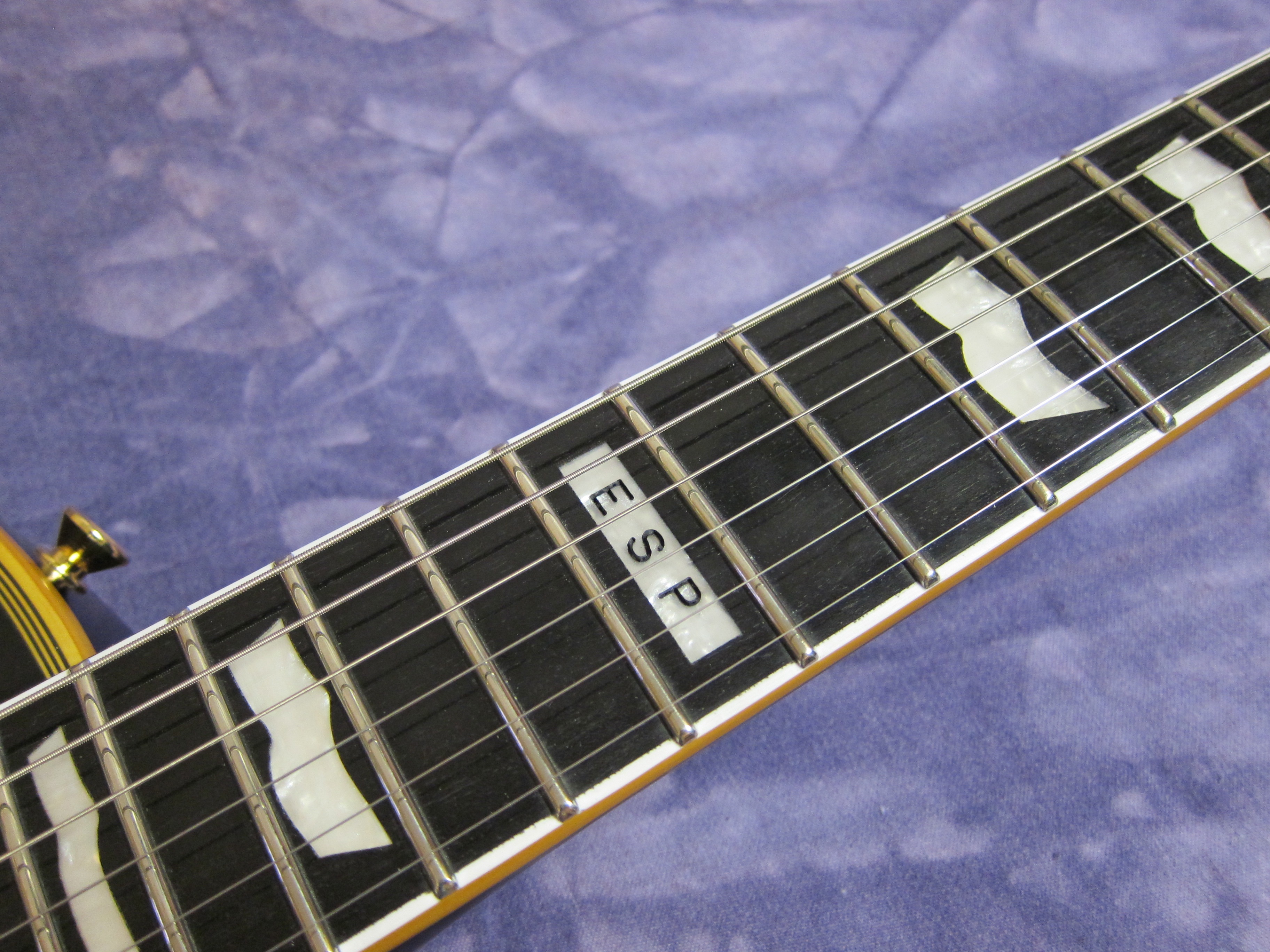
The Eclipse displays exemplary fret work, resulting in a fast and slippery feel.
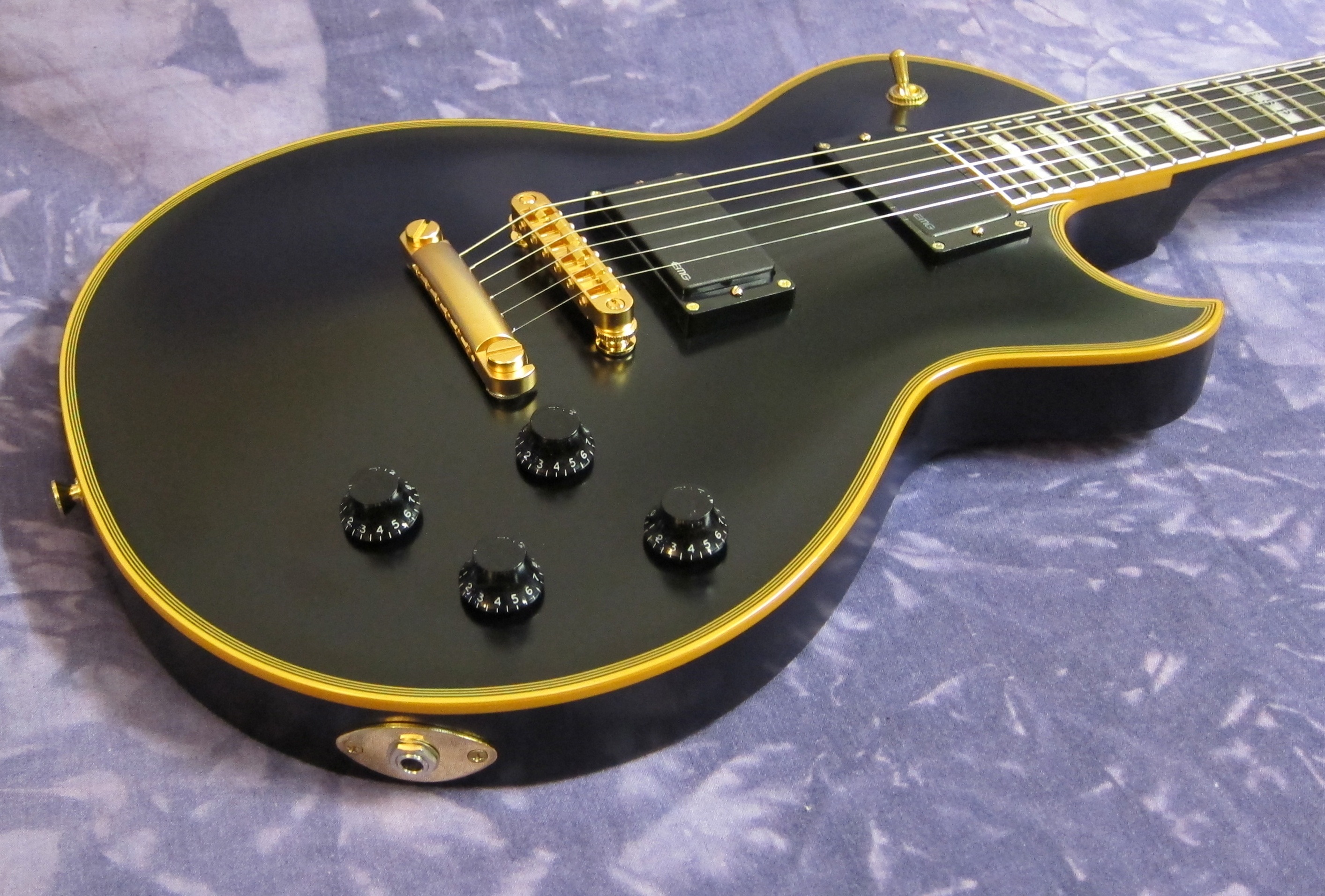
Despite being made from the most traditional of raw materials – a mahogany back with a maple top – this ESP cuts down considerably on weight thanks to a thinner body, compared to a vintage guitar of this type.
The Eclipse-I’s controls follow tradition, offering separate volume and tone controls for each pickup.

The two active humbuckers are EMG’s best-selling pairing of an EMG 60 in the neck position with a hotter EMG 81 next to the bridge.
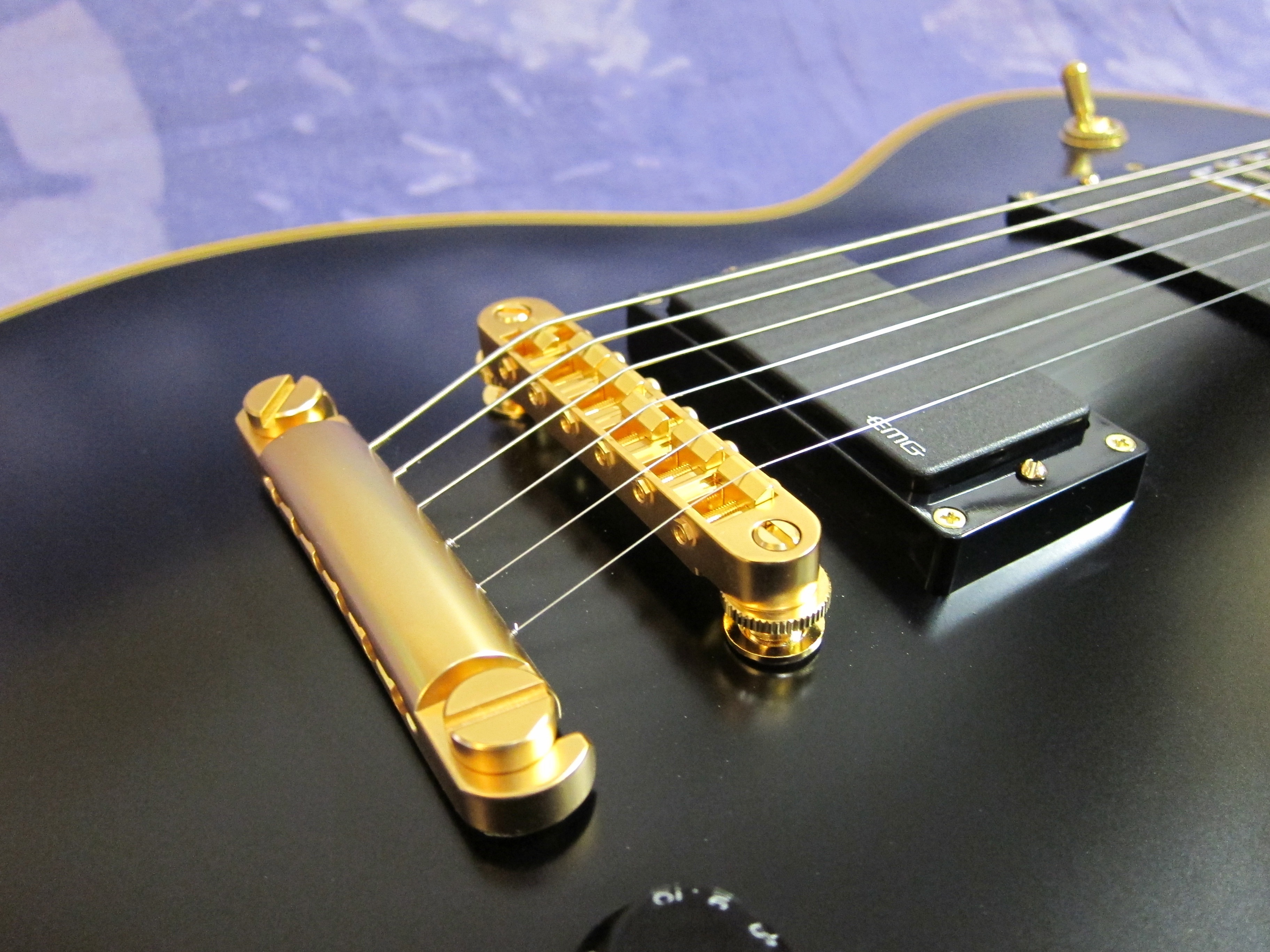
Golden-finished Gotoh-quality for the stopbar and tune-o-matic-bridge combination.

A generous rib-cage contour is another of the Eclipse-I’s contemporary improvements.
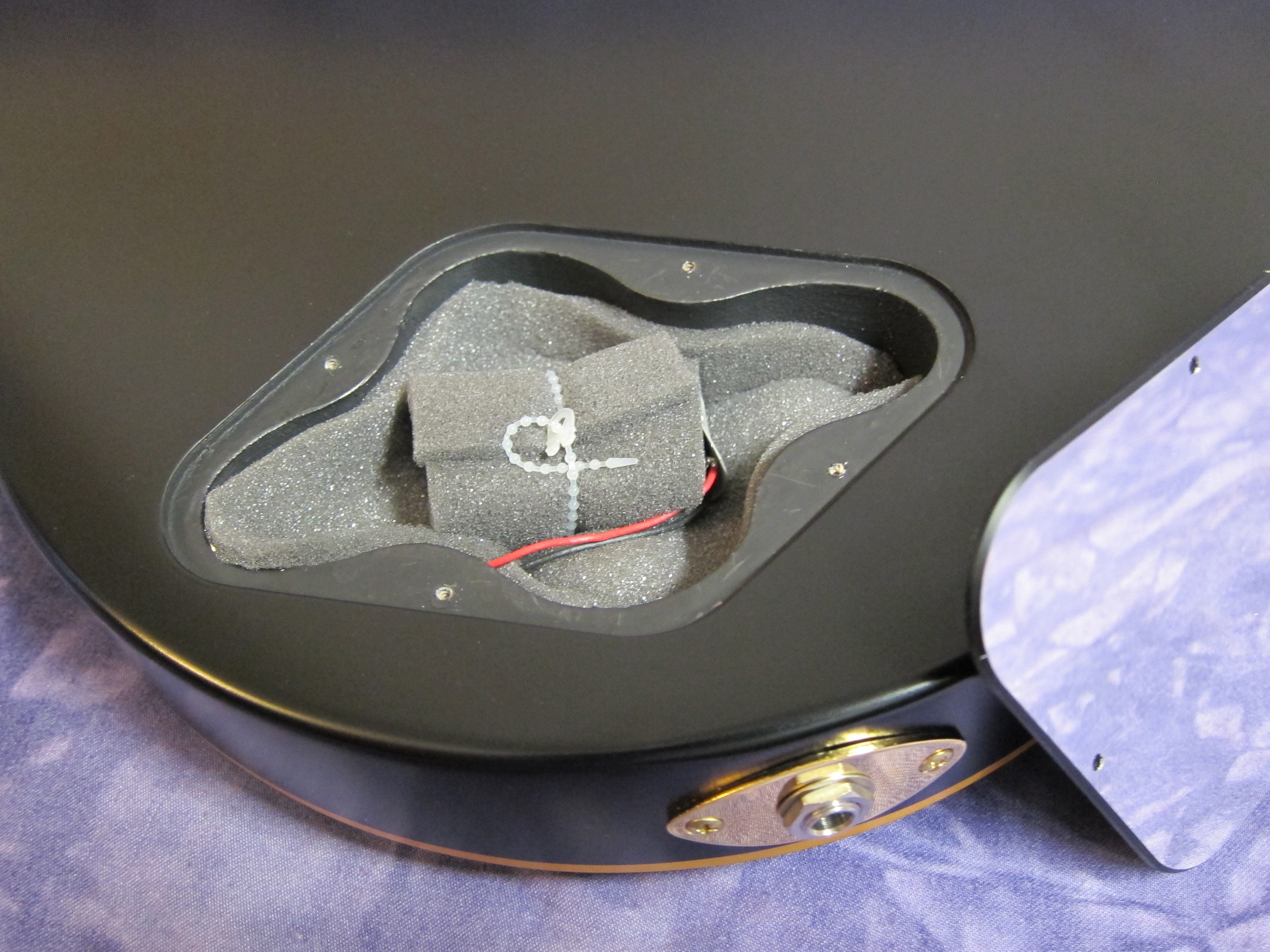
I can understand ESP’s reason for not including a separate battery compartment, which would spoil the guitar’s classic look. Still, the solution on offer doesn’t earn full marks in my book.
I’m quite sure that the foam padding doesn’t make the Eclipse any less gig-worthy, but it looks somewhat half-baked nontheless. I’d much rather see a battery clip attached to the inside of the control cavity’s lid, as well as machine screws with threaded inlets in the body to keep the lid firmly in place.
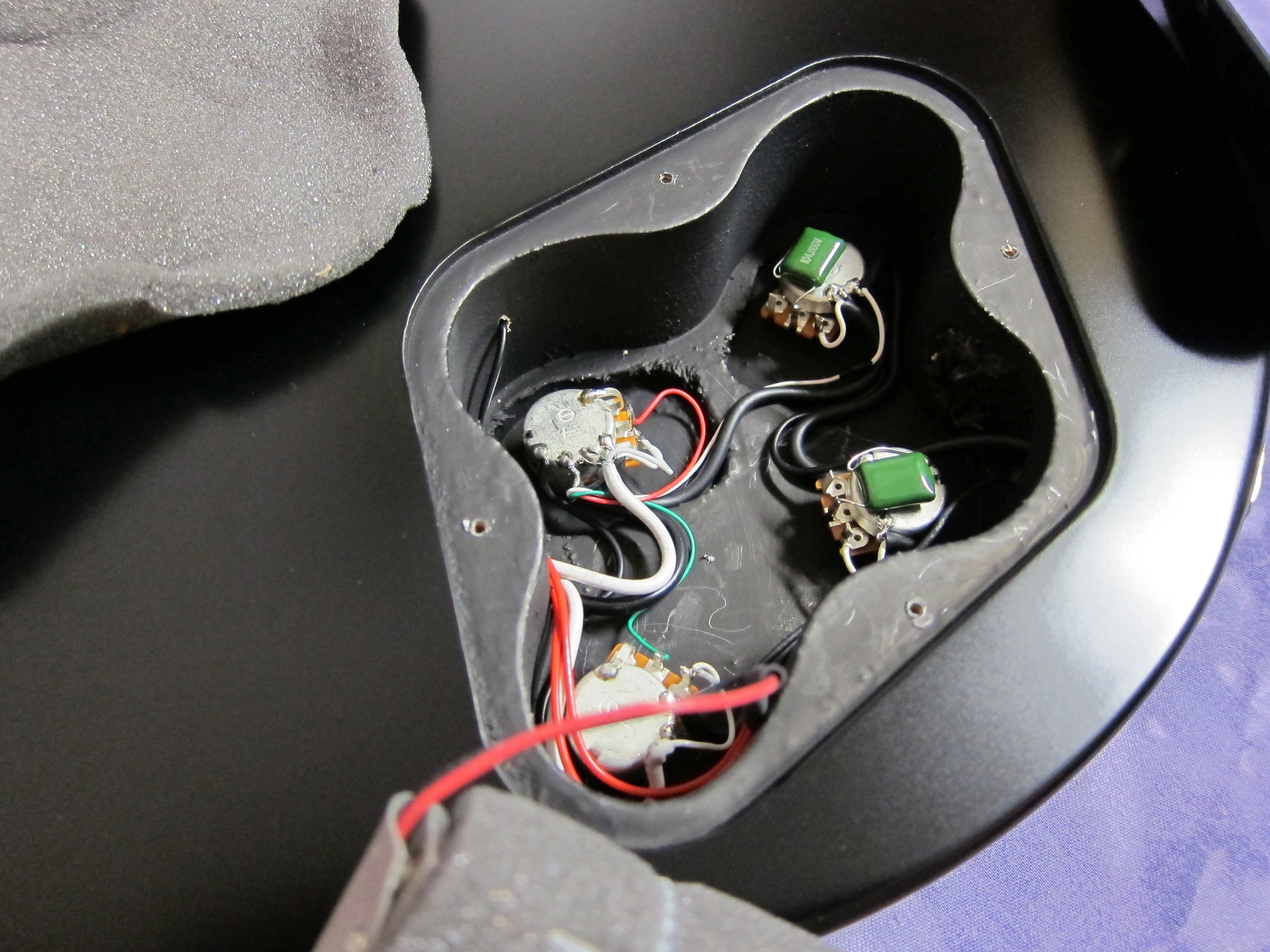
EMG’s own pots and capacitors are used in the clean and well-screened cavity.
****
The ESP Eclipse clearly is a pro-quality electric guitar.
I don’t think one can overstate the positive effect of this model’s low weight on one’s playing. A light guitar, such as this, tends to become a natural extension of the players body, letting the music flow effortlessly and unimpeded.
Personally, I really like this model’s slightly-structured Vintage Black matte finish, which calls to mind Music Man’s Stealth-series of instruments. This modern finish feels rather organic and offers the fretting hand good support, even in sweaty situations. I can understand, though, that some people would prefer a vintage-type gloss finish on a guitar like this – horses for courses.
The Eclipse-I’s flattish D-profile is a good all-rounder, which will fit easily into most guitarist’s hands.
EMG’s electronics work fantastically on this ESP. You can get all the types of sounds you’d come to expect from a guitar of this style effortlessly. From soft Jazz tones to out and out, balls-to-the-wall Metal Mania, this guitar delivers all the goods with no extraneous noise or interference whatsoever.
Yes, most probably the majority of potential buyers will use this guitar to rock out mercilessly, but I’d still warmly recommend the Eclipse’s clean sounds as well. Some vintage anorak might even be surprised by the organic sound emanating from the active pickups!
ESP Eclipse-I CTM – clean tone/neck pickup
****
ESP Eclipse-I CTM
1.668 €
Finnish distributor: Musamaailma
****
Pros
+ workmanship
+ neck profile
+ playability
+ sound
+ finish
Cons
– no battery clip/compartment
– structured finish might turn some people off


 Kitarablogi.com – Finland's premier Guitar and Bass blog
