

****
Lisätiedot: Profitron
Kitarablogi.com – Finland's premier Guitar and Bass blog
Juttuja kitaroista ja bassoista

****

Marshall’s DSL5C combo is the newest – and smallest – member of the DSL-series.
The DSL-range has its roots in the year 1997, when Marshall introduced their – now legendary – JCM2000 Dual Super Lead -head. The JCM2000 was the first Marshall amp that combined a vintage-voiced Plexi-channel and a modern Ultra Gain -channel in one chassis.
The production run of the original DSL-series was discontinued in 2007, with the JVM-range superseding it. The new DSL-series offers the company’s most-affordable all-valve amps to date, which are produced at Marshall’s own facility in Vietnam.
****

As you can easily guess by its name, the Marshall DSL5C (current street price in Finland around 520 €) is a five-Watt, two-channel combo.
In terms of its looks and the quality of its finish, this is a genuine Marshall. Quality control at the Vietnamese factory seems to as stringent as in Britain, and the combo looks great and feels well-made and sturdy.

The DSL5C comes with an open back cabinet. The upper opening in the cabinet’s back is covered with a metal grille to keep stray fingers and hot tubes apart form each other.

This little Marshall uses three preamp valves (ECC83/12AX7), plus a single power amp tube (ECC99/12BH7).

The DSL5C’s speaker is a ten-inch Celestion Ten 30, which is meant to provide a big, warm bottom-end, coupled with a healthy dose of ”Celestion grunt” and bite.
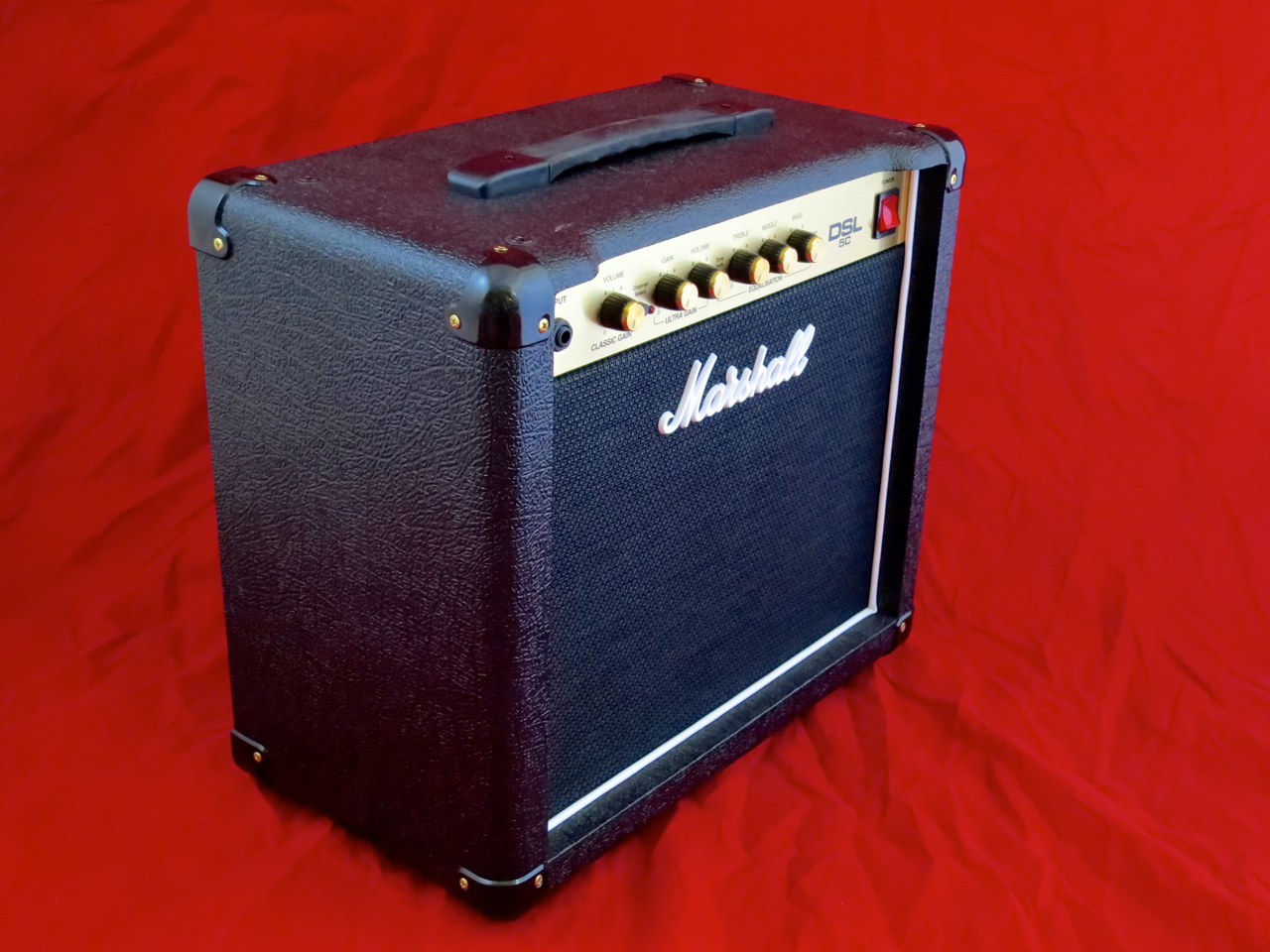
This compact combo weighs less than five kilos, making it very easy to carry, using its rubberised handle.
****

The Marshall DSL5C is a two-channel, all-valve combo:
Channel one – Classic Gain – is voiced to give you a classic Marshall 1959 -style tone and gain structure. The Classic-channel goes from bright and clean all the way to mid-level, classic crunch. Due to the fact that this channel doesn’t have a master volume, distorted sounds can only be had at very high volume levels – unless you switch to Low Power mode (more on this further down).
True to its name, the second channel – Ultra Gain – is made for modern, saturated high-gain sounds.
Both channels share a three-band EQ-section, which means a certain amount of tonal compromises will have to be made. But thanks to the way both channels have been voiced, a shared EQ doesn’t pose any real problems in the Marshall DSL5C’s case.
Pushing in the Tone Shift switch will give you a thinned out, sharper mid-range, making it ideal for many Thrash Metal tones. Engaging Deep bolsters the bottom-end at the output stage for a fatter sound.

The back panel offers you an effects loop, as well as a footswitch jack for the DSL5C’s sturdy channel switch (supplied, see pic below).
There’s a very nifty speaker-emulated output designed into this Marshall combo, which works in two different ways, depending on the setting of the Power-switch:
In Full Power mode the output gives out a line level signal, which can be sent to a mixing console or your recording equipment. The speaker will run even with a plug connected to the output. In Low Power mode (the manual says 0.5 Watts, the website 1 W) the output level is changed to work with headphones, and plugging a pair of cans in will mute the speaker. The Aux In only works in Low-mode, and its signal will be sent directly to the headphones.

****

In my opinion Marshall’s DSL5C is a fantastic-sounding little Rock- and Metal-combo, ideally suited for use in your bedroom, for practice, for recording and for backstage warm-up.
My only small niggle would be with the emulated output of our review sample, which produced more hiss than what I’d have expected. Anyhow, I was able to EQ out most of the hiss for the sound clips, meaning it really isn’t that much of a problem. And then there’s always the possibility that there was something wrong with this particular combo…
The DSL5C’s two channels enable you to get a wide variety of different Rock-, Metal- and Thrash-sounds out of this little combo, depending on your gain-, volume- and EQ-settings, but also on the power mode chosen. Going to Low Power doesn’t only drop your output levels, but also adds a lot of tasty, squashy power amp compression. This means that you can choose between very tight sounds (Full Power) and fatter, compressed tones (Low Power) by using the switch on the back panel.
All sound clips have been recorded in Full Power mode to allow for direct comparison between the miked up sound of the speaker and the speaker-emulated output.
For starters I played my Stratocaster through a clean setting on the Classic-channel (recorded with a Shure SM57):
…and here’s what the same bit sounds like recorded directly via the emulated output:
Here’s the Classic-channel and the neck pickup of my double-humbucker Hamer Studio Custom (miked up):
…and the same clip recorded direct:
Here’s my Strat into the Ultra-channel (Tone Shift off), recorded with the SM57:
…and its speaker-emulated counterpart:
This is the Hamer, tuned to Drop-D into the Ultra-channel (Tone Shift on), miked up:
…and this is the direct recorded version:
****
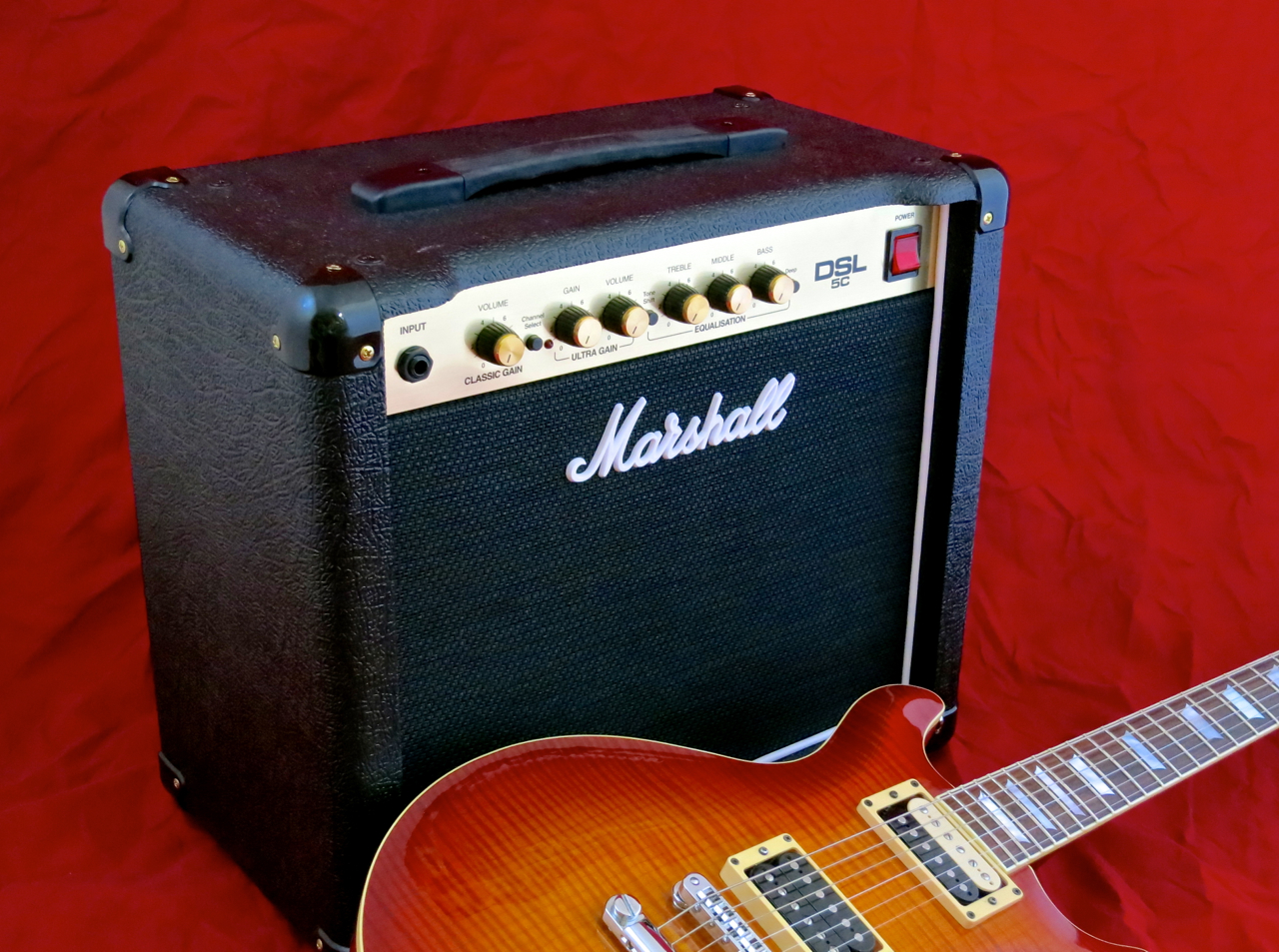
Marshall’s cute and cuddly new five-watter, the DSL5C, is a great choice as a first tube combo (”My first Marshall”), as well as a precision tool for any guitarist in those situations, when high wattage is more of a problem than an advantage (like at home or in the project studio).
The DSL5C delivers genuine, all-valve Marshall-tone in a handy package, and the combo’s Vietnamese origin means it’s also very affordable.

****
Marshall DSL5C
Finnish street price ca. 520 €
Finnish distributor: EM Nordic
We’d like to thank DLX Music Helsinki for the loan of the review amp!
****
Pros:
+ value-for-money
+ finish/workmanship
+ sound
+ two power modes
+ speaker-emulated output
+ footswitch included
Cons:
– noise levels of speaker-emulated output (see text)
****
Marshallin DSL5C on DSL-sarjan uusin, ja samalla myös pienitehoisin jäsen.
DSL-sarjan juuret ulottuvat vuoteen 1997, jolloin Marshallin legendaarinen JCM2000 Dual Super Lead -nuppi julkaistiin. JCM2000 oli silloin ensimmäinen Marshall, jossa oli yhdistetty Plexi-tyylinen vintage-kanava ja moderni Ultra Gain -kanava.
Alkuperäisen DSL-sarjan tuotanto lopetettiin vuonna 2007, jolloin JVM-sarja tuli sen tilalle. Uusi DSL-sarja tarjoaa firman edullisimmat putkivahvistimet, joita valmistetaan Marshallin omassa tehtaassa Vietnamissa.
****
Nimensä mukaisesti Marshall DSL5C (katuhinta noin 520 €) on viisiwattinen, kaksikanavainen putkikombo.
Vahvistimen ulkonäkö – samoin kuin viimeistelyn taso – on ehtaa Marshallia. Vietnamilaisessa tehtaassa laadunvalvonta näyttää pelaavan kiitettävästi, ja kombo tuntuu heti kättelyssä luotettavalta ja kestävältä.
Kotelon rakenne on DSL5C:n tapauksessa avoin. Takaseinän ylempään aukkoon on asennettu metalliritilä, joka suojaa vahvistinputkia kosketukselta ja kitaristin käsiä kuumilta putkilta.
Pikku-Marsun putkivarustus koostuu kolmesta etuasteputkesta (ECC83/12AX7) sekä yhdestä pääteputkesta (ECC99/12BH7).
DSL5C:n kaiutin on 10-tuumainen, keraamisella magneetilla varustettu Celestion Ten 30, jolle luvataan lämmintä bassorekisteriä, sekä monelle Celestion-kaiuttimelle tyypillistä purevuutta preesensalueella.
Tämä kompakti uutuuskombo painaa vain viisi kiloa, minkä ansiosta se on erittäin helppo kuljettaa sen kumimaisella kahvalla.
****
Marshall DSL5C on kaksikanavainen putkikombo:
Ykköskanava – Classic Gain – tarjoaa klassista Marshall 1959 -mallia muistuttavaa soundia ja gain-rakennetta. Classic-kanava ulottuu kirkkaista clean-soundeista keskivahvoihin vintage-säröihin. Koska tähän kanavaan ei ole lisätty omaa Master Volume -säädintä, Classicin särösoundeja saa esiin kuitenkin ainoastaan hyvin kovalla volyymitasolla, silloin kun päätevahvistin on 5 W -moodissa.
Nimensä mukaisesti kakkoskanava – Ultra Gain – on luotu tarjoamaan nykyaikaisia high gain -soundeja.
Molemmille kanaville yhteinen EQ-osasto tarkoittaa luonnollisesti, että soundin kannalta täytyy elää jonkin verran kompromisseja tekemällä, mutta Marshall DSL5C:n tapauksessa tästä ei koidu minkäänlaisia ongelmia.
Tone Shift -kytkimellä saa esiin loudnessmaisia Metal-soundeja, kun taas ilman Tone Shiftiä pikku-Marsulla on täyteläisempi keskialue. Deep-kytkin taas vaikuttaa päätevahvistimen bassotoistoon, ja lisää tarvittaessa muhkeamman bassorekisterin.
Takapaneelista löytyy efektilenkin ohella myös liitin pakettiin kuuluvalle kanavavaihto-kytkimelle (katso alla).
DSL5C:n kaappimallinnettu lähtö toimii kahdella eri tavalla, pääteasteen Power-kytkimen asennosta riippuen:
Power täysille jakki on linjatasoinen lähtö mikserille tai äänikortille, ja kombon oma kaiutin toimii myös silloin, kun linjalähtöä käytetään. Low Power -moodissa (käyttöohjeessa lukee 0,5 W, nettisivulla taas 1 W) sama lähtö toimii kuuloketasolla, ja kuulokkeen liittäminen jakkiin mykistää vahvarin oman kaiutinta.
****
Marshall DSL5C on mielestäni erittäin hyvältä kuulostava Rock- ja Metal-kombo koti-, harjoitus-, äänitys- ja warm up -käyttöön.
Ainoa kritiikkini kohdistuu kombon kaappimallinnettuun lähtöön, joka – ainakin testikoneessa – kohisi enemmän kuin mitä olisin odottanut. Tässä voi kuitenkin olla hyvinkin kyse yksilöviasta.
DSL5C:n kahdesta kanavasta saa esiin hyvin erilaisia soundeja, riippuen etupaneelin gain- ja volume-säädöistä, mutta myös päätevahvistimen Power-kytkimestä. Päätetehon pudottaminen aiheuttaa headroomin kutistamisen, mikä nostaa selvästi kompression määrää entisestään. Power-moodin valinnassa ei siis ainoastaan ole kyse pelkästä volyymistä, vaan myös siitä halutaanko soundista tiukemman (Full Power) vai muhkeamman (Low Power).
Kaikki ääninäytteet on äänitetty Full Power -moodissa.
Tässä ensin Stratocaster soitettu Classic-kanavan kautta Shure SM57 -mikrofonilla poimittuna:
…ja tässä sama pätkä linjalähdön kautta:
Tällainen on mikitetty puhdas soundi Hamer Studio Customin kaulamikillä soitettuna:
…ja sama pätkä linjalähdön kautta:
Tällainen on Straton soundi Ultra-kanavan kautta (Tone Shift on pois päältä) SM57 äänitettynä:
…ja sama pätkä linjalähdön kautta:
Tässä soitan Hamer-kitaraa Drop-D-virityksessä Ultra-kanavaan (Tone Shift päällä):
…ja sama linjalähdön kautta poimittuna:
****
Marshallin viisiwattinen DSL5C sopii loistavasti sekä ensimmäiseksi putkikomboksi (”My first Marshall”) että varttuneen soittajan työkaluna, sellaisissa tilanteissa, joissa isosta styrkkarista on enemmän haittaa kuin hyötyä (esim. kotistudiossa tai olohuoneessa).
DSL5C tuo aidon Marshall-soundin myös pieneen huoneeseen, ja kombon vietnamilaisen alkuperän ansiosta tämän putkivahvistimen hinta on kukkarolle ystävällinen.
****
Marshall DSL5C
Katuhinta noin 520 €
Maahantuoja: EM Nordic
Kiitos DLX Musiikille testivahvistimen lainasta!
****
Plussat:
+ hinta
+ viimeistely
+ soundi
+ päätevahvistimen tehonpudottaja
+ kaappimallinnettu lähtö
+ jalkakytkin kuuluu hintaan
Miinukset:
– linjalähdön kohinataso


Blackstar Amplification’s very popular HT Venue-series has recently been joined by the company’s brand-new HT Metal-range, which offers you valve amplifiers tailored specifically to the needs of Metal-guitarists.
Kitarablogi has received the compact five Watt HT Metal 5-combo – meant for use at home, for warm-up and in the studio – and the chunky three-channel, 60 Watt HT Metal 60 -combo for this review.
****
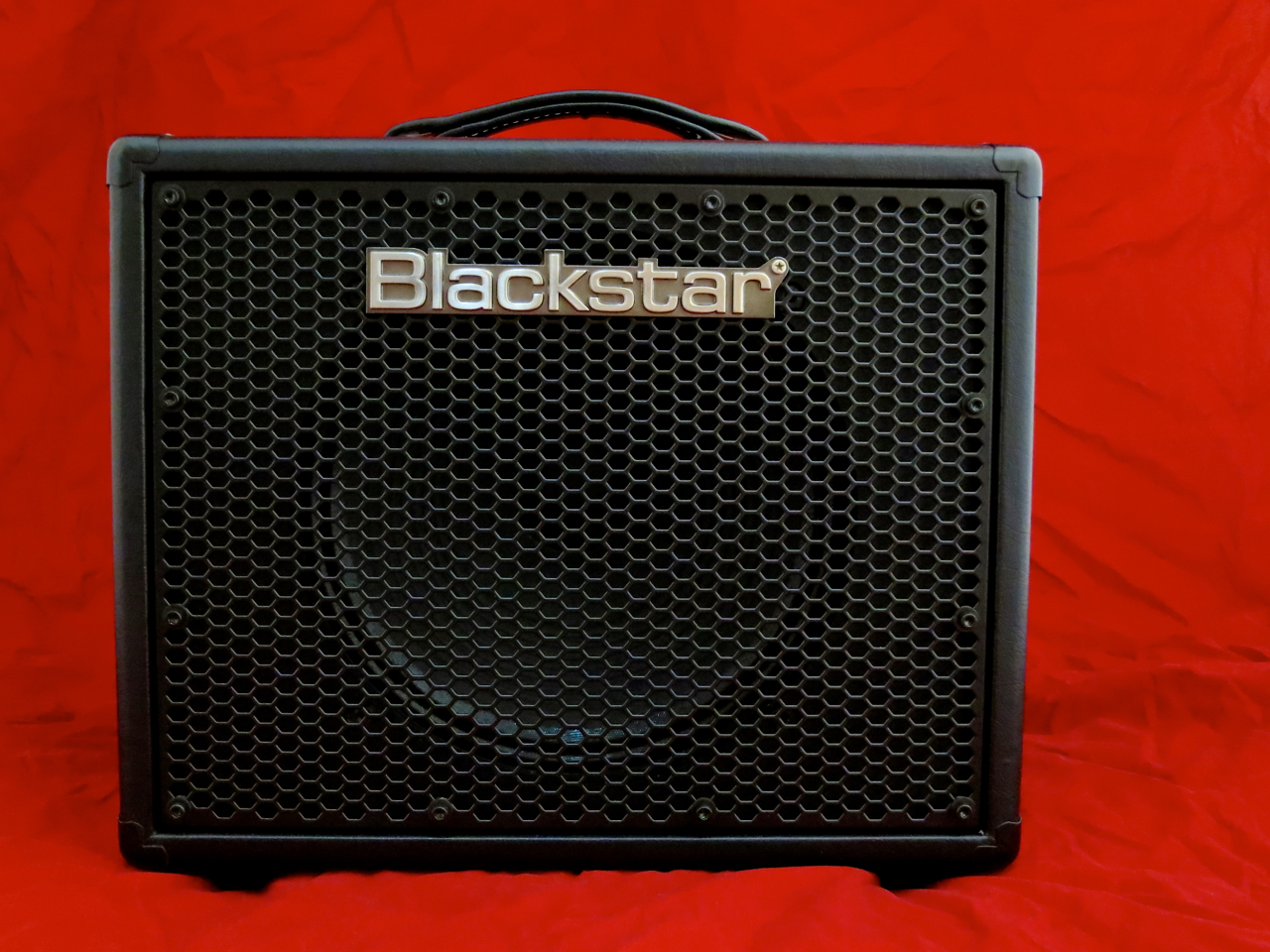
The Blackstar HT Metal 5 (street price around 450 €) is based on the company’s extremely successful HT-5R-valve combo, with the new amp sharing the older model’s main architecture and push-pull power amp.
The HT Metal 5 uses two different valves to amplify your guitar signal – one is an ECC83 (aka 12AX7), the other a model 12BH7.
Instead of a woven speaker cloth – like on the HT-5R – the HT Metal 5-combo sports a very sturdy metal grille.
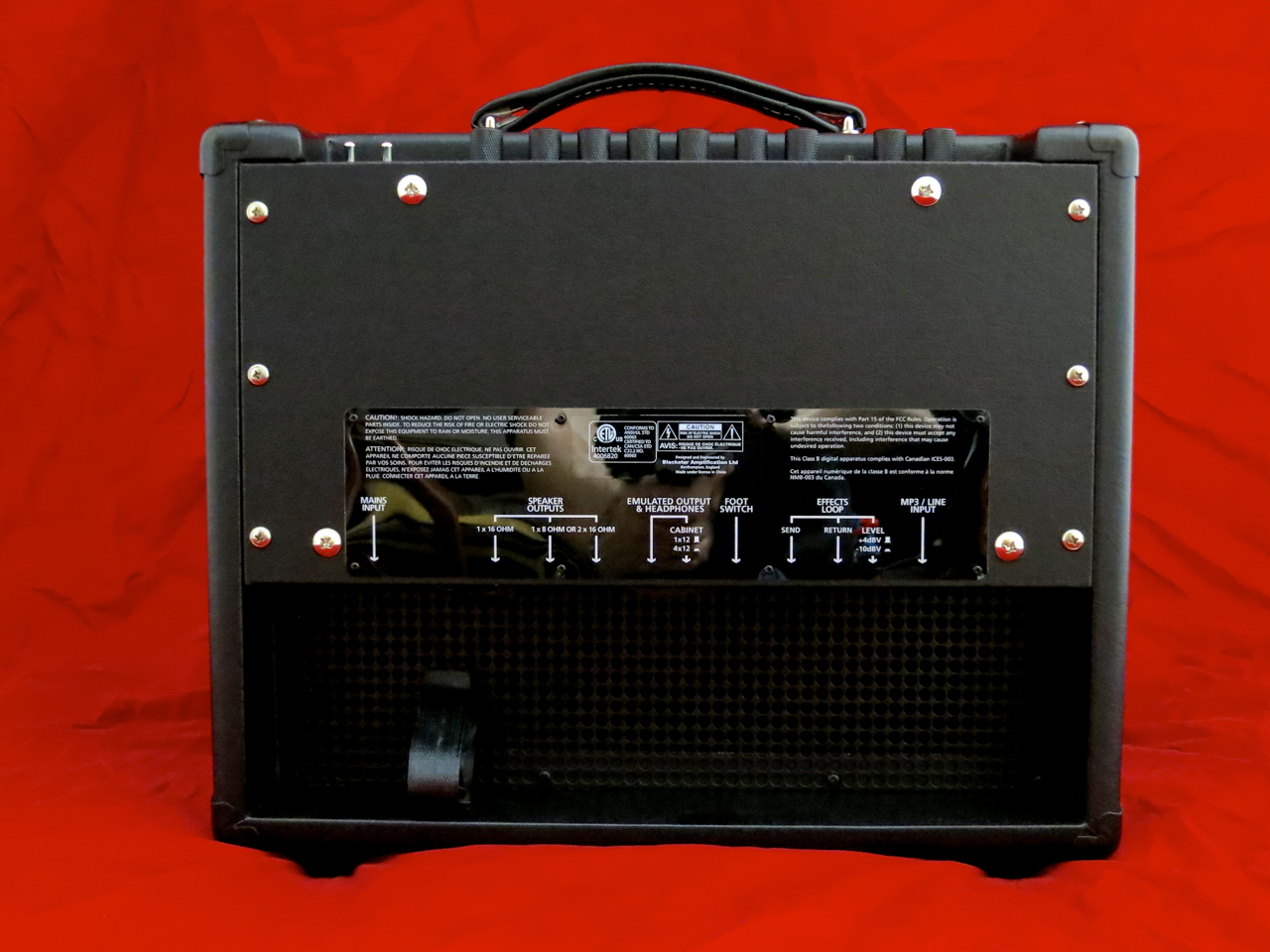
The cabinet is a half-closed affair. The lower third of the back is covered by a metal grille, through which you can spot this Blackstar’s Chinese 12-inch speaker.
This compact combo weighs only 14 kilos, making it very easy to lift and carry around by its single top handle.

The Metal 5’s control panel looks like this (click for a larger picture):
This valve combo features two channels, called Clean and Overdrive. The Clean channel is equipped with a simple tone control, while Overdrive comes with a full 3-band EQ, as well as Blackstar’s patented ISF-control. Turning the ISF-control (ISF stands for Infinite Shape Feature) you can go from a USA-type response (with a loudness-style sound) all the way to what is known as a British tone (with its fatter mid-range).
The HT Metal 5 also comes equipped with a very nice digital reverb.
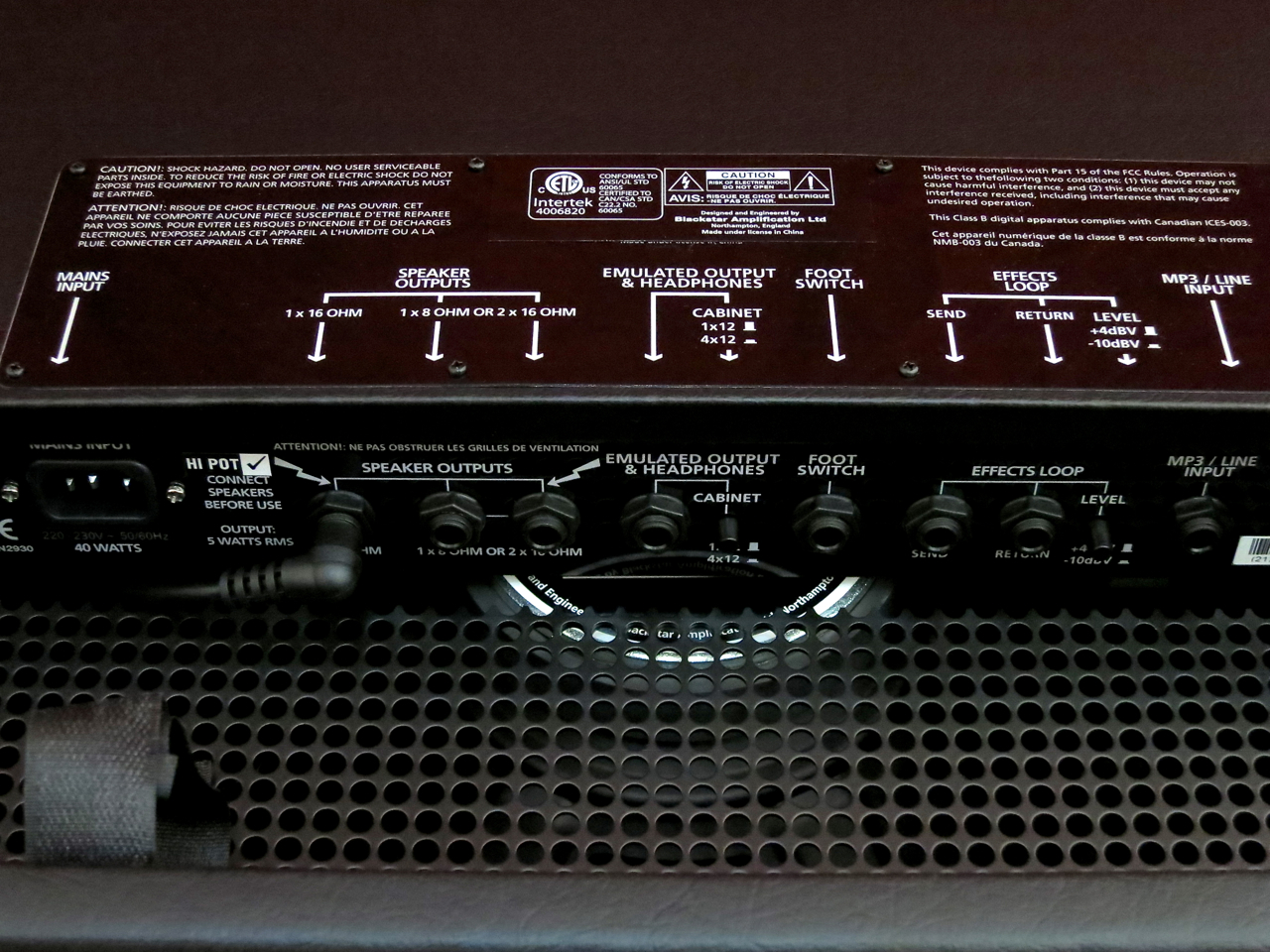
It is rather surprising to find so many different connectors and pushbuttons on such a small amp:
On the left, you will find the combo’s three speaker outputs.
Next up is Blackstar’s speaker-emulated output. A switch lets you choose between a virtual combo and an emulated stack sound. This output also works with headphones, and when the combo runs on standby.
The effects loop on the Metal 5 can be switched from a nominal signal level of -10 dB to +4 dB.
The line input on the far right allows you to connect your mp3-player to the combo.

A footswitch for channel switching is included in the price of Blackstar HT Metal 5!
****

Blackstar’s HT Metal 60 (street price around 1.000 €) is a three-channel powerhouse meant for live use.
This combo is build around a pair of ECC83-preamp valves and two 6L6s in the power amp.
The HT Metal 60 is equipped with two 12-inch Celestion speakers.
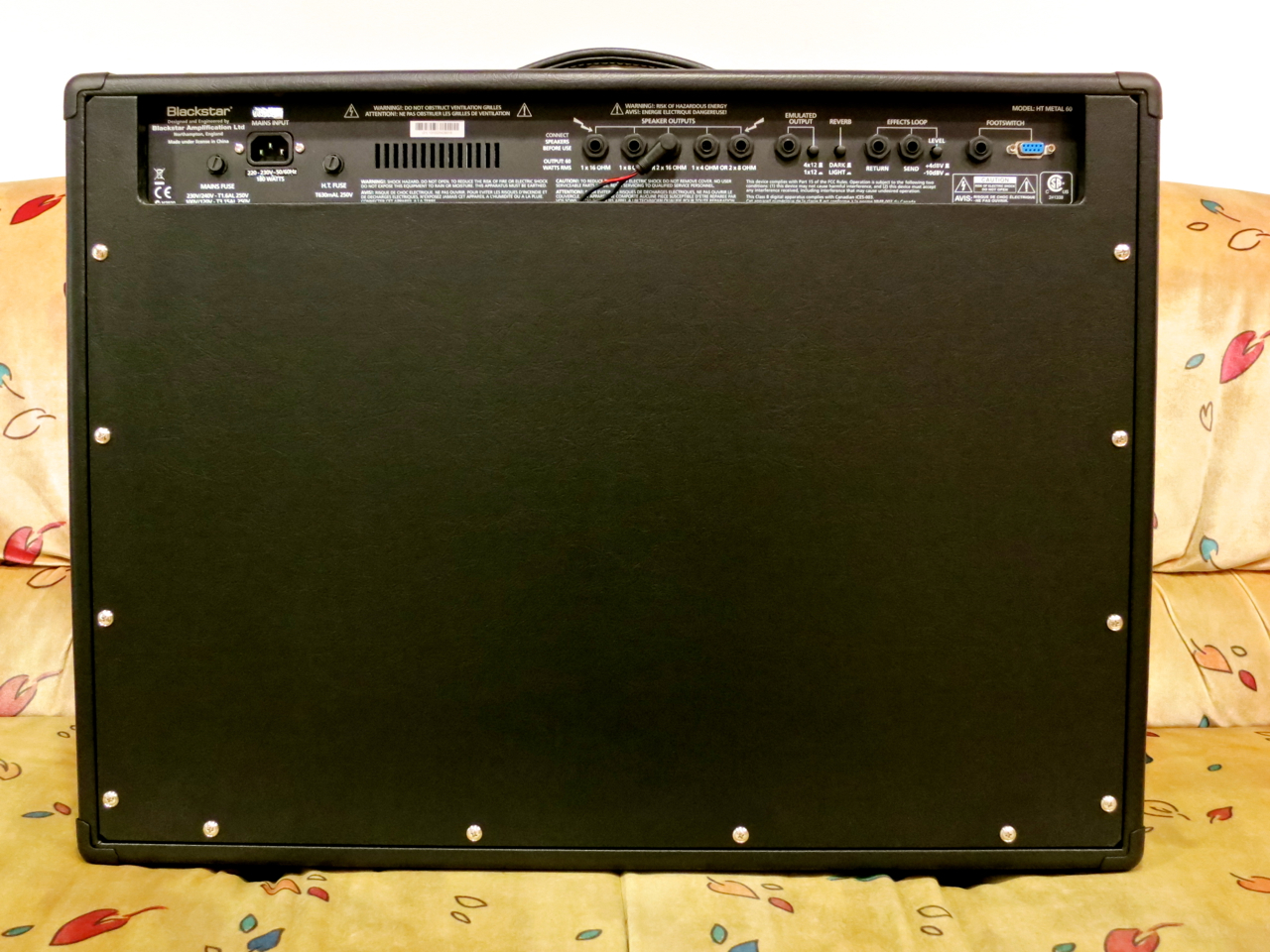
The closed-back cabinet aims at giving this amp a stack-style tonality and punch.

Because of the considerable weight (30 kg) of a large tube combo, such as this, the HT Metal 60 has been equipped with two metal handles, installed into the amp’s sides.
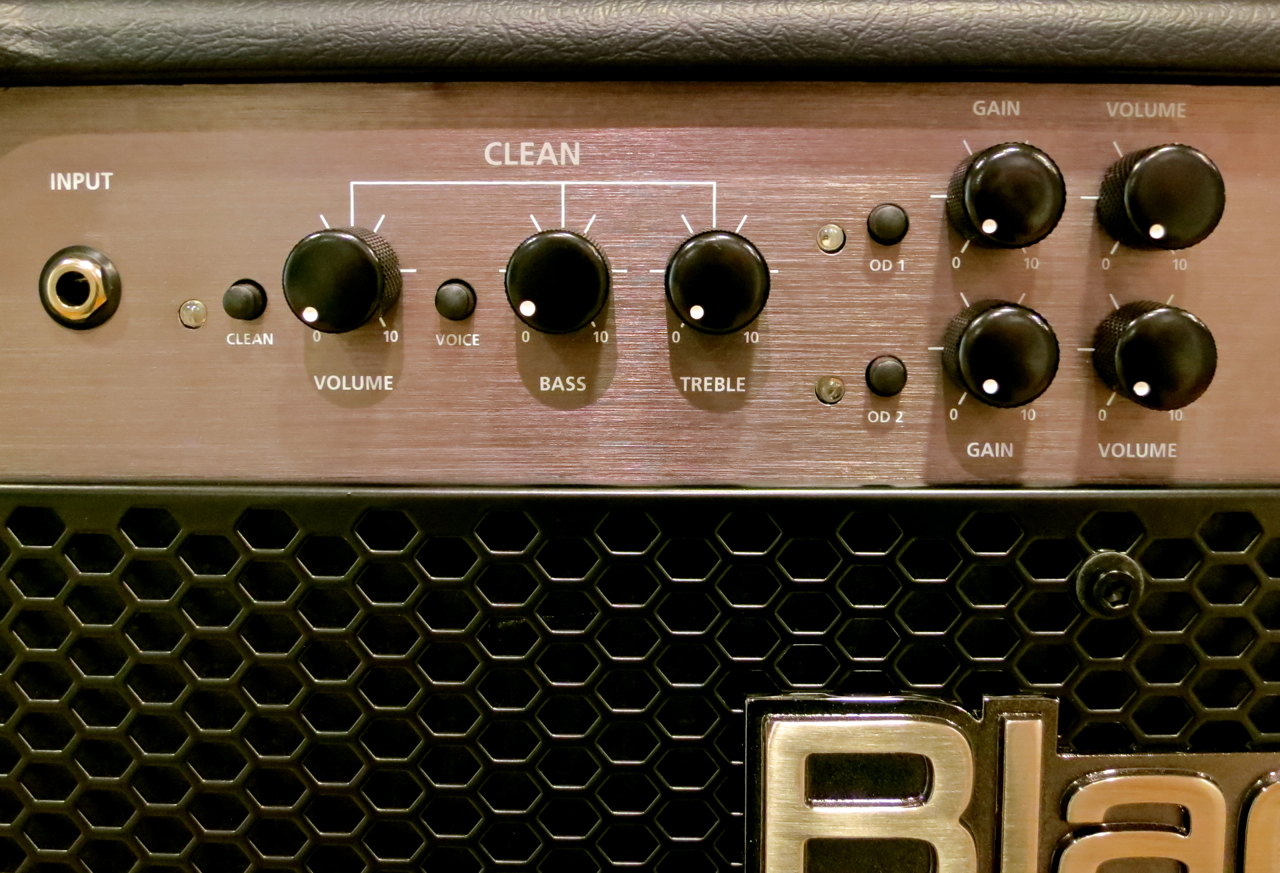
You can choose between two different tonal characters in this Blackstar’s Clean channel, using the Voice-switch: Boutique Clean puts the amp in Class A mode, giving you a very dynamic response, but with less clean headroom than the voicing called Modern Clean.
The channel’s Bass- and Treble-controls make it very easy to find your sound.
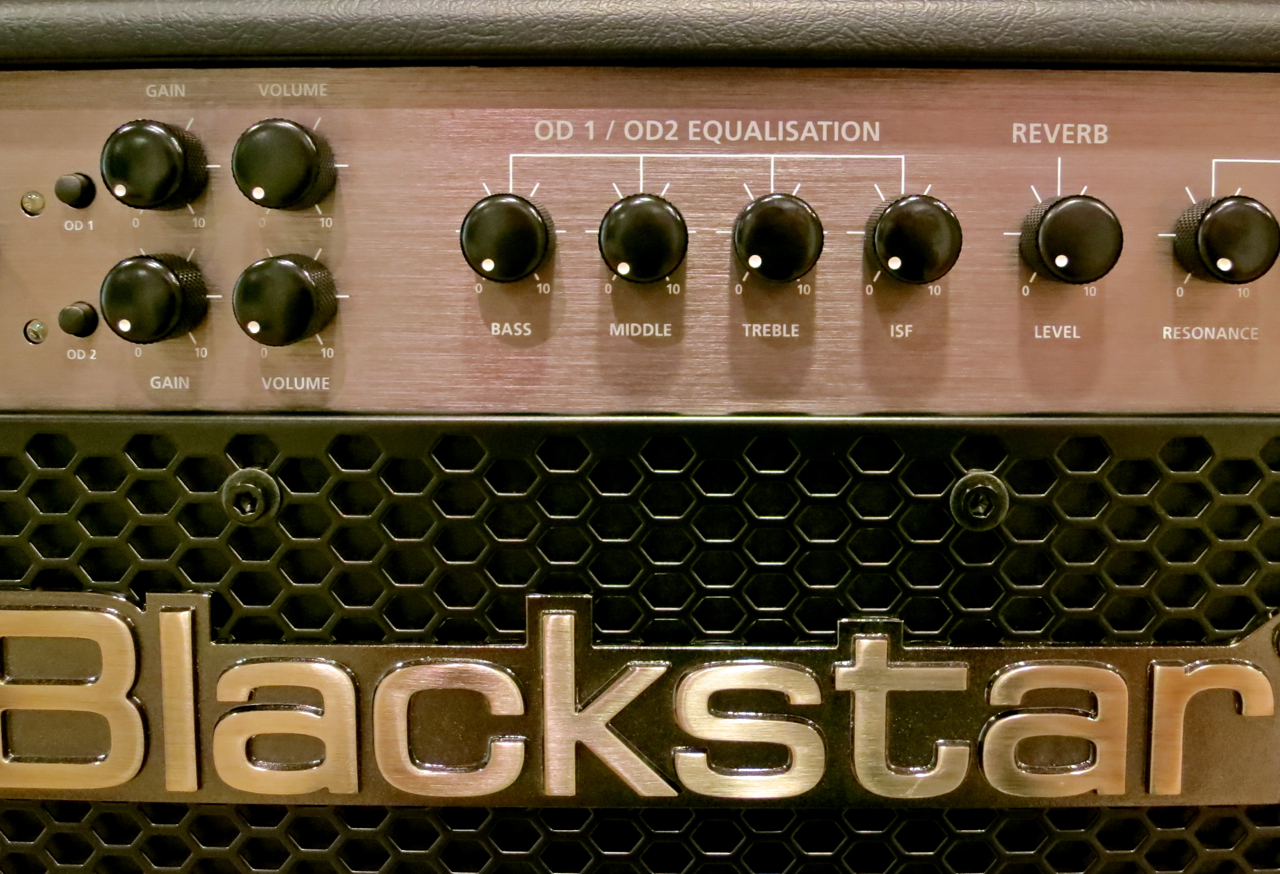
The HT Metal 60 offers you two distinct overdrive channels – named OD1 and OD2 – which share the three-band-plus-ISF equalisation section.
OD1 has a tad less gain than OD2. Thanks to its slightly less compressed sound, as well as its drier bottom end, OD1 is the ideal choice for chunky and precise rhythm parts.
OD2’s massive gain reserves are combined with very creamy compression, but there’s plenty of bite here, too, to make sure your lead lines cut through with authority.

The master section comprises controls for the HT Metal 60’s digital reverb, overall resonance and presence, as well as master volume.

You can connect the HT Metal 60 to virtually any other speaker cabinet, thanks to the five speaker outputs found on the back panel.
In addition to Blackstar’s well-designed speaker-emulated output, and the combo’s effects loop, there’s also a switch to access two different types of reverb (labelled ”light” and ”dark”).

The blue D-SUB-port is meant for the combo’s chunky FS-7-board (included, see below), that handles channel-switching duties and allows you to turn off the reverb on the fly.
The regular Footswitch-jack allows you to connect an additional footswitch to activate the combo’s internal boost. This boost is factory preset, and its amount cannot be changed by the user.

****

The Clean-channel on the Blackstar HT Metal 5 takes you from totally clean all the way to a mild Blues-crunch.
There’s more than enough volume on tap for living room and studio use. There’s a limited amount of clean headroom, though, which means that you will have to turn down the volume pot on a humbucker-equipped guitar.
This clip is played on a Hamer USA Studio Custom into the Blackstar’s Clean-channel, and recorded using a Shure SM57:
Here’s what the same clip sounds like recorded direct via the speaker-emulated output:
The HT Metal 5 dishes out delicious overdriven and distorted tones by the bucket load. Blackstar’s 12-inch speaker sounds fat and muscular, and makes it hard to believe that you’re listening to such a compact little combo!
Turning the ISF-control up full gives you a great Marshall-style tone, regardless of whether you’re using a mic…
…or the built in DI-output.
With ISF turned to zero the sound leans heavily in a Rectifier-type direction (first the SM57-clip, then the speaker-emulated output):
****
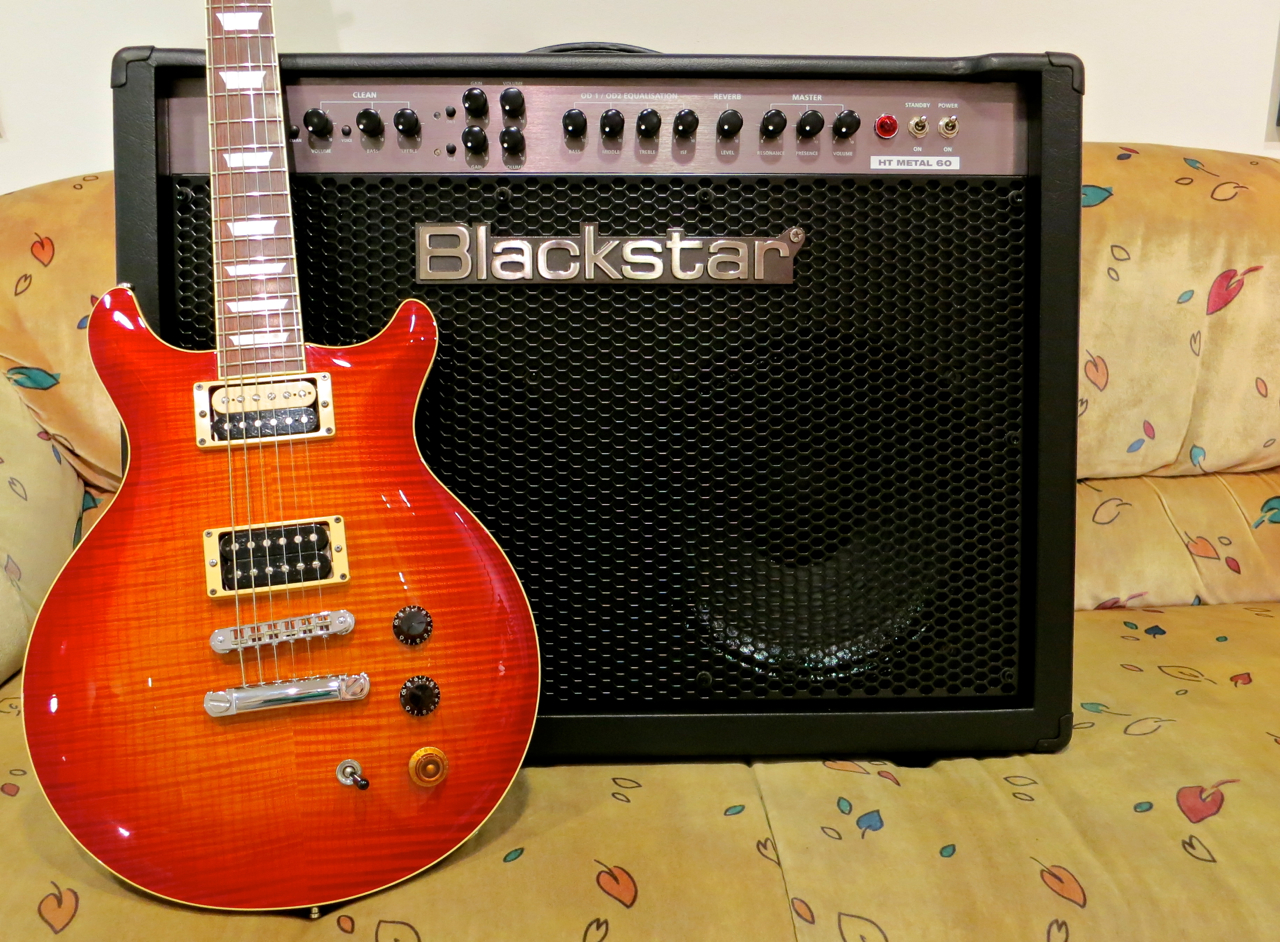
Blackstar’s HT Metal 60 naturally offers a much wider tonal palette than its small brother.
You can get two different types of clean sounds, with Boutique Clean being the rounder alternative of the two.
SM57:
Line output:
Modern Clean comes across as brighter and somewhat more compact (first the Shure SM57 -clip, then the speaker emulated output):
Here’s an example of the OD1-channel with the guitar tuned to drop-D.
First the ”British” version (ISF=10):
Then its ”US” counterpart (ISF=0):
With the exact same EQ settings, OD2 has more bite.
ISF=10 (”UK”):
ISF=0 (”USA”):
****

In my view, Blackstar’s new HT Metal-series is a fantastic addition to the company’s line-up, which takes the needs of modern Metal-guitarists into full account.
The HT Metal 5’s clean sound is very decent, even if the available headroom isn’t on a par with some larger amps. The distortion-channel is really where it’s all at with this compact combo – you will be floored by the big and fearless nature of the Metal 5’s mighty roar!
The Blackstar HT Metal 60 is the workingman’s Metal-combo. This is a professional grade combo offering both very tasty clean tones, as well as bone-crushingly powerful overdrive and distortion with spades of creamy compression. In all but the largest of venues this combo’s volume levels will surely be more than sufficient, even without adding any external cabinets.
****
Blackstar HT Metal 5 & HT Metal 60
HT Metal 5 – street price ca 450 €
HT Metal 60 – street price ca 1.000 €
Finnish distributor: Musamaailma
****
Blackstar HT Metal 5
Pros:
+ workmanship and finish
+ separate tone-control for Clean-channel
+ OD-channel’s 3-band EQ and ISF
+ big tone
+ speaker-emulated DI-output
+ footswitch inluded
Cons:
– Clean-channel’s restricted headroom
****
Blackstar HT Metal 60
Pros:
+ workmanship and finish
+ metal grips
+ Clean-channel’s Voice-feature
+ Clean-channel has own EQ-section
+ OD-channels’ 3-band EQ and ISF
+ big tone
+ speaker-emulated DI-output
+ FS-7-board included

Kitaristin näkökulmasta Suomi on suorastaan se tarunhohtoinen luvattu maa. Asukaslukuun suhtautettuna täällä on uskomaton määrä soitinpajoja, sekä efektien ja vahvistimien valmistajia.
Yksi tällainen custom-vahvistimia rakentava firma on porilainen Hehku Customs. Hehkun puuhamiehiä ovat Jarmo Välimäki, joka vastaa suunnittelusta, valmistuksesta ja huollosta, sekä Markku Penttilä ja Juha Heljakka, jotka ovat vastuussa tuotekehittelystä, markkinoinnista ja myynnistä.
Hehkun kotisivulla esitellään muutamia asiakkaille rakennettuja custom-vahvistimia. Custom-tilauksissa (hinnat alk. 1.300 €) vain kabinettien koot ja muodot ovat vakiona, kaikki muu on neuvoteltavissa: ”Ajatuksena on, että koitamme toteuttaa soittajan villeimmätkin haaveet, joten voidaan neuvotella kaikenlaisista optioista.” sanoo Jarmo Välimäki.
****

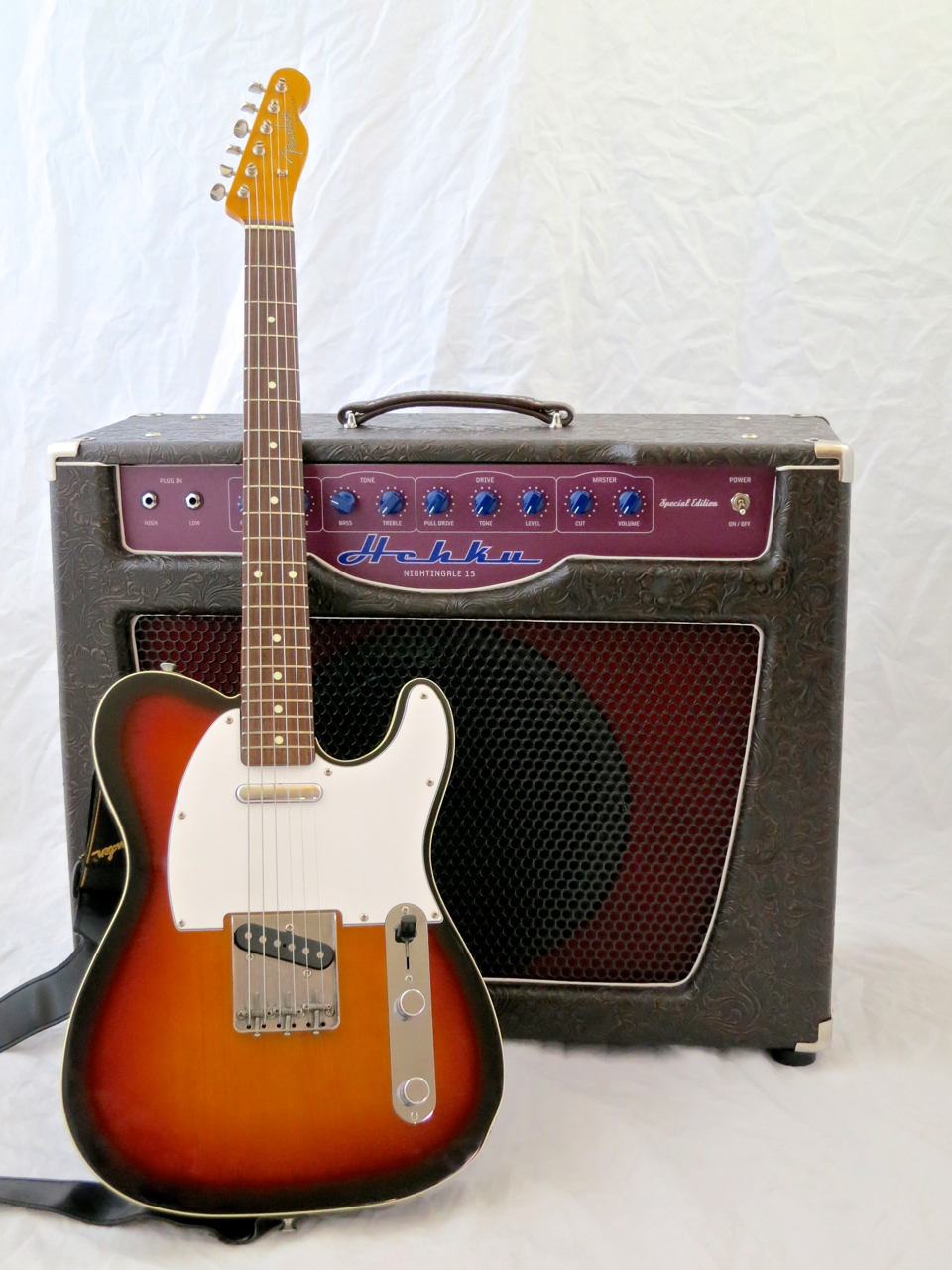
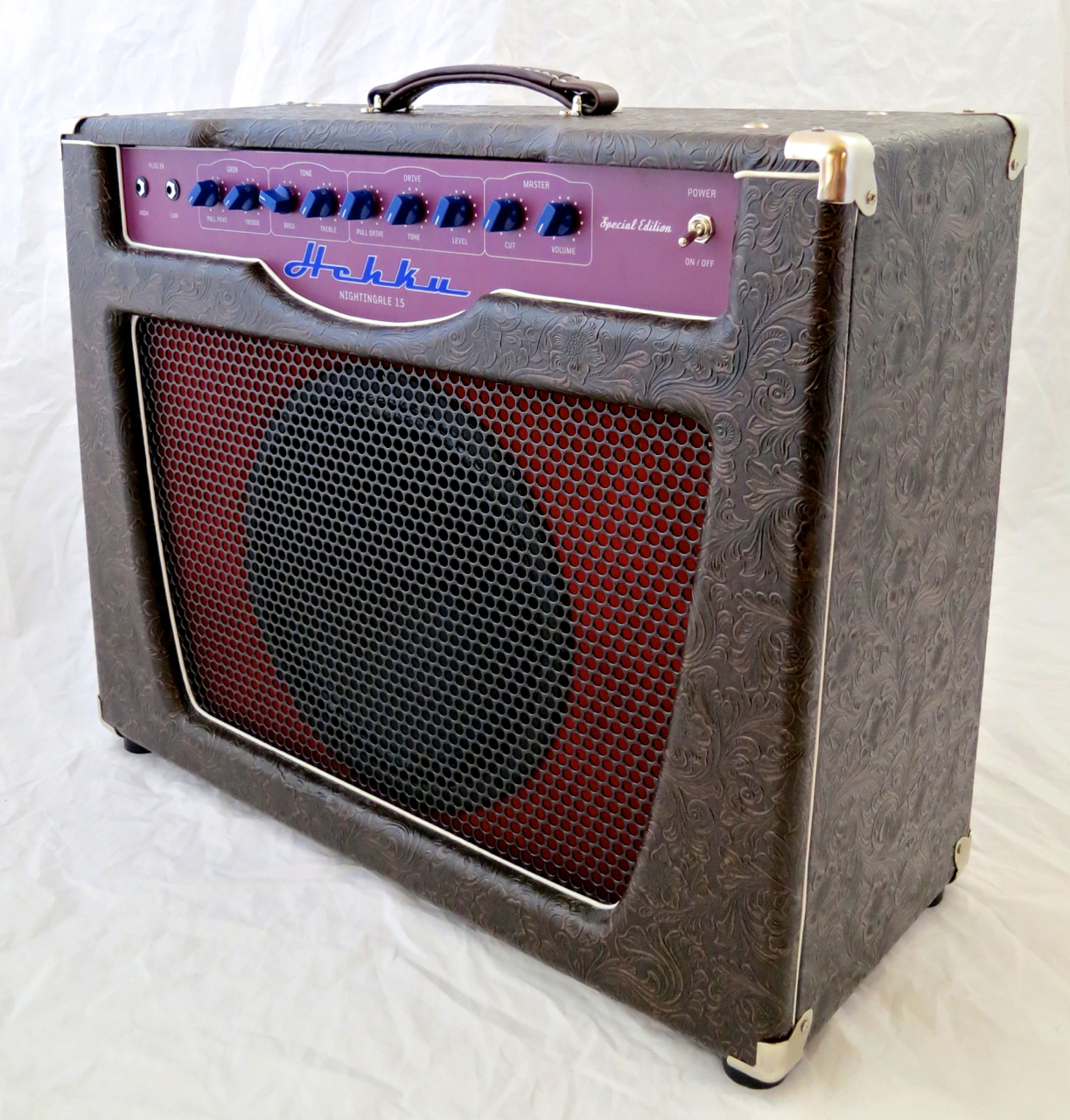
Kitarablogi sai testattavaksi 15-wattisen Hehku Nightingale 15 -kombon, joka on Hehku Customsin ensimmäinen ”sarjavalmisteinen” kitarakombo ilman custom-optioita.
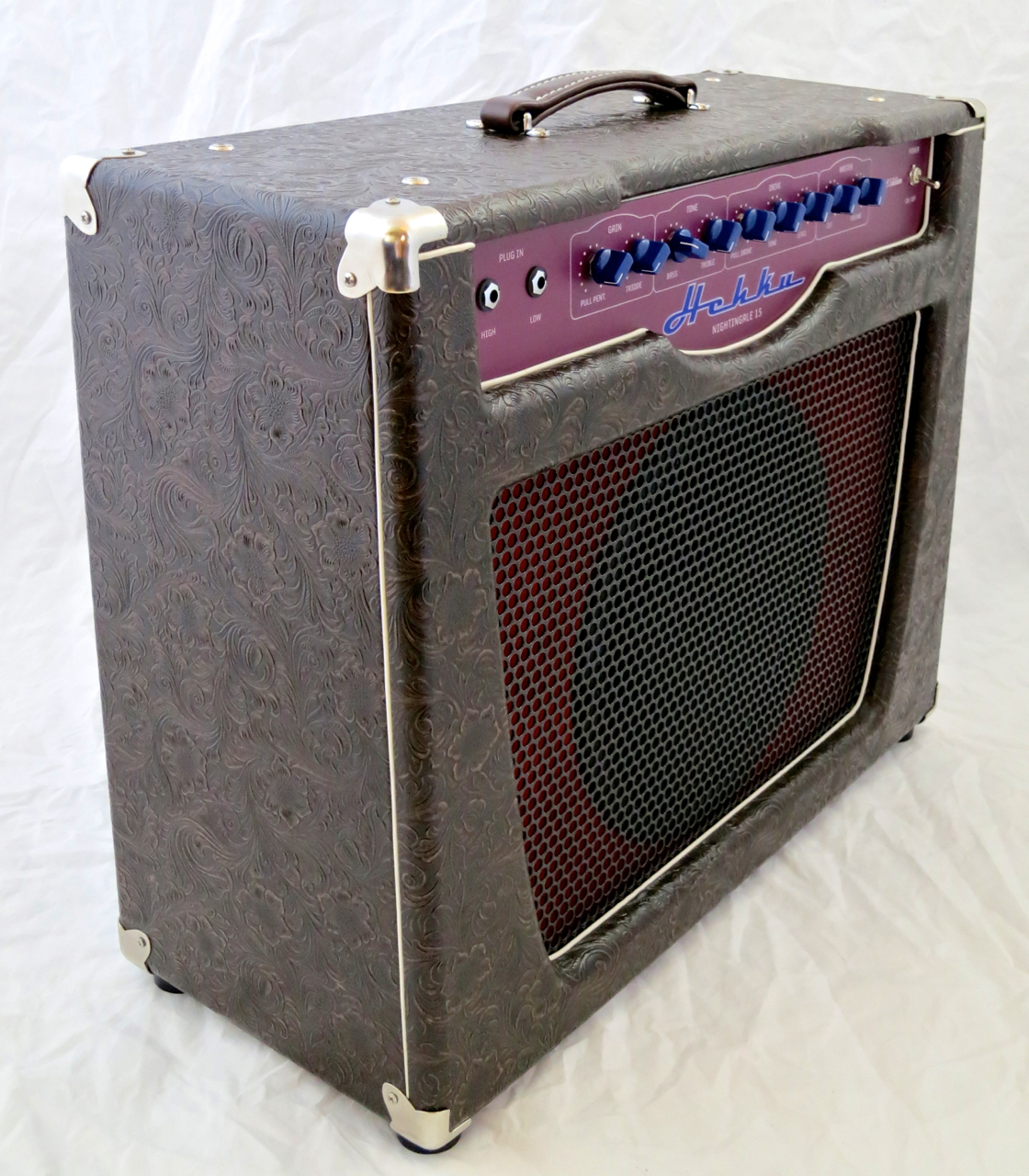
Nightingale 15 (1.950 €, nuppi: 1.750 €) on 12-tuumaisella kaiuttimella varustettu käsintehty putkikombo, joka edustaa täydellisesti Hehku-vahvistimien filosofiaa, sekä ulkonäön että signaalitien kannoilta.
Nightingalen uskalias, mutta erittäin kaunis värimaailma, sekä kombon pronssireliefia muistuttava päällyste tekevät heti selväksi, että Hehku-vahvistimessa ei ole kyse vanhan Tweed-Fenkun kloonista.
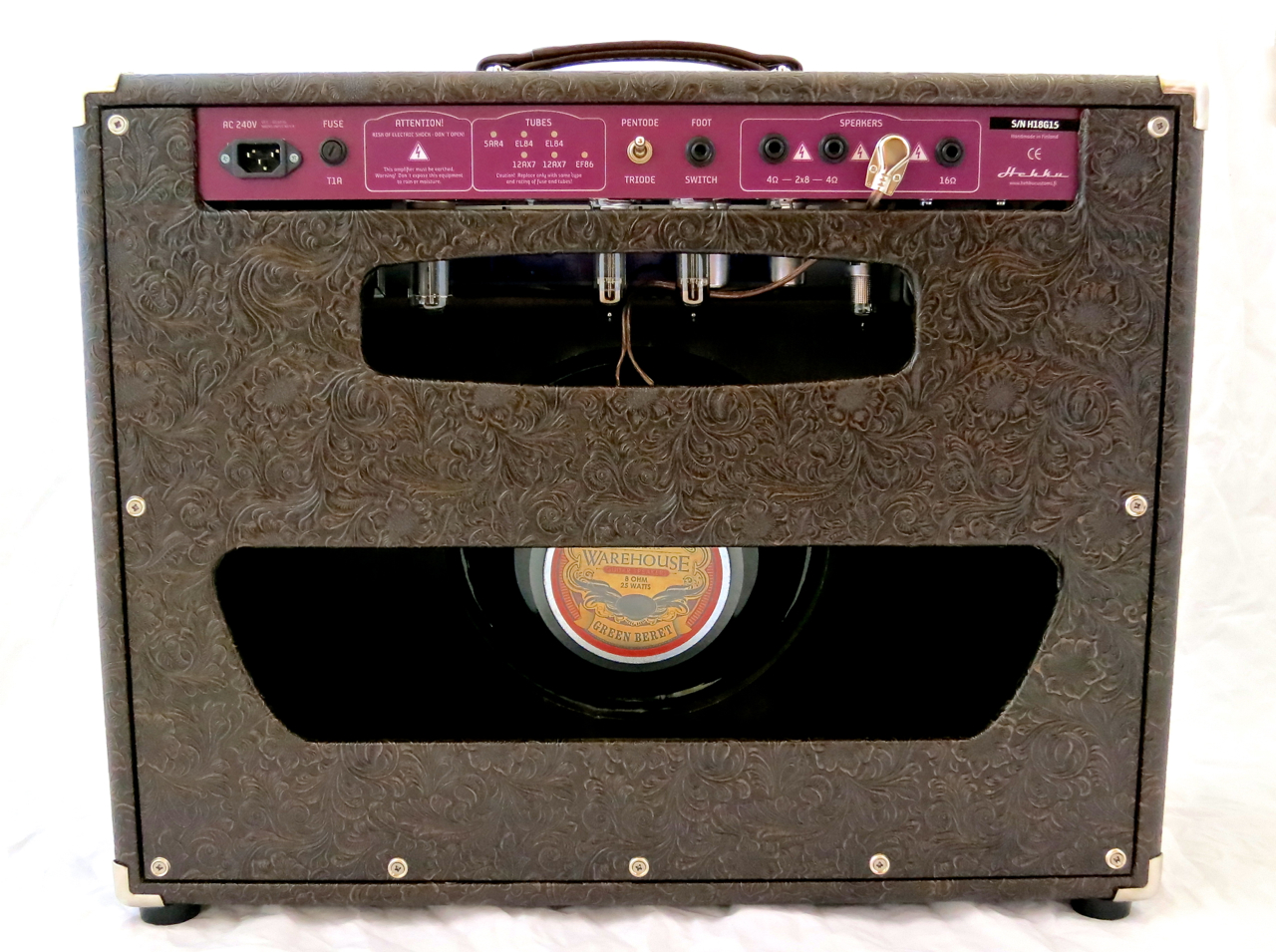
Hehku Nightingale -kombossa on avoin takaseinä, ja putkiin pääsee käsiksi vaivattomasti. Hehkujen kotelot valmistetaan aina suomalaisesta koivuvanerista, mikä on erinomainen materiaali sekä kotelon kestävyyttä että vahvistimen soundia ajatellen.
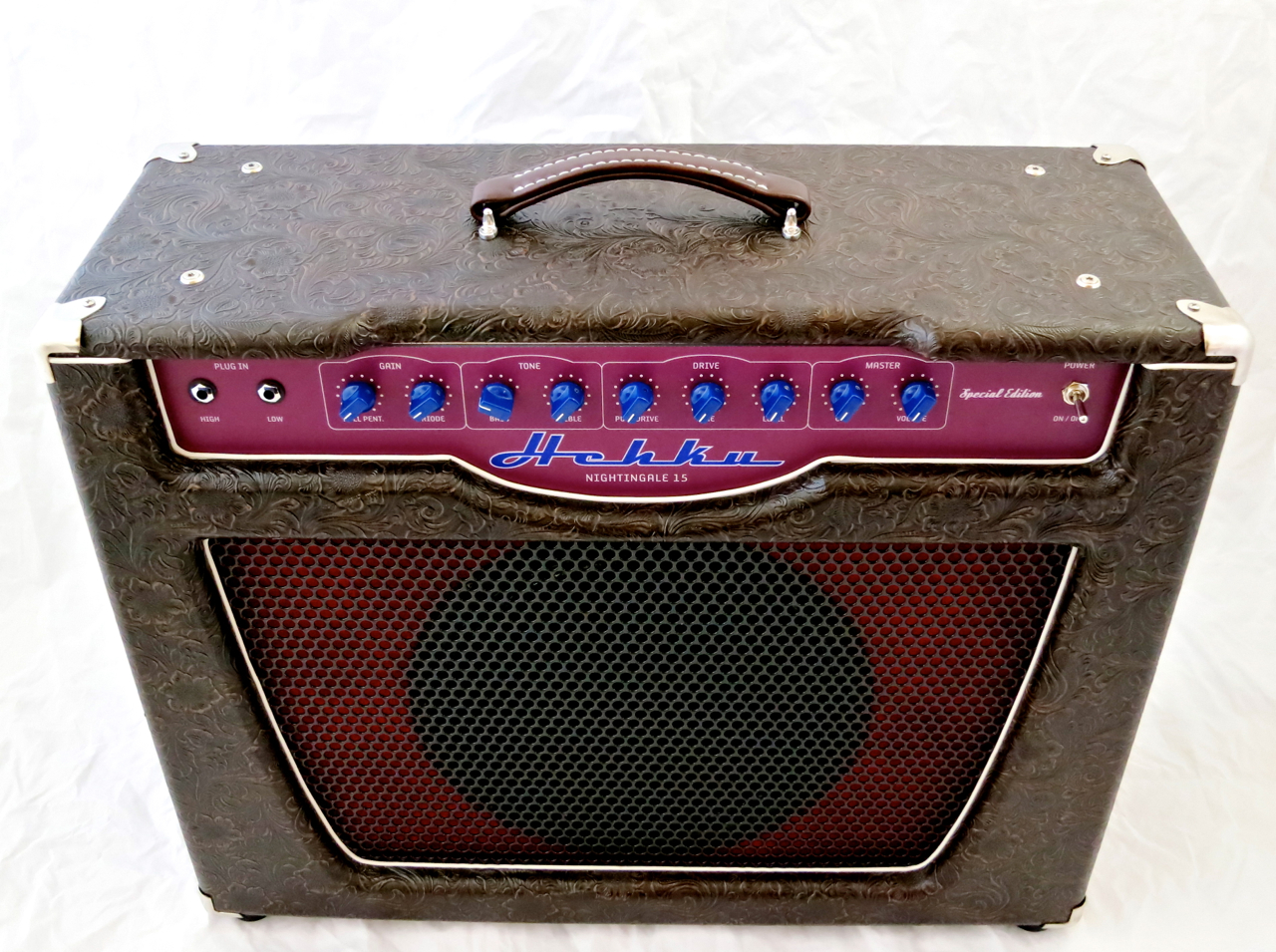
Koivuvaneri on myös suhteellisen kevyt materiaali, minkä ansiosta Nightingalea pystyy kantamaan mukavasti kombon ainoasta kahvasta.
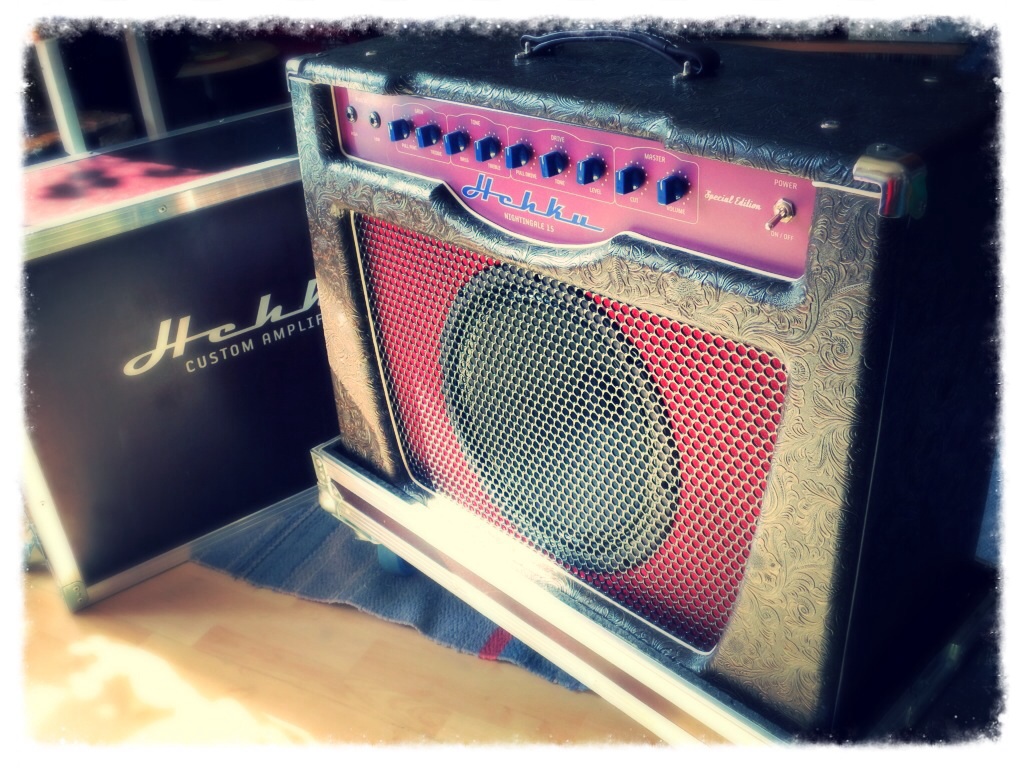
Hehku tarjoaa myös huippulaadukkaita kuljetuskoteloita vahvistimilleen. Nightingale 15 -kombolle sopiva malli maksaa noin 260 euroa.
****

Hehku Nightingale 15 on hyvin erikoinen kaksikanavainen putkikombo, koska vahvistimen koko signaalitie on kytketty sarjaan.
Monissa vintage-vahvistimissa on kaksi rinnakkaista, toisista riippumattomaa kanavaa (esim. ”Normal” ja ”Tremolo”), joiden välillä ei voi vaihtaa lennossa (paitsi erillisellä A/B-polkimella). Nykyaikaisemmissa kitarastyrkareissa taas voi olla ehkä yhteinen EQ, mutta puhtaan ja särökanavan gainea ja volyymiä pystyy säätämään erikseen.
Hehkun Nightingale taas toimii niin, että puhtaan puolen asetukset – tässä tapauksessa triodi- ja pentodi-kytkennän gain-asetukset, sekä vahvistimen kuusipykäläinen Bass-säädin ja aktiivinen Treble-EQ – vaikuttavat suoraan myös Drive-kanavan soundiin.

Triodi- ja pentodikytkennän välillä voi vaihtaa – ja Drive-kanavan laittaa päälle – joko suoraan etupaneelista nostokytkimillä tai kombon mukaan tulevalla kompaktilla jalkakytkimellä.

Nightingalen selkeän putkikartan ansiosta kombon eri putkien sijainti selviää nopeasti.
Takapaneelista löytyy myös triodi/pentodi-kytkin pääteputkille. Triodimoodissa kombon nimellisteho putoaa 15 watista seitsemän wattiin, ja samalla myös Hehkun soundi muuttuu hieman.
Takapaneelin tarjoamasta kaiutinlähtöjen runsaudesta kitaristi taas iloitsee silloin, kun haluaa käyttää komboa toisen kaapin kanssa.
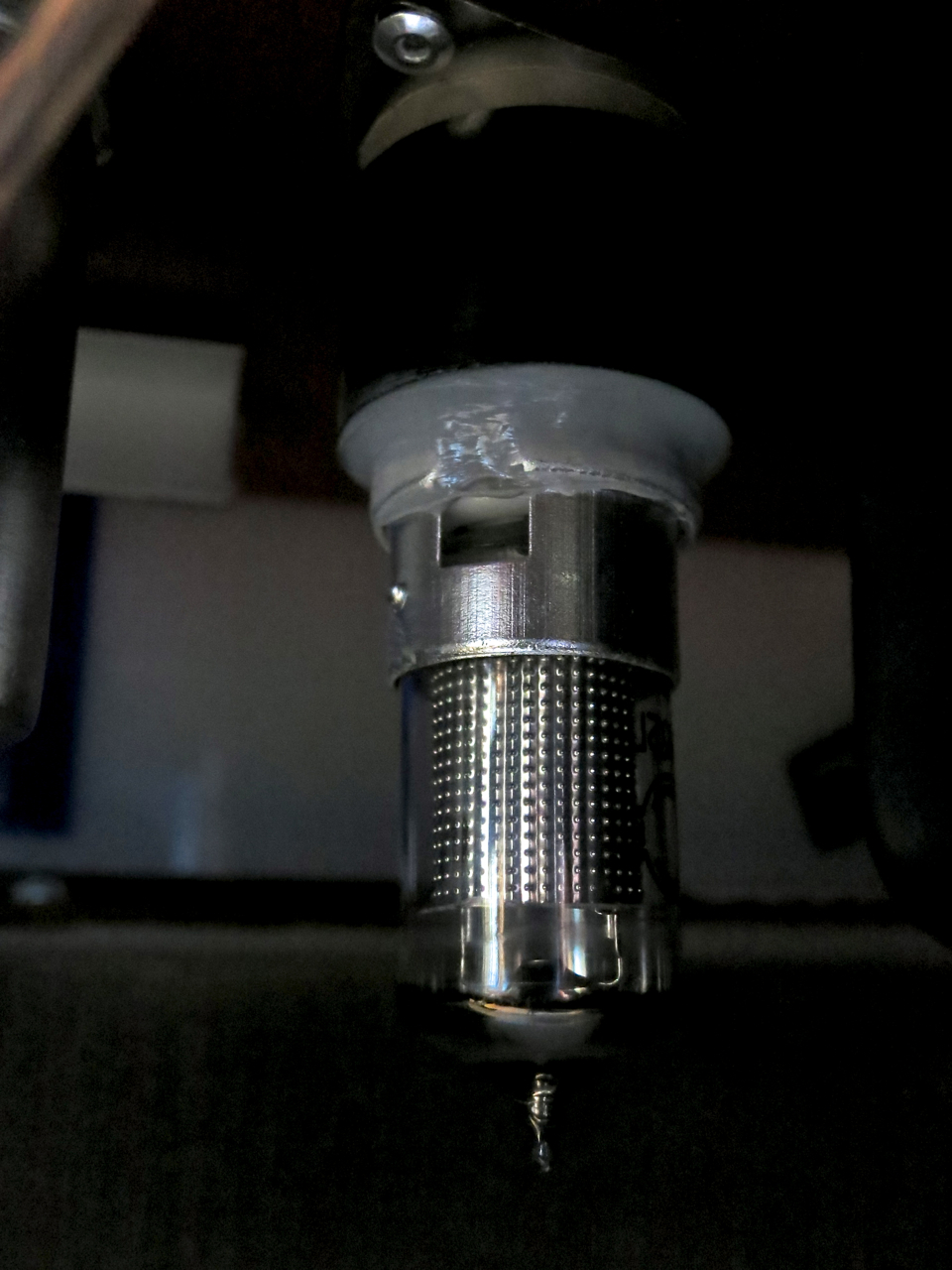
Puhdas kanava on rakennettu EF86-nimisen pentodiputken ympärille. EF86 (myös tunnettu nimellä 6267) on soundiltaan erinomainen putki, jota löydetään myös joissakin vanhoissa Voxissa, sekä Matchless- ja Dr Z -vahvistimissa, mutta sitä käytetään nykyään melko harvoin, koska tämä malli on yleensä melko mikrofoninen (herkkä mekaaniselle tärylle).
Hehku Customs on ratkaissut ongelman tehokkaasti käyttämällä EF86:lle tärinää vaimentavaa silikoniadapteria.

Säröpuolelta (ja vaiheenkäntämisestä) ovat vastuussa kaksi 6N2P-putkea, jotka ovat venäläisiä, military-speksattuja 12AX7/ECC83-putkien sukulaisia, joilla on kuitenkin hieman toisenlainen soundi ja erilainen gain-rakenne.

Nightingalessa tasasuuntausta hoidetaan 5AR4-putkella.

Tämän Hehkun päätevahvistin käyttää pari EL84-putkea. Myös pääteputket voi vaihtaa venäläisiin military-malleihin 6P15P/EL83, ja koska Nightingale on itsebiasoiva vahvistin, pääteputkien vaihtamiseen ei tarvita tekniikon apua.
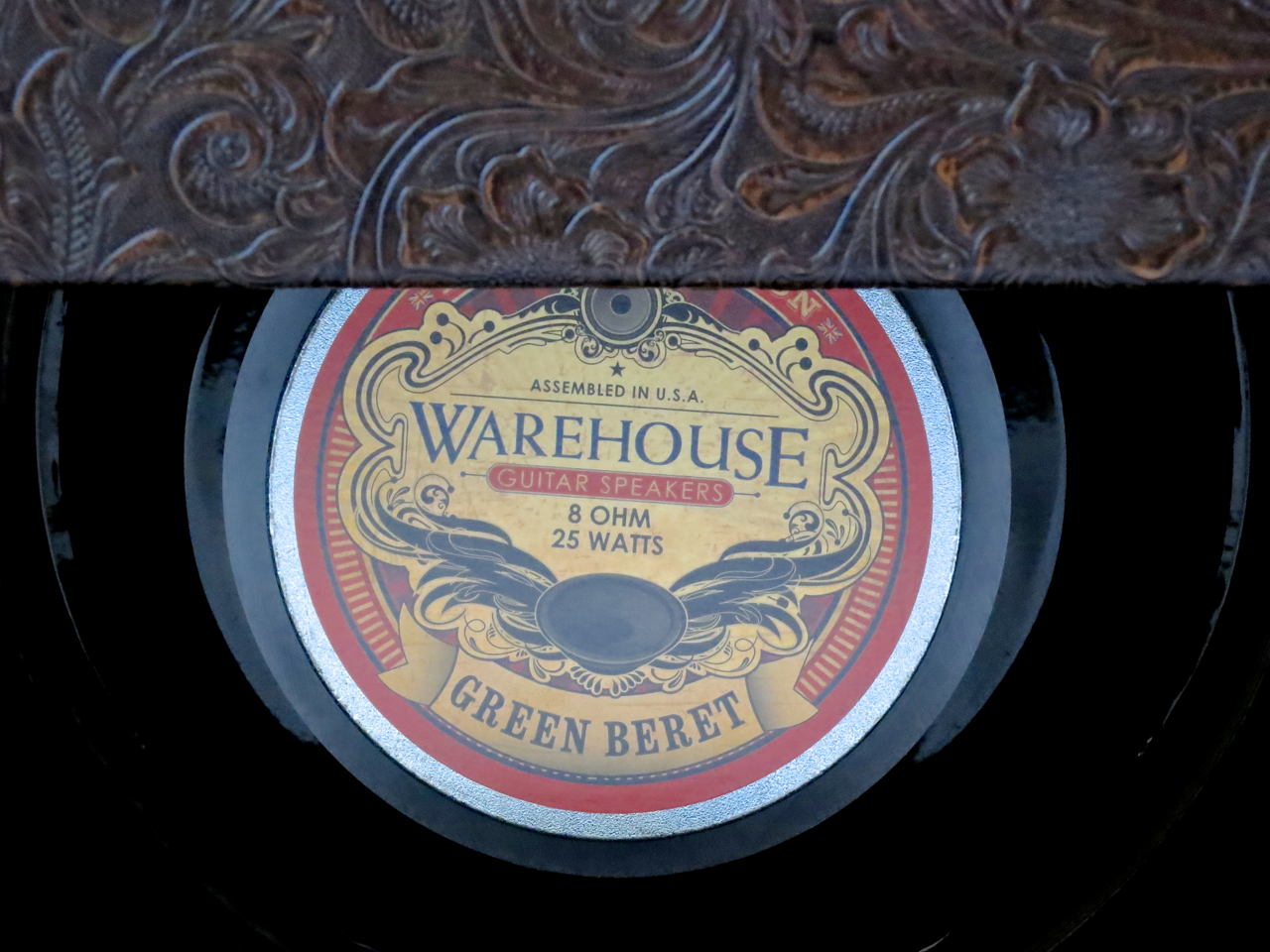
Warehousen laadukas 12-tuumainen Green Beret -kaiutin tarjoaa valmistajan mukaan brittiläistyylistä soundia.
****
Tehdasvarustuksella (6N2P + EL84) Hehku Nightingale 15 -kombon puhtaassa soundissa riittää headroomia jopa kahdella humbuckerilla varustetulle kitaralle. Kuusipykäläinen Bass-säädin ja aktiivinen Treble-potikka antavat runsaasti vaihtoehtoja, jolla jokainen voi löytää oman soundinsa. Hehkun puhdas äänimaailma on selvästi lähempänä Voxia kuin ”mustanaama” Fenderiä.
Nightingalen särösoundikin on vallan mainio. Kombo kuulostaa herkullisen mehevältä ja diskantissa on juuri sopivasti rouheutta klassikko-Blues- ja Rock-soundeihin.
Tässä pätkässä soi vintage-tyylinen Fender Telecaster – järjestys on: puhdas (triodi) –> puhdas (pentodi) –> särö (triodi) –> särö (pentodi); päätevahvistin toimii pentodikytkennässä:
Ja tässä samankaltainen pätkä Hamer USA Studio Custom -kitaralla soitettuna:
****
Kokeilin myös Jarmo Välimäeltä saatuja vaihtoputkia (12AX7 + 6P15P), ja ero on selvästi kuultavissa:
Puhdas headroom on vähentänyt tuntuvasti. Telecasterilla ollaan jo breakup-särön maailmassa pentodikytkennässä, kun taas Hamerin soundi menee silloin jo selvästi särön puolelle.
Särökanavalla tarjoaa näillä putkilla myös enemmän säröä, hieman löysempää bassorekisteriä, sekä enemmän diskantin purevuutta. Oikein mainio kattaus tämäkin, vaikka tehdasputkisto on ehkä hieman enemmän minun makuun.
Ensimmäisessä pätkässä kuullaan jälleen Telecaster (samoilla asetuksilla, vain putket on vaihdettu):
Ja tässä on Hamerilla soitettu humbucker-pätkä:
****

Hehku Customsin Nightingale 15 on mielestäni loistava täysputkikombo omalla äänellä ja omilla detaljiratkaisuilla. Tykkään myös Hehkun konseptista rakentaa putkivahvistimia, joilla on oma, huikea ulkonäkö ja soundi, mutta ilman turhan muka-nostalgista ”putkivoodooa”.
Hehku Nightingale on nykyaikainen, käsintehty putkikombo, jolla on erittäin selkeä säädin- ja takapaneeli, ja mielenkiintoisen interaktiivisesti toimiva signaalitie. Idea ei ole matkia jonkun tietyn kitaralegendan tai klassikkovahvistimen soundeja, vaan luoda erittäin toimivan perustan Hehku-käyttäjän omalle soundille.
Nightingale 15:n hinta on mielestäni kohdallaan, kun tässä puhutaan kuitenkin laadukkaan suomalaisen käsityön helmestä.
PS: Olen kuulut huhuja vielä tänä keväänä ilmestyvästä Hehku-kombosta trubaduureille, jossa olisi erillisiä kanavia kitaralle ja laululle. Kannattaa varmasti tsekata säännöllisesti Hehkun Facebook-sivua…
****
Hehku Customs Nightingale 15
hinta: 1.950 €
Lisätiedot: Hehku Custom
****
Plussat:
+ uhkea ulkonäkö
+ työnjälki
+ käsintehty
+ kotimainen
+ omaleimainen kytkentä
+ soundi


 Kitarablogi.com – Finland's premier Guitar and Bass blog