Review: Spin X guitar cable (aka Mad Professor RED Cable)

N.B.:

When I wrote the original (Finnish) version of this review, the company behind this guitar lead, Spindeco Oy, had been making tentative noises about marketing the cable using the Spin X brand name. Since then I have been informed that Spindeco won’t start marketing this lead, after all. The cable will continue to be sold as the Mad Professor RED Cable – same specifications, different colour.

For the sake of clarity, the English version the review will refer to the product as the Spin X cable, too.

Spin X 2

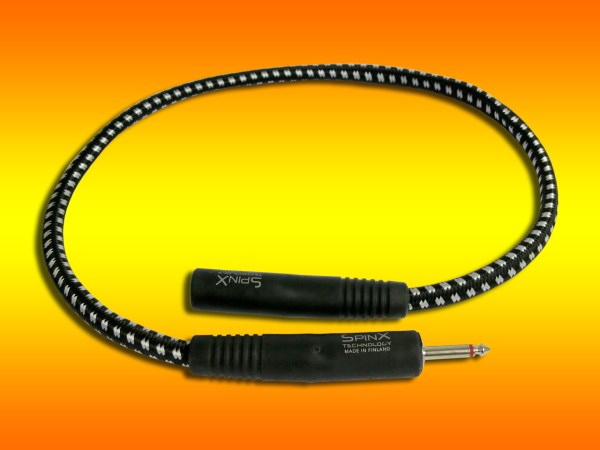
Seldom has there been this amount of Internet chatter and general hysteria about any guitar accessory, as there has been about the Finnish Spin X cable, which is only a guitar lead of approximately 75 cm length, with two giant 1/4-inch connectors (a female input; a male output).

The Spin X cable (sold for 129 € as the RED Cable by Mad Professor) is manufactured by a Finnish company called Spindeco Oy. The cable promises to improve the efficiency of its conductors by means of a nano-electrical phenomenon, known as the electron spin. Special graphite-coated conductors are meant to rearrange the signal-carrying electrons in such a way, that the signal flow is improved. Spindeco claim that the main benefit of this technology in a guitar lead is an improved phase correlation between the different frequency bands of the signal. Apparently, traditional leads tend to pass high frequencies quicker than low frequencies, which tend to arrive at the amplifier with a very tiny time lag.

Using the benefits of the noble search engine, I quickly ascertained that the electron spin is, in fact, no voodoo, but rather generally acknowledged quantum physics. Still, we guitarists are interested in audible results; we ask questions like:

Does the Spin X cable do what it says on the tin? Is there truly a discernible difference in sound? Do I have to own one if I want to be a Tone God?

****

I was given a Spin X cable for reviewing purposes.

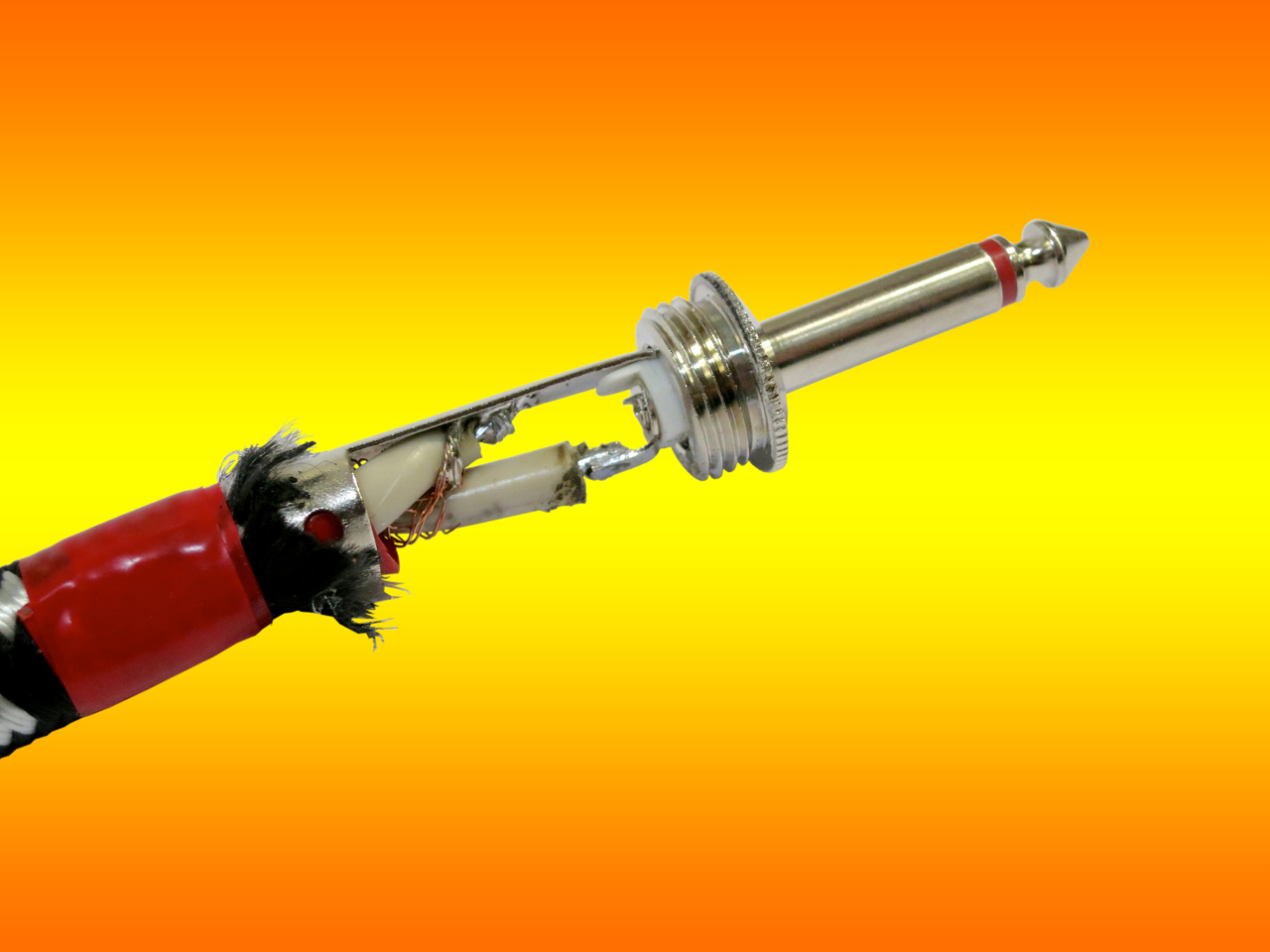
There’s been some rumours about miniature transformers, or buffers, inside the lead’s giant connectors, which is why I had to take a closer look inside. Nope, it’s just a bunch of different conductors – some left unused – attached with traditional soldering tin!

The short length of the Spin X cable has also been the centre of some speculation. Guitarists have been asking: ”Why is it just a short extension cord, instead of a full-length guitar lead?”

Take a closer look at these pictures (click on them for a larger view), and the answer becomes rather obvious:
Spin X cable – plug 2

Spin X Cable – jack 2

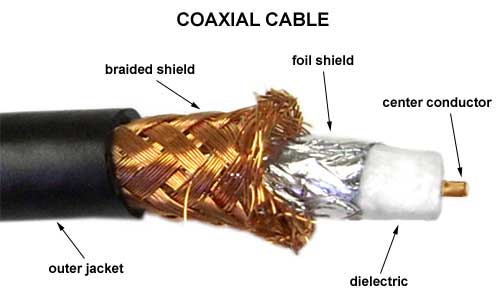
It seems that Spin X relies on two identical conductors to function in the desired way. One is the hot (signal) conductor, while the other goes to earth (ground). But using this type of cable results in a less-than-ideal setup, when it comes to mains hum and electromagnetic interference.

guitar cable

coaxcable

Traditional guitar cables are built as coaxial leads, where a centre conductor carries the guitar signal. The centre conductor runs inside a layer of insulation, which in turn is covered by one (or several) shields. The shield is connected to ground and serves two purposes – one: its the audio signal’s earth; two: it’s a Faraday cage that shields the signal conductor from extraneous interference, like mains hum.

If you connect only the Spin X cable to an amp, and turn up the volume, you will be greeted by an unacceptable amount of hum and microphonics, but as soon as you plug your regular lead into the Spin X, all the noises disappear. This means that the Spin X needs the traditional, coaxial guitar lead to do away with all the interference.

****

The Spin X cable seemed reasonably rugged and well made.

The only thing that bothered me in the road-worthiness department were the badly secured strain relief cuffs in both connectors of our review sample.

****

I wanted to find out, whether you could ”measure” any real speeding up of the guitar signal in the confines of a home studio. I came up with the following setup:

I recorded the acoustic sound of a Fender Stratocaster using an AKG C3000 condenser microphone onto the left channel of a stereo signal, while direct-injecting the high-impedance guitar signal going through a Whirlwind Leader cable into my sound card.

Whirlwind Wave

As you can see above, the DI’ed guitar signal (waveform on the bottom) is a tiny bit behind the miked up acoustic sound.

Spin X Wave

This picture shows clearly that the Spin X doesn’t ”speed up” the guitar signal in any way noticeable in a standard audio sequencer.

The listening test also doesn’t reveal any noticeable differences between using only the traditional lead or adding the Spin X cable. If anything, adding the Spin X might even add a minuscule amount of time lag to proceedings, at least to my ears:

****

I then recorded a series of sound clips, using my trusty Blackstar HT-1R valve combo. In each clip the first half is played through just the traditional Whirlwind lead, while the second half has the Spin X cable added into the signal chain.

For comparison purposes here’s a clip of a Fender Stratocaster DI’ed into the sequencer (first half Whirlwind only; second half Whirlwind plus Spin X):

A Strat through the Blackstar:

Gibson LP Junior:

Hamer USA Studio Custom:

Gibson Melody Maker SG:

****

Next I took the Spin X to the guitarist of Rock-Ola & The Freewheelers. Sami Saarinen went through several different vintage and custom shop guitars and amps at band rehearsal volumes – both straight into the amp, as well as using a pedalboard.

The differences in sound between using only a traditional guitar lead and adding the Spin X cable seemed a little bit more pronounced using Sami’s setup at higher volume levels, compared to what I could make out in my home studio.

****

Spin X 1

For the last bit I wanted to make sure that the Spin X cable’s function was not dependent on valve technology:

I borrowed my son’s Marshall MG30CFX combo for a short test run. All sound clips start with only the Whirlwind cable connected; the Spin X comes in at the halfway point.

Fender Telecaster (neck pickup):

Both pickups:

Bridge pickup:

****

Based on my tests I have to state that the Spin X cable really does add a little ”something” to the sound. The Spin X’ effect is more easily spotted with a quality guitar and a quality amp at slightly higher volume levels. It also seems that the tonal effects are more pronounced in singlecoil-equipped guitars – like a Stratocaster, a Telecaster, a Les Paul Junior, or a non-reverse Firebird – than when using humbucker-carrying guitar models.

The Spin X’ ”sound” is similar to the effect a buffer amp has on a long signal chain. You will get a slightly more refined top end, a whiff of added presence and openness, as well as a tighter and more pronounced bass. Strats and Teles will sound a tiny bit more HiFi, while a P-90 pickup will lose a little of its lower-mid congestion.

The Spin X seems to make the signal louder by an inkling, but this could also be a mere psychoacoustic effect, caused by the added presence.

****

Spin X 5

There’s no simple and straight answer to the question, whether the Spin X cable genuinely ”improves” your tone. Many Rockabilly, Punk or Metal guitarists wouldn’t want to make their guitars sound ”more polite”. Some styles and genres simply demand a gritty, unruly top end, and some chunky mid-range grind.

For some tone hounds and sound aesthetes, however – players following the in the footsteps of guitarists, such as David Gilmour, Michael Landau or Eric Johnson – the Spin X cable’s tiny tonal changes might make all the difference.

In any case, it is up to you to decide how much this minuscule fine-tuning of your guitar signal is worth to you.

****

Spin X Cable

For more info on the Mad Professor RED Cable go HERE.

Testipenkissä: Spin X -johto (Mad Professor RED Cable)

Update 24.11.2015:

Spindecosta tuli viesti, että firma ei tulekaan markkinoimaan Spin X -johtoa omalla nimellään, vaan että myynti jatkuu Mad Professor RED Cable nimellä!

Spin X 2

Harva vempain on viime aikoina synnyttänyt kitaristien keskuudessa samankaltaista kuhinaa kuin suomalainen Spin X -johto, ja kyse on sentään ”vain” noin 75 cm pitkästä ja kahdella valtavalla liittimellä varustetusta kaapelista.

Spin X -johdon (hinta ei vielä vahvistettu) takana on suomalainen yritys Spindeco Oy. Spin X -johdossa johtimien hyötysuhdetta parannetaan hyödyntämällä elektronin spin -nimistä nanoteknologista ilmiötä. Johdossa olevilla hiilellä päällystetyillä erikoisjohtimilla järjestetään signaalia kuljettavat elektronit ikään kuin siistimpään järjestykseen, mikä ilmeisesti nopeuttaa signaalin kulkua johtimen läpi. Kitarajohdossa spin-ilmiön päähyöty on – valmistajan myyntivastaavan mukaan – että kaikki taajuuskaistat saapuvat samanaikaisesti vahvistimen tulojakkiin, kun perinteisessä johdossa bassot saapuvat hieman muita taajuuksia jäljessä.

Googlaamalla selviää hyvin nopeasti, että elektronien spin ei ole mitään huuhaata, vaan aitoa kvanttifysiikkaa. Meitä kitaristeja kuitenkin kiinnostavat eniten seuraavat kysymykset:

Toimiiko Spin X -johto toivotulla tavalla? Onko ero selvästi havaittavissa? Onko pakko hankkia tällainen johto?

****

Sain Spindecon Jerry Ala-Leppilammelta yhden Spin X -johdon testattavaksi.

Johdon isoja liittimiä auki ruuvaamalla selvisi heti, että johdossa käytetään todellakin ainoastaan johtimia, eikä esimerkiksi plugiin upotettuja muuntajia tai vastaavaa.

Monet kitaristit kysyvät myös miksi Spin X -johto on niin lyhyt, ja miksi se on saatavilla pelkästään ”jatkojohtona”, eikä tavallisena kitarajohtona. Näissä kuvissa näkyy vastaus:

Spin X cable – plug 2

Spin X Cable – jack 2

Spin X:n toimiminen ilmeisesti edellyttää sitä, että johdon kaksi johdinta (signaali ja maa) ovat rakenteeltaan täysin identtisiä, mutta tästä seuraa samalla, että erikoisjohto on selvästi häiriöherkempi kuin perinteinen koaksiaalinen kitarajohto.

guitar cable

coaxcable

Tavallisessa kitarajohdossa signaali kulkee johdon keskijohtimessa, sen ympärille on laitettu eristys (ja usein myös johdon staattisia käsittelyääniä vähentävää alumiini- tai grafiittifoliota). Tiivis kuparilangasta tehty verkko (vaippa) toimii maajohtimena, ja suojaa Faraday-häkkinä kitarasignaalia tehokkaasti ulkoisia elektromagneettisia häiriöitä vastaan.

Kun liittää vahvistimen tuloon pelkästään Spin X -johdon kuuluu (isoilla gain- ja/tai volume-asetuksilla) selkeästi vahvistimelta tulevan muuntajahuminan, sekä johdon hiplaamisessa syntyviä käsittelyääniä. Heti kun tavallinen kitarajohto on liitetty Spin X -johtoon, sekä brummi että mikrofoninen rähinä loppuu kuin seinään.

****

Spin X -johdon erikoisjohto vaikuttaa laadukkaalta ja mekaanisesti kestävältä. Myös juotokset olivat siistejä.

Testijohdossa vain hyvin löysästi ja huolimattomasti laitettu vedonpoisto (molemmissa liittimissä!) aiheutti hieman hämmennystä.

****

Halusin selvittää, onko elektronien nopeusero mitattavissa kotistudio-olosuhteissa, ja tein seuraavanlaisen kokeilun:

Äänitin Fender Stratocasterin akustista ääntä AKG C3000 -kondensaattorimikrofonilla vasempaan kanavaan, samalla kun korkea impendanssinen kitarasignaali meni tavallista kitarajohtoa (Whirlwind Leader) pitkin suoraan äänikortille.

Whirlwind Wave

Kitarasignaali (oikea kanava) oli aavistuksen verran mikkisignaalia jäljessä, kuten tässä kuvassa näkyy.

Spin X Wave

Spin X -johdon käyttö ei ainakaan nopeuttanut signaalin kulkua sen verran, että se olisi audiosekvensserillä näkyvissä.

Myös kuulohavainnolla viive kuulostaa hyvin samanlaiselta, ehkä jopa hiuksen verran pidemmältä Spin X -johtoa käytettäessä:

****

Äänitin koesarjan eri kitaroilla Blackstar HT-1R -putkikombolla niin, että jokaisessa klipissä ensimmäinen puolisko on äänitetty pelkästään Whirlwind-johdolla ja sitten toisessa on lisätty Spin X -johto signaalitiehen.

Ensin Fender Stratocaster ilman vahvistinta:

Strato Blackstarin kautta:

Gibson LP Junior:

Hamer USA Studio Custom:

Gibson Melody Maker SG:

****

Seuraavaksi menin Spin X -johdon kanssa Rock-Ola & The Freewheelers -yhtyen kitaristille. Sami Saarisen kanssa kokeiltiin Spin X -johdon vaikutuksia hieman suuremmalla volyymillä eri vintage- ja custom shop -kitaroiden ja -vahvistimien kanssa, pedaalilaudalla ja ilman.

Valitettavasti tästä sessiosta ei ole äänityksiä, mutta soundillisesti erot Spin X -johdolla ja ilman olivat jopa selvemmät kuin kotistudio-oloissa.

****

Spin X 1

Viimeisenä halusin saada selvillä, onko Spin X:n toiminta kytköksissä putkitekniikkaan vai toimiiko johto myös edullisen transistorivahvistimen kanssa.

Äänitin siis muutaman pätkän poikani Marshall MG30CFX -kombon kautta. Kaikki pätkät alkavat ilman erikoisjohtoa, joka tulee toisessa puoliskossa mukaan kuvaan.

Fender Telecasterin kaulamikrofoni:

Molemmat mikit yhdessä:

Telecasterin tallamikrofoni:

****

Testien perusteella minun täytyy todeta, että ”jotain” todella tapahtuu, silloin kun Spin X -johtoa käytetään. Johdon vaikutus tulee selkeämmin esiin laadukkailla vahvistimilla ja hieman isommalla volyymillä kuin kotisohvalla kerrostalossa. Jotenkin tuntuu myös siitä, että yksikelaisilla mikrofoneilla varustetut kitarat – esimerkiksi Stratot, Telet, LP Junior, non-reverse Firebird – hyötyvät erikoisjohdon tuomista muutoksista enemmän kuin humbucker-kitarat.

Spin X -johdon ”soundi” tavalliseen kitarajohtoon verrattuna on lähellä laadukkaan bufferin tuomia lisäyksiä pitkässä signaaliketjussa. Spin X:n kanssa soundissa on vähemmän raapivaa terävyyttä diskantissa, enemmän avoimuutta ja kiiltoa ylä-middlen preesensalueella, sekä tiukempi ja tarkempi bassotoisto. Fender Stratocasterit ja Telecasterit saavat aavistuksen verran lisää hifimäisyyttä ja P-90-mikrofoneista katoaa pieni annos tukkoisuutta etenkin clean-soundeissa.

Spin X:n kautta signaalitaso tuntuu myös aavistuksen verran korkeammalta, mikä toki voi olla pelkästään psykoakustinen ilmiö.

****

Spin X 5

Kysymykseen onko soundi ”parempi” Spin X -johdolla ei kuitenkaan pysty vastaamaan yksiselitteisesti. Rockabilly- tai Punk-kitaristeille kovan ja kirskuvan diskantin lievä vaimennus voi olla myös huono asia, myös keskialueen siistiminen ei ole välttämättä jokaisessa tapauksessa (perinne-Blues, Swamp Rock) toivottu lisäys.

Todelliselle soundiesteetikolle – siis David Gilmourin, Michael Landaun tai Eric Johnsonin kaltaiselle soittajalle – Spin X -johdon tuomat lievät, mutta tyylikkäät, muutokset voivat muodostaa sen paljon kaivatun pisteen iin päällä.

Siihen, kuinka paljon on valmis maksamaan Spin X:n tuomasta lisäsilauksesta, jokaisen itse on vastattava.

****

Spin X Cable

Lisätiedot: Spindeco

Spin X Cable – now on SoundCloud

In all clips the first half is recorded without the Spin X Cable, while the second half uses the Spin X in front of the sound card or amp.
++++
Mic + DI track (to check the delay between mic and DI):
• left channel – AKG C3000 close miking a Stratocaster
• right channel – Stratocaster DI’d via Focusrite Saffire 6 USB
++++
The signal chain used was:
Guitar –> 6 m Whirlwind Leader –> (Spin X Cable) –> Blackstar HT-1R –> 5 m Planet Waves Classic –> Focusrite Saffire 6 USB

Spin X 1

Review: Bogner Harlow, Wessex and Burnley

Reinhold Bogner

This time Kitarablogi has had the pleasure to review the fruits of a cooperation between two legendary designers:

Custom amp guru Reinhold Bogner

Rupert Neve

…and the grand old man of recording studio electronics Rupert Neve have unveiled a line of three Bogner effect pedals (made in the USA), which were designed around Rupert Neve’s famous audio transformers.

Bogner – Neve transformer

Audio transformers are rarely seen (or mentioned) when it comes to pedal effects, for both reasons of price and mass production.

In valve amplifiers audio transformers play a crucial role, because they are the last stage before the signal reaches the speaker. Audio transformers ”translate” the signal for the speaker, which is why they have a direct impact on the tone and dynamic behaviour of a tube amplifier.

Bogner-pedals teaser – w lights

At the moment three different Bogner/Neve-pedals are available – the Harlow booster (current price in Finland: 235 €), the Wessex overdrive (229 €), and the Burnley distortion (235 €).

Each pedal has a glowing ”eye” indicating the current signal strength of the stompbox.

****

Bogner Harlow – with box

The Bogner Harlow gives you two effects in one pedal:

In addition to it’s boost function, the Harlow also incorporates Bogner’s Bloom compression circuit, which promises to give you a very natural, three-dimensional and musical type of compression.

You’ll find three control knobs on the Harlow – a level control for the booster, a Bloom-control for the compressor, and a master tone.

Bogner Harlow – full front 2

****

Bogner Wessex – with box

Bogner’s Wessex is the overdrive pedal in the Bogner/Neve-family.

In addition to its gain and level controls the Wessex also includes a two-band EQ, as well as a E/N-switch. ”N” stands for ”normal” and this mode will give you a slightly more traditional, mid-range centred sound. Switching to ”E” (for ”enhanced”) there’s more gain on tap, coupled with a fatter, more full-range tone.

Bogner Wessex – full front 2

****

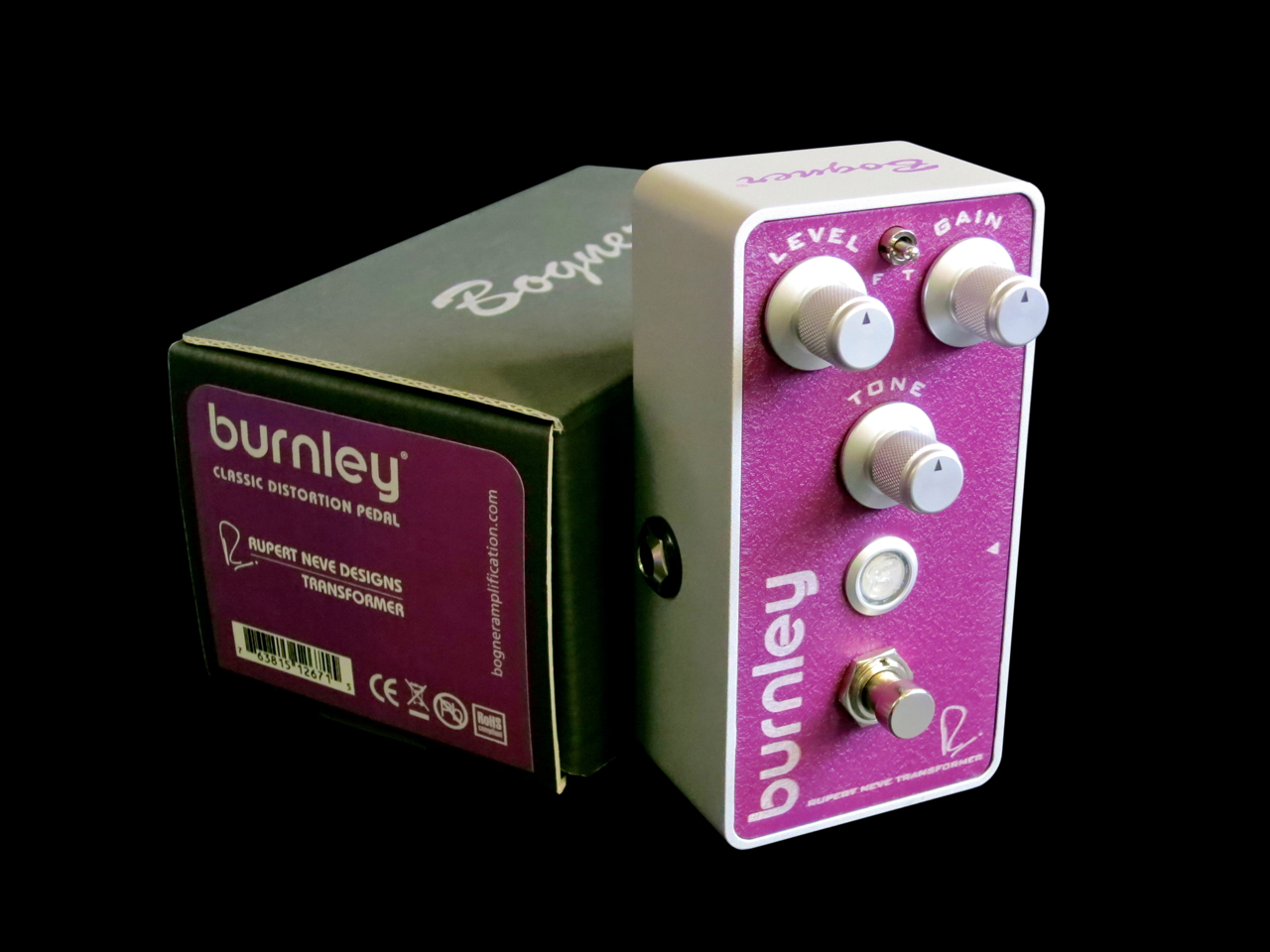
Bogner Burnley – with box

The third pedal, the Bogner Burnley, is a distortion effect.

The Burnley offers three controls – level, gain and tone – plus an F/T-switch. ”T” (for ”tight”) promises you a more aggressive distortion effect than the warmer and fatter ”F” mode.

Bogner Burnley – full front 2

****

Bogner Harlow – inside

Both Mr Bogner and Mr Neve are known for their uncompromising commitment to both sound and workmanship. This commitment is well represented in this range of pedal effects.

In the Bogner-pedals the circuit board is hidden inside a black plastic box. This is a workable solution weighing the risk of direct backwards engineering against the possible future need for repair or servicing. Components completely covered in black resin (some boutique manufacturers do this) are the bane of any guitar technician!

As you can clearly see in the pictures, all three stompboxes can be run using a nine volt battery or an external PSU (using the Boss-standard).

****

Bogner Harlow – left 2

Bogner doesn’t divulge the precise amount of boost that can be had from the Harlow, but let me tell you it will most probably be enough to overdrive even the cleanest of amplifiers.

The Bloom-circuit in the Bogner Harlow sounds deliciously chewy and reacts very musically.

Bogner’s Harlow is the type of pedal you want to leave on the whole time, because any guitar will sound better with this box running. This pedal also reacts very well to changes in your guitar’s volume control setting.

There’s a nice attack click, when played with a Stratocaster:

The Harlow stays clear and clean, even when you play a neck humbucker (I’m using my Hamer USA Studio Custom):

Bogner Wessex – right 2

The overdrive and distortion tones of Bogner amplifiers are already the stuff of legend, and the amp guru has managed to pack these sounds into two Bogner/Neve-pedals.

The Bogner Wessex luckily isn’t just another Tubescreamer clone; instead this stompbox gives you Mr Bogner’s vision of the perfect overdrive sound.

Even though there’s a healthy amount of gain on offer in the Wessex, the sound always stays transparent and well-defined. This pedal also keeps the inherent character of your guitar intact.

Wessex’s Enhanced mode will even make your vintage-styled Strat sing:

On the other hand there won’t be any boxiness, or mud, when using humbuckers:

Bogner Burnley – left 2

If you’re a Hendrix fan you should definitely try the Burnley’s Fat mode. It will make your Strat sing and growl in Woodstock-fashion, even when played into a clean amp channel at bedroom volume levels:

Bogner’s Burnley, too, is sensitive to guitar volume changes. Using Tight mode and humbuckers will give you a modern distortion tone:

Bogner-pedals teaser

Here’s the audio track off the Youtube video. All guitar parts have been played on a P-90-equipped Gibson Les Paul Junior:

****

Bogner Harlow – right 2

Bogner Wessex – left 2

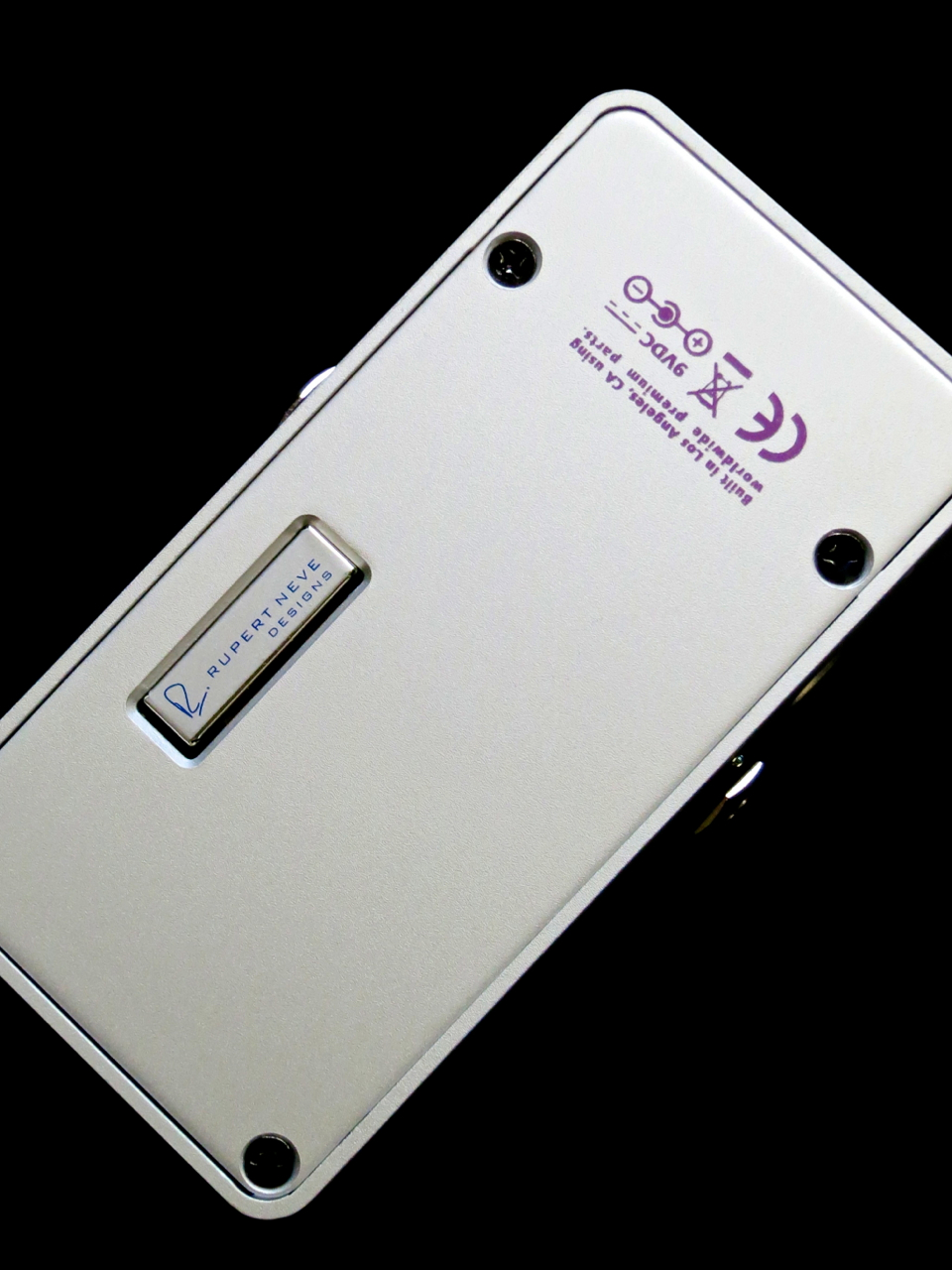
Bogner Burnley – right 2

Rupert Neve and Reinhold Bogner aren’t men ho do things by half – and these pedals are a fitting testament to this commitment!

The Bogner/Neve-series of guitar effects offers you Bogner’s boutique tones in a very compact guise, and at a very fair price. Try these pedals out – you won’t be disappointed!

****

Bogner Amplification Harlow, Wessex & Burnley

Harlow – 235 €

Wessex – 229 €

Burnley – 235 €

Finnish distributor: Musamaailma

****

Pros:

+ workmanship

+ compact size

+ genuine boutique amp tones

Testipenkissä: Bogner Harlow, Wessex ja Burnley

Reinhold Bogner

Tällä kertaa Kitarablogissa on testissä kahden legendan yhteistyön hedelmät:

Saksalaisamerikkalainen vahvistinguru Reinhold Bogner

Rupert Neve

…ja studiotekniikan grand old man Rupert Neve esittelivät hiljattain USA:ssa valmistetun Bogner kitaraefektimalliston, jossa käytetään Rupert Neve Designsin erikoisvalmisteisia audiomuuntajia.

Bogner – Neve transformer

Audiomuuntajia nähdään perinteisesti erittäin harvoin lattiaefekteissä, sekä kustannus- että tuotannollisista syistä.

Putkivahvistimissa audiomuuntajalla on sen sijaan keskeinen rooli, mikä tulee syntyvän kitarasoundin äänenlaatuun ja dynamiikkaan. Laadukas audiomuuntaja vahvistaa audiosignaalia niin, että sen dynamiikka ja soundi pysyvät täysin ehjinä ja muuttamattomina.

Bogner-pedals teaser – w lights

Tällä hetkellä Bogner/Neve-mallisto koostuu kolmesta pedaaleista – Harlow-boosteri (235 €), Wessex-overdrive (229 €), sekä Burnley-distortion (235 €).

Kaikissa pedaaleissa on optisena lisämausteena värisilmä, josta näkyy läpikulkevan signaalin voimakkuus.

****

Bogner Harlow – with box

Bogner Harlow tarjoaa kaksi efektiä samassa kuoressa:

Boost-vahvistuksen lisäksi Harlow-pedaalissa on myös Bognerin kehittämä Bloom-kompressori, jolle luvataan hyvin orgaanista, kolmiulotteista ja musikaalista soundia.

Harlow:ssa on kolme säädintä – Level-nuppi boostille, Bloom-säädin kompressiolle, sekä yleis-Tone.

Bogner Harlow – full front 2

****

Bogner Wessex – with box

Bogner Wessex on Bogner/Neve-malliston overdrive-tyyppinen säröpedaali.

Gain- ja Level-säätimien lisäksi Wessexissä on kaksikaistainen EQ, sekä E/N-kytkin. N-asennossa (= normal) Wessexin soundi on perinteisempi, siis hieman keskiäänivoittoinen, kun taas minikytkimen E-asennossa (= enhanced) efektistä lähtee entistä voimakkaampi, maukkaampi ja laajempi soundimaailma.

Bogner Wessex – full front 2

****

Bogner Burnley – with box

Bogner Burnley on tämän kolmikon distortion-särö.

Burnleystä löytyy kolme säädintä – Level, Gain ja Tone – sekä F/T-minikytkin. T-asennossa (= tight) Burnleyn soundikirjo on aggressiivisempi ja tiukempi kuin selvästi muhkeammassa F-vaihtoehdossa (= fat).

Bogner Burnley – full front 2

****

Bogner Harlow – inside

Sekä Bogner että Neve ovat legendaaristen soundien lisäksi tunnettuja myös tuotteidensa kompromissittomasta laadusta ja siististä työnjäljestä, mikä näkyy hyvin myös Bogner/Neve-pedaalien toteutuksessa.

Bognerin piirilevy jää piiloon mustan muovikuvun alle. Ratkaisu estää edes hieman laitteen suoraa kopiointia, mutta ei vaikeuta mahdollisia korjauksia samalla tavalla kuin esimerkiksi mustaan hartsiin valettu elektroniikka.

Kuten kuvasta näkyy, kaikkia kolmea efektipedaalia voi käyttää joko yhdellä yhdeksän voltin paristolla tai (Boss-standardin mukaisella) virtalähteellä.

****

Bogner Harlow – left 2

Bogner ei kerro missään Harlow-pedaalin tarkkoja vahvistusmääriä, mutta testin perusteella voin vain todeta, että sitä ääntä kyllä riittää. Jos siihen on tarve, pystyy tällä boosterilla yliohjaamaan minkä vahvistimen tahansa!

Bogner Harlow:n Bloom-kompressori kuulostaa erittäin maukkaalta ja musikaaliselta.

Bognerin Harlow on juuri sellainen kitaraefekti, jota haluaa pitää koko ajan päälle, koska kitara kuin kitara soi yksinkertaisesti kauneimmin ajettuna sen läpi. Tämä maustepurkki reagoi mallikkaasti myös kitaran volume-säätimeen.

Straton soundissa kuulee mukavasti atakin klikkiä:

Harlow pysyy myös selkeänä silloin, kun sen läpi soitetaan (Hamer USA -kitaran) kaulahumbuckerilla:

Bogner Wessex – right 2

Bogner-vahvistimien särösoundit ovat legendaarisia, ja mestari on onnistunut paketoimaan ne Bogner/Neve-sarjan kahteen särölootaan.

Bogner Wessex ei ole (onneksi) jälleen yksi Tubescreamer-klooni, vaan vahvistingurun oma näkemys täydellisestä overdrive-pedaalista.

Wessex tarjoaa runsaasti gainia, mutta soundi pysyy aina selkeänä ja erottelevana, eikä mene koskaan mössöksi. Myös kitaran oma luonne säilyy esimerkillisesti.

Wessexin Enhanced-moodin ansiosta jopa vintage-tyylinen Stratocaster soi lihaksikkaasti:

Tämä overdrive-pedaali ei honota, vaan soundi pysyy myös humbuckereiden kanssa selkeänä ja maukkaana:

Bogner Burnley – left 2

Burnleyn Fat-moodin kautta jokainen Hendrix-fani löytää varmasti soundillisen nirvanansa. Jopa puhtaalla vahvistimella ja olohuonevolyymillä Strato soi kuin Woodstockissa konsanaan:

Myös Bognerin Burnley reagoi todella hyvin (kitaran) volume-potikan muutoksiin. Tight-moodissa humbuckerilla varustetulta kitaralta lähtee tiukka ja nykyaikainen särösoundi:

Bogner-pedals teaser

Tässä vielä videon ääniraita, jossa soitan kaikki kitaraosuudet yhdellä P-90-mikrofonilla varustetulla Gibson Les Paul Juniorilla:

****

Bogner Harlow – right 2

Bogner Wessex – left 2

Bogner Burnley – right 2

Rupert Neve ja Reinhold Bogner eivät ole miehiä, jotka jättävät asiat puolitiehen, ja sen kyllä huomaa!

Bogner/Neve-sarjan efektipedaalit tarjoavat Bognerin boutique-luokan soundeja mukavan kompaktissa muodossa kilpailukykyiseen hintaan. Kolmikko on mielestäni ehdottomasti kokeilemisen arvoinen!

****

Bogner Amplification Harlow, Wessex & Burnley

Harlow – 235 €

Wessex – 229 €

Burnley – 235 €

Maahantuoja: Musamaailma

****

Plussat:

+ työnjälki

+ kompakti koko

+ boutique-luokan soundi

Review: Marshall Custom JTM1 Offset

****

Marshall Custom Offset – teaser

Last year Marshall celebrated their 50th anniversary by releasing a whole range of limited-edition one-watt combos and half-stacks.

Now we’re in for a cool reprise, as Marshall announced a limited edition of 1,111 of a Custom Offset half-stack in Frankfurt earlier this year. The Custom Offset is based on their JTM1 50th Anniversary amp.

A couple of these rare amps even made it to Finland. Kitarablogi.com managed to get hold of one half-stack for a quick review.

****

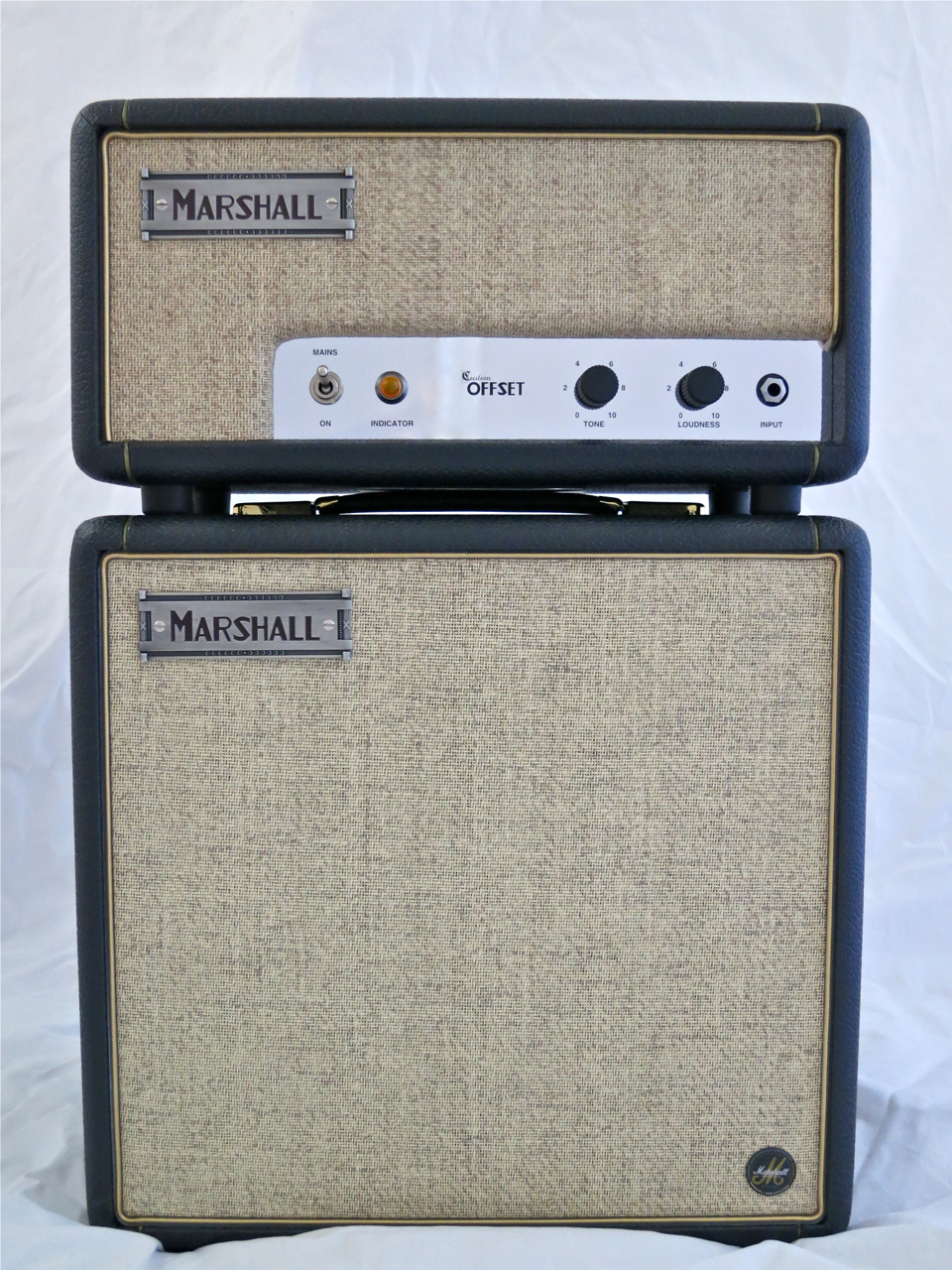
Marshall Offset – full front

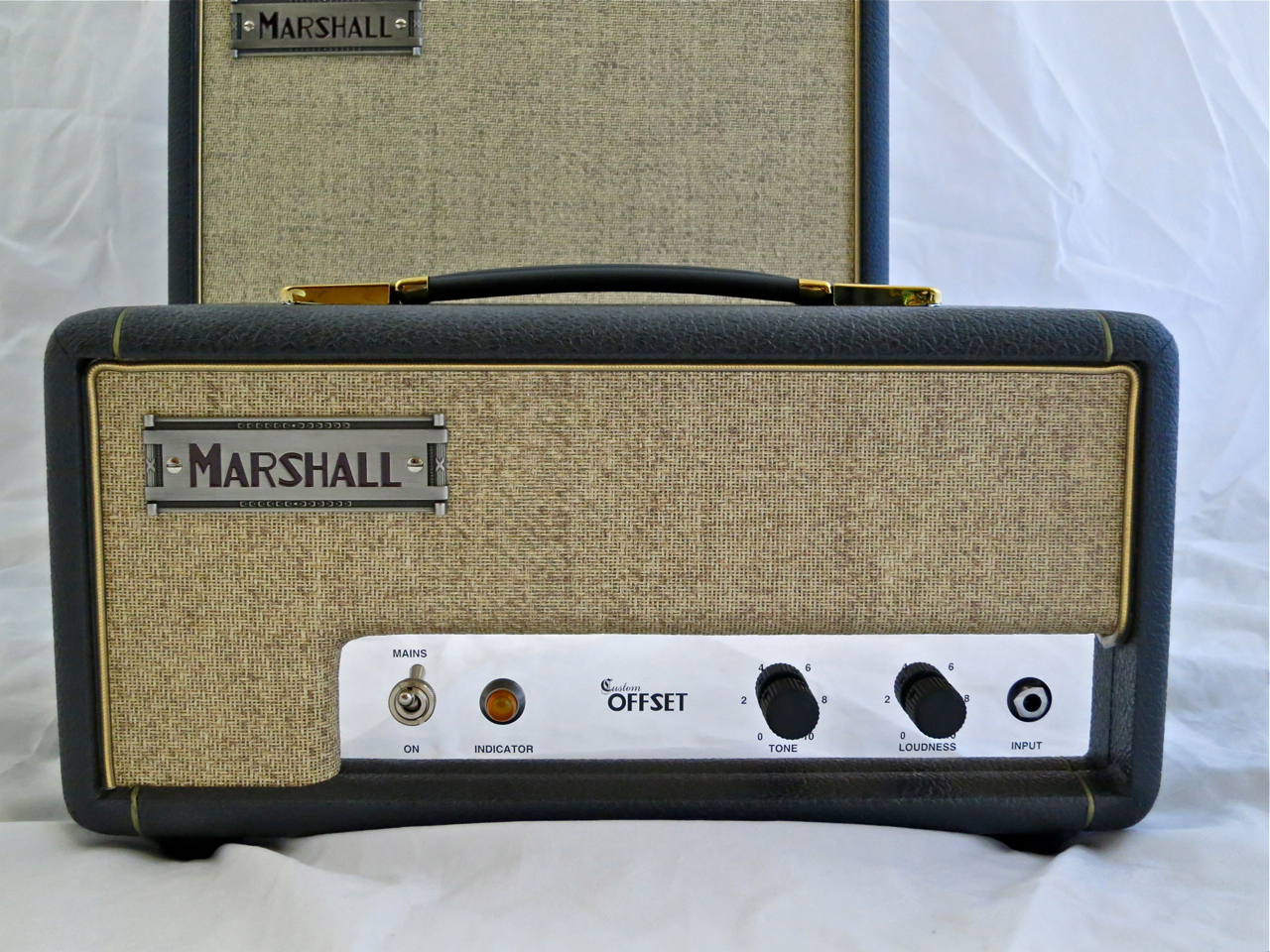
The Marshall Custom JTM1 Offset (price in Finland approx 1,000 €) takes the JTM1 as its starting point, but takes the concept even further down the vintage road to give the Custom Offset the look the company’s first batch of JTM45 models. There’s the famous light grey/beige grille cloth, and the offset control panel, which has given this amp its name.

Marshall Offset – full back

As can be expected at this price point, the overall workmanship is of a very high standard, indeed.

Marshall Offset – front panel

The head’s gleaming, chrome-plated front panel, as well as the two black metal control knobs, are clear hints at this amp’s exalted limited edition status.

Marshall Offset – back panel

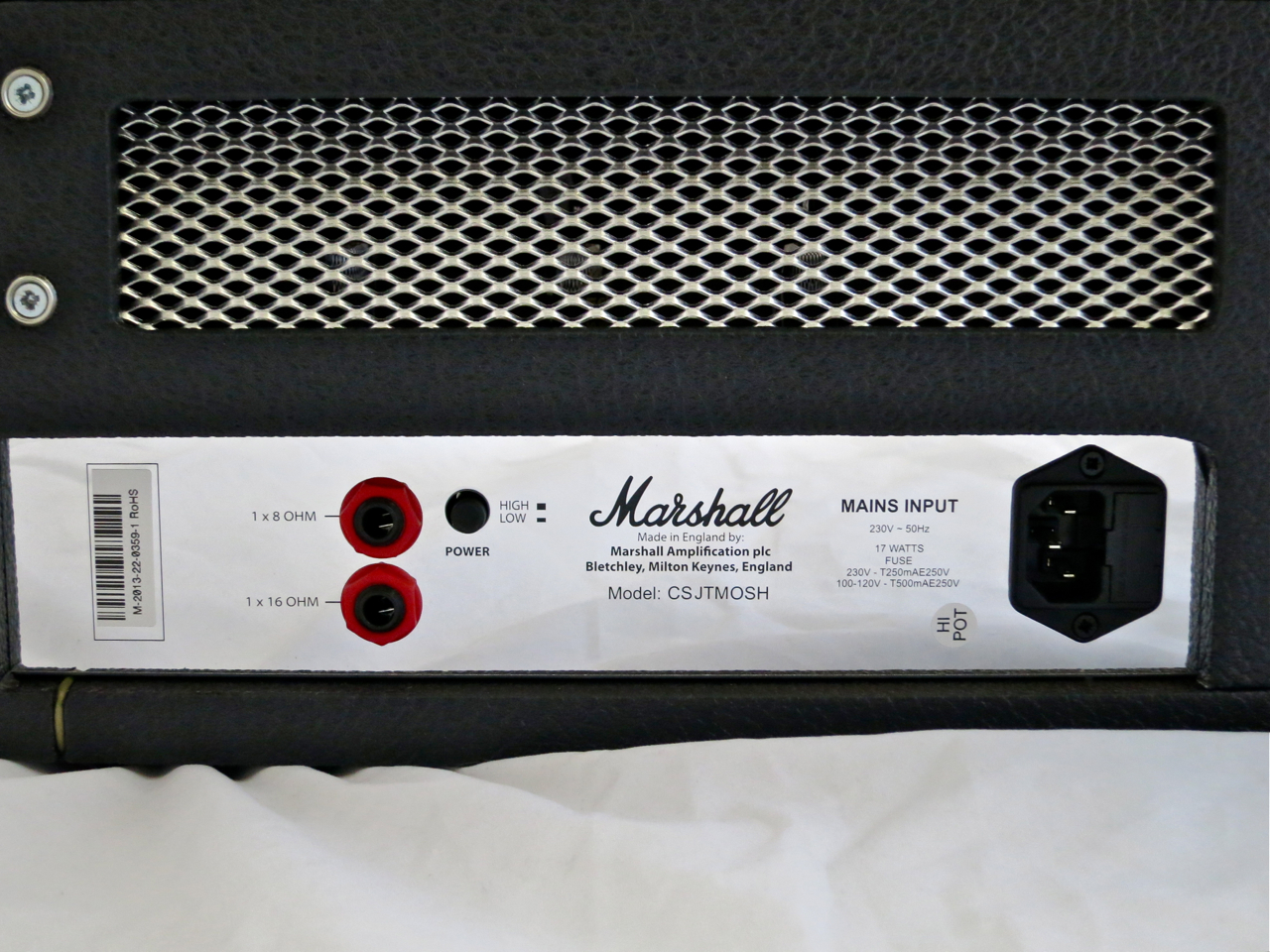
On the chromed back panel you will find the same Power-switch as on last year’s anniversary models. It drops the amp’s output from one Watt down to one-tenth of a Watt.

The Custom JTM1 Offset’s matching cabinet has an impedance of 16 Ohms, but you can also connect 8 Ohm speaker loads via the second output jack.

Marshall Offset – valves

The Custom head is build around the same valve types as the JTM1 head – we find two ECC83/12AX7-valves, as well as a model ECC82/12AU7.

Marshall Offset – cabinet

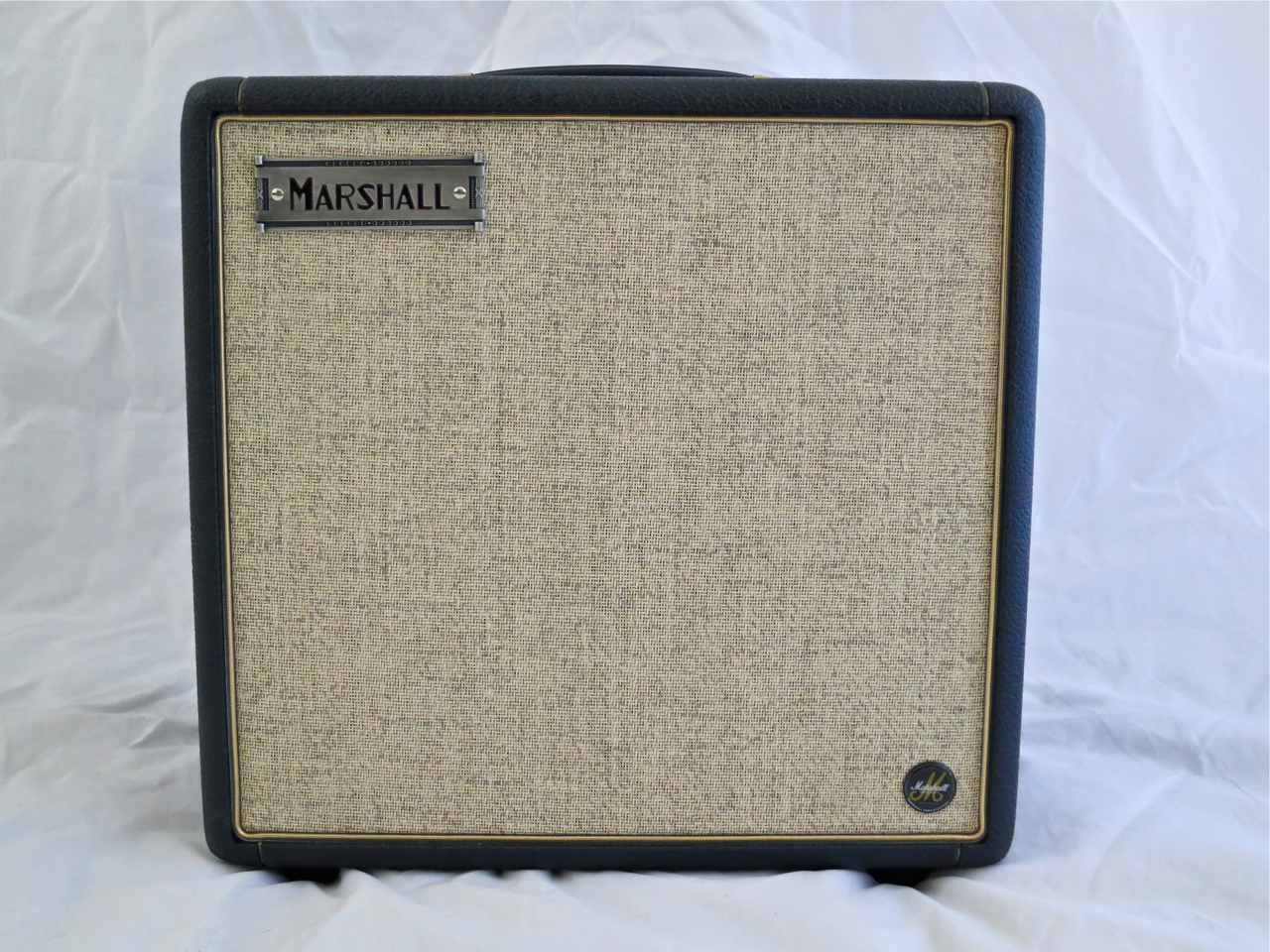
The closed-type Marshall cab holds a single Celestion G10F-15 10-inch speaker.

****

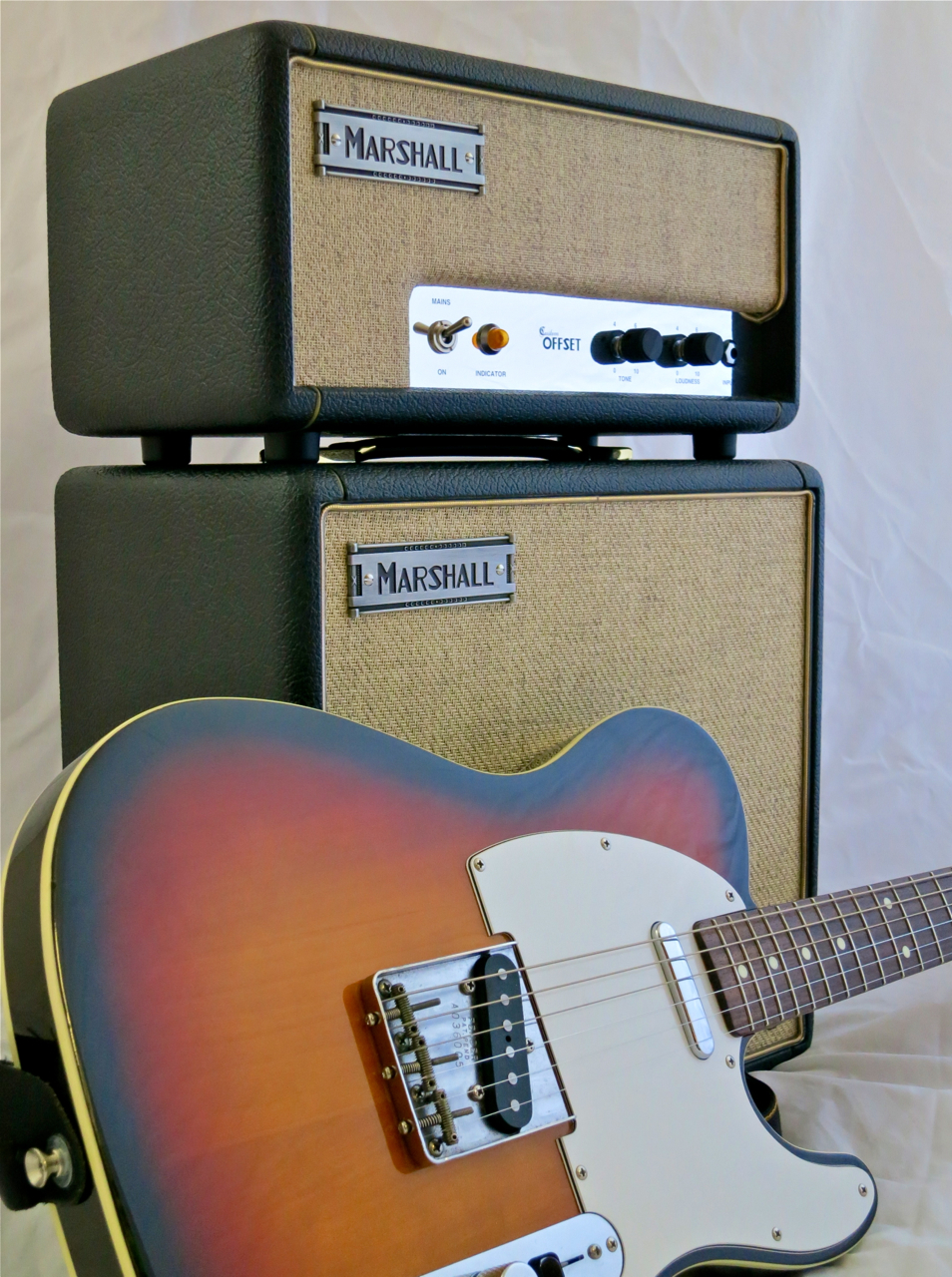
Marshall Offset – head and cab

What kinds of sounds do we usually associate with a vintage-style Marshall? Probably clean tones with a dry character and not very much headroom. On the overdriven and distorted side of things we’d definitely look for creamy compression with a good sprinkling of mid-range grunt and presence bite .

…and these are exactly the types of tones the Marshallin Offset dishes out in a very tasty manner!

A vintage-reissue Fender Telecaster stays fairly clean at the beginning of the Custom Offset’s gain range, but the British type of dryness is clearly present:

The higher output of my Gibson Les Paul Junior’s P-90 clearly drives the preamp more, which results in a nice bit of added graininess at the same settings, especially in the attack phase of each note:

A double-humbucker’d Hamer USA Studio Custom finally pushes this Marshall into real break-up territory – fantastic for old-school Blues. For completely clean tones with humbuckers you will have to turn down your guitar’s volume control:

****

Turning up the Marshall’s Loudness-control adds more gain to preceedings, but also raises volume levels considerably. The Custom JTM1 Offset is quite a belter for a one-watter, meaning it’s too loud to be played at full-tilt in most apartment buildings.

Luckily for us, there’s the nifty Power-switch on the back panel, which drops the volume down to neighbour-friendly levels. A nice side effect of going oh-point-one Watts is that it also adds another wallop of overdrive into the mix, which is why you can even get some decent Hard ’n’ Heavy-tones out of this tiny rig.

Here’s a taste of what I got at 0.1 Watts and Loudness turned all the way up.

First the Tele…

…next up the Junior…

…and last, but not least, the Hamer:

****

Marshall Offset – front angle

In my view the Marshall Custom JTM1 Offset is a great-sounding little bugger of a half-stack, giving you most of the classic Marshall tones.

Yes, I know that 1,000 euros is a lot of money for such a tiny amp. If you’re purely on the look-out for a very small valve amp for your living-room or project studio, you will probably get more features (and Watts) for your money from other makes or models.

But the Custom Offset clearly isn’t only about being a small amp; instead there’s a great deal of added prestige in such a well-made, limited edition amp build in England by a company of such standing. The Marshall Custom JTM1 Offset is a boutique-class amp for collectors and purists, and seen in this light the price seems rather fair.

If you’re interested I’d recommend speedy action, though, because the availability is, indeed, very limited!

****

Marshall Custom JTM1 Offset

Finnish distributor: EM Nordic

Thanks to DLX Music Helsinki for the loan of the review sample!

****

Pros:

+ quality of workmanship

+ sound

+ Power-switch

+ small size

+ collectability 

****

Marshall Offset – badge

Testipenkissä: Marshall Custom JTM1 Offset

****

Marshall Custom Offset – teaser

Viime vuonna Marshall juhli 50-vuotista taivaltaan kokonaisella sarjalla pienissä erissä valmistettuja yksiwattisia puolistäkkejä ja komboja.

Ilmeisesti hyvä vire on jäänyt päälle, sillä tänä keväänä Marshall ilmoitti 1111 kappaleeseen rajoitetusta Custom Offset -puolistäkistä, joka on modifioitu versio JTM1-juhlavahvistimesta.

Muutaman kappaleen erä on hiljattain saapunut Suomeen, josta onnistuimme lainata yhden puolistäkin Kitarablogi-testiin.

****

Marshall Offset – full front

Marshall Custom JTM1 Offset -vahvistimen (hinta noin 1.000 €) lähtökohtana on siis ollut viime vuoden JTM1-juhlamalli. Tämä keräilyvahvistin on kuitenkin viety lähemmäksi firman ensimmäisiä JTM45-malleja käyttämällä alkuperäistä logoa, vaaleata etukangasta sekä keskittämisen sijaan reunaan asennettua etupaneelia, josta vahvari on myös saanut nimensä.

Marshall Offset – full back

Kuten setin korkean hintatason perusteella sopiikin odottaa, on englantilainen työnjälki Offsetin kohdalla erittäin korkealaatuista.

Marshall Offset – front panel

Vahvistimen kromattu etupaneeli sekä sen mustat, metalliset nupit kielivät vahvistinnupin ylevästä boutique-luokan asemasta.

Marshall Offset – back panel

Kromatusta takapaneelista löytyy viimevuotisesta juhlasarjastakin tuttu teho-nappi, jolla Marshallin päätetehon saa pudotettua yhdestä watista 0,1:een wattiin.

Custom JTM1 Offsetin oma kaiutinkaappi toimii 16 ohmin impedanssilla, mutta nuppiin voi liittää myös kahdeksan ohmia vastusta tarjoavia ämyreitä.

Marshall Offset – valves

Custom-nupin putkivarustus on sama kuin viime vuoden juhla-JTM1:ssä – etuasteputkina toimii kaksi ECC83/12AX7-putkea ja pääteputki on malliltaan ECC82/12AU7.

Marshall Offset – cabinet

Tyyppillisen suljetun Marshall-kaapin uumeniin on asennettu yksi 10-tuumainen Celestion G10F-15 -kaiutin.

****

Marshall Offset – head and cab

Millaista soundia yleensä odotetaan vintage-tyyliseltä Marshallilta? Ehkä puhdasta soundia, joka on kirkas, mutta melko kuiva, ja joka ei tarjoa suuria määriä putipuhdasta headroomia. Särösoundilta haetaan varmasti kermaista kompressiota, mutta samalla myös tietynlaista keskialueen rouheutta ja purevuutta.

…ja juuri sellaisia soundeja Marshallin Offset tarjoaa hyvin maukkaalla tavalla.

Fender Telecasterilla sointi pysyy kutakuinkin täysin puhtaana, mutta tyyppillinen brittiläinen kulmikkuus on jo tässä hyvin havaittavissa:

Gibson Les Paul Juniorin P-90 mikrofonin korkeampi lähtötaso aiheuttaa jo pientä, kaunista rakeisuutta etenkin nuottien alkuvaiheissa:

Samoilla säädöilla humbuckereilla varustettu Hamer USA Studio Custom työntää Marshallin selvästi pikkusärön herkkulliseen maailmaan. Täysin puhtaita clean-soundeja täytyy tässä hakea kitaran volume-nuppeja käyttäen:

****

Vääntämällä Marshallin Loudness-potikkaa kaakkoon, soundiin saa yhä enemmän säröä, mutta samalla kasvaa myös volyymitaso. Custom Offset on hyvin kovaääninen puolistäkki yksiwattiseksi vahvistimeksi, eikä täysillä soitettuna vahvistin enää sovi kerrostaloon.

Onneksi on olemassa takapaneelin tehonpudotus-nappi, jolla JTM1 Offset -stäkistä saa ”sisäsiistin”. Toivottuna lieveilmiönä pudottamalla nupin 0,1-wattiseksi myös vahvistimen saturaatio kasvaa, minkä ansiosta Marsusta saa pienellä volyymillä irti hyvin uskottavia heavysoundeja.

Tältä kuulostivat testissä käytetyt kitarat 0,1 W -tilassa ja Loudness täysillä.

Ensin Tele…

…seuraavaksi Junior…

…ja lopulta Hamer:

****

Marshall Offset – front angle

Marshallin Custom JTM1 Offset on mielestäni erittäin hieno pikkustäkki, jolla on juuri sellainen soundi kuin mitä itse hakisin tämänkaltaiselta vahvistimelta.

On kyllä sekin totta, että tuhat euroa on aivan liikaa, jos haetaan ”vain” olohuoneeseen tai pikkustudioon mahtuvaa kitaravahvistinta – pienemälläkin rahalla saa usein jopa enemmän watteja ja ominaisuuksia.

Custom Offsetissa on kuitenkin kyse pitkälti myös rajoitetun painoksen tuomasta prestigestä ja keräilyarvosta sekä Englannissa tehdyn pikkuvahvistimen hienoudesta. Marshall JTM1 Offset on boutique-luokan peli kitarasoiton puristille – ja siinä luokassa se pärjää vallan mainiosti!

On kuitenkin syytä pitää kiirettä, koska Suomeen on saapunut vain muutama kappale tätä mallia, eikä lisää enää tule!

****

Marshall Custom JTM1 Offset

Maahantuoja: EM Nordic

Kiitos DLX Musiikille testiyksilöiden lainasta!

****

Plussat:

+ työnjälki

+ soundi

+ kaksi päätetehoa

+ pieni koko

+ keräilyarvo

****

Marshall Offset – badge

Review: Blackstar HT Club 40

British company Blackstar Amplification have earned a reputation for producing versatile, reliable, no-nonsense valve amplifiers for the modern player. Their ever-growing roster of endorsers from a wide variety of different musical styles is an irrefutable testament to this.

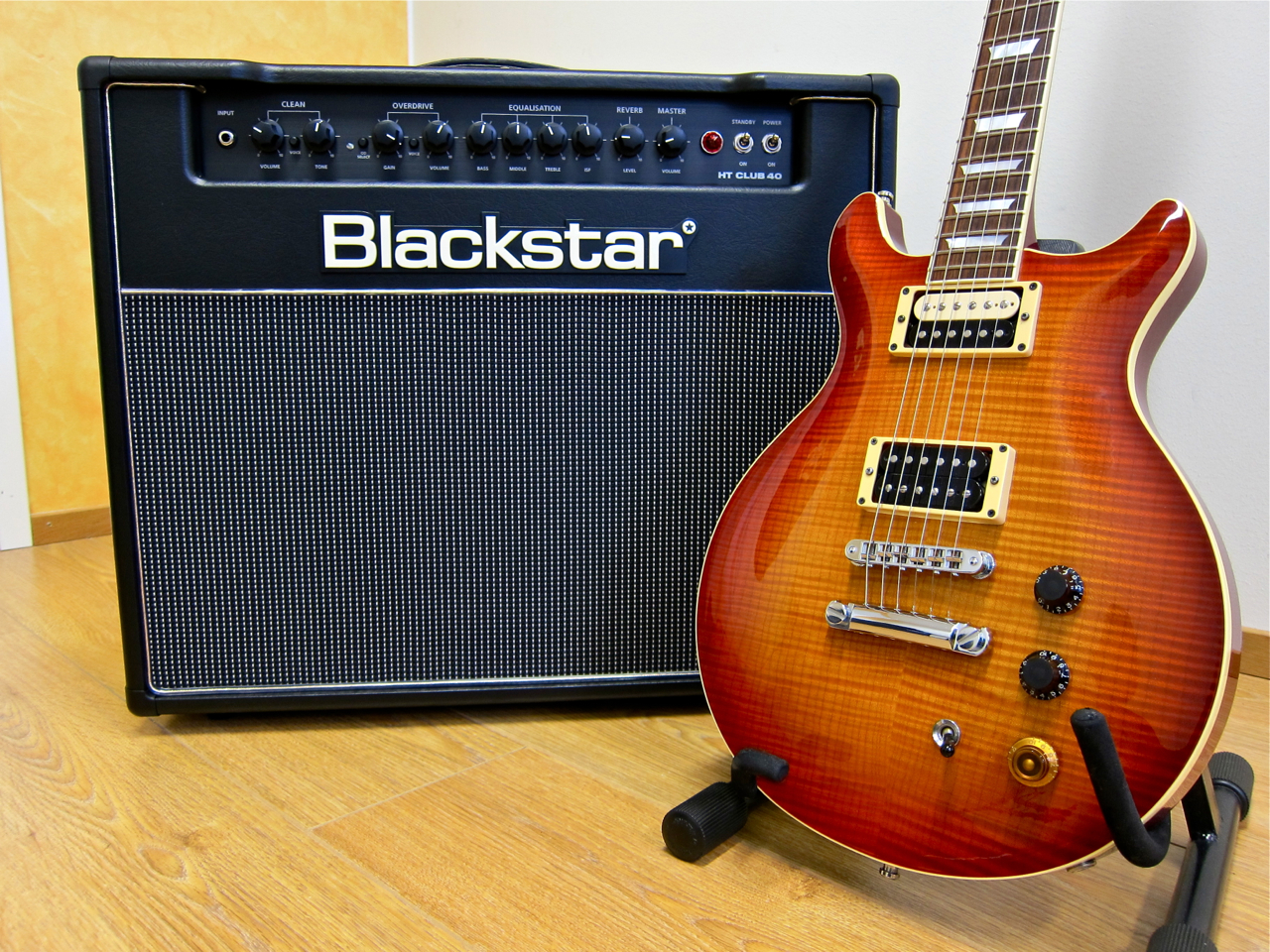
This time Kitarablogi will take a closer look at the Blackstar HT Club 40 combo (current price in Finland 694 €), which looks like the perfect workhorse for the gigging guitarist.

****

As indicated by its name, the Blackstar HT Club 40 is a 40-Watt valve combo. The preamp is designed around two ECC83-valves, while the power amp uses a pair of EL34s.

This made-in-China combo is a two-channel affair and comes equipped with a single 12-inch speaker.

One of Blackstar’s trademarks is the clean and crisp, unfussy look – the HT Club 40 means business, and it’s ready to go.

This mid-sized combo weighs in at about 24 kilos, which makes it relatively easy to move around.

The combo’s back is almost fully closed, which makes achieving stack-like tonalities from a combo amplifier easier.

Because of the very small opening – and the compulsory metal safety grille – changing valves is rather tedious, as you will have to remove the whole back panel for the procedure.

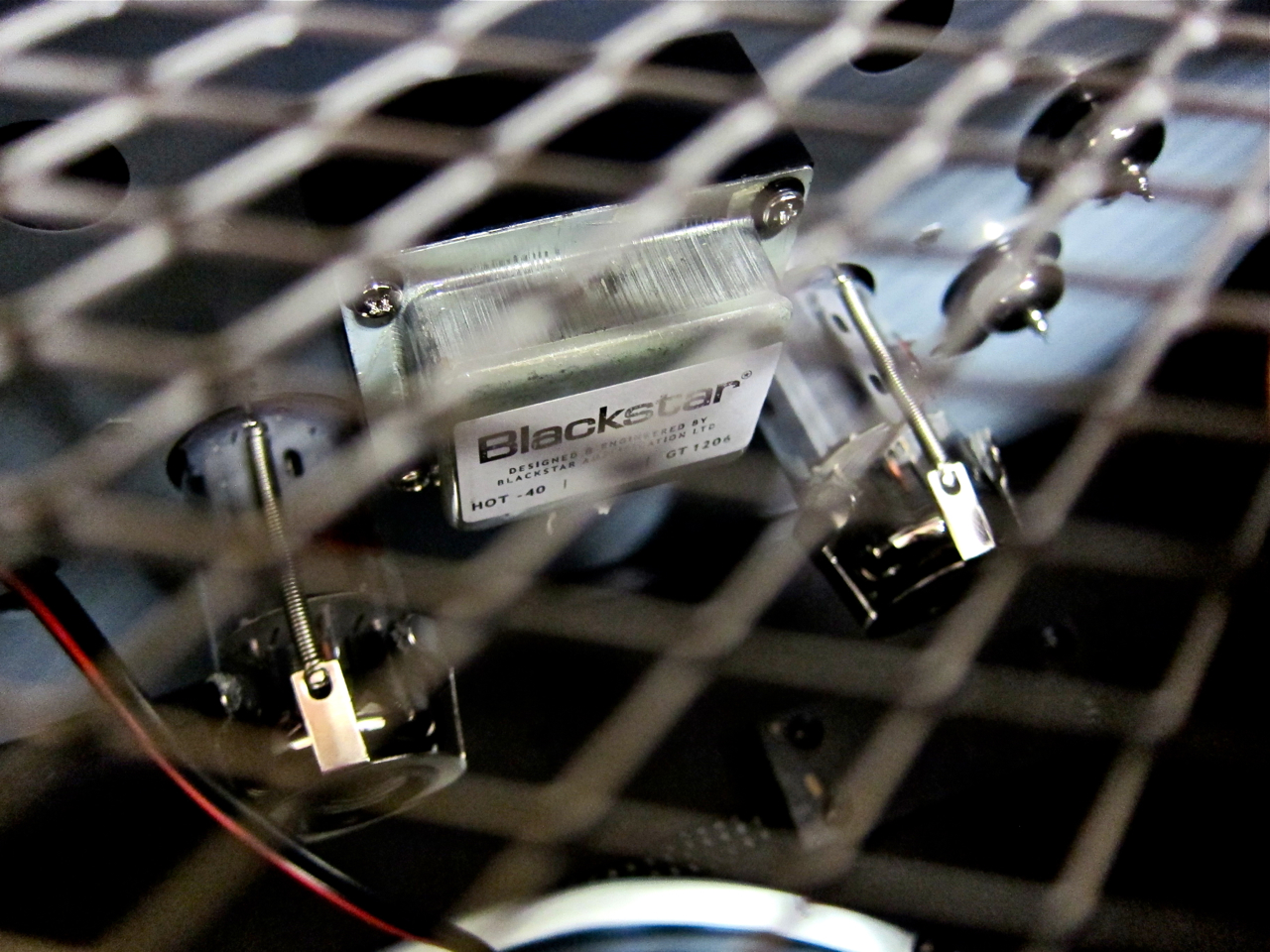
Looking in through the grille you can spot the valves…

…as well as the combo’s quality transformers.

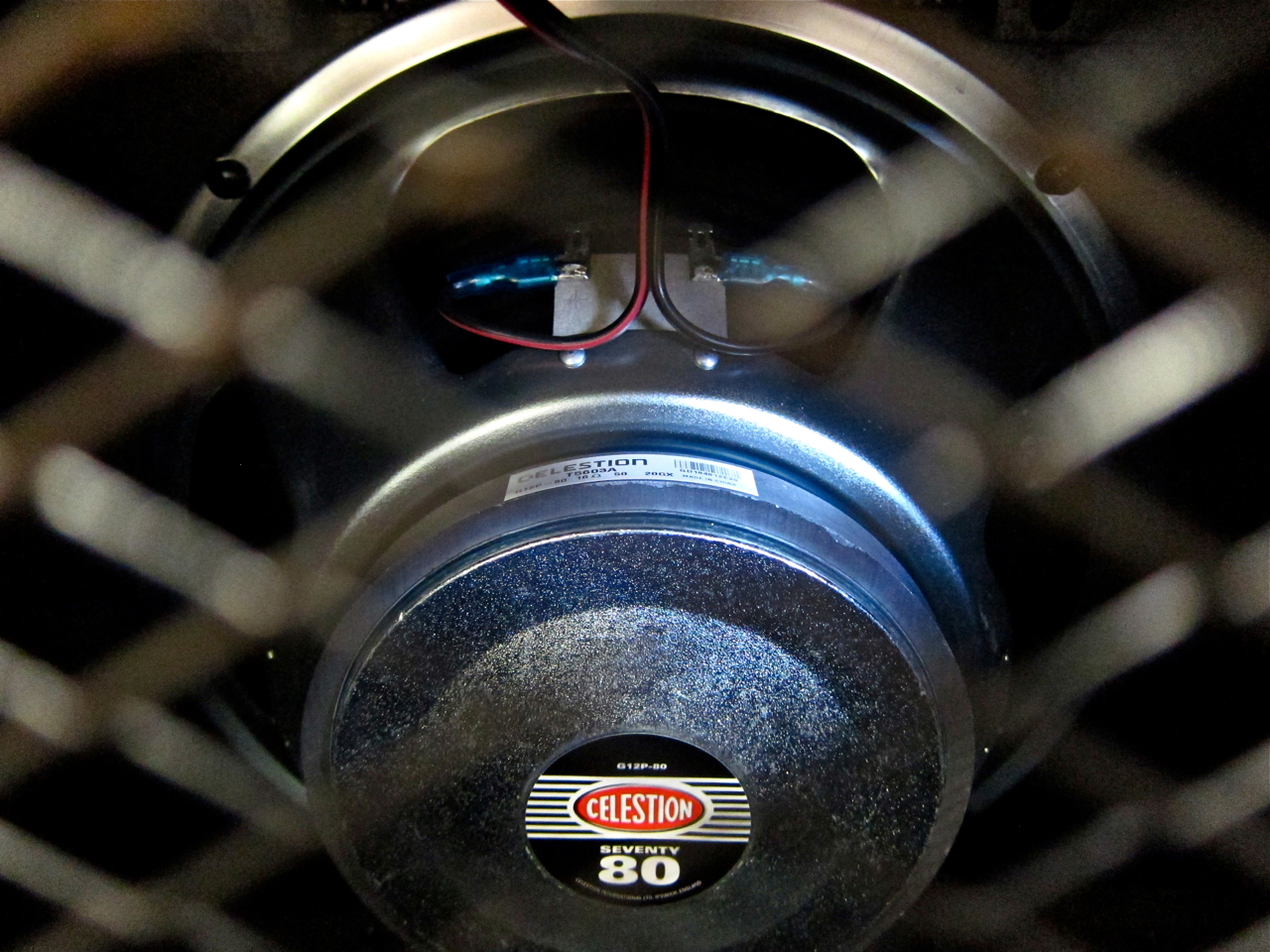
Blackstar have chosen a Celestion Seventy 80 -speaker for the HT Club 40 – a speaker highly regarded for its dynamic and open sound.

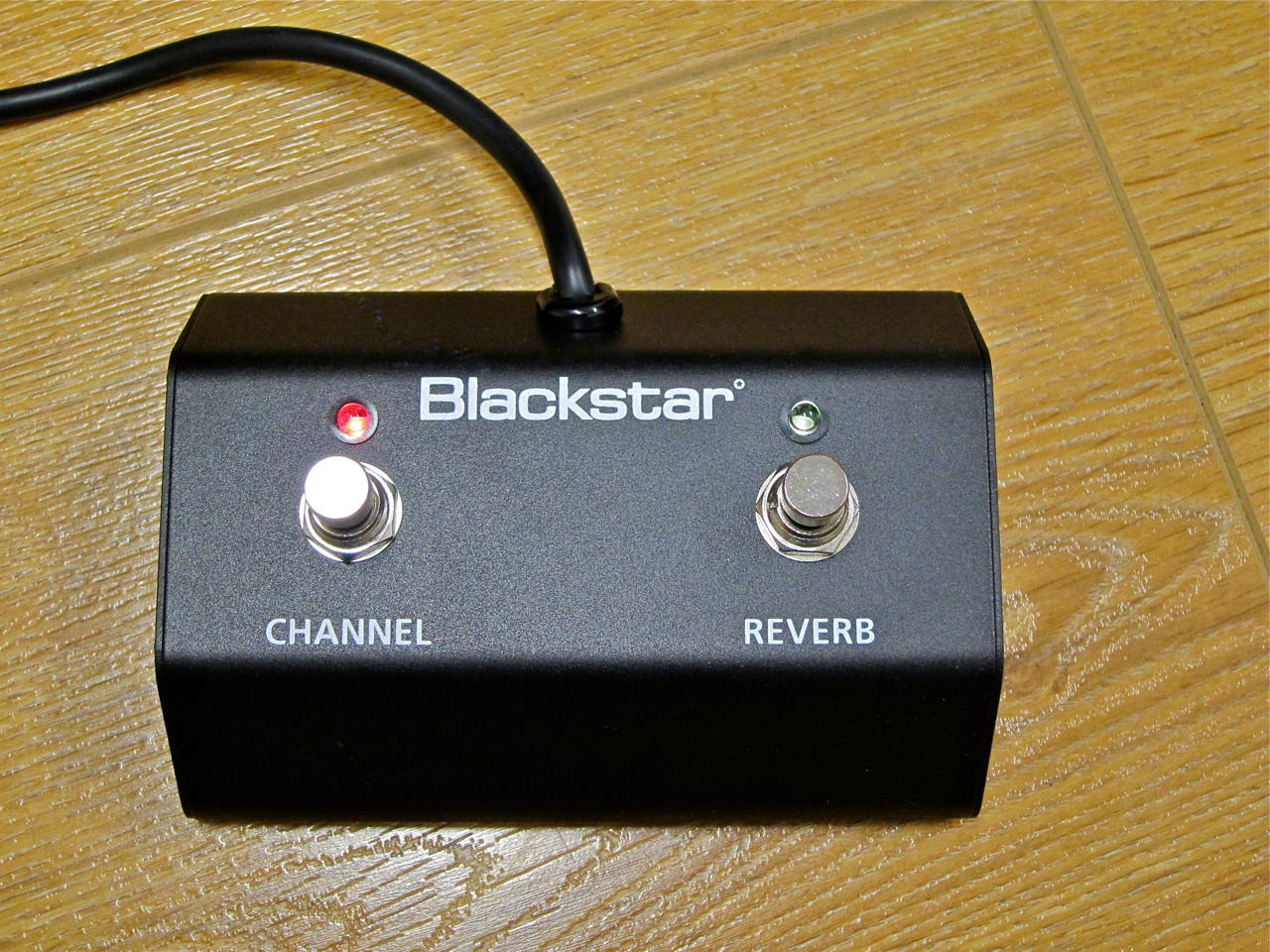
A sturdy FS-5 footswitch unit is included in the price.

****

Even though the Blackstar HT Club 40 is called a two-channel combo, the amp’s many features offer the player a wider palette of sounds than he (or she) might expect from such a compact design.

The clean channel offers you two controls – Volume (gain) and a simple Tone knob. The channel’s Voice switch gives you two different versions of the clean channel.

Boutique Clean has the HT Club 40 working in Class A -mode, which even lets you dial in a good dose of grainy dirt using the Volume knob.

In Modern Clean the amp runs in Class AB, and offers a fatter bass, and a far cleaner overall tone, even at high Volume settings.

****

The overdrive side offers you separate gain and volume controls, enabling you to get even the most distorted tones at moderate volume levels. This channel is also equipped with its own Voice switch.

Classic Overdrive takes the Blackstar into classic Seventies and Eighties Marshall-territory – the sounds are chunky and tight.

Modern Overdrive gives you more gain, a bigger bass register, as well as a creamy and vocal mid-range.

The overdrive channel also offers a far more versatile EQ-section than the clean channel.

In addition to the fine three-band EQ, Blackstar have included their patented ISF-feature. The settings of the ISF-knob (ISF = Infinite Shape Feature) directly influence the EQ-section’s tonality, as well as the overall tonal response. ISF set to zero (Blackstar call this the USA-setting) results in a very tight bass response with a sharper treble zing, compared to ISF at ten (UK), which sounds fuller and fatter.

The back panel offers you three different speaker outputs…

…a speaker-simulated line out, an effects loop, and the Reverb switch that lets you choose from two different reverb characteristics. The HT Club 40’s fine reverb is digital.

****

Here are some Blackstar HT Club 40 sounds I recorded using a Hamer USA Studio Custom and a Gibson Les Paul Junior:

Gibson Les Paul Junior – Modern Clean

Hamer Studio Custom – Modern Clean

Gibson Les Paul Junior – Boutique Clean (Volume at full)

Hamer Studio Custom – Boutique Clean (Volume at full)

Gibson Les Paul Junior – Classic Overdrive

Hamer Studio Custom – Classic Overdrive

Hamer Studio Custom – Modern Overdrive

****

The Blackstar HT Club 40 is a joy to work with! The combo dishes out a plethora of quality tones, and it proved very intuitive and easy to use.

In effect, the HT Club 40 really offers you four quality amps in one package:

Modern Clean is a Fender-like (or Mesa/Boogie-type) clean channel with oodles of headroom. Boutique Clean embodies Class A interactivity – there’s less clean headroom, but the amp reacts organically to your playing dynamics, as well as the volume knob setting on your guitar. Classic Overdrive is the place to go to for all your classic Blues Rock, Hard Rock and Metal needs, with Modern Overdrive catering for the current gain-saturated mosh-pit crowd.

In my opinion the Blackstar HT Club 40 is a fantastic choice for the guitarist on the move. It will give you great tones on stage, as well as in the studio, where using a moderately-sized amp may prove to be a more workable solution than going for a full blown stack.

****

Blackstar HT Club 40

Current price in Finland: 694 €

Finnish distributor: Musamaailma

****

Pros:

+ bang-for-the-Euro

+ sound

+ versatility

+ speaker-simulated line out

+ workmanship

Pidä blogia WordPress.comissa.

Ylös ↑