



****
Lisätiedot: F-Musiikki
Kitarablogi.com – Finland's premier Guitar and Bass blog
Juttuja kitaroista ja bassoista
****

Tokai Guitars on tunnettu hyvin laadukkaista ”kunnianosoituksista” klassikkokitaroille.
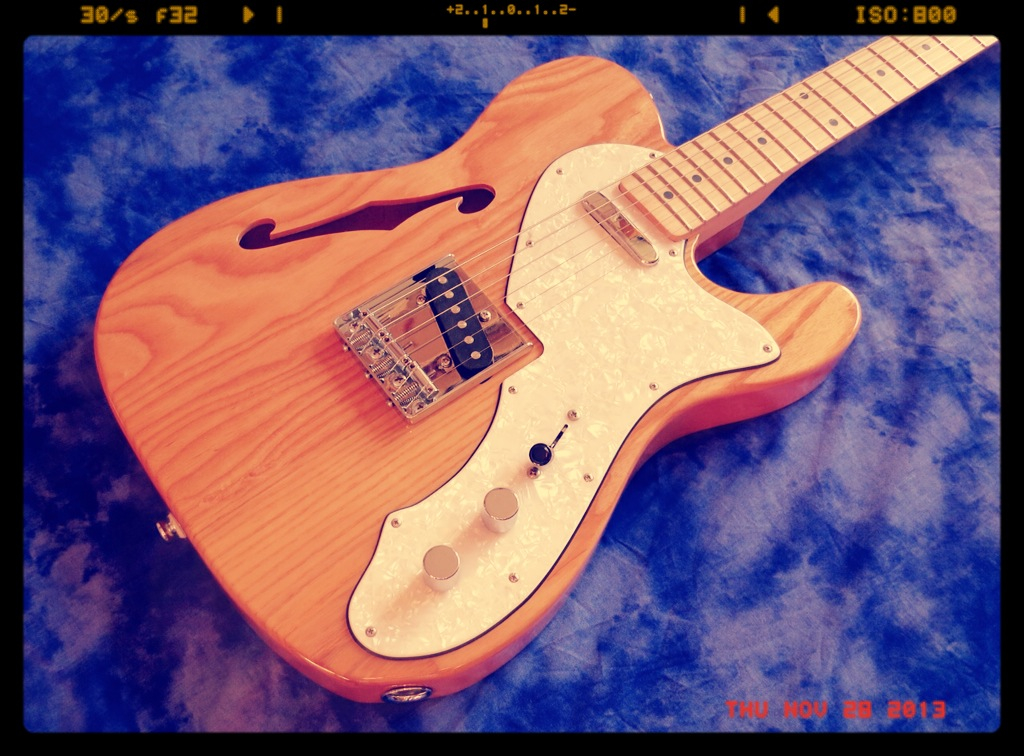
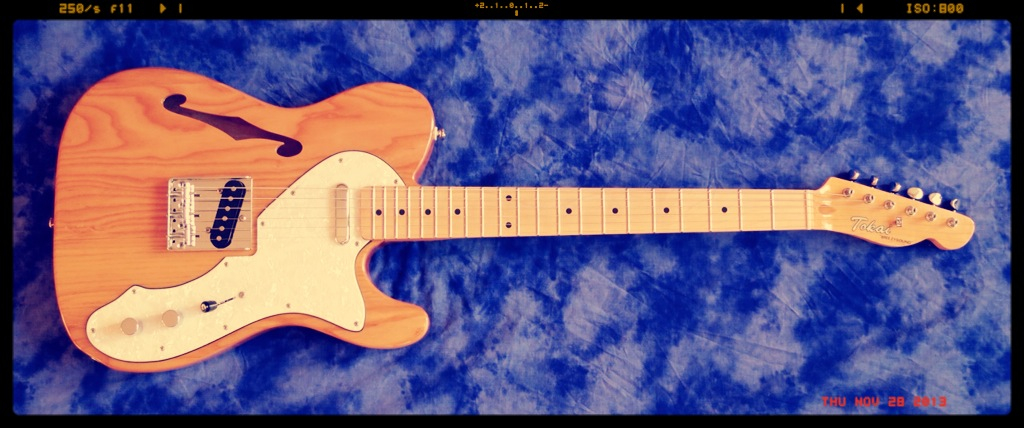
Upouusi Tokai ATE-33N Thinline on malliston edullisemmasta, Kiinassa valmistetusta päästä, ja se on Tokain versio puoliakustisesta T-tyylisestä kitarasta.
****
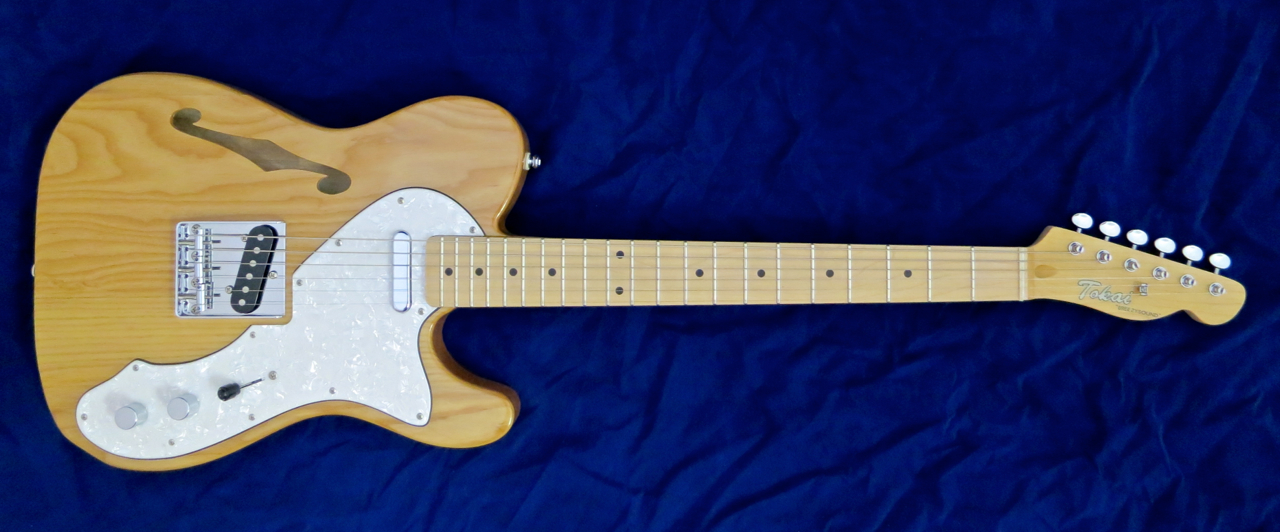
Tokai ATE-33N Thinline (437 €) tarjoaa reilusti silmänruokaa kauniin puun ystävillä, vaikka kyse ei todellakaan ole kalliista kitarasta.
Mallitunnuksen N-kirjain viitaa soittimen viimeistelyyn pelkällä kirkaslakalla (engl. natural), kun taas ohutkoppaisista puoliakustisista käytetään englannin kielessä tavallisesti Thinline-termiä.
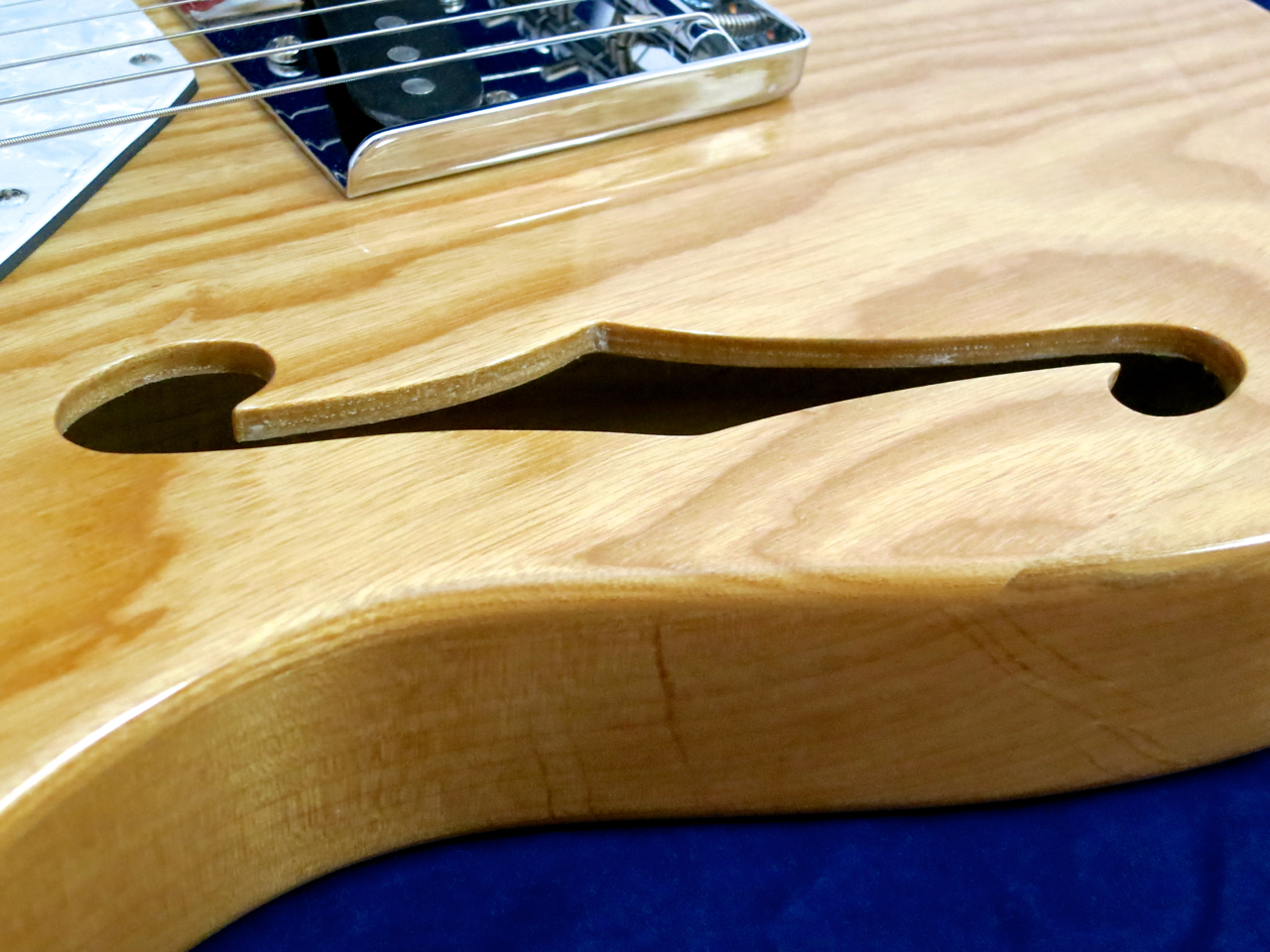
Rickenbackeristakin tuttu Roger Rossmeisl kehitti 1960-luvun lopussa Fenderille Tele Thinline -runkoa, jossa runkoon jyrsittiin kolme kookasta koloa selkäpuolelle, ennen kun rungon takapuolelle liimattiin kokopuukansi.
Tokain menetelmä on juuri päinvastainen: leppärunkoon on jyrsitty edestä Thinlinen kolot, minkä jälkeen etupuoleen on liimattu varsin näyttävä, viiden millin paksuinen saarnikansi. Kokopuinen saarnikansi on testikitarassa tehty kolmesta vierekkäisestä palasta, jotka on sovitettu niin huolellisesti yhteen, että liimasaumat huomaa vain lähietäisyydeltä kopan reunoja katsellen.

Tokai ATE-33N Thinlinen koppa on viimeistelty kiiltävällä lakalla, kun taas soittimen vaahterakaulalla on yllään ohut satiinipintainen viimeistely.
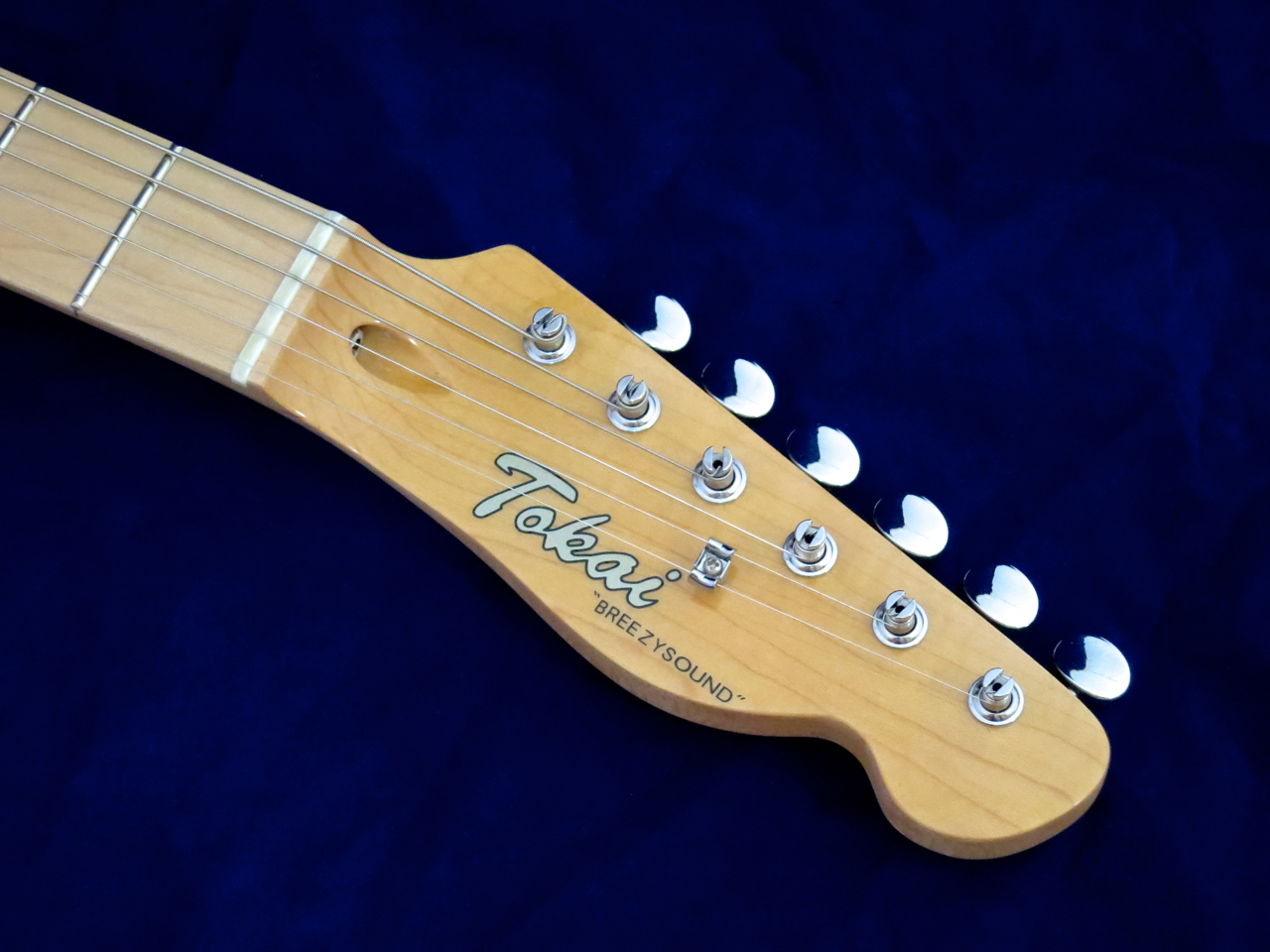
Kaularaudan säätö hoituu nykyaikaisesti lavan etupuolelta.

Laadukkaat Kluson-kopiot toimivat kiitettävästi.

Vaahteraotelaudan radius on isompi (= loivempi) ja kitaran nauhat paksummat kuin 1960-luvun vastineessa, mikä tekee ATE-33:sta helpompi soittaa. Etenkin kielten venytykset onnistuvat tällaisella alustalla huomattavasti helpommin.

Tokain kaulaliitos on perinteinen.

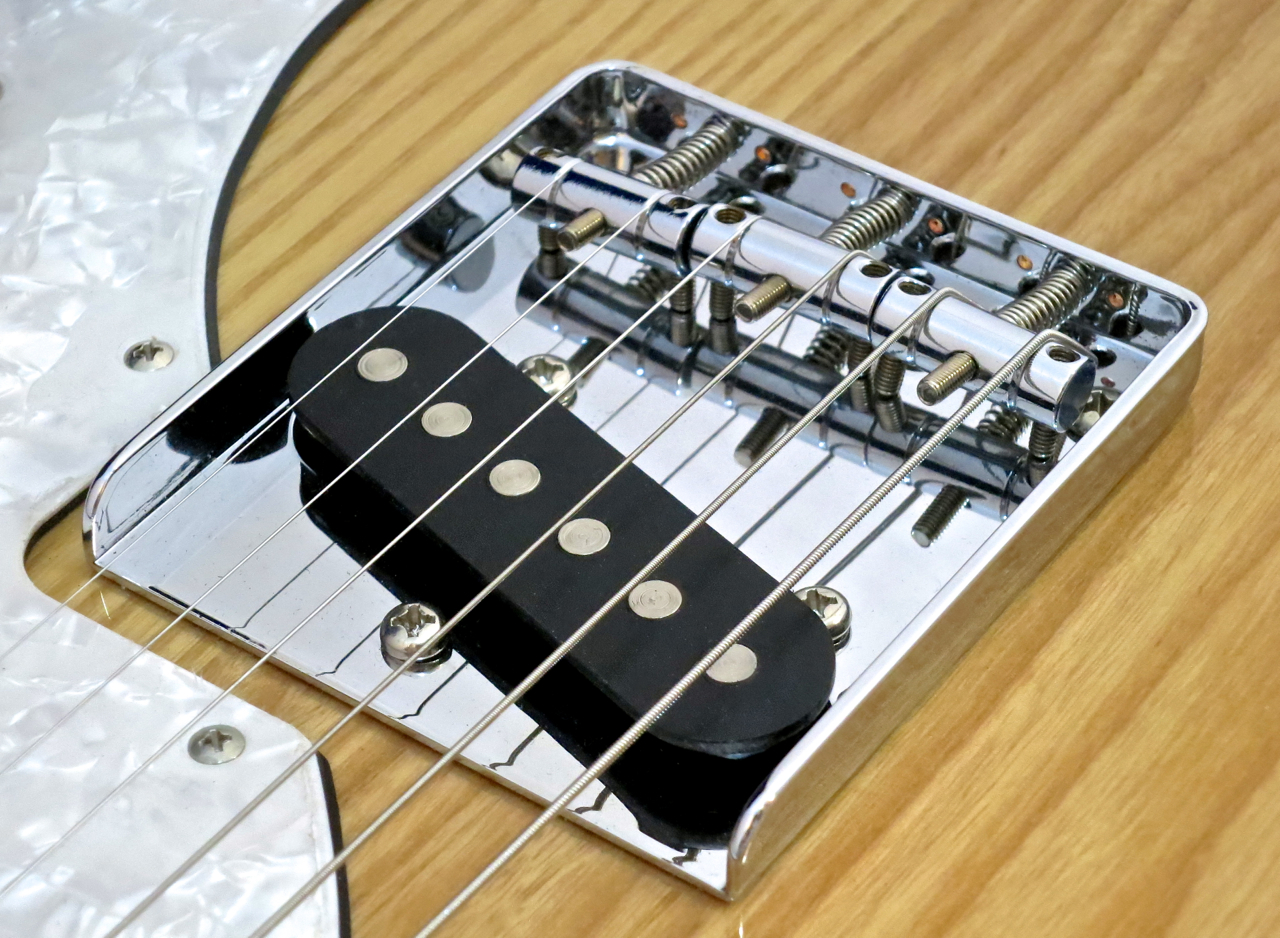
T-tyylisen kitaran soundin kannalta yksi tärkeimmistä ainesosista on se perinteinen peltitalla kolmella tallapalalla, johon tallamikrofoni on upotettu.
Vaikka tällaisen tallan intonaatio on aina jonkinnäköinen kompromissi, pidetään sitä edelleenkin kunnon Tele-soundin perustana.

Edullisessa ATE-33N Thinlinessa käytetään vintage-mikrofonien sijaan sellaiset versiot, jossa erilliset napamagneetit on korvattu mikrofonin alle kiinnitetyllä pitkällä tankomagneetilla.

Tokaissa löytyy kolmiasentoisen kytkimen vierestä master volume- ja master tone -säätimet.
****

Nykypäivänä näyttää soitinkaupoissa todellakin olevan ostajan markkinat, kun alle viidelläsadalla eurolla saa näin laadukkaan kitaran kuin Tokai ATE-33N Thinline.
Tokain ATE-33N Thinline on kuin pelkkien napakymppien kertymä:
Satiinipintainen vaahterakaula tuntuu todella hyvältä. Kaulan D-profiilissä on riittävästi massaa hyvän soundin perustaksi, mikä tekee soittotuntumasta myös mukavan. Nykyaikainen nauhoitus mahdollistaa – otelaudan loivan kaarevuuden kanssa – tässä kitarassa matalat säädöt (E: 1,4 mm/e: 1,2 mm) kymppisatsilla ilman minkäänlaisia ongelmia.
Akustisesti soitettuna Tokain Thinline-runko lisää soundiin selvästi hieman ilmavuutta keskialueessa, vaikka T-tyyliset Thinlinet eivät luonnollisesti koskaan soi akustisesti niin voimakkaasti kuin ”oikea”, isokokoinen semiakustinen.
Vaikka kitarafoorumeissa usein maristaan edullisista Tele-mikrofoneista, ovat Tokain TE-Vintage Mk3 -mikrofonit osoittautuneet käyttötestissä oikein hyvin soiviksi valinnoiksi. Etumikrofoni on lämmin ja pyöreäsoundinen, mutta ei koskaan tylsä tai mutainen, kun taas tallamikrofonista saa irti juuri sen oikean annoksen twängiä ja purevuutta. Oma suosikkisoundini Teleissä on valitsimen keskiasento, joka toimii myös tässä Tokaissa erittäin hyvin! En ainakaan itse vaihtaisi Tokain omia mikrofoneja heti muka-parempiin…
Tässä esimerkkipätkä ATE-33N Thinlinen puhtaasta soundista (kaulamikki aloittaa):
Ja tässä hieman Rock-riffailua:
****

Mielestäni Tokain ATE-33N Thinline tarjoaa erinomaista vastinetta maltillisen hintaansa nähden. Tämä kitara on laadukkaasti toteutettu, kaunis soitin erittäin mukavalla soitettavuudella.
Minun täytyy myöntää että olin testin alussa hieman skeptinen mallin edullisia mikrofoneja kohtaan, mutta huoleni osoittautui täysin turhaksi. Tokaista irtoaa kunnon Tele-soundi, joka toimii tilanteessa kuin tilanteessa (ehkä raskasta metallia lukuunottamatta).
Ja jos sydän kuitenkin tulisi kaipaamaan joskus hieman esoteerisempaa mikrofonivalintaa, tarjoaa ATE-33N Thinline ainakin todella laadukasta alustaa mikkipäivitykselle.
****
Tokai ATE-33N Thinline
437 €
Maahantuoja: Musamaailma
****
Plussat:
+ hinta-laatu-suhde
+ työnjälki ja viimeistely
+ soitettavuus
+ soundi
****

Hagström Guitars’ new models, which had been announced at Frankfurt Musikmesse 2013, have finally arrived in Finland a few weeks ago!
Kitarablogi had the pleasure of receiving two of these guitars for testing:

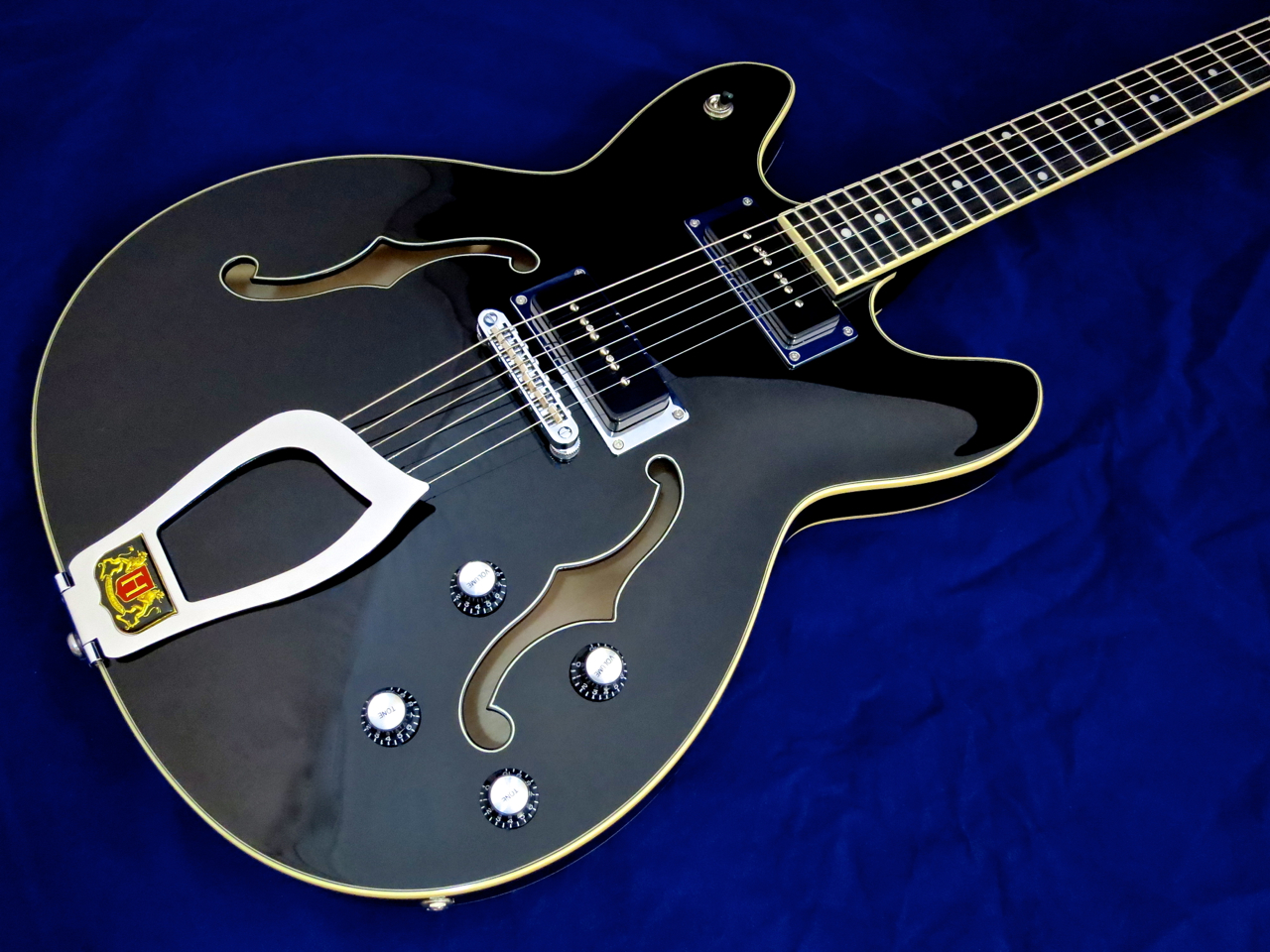
The Viking P is a new version of Hagström’s very popular semi-acoustic, and it comes equipped with two Custom P-50 singlecoil pickups.

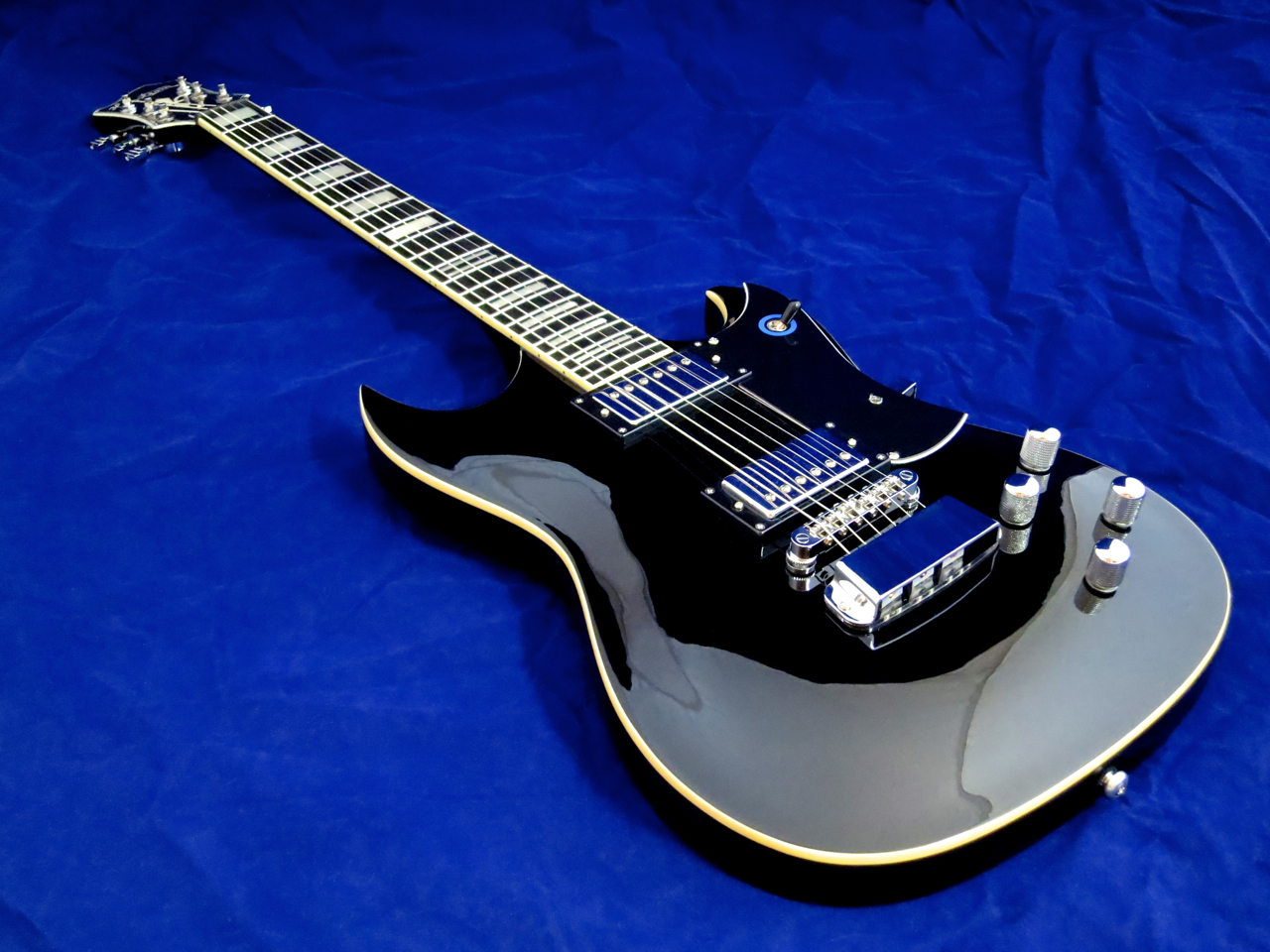
The Pat Smear Signature is a solid-body electric tailored to the Foo Fighters-guitarist’s needs.
****
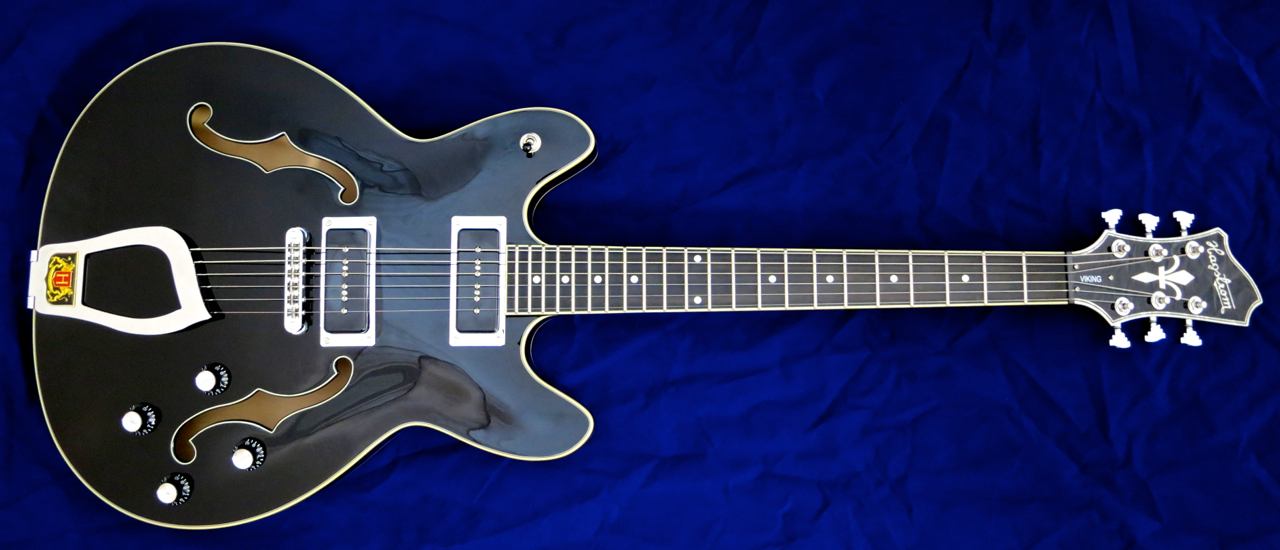
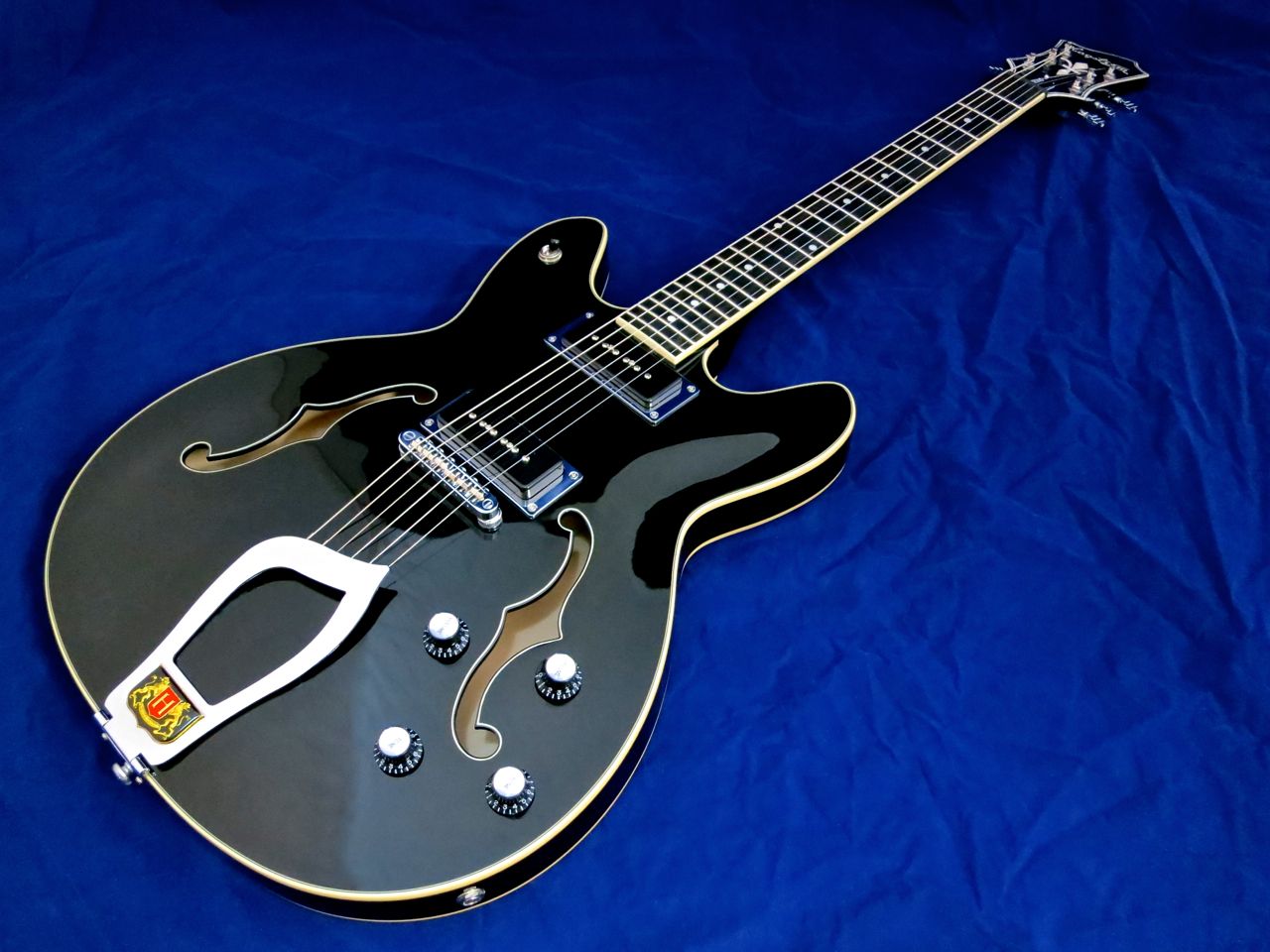
The Hagström Viking is probably the company’s best-known guitar model, not least because of Elvis Presley’s use of a Viking during his legendary ’68 Comeback Special TV show.
The brand-new Hagström Viking P (street price in Finland around 650 €) adds a pair of P-90-style singlecoils to the mix.

The Viking P’s maple neck is glued into the body, which is made in traditional style from form-pressed plywood maple.
A solid wood centre block – made of what looks like nato or meranti – runs the full length of this instrument.

”Beautiful”, ”classic” and ”timeless” are fitting adjectives to describe Hagström’s bound headstock.
Graph Tech’s self-lubricating Black Tusq-material has been chosen for the Viking P’s nut.

The Hagström-branded tuning machines are modern enclosed units that work very well.
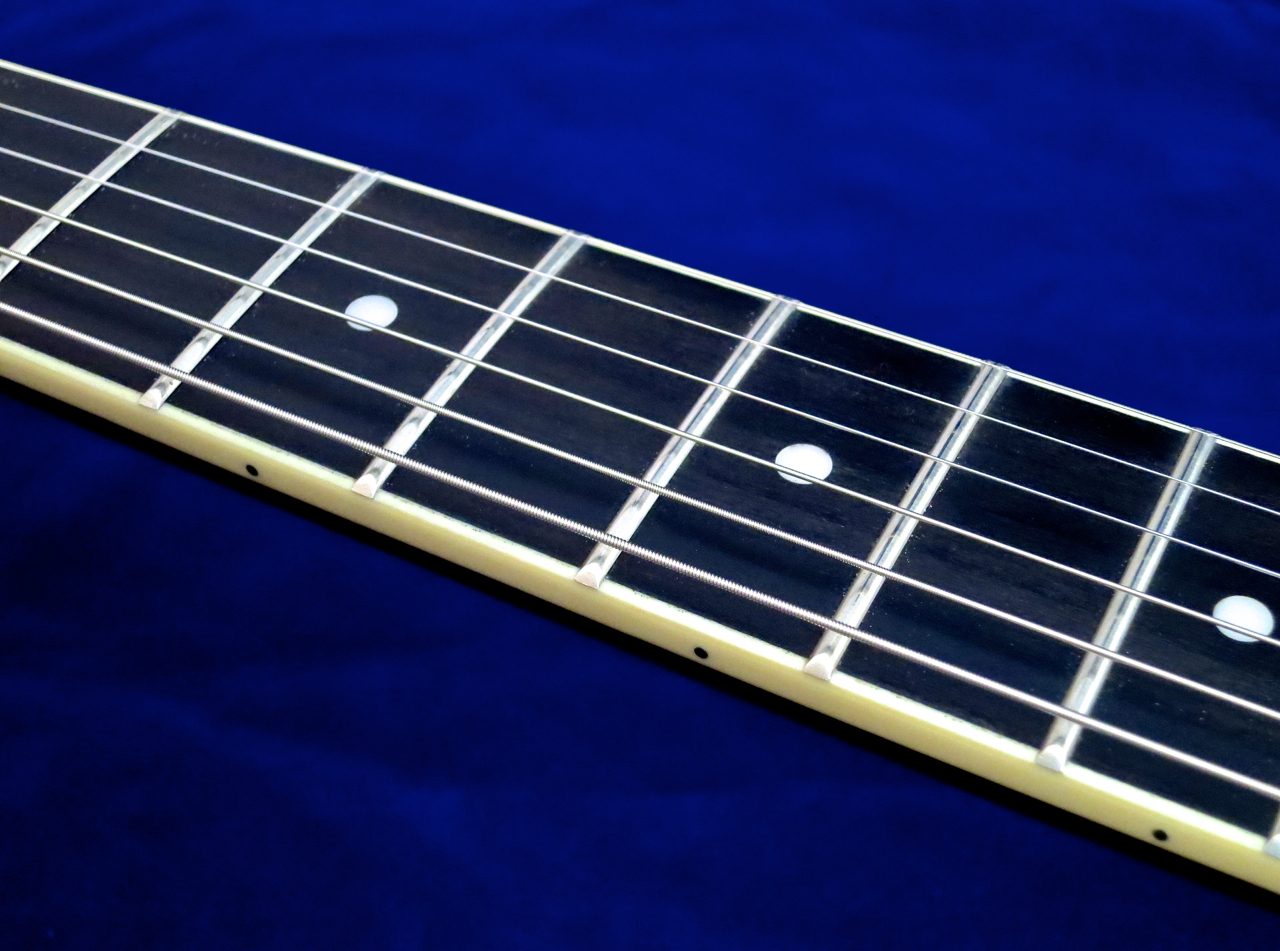
The deep black fingerboard of the Viking P has been crafted from Hagström’s proprietary Resinator-material, which is a composite of birch fibres and resin. Resinator aims to be a man-made alternative to ebony, offering similar properties in terms of stability, looks and sound.
The ’board sports 22 medium-sized frets, which have been installed cleanly and finished well.

Hagström have chosen a stylish and practical way of installing their own Custom P-50 pickups on this semi:
Instead of opting for traditional, so-called dog ear covers, which are screwed to the guitar’s top, the Viking P comes with two black soap bar units. Originally developed for solid-body guitars, soap bar pickups offer the advantage of height adjustment via two Phillips-head screws placed between the adjustable pole pieces. With traditional dog ears the only means of adjusting pickup balance is by using the pole pieces – and often this leaves the bridge unit sounding a tad weaker than the neck pickup.
The three-way toggle switch has been placed on the Viking’s top horn.
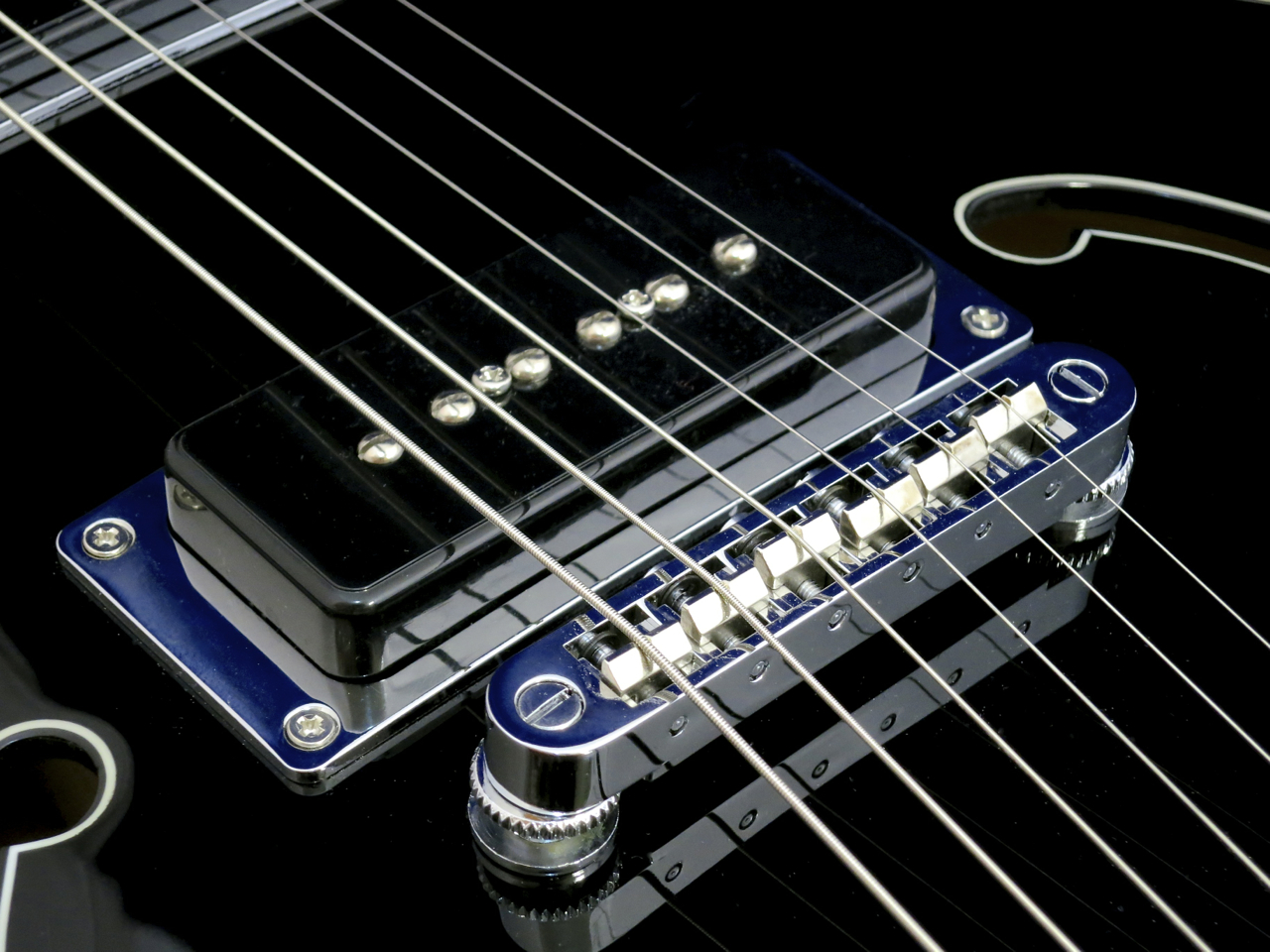
The solid centre block cuts down feedback howl very effectively, and it also allows for the use of sturdy hardware.

The control setup is traditional, offering separate volume and tone pots for each pickup.
****

The Hagström Pat Smear Signature (street price in Finland around 670 €) takes the company’s F-200-model as its starting point.
Pat liked the general shape of the F-200, but requested a thicker mahogany body with a bound maple top. In terms of thickness, we’re talking similar dimensions as on a PRS Guitars Custom 22, for example.

The Smear Signature features a set mahogany neck.

Any way you look at it – the Hagström headstock sure looks classy.

Pat Smear’s signature can be found on the back of the headstock.

It’s a Resinator fingerboard with 22 medium-sized frets on the Smear Signature also, but the position markers are large pearloid blocks here.

Mr Smear selected a pair of vintage-voiced Hagström Custom 58 -humbuckers for his signature model.

A special feature of this guitar is the toggle switch installation through a hole in the pickguard.
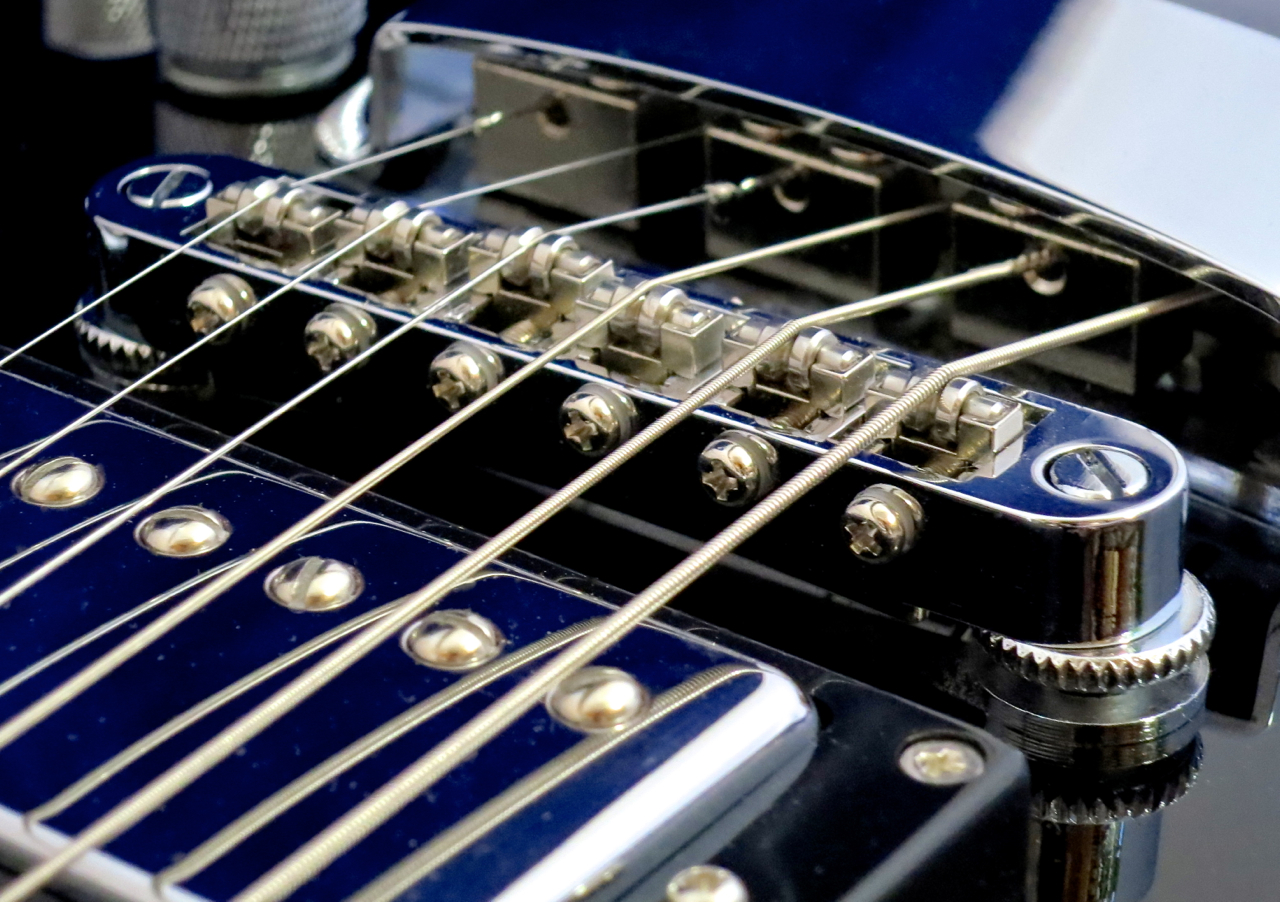
Even though the Pat Smear Signature isn’t equipped with a vibrato, the guitar comes with a roller bridge to ensure maximum tuning stability and string life.

Hagström’s idiosyncratic tailpiece is made up of six brass string retainers mounted onto a plexiglass plate.

There are four controls on the Smear-model, instead of the F-200’s single pair of master volume and master tone.

Both review guitars come with high-quality switches and pots.
****
Both review guitars suffered from a very slight bout of fretboard shrinkage due to dry weather conditions. It seems that Hagström’s Resinator composite doesn’t only look and feel like ebony, but also reacts to changes in air humidity in a similar fashion. Fretboard shrinkage isn’t a real ”fault” per se, but rather something that happens to a large proportion of new guitars. Luckily, your friendly guitar repair shop can take care of the sharpish fret ends easily and inexpensively.
The Hagström Viking P is of medium weight, and balances well in the lap or on a strap.
The neck profile is a flattish D, which feels great.
Straight out of the shipping-box the setup was spot-on. The Hagström Viking P comes factory-equipped with a 010-gauge string set. Thanks to the flat (15″) fingerboard radius and the low action (low E: 1.9 mm/high e: 1.6 mm) this Viking is a really comfortable player.
Due to its semi-acoustic build, the Viking P’s unamplified voice is quieter and closer to a solid-body than the acoustic performance of all-hollow thinlines, such as the Gibson ES-330 or the Epiphone Casino. Acoustically, the Viking P sounds clear and fresh.
Hagström’s fantastic Custom P-50 pickups add a nice shot of warmth and roundness to the mix, without clouding the Viking’s inherent clarity and dynamics.
There are great clean sounds on tap:
But the fun doesn’t end there, as the Viking P also delivers when it comes to the crunchy side of things, with its fat midrange and dynamic punch:
Due to the physical limitations inherent in single-coil pickups, high-gain sounds are always a somewhat tricky endeavour in P-90-equipped guitars. The sound is really great, but you have to decide for yourselves how much how much hum and buzz you can stomach:
****

Hagström’s Pat Smear Signature feels very comfortable, thanks to its rounded body shape and moderate weight.
This guitar’s neck is a slightly more rounded affair, when compared to the neck profile on Viking P, making it feel even better, in my opinion.
Again, the setup was great straight out of the box – a low action, such as the one on the Smear Signature (low E: 1.6 mm/high e: 1.4 mm), only works as well as it does here when the frets are level. This guitar plays like a dream.
Acoustically, this Hagström speaks with a strong and clear voice. The Smear-model features a healthy attack coupled with long and even sustain.
I really like Hagström’s vintage-voiced Custom 58-humbuckers, because their moderate output level leaves enough room for the guitar’s acoustic clarity and dynamics to shine through:
The crunchy tones of the Pat Smear Signature manage to combine clarity and Rock-muscle in a very appealing fashion:
****

These new Hagström-models are very welcome additions to the company’s range of models.
Of these two, the Viking P leans somewhat more in the vintage direction tonally, dishing out a delicious and rootsy P-90-fuelled alternative to Hagström’s regular Viking. The Pat Smear Signature is a signature model that can work for many friends of double-humbucker solid-bodies, even if you’re not familiar with the man’s oeuvre.
In any case, both Hagström-models are quality instruments at prices even the amateur can afford.
****
Hagström Viking P + Pat Smear Signature
Viking P – street price in Finland approx. 650 €
Pat Smear Signature – street price in Finland approx. 670 €
Finnish distributor: EM Nordic
A big thank you to DLX Music Helsinki for supplying the review instruments!
****
Pros (both models):
+ workmanship
+ playability
+ Hagström-pickups
+ sound
+ value-for-money
Cons (only Viking P):
– single-coil hum in high-gain



****
Testi tulossa joulukuussa…
Review coming up in December…
Hagström Guitarsin uutuusmallit tämänvuotiselta Frankfurtin Musikmesseltä ovat viimein rantautuneet Suomeen!
Kitarablogi on saanut kaksi mallia testiin:
Viking P on Custom P-50 -yksikelaisilla varustettu versio Hagströmin suositusta puoliakustisesta.
Pat Smear Signature -malli on Foo Fighters -yhtyeen kitaristin kovasti odotettu nimikkokitara.
****
Hagströmin Viking on ehkä firman tunnetuin malli, ja kiitos siitä kuuluu Elvis Presleylle, joka käytti kyseistä kitaraa hänen legendaarisesta ’68 Comeback Special -TV-ohjelmassa.
Upouusi Hagström Viking P (hintaluokka noin 650 €) lisää tutulle reseptille P-90-tyylisiä yksikelaisia mikrofoneja.
Viking P:n vaahterakaula on liimattu muottiin prässätystä vaahteravanerista valmistettuun runkoon.
Rungon täysipuinen keskipalkki näyttää olevan testisoittimessa natosta tai meranti-puusta veistetty.
Kaunis, klassinen, ajaton – sellainen on Hagströmin reunalistoitettu viritinlapa.
Musta satula on tehty Graph Techin itsevoitelevasta Black Tusq -materiaalista.
Hagström-virittimet ovat nykyaikaista kapseloitua sorttia, ja toimivat moitteettomasti.
Viking P:n musta otelauta on veistetty Hagströmin omasta Resinator-materiaalista, joka valmistetaan koivusta ja hartsista. Resinatorilla on pitkälti samat ominaisuudet kuin eebenpuulla.
Kitarassa on 22 keskikokoista nauhaa, joita on istutettu otelautaan hyvin huolellisesti.
Hagström on päätynyt tällaiseen tyylikkääseen ja käytännölliseen tapaan asentaa omat Custom P-50 -mikrofoninsa puoliakustiseen kitaraan:
Kansikiinnityksen vaativan, perinteisen dog ear -vaihtoehdon sijaan Viking P:ssä käytetään alunperin lankkukitaroille kehitettyä saippuapala-tyyppiä. Soapbar-mikrofonin etu on, että sen korkeutta voi säätää naparuuvien välisillä ruuveilla. Dog eareissä taas vain naparuuveja voi säätää, minkä takia tallamikrofonin signaaliteho voi pysyä joissakin kitaroissa kaulamikrofonia heikompana.
Kolmiasentoinen vipukytkin sijaitsee kaikissa Viking-malleissa rungon yläsarvessa.
Kaikukopan keskipalkin ansiosta feedback-ulinan kanssa tulee vain harvemmin ongelmia, ja lisäksi palkki mahdollistaa kiinteän tallan asentamista.
Tuttuun tapaan on tarjolla neljä säädintä – kummallekin mikrofonille oma tone- ja volume-säädin.
****
Hagström Pat Smear Signature (hintaluokka noin 670 €) on firman F-200-mallin perusteella kehitetty nimikkomalli.
Pat tykkäsi F-200:n ulkomuodosta, mutta toivoi selvästi paksumpaa runkoa, jossa mahonkisen takaosaan päälle on reunalistoitettu vaahterakansi. Smear-mallin runko on samaa paksuusluokkaa kuin esimerkiksi PRS Guitarsin Custom 22 -malli.
Smear Signaturen mahonkikaula on liimattu runkoon.
Hagström-lapa on kuvankaunis myös tästä kulmasta katsottuna.
Pat Smearin nimmari löytyy lavan kääntöpuolelta.
Myös nimikkomallissa on Resinator-otelautaan asennettu 22 medium-kokoista nauhaa, mutta otemerkit ovat tällä kertaa erittäin kauniita blokkeja.
Herra Smear valitsi nimikkokitaraansa Hagströmin vintage-tyyliset Custom 58 -humbuckerit.
Pleksin läpi asennettu vipukytkin on hyvin omaleimainen ja pikantti yksityiskohta tässä mallissa.
Vaikka Pat Smear Signaturessa ei ole vibratoa, artisti on valinnut tallaksi rullilla varustetun tune-o-matic-kopion.
Hagströmin perinteisessä kielipitimessä kielet kiinnitetään pleksilasialustan läpi runkoon kiinnitettyihin messinkipaloihin.
Kitarasankarin omasta toiveesta Smear-mallissa on neljä säädintä, kun taas F-200:ssa on vain master volume ja master tone.
Molemmissa kitaroissa käytetään laadukkaita kytkimiä ja potentiometrejä.
****
Molemmissa testisoittimissa otelauta on ilmeisesti kutistunut aavistuksen verran matkalla Kiinasta tänne Pohjolaan, minkä takia nauhojen päät tuntuvat hieman terävältä sormien alla. Ilmeisesti Resinator-materiaali ei ainoastaan näytä puulta, vaan se myös ”elää” puun lailla. Tässä ei ole kyse varsinaisesta viasta, vaan uusien kitaroiden yleisestä ongelmasta, joka on helposti (ja edullisesti) korjattavissa.
Hagström Viking P:llä on mukava keskivertopaino, ja se istuu tällä kitaralajille tyypillisellä tavalla erittäin hyvin sylissä tai hihnassa.
Kaulaprofiiliksi on valittu suhteellisen matala D, joka tuntuu oikein hyvältä.
Suoraan pakasta vedetyn testiyksilön säädöt olivat prikulleen kohdallaan. Hagström Viking P tulee tehtaalta 010-kielisatsilla, ja soittimen tatsi oli otelaudan loivan kaarevuuden (15 tuumaa) ja mukavan kielikorkeuden (matala E: 1,9 mm/korkea e: 1,6 mm) ansiosta erittäin kevyt.
Gibson ES-335-tyylisenä puoliakustisena soittimena Viking P:n akustinen ääni on hyvin tiukka ja paljon lankkukitara-maisempi kuin esimerkiksi samankokoisissa, mutta täysin ontoissa ES-330 tai Epiphone Casino -kitaroissa. Viking P kuulostaa raikkaalta ja selkeältä.
Hagströmin loistavat Custom P-50 -mikrofonit lisäävät soppaan hieman pyöreyttä ja lämpöä, ilman että Vikingin selkeys ja dynamiikka kärsisivät.
Lopputulos on puhtaan vahvistimen läpi soitettuna erittäin kaunis:
Myös säröllä Viking P:n soundi pistää suun messingille, koska sointi on tiivis ja erotteleva, muttei piikikäs:
Liidisoundeissa yksikelaisten mikkien – fysiikasta johtuva – häiriöherkkyys voi tulla suurilla gain-määrillä vasten. Jokaisen on itse selvitettävä, miten paljon hurinaa omassa kitarasignaalissa saa olla. Hagström Viking P:n soundi sinänsä on nimittäin erittäin hyvä:
****
Hagströmin Pat Smear -malli tuntuu mukavalta sekä seisten että istuen, myös maltillisen painonsa ansiosta.
Tämän kitaran kaula on aavistuksen verran pyöreämpi tapaus, kuin Vikingissä, ja se istuu minun käteeni ehkä vieläkin paremmin kuin puoliakustisen Hagströmin vastine.
Niin ikäänkin suoraan pakasta vedetyn Smear Signaturen säädöt olivat myös erittäin hyvässä kuosissa – näin matalan kieltenkorkeuden (E: 1,6 mm/e: 1,4 mm) saa toimimaan kunnolla vain silloin, kun nauhatyö on suoritettu kiitettävästi. Testiyksilön soitettavuus on erittäin vaivatonta.
Akustisesti tämä Hagström soi vahvalla ja selkeällä äänellä. Smear-mallilla on tarkka atakki sekä pitkä ja tasainen sustain-vaihe.
Hagströmin erinomaiset Custom 58 -humbuckerit ovat maltillisella tehollaan hyvin onnistunut valinta näin dynaamisesti ja avoimesti soivalle lankkukitaralle:
Myös särösoundeissa Pat Smearin nimikkomalli kuulostaa samalla selkeältä ja lihaksikkaalta:
****
Nämä uudet Hagström-mallit ovat erittäin tervetulleita variaatioita firman tutuista, omista malleista.
Viking P nojaa näistä kahdesta ehkä aavistuksen verran enemmän vintagen suuntaan, ja tarjoaa P-90-tyylisillä mikeillä hieman juurevamman vaihtoehdon perus-viikingille. Pat Smear Signature on yleishyödyllinen nimikkomalli, joka toimii myös erittäin hyvin, vaikka herran tuotanto tai musiikkityyli eivät miellytä.
Kyse on joka tapauksessa laadukkaista soittimista, joiden rahkeet selvästi riittävät myös ammattimuusikon käyttöön.
****
Hagström Viking P + Pat Smear Signature
Viking P – hintaluokka noin 650 €
Pat Smear Signature – hintaluokka noin 670 €
Maahantuoja: EM Nordic
Suuri kiitos DLX Musiikille testisoittimien lainasta!
****
Plussat (molemmat kitarat):
+ työnjälki
+ soitettavuus
+ Hagström-mikrofonit
+ soundi
+ hinta-laatu-suhde
Miinukset (vain Viking P):
– mikkien häiriöherkkyys high-gain käytössä


This time we take two new LTD-models for a spin:

The LTD AJ-1 is the brand-new signature model for British guitarist Andy James. Mr James is best known for his stellar work with the Prog Metal outfit Sacred Mother Tongue.

The LTD EC-1000ET Evertune isn’t some rocking rapper’s axe of choice, instead it is one of currently two LTD-guitars factory-equipped with an Evertune-bridge. The Evertune-system promises to do away with the chore of having to tune your guitar for virtually the whole lifespan of a set of strings.
****

The Andy James LTD AJ-1 (current price in Finland: 986 €) is clearly based on the Horizon/MH-series of instruments, but fine-tuned in many details to Andy’s requirements.

The most obvious difference to your regular Horizon is the AJ-1’s satin black finish, which feels very smooth to the touch and doesn’t get all slippery when you’re starting to sweat (in contrast to some gloss finishes).
The guitar is build around a maple through-neck, with mahogany used for the body. The AJ-1’s slightly curved body top and the deep rib-cage chamfer make for a very comfortable fit.

Andy James also requested a non-standard headstock shape for the LTD AJ-1, instead of the usual pointed hockey stick type shape found on regular MH-series guitars.
I’m probably just being a boring old fart here, but I must say I’m not the greatest fan of this style of über-Metal headstock. Objectively, though, there’s nothing wrong with this functional three-a-side design.
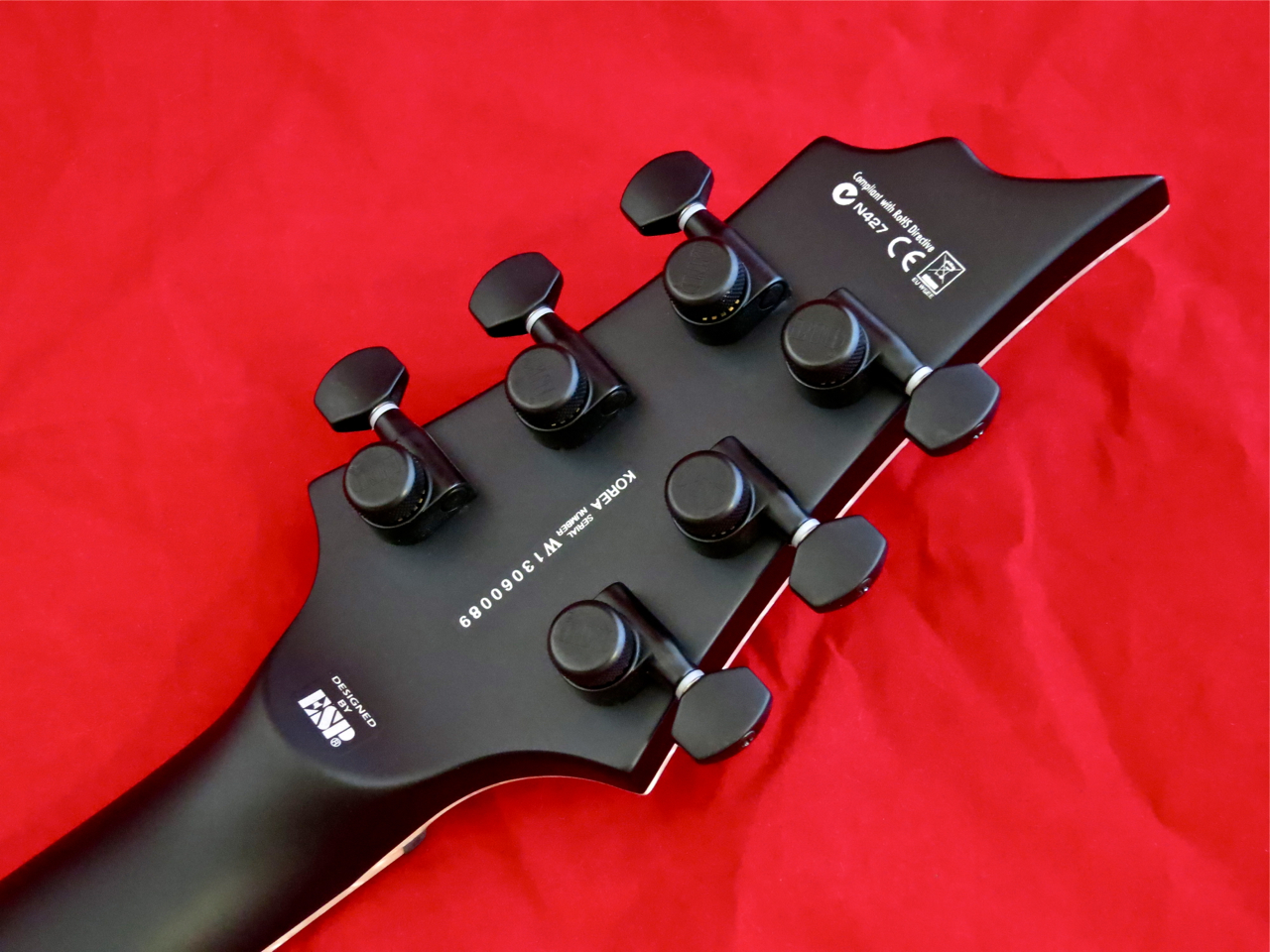
The AJ-1 sports a graphite top nut, as well as black locking tuners, to keep the guitar’s tuning rock solid.
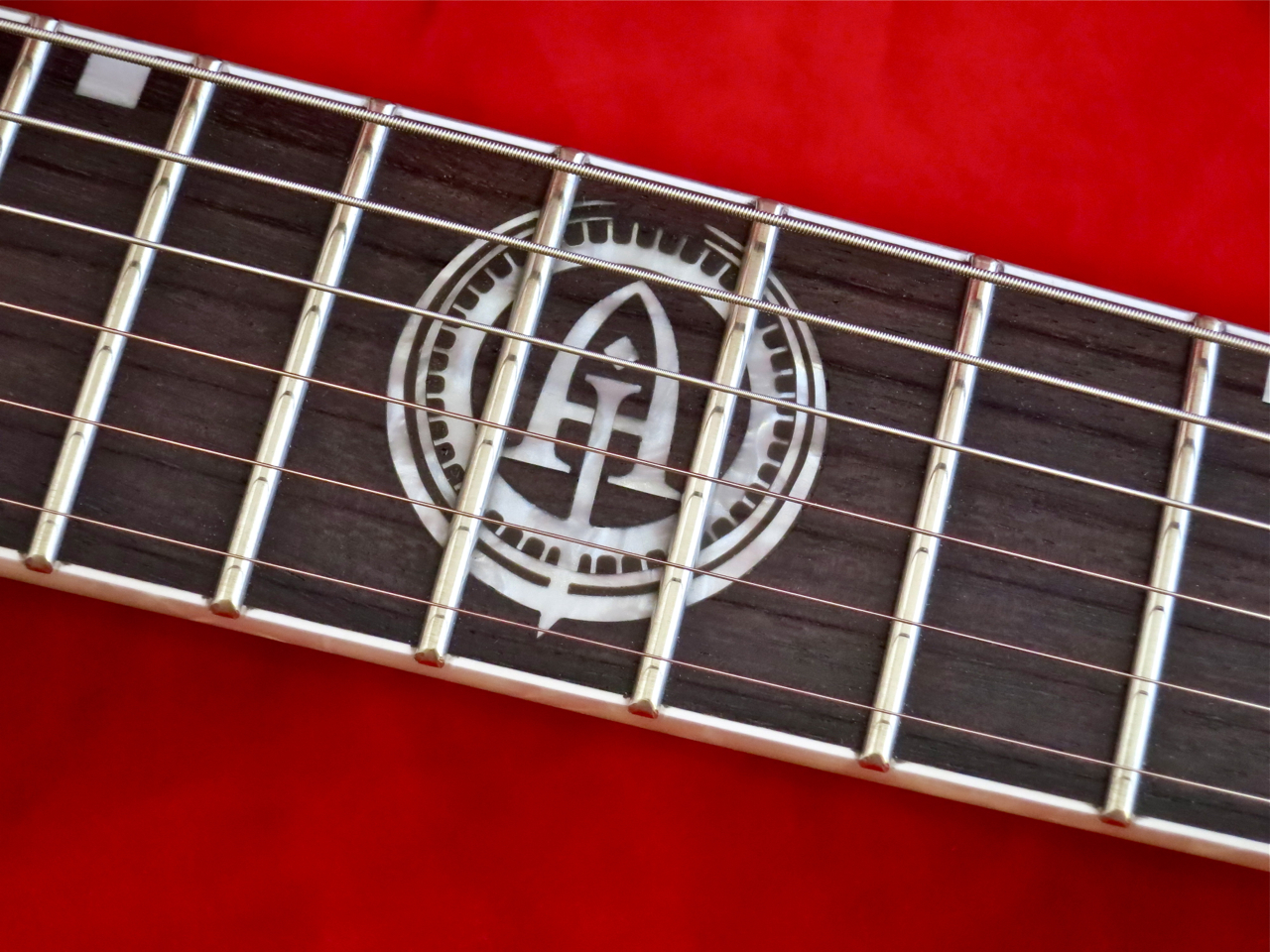
The inlaid Andy James-crest at the 12th fret is a very beautiful touch.

The quality of workmanship in the fretting and binding departments leaves nothing to be desired in our test sample.

Smooth is the right word to describe this type of neck-to-body-junction, which makes excursions to the dusty end of the fretboard a doddle.
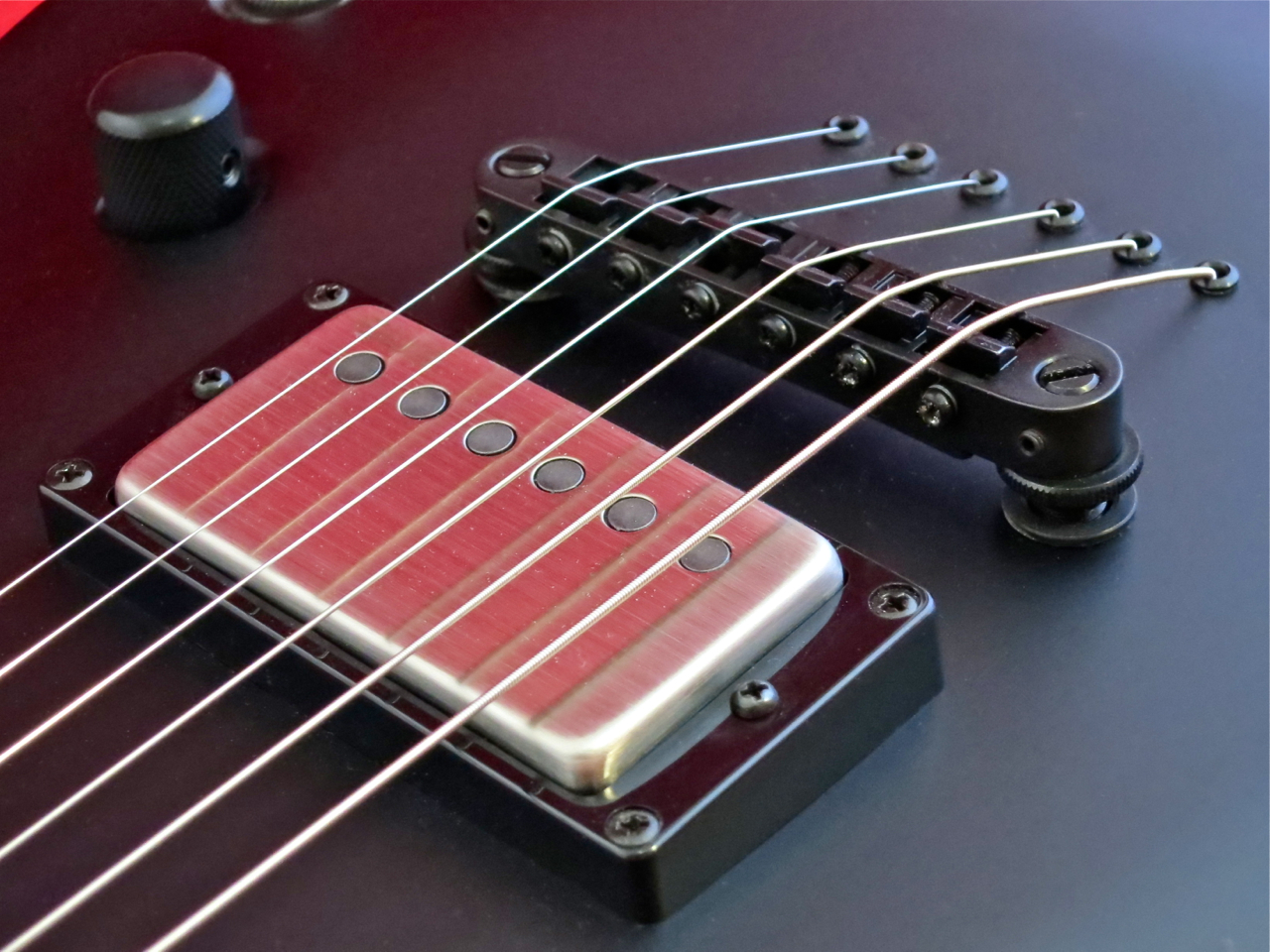
Mr James has specified a TonePros-bridge for his main squeeze. Two grub screws lock the Tune-o-matic to the bridge posts for better vibrational transfer from the strings to the body, and thus a better tone and more sustain.

The LTD AJ-1 comes equipped with a set of active EMGs from their recent Metal Works-series.
An EMG 66-humbucker is used in the neck position. This pickup is build around an Alnico V-magnet and ceramic pole-pieces for a rich tone with good string separation and clarity.
The bridge ’bucker is an EMG 57, which pairs the Alnico V with steel pole-pieces for a slightly warmer, vintage inspired sound.

Andy James doesn’t use a tone control on his guitars, which is why the signature model only comes with a three-way switch and a master volume control.
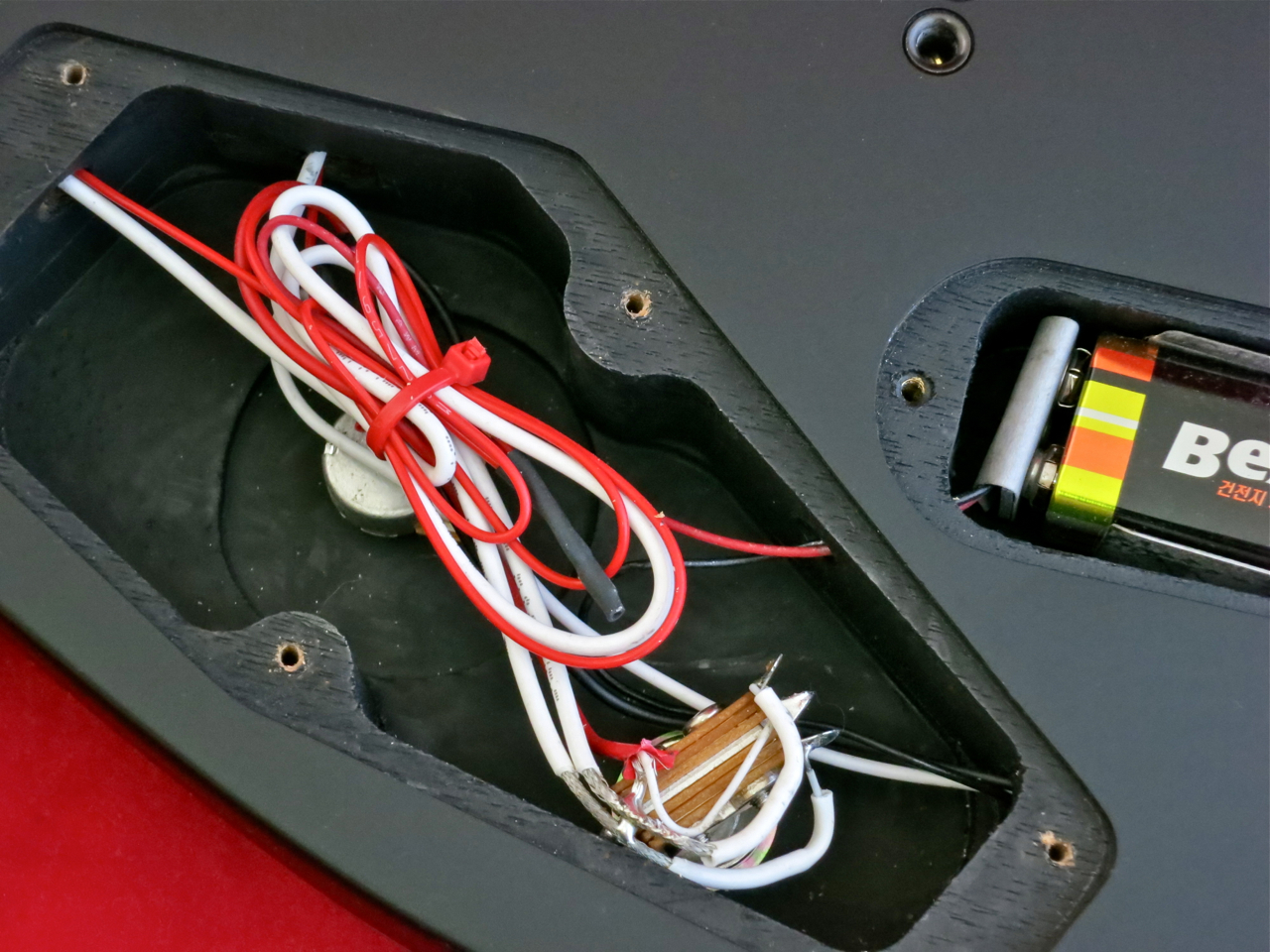
The control cavity displays clean workmanship. The battery compartment’s lid is screwed on with machine screws that grip into threaded inlets sunk into the body wood, which is a roadworthy solution.
****
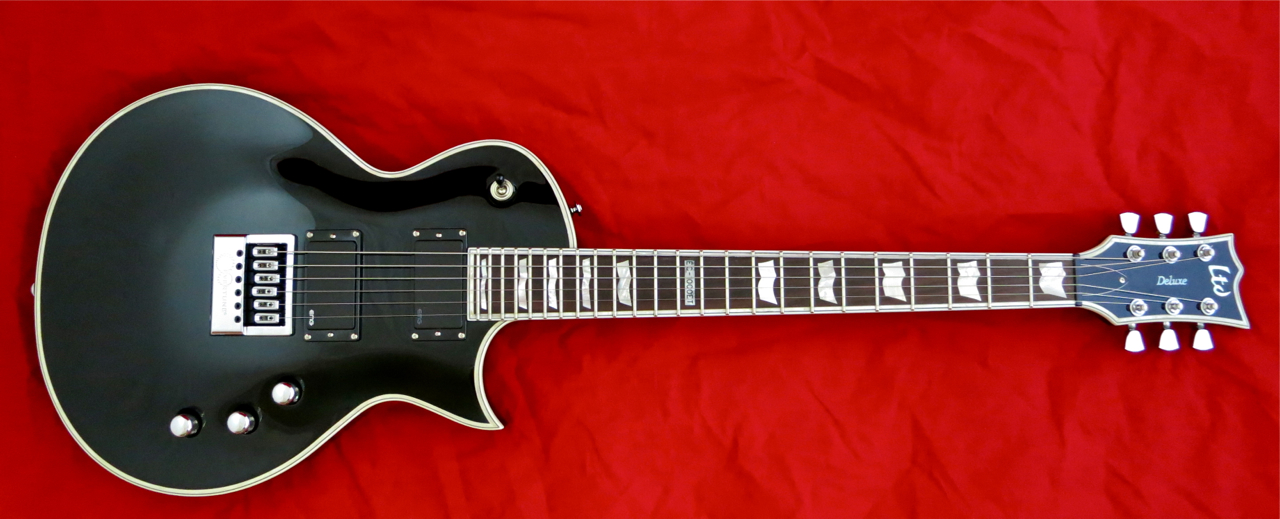
The LTD EC-1000ET (current price in Finland: 986 €) is the Evertune-equipped sister model of the regular EC-1000.
It is a set-neck guitar featuring a mahogany neck, as well as a mahogany body with a maple top.

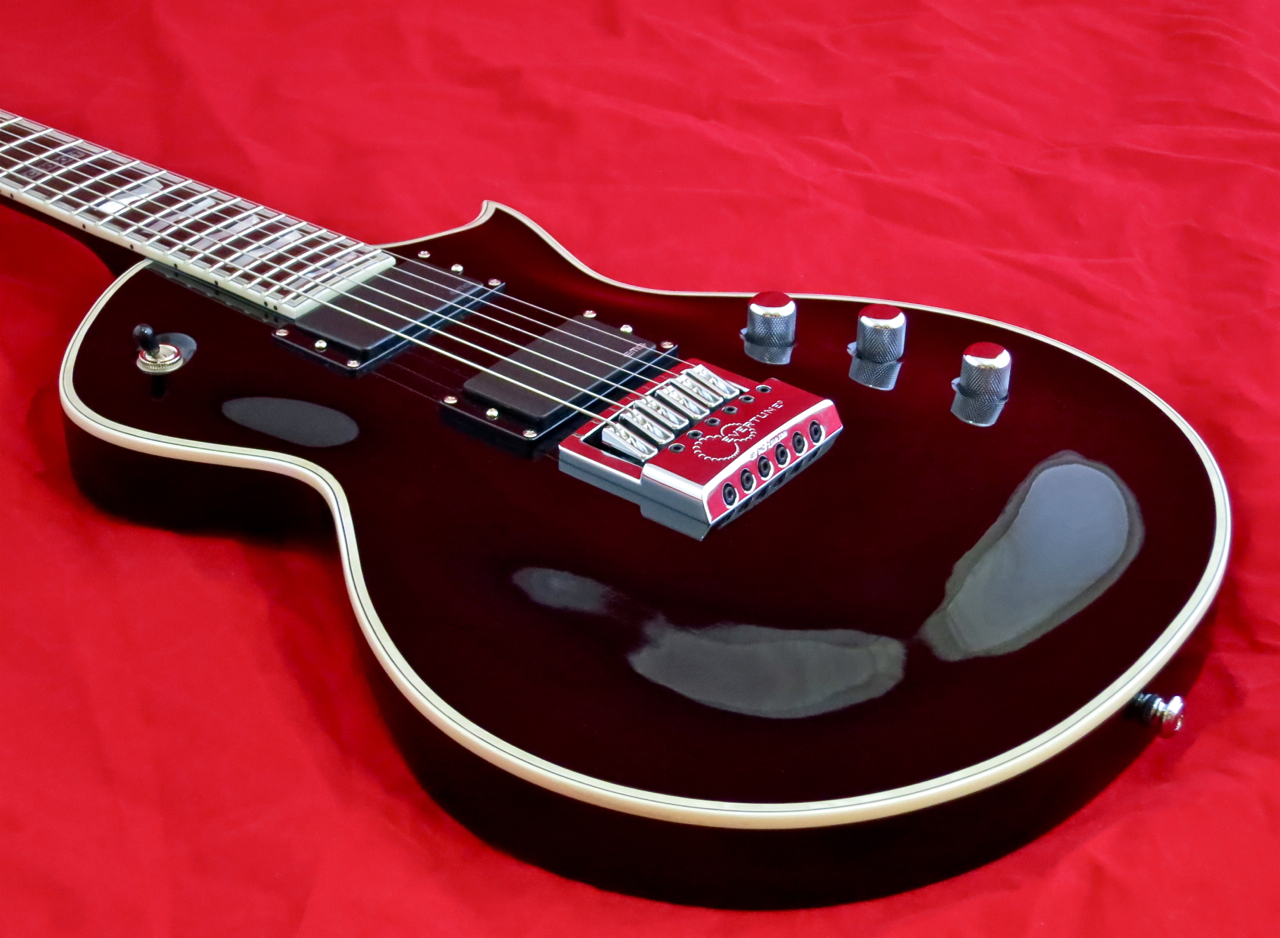
The EC-1000ET’s strings are loaded into the bridge from the guitar’s back.

As a card-carrying member of the LTD Deluxe-range the instrument is adorned with multiply binding and pearl inlays.

These classy Grover-tuners manage to combine contemporary functionality with vintage looks.

Look at the crisp inlay work in the rosewood fingerboard and the great fret job!

The LTD EC-1000ET comes equipped with EMG’s classic EMG 60/EMG 81-combination, which means we’re in for a strong output signal with a well-focused mid-range, clean highs and a very precise bottom end.
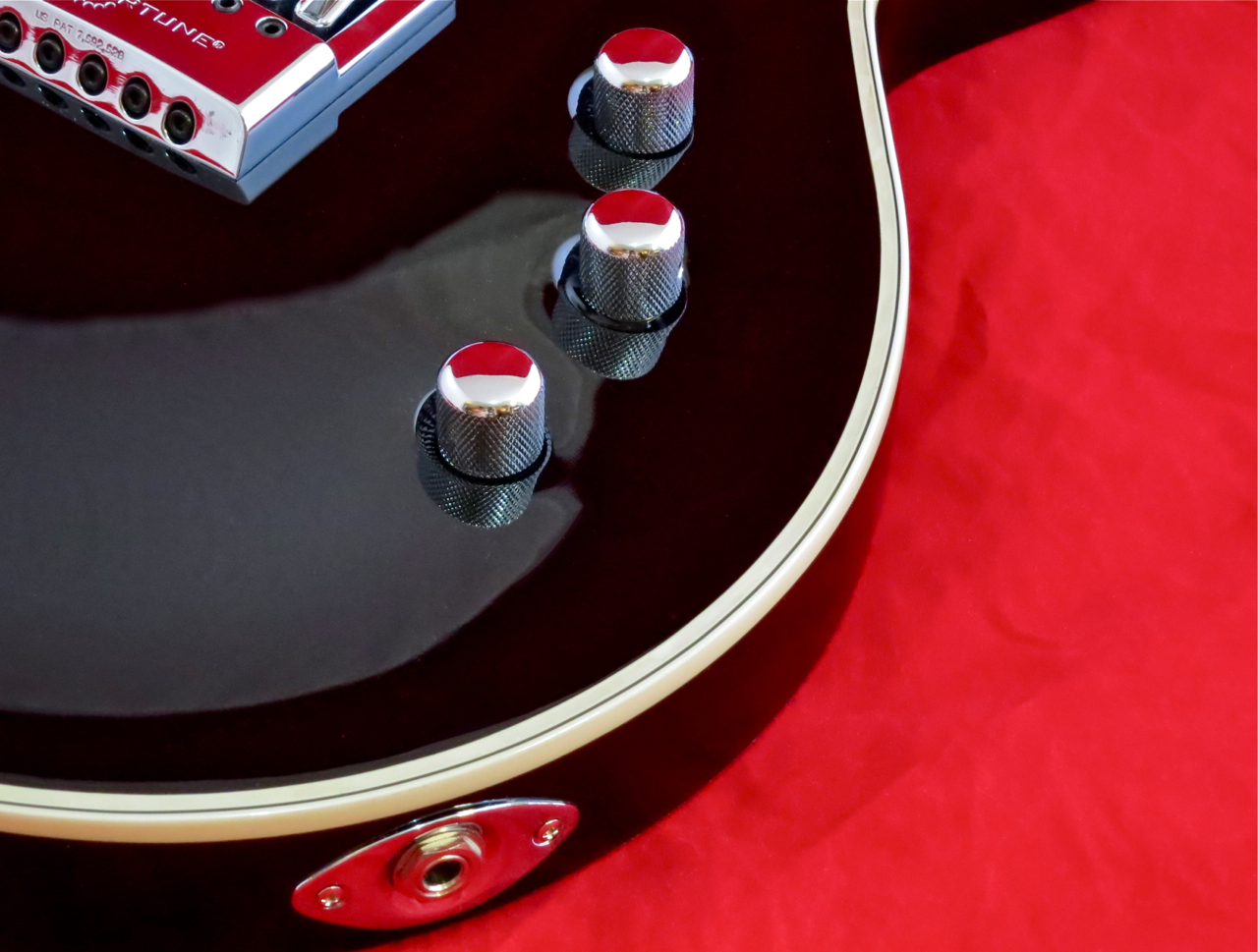
The control nearest to the bridge is the EC-1000ET’s bridge pickup volume [sic!], with the middle control being the neck volume and the third knob adjusting master tone.

This guitar is almost as clean on the inside as it is on the outside.

The Evertune-bridge is based on very similar physical principles as modern knife-edge vibrato bridges. In the Evertune’s case there is a separate spring-loaded mechanism with a knife-edge bearing for each of the guitar’s strings, trying to keep the string’s tension (read: tuning) unchanged for practically the whole of its lifespan.
The allen screws visible at the back of the Evertune-bridge are the intonation screws, while the ones on top of the bridge are for string-height adjustment.

This is what the Evertune looks like underneath the back cover plate.
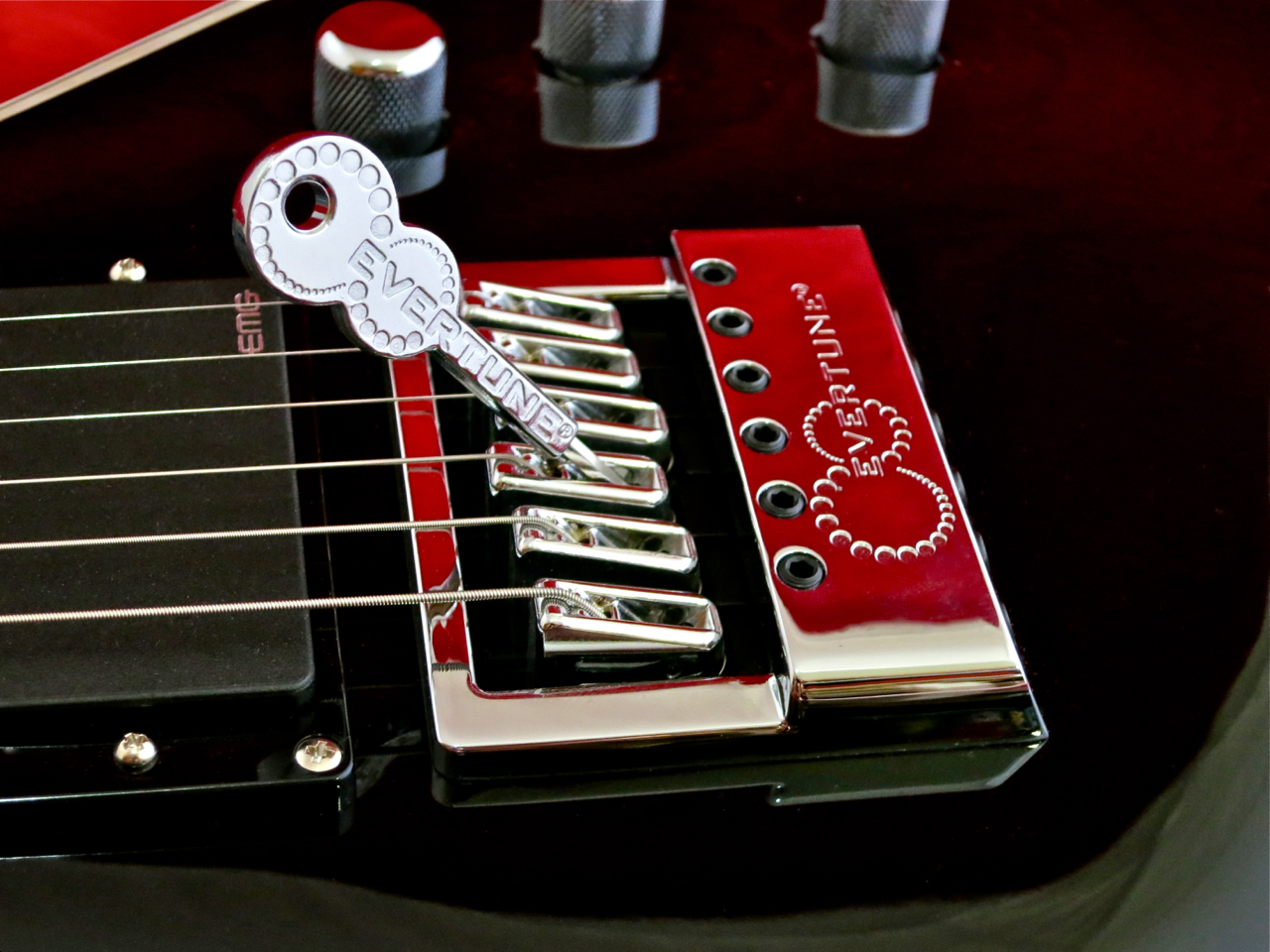
An Evertune-equipped guitar is not tuned at the headstock. The traditional tuners are instead used to correctly tension each string, as well as to adjust how much (if at all) each string reacts to finger vibrato and string bending.
You tune the guitar at the bridge by turning a hex screw inside the bridge saddle. The picture shows the handy key included with the guitar, but a regular allen key will also work fine.
According to Evertune its factory-speced bridge should work correctly at standard tuning (E-e, a = 440 Hz) using regular 009-012 string sets. Many other tunings, like drop-D or DADGad, should also be possible with the regular Evertune-bridge, but you will need to make changes to the tuner- and bridge-settings, meaning a change in tuning mid-gig is practically out of the question.
If you’re using very heavy (or very light) string gauges and/or very unusual tunings, you will in all likelihood have to swap a few of the bridge’s spring-loaded saddle-units for differently tensioned ones, which are available as options from Evertune.
You can read the Evertune-manual here: Evertune User Manual
****

Judging by the review sample, the LTD AJ-1 is a very lightweight guitar with a nice balance.
The neck profile is is comparatively shallow, yet round-backed ”D” that gives you the typical feel and playability of a widdle-meister guitar. The Andy James-signature very clearly isn’t for the campfire guitarist, but for the fleet-fingered Metal-shredder.
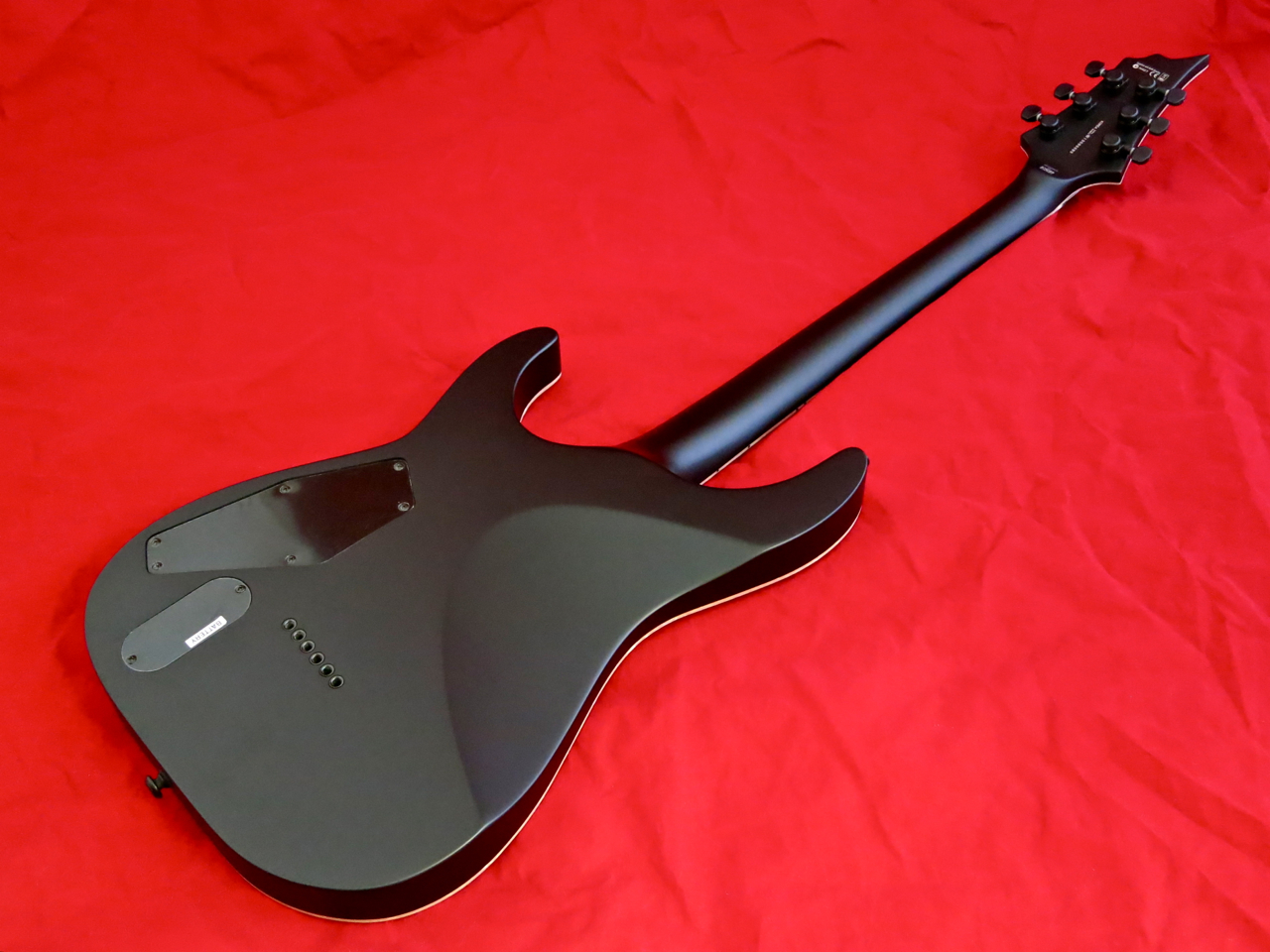
EMG seem to use the expression ”vintage” more interms of a tonal reference that with regard to a pickup’s output level, judging by this very punchy set of Metal Works-humbuckers.
Depending on the rest of your signal chain, you may be forced to turn the guitar’s volume control down to keep your signal clean:
But for overdriven and distorted use these powerful pickups have just what it takes:
****

The LTD EC-1000ET is a dyed-in-the-wool Rock-machine – it’s chunky, but not too too heavy.
The neck profile is fuller and more rounded compared to the AJ-1. The all-gloss finish of the EC-1000ET and its smalle fingerboard radius give this guitar a more vintage-type, classic feel.
It is possible that the Evertune-bridge adds a little to this model’s weight, but what is very clear to me is the added ring and sustain of the Evertune-equipped LTD.
I set the strings to high-sensitivity for easy bending and vibrato. Regardless of this the Evertune-system managed to win me over by absorbing efficiently any tuning issues caused by too much left-hand pressure or a very heavy-handed approach to right -hand strumming. The guitar stays in tune and rings freely nonetheless.

This EMG-set sounds a little bit more neutral to my ears. It’s maybe a tad dryer than the Andy James-model’s tone – it’s different, but still very good:
****

Brother, what an axe! In my opinion the LTD AJ-1 is a fine example of a streamlined instrument for the hard and heavy-crowd. The Andy James-model plays like a dream, and it gives you a chunky, buzz- and squeal-free signal with plenty of tonal character as a solid basis for you string excursions.

Is there a classier chassis for the novel Evertune-bridge than the LTD EC-1000ET? Probably not!
This is a very cool guitar if you want to cut down drastically on the amount of time spent tuning. The Evertune-bridge probably isn’t the best choice if you need one guitar to cover all sorts of different tunings. But if you stay in one tuning, you’ll quickly appreciate the (tonal and practical) benefits of this new bridge system, and tuning a guitar becomes something that you do only very occasionally.
****
LTD AJ-1 Andy James Signature
• 986 €
LTD EC-1000ET Evertune
• 986 €
Finnish distributor: Musamaailma
****
LTD AJ-1 Andy James Signature
Pros:
+ lightweight
+ matte finish
+ playability
+ workmanship
+ sound
Cons:
– some players might crave a tone control
****
LTD EC-1000ET Evertune
Pros:
+ Evertune-bridge
+ classic design
+ playability
+ workmanship
+ sound
Cons:
– no tuning changes mid-set
****

Tällä kertaa testin aiheina ovat kaksi uutta LTD-mallia:
LTD AJ-1 on brittiläisen kitaristin, Andy Jamesin nimikkomalli. Andy James on tunnettu progressiivista metallia soittavan Sacred Mother Tongue -bändin kitaristina.
LTD EC-1000ET Evertune ei ole jonkun räppärin uusi nimikkomalli, vaan uudenlaisella Evertune-tallalla varustettu sähkökitara. Evertunen juju piilee siinä, että se käytännössä poistaa virittämisen tarpeen sen jälkeen, kun kitara on viritetty kerran.
****
Vaikka Andy Jamesin LTD AJ-1 (986 €) pohjautuukin selvästi firman Horizon/MH-sarjalaisiin, nimikkomallissa on huomioitu monta Jamesin toivomia detajiratkaisuja.
Silmiinpistävin ero rivi-Horizoniin on AJ-1:n satiinipintainen musta viimeistely, joka tuntuu erittäin mukavalta, eikä myöskään muutu hikisillä käsillä niin liukkaaksi kuin useat kiiltävät viimeistelyt.
LTD:n vaahterakaula jatkuu yhtenäisenä koko mahonkirungon läpi. Rungon kaareva etupuoli, sekä takapuoleen lisätty syvä viiste tekevät kitarasta hyvin mukavan.
Andy Jamesin toiveesta LTD AJ-1:n viritinlavan muoto poikkeaa MH-kitaroiden tavallisesti käytetystä jääkiekkomaila-tyypistä.
Minä en ole henkilökohtaisesti tämän LTD-lavan suurin fani – sen kärjekäs ulkonäkö on minulle yksinkertaisesti jo liian ”Metal”, mutta objektiivisesti katsottuna ei tässä lavassa ole kuitenkin mitään vikaa.
AJ-1:n grafiittipitoinen satula tukee laadukkaiden lukkovirittimien toimintaa hienosti.
Andy Jamesin oma logo toimii 12:n nauhan kauniina otemerkkinä.
Testiyksilön reunalistoitukset, upotukset sekä nauhatyö ovat erittäin korkeaa tasoa.
LTD:n sulavasti toteutettu ylimeno kaulalta runkoon helpottaa tuntuvasti otekäden pääsemistä 24:lle nauhalle.
Herra James on valinnut omaan nimikkosoittimeensa lukittavan TonePros-tallan. Ylimääräisen, ei-toivotun lisävärähtelyn tehokas poistaminen parantaa yleensä kitaran sointia ja sustainea.
LTD AJ-1 -mallin mikrofonit ovat aktiivit ja tulevat EMG:n melko tuoreelta Metal Works -sarjalta.
Kaulan viereen on asennettu EMG 66 -humbucker, joka on varustettu Alnico V -magneetilla ja keraamisilla napapaloilla. EMG 66:lle luvataan vintage-tyylistä soundia aktiivipotkulla, mutta ilman bassokaistan puuroutumista.
Tallamikrofoniksi taas on valittu EMG 57, jossa Alnico V:n kumppaneiksi on lisätty teräsnapapaloja hieman pehmeämpää, PAF-maista sointia varten.
Andy James ei tarvitse tone-säädintä lainkaan, minkä takia se on jätetty hänen nimikkomallistaan kokonaan pois.
Takalokeroiden työnjälki on hyvin siisti. Paristolokeron kansi on kiinnitetty koneruuveilla, mikä on selvästi puuruuveja kestävämpi ratkaisu.
****
LTD EC-1000ET (986 €) on tavallisen EC-1000:n Evertune-tallalla varustettu sisarmalli.
Kyseessä on siis liimakaulainen kitara, jolla on mahonkikaulan lisäksi samasta puusta veistetty runko vaahterakannella.
Kielitys hoituu EC-1000ET:ssä rungon takapuolelta tallan läpi.
Aitona LTD Deluxe -malliston jäsenenä soittimella on upeat helmiäisupotukset, sekä monikerroksinen reunalistoitus sekä kaulassa että kannessa.
Tyylikkäissä Grover-virittimissä yhdistyy nykyaikainen tarkkuus ja vintage-tyylinen ulkonäkö.
Palisanteriotelaudassa kohtaavat upeat helmiäisupotukset ja erittäin korkeatasoinen nauhatyö.
LTD EC-1000ET:n mikrofonivarustus koostuu – jo klassikoksi varttuneesta – EMG 60/EMG 81 -parivaljakosta. Tarjolla on siis hyvin fokusoitu keskialue, heleä diskantti, sekä muhkea basso tehokkaassa, aktiivisessa paketissa.
Lähimpänä tallaa oleva säädin on tallamikrofonin (!) volume, keskeltä löytyy kaulamikin volume-säädin, ja viimeiseksi tulee EC-1000ET:n master tone.
Myös tässäkin kitarassa elektroniikkalokero näyttää hyvin asialliselta.
Evertune-tallan toiminta perustuu käytännössä samoihin fysikaalisiin periaatteisiin kuin esimerkiksi nykyaikainen vibratalla: Evertunen tapauksessa jokaisella kielellä on oma laakeroitu jousijärjestelmä, joka pyrkii pitämään kielen vetoa aina samansuuruisena.
Tallan takareunalla näkyy intonaatiosäätöruuvit, kun taas Evertune-logon yllä olevilla kuusiokoloruuveilla säädetään kielten korkeutta.
Tällaiselta Evertune-systeemi näyttää silloin kun takalevy on poistettu.
Evertune-kitaroilla lavalla olevilla virittimillä ei viritetä soitinta perinteisellä tavalla, vaan niillä säädetään kuinka herkästi kielet reagoivat venytyksiin ja sormivibratoon.
Virittäminen sinänsä hoidetaan kuusiokoloavaimella tallapaloissa. Kuvassa näkyvä avain tulee paketissa mukana, mutta tavallinenkin kuusiokoloavain käy.
Evertunen mukaan talla toimii tehdasvarustuksella normaalivirityksessä (E-e, a = 440 Hz) tavallisilla 009-012 kielisatseilla. Myös toisenlaisten virityksien käyttö pitäisi onnistua, mutta se vaatii aina hieman säätöä (sekä virittimillä että tallassa), minkä takia nopea vaihtaminen esimerkiksi standardivirityksestä drop-D:hen ei onnistu kesken livekeikan.
Hyvin paljon tavallisesta poikkeavia virityksiä – tai kielityksiä – varten täytyy tilata Evertunelta sopivia vaihtoyksiköitä, joita asennetaan perus tallapalojen sijasta. Lisätietoa saa Evertunen käyttöoppaasta: Evertune User Manual
****
Testissä käynyt LTD AJ-1 on hyvin kevyt kitara, joka tuntuu erittäin mielyttävältä.
Kaulaprofiiliksi on valittu melko matala, mutta kuitenkin pyöreä D, joka antaa soittimelle – yhdessä suuren otelaudan radiuksen kanssa – vauhtikepille tyypillisen tatsin ja soitettavuuden. Andy James -nimikkomalli ei selvästikään ole nuotiokitaraksi tarkoitettu, vaan täysverinen nopeasormisen metallivelhon luottokitara.
Kun EMG käyttää sanaa ”vintage”, se viittaa ilmiselvästi uusien mikrofoniensa mehevään soundiin, eikä lähtötasoon. Tällä Metal Works -humbuckerilla nimittäin puhtia riittää rutkasti.
Joissakin tapauksissa joutuu varmaan säätämään kitaran volumea hieman pienemmälle, jotta vahvistin pysyisi täysin puhtaana:
Särösoundit taas vain hyötyvät tehokkaista ja täysin hiljaisista EMG-mikrofoneista:
****
LTD EC-1000ET on jämäkän tuntuinen Rock-keppi mukavalla keskivertopainolla.
Kaulassa on hivenen verran enemmän lihaa ja pyöreyttä kuin AJ-1-mallissa. Kiiltävän lakkauksen ja EC-1000ET:n hieman kaarevamman otelaudan ansiosta, nojaa tämä kitara enemmän vintagen suuntaan. Klassikkoainesta siis…
On mahdollista, että Evertune-talla lisää soittimelle vähän painoa, mutta selkeästi havaittavissa on, että erikoistallan ansiosta kitara soi erittäin puhtaasti ja pitkällä, tasaisella sustainella.
Vaikka olin säätänyt LTD:n pääsääntöisesti sellaiseksi, että kielten venytykset ja sormivibratot onnistuvat mahdollisimman helposti, oli mukava havaita, että vire pysyy myös rankalla kädellä soitettaessa horjumatta.
Soundiltaan tämän kitaran EMG-setti on ehkä neutraalimpi kuin Andy James -mallin varustus, muttei missään nimessä huonompi:
****
Vau, mikä soitin! LTD AJ-1 on mielestäni erinomainen esimerkki virtaviivaistetusta heavykitarasta. Andy James -malli tarjoaa loistavaa soitettavuutta ja soundia, asianmukaisen tuhdilla lähtötasolla.
LTD EC-1000ET on erittäin tyylikäs ja laadukas alusta erikoiselle tallaratkaisulle. Evertune ei ole ehkä paras valinta, jos haluaa vaihtaa nopeasti yhdestä virityksestä toiseen, mutta tavallisessa yleiskäytössä se on suorastaan lyömätön. Tällä kitaralla virittäminen ei enää kuulu kitaristin jokapäiväisiin toimenpiteisiin!
****
LTD AJ-1 Andy James Signature
• 986 €
LTD EC-1000ET Evertune
• 986 €
Maahantuoja: Musamaailma
****
LTD AJ-1 Andy James Signature
Plussat:
+ kevyt paino
+ mattaviimeistely
+ soitettavuus
+ työnjälki
+ soundi
Miinukset:
– jotkut ehkä kaipaa tone-säätimen
****
LTD EC-1000ET Evertune
Plussat:
+ Evertune-tallan toimivuus
+ klassinen ulkonäkö
+ soitettavuus
+ työnjälki
+ soundi
Miinukset:
– ei voi nopeasti vaihtaa virityksien välillä
****

****

American guitar guru Grover Jackson is a genuine living legend. When Jackson bought Wayne Charvel’s small shop (in 1978) nobody would have guessed that this man would single-handedly define two new types of electric guitars.
The – mostly bolt-on necked – Charvel guitars from the Eighties kicked off the Superstrat-phenomenon in earnest.
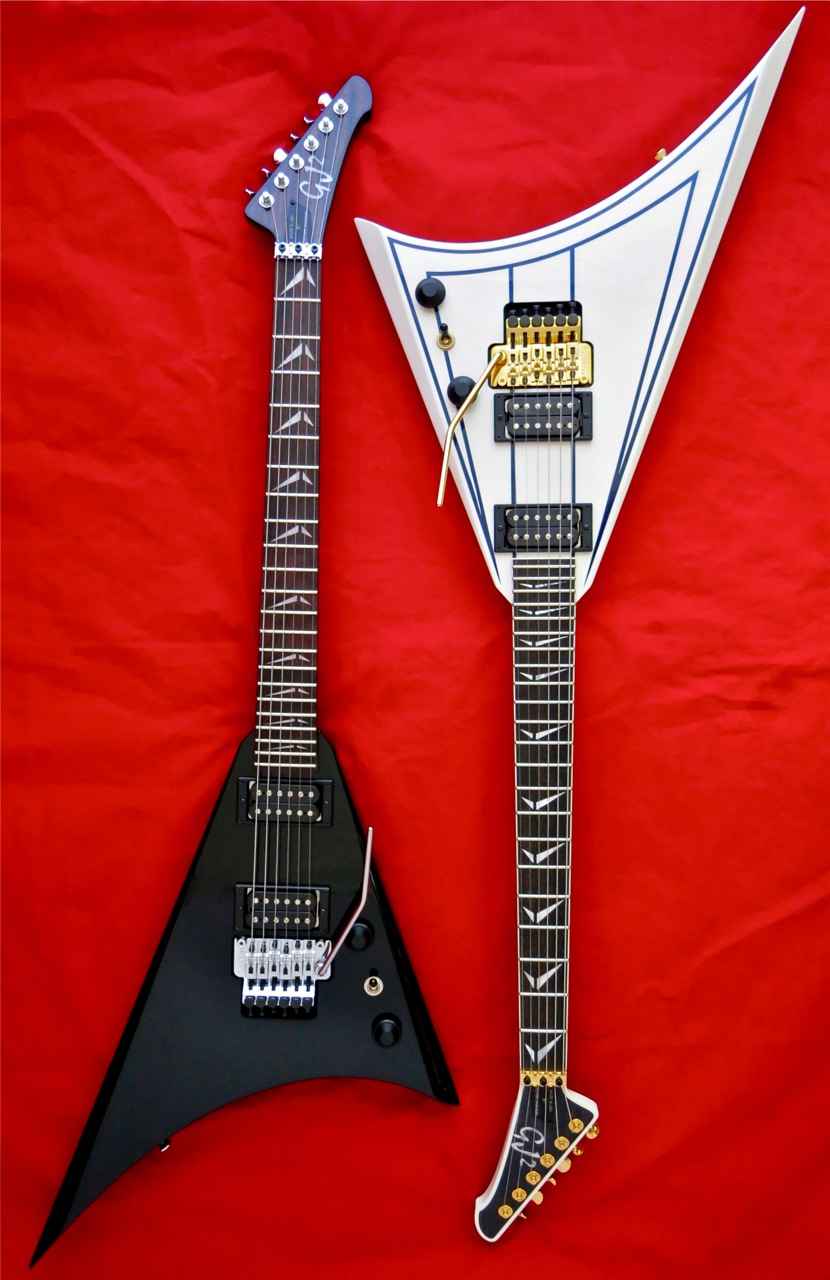
The original Jackson-branded instruments became famous as hiogh-octane Metal-guitars, which combined first class playability with bold graphic finishes. The most legendary Jacks model is surely the Concorde/RR, which Grover Jackson developed for Randy Rhoads.
Grover Jackson left Charvel/Jackson at the end of the 80s, and he went on to design instruments for a number of different brands, like Washburn for example. The Charvel and Jackson brands are nowadays part of the huge Fender conglomerate.
Grover Jackson has recently launched a new guitar-making outfit, together with (ex-Fender man) Jon Gold. GJ2 Guitars is a small Californian outfit which concentrates on small-run high-end guitar making.
Kitarablogi.com takes the first five instruments to arrive in Finland for a spin.
****
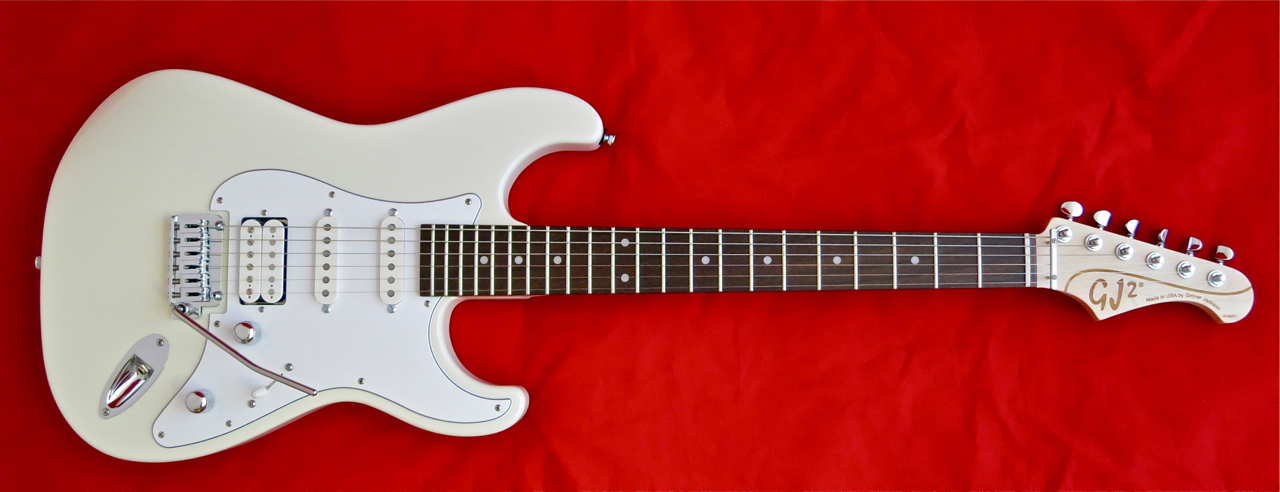
The GJ2 Glendora NLT (this version 1,717 €, incl. gigbag) is the most traditional guitar of our group of five.
The review sample’s body has been crafted from light ash (custom option) and finished in gloss Antique White. The basic version of the Glendora comes with a body made from either basswood, alder or poplar.
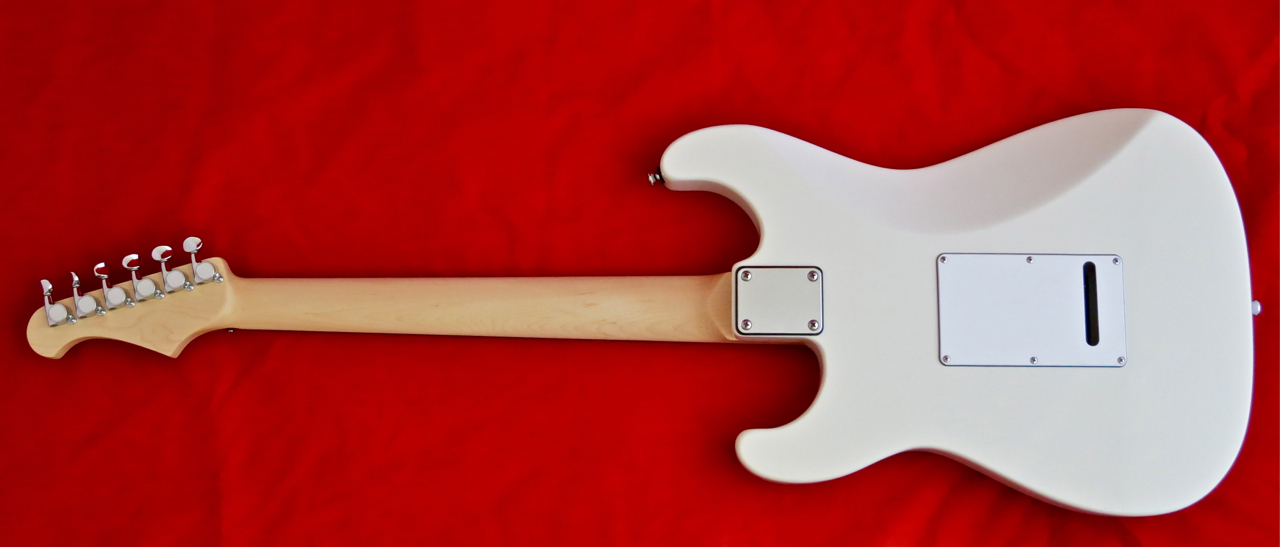
The satin-finished maple neck joins the body in traditional fashion.
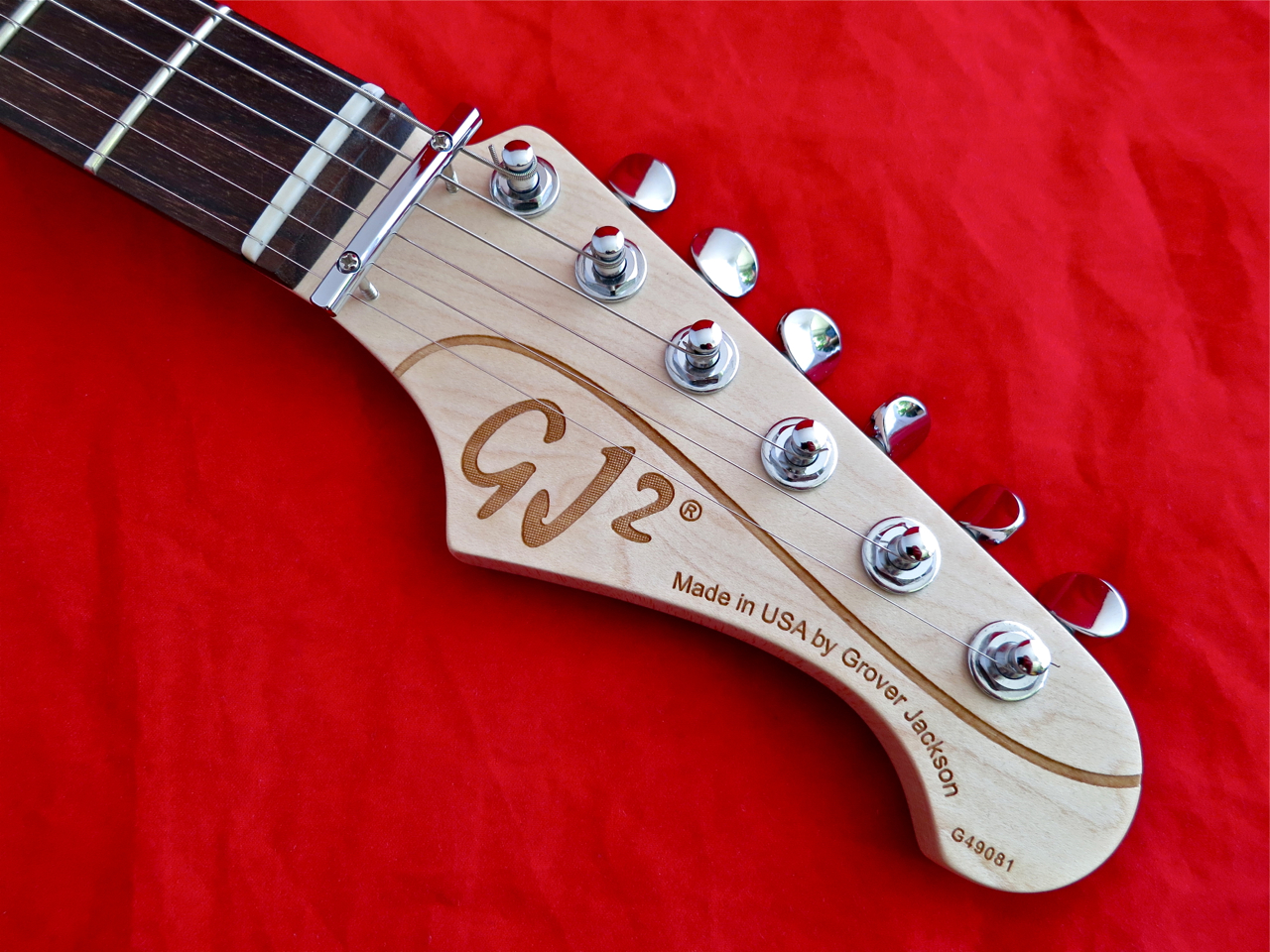
The Glendora’s headstock is a stylish variation on the classic six-in-a-row design.
The tuning machines are quality units from Gotoh.
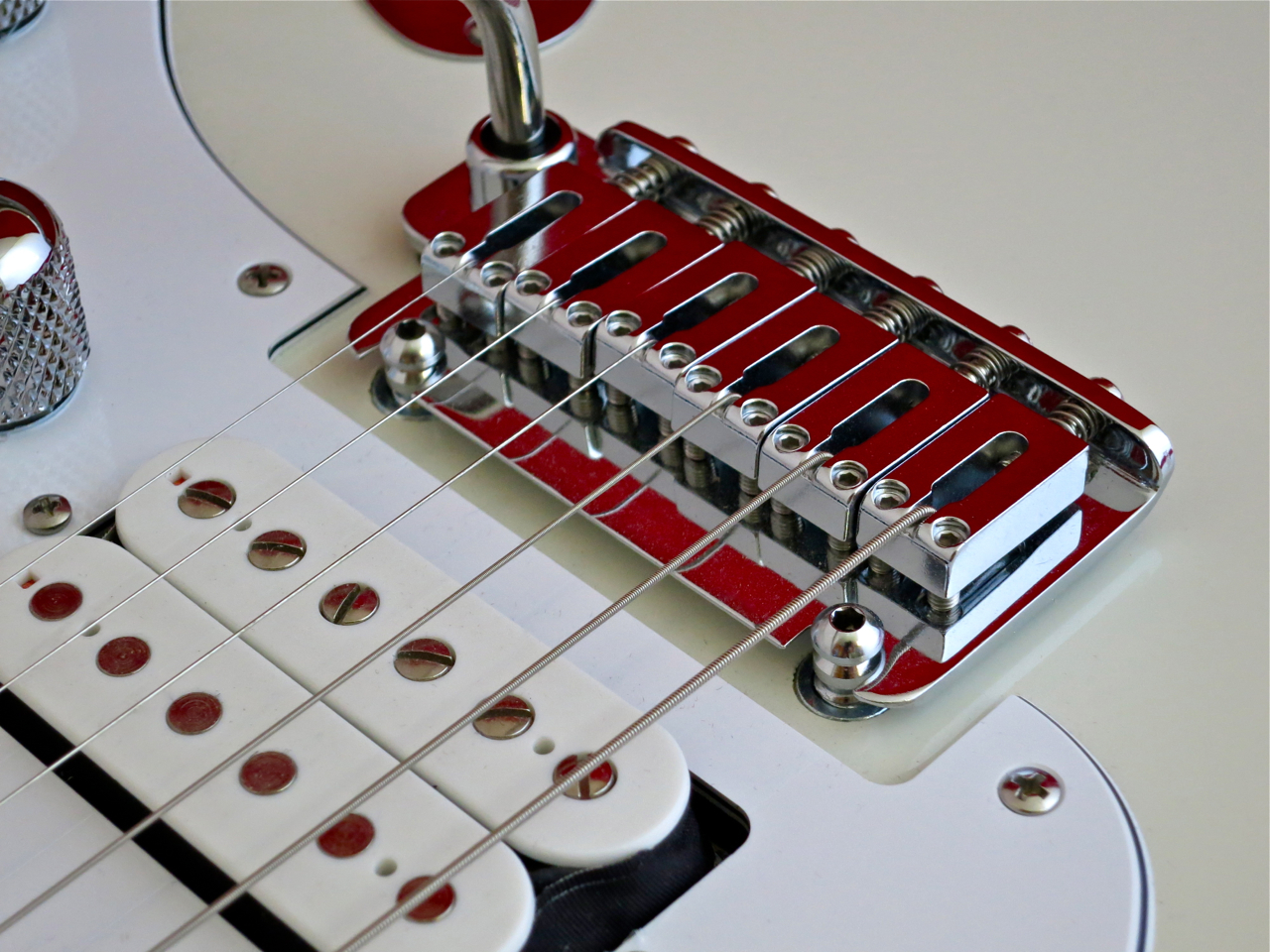
The contemporary two-post vibrato bridge is also a Gotoh design. The bar is simply pushed into the block and kept in place by an adjustable nylon collar.
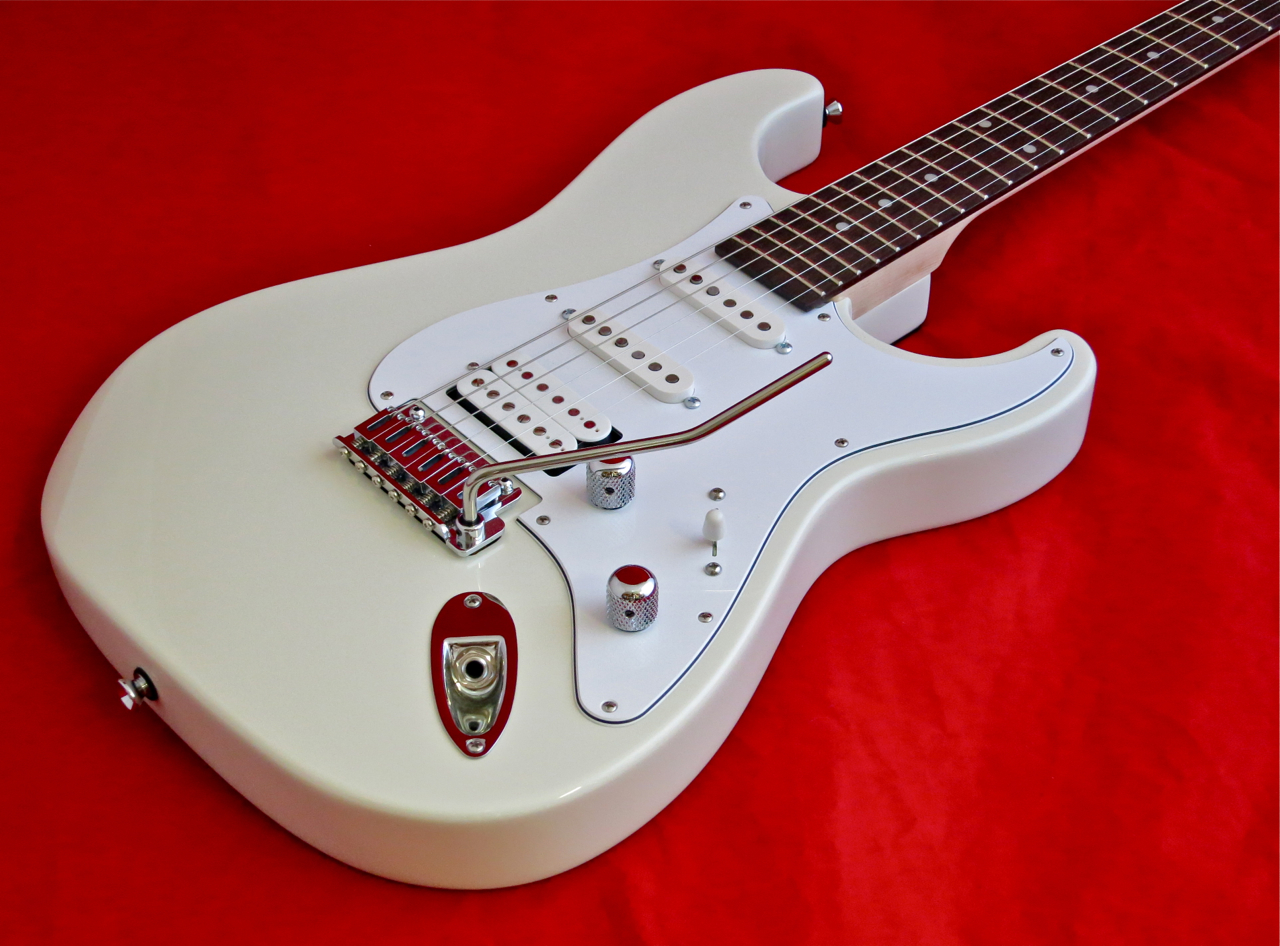
The rosewood fingerboad sports 22 gleaming jumbo-sized frets.
For his new GJ2 guitars Grover Jackson has perfected a new method of applying a compound radius to the fretboard. A compund radius means that the frets have a steeper curve near the nut and get shallower further up towards the body. This gives you the best of both worlds with easy open position chording and effortless string bending higher up the neck without string choking.
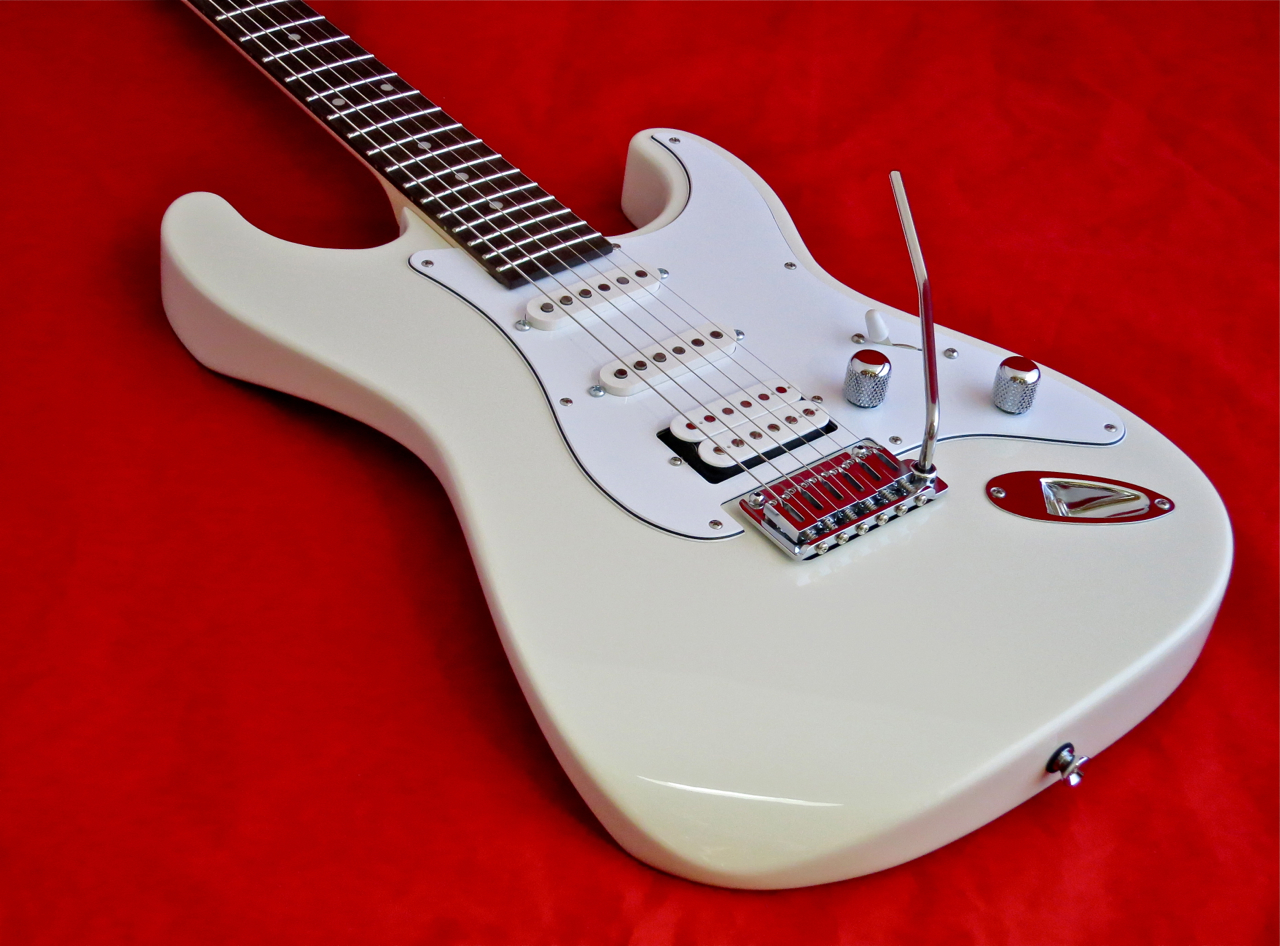
GJ2 Guitars use their own Habanero pickups as standard. Our review sample comes equipped with an HSS-setup, but you can order your Glendora with several different pickup combinations, like the vintage-style SSS or two humbuckers.
The controls comprise a five-way switch, as well as master volume and tone controls.
****
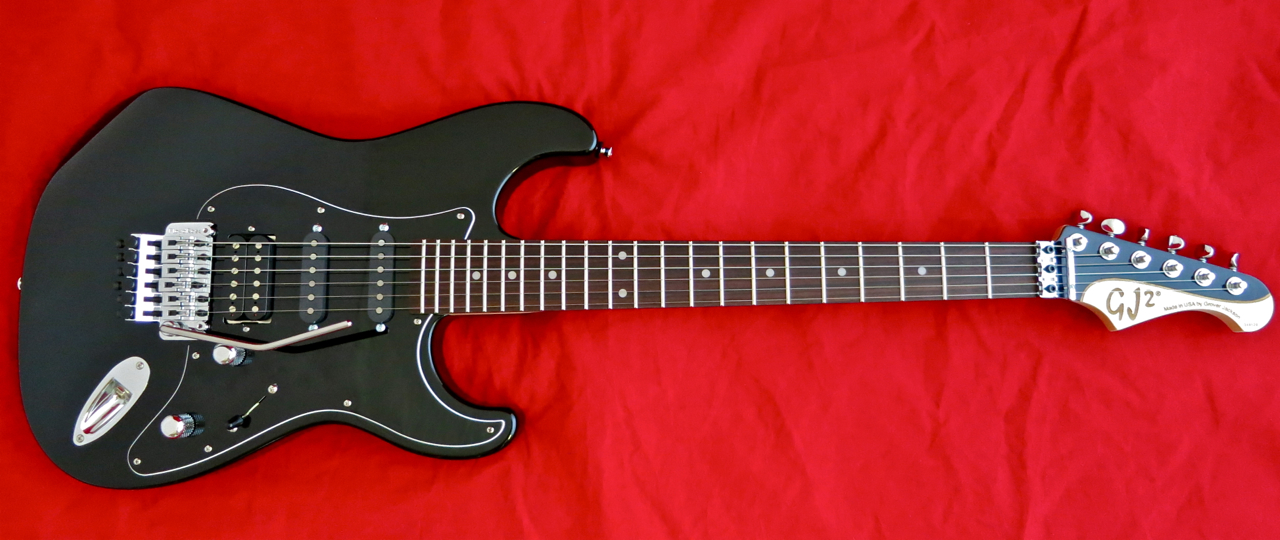
The Glendora FR (this version 1,930 €, incl. lightweight case) is the Floyd Rose-equipped version of the Glendora.
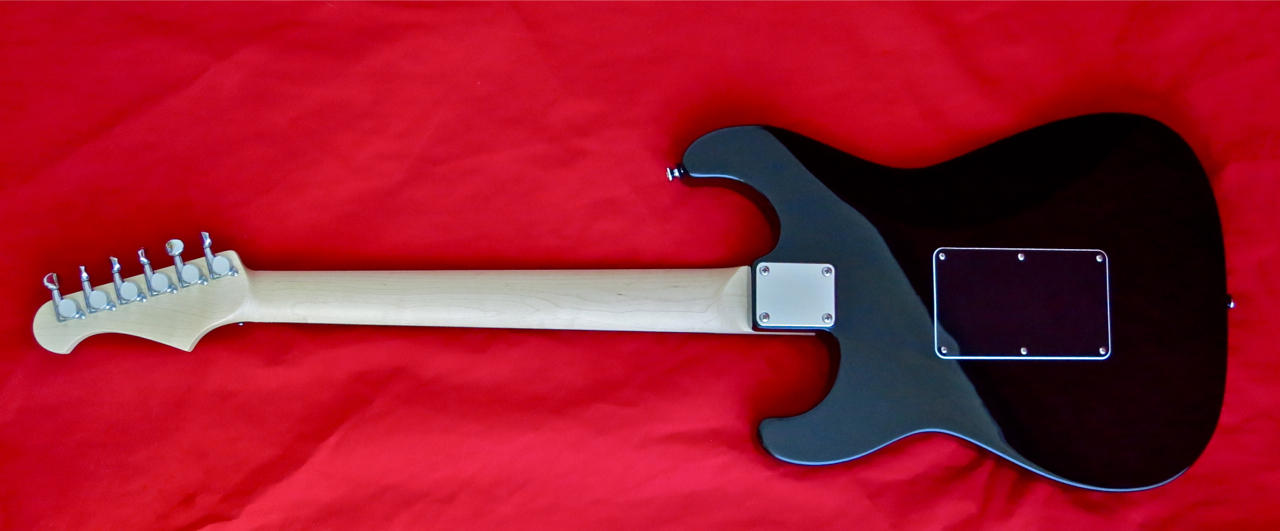
Our review instrument comes with a standard body (basswood, alder or poplar), but apart from that the basic build is the same as on the Glendora NLT.
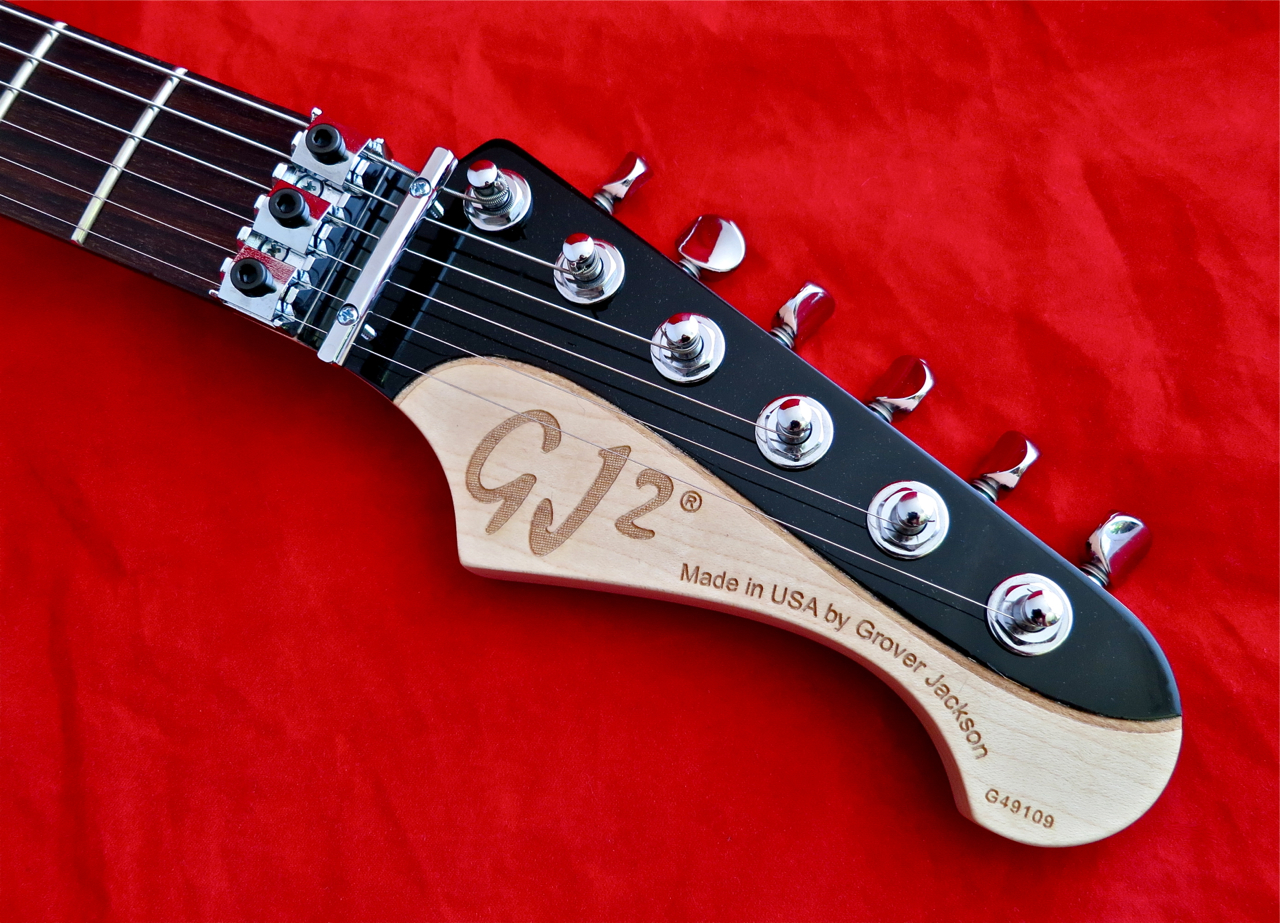
One of the custom options available for a surcharge in the Glendora-range is a matching headcap, just like on this guitar.
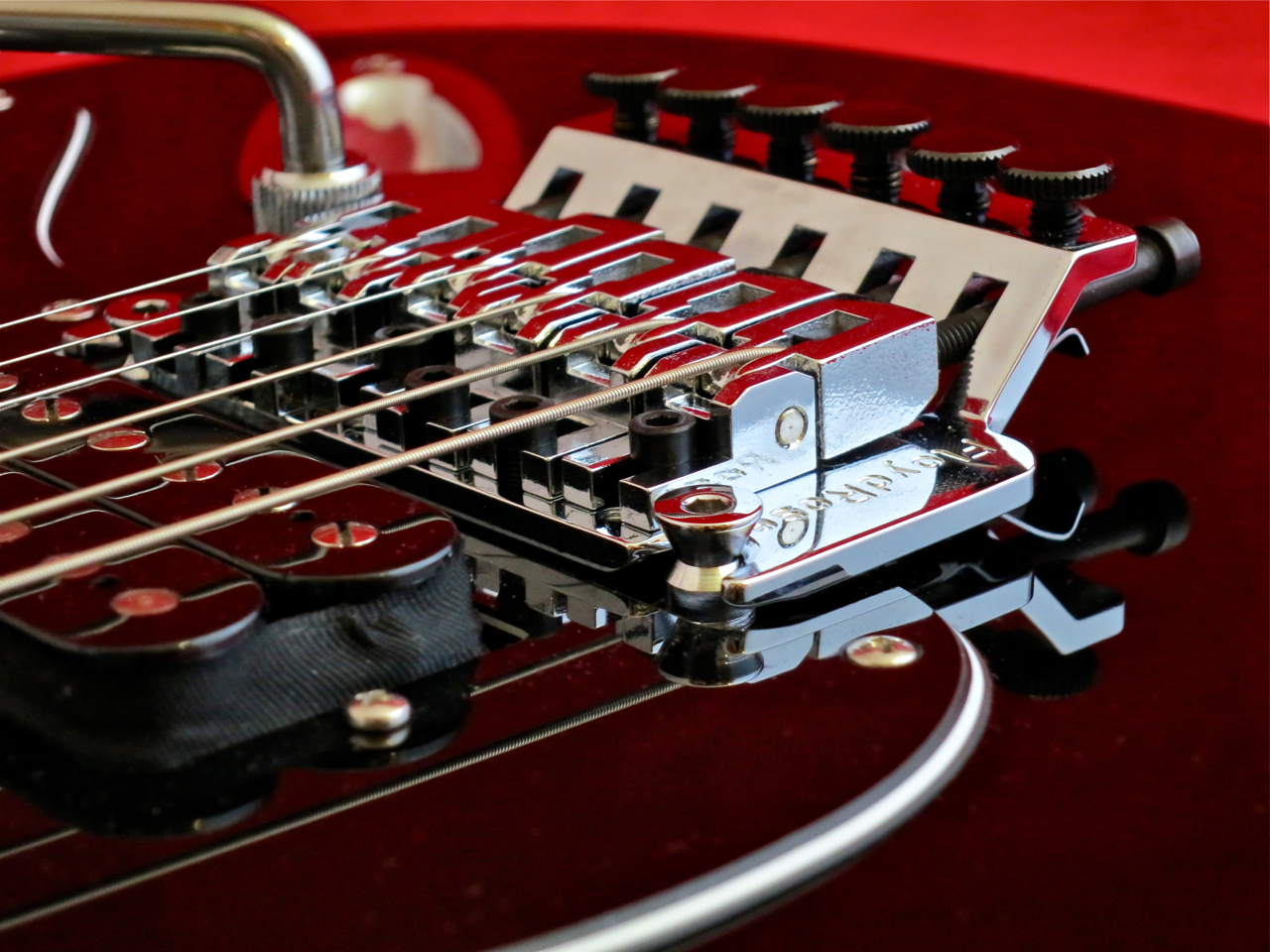
GJ2 Guitars use only top-drawer quality parts, like the Schaller-made steel Floyd Rose bridge on the Glendora FR.
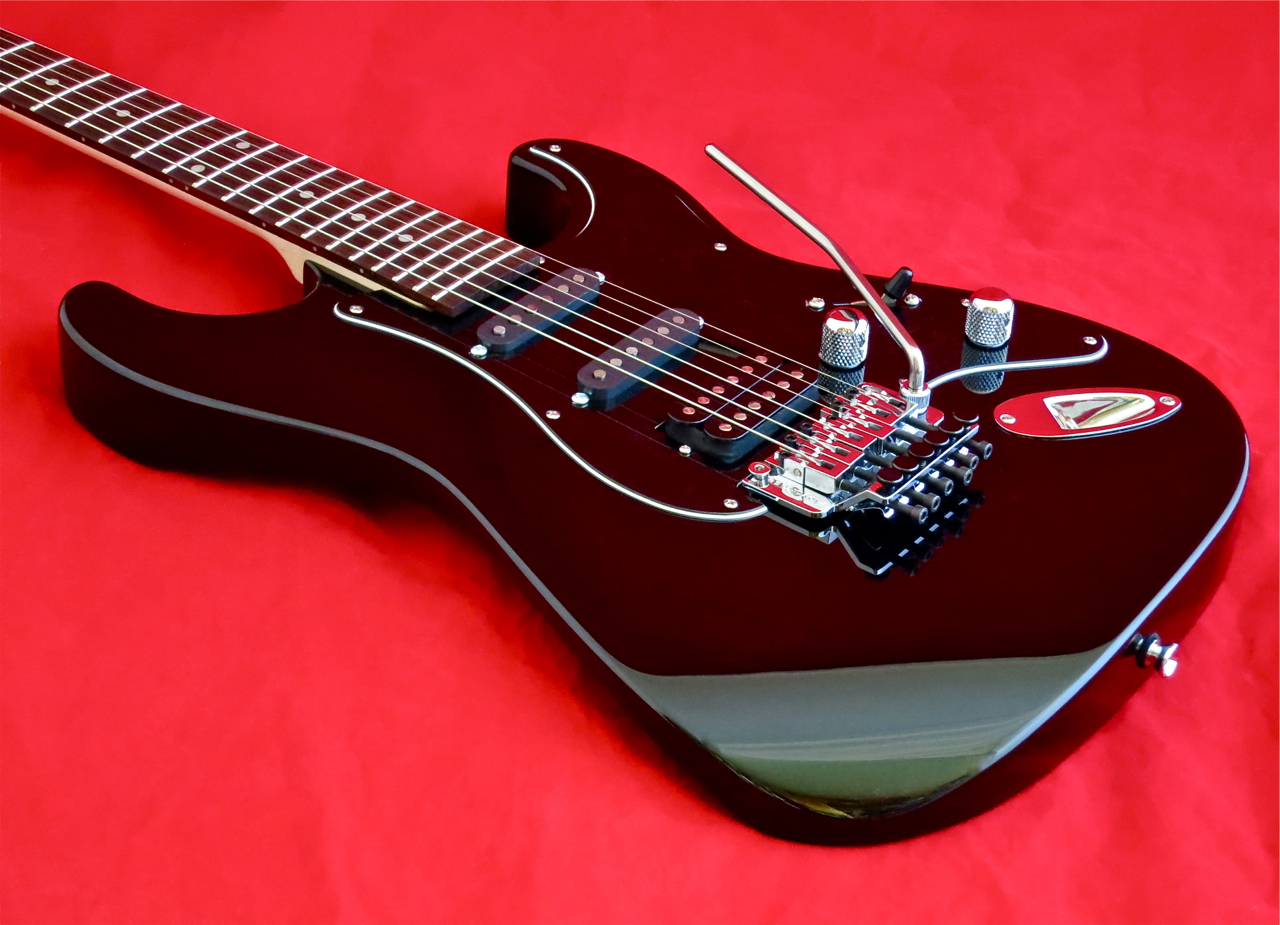
It’s a Habanero-set of two single-coils and one humbucker for this guitar.
****
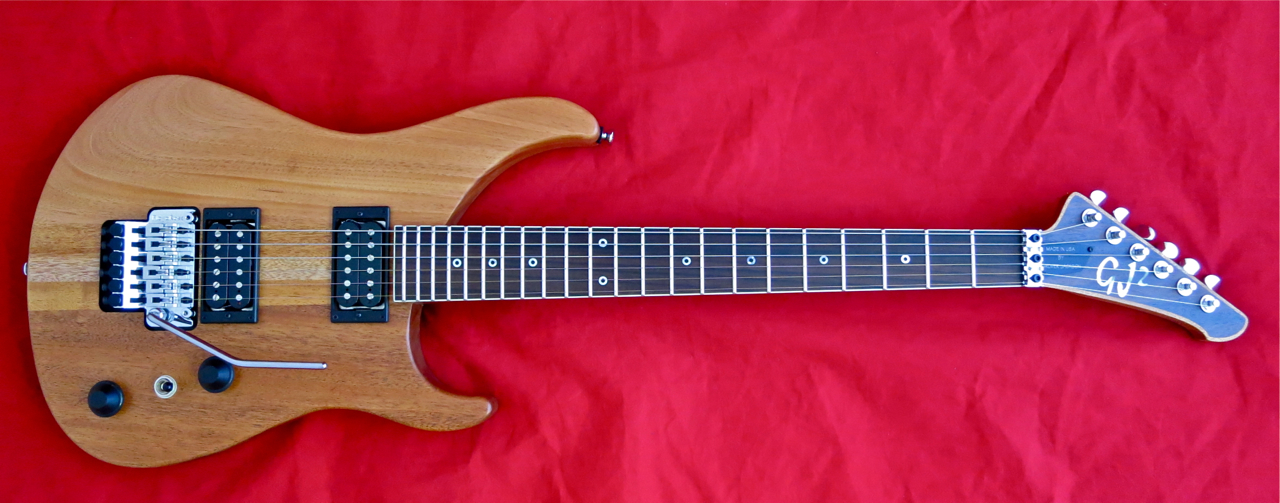
The GJ2 Arete is one of Grover Jackson’s new designs based on a through-neck. There are three different basic versions of the Arete available, called 3-Star, 4-Star and 5-Star.
The Arete 4-Star (this version 2,231 €, incl. lightweight case) is the middle model, which is crafted almost completely from South-American mahogany. The neck uses three long strips side-by-side for added stiffness.
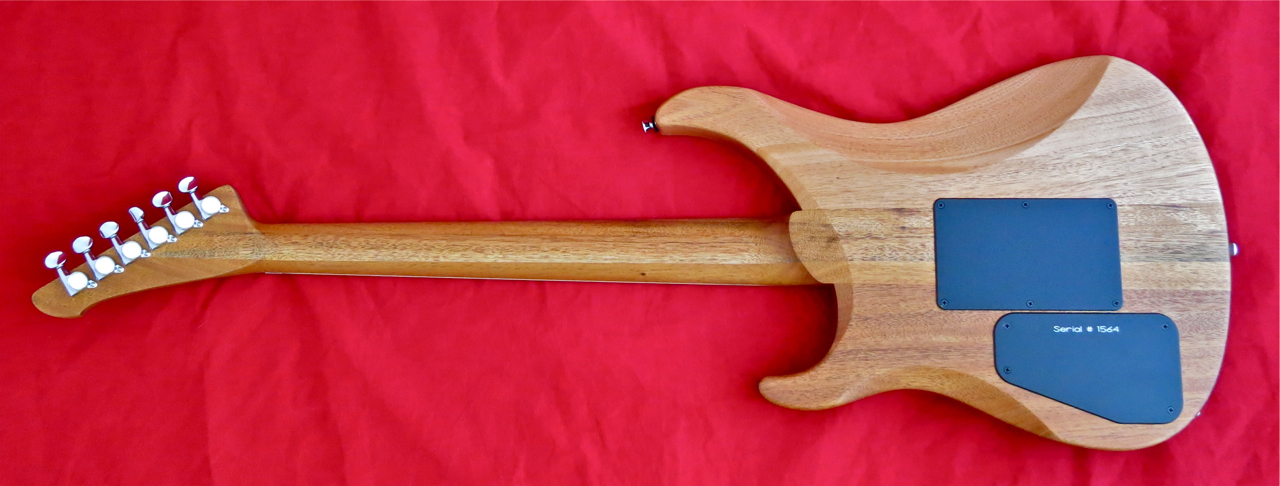
Two mahogany wings make up the streamlined body. The more affordable Arete 3-Star is made from sapele, while the more expensive 5-Star counterpart gives you several different body woods to choose from.
The Arete 4-Star comes in a hand-rubbed oil finish. The cover plates are made from aluminium.
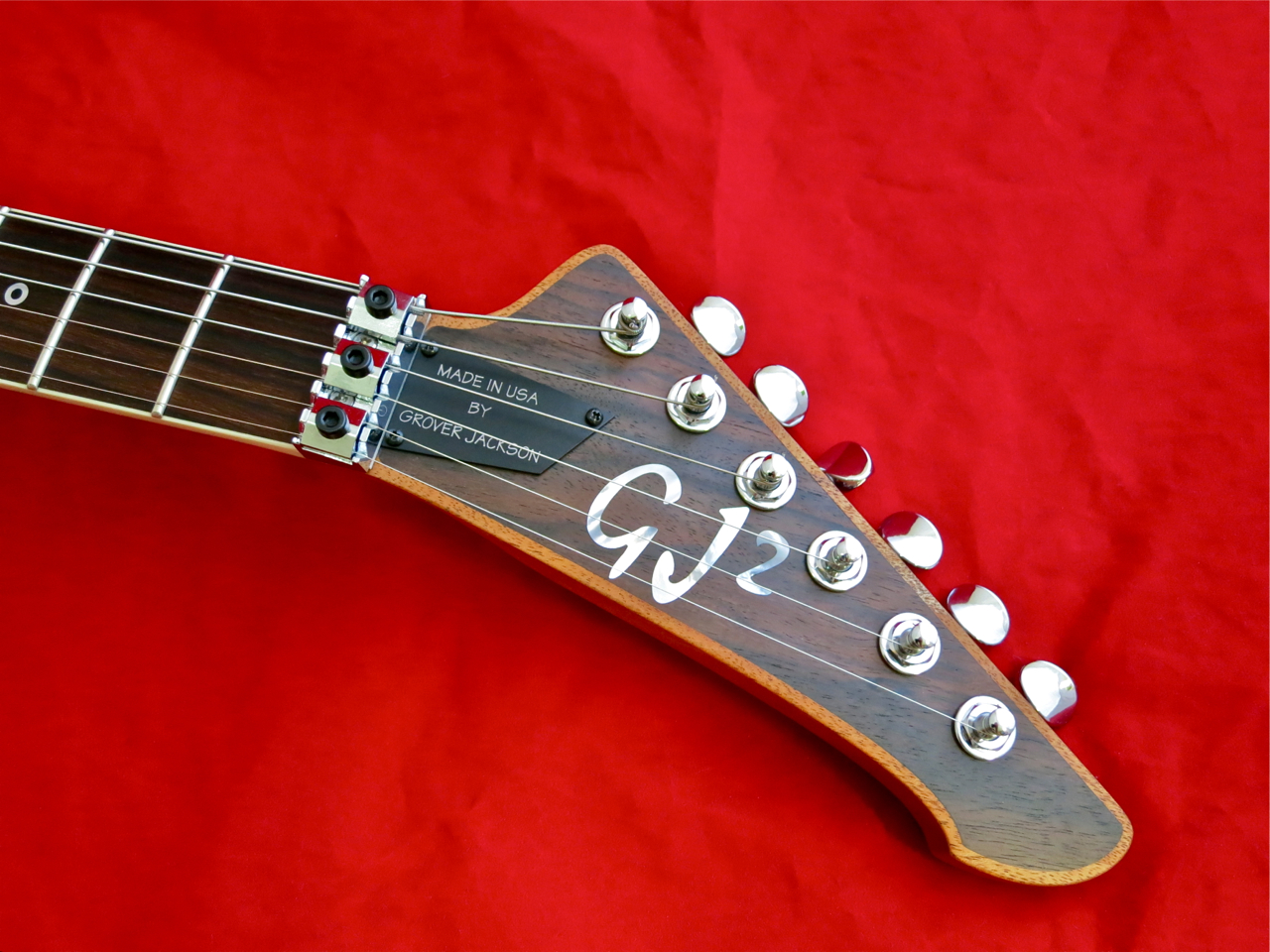
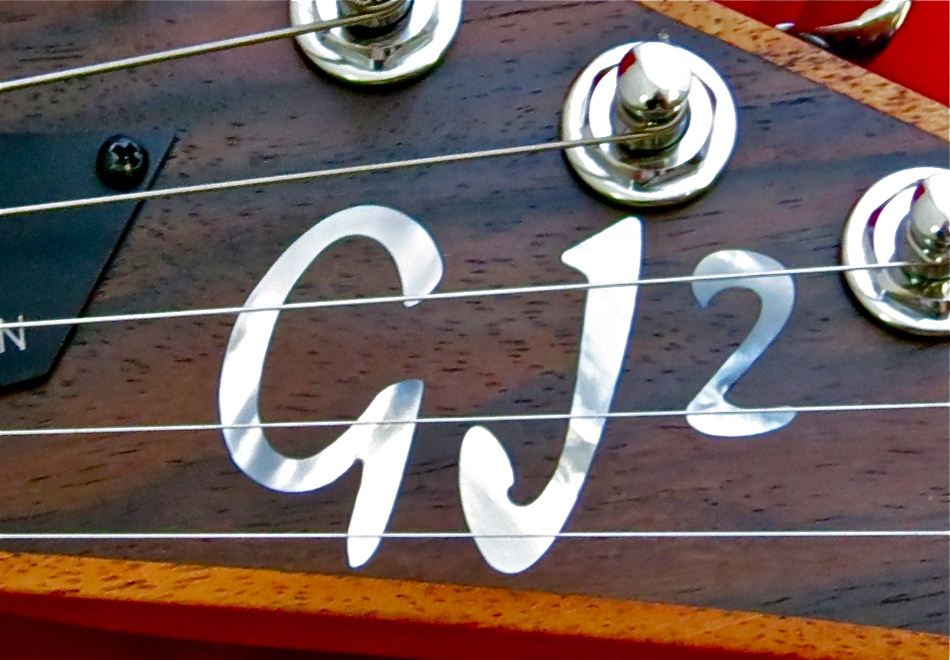
The headstock sports one of GJ2 Guitars’ special features – the Invisible Binding. This is achieved by routing out a shallow ”pool” on the headstock’s face, into which a large rosewood plate is then inlaid.
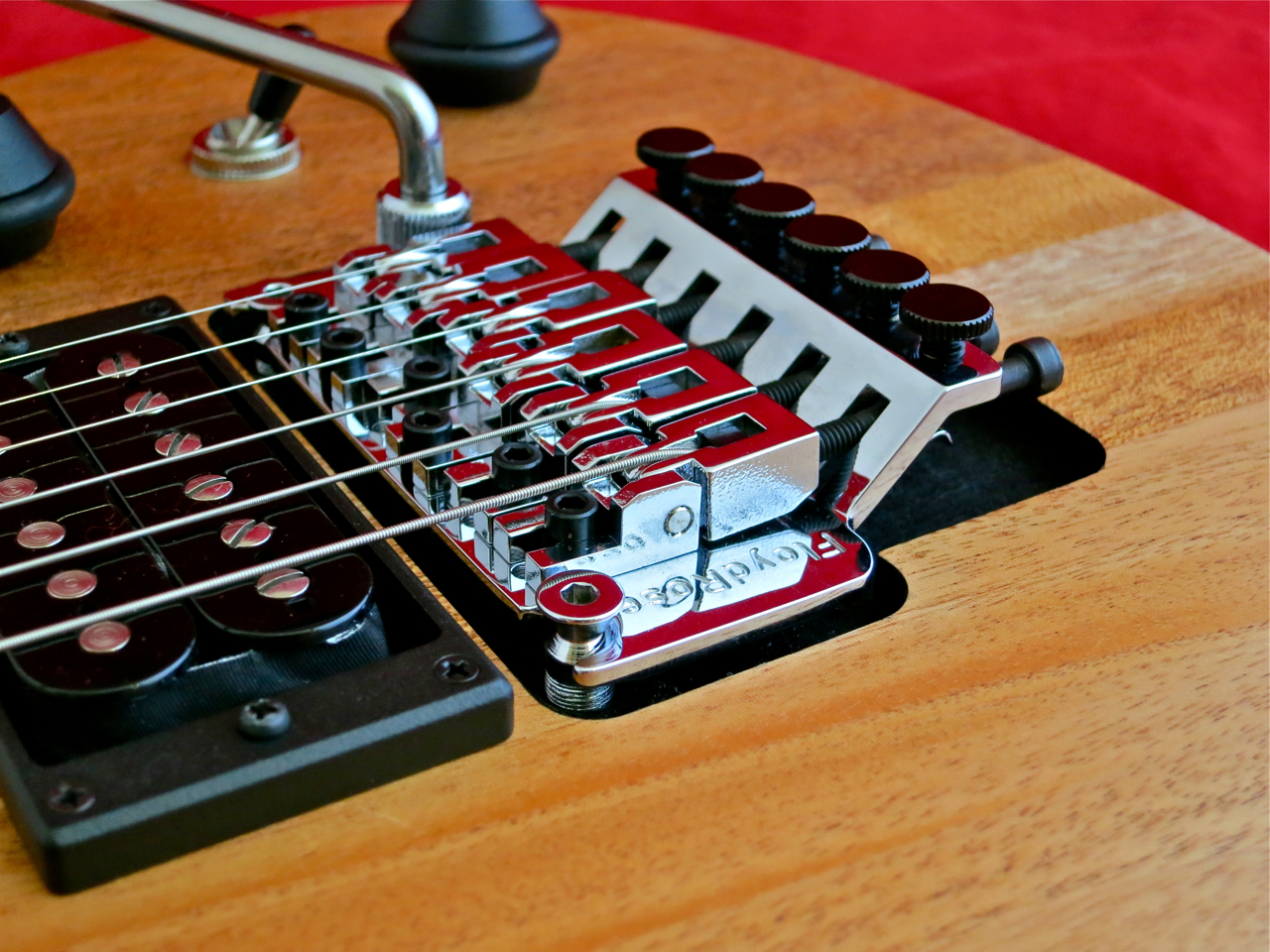
All Arete 4-Star guitars are vibrato-equipped – they come either with the same knife-edge bridge as on the Glendora NTL, or with a steel Floyd Rose as on our review instrument.
The black pickup bezels feature a structured surface.

The bound rosewood fingerboard sports Mini Bull’s Eye inlays, as well as 22 jumbo frets.
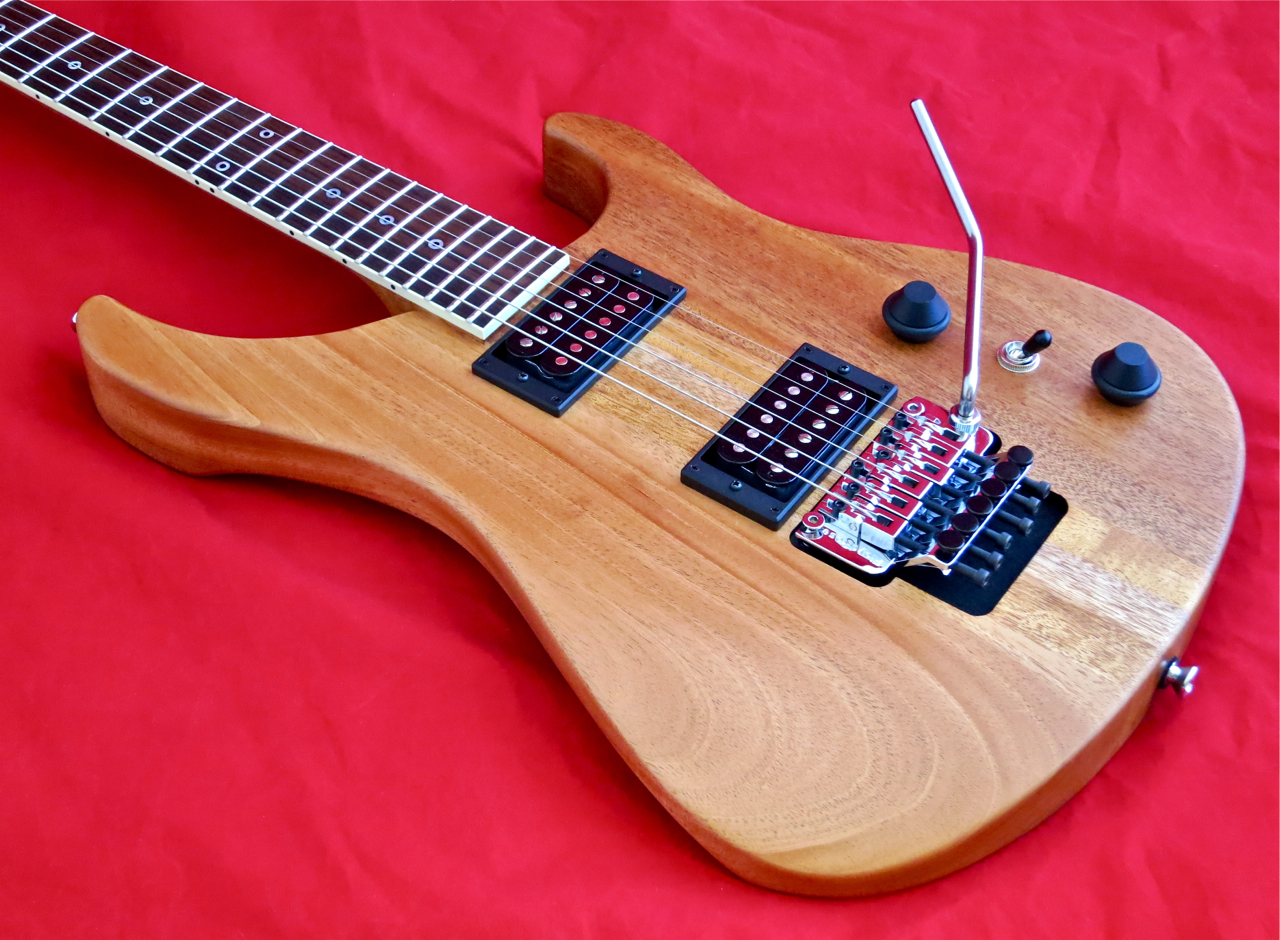
The basic version of the Arete 4-Star is equipped with two Habanero humbuckers, but you can also order HSS- or HSH-configurations, should you so desire.
The three-way toggle is mounted between the master volume and tone controls. GJ2 Guitars’ cool Flying Saucer-knobs not only look great, but are also easy to adjust.
****
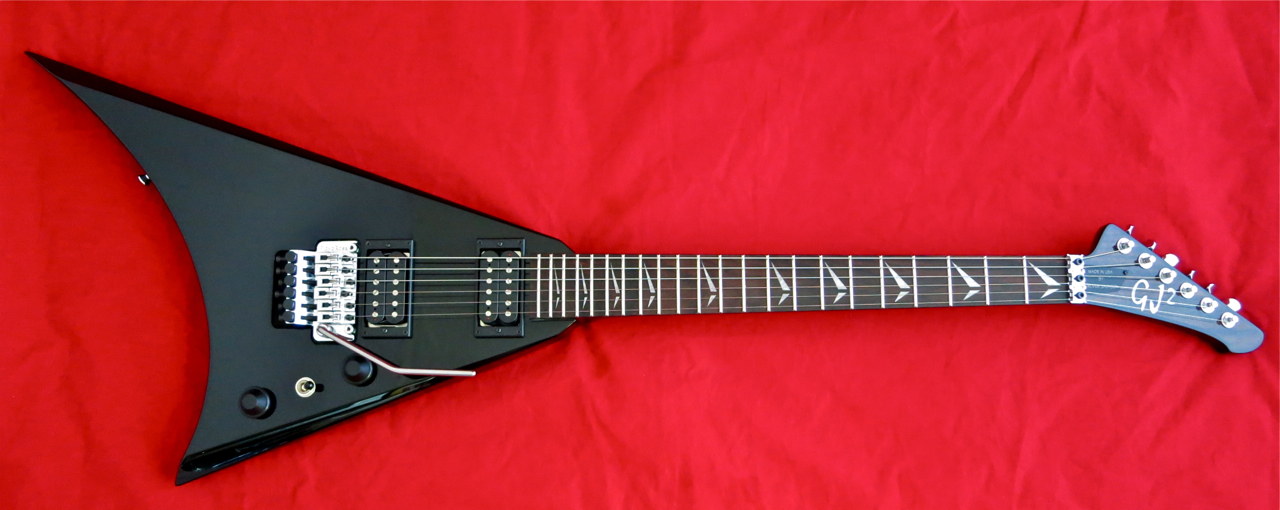
A through-neck crafted from three side-by-side strips of maple flanked by basswood wings – this is the basic recipe behind the GJ2 Concorde 4-Star (this version 2,768 €, including hard case).
All Concorde-models feature a full-length, 64.8 cm (25.5-inch) scale.
The Concorde 4-Star is available in five gloss finishes – Jet Black, Stark White, Antique White, Sports Car Red and GJ Blue – and either a Floyd Rose vibrato (as on the review sample) or a Gotoh hardtail bridge.
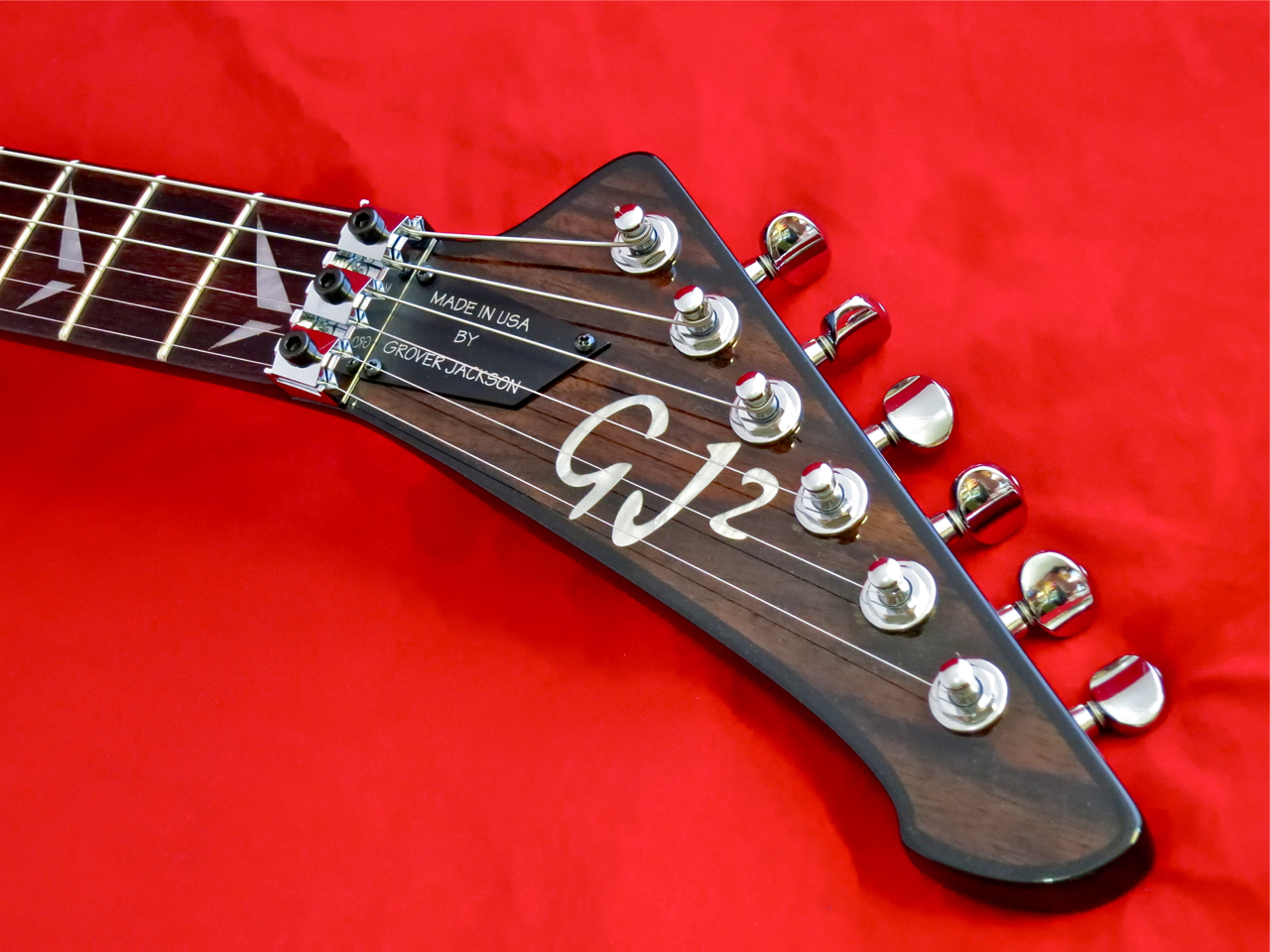
The hardware on a Concorde 4-Star is chrome-plated.
The fretboard is equipped with 22 jumbo frets and pearloid inlays.
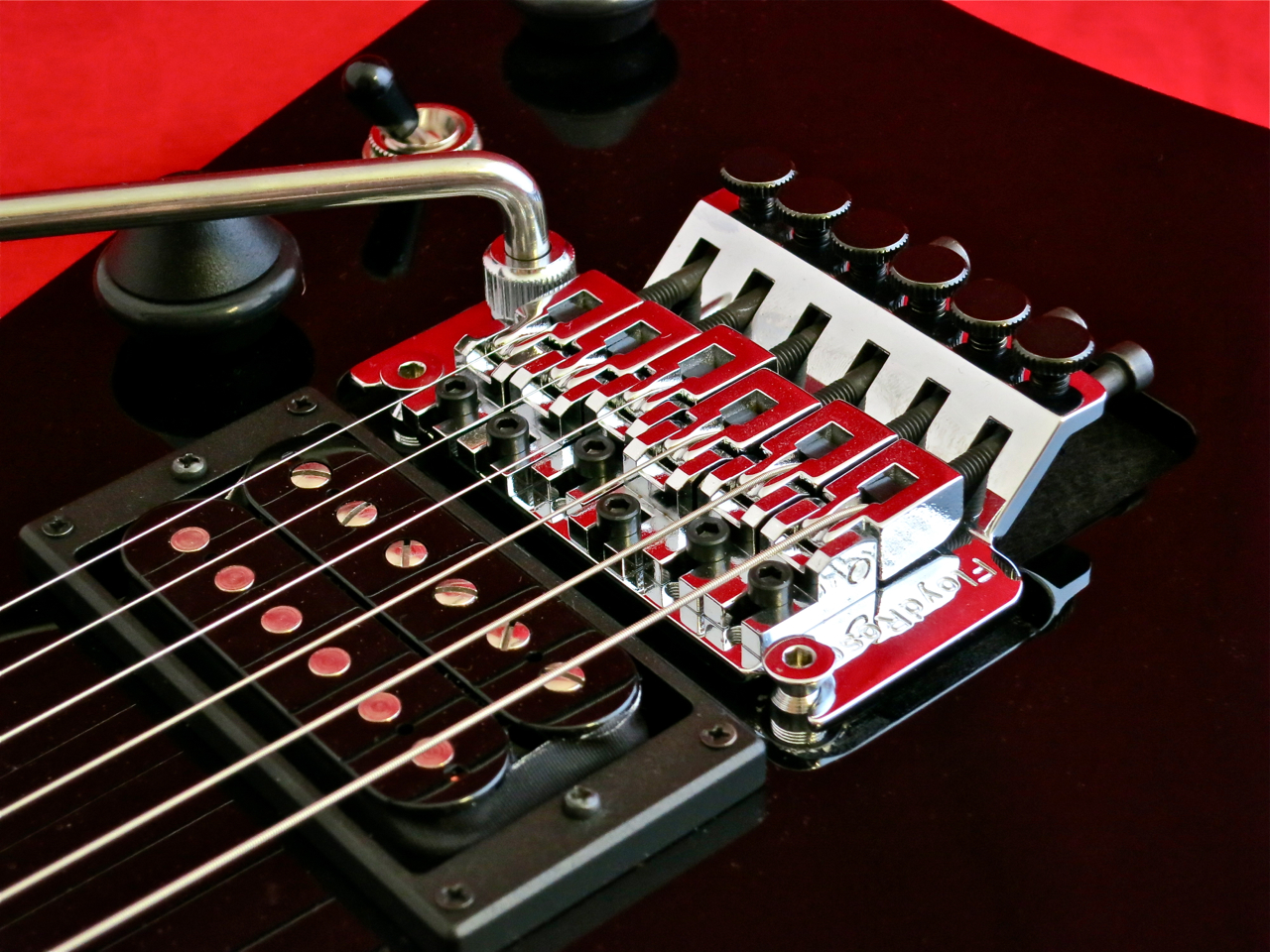
The volume knob is easy to reach with your pinkie.
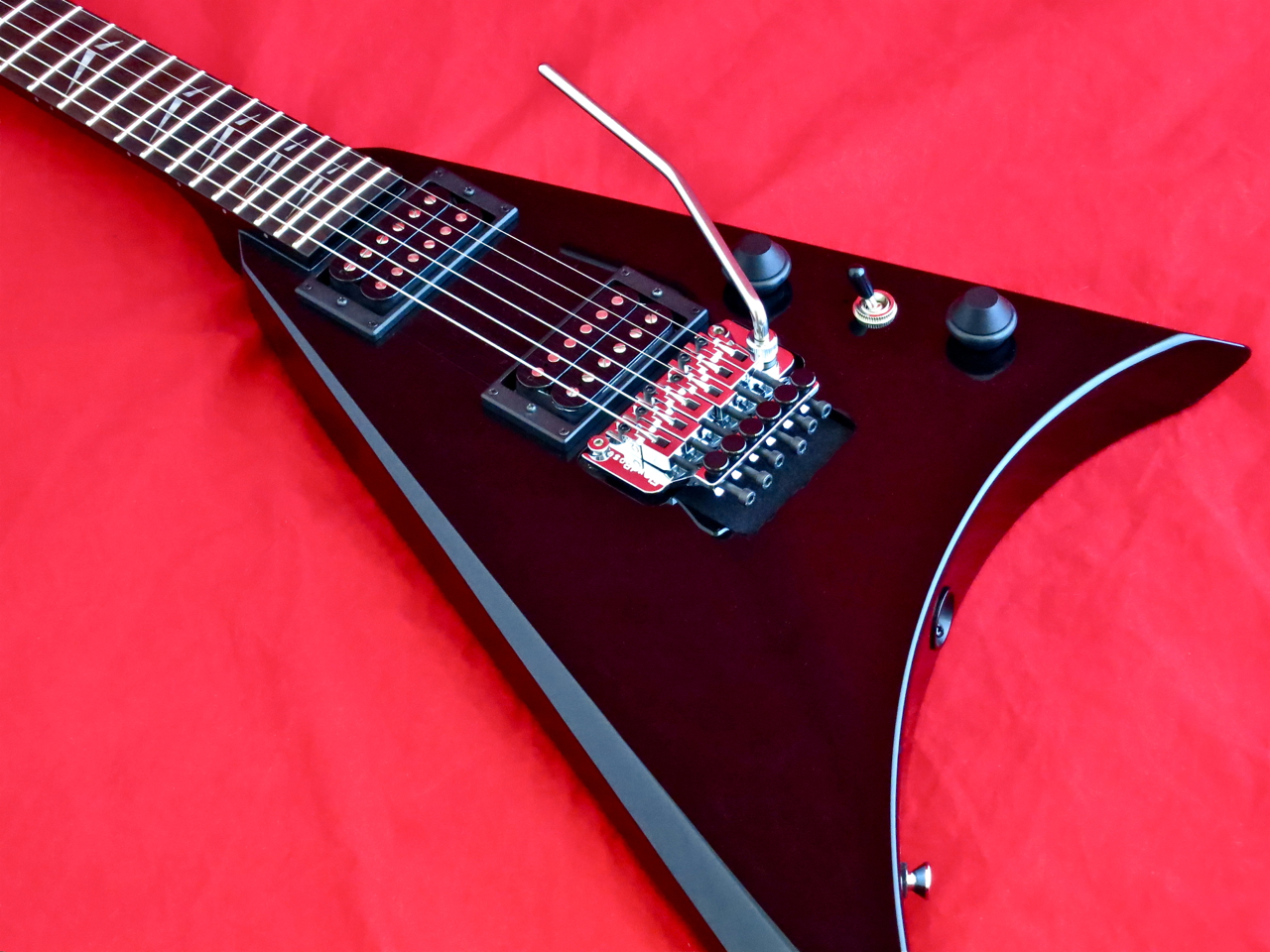
Two Hanbanero humbuckers, one master volume, one master tone control and a three-way toggle – what more does a Rock God need?
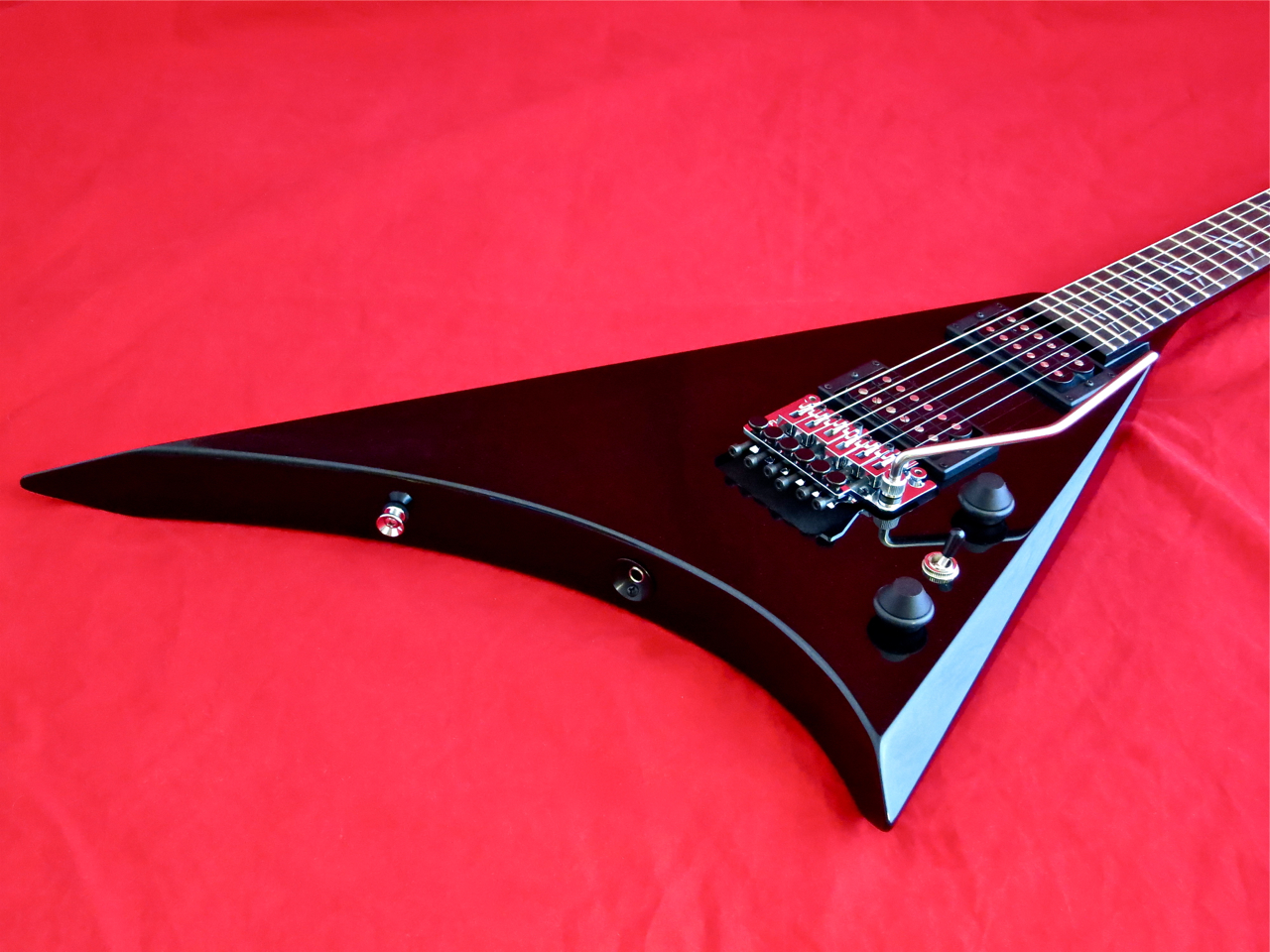
The placement of the output jack is a nifty little feature.
****
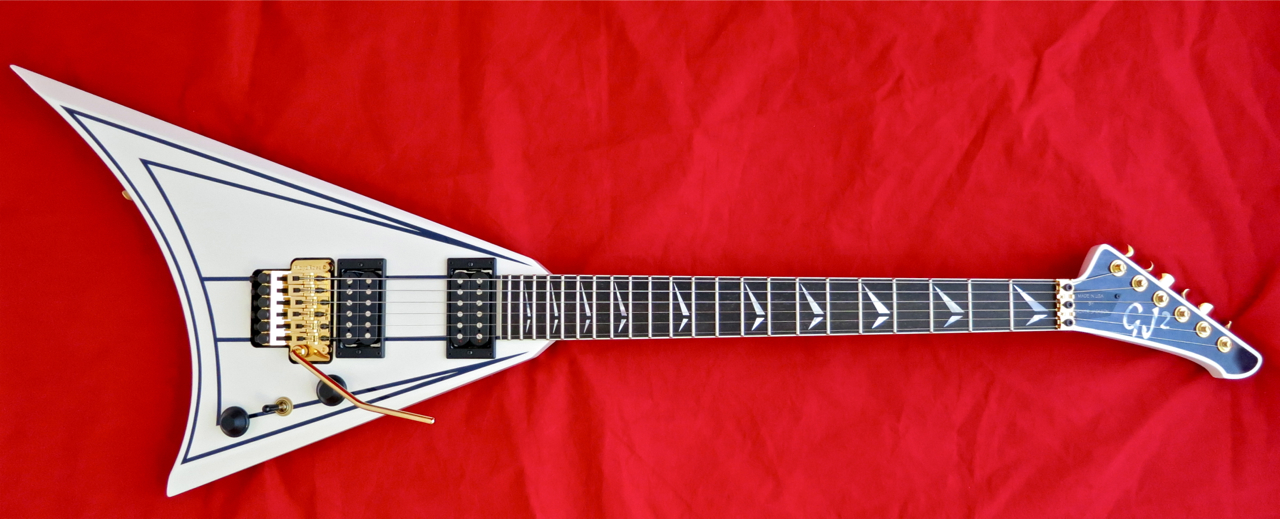
This is GJ2 Guitars’ ultimate Heavy Dream Machine:
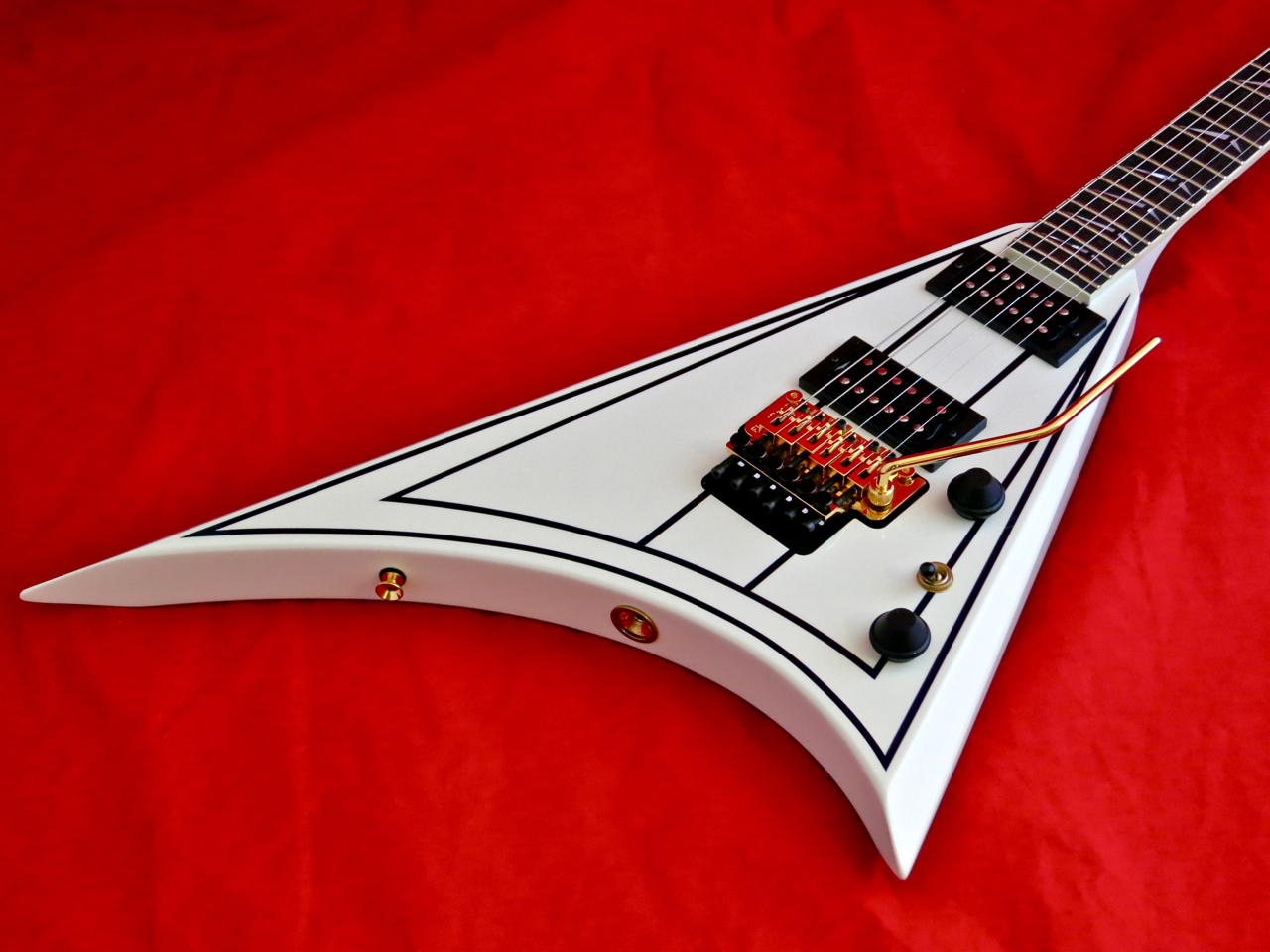
The Concorde 5-Star (this version 4,103 €, incl. hard case) can be had – for an additional charge – finished in a custom finish, such as the Randy Rhoads-style pinstripe graphics on this guitar.
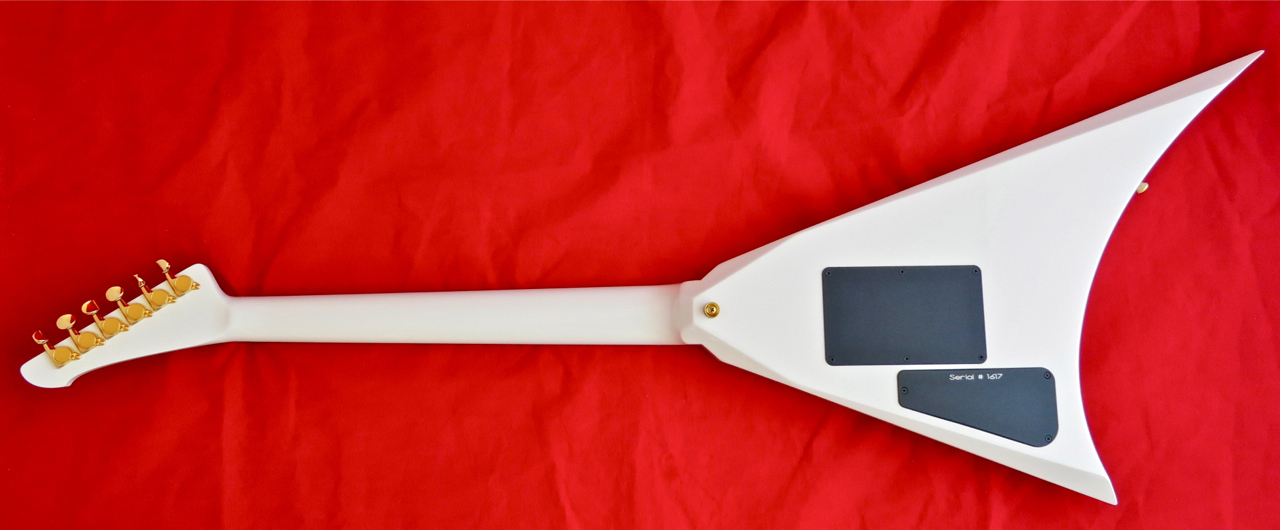
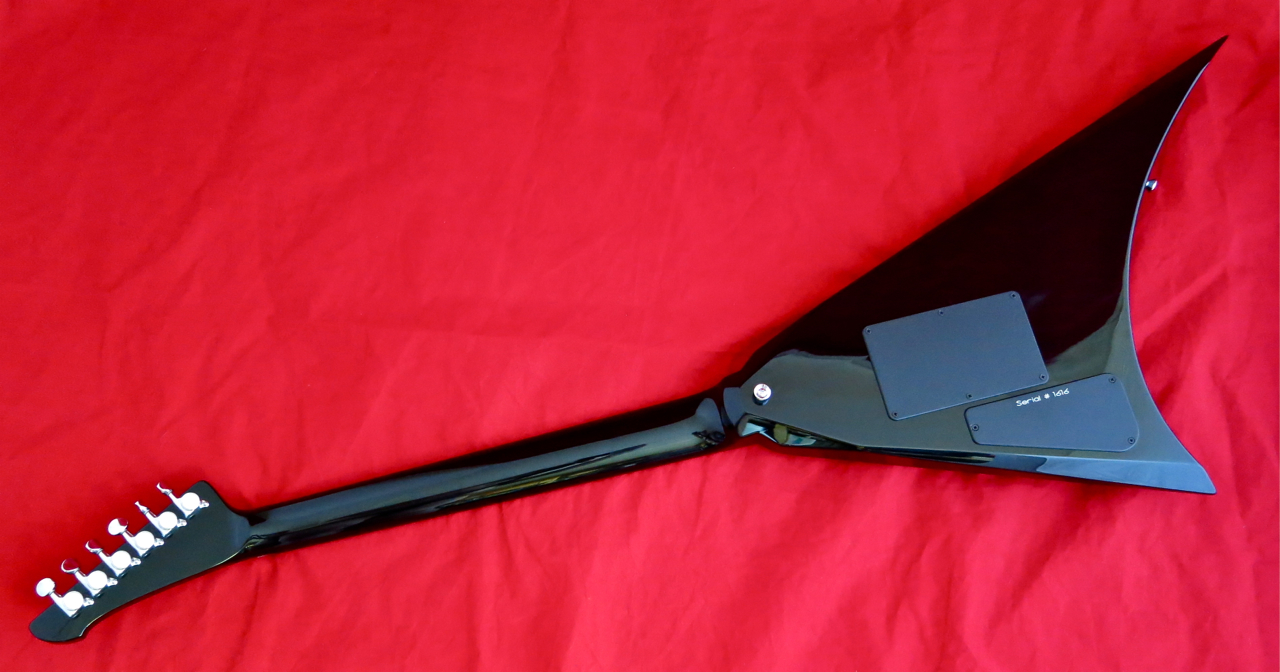
The back plates of the Concorde-models are made of aluminium.
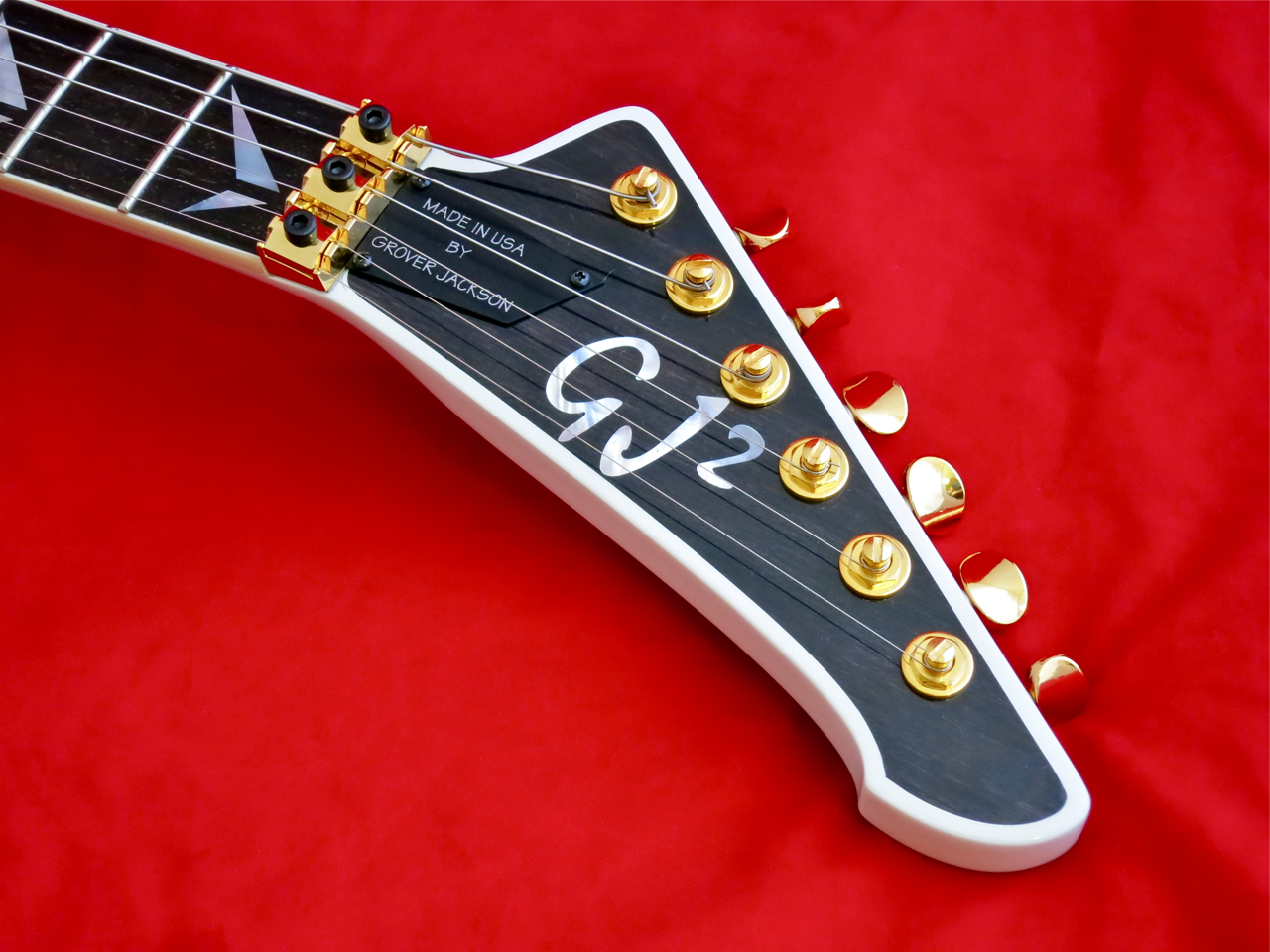
The Concorde 5-Star sports gold-coloured hardware. Our review sample had optional, locking Gotoh-tuners installed.
Ebony is the material of choice for the bound fretboard, as well as the headstock inlay.
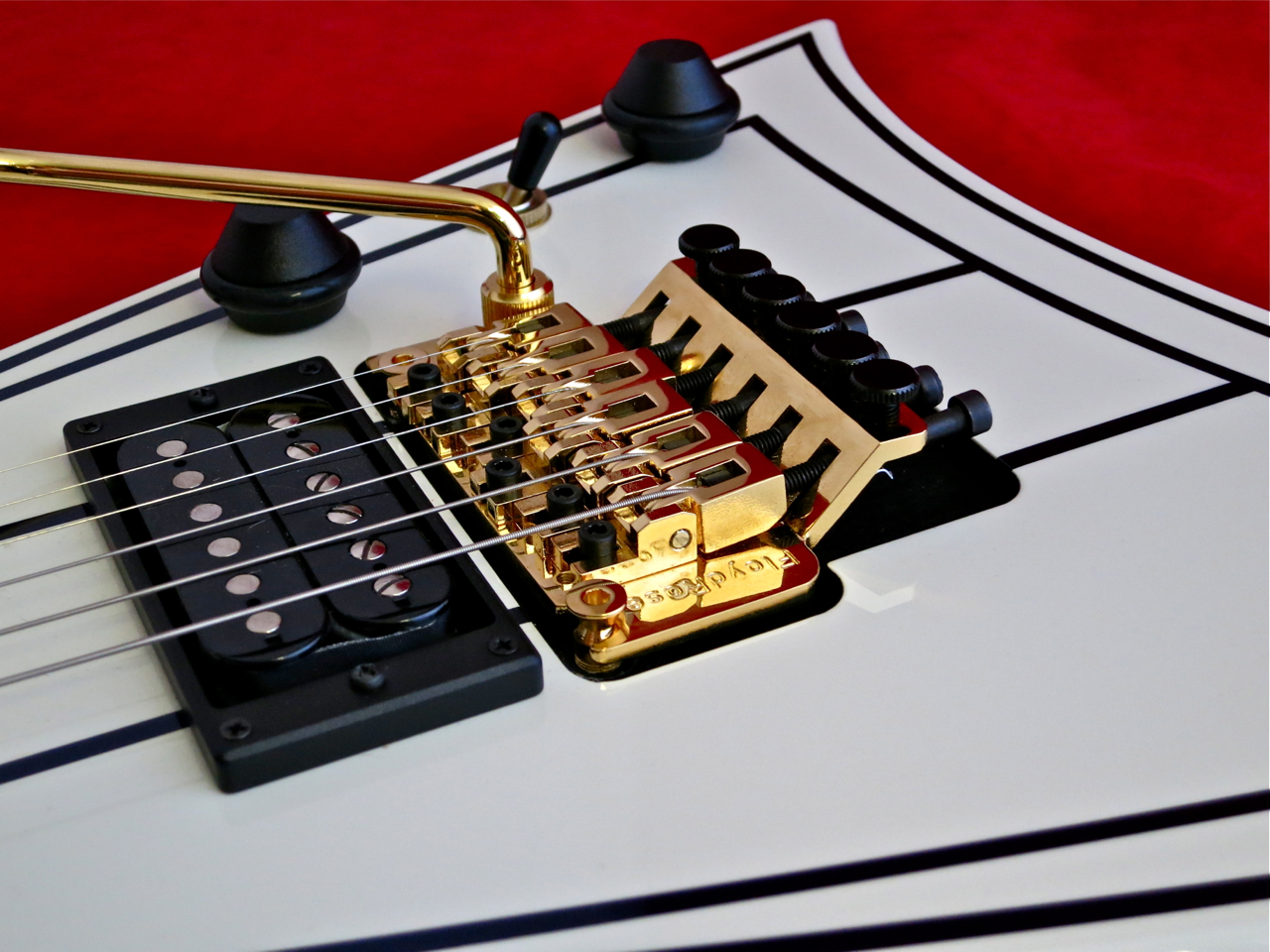
Here’s a closer look at the golden Floyd Rose bridge.
The inlays on the Concorde 5-Star are genuine pearl.
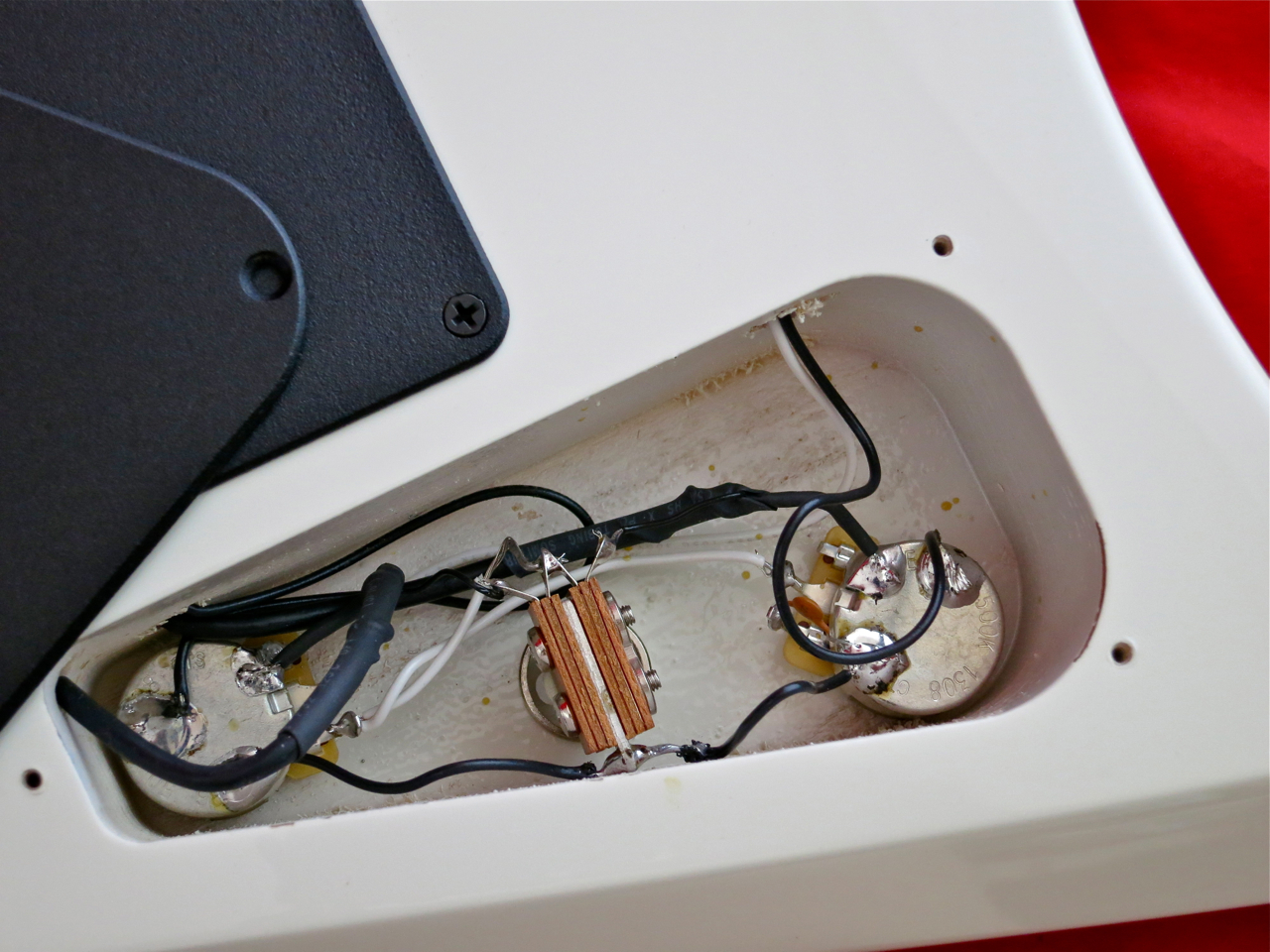
…and here’s a little peek into the very clean control cavity.
****
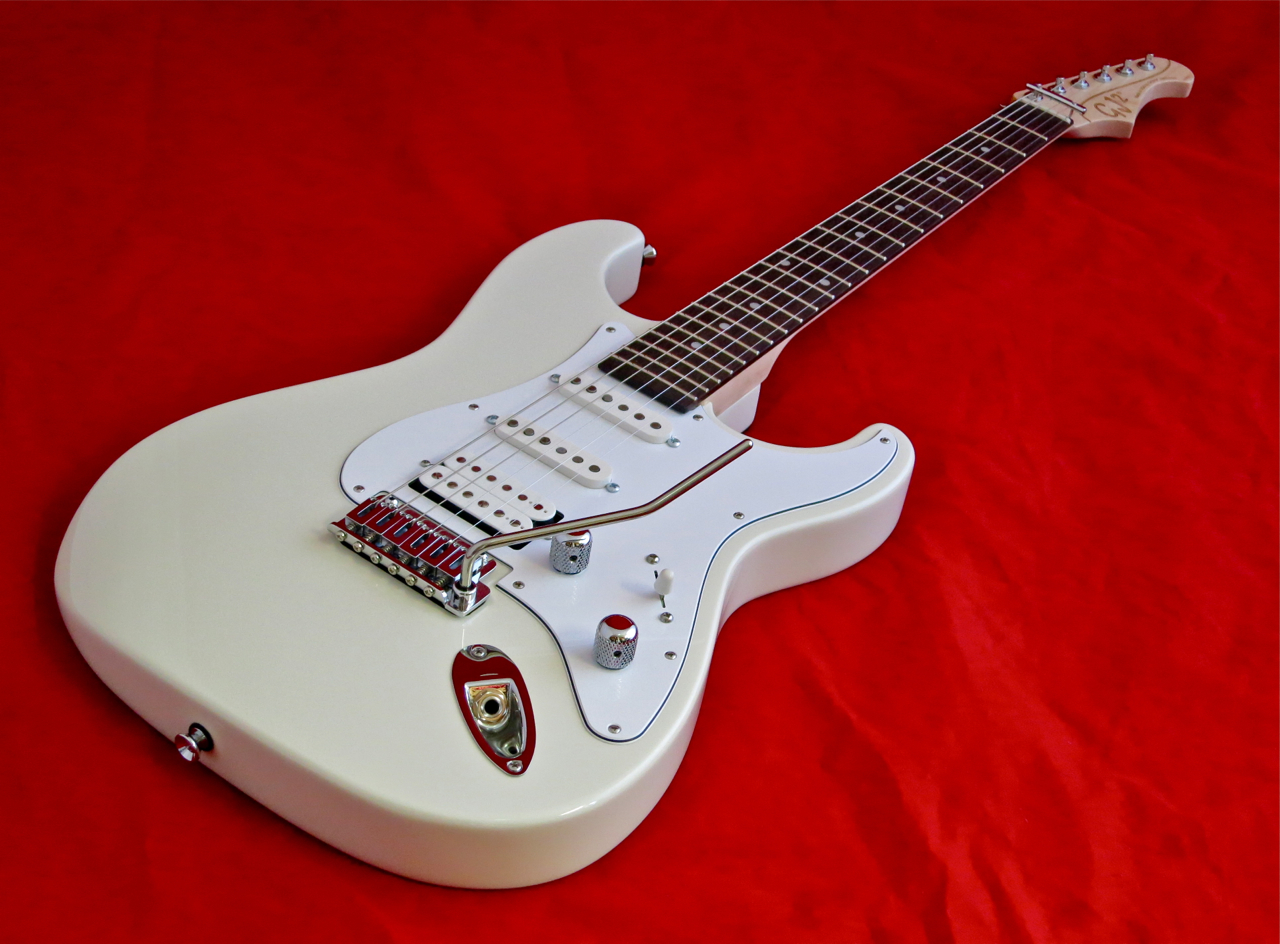
The feather-light ash-bodied GJ2 Glendora NLT is a fantastic S-style guitar for the connoisseur!
The Glendora’s playability is first-rate, and the guitar’s satin-finished neck, with its oval C-profile feels like an old friend.
Played acoustically there’s a hefty dose of woody dryness and sparkling top end, no doubt thanks to the ash body. The Glendora NLT’s displays an open voice with a nicely clucking attack.
I have only good things to say about GJ2’s Habanero pickups – they sound great, they are dynamically rich and the whole set is well balanced in terms of tone and output level.
Here’s a short clip played using the neck pickup:
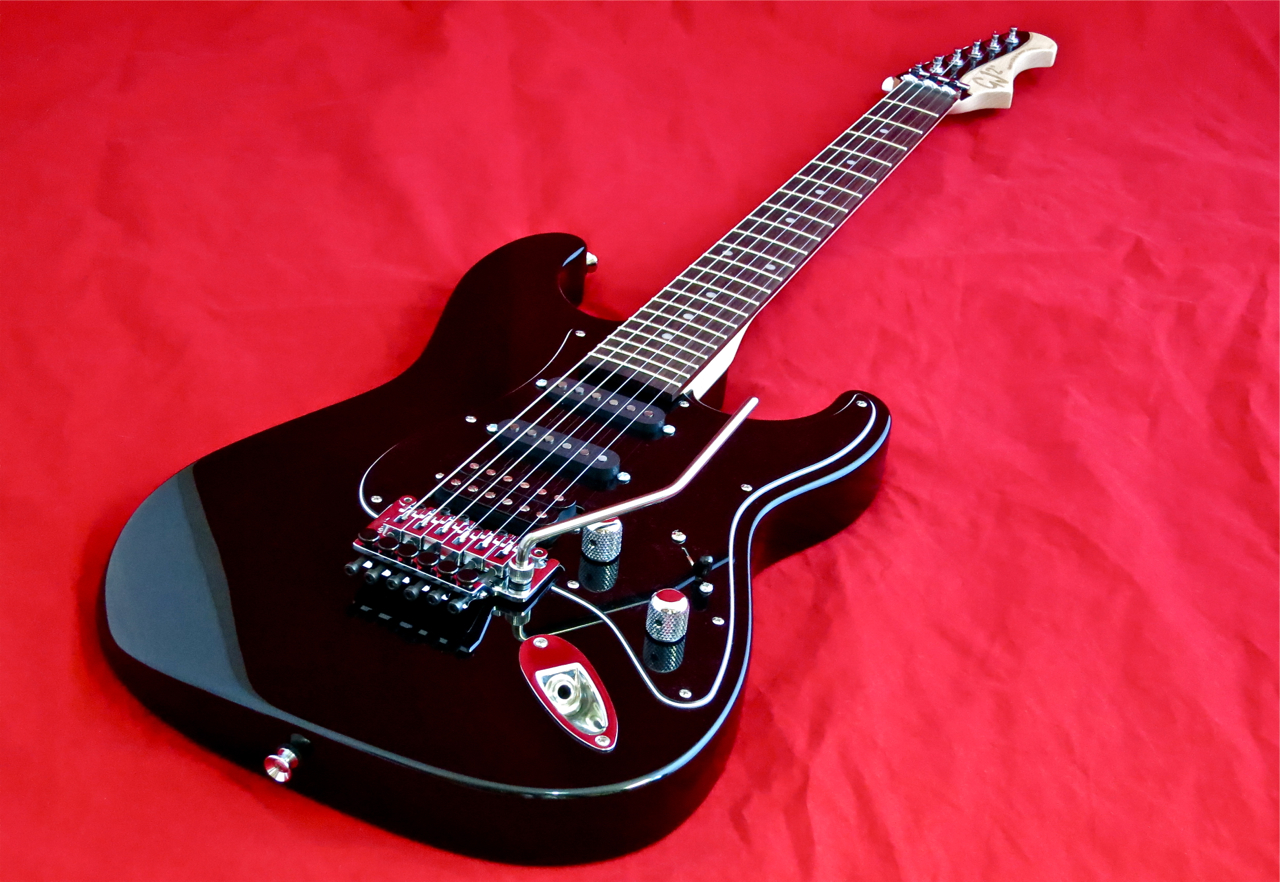
The workmanship, feel and playability of the Glendora FR is the same as in the NLT-version – simply fantastic!
Acoustically there’s maybe a tad more roundness in the mid-range and a slightly fatter bass on display in the Glendora FR, which is probably a result of its standard body. On the other hand, the steel Floyd Rose adds its own sprinkling of presence bite into the mix.
Because the bridge humbucker isn’t overpowering the guitar’s single-coils, there’s plenty of fun to be had using the second switch position (bridge and middle):
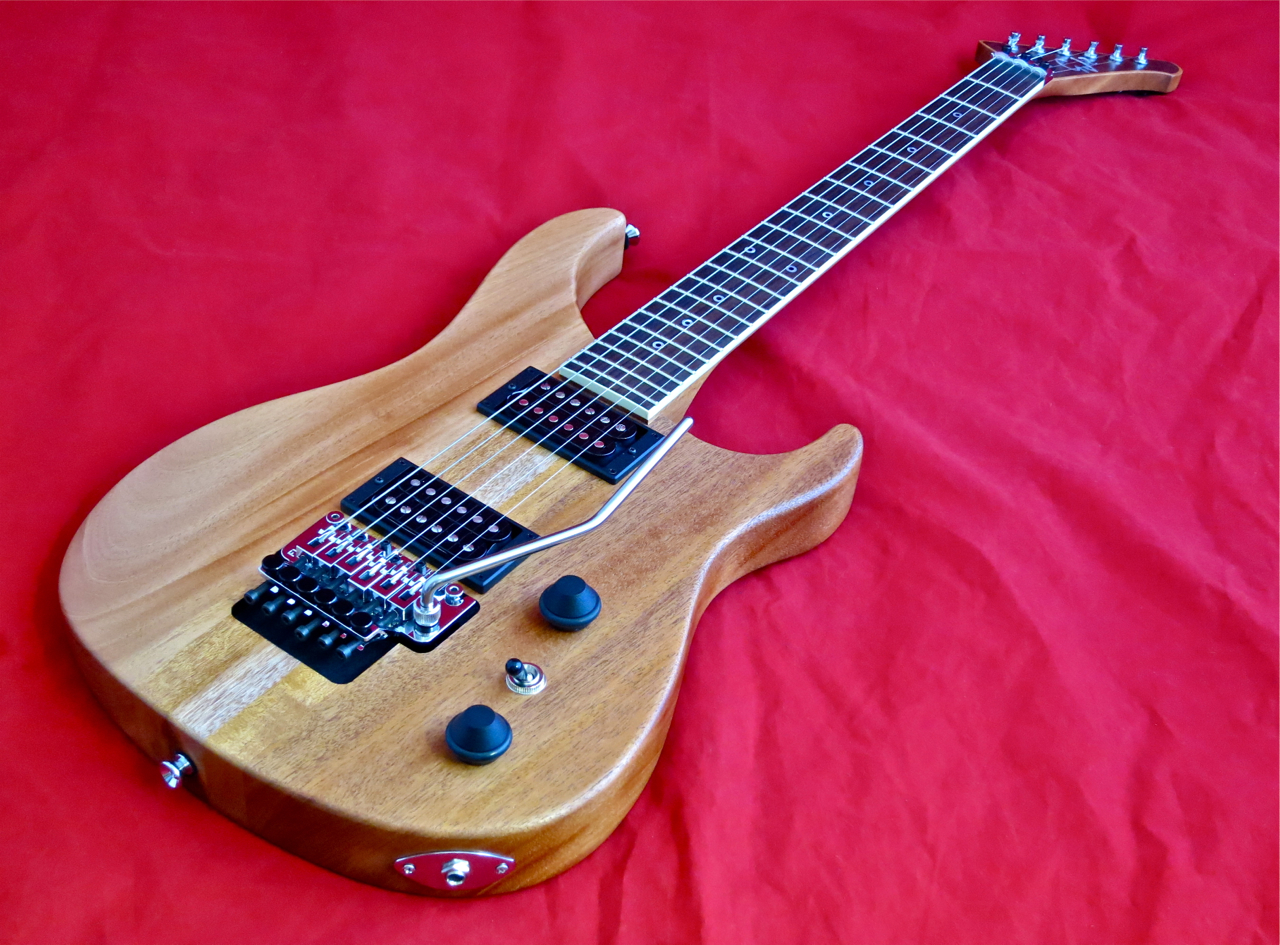
The lightweight GJ2 Arete 4-Star is a very comfortable guitar to hold and play.
Thanks to its hand-rubbed oil finish the Arete feels very organic. If you’re a fan of nice wood, then this is the guitar for you.
The neck profile has a nice bit of shoulders to its slightly flattened D-section, and fills out your hand rather nicely.
The Arete’s acoustic voice is warm and open.
GJ2’s Habanera humbuckers clearly follow the boutique-vintage route, which puts tone and dynamics front and centre, instead of sheer brute force. Thanks to this it is very easy to coax a whole trainload of different tasty humbucker-tones from the Arete 4-Star, which will satisfy both the traditionalist, as well as modern Rock- and Fusion-guitarists.
The Flying Saucer knobs have a very positive grip, allowing you to adjust the guitar’s controls precisely.
Here’s a clip I recorded using the bridge humbucker:
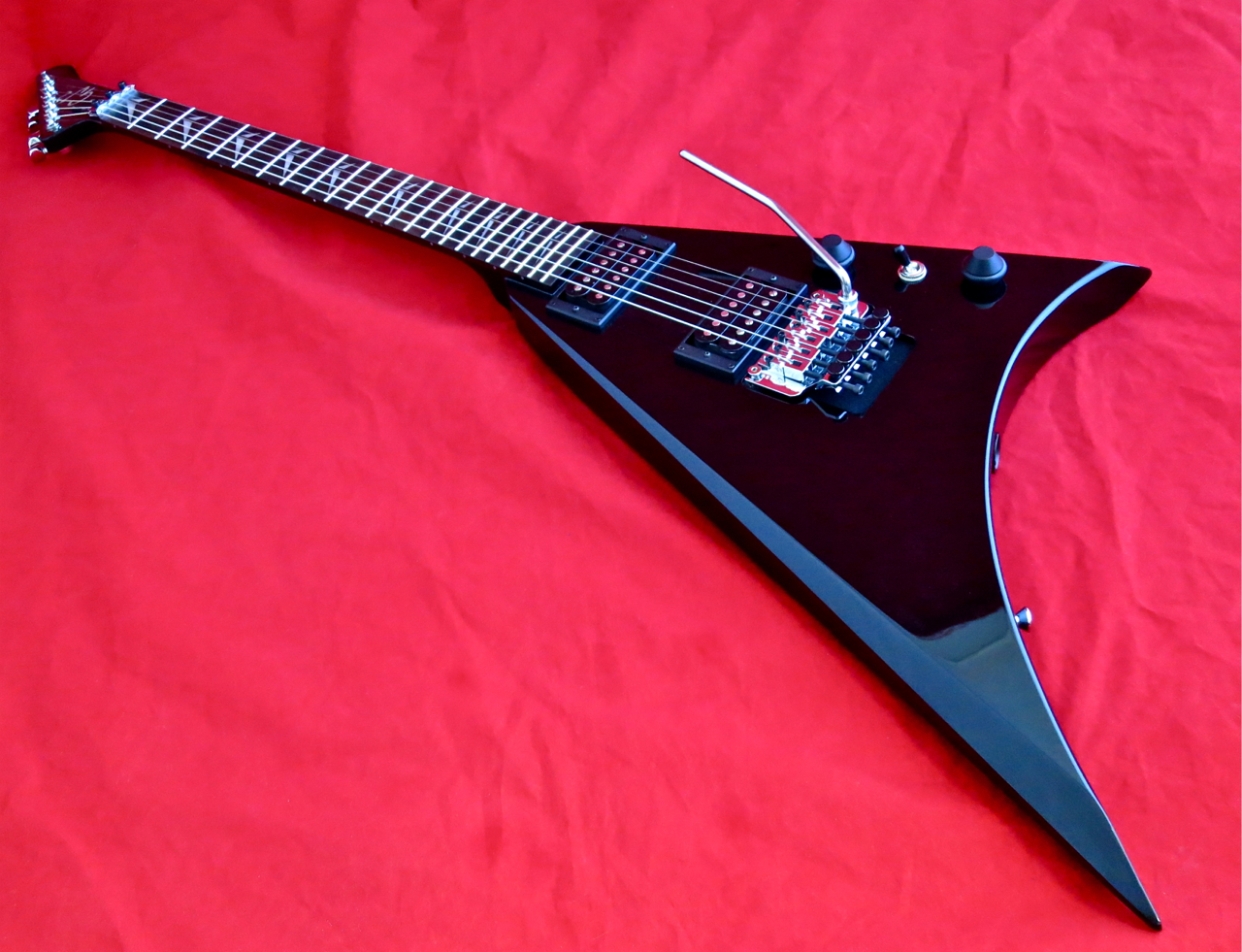
It may come as a surprise to a newbie, but the Concorde 4-Star actually feels extremely comfortable hanging suspended from a guitar strap. Sure, the visuals are very angular, but the feel isn’t.
On the other hand I should stress that the Concorde most probably isn’t the right choice as a couch guitar, because it won’t really stay in your lap. And one more thing – beware of the sharp top horn! But as long as you know this guitar’s boundaries, your in for a fun ride with a light and well-balanced studio- and stage-guitar.
The neck has a chunky D-profile, which is good news for tone and sustain.
The Concorde’s long scale, its maple through-neck, as well as the Floyd Rose system give this guitar a clearer, more precise – and in a positive way – more neutral acoustic tone, when compared, say, to a Gibson Flying V.
The guitar’s Habanero humbuckers do a fantastic job in getting the Concorde 4-Star’s precise attack and growling mid-range across.
The neck ’bucker displays a fluid, flute-like timbre, without any sign of muddiness:
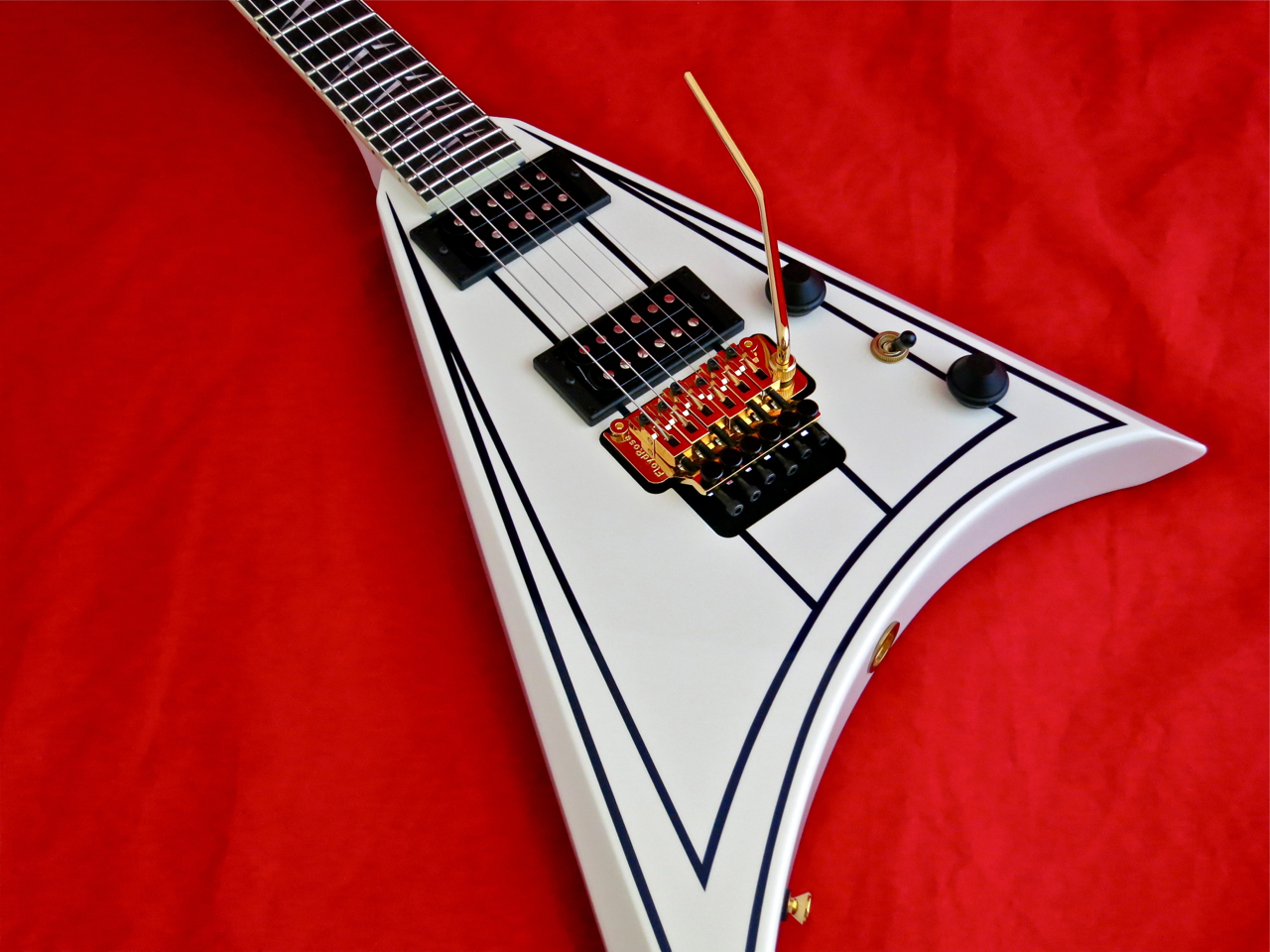
In terms of playablity and ergonomics there’s not much to divide the Concorden 5-Star from its 4-Star sibling.
But there are some clear differences in tone, most probably due to the posher 5-Star-version’s ebony ’board. The Concorde 5-Star has some added presence bite and a tad more twang in its attack, resulting in an even livelier tone.
Here’s a clip played using the bridge humbucker:
****
What a great thing that Grover Jackson isn’t content with resting on his (considerable) laurels. These new instruments build upon Mr Jackson’s rich past and vast knowledge, while managing to stay foward-facing and fresh.
The sum of this knowledge and experience, coupled with new building techniques and GJ2 Guitars’ obvious attention to detail, result in a range of instruments I would call the best guitars Grover Jackson has ever made.
This type of quality naturally comes at a price. But in light of GJ2’s comparatively small production runs and the sheer quality on offer here, you truly get what you paid for – boutique quality, made in the USA.
****
GJ2 Guitars
Glendora NLT – starting from 1,368 €
Glendora FR – starting from 1,541 €
Arete 4-Star – starting from 2,594 €
Concorde 4-Star – starting from 2,779 €
Concorde 5-Star – starting from 3,335 €
Finnish distributor: Musamaailma
****
Pros:
+ genuine boutique quality
+ playability
+ sound
+ many custom options
+ GJ2 Habanero-pickups
Cons:
– Concorde-models’ G&G-cases weigh a ton

 Kitarablogi.com – Finland's premier Guitar and Bass blog