

Lisätiedot: Roland
Kitarablogi.com – Finland's premier Guitar and Bass blog
Juttuja kitaroista ja bassoista


Lisätiedot: Roland


There was this strange booth at Frankfurt Musikmesse 2015 that had everybody stop and take notice:
A company called Ogre displayed a variety of very goth effect pedals, but the real show-stopper was a medieval-looking electric guitar made completely out of magnesium alloy, called the Magnox-M1.
Thanks to Finnish distributor R-Jam Group we were able to take a closer look at this intriguing new concept.
****
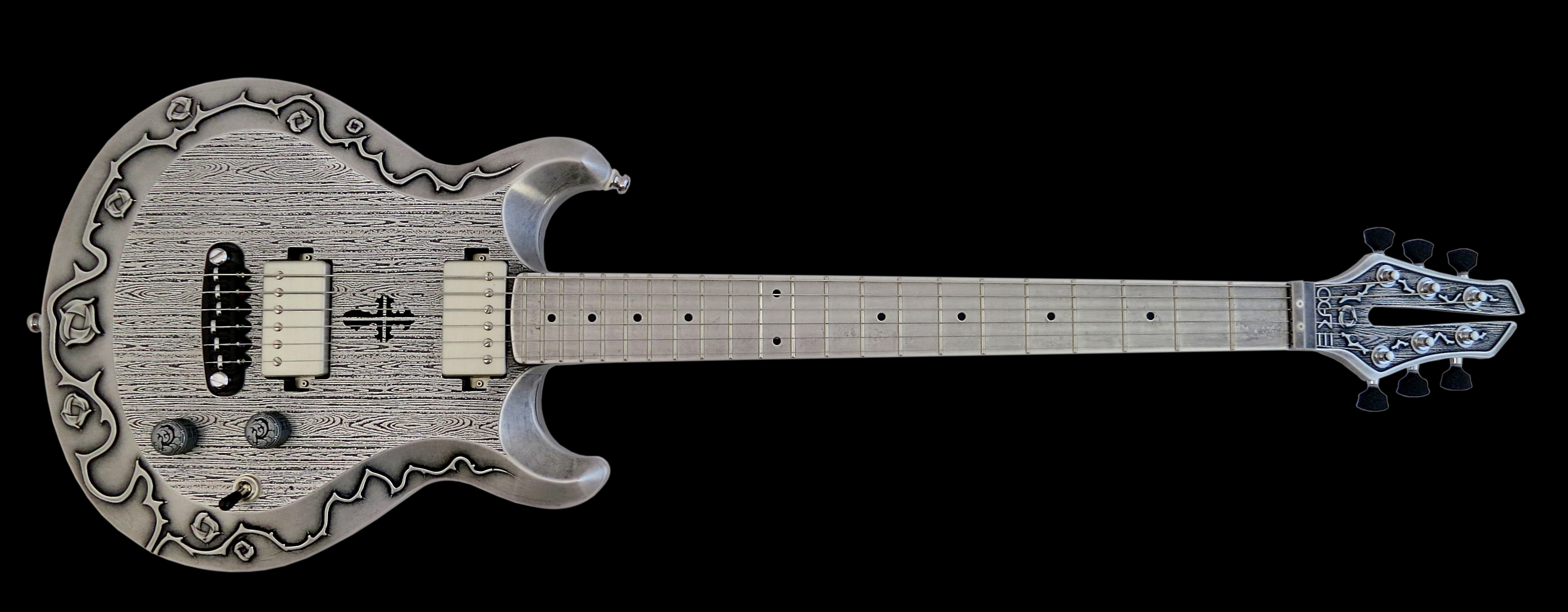
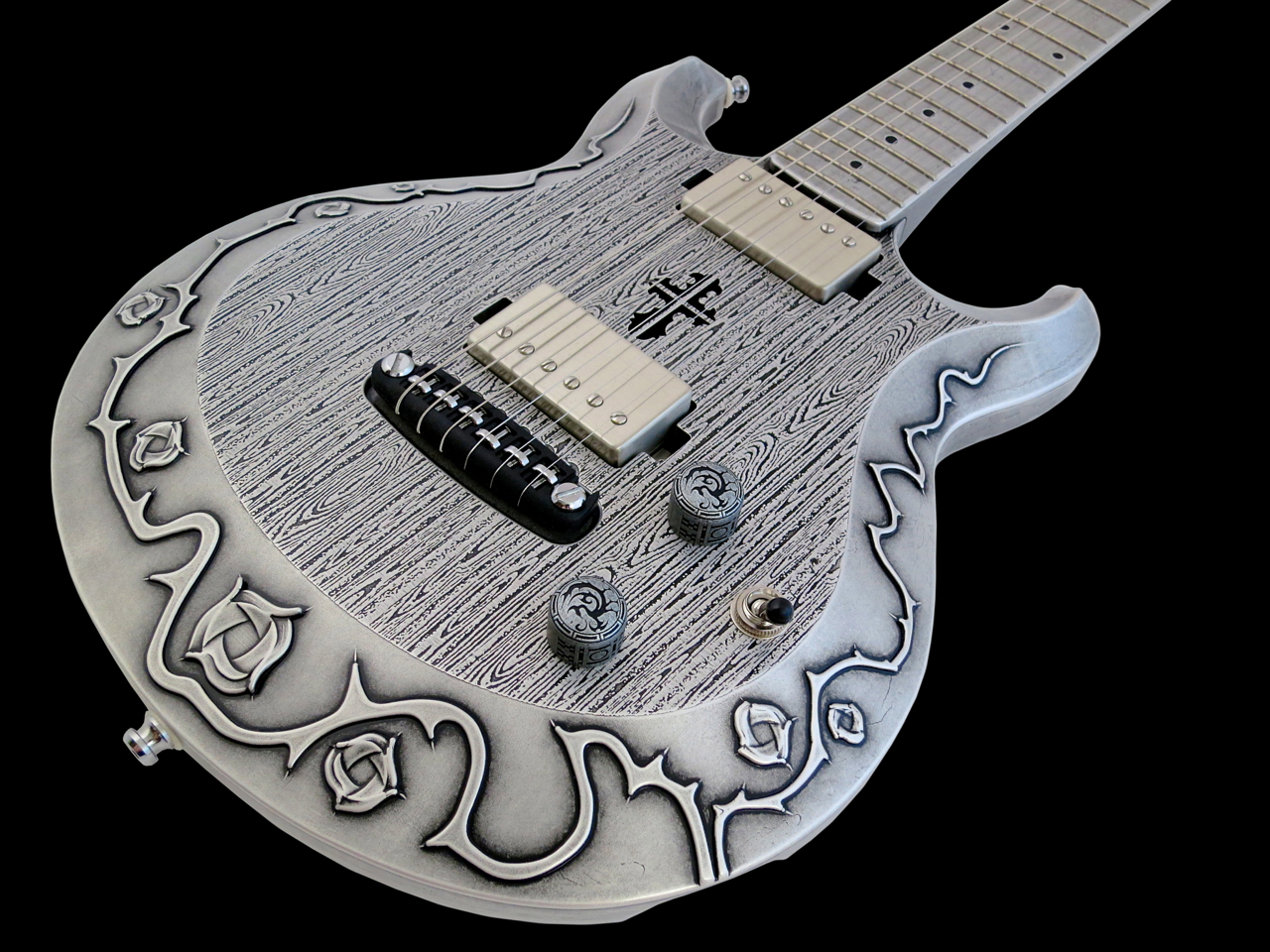
The all-metal Ogre Magnox-M1 (current price in Finland: 1,399 €) truly is a sight to behold. It isn’t often you get to see an instrument that looks like old metal, and which features beautiful rose-and-thorns reliefs on its body.
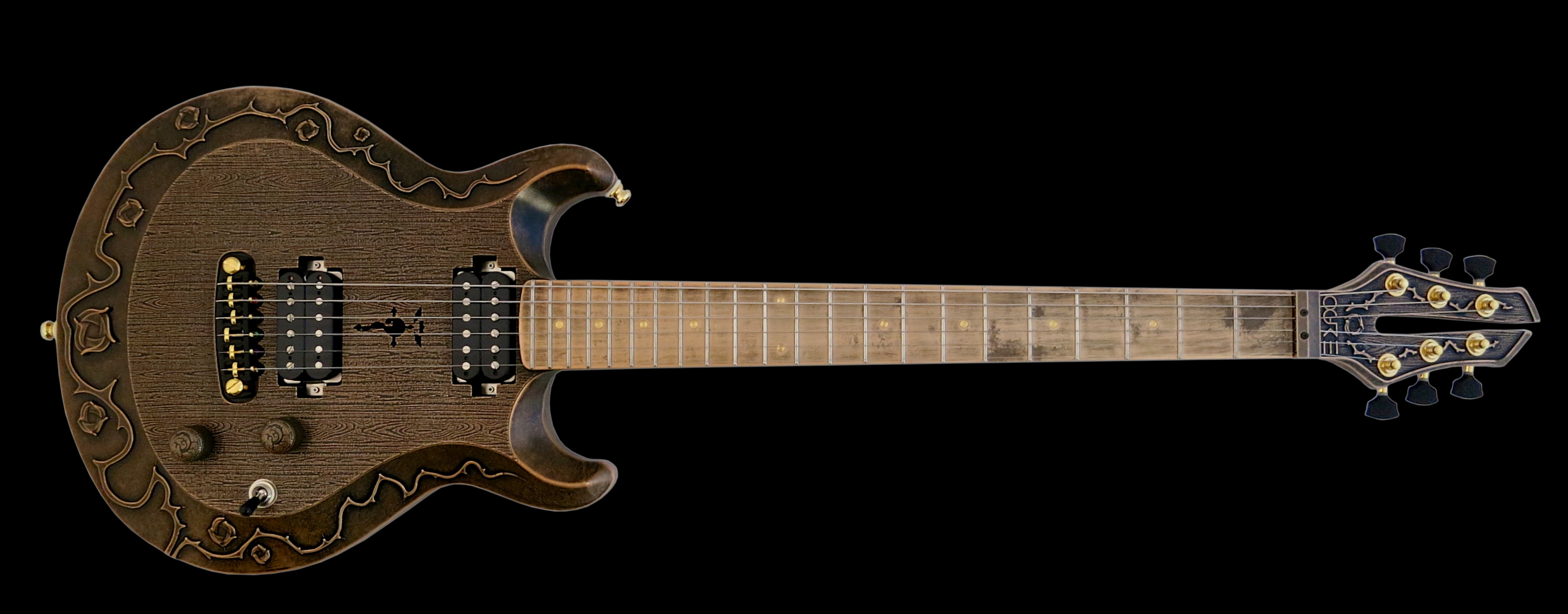
The twin-cutaway Ogre Magnox-M1 has a scale of 25.5 inches (64.8 cm), and its thin body is partly hollow.
Our two review instruments both come with a pair of humbuckers, but there’s also an HSS-loaded Magnox-M1 available.
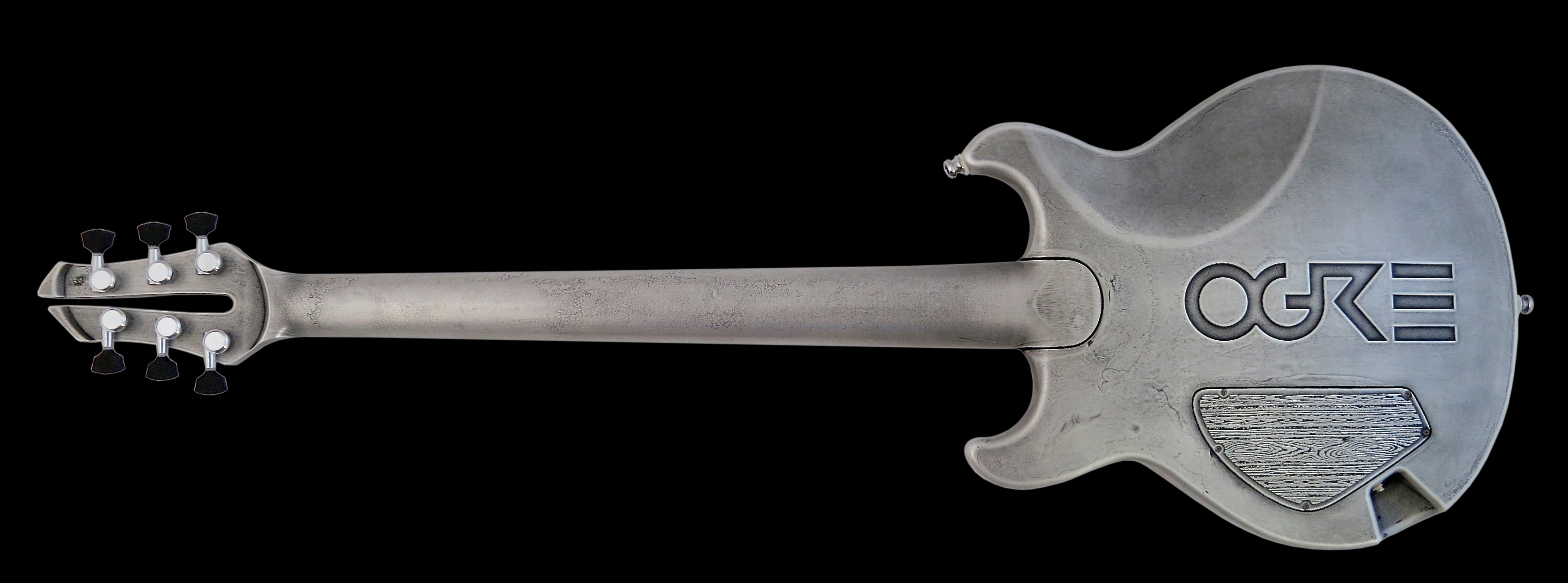
The back of the body sports a deep ribcage bevel.

The output jack sits in its own recess.

The top nut is also made from magnesium alloy. Even though it looks a bit like a locking nut, the strings aren’t locked.

Ogre go for top-drawer quality in the tuner department by using Sperzel locking tuners equipped with Ogre’s own metal tuner buttons.

The pewter-coloured Magnox-M1 sports black dot markers.

The position markers on the bronze-coloured Ogre are golden.
The Magnox comes with 22 medium jumbo frets.
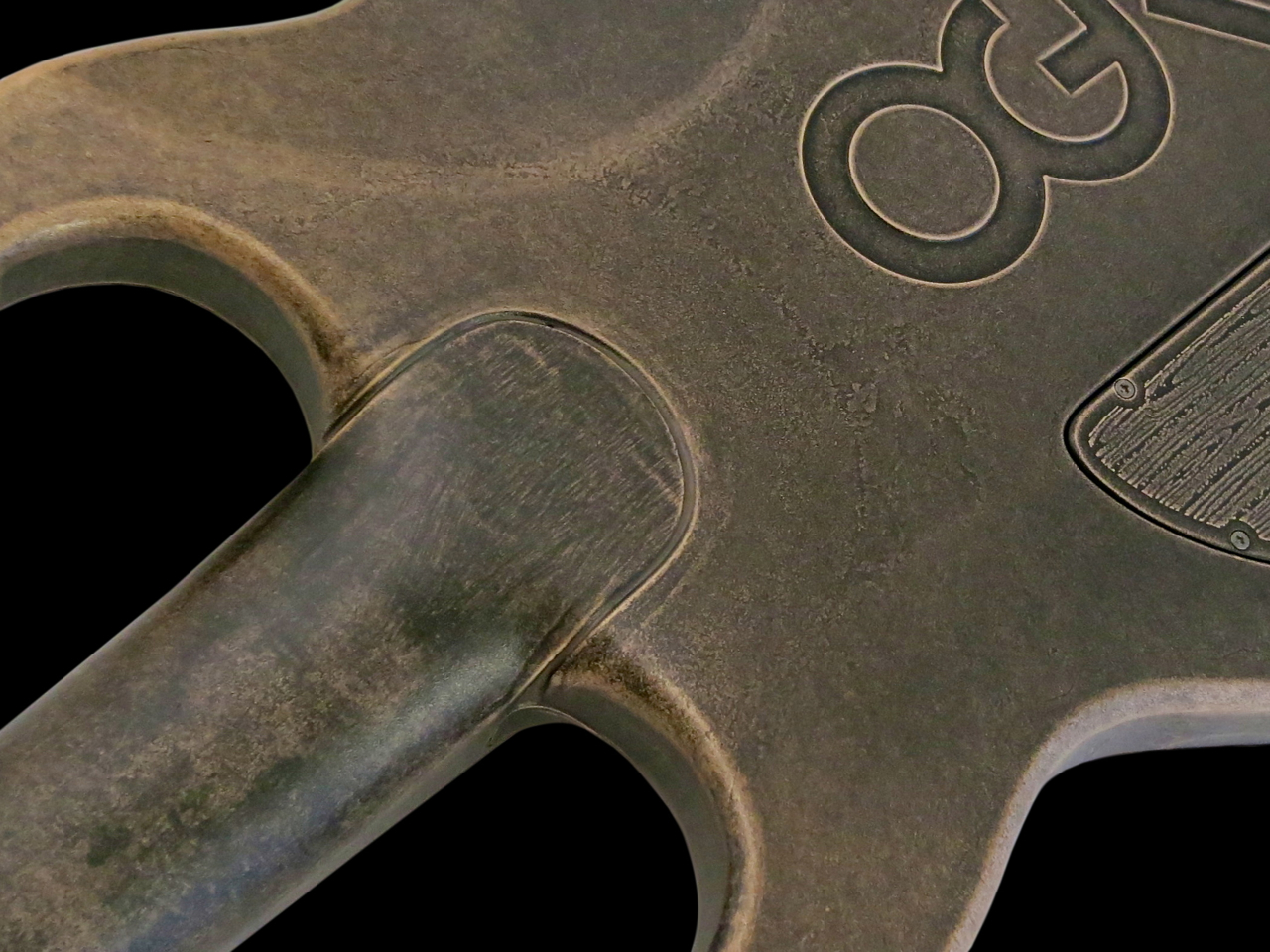
Ogre’s neck joint is very smooth, so you can widdle your way up to the dusty end with ease.

The wraparound bridge is Ogre’s own design, its base cast from the same metal alloy as the rest of the guitar.

Twin-humbucker equipped Magnox-M1 models are available with two different sets of pickups:
In our case, the pewter Ogre sports a pair of the company’s own PAF-style ’buckers.

The bronze-coloured Magnox comes with a Seymour Duncan ’59 at the neck, and a JB model at the bridge.

These Ogres are equipped with a three-way toggle switch, as well as master volume and tone controls. There’s a push/pull-switch hidden in the master tone control, which allows you to split the humbuckers for singlecoil tones.

A close look under the hood reveals quality parts and clean workmanship.

A fancy carbon fibre hard case is included in the price.
****

Thanks to its semi-hollow body the Ogre Magnox-M1 only weighs a very comfortable 3.8 kg. Despite the fact that the neck and fingerboard are not hollowed out, the M1 stays perfectly balanced .
Ogre’s expertise in the finishing department is really something else:
Both guitars look old, rusty, and oxidised, and some parts even look coarse and scratched, but this is all a very cool illusion conjured up by the excellent finishing job. In reality the Magnox-M1 feels very smooth and friendly, even if it’s a tad cool when pulled out of its case. The only things that are real are the beautiful reliefs on the front and back of the body (as well as on the control cavity lid), all other dings and scratches are an optical effect.
In my opinion Ogre’s not-too-chunky C-profiled neck feels really great. The fretwork is excellent, and the fretboard’s edges are comfortably smooth.
Ogre’s own PAF-style humbuckers have a very dynamic, crisp and open sound, thanks to their moderate output levels. The split-coil settings sound remarkably Fender-like.
The sound clips both feature the split humbuckers first, followed by the full humbucker settings, both starting with the neck pickup:


The Seymour Duncan set is higher in output, and the sounds have a fatter mid-range character. Played into a clean channel, the bridge humbucker can sound a bit honky at times, but using crunchy settings will make the JB model rock even harder than the Ogre bridge humbucker.
The sound clips both feature the split humbuckers first, followed by the full humbucker settings, both starting with the neck pickup:


The demo track features the pewter-hued Magnox-M1 exclusively for the first half, while all the guitar tracks in the second half have been played on the bronze Ogre model.
• rhythm guitars (split pickups) – left channel: both pickups, right channel: bridge pickup
• lead guitar – full neck humbucker

****
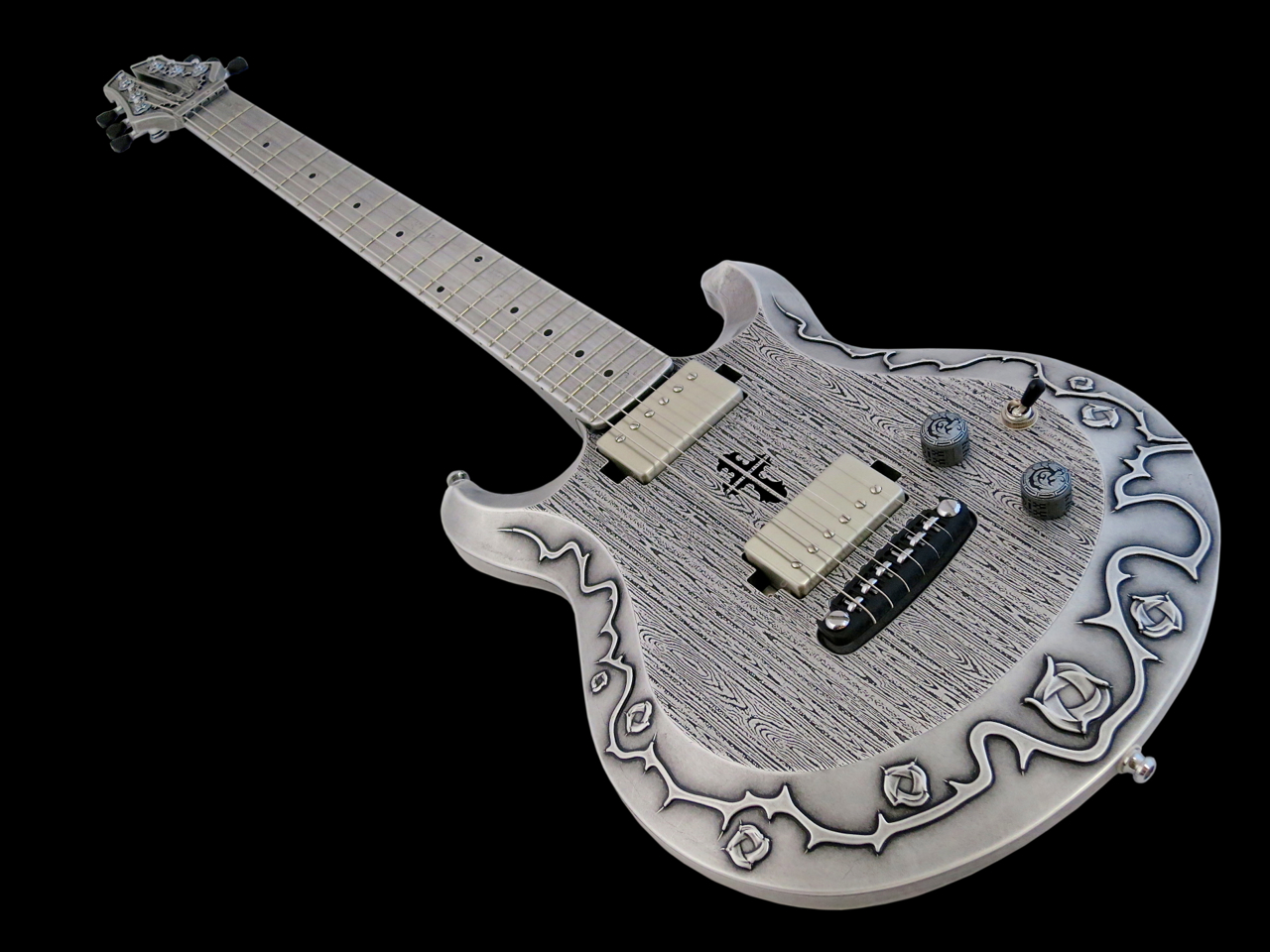
The Ogre Magnox-M1 is a very fine electric guitar, which offers a viable alternative to traditional wooden instruments. I really like the visual design of these guitars, too, but some might disagree. The best thing about the Magnox-M1 guitars, though, is the great sound they make. These are very inspiring instruments, indeed!

****
Ogre Magnox-M1
1.399 €
Finnish distributor: R-JAM Group
****
Pros:
+ cool design
+ workmanship
+ playability
+ different pickup options available
+ sound


This time Kitarablogi has had the pleasure to review the fruits of a cooperation between two legendary designers:
Custom amp guru Reinhold Bogner…

…and the grand old man of recording studio electronics Rupert Neve have unveiled a line of three Bogner effect pedals (made in the USA), which were designed around Rupert Neve’s famous audio transformers.
Audio transformers are rarely seen (or mentioned) when it comes to pedal effects, for both reasons of price and mass production.
In valve amplifiers audio transformers play a crucial role, because they are the last stage before the signal reaches the speaker. Audio transformers ”translate” the signal for the speaker, which is why they have a direct impact on the tone and dynamic behaviour of a tube amplifier.

At the moment three different Bogner/Neve-pedals are available – the Harlow booster (current price in Finland: 235 €), the Wessex overdrive (229 €), and the Burnley distortion (235 €).
Each pedal has a glowing ”eye” indicating the current signal strength of the stompbox.
****

The Bogner Harlow gives you two effects in one pedal:
In addition to it’s boost function, the Harlow also incorporates Bogner’s Bloom compression circuit, which promises to give you a very natural, three-dimensional and musical type of compression.
You’ll find three control knobs on the Harlow – a level control for the booster, a Bloom-control for the compressor, and a master tone.

****

Bogner’s Wessex is the overdrive pedal in the Bogner/Neve-family.
In addition to its gain and level controls the Wessex also includes a two-band EQ, as well as a E/N-switch. ”N” stands for ”normal” and this mode will give you a slightly more traditional, mid-range centred sound. Switching to ”E” (for ”enhanced”) there’s more gain on tap, coupled with a fatter, more full-range tone.

****
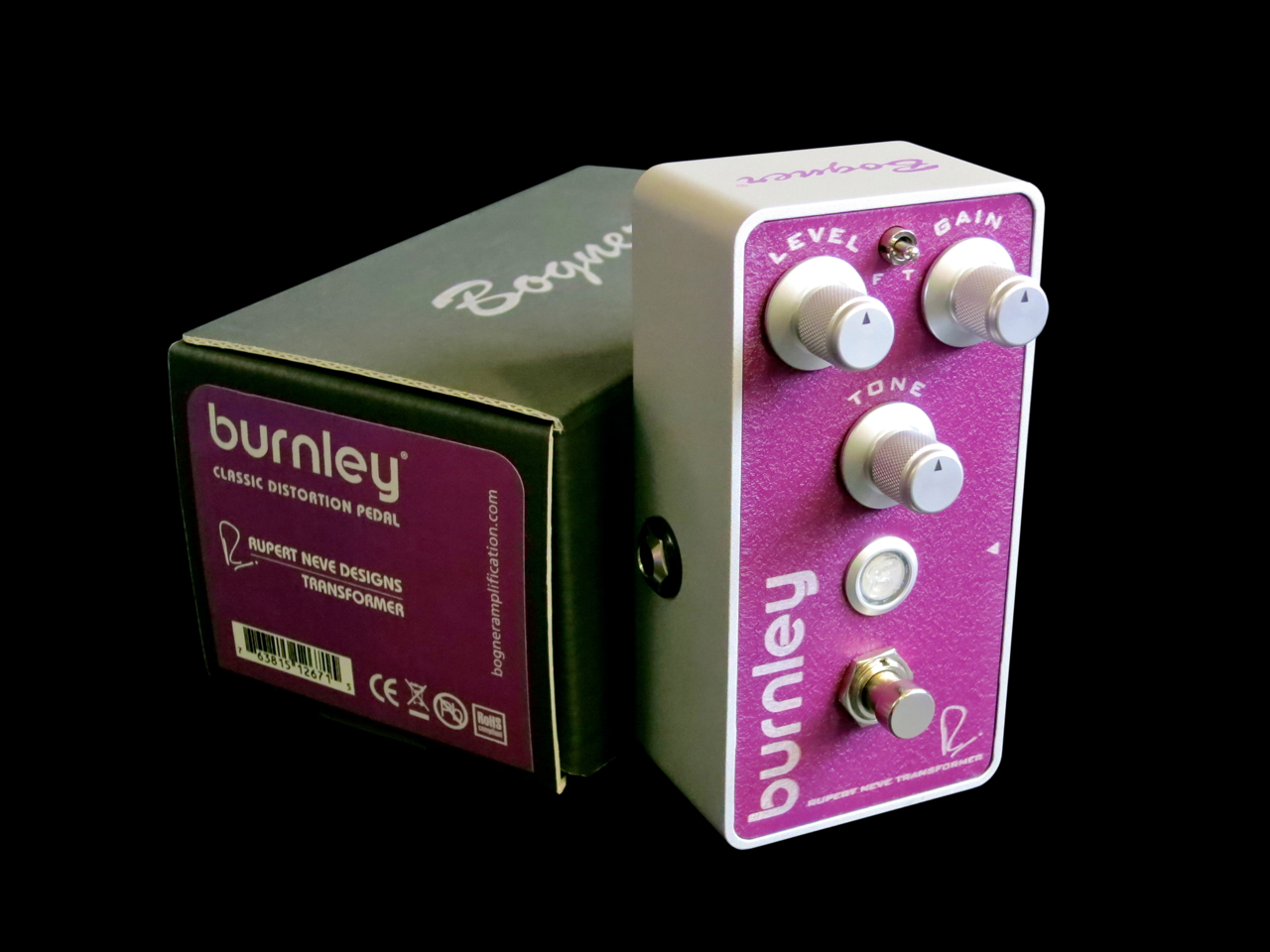
The third pedal, the Bogner Burnley, is a distortion effect.
The Burnley offers three controls – level, gain and tone – plus an F/T-switch. ”T” (for ”tight”) promises you a more aggressive distortion effect than the warmer and fatter ”F” mode.

****

Both Mr Bogner and Mr Neve are known for their uncompromising commitment to both sound and workmanship. This commitment is well represented in this range of pedal effects.
In the Bogner-pedals the circuit board is hidden inside a black plastic box. This is a workable solution weighing the risk of direct backwards engineering against the possible future need for repair or servicing. Components completely covered in black resin (some boutique manufacturers do this) are the bane of any guitar technician!
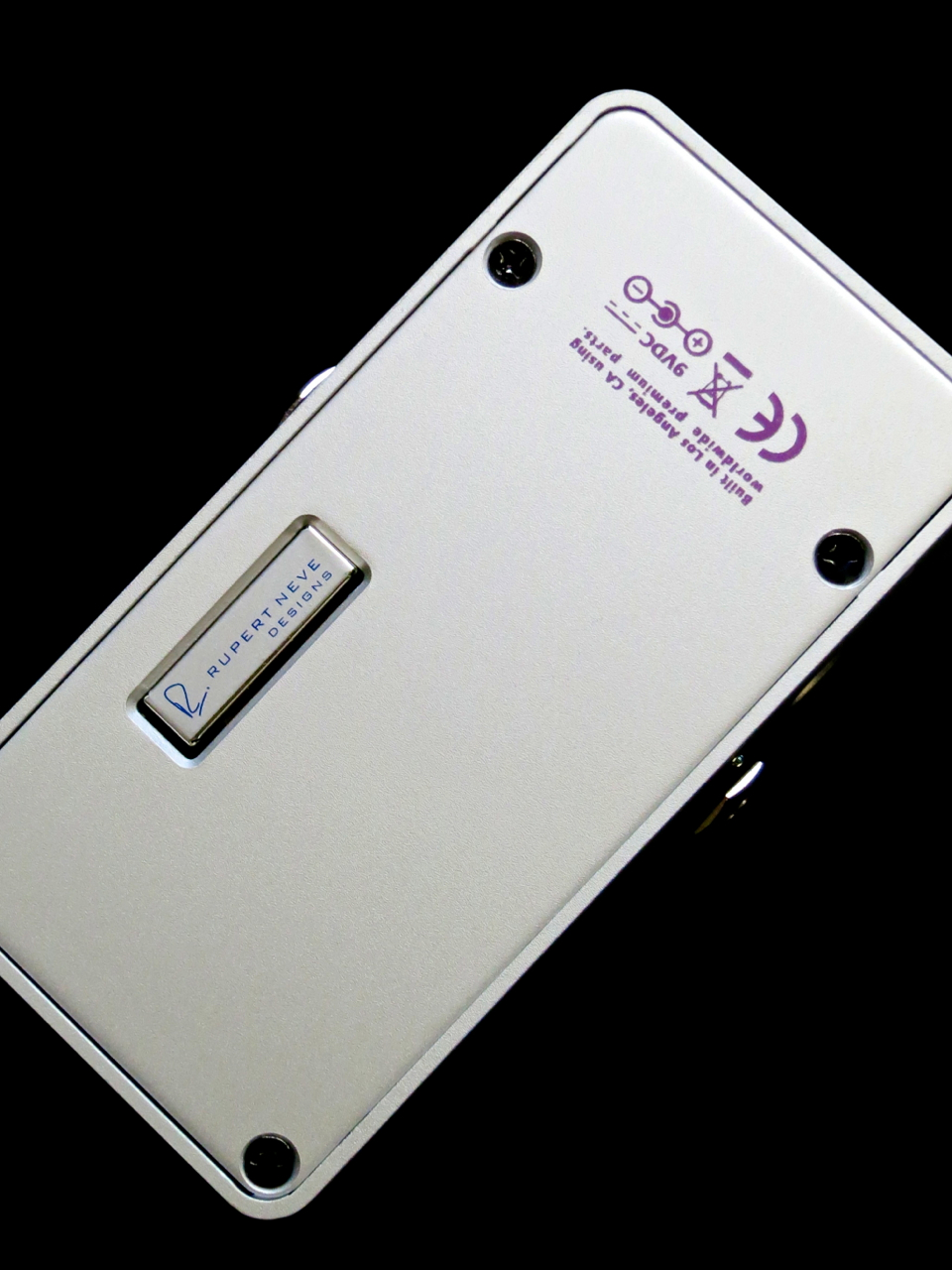
As you can clearly see in the pictures, all three stompboxes can be run using a nine volt battery or an external PSU (using the Boss-standard).
****

Bogner doesn’t divulge the precise amount of boost that can be had from the Harlow, but let me tell you it will most probably be enough to overdrive even the cleanest of amplifiers.
The Bloom-circuit in the Bogner Harlow sounds deliciously chewy and reacts very musically.
Bogner’s Harlow is the type of pedal you want to leave on the whole time, because any guitar will sound better with this box running. This pedal also reacts very well to changes in your guitar’s volume control setting.
There’s a nice attack click, when played with a Stratocaster:
The Harlow stays clear and clean, even when you play a neck humbucker (I’m using my Hamer USA Studio Custom):

The overdrive and distortion tones of Bogner amplifiers are already the stuff of legend, and the amp guru has managed to pack these sounds into two Bogner/Neve-pedals.
The Bogner Wessex luckily isn’t just another Tubescreamer clone; instead this stompbox gives you Mr Bogner’s vision of the perfect overdrive sound.
Even though there’s a healthy amount of gain on offer in the Wessex, the sound always stays transparent and well-defined. This pedal also keeps the inherent character of your guitar intact.
Wessex’s Enhanced mode will even make your vintage-styled Strat sing:
On the other hand there won’t be any boxiness, or mud, when using humbuckers:

If you’re a Hendrix fan you should definitely try the Burnley’s Fat mode. It will make your Strat sing and growl in Woodstock-fashion, even when played into a clean amp channel at bedroom volume levels:
Bogner’s Burnley, too, is sensitive to guitar volume changes. Using Tight mode and humbuckers will give you a modern distortion tone:

Here’s the audio track off the Youtube video. All guitar parts have been played on a P-90-equipped Gibson Les Paul Junior:
****


Rupert Neve and Reinhold Bogner aren’t men ho do things by half – and these pedals are a fitting testament to this commitment!
The Bogner/Neve-series of guitar effects offers you Bogner’s boutique tones in a very compact guise, and at a very fair price. Try these pedals out – you won’t be disappointed!
****
Bogner Amplification Harlow, Wessex & Burnley
Harlow – 235 €
Wessex – 229 €
Burnley – 235 €
Finnish distributor: Musamaailma
****
Pros:
+ workmanship
+ compact size
+ genuine boutique amp tones
Ogre-nimisen firman ständi Frankfurt Musikmesse 2015 -messuilla oli oikea katseenvangitsija. Siellä nähtiin monta goottityylistä kitaraefektiä, sekä täysin magnesiumseoksesta valettuja Magnox-M1-sähkökitaroita, jotka muistuttavat keskiaikaisia koriste-esineitä.
Suomalainen maahantuoja R-Jam Group tuo tätä mielenkiintoista kitaramallia nyt myös meidän ulottuville.
****
Täysin metallista valmistettu Ogre Magnox-M1 (promootiohinta 1.399 €) on kyllä erikoinen näky, etenkin sen reliefeillä koristetun rungon (ja lavan), sekä kitaran relikoidun viimeistelyn ansiosta.
Kahdella soololovella varustetun Ogre Magnox-M1:n mensuuri on täyspitkä 25,5 tuumaa (64,8 cm), ja sen runko on osittain ontto.
Testillä käyneillä kitaroilla on kaksi humbucker-mikrofonia, mutta Magnox-M1-mallia saa myös HSS-varustuksella.
Rungon takapuolella on reilunkokoinen mukavuusviiste.
Lähtöjakki on upotettu omaan syvennykseen kitaran alareunaan.
Kitaran (ei-lukittava) satula on – samoin kuin koko muu soitin – tehty magnesiumista.
Virittimet ovat laadukkaat Sperzel-lukkokoneistot, jotka on varustettu Ogren omilla mustilla metallinupeilla.
Vaalealla – tinaa tai vanhaa hopeaa muistuttavalla – kitaralla on otelautaan upotettuja mustia otemerkkejä.
Pronssinvärisessä mallissa taas on kullanväriset otemerkit.
Magnoxeissa on 22 medium jumbo -kokoista nauhaa.
Ogren kaulaliitos on erittäin sulava, mikä mahdollistaa esteettömän pääsyn myös ylimmille nauhoille.
Wraparound-tallan runko on valettu samasta magnesiumseoksesta, jota käytetään myös kitaran muita osia varten.
Kahdella humbuckerilla varustetut Magnox-M1-kitarat saa kahdenlaisilla mikrofoneilla:
Tinanväriseen testisoittimeen on asennettu kaksi Ogren valmistamaa, PAF-tyylistä humbuckeria.
Pronssi-Magnoxissa taas löytyy Seymour Duncanin ’59-kaulamikrofoni, sekä JB-malli tallahumbuckerina.
Ogressa käytetään kolmiasentoisen mikkikytkimen lisäksi master volume- ja master tone -säätimiä. Tonessa on lisäksi vielä nostokytkin, jolla puolitetaan humbuckerit.
Elektroniikkalokerossa näkyy laadukkaita osia ja siistiä työnjälkeä.
Kitaran hintaan kuuluu myös laadukas ja modernistinen hiilikuidusta valmistettu kova laukku.
****
Ohuen ja osittain onton runkonsa ansiosta Ogre Magnox-M1:n paino jää 3,3 kilolla jopa alle monen Stratocasterin painon. Koska kaula ja otelauaa on jätetty soundin ja sustainin maksimoinnin vuoksi massiivisemmaksi, malli on kuitenkin hivenen verran kaulapainoinen. Laadukkaalla nahkahihnalla tämä lievä taipumus saadaan kuitenkin hoidettua tehokkaasti.
UPDATE (15.09.2015): Testissä käyneet kitarat tulivat varhaisesta tuotantoerästä. Uusissa Ogre Magnox-M1 -erissä balanssiongelma on korjattu lisäämällä rungolle noin 500 grammaa painoa.
Ogren viimeistely on kyllä ihan omaa laatuaan:
Vaikka molemmat kitarat näyttävät vanhalta, hieman hapetetulta metallilta, ja niiden pinta näyttää karhealta ja osittain jopa naarmuuntuneelta, Magnoxit tuntuvat todellisuudessa hyvin sileiltä ja aluksi myös aavistuksen verran kylmiltä. Ainoastaan rungon ja lavan etupuolella (sekä elektroniikkalokeron kannessa) näkyvät reliefit ja kohokuvat ovat siis aitoja, kaikki muu karheus on vain illuusio.
Minun mielestäni Ogren valitsema keskipaksu ja pyöreähkö C-profiili tuntuu erittäin mukavalta. Nauhatyö on ensiluokkaista, ja myös otelaudan reunat on pyöristetty mukavan sileiksi.
Ogren omilla PAF-tyylisillä humbuckereilla on maltillinen teho ja hyvin avoin soundi. Puolitettu tallamikki kuulostaa yllättävän Fender-tyylisen kirkkaalta.
Audiopätkissä soitetaan aina ensin puolitetut vaihtoehdot ja sen jälkeen täysillä humbuckereilla. Järjestys on kaulamikki –> molemmat yhdessä –> tallamikki:
Seymour Duncan -mikrofoneilla on vähän enemmän tehoa, ja niiden keskialue on selvästi pyöreämpi. Puhtaissa soundeissa täysi tallahumbuckeri voi jopa kuulostaa hieman honottavalta, kun taas särösoundeissa JB-mallilla on ehkä hieman enemmän potkua kuin Ogre-tallamikissä.
Audiopätkissä soitetaan aina ensin puolitetut vaihtoehdot ja sen jälkeen täysillä humbuckereilla. Järjestys on kaulamikki –> molemmat yhdessä –> tallamikki:
Demobiisissä ensimmäisen puoliskon kaikki kitararaidat on soitettu hopeanvärisellä Magnox-M1-kitaralla, ja toisessa puoliskossa kuullaan vain pronssivärisellä Ogrella soitettuja soundeja.
• komppikitarat (puolitetut mikit) – vasen kanava: molemmat mikit, oikea kanava: tallamikki
• soolokitara – täysi kaulahumbucker
****
Ogre Magnox-M1 on erittäin laadukas, hyväntuntuinen ja hyvältä kuulostava vaihtoehto puusta tehdylle sähkökitaralle. Minusta myös kitaroiden visuaalinen puoli on erittäin hyvin onnistunut, vaikka tämä on varmaan makukysymys. Olin kuitenkin positiivisesti yllättänyt, kuinka hyviltä nämä kitarat tuntuivat ja kuulostivat. Inspiroivia soittimia molemmat!
****
Ogre Magnox-M1
1.399 € (promootiohinta)
Maahantuoja: R-JAM Group
****
Plussat:
+ massasta erottuva ulkonäkö
+ työnjälki
+ soittotuntuma
+ eri mikrofonivaihtoehdot
+ soundi
Miinukset:
– lievä kaulanpainoisuus (nyt korjattu – kts. teksti)

Tämä kuvio on varmasti kaikille tuttu:
On keskiviikkoilta – nyt olisi nastaa jammailla tunti tai pari, mutta rumpalilla on biljarditurnaus ja basistin täytyy vahtia lapsiaan.
Lopputulos on jälleen kerran ilta yksin telkkarin edessä ja kitara sylissä…
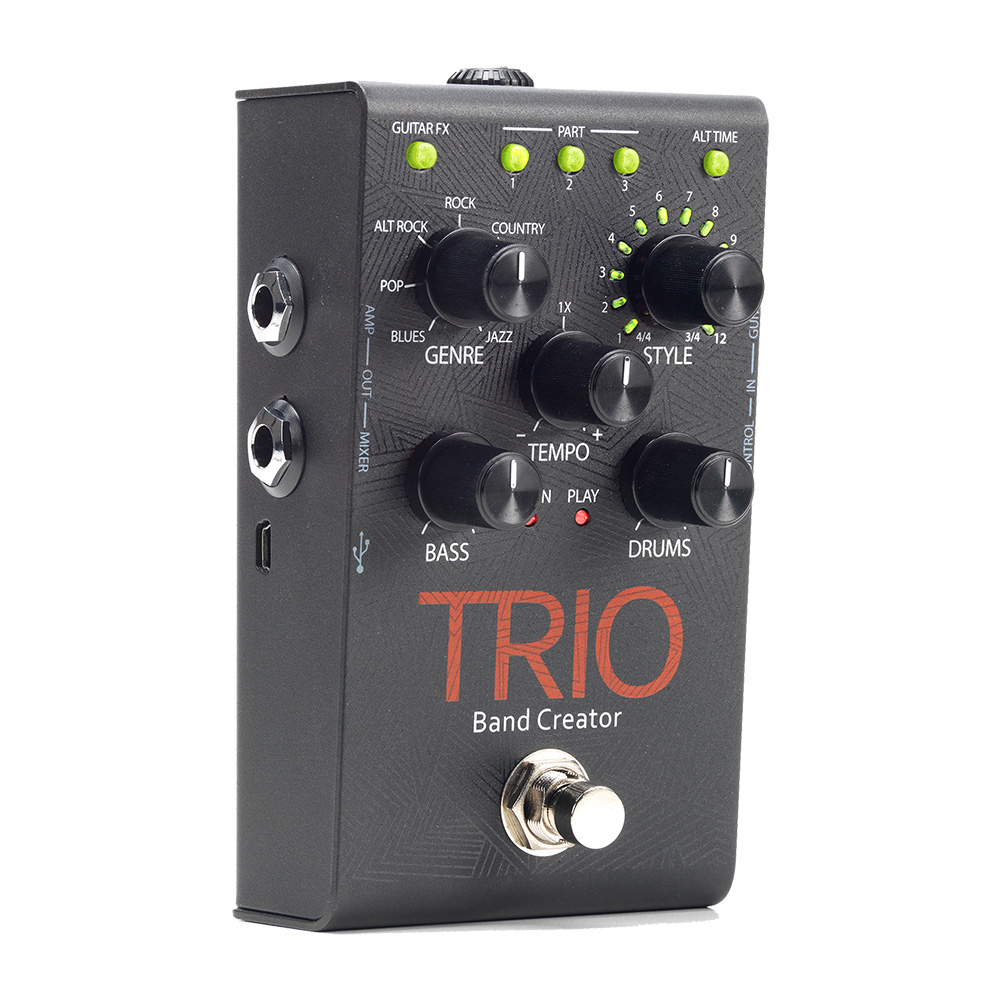
Onneksi nyt on olemassa paljon luovempi ratkaisu jammailuun ja treenaamiseen – Digitechin uusi Trio Band Creator -pedaali tarjoaa väsymättömän rytmisektion hyvin kompaktissa muodossa.
****

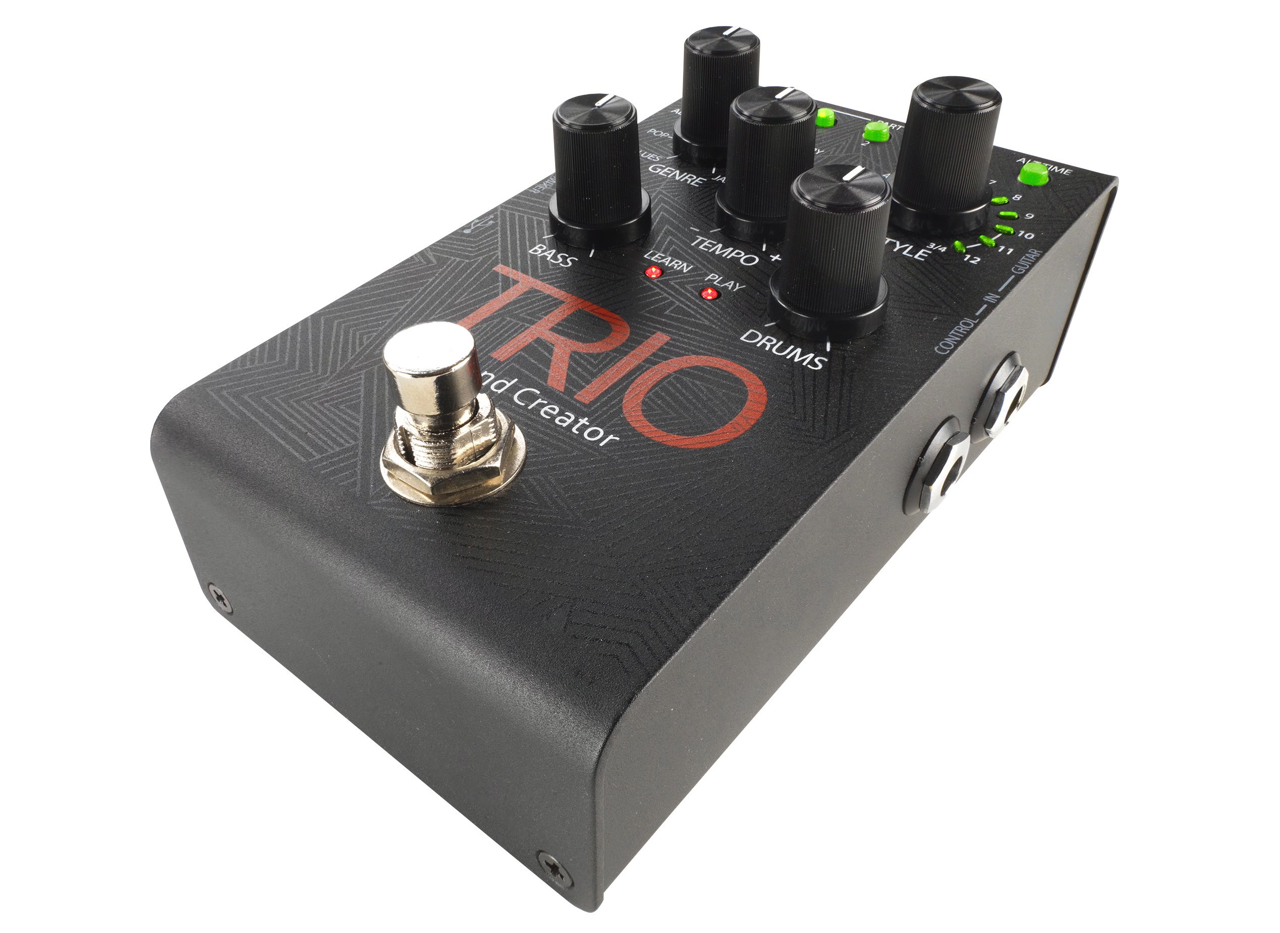
Digitech Trio -pedaali (katuhinta noin 240 €) oppii Learn-moodissa biisin (tai biisiosan) soinnut ja rakenteen suoraan kitarasignaalista. Trioon kytketään ihan tavallinen kitarajohto – käyttöön ei siis tarvita kallista MIDI-mikrofonia tai kömpelöä ohjelmointia käsin.
Trio osaa soittaa komppikuvioita seitsemästä eri musiikkigenrestä (Genre). Jokaisessa genressä on 12 eri tyylivaihtoehtoa (Styles), siis eri tavalla soitettuja rumpupatterneja ja bassokuvioita. Kaikki tyylit on kehitetty yhteistyössä Band In A Box -softan valmistajan kanssa.
Digitechin uusi ihmerasia tunnistaa biisin tempon automaattisesti analysoimalla sisään tulevaa audiosignaalia Learn-moodissa, mutta sitä voi hienosäätää jälkikäteen Trion Tempo-säätimellä. Alt Time -kytkimellä voi myös valita tavallisen tempon ja half-timen välillä.
Digitech Triosta löytyy lisäksi alkeellinen efekti- ja kaiutinsimulaatio-osasto, jos haluat jammailla ilman erillistä vahvistinta.
Kompakti Trio Band Creator -pedaali vaikuttaa hyvin kestävältä.
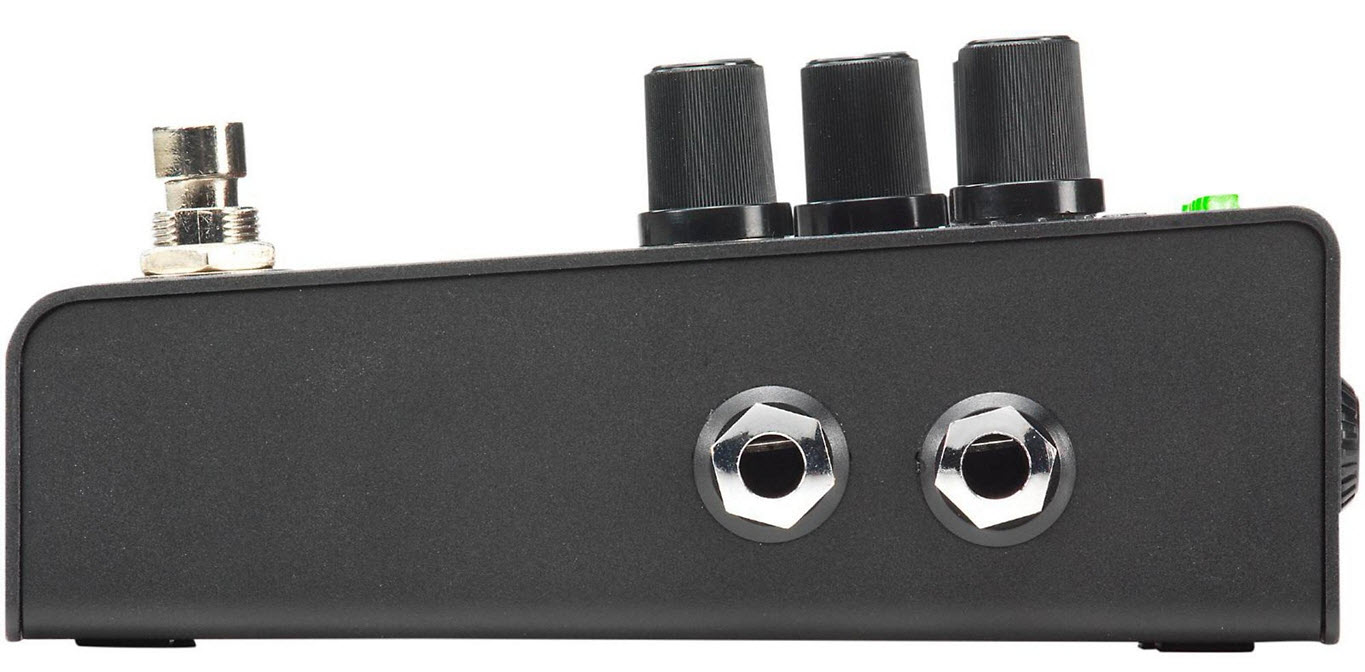
Laitteen oikeaan kylkeen on sijoitettu kaksi tuloa, joista toinen on kitarasignaalille ja toinen (lisävarusteena saatavalle) Digitech FS3X -jalkapedaalille, jolla Trioa voi ohjailla ilman käsiä.
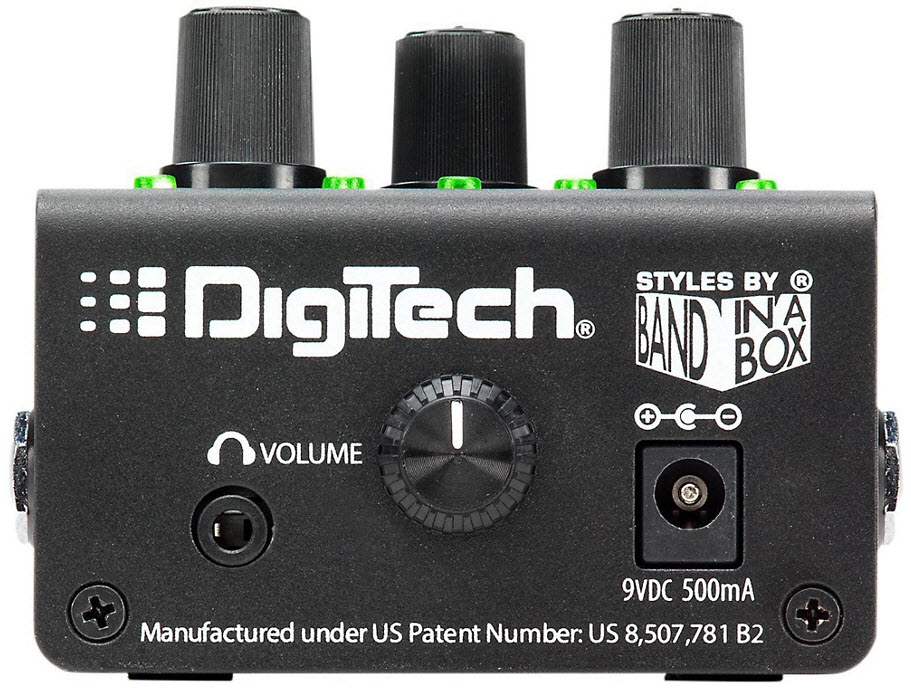
Pedaalin edessä on tulo pakettiin kuuluvalle virtalähteelle, sekä kuulokelähtö omalla volume-säätimellään.
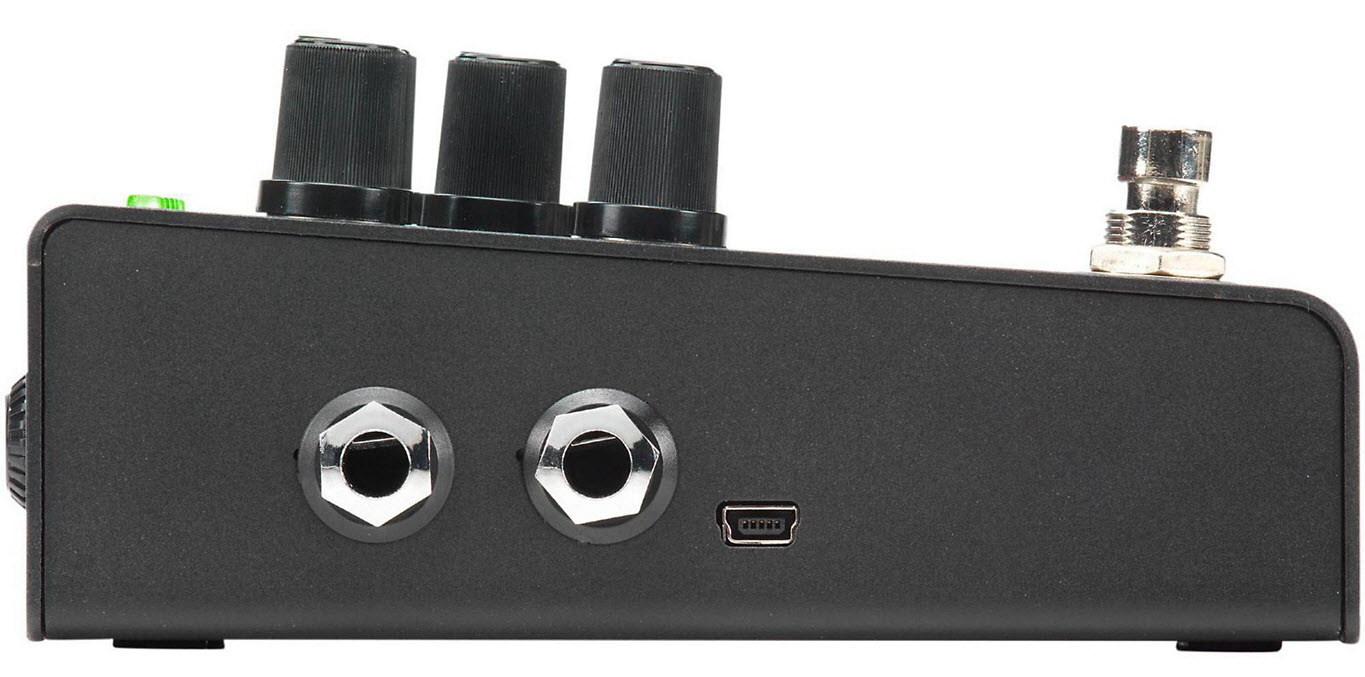
USB-portti on firmware-päivityksiä varten, kun taas vasemman kyljen jakit ovat audiolähdöt kitaravahvistimelle ja mikserille/äänikortille.
Digitechin Trio tunnistaa automaattisesti mikä lähtö on käytössä:
Kun vain vahvistinlähtöön on kytketty plugi, rumpu- ja bassosignaali säädetään vahvistinkanavalle sopivaksi. Kun vain mikserilähtö on käytössä, kitarasignaaliin lisätään kaiutinsimulaatiota. Kun taas molempia lähtöjä käytetään samanaikaisesti, kitarasignaalia ohjataan vain vahvistinlähtöön, ja rumpu- ja bassokuviot tulevat vain mikserilähdöstä. Kuulokkeen kytkeminen Trioon mykistää automaattisesti sekä vahvistin- että mikserilähdön.
****
Tässä Kitarablogi-videossa näytetään miten Digitech Trio -pedaalia käytetään:
****
Toisen videon musiikkia on äänitetty käyttämällä Digitech Trio -pedaalia, soittamalla kolme Alt Rock -genren Styles-tyyliä:
****
Testin perusteella voin todeta, että Digitech Trio on hyvin helppo ja intuitiivinen käyttää. Minun mielestäni se on fantastinen laite olohuone-jammailuun, sekä uusien biisien työstämiseen.
Trio Band Creator -pedaali onnistuu tunnistamaan biisinpätkän tempon ja sointukierron yllättävän hyvin edellyttäen, että a) Learn-vaiheessa ei esiinny kitaransoitossa liikkaa synkopaatiota, ja että b) opetusvaiheessa käytetään selkeästi tunnistettavia duuri, molli- ja seiskasointuja.
Trion rumpu- ja bassosoundit ovat hyvin kelvollisia, ja Style-kuvioissa esiintyy riittävästi automaattista live-tyylistä vaihtelua, ettei lopputuloksesta tulee turhauttavan robottimaista.
Metal-genren puuttuminen on valitettavaa, mutta riffien tunnustaminen suoraan audiosignaalista (ja riffien tarkka toistaminen) olisi varmaan ollut niin monimutkaista, että laitteesta olisi tullut yksinkertaisesti liian kallis ja liian hankalaa käyttää.
Ei-metallimiehille (ja -naisille) Trio Band Creator on kuitenkin todella mahtava työkalu harjoitteluun, jammailuun, sekä biisien kirjoitteluun. ylös sohvalta, siis!
****
Digitech Trio Band Creator
katuhinta noin 240 €
Maahantuoja: EM Nordic
Suuri kiitos DLX Musiikille testilaitteen lainaamisesta!
****
Plussat:
+ vankka tekoa
+ kompakti
+ interaktiivinen
+ monipuolinen Genre- ja Styles-tarjonta
+ hyvät rumpu- ja bassosoundit
Miinukset:
– Metal-genre ei edustettu
– laite ei pysty oppimaan riffejä

To celebrate the 20th anniversary of Ruokangas Guitars and the 10th anniversary of Mr. Fastfinger, Juha Ruokangas and Mika Tyyskä (the creative brain behind Mr. Fastfinger) threw an invite-only party in Helsinki’s Cinema Andorra/Dubrovnik Bar complex.

Juha Ruokangas (centre) and his wife Emma were on hand to greet their guests (yes, this is Finnish Prog Rock legend Jukka Tolonen on the right)…

…as was guitar virtuoso (and animator) Mika Tyyskä.


The Dubrovnik quickly filled with illustrious guests, such as Mad Professor’s main man Harri Koski (left) and – legendary Finnish band – Eppu Normaali’s guitarist Juha Torvinen (centre).

Here’s Finnish bass ace Jan-Olof Strandberg (centre) joining the party.



Juha and Mika officially opened the evening by taking to the stage and sharing a drink with their guests.
The centrepiece of the evening was the world premiere of Ruokangas Guitars’ and Mr. Fastfinger’s joint movie ”The Spirit of the Guitar Hunt”, which will be released in segments on You Tube. The invited guests were shown the full movie.

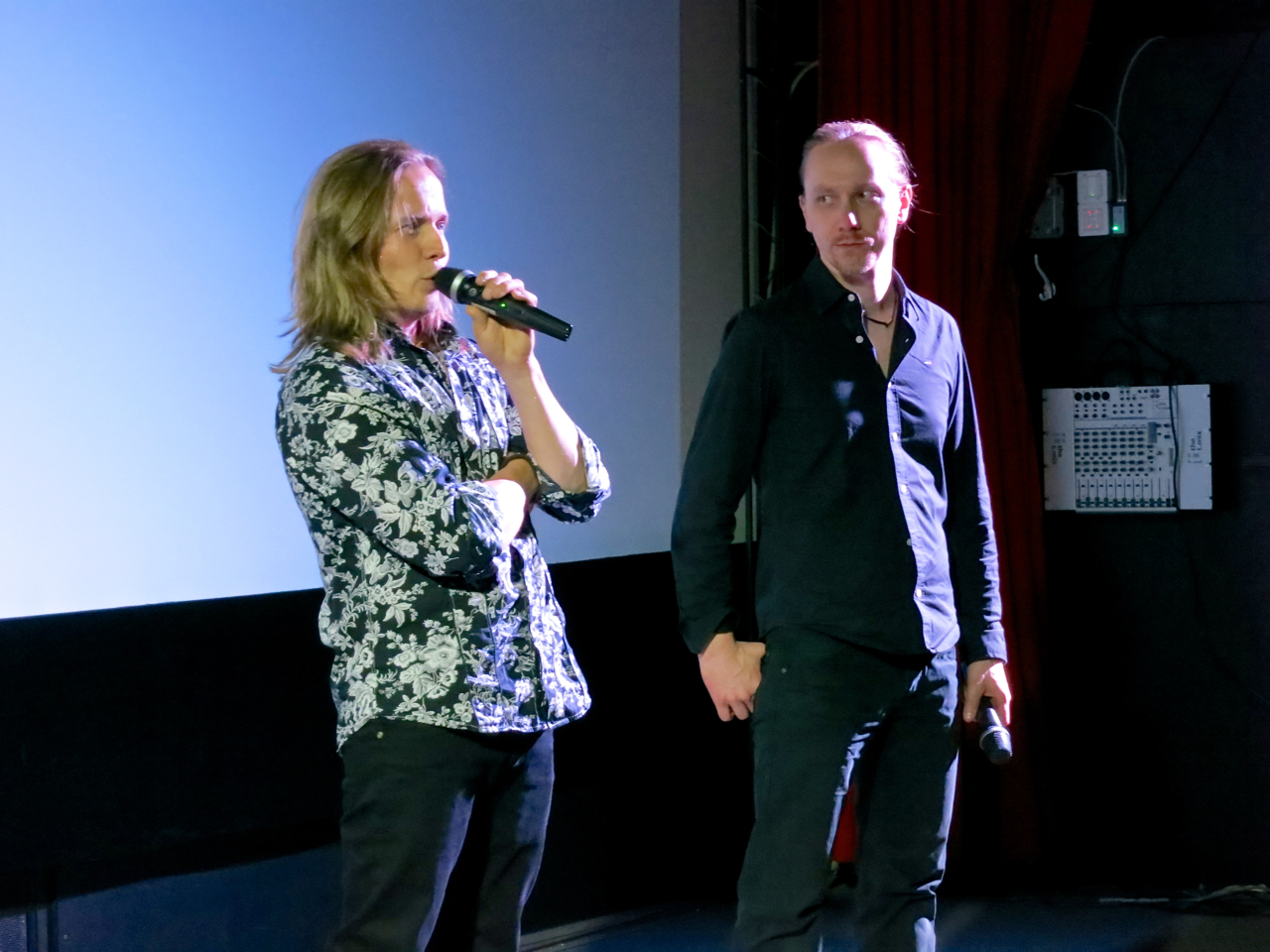
A few words from the hosts, and then it was time for the world premiere:

The film received standing ovations.

The creative team behind the ”Guitar Hunt”…


The premiere was followed by delicious food, as well as great live music from Antti Paranko and his band, and Mr. Fastfinger.
We’ve all been there, haven’t we? It’s a Wednesday evening, and you want to jam; but the drummer’s at the hairdresser’s and the bassist has to babysit all evening long.
So what do you do? You get bored to tears sitting on the sofa with your fingers widdling away idly on your favourite couch guitar…
Actually, now there’s a better, much more creative way to spend your spare time – Digitech’s brand-new Trio Band Creator pedal lets you jam and work on new song ideas by supplying an indefatigable rhythm-section-in-a-box.
****
The Digitech Trio (current street price in Finland approx. 240 €) uses a learn function that detects the chord changes (and tempo) of a part straight off your guitar’s audio signal. There’s no need for complicated step-by-step programming or an expensive (and fiddly) MIDI-pickup – just plug in your guitar lead, and you’re ready to go.
The Trio offers you seven musical Genres to choose from, each offering a whopping 12 Styles (meaning: different pattern templates for the drum rhythm and bass pattern). The patterns have all been developed for the best-selling Band In A Box computer software.
Digitech’s new wonder box picks up the tempo directly from your playing, but you can fine-tune the speed after the fact using the Tempo control. You can also switch between a normal and a half-time feel.
Digitech’s Trio also includes a very rudimentary guitar effects section, should you want to jam without using your guitar amp.
The Trio Band Creator comes in a very compact, yet very sturdy pedal format.
There are two jacks on the right side of the pedal – one is the guitar input, while the second one allows you to connect Digitech’s own FS3X footswitch unit for hands-free Part-switching.
The pedal’s front sports the input for the power supply unit (included), as well as a headphones output with its own volume control.
The USB-port on the unit’s left side is for firmware updates, while the two output jacks are the guitar amp and mixer outputs.
The Digitech Trio automatically detects which of the outputs are in use:
If only the amp output is used the drum and bass parts are pre-EQ’d to work well with a clean guitar amp. When using only the mixer out the guitar signal will run through the pedal’s cabinet emulation. Using both outputs simultaneously sends the guitar signal to the amp output and the rhythm section to the mixer. Plugging in headphones into the pedal’s headphone output automatically mutes both the mixer and amp outputs.
****
Here’s Kitarablogi’s video clip showing you how to use the Digitech Trio:
****
And here’s the Digitech Trio used in context, playing a three-part song (using Alt Rock styles):
****
I found Digitech’s Trio very easy and intuitive to use. In my view it’s a fantastic little unit in a living room jamming and song developing context.
The Trio Band Creator does a surprisingly good job of learning the tempo and chord changes of a part straight off your guitar playing, provided you a) don’t syncopate too wildly, and b) stick to major, minor and 7th chords for the most part.
The drum and bass sounds are very decent, and an ample amount of automatic Style variation keeps enough semblance of the ”human” element in the accompaniment, to keep it from sounding robotic.
I would have liked to have seen a Metal Genre included in the Digitech Trio. On the other hand, this would have meant the inclusion of a riff-learning function of some sort, which probably would have made the pedal too complicated and expensive.
For non-Metal guitarists, though, the Trio Band Creator is a fantastic tool to keep your playing chops up, as well as for jamming and coming up with new songs. No need to noodle aimlessly on the sofa, anymore!
****
Digitech Trio Band Creator
Current street price approximately 240 €
Finnish Distributor: EM Nordic
A big thank you to DLX Music Helsinki for the loan of the review unit!
****
Pros:
+ build quality
+ compact
+ interactive
+ large variety of Genres and Styles
+ quality of drum and bass sounds
Cons:
– no Metal genre available
– cannot learn riffs


 Kitarablogi.com – Finland's premier Guitar and Bass blog