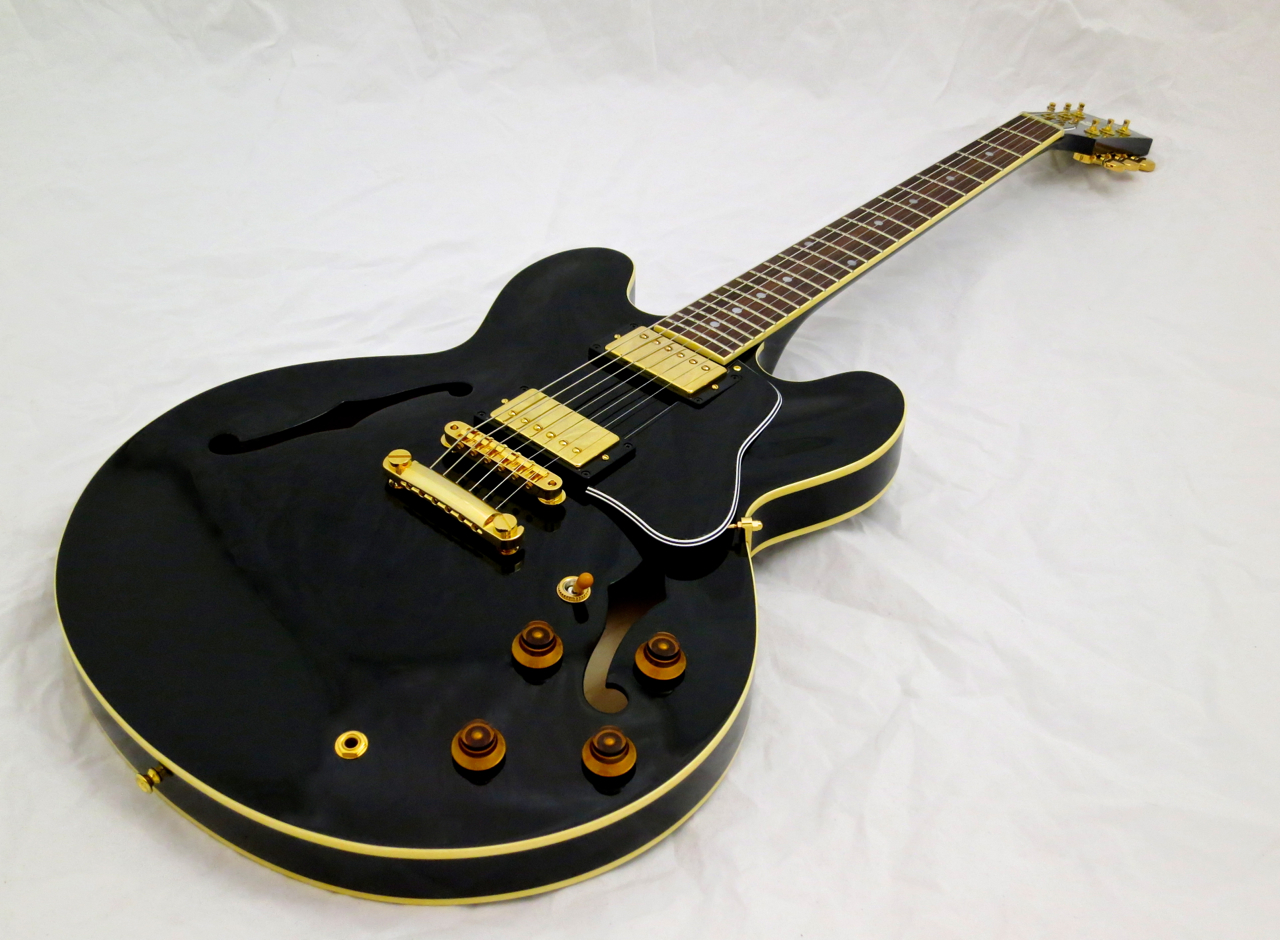
Blackstar Fly 3 -arvonta on päättynyt.
Vahvistimen voittaja julistetaan huomenna kello 12:00.
Kitarablogi.com – Finland's premier Guitar and Bass blog
Juttuja kitaroista ja bassoista

Blackstar Fly 3 -arvonta on päättynyt.
Vahvistimen voittaja julistetaan huomenna kello 12:00.
Blackstar Amplificationin uutuustuote on minikokoinen harjoitusvahvistin nimeltään Fly 3.
Blackstar Fly 3 on kolmewattinen, kaksikanavainen kitarakombo, joka toimii virtalähteellä tai paristoilla. Fly 3 tarjoaa sekä puhtaan että särökanavan. Harjoituskombossa on Blackstarin patentoitu ISF-säädin, sekä nauhakaiku-tyylinen viive-efekti. Kaiuttimen halkaisia on kolme tuumaa.
Kaiutinmallinnuksella varustettu kuuloke-/linjalähtö mahdollistaa hiljaista harjoittelua, sekä suoria linjaäänityksiä kotistudiossa.
Blackstar Fly 3 -komboon voi hankkia myös Fly 103 -nimisen lisäkaappin, joka tekee harjoitusvahvistimesta oivan stereosysteemin – joko kitaran soittoa tai musiikin kuuntelua varten.
Blackstar Fly 3:n hinta on Suomessa vain 65 €!
****
Lisätiedot: Musamaailma
****

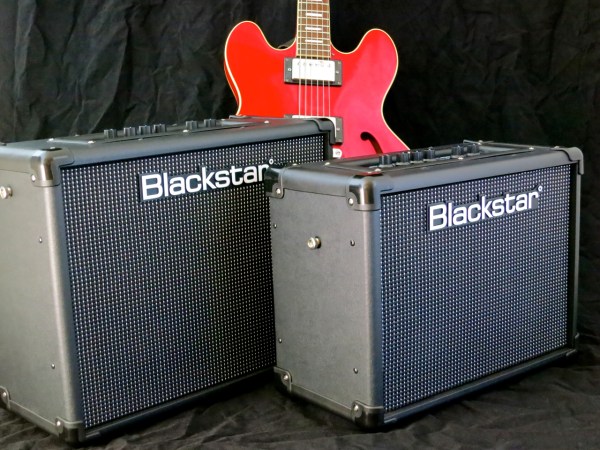
Earlier this year, Blackstar Amplification have released their new ID:Core series, which comprises three stereophonic practice amps (at the moment of writing).
Blackstar’s ID:Core combos are powered by the same modelling technology used in the company’s full-blown ID-series. The ID:Core amps simply take this technology to a smaller format.
Kitarablogi had the pleasure of testing the new series’ middle model – the ID:Core 20 (2 x 10 W) – as well as the largest member of the ID:Core family – the ID:Core 40 (2 x 20 W).
****
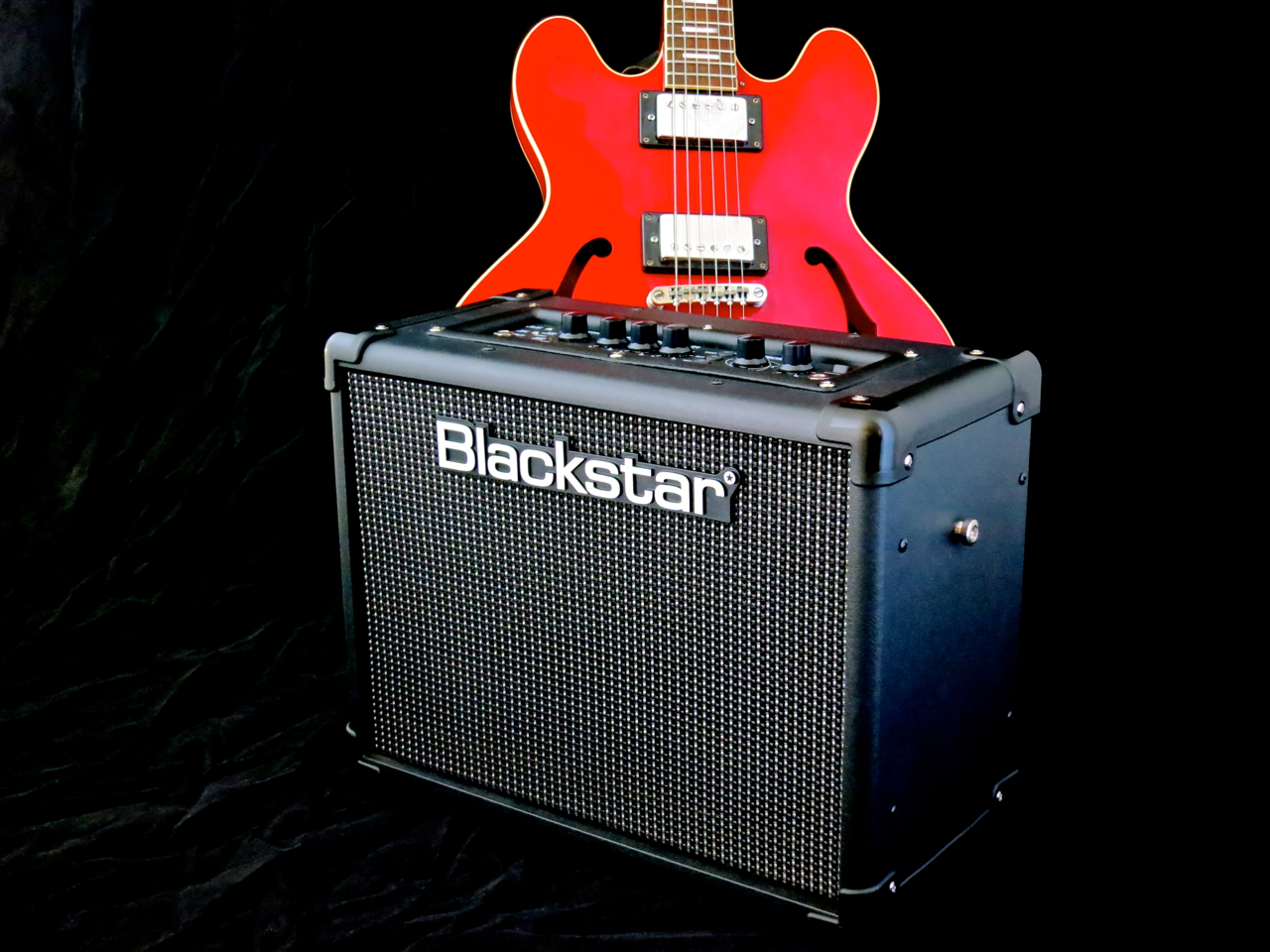
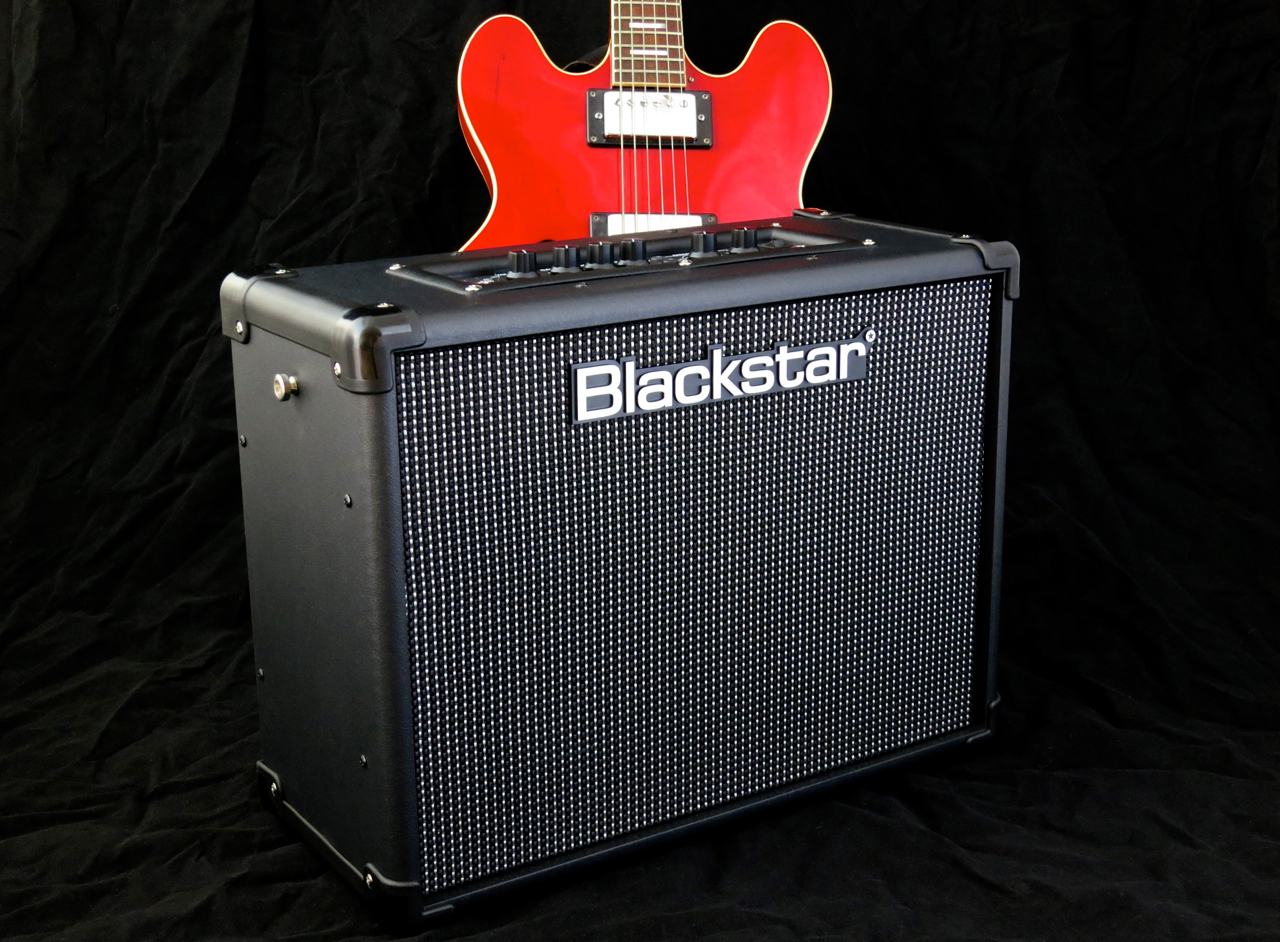
The Blackstar ID:Core 20 (current price in Finland: 149 €) comes equipped with a pair of five-inch speakers.
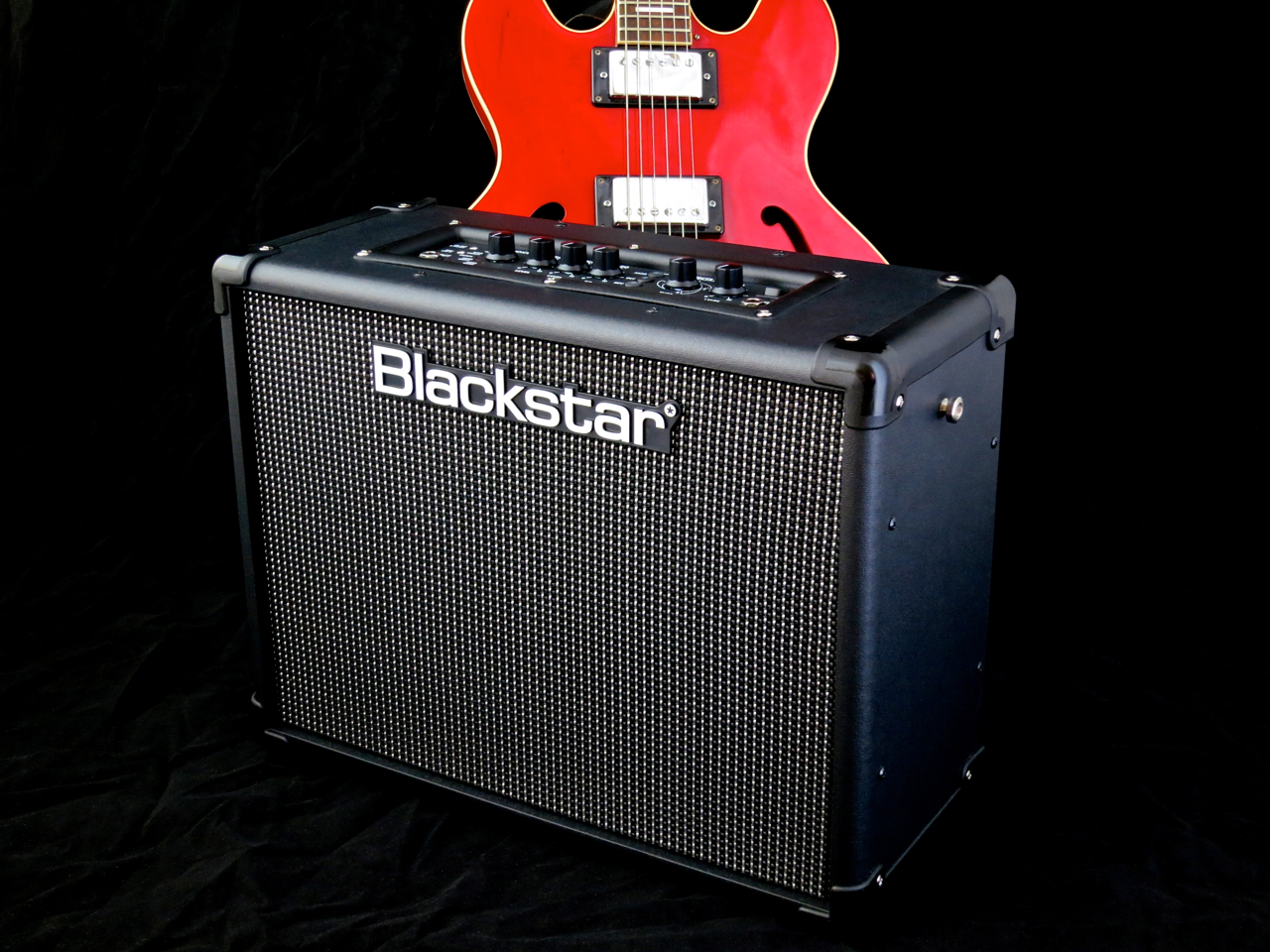
The larger Blackstar ID:Core 40 combo (current price in Finland: 195 €) uses two 6.5-inch speakers to get its message across.
Except for the differences in power amp-, cabinet- and speaker-sizes, the rest of the specifications are identical in these two guitar combos. To make this review more readable I will concentrate on the Blackstar ID:Core 40, and mention any possible differences found in the ID:Core 20.

The new Blackstar combo has a very handy size, and it is easy to carry. In addition to the carrying strap, you will find the power supply unit and a quick start guide in the shipping box. You can download the full owner’s manual as a PDF-file from Blackstar’s website or HERE.
Even though the ID:Core series, naturally, isn’t really built to withstand the rigours of touring, these combo’s are rather sturdy little numbers. These may be mere practice amps, but toys they are most definitely not!
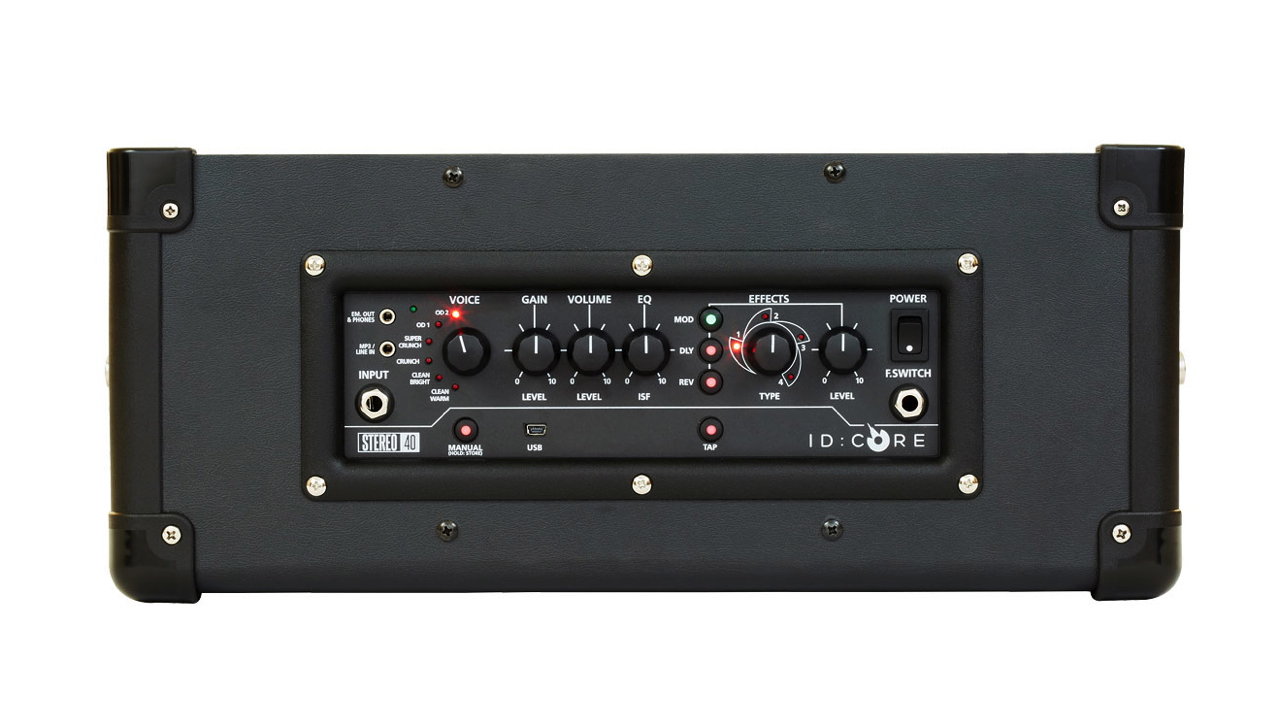
The electronics have been installed into the ID:Core’s top.
All the controls, push-buttons and inputs/outputs are identical throughout the whole series, with the exception of the smallest combo (the ID:Core 10) not offering the option of connecting a FS-11 footswitch unit (not included).
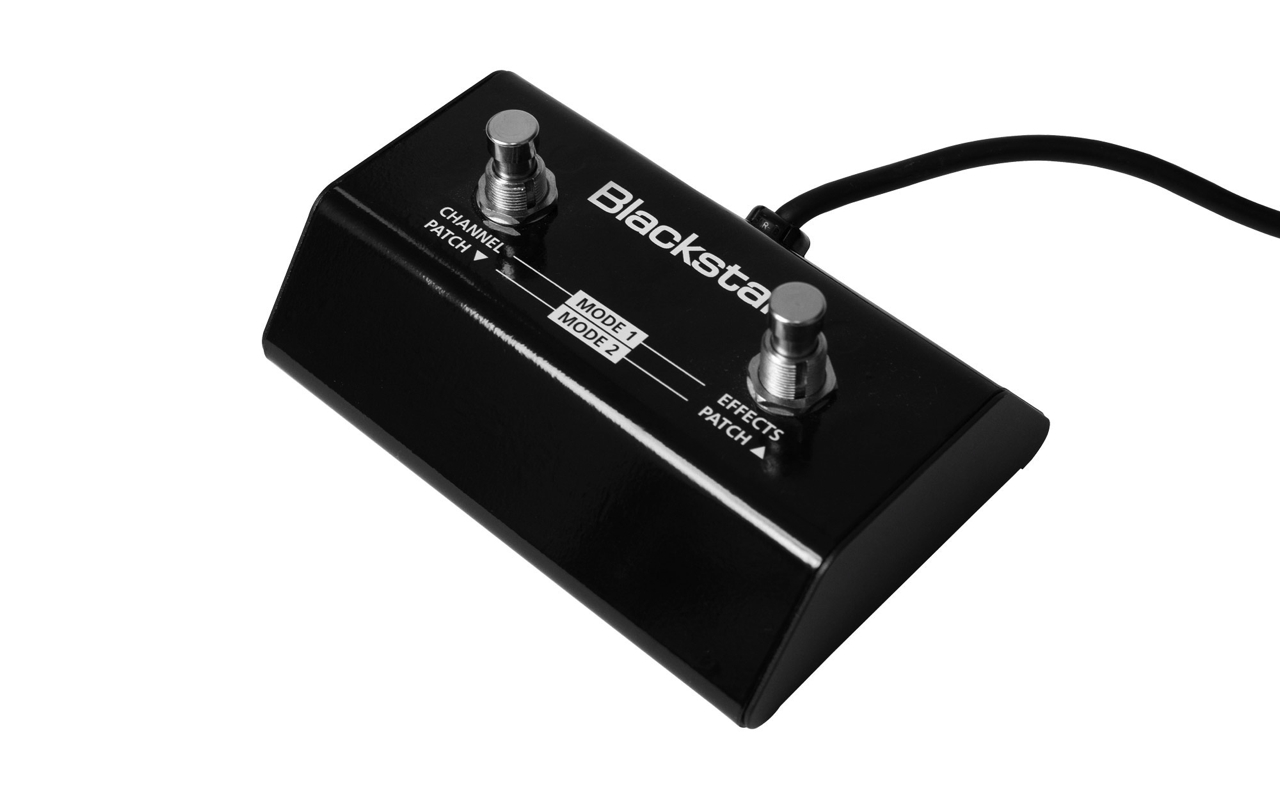
The ID:Core 40’s factory default uses the FS-11’s left switch for switching between two Voice-channels, with the right switch functioning as an effect mute for the selected channel.
The free Blackstar Insider -software (PC and Mac) also lets you select a different footswitch mode that offers you all Voice-channels, and which uses the two switches to step through all the channels, either up (right switch) or down (left switch).
****

The ID:Core 40 is very easy to use:
The Voice-selector lets you choose one of the combo’s six Voice-channels (= digital amp models). In Preset-mode calling up a channel automatically recalls all the stored preset settings, like gain, ISF or effects. In Manual-mode switching to a different Voice only changes the selected amp type, with the other settings staying the way you have manually set them.
Naturally, all presets can be adjusted by the user, and the changes can then be stored in the ID:Core combo’s memory, wiping the factory preset in the process.
The new Blackstar-combos also come equipped with a digital tuner, which springs to life when you hold down the Manual- and Tap-buttons simultaneously for a couple of seconds. In Tuner-mode the combo’s red Voice-LEDs represent the six guitar strings, while the LEDs in the Effect-buttons tell you whether the pitch is flat (REV), sharp (MOD) or right on the money (DLY).
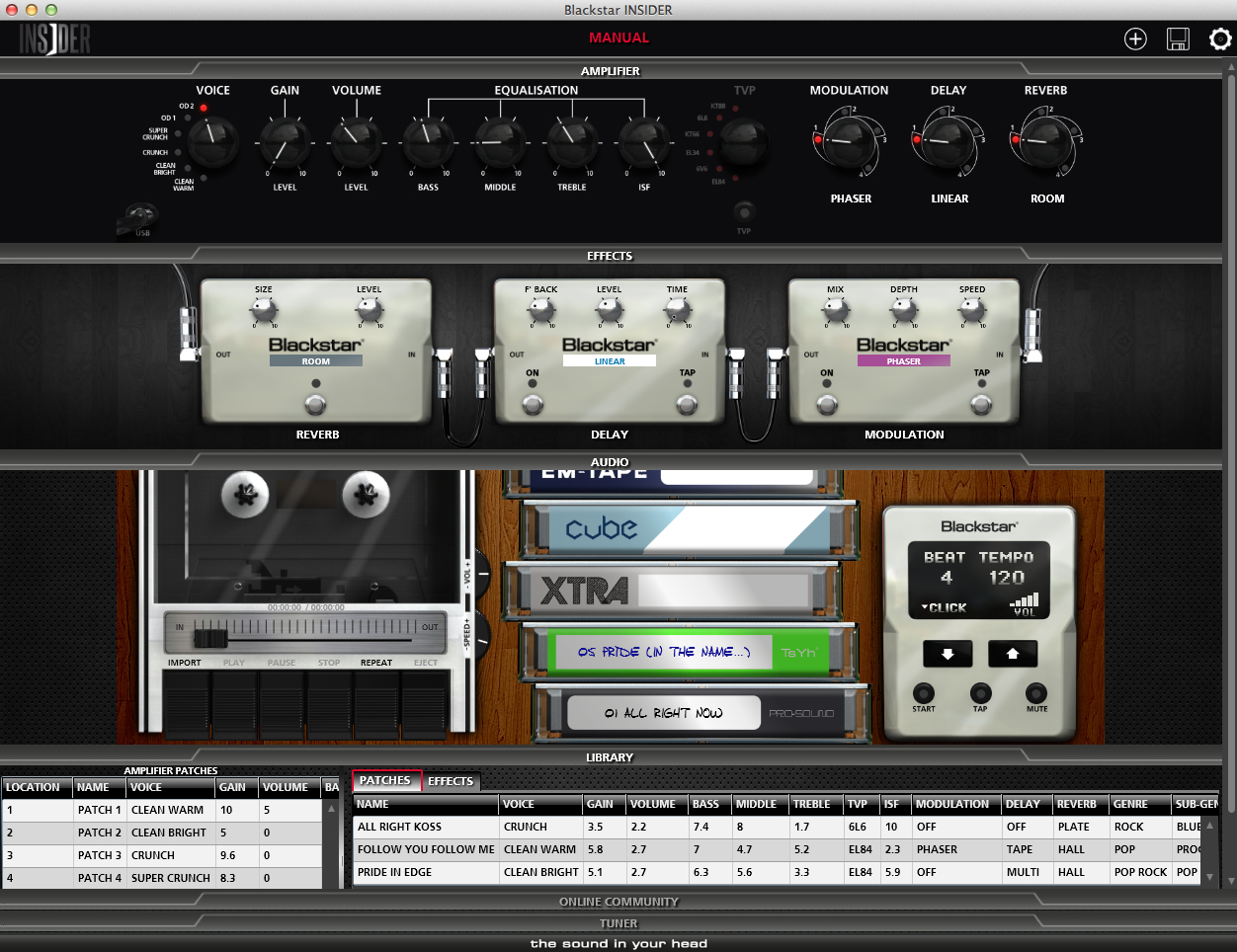
By downloading Blackstar’s Insider-software you get access to additional features of the ID:Core combo via its mini-USB-port (Hey, Blackstar: Why isn’t a USB-cable included with the amp?):
The most crucial of the additional functions, in terms of the combo’s tone, is the access to its internal three-band EQ. The combo only offers you a physical knob for the ISF-setting, which lets you change the amp’s character from bright-ish ”American” (ISF = 0) to chunkier ”British” (ISF = 10). The Insider-programme also lets you fine-tune each preset’s Bass, Middle and Treble EQ-settings.
Insider also allows you to create you own ID:Core-presets, save as many as you like, and send them to your combo for use. But note that each preset is always tied to the Voice-channel used as its basic ingredient. This means that an ID:Core combo will always offer six different Voice-channels – you cannot load six different Warm Clean patches, or six OD1 Metal sounds, into the combo’s six Voice-channels.
If you want, you can set up an Insider-account, which enables you to share your own patches with other ID:Core users around the globe.
The Blackstar Insider software also includes some tools for practicing. There’s a simple rhythm box, as well as a music player (looking like an old cassette recorder), which even allows you to change a music file’s tempo and/or loop a certain part.
Insider’s tuning section gives you an on-screen, graphically-enhanced version of the combo’s internal tuner.
Thanks to its USB-connectivity you can also use the ID:Core combos as an external sound-card for direct recording to your audio sequencer. You can even configure the combo for re-amping (using the Insider-software), but I wasn’t quite satisfied with the way the ID:Core performed as a sound-card (at least with the tested firmware version). I’d like to see an even shorter audio latency, as well as a hotter audio signal, before I would seriously consider using the ID:Core for direct recording.
****

Blackstar’s advertisements are placing quite a lot of emphasis on the ID:Core series’ Superwide Stereo function. With Superwide Stereo turned on (factory default, you can also switch it off via Insider) especially the delays and reverbs sound impressively lush. You feel enveloped in a cloud of sound, with some of it seeming to even come from behind you.
Actually, the ID:Core’s effects aren’t really stereophonic at all – you shouldn’t expect ping-pong delays, or anything of that sort. In reality, these Blackstar combos have a signal path that is completely monophonic, up to the point the signal reaches the power amp section (and headphone amp). It is only at this point that a stereo signal is created from the mono by splitting the mono signal in two, and by changing the phase of one of the signals. The result is a lush, broad, and fairly natural ”stereo” sound.
This method of creating ”fake stereo” has long been used in analogue modulation effects. There’s nothing ”wrong” or ”deceitful” in doing things this way, and Blackstar’s Superwide Stereo sure sounds impressive, but I’m not sure I’d want to trumpet this amp series’ ”stereo-ness” so loudly.
But now to the most important aspect of an amp – it’s tone:
I could sum it all up by saying that the amps sound great! Regardless of the fact that we’re talking about very pocket-friendly practice amps here, the sounds and dynamic response Blackstar’s excellent ID-modelling technology dishes out will leave you with a big grin on your face. Six well-chosen Voices and 12 quality effect types shouldn’t leave anybody wanting.
The ID:Core 40, naturally, sounds noticeably ”bigger”, compared to the ID:Core 20, with its smaller speakers and cabinet. Nonetheless, you get the feeling that both combos make the most of their respective wattage. Miked up both combos sound virtually the same.
The following sound clips have been recorded with the Blackstar ID:Core 40, using the factory presets as a basis, which I then fine-tuned to my liking. I played these clips on my Kasuga (a Japanese ES-335 copy from the Seventies), recording the sound with two dynamic Shure microphones.
Clean Warm:
Clean Bright:
Crunch:
Super Crunch:
OD1:
OD2:
****
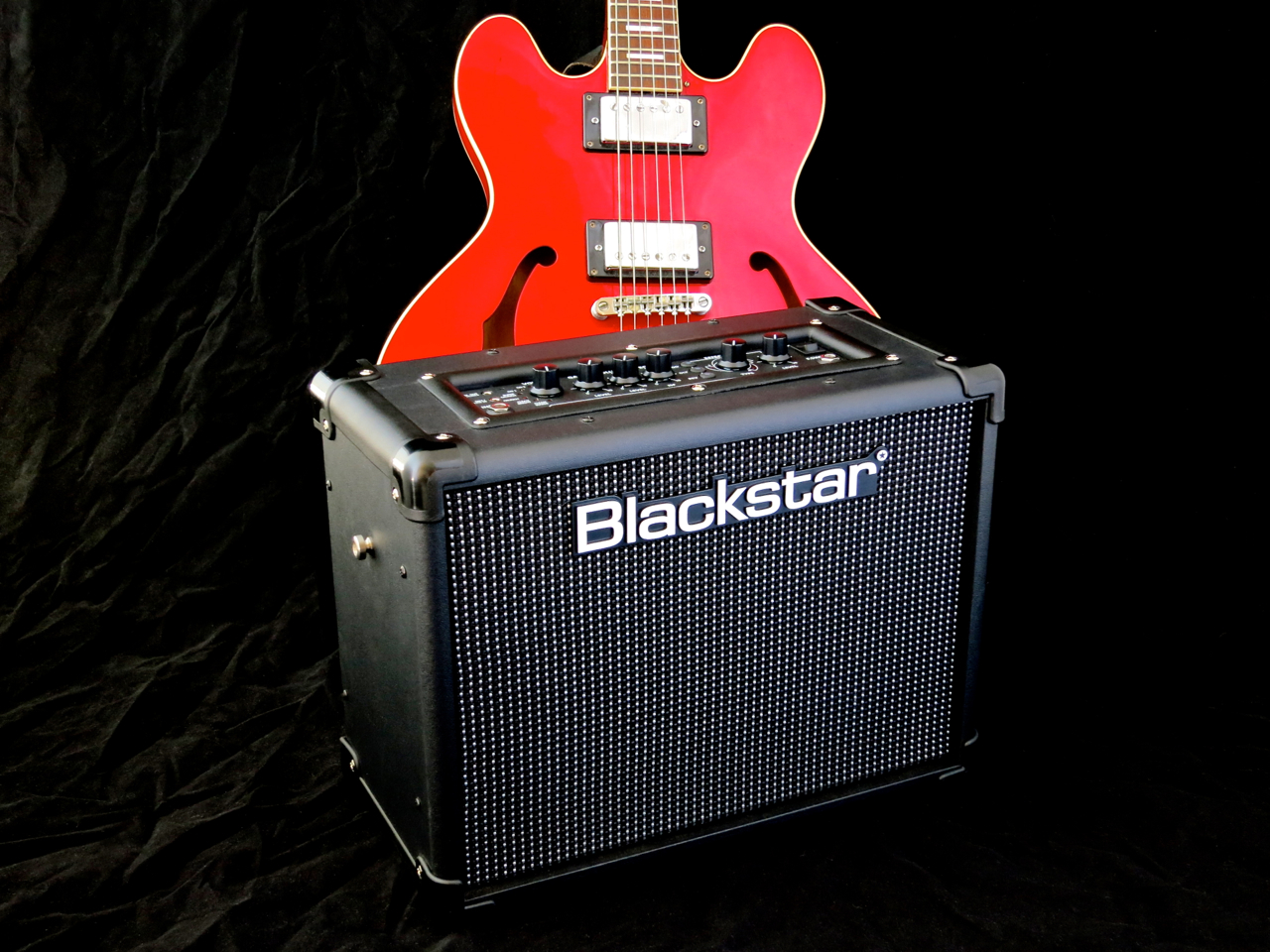
Blackstar have successfully managed to transfer the great sounds of their ”grown-up” ID Series amps to the ID:Core practice combos. Together with Blackstar’s Insider-software, the ID:Core 20 and ID:Core 40 combos are fully-spec’ed and inspiring tools for practice, home recording, teaching and warm-up. You get genuine Blackstar tone in a handy package!
****
Blackstar ID:Core -kombot
ID:Core 20 – 149 €
ID:Core 40 – 195 €
Finnish distributor: Musamaailma
****
Pros:
+ workmanship
+ versatile sound
+ up to three simultaneous effects
+ built-in USB sound-card
+ Blackstar Insider -compatible
Cons:
– latency in USB-recording


Tokai Guitars have a well-earned reputation for making high-quality electric guitars and basses, often ”inspired” by vintage designs. This time we got three semis from the very top of Tokai’s Japanese model range for review.
****

The Tokai ES-138 (current price in Finland: 1,368 €, incl. hard case) is the company’s version of a 1958 Gibson ES-335, available in either see-through red or piano black.

Tokai’s ES-145G (current price in Finland: 1,431 €, incl. hard case) is a lightly updated variation on the theme, which comes equipped with gold-coloured hardware and a black finish.
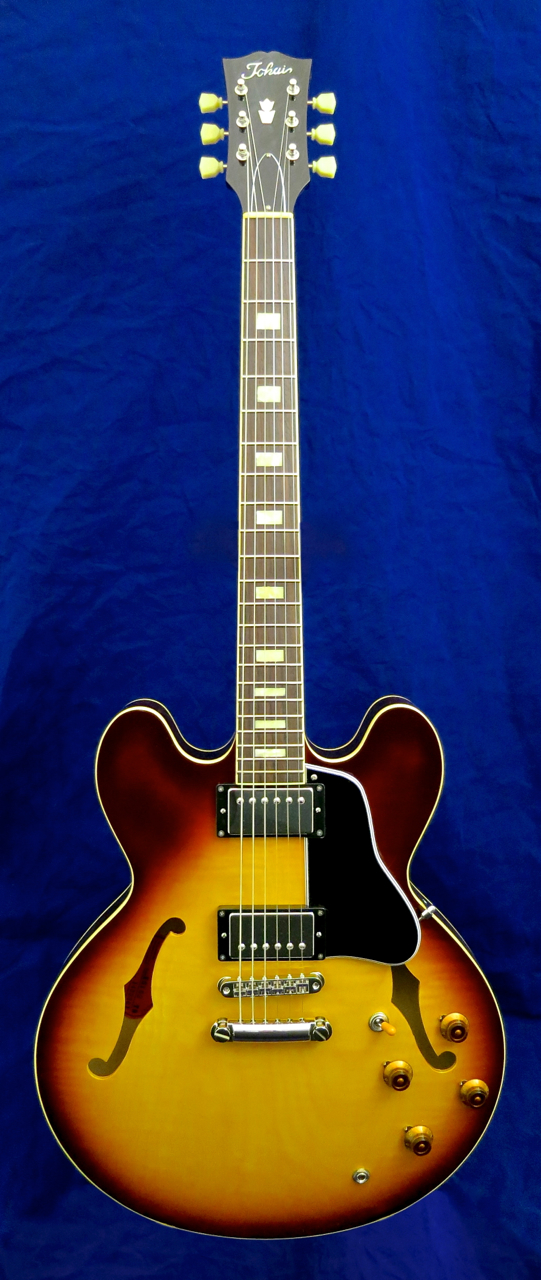
The Tokai ES-162 (current price in Finland: 1,628 €, incl. hard case) is the most expensive model of the three on review. The ES-162 comes with post-1962 style small block markers, brass bridge saddles, and a light aluminium stopbar. The icing on the cake is this model’s vintage-style nitrocellulose finish – you can choose between a tri-burst and red.

Tokai use top-drawer Gotoh tuners on the three tested models.

The ES-138 and ES-162 come equipped with vintage-style Kluson-copies.
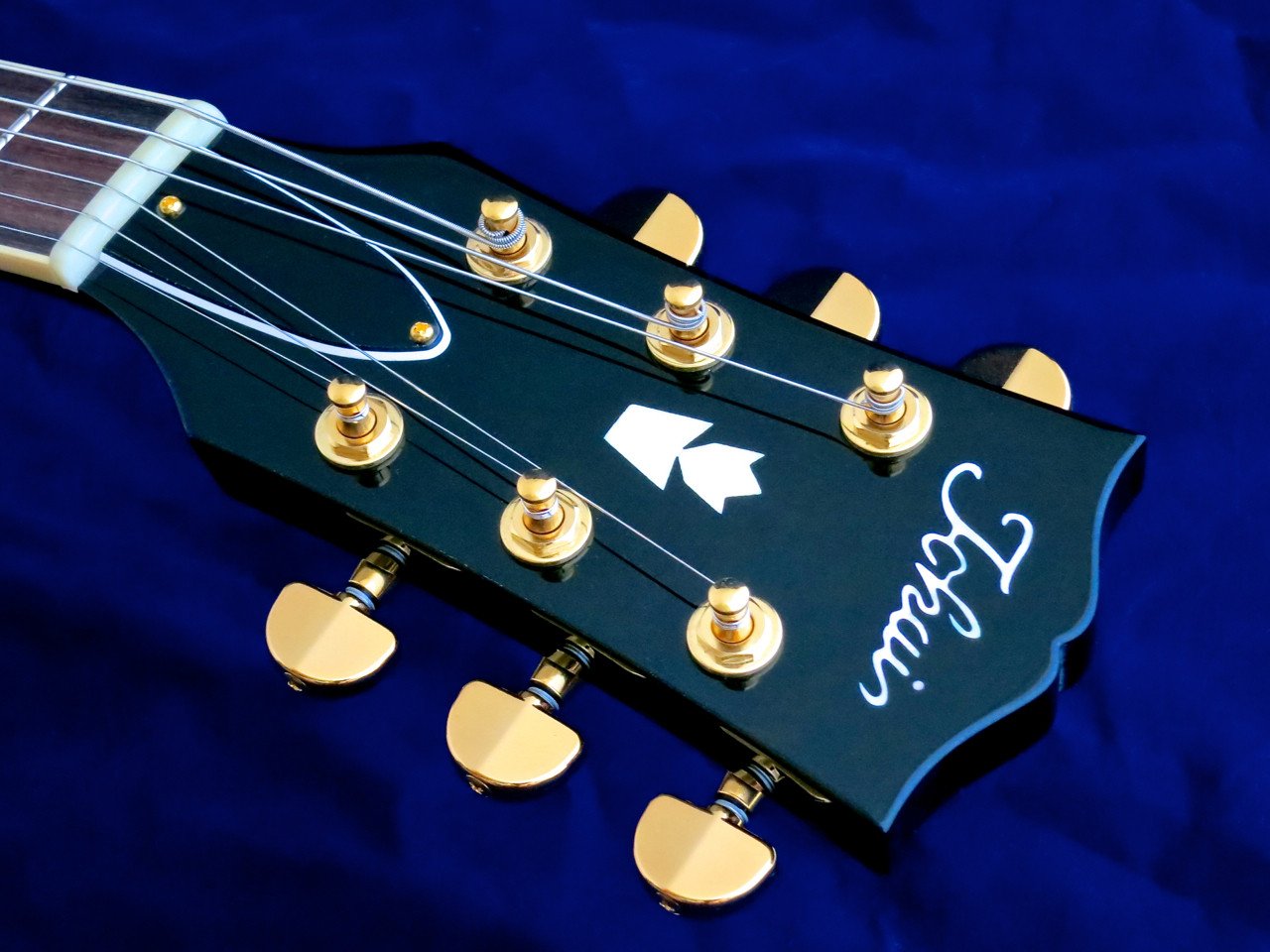

For the ES-145G Tokai have chosen a set of modern enclosed Gotohs.

These Tokai Japan -instruments all come with a one-piece mahogany neck, complete with a vintage-correct, steep headstock angle (17 degrees).
The bound rosewood fretboards on the ES-138 and ES-145G models sport dot markers.

As the ES-162 is Tokai’s version of a 1962-’64 ”Block Marker” ES-335, this guitar comes with small rectangular inlays made of pearloid.
All three instruments come fitted with medium-size frets.

Tokai’s ES-guitars come with Gotoh Tune-o-matic-bridges and stopbar tailpieces.

On the ES-138 and the ES-145G we find Gotoh’s LS-series hardware – die-cast (Zamac) parts with steel bridge saddles.
The ES-162 goes one step more ”vintage” by using a Gotoh HLS -set, comprising an ultra-light aluminium stopbar tailpiece and chrome-plated brass saddles on the bridge.

This guitar trio is equipped with the same pickups – a pair of Tokai PAF-Vintage Mark II -humbuckers.

All the electronic components are top quality Japanese parts.

Certain Tokai Japan -models are now sold in Finland complete with Tokai’s cool hard cases.
****

The cherry red semi-acoustic is one of guitardom’s most iconic electric models. For many this curvy and well-rounded body, made from heat-pressed maple plywood, is the most beautiful body style ever.
Tokai’s ES-138 recreates this classic guitar in its earliest guise (c. 1958), complete with dot markers and a long pickguard, which extends past the bridge.
Even though an ES-335-type body is comparatively large (but thin), many of the best semi-acoustics are surprisingly lightweight. The Tokai ES-138 is very comfortable to play – both seated and strapped on – and balances superbly.
This model’s neck profile is a medium-thick ”D”, which feels great (at least in my hand). The fret job on the test sample was excellent, the set-up spot-on, and the action very light (with a set of 010s). The ES-138’s acoustic tone is typical of this type of guitar – very hollow and nasal with a clicking attack.
Tokai’s own rendition of the classic PAF-humbucker is superb, there’s no two ways about this! The output signal is moderate, and the basic sound is very open and dynamic. The neck pickup has a warm, round tone, but doesn’t mush up. The middle position on the selector switch gives you a very balanced and open sound. The bridge humbucker on its own sounds fresh and crispy, with not even a hint of annoying mid-range ”nagging”.

****

The black-and-gold ES-145G sure looks very stylish – this is the distinguished gentleman in Tokai’s ES-range, who keeps his cool and looks dapper, no matter what.
Our test sample was the heaviest guitar of this trio, but still much, much lighter than may lesser contenders.
The ES-145G’s neck profile is also the chunkiest. This D-profile is a real palm-filler, giving you a real taste of late-Fifties goodness, and managing to stay just on the right side of ”fat”.
The workmanship displayed, and playability offered by the ES-145G are simply superb. Played acoustically there’s not a lot of difference between the ES-145G and the ES-138.
Through an amp, the ES-145G sounds just like a quality semi-acoustic should – humbucker power, balanced by a clean mid-range.

****

Our review sample of the Tokai ES-162 is a real featherweight!
The ES-162’s Block Marker -personality is completed by an authentic early-Sixties style neck profile. It’s an oval ”C” that is less of a handful than the ES-138’s neck.
Top marks for the ES-162’s workmanship, finish and playability – this is a first-rate instrument.
This model’s thin nitro lacquer, its lightweight tailpiece, as well as the brass saddles on the Tune-o-matic combine into a very open-sounding and dynamic acoustic performance.
Standing in the same room with your amp, it is easy to notice an added degree of 3D-depth and scope in the guitar’s amplified tone. Interestingly – as is so often the case – recording the sound doesn’t seem to fully convey this added tonal dimension. You have to experience the ES-168 ”in the flesh” to get the full picture; the recordings sound remarkably similar to the other two models’ performances.

****

The reputation of Tokai Japan -instruments has been legendary among players and collectors ever since the 1970s. This trio of ES-semis makes it crystal-clear that Tokai actually deserves this reputation thanks to the superb quality of it’s Made-in-Japan guitars.
Tokai’s ES-138, ES-145G and ES-162 offer you genuine Japanese quality at very fair prices.
****
Tokai Japan semi-acoustic electrics
Tokai ES-138 – 1,368 € (hard case included)
Tokai ES-145G – 1,431 € (hard case included)
Tokai ES-162 – 1,628 € (hard case included)
Finnish distributor: Musamaailma
****
Pros:
+ Japanese workmanship
+ one-piece neck
+ superb finish and set-up
+ Gotoh-hardware
+ authentic tone

Tokai Guitarsilla on erittäin hyvä maine laadukkaiden sähkökitaroiden ja -bassojen valmistajana. Tällä kertaa testissä kävi kolme Japanissa käsityönä valmistettua Tokai ES -sarjan soitinta hintaskaalan kalliimmasta päästä.
****
Tokai ES-138 (hinta: 1.368 €, sis. kovan kotelon) on firman versio vuoden 1958:n Gibson ES-335 -kitarasta, joka on saatavilla sekä punaisena että mustana.
Tokai ES-145G (hinta: 1.431 €, sis. kovan kotelon) on kullanvärisillä metalliosilla varustettu ja kevyesti modernisoitu tulkinta aiheesta. Se on saatavana ainoastaan mustana.
Tokai ES-162 (hinta: 1.628 €, sis. kovan kotelon) on kolmikon kallein malli, jolla on suorakulmaiset otemerkit, tallapalat messingistä, sekä alumiininen kieltenpidin. Piste i:n päällä on kuitenkin ES-162:n viimeistely aidolla nitrolakalla. Malli on saatavana kolmivärisellä liukuvärityksellä tai punaisena.
Tokai käyttää näissä kitaroissa Gotohin valmistamia laatuvirittimiä.
ES-138- ja ES-162-kitarat on varustettu Kluson-tyylisillä vintage-koneistoilla.
ES-145G:n lapaan taas on asennettu nykyaikaisia suljettuja Gotoh-virittimia.
Näissä Tokai Japan -soittimissa on yhdestä palasta veistettyjä mahonkikauloja vintage-tyylisellä, jyrkällä lapakulmalla (17 astetta).
ES-138- ja ES-145G-malleissa käytetään pieniä pyöreitä otemerkkejä reunalistoitetussa palisanteriotelaudassa.
ES-162 taas on Tokain versio vuoden 1962-’64 ns. ”Block Marker” ES-335:sta, jossa upotukset ovat keskikokoisia suorakulmia.
Nauhakoko on näissä kolmessa ES-mallissa medium.
Kaikissa kolmessa Tokai ES -kitaroissa on Gotohin valmistama palkkimainen kieltenpidin, sekä kevyesti nykyaikaistettu versio Tune-o-Matic-tallasta.
ES-138:ssä ja ES-145G:ssä käytettään Gotoh LS -settiä sinkkipitoisesta valumetallista teräksisillä tallapaloilla.
ES-162:n Gotoh HLS -setti on muutaman asteen verran vintagemaisempi, kun käytössä on erittäin kevyt alumiinista valmistettu kieltenpidin, sekä kromattuja tallapaloja messingistä.
Kolmikon mikrofonivarustus on sama – kitaroissa on kaksi Tokai PAF-Vintage Mark II -humbuckeria.
Huippulaadukas linja jatkuu luonnollisesti myös ES-kolmikon japanilaisissa elektroniikkaosissa.
Tokai Japanin hienoimpia kitaramalleja myydään nykyään firman omissa laadukkaissa koteloissa.
****
Kirsikanpunainen puoliakustinen on yksi legendaarisimmista sähkökitaramalleista. Useimpien mielestä tämä kurvikas, muottiin prässätystä nelikerroksisesta vaahteravanerista tehty koppa on kaunein muoto ikinä.
Tokain ES-138 on kyllä upea tulkinta klassikkomallin varhaisesta versiosta, jolla on asianmukainen erikoispitkä plektrasuoja ja pyöreät otemerkit.
Vaikka ES-kitaroiden runko on pinta-alalta varsin mittava, on laadukas lajinsa edustaja kuitenkin useimmiten yllättävän kevyt. Tokai ES-138 on erittäin mukava pitää sylissä tai kantaa hihnassa, ja se asettuu hyvin nätisti tasapainoon.
Kaulaprofiili on keskituhti ”D”, joka istuu todella mukavasti ainakin minun käteeni. Nauhatyö oli testisoittimessa ensiluokkaista, ja kitara oli säädetty hyvin mukavaksi 010-kielisatsilla. ES-138:n akustinen klangi on mallityypin mukainen – ontto ja nasaali maiskuttavalla atakilla.
Täytyy kyllä sanoa, että Tokain omat PAF-tyyliset humbuckerit kuulostavat loistavilta! Lähtötaso on hyvin maltillinen ja perussoundi on mukavan avoin. Kaulamikki on lämmin, mutta erotteleva, ja valitsimen keskiasennossa soundi on ilmava. Tallahumbucker taas soi hyvin tuoreella äänellä, mutta ei ”marise” häiritsevästi keskialueella.
****
Musta ja kultainen ES-145G on mielestäni erittäin tyylikäs soitin – Tokai ES -sarjan oikea herrasmies, joka näyttää hyvältä tilanteessa kuin tilanteessa.
Testiyksilö on aavistuksen verran painavampi kuin testissä käynyt ES-138, mutta silti vielä huomattavasti kevyempi kuin moni edullinen tulkinta samasta aiheesta.
ES-145G:n kaulaprofiili on tämän kolmikon tuhdein. Tällainen täyteläinen D-profiili antaa aitoa myöhäisen 1950-luvun makua. Kaula ei ole missään nimessä liian paksu, mutta se täyttää käden vakuuttavasti.
Työnjälki ja soitettavuus ovat myös ES-145G:ssä esimerkillisiä. Akustisesti soitettuna ES-145G:n ja ES-138:n soundit ovat käytännössä identtisiä.
Myös vahvistettuna on vaikea huomata selkeitä eroja – Tokai ES-145G soi kuin mitä erittäin laadukkaalta puoliakustiselta sopii odottaa.
****
Testissä käynyt ES-162 on selvästi kolmikon kevyin yksilö!
ES-162:n Block Marker -ulkonäköön sopii myös kaulan autenttinen profiili, joka on ovaali ”C” ja hieman ohuempi kuin ES-138:ssa.
Työnjälki ja soitettavuus on myös ES-162:n tapauksessa ensiluokkaista.
Tämän kitaran ohut viimeistely nitrolakalla, sen kevyempi kieltenpidin, sekä tallan messingistä tehdyt tallapalat antavat Tokai ES-162:lle erittäin avoimen ja dynaamisen akustisen klangin.
Myös ”livenä” vahvistimen kanssa samassa huoneessa huomaa, että tämän kitaran soundissa on aavistuksen verran enemmän syvyyttä ja laajuutta. Mutta, kuten usein, äänitetyssä materiaalissa tämä ”kolmas ulottuvuus” katoaa melkein kokonaan, ja ES-162 kuulostaa miltei samalta kuin testikolmikon kaksi muuta mallia.
****
Tokai Japan -soittimien maine on jo 1970-luvulta lähtien ollut legendaarinen, ja tämä ES-sarjan kärkkikolmikko tekee hyvinkin selväksi, että Tokain tapauksessa firman maine ja sen kitaroiden laatu käyvät saumattomasti yksi yhteen.
Tokain ES-138, ES-145G ja ES-162 tarjoavat japanilaista huippulaatua erittäin reiluun hintaan.
****
Tokai Japan -puoliakustiset
Tokai ES-138 – 1.368 € (kotelo sis. hintaan)
Tokai ES-145G – 1.431 € (kotelo sis. hintaan)
Tokai ES-162 – 1.628 € (kotelo sis. hintaan)
Maahantuoja: Musamaailma
****
Plussat:
+ japanilainen työnjälki
+ yksiosainen kaula
+ viimeistelyn taso
+ Gotoh-metalliosat
+ mikrofonien soundi