Review: Yamaha LL6 ARE

Yamaha LL6 ARE – label

Yamaha has recently upgraded its very successful L-Series of steel-string guitars.

The most important update, at least in terms of sound quality, is the use of A.R.E.-treated spruce tops across the whole range of models. Yamaha’s proprietary Acoustic Resonance Enhancement is a wood treatment that uses heat, changes in humidity and pressure, to artificially age tonewoods. The aim is to produce brand-new acoustic instruments, which sound played-in from the get-go.

L-Series guitars come in three body sizes – LJ (Medium Jumbo), LS (Small Body = Folk-sized) and LL (Original Jumbo = Dreadnought-sized).

Kitarablogi had the pleasure to take a Yamaha LL6 ARE (current price in Finland: 534,90 €) for a spin.

****

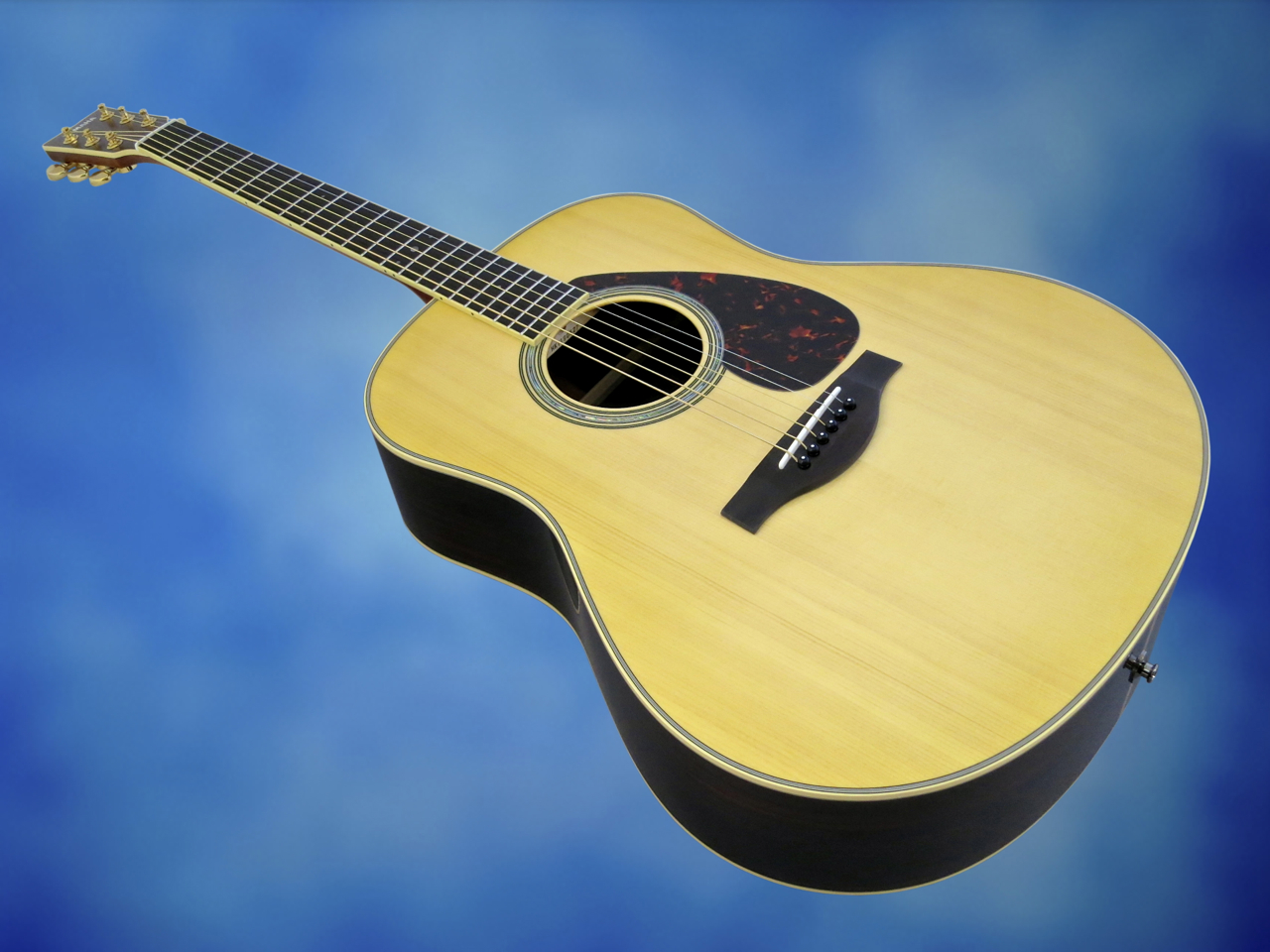
Yamaha LL66 ARE – full front – large

Yamaha’s Original Jumbo body style is the company’s own design, set apart from a traditional Dreadnought by its slimmer shoulders and its more rounded lower bout. The result looks nicely balanced.

Yamaha uses solid Engelmann spruce for all of their L-Series tops. Engelmann spruce has a reputation for sounding warmer and less constricted, when compared to Sitka spruce.

The LL6 is available in four different finishes – natural, brown sunburst, black and Dark Tinted (a deep reddish-brown hue).
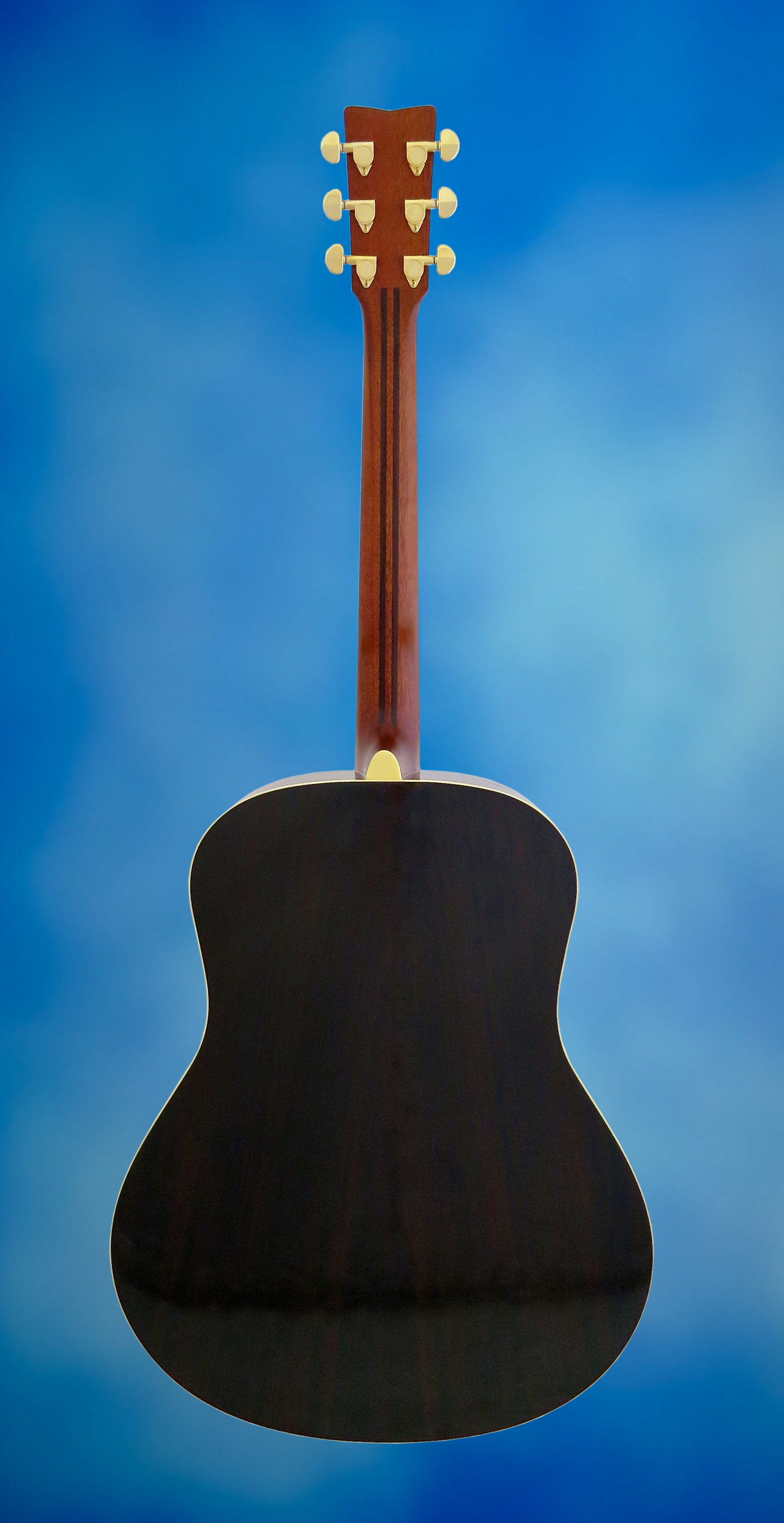
Yamaha LL66 ARE – full back – large

The Yamaha LL6’s sides and back are made from beautifully grained laminated rosewood. There’s a mahogany backed version available, too, the Yamaha LL6M ARE.

The guitar’s body has received a gloss finish, while the back of the neck sports a thin satin finish.

Yamaha LL66 ARE – headstock

The bound headstock is home to a set of TM-29G tuning machines.

Yamaha LL66 ARE – tuners

All new L-Series instruments come with five-piece necks. In the LL6’s case this means three pieces of mahogany with two strips of rosewood sandwiched between them. The idea behind this type of construction is to add stiffness to the neck, and thus sustain.

The LL6’s headstock and neck heel are crafted from separate pieces of mahogany, which are then glued to the main part.

Yamaha LL66 ARE – fretboard

The quality of the fretwork on this Yamaha is very good.

Another new feature across all L-Series models are rolled-in fingerboard edges for an even more comfortable playing experience.

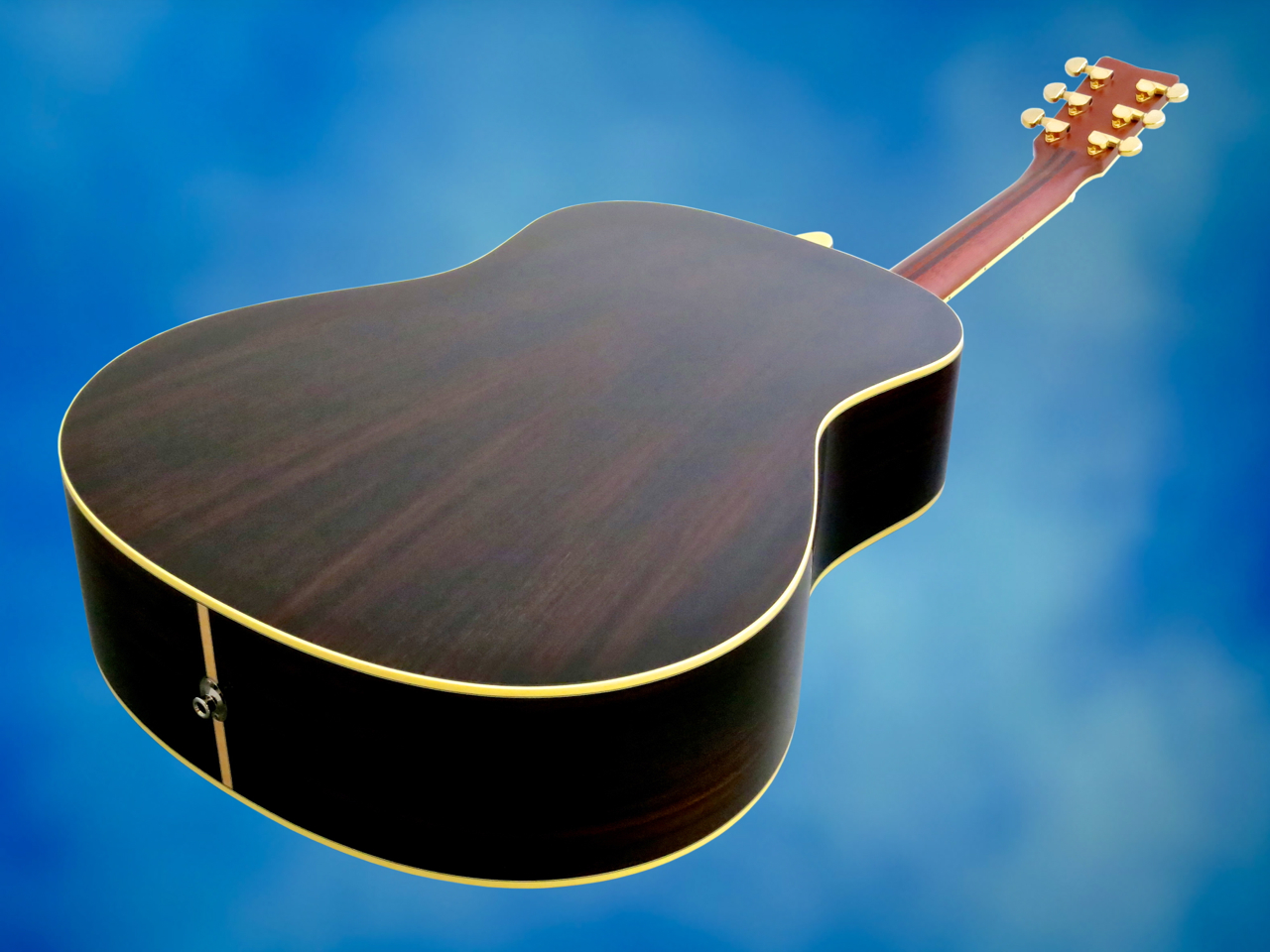
Yamaha LL6 ARE – beauty shot

Yamaha LL66 ARE – back beauty

Yamaha uses a modified type of non-scalloped X-bracing on all L-Series tops, which is meant to add a healthy dose of punch and warmth into the mix.

Yamaha LL6 ARE – rosette

The centre ring of this beautiful soundhole rosette has been crafted from genuine abalone shell.

Yamaha LL66 ARE – binding

There’s multiple binding on the Yamaha’s top, as well as single ply cream binding around the back.

Yamaha LL66 ARE – bridge

The LL6 comes with a Yamaha SRT Zero Impact piezo pickup hidden beneath its compensated bridge saddle.

Yamaha LL66 ARE – output jack

As the main focus of the LL6 lies on its acoustic performance, Yamaha wanted an unobtrusive pickup system without the need for an on-board preamp or a battery compartment. This is why the LL6 comes equipped with a passive pickup that is wired directly to the output jack.

Yamaha LL66 ARE – soft case

Yamaha’s LL6 ARE is sold in its own soft case, which is a nice hybrid of a gig bag and a hard case.

****

Yamaha LL66 ARE – body beauty 2

It speaks volumes about Yamaha’s high standards of craftsmanship, as well as the company’s stringent quality control, when the importer’s product specialist takes you to the warehouse, and simply hands you an untouched shipping carton, without even opening it. His only question was: ”Which colour would you prefer?”

And, judging from the review guitar, this trust in Yamaha’s quality control seems totally justified. When I opened the soft case I found a great instrument in fine fettle.

The neck’s new-and-improved oval C-profile feels fantastic, and the nut width of 44 mm offers enough room for complex fingerings. Yamaha have gone for a good working compromise at the bridge, too, with an E-to-e-string spacing of 55 mm, that most strummers and fingerpickers will get to grips with nicely.

The playability was first rate (remember this is a sub-600 € guitar):

The action with the factory-installed 012-gauge set was really comfortable (string height at the 12th fret: low E – 2.1 mm/high e – 1.6 mm), and the guitar played beautifully, without any rattles or buzzes whatsoever.

It’s virtually impossible to verify any claims that Yamaha’s A.R.E.-treatment makes the LL6 ARE sound like well played-in ”old ’un”, because no two vintage guitars are the same, and also because I didn’t have a ”non-A.R.E.” Yamaha to hand.

What I can say, though, is that the Yamaha LL6 ARE sounds very open, dynamic and mature, right out of the shipping carton. Many brand-new steel-string acoustics require a playing-in period to lose a certain restricted sense of dynamics and a spiky top end. The LL6 ARE sounds warm, well-balanced and open right from the start.

Fingerstyle playing comes across well-articulated. The LL6 has a clear top end and a rich bass register; it’s a warm tone, but the bottom end never gets overbearing.

The first example has been close-miked with an AKG C3000 microphone:

For a no-frills, passive piezo system the LL6’s SRT-pickup sounds rather nice:

Combining both signals works well, too:

Strumming the LL6 gives you great punch, a sparkling top end, and plenty of mid-range character (AKG C3000):

The piezo-powered version is a bit drier, but still work well in my view:

Using both signals together sounds like this:

The rhythm guitar tracks in this short Beatles-cover have been recorded with a Shure SM57, while the lead guitar parts have been recorded direct off the built-in pickup:
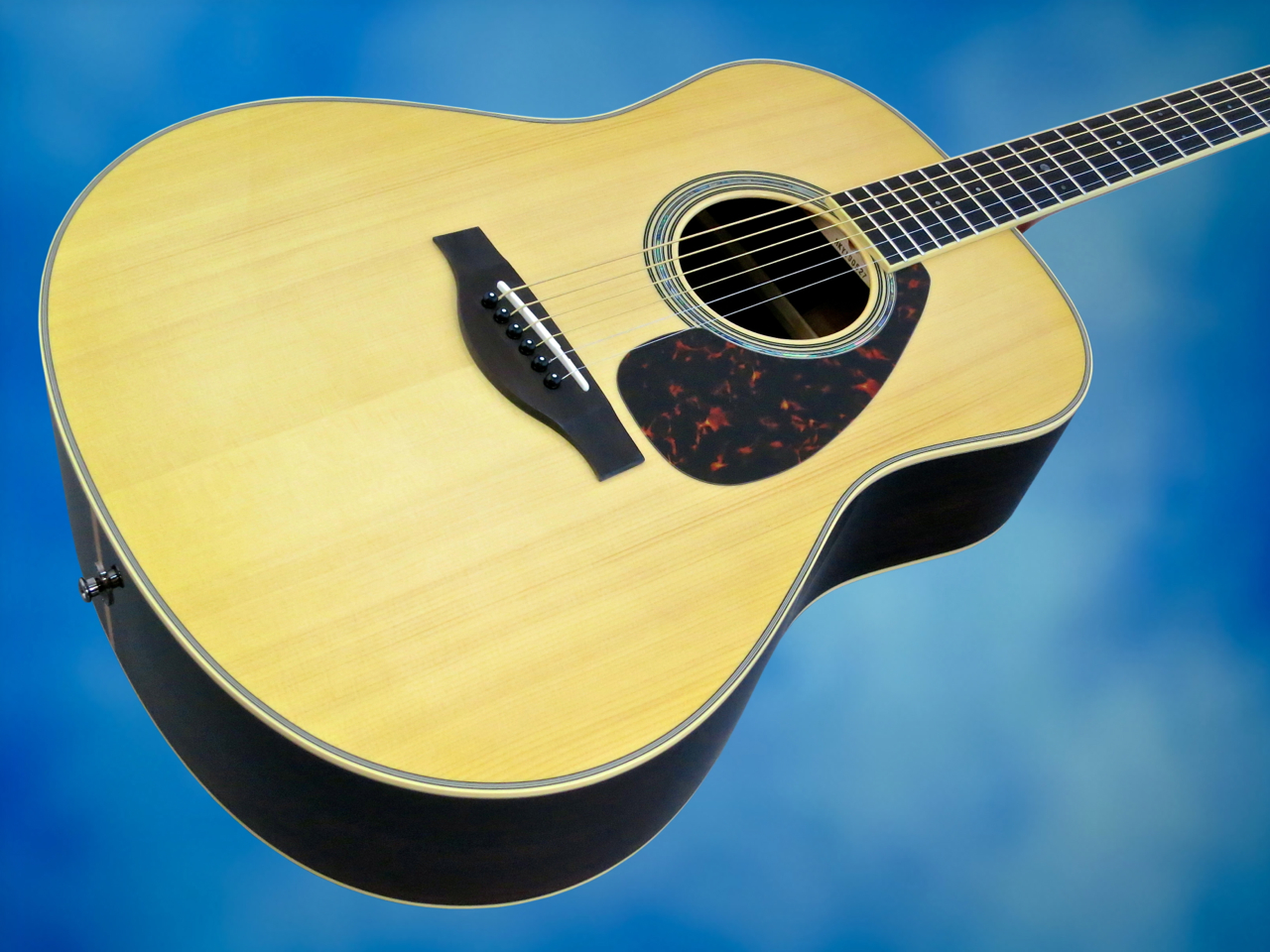
Yamaha LL66 ARE – body beauty

****

Yamaha LL66 ARE – beauty shot 2

The Yamaha LL6 ARE might be the most-affordable member of the L-Series, but it most certainly is a thoroughbred example of its species. The improved neck profile is a real treat, and the A.R.E.-treatment seems to make a clear difference. This is a beautiful instrument with a voice to match. I also like the straightforward pickup system, which offers a decent sound with no fuss. I’d really recommend you try out one of these guitars, as the LL6 ARE punches well above its weight.

****

Yamaha LL6 ARE

534,90 €

Finnish distributor: F-Musiikki

****

Pros:

+ workmanship

+ A.R.E.-treated solid top

+ neck profile

+ acoustic sound

+ unobtrusive pickup system

+ soft case included

Testipenkissä: Yamaha LL6 ARE

Yamaha LL6 ARE – label

Yamaha on hiljattain päivittänyt erittäin suositun L-sarjan teräskielisiä kitaroita.

Soundin kannalta tärkein uudistus on, että koko sarjassa käytetään nyt Yamaha A.R.E. -prosessin läpi käyneitä kansia. Acoustic Resonance Enhancement on firman kehittämä puunkäsittelytapa, jossa esivanhennetaan soitinpuita lämpökäsittelyllä, sekä ilmankosteutta ja ilmanpainetta tarkoin säätämällä. Koko prosessin idea on saada uusia kitaroita soimaan heti kättelyssä sisäänsoitetun soittimen lailla.

L-sarjan kitaroita tarjotaan kolmessa eri koppakoossa – LJ (Medium Jumbo), LS (Small Body = Folk-kokoinen) ja LL (Original Jumbo = Dreadnought-kokoinen).

Kitarablogi sai tällä kertaa testattavaksi Yamaha LL6 ARE -mallin (534,90 €).

****

Yamaha LL66 ARE – full front – large

Yamahan Original Jumbo -koppa on firman omaa designia, jolla on selvästi kapeammat hartiat ja pyöreämpi alaosa kuin perinteisissä Martin D -malleissa. Lopputulos on sulava ja sopusuhtainen.

Yamaha käyttää LL6 ARE -mallissa (niin kuin nykyisin koko L-sarjassa) kokopuista Engelmann-kuusta kansimateriaalina. Engelmann-kuusen soundista sanotaan, että se on usein lämpimämpi ja avoimempi kuin sitkankuusikannella varustetuissa kitaroissa.

LL6-mallia saa natural-vaihtoehdon lisäksi myös sunburst-värityksellä, sekä mustana ja ruskeana.

Yamaha LL66 ARE – full back – large

Yamaha LL6:n sivut ja pohja on tehty kauniista ruusupuuvanerista. Mallista on saatavilla kuitenkin myös LL6M ARE -versio, jos tykkää enemmän mahongista.

Kitaran runko on lakattu kiiltäväksi, kun taas sen kaulaa on mattaviimeistelty.

Yamaha LL66 ARE – headstock

Reunalistoitettuun lapaan on asennettu kuusi nykyaikaista TM-29G-viritinä.

Yamaha LL66 ARE – tuners

Uudistetun LL6:n kaula tehdään kolmesta pitkästä mahonkipalasta ja kahdesta ruusupuupalasta. Rakenteen tarkoitus on lisätä kaulan lujuutta.

LL6:n viritinlapa sekä kaulakorko on veistetty kahdesta erillisestä mahonkipalasta, jotka on liimattu kaulan pitkänomaiseen osaan.

Yamaha LL66 ARE – fretboard

Yamahan nauhatyö on hyvin kiitettävällä tasolla.

Reunalistoitetun palisanteriotelaudan reunoja on hieman pyöristetty, mikä lisää tuntuvasti LL6:n soittomukavuutta.

Yamaha LL6 ARE – beauty shot

Yamaha LL66 ARE – back beauty

L-sarjan kansissa käytetään Yamahan omaa versiota perinteisestä X-rimoituksesta (non-scalloped), jolla halutaan lisätä sopivasti potkua ja lämpöä raikkaaseen kuusikansi-perussoundiin.

Yamaha LL6 ARE – rosette

Kitaran kauniissa rosetissa keskimmäinen rengas on koottu abalone-helmiäisestä.

Yamaha LL66 ARE – binding

Kannessa on monikerroksinen reunalistoitus.

Yamaha LL66 ARE – bridge

LL6:n kompensoidun tallaluun alle on piilotettu Yamahan oma SRT Zero Impact -piezomikrofoni.

Yamaha LL66 ARE – output jack

LL6:ssa pääpaino on kitaran akustisessa soundissa, eikä soitinta haluttu pilata monimutkaisella etuvahvistimella tai paristolokerolla. Tämän vuoksi LL6:n systeemi on täysin passiivinen ja SRT-mikrofoni on kytketty suoraan lähtöjakkiin.

Yamaha LL66 ARE – soft case

Yamaha LL6 ARE:n hintaan kuuluu myös erittäin laadukas soft case -laukku, joka on oiva kovan laukun ja tavallisen gigbagin hybridi.

****

Yamaha LL66 ARE – body beauty 2

Se sanoo mielestäni aika paljon Yamahan työnjäljestä ja laadunvalvonnasta, kun maahantuojan tuotespesialisti ottaa testaajan mukaan varastoon ja antaa hänelle täysin avaamattoman kuljetuslaatikon suoraan hyllyltä. Ainoa kysymys oli: ”Minkä värin haluat?”

Ja tämä luottamus Yamahan laatuun oli täysin oikeutettua, sillä testiin saapunut kitara on todella hyvässä trimmissä oleva laatusoitin.

Kaulan uudistettu, ovaali C-profiili tuntuu erittäin mukavalta kädessä, ja 44:n millimetrin kaulaleveys satulan kohdalla antaa otekädelle riittävästi liikkumatilaa myös monimutkaisia sointuja varten. Myös Yamahan valitsema e-kielten välinen etäisyys tallan kohdalla (55 mm) on loistavasti toimiva kompromissi sekä plektra- että sormisoittoa varten.

Soittotatsi oli testiyksilössä säädetty tehtaassa hyvin mukavaksi 012-paksuisella kielisatsilla (kielten korkeus 12. nauhan kohdalla – matala-E: 2,1 mm/korkea-e: 1,6 mm), ja LL6 ARE soi kauniisti ja täysin rämisemättä.

On mielestäni miltei mahdotonta sanoa, soiko tämä Yamaha ARE-prosessin ansiosta ”kuin vanha vintage-soitin”, koska vintage-kitaroissakin on isoja eroja, eikä minulla ole ollut mahdollisuutta verratta LL6 ARE -mallia suoraan vastaavaan ”ei-ARE-Yamahaan”.

Minun on kuitenkin todettava, että Yamaha LL6 ARE soi uunituoreenakin hyvin avoimella ja dynaamisella äänellä. Tässä ei esiinny lainkaan – niin monia uusia (= ei sisäänsoitettuja) teräskielisiä vaivaava – uudenkarheus tai dynamiikan ja diskantin kireys, vaan ääni on lämmin, avoin ja erittäin hyvässä tasapainossa.

Sormisoitossa LL6 ARE artikuloi erittäin hyvin. Soitossa on aimo annos helisevää diskanttia ja lämmintä bassoa, mutta bassot eivät kumise tai dominoi tämän mallin äänimaailmaa.

Tätä pätkää on lähimikitetty AKG C3000 -mikrofonilla:

Passiiviseksi piezosysteemiksi LL6:n SRT-mikrofoni soi mielestäni hyvin kauniisti:

Myös stereoyhdistelmä molemmista signaaleista kuulostaa hyvältä:

Plektrasoitossa kuuluu LL6:n mukavasti helmeilevä atakki ja sen lämmin, mutta avoin keskialue (C3000):

Piezoversio on suorasukkaisempi, muttei missään nimessä huono:

Yhdistelmä kuuluu tältä:

Tässä Beatles-coverissa komppiraidat on äänitetty dynaamisella Shure SM57 -mikrofonilla, kun taas soolo-osuudet on poimittu mukaan linjasoittoina:

Yamaha LL66 ARE – body beauty

****

Yamaha LL66 ARE – beauty shot 2

Vaikka Yamaha LL6 ARE on edullisin tapa tutustua L-sarjan konseptiin, on malli silti täysverinen lajinsa edustaja. Päivitetyn kaulaprofiilin ansiosta LL6 ARE on entistäkin mukavampaa soittaa, ja kannen A.R.E.-käsittely näyttää toimivan. Tämä on kaunis ja kaunisääninen soitin. Pidän myös tämän Yamaha-mallin kytke-ja-unohda-periaatteella toimivasta mikkisysteemistä. LL6 ARE on mielestäni ehdottomasti kokeilemisen arvoinen teräskielinen. Tämän Yamahan rahkeet riittävät – edullisen hintansa huolimatta – varmasti myös ammattikäyttöön.

****

Yamaha LL6 ARE

534,90 €

Maahantuoja: F-Musiikki

****

Plussat:

+ työnjälki

+ A.R.E.-käsitelty kansi

+ kaulaprofiili

+ akustinen soundi

+ huomaamaton mikkisysteemi

+ soft case kuuluu hintaan

Review: Squier Vintage Modified Cabronita Telecaster

Squier Cabronita Telecaster – beauty shot 2

When the Fender Custom Shop introduced the La Cabronita Especial in 2009, nobody would have thought that this Telecaster and Gretsch mongrel would go on to become the huge hit it is today.

The Cabronita Tele’s success can be seen in the way new, more affordable versions of the model started creeping up – first as Fender models, and now as very affordable Squier guitars. At the moment of writing there are, in fact, two Squier-versions – one with a Bigsby vibrato, and one with a hardtail bridge.

****

Squier Cabronita Telecaster – full front

The Squier Vintage Modified Cabronita Telecaster (price in Finland approx. 300 €) is basically a hot-rodded Telecaster.

Squier Cabronita Telecaster – back beauty

The body of the Squier Cabronita is made from a plank of several pieces of basswood, while its classic one-piece neck has been crafted from hard rock maple.

Squier Cabronita Telecaster – headstock

There is no separate fretboard, instead the instrument’s 22 medium jumbo frets have been installed straight into the radiussed face of the neck.

A welcome nod to modernity is the truss rod access from the headstock side.

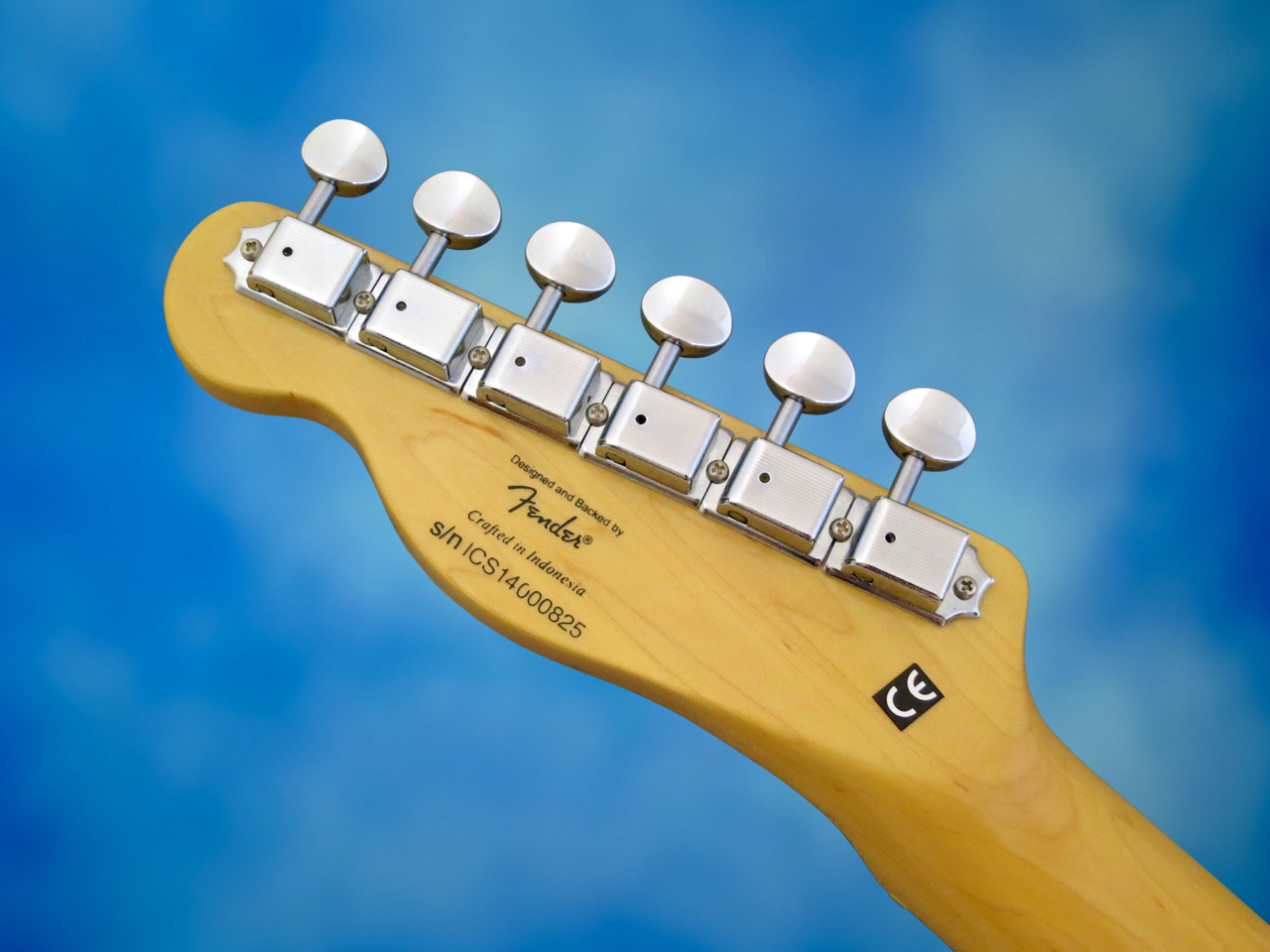
Squier Cabronita Telecaster – tuners

A set of very decent Kluson-copies has been selected for tuning duties on this Squier.

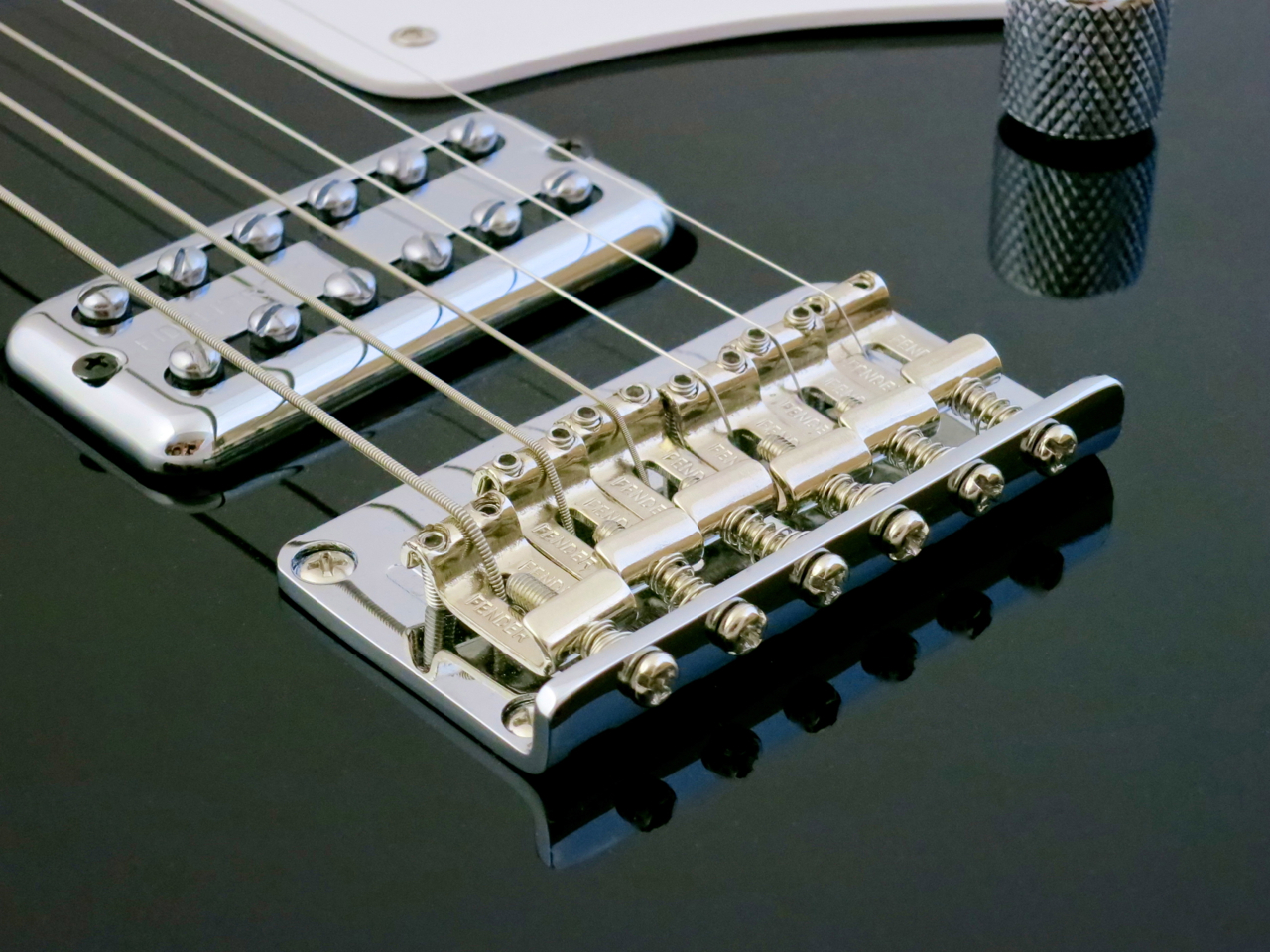
Squier Cabronita Telecaster – bridge

Instead of a classic Telecaster ashtray, the Cabronita employs a hardtail, six-saddle bridge with vintage-type Stratocaster saddles.

The extremely low price tag of the Squier can be seen in a couple of small things, such as the bridge being installed a tiny bit askew on the review instrument.

Squier Cabronita Telecaster – pickups

Central to the Cabronita-concept is the use of Gretsch Filtertron-style pickups. Squier make their own version for this guitar model, and call it the Fideli’Tron.

Squier Cabronita Telecaster – controls

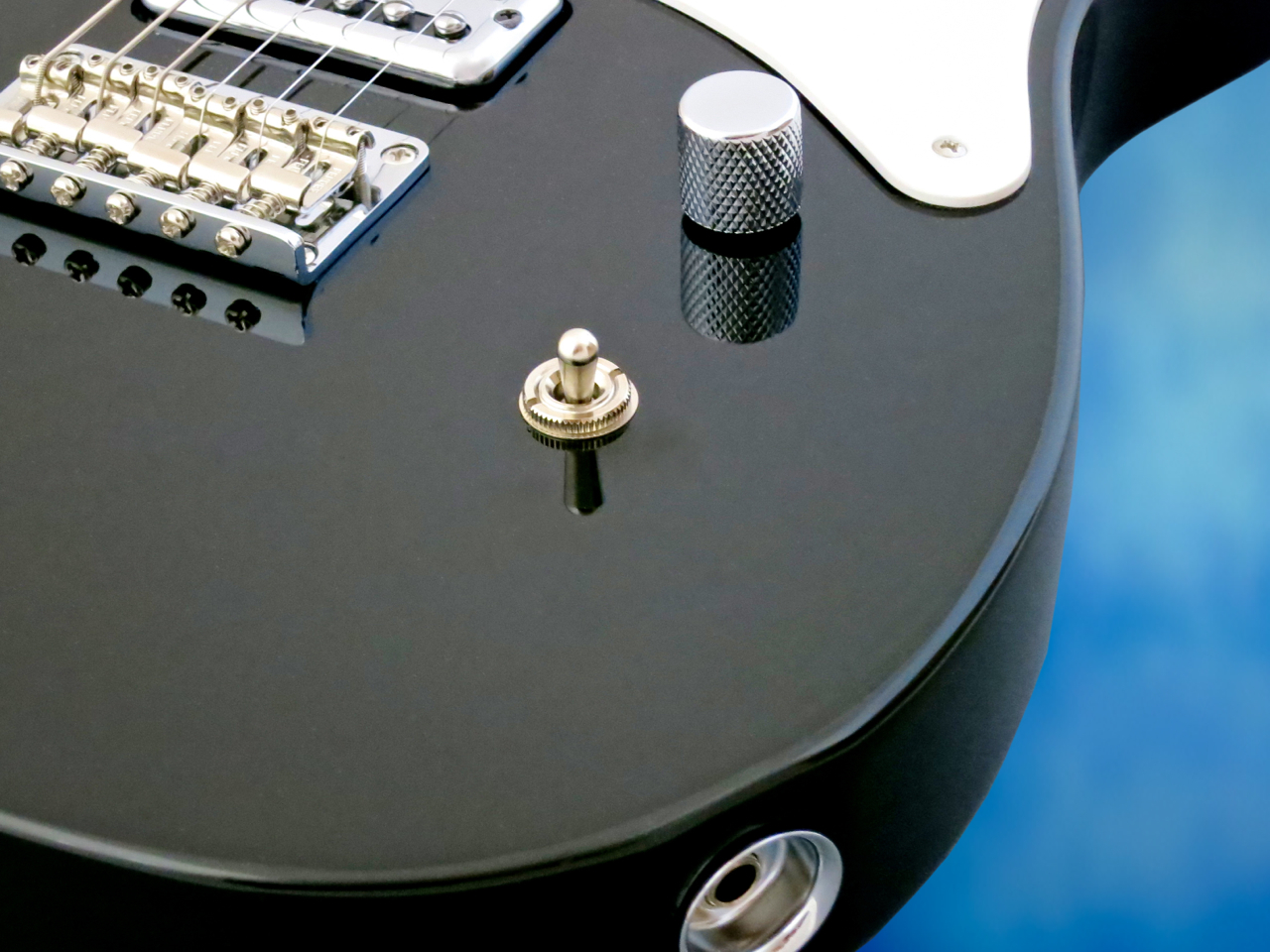
As befits such a Hot Rod guitar, the Squier Cabronita Tele is equipped with just a single volume control, and a three-way toggle pickup selector.

Squier Cabronita Telecaster – control + switch

At prices like these you cannot seriously expect custom shop build quality:

The volume control works very smoothly, but the toggle switch of our review guitar was a bit temperamental, sometimes adding crackling, or even muting the signal, in the middle position. This could be a glitch on this specific guitar, but I’d probably upgrade to a better switch.

****

Squier Cabronita Telecaster – body beauty

Squier’s Vintage Modified Cabronita Telecaster offers a whole lot of musical fun for the money.

In the sub-500 € price bracket, manufacturers generally tend to achieve savings in production costs, by reducing man-hours spent on each instrument’s production. Very often these savings are directed at the final set-up stage. Straight out of the box, many guitars in this price bracket suffer from top nuts left too high and/or dodgy intonation, and it is then up to the local distributor or the individual music shop to give these instruments a proper set-up prior to sale. This is one of the reasons why I think you should prefer an actual guitar dealer to ordering your affordable guitar over the internet, as the dealer will make sure the guitar plays to the best of its abilities, before it is sold.

Helsinki’s DLX Music were kind enough to supply me with the review instrument, and – naturally – they keep all their stock shipshape. No problems here, then! The reviewed Squier Cabronita is a lightweight solidbody guitar, with a very comfortable C-profile neck. Thanks to its larger-than-vintage frets, as well as the modern fingerboard radius of 9.5 inches, the Cabronita is easy to play, and the string-bending feel is rather slinky, even with a set of 010s.

Acoustically, the Squier Cabronita sounds more like a hardtail Strat than a vintage Tele, which is due to this model’s different bridge. There is a good deal of that typical Fender- attack and -cluck, but much less of the famous, nasal twang of the treble strings.

Generally speaking, Filtertron-type pickups tend to fall right in the middle of your typical singlecoil/humbucker-divide. Filtertrons are doublecoil pickups (= humbuckers), but thanks to their special construction, and their smaller size, they sound much brighter than a traditional, PAF-style humbucker. Generally, there’s a lot of clarity and attack on tap in this kind pickup.

Squier’s own Fideli’Tron-pickups sound surprisingly good, belying their affordable pedigree. On clean amp settings you will get a clear attack to each note, plenty of chime, and superb string separation (this clip starts with the neck pickup):

Driven into distortion Squier’s Fideli’Trons satisfy with a healthy dose of bite and snarl:

And here’s the audio track from the Youtube-video:

Squier Cabronita Telecaster – body beauty 2

****

Squier Cabronita Telecaster – beauty shot

I simply love the way that this Squier Cabronita Telecaster manages to give you the essence of what this model is all about, at such an affordable price point. You get a great-feeling neck with a very decent fretjob, coupled with – for the money – fantastic tone. This Squier really gives you the original ”bastardised Tele” experience, and is very hard to put down, indeed.

****

Squier Vintage Modified Cabronita Telecaster

Current street price approx. 300 €

Additional info: Fender

A big thank you goes to DLX Music Helsinki for the loan of the review guitar!

****

Pros:

+ value-for-money

+ fretwork

+ playability

+ sound

Cons:

– bridge slightly askew

– temperamental toggle switch

Review: ESP USA Eclipse

ESP USA Eclipse – case

This time we have something very special to feast your eyes on!

Many people may not know this, but ESP Guitars also runs its own, small West Coast workshop in California. The ESP USA factory produces limited numbers of its most popular shapes (currently three models), and its primary goal is to produce the best quality instruments for its customers.

Kitarablogi.com has been lucky to get to take one of these guitars for a spin – the ESP USA Eclipse.

****

ESP USA Eclipse – full front

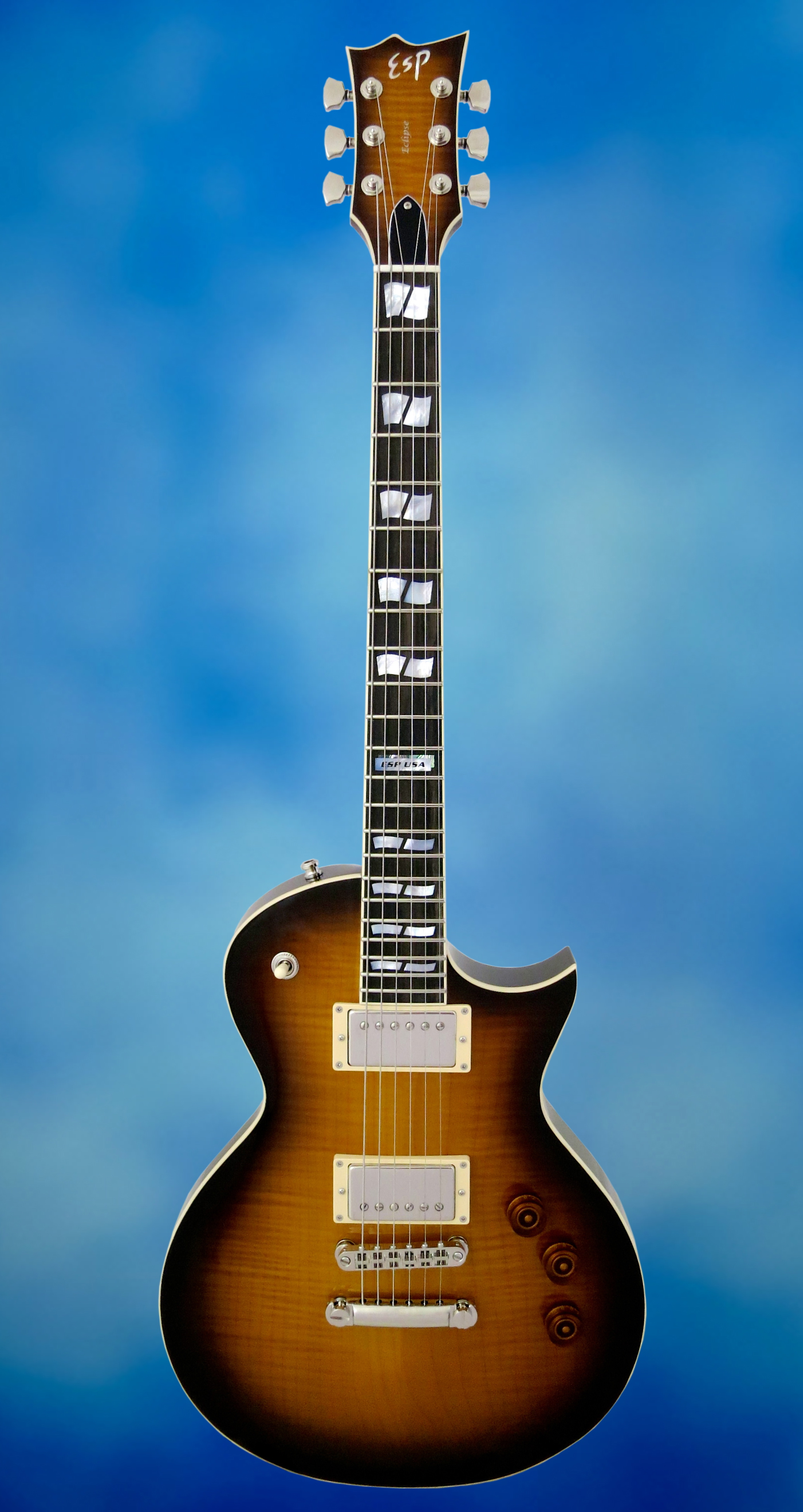
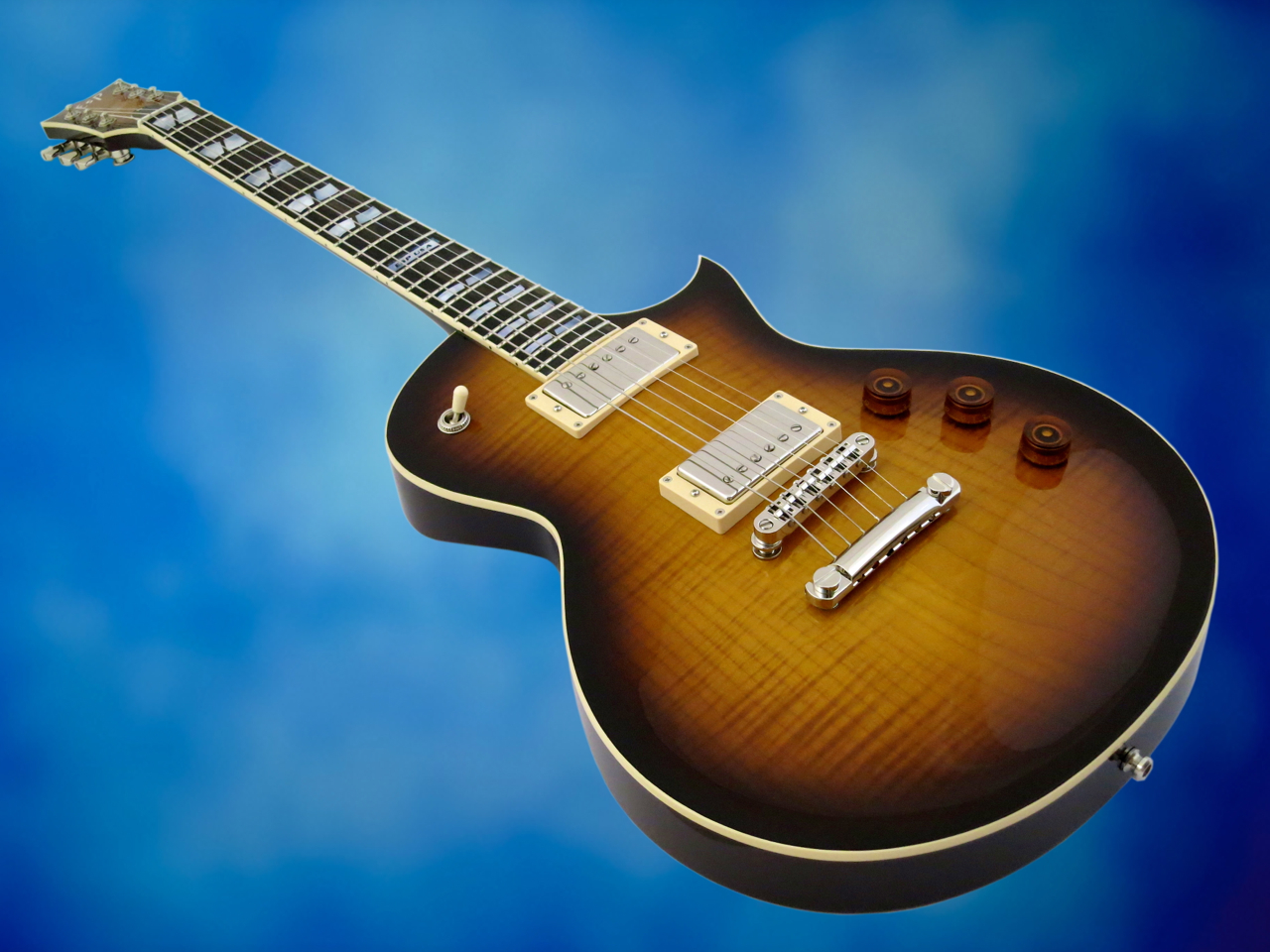
The ESP USA Eclipse (current price in Finland: 3.939 €) is the company’s ultimate version of their popular Eclipse model, using only the best materials and production methods.

ESP USA Eclipse – neck joint

One of the USA Eclipse’s special features is the ESP Set-Thru-Neck, which aims to combine the best attributes of a traditional set neck with the playability advantages of a through-neck.

ESP’s Set-Through-Neck is basically a set neck with a significantly larger tenon (both wider & deeper), which greatly improves the strength of the neck joint. Most set-neck guitars have a tenon which is somewhat narrow and shallow. In the ESP USA’s case, the width of the tenon is as large as the end of fingerboard and is almost as tall as the body. This allows the neck joint to be sculpted like a through-neck with no loss of structural integrity.

The result is a stronger neck joint, which is good for sustain, and it also makes it possible to do away with the traditional neck heel of a standard set-neck, resulting in a very comfortable playing experience.

ESP USA Eclipse – back beauty

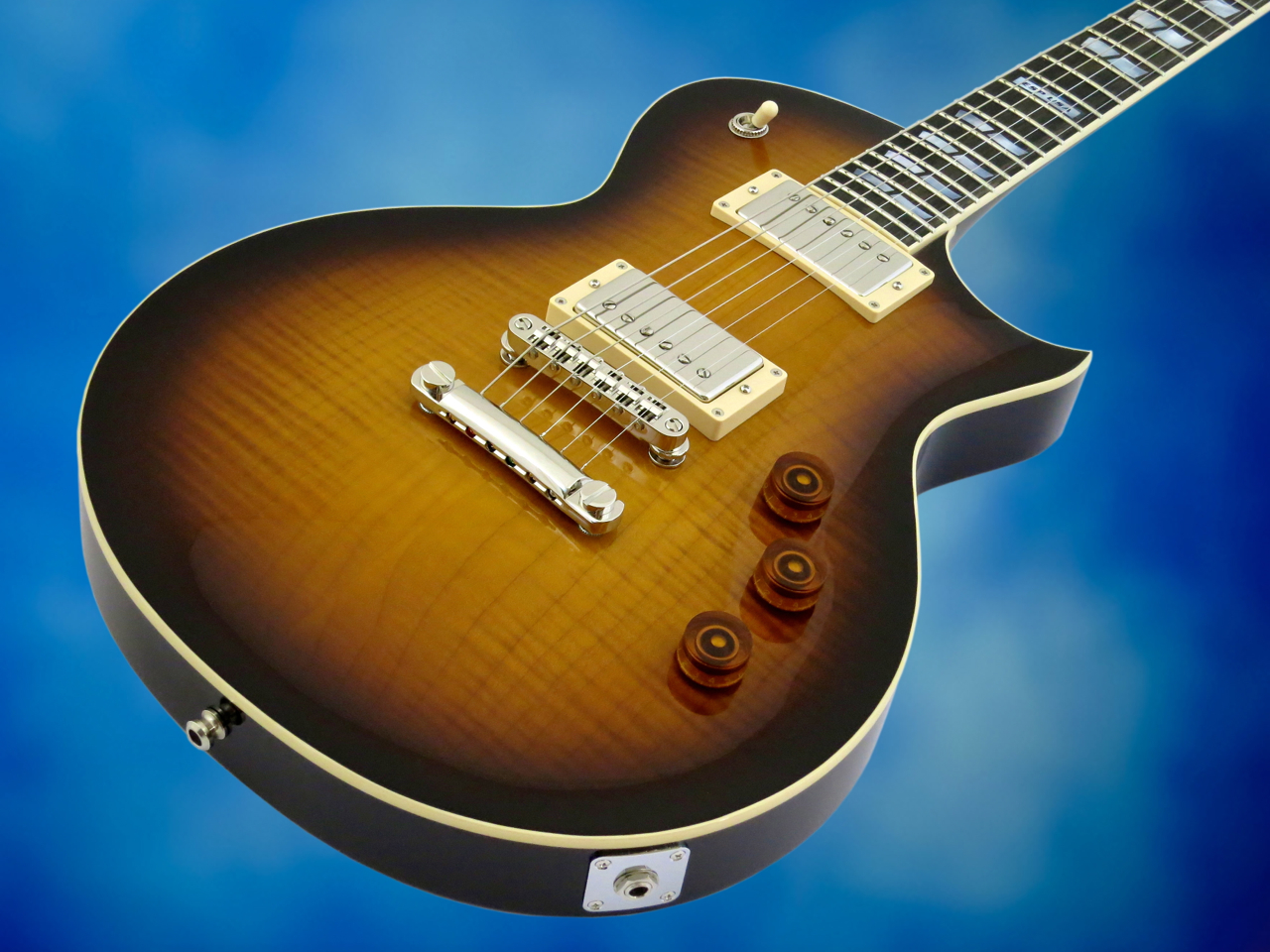
The Eclipse’s mahogany body sports a rib cage chamfer for comfort.

ESP USA Eclipse – tuners

The guitar’s tuning is kept rock steady by a set of Sperzel USA locking machine heads.

ESP USA Eclipse – headstock

The bound headstock of the USA Eclipse features a flamed mahogany overlay, finished in the same Tobacco Sunburst finish as the body’s carved maple top.

The top nut has been made from genuine bone.

ESP USA Eclipse – fretboard

We find a bound ebony fretboard with 22 jumbo frets, adorned with beautiful pearl and abalone inlays.

The fingerboard radius is a flattish 12 inches (305 mm).

ESP USA Eclipse – TonePros bridge

The locking Sperzels are paired at the body end with a rock solid TonePros TOM-bridge and stopbar combo.

ESP USA Eclipse – pickups

It’s quality all the way in the electronics department, too:

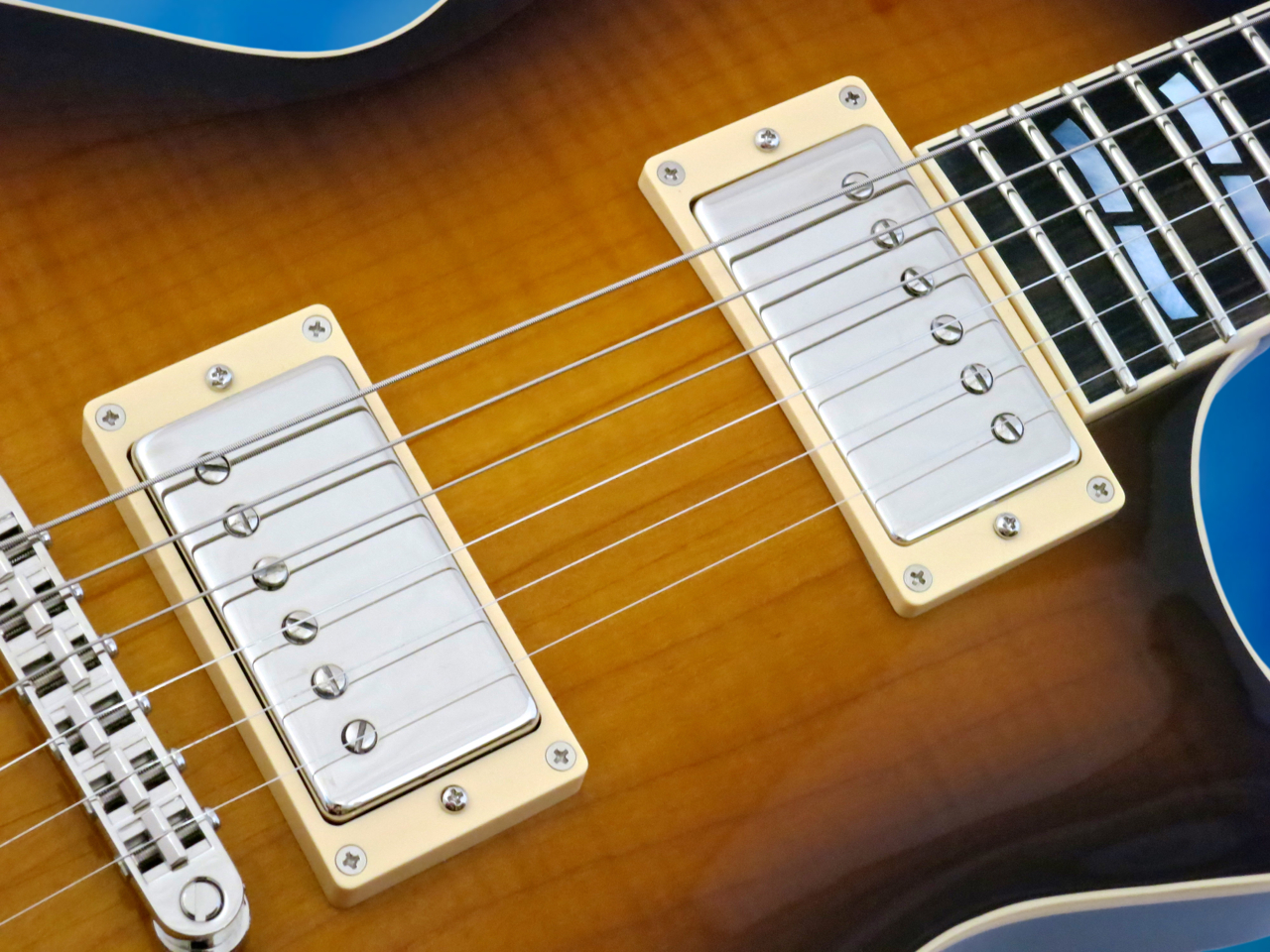
ESP’s USA Eclipse comes equipped with a pair of Seymour Duncan Alnico II Pro humbuckers (APH-1), which are vintage-voiced, warm-sounding pickups with moderate output levels (Slash’s favourites).

ESP USA Eclipse – controls

The control layout on this model has the bridge volume closest to the bridge pickup (for easy volume swells), while the middle knob is the neck volume.

The master tone control features a push/pull-switch splitting the humbuckers in the ”up” position.

ESP USA Eclipse – control cavity

The control cavity has received a layer of shielding paint, as well as a cover lined with aluminium foil.

ESP USA Eclipse – body beauty 2

****

ESP USA Eclipse – beauty shot

This guitar really is a fantastic instrument! The ESP USA Eclipse is top quality incarnate, leaving nothing to be desired.

For a full-depth, Les Paul-inspired guitar the USA Eclipse is refreshingly light.

I don’t quite understand, why ESP insist on calling this neck profile a ”Thin U”. I agree, this neck doesn’t feel like a fat, clumsy baseball bat, but neither is it one of the notorious ”speed necks” of the Eighties. I would call the Eclipse’s rounded D-profile ”extremely comfortable”, and be done with it…

The USA Eclipse offers first-rate playability – light to the touch, offering just the right amount of resistance – across the whole fingerboard.

The vintage-voiced Seymour Duncan Alnico II Pro humbuckers are a perfect fit for this guitar, not least because of their versatility. You can have great-sounding, authentic Jazz tones, if you want, and then rock out without having to change guitars. The split humbucker sounds are very good, too, offering a brighter tonality and lower output levels. The ESP USA Eclipse covers a very wide range of different sounds and musical genres.

Here’s a short clip showing you the split humbucker sounds (starting with the neck pickup):

Next up, a similar clip with the full humbuckers:

In the demo track I have used split settings for the rhythm parts (left channel: both pickups; right channel: neck pickup), as well as the full bridge humbucker for the lead guitar:

ESP USA Eclipse – beauty shot 2

****

ESP USA Eclipse – body beauty

ESP’s USA Eclipse is a boutique grade guitar, backed by a large brand. Some manufacturers may ride on glories past, cashing in on their legendary brands. In contrast, ESP’s USA Eclipse really has the build quality, workmanship, and tone to justify its price tag.

In my view the ESP USA Eclipse is a gorgeous solidbody electric at a fair price.

****

ESP USA Eclipse

3.939 € (hard case included)

Finnish distributor: Musamaailma

****

Pros:

+ value for money

+ workmanship

+ Set-Thru-Neck construction

+ finish

+ splittable humbuckers

+ sound


Testipenkissä: Squier Vintage Modified Cabronita Telecaster

Squier Cabronita Telecaster – beauty shot 2

Kun Fenderin Custom Shop esitteli vuonna 2009 uuden La Cabronita Especial -mallin, kukaan ei olisi varmaan uskonnut, että tästä Telecasterin ja Gretschin ristisiitoksesta tulisi näin suuri hitti.

Mallin suosion ansiosta nähtiin viime vuosina myös edullisempia Fender Cabronitoja, sekä kaksi Squier-versiota (sekä Bigsby-vibralla että ilman).

****

Squier Cabronita Telecaster – full front

Squier Vintage Modified Cabronita Telecaster (hintaluokka noin 300 €) on perusrakenteeltaan melko lähellä perinteistä Telecasteria.

Squier Cabronita Telecaster – back beauty

Squier Cabronitalla on – useasta palasta kasattu – lehmusrunko, sekä klassinen, yhdestä vaahterapalasta veistetty vaahterakaula.

Squier Cabronita Telecaster – headstock

Kaulassa ei ole erillistä otelautaa, vaan soittimen 22 medium jumbo -kokoista nauhaa on asennettu suoraan kaulapuuhun.

Kaularautaan pääsee käsiksi suoraan lavan puolelta.

Squier Cabronita Telecaster – tuners

Squierin virittimiksi on valittu hyvin asiallisia Kluson-kopioita.

Squier Cabronita Telecaster – bridge

Cabronitassa käytetään perinteisen Tele-tallan sijaan kiinteää Stratocaster-tyylistä tallaa kuudella, vintage-tyylisellä peltipalalla.

Squierin edullisuus näkyy siitä, että testisoittimen talla oli asennettu aavistuksen verran vinoon tallamikkiin katsottuna.

Squier Cabronita Telecaster – pickups

Cabronita-konseptin keskiössä ovat Gretsch Filtertron -tyyliset mikrofonit. Squier valmistaa tätä kitaramallia varten omat Filtertron-versiot, nimellä Fideli’Tron.

Squier Cabronita Telecaster – controls

Suoraviivaisena hotrod-soittimena Squier Cabronita tarjoaa ainoastaan kolmiasentoisen mikrofonikytkimen, sekä master volume -säätimen.

Squier Cabronita Telecaster – control + switch

Tämän mallin edullisuus näkyy luonnollisesti sellaisissa yksityiskohdissa kuin esimerkiksi elektroniikan osissa:

Volume-potikka toimii testikitarassa moitteettomasti, mutta mikkivalitsimen vaihtaisin kernaasti luotettavampaan malliin.

****

Squier Cabronita Telecaster – body beauty

Squier Vintage Modified Cabronita Telecaster tarjoaa mielestäni todella reilusti vastinetta hintaansa.

Alle 500 euron sähkökitaroiden soitettavuudessa ja säädössä paljon riippuu aina myös maahantuojasta ja/tai soitinliikkeestä, koska näitä edullisia soittimia ei yleensä voi ripustaa suoraan paketista kitaraputiikin seinälle. Jostakin näiden edullisten hintojen täytyy tulla, ja usein säästetään setupista. Hyvin tavallisia ongelmia tämän hintaluokan kitaroissa ovat epätarkasti säädetty intonaatio, sekä liian iso kielten korkeus yläsatulan kohdalla. Suoraan paketista vedettynä tällainen kitara ei soi puhtaasti. Juuri siksi kannattaa ostaa edullinen soitin oikeasta musiikkiliikkeestä, jossa edullisetkin kitarat säädetään ennen myyntiä soittokuntoon.

DLX Musiikilta saadun testisoittimen kanssa ei ollut (luonnollisesti) tämäntyyppisiä ongelmia, vaan kitaran soittotatsi ja intonaatio olivat hyvin kohdillaan. Testattu Squier Cabronita on kevyt soitin, ja sillä on mukavantuntuinen, C-profiililla varustettu kaula. Kielten venytykset onnistuvat myös 010-satsilla mukavasti, Cabronitan vintagea paksumpien nauhojen, sekä nykyaikaisen otelautaradiuksen (9,5 tuumaa) ansiosta.

Squier Cabronita kuulosta akustisesti enemmän kiinteällä tallalla varustetulta Stratolta kuin perinne-Teleltä, mikä johtuu tämän mallin tallaratkaisusta. Fendereille tyypillinen tuoreus ja ryhti ovat vahvasti läsnä, mutta perinteinen, diskanttikielten Telecaster-twäng puuttuu tästä mallista lähes kokonaan.

Filtertron-mikrofonit ovat eräänlainen erikoistapaus – ne ovat kaksikelaisia humbuckereita, mutta niiltä lähtee hyvin tuore ja tarkka, hyvin singlecoil-tyylinen soundi. Selkeys ja kirkkaus ovat ne tärkeimmät avainsanat näiden mikkien kanssa.

Squierin omat Fideli’Tron-mikrofonit kuulostavat oikein hyviltä. Puhtaissa soundeissa kuuluu selvästi jokaisen nuotin atakki ja soinnuissakin kielet pysyvät hyvin eroteltavina (aloitetaan kaulamikrofonilla):

Särösoundeissa taas Fideli’Troneissa on aimo annos erittäin herkullista röyhkeyttä ja purevuutta:

Lopuksi vielä Youtube-video audioraita:

Squier Cabronita Telecaster – body beauty 2

****

Squier Cabronita Telecaster – beauty shot

Minun mielestäni Squier Cabronita Telecaster on oikein mainio edullinen versio Fenderin suositusta Custom Shop -mallista, ja minulle erittäin mielekäs uusi tuttavuus. Tämän Squierin perusasiat – kaiken edellä Cabronitan hyvä nauhatyö, sekä kitaran soundi – ovat kunnossa. Tämä malli tarjoaa edullisesti hauskan ja hieman ronskimman version perus-Telestä, josta jää todella hyvä jälkimaku.

****

Squier Vintage Modified Cabronita Telecaster

noin 300 €

Lisätiedot: Fender

Kiitos DLX Musiikille testisoittimen lainaamisesta!

****

Plussat:

+ hinta-laatu-suhde

+ nauhatyö

+ soitettavuus

+ soundi

Miinukset:

– talla asennettu hieman vinosti

– naksahteleva mikkikytkin

Pidä blogia WordPress.comissa.

Ylös ↑